
Did the US Successfully Take Over TikTok, Or Not?

Longtime Slashdot reader hackingbear writes: President Donald Trump signed an executive order Thursday that he says will allow TikTok to continue operating in the United States in a way that meets national security concerns. Trump’s order will enable an American-led of group of investors to “buy the app” (up to 80% ownership) from China’s ByteDance, though the deal is not yet finalized and also requires China’s approval. However, much about the deal is still unknown. So, did the U.S. successfully snatch TikTok from ByteDance? It is probably up to individual’s interpretation.

As with any deals between U.S. and China, the devil is in the details. According Shen Yi, an internet influencer and a professor at Shanghai’s Fudan University, what the U.S. investor will eventually take control of is an entity known as TikTok U.S. Data Security Company (“USDS”), which is a subsidiary of TikTok U.S. and is exclusively responsible to handle data security in the U.S.. ByteDance will continue, through its U.S. subsidiary “ByteDance TikTok U.S. Company,” to operate business and other related activities (such as e-commerce, advertising for brands, and cross-border commercial activities). It is important to stress that “Byte TikTok U.S. Company” remains 100% owned by ByteDance through its global TikTok subsidiary — this arrangement has not changed. The TikTok algorithm remains the property of ByteDance, only licensed to USDS for use. This point was in fact explicitly clarified by a relevant official of China’s Cyberspace Administration at the press conference following the Madrid talks.

After reaching the TikTok deal, Beijing and Washington are now selling it to their respective domestic audience, each highlighting the part of the deal that it can characterize as a win. Shen’s details are not in conflict with the widely-reported account given by Karoline Leavitt, the White House Press Secretary, who emphasized “a new board with six American directors out of seven.” Observers can also find the TikTok arrangement being very similar to that of Apple’s iCloud operation in China being run by GCBD (AIPO Cloud (Guizhou) Technology Co. Ltd.) while Apple retain controls of the brand and business.


Read more of this story at Slashdot.
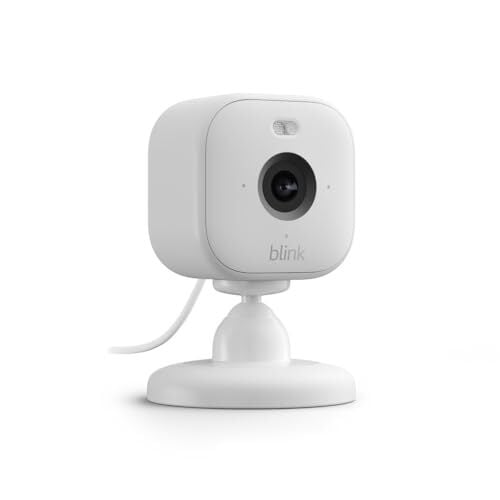

The Latest Blink Indoor/Outdoor Camera Is 50% Off Right Now

We may earn a commission from links on this page. Deal pricing and availability subject to change after time of publication.

Did you know you can customize Google to filter out garbage? Take these steps for better search results, including adding Lifehacker as a preferred source for tech news.


When a home security camera drops to half its price, it usually means you’re giving up something in return. With the Blink Mini 2, that’s not the case. It’s currently $19.99 on Amazon, down from $39.99, which is the lowest price it’s ever been, according to price trackers.

For a camera that can be used indoors or outdoors (with a $9.99 weather-resistant power adapter, sold separately or bundled), that’s compelling. The Mini 2 is tiny (just two inches square) but packs a 143-degree field of view, more than the first-gen model’s 110 degrees. During the day, the 1080p video looks crisp and colorful. At night, it offers both black-and-white infrared and color vision thanks to a built-in LED spotlight. The color mode isn’t perfect (hues aren’t as vibrant as daylight footage), but it gives more detail than plain grayscale.

Blink leaned into small upgrades with the Mini 2 that make a noticeable difference. The custom-built chip inside allows features such as smart notifications and person detection, so the camera can tell whether it spotted a person, package, or pet. The catch is you’ll need a subscription for that. The Blink Basic Plan runs $3.99 per month per camera ($39.99 annually) and gives you 60 days of video history, smart alerts, activity zones, and extended live streams. The Plus Plan, at $11.99 monthly ($119.99 annually), covers unlimited cameras. Without a plan, you’re limited to live viewing, unless you pick up a Sync Module 2 ($49.99) and an SD card for local storage.

The Blink Mini 2 also fits neatly into smart homes, at least if you use Alexa. It supports voice commands and IFTTT integrations, but not Google Home or Apple HomeKit. That could be a deal breaker if you’re invested in those platforms. Setup is straightforward through the Blink’s companion app, and you can adjust everything from motion sensitivity to light brightness within the settings. Performance is solid for the price, but reviews note black-and-white night footage isn’t as sharp as competing budget cameras like the TP-Link Tapo C120 or Eufy Indoor Cam. Still, for $19.99, you’re getting flexible placement, decent video quality, and features that usually live behind higher price tags.


Our Best Editor-Vetted Tech Deals Right Now


Roku Streaming Stick Plus


—
$29.99

(List Price $39.99)


Ring Battery Doorbell Plus


—
$79.99

(List Price $149.99)


Ring Indoor Cam (2nd Gen, 2-pack, White)


—
$49.98

(List Price $79.99)


Amazon Fire TV Stick 4K (2nd Gen, 2023)


—
$24.99

(List Price $49.99)

Deals are selected by our commerce team

Rocket Report: Keeping up with Kuiper; New Glenn’s second flight slips

Welcome to Edition 8.12 of the Rocket Report! We often hear from satellite operators—from the military to venture-backed startups—about their appetite for more launch capacity. With so many rocket launches happening around the world, some might want to dismiss these statements as a corporate plea for more competition, and therefore lower prices. SpaceX is on pace to launch more than 150 times this year. China could end the year with more than 70 orbital launches. These are staggering numbers compared to global launch rates just a few years ago. But I’m convinced there’s room for more alternatives for reliable (and reusable) rockets. All of the world’s planned mega-constellations will need immense launch capacity just to get off the ground, and if successful, they’ll go into regular replacement and replenishment cycles. Throw in the still-undefined Golden Dome missile shield and many nations’ desire for a sovereign launch capability, and it’s easy to see the demand curve going up.

As always, we welcome reader submissions. If you don’t want to miss an issue, please subscribe using the box below (the form will not appear on AMP-enabled versions of the site). Each report will include information on small-, medium-, and heavy-lift rockets, as well as a quick look ahead at the next three launches on the calendar.

Sharp words from Astra’s Chris Kemp. Chris Kemp, the chief executive officer of Astra, apparently didn’t get the memo about playing nice with his competitors in the launch business. Kemp made some spicy remarks at the Berkeley Space Symposium 2025 earlier this month, billed as the largest undergraduate aerospace event at the university (see video of the talk). During the speech, Kemp periodically deviated from building up Astra to hurling insults at several of his competitors in the launch industry, Ars reports. To be fair to Kemp, some of his criticisms are not without a kernel of truth. But they are uncharacteristically rough all the same, especially given Astra’s uneven-at-best launch record and financial solvency to date.

Read full article

Comments

Engadget Podcast: How Carvana is trying to fix the broken car buying world

Buying a car in America is usually a hellish experience involving pushy salespeople, mysterious fees, and hours-long financing negotiations. That’s something Carvana aimed to solve with its online used car marketplace when it launched 13 years ago. In this episode, Devindra chats with Carvana Chief Product Officer Dan Gill about how the company moved beyond the flashy marketing of its early car vending machines, and how it’s still trying to perfect the online car buying experience. We also dive into some of the issues the company has faced – including delayed registrations and vehicle issues – and how it’s trying to learn from them.

Subscribe!

Credits

Hosts: Devindra Hardawar
Guest: Dan Gill
Producer: Ben Ellman
Music: Dale North and Terrence O’Brien

This article originally appeared on Engadget at https://www.engadget.com/mobile/smartphones/engadget-podcast-how-carvana-is-trying-to-fix-the-broken-car-buying-world-123045020.html?src=rss

Raspberry Pi 500+ puts the Pi, 16GB of RAM, and a real SSD in a mechanical keyboard

The Raspberry Pi 500 (and 400) systems are versions of the Raspberry Pi built for people who use the Raspberry Pi as a general-purpose computer rather than a hobbyist appliance. Now the company is leaning into that even more with the Raspberry Pi 500+, an amped-up version of the keyboard computer with 16GB of RAM instead of 8GB, a 256GB NVMe SSD instead of microSD storage, and a fancier keyboard with mechanical switches, replaceable keycaps, and individually programmable RGB LEDs.

The computer is currently available to purchase from the usual suspects like CanaKit and Micro Center, and generally starts at $200, twice the price of the Pi 500.

Raspberry Pi CEO Eben Upton’s blog post about the 500+ says that the upgraded version of the computer has been in the works since the regular 500 was released last year.

Read full article

Comments

The ROG Xbox Ally X handheld gaming device will cost you $1,000

Microsoft has finally revealed how much the ROG Xbox Ally handheld consoles will cost you, now that they’re available for preorder. The ROG Xbox Ally X, which the company describes as the “ultimate high-performance handheld” that’s “built for the most demanding players,” will set you back $1,000.

Meanwhile, the ROG Xbox Ally “for everyone from the casual player to the avid enthusiast” is priced at $600, and you can pre-order that model from other retailers like Amazon, Best Buy and Walmart. They’re a bit more expensive than ASUS’ regular ROG Ally systems, which are priced from $500 to $800. 

The company unveiled the devices during the Xbox Games Showcase at Summer Game Fest in June, with the promise that it was going to be available by this year’s holiday shopping season. It revealed a couple of months later that the consoles will be on store shelves by October 16, but it didn’t announce their prices until now. 

Microsoft teamed up with ASUS’ ROG division to develop the handhelds. They’re powered by Windows 11 and lets you play any Xbox game you’ve purchased, whether you bought it on your console or your computer, as well as PC games from any store that you install directly on the device. You can use it to stream Xbox games from your console anywhere in your home or from the Xbox Cloud Gaming service. And yes, you’ll be able to continue where you left off when you jump from one device to another. At launch, Xbox will mark thousands of games as Handheld Optimized or Mostly Compatible to indicate if they play well on handhelds. 

In the US, you can preorder the consoles from the Xbox website, ASUS’ website or from local retailers like Best Buy. A SanDisk microSD card designed specifically for the handhelds and a SeaGate SSD that supports Microsoft DirectStorage are now also available for preorder. 

You can also preorder the consoles in Australia, Belgium, Canada, Czech Republic, Denmark, Finland, France, Germany, Hong Kong, Ireland, Italy, Japan, Mexico, the Netherlands, New Zealand, Norway, Poland, Portugal, Republic of Korea, Romania, Saudi Arabia, Singapore, Spain, Sweden, Taiwan, Turkey, United Arab Emirates, United Kingdom, Vietnam, Egypt, Greece, Hungary, Indonesia, Slovenia, South Africa, Thailand and Ukraine. All these markets, including the US, are getting the console on October 16. The handhelds will be available in additional markets in the future, as well, namely in Brazil, China, India, Luxembourg, Malaysia, Philippines and Switzerland. 

This article originally appeared on Engadget at https://www.engadget.com/gaming/xbox/the-rog-xbox-ally-x-handheld-gaming-device-will-cost-you-1000-120029250.html?src=rss

Fiji’s ants might be the canary in the coal mine for the insect apocalypse

In late 2017, a study by Krefeld Entomological Society looked at protected areas across Germany and discovered that two-thirds of the insect populations living in there had vanished over the last 25 years. The results spurred the media to declare we’re living through an “insect apocalypse,” but the reasons behind their absence were unclear. Now, a joint team of Japanese and Australian scientists have completed a new, multi-year study designed to get us some answers.

Insect microcosm

“In our work, we focused on ants because we have systematic ways for collecting them,” says Alexander Mikheyev, an evolutionary biologist at the Australian National University. “They are also a group with the right level of diversity, where you have enough species to do comparative studies.” Choosing the right location, he explained, was just as important. “We did it in Fiji, because Fiji had the right balance between isolation—which gave us a discrete group of animals to study—but at the same time was diverse enough to make comparisons,” Mikheyev adds.

Thus, the Fijian archipelago, with its 330 islands, became the model the team used to get some insights into insect population dynamics. A key difference from the earlier study was that Mikheyev and his colleagues could look at those populations across thousands of years, not just the last 25.

Read full article

Comments

Disastrous Oracle Implementation At Europe’s Largest City Council.

Longtime Slashdot reader whoever57 writes: Birmingham City Council, the largest such entity in Europe, has been declared effectively bankrupt. There are a couple of reasons for this, but one of them is a disastrous project to replace the city’s income management system using Oracle. The cost of this has risen to $230 million, while the initial estimate was $24 million. There was a failed rollout of the new system earlier this year. “Original plans for the replacement of SAP with Oracle Fusion set aside a 19.965 million-euro budget for three years implementation until the end of the 2021 financial year,” reports The Register. “Go-live date was later put back until April 2022 and the budget increased to 40 million euros. After the council realized it would need to reimplement all of Oracle, the budget for running the old system and introducing the new one increased to 131 million euros.”

“In a hastily convened Audit Committee meeting this week, councilor heard how that date has now been put back until November, expressing their anger that the news hit the media before they were told.” Testing failed with only a 73.3% pass rate and 10 severe deficits, “below the acceptance criteria of a 95 percent pass rate and zero severe deficits.


Read more of this story at Slashdot.

German Remote-Driving Firm Hopes To Make Private Car Ownership Redundant

votsalo writes: A German company, Vay, offers a rental car service where the cars are driven by a remote driver to the customer, who then takes over driving the car. At the end of the rental, a remote driver takes over again to take the car away. The trained remote drivers sit in a driving station, with a steering wheel, foot pedals, screens, headphones, and even tactile feedback for things like bumps on the road.

Vay says the rental rate cost would be “about half of what a current car-sharing service costs.” If he is talking about car-rental services that deliver cars to customers by on-site drivers, like this defunct San Francisco car rental company, then the claim about half the cost seems right.
Vay’s founder used Las Vegas as a testing ground for the service and expects to launch in Germany soon. Las Vegas “had the necessary legal framework already in place,” said von der Ohe, a graduate of computer science and entrepreneurship from Stanford. “It fitted on to three pages. Germany’s ran to many more, but we’ve worked closely with the authorities here to make sure we can fulfil everything that’s required of us, from technical to safety concerns. Now that the legislative landscape is in place, we’re raring to go.”


Read more of this story at Slashdot.

IXI’s autofocus glasses are one step closer to reality

Forget smart glasses, autofocus lenses have the potential to help far more people by offering a high-tech alternative to clunky bifocal and varifocal eyewear. Those traditional solutions involve looking at specific portions of glasses for near and far objects. While that’s more convenient than swapping frames constantly, it requires retraining your eyes a bit and can also lead to eye strain.

Finnish startup IXI’s autofocus glasses aim to go one step further: It has developed eyewear with built-in eye tracking and LCDs that can automatically focus on whatever you’re looking at, just like fixed frame glasses. Even better, they look just like regular eyewear, even more-so than Meta’s thick-framed Ray-Ban smart glasses. While IXI isn’t yet ready to start shipping its hardware yet, the company announced today that it’s one step closer to production by acquiring the lens manufacturing company Finnsusp and entering into a “long-term strategic partnership” with OptiSwiss.

IXI's autofocus frames with built-in LCD
IXI’s autofocus frames with built-in LCD
IXI

While IXI isn’t the only company working on autofocus frames — we covered ViXion01’s Star Trek-esque glasses at CES last year — it’s the closest to bringing the technology to normal-looking spectacles. Sure, they’re not as flashy as Meta’s Ray-Ban lineup, and they don’t exactly scream high-tech, but IXI’s reserved approach could make its glasses more compelling to older audiences. Not everyone wants to look like a trendy supergeek, after all, but the idea of having glasses that could make your eyes feel decades younger practically is a huge draw.

IXI has developed “the world’s lowest power eye-tracking” to make its glasses possible, CEO and co-founder Niko Eiden told Engadget in an interview. The company stuffed tiny batteries into the thin frames of its glasses, which Eiden claims can last for a day of usage. The assumption is that you’ll charge them overnight by connecting a cable to their temple area (unfortunately, that also makes them too unwieldy to power up while you’re wearing them). If they do completely lose power, they’ll function purely as far-sighted spectacles.

With the Finnsusp acquisition, IXI will be able to begin low-volume production of its glasses for in-house testing, while the OptiSwiss partnership will eventually help it to scale for the mass market. Eiden says the company isn’t announcing pricing or availability yet, but he expects it to be in the “high end of existing glasses.” More so than Meta’s hyped-up smart glasses, IXI’s products are targeted at people who are already wearing glasses and who could quickly see the value of in autofocus lenses. Eye degradation comes for us all eventually.

This article originally appeared on Engadget at https://www.engadget.com/wearables/ixis-autofocus-glasses-are-one-step-closer-to-reality-060000152.html?src=rss

Shoplifters Could Soon Be Chased Down By Drones

An anonymous reader quotes a report from MIT Technology Review: Flock Safety, whose drones were once reserved for police departments, is now offering them for private-sector security, the company announced today, with potential customers including including businesses intent on curbing shoplifting.Companies in the US can now place Flock’s drone docking stations on their premises. If the company has a waiver from the Federal Aviation Administration to fly beyond visual line of sight (these are becoming easier to get), its security team can fly the drones within a certain radius, often a few miles.

“Instead of a 911 call [that triggers the drone], it’s an alarm call,” says Keith Kauffman, a former police chief who now directs Flock’s drone program. “It’s still the same type of response.” Kauffman walked through how the drone program might work in the case of retail theft: If the security team at a store like Home Depot, for example, saw shoplifters leave the store, then the drone, equipped with cameras, could be activated from its docking station on the roof. “The drone follows the people. The people get in a car. You click a button,” he says, “and you track the vehicle with the drone, and the drone just follows the car.” The video feed of that drone might go to the company’s security team, but it could also be automatically transmitted directly to police departments.

The defense tech startup Epirus has developed a cutting-edge, cost-efficient drone zapper that’s sparking the interest of the US military. Now the company has to deliver. The company says it’s in talks with large retailers but doesn’t yet have any signed contracts. The only private-sector company Kauffman named as a customer is Morning Star, a California tomato processor that uses drones to secure its distribution facilities. Flock will also pitch the drones to hospital campuses, warehouse sites, and oil and gas facilities. It’s worth noting that the FAA is currently drafting new rules for how it grants approval to pilots flying drones out of sight, and it’s not clear if Flock’s use case would be allowed under the currently proposed guidance.


Read more of this story at Slashdot.

European Banks To Launch Euro Stablecoin In Bid To Counter US Dominance

Nine major European banks are creating a Netherlands-based company to launch a euro-backed stablecoin in 2026, aiming to counter U.S. dominance in the digital token market. Reuters reports: While global stablecoin issuance stands at nearly $300 billion, euro-denominated stablecoins totalled just $620 million, according to figures released last week by the Bank of Italy, with dollar-pegged tokens overwhelmingly dominant. “The initiative will provide a real European alternative to the U.S.-dominated stablecoin market, contributing to Europe’s strategic autonomy in payments,” the banks said. They launched the effort, which they said will create a token that can be used for quick, low-cost payments and settlements, even as the European Central Bank voices scepticism over stablecoins.

ECB President Christine Lagarde in June told European policymakers that privately issued stablecoins posed risks for monetary policy and financial stability. As a safer alternative, she has urged European lawmakers to introduce legislation backing the launch of a digital version of the EU’s single currency. Some commercial banks, however, have pushed back against the introduction of a digital euro, fearing that it would empty their coffers as customers transfer cash out of banks and into the safety of an ECB-guaranteed wallet. In addition to ING and UniCredit, the other banks participating in the new company include Banca Sella, KBC, DekaBank, Danske Bank, SEB, Caixabank, and Raiffeisen Bank International. They said that others could join the initiative, and a CEO for the company would be appointed soon. According to a recent report by Deutsche Bank, emerging market economies are adopting dollar-based stablecoins to replace local deposits and cash. “This has created a global monetary dilemma: countries should adopt stablecoins or risk being left behind. Europe is under particular pressure.”


Read more of this story at Slashdot.

Spotify Announces New AI Safeguards, Says It’s Removed 75 Million ‘Spammy’ Tracks

Spotify says it has has removed over 75 million fraudulent tracks in the past year as it works to combat “AI slop,” deepfake impersonations, and spam uploads. Variety reports: Its new protections include a policy to police unauthorized vocal impersonation (“deepfakes”) and fraudulent music uploaded to artists’ official profiles; an enhanced spam filter to prevent mass uploads, duplicates, SEO hacks, artificially short tracks designed to fraudulently boost streaming numbers and payments. The company also says it’s collaborating with industry partners to devise an industry standard in a song’s credits to “clearly indicate where and how AI played a role in the creation of a track.”

“The pace of recent advances in generative AI technology has felt quick and at times unsettling, especially for creatives,” the company writes in a just-published post on its official blog. “At its best, AI is unlocking incredible new ways for artists to create music and for listeners to discover it. At its worst, AI can be used by bad actors and content farms to confuse or deceive listeners, push ‘slop’ into the ecosystem, and interfere with authentic artists working to build their careers. The future of the music industry is being written, and we believe that aggressively protecting against the worst parts of Gen AI is essential to enabling its potential for artists and producers.”

In a press briefing on Wednesday, Spotify VP and Global Head of Music Product Charlie Hellman said, “I want to be clear about one thing: We’re not here to punish artists for using AI authentically and responsibly. We hope that they will enable them to be more creative than ever. But we are here to stop the bad actors who are gaming the system. And we can only benefit from all that good side if we aggressively protect against the bad side.”


Read more of this story at Slashdot.

Nintendo of America Boss Doug Bowser Is Retiring

Doug Bowser, president of Nintendo of America since 2019, will retire at the end of 2025 after overseeing major expansions including theme parks, films, and the launch of the Switch 2. He will be succeeded by Devon Pritchard, while Satoru Shibata will also take on a CEO role at Nintendo of America.

“One of my earliest video game experiences was playing the arcade version of Donkey Kong,” Bowser said in a statement. “Since that time, all things Nintendo have continued to be a passion for both me and my family. Leading Nintendo of America has been the honor of a lifetime, and I am proud of what our team has accomplished in both business results and the experiences we’ve created for consumers.” Pritchard said that “Doug has been a fantastic mentor” and that he looks forward to “building on the incredible foundation he has helped establish.”


Read more of this story at Slashdot.

Neon Goes Dark After Exposing Users’ Phone Numbers, Call Recordings, Transcripts

An anonymous reader quotes a report from TechCrunch: A viral app called Neon, which offers to record your phone calls and pay you for the audio so it can sell that data to AI companies, has rapidly risen to the ranks of the top-five free iPhone apps since its launch last week. The app already has thousands of users and was downloaded 75,000 times yesterday alone, according to app intelligence provider Appfigures. Neon pitches itself as a way for users to make by providing call recordings that help train, improve, and test AI models. But now Neon has gone offline, at least for now, after a security flaw allowed anyone to access the phone numbers, call recordings, and transcripts of any other user, TechCrunch can now report.

TechCrunch discovered the security flaw during a short test of the app on Thursday. We alerted the app’s founder, Alex Kiam (who previously did not respond to a request for comment about the app), to the flaw soon after our discovery. Kiam told TechCrunch later Thursday that he took down the app’s servers and began notifying users about pausing the app, but fell short of informing his users about the security lapse. The Neon app stopped functioning soon after we contacted Kiam. TechCrunch found that the app’s backend services didn’t properly restrict access, allowing any logged-in user to request and receive data belong to other users. This included call transcripts, raw call recordings, and sensitive metadata, including phone numbers, the date/time of calls, and their durations.


Read more of this story at Slashdot.

Google Asks US Supreme Court To Freeze App Store Injunction In Epic Games Case

Google has asked the U.S. Supreme Court to pause a judge’s order requiring major changes to its Play Store after losing an antitrust case to Epic Games. The injunction would force Google to allow rival app stores, external billing links, and broader competition — changes Google says could harm users and developers. Epic argues they’re necessary to break Google’s monopoly. Reuters reports: Google said it has urged the U.S. Supreme Court to halt key parts of a judge’s order that would force major changes to its app store Play, as it prepares to appeal a decision in a lawsuit brought by “Fortnite” maker Epic Games. Google called the judge’s order unprecedented, and said it would cause reputational harm, safety and security risks and put the company at a competitive disadvantage if allowed to take effect, according to a filing, opens new tab provided late on Wednesday by Google, which said it had submitted it to the court. […]

Google in its Supreme Court filing said that the changes will have enormous consequences for more than 100 million U.S. Android users and 500,000 developers. It asked the court to decide by October 17 whether to put the order on hold. Google said it plans to file its appeal to the Supreme Court by October 27, which could allow the justices to take up the case during their nine-month term that begins on October 6.

Epic in a statement said Google is relying on what it called “flawed security claims” to justify its control over Android devices. “The court’s injunction should go into effect as ordered so consumers and developers can benefit from competition, choices and lower prices,” Epic said. The jury, siding with Epic in the trial, found that Google illegally stifled competition. Donato subsequently issued the order directing Google to make changes to its app store.


Read more of this story at Slashdot.

Call-recording app Neon goes offline after security flaw uncovered

Neon is an call-recording app that pays users for access to the audio, which the app in turn sells to AI companies for training their models. Since its launch last week, it quickly rose in popularity, but the service was taken offline today. TechCrunch reported that it found a security flaw that allowed any logged-in user to access other accounts’ phone numbers, the phone numbers called, call recordings and transcripts. 

TechCrunch said that it contacted Neon founder Alex Kiam about the issue. “Kiam told TechCrunch later Thursday that he took down the app’s servers and began notifying users about pausing the app, but fell short of informing his users about the security lapse,” the publication reported. The app went dark “soon after” TC contacted Kiam. Neon does not appear to have a timeline about if or when the service will resume or what additional security protections it may add.

The full report from TechCrunch is here and certainly worth reading if you’ve used Neon.

This article originally appeared on Engadget at https://www.engadget.com/call-recording-app-neon-goes-offline-after-security-flaw-uncovered-223425297.html?src=rss

Senate staff probes DOGE, finds locked doors and windows covered with trash bags

Multiple whistleblowers alleged that DOGE uploaded a highly sensitive Social Security Administration (SSA) database to an unmonitored cloud environment, according to a report by Senate Democratic staff. The staff report describes an investigation into DOGE activities at three agencies, including a site visit at the General Services Administration (GSA) in which DOGE officials appeared to be hiding certain areas from view.

As we reported last month, then-SSA Chief Data Officer Chuck Borges alleged that DOGE officials created “a live copy of the country’s Social Security information in a cloud environment that circumvents oversight.” At least one other whistleblower has apparently made the same allegation.

Whistleblowers, including Borges, alleged “that Edward Coristine, the 19-year-old DOGE staffer who was previously fired from a job for leaking company data to a competitor, and other DOGE personnel had been granted permission to move highly sensitive SSA data into an unmonitored cloud environment,” the Senate Democratic report said. “The whistleblowers said that DOGE has uploaded a live copy of NUMIDENT, which contains highly sensitive personal data on anyone who has held a social security number, including every American. This includes social security numbers (SSNs), place and date of birth, work permit status, and parents’ names, among other sensitive personal information, for all Americans, to a cloud environment.”

Read full article

Comments

Bowser is leaving Nintendo of America

Doug Bowser, Nintendo of America’s President and Chief Operating Officer, is stepping down on December 31, 2025, according to Nintendo. Bowser’s leadership responsibilities will now be split between two executives: Devon Pritchard, NoA’s Executive Vice President of Revenue, Marketing and Consumer Experience, will take over as President, and Satoru Shibata, the current Corporate Director and Managing Executive Director, will act as the company’s CEO.

Bowser first joined Nintendo in 2015 as Vice President of Sales and Marketing, before replacing long-time President Reggie Fils-Aimé in 2019. In comparison to some of the company’s other leaders, Bowser was much less of a public-facing presence, but he still guided Nintendo of America through a transformative portion of the company’s history. Nintendo not only opened a theme park while Bowser was in charge, but also had a major Hollywood release in The Super Mario Bros. Movie and a successful console launch with the release of the Switch 2 earlier this year. Bowser also weathered his fair share of controversies, including reports that Nintendo of America was failing to address issues of gender discrimination among its employees.

“Leading Nintendo of America has been the honor of a lifetime, and I am proud of what our team has accomplished in both business results and the experiences we’ve created for consumers,” Bowser said in a statement. “Now, it’s time for the next generation of leadership and Devon’s track record speaks for itself,” Bowser continued. “She is an exceptional leader, and her promotion is a testament to her strong performance and strategic contributions to the company’s growth.”

According to Nintendo, “Pritchard plans to build on the many experiences that allow consumers to connect with Nintendo’s characters and worlds, from video games to entertainment to retail experiences.” The company might be too big and successful now to feature someone with as much personality as Fils-Aimé, but if Pritchard plans to stick with business-as-usual, maybe Shibata could become the public face Nintendo has been missing.

This article originally appeared on Engadget at https://www.engadget.com/gaming/nintendo/bowser-is-leaving-nintendo-of-america-221650389.html?src=rss

Sierra’s Dream Chaser is starting to resemble a nightmare

The Dream Chaser spaceplane, which has been under development for two decades, now seems like it might be further than ever from taking flight.

On Thursday, NASA, confirming an earlier Ars Technica report, said the first flight of the winged spacecraft will no longer berth with the International Space Station. Rather, the space agency said, the Dream Chaser program would be “best served” by a free flight demonstration.

“Development of new space transportation systems is difficult and can take longer than what’s originally planned,” said Dana Weigel, manager of NASA’s International Space Station Program, in a news release. “As NASA and its partners look toward space station deorbit in 2030, this mutually agreed to decision enables testing and verification to continue on Dream Chaser, as well as demonstrating the capabilities of the spaceplane for future resupply missions in low Earth orbit.”

Read full article

Comments