Anker’s latest Prime charging devices are already on sale

Anker has a bunch of new Prime charging devices available and some of them are already getting solid discounts. The lineup includes a laptop-compatible Prime Power Bank (26,250mAh, 300W). The device’s Amazon page currently features a clippable coupon that will take $46 off the price, reducing it by 20 percent. That means you’ll be able to snap this powerbank up for $184.

This portable charger delivers a whopping 300W of total output between its two USB-C ports and single USB-A port. Anker says that, thanks to its 140W output (and if you’re using a 5A cable), you can top up the battery of an M4 Pro MacBook Pro to 50 percent in 27 minutes and an iPhone 17 Pro Max to 50 percent in 22 minutes. You can keep tabs on what’s happening on each port using the display.

This is also the first Anker powerbank that supports up to 250W of input recharging by using both USB-C ports simultaneously. This faster charging can top up the powerbank’s own battery to 50 percent in just 13 minutes, according to Anker.

This model has a capacity of 26,250mAh (99.75Wh), which is very close to the FAA’s limit of 100W. It’s TSA-approved, so you’ll be able to take it on flights. It’s capable of taking an M4 MacBook Pro from fully dead to an 80 percent charge. The power bank weighs 1.3 lbs — the same as about three iPhones, Anker says.

Other Anker Prime devices are on sale too. A new 3-in-1 MagSafe charger — which can top up the batteries of your iPhone, Apple Watch and AirPods with wireless charging case simultaneously — also gets a 20 percent discount to $184 when you use a clippable coupon. While there are certainly less expensive 3-in-1 MagSafe options out there, this one includes Qi2 25W support for faster charging, as well as TEC active cooling. Anker suggests this can help speed up charging times and help guard against iPhone battery degradation over time.

A three-port GaN Prime Charger that plugs into an outlet is 20 percent off too, at $120 with a clippable coupon. Anker says it’s as compact as an AirPods Pro 3 case and can provide a total output of 160W, with up to 140W via a single USB-C cable. The charger is said to offer smart power distribution, and you can monitor what’s happening and adjust modes via an onboard display and controls.

This article originally appeared on Engadget at https://www.engadget.com/deals/ankers-latest-prime-charging-devices-are-already-on-sale-152040769.html?src=rss

Gaming Keyboard Blowout Sale: Steelseries, Keychron, Redragon & More Up To 63% off

Gaming Keyboard Blowout Sale: Steelseries, Keychron, Redragon & More Up To 63% off
Woot is having a major sale on a variety of keyboard styles from several manufacturers, and a lot of the discounts we’re seeing are half off the MSRP. There are even some that blow past the 50% off mark. Sure, Amazon is getting ready to host its next Prime Big Deal Days event next month, but with the kinds of discounts Woot is offering, a

Apple Might Be Working on an Update to Solve Some iOS 26 Problems

Did you know you can customize Google to filter out garbage? Take these steps for better search results, including adding my work at Lifehacker as a preferred source.


It’s an exciting time to be an iPhone user. There’s iOS 26, of course, which brings a number of major changes to the platform. For the daring, there’s the iOS 26.1 beta, which continues to build upon the foundation of Apple’s latest OS. If that weren’t enough, however, it seems Apple is also working on yet another iPhone update—this time intended mostly to fix problems with the last one.

The update, iOS 26.0.1, could drop any time in the coming days. These types of updates aren’t necessarily unusual: Apple released iOS 18.0.1 three weeks after iOS 18 last year. The intention here is not to introduce new features or add changes; rather, you should notice bugs fixed and less instability.

Per MacRumors, we may see four key bugs squashed with iOS 26.0.1. Those could include the following:

  • A patch for a bug affected the iPhone 17 Pro and iPhone Air’s cameras

  • A patch for a bug that causes wifi to disconnect and reconnect on the iPhone 17 series. Reportedly, this bug can also disconnect CarPlay in some cars.

  • A patch for a bug that affects search in the Calendar app.

  • A patch for a bug that stops some users from downloading Apple Intelligence models on the iPhone 17 series.

This is not an exhaustive list by any means. We won’t know exactly what Apple has planned for 26.0.1 until the update comes out. It’s possible there will be other bugs patched here, as well as security updates not included in this list.

You usually can tell how monumental an Apple update is by the numbers in its name: An update like iOS 26, a round number, indicates a major, one a year update; an update like iOS 26.1, with one decimal, denotes a minor update that still introduces new features; and an update like iOS 26.0.1, with two decimals, indicates a stability or security update.

When Apple does release iOS 26.0.1, you can install it from Settings > General > Software Update.

‘No Driver, No Hands, No Clue’: Waymo Pulled Over For Illegal U-turn

What’s the proper punishment for an illegal U-turn? If you’re a human being in California, it’s a fine of up to $234. If you’re a robot, apparently, it’s nothing at all. The San Francisco Standard: This injustice became apparent to many Facebook users Saturday night after a viral post from the San Bruno Police Department showed footage of officers pulling over a Waymo for the scofflaw maneuver only to discover that no one was behind the wheel.

The car stopped automatically when it saw the police lights during a Friday evening DUI checkpoint, but instead of a person IRL, officers say they were connected with a Waymo rep over the phone. After a brief exchange, the Waymo was sent on its way. Under current law, officials explained, they couldn’t issue a ticket. “Our citation books don’t have a box for ‘robot,'” they joked on Facebook. “Hopefully the reprogramming will keep it from making any more illegal moves.”


Read more of this story at Slashdot.

How to use the AirPods Pro 3’s heart rate tracking feature

Your AirPods may soon become your most important pieces of fitness gear. One of the AirPods Pro 3’s new features is heart rate tracking for both workouts and periodic pulse checks. Apple’s latest earbuds are equipped with photoplethysmography (PPG) sensors that shine infrared light hundreds of times per second to measure how light is absorbed in blood flow. What’s more, the AirPods Pro 3 work in tandem with the iPhone’s accelerometers, gyroscope, GPS and on-device AI for more comprehensive cardio insights and to estimate calories burned during exercise. Here’s how to use heart-rate monitoring with the AirPods Pro 3, along with some maintenance tips to keep the tech in prime working condition. 

How the AirPods Pro 3 measure your heart rate

An important aspect of getting accurate data from your AirPods is understanding how the earbuds track your heart rate. If you’re using Apple’s Fitness app, the AirPods Pro 3 will continuously monitor your pulse during a workout. In addition to the heart rate sensor and accelerometer in the earbuds, details like location, barometric pressure and health information are also pulled from your iPhone, and they’re all used to estimate the calories you burn each session. Lastly, if you’re wearing both an Apple Watch and the AirPods Pro 3 during a workout, the device with the most accurate data over the last five minutes will be used to track your heart rate. 

If you prefer to keep one ear completely unobstructed for whatever reason, you might be happy to know you only need to wear one of your AirPods Pro 3 during a workout to track your heart rate. Both earbuds are equipped with heart rate sensors; you can wear either one so you won’t have to forego your favorite ear. 

Required devices for heart rate tracking on the AirPods Pro 3

It probably goes without saying, but you need a set of the AirPods Pro 3 to use the heart rate feature. None of the older AirPods models have onboard heart rate sensors. The only other option in Apple’s stable that does is the Beats Powerbeats Pro 2. 

You’ll also need an iPhone that’s capable of running iOS 26. This is every model from the iPhone 11 and newer, including the second-generation iPhone SE.

How to turn the AirPods Pro 3 heart rate sensing on/off

Turning heart rate sensing on and off on the AirPods Pro 3 is simple. The feature is enabled by default, but you can turn it off in the AirPods settings menu on your iPhone. 

  1. Put your AirPods Pro 3 in your ears and make sure they’re connected to your iPhone. 

  2. Go to the Settings app on your phone.

  3. On the main menu, tap the name of your AirPods, which will appear near the top of the screen. 

  4. Scroll down to Heart Rate and turn it off.

  5. Repeat the same steps to turn Heart Rate back on.

How to view your heart rate

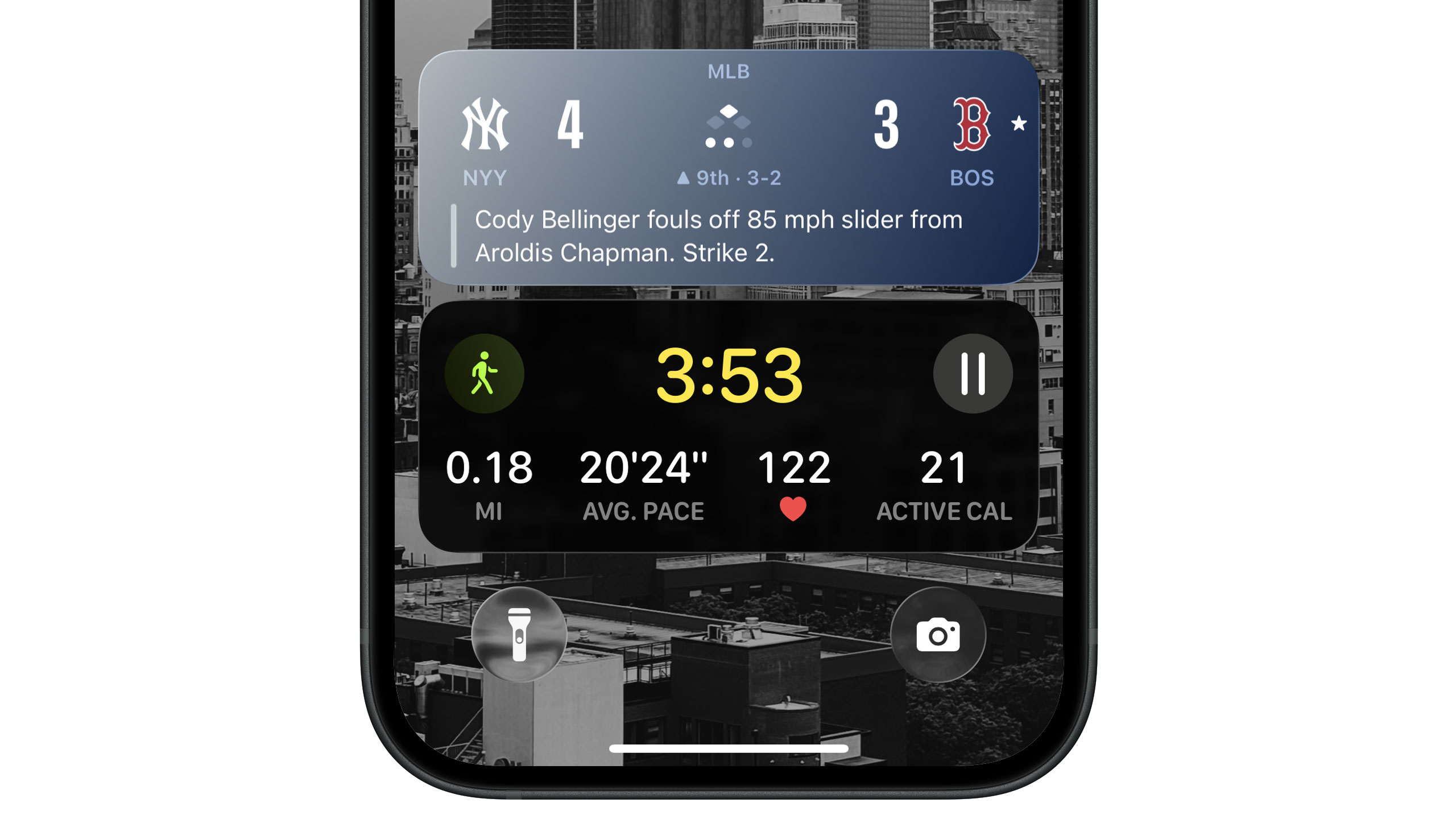
Heart rate stats are available as Live Activities on the Lock Screen.
Billy Steele for Engadget

In addition to workout apps, you can also view your heart rate in the Health app on your iPhone or iPad. Here, you’ll be able to see live data from the AirPods Pro 3’s heart rate sensors. 

In the Health app

  1. Put your AirPods Pro 3 in your ears and make sure they’re connected to your iPhone or iPad. 

  2. Open the Health app on an iPhone or iPad.

  3. Tap the magnifying glass icon at the bottom right, then tap Heart, then tap Heart Rate. 

  4. Your live heart rate from AirPods Pro 3 will be displayed in a graph.

During a workout

As I mentioned before, your heart rate will appear in the Fitness app during workouts. The AirPods Pro 3 can also send that data to compatible third-party apps. For those, you’ll need to give the app permission to access your heart rate data, as well as the ability to read and record workouts. You’ll only have to do this once: when you use a third-party workout app with Apple Health for the first time.

  1. Put your AirPods Pro 3 in your ears and make sure they’re connected to your iPhone.

  2. Go to the Fitness app or a third-party workout app on your iPhone. (Apple hasn’t published a list of supported apps, but iOS fitness apps that offer heart-rate tracking should work with the AirPods Pro 3 if the developer decides to do so. Examples of those include Nike Run Club, Peloton, Runna and Ladder.)

  3. Start a workout in the app you choose. 

  4. Your heart rate will appear in the app during your workout. If you see dashes or the number is dimmed, that means the AirPods Pro 3 aren’t getting a good reading. This is similar to what happens if your Apple Watch is not maintaining contact with your wrist and is typically a result of a loose wristband. Check the fit of your earbuds and make sure they’re connected to your iPhone.

  5. To stop heart rate tracking in any of the apps, end your workout.

  6. You will then get a summary of the heart rate stats for your workout in a third-party app or Apple’s Fitness or Health apps. 

Just ask Siri any time

In addition to looking at heart rate data in the Health app or other workout apps, you can just ask Siri to tell you a current reading without ever touching your phone.

  1. Put your AirPods Pro 3 in your ears and make sure they’re connected to your iPhone.

  2. Ask Siri “What’s my heart rate?” or something similar. 

  3. Remember: You don’t need to touch the buttons on the AirPods Pro 3 in order to activate Siri. If Talk to Siri is set to “Siri or Hey Siri” or “Hey Siri” under Apple Intelligence & Siri in the Settings app on your iPhone, you only need to use the wake word and then ask your question. If not, you can activate Siri with a press and hold the Force Touch button on either side until you hear a chime. 

Best practices to keep heart rate measurements accurate

The AirPods Pro 3 are an even more powerful workout companion.
Apple

Like any activity-monitoring device, there are some habits that will help ensure the data that you’re getting from the AirPods Pro 3 is as accurate as possible. Not only do the AirPods Pro 3 track heart rate, but the motion sensor data it sends to your iPhone is essential to calculate things like calories burned, steps and distance for your daily activity. For this reason, it’s crucial that your earbuds and iPhone or iPad are working together properly. 

  • Make sure your AirPods Pro 3 fit well. If there isn’t good contact between the heart rate sensors on the AirPods Pro 3 and the skin inside your ear, you could get poor heart rate readings. Apple warns users that the best ear tip size for acoustic seal and the best one for heart rate tracking may be different. 

  • Maintain up-to-date information in the Health app. The details that you enter into the Health app — such as height, weight, gender and age — are used with heart rate and motion sensor data to calculate metrics like calories burned. 

  • Keep warm: cold ears may impact the performance of the AirPods Pro 3. If you’re exercising in cold locations, you may have trouble getting accurate readings from the AirPods Pro 3. Low temperatures can reduce the blood flow to your ears, which makes it more difficult for the earbuds to track your heart rate accurately. 

  • Check your ears regularly. Earwax buildup, moisture or skin conditions can affect contact between the AirPods Pro 3 and your skin. 

  • Check your jewelry or piercings. Apple says metal jewelry from piercings can also interfere with heart rate readings. If you encounter any performance issues during workouts, the company recommends removing any piercings near the location where the AirPods Pro 3 sit in your ears. 

  • Know that everyone’s ears are different. The amount of blood flow detectable through the skin varies from person to person. Like I said earlier, this can also be affected by the environment (cold weather, for example) or activity levels. If blood flow in your ears changes based on either of these factors, it can impact the performance of heart-rate tracking on the AirPods Pro 3.

  • Clean your AirPods Pro 3. To keep the AirPods Pro 3 in peak working condition, clean them regularly. Tips for the best ways to do that are available in our AirPods cleaning guide.

This article originally appeared on Engadget at https://www.engadget.com/audio/headphones/how-to-use-the-airpods-pro-3s-heart-rate-tracking-feature-141510469.html?src=rss

It’s official: EA is selling to private equity in $55 billion deal

Friday’s reports that Electronic Arts planned to go private were publicly confirmed Monday morning. Silver Lake, Saudi Arabia’s Public Investment Fund (PIF), and Jared Kushner’s Affinity Partners will join together to pay an estimated $55 billion for the video game mega-publisher in a deal being described as the “largest all-cash sponsor take-private investment in history.”

EA stockholders will receive $210 per share in the deal, a 25 percent premium on the $168.32 price for a share at the close of business last Thursday (and well above the stock’s $179 all-time-high share price). Share in EA closed at $193.35 on Friday after reports of the private sale first broke and are selling for roughly $203.50 per share in pre-market trading as of this writing.

EA CEO Andrew Wilson, who is expected to stay on after the deal is finalized in early 2027, said in a public note to employees that “this moment is a recognition of your creativity, your innovation, and your passion. You have built some of the world’s most iconic IP, created stories that have inspired global communities, and helped shape culture through interactive experiences. Everything we have achieved – and everything that lies ahead – is because of you.”

Read full article

Comments

Saudi Takeover of EA in $55 Billion Deal Raises Serious Concerns

BrianFagioli writes: Electronic Arts has agreed to a $55 billion buyout by Saudi Arabia’s Public Investment Fund (PIF), private equity firm Silver Lake, and Jared Kushner’s Affinity Partners, marking the largest all-cash sponsor take-private deal ever. Shareholders will receive $210 per share, a 25 percent premium over EA’s unaffected price, and once the transaction closes the company will be delisted from public markets. EA CEO Andrew Wilson will remain in charge, with the group arguing that private ownership will allow the publisher to innovate faster and expand its global footprint.

The deal, however, is already sparking controversy. PIF, a sovereign wealth fund controlled by the Saudi government, will effectively gain control of one of the most influential names in gaming. While investors stand to profit, many gamers and industry watchers are concerned about how Saudi ownership could shape EA’s creative direction, monetization strategies, and role in esports. With regulatory approvals still pending, the takeover raises difficult questions about the intersection of gaming, politics, and global soft power.


Read more of this story at Slashdot.

Big AI firms pump money into world models as LLM advances slow

The world’s top artificial intelligence groups are stepping up their focus on so-called world models that can better understand human environments, in the search for new ways to achieve machine “superintelligence.”

Google DeepMind, Meta, and Nvidia are among the companies attempting to gain ground in the AI race by developing systems that aim to navigate the physical world by learning from videos and robotic data rather than just language.

This push comes as questions rise about whether large language models—the technology that powers popular chatbots such as OpenAI’s ChatGPT—are reaching a ceiling in their progress.

The leaps in performance between LLMs released by companies across the sector, such as OpenAI, Google, and Elon Musk’s xAI, have been slowing, despite the vast sums invested in their development.

Read full article

Comments

Apple M5 MacBooks Reportedly Approach Key Milestone, When To Expect A Release

Apple M5 MacBooks Reportedly Approach Key Milestone, When To Expect A Release
If the latest rumor is accurate, then Apple is getting ready to green light the mass production of its next round of upgraded MacBook models infused with its next-generation M5 silicon. This includes both the 14-inch and 16-inch MacBook Pro as well as the 13-inch and 15-inch MacBook Air models. Barring a setback, we could see at least one

Amazon’s Kindle Scribe drops to a record-low price for Prime Day

We’re only one week away from Amazon Prime Day and the sales have already started. The deals include Amazon’s devices, from Kindle tablets to Echo speakers. 

Take the Amazon Kindle Scribe, which has dropped to $300 from $400. The 25 percent discount brings the second-generation device back down to its all-time low price. This deal is available on the 16GB model in Tungsten (dark grey) and doesn’t include Kindle Unlimited. If you want more storage, the 32GB and 64GB versions are also 25 and 24 percent off, respectively. 

The Kindle Scribe is our pick for best e-reader E Ink tablet. It scored an 86 in our review, thanks to the smooth reading and writing experience it provides. We were also fans of its sleek and slender design. It has a 10.2-inch screen and offers front lights that auto-adjust to your needs. Our biggest gripe was the cost which, thanks to this deal, is less of an issue. 

This article originally appeared on Engadget at https://www.engadget.com/deals/amazons-kindle-scribe-drops-to-a-record-low-price-for-prime-day-134701307.html?src=rss

EA confirms it will go private in $55 billion acquisition

Beleaguered video game giant Electronic Arts has agreed to a $55 billion acquisition that will take the company private. Saudi Arabia Public Investment Fund (PIF), Silver Lake and Affinity Partners have reached a deal to buy EA, the company said in a statement. 

Some details about the proposed arrangement surfaced over the weekend. The deal, the largest-ever leveraged buyout, according to Bloomberg, marks the end of EA’s 35-year run as a publicly traded company. “Our creative and passionate teams at EA have delivered extraordinary experiences for hundreds of millions of fans, built some of the world’s most iconic IP, and created significant value for our business,” EA CEO Andrew Wilson said in a statement. “This moment is a powerful recognition of their remarkable work.”

EA hasn’t been immune from the forces that have upended the games industry. Last year, the company laid off more than 650 employees, which it labeled an attempt at “streamlining” its business. This year, the company has canceled an upcoming Black Panther game and closed the studio behind it, and has reportedly “shelved” its Need For Speed Franchise.

The company said it expects the deal to close sometime in the first quarter of 2027, noting that it will need regulatory approvals. EA said that Wilson will continue as CEO and that its Redwood City, California headquarters will not change. In a statement Silver Lake Co-CEO Egon Durban said that the group plans to “invest heavily” in the video game company and help it “expand its reach worldwide.” Silver Lake is also part of the forthcoming deal to spin off the US version of TikTok into a new, American-owned company. 

This article originally appeared on Engadget at https://www.engadget.com/ea-confirms-it-will-go-private-in-55-billion-acquisition-133841614.html?src=rss

GeForce RTX 50 Series GPUs Spotted In Online Tool As New Launch Rumor Emerges

GeForce RTX 50 Series GPUs Spotted In Online Tool As New Launch Rumor Emerges
It’s a new work week, so let’s go ahead and kicks things off with a fresh GeForce RTX 50 Super series rumor, shall we? There are actually two leaks to report. One is that Seasonic has gone and listed a couple of not-yet-released GeForce RTX 50 series models in its online power supply calculator, and the second is a new rumored time frame for

The Out-of-Touch Adults’ Guide to Kid Culture: What Is ‘Steal a Brainrot’?

Are you old enough to remember talking to your friends on the phone all the time? A phone with a cord? Then welcome to the Out of Touch Adults’ Guide to Kid Culture, a guide to what’s going down with all the youths out there. This week, the young ‘uns are stealing each other’s brainrots, guzzling heavy soda, (not) paying $500 for a rock, and being harassed by a rizzed-out robot.

“Steal a Brainrot”

If you know anyone under the age of 16, they are probably playing “Steal a Brainrot,” and you are probably asking “Steal a what now?” so here’s what it’s all about: “Steal a Brainrot” is a multiplayer mini-game within maxi-games Roblox and Fortnite. In a game of Brainrot, up to eight players share a server, and each has their own base. The object of the game is to buy brainrots for your base and/or steal brainrots from other players’ bases, while defending your own brainrots from thieves. Steal enough brainrots and you become more powerful and can make your base more defensible. The brainrots themselves are objects meant to reference “Italian brainrot,” i.e.: low-quality internet memes. They vary in value and have vaguely Italian names, but they aren’t based on actual brainrot memes.

“Steal a Brainrot” is insanely popular, boasting a concurrent player count of over 20 million people, so you’re probably asking, “Who is getting rich from this (and why isn’t it me?).” The answer: Two groups are making most of the dough. The first is the game’s developers, SpyderSammy and DoBig Studios, who get a cut of all the micro-transactions within “Steal a Brainrot” (players can spend real money for in-game items). The other beneficiary of all this brainrot is the Roblox Corporation, who provide the platform in exchange for the rest of the money from Brainrot micro-transactions.

As for why it isn’t you, it’s because you don’t have any good ideas.

What is “heavy soda”?

Unlike “heavy water,” in which H2O’s hydrogen atoms are replaced by deuterium atoms, heavy soda is pop with extra syrup—as hard as this is to believe, some people think Sprite and Mountain Dew just aren’t sweet enough. Heavy soda comes from self-serve soda machines. Some, apparently, have a toggle to increase or decrease the amount of syrup in the resulting drinks, and many people on TikTok are great fans of the beverage that results from setting the machine on “maximum syrup.”

Sometimes called “dirty soda,” heavy soda supposedly originated in gas stations on the Southern tip of Missouri. If your gas station drink machine looks like this:

… then you are probably at least 1,000 miles from a Whole Foods. But maybe not for long; thanks to boosters on TiKtok, heavy soda is spreading.

Polaroid aesthetic making a comeback

I’ve been messing around with Nano Banana, the image generator within Google’s Gemini AI app, and so have the kids, but they’re not using it for wrinkle-smoothing and paunch reduction. They’re getting in touch with the 1970s aesthetic of the instant camera and creating Polaroid-style pictures of themselves with famous people, fictional characters, and everything else.

One of the more popular variants of the trend involves combining a picture of your current self with your younger self, resulting in surreal-but-poignant videos like these:

Making your own is easy: Install Gemini. Upload the current picture and older picture. Then write a prompt for Gemini like, “Generate a picture taken with a Polaroid camera, desaturated colors, with a camera flash as the single light source and a 1970s suburban tract house as a background.”

Are people really buying $1000 rocks from Anthropologie?

A few weeks ago, TikTok user Phoebe Adams posted a video where she pranks her boyfriend by opening a box that contains a rock she said cost $150.

“It’s a special rock from Anthropologie,” she explains to her angry boyfriend. “It’s gonna sit on our entryway table. It’s a one-of-kind rock that they actually found on the ground,” she adds.

The video blew up and people started imitating it in videos like this:

and this:

But then things kicked up a notch when the real Anthropologie set up an actual rock display at a store so Phoebe could continue to gaslight her long-suffering boyfriend Dan:

All of this leads to the question of whether this is a retailer cleverly taking advantage of an unexpected trend—or was the entire thing viral marketing from the beginning? I’m 50/50.

Viral video of the week: Rizzbot

Speaking of things that are probably guerrilla marketing campaigns, this week’s viral video celebrity is Rizzbot. Formally known as “Jake the Rizzbot,” this four-foot-tall walking (and dancing) robot in a cowboy hat has been traveling all over the country for the past several months, rizzing people up with its robotic swagger and robotic Gen Z slang.

Videos from the official Rizzbot channel has racked up hundreds of millions of views for videos like this, where Rizzbot goes off on a rando’s fit:

But Rizzbot can be a total jerk too and sometimes shouts obscenities at people for no reason:

or promises a compliment only to deliver a roast, proving that no one should trust a clanker:

Rizzbot is a decorated version of Unitree Robotics G1 “Humanoid Agent AI Avatar,” a $16,000 robot that can joke around with people and sometimes keep from falling over. Despite appearances, Rizzbot is not acting autonomously. Someone is carefully controlling his every move and word, but we don’t know who or why. The bot is most often seen in downtown Austin, and has some serious connections to the Texas Robotics lab at UT, though.

This Blink Wired Floodlight Camera Is 50% Off Right Now

We may earn a commission from links on this page. Deal pricing and availability subject to change after time of publication.

Did you know you can customize Google to filter out garbage? Take these steps for better search results, including adding Lifehacker as a preferred source for tech news.


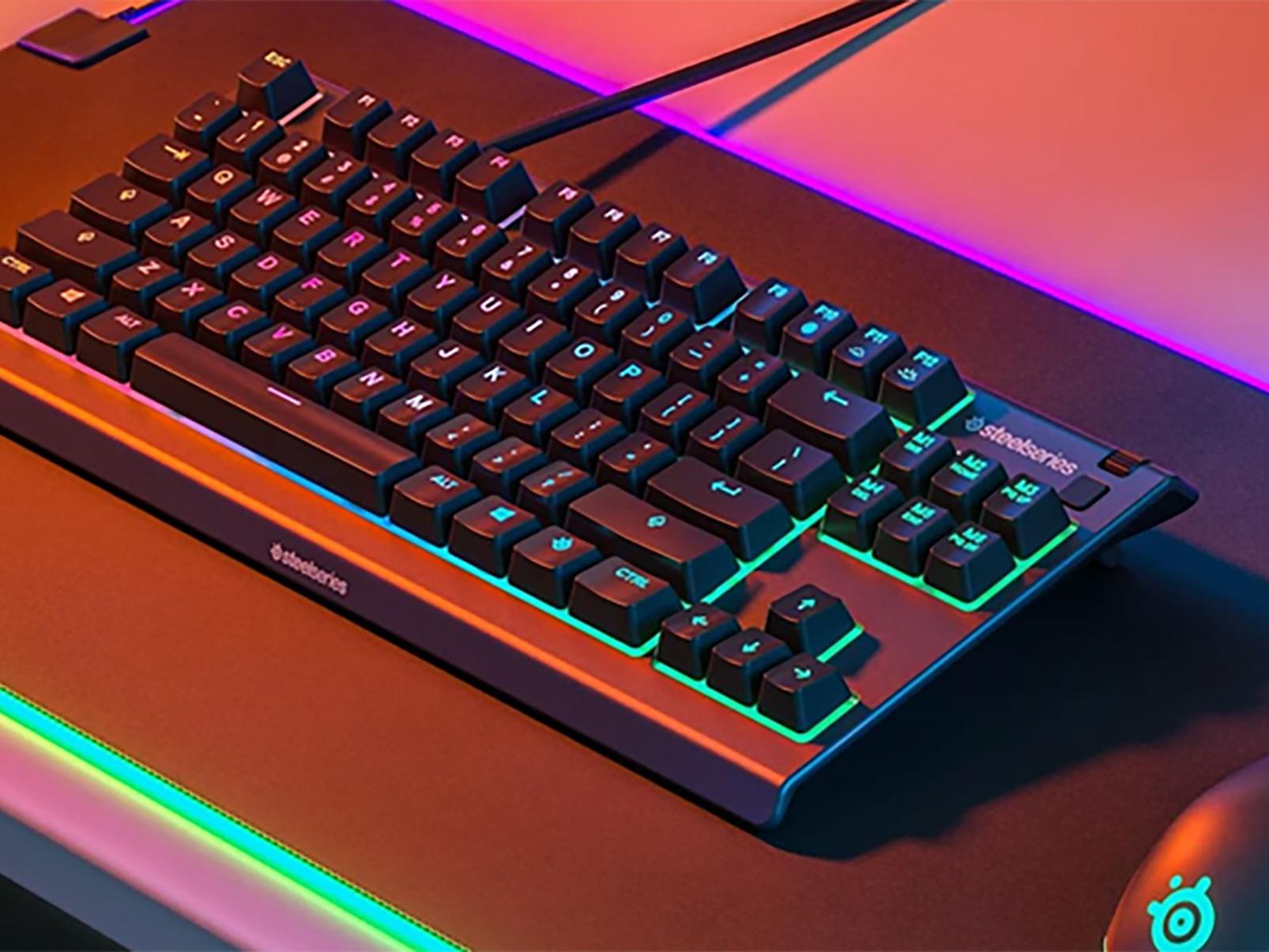
Floodlight cameras usually cost a lot more than the casual buyer wants to spend, but Blink’s Wired Floodlight Camera has quietly slipped to a price that makes it hard to ignore for starting or extending a home security setup. Right now it’s $49.99 on Amazon (regularly $99.99), which is the lowest price it’s ever been, according to price trackers.

This is a hardwired security camera with bright dual-LED floodlights, a loud siren, and the ability to record sharp 1080p video. The LEDs crank out 2,600 lumens combined—enough to light up a driveway or backyard—and also enable color night vision. That means you’re not stuck with blurry grayscale clips when something sets off the motion sensor after dark.

The performance holds up beyond just brightness. The camera has a wide 143-degree field of view, motion alerts arrive almost instantly, and daytime footage shows accurate colors and detail. At night, black-and-white video looks clear out to about 30 feet, while color video with the floodlights on is plenty usable even if the tones are a bit washed compared to daytime shots, notes this PCMag review. Through the Blink app, you can check the live feed, turn lights on or off, save recordings, and use two-way talk. There’s also a 105dB siren built in, which is loud enough to scare off trespassers or get a neighbor’s attention.

The catch is that not all of the software features are free: Without a subscription, you’re limited to live viewing and motion alerts. With the $3 per month Basic plan, you get 60 days of video history, person detection, photo capture, and longer live streams. For multiple cameras, the $10 per month Plus Plan gives you the same perks plus an extended warranty and discounts on future Blink gear.

If you’d rather skip subscriptions, Blink sells its Sync Module 2 hub for around $50. Pair it with a USB drive, and you can save clips locally. As with most Blink products, Alexa and IFTTT support are included, so you can connect it to routines and other devices, but there’s no compatibility with Google Assistant or Apple HomeKit. Installation is straightforward if you’re comfortable wiring an outdoor light fixture, and Blink includes the screws, nuts, and guides you need. If not, hiring an electrician is the safer move. All told, this is one of the most affordable ways to add a floodlight camera to your home.


Our Best Editor-Vetted Tech Deals Right Now


Ring Battery Doorbell Plus


—
$79.99

(List Price $149.99)


Ring Indoor Cam (2nd Gen, 2-pack, White)


—
$49.98

(List Price $79.99)


Amazon Fire TV Stick 4K (2nd Gen, 2023)


—
$24.99

(List Price $49.99)


Amazon Fire HD 10 (2023)


—
$69.99

(List Price $139.99)

Deals are selected by our commerce team

X will appeal Indian court ruling allowing ‘arbitrary takedown orders’

X is challenging an Indian court order it says would require it to comply with millions of takedown requests without due process. In a statement, the company said it was “deeply concerned” about the ruling, which allows police officers “to issue arbitrary takedown orders through a secretive online portal” called the Sahyog.

X’s challenge comes after the Karnataka High Court dismissed X’s initial challenge of the Sahyog portal last week. As the BBC notes, the Sahyog “describes itself as a tool to automate the process of sending government notices to content intermediaries such as X and Facebook.” But X has labeled it a “censorship portal,” saying that it allows “millions” of officials, including local police officers, to order content to be removed.

X is deeply concerned by the recent order from the Karnataka court in India, which will allow millions of police officers to issue arbitrary takedown orders through a secretive online portal called the Sahyog. This new regime has no basis in the law, circumvents Section 69A of…

— Global Government Affairs (@GlobalAffairs) September 29, 2025

“The Sahyog enables officers to order content removal based solely on allegations of ‘illegality,’ without judicial review or due process for the speakers, and threatens platforms with criminal liability for non-compliance,” X wrote in a statement. “We will appeal this order to defend free expression.”

X has a history of challenging the Indian government on content moderation issues. The company previously challenged orders requiring it to block specific posts and accounts in 2024 and 2022. The platform also clashed with the Indian government under Jack Dorsey’s leadership. Officials threatened to jail Twitter employees in 2021 after the company reversed a decision to block accounts amid widespread protests. 

This article originally appeared on Engadget at https://www.engadget.com/social-media/x-will-appeal-indian-court-ruling-allowing-arbitrary-takedown-orders-120000846.html?src=rss

Professor Warns CS Graduates are Struggling to Find Jobs

“Computer science went from a future-proof career to an industry in upheaval in a shockingly small amount of time,” writes Business Insider, citing remarks from UC Berkeley professor Hany Farid said during a recent episode of Nova’s “Particles of Thought” podcast.
“Our students typically had five internship offers throughout their first four years of college,” Farid said. “They would graduate with exceedingly high salaries, multiple offers. They had the run of the place. That is not happening today. They’re happy to get one job offer….”

It’s too easy to just blame AI, though, Farid said. “Something is happening in the industry,” he said. “I think it’s a confluence of many things. I think AI is part of it. I think there’s a thinning of the ranks that’s happening, that’s part of it, but something is brewing…”

Farid, one of the world’s experts on deepfake videos, said he is often asked for advice. He said what he tells students has changed… “Now, I think I’m telling people to be good at a lot of different things because we don’t know what the future holds.”
Like many in the AI space, Farid said that those who use breakthrough technologies will outlast those who don’t. “I don’t think AI is going to put lawyers out of business, but I think lawyers who use AI will put those who don’t use AI out of business,” he said. “And I think you can say that about every profession.”


Read more of this story at Slashdot.

ZR1, GTD, and America’s new Nurburgring war

There’s a racetrack with a funny name in Germany that, in the eyes of many international enthusiasts, is the de facto benchmark for automotive performance. But the Nurburgring, a 13-mile (20 km) track often called the Green Hell, rarely hits the radar of mainstream US performance aficionados. That’s because American car companies rarely take the time to run cars there, and if they do, it’s in secrecy, to test pre-production machines cloaked in camouflage without publishing official times.

The track’s domestic profile has lately been on the rise, though. Late last year, Ford became the first American manufacturer to run a sub-7-minute lap: 6:57.685 from its ultra-high-performance Mustang GTD. It then did better, announcing a 6:52.072 lap time in May. Two months later, Chevrolet set a 6:49.275 with the hybrid Corvette ZR1X, becoming the new fastest American car around that track.

It’s a vehicular war of escalation, but it’s about much more than bragging rights.

Read full article

Comments

AI-Powered Stan Lee Hologram Debuts at LA Comic Con

An anonymous reader shared this report from Ars Technica:

Late last week, The Hollywood Reporter ran a story about an “AI Stan Lee hologram” that would be appearing at the LA Comic Con this weekend. [Watch it in action here.] Nearly seven years after the famous Marvel Comics creator’s death at the age of 95, fans will be able to pay $15 to $20 this weekend to chat with a life-sized, AI-powered avatar of Lee in an enclosed booth at the show. The instant response from many fans and media outlets to the idea was not kind, to say the least. A writer for TheGamer called the very idea “demonic” and said we need to “kill it with fire before it’s too late….”

But Chris DeMoulin, the CEO of the parent company behind LA Comic Con, urged critics to come see the AI-powered hologram for themselves before rushing to judgment. “We’re not afraid of people seeing it and we’re not afraid of criticism,” he told Ars. “I’m just a fan of informed criticism, and I think most of what’s been out there so far has not really been informed….” [DeMoulin said he saw] “the leaps and bounds that they were making in improving the technology, improving the interactivity.” Now, he said, it’s possible to create an AI-powered version that ingests “all of the actual comments that people made during their life” to craft an interactive hologram that “is not literally quoting the person, but everything it was saying was based on things that person actually said….” [Hyperreal CEO and Chief Architect Remington Scott] said Hyperreal “can’t share specific technical details” of the models or training techniques they use to power these recreations. But Scott added that this training project is “particularly meaningful, [because] Stan Lee had actually begun digitizing himself while he was alive, with the vision of creating a digital double so his fans could interact with him on a larger scale….”

Still, DeMoulin said he understands why the idea of using even a stylized version of Lee’s likeness in this manner could rub some fans the wrong way. “When a new technology comes out, it just feels wrong to them, and I respect the fact that this feels wrong to people,” he said. “I totally agree that something like this-not just for Stan but for anyone, any celebrity alive or dead-could be put into this technology and used in a way that would be exploitative and unfortunate.” That’s why DeMoulin said he and the others behind the AI-powered Lee feel a responsibility “to make sure that if we were going to do this, we never got anywhere close to that.”
The “premium, authenticated digital identities” created by Hyperreal’s system are “not replacing artists,” says Hyperreal CEO/Chief Architect Remington Scott, but “creating respectful digital extensions that honor their legacy.”

Still, DeMoulin says in the article that “I suppose if we do it and thousands of fans interact with [it] and they don’t like it, we’ll stop doing it.”


Read more of this story at Slashdot.

Some Athletes are Trying the Psychedelic Ibogaine to Treat Brain Injuries

“As awareness grows around the dangers of head trauma in sports, a small number of professional fighters and football players are turning to a psychedelic called ibogaine for treatment,” reports the Los Angeles Times.

They note that the drug’s proponents “tout its ability to treat addiction, post-traumatic stress disorder and traumatic brain injury, or TBI. ”

Ibogaine, which is derived from a West African shrub, is a Schedule 1 drug in America with no legal medical uses, and experts urge caution because of the need for further studies. But the results, several athletes say, are “game-changing”…. Although athletes are just discovering ibogaine, the drug is well known within the veteran community, which experiences high rates of brain injury and PTSD. In Stanford’s study on the effects of ibogaine on special forces veterans, participants saw average reductions of 88% in PTSD symptoms, 87% in depression symptoms and 81% in anxiety symptoms. They also exhibited improvements in concentration, information processing and memory.

“No other drug has ever been able to alleviate the functional and neuropsychiatric symptoms of traumatic brain injury,” Dr. Nolan Williams, a professor of psychiatry and behavioral sciences, said in a statement on the results. “The results are dramatic, and we intend to study this compound further….”

States can work faster than the federal government by carving out exemptions for supervised ibogaine therapy programs, similar to what Oregon has done with psilocybin therapy. Many states have also opted to legalize marijuana for medicinal or recreational use… In June, Texas approved a historic $50-million investment in state funding to support drug development trials for ibogaine, inspired by the results seen by veterans. Arizona legislators approved $5 million in state funding for a clinical study on ibogaine in March, and California legislators are pushing to fast-track the study of ibogaine and other psychedelics.


Read more of this story at Slashdot.

Culture Magazine Urges Professional Writers to Resist AI, Boycott and Stigmatize AI Slop

The editors of the culture magazine n + 1 decry the “well-funded upheaval” caused by a large and powerful coalition of pro-AI forces. (“According to the logic of market share as social transformation, if you move fast and break enough things, nothing can contain you…”)
“An extraordinary amount of money is spent by the AI industry to ensure that acquiescence is the only plausible response. But marketing is not destiny.”

The AI bubbleâS — âSand it is a bubble, as even OpenAI overlord Sam Altman has admittedâS — âSwill burst. The technology’s dizzying pace of improvement, already slowing with the release of GPT-5, will stall… [P]rofessional readers and writers: We retain some power over the terms and norms of our own intellectual life. We ought to stop acting like impotence in some realms means impotence everywhere. Major terrains remain AI-proofable. For publishers, editors, critics, professors, teachers, anyone with any say over what people read, the first step will be to develop an ear. Learn to tellâS — âSto read closely enough to tellâS — âSthe work of people from the work of bots…

Whatever nuance is needed for its interception, resisting AI’s further creep into intellectual labor will also require blunt-force militancy. The steps are simple. Don’t publish AI bullshit. Don’t even publish mealymouthed essays about the temptation to produce AI bullshit. Resist the call to establish worthless partnerships like the Washington Post’s Ember, an “AI writing coach” designed to churn out Bezos-friendly op-eds. Instead, do what better magazines, newspapers, and journals have managed for centuries. Promote and produce original work of value, work that’s cliché-resistant and unreplicable, work that triesâS — âSas Thomas Pynchon wrote in an oracular 1984 essay titled “Is It OK to Be a Luddite?”âS — âS”through literary means which are nocturnal and deal in disguise, to deny the machine….”

Punishing already overdisciplined and oversurveilled students for their AI use will help no one, but it’s a long way from accepting that reality to Ohio State’s new plan to mandate something called “AI fluency” for all graduates by 2029 (including workshops sponsored, naturally, by Google). Pedagogically, alternatives to acquiescence remain available. Some are old, like blue-book exams, in-class writing, or one-on-one tutoring. Some are new, like developing curricula to teach the limits and flaws of generative AI while nurturing human intelligence…

Our final defenses are more diffuse, working at a level of norms and attitudes. Stigmatization is a powerful force, and disgust and shame are among our greatest tools. Put plainly, you should feel bad for using AI. (The broad embrace of the term slop is a heartening sign of a nascent constituency for machine denial.) These systems haven’t worked well for very long, and consensus about their use remains far from settled. That’s why so much writing about AI writing sounds the way it doesâS — âSnervous, uneven, ambivalent about the new regime’s utilityâS — âSand it means there’s still time to disenchant AI, provincialize it, make it uncompelling and uncool…

As we train our sights on what we oppose, let’s recall the costs of surrender. When we use generative AI, we consent to the appropriation of our intellectual property by data scrapers. We stuff the pockets of oligarchs with even more money. We abet the acceleration of a social media gyre that everyone admits is making life worse. We accept the further degradation of an already degraded educational system. We agree that we would rather deplete our natural resources than make our own art or think our own thoughts… A literature which is made by machines, which are owned by corporations, which are run by sociopaths, can only be a “stereotype”âS — âSa simplification, a facsimile, an insult, a fakeâS — âSof real literature. It should be smashed, and can.
The 3,800-word article also argues that “perhaps AI’s ascent in knowledge-industry workplaces will give rise to new demands and new reasons to organize…”


Read more of this story at Slashdot.