Anthropic says its new AI model “maintained focus” for 30 hours on multistep tasks

On Monday, Anthropic released Claude Sonnet 4.5, a new AI language model the company calls its “most capable model to date,” with improved coding and computer use capabilities. The company also revealed Claude Code 2.0, a command-line AI agent for developers, and the Claude Agent SDK, which is a tool developers can use to build their own AI coding agents.

Anthropic says it has witnessed Sonnet 4.5 working continuously on the same project “for more than 30 hours on complex, multi-step tasks,” though the company did not provide specific details about the tasks. In the past, agentic models have been known to typically lose coherence over long periods of time as errors accumulate and context windows (a type of short-term memory for the model) fill up. In the past, Anthropic has mentioned that previous Claude 4.0 models have played Pokémon for over 24 hours or refactored code for seven hours.

To understand why Sonnet exists, you need to know a bit about how AI language models work. Traditionally, Anthropic has produced three differently sized AI models in the Claude family: Haiku (the smallest), Sonnet (mid-range), and Opus (the largest). Anthropic last updated Haiku in November 2024 (to 3.5), Sonnet this past May (to 4.0), and Opus in August (to 4.1). Model size in parameters, which are values stored in its neural network, is roughly proportional to overall contextual depth (the number of multidimensional connections between concepts, which you might call “knowledge”) and better problem-solving capability, but larger models are also slower and more expensive to run. So AI companies always seek a sweet spot in the middle with reasonable performance-cost trade-offs. Claude Sonnet has filled that role for Anthropic quite well for several years now.

Read full article

Comments

Fall Means Darker Morning and Evening Runs, and You Should Be Prepared

We may earn a commission from links on this page.

The sun has already begun to set on our exercise routines—at least for those of us who like to run in the evenings. As we get deeper into fall (and prepare for the dreaded time change), evening and morning runners alike will have to deal with darker runs.

Here are my best tips for staying safe and making the most of the darkness while you’re out pounding the pavement.

Bring a flashlight, even if you don’t think you need it

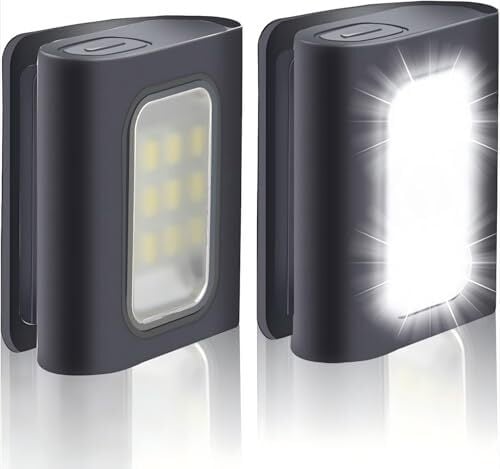
If you’re an evening runner, be warned that this is the season for darkness sneaking up on you. Check the sunset time before you head out, and bring a light source just in case you make a wrong turn or stop a little longer at a water break. I have these USB-chargeable lights, and I keep one in the same belt that holds my water bottle.

You can’t totally trust the sunset time to be the time you’ll start losing light. When I’m running trails, I’ve noticed the light starts fading well in advance of the official sunlight time, thanks to all those hills and trees. There may not be cars to worry about in the wilderness, but without sunlight it’s a lot easier to stub your toe on rocks and roots in the path.

Even if you’re just walking in your neighborhood, it’s good to be seen. I’ve been in pitch-dark parks where I didn’t realize another jogger was there until they were right in front of me. Carrying some kind of light can help you see people, but it can also help you be seen, and avoid terrifying everyone else.

Bike riders need lights too

Light is also important if you’re cycling. You especially want to make sure cars can see you, so put on your front and back lights even if it’s not fully dark yet. The convention (which is also the legal requirement in many areas) is to put a bright white light at the front of your bike, and a red light for visibility at the back. That back light could be mounted to your bike or to another convenient spot, like clipped onto your jacket or helmet.

If you’re a runner, a hand-held flashlight is great, but a headlamp is often more useful. Whatever you use, know the battery life and make sure your light is fully charged before you go. I like my Petzl Tikkina, which can run on either AAA batteries or a rechargeable that’s sold separately.

Wear reflective clothing

Light colors are more visible than dark ones, and neon-colored high-visibility fabrics can help you appear brighter as the sun is going down. But neither one is a replacement for reflective gear, which shines straight back at a light source like the headlights of a car. If you’re cycling, your wheels and pedals may already have reflectors on them; if not, you can buy some at a bike store. Running shoes and jackets often have reflective accents on them, but they’re often small. Shine a flashlight on your gear to find out just how reflective it is.

If you need to add something quickly and cheaply, a basic reflective vest does the job. For a fancier version, the Noxgear Tracer is a vaguely vest-shaped strap that lights up enough that everybody will see you. You can get it with or without a chest light to illuminate the road in front of you.

Prepare for the cold

Nights are colder than days, so don’t expect your pre-dawn runs to be as warm as your midday ones. Check the hourly weather forecast with one of our favorite weather apps (I use Carrot). Then take my advice on dressing to stay warm while you run.

If you’re cycling, you have to deal with the wind as well. Glasses or goggles can keep wind out of your eyes, and don’t forget to layer up on gloves, too. Consider glove liners or windproof gloves.

Stay safe

When you head out, pay extra attention to your surroundings. That flashlight will help, and it’s best to run without headphones, or to keep the volume very low.

Bring a buddy if you can. A running group is a great option if you don’t have friends who can meet you at your preferred times. If you have a dog, you can probably train them to run with you, but remember that they may need to improve their fitness over time to keep up.

Run on the correct side of the road (the left, facing traffic) and stay alert to your surroundings. Plan out your route before you leave to make sure you’re not going anywhere you’re not comfortable with. A nighttime run is not the best time to find yourself lost in an unfamiliar neighborhood or unsure of whether there’s a safe crossing over a busy road.

Sports piracy site Streameast returns after US government let domain expire

Popular piracy website Streameast is back to illegally streaming sporting events, just 13 months after Homeland Security Investigations (HSI) seized the domain.

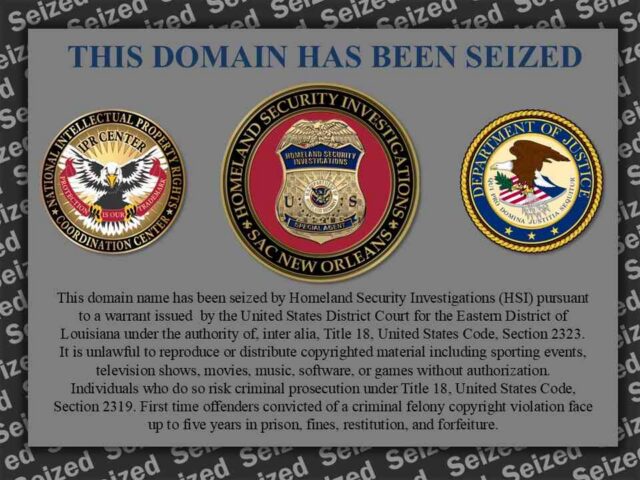
In August 2024, HSI seized several domains belonging to the Streameast piracy network, including some backup domains. After the seizure, trying to access those sites resulted in a pop-up from HSI stating, ‘THIS DOMAIN HAS BEEN SEIZED.”

Seized Streameast websites show this notice.

At the time, Streameast was one of the most well-known sites in the US for watching sporting events, including from the NBA, NFL, and MLB, illegally and even claimed LeBron James as a user.

Read full article

Comments

Open Source Android Repository F-Droid Says Google’s New Rules Will Shut It Down

F-Droid has warned that Google’s upcoming developer verification program will kill the free and open source app repository. Google announced plans several weeks ago to force all Android app developers to register their apps and identity with the company. Apps not validated by Google will not be installable on certified Android devices.

F-Droid says it cannot require developers to register with Google or take over app identifiers to register for them. The site operators say doing so would effectively take over distribution rights from app authors. Google plans to begin testing the verification scheme in the coming weeks and may charge registration fees. Unverified apps will start being blocked next year in Brazil, Indonesia, Singapore, and Thailand before expanding globally in 2027. F-Droid is calling on US and EU regulators to intervene.


Read more of this story at Slashdot.

This New Apple Maps Feature ‘Tracks’ You, but You Can Turn It Off

Did you know you can customize Google to filter out garbage? Take these steps for better search results, including adding my work at Lifehacker as a preferred source.


If I told you Apple rolled out a new feature with iOS 26 that allows Maps to track your movements, and save that information for later, what would you think? On the surface, it does sound pretty invasive, especially from a company that typically promotes user privacy. While this really is a new feature, here’s the thing: It isn’t as bad as it sounds. And, if you really don’t like it, you can turn it off.

The feature, “Visited Places,” is actually intended to be a private way to keep tabs on the places you’ve been to, and to easily recall your favorites in the future. When the feature is enabled, Maps will take note of places you visit, even if you don’t use Maps to get there. It’s like a passive, automatic journal, taking note of restaurants, malls, parks, or simply general locations you venture to day-to-day. According to Apple, all of this information is stored on your synced devices only, and is end-to-end encrypted, which means Apple has no way to access this data.

If you have the feature enabled, you’ll find your Visited Places appropriately tucked away in the “Places” menu when you launch Maps. I’ve only had the feature turned on for a day or so, so I only have three locations currently saved, but all three were destinations I visited without using Maps to guide me there.

Personally, I have no issue with keeping this setting turned on: Nobody has access to the data except for me, and I can imagine it reminding me of the places I’ve enjoyed visiting during a future scroll.

Apple says you will be asked to turn on the feature when you open Maps after updating to iOS 26, and, in my experience, that was the case. However, for CNET writer Zachary McAuliffe, the feature was already enabled without his input. As such, it might be smart to double-check that the feature is set to whichever setting you prefer, lest you allow Maps to track your movements without your knowledge.

How to manage ‘Visited Places’ in Apple Maps

To check whether the feature is turned on or off, head to Settings > Apps > Maps > Location. Alternatively, you can go to Settings > Privacy & Security > Location Services > Maps. Either way, check the toggle next to “Visited Places.”

You can also delete any Visited Places without needing to turn the feature off altogether. Open Maps, tap “Places,” then “Visited Places.” Here, you can swipe left on any place to delete it, or choose “Clear History” to delete them all. Plus, you can choose how long you want Maps to store your Visited Places: The default is “Forever,” but you can also select “3 Months” or “1 Year,” if you wish.

How to follow Amazon’s big hardware event tomorrow

Tomorrow, Amazon will host an event in New York City to unveil some new hardware. The showcase kicks off on September 30 at 10AM ET. Based on what we can see in the invitation and the most common cadence of product news, we are expecting to hear about developments to the Echo line of smart speakers, at least one new addition to the Kindle collection and an update for the Fire TV. 

Normally this is where we’d have an embed of a YouTube link so you could watch along on Tuesday, but this event is a little unusual in that Amazon doesn’t provide a stream for those of us at home. However, Engadget will have reporters at the event, and they will be liveblogging all the details as Amazon announces them. The liveblog will be up and running around 8AM ET. 

In past years, this fall showcase has also been when Amazon shares news from the Ring, Blink and Eero companies, so we might have more than just its own-brand products being discussed tomorrow. And with AI the buzzword of the day, there’s also a good chance that Amazon execs will spend some time discussing the Alexa+ voice assistant.

This article originally appeared on Engadget at https://www.engadget.com/how-to-follow-amazons-big-hardware-event-tomorrow-211105336.html?src=rss

EA will be a very different company under private ownership

This morning’s announcement that EA plans to sell itself to a consortium of private equity firms is one of the biggest business stories of the year. The $55 billion deal is the largest leveraged buyout in history and will send ripples through the world of high finance, both within and outside the gaming sector.

But even players who have no interest in the business side of the game industry should be paying attention to the news. Analysts who spoke to Ars Technica said that the privately owned version of Electronic Arts will likely be very different from the old public company, in ways that could directly affect the kinds of games the mega-publisher produces.

A $20 billion hole to fill

One of the biggest differences between a publicly owned EA and a privately owned version is that the latter will be saddled with roughly $20 billion of fresh debt provided by JP MorganChase, which is being used to help finance the leveraged buyout. Wedbush Morgan analyst Michael Pachter estimates the firm will be on the hook for roughly $1 billion a year in service payments on that debt after the deal closes.

Read full article

Comments

These Kindle Bundles Are Already on Sale for October Prime Day

We may earn a commission from links on this page. Deal pricing and availability subject to change after time of publication.

Did you know you can customize Google to filter out garbage? Take these steps for better search results, including adding my work at Lifehacker as a preferred source.


Early October Prime Day Deals are here, and some good ones are rolling in. Amazon devices have big discounts right now, and that includes Kindle readers. Right now, Amazon is offering Prime Members bundles for the Kindle, Kindle Colorsoft, Kindle Paperwhite Signature Edition, Kindle Paperwhite, and Kindle Scribe, where most of them are cheaper than getting the standalone tablet, making the decision to go for the bundle an easy one. Here are the deals.

Kindle Essentials Bundle including Kindle (2024 release) – Matcha, Fabric Cover – Matcha, and Power Adapter


$117.97
at Amazon
$161.97
Save $44.00

Kindle Essentials Bundle including Kindle (2024 release) - Matcha, Fabric Cover - Matcha, and Power Adapter


$117.97
at Amazon
$161.97
Save $44.00

Kindle Paperwhite Essentials Bundle including All-new Kindle Paperwhite (16GB) – Black, Fabric Cover – Black, and Power Adapter


$156.97
at Amazon
$216.97
Save $60.00

Kindle Paperwhite Essentials Bundle including All-new Kindle Paperwhite (16GB) - Black, Fabric Cover - Black, and Power Adapter


$156.97
at Amazon
$216.97
Save $60.00

Kindle Paperwhite Essentials Bundle including All-new Kindle Paperwhite (16GB) – Black, Plant-Based Leather Cover – Black, and Power Adapter


$160.97
at Amazon
$222.97
Save $62.00

Kindle Paperwhite Essentials Bundle including All-new Kindle Paperwhite (16GB) - Black, Plant-Based Leather Cover - Black, and Power Adapter


$160.97
at Amazon
$222.97
Save $62.00

Kindle Paperwhite Signature Edition Essentials Bundle including All-new Kindle Paperwhite Signature Edition (32GB) – Black, Fabric Cover – Black, and Wireless Charging Dock


$191.97
at Amazon
$276.97
Save $85.00

Kindle Paperwhite Signature Edition Essentials Bundle including All-new Kindle Paperwhite Signature Edition (32GB) - Black, Fabric Cover - Black, and Wireless Charging Dock


$191.97
at Amazon
$276.97
Save $85.00

Kindle Paperwhite Signature Edition Essentials Bundle including All-new Kindle Paperwhite Signature Edition (32GB) – Black, Premium Leather Cover – Walnut, and Wireless Charging Dock


$215.97
at Amazon
$304.97
Save $89.00

Paperwhite signature edition


$215.97
at Amazon
$304.97
Save $89.00

Introducing Amazon Kindle Colorsoft Essentials Bundle including Kindle Colorsoft (16 GB) – With color display – Black, Plant-Based Leather Cover-Black and Power Adapter


$220.97
at Amazon
$312.97
Save $92.00

Colorsoft Kindle


$220.97
at Amazon
$312.97
Save $92.00

New Amazon Kindle Scribe Essentials Bundle including New Kindle Scribe (64 GB) – Tungsten, Premium Pen, Fabric Folio-Black, and Power Adapter


$344.97
at Amazon
$529.97
Save $185.00

New Amazon Kindle Scribe Essentials Bundle including New Kindle Scribe (64 GB) - Tungsten, Premium Pen, Fabric Folio-Black, and Power Adapter


$344.97
at Amazon
$529.97
Save $185.00

Amazon Kindle Scribe Essentials Bundle including Kindle Scribe (32GB) – Tungsten, Premium Pen, Leather Folio-Black, and Power Adapter


$359.97
at Amazon
$539.97
Save $180.00

Kindle Scribe


$359.97
at Amazon
$539.97
Save $180.00

Amazon Kindle Scribe 64GB Essentials Bundle (Metallic Jade): New Kindle Scribe, Premium Pen, Plant-Based Leather Folio-Jade, Power Adapter


$371.97
at Amazon
$549.99
Save $178.02

Amazon Kindle Scribe 64GB Essentials Bundle (Metallic Jade): New Kindle Scribe, Premium Pen, Plant-Based Leather Folio-Jade, Power Adapter


$371.97
at Amazon
$549.99
Save $178.02

Kindle

The Amazon Kindle is the most basic reading tablet from Amazon, and it’s the cheapest you can buy, especially after the recent discount. This is the latest model from 2024 that overtook the 2022 model, but there aren’t a lot of improvements, according to PCMag’s “good” review. Right now, you can get the bundle with a Fabric Cover and a power adapter for $117.97 (originally $161.97).

Kindle Paperwhite

The Kindle Paperwhite is the most popular reading tablet from Amazon, and it’s the best for most people, according to PCMag’s “outstanding” review. It offers many improvements over the 11th-generation version from 2021—mainly a larger seven-inch display and a much faster boost in performance. The Kindle Paperwhite Essentials Bundle is $156.97 (originally $216.97) for the fabric cover or you can pay a bit more for the leather cover, both at the lowest prices they have been, according to price-tracking tools.

If you want an ad-free experience with the charging dock, get the Signature Edition Bundle for $191.97 (originally $276.97).

Kindle Colorsoft

The Kindle Colorsoft Signature Edition is exactly what it sounds like: It’s a Kindle e-reader with color. It’s essentially the same hardware and design as the Kindle Paperwhite Signature Edition, with the same dimensions, weight, and 32GB of storage. It also has the same features, like the automatically adjusting front light, the IPX8 waterproof rating, wireless charging, and an ad-free lock screen that either shows the cover for the book you’re reading, or a generic wallpaper. You can get the Essentials Bundle for $220.97 (originally $312.97).

Kindle Scribe

The latest version of the Kindle Scribe, an upgraded version of the classic e-reader designed for note-taking, came out in December 2024, offering some nice upgrades that make the device more pleasant to use. It comes with a Premium Pen and a more paper-like feel screen that gives you resistance when writing your notes. The Essential Bundle comes with a cover and a power adapter, and starts at $344.97 (originally $529.97).


Our Best Editor-Vetted Early Prime Day Deals Right Now


Ring Battery Doorbell Plus


—
$79.99

(List Price $149.99)


Ring Indoor Cam (2nd Gen, 2-pack, White)


—
$49.98

(List Price $79.99)


Amazon Fire HD 10 (2023)


—
$69.99

(List Price $139.99)

Deals are selected by our commerce team

OpenAI’s New Sora Video Generator To Require Copyright Holders To Opt Out

An anonymous reader shares a report: OpenAI is planning to release a new version of its Sora video generator that creates videos featuring copyrighted material unless copyright holders opt out of having their work appear, according to people familiar with the matter. OpenAI began alerting talent agencies and studios about the forthcoming product and its opt-out process over the last week and plans to release the new version in the coming days, the people said.

The new opt-out process means that movie studios and other intellectual property owners would have to explicitly ask OpenAI not to include their copyrighted material in videos Sora creates. While copyrighted characters will require an opt-out, the new product won’t generate images of recognizable public figures without their permission, people familiar with OpenAI’s thinking said.


Read more of this story at Slashdot.

OpenAI will reportedly release a TikTok-like social app alongside Sora 2

In a development that should surprise no one, OpenAI is preparing to release a standalone social app powered by its upcoming Sora 2 video model, Wired reports. The app reportedly “closely resembles” TikTok, with a vertical video feed and swipe-to-scroll navigation. The catch? It will only feature AI-generated content; there’s apparently no option for the user to upload photos or videos from their phone’s camera roll.

Wired adds OpenAI will limit Sora 2 to generating clips that are 10 seconds long or shorter for use inside of the app. It’s unclear what the model’s limit will be outside of the app. TikTok, following an original limit of 15 seconds, allows people to upload clips that are up to 10 minutes long. The new app is also said to include an identity verification tool. Should a user take advantage of the feature, Sora 2 will be able to use their likeness in videos it generates. In turn, that means other people will be able to tag those users and use their likeness when they go to remix one of their videos. As a safety precaution, OpenAI will push a notification to users whenever their likeness is used by someone else, even in situations where someone makes a video but never posts it to the app’s feed.

According to Wired, the software will refuse to generate some videos due to copyright restrictions. However, it’s not clear just how robust these protections will be, with The Wall Street Journal reporting OpenAI will require rights holders to opt out of their content appearing in videos Sora 2 generates.

As for why OpenAI would release a social media app, Wired suggests the company saw an opportunity after President Trump repeatedly extended the deadline for ByteDance to bring TikTok’s US business under American control. By adding a social component to Sora, OpenAI may also be hoping to dissuade people from trying other models since leaving its new app would mean abandoning whatever community forms around it.

This article originally appeared on Engadget at https://www.engadget.com/ai/openai-will-reportedly-release-a-tiktok-like-social-app-alongside-sora-2-205842527.html?src=rss

Samsung 256TB And 512TB PCIe 6 SSDs Are On The Storage Horizon For Massive Capacity And Bandwidth

Samsung 256TB And 512TB PCIe 6 SSDs Are On The Storage Horizon For Massive Capacity And Bandwidth
At FMS 2025, Samsung has debuted its next generation of server-grade PCIe storage with the Samsung MVP PCIe 6 SSD, available in capacities of 256TB and 512TB. That’s no typo, either—we’re looking at up to 512 terabytes of storage per drive, or half an entire petabyte. While we don’t yet know the final storage speed specification of these PCIe

UK Government To Guarantee $2 Billion Jaguar Land Rover Loan After Cyber Shutdown

The UK government will underwrite a $2 billion loan guarantee to Jaguar Land Rover in a bid to support its suppliers as a cyber-attack continues to halt production at the car maker. BBC: Business Secretary Peter Kyle said the loan, from a commercial bank, would protect jobs in the West Midlands, Merseyside and across the UK. The manufacturer has been forced to suspend production for weeks after being targeted by hackers at the end of August. There have been growing concerns some suppliers, mostly small businesses, could go bust due to the prolonged shutdown.

About 30,000 people are directly employed at the company’s UK plants with about 100,000 working for firms in the supply chain. Some of these firms supply parts exclusively to JLR, while others sell components to other carmakers as well. It is believed to be the first time that a company has received government help as a result of a cyber-attack.


Read more of this story at Slashdot.

Disney reportedly lost 1.7 million paid subscribers in the week after suspending Kimmel

Reporter Marisa Kabas, founder of The Handbasket, posted on Bluesky today that more than 1.7 million subscribers canceled their paid Disney streaming plans between September 17 and September 23. The total allegedly includes subscriptions to Disney+, Hulu and ESPN. That falloff reportedly marked a 436 percent increase over the usual churn rate for the service. We’ve reached out to Disney+ for comment on this claim.

Disney also chose to increase subscription prices last week, which could prolong the wave of cancellations. Kabas’ source also claimed that Disney sped the return of the late night show because it had planned to announce the price hike last Tuesday.

In case you need a reminder of the entertainment news that dominated headlines for the past two weeks, Disney-owned ABC suspended the late night talk show Jimmy Kimmel Live on September 17 after President Donald Trump and members of his administration accused the host of making inappropriate comments regarding the assassination of right-wing influencer Charlie Kirk. Although Disney then announced on September 22 that the program would be reinstated the following night, it seems a lot of viewers were not impressed with the company’s actions. 

This article originally appeared on Engadget at https://www.engadget.com/entertainment/streaming/disney-reportedly-lost-17-million-paid-subscribers-in-the-week-after-suspending-kimmel-201615937.html?src=rss

Daylight Savings Time Is So Bad, It’s Messing With Our View of the Cosmos

An anonymous reader shares a report: In a preprint titled “Can LIGO Detect Daylight Savings Time?,” Reed Essick, former LIGO member and now a physicist at the University of Toronto, gives a simple answer to the paper’s title: “Yes, it can.” The paper, which has yet to be peer-reviewed, was recently uploaded to arXiv. That might seem like an odd connection. It’s true that observational astronomy must contend with noise from light pollution, satellites, and communication signals. But these are tangible sources of noise that scientists can sink their teeth into, whereas daylight savings time is considerably more nebulous and abstract as a potential problem.

To be clear, and as the paper points out, daylight savings time does not influence actual signals from merging black holes billions of light-years away — which, as far as we know, don’t operate on daylight savings time. The “detection” here refers to the “non-trivial” changes in human activity having to do with the researchers involved in this kind of work, among other work- and process-related factors tied to the sudden shift in time. The presence of individuals — whether through operational workflows or even their physical activity at the observatories — has a measurable impact on the data collected by LIGO and its sister institutions, Virgo in Italy and KAGRA in Japan, the new paper argues.

To see why this might be the case, consider again the definition of gravitational waves: ripples in space-time. A very broad interpretation of this definition implies that any object in space-time affected by gravity can cause ripples, like a researcher opening a door or the rumble of a car moving across the LIGO parking lot. Of course, these ripples are so tiny and insignificant that LIGO doesn’t register them as gravitational waves. But continued exposure to various seismic and human vibrations does have some effect on the detector — which, again, engineers and physicists have attempted to account for. What they forgot to consider, however, were the irregular shifts in daily activity as researchers moved back and forth from daylight savings time. The bi-annual time adjustment shifted LIGO’s expected sensitivity pattern by roughly 75 minutes, the paper noted. Weekends, and even the time of day, also influenced the integrity of the collected data, but these factors had been raised by the community in the past.


Read more of this story at Slashdot.

This Small Change in iOS 26 Makes Group Chats Way Better

Did you know you can customize Google to filter out garbage? Take these steps for better search results, including adding my work at Lifehacker as a preferred source.


When you install a major update like iOS 26, you find yourself discovering things the more you use it. You might find a new way to boost your battery life, or stop those spam calls and texts for good. For me, however, one of my favorite discoveries was a small but excellent change to group chats—which doubles as a way to discover which of your contacts have also updated to iOS 26.

Typing indicators join the group chat

Once people update their iPhones to iOS 26, group chats start supporting typing indicators, or, in other words, those tiny typing bubbles you see in one-on-one chats in Messages. The first time you’re in a group chat after updating your iPhone and see someone typing, it’s a bit jarring, since that feature has been exclusive to single chats for all of iMessage history. To me, it almost seemed like a glitch—that’s not supposed to happen.

But it’s actually a great update. Now, group chats aren’t just dead air in-between messages: You can tell when other people are working on responses to one of your messages, so you won’t be surprised the next time a host of new texts start flooding in. On the flip side, if you don’t see these chat bubbles, you’ll know no one is actually working on anything to say. Dead air means dead air.

What’s interesting, though, is that since you need to be running iOS 26 in order to get typing indicators, this new feature serves as a bit of a tell to know which of your contacts has updated to the latest OS. That’s what I’m finding after a couple weeks of iOS 26: I’ll be in group chats where messages come in without warning, as per usual, but one contact will appear as a typing bubble. I’m sure someday not that long from now, that won’t be the norm, and I’ll see most contacts typing in group texts. But for now, it’s a neat observation.

Just remember: If you’re running iOS 26, anyone else running iOS 26 can see that you’re typing in the group chat. It might require some new muscle memory. Until now, you’ve been able to take as long as you want to type and send messages in group chats without notice. But now, some (if not all) of the chat members will be able to see when you start crafting a text.

This is far from the only change Apple made to messaging in iOS 26. In fact, there’s a lot new here, including chat background, the ability to copy individual words from messages, and polls like you might find on other chat apps and social media platforms.

F-Droid says Google’s new sideloading restrictions will kill the project

Google plans to begin testing its recently announced verification scheme for Android developers in the coming weeks, but there’s still precious little information on how the process will work. F-Droid, the free and open source app repository, isn’t waiting for the full rollout to take a position. In a blog post, F-Droid staff say that Google’s plan to force devs outside Google Play to register with the company threatens to kill alternative app stores like F-Droid.

F-Droid has been around for about 15 years and is the largest source of free and open source software (FOSS) for Android. Because the apps in F-Droid are not installed via the Play Store, you have to sideload each APK manually, and Google is targeting that process in the name of security.

Several weeks ago, Google announced plans to force all Android app developers to register their apps and identity with Google. Apps that have not been validated by the Big G will not be installable on any certified Android devices in the future. Since virtually every Android device outside of China runs Google services, that means Google is in control of the software we get to install on Android.

Read full article

Comments

Environmental Damage is Putting European Way of Life at Risk, Says Report

The European way of life is being jeopardized by environmental degradation, a report has found, with EU officials warning against weakening green rules. The Guardian: The continent has made “important progress” in cutting planet-heating pollution, according to the European Environment Agency, but the death of wildlife and breakdown of the climate are ruining ecosystems that underpin the economy. The seventh edition of the report, which has been published every five years since 1995, found:

1. More than 80% of protected habitats are in a poor or bad state, with “unsustainable” consumption and production patterns driving loss of wildlife.
2. The EU’s “carbon sink” has declined by about 30% in a decade as logging, wildfires and pests damage forests.
3. Emissions from transport and food have barely budged since 2005, despite progress in other sectors.
4. Member states have failed to adapt to extreme weather as fast as risk levels have risen.
5. Water stress already affects one in three Europeans and will worsen as the climate changes.


Read more of this story at Slashdot.

This Indoor Ring Camera and Pet Tag Bundle Is $30 Right Now

We may earn a commission from links on this page. Deal pricing and availability subject to change after time of publication.

Did you know you can customize Google to filter out garbage? Take these steps for better search results, including adding Lifehacker as a preferred source for tech news.


Right now, you can get a 2nd Gen Ring Indoor Cam with a free Ring pet tag on Amazon for its lowest price ever at just $30, making this bundle ideal for pet owners who want to increase indoor surveillance. The camera itself is a mid-tier indoor security camera that offers a solid blend of affordability, features, and smart home integration with those in the Alexa ecosystem, while the pet tag makes it easier to keep track of your furry friend. You can also get a bundle with two cameras for 54% off.

This 2nd-gen indoor camera records in 1080p HD video with color night vision and allows you to access Live View via the Ring app. Its Advanced Pre-Roll feature captures footage a few seconds before motion is detected, giving you better context when you’re looking over motion alerts. It comes with two-way talk and customizable motion zones, so you’re not being notified unnecessarily. It also has a manual privacy shutter that lets you swivel or cover the camera, disabling both the lens and mic, as this PCMag review notes. The field of view is 143° diagonal, 115° horizontal, and 59° vertical.

A swivel mount allows for flexible placement, and Amazon reviewers praise how easy it is to set up, with a 5-10 minute installation time. However, it is powered via a micro USB plug-in, so unlike battery-powered Ring devices, continuous power is required for this camera to run. It also only supports 2.4 GHz wifi. Still, it’s ideal for those in the Alexa ecosystem; when motion sensors are triggered, your Echo device will light up and make an announcement, keeping you in the loop when someone is there. While it stores up to 180 days of video events, a Ring subscription is required for more extensive or permanent video storage. 

While the Ring pet tag isn’t GPS powered, it does have a custom QR code that provides information about your pet while protecting your personal information, helping anyone with the Ring app reunite you with your pet. If you’re looking for a reliable indoor monitoring camera that performs well and has useful privacy features but doesn’t require ultra-high resolution video quality or pan/tilt (and you don’t mind a wired camera), the 2nd Gen Ring Indoor Cam is a compelling option, especially with the free Ring pet tag that’s included. 


Ring Battery Doorbell Plus


—
$79.99

(List Price $149.99)


Ring Indoor Cam (2nd Gen, 2-pack, White)


—
$49.98

(List Price $79.99)


Amazon Fire TV Stick 4K (2nd Gen, 2023)


—
$24.99

(List Price $49.99)


Amazon Fire HD 10 (2023)


—
$69.99

(List Price $139.99)

Deals are selected by our commerce team

Meta is bringing new facial recognition tools to the UK, EU and South Korea

Meta is expanding its use of facial recognition in Europe, the UK and South Korea to crack down on accounts that impersonate public figures. The new facial recognition-powered safety features are now live on Facebook in the regions and will expand to Instagram in the coming months.

The technology was initially put to use last year starting in the US, helping to identify ads that fraudulently use a celebrity’s likeness as well as to help people regain access to hacked accounts. Public figures opt in to this program in Europe, which is also being rolled out in South Korea alongside the new protections against impersonation. This new use case is aimed at scammers who pose as public figures to trick unsuspecting users into sending money or other scams of that nature.

“We’ll now use facial recognition technology to compare the profile picture on the suspicious account to the real public figure’s Facebook and Instagram profile pictures. If there’s a match, we will remove the impostor account,” said a Meta spokesperson.

In addition to the US rollout, the company’s facial recognition technology has been used to aid account recovery in the UK, EU and South Korea since March. This came three years after Facebook decided to shut down its facial recognition system on Facebook, due in large part to public backlash against the technology.

The social media giant touts the benefits of these tools, reporting that in the first half of 2025, user reports of “celebrity bait” ads dropped by 22 percent globally. Facial recognition remains a controversial technology, with differing public opinion on its use in law enforcement and the workplace.

This article originally appeared on Engadget at https://www.engadget.com/big-tech/meta-is-bringing-new-facial-recognition-tools-to-the-uk-eu-and-south-korea-185303065.html?src=rss

MSI Shows Off GeForce RTX 5070 Ti With Hidden 16-Pin Connector To Thwart Meltdowns

MSI Shows Off GeForce RTX 5070 Ti With Hidden 16-Pin Connector To Thwart Meltdowns
At Tokyo Game Show 2025 last week, MSI was proudly showcasing a new GeForce RTX 5070 Ti Ventus model with a unique feature: a rear-mounted 12V-2×6 connector that’s inverted, facing downward, to minimize cable flex caused by the side of your case. This could, in theory, prevent the poor connections that cause melted graphics cards.

If you’ve