An anonymous reader quotes a report from Reuters: Microsoft is considering legal action against its partner OpenAI and Amazon over a $50 billion deal that could violate its exclusive cloud agreement with the ChatGPT maker, the Financial Times reported on Wednesday. Last month, Amazon and OpenAI signed several agreements, including one that makes Amazon Web Services the exclusive third-party cloud provider for Frontier, OpenAI’s enterprise platform for building and running AI agents. The dispute centers on whether OpenAI can offer Frontier via AWS without violating the Microsoft partnership, which requires the startup’s models to be accessed through the Windows maker’s Azure cloud platform, the FT report said, citing sources.
OpenAI and Microsoft recently stated together that “Azure remains the exclusive cloud provider of stateless OpenAI APIs,” a Microsoft spokesperson said in an emailed statement, referring to software interfaces used to access OpenAI’s models. “We are confident that OpenAI understands and respects the importance of living up to this legal obligation,” the spokesperson added. FT said Microsoft executives believed the approach was not feasible and would violate the spirit, if not the letter, of their agreement, and added that the companies were in talks to resolve the dispute without litigation ahead of Frontier’s launch. “We know our contract,” a person familiar with Microsoft’s position told the newspaper. “We will sue them if they breach it. If Amazon and OpenAI want to take a bet on the creativity of their contractual lawyers, I would back us, not them.”
A 7-ton asteroid roughly the size of a storage shed was spotted streaking across the Northeast Ohio sky at 45,000 mph, detonating over Medina County with the force of 250 tons of TNT. This event didn’t just rattle windows from Cleveland to Pittsburgh; it sent dozens of residents scouring their properties for the charred remains of a 4.5-billion-year-old
Amazon’s next-generation smart assistant has entered its Early Access program in the UK, marking Alexa+’s European debut following rollouts in the US, Canada and Mexico. Starting March 19, invitations to start using the smarter, more conversational Alexa will be sent out to “hundreds of thousands” of willing participants, Amazon said in a press release, adding that Alexa is the most popular voice assistant in the UK.
As well as its more natural communication, agentic capabilities, contextual awareness and ability to remember previous conversations across devices, Amazon that users across the pond are getting an “authentically British” AI-powered assistant. It understands slang terms like “cuppa” and might even accuse you of taking the mick in the middle of a conversation. Can we rule out some cringe-inducing cockney impersonations? Absolutely not. It also distinguishes between, for example, how people in the UK say the date — “the 1st of April” — versus how it’s said in the US.
Amazon said that engineers, linguists and speech scientists have worked together at the company’s Cambridge-based Tech Hub to ensure the voice assistant understands British users, with naturally flowing conversations being a crucial part of the Alexa+ experience.
On the agentic side of things, the current lineup of UK partners will include OpenTable and, soon, JustEat, alongside existing partnerships with services like Spotify, Philips and Apple Music. Amazon also sources news from the likes of The Guardian and Future Publishing.
UK-based customers who purchase a new supported Echo device will automatically qualify for Early Access, and if you already own one you can register here to receive an invite. You can also try Alexa+ on select Fire TV devices and in a web browser.
During the Early Access period, which ran for nearly a year in the US before its nationwide rollout last month, Alexa+ will be free, and will remain free for Prime members. On its own it will cost £20 per month. As a reminder, Prime costs £9 per month in the UK (£95 annually) so it makes no sense whatsoever to pay more for Alexa+ exclusively when it’s included in the main membership anyway.
This article originally appeared on Engadget at https://www.engadget.com/ai/alexa-launches-in-the-uk-141058988.html?src=rss
When an apparent Medusa Point APU based on AMD’s next-generation Zen 6 architecture found its way to Geekbench earlier this week, the big news was the amount of reported L3 cache. Well, whoever is uploading benchmark runs of the mystery chip to Geekbench has done so again, and this time the highlight is on the performance and what looks like
It’s been nearly 20 years since Sony released the PlayStation 3, which at the time ran $499.99 for the 20GB model and $599.99 for the 60GB model. If you’ve held onto one for that long, your splurge continues to pay off, as Sony is still releasing updates two decades later. The latest one isn’t overly fancy, but it is required if you plan to
Nothing takes a different tack with its phone series. For the second time in a row, its midrange entry-level A-series smartphones debuted ahead of its next flagship device. The company has even warned that we won’t be getting the Nothing Phone 4 until next year. Until then, the Phone 4a Pro is here to make an impact, with a more restrained design, a less obtrusive camera bump and specs that beat out last year’s Nothing Phone 3 — all for $499. In 2026, Nothing is truly aiming to dethrone the Pixel 10a.
Hardware
Mat Smith for Engadget
It’s a new look. That’s often the case with Nothing’s smartphones as the company typically reimagines or rejigs what you can see through the clear back panel. This year, however, Nothing is making bigger changes: this is its first metal (aluminum) unibody phone.
With a new periscope telephoto camera design, the jarringly thick camera bump of last year’s Phone 3a Pro is thankfully gone, resulting in a slice of smartphone that feels — and to some, looks — more premium and more refined than Nothing’s “flagship” Phone 3.
However, compared to the Nothing phones that came before, it also feels muted, and a little safe. The playfulness of Nothing has been hemmed in a little. You might prefer it, but I’m not sure I do.
Those identifiable Nothing design flourishes — red details, visible screens, lots and lots of circles — are now squeezed into a camera panel. This oblong area with curved corners houses a trio of cameras, a “Now Recording” red light and a tweaked Glyph Matrix, which we last saw on the Nothing Phone 3.
This new Glyph Matrix is bigger and brighter, but at a lower “resolution,” that’s made of 137 mini-LEDs. That’s fewer than the Nothing Phone 3’s 489-strong dot-matrix, but the LEDs here are 100 percent brighter. So bright, in fact, that I had to turn them down to their lowest brightness when I was using them.The 4a Pro, however, lacks the rear button on the Phone 3 that lets you cycle through Glyph functions. Does this mean the company has made it easy to switch between Glyph toys and notifications in the phone’s UI? Sadly not.
You can dip into the Glyph options through the main settings menu, but to change what the Glyph displays is hidden in a sub-tab. I also noticed that the offering of “toys” was limited, with fewer items than even the Nothing Phone 3 had at launch. Hopefully, this will expand once the phone officially launches.
The 4a Pro packs a bigger screen than the company’s flagship, with a 6.83-inch AMOLED screen running at 1.5K resolution. It also has a higher refresh rate than the 6.67-inch Phone 3. And on top of that, the Phone 4a Pro’s display has a peak brightness of 5,000 nits, making it Nothing’s brightest smartphone yet.
I’ve handled so many phones over the last four weeks that it’s often hard to discern the difference between brighter displays. Fortunately, I have the Nothing Phone 3 (and 3a Pro) to compare against the Phone 4a Pro. It’s noticeably brighter, and as we slowly get into sunnier weather, a smartphone that’s easier to read outdoors is always very welcome.
The Phone 4a Pro also has improved IP65 water and dust resistance, while Nothing says it’s 42 percent more bend-resistant than the Phone 3a Pro as well. It’s also almost 0.5mm thinner, if you ignore the camera bump for those measurements. Factor that in and the Phone 4a Pro is almost 1.5mm thinner than its predecessor. This design change also makes Nothing’s newest phone feel far less top-heavy than the 3a Pro. Regardless of the aesthetic changes, this is unmistakably refined hardware.
Cameras
Mat Smith for Engadget
Besides the streamlined camera unit, with a new tetraprism periscopic lens that takes up less space, the Phone 4a Pro has improved imaging capabilities (almost) across the board. The new 50-megapixel periscope telephoto lens (which Nothing says also uses less power) has a 3.5x optical zoom, plus computational photography magic that can now crank it up to a (mostly unusable) 140x hybrid zoom.
The main 50MP sensor also features a bigger sensor for improved low-light performance. With an f/1.88 lens though, it doesn’t quite match the Phone 3’s main camera (f/1.68), both on paper and in practice. The array is rounded out with an 8MP ultrawide camera, which sounds like the weakest link, but I rarely use the ultrawide cameras on any phone aside from review testing. Oddly, the selfie camera is a technical downgrade in resolution, with a 32MP sensor on the 4a Pro, down from 50MP on the 3a Pro.
Mat Smith for Engadget
One new addition was co-developed by Google. Ultra XDR blends Android’s native HDR processing with Nothing’s own approach, capturing 13 RAW frames at different exposures and combining them to deliver greater dynamic range and detail. However, as proof of how new they are, your Ultra XDR images can’t be shared as easily. They do work with Google Photos and Instagram, at least. If it’s any consolation, Ultra XDR so far doesn’t seem hugely far away from typical HDR capture. I’ll keep testing the cameras and if I figure out where it really shines, I’ll update this review.
Mat Smith for Engadget
If one thing disappoints on the 4a Pro, it’s recording video. Switching between zoom levels will often completely derail exposure settings. Even if you record on a single camera at the same focal length, exposure levels seem extremely sensitive and struggle to stay locked. Footage is often muddy and low-light performance isn’t great, even if using the Ultra XDR video mode. You aren’t forced to endure this with the Pixel 10a, but then again, there’s no zoom on Google’s mid-range phone — just a lossless crop. In more forgiving lighting, video is adequate, but quality drops off beyond the 3.5x optical zoom. Still, the versatility and quality of the still images from both the main camera and the telephoto lens put it above every other smartphone at this price.
Performance and software
The Phone 4a Pro is now powered by a more capable processor: Qualcomm’s Snapdragon 7 Gen 4. Nothing claims that, in addition to its own on-device optimizations, it improved CPU performance by 27 percent, GPU performance by 30 percent and AI performance by 65 percent compared to the Phone 3a series.
There’s certainly a big difference in performance while gaming. While the 3a series struggled with more complex games, the 4a Pro kept up with Red Dead Redemption and Diablo Immortal. It’s not the most polished interpretation of Decard Cain and the lands of Sanctuary, but it’s responsive and playable, even at 60 fps, with only a few frame drops.
The Phone 4a has a 5,080mAh battery, roughly equivalent to its predecessor. It supports up to 50W fast charging, a tad faster than the Pixel 10a, though it lacks wireless charging support, unlike Google’s midranger. It’s one of the few signs that this isn’t Nothing’s “true” flagship, even if it looks the part.
I was pleasantly surprised by the battery life, too. Typically, phones are getting increasingly bigger batteries, but as I mentioned, that’s not the case here.. However, the 4a Pro lasted 24 hours in our battery rundown test, five hours more than last year’s model.
The Phone 4a Pro has all the software features either present or teased in older Nothing Phones. Essential Search is a system-wide search that can find terms in messages, files and the rest of your phone. There’s also a new Breathing Break widget; we definitely need that in 2026.
Essential Memory is Nothing’s name for its background algorithms and analysis, scrutinizing your phone’s contents as well as whatever’s saved in Essential Space. Nothing has added cloud storage for Space, aimed at devoted upgraders, meaning everything you saved on older compatible Nothing phones can be transferred over. Sure, it’s a little niche, but it was an early frustration while testing the Phone 3 after the 3a series. If, for some reason, you have to reset your device, keeping everything in Space backed up elsewhere is a boon.
Mat Smith for Engadget
Also, while it’s technically a hardware tweak, Nothing has also moved the Essential Key to the left edge of the phone, making it far less likely to be triggered when you’re adjusting the volume and more in line with other phones and my own smartphone muscle memory.
One caveat from previous Nothing devices remains. The company says it will deliver three years of Android updates and an additional three years of security patches. Compare that to Samsung’s seven years of Android updates for this year’s S26 series (and Google’s Pixel 10a), and you can see how it falls short.
Wrap-up
The Phone 4a Pro punches well above its $499 price tag. Nothing has successfully refined its hardware into a more premium, all-metal unibody, losing the jarring camera bump of its predecessor in favor of a sleek design that houses a genuinely impressive camera. The improved camera versatility, coupled with its class-leading 24-hour battery life and a more capable processor, makes this a serious threat to the Pixel 10a.
However, some of Nothing’s signature playfulness has been dialed back. The Glyph Matrix, while brighter, is lower-resolution and its “toys” are disappointingly limited at launch. The lack of wireless charging is another nod to its midrange status.
Nothing’s Phone 4a Pro is a device with a clear identity, delivering on the essentials for half the price of many rivals.
This article originally appeared on Engadget at https://www.engadget.com/mobile/smartphones/nothing-phone-4a-pro-review-glyph-matrix-130042005.html?src=rss
We may earn a commission from links on this page. Deal pricing and availability subject to change after time of publication.
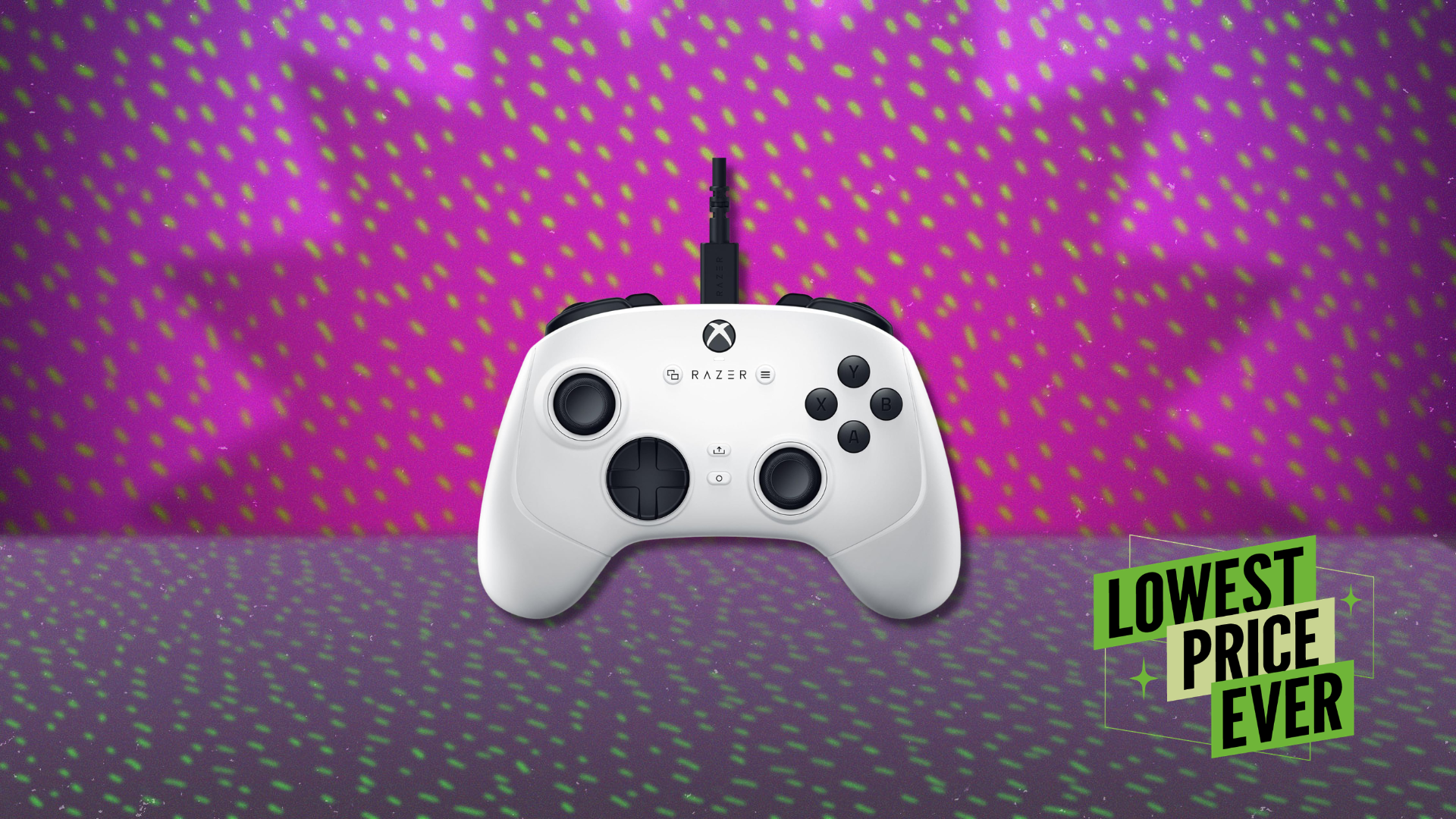
The Razer Wolverine V3 Tournament Edition wired gaming controller is down to $54.99 on Woot right now, which is the lowest price it has ever hit. It usually goes for around $99.99 on Amazon, and even previous deals didn’t dip below about $59, according to price trackers. If you’re a Prime member, you get free shipping, while others pay an extra $6. This deal is live for 12 days or until stock runs out, and Woot only ships within the contiguous U.S.
This is essentially the same controller as the Wolverine V3 Pro, minus the wireless battery. That means it’s wired only, using a long 10-foot cable. For PC setups, that’s rarely a problem—in fact, it’s part of the appeal. The controller supports a 1000Hz polling rate, which only works over a wired connection, and it’s built for players who care about responsiveness. Inputs feel sharp and clicky, more like a high-end gaming mouse than a standard controller. You also get six extra programmable buttons, which can make a real difference in games where reaction time matters. In something like a fast-paced shooter, mapping reload or weapon swap to a rear button can shave off just enough time to feel noticeable. The Hall Effect sticks are designed to avoid drift over time, and the textured grips help during longer sessions. All said, it feels solid in hand, though slightly heavier than you might expect.
Where it falls short depends on how you plan to use it. This is not a living-room controller. There’s no wireless option, no Bluetooth, and no flexibility if you like to game from the couch. The customization also leans on Razer’s software, which you’ll need to download to remap buttons or enable that 1000Hz mode. It works well and lets you create profiles for different games, but it does add an extra step. You also can’t tweak everything, like the main button layout or D-pad. Still, if you mostly play on PC and want something that feels closer to a competitive tool than a casual controller, this deal makes a strong case.
UK’s Ofcom has fined 4chan a total of £520,000 ($690,000) over the website’s failure to comply with the rules of Online Safety Act 2023. The biggest chunk of the amount came from 4chan’s failure to ensure children cannot encounter pornographic content on its website by implementing an effective age check mechanism. For that violation, the website has received a penalty of £450,000 ($598,000) and an order to apply an age check system by April 2. It carries a daily rate penalty of £500 ($664) until the website is compliant or until June 1, whichever comes sooner.
Ofcom also found that 4chan has failed to carry out sufficient illegal content risk assessment on its website and has fined it £50,000 ($66,400) for that violation. 4chan has until April 2 to conduct a risk assessment, or it has to pay an additional £200 ($266) per day. Finally, the regulator has determined that 4chan failed to include provisions in its terms of service that specify how it protects users from illegal content. That carries a fine of £20,000 ($26,600), with a daily rate penalty of £100 ($133) a day from its compliance deadline of April 2 to June 1.
The regulator started investigating 4chan, famous for its anonymous and unmoderated messaging boards, in June 2025 to determine if it was failing to meet its obligations under the law. In October, Ofcom announced its decision for some of the investigations it opened. It slapped 4chan with a £20,000 ($26,700) fine for ignoring its requests for a copy of the website’s illegal harms risk assessment and to provide information about its qualifying worldwide revenue. The regulator has confirmed to Engadget that 4chan has yet to pay that previous fine, which also earned cumulative daily punishment fees for 60 days.
This article originally appeared on Engadget at https://www.engadget.com/social-media/uk-fines-4chan-nearly-700000-for-failing-its-online-safety-act-obligations-115106264.html?src=rss
Germany recently banned TCL from marketing some of its TVs as QLED (quantum dot light-emitting diode), with a Munich court ruling that the TVs lack the quantum dot (QD) structure and performance associated with QLED TVs. The decision increases pressure on TV companies to be more honest with their marketing.
Samsung has actively campaigned against TCL’s use of the term QLED. A year ago, Samsung sent Ars Technica results from testing performed by Intertek, a London-headquartered testing and certification company, on TCL’s 65Q651G, 65Q681G, and 75Q651G. The results showed that the TVs lacked sufficient amounts of cadmium and indium (two chemicals used in QD TVs, either individually or in combination). Intertek reportedly tested the optical sheet, diffuser plate, and LED modules in each TV using a minimum detection standard of 0.5 mg/kg for cadmium and 2 mg/kg for indium.
At the time, a TCL representative told me that TCL had “definitive substantiation for the claims made regarding its QLED televisions.”
BrianFagioli writes: A new iOS exploit chain called DarkSword shows how attackers can break into certain iPhones, grab sensitive data like messages, credentials, and even crypto wallets, and then disappear without leaving obvious traces. It targets older iOS 18 builds using Safari and WebGPU flaws to escape Apple’s sandbox, which is pretty wild on its own, but what really stands out is how fast it works and how financially motivated these attacks have become. The takeaway is simple but important, update your iPhone ASAP and don’t assume mobile devices are somehow safer than desktops anymore.
Trevor Milton, the pardoned founder of Nikola, is seeking $1 billion for AI-powered autonomous planes through a new venture called SyberJet. The Tech Buzz reports: “Autonomous planes will be 10 times harder than Nikola ever was,” Milton told the Wall Street Journal in a rare interview. It’s a remarkable admission from someone whose last venture collapsed under the weight of securities fraud charges after he overstated the capabilities of Nikola’s electric and hydrogen-powered trucks. Milton was convicted in 2022 on three counts of fraud for misleading investors about Nikola’s technology, including staging a video that made it appear a truck prototype was driving under its own power when it was actually rolling downhill. The conviction sent him to prison and turned Nikola into a cautionary tale about startup hype culture. His pardon, which came earlier this year, sparked immediate controversy in venture capital and legal circles.
Now he’s betting that AI and autonomous aviation represent a clean slate. SyberJet appears focused on developing artificial intelligence systems capable of piloting aircraft without human intervention – a technical challenge that’s stumped even well-funded players like Boeing and Airbus. […] Milton hasn’t detailed SyberJet’s technical approach or revealed who’s backing the venture. The company’s website remains sparse, and aviation industry sources say they haven’t seen concrete demonstrations of the technology. That opacity echoes the early days of Nikola, when Milton made sweeping claims about revolutionary trucks that existed mostly in renderings and promotional videos. If you need a quick refresher on the Nikola saga, here’s a timeline of key events:
June, 2016: Nikola Motor Receives Over 7,000 Preorders Worth Over $2.3 Billion For Its Electric Truck
December, 2016: Nikola Motor Company Reveals Hydrogen Fuel Cell Truck With Range of 1,200 Miles
February, 2020: Nikola Motors Unveils Hybrid Fuel-Cell Concept Truck With 600-Mile Range
June, 2020: Nikola Founder Exaggerated the Capability of His Debut Truck
September, 2020: Nikola Motors Accused of Massive Fraud, Ocean of Lies
September, 2020: Nikola Admits Prototype Was Rolling Downhill In Promo Video
September, 2020: Nikola Founder Trevor Milton Steps Down as Chairman in Battle With Short Seller
October, 2020: Nikola Stock Falls 14 Percent After CEO Downplays Badger Truck Plans
November, 2020: Nikola Stock Plunges As Company Cancels Badger Pickup Truck
July, 2021: Nikola Founder Trevor Milton Indicted on Three Counts of Fraud
December, 2021: EV Startup Nikola Agrees To $125 Million Settlement
September, 2022: Nikola Founder Lied To Investors About Tech, Prosecutor Says in Fraud Trial
An anonymous reader quotes a report from TechCrunch: The FBI has resumed purchasing reams of Americans’ data and location histories to aid federal investigations, the agency’s director, Kash Patel, testified to lawmakers on Wednesday. This is the first time since 2023 that the FBI has confirmed it was buying access to people’s data collected from data brokers, who source much of their information — including location data — from ordinary consumer phone apps and games, per Politico. At the time, then-FBI director Christopher Wray told senators that the agency had bought access to people’s location data in the past but that it was not actively purchasing it.
When asked by U.S. Senator Ron Wyden, Democrat of Oregon, if the FBI would commit to not buying Americans’ location data, Patel said that the agency “uses all tools … to do our mission.” “We do purchase commercially available information that is consistent with the Constitution and the laws under the Electronic Communications Privacy Act — and it has led to some valuable intelligence for us,” Patel testified Wednesday. Wyden said buying information on Americans without obtaining a warrant was an “outrageous end-run around the Fourth Amendment,” referring to the constitutional law that protects people in America from device searches and data seizures.
During a Senate hearing, FBI Director Kash Patel confirmed that his agency has bought information that could be used to track individuals’ movement and location. “We do purchase commercially available information that’s consistent with the Constitution and the laws under the Electronic Communications Privacy Act, and it has led to some valuable intelligence for us,” he said.
Law enforcement is required to obtain a warrant in order to get location data from cell service providers following the Carpenter v United States ruling from 2018. But why bother with all that hassle when they can just buy the information from the open market?
“Doing that without a warrant is an outrageous end run around the Fourth Amendment, it’s particularly dangerous given the use of artificial intelligence to comb through massive amounts of private information,” Sen. Ron Wyden, (D-Ore.) said during the Intelligence Committee hearing. Wyden is one of several lawmakers pushing for an overhaul of when and how the government can obtain citizens’ personal information.
It’s an overhaul that’s badly needed. Patel already has a history of dubious use of government resources, such as ordering SWAT protections for his girlfriend and somehow horning in on men’s hockey victory celebrations at the recent winter Olympics, so one would hope he’s not also stretching the limits of the few privacy protections that do exist. Then outside the FBI, we have the Department of Homeland Security being sued for illegally tracking immigration raid protestors and the Pentagon’s labeling of Anthropic as a supply-chain risk after the AI company refused to let its products be used for mass surveillance of Americans.
This article originally appeared on Engadget at https://www.engadget.com/big-tech/the-fbi-confirms-its-buying-americans-location-data-230835196.html?src=rss
The Information reported that an AI agent within Meta took unauthorized action that led to an employee creating a security breach at the social company last week. According to the publication, an employee used an in-house agentic AI to analyze a query from a second employee on an internal forum. The AI agent posted a response to the second employee with advice even though the first person did not direct it to do so.
The second employee took the agent’s recommended action, sparking a domino effect that led to some engineers having access to Meta systems that they shouldn’t have permission to see. A representative from the company confirmed the incident to The Information and said that “no user data was mishandled.” Meta’s internal report indicated that there were unspecified additional issues that led to the breach. A source said that there was no evidence that anyone took advantage of the sudden access or that the data was made public during the two hours when the security breach was active. However, that may be the result of dumb luck more than anything else.
Many tech leaders and companies have touted the benefits of artificial intelligence, this is just the latest incident where human employees have lost control over an AI agent. Amazon Web Services experienced a 13-hour outage earlier this year that also (apparently coincidentally) involved its Kiro agentic AI coding tool. Moltbook, the social network for AI agents recently acquired by Meta, had a security flaw that exposed user information thanks to an oversight in the vibe-coded platform.
This article originally appeared on Engadget at https://www.engadget.com/ai/a-meta-agentic-ai-sparked-a-security-incident-by-acting-without-permission-224013384.html?src=rss
If you’ve been using the Internet for any length of time, you’ve probably used a tool like Google Translate to convert webpages or snippets of text to and from languages ranging from Uzbek to Esperanto. But what if you want to translate into more esoteric “languages” like “LinkedIn Speak,”“Gen Z slang,” or “horny Margaret Thatcher”?
This week, many people across the Internet have been bemused to find that the AI-powered Kagi Translate can perform these and countless other unlikely “translation” tasks. And while the collective discovery highlights the playful, creative side of large language models, it also exposes the risks of letting users play with generalized LLM tools.
What is a “language,” really?
While you might know Kagi best as the paid competitor to Google’s ever-worsening search product, the company launched its Kagi Translate tool back in 2024, saying at the time that it was a “simply better” competitor to tools like Google Translate and DeepL. At launch, the company said Kagi Translate “uses a combination of LLMs, selecting and optimizing the best output for each task,” a fact that “can occasionally lead to quirks that we’re actively working to resolve.”
With today’s latest Stitch updates, Google is trying to make “vibe design” happen, reports The Verge’s Jay Peters. The AI-native design platform encourages users to describe goals, feelings, or inspiration in “natural language,” rather than starting with traditional blueprints.
In a blog post, Google Labs Product Manager Rustin Banks says that Stitch can turn those inputs into interactive prototypes, automatically map user flows, and support real-time iteration. It introduces voice capabilities that allow users to “speak directly to [the] canvas” for feedback or changes. Tools like DESIGN.md also help users create reusable design systems across various projects.
In a post on its community blog today, Meta announced the timeline for the shutdown of Horizon Worlds for VR users. The Horizon Worlds app and related Events will disappear from Quest headsets by March 31, and VR users will no longer be able to use the social hub at all after June 15, 2026. Horizon Worlds will continue, Meta says, but only for mobile users.
“We are separating the two platforms so each can grow with greater focus, and the Horizon Worlds platform will become a mobile-only experience,” the company explained in the post. “This separation will extend across our ecosystem, including our mobile app.”
Horizon Worlds launched in 2021 as a VR-only platform where users could interact in a virtual space, but it was beset by early tech and design limitations (most famously, that user’s Metaverse avatars didn’t have legs). Still, at the time, the company hoped the Metaverse would ultimately attract over a billion users, and Horizon Worlds was seen as an integral part of it. Obviously, that didn’t happen—at its peak, Horizon Worlds‘ monthly user count was only around 200,000.
What happens to users’ digital purchases and creations?
Long-time Horizon Worlds users are surely asking what will happen to their in-world digital items. The good news is that your Worlds-specific purchases and creations won’t instantly be wiped; Meta says your digital items or currency will remain tied to your account. The bad news is you’ll only be able to access them through the mobile app in “mobile-optimized” worlds, so if a creator hasn’t updated their world for mobile, your items there may effectively become inaccessible.
After June 15, you will no longer be able to build or edit worlds in VR. Meta is encouraging the use of their web-based tools, but the immersive building experience that defined the platform is officially ending.
Meta is shifting focus from VR to AI
The change is part of an overall strategy shift from Meta, which will be funneling more resources into AI and smart glasses. In January, Meta shuttered its AAA VR game development companies, stopped updating its first-party subscription-based fitness app Supernatural, and laid off 1,500 people from its VR-division Reality Labs.
Even given all that, though, Meta says it’s not pulling out of the VR game altogether. In a blog post on Feb. 19, Samantha Ryan, the vice president of content for Reality Labs, promised Meta was “doubling down on VR,” but is nevertheless moving away from first-party development to focus on hardware, supporting third-party developers, and adding features to the Quest itself. “It’s no secret that we’re still in the hardware game,” Ryan wrote. “We have a robust roadmap of future VR headsets that will be tailored to different audience segments as the market grows and matures.”
The kinda sad end of Horizon Worlds
I poked around Horizon Worlds for when I got my Quest 3 headset a few years ago. “Oh, I can decorate a little house or meet people” I thought; then I logged out and never went back—I have a real house I can decorate, and I use VR because I don’t like people. But a few months ago, when it became clear that Meta was pulling away from the VR space it created, I got curious, strapped on the face computer, dusted off the old avatar, and went on a Horizon Worlds safari. I’m glad I did.
Going to Horizon Worlds feels eerie. It’s like visiting someone else’s dreams—specifically Mark Zuckerberg’s dream and the sub-dreams of Worlds’ volunteer creators. “The defining quality of the metaverse will be a feeling of presence…Feeling truly present with another person is the ultimate dream of social technology. That is why we are focused on building this,” Mark Zuckerberg said at Connect 2021, and he believed it enough to spend billions (maybe as much $25 billion) on his dream word, where nothing ever gets dusty and everyone is an endlessly smiling cartoon ready to funnel actual money to The Overseer for the latest digital sneakers.
Then there are the thousands of creators who spent countless hours building more than 10,000 worlds you can visit—nightclubs, basketball stadiums, restaurants, etc., though they’re almost all empty. As flashy as it looks, no one is lined up at the digital nightclub’s velvet rope. Horizon Worlds is a gigantic dead mall, a capitalist cathedral with no congregation, the ultimate liminal space.
A vibe that strange is enough reason to visit, but there’s a genuine side to Worlds too. I eventually found a world where people conquered the unsettling nature of VR and created a real community. The Soapstone Comedy club is not huge, but it’s thriving, and it’s one of many spots where small groups have gathered in Horizon Worlds. There are conversation pits people use to meet up, nightly planned comedy shows, and a collection of friendly regulars to chat with. It grew from the ground up, too, just as Zuck predicted. Okay, the comedy is rarely funny. But the people are good.
Some Soapstoners are housebound and handicapped, and VR gives them opportunities the real world denies them. Some seem like weirdos who probably have trouble finding real life friends who can’t mute them at will. And some are regular people blowing off some steam after work. I’m sad for all of them—a comedy club on a phone screen just isn’t the same. So before the digital wrecking ball takes down the hang-out spots of all Horizon Worlds‘ remaining residents, you should stop in and say hi. There’s not much time left.
Because it’s all in the reflexes, this is the heavily requested Screen Junkies honest trailer for Big Trouble In Little China. It’s over six minutes long though, which is 1/20th of the entire movie. Not that I’m complaining, I could quote Big Trouble In Little China all day. And do most days. My girlfriend doesn’t always like it, but *shrug* sooner or later I rub everybody the wrong way. “Nothing or double?” The check is in the mail.
The European Union may soon ban nudify apps after Elon Musk’s chatbot Grok emerged as a prime example of the dangers of an AI platform failing to block outputs that sexualized images of real people, including children.
In a joint press release, the European Parliament’s Internal Market and Civil Liberties committees confirmed that lawmakers voted 101–9 (with 8 abstentions) to simplify the Artificial Intelligence Act and “propose bans on AI ‘nudifier’ systems.”
The vote came after the European Commission concluded earlier this year that the AI Act does not prohibit “AI systems that generate child sexual abuse material (CSAM) or sexually explicit deepfake nudes.” At that time, the Commission signaled that Parliament members were already proposing ways to amend the law to strengthen protections against such harmful content.
In the US, the economics of coal power generation are marginal at best, and a large number of coal plants have shut down as cheaper renewables and natural gas have surged. The Trump administration has used a number of methods to swim against this economic tide, the simplest of which has been to order plants scheduled for closure to remain operational.
The Department of Energy has used the Federal Power Act and a Trump executive order declaring an energy emergency to block the closure of coal plants nationwide. The orders requiring plants to stay open have been accompanied by a steady stream of triumphal press releases, suggesting that the Department of Energy was taking the step solely to ensure grid reliability.
The latest of these releases, issued on Monday, pertains to a plant in Centralia, Washington, that was scheduled to close last year to be converted into national gas generation. A Department of Energy emergency order had kept it operational over the winter, but that order was set to expire yesterday. With yesterday’s new order, the plant will remain operational through mid-June. According to the press release, the action was taken “to ensure Americans in the Northwestern region of the United States have access to affordable, reliable, and secure electricity.”