Nothing spin-off CMF announces $100 Headphone Pro

Smartphone company Nothing now has quite the line of audio accessories and now counts a new adaptive ANC (active noise cancellation) over-the-ear headphone from its sub-brand CMF. The Headphone Pro offers remarkable specs for less than $100, with features like 40dB of noise cancellation, LDAC (Lossless Digital Audio Codec) and Hi-Res certification for both wired and wireless audio, along with an “Energy Slider” to adjust EQ.

The CMF Headphone Pro doesn’t at all resemble Nothing’s boxy over-the-ear Headphone 1 cans. While that design was rather eccentric and austere, CMF’s model has a softer, more conventional look with a rounded headband reminiscent of Sony’s WH-1000XM5s. Another prominent feature is the large, interchangeable ear cups that appear to have generous padding.

CMF’s new cans come with adaptive ANC that reduces outside sounds by 40dB or up to 99 percent and automatically adjust the level according to outside noise. Though battery life is a generous 100 hours with ANC disabled, it gets cut in half to 50 hours with ANC turned on. That’s still more than Sony’s new WH-1000XM6, even without ANC enabled. You can get an additional four hours of service with just a five minute charge, and the Headphone Pro can be directly charged by some smartphones via a USB-C cable. 

Control-wise, the Headphone Pro is nicely analog, with buttons instead of the touch controls found on other headphones. Those include Bluetooth/power button on one side and an action button on the other that’s customizable via Nothing’s X app. There’s a multifunction rocker for volume, playback and control of ANC/ambient sound. Then there’s the Energy Slider that lets you make treble and bass adjustments without the need to dive into the X app’s EQ settings. 

Nothing’s CMF sub-brand will soon spin off into its own budget brand, the company announced recently. That doesn’t seem to have happened yet, but you can now order the CMF Headphone Pro for just $84 in light grey, dark grey and light green, with shipping set for October 6. The company will soon offer interchangeable ear cushions as well in orange or light green for $25 a pair. 

This article originally appeared on Engadget at https://www.engadget.com/audio/headphones/nothing-spin-off-cmf-announces-100-headphone-pro-120002029.html?src=rss

Your Most Important Smart Home Decision Is the Ecosystem You Choose

We may earn a commission from links on this page.

In Lifehacker’s series, “A Guide to Automating Your Entire Home,” we’re highlighting all the ways you can power your home with autonomous technology, room by room. Whether you want to build a smart security system, turn a “dumb” device smart, or simply control your lights from your phone, this guide will help walk you through it.

So, you want to start a smart home, but you don’t know where to begin? Whether you’re starting a smart home from scratch or figuring out how to configure the one you already have, the good news is that it’s much less of a headache now than it used to be. Smart home tech has undergone significant simplification in recent years, partly due to the consolidation of platforms and standardization of connected protocols. You just choose your path based on the ecosystem you want to operate in, and then build out your repertoire of devices—things like video doorbells, security cameras, and smart lights—from there. It’s all fairly straightforward at that point, so the important thing is choosing the right smart home ecosystem before you begin.

The main players here are Google, Apple, and Amazon, which you’ll want to choose by determining which control interface you’d prefer. That’s because the Matter protocol that most modern smart devices work on is compatible with all three, so it’s really the software experience that matters most here. That said, you will also occasionally also run into the Z-Wave and Zigbee protocols when setting up legacy devices, so it’s important to double check your chosen ecosystem’s support for these if you have a lot of old gear sitting around. (Usually, this relies less on your software and more on your hubs—or, in other words, the central devices that anchor your smart home devices together.)

With that explained, let’s run through everything you need to know to pick a smart home ecosystem.

Google Home

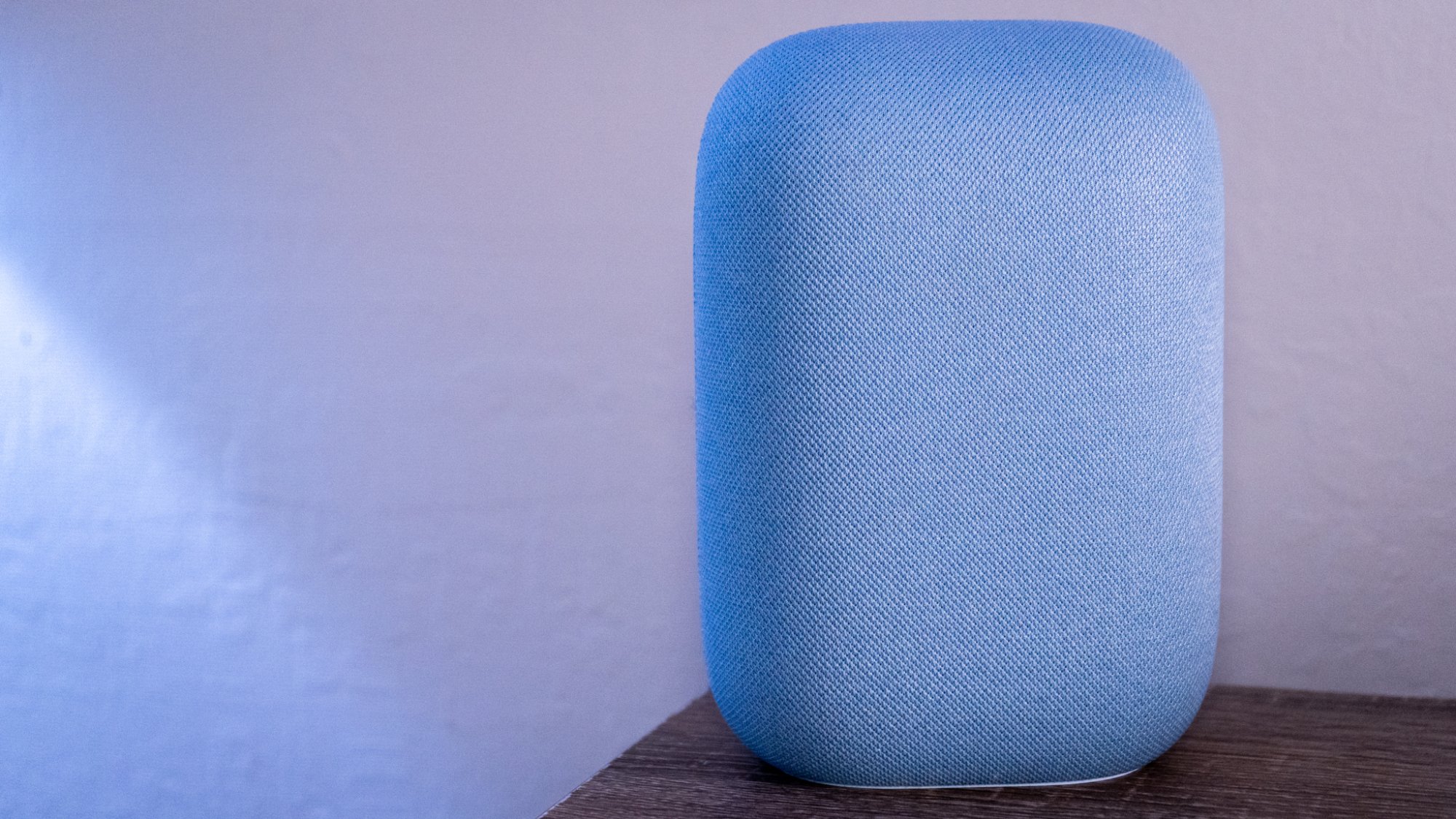
a photo of the nest audio
The Google Nest Audio.
Credit: Florence Ion/Lifehacker

Anyone who is already deeply embedded in the Google ecosystem, whether through an Android device, Chromebook, or the Chrome browser, will probably find this ecosystem to be the most comfortable for them. The Google ecosystem is a smart home platform built entirely around the Google Home app and Google Assistant—soon to be Gemini. That means it seamlessly integrates with your Google account and other services, including Gmail, Google Photos, and YouTube, which is a huge plus for people that make heavy use of those apps.

On a hardware/protocol level, devices like the Nest Hub smart display and Nest Wifi Pro mesh router are equipped with Matter, so again, they’ll work with most current smart home devices. Additionally, they also serve as Thread border routers, with Thread being a low-power protocol that helps maintain your devices’ connection throughout your smart home. Additional smart devices with Thread built in help extend that range, but these can help boost it if you notice it’s lacking.

As for the software experience, your Nest Hub smart displays and Google speakers will act as your smart home’s control interface. Or, you could also use an Android device with hands-free “Hey, Google” activated to control your smart devices. iPhone users can tap into this ecosystem natively through iOS, too, although it relies on a combination of the Google app and Google Home apps. Additionally, you’ll need an external Nest device, like a Nest Hub or a Google TV Streamer (4K), to act as an anchor. Android users are fully embedded into the ecosystem, meaning less of a reliance on Google’s smart home apps, but there are ways to set up Shortcuts on iOS that partially replicate this experience.

The best part about the Google smart home ecosystem is that it’s compatible with third-party manufacturers, including some of the more obscure ones on the market, such as Rachio, a smart sprinkler controller, and Wiz, Philips Hue (Signify)’s budget-friendly line. Google also has the strongest track record for contextual voice commands, and the company will continue to build on it even as Gemini starts powering the helm. Google says that Gemini will bring more natural language conversations and deeper intelligence in automations.

Even if you don’t care for voice assistants, the Google Home ecosystem also has a robust smart home routines editor. It’s a newer offering since Matter was rolled out, but it has helped enhance the relative tinkerability of the platform.

Apple HomeKit

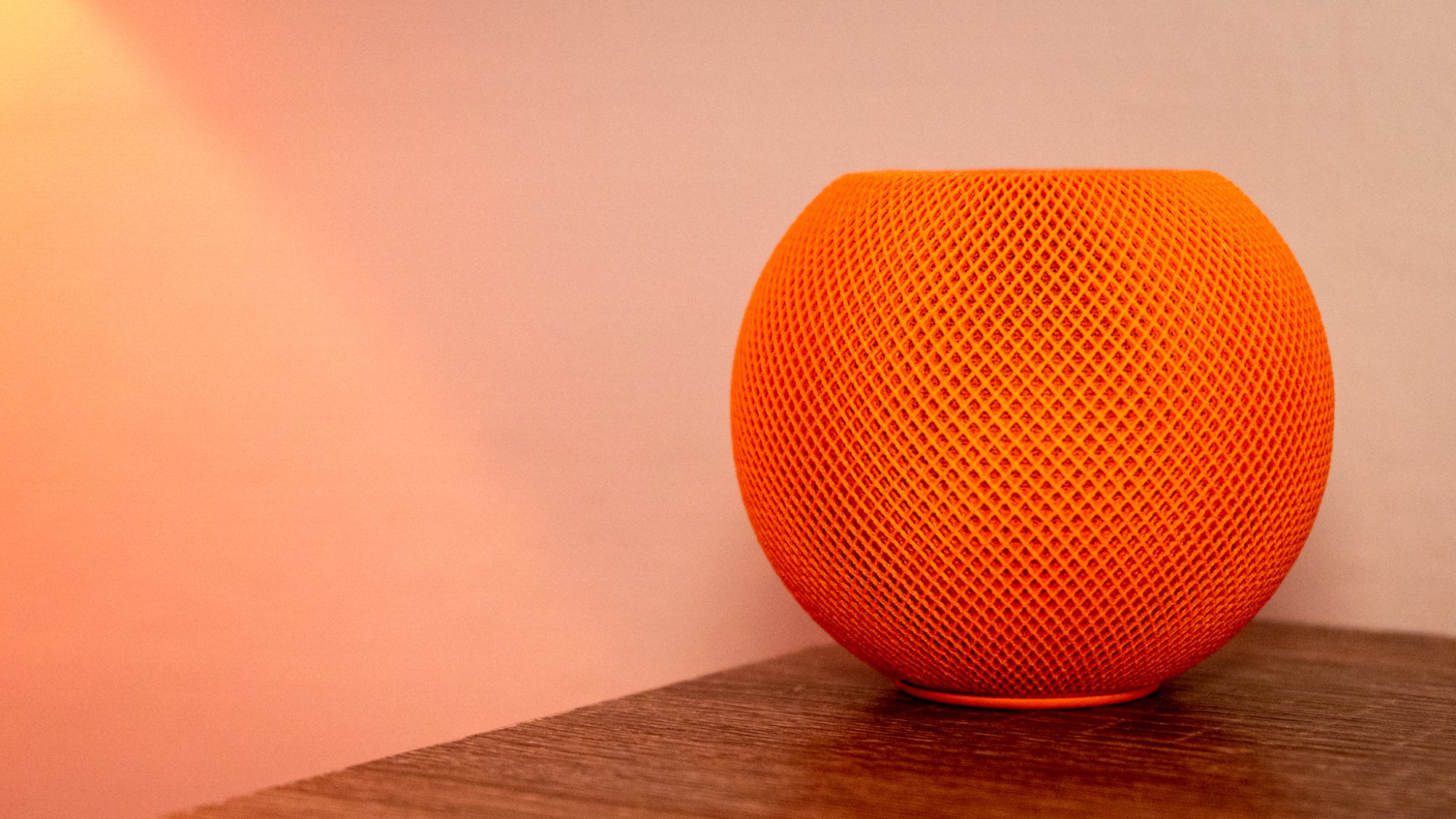
a photo of the apple homepod mini in orange
The Apple HomePod mini serves as a hub for HomeKit.
Credit: Florence Ion/Lifehacker

Apple HomeKit, controlled by the Apple Home app, is the preferred smart home ecosystem if you already have an iPhone, iPad, and/or Mac in your life. Apple relies on a combination of wifi, Bluetooth, and Thread for connections, and a specific Apple device is required to act as an anchor for your smart home control. This could be a HomePod (second generation), HomePod mini, or Apple TV 4K (second generation, or third generation with 128GB storage), all of which have the requisite components for acting as Thread routers. It’s also worth noting that the iPhone 16 Pro functions as a Matter controller, but you’ll still need a “core” device, such as a HomePod mini, to enable remote access, shared control within the household, automations, and routines, as well as end-to-end encrypted video.

As is standard inside Apple’s walled garden of highly curated but less-open apps, its smart home ecosystem adheres to the idea that it should be secure and well-managed. Apple is the curator of device compatibility within this ecosystem, so while it supports Matter, it also requires third parties to undergo a strict MFi certification process, which stands for “Made for iPhone/iPad.” Apple maintains a list of devices that have been certified for use with its products. If you’re already accustomed to this lifestyle, it’s not a significant change from the status quo, but it can make building out your smart home with Apple seem limited compared to doing it with Google or Amazon.

However, an upside to Apple’s smart home ecosystem is that it’s particularly privacy-focused, especially compared to Google and Amazon’s ecosystems. HomeKit prioritizes local processing, relying on devices like the HomePod to execute routines and commands rather than pinging external servers. Apple will also allow you to encrypt security footage from HomeKit-compatible cameras, ensuring it is never transmitted to the company’s servers. This contrasts with Google, which still heavily relies on cloud servers for video storage and advanced features, like face detection. The Gemini smarts coming to Google Home will also initially rely on cloud processing.

Amazon Alexa

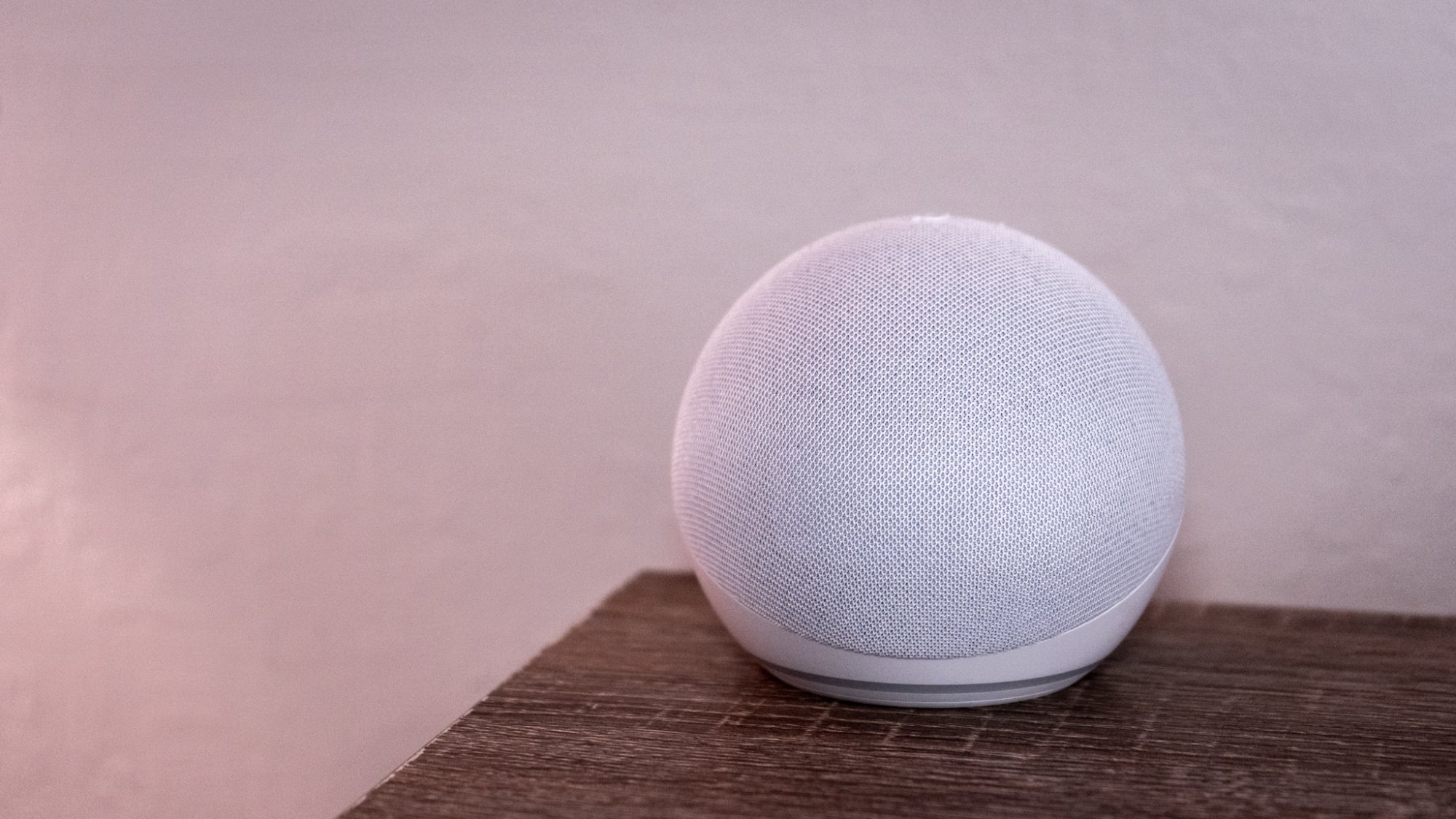
A photo of the Amazon Echo Dot
The Amazon Echo Dot.
Credit: Florence Ion/Lifehacker

Amazon was the first to introduce consumer-ready smart home products, all the way back in 2014. Since the days of its first smart speaker and early forays into Alexa, the Amazon smart home ecosystem has become the most robust and expansive option compared to those of Google and Apple, even if it doesn’t rely on a familiar interface you might be used to from your Android or iOS phone.

Connection is primarily based on wifi, although some Amazon Echo smart speakers and displays also serve as Zigbee hubs. This low-power protocol has served as a de facto standard for many older smart home devices, but don’t expect support for modern gear to be lacking. To that end, Amazon has fully embraced Matter from the get-go. Most of the Echo devices currently available also serve as Matter controllers and/or Thread border routers. Alexa-compatible devices are also generally more affordable compared to other offerings.

Amazon’s Alexa voice assistant runs the show, and its companion app is what you’ll use to configure commands, set automations, and select services that are connected. However, the digital assistant has seen little consumer-facing action in recent years, with Amazon focusing on foundational improvements to its backend instead. We’re still waiting for Amazon to provide more details about its long-term strategy for ambient computing, dubbed Alexa+, which is currently in early access. The idea is that Alexa will work in the background, turning on lights and adjusting the climate in your home without you having to utter a word. You can sign up to try out the contextual chatbot before it’s live.

When it does launch, Alexa+ will require a monthly subscription of $20 per month unless you’re already an Amazon Prime member. A “classic” version of Alexa will still be available for basic voice commands, such as playing music, setting timers, and executing pre-configured routines.

Matter: The smart home unifier

With the three major smart home ecosystems explained, let’s dive more into their protocols. I’ve mentioned it a few times already, but the most important word to know when putting together a smart home or updating an existing one is Matter. Matter is a unifying protocol that took years of coordination between major companies and trade organizations, such as the Consumer Standards Alliance (CSA), to become the pre-eminent standard connecting the modern smart home. It is not an ecosystem, but rather a language that enables devices from various ecosystems to communicate with one another. Matter was introduced to solve a fragmentation problem that was affecting the adoption of the smart home. If you’re not sure your smart devices will be able to communicate with each other, you might hold off on buying anything at all, which hurts the whole industry.  

Matter operates on top of existing network protocols, such as wifi and Thread. It works with all major smart home ecosystems, as well as some lesser-known ones. Although Matter is still in its nascent era, its existence can help you avoid getting locked into a specific ecosystem. The standard has also helped simplify setup, and it’s more future-proof than the previous generation of smart home devices.

Z-Wave and Zigbee: Old faithfuls

Zigbee and Z-Wave have been around for a long time, dating back to the early days of the smart home. Before wifi became a sufficient enough connector for low-power devices, these two protocols were the primary method of communication between them. If you were shopping for smart devices that required energy efficiency, such as a motion sensor or smart light switch, you would rely on either Zigbee or Z-Wave to connect.

Zigbee and Z-Wave were designed to be energy-efficient, which is why many battery-powered smart gadgets use these protocols. Zigbee and Z-Wave also employ a mesh network architecture, which allows each device logged onto the network to act as a repeater to help extend the signal’s range. This is exceptionally helpful in building out the smart home in large homes and hard-to-reach spots, such as basements and backyards.

These protocols are still highly relevant if you’re planning to build a robust, automated smart home, and they’re often the best connection choice for battery-powered sensors and devices. Matter is merely the bridge that allows you to bring all your Zigbee and Z-Wave devices into a single app for control. Most recently released smart home hubs, such as this one from Aeotec, support both Zigbee and Z-Wave, in addition to Matter and wifi.

Automations: The best part of having a smart home

The allure of the smart home is that you could have everything, from your lights to your air conditioning, scheduled and programmed without having to command it beforehand. For each ecosystem, the fundamental logic of automations and routines is generally the same: They follow the “if this happens, then trigger this action” principle. In many cases, you don’t need voice input to have these kinds of “ambient” actions working throughout your home. Each ecosystem has its own name for these. Amazon refers to them as “routines,” while Apple and Google call them “automations.” (Google used to call them routines, but it’s transitioning away from that moniker.) The concept remains the same across the board.

Google Home’s automations are relatively straightforward. They can be triggered by a specific time of day or based on a combination of conditions. For instance, you can set up a “leaving home” automation that’s based on your location. When your phone is detected outside a preset geofence, your Nest cameras can automatically turn on and start recording. At the same time, your lights could dim to a minimal level, and any doors with smart locks could be set to lock automatically. All of these settings can be easily configured right in the Google Home app. For users who need more sophisticated, conditional logic, Google also offers an online script editor to build custom routines.

Apple HomeKit’s Automations are more privacy-focused, as they occur on-device and rely on a hub, such as the HomePod mini or Apple TV 4K, for remote execution. You can easily set automations through the Apple Home app on iOS or iPadOS. Automations involve triggers such as a person arriving or leaving the home, a specific time of day, a HomeKit-compatible sensor being triggered, or a change in accessory status, like when a smart bulb turns on. And like Google’s Routines, Apple’s Automations can adjust scenes, which are preset combinations of device settings and individual accessories across the home.

Amazon’s Routines work similarly. They need a key trigger, whether it’s a voice command, motion detection from a sensor, or a device status, like an open door. Alexa is great for controlling lights and smart plugs, playing music and podcasts on specific devices, and even sending messages to another Alexa-enabled device, whether it’s an Echo smart speaker or the Alexa app on someone’s phone. Amazon’s Alexa routine builder has long been regarded as one of the most user-friendly options on the market. We’ll see if it maintains that status when Alexa+ comes into the fold.

Before the introduction of Matter, you had to be careful about which devices you brought into your smart home, as different ecosystems and brands often didn’t work together. Matter’s entire reason for existence was to unify the fragmented market, where an Apple HomeKit accessory would not work with a Google Home speaker. While Matter, as a protocol, doesn’t handle automations, it does allow devices to communicate with a hub that works across various ecosystems. The hub can, for instance, enable a motion sensor from a different manufacturer to be used as a trigger for a smart light from a different ecosystem, with Matter acting as the bridge.  

How to choose the right smart home ecosystem

Ultimately, I can’t tell you which is the best smart home ecosystem for you, because it’s entirely up to your needs and preferences. If you are particularly privacy-focused, the Apple HomeKit ecosystem may be precisely what you want, even with its higher cost and fewer offerings. If you’re a diehard iPhone and Mac user, it’s also the way to go. The same applies to Android users who are already logged into a Google account and embedded into the ecosystem.

If you’re in a mixed-platform smart home, the best way to choose your unifying anchor is to consider which voice assistant you prefer to communicate with. If you’re fine with Siri and prefer the idea of commands being executed on-device, stick with HomeKit. If you’re a big fan of Google and you have existing Nest products, or even a Chromecast, that’s the way to go. And if you’d rather have the simplest experience among the three, Amazon’s Alexa remains the easiest to interface with.

The Morning After: What to expect from Amazon’s big devices event today

The fall tech events just won’t stop. Today, Amazon has its fall hardware event, which is likely to reveal improvements to voice assistant Alexa and some new Echo homes for it to live inside. It’s been a couple years since the Echo Show got an update, and it’s been even longer for the standard Echo.

The invitation suggests we’re expecting some Kindle upgrades too — the image on the invitation is a Kindle with a color illustration. The Kindle Scribe 2 came out earlier this year as did the Kindle Colorsoft, so maybe there’s something in the works that combines the best features of both.

While Alexa and Kindle will be the main draws, Amazon’s other tech brands, such as Ring and Eero, may also be present. In short, it’s likely to be a busy event.

It all kicks off at 10AM ET in New York City, where we’ll be reporting live. Stay tuned for all the announcements on our Amazon devices liveblog. There’s no video livestream, so we’ll be updating from the event like it’s 2010.

— Mat Smith

Get Engadget’s newsletter delivered direct to your inbox. Subscribe right here!

The news you might have missed


EA confirms it will go private in $55 billion acquisition

Owned by the Saudi Arabia Public Investment Fund (PIF), Silver Lake and Affinity Partners.

Electronic Arts has agreed to a $55 billion acquisition that will take the company private. Saudi Arabia Public Investment Fund (PIF), Silver Lake and Affinity Partners have reached a deal to buy EA and its collection of sports game franchises and, er, other games that have recently struggled. This year, the company canceled an upcoming Black Panther game and closed the studio behind it, and has reportedly “shelved” its Need For Speed Franchise. Then there was Anthem. The deal, the largest-ever leveraged buyout, marks the end of EA’s 35-year run as a publicly traded company.

Continue reading.


FCC accidentally leaked iPhone schematics, potentially giving rivals a peek at company secrets

Whoops.

The Federal Communications Commission (FCC) recently published a 163-page pdf showing the electrical schematics for the iPhone 16e, despite Apple specifically requesting they be confidential. This was most likely a mistake on the part of the FCC, according to a report by AppleInsider.

The files included block diagrams, electrical schematic diagrams, antenna locations and more. Competitors could simply buy a handset and open it up to access this information, as the iPhone 16e was released back in February, but this leak would eliminate any guesswork. The FCC hasn’t addressed how this leak happened.

Continue reading.

A PlayStation photography book is my next coffee-table tome

That no-one else will read.

TMA
Sony

Sony has been marking the 30th anniversary of PlayStation by selling stuff. Things like PS5 consoles and accessories styled after the PS1. (I just got the controller. Brag.) The company is also publishing a photography book showcasing “never-before-seen prototypes, concept sketches and design models that shaped hardware development” from the early days through to the current PS5 era. Sony has also teamed up with Reebok for a collection of 30th anniversary sneakers styled after the PS1.

Continue reading.

This article originally appeared on Engadget at https://www.engadget.com/general/the-morning-after-what-to-expect-from-amazons-big-devices-event-2025-113059183.html?src=rss

OpenAI will let you buy things from Etsy within ChatGPT

You’ll now be able to buy some items you’re looking for without leaving your ChatGPT conversation. OpenAI has launched a new feature called Instant Checkout, which is powered by Agentic Commerce Protocol, a technology it developed with Stripe. When you search for items to buy through ChatGPT, you’ll be able to see which ones you can buy from within the chatbot among the products it shows you. The feature is available for both free and paid users, but it only supports single-item purchases from Etsy sellers in the US at the moment. 

OpenAI says over a million sellers that use Shopify, including Glossier, SKIMS and Spanx, will support the Instant Checkout “soon.” It’s also adding multi-item cart checkout and is expanding the feature’s reach to more regions in the future. The company is open sourcing Agentic Commerce Protocol to allow more merchants to work on their ChatGPT integrations.

In its post, OpenAI said that it will continue ranking the product results most relevant to your search query based on availability, price and quality. It will not give products that support Instant Checkout a boost and will not rank them higher than other options just because of the feature. Your orders and payments will still be handled by the merchant you’re buying from, and you can either use your card on file with OpenAI or other available payment options. The company also said that it’s the merchants who’ll be paying a “small fee on completed purchases,” and that Instant Checkout will not affect product prices for you.

This article originally appeared on Engadget at https://www.engadget.com/ai/openai-will-let-you-buy-things-from-etsy-within-chatgpt-110032055.html?src=rss

NASA Backs Lunar Wi-Fi Project To Connect Astronauts and Rovers On the Moon

BrianFagioli shares a report from NERDS.xyz: NASA has awarded Solstar Space a $150,000 SBIR Phase I contract to develop a Lunar Wi-Fi Access Point (LWIFI-AP). The system is designed to provide wireless connectivity for astronauts, rovers, and orbiting spacecraft as part of the Artemis and Commercial Lunar Payload Services programs. Solstar’s goal is to build a space-rated, multi-band, multi-protocol access point that can survive radiation, extreme lunar temperatures, and other harsh conditions. NASA has identified Wi-Fi and 3GPP standards as core communication needs across mission systems ranging from the Human Landing System and Lunar Terrain Vehicle to the Lunar Gateway.

Although this is only an early-stage contract, Solstar’s proposal addresses a clear gap in space-qualified networking hardware. The company says that just as Wi-Fi transformed daily life on Earth, it will be equally important for living and working on the Moon. If the project advances, astronauts could soon be relying on familiar wireless technology that has been adapted for one of the most challenging environments in existence.


Read more of this story at Slashdot.

Scientists unlock secret to Venus flytrap’s hair-trigger response

To trap its prey, the Venus flytrap sends rapid electrical impulses, which are generated in response to touch or stress. But the molecular identity of the touch sensor has remained unclear. Japanese scientists have identified the molecular mechanism that triggers that response and have published their work in a new paper in the journal Nature Communications.

As previously reported, the Venus flytrap attracts its prey with a pleasing fruity scent. When an insect lands on a leaf, it stimulates the highly sensitive trigger hairs that line the leaf. When the pressure becomes strong enough to bend those hairs, the plant will snap its leaves shut and trap the insect inside. Long cilia grab and hold the insect in place, much like fingers, as the plant begins to secrete digestive juices. The insect is digested slowly over five to 12 days, after which the trap reopens, releasing the dried-out husk of the insect into the wind.

In 2016, Rainer Hedrich, a biophysicist at Julius-Maximilians-Universität Würzburg in Bavaria, Germany, led the team that discovered that the Venus flytrap could actually “count” the number of times something touches its hair-lined leaves—an ability that helps the plant distinguish between the presence of prey and a small nut or stone, or even a dead insect. The plant detects the first “action potential” but doesn’t snap shut right away, waiting until a second zap confirms the presence of actual prey, at which point the trap closes. But the Venus flytrap doesn’t close all the way and produce digestive enzymes to consume the prey until the hairs are triggered three more times (for a total of five stimuli).

Read full article

Comments

Climate Change Spurs Rare Hybrid Between Blue Jay and Green Jay

Researchers in Texas confirmed the first documented wild hybrid between a blue jay and a green jay — a rare pairing that is likely a result of climate change and habitat shifts. Slashdot reader fjo3 shares a report from CNN: “We think it’s the first observed vertebrate that’s hybridized as a result of two species both expanding their ranges due, at least in part, to climate change,” said Brian Stokes, a doctoral student of biology at the University of Texas at Austin and first author of the study published September 10 in the journal Ecology and Evolution. The vividly colored green jay is found in parts of South and Central America, Mexico and a limited portion of southern Texas. But since 2000, the tropical bird’s territory has expanded north by hundreds of kilometers — more than 100 miles and about 2 degrees of latitude — along the Rio Grande and up toward San Antonio, said study coauthor Timothy Keitt.

Avid birders across Central Texas have taken note, sharing sightings of the emerald birds on social media and apps like eBird. Keitt, a professor of integrative biology at UT Austin, has been keeping tabs on their rapid northward creep since 2018. “They’re pretty unmistakable in the field,” he told CNN. “You see a green jay and you absolutely know that it’s a green jay.” Stokes joined Keitt’s project a few years later, trapping birds to take blood samples for genetic analysis and releasing them back into the wild. While monitoring social media for green jay sightings in May 2023, Stokes came across an intriguing post on a Facebook group called Texbirds. A woman in a suburb of San Antonio shared a photo of an unusual bird that didn’t look like any jay Stokes or Keitt had ever seen.

“He happened to notice that this person posted a picture of this odd jay, and immediately told me, and we got in the car and drove down to find it right away,” Keitt said. He and Stokes described their finding as one of the “increasingly unexpected outcomes” that arise when global warming and land development converge to drive animal populations to new habitat ranges. This, they wrote, can lead to unpredictable animal interactions — in this case, between a tropical species and a temperate one — and create never-before-seen ecological communities.


Read more of this story at Slashdot.

Reddit Mods Sued By YouTuber Ethan Klein Fight Efforts To Unmask Them

alternative_right shares a report from 404 Media: Critics of YouTuber Ethan Klein are pushing back on subpoenas that would reveal their identities as part of an ongoing legal fight between Klein and his detractors. Klein is a popular content creator whose YouTube channel has more than 2 million subscribers. He’s also involved in a labyrinthine personal and legal beef with three other content creators and the moderators of a subreddit that criticizes his work. Klein filed a legal motion to compel Discord and Reddit to reveal the identities of those moderators, a move their lawyers say would put them in harm’s way and stifle free speech on the internet forever.

[…] On July 31, a judge allowed Klein’s lawyers to file a subpoena with Reddit and Discord that would reveal the identities of the people running r/h3snark and an associated Discord server. On September 22, lawyers for the defendants filed a motion to quash the subpoenas. “On its face, the Action is about copyright infringement,” the latest filing said. “At its heart, however, the Action is about stifling criticism and seeking retribution by unmasking individuals for perceived reputational harms TEI [Klein’s production company] attributes to [John Doe moderators] unrelated to TEI’s intellectual property rights.” […]

The anonymity of places like Reddit and Discord grant a layer of protection to people seeking to critique power. This case could set a dangerous precedent, the lawyers believe. “If the court allows TEI’s Subpoenas, it would enable TEI to impose a considerable price on Does’ use of the vehicle of anonymous speech — including public exposure, real risks of retaliation and actual harm, and the financial and other burdens of defending the Action,” the filing said. The filing added: “Very few would-be commentators are prepared to bear costs of this magnitude. So, when word gets out that the price tag of criticizing Ethan is this high — that speech will disappear. But that is precisely what Ethan Klein wants.”


Read more of this story at Slashdot.

Streameast Reclaims Domain Name Previously Seized By US Government

Pirate sports streaming site Streameast has quietly reclaimed the Streameast.xyz domain after U.S. authorities allowed it to expire, despite having seized it under a federal warrant in 2024. TorrentFreak reports: While researching both old and newly-seized Streameast domains recently, we noticed that Streameast.xyz expired earlier this year. Apparently, it was not renewed by those who controlled it, as the seizure banner was gone. Instead, the domain appeared to have been reclaimed by the original Streameast team. While it is not listed as an official mirror site, Streameast.xyz points to content from the original site once again. And indeed, the original Streameast team confirms that the domain is theirs.

It is not clear why the U.S. authorities lost control of the domain or whether it was intentional. Other domain names covered by the same seizure warrant were renewed recently, including Streameast.io. The Streameast team might view this as a significant symbolic victory. After all, they effectively reclaimed a federally seized domain name without having to mount a legal challenge. In the grander scheme, one domain name is not going to make a massive difference. However, the U.S. government went through the trouble to obtain a federal warrant, so it’s ironic to see it controlled by pirates once again.


Read more of this story at Slashdot.

ChatGPT Adds ‘Instant Checkout’ To Shop Directly In Chat

OpenAI unveiled Instant Checkout, a new ChatGPT feature that lets users buy stuff directly through its chatbot. Currently, the feature supports single-item purchases directly from Etsy sellers, but support for more than one million Shopify merchants is coming soon. It’s also only available to U.S. ChatGPT Plus, Pro and Free users at this time. CNBC reports: OpenAI will take a fee from transactions that are completed through ChatGPT, which means Instant Checkout could become an important new revenue stream for the startup. OpenAI is not yet profitable, and is burning through cash as it works to scale up its computing infrastructure. The company declined to share specific details about how large the fees are since they are determined through confidential contracts with Etsy and Shopify. Instant Checkout is free to users and will not affect their prices, OpenAI said.

“Our vision for ChatGPT — and a lot of the technology we create, but especially ChatGPT — is that it’s not just providing you information, it is also helping you get things done in the real world,” Michelle Fradin, OpenAI’s product lead for ChatGPT commerce, told CNBC in an interview. The company plans to introduce multi-item carts and expand the regional availability of Instant Checkout moving forward. […]

Instant Checkout is powered by OpenAI’s Agentic Commerce Protocol, which is the underlying technology that allows users to complete a transaction directly with a merchant through ChatGPT. OpenAI built the framework in partnership with the fintech company Stripe, which powers ChatGPT subscriptions. OpenAI initially decided to use Agentic Commerce Protocol for e-commerce, but Fradin said the company thinks it could be used to facilitate other types of purchases or payments as well. OpenAI is open-sourcing the framework to help merchants build integrations more quickly, and so that developers can explore different use cases, she said.


Read more of this story at Slashdot.

Buyers of RadioShack Accused of Running $112 Million Ponzi Scheme

An anonymous reader quotes a report from CBS News: A pair of e-commerce entrepreneurs who bought a number of well-known retail brands — including RadioShack, Modell’s Sporting Goods and Pier 1 Imports — out of bankruptcy are accused of running a Ponzi scheme. The Securities and Exchange Commission on Monday accused Alex Mehr and Tai Lopez, founders of the Miami-based Retail Ecommerce Ventures (REV), of defrauding investors out of approximately $112 million. Through their holding company, Mehr and Lopez acquired distressed brick-and-mortar companies in order to turn them into successful, online-only brands. Dress Barn and Linens ‘n Things were also among their acquisitions. […]

The SEC’s suit alleges that between 2020 and 2022, Mehr and Lopez, “made material misrepresentations” to hundreds of investors about the bankrupt retailers they had acquired. For example, to entice individuals to invest in their acquisitions, they said their portfolio companies were “on fire” and that “cash flow is strong.” They also told prospective backers that money raised for a company would only be invested in that specific firm. That proved not to be the case, according to the SEC’s lawsuit, which was filed Monday in the U.S. District Court for the Southern District of Florida.

“Contrary to these representations, while some of the REV Retailer Brands generated revenue, none generated any profits,” the suit states. “Consequently, in order to pay interest, dividends and maturing note payments, Defendants resorted to using a combination of loans from outside lenders, merchant cash advances, money raised from new and existing investors, and transfers from other portfolio companies to cover obligations.” The SEC alleges that at least $5.9 million of returns paid to investors were actually Ponzi-like payments funded by other investors, as opposed to companies’ profits. Additionally, the federal regulatory agency claims that Mehr and Lopez allocated $16 million worth of investments for their own use, according to the filing.


Read more of this story at Slashdot.

Alphabet will pay $22 million to settle President Trump’s YouTube lawsuit

Alphabet will pay President Donald Trump $22 million as part of a settlement in a class action lawsuit brought against the company over the suspension of various YouTube accounts following the January 6 riot at the US capital, as first reported by the Wall Street Journal. The suit includes other plaintiffs whose YouTube channels were banned that will split an additional $2.5 million in settlement payouts.

Trump filed the suit in 2021, alongside lawsuits against Twitter and Facebook over similar suspensions, claiming they infringed on his first amendment rights. Twitter, now known as X since its acquisition and rebrand by Elon Musk, paid President Trump roughly $10 million to settle that suit. Meta also settled its suit with the president over his suspension from the platform for $25 million earlier this year.

This settlement comes shortly after Alphabet wrote a letter to the House Judiciary Committee lambasting government pressure to moderate content on its platforms. The company also shared that YouTube would be offering a path to reinstatement for accounts previously banned for COVID-19 or election integrity related misinformation.

The settlement from Alphabet will be paid to the Trust for the National Mall, a nonprofit partner of the National Park Service, and will be earmarked for construction of the ballroom that President Trump is building at The White House. The monies from the Meta settlement were similarly earmarked.

This summer Paramount, parent company of CBS, settled a lawsuit brought by the president over claims that the network intended to “confuse, deceive and mislead the public” by editing an interview with Kamala Harris. The media company paid $16 million to settle the president’s suit. Three weeks later the FCC approved the $8 billion acquisition of Paramount by Skydance.

This article originally appeared on Engadget at https://www.engadget.com/big-tech/alphabet-will-pay-22-million-to-settle-president-trumps-youtube-lawsuit-234611643.html?src=rss

FCC Mistakenly Leaks Confidential iPhone 16e Schematics

The FCC mistakenly published a 163-page PDF containing detailed schematics for Apple’s upcoming iPhone 16e, despite Apple explicitly requesting indefinite confidentiality to protect trade secrets. AppleInsider reports: A cover letter is also distributed alongside the schematics, addressed to the FCC and dated September 16, 2024. The letter from Apple is a request for the confidential treatment of documents that are filed with the FCC. […] The letter from Apple requests a series of documents are withheld from public viewing “indefinitely.” The justification is that they contain “confidential and proprietary trade secrets” that are not disclosed to the public post-release, due to giving competitors an “unfair advantage.”

The list of documents, Apple states, includes: Block Diagrams, Electrical Schematic Diagrams, Technical Descriptions, Product Specifications, Antenna Locations, Tune-Up Procedure, and Software Security Description. Other documents, such as external and internal photographs, shots of the test setup, and the user manual, are deemed to be less damaging and have “short-term confidentiality” requirements. In those cases, Apple asks for short-term confidentiality for 180 days after the equipment authorization is granted by the FCC.


Read more of this story at Slashdot.

Man Builds Wearable Electric Motorcycle Suit

This is a video documenting Youtuber Jake Carlini’s quest to build a wearable electric motorcycle. The finished product, which is only seen in the last 30-seconds of the 22-minute video (hint hint), actually appears more functional than I expected. It does involve the rider having to hold a plank pose for as long as they want to ride somewhere though, and I haven’t held a plank since the one time I went to a hot yoga class with a girlfriend. Somebody farted and three people puked, including the instructor. “Was it you?” The instructor? Nooooo, I don’t teach yoga. “You know what I meant.” Who else do you know who would eat four hot dogs before a yoga class?

Trump obtains another settlement as YouTube agrees to pay $24.5 million

Google owner Alphabet today agreed to pay $24.5 million to settle a lawsuit that President Trump filed against YouTube in 2021. Trump sued YouTube over his account being suspended after Trump supporters’ January 6 attack on the US Capitol.

Alphabet agreed to pay $22 million “to settle and resolve with Plaintiff Donald J. Trump… which he has directed to be contributed, on his behalf, to the Trust for the National Mall, a 501(c)(3) tax-exempt entity dedicated to restoring, preserving, and elevating the National Mall, to support the construction of the White House State Ballroom,” a court filing said. Trump recently announced plans for the 90,000-square-foot ballroom.

The settlement notice, filed today in US District Court for the Northern District of California, said Alphabet will also pay $2.5 million to settle claims with plaintiffs the American Conservative Union, Andrew Baggiani, Austen Fletcher, Maryse Veronica Jean-Louis, Frank Valentine, Kelly Victory, and Naomi Wolf. Under the settlement, Alphabet admits no wrongdoing and the parties agreed to dismiss the case.

Read full article

Comments

Afghanistan Hit By Nationwide Internet Blackout As Taliban Cuts Fiber Optic Cables

The Taliban have imposed a nationwide telecommunications shutdown in Afghanistan, severing fibre-optic connections and cutting off internet, mobile, and satellite services as part of “morality” measures. Netblock is currently tracking the outages. The BBC reports: Since seizing power in 2021, the Taliban have imposed numerous restrictions in accordance with their interpretation of Islamic Sharia law. Flights from Kabul airport have also been disrupted, according to reports. Several people in Kabul have told the BBC that their fibre-optic internet stopped working towards the end of the working day, around17:00 local time (12:30 GMT). Because of this, it is understood many people will not notice the impact until Tuesday morning, when banking services and other businesses are due to resume. […]

The Taliban earlier said an alternative route for internet access would be created, without giving any details. Business leaders at the time warned that if the internet ban continued their activities would be seriously hit. Hamid Haidari, former editor-in-chief of Afghan news channel 1TV, said after the shutdown that “loneliness enveloped the entire country.” “Afghanistan has now officially taken first place in the competition with North Korea for [internet] disconnection” he said on X.


Read more of this story at Slashdot.

Skateboarder Sets World Records With Drop Into Ramp From 223-Feet

This is a video of Brazilian skateboarder Sandro Dias setting the Guinness World Records for ‘the tallest drop into a temporary quarter pipe’ and ‘the fastest speed on a temporary quarter pipe’ by dropping into a ramp built on the side of the appropriately shaped Centro Administrativo Fernando Ferrari (CAFF) building in Porto Alegre, Brazil from 70-meters (223 feet), and reaching a speed of 103.8km/h (64.5MPH) on the way down. Impressive, but there isn’t enough Red Bull on the planet to get me to do that. I’m kidding, nine cans and I’ll even attempt a kickflip on the way down, and I’ve never landed a kickflip.

You can watch a longer 20-minute video discussing the entire feat HERE.

Another setback for Firefly Aerospace’s beleaguered rocket program

The booster stage for Firefly Aerospace’s next Alpha rocket was destroyed Monday in a fiery accident on the company’s vertical test stand in Central Texas.

Engineers were testing the rocket before shipment to Vandenberg Space Force Base, California, to prepare for launch later this year with a small commercial satellite for Lockheed Martin. Activities at the vertical test stand in Briggs, Texas, include propellant loading and test-firings of the booster’s four kerosene-fueled engines. The rocket was undergoing one of these test-firings on Monday when the accident occurred.

Firefly released a statement confirming the rocket “experienced an event that resulted in a loss of the stage.” The company confirmed all personnel were safe and said ground teams followed “proper safety protocols.”

Read full article

Comments

YouTuber reports battery swelling caused Galaxy Ring to get stuck on his finger

Sometimes when a device fails, it fails in spectacular fashion. Daniel Rotar, who leads the ZONEofTECH YouTube channel, posted on X today that the battery on his Samsung Galaxy Ring began swelling while he was wearing it. “I cannot take it off and this thing hurts,” he wrote. A few hours later, Rotar posted again that he had gone to a hospital and received help to remove the smart ring. He also shared photos of the device that showed the swelling on the interior surface.

Update:

– I was denied boarding due to this (been travelling for ~47h straight so this is really nice �). Need to pay for a hotel for the night now and get back home tomorrow�

– was sent to the hospital, as an emergency

– ring got removed

You can see the battery all… https://t.co/SRPfYI92Zg pic.twitter.com/ob8uUp5BeW

— Daniel (@ZONEofTECH) September 29, 2025

We reached out to Samsung for comment and received this statement from a spokesperson: “The safety of our customers is a top priority and we are in direct contact with this user to learn more about their concerns. While experiences like this are extremely rare, there are a few ways to attempt removing a stuck ring, including soap and water – or submerging your hand in cold water. If these methods do not work, additional information is provided on our Samsung Support page.”

Current technologies aren’t perfect and a device’s battery can fail. When that happens, trapped gasses and heat can cause the battery to swell. It’s not a common problem, but it is a known one. There’s even a whole Reddit community dedicated to the phenomenon of these “spicy pillows.” So here’s a recurring reminder that if you’ve got old gadgets you aren’t using, consider recycling them before they potentially reach this sort of fail state.

This article originally appeared on Engadget at https://www.engadget.com/wearables/youtuber-reports-battery-swelling-caused-galaxy-ring-to-get-stuck-on-his-finger-223749424.html?src=rss

Gavin Newsom Signs First-In-Nation AI Safety Law

An anonymous reader quotes a report from Politico: California Gov. Gavin Newsom signed a first-in-the-nation law on Monday that will force major AI companies to reveal their safety protocols — marking the end of a lobbying battle with big tech companies like ChatGPT maker OpenAI and Meta and setting the groundwork for a potential national standard.

The proposal was the second attempt by the author, ambitious San Francisco Democrat state Sen. Scott Wiener, to pass such legislation after Newsom vetoed a broader measure last year that set off an international debate. It is already being watched in Congress and other states as an example to follow as lawmakers seek to rein in an emerging technology that has been embraced by the Trump administration in the race against China, but which has also prompted concerns for its potential to create harms.


Read more of this story at Slashdot.