Venmo and PayPal Users Will Finally Be Able To Send Money To Each Other

Starting in November, Venmo and PayPal users will finally be able to send money directly to each other, ending years of workarounds despite Venmo being owned by PayPal. TechCrunch reports: This change means that PayPal users will now be able to find Venmo users by inputting their phone numbers, and later, their email addresses. If you don’t want PayPal users to be able to find you, you can update your settings in the Venmo app by navigating to Settings – Privacy – Find me… and while you’re at it, you might as well default your Venmo transactions to private via Settings > Privacy. You’ll thank me in the long run.

PayPal announced that it would broaden its network of payment systems in July, starting with Venmo, but the companies did not confirm the date of the update until now. This collection of partnerships, which PayPal has named PayPal World, will also work with Mercado Pago, NPCI International Payments Limited, and Tenpay Global. This will help users send money internationally without barriers and fees. Combined, Venmo and PayPal have 2 billion global users, according to PayPal.


Read more of this story at Slashdot.

How “prebunking” can restore public trust and other September highlights

It’s a regrettable reality that there is never enough time to cover all the interesting scientific stories we come across each month. In the past, we’ve featured year-end roundups of cool science stories we (almost) missed. This year, we’re experimenting with a monthly collection. September’s list includes how prebunking can restore public trust in election results; why ghost sharks grow weird forehead teeth; and using neutrinos to make a frickin’ laser beam, among other highlights.

Prebunking increases trust in elections

Brazilian voting machine showing a man's hand pushing the submit button
Credit:
Superior Electoral Court of Brazil /Public domain

False claims of voter fraud abounded in the wake of the 2020 US general election, when Joe Biden defeated incumbent Donald Trump for the presidency. Trump himself amplified those false claims, culminating in the violent attack on the US Capitol building on January 6, 2021. Two years later, Brazil faced a similar scenario in the wake of its 2022 general election in which voters ousted incumbent President Jair Bolsonaro. Once again, claims of fraud ran rampant as Bolsonaro supporters stormed their country’s capital.

Read full article

Comments

Six New WhatsApp Features You Can Try Right Now

Did you know you can customize Google to filter out garbage? Take these steps for better search results, including adding my work at Lifehacker as a preferred source.


On Monday, Meta announced six new features it rolled out to WhatsApp users. The thing is, these features might not be that new. The company somewhat confusingly says these features have been added to the app “over the past few months,” despite some clearly rolling out only within the past few days.

While it might be tough to say when each of these features officially dropped, the point is they’re here now, and you can try them out today. Here are the six new features Meta highlighted, and what you can expect to see the next time you open the app:

Support for Live Photos and Motion Photos

Perhaps the biggest news of the bunch is support for Live Photos (iOS) and Motion Photos (Android). Before this latest update, these moving photos would simply as static images, so you’d miss out on the extra few seconds of motion and audio. If you wanted to send the full Live Photo or Motion Photo, you needed to choose a different messaging app. No longer!

It’s the latest WhatsApp update to make it easer to freely share media. Over the years, the company has slowly updated its policies on sharing high quality photos and videos. It was only in 2024 that WhatsApp finally let you share these images in full resolution, so it’s not that surprising to me that it took this long for Live Photo support.

Document scanning on Android

If you frequently share documents on WhatsApp, this is great news: Android users now have access to the app’s built-in document scanner. This feature was previously exclusive to iPhones, so it’s good to see it arrive on the Android version as well.

You’l find the “Document” option under the (+) button in any given chat.

Meta AI chat themes

Meta’s custom, AI-generated chat themes are now available in WhatsApp. The feature is a bit buried in the “Chat theme” settings, but after tapping “Create with AI,” you can ask the bot to generate any type of background you want. If you can’t think of anything, Meta AI has a series of pre-generated backgrounds you can use.

As you might expect, these backgrounds include all the hallmarks of AI-generated images: uncanny realisms, high contrast, and that “AI sheen.” Still, if you feel like mixing up your chat background with something you can’t find in the app’s selections, you can give this image generator a try. I’d prefer to stick with the human-generated selections.

That said, WhatsApp is far from the only app to offer AI-generated chat backgrounds. Even Apple’s Messages app now does, at least with iOS 26.

Video call backgrounds

Similarly, you can now use Meta AI to generate custom backgrounds for your video calls. This feature works when taking photos and videos directly in the chat, as well, just in case you ever want to quickly replace your background with something AI-generated. Outside of the sheer novelty though, I’m not sure when that would be all that practical.

Better group search

You can now search for specific contact names in the main Chats tab, and have WhatsApp return all of the groups you two are in together. I could see this being an easier way to find a group chat that’s been buried in your threads: Instead of scrolling or searching for specific messages, just search for the name of someone you know is in the chat.

Additional sticker packs

WhatsApp is also introducing at least two new sticker packs: “Fearless Bird” and “Vacation.”

Intel and AMD trusted enclaves, the backbone of network security, fall to physical attacks

In the age of cloud computing, protections baked into chips from Intel, AMD, and others are essential for ensuring confidential data and sensitive operations can’t be viewed or manipulated by attackers who manage to compromise servers running inside a data center. In many cases, these protections—which work by storing certain data and processes inside encrypted enclaves known as TEEs (Trusted Execution Enclaves)—are essential for safeguarding secrets stored in the cloud by the likes of Signal Messenger and WhatsApp. All major cloud providers recommend that customers use it. Intel calls its protection SGX, and AMD has named it SEV-SNP.

Over the years, researchers have repeatedly broken the security and privacy promises that Intel and AMD have made about their respective protections. On Tuesday, researchers independently published two papers laying out separate attacks that further demonstrate the limitations of SGX and SEV-SNP. One attack, dubbed Battering RAM, defeats both protections and allows attackers to not only view encrypted data but also to actively manipulate it to introduce software backdoors or to corrupt data. A separate attack known as Wiretap is able to passively decrypt sensitive data protected by SGX and remain invisible at all times.

Attacking deterministic encryption

Both attacks use a small piece of hardware, known as an interposer, that sits between CPU silicon and the memory module. Its position allows the interposer to observe data as it passes from one to the other. They exploit both Intel’s and AMD’s use of deterministic encryption, which produces the same ciphertext each time the same plaintext is encrypted with a given key. In SGX and SEV-SNP, that means the same plaintext written to the same memory address always produces the same ciphertext.

Read full article

Comments

FCC To Consider Ending Merger Ban Among US Broadcast Networks

An anonymous reader quotes a report from Reuters: The U.S. Federal Communications Commission voted on Tuesday to consider whether to lift the long-standing prohibition on a merger between any of the largest four broadcast networks and to consider relaxing other media ownership rules. The FCC said it would consider public comments before deciding whether to reverse the rule that bars a merger among the “Big Four” networks: NBC, owned by Comcast, Walt Disney Co’s ABC, Paramount Skydance’s CBS or Fox. The FCC also said it was seeking public comment on whether to eliminate or revise a rule that limits a single entity from owning more than two of the four largest television stations in the same local market and a rule that limits the total number of local radio stations that may be owned in a single market.

Previously, the FCC noted that a version of the rule barring dual ownership of networks has existed since the 1940s. A 2018 media ownership review concluded the bar should be upheld “because it advances the agency’s core policy objectives of competition and localism. “We intend to take a fresh approach to competition by examining the broader media marketplace, rather than treating broadcast radio and television as isolated markets,” FCC Chair Brendan Carr said. “If we determine that any rule no longer serves the public interest, we will fulfill our statutory duty to modify or eliminate those rules.”


Read more of this story at Slashdot.

DeepSeek tests “sparse attention” to slash AI processing costs

Ever wonder why ChatGPT slows down during long conversations? The culprit is a fundamental mathematical challenge: processing long sequences of text requires massive computational resources, even with the efficiency tricks that companies have already deployed. While US tech giants can afford to throw more hardware at the problem, Chinese AI company DeepSeek, which is cut off from a steady supply of some advanced AI chips by export restrictions, has extra motivation to squeeze more performance from less silicon.

On Monday, DeepSeek released an experimental version of its latest simulated reasoning language model, DeepSeek-V3.2-Exp, which introduces what it calls “DeepSeek Sparse Attention” (DSA). It’s the company’s implementation of a computational technique likely already used in some of the world’s most prominent AI models. OpenAI pioneered sparse transformers in 2019 and used the technique to build GPT-3, while Google Research published work on “Reformer” models using similar concepts in 2020. (The full extent to which Western AI companies currently use sparse attention in their latest models remains undisclosed.)

Despite sparse attention being a known approach for years, DeepSeek claims its version achieves “fine-grained sparse attention for the first time” and has cut API prices by 50 percent to demonstrate the efficiency gains. But to understand more about what makes DeepSeek v3.2 notable, it’s useful to refresh yourself on a little AI history.

Read full article

Comments

How to Talk to a Real Human in Customer Service (and Get What You Want)

Did you know you can customize Google to filter out garbage? Take these steps for better search results, including adding Lifehacker as a preferred source for tech news.


In a world that seems increasingly determined to keep us apart, we’re all bound together by at least one universal experience: the frustration of talking to a real person on the phone at a customer service call center. Whether we want to complain, resolve a problem, or simply get information, call center interactions can be a maddening experience. Companies are increasingly hiding their customer service representatives behind phone menus and AI-driven tools, and even if you make contact, the experience is often less than ideal. With October Prime Day around the corner, finding a solution to this problem can save you a lot of headaches.

While different companies handle their call centers in different ways (and host them in different countries), there are some universal truths to keep in mind—and use to your advantage, if you know a few secret ways to navigate them. These tips won’t guarantee you success in your quest for a refund, a return, or simply an explanation as to why you were shipped you a BTS-branded body pillow instead of the winter coat you ordered. But they will increase your odds of emerging from the call with something to show for your efforts.

A good general piece of advice: Keep calm, and always be polite. Call center employees are human beings doing a difficult job, so remind yourself that your beef isn’t with them, it’s with their corporate overlords.

GetHuman

Your chances of customer service success increase dramatically when you get a human being on the line. Hitting a rigid phone menu is pretty common these days, and it’s frustrating: The automated options often aren’t flexible enough to cover your specific need, and they seem to be designed to stop all but the hardiest souls from actually reaching a customer service rep (CSR).

And that’s because they are. It costs money every time you connect with a CSR, so companies try to keep you away from them as much as possible. So, instead of tangling with their phone menu and hearing “I’m sorry, I didn’t understand that” fifteen times until you set your phone on fire in frustration, try a service like GetHuman. Type in the name of the company you’re trying to contact and see if there’s a direct phone number you can dial to get a person, or if they offer a set of easy instructions on how to break out of the phone menu. If you do get a human on the phone, ask for a direct number to call back if your problem needs to be addressed again.

The supervisor trick

It’s an oldie but a goodie—and it does work. If your CSR isn’t helpful, or you’re not getting the result you want, ask to speak to a supervisor. A slightly more polite and less combative way to do this is to ask to speak to “someone who can solve my problem” or similar language. In almost all situations, your CSR is obligated to transfer you upon request, and supervisors are often empowered to do things the common CSR can’t.

Hit zero—or say nothing

If you can’t get any information on how to connect to a human being, try pressing zero on your phone’s keypad. Many (though not all) call center phone menus will automatically dump you to a CSR if you press zero.

If that doesn’t work, have a little patience and simply do nothing. Most phone menus will time out if you don’t respond in any way to their prompts—and dump you to a human being by default. This might take a minute or two, but it often works.

Call during off hours

As you might imagine, call centers experience busy times like any other business, and they tend to align with people’s waking hours. If the company you’re trying to reach offers 24-hour customer service, try calling very early in the morning or very late at night. Most sane, well-adjusted people will be asleep or enjoying their lives, so your chances of getting through quickly (and your chances the CSR will have extra time for you) will be better.

Exhaust the script

It’s important to understand that every single CSR you speak to is working from a script. Companies develop complex algorithms for dealing with customer complaints. These scripts are designed to shorten call lengths—and to avoid outcomes the company finds undesirable (like refunding your money).

But like all scripts, they’re limited. A few simple tricks can help you break free from the script—and that’s when you can really get something done. A few things to try:

  • Repeat your demands. CSR scripts usually have a limit on how often the CSR can refuse you—but they won’t tell you that. Most commonly, if you trigger the same script loop three times, the CSR is obliged to transfer you—or empowered to reveal another option they’ve yet to share. So if the CSR tells you they can’t refund you, don’t just accept it—ask again. And then again.

  • Stay on the line. CSRs are always on the clock. Every interaction costs the company money, and their job performance is often tied to how quickly they can resolve customer problems. The longer you refuse to end the interaction, the closer you get to being transferred to someone who can actually do what you want, or inspiring the CSR to use some of the power they do have just to get you off the line.

  • Jump the script. When trying to cancel an account or get a refund, CSR scripts are larded with alternatives, up-sells, and misdirections. (Ever tried to cancel your cable TV and somehow wound up with three months of free HBO instead? That’s the power of the script.) One trick is to start off by pre-refusing everything—tell the CSR you don’t want freebies, discounts, new services, or anything else, you want one very specific thing. This can short-circuit the script and get you where you want to go much faster.

Call back immediately

If your CSR refuses to see things your way, don’t get mad—change venues. Politely end the call, then call back immediately. You’ll almost certainly get a different CSR, and the experience can often be dizzyingly different. That’s because your call may be routed to an entirely different call center, or may be picked up by a CSR with more experience—and more authority.

Show them the money

If you’re having trouble getting a human being on the line no matter what you try, there’s one last trick to play: Choose the menu option that involves spending money. Upgrade your account, make a purchase, take on the optional insurance—whatever option results in your bill going up will almost certainly get an eager human being on the phone. They may not be the right person to speak to, but now you’re inside the phone menu, and they can transfer you to a more appropriate department.

Customer service often seems like a battle of wills. But it’s also a battle of wits, and these secrets will give you some extra ammo.


Our Best Editor-Vetted Early Prime Day Deals Right Now


Ring Battery Doorbell Plus


—
$79.99

(List Price $149.99)


Ring Indoor Cam (2nd Gen, 2-pack, White)


—
$49.98

(List Price $79.99)


Amazon Fire HD 10 (2023)


—
$69.99

(List Price $139.99)

Deals are selected by our commerce team

  

After threatening ABC over Kimmel, FCC chair may eliminate TV ownership caps

Fresh off his crusade against Jimmy Kimmel and ABC, the chair of the Federal Communications Commission may eliminate TV station ownership limits in a potential gift for station owners like Sinclair and Nexstar.

When FCC Chairman Brendan Carr threatened ABC affiliates with license revocations for carrying Jimmy Kimmel’s show, he said that national networks exert too much control over local TV stations and that he’s trying “to empower local TV stations to serve the needs of the local communities.” Taking a cue from Carr, Sinclair and Nexstar continued blocking Jimmy Kimmel Live! on their ABC affiliates even after ABC and its owner Disney ended Kimmel’s suspension.

Within days, Sinclair and Nexstar decided to put Kimmel back on the air. Pressure from viewers and advertisers likely played a major role in the reversal. But for Carr, the episode might reinforce his belief that station groups should have more influence over national programming.

Read full article

Comments

With new agent mode for Excel and Word, Microsoft touts “vibe working”

With a new set of Microsoft 365 features, knowledge workers will be able to generate complex Word documents or Excel spreadsheets using only text prompts to Microsoft’s chat bot. Two distinct products were announced, each using different models and accessed from within different tools—though the similar names Microsoft chose make it confusing to parse what’s what.

Driven by OpenAI’s GPT-5 large language model, Agent Mode is built into Word and Excel, and it allows the creation of complex documents and spreadsheets from user prompts. It’s called “agent” mode because it doesn’t just work from the prompt in a single step; rather, it plans multi-step work and runs a validation loop in the hopes of ensuring quality.

It’s only available in the web versions of Word and Excel at present, but the plan is to bring it to native desktop applications later.

Read full article

Comments

The 2024 Kindle Scribe Is $100 Off Right Now

We may earn a commission from links on this page. Deal pricing and availability subject to change after time of publication.

Did you know you can customize Google to filter out garbage? Take these steps for better search results, including adding Lifehacker as a preferred source for tech news.


Amazon announced a new lineup of upgraded Kindle Scribe digital notebooks today, but I’m sure it’s only a coincidence that it’s also a great time to grab last year’s model at a discount. Right now, the 2024 Amazon Kindle Scribe with 16 GB of storage is $300. That’s 25% off, marking its lowest price ever, according to price trackers. With your purchase you also get three free months of Kindle Unlimited.

The Scribe is more affordable alternative to competitors like ReMarkable, combining an e-reader with a digital notebook with a paper-like writing experience and limited AI integrations.

A redesigned upgrade from the original 2022 Kindle Scribe, the 2024 model has a larger 10.2-inch, 300 ppi e-ink screen. It’s made of aluminum (in Tungsten or Metallic Jade) and comes with a “Premium Pen” stylus with an eraser that allows you to mark up imported documents, sketch, handwrite notes, or use it as a planner. According to Amazon, battery life is up to three weeks, based on a baseline of 30 minutes of writing daily. 

This model is a reading-and-writing hybrid with a great writing experience, but it can’t compete with full-featured digital notebooks that can run apps. It does, however, have built-in AI tools that transform handwriting into a readable font, summarize notes, and tweak their tone or length to your liking. Active Canvas also allows you to annotate the pages of your e-books.

While the 2024 model has more note-taking features than its predecessor, this PCMag review notes that its new annotation system isn’t a big improvement over the 2022 model. Still, with a $100 discount, you get Amazon’s most refined e-note experience, the bonus of AI tools, and a premium pen bundled in, making the 2024 Amazon Kindle Scribe a great choice for anyone who wants to elevate their reading, note-taking, and writing experience. 

Our Best Editor-Vetted Tech Deals Right Now


Ring Battery Doorbell Plus


—
$79.99

(List Price $149.99)


Ring Indoor Cam (2nd Gen, 2-pack, White)


—
$49.98

(List Price $79.99)


Amazon Fire TV Stick 4K (2nd Gen, 2023)


—
$24.99

(List Price $49.99)


Amazon Fire HD 10 (2023)


—
$69.99

(List Price $139.99)

Deals are selected by our commerce team

YouTuber unboxes what seems to be a pre-release version of an M5 iPad Pro

Apple’s biggest product event of the year happens in September, when the company puts out a new batch of iPhones and Apple Watches and other odds and ends. But in most years, Apple either has another smaller event or just a handful of additional product announcements later in the fall in October or November—usually the focus is on the Mac, the iPad, or both.

It seems like a new iPad Pro could be one of the announcements on tap. Russian YouTube channel Wylsacom has posted an unboxing video and early tour of what appears to be a retail boxed version of a new 256GB 13-inch iPad Pro, as well as an M5 processor that we haven’t seen in any other Apple product yet. This would be the first new iPad Pro since May of 2024, when Apple introduced the current M4 version.

The same channel also got ahold of the M4 MacBook Pro early, so it seems likely that this is genuine. And while the video is mostly dedicated to complaining about packaging, the wattage of the included power adapter, and how boring it is that Apple doesn’t introduce dramatic design changes every generation, it does also give us some early performance numbers for the new M5.

Read full article

Comments

Amazon Just Announced a Color Kindle Scribe, and It’s Expensive

We may earn a commission from links on this page.

Did you know you can customize Google to filter out garbage? Take these steps for better search results, including adding Lifehacker as a preferred source for tech news.


At its fall hardware event today, Amazon announced a new lineup of Kindle Scribe devices, less than a year after the release of the second generation of its writeable e-reader. All three of the devices sport a new design with smaller bezels and a larger 11-inch screen, but the key takeaway is that the same display tech that powers the Kindle Colorsoft is coming to the digital notebook—along with a hefty price tag.

Three new Kindle Scribes are on the way

At the event, Amazon revealed plans for an overhauled Scribe lineup that includes three different devices: The standard Kindle Scribe (starting at $499) with front light and the Kindle Scribe Colorsoft (starting at $629) will both be available later this year, while a third version without lighting (starting at $429) will arrive “early” in 2026. None of them are available for pre-order just yet.

Given Amazon launched the Kindle Colorsoft e-reader last year, it’s unsurprising they are bringing their best-in-class color screen stack to the Scribe—though competitors like Boox have offered color digital notebooks for years. (The $530 Boox Note Air 4C is currently my pick for the best all-around digital notebook for most people.) But I find the addition of a Scribe without a front light to be a tad confusing: While it’s true that adding a lighting layer puts additional distance between the tip of the stylus and the inner display, which can make the writing experience feel less “paper-like,” the 2024 Kindle Scribe (with a great front light) already performs extremely well in that regard. Honestly, I’m surprised Amazon thinks there is a large enough market for a version without lighting, especially given the fact that, at $429, it costs more than the current model with lighting.

A new design and new features

Amazon promises that these Scribes offer an improved experience, whether you opt for color or not: In a press release, the company touts a new front light system with more uniform lighting, new textured glass that feels better to write on, a new display stack that reduces the distance between the outer glass and inner display, plus a faster processor and more memory.

The three Scribes all look the same, save for different colored bezels; gone is the offset chunky bezel of the current generation, replaced with thinner, uniform bezels on all four sides of the screen. Without a case, they’ll weigh in 400g, 34g lighter than the older model.

It’s hard to say what all that means in terms of practical use—for example, Amazon touts that the new Scribe is “40% faster for writing and page turns,” but Kindle page turns are already lightning fast, and as I noted when I reviewed the 2024 Scribe earlier this year, that model already had a great writing experience. The jury is out on whether these updates justify the price increase, whether you’re upgrading or buying for the first time.

Hardware aside, Amazon also talked up software changes, including a redesigned home screen that puts your notes front and center, Google Drive and Microsoft OneDrive integrations, AI-powered search for your notes, and a forthcoming “Send to Alexa+” feature that will allow you to converse with the paid version of Amazon’s digital assistant about the contents of your notebooks. As yet, it’s unclear if previous models will get the new software.

Pricier than the competition

Without having gone hands-on with the new Scribes, I can say that all these changes sound great—but those prices, oof. Amazon didn’t clarify whether tariffs were a factor, but even given the larger screen (11 inches versus 10.2 inches on the 2024 model), the apparent $100 price jump for the black-and-white Scribe is significant (granted, it’s currently unclear how much storage that will get you, but Amazon does note the device “starts” at $499, while the 2024 model is priced at $399 for 16GB of storage and goes up from there). And again, the forthcoming model with no front light costs more than the current generation with a light (and a storage boost to 32GB, for that matter).

With a starting price of $629, the Kindle Scribe Colorsoft is $100 more than the Boox Note Air 4C, and the latter can do a lot more, given it isn’t tied to Amazon’s restrictive ecosystem—Boox devices run on an open version of Android with access to the full Google Play store, meaning you can download your preferred reading and productivity apps, rather than restrict yourself to Amazon’s OS. The Kindle will likely offer a better writing experience and Amazon’s typically frictionless user experience, but when it comes to a pricey tool like this, that’s only part of the equation.

Get a deal on a 2024 Kindle Scribe

If you aren’t sold on the promised changes and don’t care about color note-taking, it’s not a bad time to buy last year’s version of the Kindle Scribe: In advance of October Prime Day, it’s currently on sale starting at $299 for 16GB of storage—though I’d probably opt for the limited time bundle with a cover and an upgrade to 64GB of storage for $372.

AMD Zen 6 CPUs Look Poised For A Major Interconnect Upgrade

AMD Zen 6 CPUs Look Poised For A Major Interconnect Upgrade
AMD’s chiplet architecture has not really changed in a fundamental way since the introduction of the Ryzen 3000 processors based on the Zen 2 architecture back in 2019. The move to Socket AM5 necessitated a new cIOD or “client I/O die”, but it’s still connected to the CCDs, or Core Complex Chiplets, through a common organic substrate using

It looks like an M5 iPad Pro is coming very soon

Apple may be releasing a new iPad Pro with an M5 chip in the very near future, according to an unboxing video made by a Russian YouTuber. This is the same creator that leaked the 14-inch MacBook Pro with the M4 chip last year, so the information in the video is likely credible.

To that end, the creator unboxes what appears to be a new 13-inch iPad Pro with an M5 chip and 256GB of storage in a Space Black finish. The exterior design doesn’t look noticeably different from current models, as the tablet still has a single rear camera, four speakers and a Smart Connector. 

Previous leaks had indicated that the next iPad Pro would feature a second front camera, but this video doesn’t confirm that. It also looks like this new model is still plenty thin.

The video even puts the tablet through some testing. A Geekbench 6 benchmark shows a 12 percent increase in multi-core CPU performance when compared to the previous generation. This benchmark result suggests a 36 percent faster GPU. It also indicated that the 256GB model of this tablet will include 12GB of RAM. Current models with 256GB of storage ship with just 8GB of RAM.

The footage shows that this tablet is running iPadOS 26, which makes sense, and that the battery was manufactured in August of this year. This could all be a ruse but, again, the leaker has been proven correct in the past. It’s likely that Apple will announce the refreshed iPad Pro with the M5 chip sometime in October, which tracks with previous reporting.

It was also recently reported that the company is working on a refresh of the MacBook Pro laptop with the M5 chip. These computers could be available later this year.

This article originally appeared on Engadget at https://www.engadget.com/mobile/tablets/it-looks-like-an-m5-ipad-pro-is-coming-very-soon-184406117.html?src=rss

SpaceX has a few tricks up its sleeve for the last Starship flight of the year

On its surface, the flight plan for SpaceX’s next Starship flight looks a lot like the last one.

The rocket’s Super Heavy booster will again splash down in the Gulf of Mexico just offshore from SpaceX’s launch site in South Texas. And Starship, the rocket’s upper stage, will fly on a suborbital arc before reentering the atmosphere over the Indian Ocean for a water landing northwest of Australia.

SpaceX will again test the rocket’s satellite deployer and reignite one of the ship’s Raptor engines in space to adjust the vehicle’s path for reentry. These demonstrations will pave the way for future Starship flights into low-Earth orbit. All of the rocket’s ascents to date have, by design, ended before reaching orbital velocity.

Read full article

Comments

Windows 11’s 2025 Update Arrives

Microsoft began rolling out Windows 11 version 25H2 today, delivering the annual update as a compact enablement package to users who enable the “get the latest updates as soon as they’re available” toggle in Windows Update. The company tested the release in its Windows Insider Release Preview ring during the previous month before the broader rollout.Version 25H2 shares its code base and servicing branch with the existing 24H2 release. Both versions will receive identical monthly feature updates going forward.

The update removes PowerShell 2.0 and the Windows Management Instrumentation command-line tool to reduce the operating system’s footprint. John Cable, vice president of program management for Windows servicing and delivery, said the release includes advancements in build and runtime vulnerability detection paired with AI-assisted secure coding. Microsoft designed the version to address security threats under its security development lifecycle policy requirements. The company plans to expand availability over the coming months and will document known compatibility issues on its Windows release health hub. Devices with detected application or driver incompatibilities will receive safeguard holds that delay the update until resolution.


Read more of this story at Slashdot.

Amazon Echo Studio and Echo Dot Max hands-on: More bass, round shapes

Among the horde of new devices Amazon unveiled during its New York City event on Tuesday are two new Echo speakers: a higher-end Echo Dot called the Echo Dot Max and a next-generation Echo Studio with a new ball-shaped design. Both are available to pre-order starting today, with shipping to start on October 29. The Dot Max costs $100 — well above the standard Dot (which remains available) — while the Studio is priced at $220.

The Echo Dot Max looks to be Amazon’s answer to Apple’s HomePod mini, which is similarly compact yet touts quality sound for its size. The company says the new speaker offers “nearly three times” as much bass response as the cheaper Echo Dot. That’s largely because it’s been redesigned on the inside to include two speakers — a woofer and a custom tweeter — instead of one and to increase the amount of internal air space.

The new Echo Studio, meanwhile, gets a fairly major design overhaul. It essentially looks like a bigger version of Echo Dot Max, with the old cylindrical design replaced by a spherical shape. Amazon says it’s 40 percent smaller than the last one, with the goal being to make it easier to stick the device in varying locations around the house. This one is built with three full-range drivers alongside a woofer, and it supports both Dolby Atmos and spatial audio with services that offer that (such as Apple Music).

Three Amazon Echo Dot Max speakers, one purple, one white and one black, are displayed on a white wooden table.
The Amazon Echo Dot Max.
Sam Rutherford for Engadget

The Studio’s smaller footprint could be handy if you want to take advantage of the new Alexa Home Theater mode. This lets you turn up to five new Echo Studios or Echo Dot Maxes into a surround sound setup for your TV, sort of like an Alexa-fied version of the room calibration tech Sonos offers with its home speakers. If you have compatible gear, Amazon says the voice assistant will automatically locate the different speakers in your room and map out an appropriate acoustic profile. An Amazon representative told us that you need a Fire TV Stick 4K or 4K Max streamer for this to work for now, however, since Alexa uses your TV’s location to determine where the front of the surround system is, then uses that in tandem with your speakers’ locations to estimate where you’re sitting. This whole process takes “less than five minutes,” according to the company, and it’ll auto-adjust if you add in more speakers. You won’t be able to mix and match Studios and Dot Maxes in one setup at launch, however — it has to be all of one speaker or the other.

I was briefly able to check out and listen to the new speakers at the event through a controlled demo. I wouldn’t say either looks particularly “premium” at first blush, but the spherical designs are clean and simple, and the knitted fabric surrounding the hardware feels firm and sturdy. Neither strays too far from the traditional Echo aesthetic; you could pop them on a counter or TV stand and they won’t draw much attention to themselves. Of note, the volume/mic control buttons and Alexa light ring are now angled on the front of each device, which may make quickly adjusting things a little bit quicker.

As for how the two speakers actually sound, I have to reiterate that my demo was highly controlled, i.e. orchestrated to make the new speakers sound as good as possible. I wasn’t able to pick a song, adjust volume or actually talk to Alexa myself. (Though Amazon says there are new chips and mic arrays to improve conversation detection.)

The new Amazon Echo Studio sits on a brown shelf.
The Amazon Echo Studio.
Sam Rutherford for Engadget

With that said, the Echo Dot Max did indeed produce more bass thump and clearer separation than the cheaper Dot in a side-by-side comparison using Fleetwood Mac’s “Dreams.” It better, given the price, but it sounded far less “closed-off” all the same. The Echo Studio was a marked step up from there, producing a much wider soundstage, more impactful bass and more natural highs. Again, take all of this with a grain of salt, but I wouldn’t be surprised if we said it’s worth the premium for audio-focused buyers when we test it ourselves. An Amazon rep said this new Studio model isn’t noticeably louder than the last one — — though that’s not surprising given how much more compact it is — the focus is on making a smaller frame and a “richer” sound. To that end, both devices seemed to go for a slightly more bass-heavy profile than a neutral one, based on my limited listen.

I was also able to demo four Echo Studios paired in tandem. Predictably, this setup filled the room with sound and delivered more precise imaging, whether we were listening to an ambient soundscape of birds chirping in the woods or an action-heavy scene from Ready Player One. I do question the value, though: You’re getting close to the $1,000 range with four of these things, and at that point, many people may be better off just getting a decent soundbar and a dedicated subwoofer for fuller bass.

Naturally, Amazon says both speakers — along with the new Echo Show 8 and Echo Show 11 — are designed with Alexa+ in mind, and anyone who buys either device will be able to use the upgraded assistant in early access. Both are still likely to be more niche than the less expensive Echoes, given that many people still use these things for simpler smart home tasks and basic listening. But for those who’ve grown accustomed having an Echo around the house and are willing to pay for improved sound quality, there may be enough to like here. We’ll know more clearly when we’re able to test them on our own.

This article originally appeared on Engadget at https://www.engadget.com/audio/speakers/amazon-echo-studio-and-echo-dot-max-hands-on-more-bass-round-shapes-182339624.html?src=rss

Forget The Refresh Race, LG Launches First 6K Thunderbolt 5 Monitor

Forget The Refresh Race, LG Launches First 6K Thunderbolt 5 Monitor
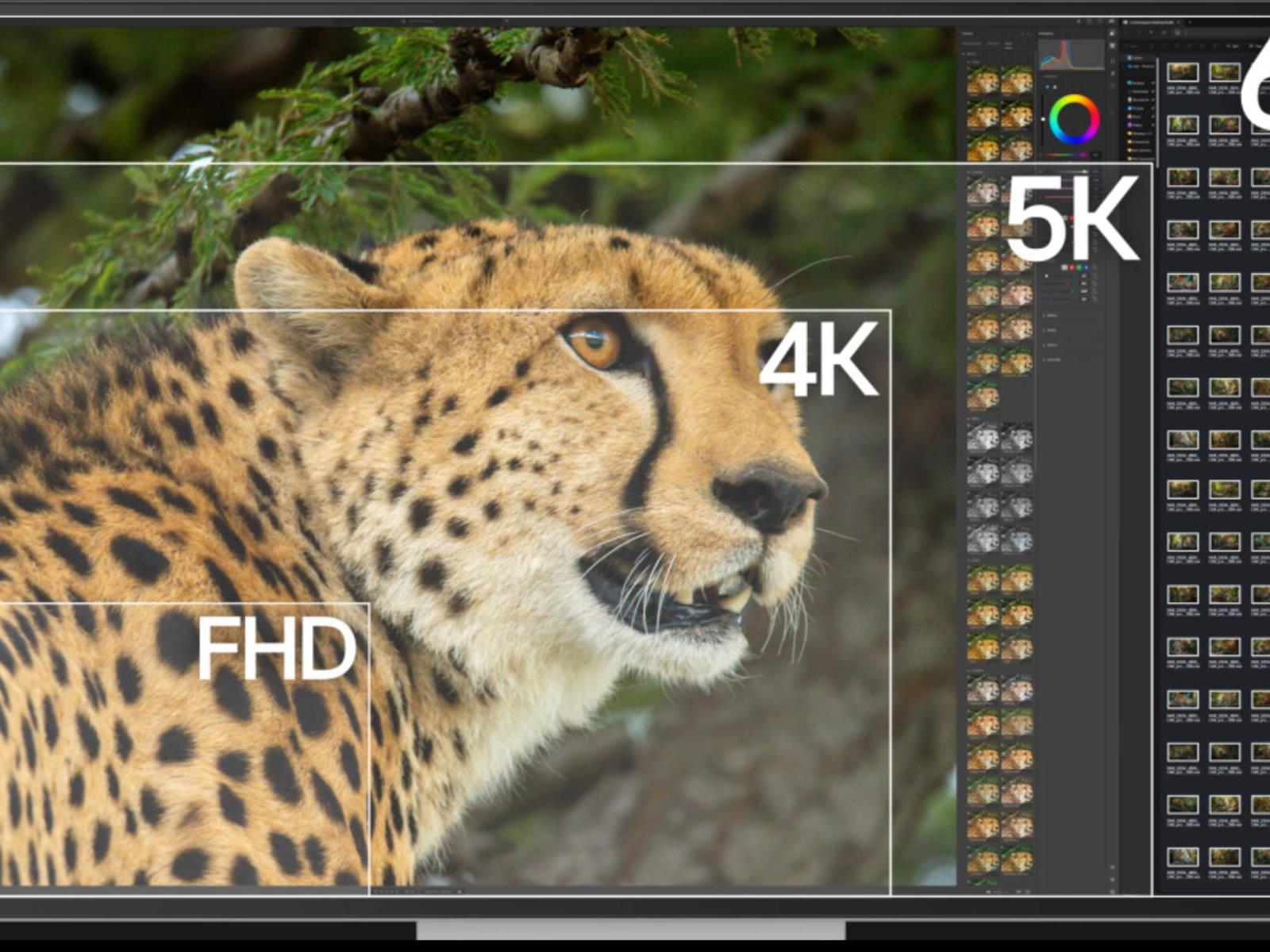
Earlier today, LG introduced its latest and greatest high-res pro display will be available for pre-orders in the US starting October 10th. That’s the LG UltraFine Evo 32U990A, a 32-inch 6K Nano IPS monitor with full support for Thunderbolt 5, DisplayPort 2.1, and HDMI 2.1. The LG UltraFine Evo 32U990A is targeted squarely at the professional

Imgur has left the UK

Imgur has shut off its image-hosting platform for users in the UK, displaying a “content not available in your region” notice across the site and on third-party embeds. The move comes after the UK Information Commissioner’s Office (ICO) warned that it intended to levy fines against Imgur’s owner, MediaLab AI, after an investigation into the service’s handling of children’s data, age verification and privacy protection. Exact details of the fine, or what the findings of the investigation were, have not been shared.

“We are aware of reports that the social media platform Imgur is currently not available in the UK. Imgur’s decision to restrict access in the UK is a commercial decision taken by the company,” said regulators in a statement. They also stressed that “exiting the UK” does not mean a company can avoid any levied penalties, and that the investigation is ongoing.

“Our findings are provisional and the ICO will carefully consider any representations from MediaLab before taking a final decision whether to issue a monetary penalty,” said regulators.

In recent years, the ICO has stepped up enforcement of its policies governing data privacy for minors. In 2023, the watchdog fined TikTok $15.8 million for what it said were several violations of data protection laws. The regulator alleged that in 2020 TikTok allowed as many as 1.4 million children under the age of 13 to use the app, against its own policies. TikTok found itself under investigation yet again this year over similar alleged violations. The ICO also previously raised concerns surrounding a Snapchat generative AI chatbot named My AI, alleging that it placed children’s privacy at risk.

This article originally appeared on Engadget at https://www.engadget.com/big-tech/imgur-has-left-the-uk-181715724.html?src=rss

Just Cause developer Avalanche Studios is the latest game company to announce layoffs

Avalanche Studios is following in the footsteps of so many game developers this year. Today, the company posted a notice to its website announcing plans for a restructuring. Avalanche said it will close its studio in Liverpool, impacting all staff members in the city. The company said it will also “reduce our workforce and restructure the teams” at its studios in Malmo and Stockholm, but did not provide specifics about the scope of those layoffs.

Although the statement simply credited the decision to “current challenges to our business and the industry,” it’s hard not to think that the cancellation of Avalanche’s planned game Contraband had something to do with the current need to consolidate. Microsoft ended active development on the project in August during the fallout from the massive layoffs the tech giant announced over the spring and summer. Those cuts appeared to impact the fate of many other upcoming games and game studios that were working with Microsoft as either a developer or a publisher.

Since we won’t get to know them for Contraband, Avalanche Studios will remain best known for its Just Cause games of open-world mayhem for now. Contraband is the only game currently listed as a forthcoming title on the company website, so it’s unclear what the next moves for the remaining team members will be. The notice closes by saying, “Despite these changes, we remain deeply committed to providing amazing games to our passionate player communities.” Hopefully they’ll be able to bounce back.

This article originally appeared on Engadget at https://www.engadget.com/gaming/just-cause-developer-avalanche-studios-is-the-latest-game-company-to-announce-layoffs-180048615.html?src=rss