Ubisoft ends development at Tom Clancy studio Red Storm

Ubisoft is ceasing game development at its studio, Red Storm Entertainment, best known for its work on the Tom Clancy’s series. While the studio is set to remain open, 105 people will be laid off, a Ubisoft source told GamesIndustry.biz.

Those who survive the cull will reportedly continue to work on the Snowdrop engine, used in many of Ubisoft’s tentpole games over the last decade, including Star Wars Outlaws and Avatar: Frontiers of Pandora more recently. Red Storm had been working on an untitled Splinter Cell VR game that was canceled in 2022, as well as the also-canceled The Division Heartland.

The studio was co-founded by the author Tom Clancy himself in 1996 (taking its name from Clancy’s novel Red Storm Rising), and in its 30 years has worked on a large number of Ghost Recon and Rainbow Six games, among others. It also developed 2023’s broadly well-received Assassin’s Creed Nexus VR.

According to GamesIndustry.biz’s source, the layoffs at Red Storm are part of Ubisoft’s wider cost-saving reorganization, which has resulted in sweeping job cuts and game cancellations across the French publisher’s portfolio.

This article originally appeared on Engadget at https://www.engadget.com/gaming/ubisoft-ends-development-at-tom-clancy-studio-red-storm-170847892.html?src=rss

New OptiScaler Build Delivers Faster FSR 4 Upscaling On RDNA 2 Radeon GPUs

New OptiScaler Build Delivers Faster FSR 4 Upscaling On RDNA 2 Radeon GPUs
Unofficial community support for AMD’s FSR 4 upscaler continues to improve, as OptiScaler FSR 4 injection for RDNA 2 GPUs now works with current AMD drivers and no longer requires reverting to older drivers to function. Fancy that! 

Just last month, OptiScaler also brought FSR 4 to Vulkan games which previously had no support for FSR 4

OpenAI Acquires Developer Tooling Startup Astral

OpenAI announced it’s acquiring developer tooling startup Astral to strengthen its Codex AI coding assistant, which has over 2 million weekly users and has seen a three-fold increase in user growth since the start of the year. CNBC reports: “Through it all, though, our goal remains the same: to make programming more productive. To build tools that radically change what it feels like to build software,” Astral’s founder and CEO Charlie Marsh wrote in a blog post. The company’s acquisition of Astral is still subject to customary closing conditions, including regulatory approval.


Read more of this story at Slashdot.

This Powerful Sonos Soundbar/Subwoofer Combo Is $250 Off Right Now

We may earn a commission from links on this page. Deal pricing and availability subject to change after time of publication.

There’s nothing sweeter than listening to your favorite album or watching your favorite movie with pristine audio. And if you’re a true audiophile, few brands approach the quality Sonos can offer. Right now, Sonos is offering major discounts in the lead-up to Amazon’s Big Spring Sale, and the Sonos Beam G2 + Sub Mini combo in particular stands out; it’s currently $749, a 25% drop from the $998 list price and the lowest price it yet reached, according to price tracking tools.

This soundbar and subwoofer combo is perfect for those who want to keep things minimalistic, whether for space or aesthetic reasons, without sacrificing sound quality. The deal includes the Sonos Beam Gen 2, which normally goes for $499, and the Sonos Sub Mini, which normally also goes for $499.

The Sonos Beam Gen 2 arrived in 2021 with Atmos compatibility, eARC connectivity, NFC connectivity, and a better processor than the Gen 1 from 2018. As a smart soundbar, it supports both Google and Alexa voice assistants, as well as AirPlay. Its flat, tablet-like design (measuring 2.7 x 25.7 x 4.0 inches) makes it extremely compact, yet it still produces big sound, as noted in PCMag’s “excellent” review. The Sonos Sub Mini is a smaller and more affordable version of the Sonos Sub Gen 3, perfect for a small apartment. You can learn more about it in CNET’s review.

The Sonos companion app has improved dramatically over the years, making for a much better experience, adding features like Sonos TruePlay, which calibrates the speaker based on its environment.

Our Best Editor-Vetted Amazon Big Spring Sale Deals Right Now

Deals are selected by our commerce team

Meta isn’t shutting down its VR metaverse after all

Meta is backtracking on its plans to shut down the VR version of its metaverse. The company now plans to support Horizon Worlds in VR for the “foreseeable future,” though users shouldn’t expect new games, CTO Andrew Bosworth said in an update.

“We will keep horizon worlds working in VR for existing games, to support the fans who’ve reached out,” Bosworth said in a post on Instagram. “For people who already have games they like that they’re using in Horizon Worlds, [they] will be able to download the Horizon Worlds app and use it in VR for the foreseeable future.”

The reversal comes after Meta said earlier this week that Horizon Worlds in VR would no longer be accessible after June 15 as the company pivots its metaverse experiences to mobile. Though Horizon never gained mass appeal, even among VR enthusiasts, Meta’s move to shut it down was just the latest sign of how the company has pivoted away from its metaverse ambitions as it chases AI “superintelligence.” 

In his post on Instagram, Bosworth said there was “a lot of misinformation” about the company’s plans. “We announced, ‘hey, we’re moving away from Horizon Worlds in VR,’ and the headline is that Horizon is dead,” he said. “It’s not. And likewise, VR is not dead. We’re continuing to invest tremendously.” The company laid off more than 1,000 employees from its metaverse division and shut down three VR studios earlier this year. Bosworth said that the company is still working on its next two generations of VR headsets.

He described the metaverse as a “misunderstood concept” that was never meant to only encompass virtual reality. He said that AR is also part of the vision and that even people scrolling their phones could be part of the metaverse. “When somebody is using their phone and you’re physically with them, they’re at the dinner table with you, and yet when you talk to them, they hear nothing because they’ve transported themselves through the glowing rectangle into a digital space,” he said. “Maybe that they’re scrolling media, maybe that they’re in the text world, but like they have transported themselves. So we’ve always had this internally — at least me and Mark — this very expansive construct of the metaverse.”

This article originally appeared on Engadget at https://www.engadget.com/ar-vr/meta-isnt-shutting-down-its-vr-metaverse-after-all-165520696.html?src=rss

Despite hardware limits, Parallels supports running Windows on MacBook Neo

Apple’s MacBook Neo is impressive for its $600 price, but its A18 Pro processor is one of its biggest compromises compared to a modern MacBook Air—in our review, we found it was more than up to basic computing tasks, but for demanding workloads that benefit from more CPU and GPU cores and RAM, the Air is a better choice.

But those limited computing resources are still enough to run Windows on your Mac using the Parallels Desktop virtualization software—so says Parallels itself, which after some testing and benchmarking has declared the Neo suitable for “lightweight computing and everyday productivity, document editing, and web-based apps” while running Windows 11.

Parallels says the MacBook Neo’s respectable single-core CPU performance keeps the Neo feeling “quick and responsive” when running multiple Windows-only software packages, including QuickBooks Desktop and other accounting apps, Microsoft Office, “light engineering and data tools” including AutoCAD LT and MATLAB, and “Windows-only courseware and education software” with “no Mac equivalent.” In Parallels’ testing, the Neo’s single-core CPU performance in Windows was still roughly 20 percent faster compared to a Core Ultra 5 235U chip in a Dell Pro 14 laptop.

Read full article

Comments

Kena: Bridge of Spirits launches for Switch 2 on March 26

The Switch 2 ports keep on coming. This time it’s Kena: Bridge of Spirits, the award-winning 2021 title from Ember Lab. Previously announced for spring 2026, the visually striking title now has an official release date of March 26.

Kena: Bridge of Spirits won Best Independent Game and Best Debut Indie Game at The Game Awards 2021. It’s already available for PS5 / PS4, PC (Steam and Epic) and Xbox Series X/S and One.

You play as Kena, a young spirit guide on a quest to a sacred mountain shrine. Gameplay has a Zelda-like flair. (That could make it a solid next play after Breath of the Wild and Tears of the Kingdom.) Like in Link’s adventures, you’ll find plenty of exploration, puzzles and fast-paced combat. That encompasses whacking bad guys with Kena’s staff, firing arrows and flinging bombs.

Kena: Bridge of Spirits launches for Switch 2 on March 26 in North America, Europe and Asia. Meanwhile, folks in Thailand can get it a day earlier, on March 25. Details about Taiwan will be announced “soon.” You can preorder the game today in North America and Europe and get a taste of its Pixar-esque art style in the trailer below.

This article originally appeared on Engadget at https://www.engadget.com/gaming/nintendo/kena-bridge-of-spirits-launches-for-switch-2-on-march-26-163540229.html?src=rss

Walmart Wins Patents To Give Algorithms More Sway Over Prices

Walmart has secured patents for systems that use machine learning to forecast demand and automate pricing decisions, “pushing the U.S. retail behemoth into a debate over the use of algorithms to adjust product costs,” reports the Financial Times. From the report: In January Walmart obtained a U.S. patent for a “system and method for dynamically and automatically updating item prices” to carry out markdowns in its ecommerce unit, a rapidly growing division that generated more than $150 billion in sales last year. Last week it received another patent for using machine learning to predict demand and recommend prices for goods. […] Walmart said that both patents were “unrelated to dynamic pricing,” as the patent issued in January was specific to markdowns and last week’s patent was designed for merchant teams to make decisions, not the technology.

The patent granted in January involves an “end-to-end price markdown system” for ecommerce platforms such as Walmart.com based on data including predicted demand and consumers’ price sensitivity. Last week’s approved patent outlines ways to forecast demand and set prices at levels that will move stock over periods such as a week, a month or a quarter. “Example categories may include, for example, a food item, outdoor equipment, clothing, housewares, toys, workout equipment, vegetables, spices,” according to the filing. The “demand forecasting and price recommendation” tool envisaged in the patent would incorporate sources including purchases, prices, methods of payment and customer ID, such as a passport or driver’s license number. “Dynamic pricing or anything that smells like it is playing with fire,” said Matt Hamory, a grocery industry consultant at AlixPartners, who cited “the goodwill that you can lose by getting customers to think or suspect or worry even slightly that you are doing things with pricing that are to your benefit and their detriment.”


Read more of this story at Slashdot.

Firefox Is Getting a Free Built-In VPN

If your browser of choice happens to be Firefox, good news: Your web surfing is about to get a bit more private. On Tuesday, Mozilla announced a number of upcoming updates to Firefox, all under the theme of user customizability. One such option happens to be a built-in VPN that Mozilla will offer users free of charge.

This new VPN option in Firefox rolls out March 24, as part of Firefox 149. There are no downloads required, since the VPN is baked into the update: Once it hits your browser, you’ll be able to turn on the VPN and start hiding your IP address and location while you use Firefox.

The only caveat here is that Mozilla is capping VPN data usage at 50GB per month. The company doesn’t say what happens once you hit that data limit, and I’ve reached out for clarification, but my guess is that the VPN will simply switch off, sending you back to Firefox’s default browsing experience—at least until the next month starts, and your data limit resets.

Why you should always use a VPN

If you use the internet without a VPN, you’re being tracked (yes, even if you use an incognito window). Without a Virtual Private Network, your IP address is exposed to the internet. Trackers can follow you around the web, and your internet service provider can keep tabs on what you’re doing. A VPN alone won’t make you impervious to tracking, but it does go a long way—all without having much impact on your browsing experience.

There are a lot of VPNs out there to choose from, and not all of them are equal. However, the general rule of thumb is to be wary of free VPNs. This is often a case of “you get what you pay for,” as many free options aren’t necessarily “upstanding.” The companies aren’t making any money off you directly, after all, so they may seek out data-sharing solutions to make money instead. As such, they may end up compromising your privacy in the end, defeating the purpose of the VPN in the first place.

I don’t see Firefox’s free VPN raising those red flags, however. Mozilla has a better track record than most when it comes to user privacy, and, in fact, already offers a paid VPN. From where I’m sitting, adding a free, limited VPN to Firefox is only a win-win for Mozilla: The company gets points for boosting user privacy for free, and if those users are looking for more flexibility while preserving their internet anonymity, they can check out Mozilla’s paid VPN option.

What else is coming to Firefox in the next update?

In its Tuesday post, Mozilla announced some other Firefox news in addition to its free VPN, including the following:

  • Smart Window: This feature, previously called AI Window, uses AI to offer “quick help” while you browse, without actually leaving the page you’re on. This help can include things like definitions, article summaries, and product comparisons. Mozilla says the feature is optional and opt-in, following the company’s stance on opt-in-only AI features.

  • Split view: This places two webpages side-by-side in the same window, following similar features in other browsers like Chrome.

  • Tab notes: This feature lets you add notes to tabs, up to 1,000 characters. A note will stay attached to the webpage until you delete it, even if you close the tab.

  • A new look: Firefox is teasing a “fresh new look,” including updated themes, icons, toolbars, menu, and the homepage.

After 25 years, Valve reworks Counter-Strike’s reload system

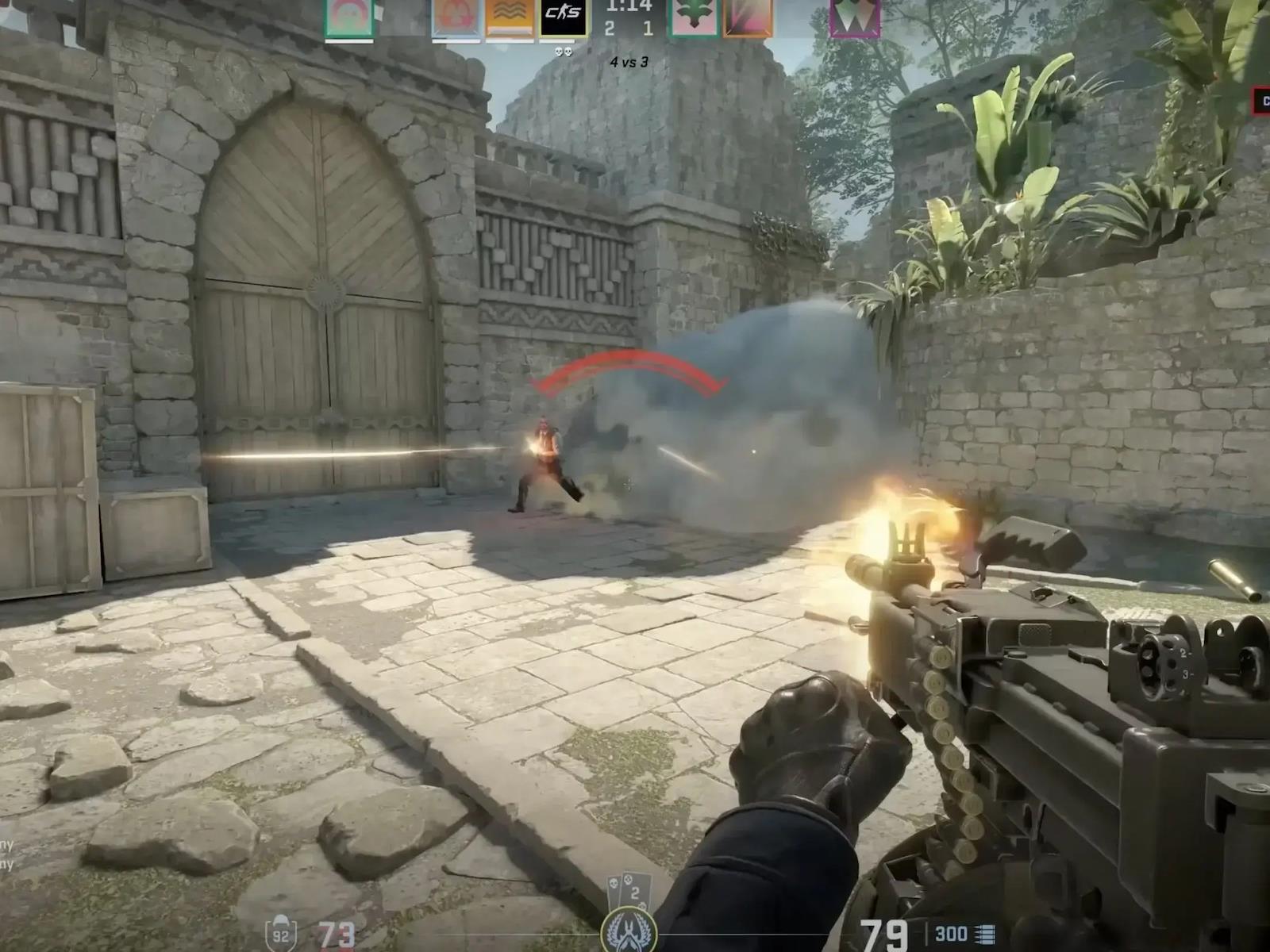
For decades now, Counter-Strike players have gotten used to tapping the reload button whenever they have a spare, safe moment. Yesterday evening, though, Valve announced that it had decided this system needed “higher stakes,” overhauling Counter-Strike 2‘s reload mechanic in a way that could disrupt years of muscle memory for millions of players.

Until now, reloading in CS2 has meant dumping the remainder of your current clip “back into an essentially endless reserve supply,” Valve wrote in the game’s latest update announcement. From now on, hitting the reload button will instead make players “drop the used magazine and discard all of its remaining ammo. Instead of ‘topping off’ your weapon with a few bullets, a new full magazine will be taken from the reserves whenever you reload.”

While most weapons will now come with three full clips of reserve ammo, Valve wrote that “some weapons will have less to reward efficiency and precision, or more to encourage spamming through walls and smokes.” Counter-Strike specialist Thour did the math on the changes and found that 7 weapons gained ammo, 16 lost ammo, and 12 saw their total ammo remain unchanged under this new system. Shotguns seem to have seen the biggest upgrades, while strategies that rely on “pistol spam” might have to be rethought from now on.

Read full article

Comments

Study pinpoints when bow and arrow came to North America

People in North America adopted the bow and arrow as replacement weapons for the dart and atlatl about 1,400 years ago, according to a new paper published in the journal PNAS Nexus. But the adoption was almost immediate in southern regions, while people living farther north initially adopted the bow and arrow as a complement to their existing toolkit, gradually phasing out the atlatl and dart over a thousand years.

That’s according to the latest research from experimental archaeologist Metin Eren’s Experimental Archaeology Laboratory at Kent State University in Ohio, where he and his team try to reverse-engineer a wide range of ancient technologies, from stone tools and ceramics to metal, butchery, and textiles. Eren achieved some notoriety for his 2019 debunking of an Inuit legend, testing rudimentary knives made of frozen feces to see whether they could cut through pig hide, muscle, and tendon. That paper snagged Eren an Ig Nobel prize.

While such work might be colorful, Eren has always emphasized that what he does is very much serious science, not entertainment. His lab has conducted studies on the pitches and octaves produced from the percussive aspects of flint-knapping; common injuries suffered by flint-knappers; the butchering efficiency of Clovis points (field work done jointly with the MeatEater hunters and immortalized on YouTube); and ballistics experiments to test a 1970s hypothesis about whether some stone blades once had some sort of wood or bone backing on the flat, dulled edge (as opposed to the sharp cutting edge), which would have increased adhesion.

Read full article

Comments

Rivian will provide 50,000 robotaxis to Uber in a deal worth $1.25 billion

Rivian and Uber have entered into a major partnership, with the former to provide the latter with 50,000 robotaxis in a deal worth $1.25 billion in funding. This starts with Uber purchasing 10,000 Rivian R2 robotaxis, which will be deployed in San Francisco and Miami by 2028.

If all goes well, Uber will scoop up 40,000 more robotaxis by 2030. The company plans to scale the initiative to 25 major cities by 2031. The full $1.25 billion investment is contingent on several autonomous milestones, according to a report by Yahoo Finance. However, Uber has already committed $300 million as an initial investment, though this is subject to regulatory approval.

A fleet of R2 Robotaxis is coming exclusively to @Uber. ⚡�

Today, we announced a partnership to help both companies accelerate their autonomous vehicle plans across 25 cities in the US, Canada and Europe by the end of 2031. https://t.co/6WazhobMyr pic.twitter.com/9fzgmIsOd5

— Rivian (@Rivian) March 19, 2026

The announcement actually caused Rivian’s stock to surge by ten percent before settling down to around four percent. This speaks to optimism surrounding the deal, given that just about every other stock is on the downswing at the moment due to certain geopolitical concerns.

This isn’t Uber’s only partnership for this type of thing. It’s a giant company with robotaxi hands in a number of cookie jars. The rideshare platform recently unveiled its own in-house robotaxi fleet, which is a design partnership with Lucid and Nuro.

Our partner @nvidia has long helped power the AV ecosystem

Now we’re working together to bring fully NVIDIA-driven L4 robotaxis to the @Uber platform across 28 cities by 2028, starting in LA and SF next year https://t.co/CeaxZ7dL8Z pic.twitter.com/2d2Fhol5S0

— Andrew Macdonald (@andrewgordonmac) March 16, 2026

It also announced a partnership with NVIDIA to develop software-driven autonomous vehicles, which will begin deployment in Los Angeles and San Francisco by the first half of 2027. Uber even teamed up with Waymo to bring robotaxis to cities like Atlanta and Austin.

As for Rivian, the company is slowly but surely becoming the “cool” American EV maker, a position once held by Tesla. It just announced pricing and availability for the long-anticipated R2 electric SUV. It arrives this spring, with a starting cost of $58,000. A cheaper model is expected to go on sale in 2027.

This article originally appeared on Engadget at https://www.engadget.com/transportation/evs/rivian-will-provide-50000-robotaxis-to-uber-in-a-deal-worth-125-billion-153856638.html?src=rss

15 Shows Like ‘Yellowstone’ You Should Watch Next

We may earn a commission from links on this page.

From humble beginnings, Taylor Sheridan’s Yellowstone has grown into TV’s one inescapable franchise. The Kevin Costner-led original ended its run after a relatively compact five seasons, but that doesn’t reckon with the three official spin-offs, the three others in development, nor with the Sheridan shows (Landman, The Madison, Bass Reeves) that feel like they could extensions of the Yellowstone universe, even if they technically aren’t.

But given that success only feeds our appetite for more, here are 15 other shows that play with the themes and tones that have made Yellowstone such a phenomenon.

The Madison (2026 – )

I don’t want to make this a list nothing but Taylor Sheridan shows, but they’re definitely a vibe. It’s early days yet for the latest, but it’s already been renewed for a second season, a testament to the power of its creator and the inspired casting of Michelle Pfeiffer in the lead. She plays Stacy Clyburn, the matriarch of a rich New York family who decides to pick up stakes following a tragedy, reconnecting with what she’s lost by visiting her late husband’s isolated piece of land in Montana for a break from the show’s horror-movie version of NYC. In the process she learns lessons about love, grief, and fishing in the folksy great outdoors. Stream The Madison on Paramount+.


Queen Sugar (2016 – 2022)

Another intense family business drama with a dash of a succession crisis. In Queen Sugar, three estranged siblings in distant cities are brought together by the death of their father, who has left them each an equal share in an 800-acre sugarcane farm in rural Louisiana. The Ava DuVernay-produced (and sometimes directed) series offers plenty of scandal and soapy drama, but ultimately, it’s a show about a family coming back together to preserve its legacy. Stream Queen Sugar on Hulu.


Landman (2024 – )

Thornton plays Billy Norris, a crackerjack consultant, fixer, and general hired gun for a major oil conglomerate in present-day West Texas. Beyond the complicated economics and politics of the oil industry, the poor guy’s also dealing with extremely complicated family drama, debt, criminal ties, and substance-abuse issues. Call it Dallas for a new generation. Stream Landman on Paramount+.


Dallas (1978 – 1991, 2012 – 2014)

Speaking of, you can draw a pretty straight line between the Duttons of Yellowstone and the Ewings of Dallas, even if they’re separated by time and state lines. (Also, the Texas-based Ewings specialize in Big Oil, with only a sideline in cattle ranching.) Led by Larry Hagman’s implacable J.R., the primetime soap finds the family caught up in more than a decade’s worth of shady business deals and personal trials, often overlapping (as when Ewing heir Bobby elopes with Pam, from the rival Barnes family). The revival series, a direct continuation, is also pretty fun: Patrick Duffy, Linda Gray and Larry Hagman return, joined by a new generation of greedy, horny oil tycoon types, led by Josh Henderson, Jesse Metcalf, and Jordana Brewster. Buy Dallas from Prime Video, same for the revival.


Mayor of Kingstown (2021 – )

Another Taylor Sheridan creation, this one stars Jeremy Renner as Mike McLusky, head of a family that’s been keeping the peace, more or less, in the title’s company town for decades. The “business” of the corrupt burg just happens to be incarceration, and the McLuskys thrive when business is up, even if Mike himself has different ideas about how to run things. The show deals, at least broadly, with systemic racism and inequality in the prison system, but mostly it’s a modern day western about bringing justice to a corrupt town. Stream Mayor of Kingstown on Paramount+.


1923 (2022– 2025)

Hard to ignore the casting here: There’s certainly some TV work on the CVs of both Helen Mirren and Harrison Ford, but getting these two legends together for a spin-off series certainly represents a coup (especially when you throw in Timothy Dalton as the baddie). In this mid-quel, set between Yellowstone prime and the more western-themed 1883, the show sees the Dutton family of the era take on Prohibition, with the Great Depression looming in the background. Stream 1923 on Paramount+.


Joe Pickett (2021 – 2023)

A vibe match that, while it doesn’t replicate Yellowstone’s family and business drama, still runs with the neo-western feel that defines a Taylor Sheridan show. Michael Dorman stars as Joe Pickett, a Wyoming game warden with a violent past and, well, a violent present too. Pickett is less of a tough action hero type, and more of a likable, everyday guy who just happens to be wrapped up in a murder via his day job. It’s not a comedy, but is definitely a bit weirder and more surreal than the more literal style of other modern neo-westerns, which generally lack flourishes like Pickett‘s memorable emu wrestling scene. Stream Joe Pickett on Paramount+.


The Son (2017 – 2019)

The popularity of Taylor Sheridan-esque neo-westerns leads us, inevitably, to something closer to an actual western. In this series, adapting Philipp Meyer’s 2013 Pulitzer Prize-nominated novel of the same name, Pierce Brosnan plays Eli McCullough, a ruthless cattle baron making moves to get in on the burgeoning oil industry in the Rio Grande Valley of 1915. A parallel narrative sees Eli as a young man, kidnapped and raised among a Nʉmʉnʉʉ family. While his backstory lends the character welcome complexity, in the present, he’s as determined to build his empire as he is to prepare his son and grandson to take over when he’s gone. Stream The Son on Prime Video.


Reservation Dogs (2021 – 2023)

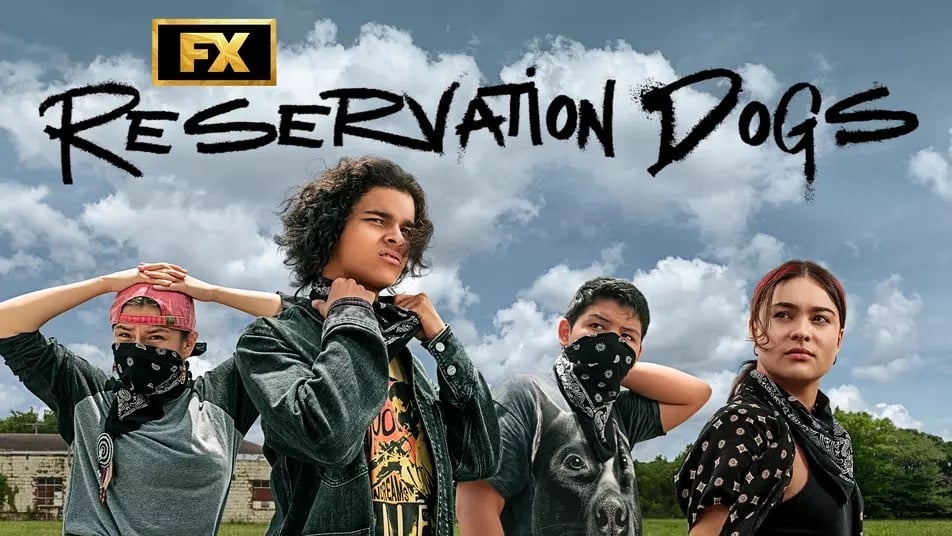
While including several Indigenous actors and characters, Yellowstone gets…let’s say mixed marks when it comes to representation. Though minus the big-business stakes of yellowstone, Reservation Dogs plays in a similar neo-western landscape, following a group of teens from the Muscogee Nation who resolve to honor the death of their friend by making a trip to California, experiencing a broader world for the first time. From producer/director/writer and Seminole citizen and Sterlin Harjo (alongside Taika Waititi), it’s a dramedy that manages to bring both solid laughs and moments of heartbreak in dealing with issues and emotions common to rural teenagers who dream of going elsewhere, yet specific to these Oklahoma Rez teenagers. Stream Reservation Dogs on Hulu.


Empire (2015 – 2020)

Terrence Howard leads an impressive cast (among them Taraji P. Henson, Gabourey Sidibe, and Vivica A. Fox) in this juicy, glossy, hip-hop infused soap opera. Howard plays Lucious Jackson (neé drug dealer Dwight Walker), who changed his own fortunes by building Empire Entertainment from the ground up. As the series begins, the music mogul is diagnosed with ALS and given a life expectancy of only a few more years. Refusing to watch his work die, he sets his three sons at odds to determine who’ll be the one to control things when he’s gone. His schemes are complicated by the release from prison of Cookie Lyon (Henson), the co-founder of the company and Jackson’s ex-wife. Drama! Stream Empire on Hulu and Tubi.


The Waterfront (2025)

Swapping Big Cattle for a family fishing business may seem like a big leap, but we’ve still got plenty of crime, shady dealings, and family angst in this Netflix series. Holt McCallany plays Harlan Buckley, returning to manage the family business, which is tied up with multiple dueling drug cartels, as well as unreliable family members—at least one on whom is looking to escape her legal problems by working with the FBI against her father and brother. Stream The Waterfront on Netflix.


Dark Winds (2022 – )

Adapted from a series of books by Tony Hillerman, Dark Winds takes up back to the 1970s and the Four Corners region of the American Southwest (where Utah, Colorado, New Mexico, and Arizona meet). Zahn McClarnon, Kiowa Gordon, and Jessica Matten lead the largely Native American cast as three Navajo Tribal Police officers brought together when a bank robbery on the border of the Navajo nation becomes entangled with the deaths of two Native residents. The show blends hardboiled crime and police procedural elements, but stands out for its exploration of the fraught history and relationships between these neighboring, interwoven communities. Stream Dark Winds on Netflix.


Bloodline (2015 – 2017)

Maybe you can’t relate to the Big Cattle drama of Yellowstone. Fair! How about a seaside inn in the Florida Keys? It’s all relative (pun intended), and big family drama can crop up anywhere. Starring Kyle Chandler, Ben Mendelsohn, Linda Cardellini, and Sissy Spacek, the show finds Mendelsohn’s black sheep Danny returning home for the 45th anniversary of the family business, only to stir up a whole bunch of buried trauma that leads to his dad dying due to a series of strokes. That’s before we learn of the drug-trafficking, cover-ups, and murders past and present. It all makes the Dutton dramas look a tad tame, honestly. Stream Bloodline on Netflix.


Succession (2018 – 2023)

White-collar coastal-elite types can have just as much fun with business and family drama as cattle ranchers. Succession is the darkly comic story of the Roy family, owners of media conglomerate Waystar RoyCo, and the chaos and backbiting that ensue when patriarch Logan (Brian Cox) suffers a stroke, prompting the family to begun fighting over who will take the reins after his inevitable demise. Prior to his medical incident, Logan has just given his third wife a say in his succession plans and elevated an estranged nephew to a position of power in the company, setting the stage for a (slightly less bloody) modern-day Game of Thrones scenario. Stream Succession on HBO Max.


Heartland (2007 – )

It’s a foreign show. From Canada! Based on a popular book series from authors Linda Chapman and Beth Chambers (who write under the name Lauren Brooke), this series follows the lives of a family of horse ranchers in western Canada led by sisters Amy and Lou (Amber Marshall and Michelle Morgan). This is more family drama than Yellowstone, with the stakes a bit closer to home, but it’s very much got that western feel—even if we’re talking about western Alberta. If you’re not familiar with it, there’s a lot to catch up on: It just completed its 19th season. Stream Heartland on Netflix.


Corsair Debuts 3200D High Airflow Budget Case With Big Cooling Potential

Corsair Debuts 3200D High Airflow Budget Case With Big Cooling Potential
Building a PC in this economy is not for the faint of wallet or purse, not when memory and storage prices are ascending the way they have been. That said, there are still budget-oriented parts out there, and Corsair’s new 3200D mid-tower computer case is one them. Offered in black, white, and smoke colorways and with or without ARGB fans,

Xbox Gets A Massive UI Overhaul With A Major Quick Resume Upgrade And More

Xbox Gets A Massive UI Overhaul With A Major Quick Resume Upgrade And More
Microsoft might already be touting its next generation of gaming consoles, but it hasn’t forgotten about its current models (Xbox Series X and S), which are about to get some welcomed upgrades as players will finally see the introduction of features that have been requested for years by the community. These improvements include an expanded

Vampire Survivors spinoff Vampire Crawlers is coming to PC and consoles on April 21

Poncle could be about to ruin the planet’s productivity all over again now that Vampire Crawlers has a release date for PC and consoles. The dungeon-crawling roguelike deckbuilder — which is a Vampire Survivors spinoff — is coming to Steam, Xbox Series X/S, PS5 and Nintendo Switch on April 21. It’ll cost $10. Alternatively, you’ll be able to check it out via Xbox Game Pass on day one.

Vampire Crawlers is on the way to iOS and Android as well. However, you’ll have to wait until sometime later this year to play it on mobile devices.

Vampire Crawlers is set in the same world as Vampire Survivors and it features many of the same playable characters and enemies. The action takes place from a first-person perspective this time around. Instead of firing weapons automatically, you play cards to use your attacks or boost your stats. Each card has a mana cost, so there’s more of a strategic element to combat. Cards can be modified and weapons can be evolved.

Poncle made Vampire Crawlers with the help of Nosebleed Interactive. It’s the first of several Vampire Survivors spinoffs that Poncle has planned. There’s also a licensed Warhammer take on the original title coming soon.

While I didn’t get deep enough into it to experiment with some truly wild combos, I enjoyed what I played of the Vampire Crawlers demo. If you need me, I’ll be busy cancelling all of my other plans for late April.

This article originally appeared on Engadget at https://www.engadget.com/gaming/vampire-survivors-spinoff-vampire-crawlers-is-coming-to-pc-and-consoles-on-april-21-151217962.html?src=rss

AI Is Recreating Val Kilmer To Star In A New Movie One Year After His Death

AI Is Recreating Val Kilmer To Star In A New Movie One Year After His Death
A little over a year after his death, Val Kilmer is set to return to the screen and as one of the main characters, no less, through physical AI in the upcoming noir thriller As Deep as the Grave. This project, developed with the full blessing of the Kilmer estate, moves beyond the simpler cameos by digital twins of deceased performers into

Microsoft Considers Legal Action Over $50 Billion Amazon-OpenAI Cloud Deal

An anonymous reader quotes a report from Reuters: Microsoft is considering legal action against its partner OpenAI and Amazon over a $50 billion deal that could violate its exclusive cloud agreement with the ChatGPT maker, the Financial Times reported on Wednesday. Last month, Amazon and OpenAI signed several agreements, including one that makes Amazon Web Services the exclusive third-party cloud provider for Frontier, OpenAI’s enterprise platform for building and running AI agents. The dispute centers on whether OpenAI can offer Frontier via AWS without violating the Microsoft partnership, which requires the startup’s models to be accessed through the Windows maker’s Azure cloud platform, the FT report said, citing sources.

OpenAI and Microsoft recently stated together that “Azure remains the exclusive cloud provider of stateless OpenAI APIs,” a Microsoft spokesperson said in an emailed statement, referring to software interfaces used to access OpenAI’s models. “We are confident that OpenAI understands and respects the importance of living up to this legal obligation,” the spokesperson added. FT said Microsoft executives believed the approach was not feasible and would violate the spirit, if not the letter, of their agreement, and added that the companies were in talks to resolve the dispute without litigation ahead of Frontier’s launch. “We know our contract,” a person familiar with Microsoft’s position told the newspaper. “We will sue them if they breach it. If Amazon and OpenAI want to take a bet on the creativity of their contractual lawyers, I would back us, not them.”


Read more of this story at Slashdot.

You Can Now Run a Spartan Race Using Your FSA/HSA Funds

If the cost of signing up for a Spartan Race or Tough Mudder has ever given you pause, good news: You can now use your Health Savings Account (HSA) or Flexible Spending Account (FSA) funds to cover race registration fees. Spartan has partnered with Flex, a platform that enables HSA/FSA payments across fitness and wellness brands, to make this possible.

How using your FSA to pay for a race works

A quick refresher on how HSA and FSA accounts work: Both are funded with pre-tax dollars, meaning the money goes into them before the IRS takes its cut. When you spend those funds on a qualifying purchase, you’re effectively getting a discount equal to your tax rate. For most people, that translates to 30 to 40 percent in savings compared to paying out of pocket. So a $150 race registration might only cost you $90 to $105.

How to use your HSA/FSA to sign up for a race

The process is straightforward: If you have an HSA debit card or FSA card, it works much like any other payment method, where you just need to select it at checkout. Register for a Spartan or Tough Mudder event and pay using your HSA or FSA card. Flex then handles the eligibility verification on the backend, so you don’t have to jump through hoops to prove the expense qualifies. (If you don’t have an FSA/HSA debit card or didn’t use it when you registered, it’s unclear if you’d be able to submit you claim after the fact under this partnership; I’ve reached out to Flex and Spartan for clarification.)

The Flex partnership covers registration costs for Spartan’s portfolio of events, which includes Tough Mudder races. And it may not stop there—Spartan and Flex are reportedly looking into more ways to extend HSA/FSA eligibility for things like training programs, recovery tools, and other athlete resources down the line. That would mean the full journey from training to finish line could eventually be (partially) funded with pre-tax health dollars.

The bottom line

In the big picture, a move like this is part of a growing shift in how fitness and wellness brands are thinking about access. Gym owner Equinox announced a similar partnership with Flex last month, allowing HSA/FSA funds to go toward select memberships, personal training, recovery services, and women’s health programs. The underlying logic is the same: Physical fitness is an important part of preventative health, and your pre-tax health dollars should be able to work toward that.

If you’ve been sitting on unused FSA funds, or building up an HSA balance you haven’t fully put to work, race registration is an unexpected but worthy way to use those dollars.