Why I’m breaking up with Xbox

A few years ago, Microsoft offered some of the best deals in gaming. The spartan Xbox Series S was well-priced at $300 (and you could often find it even cheaper if you hunted for deals). A $15 monthly subscription to Xbox Game Pass Ultimate offered a vast catalog of games new and old. But my, how things have changed in 2025.

The nearly five-year-old Xbox hardware lineup got not just one but two price bumps this year; the Series S with 512GB of storage now costs a whopping $400, while the Series X starts at $600 for a digital-only model or $650 with a disc drive — $150 and $100 than they retailed for just a few months ago. Adding insult to injury, Microsoft also jacked up the price of Game Pass Ultimate by 50 percent this week — it will soon cost $30 a month, up from $20. And that’s hardly the only price bump it has received recently — it was only $17 as recently as July of last year. It’s a positively wild move. 

Sure, Microsoft isn’t alone in increasing console pricing —  Nintendo is charging more for the ancient original Switch than ever before, and the Switch 2 is no bargain at $450. Sony also increased PS5 pricing this year, albeit to a less dramatic extent. It’s not a huge shock given the roller-coaster ride of uncertainty that is the US economy in 2025 (and for at least a few more years to come), but Microsoft’s approach feels egregious.

And that was before the Game Pass bump. It seems Microsoft is betting that increased revenue from die-hards will offset the inevitable losses from people who decide that the new price isn’t worth it. Subscriber inertia is definitely a real thing, and devoted Xbox owners who get a lot of use out of Game Pass may not bat an eye (or may forget to check their bank statements).

$30 for hundreds of games, as well as high-profile launch day availability for titles that would normally cost $70 or more each, is totally reasonable. By the same token, $30 or $40 for something like Apple Music would be more than fair when you consider how much purchasing a single album costs. (Not to mention fair compensation for all the artists involved in making music, or games, but that’s a story for another time.)

But in a desperate effort to get people signed up for music streaming, $10 a month became the industry standard. Sure, streaming services cost a few bucks more than that now, but they’ve thus far avoided the big price jumps we’re seeing in video and now game streaming. As the first big company to offer a subscription gaming catalog, Microsoft had a chance to set market rates — but to get as many people on board as possible, it seems like it aimed too low and is making up for it now.

And those who used to pay $15 or $18 or even $20 a month for Game Pass for years will likely struggle with this bump, no matter how devoted an Xbox gamer they are. A year of Game Pass now costs more than double the annual rate for a PlayStation Plus Platinum subscription. And while Sony still has no plans to bring high-profile, first-party studio games like Ghost of Yotei to its service on day one, the various PS Plus plans offer a ton of value without that. Especially for people who don’t need to play the hot new game the week it comes out.

For my part, I’ve been considering breaking up with Xbox for most of the year, and I think this will seal the deal. In a lot of ways, I was the exact target market for the Series S and Game Pass. There weren’t a ton of Xbox games I wanted to play, but there were enough I was curious about. So the combo of a reasonably-priced console and Game Pass was a great way to both try some new games and explore others I had missed.

Getting new players into the Xbox ecosystem feels like a massive challenge now with the prices we’re looking at. My year-one cost for an Xbox Series S and Game Pass was $480; it would be almost double now at $860. That is a positively brutal increase, and you can get far more for your money in the PlayStation ecosystem, to say nothing about Steam’s frequent (and often more generous) sales. And more and more former Xbox exclusives are coming to other consoles — like Forza Horizon 5, the game that got me to buy an Xbox in the first place. That’s yet another reason to not buy an Xbox, especially at these prices.

Sure, part of Microsoft’s strategy is that anything can be an Xbox, streaming games to your TV or set-top box. But you’ll need a really strong internet connection for that to be your only way to play games, and the kind of people who are going to shell out $30 for Game Pass are probably going to want the increased performance and fidelity that’ll come with a dedicated console. At the very least, though, game streaming is available on all Game Pass plans, so they’re making that part of the equation more accessible to more users.

Microsoft seems to have decided anything can be an Xbox without considering the people who already bought one. The new strategy appears to be shifting consumer costs away from hardware (which is usually a loss leader anyway) to its increasingly-expensive subscription service. That’s been a clear part of the Xbox plan for a while now, but people have come to expect a certain price point for things like Game Pass (regardless of whether or not that price is ethical). Now, Microsoft looks like it’s gouging Game Pass customers and leaves people who did buy into the Xbox ecosystem feeling taken advantage of.

The big bet is that fewer customers paying more will work out in the long run. I have no idea if that’s the right strategy — but I’m one gamer who won’t be sticking around to find out. I bet I’m not alone.

This article originally appeared on Engadget at https://www.engadget.com/gaming/xbox/why-im-breaking-up-with-xbox-160000545.html?src=rss

Samsung Galaxy Phones Might Be Getting This Apple Intelligence Feature Soon

Did you know you can customize Google to filter out garbage? Take these steps for better search results, including adding my work at Lifehacker as a preferred source.


Though Apple might still be struggling to keep up with its tech competitors in the AI race, one feature it rolled out ahead of companies like Google or Samsung was Notification Summaries. With Apple Intelligence, your iPhone can truncate lengthy messages and alerts into succinct summaries that are meant to be read at a glance. The idea is, rather than sift through a sea of notifications, you can simply scan your missed alerts and get up to speed quickly.

In execution, however, it’s been a bit of a disaster. While Apple’s AI could offer accurate summaries, some of its outputs were quite inaccurate. The most infamous example was when Apple Intelligence incorrectly summarized a BBC news alert, saying that the suspected UnitedHealthcare CEO shooter Luigi Mangione had committed suicide in prison. Following that incident, Apple pulled Notification Summaries for news and entertainment alerts, until the release of iOS 26.

But even when summaries are accurate, they aren’t always ideal. When Apple first released the feature, one user went viral after sharing how Notification Summaries summed up two breakup texts from their partner: “No longer in a relationship; wants belongings from apartment.” In theory, it might be nice to see a summary of a long series of alerts; in practice, it might be better for you to read your messages yourself.

It is against this backdrop that this latest AI summary news comes to us: Samsung is currently working on its own version of Notification Summaries for Galaxy devices.

Notification summaries on One UI 8.5

As discovered by SamMobile, Samsung is actively working on a new AI notification summary feature for Galaxy devices. The outlet unearthed the feature within Samsung’s latest One UI 8.5 firmware update, which is now online for the Galaxy S25 Ultra.

SamMobile has this firmware running, but, at this time, the feature itself is not actually working. What is working, however, is a pop-up explaining how the feature works. When pulling down the notification panel on a Galaxy running One UI 8.5, you’ll see the following message: “Your longer conversations can now be summarized to give you quick recaps.”

You can also find a new settings menu for “Notification summaries” that, while not currently active, explains the feature in more detail: “Summarize long messages and group conversations to get quick recaps. Summaries use AI on your device, which may sometimes make mistakes. Your messages are never sent to Google.” From here, you’re now able to choose apps to exclude from these summaries, though, again, the summaries themselves are not live as of this article.

Still, it’s an interesting first look at how Samsung plans to roll out AI notifications. As we can see from the current explainer, the feature will tap into an AI model to summarize alerts, which SamMobile guesses will most likely be Gemini Nano. Nano is Google’s fast, lightweight model that’s designed to run on-device. That tracks with what we can see here, as the feature claims no data is ever sent to Google when summarizing notifications.

If you’re going to use AI, on-device processing is certainly better than sending your data over the internet. Still, it’ll be interesting to see how Samsung’s version fares compared to Apple’s. Will the former come up with a more reliable way to summarize alerts, or will it feel about the same as it does on iOS? For what it’s worth, I had to turn off Notification Summaries on my iPhone. I just found it largely unhelpful, even when it was accurate. If I had a Galaxy, I wouldn’t be shocked if I felt compelled to do the same.

Microsoft Under Pressure To Extend Windows 10 Support As Petition Gains Traction

Microsoft Under Pressure To Extend Windows 10 Support As Petition Gains Traction
The end of Windows 10 is only two weeks away, but many users aren’t ready or able to make the move to Windows 11. This has led to lobbying from groups such as Consumer Reports and the Euroconsumers Group for a longer extended support period for Windows 10. The pressure only continues to mount as PIRG (Public Interest Research Group) is also

Huge Xbox Game Pass Ultimate Price Hike Sparks Outrage & Cancellation Frenzy

Huge Xbox Game Pass Ultimate Price Hike Sparks Outrage & Cancellation Frenzy
Within less than two weeks of raising prices of its Xbox consoles, Microsoft has brought price hikes to the digital realm in the form of a huge Xbox Game Pass Ultimate price hike—and gamers are not happy. Not only have the lower tiers of Xbox Game Pass been renamed to “Essential” (previously “Core”) and “Premium” (previously “Standard”), but

Nintendo Switch 2 Vs ROG Xbox Ally: Handheld Gaming Powerhouses Compared

Nintendo Switch 2 Vs ROG Xbox Ally: Handheld Gaming Powerhouses Compared
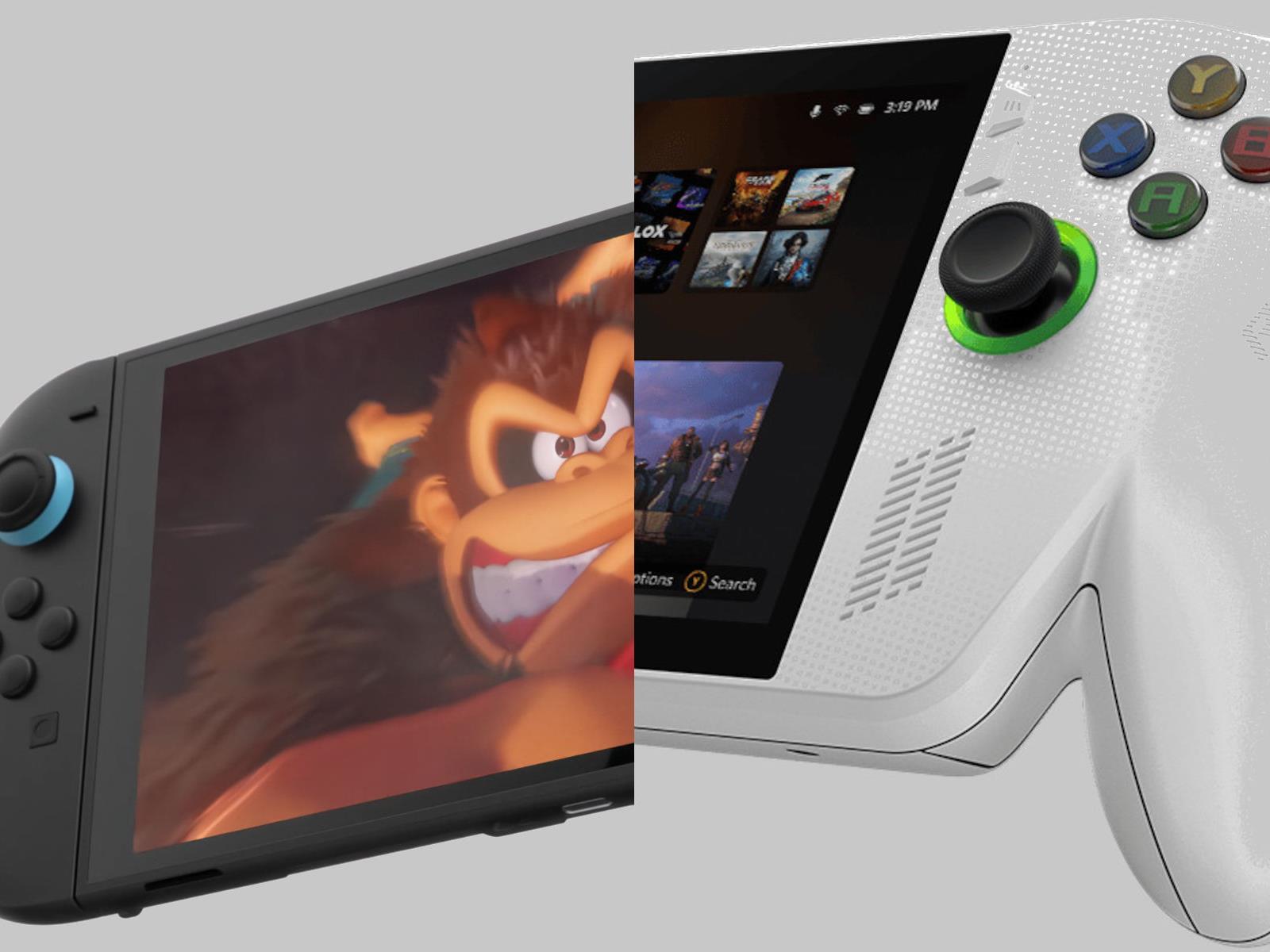
Ahead of the October 16th launch date of the ASUS ROG Xbox Ally, one question has lingered in this the minds of more than a few gamers: how does this new gaming handheld actually compare to the Nintendo Switch 2? The Nintendo Switch 2 vs ROG Xbox Ally matchup is surprisingly interesting, though admittedly becomes something of a blow-out in

In a Sea of Tech Talent, Companies Can’t Find the Workers They Want

Tech companies are struggling to fill AI-specialized roles despite a surplus of available tech talent. U.S. colleges more than doubled the number of computer science degrees awarded between 2013 and 2022. Major layoffs at Google, Meta, and Amazon flooded the job market. The Bureau of Labor Statistics predicts businesses will employ 6% fewer computer programmers in 2034 than last year. The disconnect stems from companies seeking workers with specific AI expertise.

Runway CEO Cristobal Valenzuela estimates only hundreds of people worldwide possess the skills to train complex AI models. His company advertises base salaries up to $490,000 for a director of machine learning. Daniel Park’s startup Pickle offers up to $500,000 base salary and expects candidates willing to work seven days a week. The WSJ story includes the example of one James Strawn, who was laid off from Adobe over the summer after 25 years as a senior software quality-assurance engineer. The 55-year-old has had one interview since his layoff. Matt Massucci, CEO of recruiting firm Hirewell, told the publication companies can automate some low-level engineering tasks and redirect that money to high-end talent.


Read more of this story at Slashdot.

Red Hat Investigating Breach Impacting as Many as 28,000 Customers, Including the Navy and Congress

A hacking group claims to have pulled data from a GitLab instance connected to Red Hat’s consulting business, scooping up 570 GB of compressed data from 28,000 customers. From a report: The hack was first reported by BleepingComputer and has been confirmed by Red Hat itself. “Red Hat is aware of reports regarding a security incident related to our consulting business and we have initiated necessary remediation steps,” Stephanie Wonderlick, Red Hat’s VP of communications told 404 Media.

A file released by the hackers and viewed by 404 Media suggested that the hacking group may have acquired some data related to about 800 clients, including Vodafone, T-Mobile, the US Navy’s Naval Surface Warfare Center, the Federal Aviation Administration, Bank of America, AT&T, the U.S. House of Representatives, and Walmart.


Read more of this story at Slashdot.

Viral app Neon vows to return to sell more of your phone calls to AI companies

Neon, a service that pays you for recordings of your phone calls and then sells those to AI companies for training data, seems set to return in the wake of a privacy breach. The app swiftly went viral after its debut, but it has been on ice since last week after a security flaw emerged. 

According to CNET, Neon founder Alex Kiam apologized for the incident in an email to users and said the app would return “soon.” It went offline after TechCrunch found users were able to access other people’s call recordings, along with transcripts and metadata. Neon pledged to add extra layers of security during the outage before making a comeback. 

While the app has been offline, users have been unable to cash out their payments. Neon pays them up to $30 per day for call recordings — 30 cents per minute for chats with other Neon users, and 15 cents per minute for calls with anyone else. It offers $30 for referring a newcomer to the app as well. 

In the email to users on Tuesday, Liam wrote that, “Your earnings have not disappeared — when we’re back online, we’ll pay you everything you’ve earned, plus a little bonus to thank you for your patience!” 

Neon says it only records the user’s side of the conversation when they place a call through the app. If the person on the other end is a Neon user as well, it records both sides of the chat. The company claims its tech automatically filters out personal information like names and phone numbers. Some privacy experts have warned people not to use Neon, in part because of potential pitfalls related to two-party consent laws for recording conversations in various jurisdictions.

This article originally appeared on Engadget at https://www.engadget.com/apps/viral-app-neon-vows-to-return-to-sell-more-of-your-phone-calls-to-ai-companies-150233035.html?src=rss

Samsung’s Bodacious 49-Inch OLED Gaming Monitor Hits All-Time Low At 45% Off

Samsung's Bodacious 49-Inch OLED Gaming Monitor Hits All-Time Low At 45% Off
If you live by the mantra, ‘Go big or go home’, go ahead and call your loved ones at home and let them know you’re going to be late. Now is the time to go big if you’re in the market for a gaming monitor because even though Amazon’s Prime Big Deals Day sales event is not for another week, we’re seeing some fantastic discounts on gigantic displays.

Chief

Japan Saw Record Number Treated For Heatstroke in Hottest-Ever Summer

More than 100,000 people were sent to hospitals due to heatstroke in Japan between May 1 and Sunday, according to preliminary data from the Fire and Disaster Management Agency. Bloomberg, via Japan Times: The number is the most on record, according to NHK. Transport to hospitals of patients linked to heatstroke over the period rose almost 3% to 100,143 from a year earlier as Japan saw its national temperature record broken twice in a matter of days. The country’s average temperature during this summer was the highest since the statistic began being compiled in 1898, the nation’s weather agency said last month.

Heat waves around the world are being made stronger and more deadly due to human-caused climate change. Government officials in August pledged to boost public health protections and encouraged the installation of more air conditioners in school gymnasiums and the use of cooling centers in communal spaces like libraries. New rules came into effect this summer that require employers to take adequate measures to protect workers from extreme temperatures.


Read more of this story at Slashdot.

Intel Could Score AMD As Foundry Customer In Another Big Vote Of Confidence

Intel Could Score AMD As Foundry Customer In Another Big Vote Of Confidence
Intel’s ongoing restructuring effort and attempts to boost its chip making business could get an assist from AMD, its main competitor in the x86 space. Nothing has been announcement, but Intel is reportedly in “early-stage” discussions with AMD to add the Ryzen and Radeon chip designer as a foundry client, which if solidified would be yet

Insurers Are Using Cancer Patients as Leverage

Major health insurers are threatening to drop renowned cancer centers from their networks during contract negotiations, Memorial Sloan Kettering Cancer Center’s president and CEO Selwyn M. Vickers and chairman Scott M. Stuart wrote in a story published by WSJ. Memorial Sloan Kettering Cancer Center reported that both Anthem Blue Cross Blue Shield and UnitedHealthcare prepared to terminate network agreements while patients underwent active cancer treatment. FTI Consulting found that 45% of 133 provider-payer disputes in 2024 failed to reach timely agreements. The disruptions have affected tens of thousands of patients.

Research published in the Journal of the National Cancer Institute found that care disruptions lead to more advanced-stage diagnoses and worse outcomes. Similar contract disputes involved Mayo Clinic, Johns Hopkins University and University of North Carolina Health. New York lawmakers introduced legislation this year requiring insurers to maintain coverage for cancer patients during negotiations and until treatment concludes. Memorial Sloan Kettering’s leadership described the practice as using patients as bargaining chips despite record insurer profits.


Read more of this story at Slashdot.

Tesla reverses sales decline in Q3, sells 50k more cars than it built

This morning, Tesla published its production and delivery numbers for the third quarter of the year. We’ve heard the same story for a while, one of diminishing sales as customers tire of a stale product lineup and are repulsed by the politics of the company’s CEO. But Q3 2025 tells a different tale. It’s been a good three months for the beleaguered automaker, one that appears to have cleared out a lot of old inventory.

Tesla built a total of 447,450 electric vehicles between July and September this year. That’s actually a 4.8 percent decrease compared to the same three months last year.

The Models 3 and Y production lines saw less of a slowdown—Tesla built 435,826 of these EVs, a 1.8 percent decline on last year. But the Models S and X, grouped together with the US-only Cybertruck, saw the greatest cutbacks. Just 11,624 of these collected models were produced, a 55.1 percent decrease compared to Q3 2024.

Read full article

Comments

Japan is running out of its favorite beer after ransomware attack

Japan is just a few days away from running out of Asahi Super Dry as the producer of the nation’s most popular beer wrestles with a devastating cyber attack that has shut down its domestic breweries.

The vast majority of Asahi Group’s 30 factories in Japan have not operated since Monday after the attack disabled its ordering and delivery system, the company said.

Retailers are already expecting empty shelves as the outage stretches into its fourth day with no clear timeline for factories recommencing operations. Super Dry could also run out at izakaya pubs, which rely on draught and bottles.

Read full article

Comments

OpenAI is now the world’s most valuable private company at $500 billion

OpenAI has overtaken SpaceX as the largest startup and most valuable private company in the world. Bloomberg has reported that the company has authorized a secondary share sale, which allowed its former and current employees to sell their stocks. OpenAI had authorized the sale of $10.3 billion in shares, but they ultimately sold $6.6 billion to investors that include Softbank, Abu Dhabi government’s MGX fund, American investment firm Thrive Capital and global investment management firm T. Rowe Price. As Bloomberg explains, that has boosted the company’s valuation to $500 billion from $300 billion, overtaking SpaceX with a $400 billion valuation and TikTok developer ByteDance at $220 billion. 

In early September, OpenAI said it was getting closer to transitioning to a new structure that will turn it into a Public Benefit Corporation (PBC) controlled by its nonprofit arm. The company’s nonprofit division received an equity stake of more than $100 billion, making it a major shareholder of the PBC. SpaceX’s CEO Elon Musk is one of the biggest critics of OpenAI’s decision and has been trying to block the company’s for-profit transition in court. Musk was one of OpenAI’s founders and funded its initial operations. He claimed in court that OpenAI and Altman are breaking their contract with him and violating the company’s founding mission of building AI “for the benefit of humanity” by changing its structure. 

OpenAI is hoping that being a PBC would make it more appealing to investors, as it would remove the cap on the financial returns they can get. It needs a lot more money than what it has raised so far, after all: OpenAI chief Sam Altman previously said he intends to spend trillions of dollars on building out data centers to run artificial intelligence services. 

This article originally appeared on Engadget at https://www.engadget.com/ai/openai-is-now-the-worlds-most-valuable-private-company-at-500-billion-133028221.html?src=rss

Shark’s latest skincare gadget will suck gunk from your pores and rinse them

About two years ago, I tried a facial treatment in Singapore that had left me feeling refreshed and my skin smooth and taut. I found out it was called an “aqua peel” and started investigating how I could replicate the experience at home in the United States. Back then, the available options were either too costly or looked dubious. At the time, devices like the BeautyBio GloFacial weren’t showing up in my searches, and the Dermaflash Dermapore+ Pore Extractor and Serum Infuser just didn’t seem like what I was looking for.

When I first read the description for Shark’s FacialPro Glow, I felt a spark of hope ignite. It sounded like the aqua peel I had experienced, and it wasn’t until I actually was able to try it out recently that I was convinced. The company says its latest gadget is a “hydro-fueled, skincare-enhanced facial device that delivers spa-level results.” Basically, imagine a nozzle being dragged around your face as it sucks gunk out of your pores while also flushing them clean. That’s the refreshing sensation I experienced and was, to use a Singaporean term, “damn shiok.”

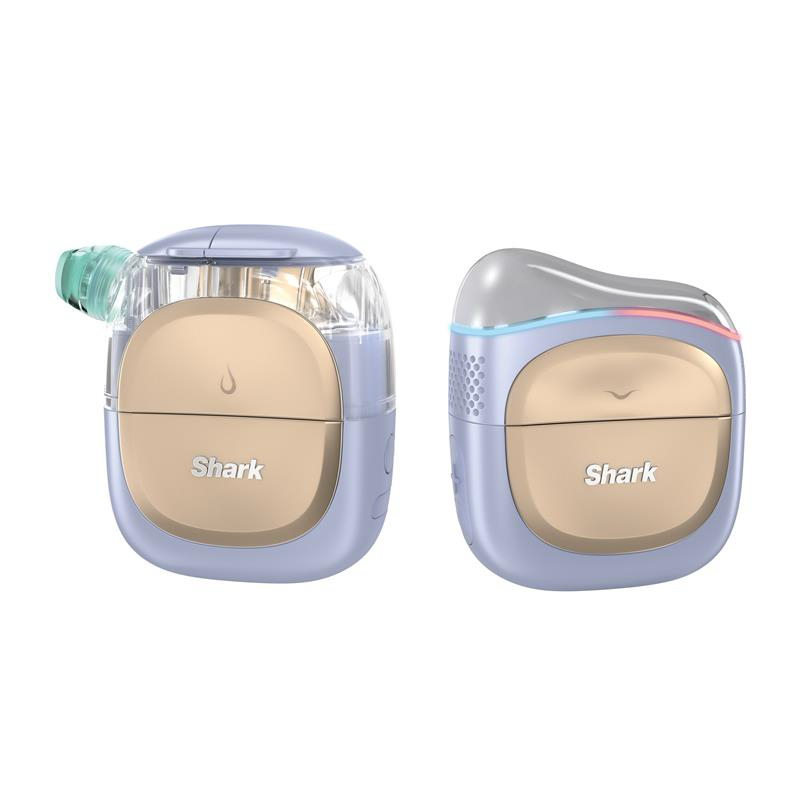
There are two parts to the FacialPro Glow system: the “cleanse” or exfoliating attachment and the Shark Depuffi, which will be sold separately starting October 17. Both of these components can snap onto a handle that houses the power unit. The “cleanse” portion is made up of a dual-pump system that applies suction and also sprays water or a hydrator into your pores so it infuses as it cleans. From all the descriptions I’ve read of “aqua peels” or “hydra facials” the FacialPro Glow seems to do pretty much the same thing. 

I’ve only had the chance to try it out once so far but I’m already pretty impressed. But before I get into that, a word on the setup. You can choose to use the Depuffi to warm up your skin before moving on to the exfoliating attachment, but I didn’t do so. The Depuffi is basically like a bigger, rounder gua sha (Asian smooth-edged tool for scraping your face to sculpt it) with a much larger surface area. It can either heat up or be cold, and uses similar technology as the undereye plates in Shark’s LED mask that launched earlier this year.

I missed that suggestion as I didn’t see it in the manual and was eager to begin with the suction, but I did use it after I was done with the exfoliation session to relax and cool my face.

The very first step in the process is to apply a thin layer of the included “Derm Detox” exfoliating gel on your face and leave it there for three minutes. It’s a combination of glycolic and salicylic acids that Shark says “gently dissolves impurities.” So far, I haven’t found anything noteworthy about the formulation. It didn’t have any smell or fragrance, didn’t leave my skin feeling tingly and despite being called a gel it had a mostly watery consistency that was reminiscent of facial treatment essences.

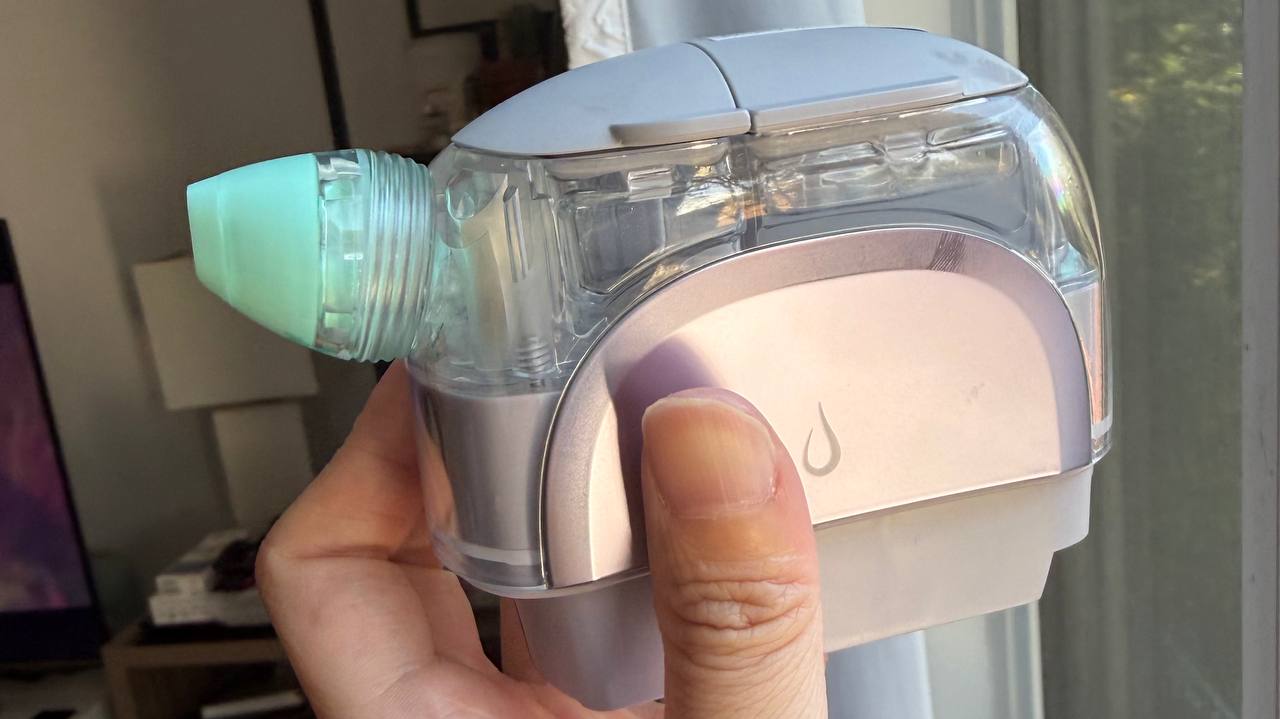
There are two tanks on the FacialPro Glow — a smaller one near the nozzle for clean water (or the BHA hydrator that Shark includes) and a larger one behind it labeled “gunk tank.” For your first pass, which is mostly about suction and cleaning, you’ll need to fill the front section with clean, cool water. 

A close-up look at the Shark FacialPro Glow after one round on my face.
Cherlynn Low for Engadget

Shark includes five tips for the device: gentle wide, gentle T-zone, normal wide, normal T-zone and self-cleaning. Once you’ve attached your preferred head and filled up water to the “max” line, you can turn on the FacialPro Glow and adjust the intensity using the “plus” button above the power button. 

Then, as you would with a microdermabrasion device like the PMD or even a makeup brush, glide the nozzle over your skin. Shark also includes a guide on how to do so, going over the types of motion you should use and the general direction (outwards and upwards) to sweep in. As I dragged the machine around my face, I felt a tug on my skin and suction that felt similar to the pore vacuum devices used in salons, and whenever I caught sight of the gunk tank I noticed it slowly filling up with cloudy water. This wasn’t as murky as I was anticipating, and frankly whatever mild coloration I did notice in the gunk tank seemed more like the removal of the Derm Detox essence than any actual build-up from my pores. (I did just have a facial a week prior, so there likely wasn’t a lot to extract.) 

The instruction manual suggests using the wide head for about two minutes and the T-zone option for the remaining minute of the three-minute sessions. The device will keep track of the time and simply pause after your three minutes is up, so all you have to do is switch out the attachments when you’re ready. I found this part slightly confusing as I wasn’t sure if I could just hit the power button to pause the machine while I switched out the tips or if there was a time it would stop on its own. Eventually I just went with the former method and pressed the power button again to resume the suction and it did end on its own afterwards.

The next step in the process was to fill the clean tank with the BHA hydrator essence that Shark included, called “Hydro infuse,” and launch another three-minute session with it flushing your face. This was the part I really enjoyed. The gentle stream of water swooshing against my skin felt very refreshing and relaxing. I never felt like there was too much water — nothing dripped and I performed the whole session standing up without any of my clothes or surroundings getting wet. 

It’s worth pointing out that Shark says its two formulas were dermatologist-tested and “developed in a Korean lab specifically for the Shark FacialPro Glow routine.” According to the company’s vice president of design and engineering Chris Hedges, you’ll have to use these products instead of third-party options because “the exfoliating AHA/BHA percentages were carefully managed to balance well with the device flow rate, amount of suction provided and the amount of time the tip is covering your face.”

Hedges added that “this mix of chemical and mechanical exfoliation is the key to the efficacy and safety of the process” and that use of other formulations with the device is not advised “as it could unbalance the system, leading to over or under exfoliation.”

The Shark FacialPro Glow with its exfoliating attachment and with its Depuffi head.
Shark

I’m not a fan of being limited to a company’s products, especially as someone who has already found a skincare system that I’m committed to (shoutout to the Jan Marini range of products). Hopefully, Shark might be able to develop a range of offerings or work with third parties in a way that would make it easier to use the FacialPro Glow without needing to consistently repurchase exfoliating gels from the one company. Plus, Shark is selling $50 bundles that come with one bottle of each, which is quite pricey. Depending on how frequently you perform the treatment, you might find yourself shelling out an additional $100 a year.

Once you’ve finished your three-minute pass with the Hydro Infuse, you’re technically done with your treatment. If you like, you can detach the cleanse module (the one that contains the two tanks and the nozzle) and swap in the Depuffi attachment. After you do so, slap on some moisturizer and turn on the device, you can run the cool plate all over your face for a calming effect. I have sensitive skin that turns red at almost any touch, so having the Depuffi cool my face down was nice. It’s also just very comforting and enjoyable, like running a cool, dry bottle on your skin on a hot day.

Like I mentioned earlier, you can also turn the Depuffi into heating mode, in which case you’d be running a warm plate all over your face. This should help open up pores ahead of your cleansing treatment and might make impurities easier to suck out. Shark offers six temperature levels for the Depuffi, though I should note that when I accidentally left the Depuffi in its warmer state, it took awhile for it to feel cool again after I toggled back to the chill mode. 

If you’re only interested in the Depuffi, it will be available separately for $200. The whole FacialPro Glow system, which includes the cleansing attachment, the Depuffi and the exfoliating gel and hydrating essence, will be available from October 6 for $400.

This article originally appeared on Engadget at https://www.engadget.com/home/sharks-latest-skincare-gadget-will-suck-gunk-from-your-pores-and-rinse-them-133000385.html?src=rss

Apple AirPods Pro 3 Earn Atrocious 0/10 DIY Repair Score In iFixIt’s Teardown

Apple AirPods Pro 3 Earn Atrocious 0/10 DIY Repair Score In iFixIt's Teardown
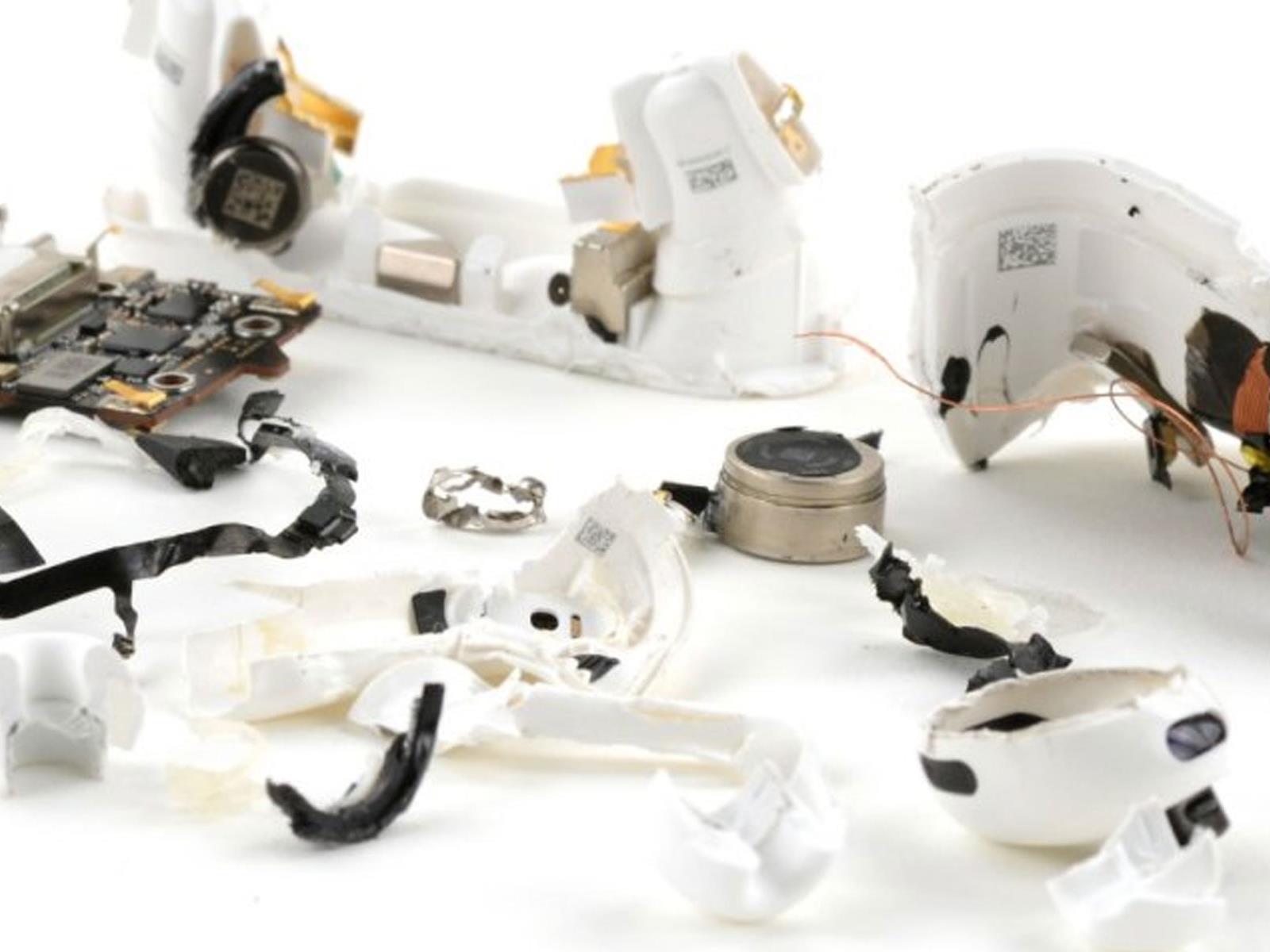
The teardown surgeons at iFixIt did not mince any words when evaluating Apple’s fancy new AirPods Pro 3, calling the company’s latest-generation flagship earbuds “some of the most unrepairable and wasteful products you could possibly buy.” When all was said and done, the AirPods Pro 3 walked away with a dismal 0 out of 10 score for repairability.

Apple is reportedly pulling staff from the Vision Pro to work on its smart glasses

Apple had big plans for the the future of the Vision Pro, but it has reportedly put them on the back burner and has prioritized the development of smart glasses that can compete directly against the Meta Ray-Bans. According to Bloomberg’s Mark Gurman, the company told staff last week that it’s moving team members working on a cheaper and lighter version of the Vision Pro to accelerate the development of its smart glasses. Apple is apparently developing two models, one of which, called the “N50,” has no display of its own and will pair with iPhones. The company reportedly intends to launch it sometime next year and will it release in 2027. 

Bloomberg says Apple is also working on smart glasses with an augmented reality display that can rival the Meta Ray-Ban Display. It was going to release the model in 2028, but now Apple is looking to expedite its development, presumably so it could be available at an earlier date. Like Meta’s smart glasses, Apple’s devices will rely heavily on voice interaction and AI commands. Bloomberg previously reported that Apple is releasing an updated Siri next year that’s powered by large language models, meant for use on displays, speakers and, yes, glasses. 

Apple’s smart glasses will reportedly come in a variety of styles, will be powered by a new chip and will have speakers for playback, as well as cameras to capture images and videos. The company is looking to equip it with health-tracking capabilities, as well. 

It has long been reported that Apple’s ultimate goal was to release augmented reality glasses of its own, since they could rival phones in the future. If this report is true, Apple is merely adjusting its timeline, especially since it’s now fairly behind Meta in the space. While Apple’s priorities have shifted, it hasn’t abandoned the Vision Pro altogether. The FCC recently uploaded documents referencing an updated “Head Mounted Device” by Apple, though it’s unclear if it’s the upcoming lighter version that’s supposed to be cheaper than the $3,499 original model. 

This article originally appeared on Engadget at https://www.engadget.com/wearables/apple-is-reportedly-pulling-staff-from-the-vision-pro-to-work-on-its-smart-glasses-130050475.html?src=rss

The best early October Prime Day deals on Apple devices

If you’ve been waiting for a discount before grabbing a new iPad, MacBook or Apple Watch, Amazon’s October Prime Day sale might be worth checking out. Prime Big Deal Days, as it’s formally called, doesn’t officially begin until October 7, but we’re keeping an eye out for the best Apple deals that are going on in the lead-up to the event. So far, we’ve found a few decent prices on devices like the entry-level iPad, MacBook Air, Mac mini and Apple Pencil Pro, as well as a few modest but early discounts on the new crop of Apple Watches. We’ll update this post as more offers pop up.

Best Prime Day Apple deals

Apple MacBook Air (13-inch, M4, 512GB) for $999 ($200 off): The MacBook Air tops our guide to the best laptops. The latest model isn’t a major overhaul, but it’s still exceptionally thin, lightweight and well-designed, and the M4 chip is more than powerful enough for everyday use. This deal is just a few bucks below the best price we’ve seen for a configuration with 16GB of RAM and a 512GB SSD. Other configs with more memory are $200 off as well.

Apple MacBook Air (15-inch, M4, 512GB) for $1,199 ($200 off): The 15-inch MacBook Air is essentially the same as the 13-inch version, only it has a roomier display, a more spacious trackpad and better speakers. This is another discount we’ve seen plenty of times before, but it’s only slightly higher than the all-time low for a model with 512GB of storage.

Apple iPad (A16, 256GB) for $399 ($50 off): The entry-level iPad earned a score of 84 in our review: If you mainly want a tablet for streaming, browsing the web, emailing or lighter word processing, it should do the job. It doesn’t lose out on the Mac-style productivity features introduced with iPadOS 26 either. We’ve seen this discount on the 256GB model fairly often in recent months, and it’s about $25 above the device’s all-time low, but it’s still $50 cheaper than buying directly from Apple.

Apple AirTags (4-pack) for $75 ($24 off): With its enormous finding network and ultra-wideband tech for accurately locating nearby items, Apple’s AirTag is the top pick for iPhone users in our guide to the best Bluetooth trackers. We saw a four-pack fall as low as $65 earlier in the year, but this is still a nice drop from Apple’s list price. If you’re not in desperate need for these, though, note that we may see an updated model later this year.

Apple Mac mini (M4) for $499 ($100 off): This latest iteration of Apple’s tiny PC has a smaller footprint, a faster M4 chip, 16GB of RAM by default, two front-facing USB-C ports and an extra Thunderbolt 4 port. It can also drive three external displays, though it lacks USB-A ports entirely. We gave a higher-end config with Apple’s M4 Pro chip a score of 90 in our review. This deal is for the entry-level model with the base M4 chip and a 256GB SSD — it’s $30 above the all-time low but still a nice savings.

Apple Watch SE 3 (40mm, GPS) for $240 ($9 off): Apple only released its latest crop of Apple Watches a couple weeks ago, but Amazon is selling each with a modest discount. The Watch SE 3, for instance, is available for $240: That’s just $9 off its list price, but it’s something if you’re buying soon after launch anyway. As for the device itself, this third-gen version of the SE adds an always-on display, which makes it so you no longer have to wake the watch to check the time or your notifications. It now runs on the same S10 chip as its higher-end siblings, too, and it still covers the essential health and fitness features. If you’re in the market for your first smartwatch, or if you only want a watch for step counting, sleep tracking and notifications, it should be a strong value.

Apple Watch Ultra 3 (49mm) for $780 ($19 off): The Apple Watch Ultra 3 is a much more niche device than the Series 11 or SE 3, aimed at serious athletes and adventurers more than the typical gymgoer. It is the biggest and most rugged Apple Watch, with the brightest display (up to 3,000 nits), longest battery life (up to 42 hours) and most advanced components. It also supports satellite communications. The watch normally retails for $799, so this isn’t a major discount, but since this is a brand-new device, any drop at all is worth noting for early adopters.

Apple Watch Series 10 (42mm, GPS + Cellular) for $329 ($170 off): As a general rule, most people should buy the newest version of whatever Apple product they want. That said, the Series 11 is only a minor upgrade over the prior Series 10 — the glass is more scratch-resistant, the cellular model has 5G support, the battery is marginally bigger and that’s about it. If you’re mostly worried about saving cash, want LTE support and still need the more advanced health features the Apple Watch SE lacks, this is a worthwhile discount for a version of last year’s model with cellular support.

Apple Watch SE (2nd gen, 40mm, GPS + Cellular) for $189 ($110 off): The Apple Watch SE 3 is a far more substantial upgrade over its predecessor than the Series 11, so we strongly recommend paying the premium to get the latest version. But if you’re sure you can live without the always-on display, faster charging, superior chip and other upgrades that come with the SE 3, the last-gen model can still get you most of the basic Apple Watch experience for less cash while it remains in stock. This is one of the lowest prices we’ve seen for the 40mm cellular model.

This article originally appeared on Engadget at https://www.engadget.com/deals/the-best-early-october-prime-day-deals-on-apple-devices-125644735.html?src=rss

The Tilly Norwood Effect: Why AI Actors Are an Opportunity, Not an Apocalypse

The entertainment world has been set ablaze by the “Tilly Norwood” controversy and for good reason. The revelation that a beloved character in a well received show was not a real person but a fully AI-generated “synthetic actor” has become a flashpoint for a debate raging in Hollywood (AI Commissioner example). For many actors, it represents an existential threat that their craft is on the verge of being rendered obsolete by code. While their fear is understandable, history shows us that trying to ban a transformative technology is a fool’s errand.

The furor over Tilly Norwood is not a new story; it’s the latest chapter in a long book of industries trying to fight the future. The acting community’s calls to restrict or ban synthetic performers echo the same desperate cries heard from other sectors on the brink of disruption. This moment is a painful but necessary catalyst that should force actors not to fight the technology, but to redefine their role in it.

History’s Unforgiving Lesson: Adapt or Disappear

Creative industries have a long and storied history of trying to legislate technological progress out of existence, and they have failed every single time. In the late 1990s, the music industry, led by the RIAA, declared war on the MP3 file format and platforms like Napster. They sued college students and lobbied for restrictive laws, all in an attempt to preserve the lucrative CD/album model. The result? They were utterly circumvented by companies like Apple and Spotify that embraced digital distribution, fundamentally reshaping the industry and leaving the old guard in the dust.

Similarly, Blockbuster, the undisputed king of home video, saw Netflix’s DVD-by-mail service as a niche annoyance and completely dismissed the looming threat of streaming. By the time Blockbuster recognized the shift, it was too late. Its entire business model, built on physical locations and late fees, was rendered obsolete. The companies that won were not the ones that tried to block the change, but the ones that built their businesses around it. The history of disruptive innovation is clear: resistance is futile.

The AI Revolution: Better, Faster and More Profitable Content

The uncomfortable truth for many in the traditional film industry is that entirely AI-generated content is poised to be not just cheaper, but creatively superior to what is possible today. An AI does not need to sleep, eat or be limited by the laws of physics. It can generate photorealistic fantasy worlds, de-age an actor to any point in their career or create a thousand unique alien creatures without a single artist touching a physical model. This unlocks a level of creative freedom and visual spectacle that is currently reserved for only the most astronomically budgeted blockbusters.

The profitability model is even more compelling. Consider the enormous costs AI eliminates: A-list actor salaries, fees for directors and screenwriters, costs for location scouting, set construction, catering and massive visual effects teams. AI can iterate on a script, a character design or an entire scene in minutes, not months. We are already seeing the green shoots of this revolution in viral, AI-generated short films and music videos that possess a visual quality that would have cost millions just a few years ago. Furthermore, AI opens the door to hyper-personalized content—imagine a movie where the lead character is a digital recreation of your favorite classic film star, or where the plot subtly adjusts based on your viewing preferences. This level of engagement is a service traditional media simply cannot offer.

The New Role for Actors: From Performer to Licensor

So, where does this leave the acting community? To survive, they must evolve their business model from being work-for-hire performers to being licensors and creative consultants for their own digital likeness. Their brand, their unique charisma and the public’s connection to them are still immensely valuable assets. The Screen Actors Guild (SAG-AFTRA), which has already begun exploring AI guidelines, must pioneer the creation of standardized licensing agreements that allow actors to profit every time their AI-generated likeness is used.

The role of an actor will shift from performing on set to curating the performance of their digital double. The most talented actors will be hired not for a six-week shoot, but for their ability to provide the nuanced emotional data and creative guidance needed to train a high-fidelity AI model of themselves. Their job will be to act as “Performance Directors,” ensuring their digital counterpart captures the soul and subtlety of their craft. At the same time, this technological shift will inevitably make live performance—theater, concerts, improv—more valuable as a unique, un-replicable human experience.

Wrapping Up

The Tilly Norwood controversy is a painful wake-up call, but it is not a death sentence for the acting profession. It is, however, the end of the profession as we know it. Trying to put the AI genie back in the bottle is a strategy doomed to repeat the failures of the music and video industries. The future for actors is not in fighting this technology, but in mastering it. By embracing their new role as brand licensors and creative directors for their own AI, they can secure their income and ensure that their unique human artistry remains at the heart of the stories we love.