Rabbit plots its redemption arc

The story of the Rabbit R1 is a cautionary tale. The AI gadget stole CES 2024, thanks in large part to its cutesy design and Rabbit’s promise that it could do nearly everything a smartphone could without being a distraction. At least that was the pitch. 

When it finally arrived a few months later, with buggy software and a laundry list of features that simply didn’t work, the backlash was swift. Engadget’s Devindra Hardawar called the R1 “a $199 AI toy that fails at almost everything.” In a video with nearly 9 million views, YouTuber Marques Brownlee said the R1 was barely reviewable. That same backlash extended to Humane, Rabbit’s one-time rival, which this past February effectively went out of business after selling its intellectual property to HP for $116 million and discontinuing support for the much-maligned AI Pin. 

Nearly two years later, Rabbit is still here, having recently released its most significant software update yet with RabbitOS 2. “We want to take this opportunity to ask people for a second chance,” Jesse Lyu, the CEO of Rabbit.

Having used the R1 in its original state, RabbitOS 2 is a significant improvement. At launch, the touchscreen didn’t work like it does on a smartphone. This made doing something simple like accessing the settings menu an absolute chore.        

With OS 2, Rabbit has redesigned the device’s interface around colorful cards, making it much easier to see what it can actually do. The display now finally functions like a regular touchscreen, allowing you to navigate the interface with taps and swipes, instead of a complicated series of presses involving the side button. Other quality of life tweaks also make the device feel more useful. For example, the R1 can now transcribe voice memos without an internet connection. 

Then there’s the update’s marquee feature: Creations. 

Creations are an evolution of Teach mode, a tool Rabbit introduced toward the end of last year. They allow you to vibe code your own apps to use with the R1. The process of making Creations feels a lot less clunky than it did with Teach mode. To start, you describe the app you want R1 to create, then your device will ask a series of clarifying questions to get a better idea of what you want. 

Intern, the AI agent that handles coding the apps, has a comprehensive knowledge of R1’s hardware, so there’s no need to get bogged down in technical details. With Lyu’s help, I made a tuning app for my guitar. The entire process took about five minutes, and the result, I’ll admit, felt novel in a way I hadn’t experienced in a while. The tuner not only worked, but I was able to tell the coding agent exactly how I wanted it to look and function, with the AI offering helpful suggestions to guide the process. 

Did I want the app to use a needle interface? Yes, I said. What color should the interface be? The R1’s signature orange, I told it. Granted, there are countless tuning apps out there, but it felt cool that I had some hand in deciding how this one should look and work. I also appreciate some of the Creations others have made. There’s one that offers an interactive map of Hollow Knight: Silksong‘s Pharloom that has been my companion through the latter parts of the game. 

As far as Lyu is concerned, Creations are the killer feature the R1 has been missing since launch, offering something no smartphone on the market can quite yet match. He’s particularly excited about the system Rabbit has devised for distributing them. There’s no traditional app store like you might find on an Android or iOS device; instead, users can share their apps through Rabbithole (Rabbit’s online R1 hub) or using a QR code. 

Still, Lyu admits there are things Rabbit needs to figure out before it can convince people to throw out their phones. “The biggest barrier [to R1 adoption] is no one wants to carry around two devices. We know that, and there are a lot of things on the phone, whether you’re using an iPhone or Android, that users don’t trust an AI to handle,” he said. Here, Lyu is primarily thinking of banking apps. Banking regulation being what it is, there’s probably no future where you’ll be able to vibe code an app to access your Chase account, but Lyu is hopeful consumer demand will eventually lead to financial institutions embracing Rabbit and the R1. 

Either way, he’s adamant that Creations are the way forward for the company. “This is still the right thing for us to do,” he tells me. “If you look at how you built your tuner app versus how somebody would build and sell their tuner app on the App Store, that’s a completely different generational experience. You did zero coding. You just talk to your R1 and distribute.”  

I wonder if that’s enough. The ability to create your own apps will be compelling to some people, but I imagine most just want software that works without the hassle of making it themselves. Besides, there’s more to software development than just putting an app out into the world. Arguably the more difficult (and important) part of the job is maintaining an app, ensuring it works for you and other people. AI systems are getting better at coding every day, but they still make mistakes, and having some coding knowledge makes it a lot easier to fix those errors. 

Some smartphone experiences will also be harder to replicate than others. One Creation allows you to stream music to the R1 from YouTube Music, but the software is so basic compared to the official app on Android and iOS. Rabbit has shared documentation on GitHub to help program Creations that can access other third-party services, but I wonder how quickly people will lose interest in vibe coding all but the most basic apps.  

And for all its faults, the app store model offers a way for developers to earn a living off their work. People can upload their Creations to Rabbit’s website, but the only party making money on the concept is Rabbit — at the moment there’s no infrastructure in place to charge money for Creations, assuming anyone would want to. Creations also consume Intern tasks, and those aren’t exactly cheap. You can buy three for $30 or pay $70 per month for a monthly allowance of 30. 

Of course, the question most people have is the same one that has dogged Rabbit and the R1 from the start: “Why can’t this just be an app?” Lyu contends Creations are one part of the answer. 

“I don’t think we’re going to see an iPhone-like moment this year or next year. Starting in 2027, that’s when the generational shift will happen. In that sense, we’re not in a rush to do something major.” When I asked why 2027, Rabbit declined to share more, but something Lyu said about the prospect of competing against OpenAI gave me a hint of the company’s plans. 

If you need a refresher, OpenAI announced in May it was buying former Apple design chief Jony Ive’s hardware startup for $6.5 billion, with the ambition of releasing its own AI device. “From what I know about Jony and OpenAI, I don’t think they’re going to be interested in a second gadget like R1,” Lyu said (he knows Sam Altman personally, having gone through Y-Combination when Altman was president of the startup accelerator from 2014 to 2019). “I think they’re going to focus on a phone-like factor. That’s a much bigger audience. But by 2027, everyone is going to be making phones.” 

When I later asked if a phone was in Rabbit’s future, a company spokesperson declined to elaborate on Lyu’s comments. “We’ve been working on many different prototypes and form factors, but don’t have any specific details to share.” For now, the company appears to be squarely focused on improving its software. “The focus this year is on rebirth,” Lyu told me. “And to keep pioneering things no else is doing in the industry.” 

The challenge for Rabbit will not only be staying ahead of OpenAI, but all the existing phone manufacturers adding AI features to their devices. Just earlier this week, Nothing, a smaller player in the space, announced Essential Apps, a tool people can use to vibe code apps for the company’s phones. If Nothing is successful, how long will it be before Samsung and Google do the same?

This article originally appeared on Engadget at https://www.engadget.com/rabbit-plots-its-redemption-arc-120000271.html?src=rss

What If Vibe Coding Creates More Programming Jobs?

Vibe coding tools “are transforming the job experience for many tech workers,” writes the Los Angeles Times. But Gartner analyst Philip Walsh said the research firm’s position is that AI won’t replace software engineers and will actually create a need for more.

“There’s so much software that isn’t created today because we can’t prioritize it,” Walsh said. “So it’s going to drive demand for more software creation, and that’s going to drive demand for highly skilled software engineers who can do it…” The idea that non-technical people in an organization can “vibe-code” business-ready software is a misunderstanding [Walsh said]… “That’s simply not happening. The quality is not there. The robustness is not there. The scalability and security of the code is not there,” Walsh said. “These tools reward highly skilled technical professionals who already know what ‘good’ looks like.”
“Economists, however, are also beginning to worry that AI is taking jobs that would otherwise have gone to young or entry-level workers,” the article points out. “In a report last month, researchers at Stanford University found “substantial declines in employment for early-career workers” — ages 22-25 — in fields most exposed to AI. Stanford researchers also found that AI tools by 2024 were able to solve nearly 72% of coding problems, up from just over 4% a year earlier.”

And yet Cat Wu, project manager of Anthropic’s Claude Code, doesn’t even use the term vibe coding. “We definitely want to make it very clear that the responsibility, at the end of the day, is in the hands of the engineers.”
Wu said she’s told her younger sister, who’s still in college, that software engineering is still a great career and worth studying. “When I talk with her about this, I tell her AI will make you a lot faster, but it’s still really important to understand the building blocks because the AI doesn’t always make the right decisions,” Wu said. “A lot of times the human intuition is really important.”


Read more of this story at Slashdot.

Elon Musk tries to make Apple and mobile carriers regret choosing Starlink rivals

SpaceX’s $17 billion deal to buy spectrum licenses from EchoStar should help Starlink satellites deliver better service to smartphones, and it might give a few large corporations second thoughts about their current partnerships with Starlink competitors.

The spectrum, combined with a SpaceX plan to launch up to 15,000 new and improved satellites for cellular service, could cause AT&T and Verizon to question their reliance on satellite company AST SpaceMobile. Apple, which was reportedly already facing internal dissent over its deal with Globalstar, now has another reason to wonder if it made the right choice in rejecting an offer from Elon Musk.

Pending regulatory approval, SpaceX will acquire EchoStar’s AWS-4 and H-block spectrum licenses, giving Musk’s space company the rights to 50 MHz of spectrum in the 1.9 and lower 2 GHz spectrum bands. SpaceX plans to acquire EchoStar’s rights to the spectrum in the US and globally.

Read full article

Comments

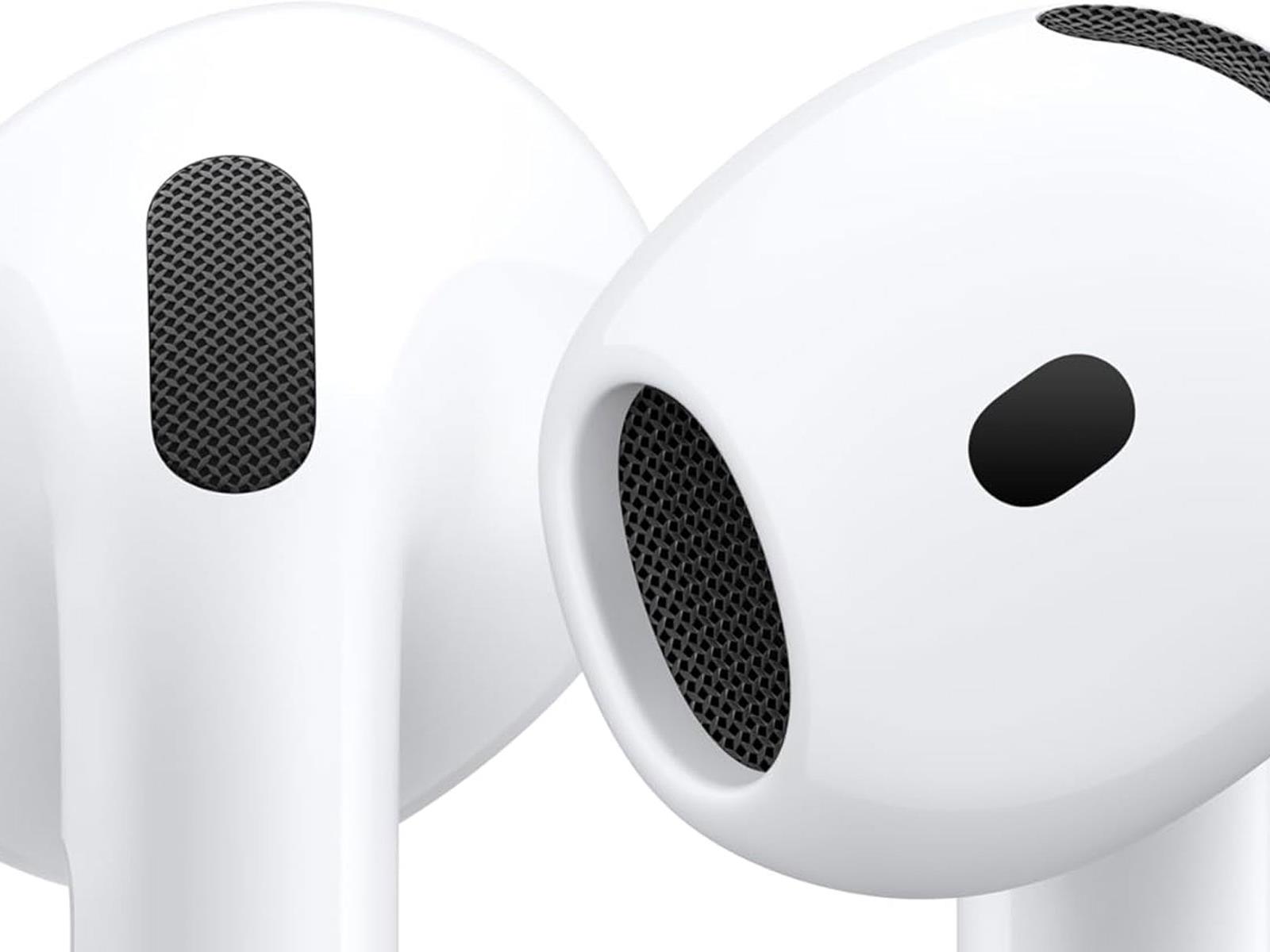
Top 10 Early October Prime Day Apple Deals: AirPods, iPads & More For Less

Top 10 Early October Prime Day Apple Deals: AirPods, iPads & More For Less
We are expecting a bunch of deals to emerge this week, especially once Amazon’s Prime Big Deal Days event gets underway on Tuesday, October 7. Even though the sales event has not officially started yet, we’re still tracking bargains. To that end, we found a bunch of deals on select Apple products, such as its AirPods 4 earbuds.

For example,

Here’s the real reason Endurance sank

In 1915, intrepid British explorer Sir Ernest Shackleton and his crew were stranded for months in the Antarctic after their ship, Endurance, was trapped by pack ice, eventually sinking into the freezing depths of the Weddell Sea. Miraculously, the entire crew survived. The prevailing popular narrative surrounding the famous voyage features two key assumptions: that Endurance was the strongest polar ship of its time, and that the ship ultimately sank after ice tore away the rudder.

However, a fresh analysis reveals that Endurance would have sunk even with an intact rudder; it was crushed by the cumulative compressive forces of the Arctic ice with no single cause for the sinking. Furthermore, the ship wasn’t designed to withstand those forces and Shackleton was likely well aware of that fact, according to a new paper published in the journal Polar Record. Yet he chose to embark on the risky voyage anyway.

Author Jukka Tuhkuri of Aalto University is a polar explorer and one of the leading researchers on ice worldwide. He was among the scientists on the Endurance22 mission that discovered the Endurance shipwreck in 2022, documented in a 2024 National Geographic documentary. The ship was in pristine condition partly because of the lack of wood-eating microbes in those waters. In fact, the Endurance22 expedition’s exploration director, Mensun Bound, told The New York Times at the time that the shipwreck was the finest example he’s ever seen; Endurance was “in a brilliant state of preservation.”

Read full article

Comments

Steve Jobs Remembered on 14th Anniversary of His Death

Steve Jobs died 14 years ago. But the blog Cult of Mac remembers that “Jobs himself was not sentimental.”

When he left Apple in the mid-1980s, he didn’t even clear out his office. That meant personal mementos like his first Apple stock certificate, which had hung on his office wall, got tossed in the trash. Shortly after returning to Apple in the late 1990s, he gave the company’s historical archive to Stanford University Libraries. The stash included records that Apple management kept since the mid-1980s. The reason Apple handed over this historical treasure trove? Jobs didn’t want the company to fixate on the past…

All of which goes some way to saying why it was so heartening that Steve Jobs’ death received so much attention. He wasn’t the richest technology CEO to die. But the reaction showed that his life — faults and all — meant a lot to a great number of people. Jobs helped create products people cared about, and in turn they cared about him.
The site Mac Rumors remembered Sunday that Jobs “died just one day after Apple unveiled the iPhone 4S and Siri.” Six years later, Apple CEO Tim Cook reflected on Jobs while opening Apple’s first-ever event at Steve Jobs Theater in 2017. “There is not a day that goes by that we don’t think about him.”

And Sunday Cook posted this remembrance of Steve Jobs. “Steve saw the future as a bright and boundless place, lit the path forward, and inspired us to follow.

“We miss you, my friend.”


Read more of this story at Slashdot.

What Happens When AI Directs Tourists to Places That Don’t Exist?

The director of a tour operation remembers two tourists arriving in a rural town in Peru determined to hike alone in the mountains to a sacred canyon recommended by their AI chatbot. But the canyon didn’t exists — and a high-altitude hike could be dangerous (especially where cellphone coverage is also spotty). They’re part of a BBC report on travellers arriving at their destination “only to find they’ve been fed incorrect information or steered to a place that only exists in the hard-wired imagination of a robot…”
“According to a 2024 survey, 37% of those surveyed who used AI to help plan their travels reported that it could not provide enough information, while around 33% said their AI-generated recommendations included false information.” Some examples?

– Dana Yao and her husband recently experienced this first-hand. The couple used ChatGPT to plan a romantic hike to the top of Mount Misen on the Japanese island of Itsukushima earlier this year. After exploring the town of Miyajima with no issues, they set off at 15:00 to hike to the montain’s summit in time for sunset, exactly as ChatGPT had instructed them. “That’s when the problem showed up,” said Yao, a creator who runs a blog about traveling in Japan, “[when] we were ready to descend [the mountain via] the ropeway station. ChatGPT said the last ropeway down was at 17:30, but in reality, the ropeway had already closed. So, we were stuck at the mountain top…”
– A 2024 BBC article reported that [dedicated travel AI site] Layla briefly told users that there was an Eiffel Tower in Beijing and suggested a marathon route across northern Italy to a British traveller that was entirely unfeasible…
– A recent Fast Company article recounted an incident where a couple made the trek to a scenic cable car in Malaysia that they had seen on TikTok, only to find that no such structure existed. The video they’d watched had been entirely AI generated, either to drum up engagement or for some other strange purpose.

Rayid Ghani, a distinguished professor in machine learning at Carnegie Melon University, tells them that an AI chatbot “doesn’t know the difference between travel advice, directions or recipes. It just knows words. So, it keeps spitting out words that make whatever it’s telling you sound realistic…”


Read more of this story at Slashdot.

Removing 50 Objects from Orbit Would Cut Danger From Space Junk in Half

If we could remove the 50 most concerning pieces of space debris in low-Earth orbit, there’d be a 50% reduction in the overall debris-generating potential, reports Ars Technica. That’s according to Darren McKnight, lead author of a paper presented Friday at the International Astronautical Congress in Sydney, which calculated the objects most likely to collide with other fragments and create more debris. (Russia and the Soviet Union lead with 34 objects, followed by China with 10, the U.S. with three, Europe with two, and Japan with one.) Even just the top 10 were removed, the debris-generating potential drops by 30%.

“The things left before 2000 are still the majority of the problem,” he points out, and “76% of the objects in the top 50 were deposited last century.” 88% of the objects are post-mission rocket bodies left behind to hurtle through space.

“The bad news is, since January 1, 2024, we’ve had 26 rocket bodies abandoned in low-Earth orbit that will stay in orbit for more than 25 years,” McKnight told Ars… China launched 21 of the 26 hazardous new rocket bodies over the last 21 months, each averaging more than 4 metric tons (8,800 pounds). Two more came from US launchers, one from Russia, one from India, and one from Iran. This trend is likely to continue as China steps up deployment of two megaconstellations — Guowang and Thousand Sails — with thousands of communications satellites in low-Earth orbit.

Launches of these constellations began last year. The Guowang and Thousand Sails satellites are relatively small and likely capable of maneuvering out of the way of space debris, although China has not disclosed their exact capabilities. However, most of the rockets used for Guowang and Thousand Sails launches have left their upper stages in orbit. McKnight said nine upper stages China has abandoned after launching Guowang and Thousand Sails satellites will stay in orbit for more than 25 years, violating the international guidelines.

It will take hundreds of rockets to fully populate China’s two major megaconstellations. The prospect of so much new space debris is worrisome, McKnight said. “In the next few years, if they continue the same trend, they’re going to leave well over 100 rocket bodies over the 25-year rule if they continue to deploy these constellations,” he said. “So, the trend is not good….” Since 2000, China has accumulated more dead rocket mass in long-lived orbits than the rest of the world combined, according to McKnight. “But now we’re at a point where it’s actually kind of accelerating in the last two years as these constellations are getting deployed.”

A deputy head of China’s national space agency recently said China is “currently researching” how to remove space debris from orbit, according to the article. (“One of the missions China claims is testing space debris mitigation techniques has docked with multiple spacecraft in orbit, but U.S. officials see it as a military threat. The same basic technologies needed for space debris cleanup — rendezvous and docking systems, robotic arms, and onboard automation — could be used to latch on to an adversary’s satellite.”)


Read more of this story at Slashdot.

Are Software Registries Inherently Insecure?

“Recent attacks show that hackers keep using the same tricks to sneak bad code into popular software registries,” writes long-time Slashdot reader selinux geek, suggesting that “the real problem is how these registries are built, making these attacks likely to keep happening.”

After all, npm wasn’t the only software library hit by a supply chain attack, argues the Linux Security blog. “PyPI and Docker Hub both faced their own compromises in 2025, and the overlaps are impossible to ignore.”
Phishing has always been the low-hanging fruit. In 2025, it wasn’t just effective once — it was the entry point for multiple registry breaches, all occurring close together in different ecosystems… The real problem isn’t that phishing happened. It’s that there weren’t enough safeguards to blunt the impact. One stolen password shouldn’t be all it takes to poison an entire ecosystem. Yet in 2025, that’s exactly how it played out…

Even if every maintainer spotted every lure, registries left gaps that attackers could walk through without much effort. The problem wasn’t social engineering this time. It was how little verification stood between an attacker and the “publish” button. Weak authentication and missing provenance were the quiet enablers in 2025… Sometimes the registry itself offers the path in. When the failure is at the registry level, admins don’t get an alert, a log entry, or any hint that something went wrong. That’s what makes it so dangerous. The compromise appears to be a normal update until it reaches the downstream system… It shifts the risk from human error to systemic design.

And once that weakly authenticated code gets in, it doesn’t always go away quickly, which leads straight into the persistence problem… Once an artifact is published, it spreads into mirrors, caches, and derivative builds. Removing the original upload doesn’t erase all the copies… From our perspective at LinuxSecurity, this isn’t about slow cleanup; it’s about architecture. Registries have no universally reliable kill switch once trust is broken. Even after removal, poisoned base images replicate across mirrors, caches, and derivative builds, meaning developers may keep pulling them in long after the registry itself is “clean.”

The article condlues that “To us at LinuxSecurity, the real vulnerability isn’t phishing emails or stolen tokens — it’s the way registries are built. They distribute code without embedding security guarantees. That design ensures supply chain attacks won’t be rare anomalies, but recurring events.”BR>

So in a world where “the only safe assumption is that the code you consume may already be compromised,” they argue, developers should look to controls they can enforce themselves:

Verify artifacts with signatures or provenance tools. Pin dependencies to specific, trusted versions. Generate and track SBOMs so you know exactly what’s in your stack. Scan continuously, not just at the point of install.


Read more of this story at Slashdot.

Fake AI-Generated Actress Gets Agent – and a Very Angry Reaction from (Human) Actors Union

A computer-generated actress appearing in Instagram shorts now has a talent agent, reports the Los Angeles Times.
The massive screen actors union SAG-AFTRA “weighed in with a withering response.”

SAG-AFTRA believes creativity is, and should remain, human-centered. The union is opposed to the replacement of human performers by synthetics.

To be clear, “Tilly Norwood” is not an actor, it’s a character generated by a computer program that was trained on the work of countless professional performers — without permission or compensation. It has no life experience to draw from, no emotion and, from what we’ve seen, audiences aren’t interested in watching computer-generated content untethered from the human experience. It doesn’t solve any “problem” — it creates the problem of using stolen performances to put actors out of work, jeopardizing performer livelihoods and devaluing human artistry.

Additionally, signatory producers should be aware that they may not use synthetic performers without complying with our contractual obligations, which require notice and bargaining whenever a synthetic performer is going to be used.

“They are taking our professional members’ work that has been created, sometimes over generations, without permission, without compensation and without acknowledgment, building something new,” SAG-AFTRA President Sean Astin told the Los Angeles Times in an interview:
“But the truth is, it’s not new. It manipulates something that already exists, so the conceit that it isn’t harming actors — because it is its own new thing — ignores the fundamental truth that it is taking something that doesn’t belong to them,” Astin said. “We want to allow our members to benefit from new technologies,” Astin said. “They just need to know that it’s happening. They need to give permission for it, and they need to be bargained with….”

Some actors called for a boycott of any agents who decide to represent Norwood. “Read the room, how gross,” In the Heights actor Melissa Barrera wrote on Instagram. “Our members reserve the right to not be in business with representatives who are operating in an unfair conflict of interest, who are operating in bad faith,” Astin said.

But this week the head of a new studio from startup Luma AI “said all the big companies and studios were working on AI assisted projects,” writes Deadline — and then claimed “being under NDA, she was not in a position to announce any of the details.”


Read more of this story at Slashdot.

Mouse Sensors Can Pick Up Speech From Surface Vibrations, Researchers Show

“A group of researchers from the University of California, Irvine, have developed a way to use the sensors in high-quality optical mice to capture subtle vibrations and convert them into audible data,” reports Tom’s Hardware:

[T]he high polling rate and sensitivity of high-performance optical mice pick up acoustic vibrations from the surface where they sit. By running the raw data through signal processing and machine learning techniques, the team could hear what the user was saying through their desk. Mouse sensors with a 20,000 DPI or higher are vulnerable to this attack. And with the best gaming mice becoming more affordable annually, even relatively affordable peripherals are at risk….

[T]his compromise does not necessarily mean a complicated virus installed through a backdoor — it can be as simple as an infected FOSS that requires high-frequency mouse data, like creative apps or video games. This means it’s not unusual for the software to gather this data. From there, the collected raw data can be extracted from the target computer and processed off-site. “With only a vulnerable mouse, and a victim’s computer running compromised or even benign software (in the case of a web-based attack surface), we show that it is possible to collect mouse packet data and extract audio waveforms,” the researchers state.

The researchers created a video with raw audio samples from various stages in their pipeline on an accompanying web site where they calculate that “the majority of human speech” falls in a frequency range detectable by their pipeline. While the collected signal “is low-quality and suffers from non-uniform sampling, a non-linear frequency response, and extreme quantization,” the researchers augment it with “successive signal processing and machine learning techniques to overcome these challenges and achieve intelligible reconstruction of user speech.”

They’ve titled their paper Invisible Ears at Your Fingertips: Acoustic Eavesdropping via Mouse Sensors. The paper’s conclusion? “The increasing precision of optical mouse sensors has enhanced user interface performance but also made them vulnerable to side-channel attacks exploiting their sensitivity.”

Thanks to Slashdot reader jjslash for sharing the article.


Read more of this story at Slashdot.

California’s Uber and Lyft Drivers Get Union Rights

“More than 800,000 drivers for ride-hailing companies in California will soon be able to join a union,” reports the Associated Press, “and bargain collectively for better wages and benefits under a measure signed Friday by Gov. Gavin Newsom.”
Supporters said the new law will open a path for the largest expansion of private sector collective bargaining rights in the state’s history. The legislation is a significant compromise in the yearslong battle between labor unions and tech companies.

California is the second state where Uber and Lyft drivers can unionize as independent contractors. Massachusetts voters passed a ballot referendum in November allowing unionization, while drivers in Illinois and Minnesota are pushing for similar rights…
The collective bargaining measure now allows rideshare workers in California to join a union while still being classified as independent contractors and requires gig companies to bargain in good faith.
“The new law doesn’t apply to drivers for delivery apps like DoorDash.”


Read more of this story at Slashdot.

First Evidence That Plastic Nanoparticles Can Accumulate in Edible Parts of Vegetables

ScienceAlert writes that some of the tiny nanoplastic fragments present in soil “can make their way into the edible parts of vegetables, research has found.”

A team of scientists from the University of Plymouth in the UK placed radishes into a hydroponic (water-based) system containing polystyrene nanoparticles. After five days, almost 5% of the nanoplastics had made their way into the radish roots. A quarter of those were in the edible, fleshy roots, while a tenth had traveled up to the higher leafy shoots, despite anatomical features within the plants that typically screen harmful material from the soil.

“Plants have a layer within their roots called the Casparian strip, which should act as a form of filter against particles, many of which can be harmful,” says physiologist Nathaniel Clark. “This is the first time a study has demonstrated nanoplastic particles could get beyond that barrier, with the potential for them to accumulate within plants and be passed on to anything that consumes them….”
There are some limitations to the study, as it didn’t use a real-world farming setup. The concentration of plastics in the liquid solution is higher than estimated for soil, and only one type of plastic and one kind of vegetable were tested. Nevertheless, the basic principle stands: the smallest plastic nanoparticles can apparently sneak past protective barriers in plants, and from there into the food we eat… “There is no reason to believe this is unique to this vegetable, with the clear possibility that nanoplastics are being absorbed into various types of produce being grown all over the world,” says Clark.

The research has been published in Environmental Research.


Read more of this story at Slashdot.

Cory Doctorow Explains Why Amazon is ‘Way Past Its Prime’

“It’s not just you. The internet is getting worse, fast,” writes Cory Doctorow. Sunday he shared an excerpt from his upcoming book Enshittification: Why Everything Suddenly Got Worse and What to Do About It.
He succinctly explains “this moment we’re living through, this Great Enshittening” using Amazon as an example. Platforms amass users, but then abuse them to make things better for their business customers. And then they abuse those business customers too, abusing everybody while claiming all the value for themselves. “And become a giant pile of shit.”

So first Amazon subsidized prices and shipping, then locked in customers with Prime shipping subscriptions (while adding the chains of DRM to its ebooks and audiobooks)…

These tactics — Prime, DRM and predatory pricing — make it very hard not to shop at Amazon. With users locked in, to proceed with the enshittification playbook, Amazon needed to get its business customers locked in, too… [M]erchants’ dependence on those customers allows Amazon to extract higher discounts from those merchants, and that brings in more users, which makes the platform even more indispensable for merchants, allowing the company to require even deeper discounts…

[Amazon] uses its overview of merchants’ sales, as well as its ability to observe the return addresses on direct shipments from merchants’ contracting factories, to cream off its merchants’ bestselling items and clone them, relegating the original seller to page umpty-million of its search results. Amazon also crushes its merchants under a mountain of junk fees pitched as optional but effectively mandatory. Take Prime: a merchant has to give up a huge share of each sale to be included in Prime, and merchants that don’t use Prime are pushed so far down in the search results, they might as well cease to exist. Same with Fulfilment by Amazon, a “service” in which a merchant sends its items to an Amazon warehouse to be packed and delivered with Amazon’s own inventory. This is far more expensive than comparable (or superior) shipping services from rival logistics companies, and a merchant that ships through one of those rivals is, again, relegated even farther down the search rankings.

All told, Amazon makes so much money charging merchants to deliver the wares they sell through the platform that its own shipping is fully subsidised. In other words, Amazon gouges its merchants so much that it pays nothing to ship its own goods, which compete directly with those merchants’ goods…. Add all the junk fees together and an Amazon seller is being screwed out of 45-51 cents on every dollar it earns there. Even if it wanted to absorb the “Amazon tax” on your behalf, it couldn’t. Merchants just don’t make 51% margins. So merchants must jack up prices, which they do. A lot… [W]hen merchants raise their prices on Amazon, they are required to raise their prices everywhere else, even on their own direct-sales stores. This arrangement is called most-favoured-nation status, and it’s key to the U.S. Federal Trade Commission’s antitrust lawsuit against Amazon…
If Amazon is taxing merchants 45-51 cents on every dollar they make, and if merchants are hiking their prices everywhere their goods are sold, then it follows you’re paying the Amazon tax no matter where you shop — even the corner mom-and-pop hardware store. It gets worse. On average, the first result in an Amazon search is 29% more expensive than the best match for your search. Click any of the top four links on the top of your screen and you’ll pay an average of 25% more than you would for your best match — which, on average, is located 17 places down in an Amazon search result.
Doctorow knows what we need to do:

Ban predatory pricing — “selling goods below cost to keep competitors out of the market (and then jacking them up again).”
Impose structural separation, “so it can either be a platform, or compete with the sellers that rely on it as a platform.”
Curb junk fees, “which suck 45-51 cents on every dollar merchants take in.”
End its most favoured nation deal, which forces merchants “to raise their prices everywhere else, too.
Unionise drivers and warehouse workers.
Treat rigged search results as the fraud they are.
These are policy solutions. (Because “You can’t shop your way out of a monopoly,” Doctorow warns.) And otherwise, as Doctorow says earlier, “Once a company is too big to fail, it becomes too big to jail, and then too big to care.”
In the mean time, Doctorow also makes up a new word — “the enshitternet” — calling it “a source of pain, precarity and immiseration for the people we love.

“The indignities of harassment, scams, disinformation, surveillance, wage theft, extraction and rent-seeking have always been with us, but they were a minor sideshow on the old, good internet and they are the everything and all of the enshitternet.”

Thanks to long-time Slashdot readers mspohr and fjo3 for sharing the article.


Read more of this story at Slashdot.

Researchers Warn AI Can Design Zero-Day Biology Threats With Deadly Toxins

Researchers Warn AI Can Design Zero-Day Biology Threats With Deadly Toxins
AI continues to permeate our daily life with many companies finding new ways to integrate the technology into its products. AI can be a double-edged sword, however, with nefarious actors continually finding new ways to leverage the technology in troubling ways. A new study by researchers at Microsoft highlights another one of the potential

OpenAI’s first device with Jony Ive could be delayed due to ‘technical issues’

OpenAI and Jony Ive could still have some serious loose ends to tie up before releasing their highly anticipated AI device. According to a Financial Times report, the partnership is still struggling with some “technical issues” that could ultimately end up pushing back the device’s release date, which is expected to be sometime in 2026.

One of those lingering dilemmas involves figuring out the AI assistant’s voice and mannerisms, according to FT‘s sources. The AI device is meant to be “a friend who’s a computer who isn’t your weird AI girlfriend,” according to a FT source who was briefed on the plans. Beyond landing on a personality, OpenAI and Ive are still figuring out potential privacy concerns stemming from a device that’s always listening. On top of that, the budget could reportedly be a challenge due to the increased computing power necessary to run these mass-produced AI devices.

Outside these latest struggles, we still know very little about the upcoming product. Sam Altman, OpenAI’s CEO, reportedly offered some clues to employees that it could be pocket-sized, aware of its environment and sans display. There are still plenty of questions about what OpenAI’s first hardware project will amount to, but the company could be exercising more caution since similar devices, like the Humane AI Pin, were discontinued after failing to deliver on sales.

This article originally appeared on Engadget at https://www.engadget.com/ai/openais-first-device-with-jony-ive-could-be-delayed-due-to-technical-issues-182226416.html?src=rss

Sam Altman Promises Copyright Holders More Control Over Sora’s Character Generation – and Revenue Sharing

Friday OpenAI CEO Sam Altman announced two changes coming “soon” to Sora:

First, we will give rightsholders more granular control over generation of characters, similar to the opt-in model for likeness but with additional controls…
Second, we are going to have to somehow make money for video generation. People are generating much more than we expected per user, and a lot of videos are being generated for very small audiences. We are going to try sharing some of this revenue with rightsholders who want their characters generated by users. The exact model will take some trial and error to figure out, but we plan to start very soon. Our hope is that the new kind of engagement is even more valuable than the revenue share, but of course we we want both to be valuable.

“We are hearing from a lot of rightsholders who are very excited for this new kind of ‘interactive fan fiction’,” Altman wrote, “and think this new kind of engagement will accrue a lot of value to them, but want the ability to specify how their characters can be used (including not at all).”


Read more of this story at Slashdot.

Uber and Lyft drivers in California are able to unionize under new law

California governor Gavin Newsom signed legislation on Friday that grants rideshare drivers in the state the right to unionize. It’s the second state to grant organizing rights to rideshare drivers, who are independent contractors, following the passage of a similar law in Massachusetts in 2024. There are over 800,000 rideshare drivers in California, and the bill that was just signed into law “establishes a clear legal framework for union certification, bargaining processes and enforcement,” according to a press release from the office of Assemblymember Buffy Wicks.

This means drivers working for companies like Uber and Lyft will be able to collectively bargain for better pay, benefits and working conditions. Under the terms of the law, driver organizations will be able to apply for union recognition starting in May 2026 as long as they have support from at least 10 percent of active rideshare drivers in the state. The organization would then need support from at least 30 percent of active drivers to begin bargaining on their behalf. 

As part of a deal made in September, Newsom also signed a measure that reduces the insurance coverage requirements for Uber and Lyft in the case of accidents caused by uninsured drivers, Associated Press reports.

This article originally appeared on Engadget at https://www.engadget.com/transportation/uber-and-lyft-drivers-in-california-are-able-to-unionize-under-new-law-171309594.html?src=rss

AMD Unveils Fast Motion Response To Enhance Frame Gen For PC Gamers

AMD Unveils Fast Motion Response To Enhance Frame Gen For PC Gamers
AMD has fully AI-powered frame generation on the way with its FSR Redstone project, but that’s not here yet. In the interim, the company has something interesting: the option to customize “Fast Motion Response” within its “Fluid Motion Frames” technology. In essence, the idea is this: frame generation can cause image artifacting when the camera

ICE is planning to create a surveillance team that hunts for leads on social media

The US Immigration and Customs Enforcement (ICE) has plans to build out a 24/7/365 surveillance team that focuses on scouring social media for case leads, as revealed in documents first discovered by Wired. According to public records, ICE has put out a request for information — which allows the agency to detail its preliminary scope of work to gauge any interest from contractors — that details using social media platforms like Facebook, X, Instagram, TikTok, Reddit and YouTube to develop leads on wanted individuals.

For “urgent cases,” the team is expected to work on leads with ICE’s Top 10 Most Wanted within a 30-minute timeframe. However, the breadth of work ranges all the way to low-priority cases, like those involving someone convicted of a non-violent misdemeanor or “has no convictions but has a significant arrest history,” with a more generous eight-hour window to generate leads.

According to the documents, ICE wants at least 12 full-time staff to work at its National Criminal Analysis and Targeting Center in Williston, Vermont, which will require three staffers on duty at all times. On the other side of the country, ICE is looking for a minimum staff of 16 full-time contractors for its Pacific Enforcement Response Center in Santa Ana, California, that will also have a duty rotation of at least two staffers on for “after-hour requirements and emergency situations.”

While the plans are in the very early stages, ICE’s plans are aggressive and even ask how prospective contractors would use artificial intelligence to achieve its goals. The federal agency is no stranger to controversial tech though, as it has previously been accused of using facial recognition.

This article originally appeared on Engadget at https://www.engadget.com/social-media/ice-is-planning-to-create-a-surveillance-team-that-hunts-for-leads-on-social-media-163743143.html?src=rss