Hundreds of millions of iPhones can be hacked with a new tool found in the wild

iPhone hacking techniques have sometimes been described almost like rare and elusive animals: Hackers have used them so stealthily and carefully against such a small number of hand-picked targets that they’re only rarely seen in the wild. Now a recent spate of espionage and cybercriminal campaigns has instead deployed those same phone-takeover tools, embedded in infected websites, to indiscriminately hack phones by the thousands. And one new technique in particular—capable of taking over any of hundreds of millions of iOS devices—has appeared on the web in an easily reusable form, putting a significant fraction of the world’s iPhone users at risk.

Researchers at Google and cybersecurity firms iVerify and Lookout on Wednesday jointly revealed the discovery of a sophisticated iPhone hacking technique known as DarkSword that they’ve seen in use on infected websites, capable of instantly and silently hacking iOS devices that visit those sites. While the technique doesn’t affect the latest updated versions of iOS, it does work against iOS devices running versions of Apple’s previous operating system release, iOS 18, which as of last month still accounted for close to a quarter of iPhones, according to Apple’s own count.

“A vast number of iOS users could have all of their personal data stolen simply for visiting a popular website,” says Rocky Cole, iVerify’s cofounder and CEO. “Hundreds of millions of people who are still using older Apple devices or older operating system versions remain vulnerable.”

Read full article

Comments

Rapper Afroman Wins Defamation Lawsuit Over Use of Police Raid Footage In His Music Videos

Longtime Slashdot reader UnknowingFool writes: Rapper Afroman, born Joseph Edgar Foreman, famous for his 2000 hit “Because I Got High”, has won a defamation lawsuit that seven Ohio police offers filed against him. A jury found he did not defame the officers in music videos he made about a 2022 police raid of his home. In August 2022, Adams County Sheriff’s Department raided Afroman’s home on suspicion of drug trafficking and kidnapping. Neither drugs nor kidnapping victims were found, and charges were never filed. However, local officials would not pay for damages occurred during the raid including a broken front door and a video surveillance camera. Afroman used his home security footage of the raid to create music rap videos criticizing the police over the incident; “Will You Help Me Repair My Door?”, “Why You Disconnecting My Video Camera?”, and “Lemon Pound Cake”. He posted the videos on YouTube.
In March 2023, seven officers filed a lawsuit against Afroman for invasion of privacy and the unauthorized use of their images from the security footage in addition to defamation claims. The officers requested an injunction for Afroman to stop speaking about them or using their photos. The officers also wanted all proceeds from the videos, song sales, performances, and merchandise claiming they had suffered “emotional distress” due to the videos. Afroman’s defense included Freedom of Speech rights to criticize public officials. The ACLU filed an amicus brief supporting the rapper, arguing that the lawsuit was a SLAPP suit only meant to silence criticism. In October 2023, the court agreed and dismissed the invasion of privacy, “right of publicity”, and “unauthorized use of individual’s persona” claims but allowed the defamation case to proceed.
Defamation claims by the officers included the allegation Afroman repeatedly had sex with the wife of Randolph L. Walters, Jr. When Afroman’s lawyer asked Walters “But we all know that’s not true, right?”, the officer replied he did not know. Defamation from emotional damages requires that harm arise from a false statement; however, if a statement is so outrageous that no one would believe it to be true, then reputational damage cannot be a result.


Read more of this story at Slashdot.

Turns Out Meta Isn’t Shutting Down ‘Horizon Worlds’ in VR After All

Meta has pulled a 180 on its flagship metaverse app. On Tuesday, the company announced the date it planned to shut down virtual hangspace Horizon Worlds. Then late yesterday, the company announced it will actually keep Worlds open to VR users “for the foreseeable future.” In an Instagram story, Meta’s CTO Andrew Bosworth said, “We decided, just today in fact, that we will keep Horizon Worlds working in VR for existing games, to support the fans who have reached out.”

According to Bosworth, Meta won’t be working on any new VR games within Worlds, but the current content will still be around for VR users. “People who already have games they like, that they’re using in Horizon Worlds, will be able to download the Horizon Worlds app and use it in VR for the foreseeable future,” Bosworth said.

While Worlds will remain open to VR users, Meta is focusing on mobile users. Any new Meta-made content will be geared toward users on their phones. “Most of our energy is going toward mobile,” Bosworth said, “because that’s where most of the consumer and creator energy already was.”

Meta initially revealed its plan to shut down Horizon Worlds to VR in February, then announced concrete plans to pull the plug on Tuesday.

A shaky future for the metaverse

Putting its flagship metaverse app in maintenance mode for VR users is a huge turnaround for a company that rebranded itself as “Meta.” CEO Mark Zuckerberg unveiled both the name change and Horizon Worlds itself at his company’s Connect event in 2021, touting the metaverse as “a successor to the mobile internet” that would eventually host over a billion people. That’s not how things have worked out: Meta’s Reality Labs division, of which Horizon Worlds is a part, has burned through an estimated $83.55 billion since 2021, and Meta has since slashed jobs at the division, cutting loose departments devoted to first-party VR game and fitness content.

At its peak, Horizon Worlds reportedly had only 200,000 monthly users. For comparison, Roblox has 381 million monthly users. But it’s nice that Meta is at least keeping the lights on for that relatively small number of fans. There might not be as many as Meta would like, but there are definitely passionate members of the Worlds community, who will now still be able to gather in their VR spaces.

Headsets are out; smart glasses are in

Even though Meta has recently reiterated its commitment to supporting third-party VR developers and promised “a robust roadmap of future VR headsets,” the company is clearly focusing on AI and smart glasses moving forward. Its scaling back of Worlds and other first-party Meta VR content reveals where the market is: Unlike the Quest line of headsets, Meta’s AI-powered smart glasses have proven an unqualified success for the company, which reportedly plans to manufacture 20 million pairs of smart glasses in 2026. “Face computers” that interact with and augment the world we actually live in are more popular than headsets that transport us to other worlds.

FBI started buying Americans’ location data again, Kash Patel confirms

Three years after saying it had stopped buying location data of Americans without a warrant, the FBI acknowledged it has restarted the purchases. During questioning at a Senate Select Committee on Intelligence hearing yesterday, FBI Director Kash Patel said the location data purchases have produced valuable information, and he did not commit to stopping the practice.

In March 2023, then-FBI Director Christopher Wray confirmed that the agency had previously bought location data of US citizens without obtaining a warrant. “To my knowledge, we do not currently purchase commercial database information that includes location data derived from Internet advertising,” Wray, who led the agency during Trump’s first term and during the Biden era, said at the time. “I understand that we previously—as in the past—purchased some such information for a specific national security pilot project. But that’s not been active for some time.”

At yesterday’s hearing, Sen. Ron Wyden (D-Ore.) recounted Wray’s 2023 statement and asked Patel, “Is that the case still and, if so, can you commit this morning to not buying Americans’ location data?”

Read full article

Comments

Dogfighting in space won’t look like the movies, but this company wants in on it

If a battle is fought in space, it will look nothing like those depicted in the Star Wars franchise, with sleek TIE fighters blasting enemy ships with laser cannons and mag-pulses. Instead, these battles will be cerebral and unhurried, somewhat like the 1973 film The Day of the Jackal, a slow-burning political thriller with a plot that somehow mixes tension with clinical precision.

In that film, an assassin sets out to murder the French president. The main character’s moves are meticulously planned, with backup plans for backup plans. A police commissioner, just as clever, must pursue the assassin and stop the conspiracy. The events play out over weeks and months, not seconds and minutes.

True Anomaly, which emerged from stealth just three years ago, is planning for The Day of the Jackal in space. The startup’s primary hardware product, aptly named Jackal, is a war-ready satellite platform designed for mass production. In nature, jackals are known for their intelligence, adaptability, and hunting prowess. True Anomaly’s Jackal boasts similar traits in space.

Read full article

Comments

In My Experience, This $460 Bidet Is Worth Every Single Penny

We may earn a commission from links on this page.

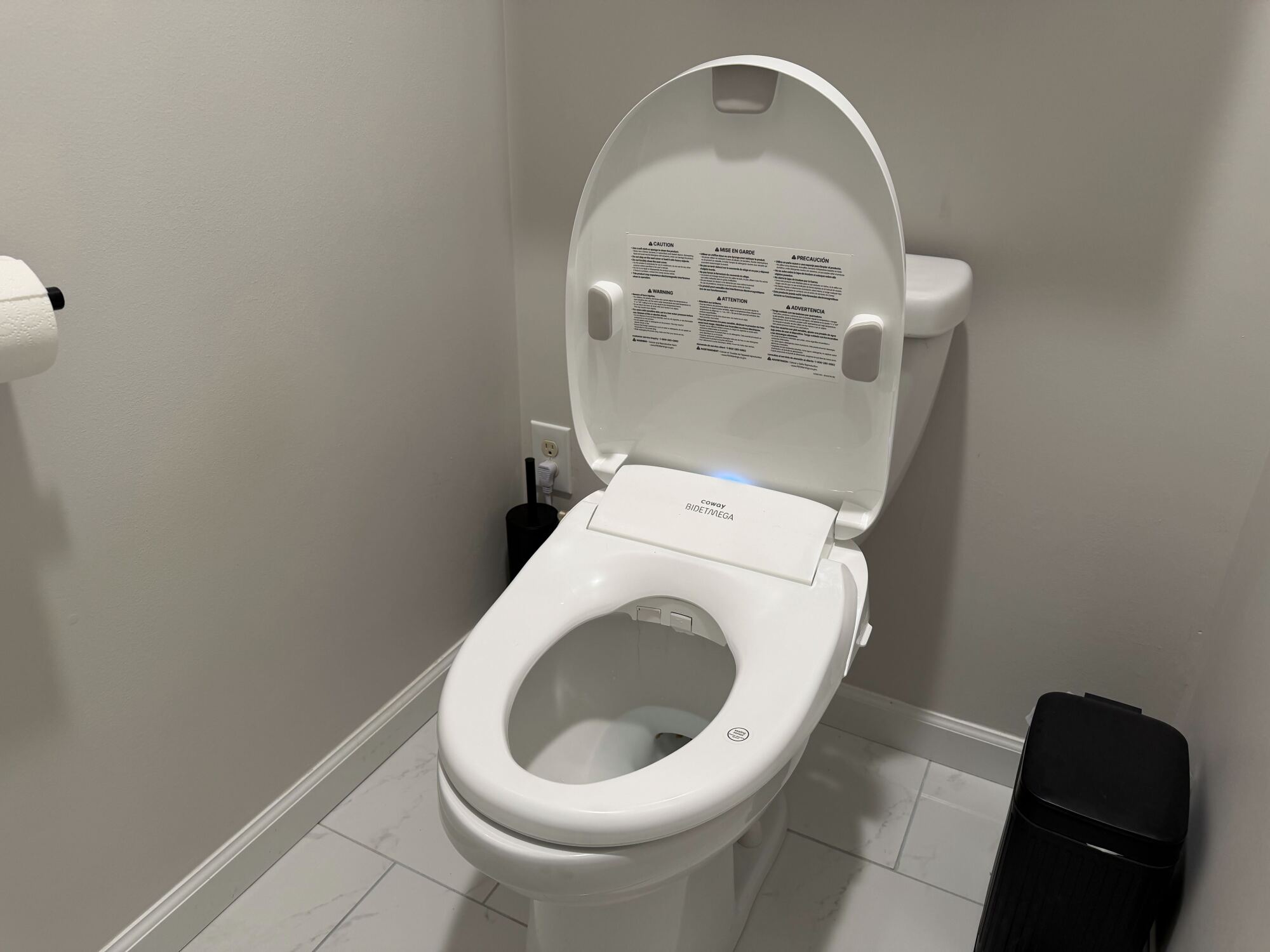
Ever since I came home from a trip to Japan in 2019, I’ve been using a bidet. Japan takes its hygiene and bidet game seriously. Their bidets were incredible, with features and technology I’ve never imagined people were using on their toilets. But I decided to start simple, with a basic $56 bidet that got the job done. But as winter arrived, the water and toilet seats in our non-insulated bathroom became intolerable, so we decided it was time to upgrade. The Coway Bidetmega 500S has impressed my wife and me so much that we sometimes hold our necessities until we get home just to use our shiny new bidet.

The Coway 500S comes in the elongated and smaller round sizes, both of which are easy to install. But I urge anyone spending over $400 on a luxury bidet to first upgrade to an elongated toilet, which you can find for $100 at Home Depot. The installation is not hard— did it myself by watching YouTube videos, but you can always get a plumber to do it for you for around $150. The experience on an elongated toilet makes a big difference. The toilet seat on bidets are already smaller than regular seats, so a smaller round one makes things rather cramped (I tried the round version first and did not enjoy it). One important thing to keep in mind is that you’ll need a grounded outlet close to the toilet to plug the bidet tino.

Coway 500S in my bathroom

Credit: Daniel Oropeza

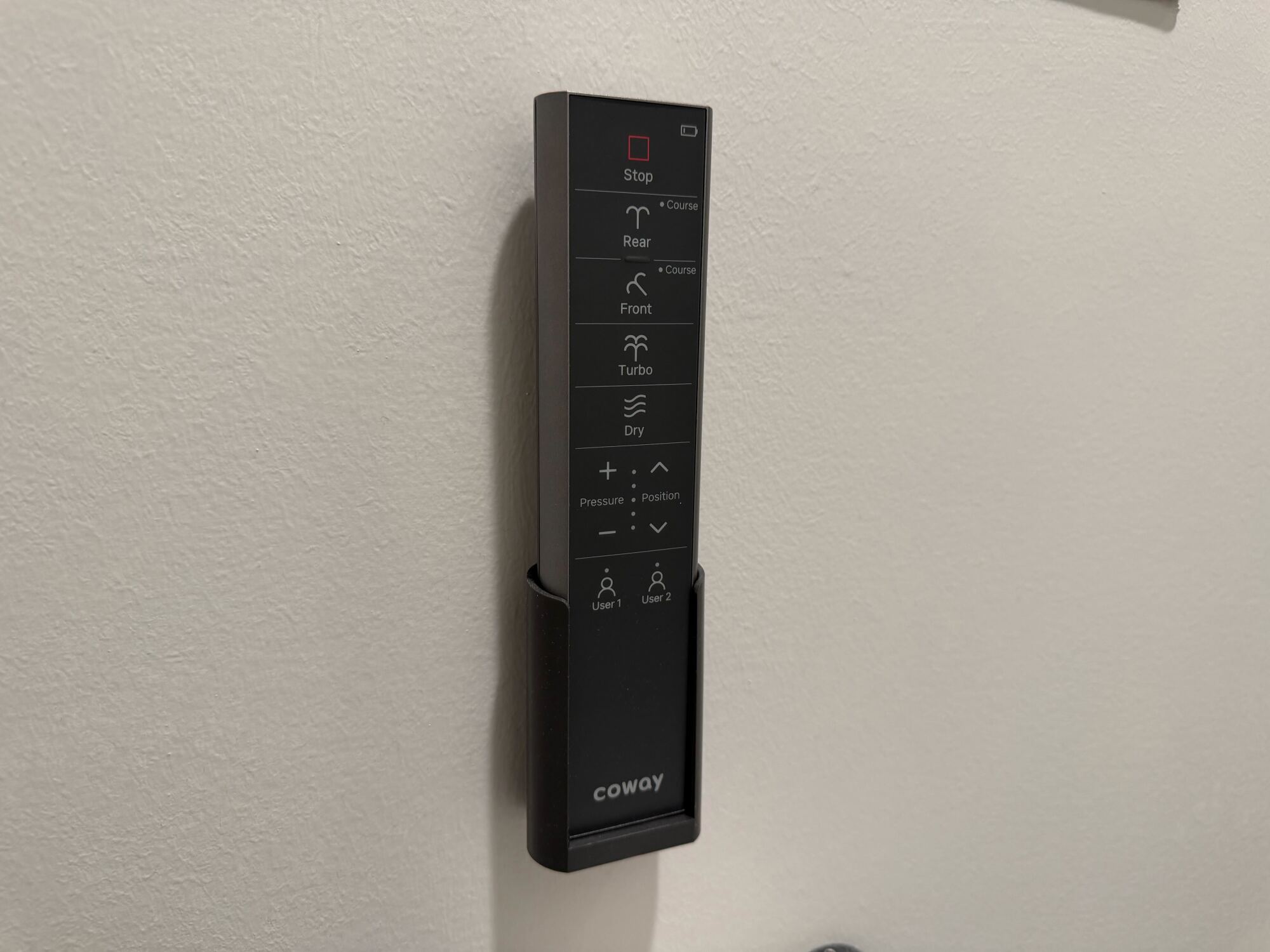
As I mentioned earlier, my bathroom is not insulated, so mornings are freezing cold. That has made us appreciate the seat and water heating features a lot. There are three levels you can use to adjust the temperature levels with the remote: green, orange, and red, with each getting gradually warmer. There’s also a neat user profile on the remote that saves the settings under that user, that way my wife and I don’t have to keep fighting over the settings.

Coway 500S remote in my bathroom

Credit: Daniel Oropeza

As much as I enjoy the heating features, there’s another aspect that makes this bidet worth every penny: the self-cleaning nozzle. With my old bidets, the self-cleanings were not great, meaning every once in a while, I would have to put some elbow grease on the bidet to get it decent again (I hated it). The Coway 500S does the self-cleaning automatically and leaves it looking brand new with three methods: a UV light, a nozzle cleaning spray, and a water shield that catches particles from moving up and out of the bowl. So far, I’ve been very impressed with this feature.

There are other features, too, including an air dryer (I personally don’t find this especially effective), a touch button on the remote to open the lid (works about 80% of the time), a night light, and a deodorizer. If you’re a bidet lover, the Coway 500S is an amazing bidet that transports me back to Japan. It has elevated my quality of life and, to me, was worth every penny.

Our Best Editor-Vetted Amazon Big Spring Sale Deals Right Now

Deals are selected by our commerce team

Update Your iPhone to Protect Yourself Against ‘DarkSword’ Malware

If you have an iPhone, listen up: There’s a new security risk that hackers have been actively exploiting since at least November. While you’re not likely to be the target of such an attack, your iPhone is nevertheless vulnerable, unless you take the following (albeit simple) action: update your iPhone.

What is DarkSword?

Google Threat Intelligence Group (GTIG) identified the new “full-chain exploit,” in partnership with security firms Lookout and iVerify. The exploit, called “DarkSword,” takes advantage of six zero-day vulnerabilities to compromise iPhones. GTIG says, as of November, it observed “multiple commercial surveillance vendors and suspected state-sponsored actors” using DarkSword in malware campaigns. As of now, those targets have been in Saudi Arabia, Turkey, Malaysia, and Ukraine.

DarkSword can attack iPhones running iOS 18.4 through iOS 18.7, according to GTIG (though iVerify and Lookout say the exploit they tested ends at iOS 18.6.2). The chain uses three malware families (GHOSTBLADE, GHOSTKNIFE, and GHOSTSABER), and is similar to a previously-discovered malware kit named Coruna. As it happens, Apple recently issued patches for Coruna exploits for older iPhones.

DarkSword is designed to quickly and stealthily scrape credentials and personal information off your device, including passwords, keys, documents, emails, crypto wallets, usernames, photos, among other data points. This is done in seconds or minutes, so it doesn’t take long for DarkSword to work. An attack works like this: You’re browsing a website in Safari embedded with a malicious iframe. Once Safari encounters it, DarkSword can breakout of the WebContent sandbox, which typically prevents unauthorized services from running in areas of iOS they’re not supposed to. As such, it quickly gives itself permission to access privileged processes, and gains access to sensitive parts of iOS.

This is concerning, since the malware only requires the user to visit a malicious website to work. You don’t need to be tricked into downloading a malicious file; just clicking the wrong link seals the deal. That’s how GTIG initially discovered DarkSword: Hackers targeted users in Saudi Arabia with a fake Snapchat website called “Snapshare,” which brought the user to a legitimate Snapchat site while silently stealing their information in the background. In another example, a group suspected of working with the Russian government targeted users in Ukraine with malicious versions of official Ukrainian government and news sites.

How to protect yourself from DarkSword

Luckily, GTIG reported DarkSword to Apple back in late 2025, and since then, Apple has fully patched the exploits involved. The company didn’t issue the patches all at once, however; rather, Apple ran individual patches through various updates, releasing the final fixes with iOS 26.3 and iOS 18.7.3. As such, you need to be running at least those versions of either iOS 26 or iOS 18 in order to protect yourself from this malware kit.

Updating your iPhone isn’t hard, and it makes it easier that Apple doesn’t require you to update to the most recent version (i.e. iOS 26) in order to patch your device. However, there are many iPhones in this world, and getting everyone to update to the proper version isn’t easy. According to Apple, 66% of iPhones in the world run iOS 26, while 24% still run iOS 18. While we can’t know for sure which of those iPhones are running iOS 26.3 or iOS 18.7.3 or newer, it’s safe to say many are running outdated versions of each. There could be millions of iPhones at risk.

That risk, in my view, is quite low: Based on the current reports, these threat actors are targeting users in limited areas, and are being run by sophisticated networks, including those funded by governments. If you don’t have reason to be in the crosshairs of a government agency, especially one that would target users in Saudi Arabia, Turkey, Malaysia, and Ukraine, you’re not likely to be a victim of DarkSword.

Still, why take the risk, however small? If DarkSword continues to spread, perhaps its affects will as well. When the solution is as simple as updating your iPhone, what’s the harm?

Apple CEO Tim Cook Discusses iPhone’s Long-Term Fate As A Core Product

Apple CEO Tim Cook Discusses iPhone's Long-Term Fate As A Core Product
Apple is spending significant resources in an attempt to become a legitimate player in the AI race, going so far as to ink an agreement with one of its chief rivals, Google. This pivot towards AI has led many to wonder what the future holds for its most famous product, the iPhone. The company’s CEO, Tim Cook, touched on the subject during

Android will hide app sideloading behind a new one-time security process

Google has detailed how users will be able to sideload apps from unverified developers once it implements its more restrictive policy towards downloading software on Android. The company originally planned to require all developers to be “verified” to distribute on Android, but softened its stance in November 2025 to allow carveouts for Android power-users and hobbyist developers.

For the average Android users, the ability to sideload apps will now be locked behind a multi-step one-time process. Users will first have to enable developer mode in settings, confirm they’re not being coached into disabling security, restart their phone (to cut off any phone calls), then wait a day and confirm their identity with biometric authentication or a pin before installing any apps. Google says you can enable the ability to install apps from unverified developers for seven days or indefinitely, but regardless of what you’ll choose, you’ll still have to dismiss a warning telling you the app you’re installing is from an unverified developer.

For hobbyist developers or students who want people to try their app but don’t want to create a verified developer account, Google also plans to offer free “limited distributions accounts” that let you share apps without being verified. These accounts will let you share apps with up to 20 devices without having “to provide a government-issued ID or pay a registration fee.”

Google is implementing its new verification process in the name of security, and has likened the requirements being asked of developers to “an ID check at the airport, which confirms a traveler’s identity but is separate from the security screening of their bags.” Neither the verification nor this new approach to sideloading entirely closes off getting apps from unverified developers onto your Android device, they just make it harder to download something dangerous directly from the internet onto your phone.

Google appears to be trying to split the difference on Android, tightening up what apps can be distributed via verification, while cutting its own Play Store fees and changing its stance towards third-party app stores. Requiring verification to distribute software extends Google’s influence outside of its own apps and app store, which is why some developers and digital rights organizations have publicly pushed back on the company’s plan. 

Developers can sign-up for early access to the developer verification process now. Google says its new workflow for enabling sideloading and small distributions of apps will go live in August.

This article originally appeared on Engadget at https://www.engadget.com/apps/android-will-hide-app-sideloading-behind-a-new-one-time-security-process-184651171.html?src=rss

OpenAI is acquiring open source Python tool-maker Astral

OpenAI announced Thursday that it has entered into an agreement to acquire Astral, the company behind popular open source Python development tools such as uv, Ruff, and ty, and integrate the company into its Codex team.

The deal, whose financial terms were not publicly disclosed, will help OpenAI “accelerate our work on Codex and expand what AI can do across the software development lifecycle,” the company said in an announcement post. Integrating Astral’s tools more closely with Codex after the acquisition will “enable AI agents to work more directly with the tools developers already rely on every day,” it continued.

Astral’s most popular open source projects include:

Read full article

Comments

The Steam Spring Sale is here with discounts on Arc Raiders, Hades 2 and much more

The Steam Spring Sale is underway and as usual, there’s plenty of good stuff to add to your library. The seasonal discounts will run through Thursday, March 26 at 1PM ET. If there’s anything you’ve been waiting to buy, it’s worth checking to see if it’s on sale now, because huge chunks of the Steam catalog are at least a little bit off. 

Recent releases don’t usually receive big price cuts during Steam sales, but you can save at least a couple bucks on several 2025 hits this time. The excellent Arc Raiders is $32, Doom: The Dark Ages is about $23 and Battlefield 6 is $42. Silent Hill f is half off at $35 for the horror fans, and indie appreciators can snag Hades 2 for less than $23.

No Man’s Sky is $24 for endless space adventures. Check out Ghost of Tsushima on PC for $36 or be the meanest cowboy in the west in Red Dead Redemption 2 for $15. 

We usually spy some indie excellence on the sale list and this year is no different. Is This Seat Taken? is a few bucks off, as is Megabonk. Explore the islands of Tchia for 75 percent off. No Rest for the Wicked, a newer title from the team behind Ori and the Blind Forest, is $28. Perennial Steam Sale fave Stardew Valley is half off for the five of you who don’t already own it.

This spring, the steep discount section has a few especially notable titles. Teenage Mutant Ninja Turtles: Splintered Fate, Fallout New Vegas and Totally Accurate Battle Simulator are among the games that are 90 percent off.  

Now you’ll just need to play everything you buy before the Summer Sale.

This article originally appeared on Engadget at https://www.engadget.com/gaming/the-steam-spring-sale-is-here-with-discounts-on-arc-raiders-hades-2-and-much-more-184000691.html?src=rss

Meta will move away from human content moderators in favor of more AI

A little more than a year after ditching third-party fact checkers and rolling back much of its proactive content moderation, the company says it will further “transform” its approach by drastically reducing the number of human moderators in favor of AI-based systems. The company says the change will happen “over the next few years,” and will allow the company to catch more issues faster than its current approach. 

Meta didn’t say how much of its contract workforce might be cut as it makes this transition. The company employs thousands of contractors around the world to review content flagged by its AI systems and user reports among other tasks. The company said that as it shifts its approach humans will “play a key role” in “critical decisions” and aid in training and other tasks.

“Experts will design, train, oversee, and evaluate our AI systems, measuring performance and making the most complex, high‑impact decisions,” Meta said in an update. “For example, people will continue to play a key role in how we make the highest risk and most critical decisions, such as appeals of account disablement or reports to law enforcement.”

The company has been testing LLM-based systems for content moderation for a while and says that early tests have had “promising” results. Another advantage is that its AI can handle languages used by “98% of people online,” compared with the 80 languages currently supported by its moderation capabilities. 

While Meta says its underlying rules aren’t changing, the new approach could dramatically change users’ perception of how Meta enforces its policies. The company already relies heavily on AI for certain rules, and many users believe that these systems make too many mistakes and make it difficult for their appeals to reach a set of human eyes. On the other hand, Meta, which stands to save a lot of money if it significantly downsizes its contract workforce, says its new systems make “fewer over-enforcement mistakes” and catch more of the most “severe” violations. 

In the nearer term, Meta is introducing an AI powered “support assistant” that will help users with certain types of account issues. The chatbot, which is rolling out now in the Facebook and Instagram app, will be able to help users report content and manage appeals, reset passwords and manage other account settings. It will also be able to help people who get locked out of their accounts “starting with select cases in the US and Canada.”

This article originally appeared on Engadget at https://www.engadget.com/social-media/meta-will-move-away-from-human-content-moderators-in-favor-of-more-ai-183000435.html?src=rss

‘Zone Zero’ Cardio Isn’t What It Sounds Like

We may earn a commission from links on this page.

Cardio zones aren’t real—not in the way your fitness app makes them sound, anyway. Yes, heart rate zones are a way to describe how hard you’re working during a cardio workout, like running or cycling. But the cardio zones everyone’s always buzzing about are just a way of bucketing exercise intensity into digestible categories. They’re a useful shorthand, but there are no physiological lines in the sand where your body suddenly switches from “zone 2” to “zone 3.” It’s a spectrum, and the specific cutoffs vary depending on who you ask (or what app you’re using), what formula they rely on, and whether they measured your lactate threshold in a lab or just guessed based on your age.

So when “zone zero” started circulating in wellness circles, my instinct was to roll my eyes. Relying on the zone framework in this way seems to add a layer of pseudoscience to what is essentially just…moving around more. To be fair, the underlying idea of “moving around more” certainly is a positive one, so allow me to break down what “zone zero” cardio even means, and how you can incorporate it into your routine.

What is “zone zero” cardio?

“Zero” sounds like nothing, or if not “nothing,” then at best, it sounds like rest. But rest is already informally called “zone 1” in many popular frameworks (never mind that it’s arguably not a real zone, since sitting still is in no way a cardio zone). So, we now have zone zero slotted below zone 1 (rest), which means we’ve invented a category below doing nothing.

The semantic confusion is worth calling out, because it reveals how the wellness industry tends to work: take something intuitive, give it a technical-sounding name, and suddenly people feel like they need an app, a heart rate monitor, and a six-week program to understand what they were already doing, or should have been doing all along.

Strip away the branding, and zone zero is a way to call out the sort of movement that falls between “workout” and “total inactivity.” This might mean your 10-minute walk after lunch, taking the stairs instead of the elevator, or pacing while on a phone call. These movements might not register as strict exercise, but cumulatively, across a day—across a life—they can make a real difference.

The research behind this practice is solid, even if the zone label itself is flimsy. Prolonged sitting is independently associated with health risks, even in people who exercise regularly. One way to think about it is that the body doesn’t bank fitness like a savings account; it responds to the totality of how you move (or don’t) throughout the day.

Who zone zero cardio is for

Armed with this understanding of what zones are and are not, zone zero can be a great framework. For instance, if you’re an all-or-nothing exerciser, then zone zero is a way to remember that light movement still counts for something. Or if you’re someone recovering from injury, illness, or burnout, or for whatever reason structured cardio isn’t accessible to you right now, then zone zero is a great way to remember that you haven’t failed by not hitting the gym. Gentle movement—even the kind that barely registers on a heart rate monitor—is still movement, and it still has value.

But if you’re someone with a robust, consistent approach to cardio, zone zero is probably not a concept you need to think about at all. There’s no need to add yet another source of noise in the fitness world.

The best fitness trackers for tracking your zones

If you want to monitor cardio intensity—whether that’s the coveted zone 2 work, harder efforts, or just making sure you’re moving enough throughout the day—here are the trackers that do it best:

Garmin Forerunner 570

Garmin’s heart rate zone tracking is among the most accurate on the market for wrist-based monitors, and as my colleague Beth Skwarecki writes in her review, the Garmin Forerunner 570 has shockingly good heart rate accuracy. Unfortunately, the price (currently on sale for $496.97) might be a dealbreaker for casual users.

Apple Watch Series 10

This is the best Apple Watch for most people, and it gets the job done for most people’s heart rate zone tracking. Plus, it’s the most seamless option if you’re already in the Apple ecosystem.

Fitbit Charge 6

When it comes to heart rate, the Fitbit is a perfectly solid budget option. If you want more than a minimalist approach, you might find yourself longing for a proper fitness watch, like the Garmin or Apple options above.

For more, I recommend reading this piece from Beth to see how Apple Watch, Fitbit, Garmin, Oura, and Whoop all compare on measuring heart rate variability (HRV).

The bottom line

To put it bluntly: You don’t need to track so-called “zone zero” cardio. You don’t need a new metric for it, a dedicated workout, or a wearable that vibrates to remind you to stand up (though your existing wearable might already do that, and it can certainly be useful). The whole point is that it’s supposed to be below the threshold of effort.

What is worth taking seriously is the underlying behavior change this concept encourages. Take a look at your day and honestly ask yourself whether movement is woven through it, or confined to a scheduled block. If it’s the latter, consider incorporating some walking and stretching breaks into your day. Maybe zone zero didn’t need a name, but now it has one, and if knowing about it helps you move more, that’s a win.

8BitDo Revives The N64 Controller With A Wireless Twist And It Works On The OG Console

8BitDo Revives The N64 Controller With A Wireless Twist And It Works On The OG Console
After 8BitDo collaborated with Analogue on the final (delayed) release of the Analogue 3D with its 8BitDo 64 Bluetooth wireless controller, 8BitDo is following up with the release of two new products: a Bluetooth 8BitDo Retro Receiver for Nintendo 64, Analogue 3D, and Windows PCs, as well as a 2.4GHz 8BitDo 64 controller + Receiver pair that

Don’t be surprised that the FBI is buying your location data

The FBI has confirmed to the Senate it is once again buying data which can be used to track the locations of US citizens. That may have surprised the people who thought the precedent in Carpenter v. United States prohibited it. But while that case examined if it was legal for law enforcement to obtain location data from mobile networks without a warrant, here the FBI and other agencies have found a way to skirt the Fourth Amendment entirely. Over the last few years, they have taken to just buying location data from the same companies which power the enormous online advertising ecosystem.

Where does this data come from?

When your phone is connected to the internet, it broadcasts about itself, and so do the apps and platforms you use. That information includes your IP address and device type, as well as your longitude and latitude if your device has GPS. This data, known as Bidstream, alongside any third party cookies tied to your device, enables the process of Real Time Bidding (RTB). RTB is the process where your attention is auctioned off to the highest bidder in the milliseconds after you’ve loaded a page. In order to make the auctions work, these platforms need to know as much about you as they can.

As I explained in depth back in 2021, data such as your location and IP address is broadcast over the ad networks. This information can also be aggregated, licensed or sold to data brokers who can pair this with any “deterministic data” available. For instance, if you sign up to a platform and tell them your name, email address and annual income, that data could be licensed to a data broker. Even banks looking for new revenue streams are planning to license anonymized customer data to these companies. Data brokers can easily combine the two streams of information to build out a fairly extensive picture of you as a person, and what advertisers will be the most interested in you. Unfortunately, it’s extremely difficult to opt out of this and, even if it were, it would be even more difficult to destroy the data already in circulation.

In 2018 French company Vectaury, which acted as an ad sales intermediary for mobile apps, was inspected by the French data protection regulator. Officials found the company had built a database containing the personal data of 67.6 million people without proper consent.

Data brokers don’t just harvest and hoard this data to make online ad sales, however, they will also license and sell its databases to others. Lawmakers believe that these brokers have sold this data to rival nations looking for ways to spy on US citizens.

How are law enforcement agencies getting it?

In January, 404Media revealed the US Immigration and Customs Enforcement Agency (ICE) bought access to tools supplied by cybersecurity company Penlink. Specifically, it purchased access to tools named Tangles and Webloc, which can be used to surveil large numbers of people at once. The latter tool reportedly has the power to identify smartphones in a given area and time, and can then follow them on their journey through the day and back to their home at night.

Given the secretive nature of its business, Penlink does not reveal much about how its tools operate. A since-removed marketing page says Webloc automatically analyzes “location based information” available in “endless digital channels from the web ecosystem.” And 404Media’s report says these tools access “commercially available smartphone location data,” supplied by third-party data brokers. Forbes reports the system can also pull together data from a variety of sources, including social media, to offer a real-time view of an event. The Texas Observer says Webloc can use this information to enable “warrantless device tracking.”

A number of other US law enforcement agencies have also purchased location data from data brokers, including the Department of Homeland Security, Customs and Border Protection, the Secret Service and the Internal Revenue Service. This isn’t just limited to government agencies, however, as anti-abortion groups did similar while targeting people visiting Planned Parenthood clinics.

How can this be legal?

The Fourth Amendment guarantees the right of the people to be protected from “unreasonable searches and seizures,” made without probable case. But, as Dori H. Rahbar wrote in the Columbia Law Review, “the Fourth Amendment does not regulate open market transactions.” Aaron X Sobel, writing in the Yale Law and Policy Review, described the practice as “end-running warrants,” and urged legislators to close this loophole. The Electronic Frontier Foundation (EFF), is also pushing for legislation under the Fourth Amendment is Not For Sale Act.

It’s not likely that such legislation will be passed for a long time, and a cynic would suggest it’s not possible under the current administration. But, even if it is, it won’t address the bigger issue of the ad tech industry and its partners vacuuming up as much information about us as it can. When these companies — many of which aren’t even known to the public — are able to store up enough information on us that, if they were so motivated, they could follow our path through the day, it’s a sign something is very rotten indeed. If we’re concerned about governments having this sort of access, then we should be equally nervous about anyone else having it as well.

This article originally appeared on Engadget at https://www.engadget.com/cybersecurity/dont-be-surprised-that-the-fbi-is-buying-your-location-data-182047627.html?src=rss

At the last minute, Meta decides not to kill Horizon Worlds VR after all

The dream of the metaverse may have died for now, but Meta has decided it’s not completely giving up on the VR experience in Horizon Worlds, the virtual worlds service that it originally envisioned as the first step toward said metaverse.

The news was announced via the Instagram account of Meta CTO Andrew Bosworth. “We have decided, just today in fact, that we will keep Horizon Worlds working in VR,” said Bosworth in an AMA on the platform in response to someone who expressed disappointment at the previously announced plan to end support.

He went on to clarify that only games and experiences that already support VR will continue to do so, while new games will be exclusive to mobile, and the majority of the team’s development focus will be on mobile instead of VR.

Read full article

Comments

Afroman keeps trolling cops after winning “Lemon Pound Cake” defamation case

On Wednesday, Afroman won a widely watched defamation lawsuit that seven cops filed after the rapper made music videos mocking them for conducting a 2022 raid of his home that resulted in no charges and no marijuana found.

Videos for songs like “Lemon Pound Cake,” “Why You Disconnecting My Video Camera,” and “Will You Help Me Repair My Door” used real footage from the raid, pulling from security camera footage and videos shot by Afroman’s wife. Cops from the Adams County Sheriff’s Office alleged they were humiliated and received death threats after the videos went viral.

Accusing Afroman of defamation, cops individually sought damages as high as $1.5 million. But Afroman’s lawyer, David Osborne, argued this was a clear-cut First Amendment case. At trial, Afroman testified that cops had no one to blame for the reputational damage but themselves, arguing that “if they hadn’t wrongly raided my house, there would be no lawsuit,” The New York Times reported.

Read full article

Comments

Google details new 24-hour process to sideload unverified Android apps

Google is planning big changes for Android in 2026 aimed at combating malware across the entire device ecosystem. Starting in September, Google will begin restricting application sideloading with its developer verification program, but not everyone is on board. Android Ecosystem President Sameer Samat tells Ars that the company has been listening to feedback, and the result is the newly unveiled advanced flow, which will allow power users to skip app verification.

With its new limits on sideloading, Android phones will only install apps that come from verified developers. To verify, devs releasing apps outside of Google Play will have to provide identification, upload a copy of their signing keys, and pay a $25 fee. It all seems rather onerous for people who just want to make apps without Google’s intervention.

Apps that come from unverified developers won’t be installable on Android phones—unless you use the new advanced flow, which will be buried in the developer settings.

Read full article

Comments

The complete Stranger Things DVD set includes 25 discs and costs around $200

Stranger Things fans will soon have permanent access to the Upside Down, as a full DVD set is now available to preorder. Stranger Things: The Complete Series comes in Blu-Ray and 4K UHD editions.

This collection includes all five seasons of the hit show, which totals 25 discs. It’ll be available at brick-and-mortar and online retailers beginning on July 28. Prices range from $200 to $260, depending on the media type and edition.

Return to Hawkins this July with STRANGER THINGS: THE COMPLETE SERIES, available in Special and Deluxe Editions on Blu-ray and 4K UHD.

Pre-order in the US via Arrow: https://t.co/wJbH9FJvo1
Pre-order in the UK via Arrow: https://t.co/yXi3HBPA42 pic.twitter.com/ddYQVcB04J

— Arrow Video (@ArrowFilmsVideo) March 19, 2026

To that end, there’s a deluxe edition available for true diehards. This includes the complete series, of course, but also bonus content like bloopers, interviews with the cast and crew and various behind-the-scenes featurettes. It also comes with a bunch of doodads, like a self-adhesive Hellfire Club patch, five posters, 25 smaller art cards, a fold-out map of Hawkins and a branded twenty-sided die.

There’s a collector’s box and each season comes in reversible sleeves with new artwork. Finally, this edition ships with a large artbook that includes original design sketches, concept art, storyboards and more. This is a pretty cool and comprehensive package.

The price might seem high, but Stranger Things consists of 42 episodes and they get pretty lengthy in seasons four and five. In any event, owning physical media of stuff you like is never a bad idea, given that everything on streaming is subject to the whims of executives looking to avoid paying residuals or whatever.

This article originally appeared on Engadget at https://www.engadget.com/entertainment/the-complete-stranger-things-dvd-set-includes-25-discs-and-costs-around-200-172222577.html?src=rss