An anonymous reader quotes a report from The Verge: Discord has identified approximately 70,000 users that may have had their government ID photos exposed as part of a customer service data breach announced last week, spokesperson Nu Wexler tells The Verge. A tweet by vx-underground said that the company was being extorted over a breach of its Zendesk instance by a group claiming to have “1.5TB of age verification related photos. 2,185,151 photos.” In its announcement last week, Discord said that information like names, usernames, emails, the last four digits of credit cards, and IP addresses also may have been impacted by the breach. “All affected users globally have been contacted and we continue to work closely with law enforcement, data protection authorities, and external security experts,” said Wexler. “We’ve secured the affected systems and ended work with the compromised vendor. We take our responsibility to protect your personal data seriously and understand the concern this may cause.”
Back in January, Netflix co-chief executive officer Gregory Peters said the service is rolling out party and couch co-op games that you can stream online in the future. Now, Peters has announced that several party game titles that you can play on your TV are coming this holiday season at the Bloomberg Screentime conference in Los Angeles. “We’re creating a completely new way to play games — one that’s as easy as streaming a show on a Friday night,” the service said in its announcement.
The new games, which you can play with friends for free, include Lego: Party, a title that will typically cost you $40. You’ll also be able to play Boggle Party, wherein you compete with friends by finding words in a jumbled-up letter grid within a time limit, and Pictionary: Game Night that will have you guessing what your friends are drawing. In Tetris Time Warp, you and your friends can play different eras of of the game, from the 1984 original to the classic Gameboy version. Finally, in Party Crashers: Fool Your Friends, you’ll have to play detective and deduce which friend is the “party crasher.” To play the games, you can turn your phone into a controller by scanning a QR code.
Netflix’s gaming push showed signs of trouble earlier this year when its canceled release plans for six titles that were already announced and removed 20 titles from its library, including popular ones like Hades. The company then chose to prioritize specific categories for a more focused library, namely party games, games for kids, well-known titles like Grand Theft Auto and games based on its shows like Stranger Things.
Some people have been seeing the Games tab on their TV for a while now, but it only contained the same games you can play on mobile. These new party games will initially be “available on select TVs,” such as on devices powered by Roku, and only “in certain countries” only. In its announcement, though, the company said it “plans to roll out [games on TV] further over time.”
This article originally appeared on Engadget at https://www.engadget.com/entertainment/streaming/netflix-is-bringing-party-games-to-tvs-123034128.html?src=rss
California has passed three new bills designed to boost privacy for internet users, governor Gavin Newsom’s office announced. The biggest one, AB 566, builds on a 2018 law by requiring web browsers to let users universally opt-out of allowing third parties to sell their data.
The original California Consumer Privacy Act from 2018 only let Californians opt out third-party data sharing one site at a time. However, AB 566 signed into law yesterday by Newsom requires web browsers like Chrome, Firefox and Safari to allow users to opt out of all third-party tracking with a single setting. “This law will help people protect their personal data by allowing them to simply switch a toggle that tells businesses they can’t sell or share it,” saidConsumer Reports policy analyst Matt Schwartz.
The bill was originally passed by the California legislature last month, but its signing by the governor wasn’t necessarily a done deal. Newsom vetoed a similar bill last year for being overly broad as it also applied to smartphone operating systems. He also said that major browsers already offer one-click opt out for third-party data sharing, though Consumer Watchdog said at the time that none offer a universal way to decline data sharing.
Two other bills will also help internet users keep their data to themselves. SB 361 boosts the Data Broker Registration Law (Delete Act) signed into law in October 2023 by giving consumers more information about which personal information is collected by data brokers and who else might have it. AB 656, meanwhile, requires social media companies to make canceling an account straightforward and clear while it triggers full deletion of the user’s personal data.
This article originally appeared on Engadget at https://www.engadget.com/big-tech/california-just-passed-three-bills-to-boost-internet-privacy-120031025.html?src=rss
Celebrating the 20th anniversary of its in-house design center Centro Stile, Lamborghini has announced the aptly-named Manifesto concept. The hyper-aggressive non-production prototype pulls many cues from the past while pointing to the Italian motor company’s vision of the near future.
Unveiled by Lamborghini Design Director Mitja Borkert
After failed negotiations with publishers, Belgium’s copyright enforcement agency has ordered the Internet Archive to block access to specific books in its Open Library within Belgium or face a 500,000-euro fine. TorrentFreak reports: Back in July, the Brussels Business Court issued a sweeping ex parte site-blocking order targeting several “shadow libraries” including Anna’s Archive, Libgen, and Z-Library. Unusually, the order also included the Internet Archive’s Open Library, a project operated by the well-known U.S. non-profit organization Internet Archive. The order was granted based on a request from publishers and authors who claimed, among other things, that the operators of the targeted sites were difficult to identify. This also applied to the Internet Archive, which was not heard by the court before the order was issued.
[…] Over the past several weeks, Internet Archive attempted to reach an agreement with the publishers, but the effort was unsuccessful. It is clear, however, that the Internet Archive believes that its use of copyrighted books for the Open Library qualifies as fair use. The organization is known to purchase physical copies, which it then digitizes to lend out to patrons, one copy at a time. This self-digitizing project was previously contested in a U.S. federal court, where the publishers ultimately came out as the winner. They argued that the Internet Archive project competed with their own licensing business for book lending. The detailed arguments at the center of the Belgian case are not public, but after hearing both sides, the Department for Combating Infringements of Copyright concluded that Internet Archive must take action.
In a follow-up decision (PDF) published last week, the government department explicitly states that it can’t rule on U.S. fair use or the Belgian equivalent, but concludes that self-blocking measures are warranted. The Internet Archive hosts the contested books and has the ability to render them inaccessible. If it refuses to do so, it may be considered a copyright infringer under local law. The final decision requires the rightsholders to supply the Internet Archive with a list of all books that should be blocked in Belgium. The non-profit then has 20 calendar days to implement the necessary measures. In addition to making the books unavailable, Internet Archive must also prevent these works from being made available for digital lending in the future.
Making a good digital picture frame should be easy. All you need is a good screen and an uncomplicated way to get your favorite photos onto the device. Combine that with an inoffensive, frame-like design and you’re good to go.
Despite that, I can tell you that many digital photo frames are awful. Amazon is positively littered with scads of digital frames and it’s basically the 2020s version of what we saw with knock-off iPods back in the 2000s. There are loads of options that draw you in with a low price but deliver a totally subpar experience that will prompt you to shove the thing in a drawer and forget about it.
The good news is that you only need to find one smart photo frame that works. From there, you can have a pretty delightful experience. If you’re anything like me, you have thousands of photos on your phone of friends, family photos, pets, vacation spots, perhaps some lattes or plates of pasta and much more. Too often, those photos stay siloed on our phones, not shared with others or enjoyed on a larger scale. And sure, I can look at my photos on my laptop or an iPad, but there’s something enjoyable about having a dedicated place for these things. After all, there’s a reason photo frames exist in the first place, right? A great frame can help you send photos to loved ones and share cherished memories with friends and family effortlessly. I tested out seven smart photo frames to weed through the junk and find the top picks for the best digital frames worth buying.
Best digital picture frames for 2025
What to look for in digital picture frames
While a digital photo frame feels like a simple piece of tech, there are a number of things I considered when trying to find one worth displaying in my home. First and foremost was screen resolution and size. I was surprised to learn that most digital photo frames have a resolution around 1,200 x 800, which feels positively pixelated. (That’s for frames with screen sizes in the nine- to ten-inch range, which is primarily what I considered for this guide.)
But after trying a bunch of frames, I realized that screen resolution is not the most important factor; my favorite photos looked best on frames that excelled in reflectivity, brightness, viewing angles and color temperature. A lot of these digital photo frames were lacking in one or more of these factors; they often didn’t deal with reflections well or had poor viewing angles.
A lot of frames I tested felt cheap and looked ugly as well, which isn’t something you want in a smart device that sits openly in your home. That includes lousy stands, overly glossy plastic parts and design decisions I can only describe as strange, particularly for items that are meant to just blend into your home. The best digital photo frames don’t call attention to themselves and look like an actual “dumb” frame, so much so that those that aren’t so tech-savvy might mistake them for one.
Perhaps the most important thing outside of the display, though, is the software. Let me be blunt: a number of frames I tested had absolutely atrocious companion apps and software experiences that I would not wish on anyone. One that I tried did not have a touchscreen, but did have an IR remote (yes, like the one you controlled your TV with 30 years ago). Trying to use that with a Wi-Fi connection was painful, and when I tried instead to use a QR code, I was linked to a Google search for random numbers instead of an actual app or website. I gave up on that frame, the $140 PixStar, on the spot.
Other things were more forgivable. A lot of the frames out there are basically Android tablets with a bit of custom software slapped on the top, which worked fine but wasn’t terribly elegant. And having to interact with the photo frame via touch wasn’t great because you end up with fingerprints all over the display. The best frames I tried were smart about what features you could control on the frame itself vs. through an app, the latter of which is my preferred method.
Another important software note: many frames I tried require subscriptions for features that absolutely should be included out of the box. For example, one frame would only let me upload 10 photos at a time without a subscription. Others would let you link a Google Photos account, but you could only sync a single album without paying up. Yet another option didn’t let you create albums to organize the photos that were on the frame — it was just a giant scroll of photos with no way to give them order.
While some premium frames offer perks like unlimited photos or cloud storage, they often come at a cost. I can understand why certain things might go under a subscription, like if you’re getting a large amount of cloud storage, for example. But these subscriptions feel like ways for companies to make recurring revenue from a product made so cheaply they can’t make any money on the frame itself. I’d urge you to make sure your chosen frame doesn’t require a subscription (neither of the frames I recommend in this guide need a subscription for any of their features), especially if you plan on giving this device as a gift to loved ones.
How much should you spend on a digital picture frame
For a frame with a nine- or ten-inch display, expect to spend at least $100. Our budget recommendation is $99, and all of the options I tried that were cheaper were not nearly good enough to recommend. Spending $150 to $180 will get you a significantly nicer experience in all facets, from functionality to design to screen quality.
Digital frames FAQs
Are digital photo frames a good idea?
Yes, as long as you know what to expect. A digital picture frame makes it easy to enjoy your favorite shots without printing them. They’re especially nice for families who want to display new photos quickly. The key is understanding the limitations. Some frames have lower resolution displays or need a constant Wi-Fi connection to work properly, so they’re not a perfect replacement for a high-quality print on the wall. But if you want a simple way to keep memories on display and up to date, they’re a solid choice.
Can you upload photos to a digital frame from anywhere?
Most modern digital frames let you do this, but it depends on the model. Many connect to Wi-Fi and use apps, cloud storage or email uploads, so you can add photos from your phone no matter where you are. Some even let family members share directly, which is great for keeping grandparents updated with new pictures. That said, a few budget models only work with USB drives or memory cards, so check how the frame handles uploads before buying.
Georgie Peru contributed to this report.
This article originally appeared on Engadget at https://www.engadget.com/home/smart-home/best-digital-frame-120046051.html?src=rss
MARANELLO, ITALY—The E-Building is one of the newest on Ferrari’s sprawling factory complex. One of the first LEED-certified buildings in Italy, the gleaming white interior is the latest in flexible factory design, capable of assembling any model in the automaker’s range. And from next year, that will include Ferrari’s first electric vehicle.
It’s a momentous occasion for Ferrari, and one it’s taking its time over—although it has now briefed us on some powertrain and chassis details, we’ll have to wait until next year before seeing the interior or exterior of a car that it’s calling the Ferrari Elettrica—for now at least.
Ferrari says it considered an all-electric two-seater or even something with occasional rear seats, but the performance benefit of an electric powertrain wasn’t enough to offset the added mass for either of those applications. Those calculations did work out in favor of a four-seater, though; the battery pack lowers the center of gravity by 3.1 inches (80 mm) compared to an internal combustion engine powertrain and reduces the polar moment of inertia by 20 percent.
Sound is a complicated topic in cars. Some cars are good because they’re very loud. Some cars are good because they’re very quiet. A select few cars can be counted in both categories. Really, only Hyundai’s Ioniq 5 N has managed to check both boxes, but if Ferrari’s promises about its first EV are to be believed, we may soon have another entrant.
At an event at the company’s headquarters in Maranello, Italy, Ferrari unveiled the first proper details about its first EV, the Elettrica, which is set to fully debut next year. We’re missing a few key details (such as what it looks like), but after spending a day talking to the various engineers behind this machine, I can finally reveal what makes this car move and how it might sound, too.
Power is a key metric for any Ferrari, and the Elettrica has plenty of that. Four electric motors, one per wheel, combine to generate a figure somewhere over 1,000 horsepower. That would put it close to the power of the company’s new F80 supercar, but in an era of 2,000-hp EVs, the Elettrica’s output isn’t exactly stunning.
This is something even Ferrari’s chief product development officer, Gianmaria Fulgenzi, admitted: “It’s very easy and simple to create power in an electric engine. It’s not difficult.” Cornering, he said, is what it’s really all about. He called current performance EVs “elephants,” capable of going quickly in a straight line but failing miserably at being compelling machines to drive.
That’s partly why the Elettrica has four motors. That way, the car’s traction and stability management systems can modulate power to maximize grip at each tire individually, rather than relying on one or two motors with differentials to try to manage wheelspin.But it goes deeper than that. The Elettrica can also steer each rear wheel independently, more or less on the inside or outside of the turn to help manage (or perhaps even induce) oversteer.
The front motors and inverter on the Ferrari Elettrica.
Ferrari
Finally, the Elettrica will have active suspension, a novel type that debuted on the Purosangue SUV and is also used on the F80 supercar. Ferrari’s dampers replace traditional valves and oil with an electric motor that provides the resistance. This means, again, the damping and ride height of the car can be adjusted independently at each corner, nearly instantly.
All that, Ferrari CEO Benedetto Vigna said, will result in an EV that drives like none other on the road: “We want to show that we are able to harness any technology in a unique way.” Making a compelling EV, a type of car that many decry as too samey, would be a bold way to do it.
One key factor to this is a unique sound. Ferrari engineers knew that they needed to come up with some sort of acoustic accompaniment for the Elettrica, but they also knew it had to be authentic. “We didn’t create a fake sound, like a starship or something like that,” Fulgenzi said. “We wanted to have exactly the sound of the electric engine.”
Ferrari came up with a solution similar to the one Porsche used for the Taycan, but it executed it in a novel way. In the Taycan, Porsche sampled and remixed the sounds of the car’s electrical components. For the Elettrica, Ferrari actually installs an accelerometer inside the casing of the rear electric motors. That sensor picks up the harmonic resonance and runs it through a digital amplifier to create a sound that isn’t a sample — it’s actually coming directly from those motors.
Fulgenzi likens it to an amp on an electric guitar, picking up the near-inaudible vibration of the strings and turning it into (potentially ear-splitting) sound. That’s perhaps a bit aspirational, but the proof of course will be in the listening, something that Ferrari sadly hasn’t let me (or anyone else) do just yet.
The rear motor and inverter for the Ferrari Elettrica.
Ferrari
They’re also not showing anyone what the thing looks like, but it seems safe to expect that this machine will bear a shape and design unlike any Ferrari that’s come before. That’s because Ferrari is, for the first time, working with design house LoveFrom, better known as the house that Jony Ive built after leaving Apple in 2019 and then sold to OpenAI for $6.5 billion.
LoveFrom has worked on a fair few projects since its inception, but this will be the company’s first car. Given that, we have absolutely nothing to go on when it comes to visual style. But if I had to guess, I’d say something with a minimalist vibe is on the menu based on Ive’s previous work. (And also his own car collection, which features a lot of classic bits of iconic British motoring.)
What we do know is that the Elettrica will have four doors and four seats. No, then, this won’t be a proper sports car, instead sitting somewhere between grand tourer and SUV. It’ll be something designed with a bit of practicality and comfort, able to waft calmly and quietly if you like. Or, with the twist of a few knobs on the steering wheel, it’s able to tighten up and get loud when you’re feeling more rowdy.
With somewhere north of 330 miles of range, it should make for a decent tourer, too. That comes from a 122 kWh (gross) battery pack that’s split up into 15 modules, each containing 14 NMC pouch cells. The cells are initially sourced from SK On, but Ferrari made it clear they’re not tied to that supplier.
Indeed, the company hopes to evolve the battery pack design and chemistry over the years, keeping some version of it available for decades to come. This is, after all, a Ferrari, a machine that ostensibly will just keep getting more valuable as it ages. That, though, is a challenge currently stymying other makers of premium EVs.
Can Ferrari make a truly desirable, truly premium EV? Having Jony Ive’s name attached certainly doesn’t hurt. We’ll all have to wait until early next year to see how it looks and how it sounds. I personally won’t get too excited about this car until then, but I am very glad that it even exists. Back in 2011, Luca Di Montezemelo, then-CEO of Ferrari, told me that Ferrari would never make an EV. I was skeptical of his statement back then, and 14 years later, I’m glad to see the company finally coming around.
This article originally appeared on Engadget at https://www.engadget.com/transportation/evs/ferraris-first-ev-is-coming-next-year-with-big-speed-big-sound-and-a-jony-ive-design-083000380.html?src=rss
eBird, now the world’s largest citizen science project with over 2 billion bird observations, is transforming ornithology by turning casual birders (and even TikTok-using kids) into vital contributors to global research and conservation. Slashdot reader alternative_right shares a report from Phys.org: The Cornell Lab of Ornithology has been one of the most influential organizations in the world when it comes to encouraging people to engage in natural history projects. While some form of amateur involvement in science projects has been around since 1900, when the Audubon Society organized the first Christmas Bird Count, it was the Cornell Lab that formalized citizen science as a sound and reliable means of collecting data on birds.
It didn’t take much thought to realize that one of the richest sources of information about birds resided in the notebooks virtually every birder has kept, often from childhood. It’s a given that birdwatchers list everything. The problem is that zillions of such notebooks sit forgotten in drawers or in dusty boxes in the attic. If only all of that information could be gathered together, organized in sensible ways and then made available to anyone who wanted to use it. What a resource that would be!
After lots of trials and discussion, a small team at the Lab came up with the idea of eBird. It started in a humble way back in 2002, as simply somewhere birders could store their records in a central location. Today, “humble” is no longer an appropriate description. In 2022, its 20th anniversary year, a total of more than 1.3 billion records had been received from more than 820,000 participants. In the month of August this year, reports eBird, 123,000 birders submitted 1.6 million lists of sightings. It has now hit a total of 2 billion bird observations since inception.
An anonymous reader quotes a report from The Guardian: MEPs voted on Wednesday by 355 in favor to 247 against to reserve names such as “steak”, “burger” and “sausage” exclusively for products derived from meat, a longstanding demand of farm unions. In order to come into effect, the idea would have to be approved by a majority of the EU’s 27 member states, which is far from certain. The vote is a victory for the French centre-right MEP Celine Imart, who drafted the amendment to legislation intended to strengthen the position of farmers in the food supply chain.
Imart, who is also a cereals farmer in north-west France, said: “A steak, an escalope or a sausage are products from our livestock, not laboratory art nor plant products. There is a need for transparency and clarity for the consumer and recognition for the work of our farmers.” She argues the proposal is in line with EU rules that already ban the use of terms such as “milk” and “yoghurt” for non-dairy products.
The European parliament rejected a ban on meaty names for plant-based products in 2020, but the 2024 elections shifted the parliament to the right, bringing in more lawmakers who seek close ties with farmers. Opposition was led by Green MEPs, who decried what they saw as a populist move to rename plant-based foods. “Veggie burgers, seitan schnitzel and tofu sausage do not confuse consumers, only rightwing politicians,” Thomas Waitz, an Austrian Green MEP, said after the vote. “This tactic is a diversion and a pathetic smokescreen. No farmer will earn more money or secure their future with this ban.”
We may earn a commission from links on this page. Deal pricing and availability subject to change after time of publication.
Amazon Big Deal Days end tonight, Oct. 8, and until then, Lifehacker is sharing the best sales based on product reviews, comparisons, and price-tracking tools before it’s over.
Follow our live blog to stay up to date on the best sales we find.
Browse our editors’ picks for a curated list of our favorite sales on laptops, fitness tech, appliances, and more.
New to Prime Day? We have a primer on everything you need to know. Sales are accurate at the time of publication, but prices and inventory are always subject to change.
If you’re in the market for an iPad, you have no shortage of options to choose from. Apple now sells some powerful iPads, with the same components you’d find in a Mac. But while all of Apple’s iPads are excellent in their own right, when it comes down to it, most of us don’t need the extra power, hardware, or features that come with these more expensive tablets. In fact, most of us would probably be perfectly suited to Apple’s entry iPad—appropriate called, iPad.
If that’s true for you, you’re in luck. For just a few more hours, you’re able to save 20% off Apple’s most recent iPad. Apple sells this tablet for $349, but during the final hours of October Prime Day, you can pick one up for $279.
Apple’s entry-level iPad doesn’t feel entry-level. The tablet comes with an 11-inch display with minimal edges. It fits right in alongside Apple’s other, more premium iPads, without the added price. You get a single 12MP camera on the back of the tablet, and a 12MP selfie camera on the front. In fact, the camera is placed on the landscape side of the iPad, rather than the portrait side as you might be used to. This makes it easier to frame yourself during video calls when the iPad is held in the same position you’d keep a laptop display.
Powering this iPad is the A16 chip, which is why some call this the iPad A16. That’s the same chip powering the iPhone 14 Pro and iPhone 15, and while it isn’t the most powerful hardware Apple includes in its iPads, it’s perfectly capable of running the apps you likely use on your tablet. Unless you’re looking to do some graphically-intensive work, or play some extremely demanding games, the A16 chip should handle iPadOS without issue.
While this iPad works great as-is, you can also add on some additional accessories. An Apple Pencil is a must for anyone who wants to use their iPad for art or for taking hand-written notes, while the Apple Magic Keyboard Folio turns the iPad into more of a laptop.
Really the only hitch I see with this iPad for most people is the storage size. This tablet only comes with 128GB of internal storage, which might fill up fast if you store a lot of photos, videos, and files on your device. If you need more storage, you can bump up to the 256GB, which is currently 16% off for Prime Day. ($379, down from $449.) If you know most of your data is in the cloud or accessible via streaming, you can probably get away with 128GB. But $379 isn’t a bad price to future-proof your iPad.
Looking for something else? Retailers like Walmart and Best Buy have Prime Day competition sales that are especially useful if you don’t have Amazon Prime.
Walmart’s Prime Day competition sale runs from Oct. 6 at 7 p.m. ET through Oct. 12 and includes deals up to 50% off. It’s an especially good option if you have Walmart+.
Best Buy’s Prime Day competition sale runs from Sept. 27 through Oct. 12, and has some of the best tech sales online. It’s an especially good option if you’re a My Best Buy “Plus” or “Total” member.
Target’s Prime Day competition sale runs from Oct. 5 through Oct. 11, and it has deals going up to 50% off. You can become a Circle member for free.
We may earn a commission from links on this page. Deal pricing and availability subject to change after time of publication.
Amazon Big Deal Days end tonight, Oct. 8, and until then, Lifehacker is sharing the best sales based on product reviews, comparisons, and price-tracking tools before it’s over.
Follow our live blog to stay up to date on the best sales we find.
Browse our editors’ picks for a curated list of our favorite sales on laptops, fitness tech, appliances, and more.
New to Prime Day? We have a primer on everything you need to know. Sales are accurate at the time of publication, but prices and inventory are always subject to change.
The October Prime Day sale clock is running out, but you can still nab a good deal on a Bluetooth speaker.
Most versatile Bluetooth speaker
Bose SoundLink Flex This outdoor/indoor speaker is going for $99 (originally $149). It’s been a top-performing portable option since its release in 2024.
Best mid-priced Bluetooth speaker
Ultimate Ears Wonderboom: If you prefer more modern features for a bit less money, UW’s Wonderboom is just $66.49 (originally $99.99). You won’t get the same sound quality as the SoundLink Flex, but it’ll be close.
Best Bluetooth speaker if you need it extra loud
Soundboks Go: This speaker boasts a volume of 121 decibels in a small 20-pound speaker. It is splash and dust-proof, too, with an IP65 rating. It’s on sale for $599 (original price $799).
Best budget Bluetooth speaker
Anker Soundcore 2 Portable Bluetooth Speaker: Anker has been killing it in the budget speaker and headphone department for some time, and the Soundcore 2 is a great example. It’s currently $27.99 (originally $44.99).
Best for Amazon’s infrastructure
Amazon Echo Dot: You can’t take this speaker outdoors, but you can command it to turn devices on and off, ask it questions, or play music in multiple rooms if you own multiple Echo speakers. You can get this newest model for $34.99 (originally $49.99).
Looking for something else? Retailers like Walmart and Best Buy have Prime Day competition sales that are especially useful if you don’t have Amazon Prime.
Walmart’s Prime Day competition sale runs from Oct. 6 at 7 p.m. ET through Oct. 12 and includes deals up to 50% off. It’s an especially good option if you have Walmart+.
Best Buy’s Prime Day competition sale runs from Sept. 27 through Oct. 12, and has some of the best tech sales online. It’s an especially good option if you’re a My Best Buy “Plus” or “Total” member.
Target’s Prime Day competition sale runs from Oct. 5 through Oct. 11, and it has deals going up to 50% off. You can become a Circle member for free.
We may earn a commission from links on this page. Deal pricing and availability subject to change after time of publication.
Amazon Big Deal Days end tonight, Oct. 8, and until then, Lifehacker is sharing the best sales based on product reviews, comparisons, and price-tracking tools before it’s over.
Follow our live blog to stay up to date on the best sales we find.
Browse our editors’ picks for a curated list of our favorite sales on laptops, fitness tech, appliances, and more.
New to Prime Day? We have a primer on everything you need to know. Sales are accurate at the time of publication, but prices and inventory are always subject to change.
It’s the year of the thin and light smartphone—as if smartphones weren’t already thin and light. Apple certainly had its moment last month with the iPhone Air, the thinnest iPhone the company has ever made. But don’t forget: Samsung beat them to the punch.
Samsung announced its thinnest and lightest smartphone ever, the Galaxy S25 Edge, back in May. The phone started at $1,099.99, but if you wanted to upgrade to the 512GB model, it’d cost you $1,219.99. That’s an expensive device, but you don’t have to pay that to snag an S25 Edge today: Amazon has the phone on sale for October Prime Day by 40%. The 512GB model is now available for $729.99.
The S25 Edge is, as mentioned, quite thin and light. It’s 5.8mm thick, which is thinner than any of Samsung’s other smartphones, while only weighing one gram more than the S25. Even with those dimensions, it comes with a 6.7-inch 1440p AMOLED display with a refresh rate of 120Hz. It skips the telephoto camera found on other S25 devices, but comes with a 200MP wide lens, 12MP ultrawide lens, and a 12MP selfie cam.
Powering the S25 Edge is the same Snapdragon 8 Elite for Galaxy chip found in the other S25 devices, complete with the same 12GB of RAM. That means the phone can run all of the Galaxy AI features Samsung is pushing with its latest lineup of smartphones—whether or not you actually want to use them.
The Galaxy S25 Edge is definitely a phone for people who want a flagship experience in a stylish form factor. You miss out on an extra camera, but if you can live without it, $730 is a great price for this device—especially for 512GB of storage. If you want to save even more, you can pick up the 256GB model in titanium silver for $684, though I think you’d find doubling your internal storage worth the additional $46.
Looking for something else? Retailers like Walmart and Best Buy have Prime Day competition sales that are especially useful if you don’t have Amazon Prime.
Walmart’s Prime Day competition sale runs from Oct. 6 at 7 p.m. ET through Oct. 12 and includes deals up to 50% off. It’s an especially good option if you have Walmart+.
Best Buy’s Prime Day competition sale runs from Sept. 27 through Oct. 12, and has some of the best tech sales online. It’s an especially good option if you’re a My Best Buy “Plus” or “Total” member.
Target’s Prime Day competition sale runs from Oct. 5 through Oct. 11, and it has deals going up to 50% off. You can become a Circle member for free.
Germany’s cabinet has approved a new law allowing police to shoot down or disable rogue drones that threaten airspace security, following recent airport disruptions attributed to Russian reconnaissance. “Other techniques available to down drones include using lasers or jamming signals to sever control and navigation links,” notes Reuters. From the report: With the new law, Germany joins European countries that have recently given security forces powers to down drones violating their airspace, including Britain, France, Lithuania and Romania. A dedicated counter-drone unit will be created within the federal police, Interior Minister Alexander Dobrindt said, and researchers would consult with Israel and Ukraine as they were more advanced in drone technology. Police would deal with drones flying at around tree-level, whereas more powerful drones should be tackled by the military, Dobrindt said.
Germany recorded 172 drone-related disruptions to air traffic between January and the end of September 2025, up from 129 in the same period last year and 121 in 2023, according to data from Deutsche Flugsicherung (DFS). German military drills last month in the northern port city of Hamburg demonstrated how like a spider, a large military drone shot a net at a smaller one in mid-flight, entangling its propellers and forcing it to the ground, where a robotic dog trotted over to seek possible explosives. Shooting down drones could be unsafe in densely populated urban areas, however, and airports do not necessarily have detection systems that can immediately report sightings.
This year’s fall Prime Day is almost on the books. But you still have time to save on some of our favorite tech. Yes, it’s October and it’s a little early to start thinking about holiday shopping. But it would be remiss to ignore the upcoming festivities entirely because you can actually save some money on good gadgets during this sale.
But let’s be real: Amazon doesn’t always make it easy to find what you’re looking for. Amongst the pages and pages of bad deals you could sift through, you may come across a couple of actually good deals on tech that’s worth your money to begin with. You don’t have to go sifting through that nonsense though — that’s where we come in. We’ve curated the top ten Prime Day deals on tech you should shop for before the event ends tonight. And no, not all of them will cost you an arm and a leg.
Apple AirTag (four-pack) for $65 (34 percent off): If you’re an iPhone user, there are really no better Bluetooth trackers than AirTags. Attach one to your keys with an AirTag holder, slip one into your wallet or throw one into the bottom of your carry-on suitcase to monitor the location of your belongings using the Find My app. As is usually the case, picking them up in a multi-pack like this is cheaper than buying just one AirTag alone. And while you’re at it, you can pick up a pair of Belkin AirTag holders for less thanks to Prime Day deals, too.
Lego Star Wars Advent Calendar 2025 75418 for $31 (30 percent off): ‘Tis the season for advent calendars. They’ve flooded the internet, as they usually do this time of year, and there are plenty to choose from (and stock up on) before we get to December. Lego has a bunch, and this Star Wars one will be fun for everyone, not just kids, to open up each day at the end of the year.
PNY microSD Express card (128GB) for $38 (15 percent off): This is really the first time we’ve seen Switch 2-compatible microSD Express cards on sale since they started coming out in earnest earlier this year. No, you unfortunately cannot just buy any microSD card on the market and use it with your new Switch 2. The console only works with these newer cards, and thankfully they are more available now than they were back in April when the Switch 2 went on pre-order for the first time. We’ve tested a good number of the cards on the market today and found that they’re all pretty solid, so the best microSD card for Switch 2 is the microSD Express card you can most easily afford.
DJI Neo drone for $159 (20 percent off): The DJI Neo may be an inexpensive, beginner-friendly drone, but it has powerful features like subject tracking and quick shots. It can shoot video at up to 4K 30 fps and is quick and maneuverable, though it’s also fairly loud. In our DJI Neo review, we praised it for its speediness and general ease of use, even for folks who have never operated a drone before. You can also grab one with three batteries and a charger for $229 (21 percent off).
Anker Nano portable charger (5K) with built-in USB connector for $20 ($10 off): Small? Check. Easy to use? Check. No need to remember a cable? Check. We tested this one for our battery guide and found it to be a good option for anyone who wants a no-fuss (and very compact) way to power up their phone on the go. It works particularly well with the latest iPhones, but it also works with other gear that carry USB-C charging ports.
Leebein 2025 electric spin scrubber for $38 (46 percent off): This is an updated version of my beloved Leebein electric scrubber, which has made cleaning my shower easier than ever before. I bought the old version not too long ago, and it’s become one of the most used pieces of tech in my house. It comes with seven brush heads so you can use it to clean all kinds of surfaces, and its adjustable arm length makes it easier to clean hard-to-reach spots. It’s IPX7 waterproof and recharges via USB-C.
Anker Laptop Power Bank (25K 100W) for $90 ($45 off): This might be the only power bank you need if you’re a commuter or you travel often. It’s one of our favorites because it has a high enough capacity and wattage to power laptops (as its name suggests), and it has two built-in USB-C cables: one attached to the side, and a retractable one that extends up to two feet. That means you don’t have to remember to bring a cable with you in your kit. It also has a handy display that shows the amount of charge the battery still has, and the output wattage flowing to your devices.
Roku Streaming Stick Plus 2025 for $24 (40 percent off): This is our top pick for the best streaming device for accessing free and live content. The dongle supports 4K video and HDR and doesn’t need to be plugged into the wall for power. It’s a great way to access any streaming service you could ask for: Netflix, Prime Video, Disney+, HBO Max and many more. Plus, if you’re not on the market for a new TV, it’s also a good way to make an old set feel new again.
Shark AI robot vacuum with self-empty base for $230 (58 percent off): A version of one of our favorite robot vacuums, this Shark machine has strong suction power and supports home mapping. The Shark mobile app lets you set cleaning schedules, and the self-empty base that it comes with will hold 30 days worth of dust and debris.
This article originally appeared on Engadget at https://www.engadget.com/deals/the-10-prime-day-tech-deals-you-should-shop-before-day-2-ends-190018499.html?src=rss
Deal pricing and availability subject to change after time of publication.
Amazon Big Deal Days end tonight, Oct. 8, and until then, Lifehacker is sharing the best sales based on product reviews, comparisons, and price-tracking tools before it’s over.
Follow our live blog to stay up to date on the best sales we find.
Browse our editors’ picks for a curated list of our favorite sales on laptops, fitness tech, appliances, and more.
New to Prime Day? We have a primer on everything you need to know. Sales are accurate at the time of publication, but prices and inventory are always subject to change.
If you need a pair of less-expensive headphones or earbuds, Amazon has a ton of choices for under $150, but you better hop on it quick: October Prime Day is coming to a rapid close.
Best earbuds for under $150
Apple AirPods 4: The lower-end line of AirPods are still fantastic, especially for $89.00, which is 31% off the list price of $129.00. The noise-cancelling variety of AirPods 4 are marked down too; they’re $118.98 down from $179.00, but unless you’re frequently in very loud places, you won’t need it.
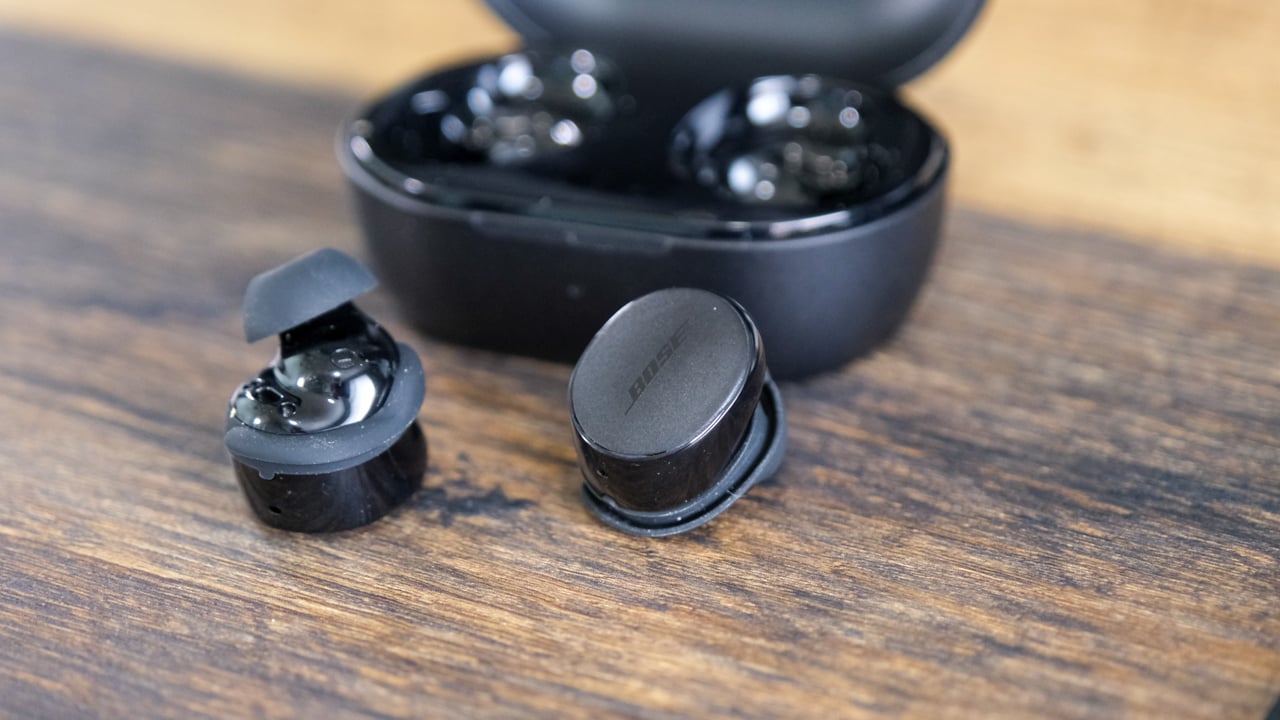
Bose QuietComfort Bluetooth Earbuds: If you’d rather avoid the Apple infrastructure altogether, these Bose QuietComfort Bluetooth Earbuds feature noise-cancelling, and Bose-quality sound for $129, down from $179.
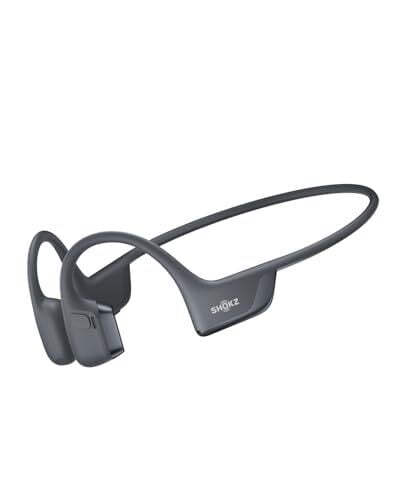
Shokz OpenRun Pro 2: If you want to listen to music without drowning out the sound of the world around you, Lifehacker’s Daniel Oropeza swears by Shokz OpenRun Pro 2 bone conducting headphones, calling them “the best sounding headphones for runners who need to be aware of their surroundings.” They’re on sale for $124.95, 31% off the list price of $179.95.
Soundcore V20i by Anker: Anker makes serviceable audio components for low prices, like these open air headphones. They’re on sale for only $23.49, down from $49.99, and feature 16mm drivers and customizable lights.
SHOKZ New OpenRun Pro 2 – Open-Ear, Bone Conduction Sport Headphones – Sweat Resistant, Workout Headphones with 30ft Bluetooth – Secure, Wireless, Comfortable Fit – Deep Bass and Smart Mic App
$179.95 at Amazon
$179.95 at Amazon
Anker Soundcore V20i Bluetooth 5.4 Open-Ear Headphones (Black)
$23.49 at Amazon
$49.99 Save $26.50
$23.49 at Amazon
$49.99 Save $26.50
Best over ear headphones for under $150
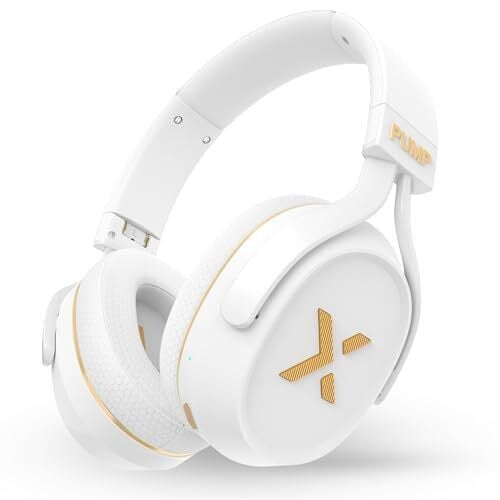
BlueAnt Pump X: If you’re looking for headphones that cost less than $100, the BlueAnt Pump X are on sale for $99.99, and feature active noise cancelling and cooling pads for sweaty workouts. They come in black and gold and white and gold.
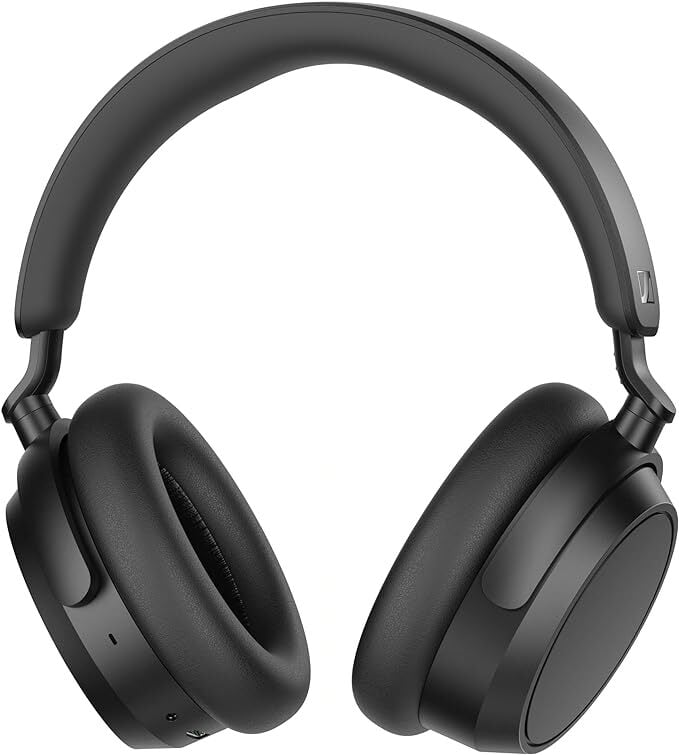
Sennheiser ACCENTUM: These wireless headphones feature 50 hours of battery life and hybrid noise cancelling for $99.95, down from $158.89
BlueAnt Pump X – The Gym Headphones | White/Gold | Sports Headphones | Cushioned & Cooling Ear Pads | (ANC) Active Noise Cancelling/Advanced Transparency | Wireless | Up to 58hr Play Time
$99.99 at Amazon
$129.99 Save $30.00
$99.99 at Amazon
$129.99 Save $30.00
Sennheiser Accentum Plus Wireless
$179.95 at Walmart
$229.95 Save $50.00
$179.95 at Walmart
$229.95 Save $50.00
Best gaming headset for under $150
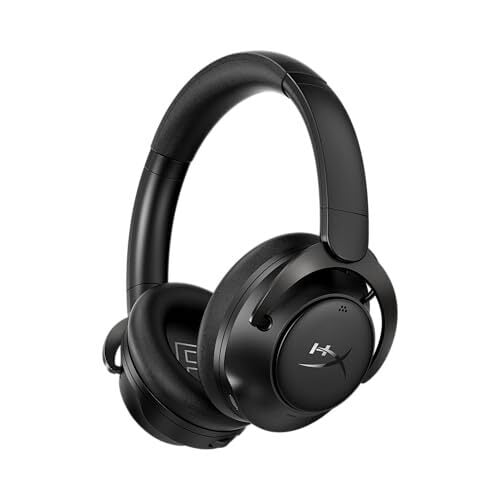
HyperX Cloud Mix 2: These wireless headphones will run for 110 hours on a charge! They feature solid ANC in 2.4GHz mode, and come with a slot inside the left ear cup that hides a low-profile USB-C adapter, all for $132.99.
Razer BlackShark V2 Pro Wireless: These PlayStation-licensed headphones feature a noise-isolating design and tuneable audio profiles so you can customize what you hear. They’re a steal at $129.99, down from $199.99.
HyperX Cloud Alpha Wireless: If you want long battery life, these headphones will run for over 300 hours of battery life on a single charge, and they’re on sale for $143.
HyperX Cloud Mix 2 – Dual Wireless Over-Ear Headphones with ANC, 2,4GHz dongle, Bluetooth 5.3, PC, PS5, Nintendo Switch, Steam Deck, Mobile, USB-C – Black
$132.99 at Amazon
$199.99 Save $67.00
$132.99 at Amazon
$199.99 Save $67.00
Razer BlackShark V2 Pro Wireless Gaming Headset: Wideband Mic – Pro-Tuned FPS Profiles – 50mm Drivers – Comfortable Noise Isolating Earcups – 70 Hr Battery – Bluetooth – for PC, PS5, Switch – Black
$141.99 at Amazon
$199.99 Save $58.00
$141.99 at Amazon
$199.99 Save $58.00
HyperX Cloud Alpha Wireless
$139.99 at Walmart
$199.99 Save $60.00
$139.99 at Walmart
$199.99 Save $60.00
Looking for something else? Retailers like Walmart and Best Buy have Prime Day competition sales that are especially useful if you don’t have Amazon Prime.
Walmart’s Prime Day competition sale runs from Oct. 6 at 7 p.m. ET through Oct. 12 and includes deals up to 50% off. It’s an especially good option if you have Walmart+.
Best Buy’s Prime Day competition sale runs from Sept. 27 through Oct. 12, and has some of the best tech sales online. It’s an especially good option if you’re a My Best Buy “Plus” or “Total” member.
Target’s Prime Day competition sale runs from Oct. 5 through Oct. 11, and it has deals going up to 50% off. You can become a Circle member for free.
We may earn a commission from links on this page. Deal pricing and availability subject to change after time of publication.
Amazon Big Deal Days end tonight, Oct. 8, and until then, Lifehacker is sharing the best sales based on product reviews, comparisons, and price-tracking tools before it’s over.
Follow our live blog to stay up to date on the best sales we find.
Browse our editors’ picks for a curated list of our favorite sales on laptops, fitness tech, appliances, and more.
New to Prime Day? We have a primer on everything you need to know. Sales are accurate at the time of publication, but prices and inventory are always subject to change.
As expensive as smartphones are these days, we’re kind of used to it. It’s just a fact of life that the newest iPhone is going to cost upwards of $1,000, or a foldable smartphone could actually retail for $2,000.
The thing is, you don’t actually need to spend a grand or two to grab a great phone. There are options out there for both midrange and budget phones that balance features, performance, and price, to offer a better overall value. You might not be getting the flashiest phone on the market, but you’re getting one that does exactly what you need it to, all without emptying your wallet in the process.
The Pixel 9a is a prime example here. Google’s “budget” Pixel is a fantastic smartphone in its own right: It comes with a 6.3-inch 1080p OLED display, with a variable refresh rate up to 120Hz. Google says the phone’s 5100 mAh battery is rated for 30 hours or more in between charges, or up to 100 hours when using “Extreme Battery Saver.” It packs in Google’s Tensor G4 chip, the same chip found in the more expensive Pixel 9 and Pixel 9 Pro. It also comes with two rear cameras—one 48MP mainh camera and one 13MP ultrawide camera—as well as a 13MP selfie camera.
All of those features come in a phone that retails for $499. Not bad. But when you consider Amazon’s Prime Day deal, which slashes 30% off the MSRP, you can pick up a very capable smartphone for $349. Even better. If you can justify the added expense, however, I’d consider upgrading to the 256GB model. That’ll double your internal storage, taking some pressure off your file management, and while it does cost an extra $100, that’s still a 25% discount over this model’s $599 MSRP.
Don’t feel that just because the Pixel 10 is now out—and also on sale for Prime Day—that you need to buy it over the Pixel 9a. Our editor, Michelle Ehrhardt, still feels that the Pixel 9a is the better deal compared to Google’s latest and greatest smartphones. In fact, she calls it “the best Google phone for most people.”
Looking for something else? Retailers like Walmart and Best Buy have Prime Day competition sales that are especially useful if you don’t have Amazon Prime.
Walmart’s Prime Day competition sale runs from Oct. 6 at 7 p.m. ET through Oct. 12 and includes deals up to 50% off. It’s an especially good option if you have Walmart+.
Best Buy’s Prime Day competition sale runs from Sept. 27 through Oct. 12, and has some of the best tech sales online. It’s an especially good option if you’re a My Best Buy “Plus” or “Total” member.
Target’s Prime Day competition sale runs from Oct. 5 through Oct. 11, and it has deals going up to 50% off. You can become a Circle member for free.
Shayne Coplan, a 27-year-old NYU dropout who founded Polymarket from his bathroom in 2020, has become the youngest self-made billionaire after Intercontinental Exchange (owner of the NYSE) invested up to $2 billion in his once-controversial prediction market platform. Bloomberg reports: A couple of years after dropping out of New York University with dreams of making it big in crypto, Shayne Coplan was so broke that he took an inventory of his Lower East Side apartment so that he could sell belongings to make rent. Fed up with crypto grifts, in 2019 he started to explore economist Robin Hanson’s ideas on prediction markets and their potential for improving society’s ability to identify likely outcomes. “This is too good of an idea to just exist in whitepapers,” he recalled thinking in a later post on X. Then Covid struck — the perfect time to develop an app for stuck-at-home folks to bet on real-world outcomes, he reasoned. He began building Polymarket from his bathroom and launched the platform in June 2020.
It wasn’t a smooth road. The company’s move-fast, ask-permission-later approach repeatedly ran afoul of regulators, who forced it to ban US-based users for years because it wasn’t a registered exchange. A week after the 2024 presidential election — one that Polymarket users wagered more than $3 billion on — Coplan’s apartment was raided by FBI agents. But he and his company are now riding high after Intercontinental Exchange Inc., the owner of the New York Stock Exchange, said it would invest as much as $2 billion in Polymarket at an $8 billion pre-money valuation. That deal makes its 27-year-old founder the youngest self-made billionaire tracked by the Bloomberg Billionaires Index.
We may earn a commission from links on this page. Deal pricing and availability subject to change after time of publication.
Amazon Big Deal Days end tonight, Oct. 8, and until then, Lifehacker is sharing the best sales based on product reviews, comparisons, and price-tracking tools before it’s over.
Follow our live blog to stay up to date on the best sales we find.
New to Prime Day? We have a primer on everything you need to know. Sales are accurate at the time of publication, but prices and inventory are always subject to change.
Every day, I venture to the gym with a pink bag containing pink cable attachments or pink yoga blocks, then return home to make a smoothie in a pink blender. Is it possible to work out without being all matchy-matchy? Absolutely! Does the thrill of having an arsenal of helpful, color-coordinated tools motivate me to get up and head to the gym? Even more absolutely.
During these October Prime Days, I added to my collection and saved some money in the process. Here’s what I picked up.
(The brilliant Beth Skwarecki has already outlined all the best deals on fitness equipment you can find during this shopping holiday, so if you’re looking for heavy hitters to round out your home gym, head over there. What I have to offer is smaller, but I am pleased.)
This blender bottle
First up, I finally got a new blender bottle for the shakes I make full of various powders. Last week, my old blender broke and I hate the blender bottles with the metal ball you shake around to mix up your drinks, which led me here:
Next up, I got some Equipro adjustable dumbbells. All I have are eight-pound ones and, even though you’re supposed to use two- or three-pound weights when you are cycling or doing Pilates, I always just let it rip with the bigger ones and suffer later. Instead of $43, these are $33 right now and you can remove or add plates to take them from two to five pounds each.
I am a big proponent of bringing your own stuff to the gym whenever possible: little things like floor mats and, crucially, cable attachments. I bring my own mats, attachments, yoga blocks, and resistance bands with me, to name a few. First, it’s nice not to have to wait for someone to finish up with something so you can use it. Second, it’s nice to use things no one else may have just sweated all over and not wiped off. Third, I’ve been to some gyms that don’t even have a variety of cable attachments or other resources and others that make you trade something of yours, like your ID card, to get access to them because people steal them. Avoid all that drama and wasted time by spending a few dollars on your own.
I can’t recommend this Vulken tricep rope enough. The regular rope attachment at the gym hurts my hands and I can’t stand it. This thing is cushy, it has tiered grips so it’s adaptable, and it’s on sale for $14.39.
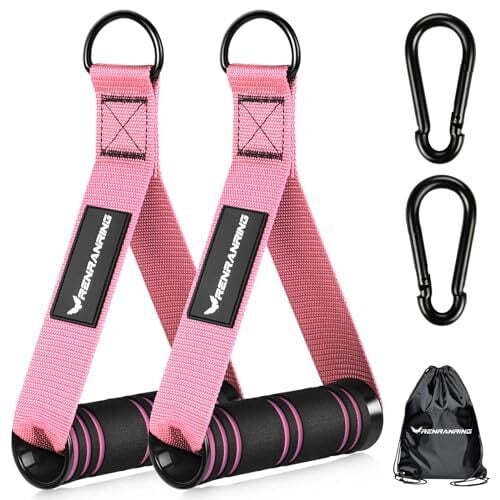
Something I almost got but didn’t (yet) is this set of Renranring Gym Exercise Handles for the cable machine, which are down to $10.39. If you’re looking to start your own attachment collection, though, these are among the least expensive and most useful things you can get.
Looking for something else? Retailers like Walmart and Best Buy have Prime Day competition sales that are especially useful if you don’t have Amazon Prime.
Walmart’s Prime Day competition sale runs from Oct. 6 at 7 p.m. ET through Oct. 12 and includes deals up to 50% off. It’s an especially good option if you have Walmart+.
Best Buy’s Prime Day competition sale runs from Sept. 27 through Oct. 12, and has some of the best tech sales online. It’s an especially good option if you’re a My Best Buy “Plus” or “Total” member.
Target’s Prime Day competition sale runs from Oct. 5 through Oct. 11, and it has deals going up to 50% off. You can become a Circle member for free.
Verizon is acquiring Starry, the struggling wireless ISP that beams high-speed internet via millimeter-wave antennas. The company said the acquisition “advances” its ability to offer high-speed internet in apartments, condominiums, and other multi-dwelling units. The Verge reports: Starry made its debut in Boston in 2016, offering gigabit speeds via its unconventional approach to internet connectivity. Instead of carrying connectivity across a web of wires — which are expensive and time-consuming to deploy — Starry beams its internet service from a larger antenna into homes via high-speed, short-range mmWave broadcasts. The challenge with those broadcasts is that Starry connections generally require an uninterrupted line of sight between the transmitter and the receiver, as mmWave signals can be easily blocked.
In recent years, Starry has run into trouble, with the company laying off half of its workers in 2022 and filing for bankruptcy in 2023. It also pulled out of one of its markets, Columbus, Ohio, leaving Starry with nearly 100,000 customers across Boston, Denver, Los Angeles, New York City, and Washington, DC. It sounds like Starry’s tech will end up getting used by Verizon. Through the acquisition, Verizon plans on expanding its ability to deliver internet connectivity in urban locations, building on its 5G home internet and growing fiber footprint. Verizon expects the deal to close in 2026, subject to regulatory approval. “Verizon is uniquely positioned to accelerate this expansion because of its significant fiber backbone and extensive holdings of mmWave spectrum,” the company said in its press release.