Law enforcement agencies have scored a major win against the world’s most predatory botnet operations, dismantling the infrastructure of four major networks responsible for some of the most aggressive cyberattacks in internet history. The coordinated operation, led by the U.S. Department of Justice alongside authorities in Canada and Germany,
Savvy shoppers know that a surefire strategy to save some coin in the land of tech is to wait for a new generation product to emerge, and then pounce on the inevitable discount offered on the item it’s replacing. Now is one of those opportune times. Apple’s new M5 MacBook Air is barely two weeks old, and you can find the still-capable M4 model
A landmark site in the peopling of the Americas is several thousand years younger than we thought. While that means very different things about the site itself, it doesn’t change the big picture as much as the researchers who generated the new date are claiming.
University of Wyoming archaeologist Todd Surovell and his colleagues recently took a second look at the age of a site called Monte Verde in southern Chile, and it turns out that people lived there 8,000 years ago—not 14,500, as the archaeologists who first described it claimed.
Monte Verde is about as far from the Bering Land Bridge as you can get without leaving the continents, so its age was the first piece of evidence that people were well-established in the Americas before the end of the last Ice Age. But it hasn’t been the last, so Surovell and his colleagues’ findings don’t actually change what we now know about the peopling of the Americas—and they definitely don’t put the “Clovis First” hypothesis back on the table.
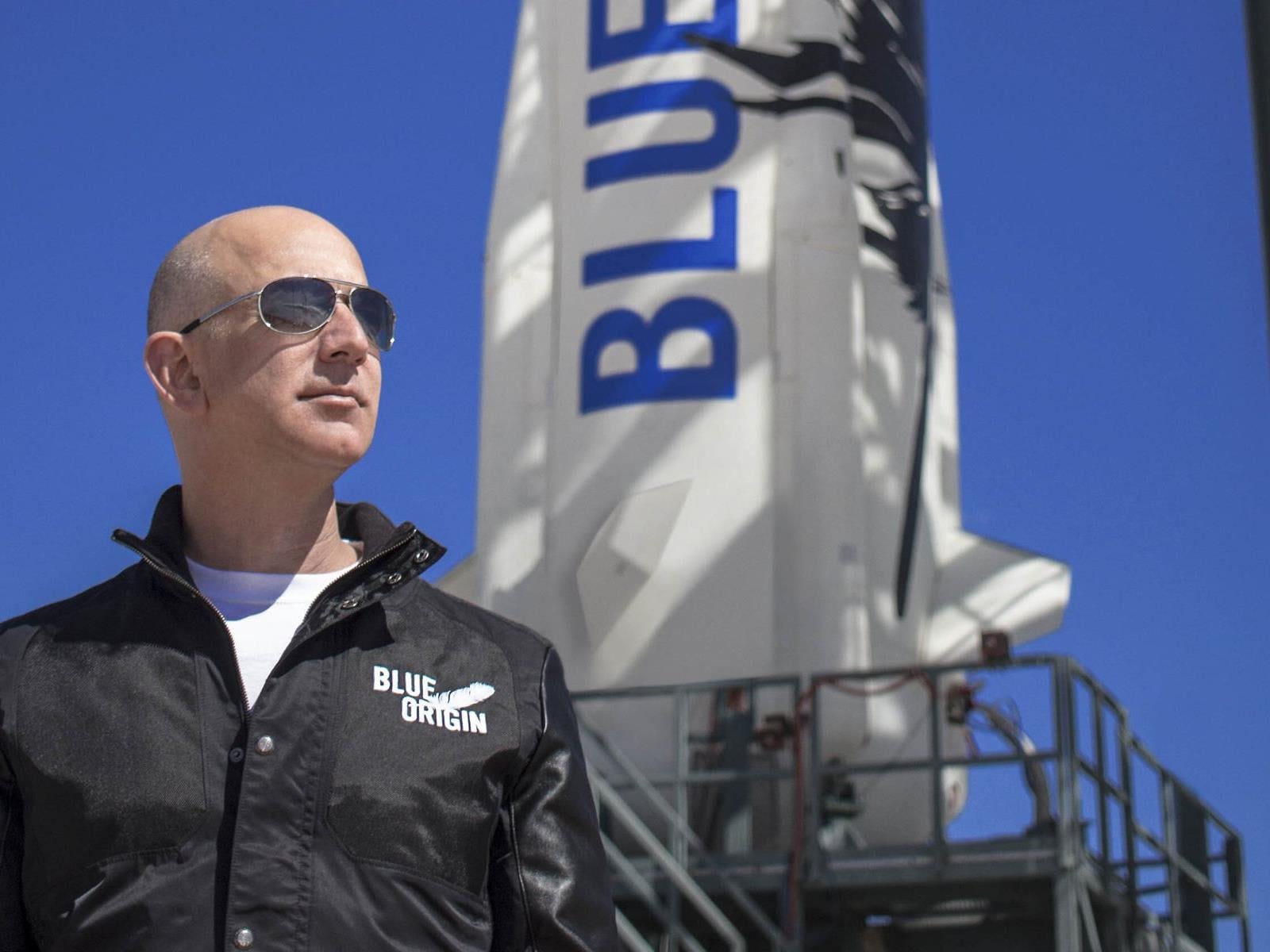
Looks like we have a new entrant to the orbital data center race: Blue Origin is formally challenging the likes of SpaceX and Axiom with plans for an initial constellation of tens of thousands of satellites.
Filing plans with the Federal Communications Commission (FCC) for Project Sunrise, Jeff Bezos’s space venture aims to deploy a not
An anonymous reader quotes a report from Reuters: Fan Xinquan, a retired electronics worker in Beijing, has recently started raising a “lobster,” hoping that the AI agent he has been training can help organize his specialized industry knowledge better than chatbots like DeepSeek. “OpenClaw can actually help you accomplish many practical things,” the 60-year-old said at a recent event hosted by AI startup Zhipu to teach people how to use and train the AI agent, which has gone viral in China, with its various local versions earning the “lobster” nickname.
In the past month, OpenClaw, which can connect several hardware and software tools and learn from the data produced with much less human intervention than a chatbot, has captured the imaginations of many in China, from retirees looking for side income to AI firms hoping to generate new revenue streams. […]
Huang Rongsheng, chief architect at Baidu’s smart device unit Xiaodu, said at an event on Tuesday that parent group chats for his daughter’s primary school class have become overwhelmed by OpenClaw discussions. “My daughter came to me and asked: Dad, I see you raising a lobster every day,” he said. “Can I have one too?” Bai Yiyun, another attendee at the Zhipu event, said she hopes to use the agent to start a side hustle during her retirement. “If DeepSeek marked a milestone for open-source large language models, then OpenClaw represents a similar turning point for open-source “agents,” said Wei Sun, chief AI analyst at Counterpoint Research.
We may earn a commission from links on this page. Deal pricing and availability subject to change after time of publication.
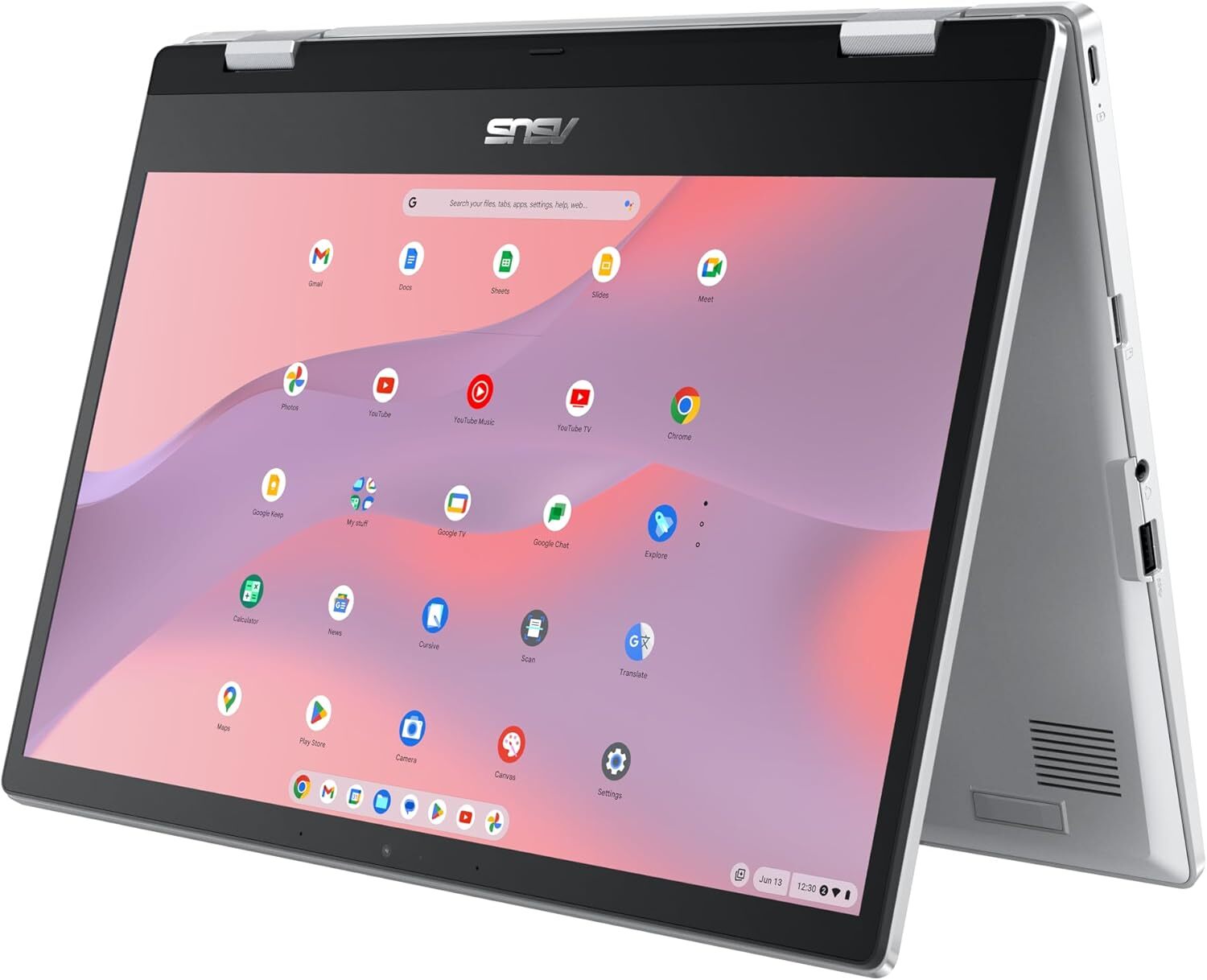
Convertible laptops are a versatile and affordable alternative to buying a separate laptop and tablet. They offer touchscreen capability, multiple viewing modes, and greater portability than traditional laptops, which is a perk for commuters. They’re also useful if you want a second screen but don’t want to invest in a full second laptop or desktop. One of the most popular options is the entry-level 14-inch ASUS Chromebook Flip CX1 Convertible Laptop, which is down to a record low of $279.99 (originally $369.99), according to price trackers.
It’s one of the most affordable convertible laptops with a 360-degree hinge, a 13-inch touchscreen, and all the essentials for everyday tasks like streaming video, getting work done, multitasking, or serving as a secondary device. That said, it’s not designed for more intensive tasks like design work, competitive gaming, and video editing.
It has an Intel Celeron N4500 processor, 8 GB of RAM, and 128 GB of eMMC storage, and lasts up to 11 hours per charge. It can be used in laptop, tent, or tablet mode, adding to its versatility. While it doesn’t have the high-end specs and performance of dedicated computers, this 2-in-1 does come with fingerprint login, a backlit keyboard, dual speakers, and a 1080p webcam. It also has fast-charging USB-C, USB-A, and micro-SD ports, offering more connectivity than many budget Chromebooks.
If you’re looking for a model that covers the basics and your priority is versatility and convenience at under $300, the Asus Chromebook Flip CX1 2-in-1 is a strong choice. However, if you need more storage, better brightness and visuals, and a more capable processor, it’s worth stepping up to a slightly more powerful model like the ASUS Chromebook CM14 Flip or the Lenovo IdeaPad Flex 5i Chromebook Plus, though those upgrades will come with a higher price tag.
Our Best Editor-Vetted Amazon Big Spring Sale Deals Right Now
Last year, Belkin released a couple of cases for the Nintendo Switch 2 just in time for launch, including one that came with a handy battery pack. That one was simple and effective, but it felt a bit crude because it wasn’t much more than a basic travel pouch with a generic power cell tossed inside. Now, Belkin is back with a Pro version of its Charging Case for the Nintendo Switch 2, featuring a more sophisticated battery pack along with a higher price tag ($100 vs. $70). So here’s the question for any Switch 2 owners still looking for a way to protect their console while keeping it topped off: Is a more elegant charging solution really worth the extra money?
Case design
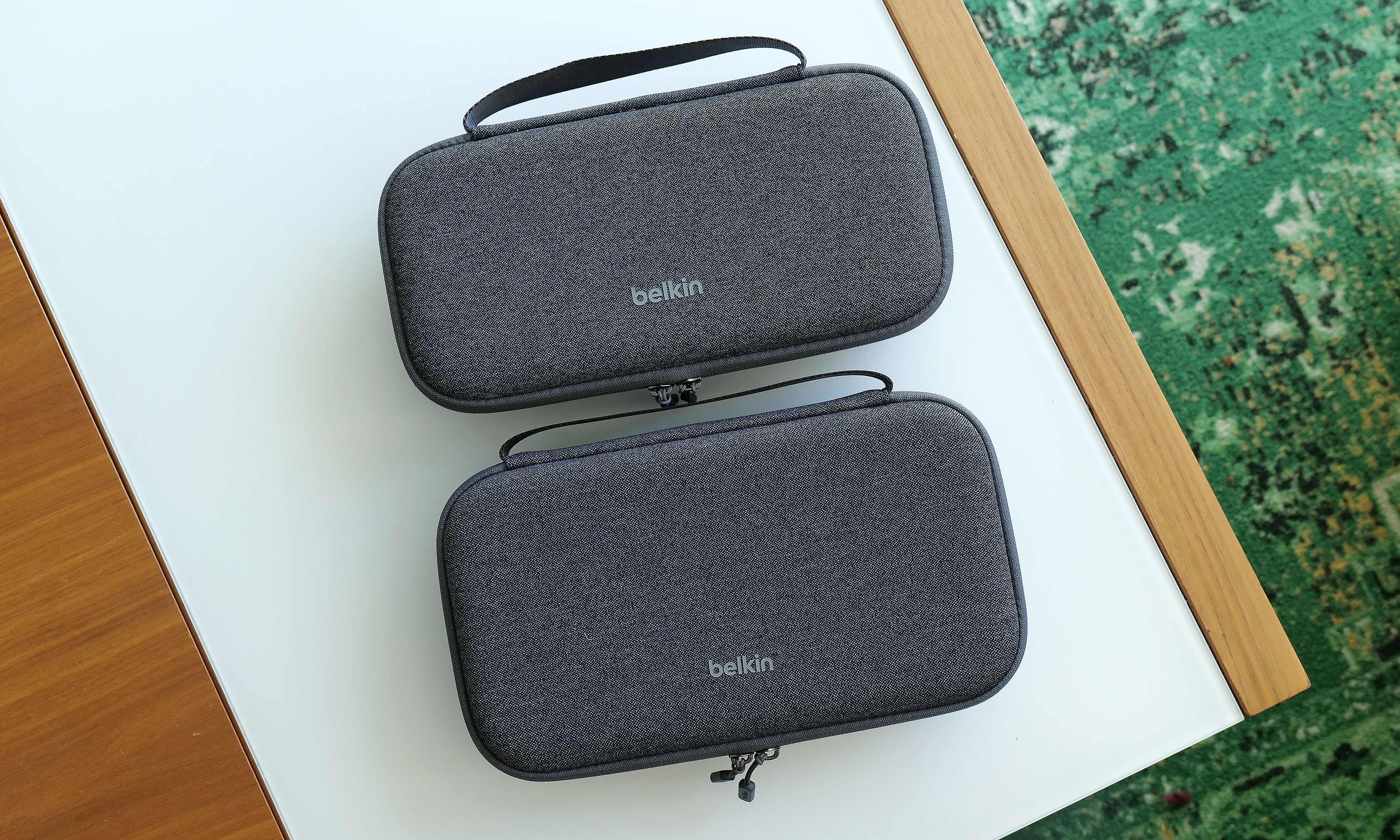
At 11.7 x 6.1 x 2.5 inches and weighing 1 pound 12 ounces, the Pro Charging Case is a touch larger and heavier than its non-pro sibling. It also features a very similar design with the same color options and materials, including a tough polyester outer shell that’s balanced by a softer, velvet-like material and cutouts for your Switch 2 on the inside.
The Pro Charging Case (bottom) is a touch bigger and heavier than the previous model, but aside from that its sports a nearly identical design.
Sam Rutherford for Engadget
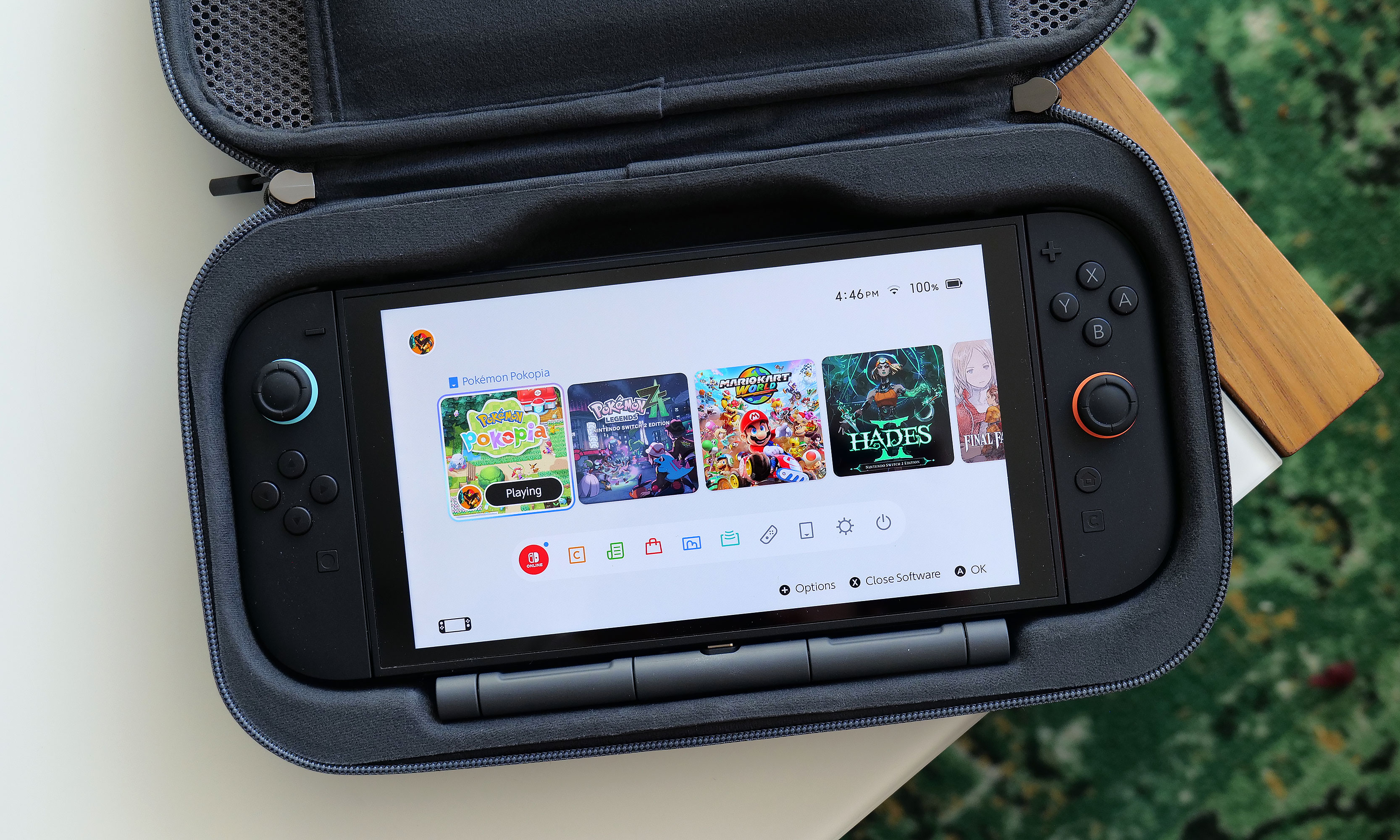
Once again, Belkin has done a good job of providing a snug cabin to store your console while still making it easy to take it in and out. That said, if your system also has an extra-thick protector or hardshell case like the Killswitch from Dbrand, it may not fit. There’s also a padded flap that swings down to protect your Switch 2’s screen that also pulls double duty as a place to stash up to 12 game cartridges, which is a very thoughtful touch.
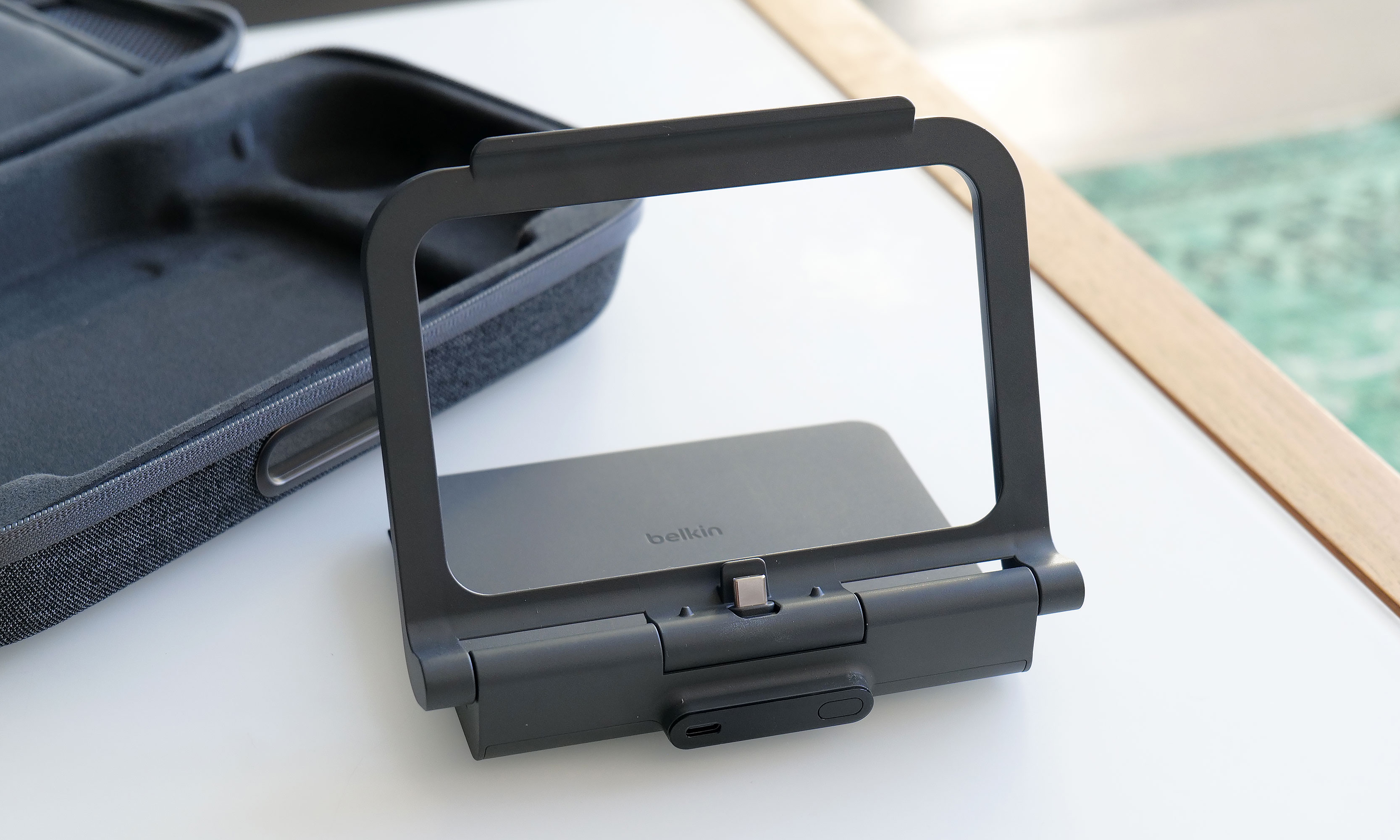
However, the biggest change to the Pro Charging Case’s exterior design is a new cutout on the front edge, which allows you to top off other gadgets (or a Switch) by plugging a USB-C cable into Belkin’s included battery pack. Unfortunately, the case doesn’t come with a cord, which seems a bit odd until you take a closer look at the power pack’s layout. That’s because once you open up the case, you’ll see a second port designed to fit right into the bottom power jack on the Switch 2 without the need for a cable.
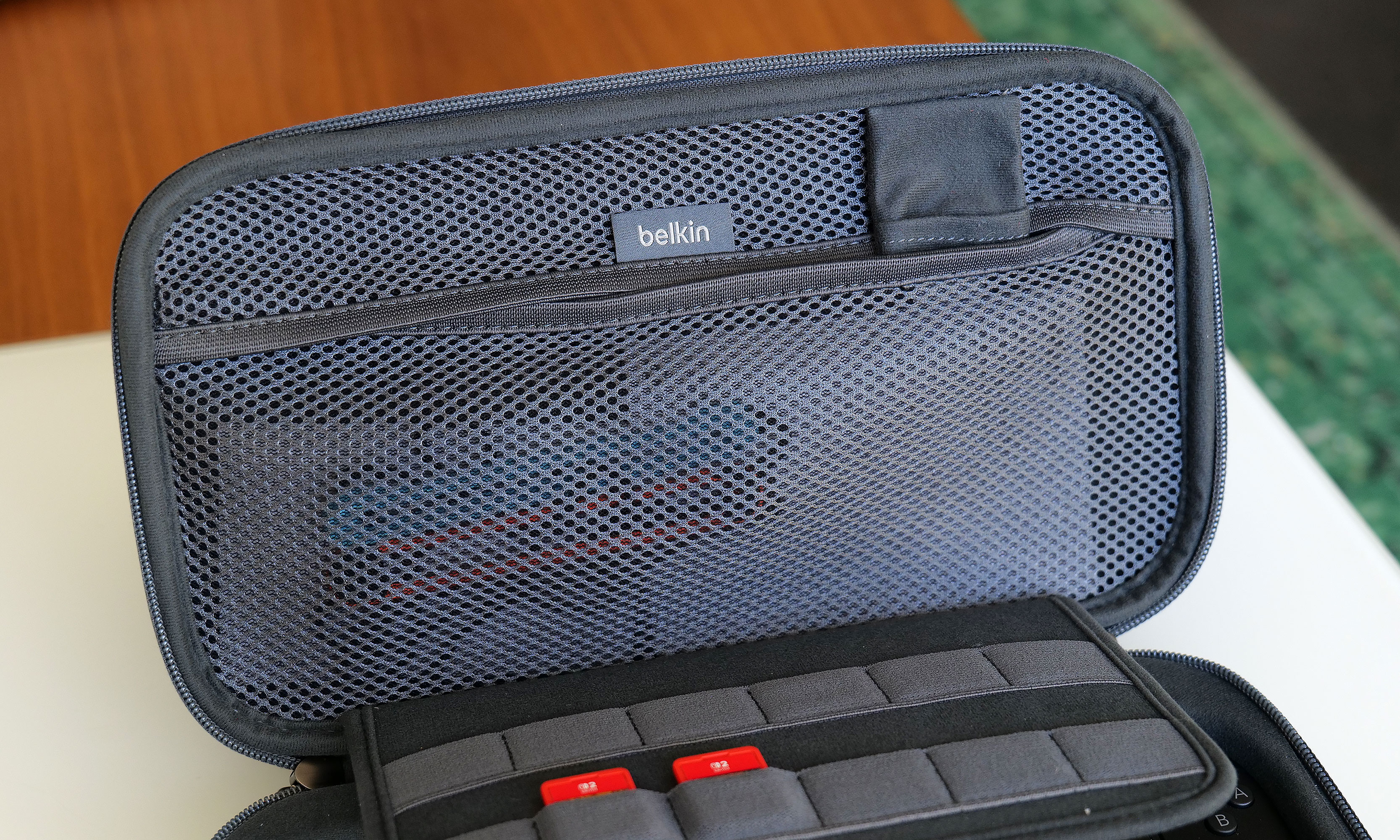
The inside of the Pro Charging Case features a handy mesh pocket, 12 slots for game carts and a hidden AirTag pouch.
Sam Rutherford for Engadget
Other small touches on Belkin’s Pro Charging Case include a mesh pocket for storing things like cables, Joy-Con straps or cleaning cloths, which is very handy. However, my favorite thing might be the AirTag pouch that’s also hidden inside that pocket, which could give you a fighting chance of recovering your system if it’s ever lost or stolen (though I wouldn’t count on it).
Battery pack
The arrangement of the included 10,000mAh battery pack and the placement of its internal USB-C port makes it a cinch to recharge your Switch 2 every time you put it in the case.
Sam Rutherford for Engadget
Despite the increased size of the Pro Charging Case’s included battery, it has the same 10,000mAh capacity as what you get from its less expensive sibling. That means you’ll typically have enough juice for a little more than 1.5 recharges for your Switch 2 and its onboard 5,220mAh cell. Instead of relying on a simple external power pack like before, Belkin’s bundled battery comes with a second USB-C port and a kickstand. This makes it super easy to plug in your Switch 2 every time you put it in the case. This way, you know the next time you turn it on, it’ll be at 100 percent.
Here’s what the battery pack looks like when you take it out of the case. As you can see, its size and shape means it’s not a great standalone external power pack any more.
Sam Rutherford for Engadget
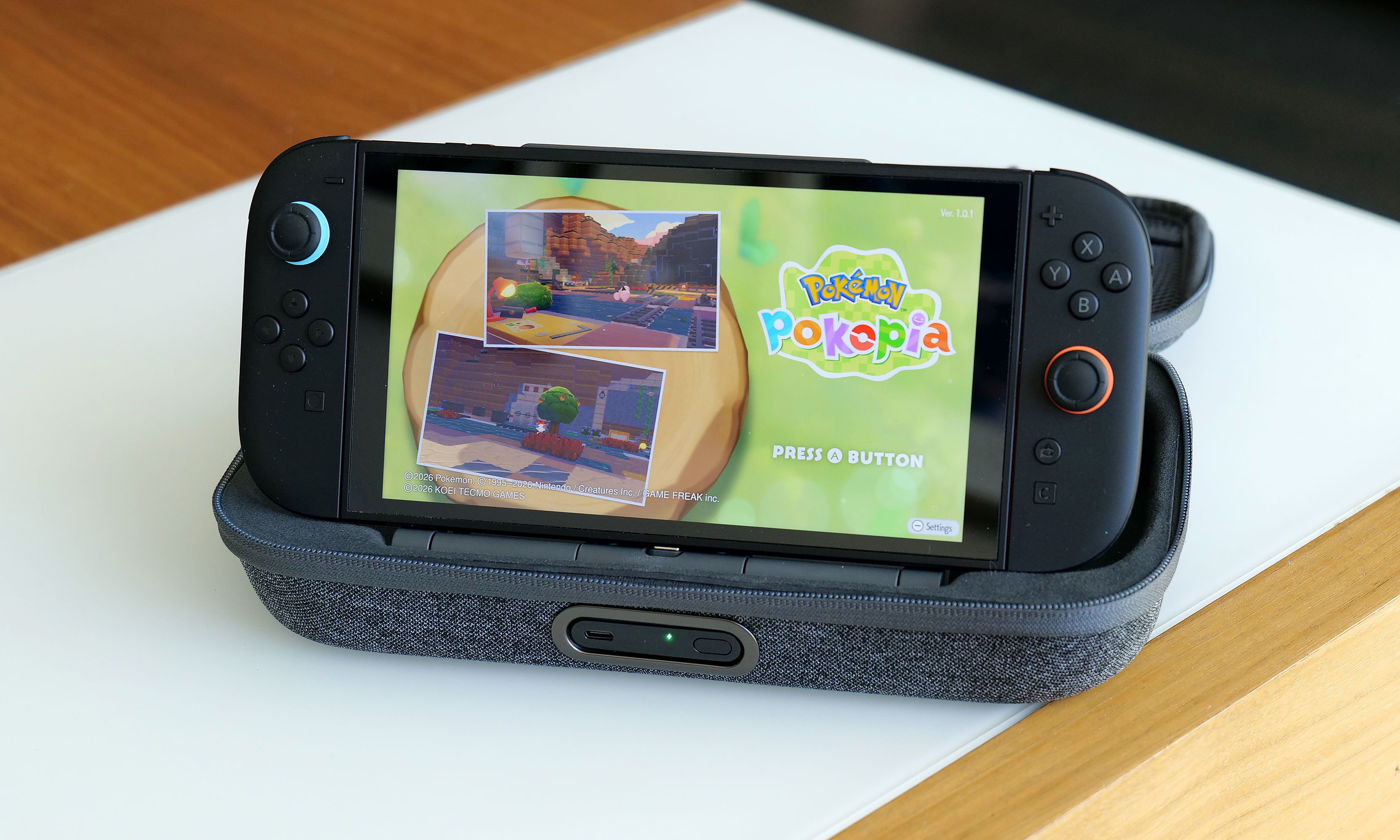
Alternatively, you can raise the kickstand to prop up the Switch 2 and game on it while it stays nestled inside the case. This might seem a bit redundant as Nintendo’s console already has its own kickstand, but Belkin’s allows you to continue charging the system while you’re playing without needing a cord. There’s even a handy display on the side of the battery, so it’s super easy to see how much juice is left, even when the case is closed. Furthermore, when you need to recharge the power pack, you can do so without removing it from the case or disconnecting your Switch thanks to that bonus USB-C port on the outside. Compared to the previous model, this is certainly a more elegant solution that provides some subtle quality of life improvements. The one downside is that the battery pack is somewhat awkwardly shaped, so you won’t really want to use it on its own.
Wrap-up
There’s no doubt the Pro Charging Case’s new battery pack is a more premium solution that’s easier to use and manage. When you need to recharge it, you can do so from the outside without opening the pouch. It also lets you charge a Switch 2 without ever needing a cable. The built-in kickstand is another bonus that helps elevate the whole kit from a simple case to something closer to a tiny all-in-one gaming booth.
One of the neat things about giving the battery a kickstand is that it turns the case into a mini all-in-one. This makes me wish Belkin gave the included power pack some sort of docking functionality for connecting the Switch 2 to an external display.
Sam Rutherford for Engadget
That said, after using it for a couple of weeks, I’m still not sure the added convenience is worth an extra $30 over the original. Due to the battery packs’ new shape, it’s less useful as a standalone power cell, and the rest of the case’s design is largely unchanged. Of course, it’s always nice to have options, and if you’re the kind of person who doesn’t mind spending a little extra for a more streamlined and convenient kit, Belkin’s Pro Charging Case for the Switch 2 is still very much worth consideration.
This article originally appeared on Engadget at https://www.engadget.com/gaming/nintendo/belkin-charging-case-pro-for-switch-2-review-a-more-elegant-solution-144820809.html?src=rss
A little more than a month ago, SpaceX founder Elon Musk put down a marker of his intent to saturate low-Earth orbit with up to 1 million satellites. Its purpose? Provide always-on data center services around the planet.
Now, Amazon and Blue Origin founder Jeff Bezos has done something similar with a filing to the Federal Communications Commission of his own, proposing a constellation of up to 51,600 satellites operating in Sun-synchronous orbits at altitudes ranging from 500 to 1,800 km. Bezos’ space company, Blue Origin, sought the authority to do this and is calling the constellation “Project Sunrise.”
In its filing, Blue Origin argues that terrestrial AI-based data centers will face difficulties scaling up to meet computing demand.
Despite being declared the third-hottest year on record, 2025 was a relatively quiet year for climate disasters in the US. No major hurricanes made landfall, while the total number of acres burned in wildfires last year—a way of measuring the intensity of wildfire season—fell below the 10-year average.
But starting this week, the West is experiencing what looks to be a record-breaking heat wave, while forecasting models predict that a strong El Niño event is likely to emerge later this year. These two unrelated phenomena could set the stage for a long stretch of unpredictable and extreme weather reaching into next year, compounding the effects of a climate that’s getting hotter and hotter thanks to human activity.
First, there’s the heat. Beginning this week and heading into next, a massive ridge of high-pressure air will bring record-breaking temperatures to the American West. The National Weather Service predicts that temperature records across multiple states are set to be broken in dozens of locations, stretching as far east as Missouri and Tennessee. The NWS has issued heat warnings for parts of California, Arizona, and Nevada, as well as fire warnings for parts of Wyoming, Nebraska, South Dakota, and Colorado.
One-pedal driving is not causing Tesla electric vehicles to suddenly accelerate when parked, according to federal regulators. For almost as long as Tesla has been selling cars, it has been hit with sporadic accusations of parked cars accelerating when they shouldn’t. Known to the industry as “sudden unintended acceleration,” the question for regulators is whether the problem is a human one or an engineering one, and over the years, engineers who think they’ve found the culprit have petitioned the National Highway Traffic Safety Administration to force a recall. These efforts usually fail, as was the case today, when NHTSA said it would not tell Tesla to recall every EV it built since 2013.
Because electric motors are also generators, EVs use regenerative braking to recover energy when they slow down rather than wasting that kinetic energy as heat (and maybe a bit of sound) via the friction brakes. In many battery EVs and just about any hybrid I can think of, a brake-by-wire system blends the two together—the driver uses the left pedal as normal, and the car slows down. Some automakers (I’m looking at you, Porsche) think this is the only way a driver should slow their EV. But an electric motor can also be programmed to regeneratively brake when the driver lifts their foot from the throttle, and in Tesla’s EVs (as well as Rivian’s and Lucid’s), this is the only way to regen, as there is no brake-by-wire system, only traditional hydraulic friction brakes.
Technically, I just described lift-off regen, but if the car has been programmed to come to a complete stop when you take your foot from the accelerator, that’s one-pedal driving. Some EV drivers absolutely love one-pedal driving; others don’t. I like one-pedal for low-speed driving or when I want something similar to engine braking. But according to the petition sent to NHTSA in 2023 by a Greek engineer, this causes a “short-circuit” in Tesla drivers’ brains.
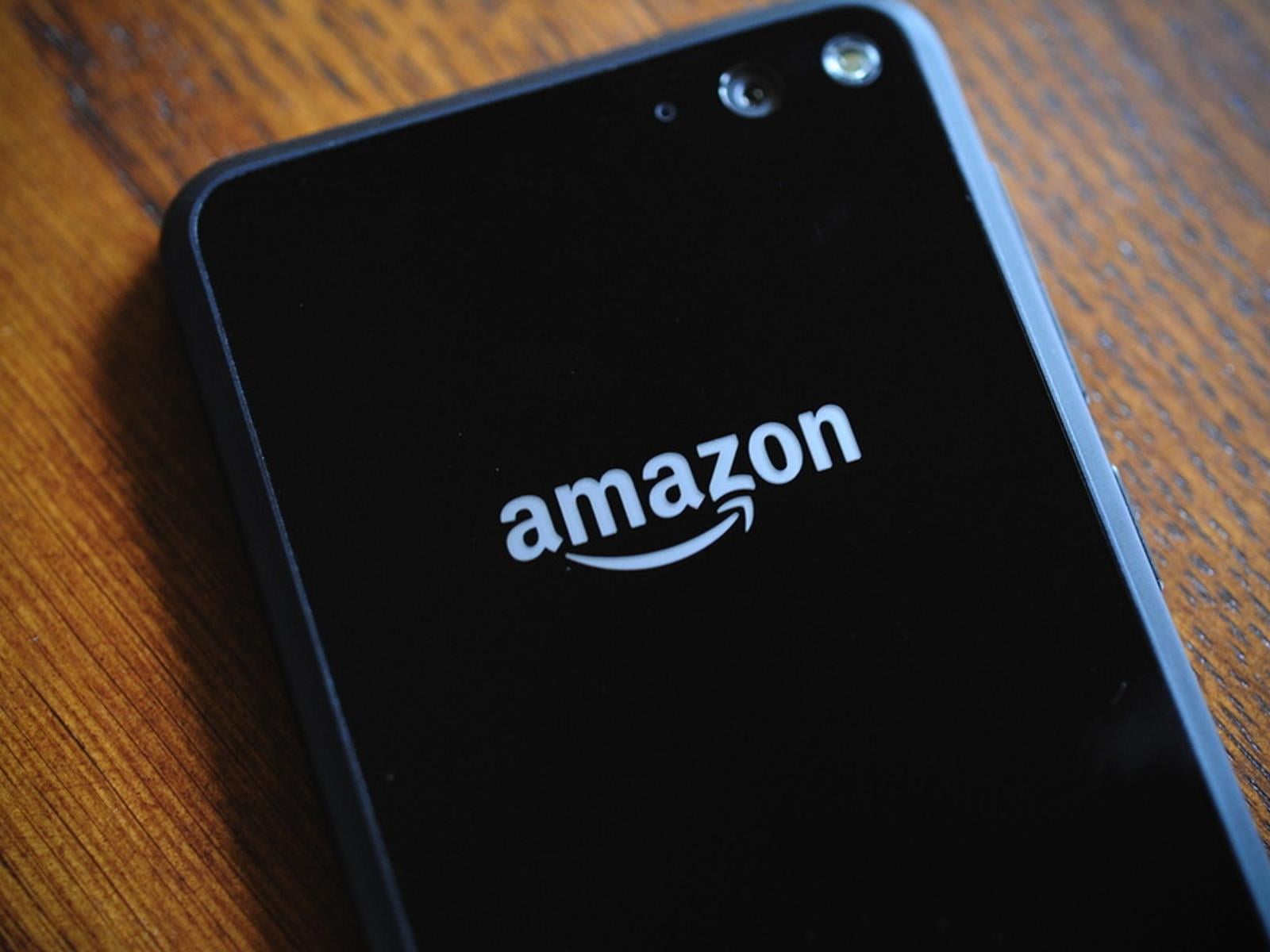
Amazon is reportedly planning to re-enter the smartphone market more than 10 years after its last attempt. According to a Reutersreport, the mysterious phone is internally codenamed “Transformer” and is being developed by the company’s devices and services unit.
There isn’t a whole lot to go on right now, but it probably won’t surprise many to learn that the phone will likely lean heavily on AI. According to Reuters’ sources, Alexa functionality would be a core part of the experience, but Amazon wouldn’t necessarily build a custom OS around its voice assistant. The phone would make buying products on Amazon and using services like Prime Music and Prime Video “easier than ever,” and may bypass traditional app stores.
Reuters reports that the Transformer project is being led by the recently established ZeroOne, an Amazon devices unit headed up by ex-Microsoft executive and Xbox co-founder J Allard, who was also one of the creators of Zune. Allard joined Amazon last year to lead a “a special projects team dedicated to inventing breakthrough consumer product categories.”
The development team has reportedly considered launching both a traditional smartphone and a so-called “dumbphone,” which would presumably strip away anything that needlessly distracted you from the Amazon empire. Reuters’ anonymous sources suggest the latter could help combat screen addiction by offering fewer features.
ZeroOne is apparently inspired by the ultra-minimalist Light Phone, suggesting that Amazon might be reluctant to take on the flagship devices of Apple and Samsung. The report adds that the Transformer phone could even be positioned as a secondary handset.
This, of course, would not be Amazon’s first crack at the smartphone business. The company launched the Fire Phone in 2014, an ambitious and interesting device that ultimately failed to tempt people away from the more established smartphone ecosystems. It’s widely remembered as perhaps the company’s biggest hardware misstep.
With analysts forecasting an unprecedented decline in the smartphone market in 2026, now seems like a risky time for Amazon to try again, and Reuters was unable to determine exactly how much the company has committed to the Transformer project. Sources also wouldn’t rule out it being scrapped altogether if the company’s priorities suddenly shifted.
This article originally appeared on Engadget at https://www.engadget.com/mobile/amazon-is-reportedly-working-on-a-new-phone-built-around-alexa-142244500.html?src=rss
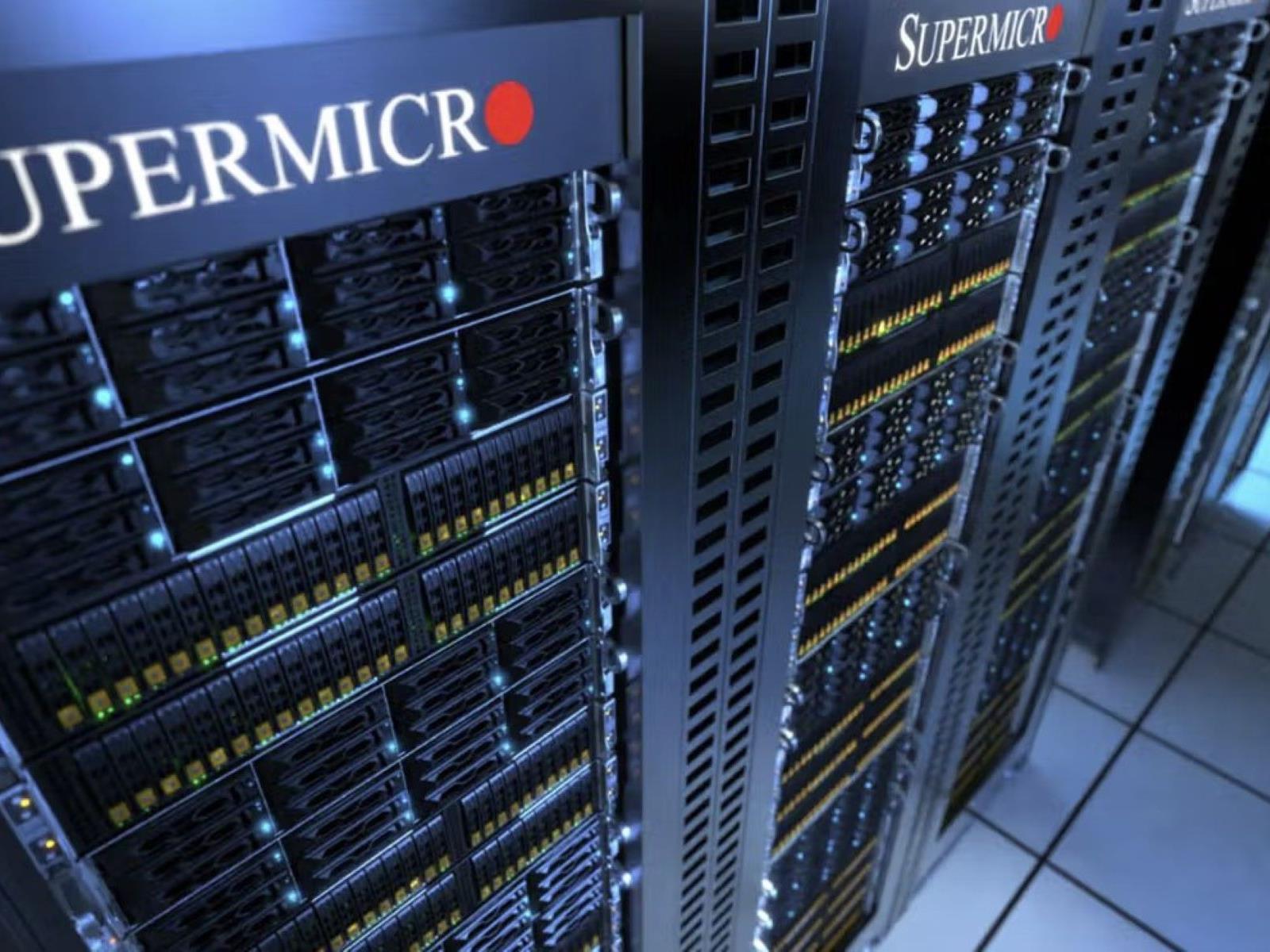
The unsealing of a federal indictment has exposed a multi-billion dollar shadow pipeline designed to funnel restricted NVIDIA AI chips into China. At the center of the controversy is Wally Liaw Yih-Shyan, the 71-year-old co-founder and Senior Vice President of Super Micro Computer, who now faces serious criminal charges for allegedly orchestrating
You can be forgiven for having forgotten all about Amazon’s ill-fated Fire Phone. It released a long time ago and despite an initial flurry of sales, it wasn’t all that long after launch that Amazon held a fire sale of its Fire Phone due to underwhelming demand, and vowed there would not be a sequel. Never say never, though, as Amazon is evidently
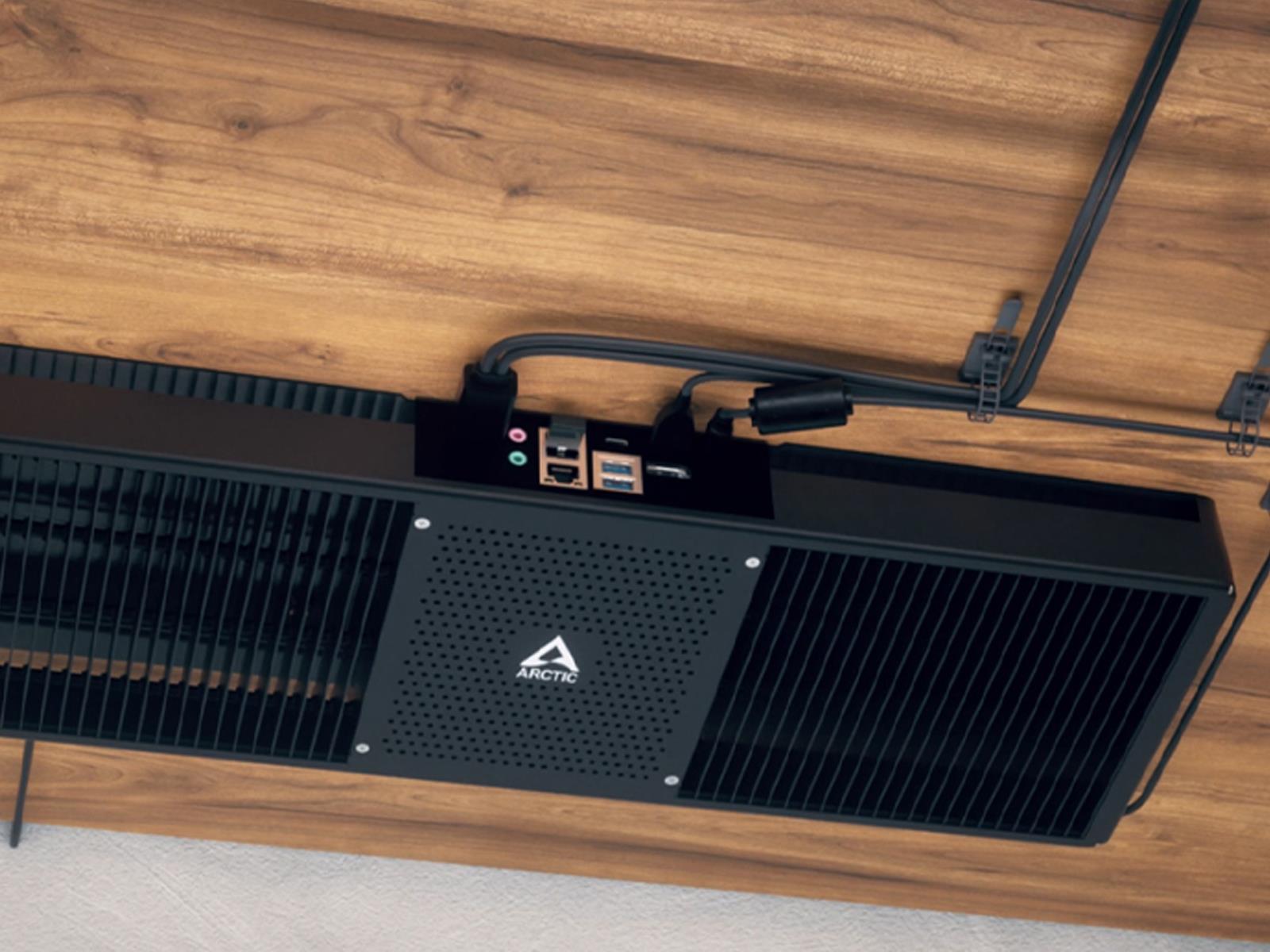
Mini PCs have grown in popularity over the last several years, even with Intel handing off the reins of its NUC to ASUS. These days, we’re seeing a bunch of AMD-powered mini PCs. They’ve sort of become a dime a dozen, though Arctic has found a way to stand out from the crowd with its Senza AI 370, a fanless mini PC that you can mount sight
We may earn a commission from links on this page. Deal pricing and availability subject to change after time of publication.
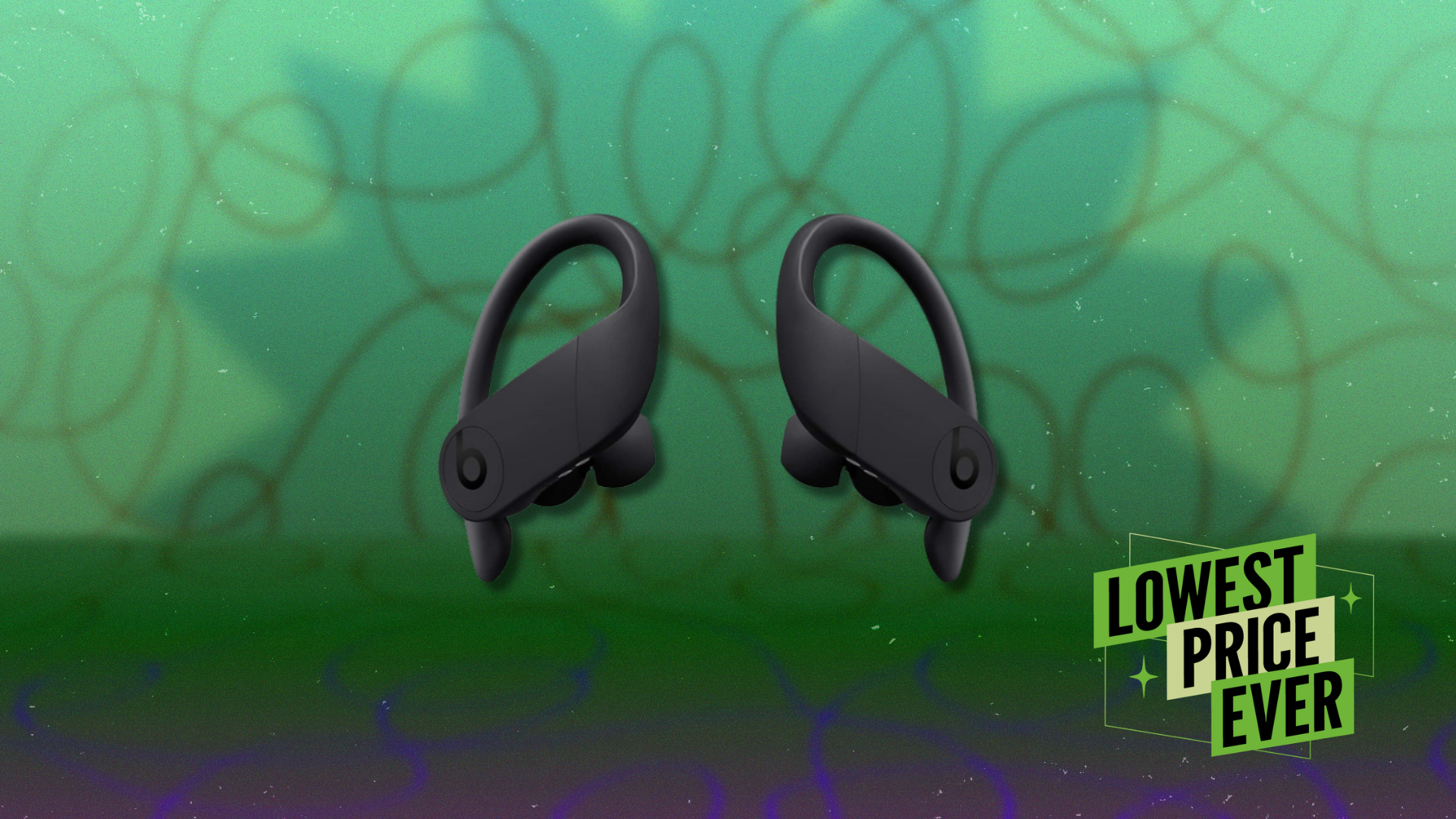
The Beats Powerbeats Pro 2 launched in February 2025 at $249.99, putting them in direct competition with the AirPods Pro 2. They’re currently down to $99.99 on Woot—a $150 drop, or about 60% off—and the lowest price recorded so far, according to price trackers. The deal is expected to last three days or until the stock runs out. Shipping is free for Prime members (or $6 otherwise), but Woot does not deliver to Alaska, Hawaii, or P.O. box addresses.
These are built for workouts first, and you can feel that in the design. The nickel-titanium alloy ear hooks curve around your ears and stay put, whether you’re running, lifting, or just moving around a lot, without that rigid, over-tight feeling some sports earbuds have. Plus, you get four ear tip sizes, which help create a proper seal for active noise cancellation and better sound. There’s also a transparency mode, which is useful if you run outdoors and need to hear traffic. As for the controls, the Powerbeats 2 Pro have physical buttons on each earbud, which makes them easier to use mid-workout when your hands are sweaty. They’re rated IPX4, so sweat or a bit of rain isn’t going to be an issue.
Getting them up and running is straightforward, and if you want a step-by-step walkthrough, Lifehacker has a detailed guide that covers how to set up and fine-tune every feature on the Powerbeats Pro 2. Sound-wise, they lean toward a punchier, bass-forward profile, which works well if your playlists are heavy on hip-hop or electronic music, but might feel a little too thumpy if you prefer something flatter. And since there’s no equalizer, you’re stuck with the default tuning.
The heart rate tracking sounds like a nice bonus, but it doesn’t always stay consistent, especially if your phone is juggling music and workout apps at the same time, according to our senior health editor, Beth Skwarecki. On the plus side, you get around eight to 10 hours on a single charge, and the case stretches that to roughly 45 hours, so you’re not constantly thinking about battery life.
Following discussions first reported on earlier this year, ByteDance has agreed to sell its games unit Moonton to Savvy Games Group for $6 billion. Moonton is known for mobile titles popular in Asia like Mobile Legends: Bang Bang, which has been downloaded 1.5 billion times. The transaction is set to be finalized in the “near future,” according to an internal memo from Moonton’s CEO seen by Bloomberg.
ByteDance has been winding down its gaming arm and shopping Moonton since 2023, just two years after it first acquired the developer. Around that same period, the TikTok parent was shuttering its Nuverse gaming arm, which published notable titles like Marvel Snap and Ragnarok X: Next Generation. The company has since shifted its focus to AI, competing with Chinese rivals to develop chatbots and foundational models.
Savvy Games, which is owned by Saudi Arabia’s Public Investment Fund (PIF), has been going in the opposite direction. Last year the company (via its subsidiary Scopely) acquired Pokémon Go developer Niantic for $3.5 billion. PIF was also among the key investors that purchased Electronic Arts in a blockbuster $55 billion deal last year. The Saudi fund holds a 7.5 percent stake in Nintendo as well.
The sale is the latest chapter in the recent gaming industry consolidation that saw around 45,000 jobs lost in a brutal three-year period between 2022 and 2025. According to a recent GDC study, one-third of US video game industry workers were laid off over the last two years.
This article originally appeared on Engadget at https://www.engadget.com/gaming/bytedance-is-selling-its-moonton-game-unit-to-savvy-games-for-a-cool-6-billion-124131595.html?src=rss
We may earn a commission from links on this page. Deal pricing and availability subject to change after time of publication.
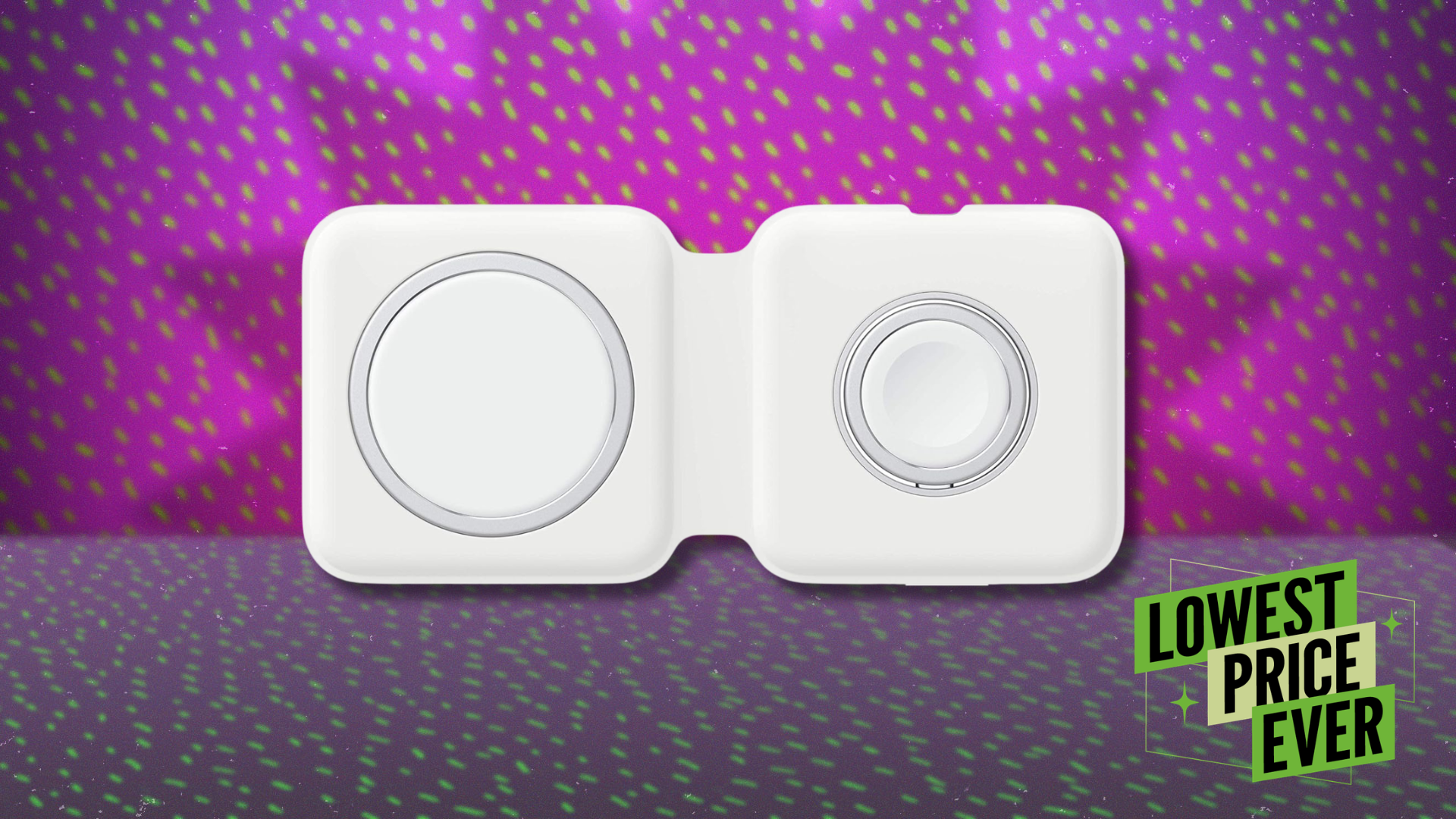
Apple’s MagSafe Duo Charger has always been a bit of a specific-use accessory, but this drop to $79 makes it easier to justify if you live inside Apple’s ecosystem. That price is the lowest tracked so far (according to online price trackers), down from its usual $129 on Amazon and below its previous low of $89. The deal is live on Woot for the next three days or until it sells out. Shipping is free for Prime members; otherwise, it’s a $6 fee, and Woot won’t ship to Alaska, Hawaii, or P.O. boxes.
The charger is split into two pads joined by a hinge. One side snaps your iPhone into place with MagSafe, saving you from fiddling to find the right position, especially on a bedside table where you might reach for your phone half-asleep and want it to line up again without fuss. The other side handles your Apple Watch and can double as a flat pad for AirPods or any Qi-compatible device. It’s the kind of setup that works best at the end of a long day. You drop your phone and watch on it, and you’re done. The whole thing folds into a small square, so it’s easy to carry if you travel or just don’t want cables everywhere, notes this PCMag review.
That said, this is not a full charging kit—Apple includes a USB-C to Lightning cable in the box, but you’ll need to buy a 20W USB-C power adapter separately to get the intended charging speeds. Charging is also slower than plugging your phone in, so this is more of an overnight solution than something you rely on during the day. You also have space for only two devices, which feels limiting if you’re trying to charge multiple items at once. And unlike newer charging stands, this doesn’t prop your phone up for notifications or standby mode.
NVIDIA started an online firestorm this week when it announced DLSS 5 at its GTC conference. The company claims it’s meant to deliver “photorealistic” lighting and materials in games by using neural processing. But it differs considerably from previous versions of DLSS, which were focused on using machine learning to upscale lower resolutions and generate additional frames, and gamers online aren’t too happy. To help us break this down, Anshel Sag, VP and principal analyst at Moor Insights and Strategy joins us to discuss his experience with NVIDIA’s DLSS 5 demos. Also, we dive into what’s next for Xbox with Project Helix.
NVIDIA announced DLSS 5, the disgust was immediate (with Anshel Sag from Moor Insights & Strategy) – 0:51
Arizona attorney general sues Kalshi for operating an illegal gambling business – 36:22
Polymarket users threaten the life of a reporter at The Times of Israel over accurate reporting – 36:59
Apple announces AirPods Max 2 with improved noise cancellation – 44:33
Elon Musk’s xAI faces class action suit over facilitating CSAM dsitribution – 47:38
Samsung stops selling Galaxy Z TriFold after 3 months because components got too expensive – 51:22
Around Engadget: Apple Studio XDR review, Dell XPS 16 review – 53:49.346
Listener Mail: Stick with iPhone on Linux? And are there any good Android tablets? – 55:41
Pop culture picks – 58:46
Credits
Hosts: Devindra Hardawar Guest: Anshel Sag Producer: Ben Ellman Music: Dale North and Terrence O’Brien
This article originally appeared on Engadget at https://www.engadget.com/computing/laptops/engadget-podcast-why-does-everyone-hate-nvidias-dlss-5-ai-upscaling-121335918.html?src=rss
Blue Origin has revealed its plans for an orbital AI data center system in a new filing with the Federal Communications Commission. The company has asked the agency for permission to deploy 51,600 satellites, as reported by the Wall Street Journaland SpaceNews. Called Project Sunrise, the initiative aims to launch and operate a constellation of satellites that can deliver computing capacity for artificial intelligence uses.
Project Sunrise’s satellites will be placed in sun-synchronous orbits at altitudes between 311 and 1,118 miles. Each layer in the constellation will have between 300 to 1,000 satellites and will be approximately 3 to 6 miles apart. In its filing, Blue Origin said the constellation would complement terrestrial data centers.
The satellites will, of course, will be fitted with solar panels to be able to gather energy from the sun. Blue Origin explained that the orbital AI data center will lower the “marginal cost of compute capacity compared to terrestrial alternatives,” because the satellites will be powered by the sun, won’t need land and won’t need grid infrastructure. Project Sunrise will “enable US companies developing and using AI to flourish, accelerating breakthroughs in machine learning, autonomous systems and predictive analytics,” Blue Origin added.
By filing its request with the FCC, Blue Origin has officially joined SpaceX in the list of companies looking to build an AI data center in space. In January, SpaceX asked the FCC for permission to deploy 1 million satellites for its constellation. The company justified at the time that “orbital data centers are the most efficient way to meet the accelerating demand for AI computing power.”
This article originally appeared on Engadget at https://www.engadget.com/science/space/blue-origin-also-wants-to-put-ai-data-centers-in-space-115614142.html?src=rss
Welcome to Edition 8.34 of the Rocket Report! The most important significant news this week, I believe, is the decision by Canada to make a serious investment in launch infrastructure at a spaceport in Nova Scotia. Tensions have risen between the United States and Canada of late (for reasons which are baffling to this author, who has always had an affinity for the nation to our north), and as a result Canada is seeking launch independence. This is an important start, but it will require a sustained, long-term commitment to really develop a flourishing launch industry.
As always, we welcome reader submissions, and if you don’t want to miss an issue, please subscribe using the box below (the form will not appear on AMP-enabled versions of the site). Each report will include information on small-, medium-, and heavy-lift rockets as well as a quick look ahead at the next three launches on the calendar.
Canada makes major commitment to space launch. The country’s leading minister of national defense, David J. McGuinty, announced on Monday a $200 million investment in “core infrastructure” for a spaceport in Nova Scotia. The investment is a 10‑year, $200 million agreement to lease a dedicated space‑launch pad that will serve as the central foundation for a multi-user spaceport near Canso, Nova Scotia. The facility is operated by Maritime Launch Services.