NSO To Be Acquired By US Investors, Ending Israeli Control of Pegasus Maker

An anonymous reader shares a report: Control of NSO Group is set to leave Israeli hands. A group of American investors led by Hollywood producer Robert Simonds has agreed to acquire the controversial spyware developer in a deal valued at several tens of millions of dollars. The transaction is expected to be signed in the coming days, though its completion will require approval from Israel’s Defense Export Control Agency (DECA) at the Ministry of Defense.

Since March 2023, NSO’s shares have been held by a Luxembourg-based holding company wholly owned by founder Omri Lavie. The company’s lender syndicate, which had extended roughly $500 million in loans to finance a share buyback from the private equity fund Francisco Partners, transferred ownership to Lavie following the restructuring.


Read more of this story at Slashdot.

You Can Get This Waterproof, Portable Skullcandy Speaker on Sale for $33 Right Now

We may earn a commission from links on this page. Deal pricing and availability subject to change after time of publication.

If you’ve ever tried dragging a too-large speaker—or worse, relied on your phone’s tiny audio for sound projection—you should appreciate this sale on the Skullcandy Terrain Mini: It’s palm-sized, no-frills, and currently on sale for $32.99 on StackSocial, with free shipping in the U.S. That price drop isn’t jaw-dropping, but for under $35, you’re looking at an IPX7-rated waterproof speaker that won’t be damaged if it’s dropped or gets wet.

The Skullcandy Terrain Mini features Bluetooth 5.3, ensuring a stable connection within a 33-foot range. The battery is said to offer 14 hours of playtime, which should cover most day-long adventures or at least a solid workday playlist without needing a recharge. When the battery dies, it can be charged using a USB-C port, which is included, so you won’t need to dig through old cords. It also comes with a wrist strap that you can clip to a bag or swing around like a lanyard when you’re on the move.

As far as sound quality goes, it’s decent on its own, but the True Wireless Stereo feature allows you to pair it with a second unit for true stereo separation. You can also use Skullcandy’s Multi-Link to chain together up to 99 of these. Realistically, you’ll probably never do that, but the option’s there if you ever want to DJ a flash mob.

That said, this speaker doesn’t punch far above its size. It’s built more for casual, portable listening than booming bass or high-volume precision. The fabric mesh helps with durability and sound clarity, but it won’t replace your home speaker setup. If you’re in the market for a rugged little speaker that’s waterproof, rechargeable, and easy to toss in a bag, the Skullcandy Terrain Mini fits.

iFixit says the Pixel Watch 4 is the most repairable smartwatch around

When Google announced the Pixel Watch 4, it made a point to mention that the smartwatch was “designed with serviceability in mind.” Now that it’s out, the repair experts at iFixit have taken a look and can confirm Google’s claims. The how-to specialist site has called the Pixel Watch 4 the most repairable smartwatch you can buy right now. That’s notable, as iFixit points out, because you’d probably expect a sustainability-oriented brand such as Fairphone or Framework to be getting this kind of recognition ahead of Google. (That said, the Fairphone 6 did recently receive a perfect 10/10 repairability review.) But iFixit said it was “truly impressed” with what owners can do to fix Google’s latest wearable on their own.

​​

The first thing it highlights is the presence of visible screws that don’t interfere with the watch’s IP68 water and dust resistance rating. Both the vibration motor and battery are also easy to remove, the latter being glue-free and requiring you only to unscrew from its enclosure. As for the display, that’s also secured by screws alone (spotting a pattern here yet?) and sealed using a replaceable O-ring gasket that you can easily purchase. iFixit notes that it’s harder for square watches to use the same solution, so Google’s decision to make the Pixel Watch 4 round boosts its repairability.

At the end of its comprehensive video, iFixit awards Google a provisional rating of 9/10 for repairability, calling it “the most satisfying smartwatch teardown” it has performed to date. For transparency, the site points out that it does have an ongoing business partnership with Google, but insists it’s completely unrelated to the teardown treatment it gives the Pixel Watch 4.

Its perhaps surprising level of repairability isn’t the only thing in the Pixel Watch 4’s favor. In Engadget’s 86/100 review of the device, Cherlynn Low also praised its rapid charging speeds, excellent health and fitness tracking credentials and attractive display.

This article originally appeared on Engadget at https://www.engadget.com/wearables/ifixit-says-the-pixel-watch-4-is-the-most-repairable-smartwatch-around-171242107.html?src=rss

Chrome update aims to automatically turn off unwanted notifications

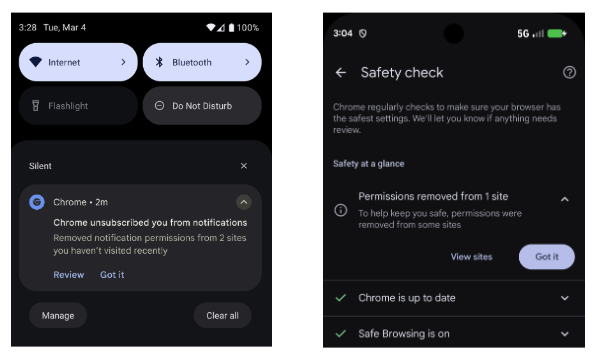
Chrome is getting a new feature aimed at cutting back on notification overload. If enabled, Chrome can now revoke notification permission for websites that the user hasn’t interacted with recently. It’s a similar option to the automatic actions taken by Chrome’s Safety Check for apps such as the camera or location information. The new feature will roll out to Chrome on both Android devices and on desktop. 

Chrome revoking notifications

The browser will, ironically, notify you when a site is no longer going to send notifications. Once a site’s permissions have been revoked, a user can re-enable them through Safety Check or by manually re-starting them from the site in question. If you don’t want Chrome to ever take these actions for you, you can turn off the permissions revoking option completely.

Right now, Google said less than 1 percent of all notifications get any interactions from users. According to the company’s internal tests, it found that receiving fewer overall notifications meant people were more likely to click on the alerts they did receive.

This article originally appeared on Engadget at https://www.engadget.com/chrome-update-aims-to-automatically-turn-off-unwanted-notifications-170000844.html?src=rss

UK regulators plan to force Google changes under new competition law

Google is facing multiple antitrust actions in the US, and European regulators have been similarly tightening the screws. You can now add the UK to the list of Google’s governmental worries. The country’s antitrust regulator, known as the Competition and Markets Authority (CMA), has confirmed that Google has “strategic market status,” paving the way to more limits on how Google does business in the UK. Naturally, Google objects to this course of action.

The designation is connected to the UK’s new digital markets competition regime, which was enacted at the beginning of the year. Shortly after, the CMA announced it was conducting an investigation into whether Google should be designated with strategic market status. The outcome of that process is a resounding “yes.”

This label does not mean Google has done anything illegal or that it is subject to immediate regulation. It simply means the company has “substantial and entrenched market power” in one or more areas under the purview of the CMA. Specifically, the agency has found that Google is dominant in search and search advertising, holding a greater than 90 percent share of Internet searches in the UK.

Read full article

Comments

AMD and Sony’s PS6 chipset aims to rethink the current graphics pipeline

It feels like it was just yesterday that Sony hardware architect Mark Cerny was first teasing Sony’s “PS4 successor” and its “enhanced ray-tracing capabilities” powered by new AMD chips. Now that we’re nearly five full years into the PS5 era, it’s time for Sony and AMD to start teasing the new chips that will power what Cerny calls “a future console in a few years’ time.”

In a quick nine-minute video posted Thursday, Cerny sat down with Jack Huynh, the senior VP and general manager of AMD’s Computing and Graphics Group, to talk about “Project Amethyst,” a co-engineering effort between both companies that was also teased back in July. And while that Project Amethyst hardware currently only exists in the form of a simulation, Cerny said that the “results are quite promising” for a project that’s still in the “early days.”

Mo’ ML, fewer problems?

Project Amethyst is focused on going beyond traditional rasterization techniques that don’t scale well when you try to “brute force that with raw power alone,” Huynh said in the video. Instead, the new architecture is focused on more efficient running of the kinds of machine-learning-based neural networks behind AMD’s FSR upscaling technology and Sony’s similar PSSR system.

Read full article

Comments

Poland Says Cyberattacks on Critical Infrastructure Rising, Blames Russia

An anonymous reader shares a report: Poland’s critical infrastructure has been subject to a growing number of cyberattacks by Russia, whose military intelligence, has trebled its resources for such action against Poland this year, the country’s digital affairs minister told Reuters. Of the 170,000 cyber incidents that have been identified in the first three quarters of this year, a significant portion has been attributed to Russian actors, while other cases are financially motivated, involving theft or other forms of cybercrime, Krzysztof Gawkowski said.

He said Poland is a subject to between 2,000 and 4,000 incidents a day and that 700 to 1,000 are “taken up by us, meaning they posed a real threat or had the potential to cause serious problems,” he said. Foreign adversaries are now expanding their focus beyond water and sewage systems to the energy sector, he said.


Read more of this story at Slashdot.

Peloton’s Exercise ‘Programs’ Are Surprisingly Specific (and Overlooked)

Did you know you can customize Google to filter out garbage? Take these steps for better search results, including adding Lifehacker as a preferred source for tech news.


When you log into the Peloton app, you probably get down to the business of finding a class, whether that means searching through the absurdly large library of single classes, turning to your Stack, or following the personalized plan curated for you by the app’s AI. All of that is fine and well—though generally, following a Stack or personalized plan is better, since it reduces the time you spend deliberating and dilly-dallying and gives you a clear goal for the workout—but you have another option. In fact, depending on your goals, you have another potentially superior option in the form of a Peloton Program.

What is a Peloton Program?

Program is the term Peloton uses for longer-term, guided training routines that are tailored to a specific goal. They can range from a few days long to weeks long, but the idea is that you’ll finish the program and be more prepared to do whatever it was you were training for.

When you log into the app on your mobile device or Peloton equipment, you’ll see your personalized plan first, followed by a subheading that says Your Programs. There, any Programs you’re currently participating in will be ready to go. You can just tap it to keep moving through it with whatever class or exercise is next up. To access Programs and see everything available, tap Classes in the bottom row of the mobile app, then Programs up at the top. (It’s to the right of Classes, Gym, and Collections.)

Each program is designed by an instructor (or, sometimes, more than one instructor) and when you tap on it, you’ll see information on how many classes are in it, how many days or weeks it lasts, and how long the classes are. You’ll also see a summary of the Program and what it’s designed for, as well as notes on which equipment, if any, is necessary for the classes. You can even see a week-by-week breakdown of what classes to expect.

These are self-paced, so you can take the classes or participate whenever you want, but you should try to do them in the timeframe laid out by the instructor.

What can you use Programs for?

This is the fun part. There are so many Programs and some of them are almost too specific to believe—but that’s why they’re useful. There’s probably one in there that aligns with exactly what you’re trying to do, whatever it is. A selection of titles:

  • Strength for Soccer (one week, seven classes)

  • The Power of Sleep (two weeks, 15 classes)

  • Strength for Cyclists (one week, six classes)

  • Floor Bootcamp (four weeks, 24 classes)

  • Road to Half Marathon (10 weeks, 40 classes)

  • Strength for Tennis & Pickleball (one week, eight classes)

  • Strength for Skiers (one week, 11 classes)

  • You Can Run Outdoors (eight weeks, 16 classes)

  • Set the Barre (four weeks, 13 classes)

  • Path to Inversion (two weeks, 12 classes)

There is “density training,” training for people who golf, and training for anyone looking to pull off a yoga inversion. Again, these are specific goals, but with strength, meditation, and other classes geared toward them, you can take a more well-rounded approach to meeting them. Programs are also classified as beginner, intermediate, or advanced, so you don’t end up in over your head or bored.

One thing I like about them—besides that they help you create a goal-based workout plan and are so tailored to specific achievements—is that participating in them earns you extra points toward your Club Peloton rank. By moving up in Club Peloton, you can unlock discounts and early access to other classes, providing even more variety (and some smugness, if you’re like me).

AI Push Drives Record Job Cuts at Top India Private Employer TCS

Tata Consultancy Services made its steepest-ever job cuts as strained ties with the US and a rapid shift toward AI reshape the country’s $280 billion IT services sector. From a report: India’s biggest private-sector employer cut 19,755 employees in the quarter ended Sept. 30, according to the company’s quarterly earnings presentation. That number includes staff fired by the company and people who left voluntarily. The number of employees at Asia’s biggest IT outsourcer fell 3.2% from the previous quarter, dipping below 600,000 for the first time since since the year ended March 2022. The company made a provision of 11.35 billion rupees ($128 million) in the quarter for severance related costs.


Read more of this story at Slashdot.

The FCC is trying to make it easier for internet providers to charge hidden fees

The FCC has submitted a proposal that would make it harder for consumers to receive itemized bills with accurate information from their ISPs, as spotted by The Verge. The draft would revise previous “unnecessary” requirements on the grounds that a fact-based list of charges “may confuse customers.”

This comes as a response to complaints by ISPs over a Biden-era transparency rule that went into effect back in 2024. Compliance with this rule mandates that ISPs make it easier for consumers to compare prices and avoid hidden fees. This typically comes in the form or something called a “nutrition label”, which shows speeds, fees and data allowances for internet plans.

The FCC is planning on examining ways to eliminate “any other label requirements that are unduly burdensome and provide minimal benefit to consumers.” Getting an actual list of what we are paying $100 for each month doesn’t seem like a minimal benefit to me.

The regulatory agency isn’t looking to ditch these nutrition labels entirely, at least not yet, but is seeking to eliminate the requirements to itemize location-based fees. “We propose to eliminate the requirement that providers itemize discretionary, recurring monthly fees that represent costs they choose to pass through to consumers and which vary by consumer location,” the draft proposal said.

It also targets requirements to make this data readily available to all consumers. The proposal has language that would stop forcing ISPs to make this information multi-lingual and to make it available both online and to customers on the phone. It also seeks to decouple these labels from customer account portals. We aren’t sure where these nutrition labels would continue to live.

FCC head Brendan Carr wrote a cheeky blog about the proposal that seemed more interested in discussing pumpkin spice lattes over ISP regulation. He said that the proposal seeks to “separate the wheat from the chaff” so that consumers can “get quick and easy access to the information they want and need to compare broadband plans.” The language of the proposal seems to indicate the exact opposite of that sentiment, but that’s politics for ya.

A vote on the proposal is scheduled for October 28. This is all part of Carr’s “Delete, Delete, Delete” initiative, which seeks to appease President Trump by removing as many government regulations as possible.

This article originally appeared on Engadget at https://www.engadget.com/big-tech/the-fcc-is-trying-to-make-it-easier-for-internet-providers-to-charge-hidden-fees-155305720.html?src=rss

Microsoft Warns US Universities Of Alarming Payroll Pirate Attack Security Threat

Microsoft Warns US Universities Of Alarming Payroll Pirate Attack Security Threat
A financially-motivated hacking group, tracked by Microsoft as Storm-2657, has so far successfully compromised employee accounts at three U.S. universities to steal their salaries in what campaign experts are deeming “payroll pirate” attacks. The sophisticated scheme targets human resource (HR) platforms, such as Workday, to redirect direct

Garmin’s Run Coach Can Help You Train for a Marathon

We may earn a commission from links on this page.

Did you know you can customize Google to filter out garbage? Take these steps for better search results, including adding my work at Lifehacker as a preferred source.


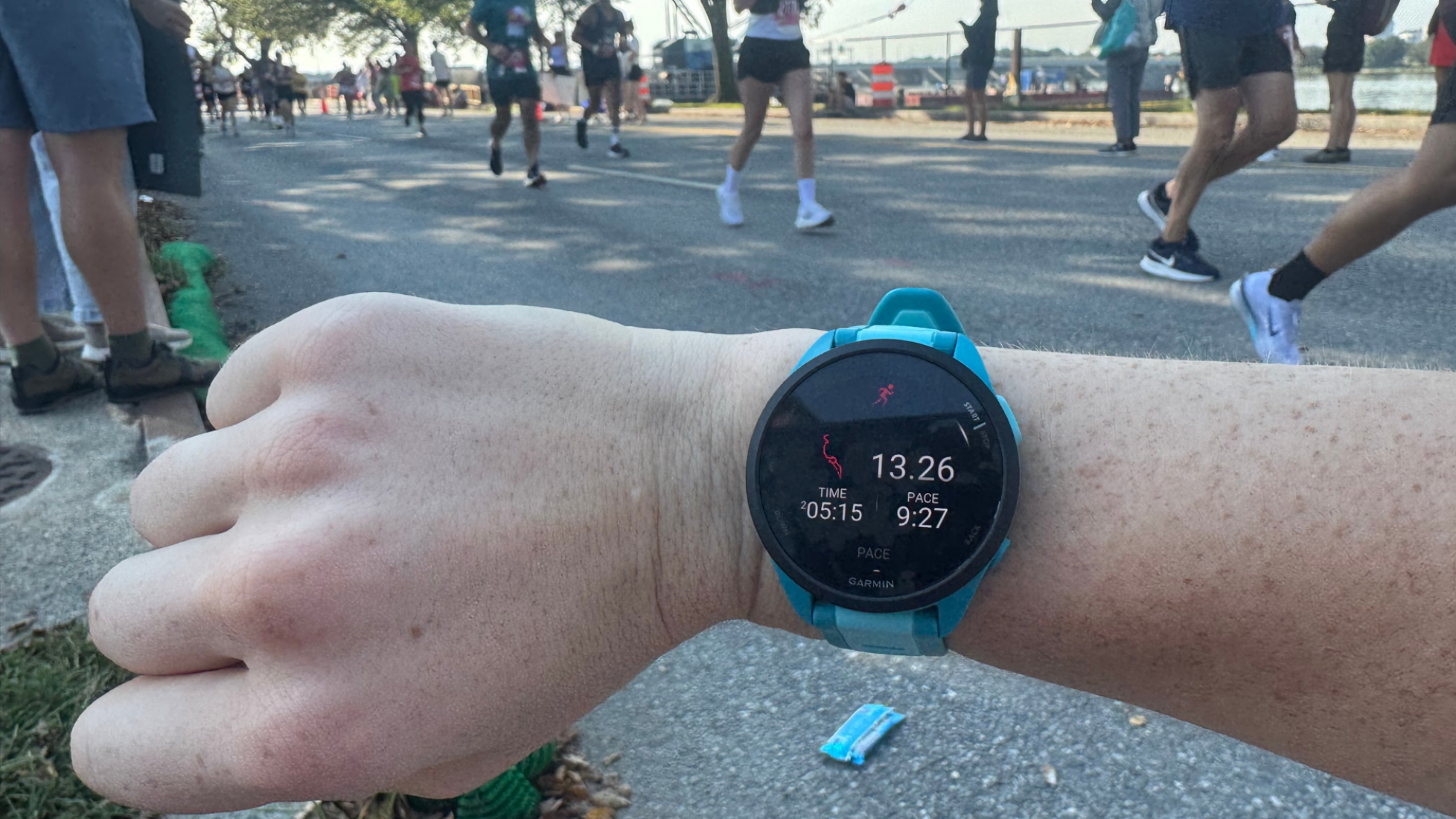
As someone who’s completed six marathons over six years, I approached Garmin’s marathon training plans with cautious optimism. After all, Garmin dominates the running tech space, and their watches are virtually ubiquitous among serious runners. Surely their training plans would reflect the same attention to detail and runner-focused design? Plus, I’m already a huge fan of racing with my no-nonsense Garmin Forerunner 165. After months of following the program (and eventually customizing it), here’s what I learned about the reality of trusting your watch to get you to the finish line.

Racing a half-marathon with the Garmin Forerunner 165.
Credit: Meredith Dietz

How Garmin’s run coach works

Garmin’s run coach offers personalized, adaptive marathon training programs that adjust based on your performance metrics and recovery data. Your watch data drives your training, with workouts that evolve based on how you’re actually responding rather than blindly following a static plan pulled from a book.

The system analyzes metrics like your VO2 max, training load, recovery time, and recent workout performance to tailor each session. When you crush a tempo run, the plan might push you a bit harder next time. If your recovery metrics suggest you’ve overtrained, it dials things back. It’s smart, responsive training that theoretically removes the guesswork. However, I wouldn’t recommend blindly trusting whatever shows up on your wrist. 

What Garmin gets right

The speedwork, tempo runs, and interval sessions were genuinely helpful. Having these structured workouts automatically adjusted to my current pace meant I wasn’t second-guessing whether I was running too hard or too easy. The watch would beep when I drifted out of my target zone, keeping me honest during those tough threshold efforts.

The adaptive nature of the program also shines during the day-to-day grind. Recovery runs automatically adjust based on how your body is responding. If you’re showing signs of fatigue, the plan gives you easier days. This attention to recovery is rare in cookie-cutter training plans, and I both appreciate and depend on it.

Where Garmin falls short

The most glaring issue with Garmin’s marathon training plans is its overly conservative approach to long runs. As any experienced marathoner knows, the long run is the cornerstone of marathon preparation—it’s where you build the aerobic base, practice race-day fueling, and develop the mental fortitude to push through mile 20 and beyond.

Some specific examples from my experience:

  • A 34-minute recovery run recommended on a day when my own intermediate plan called for five miles.

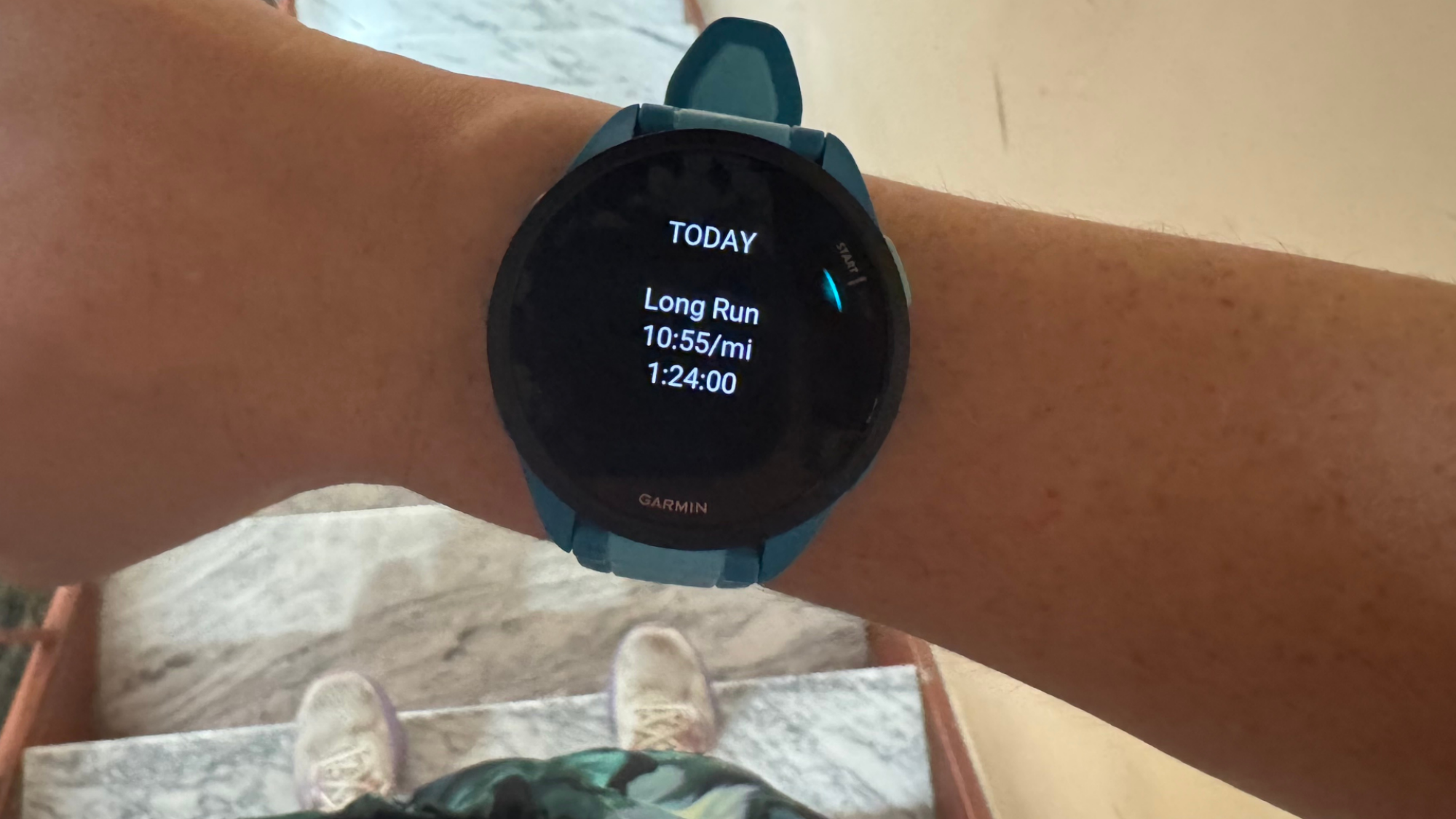
  • A 90-minute long run when I was planning an 18-miler (which actually takes me closer to three hours).

Garmin's training plan.

Credit: Meredith Dietz

Garmin clearly has safety and recovery in mind, which is admirable. But here’s the reality: if you’re crazy enough to be training for a marathon, you’ve already committed to pushing beyond normal comfort levels. The long runs that feel “inherently crazy” are simply necessary. If I’d relied solely on Garmin’s workouts, I wouldn’t have gotten those crucial 20-milers that prepare you for race day.

Yes, the three-hour run isn’t a rigid rule—it’s a guideline to cap training runs since injury risk increases beyond that point. Some coaches advocate for shorter long runs with a focus on quality over quantity. But for many runners, especially those new to the marathon distance, getting one or two 20-milers under your belt builds irreplaceable mental toughness. Personally, I always risk a little more time on my feet to ensure I’m truly prepared, and it’s never hurt me.

Perhaps equally frustrating is Garmin Connect’s “stay tuned for more” approach to future workouts. The platform often won’t show you upcoming long runs or key sessions until just days before, making it difficult to plan your training calendar effectively. As runners, we need to see the big picture. We need to know when that crucial 20-miler is scheduled so we can plan our weekend, arrange childcare, or adjust work commitments. While you can move workouts around once they appear, long runs are major time commitments that ideally should be mapped out from day one of training until race day.

Strong foundation, but customization is key

Garmin’s marathon training plans are solid and convenient, but they’re better used as a starting point rather than gospel. By most training standards, Garmin sits on the lower end for long run distance and overall weekly mileage. Following their plan strictly would be survivable, but not ideal or practical for many runners looking to truly prepare for 26.2 miles.

Setting up your Garmin training plan

Getting started is straightforward:

  1. Open the Garmin Connect app or website.

  2. Navigate to Training > Training Plans,

  3. Select your goal race (marathon) and target date,

  4. Answer questions about your current fitness level and running experience,

  5. Choose your goal (finish, set a PR, or hit a specific time).

  6. The plan syncs automatically to your watch, and workouts appear in your daily training calendar.

Once set up, your watch will prompt you to start the scheduled workout when it’s time to run. The workouts include detailed instructions, target paces or heart rate zones, and real-time feedback during your run.

How to customize your Garmin training for success

Use Garmin’s adaptive features for your daily runs and speedwork, but take control of your long runs and overall mileage progression.

1. Reference an established plan

Look at free, time-tested programs—like those from Hal Higdon—to understand what your training should look like at different phases. Between one and two months out from race day, you should have several runs in the 16- to 20-mile range. Use this as your benchmark to evaluate whether Garmin’s recommendations are on track.

2. Know what to prioritize

When customizing your plan, focus on:

  • Long run progression: Your longest runs should gradually build to 18-20 miles (or around three hours, for slower runners).

  • Peak weekly mileage: Know what total weekly mileage you should hit during your peak training weeks.

  • Consistency over perfection: It’s better to complete 90% of a slightly ambitious plan than 100% of an overly conservative one.

3. Use Garmin’s “Create Workout” feature

This is where the magic happens. Garmin allows you to create custom workouts and load them into your training calendar:

  1. In Garmin Connect, go to Training > Workouts > Create a Workout.

  2. Build your custom long run: Set distance goals, add fueling reminders, or program pace ranges.

  3. Schedule it to replace Garmin’s recommended workout.

  4. The workout syncs to your watch, giving you the same guided experience with your custom parameters.

You can create workout templates for your key long runs, tempo sessions, or any other workout you want to follow. This way, you still get the benefit of your watch guiding you through the workout with real-time feedback, but you’re following a training progression that actually prepares you for marathon day.

4. Let Garmin handle the details

While you override the long runs, let Garmin’s adaptive system manage your recovery runs and easy days, and fine-tune your speedwork intensities. This gives you the best of both worlds: proven long-run progression from established marathon programs, plus data-driven daily adjustments from your Garmin.

The bottom line

I still consider myself a loyal Garmin user—but a strategic one. The interface is excellent, the adaptive features are genuinely helpful for day-to-day training, and having structured workouts pushed to your watch eliminates decision fatigue. However, blindly following the marathon plan would have left me underprepared for race day.

With a little customization and the willingness to push beyond Garmin’s conservative recommendations, you can create a training experience that combines the best of data-driven coaching with the proven principles that have gotten millions of runners to the finish line. Your watch is a powerful training tool—just don’t let it hold you back from the big miles that make marathoners.

Meta Tells Workers Building Metaverse To Use AI to ‘Go 5x Faster’

A Meta executive in charge of building the company’s metaverse products told employees that they should be using AI to “go 5X faster,” according to an internal message obtained by 404 Media. From the report: “Metaverse AI4P: Think 5X, not 5%,” the message, posted by Vishal Shah, Meta’s VP of Metaverse, said (AI4P is AI for Productivity). The idea is that programmers should be using AI to work five times more efficiently than they are currently working — not just using it to go 5 percent more efficiently.

“Our goal is simple yet audacious: make Al a habit, not a novelty. This means prioritizing training and adoption for everyone, so that using Al becomes second nature — just like any other tool we rely on,” the message read. “It also means integrating Al into every major codebase and workflow.” Shah added that this doesn’t just apply to engineers. I want to see PMs, designers, and [cross functional] partners rolling up their sleeves and building prototypes, fixing bugs, and pushing the boundaries of what’s possible,” he wrote.

“I want to see us go 5X faster by eliminating the frictions that slow us down. And 5X faster to get to how our products feel much more quickly. Imagine a world where anyone can rapidly prototype an idea, and feedback loops are measured in hours — not weeks. That’s the future we’re building.”


Read more of this story at Slashdot.

You Can Now Play Netflix Games on Your TV

Did you know you can customize Google to filter out garbage? Take these steps for better search results, including adding my work at Lifehacker as a preferred source.


You might not think of Netflix as a gaming company, but games are most certainly a part of their business. While the vast majority of us Netflix subscribers simply stream TV shows and movies on the app, the company also offers access to games, free of charge as part of a Netflix plan. These aren’t all throwaway titles, either: Netflix has licensed some notable names here, including Grand Theft Auto: San Andreas, Oxenfree, and Heads Up!

But while Netflix’s games have largely been mobile-only for the past few years, the company is trying something new. This week, Netflix is rolling out games you can play on your TV, all without having to leave the Netflix app. You don’t need a dedicated gaming controller, or to rely on something like a TV remote, to play. Instead, players control the game from their smartphones. What a time to be alive.

At launch, you can’t simply play any of Netflix’s existing mobile titles on your TV. Instead, the company has licensed five party games that weren’t yet part of its games library, designed to be played with others around the TV. These titles include:

  • LEGO Party!: This is Mario Party but with LEGOs, complete with mini-games, maps, and LEGO characters.

  • Boggle Party: Up to eight players can try to find words in a jumbled letter grid.

  • Pictionary: Game Night: Guess what the other person is drawing before the time runs out.

  • Tetris Time Warp: Play different versions of Tetris, including the 1984 original and the classic Gameboy version.

  • Party Crashers: Fool Your Friends: One person in the group is the odd one out, and doesn’t know what anyone else is talking about. The group needs to figure out who that person is.

LEGO Party! and Tetris Time Warp are both preexisting games you can play on other platforms, but it seems the other three are making their debut on Netflix.

How to play Netflix games on your TV

To try out any of these fives games when they’re available in your market, open the Netflix app on your smart TV, then scroll to the “Games” tab. Choose a game, then use your smartphone as the controller.

OpenAI will stop saving most ChatGPT users’ deleted chats

OpenAI will finally stop saving most ChatGPT users’ deleted and temporary chats after a court fight compelled the AI firm to retain the logs “indefinitely.”

The preservation order came in a lawsuit filed by The New York Times and other news plaintiffs, who alleged that user attempts to skirt paywalls with ChatGPT would most likely set their chats as temporary or delete the logs.

OpenAI vowed to fight the order, defending its policies and users’ privacy, but it lost. By July, news plaintiffs started digging through the logs—which only preserved ChatGPT’s outputs—while a few ChatGPT users’ efforts to intervene were consistently denied, as they were deemed non-parties to the lawsuit.

Read full article

Comments

Samsung Galaxy XR Headset Leak Reveals A Direct Rival To Apple Vision Pro

Samsung Galaxy XR Headset Leak Reveals A Direct Rival To Apple Vision Pro
We’ve uncovered bits and pieces of Samsung’s long-anticipated extended reality Galaxy XR headset so far, but a massive leak dump, including final renders, key specs, as well as a look at the software, has left little to the imagination. Based on the numbers alone, Samsung appears to have engineered the headset to outperform the likes of the

Corsair’s Elgato Embrace Studio Chair Looks Ready To Challenge Herman Miller

Corsair's Elgato Embrace Studio Chair Looks Ready To Challenge Herman Miller
Corsair’s newest desk chair has high unstated hopes of unseating Herman Miller (and its BFF Logitech) as the go-to option for creators and professionals who need more comfort that what is usually found on racing-themed gaming chairs. That’s because the Elgato Embrace, as it’s called, was built from the ground-up for “anyone who spends serious

Ford is cutting the price of the 2026 F-150 Lightning by up to $4,000

Ford is cutting the price of the 2026 F-150 Lightning by up to $4,000, as confirmed by the automaker to CarsDirect. The price cuts vary by trim, however, and will only apply to more expensive packages for the electric pickup truck. This comes as the $7,500 EV tax credit expired at the end of September.

The 2026 model has a starting price of $63,345 for the STX trim, which is the same price as the previous year’s entry-level XLT. The STX replaces the XLT and delivers 536 horsepower, up from the XLT’s 452, and 290 miles of range, up from 240.

The Flash edition will receive the full $4,000 price cut, giving it a new price of $65,995. The Lariat, originally priced at $76,995, will get just a $2,000 haircut and will sell for $74,995. The Platinum edition will be priced at $84,995 and will not cost less.

This summer, Ford announced that it would release an affordable midsize all-electric pickup with a starting price of around $30,000 in 2027. The truck would be built on the company’s upcoming Ford Universal EV Platform that will be shared by a new family of products. These models would use Ford’s upcoming prismatic LFP batteries.

As EV-related tax incentives continue to expire, manufacturers will need to reach into their own pockets to deliver value to consumers. This week Tesla announced the Model 3 and Model Y ‘Standard’ editions, which give up some luxury touches in exchange for price, with both starting at under $40,000. Inflation has also played a large role in car pricing over the last five years, as $40,000 has roughly the same purchasing power as $32,000 in 2020.

This article originally appeared on Engadget at https://www.engadget.com/transportation/evs/ford-is-cutting-the-price-of-the-2026-f-150-lightning-by-up-to-4000-144241504.html?src=rss

Ubisoft Cancelled a Post-Civil War Assassin’s Creed Last Year

Stephen Totilo, reporting at Game File: In July of last year, word began to trickle through Ubisoft that an ambitious new installment of the company’s top franchise, Assassin’s Creed, had been cancelled.

The new game would have brought the history-spanning series to one of its most modern settings: The American Civil War and, moreso, the Reconstruction period that followed in the 1860s and 1870s.

In this Reconstruction-era Assassin’s Creed, gamers would play as a Black man who had been formerly enslaved in the South and moved west to start a new life. Recruited by the series’ Assassins, he would return to the South to fight for justice in a conflict that would, among other things, see him confront the emergence of the Ku Klux Klan.

That’s according to interviews with five current and former Ubisoft employees who spoke to Game File on the condition of anonymity because they were not authorized to speak about the project. The people were enthusiastic about the game but were also frustrated by its cancellation, which they perceived as Ubisoft bowing to controversy.


Read more of this story at Slashdot.

Sonos Ace headphones are $100 off right now

Sonos’ Ace headphones didn’t get off to the best start, but the brand’s first headphones have come a long way since launch, and for $100 off when purchased directly from Sonos or Amazon, they’re well worth considering. The Ace are down to $299 from both retailers, and for that price you’re getting one of the most feature-packed pairs of noise-canceling headphones on the market right now.

When the Ace arrived in the summer of 2024, we praised them for their sound quality, premium design and comfy fit, but had no choice but to ding the headphones for not launching with some of their flashiest features. But that’s no longer an issue if you pick up a pair today, as Sonos’ TrueCinema spatial audio tech now works as advertised. 

As a reminder, TrueCinema takes into account the dynamics of your living space when you’re using TV Audio Swap to create a virtual 3D audio system in your headphones. The idea is that you feel like you aren’t wearing them at all, which is a big claim to make, but there’s no denying that True Cinema enhances the experience of watching movies and TV shows while wearing the Ace.

Sonos has also improved the Ace’s adaptive noise cancellation in updates made available since launch, while phone calls are now clearer than they were when we first reviewed the headphones. They’re still expensive at full price, but if you use other Sonos products in your home and think you’ll appreciate the Ace’s ability to swap audio output with a compatible Sonos soundbar (ideal for late-night movies when the kids are in bed), then it’s a very easy recommendation at $299.

Follow @EngadgetDeals on X for the latest tech deals and buying advice.

This article originally appeared on Engadget at https://www.engadget.com/deals/sonos-ace-headphones-are-100-off-right-now-142323913.html?src=rss