Australia’s Queensland Reverses Policy, Pledges To Keep Using Coal Power At Least Into the 2040s

Australia’s Queensland state government said on Friday it would run coal power plants at least into the 2040s, reversing a previous plan to pivot rapidly to renewables and in turn making national emissions reduction targets harder to achieve. From a report: The centre-right Liberal National Party won last year’s election in Queensland, a huge chunk of land in Australia’s northeast where more than 60% of electricity comes from coal-fired plants that are mostly owned by the state.


Read more of this story at Slashdot.

Pet Giant Centipede Measures Over 16″, Fatter Than A 1/4 Lb Hotdog

This is a video of Neil Cheng Le and his pet Peruvian Giant Yellow-Leg Centipede (Scolopendra gigantea). Just look at that thing! I thought it was AI at first, but now I’m only wishing it was. Neil’s leggy (and venomous!) pet measures over 16″ long and eats wet cat food. I too have eaten wet cat food. It’s really not that bad if you pretend it’s a cold, overly-salted burger steak with gravy. If you can’t pretend that though it’s pretty bad.

How Plastic Goods Took Over the World, Creating a Throwaway Culture

A new book, by Wall Street Journal reporter Saabira Chaudhuri, traces how disposability became a deliberate business strategy rather than an accidental consequence of modern commerce. The book, titled “Consumed: How Big Brands Got Us Hooked on Plastic,” emerged from her reporting on how plastic bottles transformed bottled water from an occasional restaurant treat into an everyday staple.

Excerpts from a Bloomberg story: After World War II, the plastics industry made a conscious pivot. Lloyd Stouffer, an industry figure, openly said plastics should move from durable goods to disposables because companies make more money selling something a thousand times than once. The industry sold consumers on hygiene, convenience, modernity and easier household management. McDonald’s dropped polystyrene clamshells in the late 1980s under activist pressure but simply swapped one single-use product for another.

Paper containers still cannot be recycled well once food soaks in. The old diaper-service model disappeared. Companies collected, washed and returned cloth diapers like the milkman, but plastics helped kill that business model. Chaudhuri argues companies built their businesses on disposability and will not change unless regulation forces everyone to move together. Executives admit that if they launch a reusable product but competitors do not, they lose market share and face shareholder backlash. Packaging standardization would improve recycling economics. Colored plastics like red shampoo bottles cannot be recycled in a closed loop and are down-cycled into gray products like pipes.


Read more of this story at Slashdot.

70,000 Discord Users May Have Had Their Government IDs Exposed

Did you know you can customize Google to filter out garbage? Take these steps for better search results, including adding my work at Lifehacker as a preferred source.


On Friday, Oct. 3, Discord announced that a third-party service provider it uses for customer service efforts suffered a breach. It warned a “limited number of users” who had communications with certain Discord teams were affected, though the “unauthorized party” did not gain access to any Discord networks directly.

In that initial announcement, Discord said a number of user data types might have been stolen. That included their names, usernames, email addresses, billing information, last four digits of credit cards, purchase histories, IP addresses, messages with Discord service agents, and “limited corporate data,” such as training materials and internal presentations.

While all of this information is sensitive, it unfortunately isn’t surprising to see as part of a breach like this. However, Discord also revealed that the hackers may have also gained access to a “small number” of government ID images, including driver’s licenses and passports. As it turns out, that “small number” turned out to be 70,000. Discord confirmed as much to The Verge on Wednesday. If you were among these affected users, Discord will have reached out to you via email.

Age verification is a privacy nightmare

Why did a Discord affiliate even have these users’ government IDs to begin with? Age verification. Like many other companies, Discord now restricts certain content to minors. If you are incorrectly identified as underage, you’re allowed to appeal and prove that you are at least 18 years old. To do so, you need to take a photo of yourself holding either a photo ID with your date of birth, or a piece of paper with your full Discord username. Discord outsources this work to a third-party, which hackers targeted in this data breach.

As 404 Media reports, hackers suggest they’ve taken even more data than Discord has acknowledged. That includes data on whether users were verified or not; users’ home towns, states or counties, and countries; info on whether they had multi-factor authentication turned on for their account; and the last time they were online on Discord.

This event demonstrates the risks of companies requiring users to verify their ages by uploading government IDs. Users in Texas must verify their ages before they can download apps on their phones, while a number of states require the same before accessing adult websites. No matter where you live, YouTube will use AI to guess your age, and, if it gets it wrong, you’ll need to prove your age yourself.

The goal is to protect children and underage users from accessing content they shouldn’t be seeing, but by doing it this way, companies are putting users at risk: They’re asking you to trust them with your government IDs, credit cards, even selfies; or, if not them, a third-party affiliate. As we can see with this case, a lapse in security means tens of thousands of Discord users who were just trying to prove their age now have exposed government IDs. What happens when an entire state’s population faces the same? Or a whole country’s?

ASUS & ASRock Confirm AMD Zen 6 CPU Support On Socket AM5 B850 Motherboards

ASUS & ASRock Confirm AMD Zen 6 CPU Support On Socket AM5 B850 Motherboards
One of the big features that AMD fans boast about when extolling the virtues of the Ryzen platform is forward compatibility. This very writer bought an ASRock X570 Taichi motherboard way back in 2019 for the launch of AMD’s Ryzen 3000 series, and was still using that motherboard (with a 5800X3D installed) until this year. Socket AM5 may or

Marvel gets meta with Wonder Man teaser

Marvel Studios has dropped the first teaser for Wonder Man, an eight-episode miniseries slated for a January release, ahead of its panel at New York Comic Con this weekend.

Part of the MCU’s Phase Six, the miniseries was created by Destin Daniel Cretton (Shang-Chi and the Legend of Five Rings) and Andrew Guest (Hawkeye), with Guest serving as showrunner. It has been in development since 2022.

The comic book version of the character is the son of a rich industrialist who inherits the family munitions factory but is being crushed by the competition: Stark Industries. Baron Zemo (Falcon and the Winter Soldier) then recruits him to infiltrate and betray the Avengers, giving him super powers (“ionic energy”) via a special serum. He eventually becomes a superhero and Avengers ally, helping them take on Doctor Doom, among other exploits. Since we know Doctor Doom is the Big Bad of the upcoming two new Avengers movies, a Wonder Man miniseries makes sense.

Read full article

Comments

What Is ‘Slopcore’?

The easy availability of powerful generative AI programs like ChatGPT, Gemini, and other image- and music-generation tools has given everyone the ability to instantly “create” any image, video, or song they can imagine. As the resulting flood of computer-made content washes up on shore, internet users and observers are calling it “slopcore.”

Also known as “AI slop,” slopcore’s aesthetic comes from people using AI as a collaborator instead of a tool, leaving the machines to make artistic choices. It’s marked by the strangely off, the almost-real, and the uncanny vibe of machines imitating humanity. Slopcore often depicts deeply emotional subjects, but the lack of depth and insight make it uniquely disquieting.

At first glance, slopcore photos and videos appear realistic, but a closer look reveals misplaced anatomy, impossible geometry, and a weird “sheen” that comes from surfaces being too smooth and lighting being too perfect. Slopcore music has the same vibe, in audible form. Instruments sound bland and mid and vocals sound eerie due to attempts to sound “emotional” but being disconnected from actual emotions.

Here are some examples of slopcore videos:

And here is “No More Slop,” an example of slopcore music I generated in 45 seconds with Suno, and here are some slopcore images of protest singers generated by ChatGPT and Meta AI:

Slopcore singers

Credit: ChatGPT, MetaAI

Note the details that don’t quite fit together—the guitar strap not attached to the guitar, the sign intersecting with the singer’s head, the generic “AI font” used on the sign, the extra foot on the guitarist to the left—these are all signs of slopcore.

While generative AI programmers are working hard to create models that don’t add fingers and limbs, some appreciate Slopcore because of its flaws and the uniquely disquieting, uncanny valley feeling they evoke. If you look past the mawkishness and hallucinations, AI slop shows a vision of a likely future where nearly everything is made by machines, and hardly anyone can tell the difference.

This DIY Icy PC Gaming Build Will Give You Serious Chills

This DIY Icy PC Gaming Build Will Give You Serious Chills
This morning, we spotted a PC build that looked as cool as ice—and according to the person who built this refined high-end beast, that’s an accurate description of how it runs. The build, referred to as both an “Icy Build” and the more grandiose “King 95”, is a standard tower PC powered by an AMD Ryzen 7 9800X3D and an ASUS TUF NVIDIA GeForce

Chrome Will Automatically Disable Web Notifications You Don’t Care About

Google is introducing a new Chrome browser feature for Android and desktop users that automatically turns off notifications for websites that you’re already ignoring. From a report: Chrome’s Safety Check feature already provides similar functionality for camera access and location tracking permissions.

This new auto-revocation feature builds on a similar Android feature that already makes it easier for Chrome users to unsubscribe from website notifications they don’t care about with a single tap. The feature doesn’t revoke notifications for any web apps installed on the device, and permissions will only be disabled for sites that send a lot of notifications that users rarely engage with. Less than one percent of all web notifications in Chrome currently receive any interaction from users, according to Google, often making them more distracting than helpful.


Read more of this story at Slashdot.

“Extremely angry” Trump threatens “massive” tariff on all Chinese exports

Donald Trump threatened China with a “massive increase” on tariffs and may cancel his upcoming meeting with Chinese President Xi Jinping after China spent the past two days making “very hostile” trade moves—including aggressive rare-earths export restrictions and an attack on a key US semiconductor company.

In a Truth Social post, Trump accused China of trying to “clog” markets by restricting not just access to rare earths but also by placing export controls on “foreign companies that use Chinese rare earth equipment or material.”

These rules are intended to take effect December 1, with many outlets reporting the rules will give China more leverage ahead of the Trump-Xi trade talks that are supposed to take place in South Korea in two weeks.

Read full article

Comments

Apple is bringing live NBA games to the Vision Pro in 2026

Apple is partnering with Spectrum SportsNet to stream select Los Angeles Lakers games directly to the Apple Vision Pro during the 2025-2026 basketball season. The games will be filmed in the Apple Immersive video format, the same VR-friendly filming style the company used to capture the Metallica concert film it released earlier this year.

Beyond giving you a reason to blow the dust off your $3,500 Apple Vision Pro, watching the games in-headset will showcase “perspectives impossible to capture in traditional broadcasts,” Apple claims. Live games will be limited to headset owners living in the Lakers’ regional broadcast territory (Southern California, Hawaii and parts of southern Nevada) and will likely require a subscription to view, but Apple says the full replays and highlights will also be accessible in “select countries and regions from both the SportsNet and NBA apps.” There’s no schedule of games available yet, but Apple and Spectrum say they’ll announce their final plans this fall, with the first games streaming early 2026.

While the general consensus on the Vision Pro is that it makes for a great media consumption device, sports programming that takes advantage of its unique features has been largely missing. Apple makes it easy to watch things like Friday Night Baseball and Major League Soccer, but the NBA is the only mainstream sports league trying to offer an experience that’s specific to the Vision Pro. Beyond playing live games, the NBA visionOS app can display real-time player stats, stream multiple games at once in multiview and show you a tabletop view of games, complete with a 3D court and tiny players.

Now that Apple is reportedly prioritizing smart glasses over a lighter and cheaper version of the Vision Pro, the best thing the company can do is supply existing owners with new things to watch. Not everyone loves the Lakers, but if it opens the door to more live sports in the future, that’s only a good thing.

This article originally appeared on Engadget at https://www.engadget.com/ar-vr/apple-is-bringing-live-nba-games-to-the-vision-pro-in-2026-184941594.html?src=rss

Bose SoundTouch home theater systems regress into dumb speakers Feb. 18

Bose will brick key features of its SoundTouch Wi-Fi speakers and soundbars soon. On Thursday, Bose informed customers that as of February 18, 2026, it will stop supporting the devices, and the devices’ cloud-based features, including the companion app, will stop working.

The SoundTouch app enabled numerous capabilities, including integrating music services, like Spotify and TuneIn, and the ability to program multiple speakers in different rooms to play the same audio simultaneously.

Bose has also said that some saved presets won’t work and that users won’t be able to change saved presets once the app is gone.

Read full article

Comments

Climate Goals Go Up in Smoke as US Datacenters Turn To Coal

US datacenters are experiencing a significant shift toward coal-powered energy due to elevated natural gas prices and rapidly growing electricity demand. From a report: According to a research note from financial services firm Jefferies, datacenter operators are racing to connect new capacity to the electrical grid, with accelerated load growth expected during the 2026-2028 period. This spike in demand is driving an unexpected resurgence in coal generation, which has increased nearly 20 percent year-to-date.

The research note, seen by The Register, states: “We raise our estimate for coal generation by ~11 percent (driven by higher capacity factors), and staying elevated through 2027 on favorable fuel pricing vs gas (particularly for existing fleet).” Warnings emerged last year that rising energy demand from the proliferation of data centers in the US risked outstripping available generation capacity, potentially extending the operational life of coal-fired power plants. Further reading: India Needs Coal For the Next Decade and Nobody Wants To Say It.


Read more of this story at Slashdot.

Microsoft warns of new “Payroll Pirate” scam stealing employees’ direct deposits

Microsoft is warning of an active scam that diverts employees’ paycheck payments to attacker-controlled accounts after first taking over their profiles on Workday or other cloud-based HR services.

Payroll Pirate, as Microsoft says the campaign has been dubbed, gains access to victims’ HR portals by sending them phishing emails that trick the recipients into providing their credentials for logging in to the cloud account. The scammers are able to recover multi-factor authentication codes by using adversary-in-the-middle tactics, which work by sitting between the victims and the site they think they’re logging in to, which is, in fact, a fake site operated by the attackers.

Not all MFA is created equal

The attackers then enter the intercepted credentials, including the MFA code, into the real site. This tactic, which has grown increasingly common in recent years, underscores the importance of adopting FIDO-compliant forms of MFA, which are immune to such attacks.

Read full article

Comments

Are Brain Wearables the Future of Fitness Tracking?

Did you know you can customize Google to filter out garbage? Take these steps for better search results, including adding Lifehacker as a preferred source for tech news.


This week, neurotech startup Neurable launched its MW75 Neuro headphones with a pretty seductive pitch—one that I’m not quite buying.

Just slip on this pair of headphones, and you’ll gain unprecedented access to your brain’s inner workings. Track your focus. Measure your mental fatigue. Quantify your cognitive performance. It’s supposed to be the quantified-self movement’s next frontier—moving from steps and heart rates to the most intimate data source of all: your brainwaves.

If you ask me, a pair of headphones that can read your mind sounds either too good to be true, or too creepy to be good. Neurable doesn’t plan to stop at headphones, and they aren’t the only company making a name in the space. Glasses, helmets, what have you—the next wave of wearable devices are targeting the brain. Whether you find it tempting or find it terrifying, the real question: Is this technology even real? Can “brain tracking” headphones actually measure anything meaningful, or are people paying $499 for an elaborate placebo wrapped in EEG sensors? 

Unsurprisingly, the answers are a little wrinkly. 

What are brain wearables in theory?

The concept behind brain wearables is this: Using electroencephalography (EEG) sensors embedded in headphone ear cups, devices like Neurable’s MW75 Neuro claim to track electrical signals from your brain, translating them into actionable insights about your mental state. The headphones promise to tell you when you’re losing focus, when you need a break, and even provide a “cognitive snapshot” of your brain health over time.

For the wellness-obsessed, it’s pretty much catnip. Where fitness trackers gave us visibility into our physical states, brain wearables promise to illuminate the black box of our mental performance. In theory, you could optimize not just your workout routine, but your work-work routine, catching burnout before it catches you.

The problem, according to experts across technology law and neuroscience, is that we’re nowhere near ready for this technology to become mainstream—neither from a regulatory standpoint nor a scientific one. Let’s start with the science.

How does the science of brain wearables hold up?

Before getting into the fairly obvious privacy nightmare, there’s a fundamental question about whether these devices can actually deliver on their promises.

José M. Muñoz, an associate at The Centre for Neurotechnology and Law in the United Kingdom and the International Center for Neuroscience and Ethics in Spain, is blunt in his assessment: “For years, there has been an ongoing debate regarding the effectiveness, accuracy, and challenges of direct-to-consumer neurotechnologies such as this new device from Neurable,” he explains. “Although it is true that the algorithms analyzing brain data collected via EEG are steadily improving, this remains a neurotechnology that is still insufficiently accurate outside of a medical or clinical setting.”

The problems are both technical and practical. EEG data quality is extremely sensitive to electrode placement—sometimes within a range of millimeters. When users place these sensors themselves, without medical supervision, their reliability plummets. Moreover, the most accurate EEG studies use far more electrodes than the handful embedded in a pair of headphones.

“In sum, you may be wearing these headphones and believing they are helping to improve your mental health, physical performance, or attention,” Muñoz says. “But what you are really improving are the manufacturer’s algorithms, while handing over your brain data in exchange for very little.”

In other words, it’s the tech tale old as time: You’re not the customer being served by this technology. You’re the data source training it.

Dr. Annu Navani offers a more measured perspective. She acknowledges that brain wearables have “significant limitations, including being currently expensive, less clinically validated, and less convenient or comfortable than wrist-worn trackers.” The metrics they provide are also harder to translate into practical guidance—most people intuitively understand what to do with their step count, but what action should you take when your “cognitive load score” hits 73?

Rather than replacing traditional fitness trackers, Navani believes brain wearables will likely “complement rather than replace conventional devices, targeting a niche of users interested in cognitive and neuro-performance insights.” Traditional wearables, she points out, still provide reliable, validated data for basic health metrics that users can easily understand and apply.

Who is really reading your mind here?

Think about it (and hey, maybe relish in the fact that no headphones are successfully reading those thoughts): Your brainwave data is arguably the most intimate biometric information you possess. We’re talking about a window into your mental and emotional states. So what happens when you willingly give up this data with no meaningful oversight?

“I hope brain wearables are not the future of fitness tracking, or any industry, at least certainly not yet and not any time soon,” says Star Kashman, a technology attorney and founding partner of a cyber law firm. “We are still somehow facing a complete lack of federal regulation in the U.S. when it comes to biometric data, data privacy law, and minimal to no cybersecurity standards for these devices, and no protective regulations for users.”

The implications are stark: “What happens when a ‘brain wearable’ is hacked?” Kashman asks. The lack of regulation means users have little recourse and limited knowledge about how their neural data is being stored, used, or potentially sold.

Regulation aside, individual consumers do still have their own privacy concerns. The sort of consumer ready to spend hundreds of dollars on headphones might just be the same type of person who is uncomfortable with constant surveillance. “Unless someone is so obsessed with optimizing their fitness journey that they ignore the serious risks present, I just do not see this becoming the norm anytime soon,” Kashman notes. Just look at Meta’s push for smart glasses. The tech has got to be good and ready before consumers are going to drop hundreds of dollars and risk their most private bodily information.

The bottom line

So, simply put, at the time of this publication, asked with my own private brain waves: Are brain wearables the future of fitness tracking? Almost certainly not in the way their manufacturers hope. The technology is too immature, the regulatory landscape too barren, and consumer wariness too high for these devices to start popping up like Fitbits tomorrow.

I’d say what we’re witnessing instead is the familiar pattern of the wellness industry: a genuine technological development (EEG monitoring does work in controlled settings!) being prematurely commercialized and marketed with promises that totally outstrip the reality. The result is an expensive product that may provide some users with interesting data, but likely offers more placebo than breakthrough.

For now, brain wearables occupy an awkward position: too invasive for casual users, too unproven for serious applications, and too unregulated to trust. They may have a future, but it’s not this one—not until the science catches up to the marketing, and the law catches up to both.

Until then, your regular fitness tracker measuring your heart rate and steps? That’s probably telling you more useful information about your health than any headphones reading your brainwaves ever could.

Termite farmers fine-tune their weed control

Odontotermes obesus is one of the termite species that grows fungi, called Termitomyces, in their mounds. Workers collect dead leaves, wood, and grass to stack them in underground fungus gardens called combs. There, the fungi break down the tough plant fibers, making them accessible for the termites in an elaborate form of symbiotic agriculture.

Like any other agriculturalist, however, the termites face a challenge: weeds. “There have been numerous studies suggesting the termites must have some kind of fixed response—that they always do the same exact thing when they detect weed infestation,” says Rhitoban Raychoudhury, a professor of biological sciences at the Indian Institute of Science Education, “but that was not the case.” In a new Science study, Raychoudhury’s team discovered that termites have pretty advanced, surprisingly human-like gardening practices.

Going blind

Termites do not look like particularly good gardeners at first glance. They are effectively blind, which is not that surprising considering they spend most of their life in complete darkness working in endless corridors of their mounds. But termites make up for their lack of sight with other senses. “They can detect the environment based on advanced olfactory reception and touch, and I think this is what they use to identify the weeds in their gardens,” Raychoudhury says. To learn how termites react once they detect a weed infestation, his team collected some Odontotermes obesus and challenged them with different gardening problems.

Read full article

Comments

Halo Art Director Of 17 Years Abruptly Departs Xbox With A Concerning Farewell Message

Halo Art Director Of 17 Years Abruptly Departs Xbox With A Concerning Farewell Message
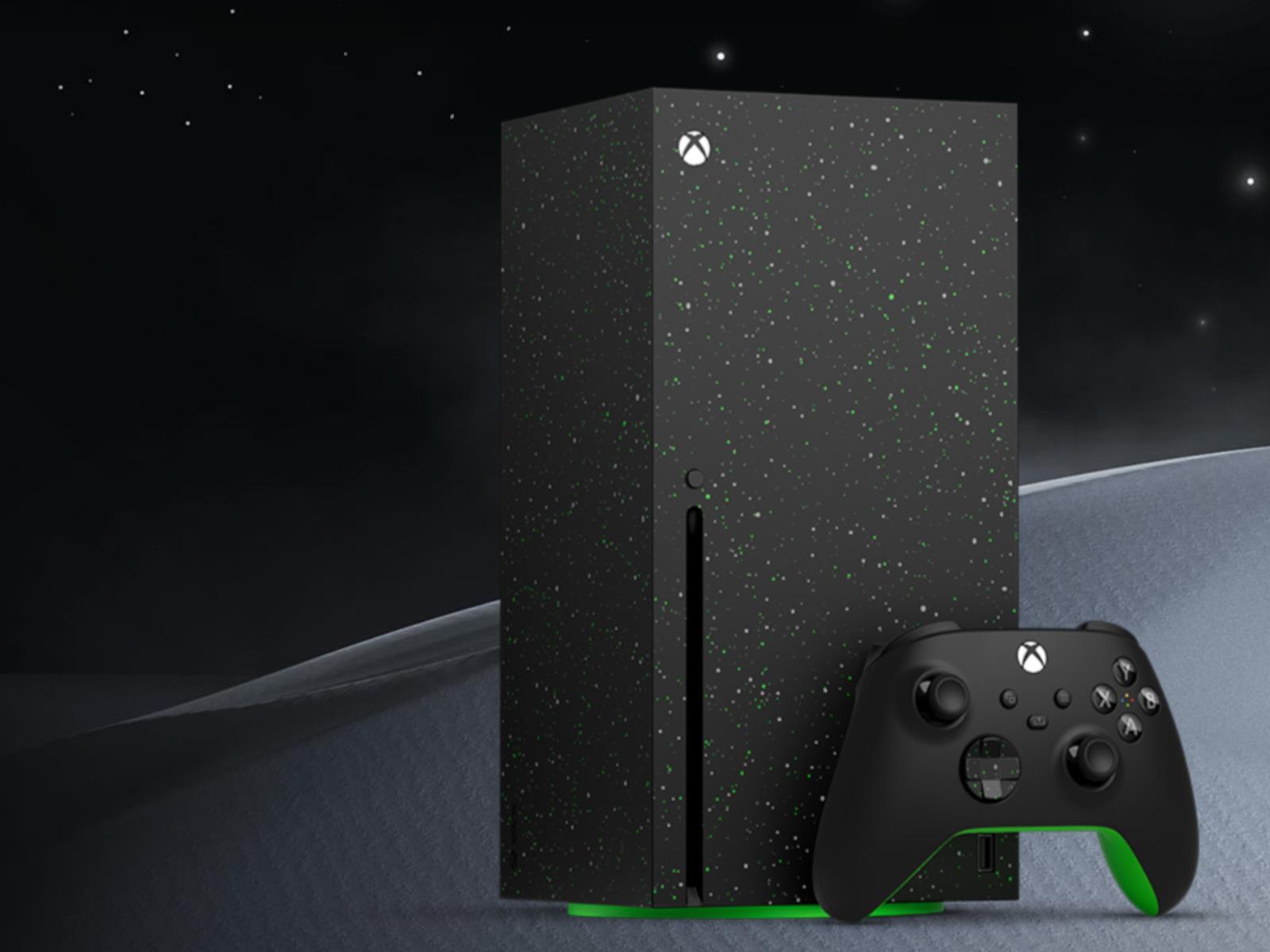
Microsoft’s Xbox gaming division is on shaky ground, as the company has increased prices for both its hardware and Game Pass subscription service while major vendors like Costco have quit carrying the consoles altogether. The vibes won’t be improved by today’s news that a veteran member of one of its key studios has abruptly departed and did

Watch Out for Fake Sora Apps

Did you know you can customize Google to filter out garbage? Take these steps for better search results, including adding my work at Lifehacker as a preferred source.


There’s much to say about Sora, which is essentially OpenAI’s TikTok for AI slop. But putting my concerns aside for what appears to be a glorified deepfake machine, it’s evident the app is popular. OpenAI says Sora hit one million downloads in under five days, likely fueled by interest from users seeing hyper-realistic videos going viral on social media.

But with big hype, comes big risk for fraud. While OpenAI made Sora free to download, the app started out invite-only, which only built anticipation for users who wanted in. As such, those users might open the App Store, search for Sora, and download the first app that makes itself available—especially if they can start using it right away. That’s exactly what happened in this case.

As reported by TechCrunch, over a dozen fake Sora apps were made available on the iOS App Store following the launch of OpenAI’s real app. These apps were either called “Sora” or “Sora 2,” the latter in reference to the specific video model powering these hyper-realistic AI generations.

You might assume developers hastily uploaded these apps to the App Store in an attempt to pull traffic from users curious about Sora. And while that is true, a number of these apps were already live on the App Store long before OpenAI ever announced the Sora app—some of which were operating under different names. It’s not clear how many changed their names in this situation, but it’s apparent that many did adjust their names shortly after Sora launched. TechCrunch says some apps had been available on the App Store since earlier this year, while others were available since last year.

Apple’s App Store isn’t the only affected app market here. Google’s Play Store played host to fraudulent Sora apps, as well. Taken together, these apps were downloaded more than 300,000 times, with more than 80,000 of those occurring after Sora’s official launch. Perhaps the most successful fake Sora app, “Sora 2 – AI Video Generator,” pulled in over 50,000 downloads alone once OpenAI released Sora. TechCrunch reports that these apps collectively earned over $160,000, all from apps claiming to be something else entirely.

At this time, most, but not all, of these apps have been pulled from app stores.

How to spot fake apps on your app store

First of all, if the app you’re trying to download is trendy and popular, like Sora, assume there will be developers trying to spoof it. Malicious developers want to trick users looking for one app into downloading theirs, whether it’s to install malware on your device, steal your information, or make money off you by running ads. If they know a million people are going to be downloading an app, hosting a fraudulent one makes for good business.

When looking through the app store’s results page, pay close attention to the name of the app. Sure, it might have “Sora” in the title, but does it have any odd, extraneous words added in? “Sora 2 – AI Video Generator” isn’t the worst fake name I’ve ever seen, but the app’s name is Sora, not Sora 2. OpenAI also likely wouldn’t add AI Video Generator to its own product’s name: They probably know the product speaks for itself, and wouldn’t feel the need to clutter up the name with extra details. Instead, the real title is “Sora by OpenAI,” likely done to both distinguish itself from legitimate apps named Sora, as well as indicate that it is indeed made by OpenAI.

Speaking of which, you should always make sure the app in question is distributed by the company that made it. If you’re trying to figure out which of the Sora apps on your app store is the real one, it’s going to be the one that says it’s made by OpenAI. I’m not talking about the title alone, either. Tap on the app, and look at the developer name underneath the title. If it doesn’t match the exact company you know develops the app, don’t download it.

You’ll also want to investigate the copy and images advertising the app here. Is everything written well, and free of spelling and grammar mistakes? Are the images high quality, and reflect the experience the app it advertising? Don’t download something that feels slapped together: Some fraudsters don’t bother with the finer details.

Finally, make sure the app in question is actually available on the platform you’re using. Sora is currently iOS-only, which means any app claiming to be Sora by OpenAI on the Play Store is a fraud. If you’re on Android, you’ll simply need to wait for OpenAI to make the app for your platform.

Next-Gen Xbox Rumored For AMD Magnus Chiplet Packing 48GB GDDR7 For Gaming

Next-Gen Xbox Rumored For AMD Magnus Chiplet Packing 48GB GDDR7 For Gaming
Xbox is getting absolutely battered this console generation, but Microsoft still insists a next-gen AMD-powered Xbox is in the works—and the rumor mill is now pointing toward a 2027 release window for the next-gen Xbox with AMD’s “Magnus” APU within. The Magnus APU, which we’ve heard about previously, looks to be a mega-sized APU packing Zen

NSO To Be Acquired By US Investors, Ending Israeli Control of Pegasus Maker

An anonymous reader shares a report: Control of NSO Group is set to leave Israeli hands. A group of American investors led by Hollywood producer Robert Simonds has agreed to acquire the controversial spyware developer in a deal valued at several tens of millions of dollars. The transaction is expected to be signed in the coming days, though its completion will require approval from Israel’s Defense Export Control Agency (DECA) at the Ministry of Defense.

Since March 2023, NSO’s shares have been held by a Luxembourg-based holding company wholly owned by founder Omri Lavie. The company’s lender syndicate, which had extended roughly $500 million in loans to finance a share buyback from the private equity fund Francisco Partners, transferred ownership to Lavie following the restructuring.


Read more of this story at Slashdot.