
Russia Accused of Severing Ukrainian Nuclear Power Plant’s Link, as Energy Remains a ‘Key Battle Ground’

It’s the largest nuclear power plant in Europe. But “Ukraine’s foreign minister accused Russia on Sunday of deliberately severing the external power line to the Russian-held Zaporizhzhia nuclear power station,” reports Reuters, “in order to link the plant to Moscow’s power grid.”

Ukrainian Foreign Minister Andrii Sybiha said Moscow was attempting to test a reconnection to Russia’s grid. Ukraine has long feared that Moscow would try to redirect the plant’s output to its grid. But Russian officials have denied any intention of trying to restart the plant, seized by Moscow’s forces in the early weeks of the February 2022 invasion of Ukraine.

The plant produces no electricity at the moment, but has been without an external electricity source for nearly three weeks. Officials have relied on emergency diesel generators to secure the power needed to keep the fuel cool inside the facility and guard against a meltdown. “Russia intentionally broke the plant’s connection with the Ukrainian grid in order to forcefully test reconnection with the Russian grid,” Sybiha wrote on X in English. He denounced the “attempted theft of a peaceful Ukrainian nuclear facility”…. Each side has accused the other of shelling that caused the line outage.
Russia’s continued occupation of the Zaporizhzhia nuclear power plant deprived Ukraine of a quarter of its generating capacity, according to a report from the Brookings Institute — calling Ukraine’s energy sector “a key battleground” in the war.

The Russian invasion began on the very day that Ukraine launched its so-called island test. This involved completely isolating the Ukrainian and Moldovan power systems from their neighbors to check whether the system was stable. This is a mandatory procedure prior to synchronization with the European grid… Despite this, Ukraine managed not only to militarily defend itself but also to maintain grid stability in wartime conditions and implement all the solutions necessary for an unprecedented synchronization on March 16, 2022.

In 2022 a former commissioner of the U.S. Nuclear Regulatory Commission (from 1998 to 2007) even argued in the Wall Street Journal that “An unappreciated motive for Russia’s invasion of Ukraine is that Kyiv was positioning itself to break from its longtime Russian nuclear suppliers…”

At the time of the invasion, Westinghouse supplied fuel to six of the 15 [Ukrainian] nuclear reactors and could displace the Russians in all of them. The U.S. government had been highly supportive of this effort, and these fuel contracts represented hundreds of millions of dollars in yearly lost sales to Atomstroyexport [a nuclear exporter that’s a subsidiary of Russian state corporation Rosatom]. By seizing the nuclear plants, Russia is able to retake the market for Ukrainian nuclear fuel.
Most important, Westinghouse, with support from the U.S., was in a position to build nuclear reactors in Ukraine over the next two decades. On Aug. 31, 2021, Energy Secretary Jennifer Granholm and her Ukrainian counterpart, Herman Halushchenko, signed a strategic cooperation agreement to build five nuclear units with a value, according to the World Nuclear Association, of more than $30 billion. The timing is telling. In November 2021, Ukraine’s leaders signed a deal with Westinghouse to start construction on what they hoped would be at least five nuclear units — the first tranche of a program that could more than double the number of plants in the country, with a potential total value approaching $100 billion. Ukraine clearly intended that Russia receive none of that business.

Brookings looks at how Ukraine’s energy sector has fared during the war:

The Ukrainian energy sector was designed to be oversized with significant redundancy in order to meet huge Soviet-era industrial demand as well as to make it more resilient to a future world war… A radical change did not occur until 2014, when Ukrainians overthrew the pro-Russian president, Viktor Yanukovych. In the decade since then, Ukraine has pursued a policy of European Union (EU) integration with determination and without interruption… The real prospect of an improvement in the quality of life and development of Ukraine through integration with the EU and NATO was unacceptable to Russia, which first annexed Crimea and covertly attacked the Ukrainian Donbas, before launching a full-scale invasion of Ukraine on February 24, 2022. Russia’s in-depth knowledge of the Ukrainian power system, dating back to the Soviet Union, was used to carry out a well-planned operation to cut off electricity to Ukrainians.

The aim was to break the morale of Ukrainians to continue defending themselves and to collapse the economy so that it could not support the Ukrainian military effort. Ironically, however, the size of the energy system, which had been scaled up in case of war, and the enormous Western support, unexpectedly ensured its resilience to Russian attacks.
Although they note that “During the first two years of the war, Russia fired nearly 2,000 missiles and drones at Ukrainian energy infrastructure… ”
And this week in Ukraine, damage to substations, power plants and oil depot temporarily cut off electricity for hundreds of thousands of Ukrainian homes and businesses, reports the UN. “As colder weather sets in, strikes on critical infrastructure are deepening humanitarian needs,” warned a UN spokesperson on Thursday…


Read more of this story at Slashdot.

AMD Amps Up Chip War – But Nvidia’s Still Leading

The Wall Street Journal marvelled at AMD’s “game-changing deal” this week with OpenAI, calling it “the culmination of an extraordinary, decade-long turnaround effort, solidifying AMD’s status as Nvidia’s most legitimate competitor.”

Shortly after taking charge of the company in 2014, [CEO] Su implemented a systematic plan to eat Intel’s lunch, which she accomplished by going after Intel’s main product lines while it was bogged down by manufacturing problems. Now, Su has set her sights on Nvidia, the $4.5 trillion chips behemoth led by her cousin, Jensen Huang. Some analysts believe that if Su can sign up more big customers for its AI chips, AMD could join the $1 trillion valuation club before too long.

“With this, it’s natural to ask: Did AMD just say checkmate to Nvidia?” asks the Motley Fool investment site. But their answer seems to be “no”…

AMD has increased its push into the AI market over the past few years, launching the AMD Instinct line of accelerators, and in the latest quarter, predicted its MI350 series would drive revenue growth in the second half of the year. Some analysts have said that AMD’s innovations position it to compete with Nvidia’s Blackwell architecture and chip — released late last year — but Nvidia’s commitment to release upgrades on an annual basis could keep it a step ahead when it comes to overall GPU performance and therefore revenue. Big tech companies are looking for the most powerful compute available — and so far, they know they can find that at Nvidia…
[AMD’s deal this week] is indeed an interesting operation, ensuring the company a major position in this infrastructure scale-up phase. [Nvidia CEO] Huang has said AI infrastructure spending may reach $4 trillion by the end of the decade, and this represents an enormous opportunity for chip designers such as AMD and Nvidia. So, the OpenAI deal is positive for AMD — but I wouldn’t say it’s negative for Nvidia. This chip giant signed its own deal with OpenAI last month, and it involves the deployment of 10 gigawatts of Nvidia systems across data centers…

A quick comparison of the two deals: The Nvidia-OpenAI agreement involves more gigawatts, and Nvidia isn’t giving up a stake in its business — on top of this, though Nvidia is offering OpenAI funding, this will result in revenue growth as OpenAI returns to Nvidia to order GPUs. This pretty much guarantees that Nvidia will be the chip designer to benefit the most as OpenAI expands — and AMD isn’t about to step ahead of the market leader. All of this means that, yes, AMD should score a win thanks to its agreement with OpenAI and this may boost its growth in the market. But the chip designer can’t say “checkmate” to its bigger rival as Nvidia is perfectly positioned to maintain its lead over the long term.


Read more of this story at Slashdot.

Toxic Workplaces Are Worsening: 80% of U.S. Workers Say Their Job Hurts Mental Health

Slashdot reader joshuark shared this report from Fast Company:

According to Monster’s newly released 2025 Mental Health in the Workplace survey of 1,100 workers, 80% of respondents described their workplace environment as toxic. The alarming statistic is an increase from 67% just a year ago.
The challenging environment has major implications. An astonishing 71% of workers say their mental health is poor (40%) or fair (31%), while only 29% rank it positively: 20% said it was good and 9% described it as great. Workers say that a toxic workplace culture is the top cause of their poor mental health (59%), followed closely by having a bad manager (54%)…

Mental health is incredibly important to employees. The majority (63%) care more about it than having a “brag-worthy” job. Likewise, many would pass on a promotion (43%) or opt out of a raise (33%) if it was better for their mental health… The vast majority (93%) say their employer isn’t focused on supporting employee mental health — a statistic that rose drastically since just a year ago, with 78% claiming the same.

“According to the survey, more than half of workers (57%) say they’d rather quit their job than continue working in an environment they feel is toxic and overall, causing major strains to their mental wellbeing…”


Read more of this story at Slashdot.

New Starfleet Academy trailer debuts at NYCC

The Star Trek universe panel at New York Comic Con (NYCC) this weekend concluded with a brand new trailer for Star Trek: Starfleet Academy. The ten-episode series will follow the exploits of the first new crop of cadets in a century.

Per the official premise:

Star Trek: Starfleet Academy introduces viewers to a young group of cadets who come together to pursue a common dream of hope and optimism. Under the watchful and demanding eyes of their instructors, they discover what it takes to become Starfleet officers as they navigate blossoming friendships, explosive rivalries, first loves and a new enemy that threatens both the Academy and the Federation itself.

The new cadets include Sandro Rosta as human orphan Caleb Mir; Karim Diané as a Klingon cadet, Jay-Den Kraag; Kerrice Brooks as Sam (Series Acclimation Mil), the first Kasquain to attend the Academy; George Hawkins as Darem Reymi, a Khionian cadet who wants to be a captain; Bella Shepard as Genesis Lythe, a Dar-Sha cadet; and Zoë Steiner as Tarima Sadal, daughter of the president of Betazed. In addition, Holly Hunter plays Academy chancellor Captain Nahla Ake; Gina Yashere plays Cadet Master Lura Thok; Becky Lynch plays a member of Starfleet bridge crew; and Paul Giamatti plays a half-Klingon, half-Tellarite character named Nus Braka, the series’ chief villain.

Read full article

Comments

There’s No ‘AI Bubble’, Says Yahoo Finance Executive Editor

“I’m here to say we have to give these AI bubble predictions a rest,” says Yahoo Finance executive editor Brian Sozzi.

First of all, AI is a real technology being deployed in real ways inside of Corporate America. Second, this technology is requiring more physical assets in the ground — which are being built to support AI’s real-world application. What Zach Dell (son of Michael Dell) is working on at startup Base Power (which just raised $1 billion) impressed me this week. It’s addressing a key issue — power availability and costs in part because of rising stress on the grid due to AI development.

Next, the spending on AI infrastructure doesn’t strike me as reckless. I talk to CFOs and they walk me through their thinking, which seems logical. They aren’t foaming at the mouth with wild-eyed predictions of grandeur similar to the late ’90s. Plus, the tech giants making the biggest AI investments are fueling their ambitions by cash on hand — not loading up balance sheets with debt. The upstarts in AI are well funded, not being 100% stupid in their organizational build-outs. They’re working on tangible technology that has actual orders behind it…
Lastly here in my scolding of the AI worrywarts is that valuations don’t support the warning calls. According to new research out of Goldman Sachs this week, the median forward P/E ratio across the Magnificent Seven is 27 times, or 26 times if excluding Tesla (TSLA), which has a much higher multiple than the other companies. This is roughly half the equivalent valuation of the biggest seven companies in the late 1990s, while the dominant companies in Japan (mostly banks) traded at higher valuations still. What’s more, the current enterprise-to-sales ratios are also much lower than those of the dominant companies in the late 1990s.

“So it is true that valuations are high but, in our view, generally not at levels that are as high as are typically seen at the height of a financial bubble,” said Goldman Sachs strategist Peter Oppenheimer.


Read more of this story at Slashdot.

SpaceX will attempt Starship’s 11th flight test on Monday

SpaceX is gearing up for the 11th flight test of its Starship megarocket, which will launch from its Starbase in Texas as early as Monday. The launch window opens on October 13 at 7:15PM ET. You’ll be able to watch live starting 30 minutes before liftoff on the SpaceX website and on X. 

Starship’s latest flight follows a successful test at the end of August, during which it deployed a payload — eight dummy Starlink satellites — in space for the first time following a failed attempt earlier in the year. The company is aiming to carry out another payload demonstration for flight 11, again using eight Starlink simulators. For this flight, SpaceX is using a previously flown Super Heavy booster, with 24 of its 33 Raptor engines being flight-proven. The goals this time around include “flight experiments gathering data for the next generation Super Heavy booster, stress-testing Starship’s heatshield, and demonstrating maneuvers that will mimic the upper stage’s final approach for a future return to launch site.”

SpaceX won’t attempt to catch Super Heavy in its “chopsticks” back at the launch site this time. The booster is instead expected to end up in the Gulf of Mexico, while Starship will splash down in the Indian Ocean.

This article originally appeared on Engadget at https://www.engadget.com/science/space/spacex-will-attempt-starships-11th-flight-test-on-monday-204237829.html?src=rss

Amazon Smart Displays Are Now Being Bombarded With Ads

“Amazon Echo Show owners are reporting an uptick in advertisements on their smart displays,” reports Ars Technica.

The company’s Echo Show smart displays have previously shown ads through the company’s Shopping Lists feature, as well as advertising for Alexa skills. Additionally, Echo Shows may play audio ads when users listen to Amazon Music on Alexa. However, reports on Reddit (examples here, here, and here) and from The Verge’s Jennifer Pattison Tuohy, who owns more than one Echo Show, suggest that Amazon has increased the amount of ads it shows on its smart displays’ home screens.

The Echo Show’s apparent increase in ads is pushing people to stop using or even return their Echo Shows.

The article notes Amazon’s smart displays have also started showing ads for Alexa+ — and The Verge’s reporter saw ads on one (but not all) of her Echo Shows this week. (Even when the display is set to show personal photos, ads sometimes appear for herbal supplements, Quest sports chips, and tabletop picture frames.

Ars Technica notes that users “are unable to disable the home screen ads.”
When reached for comment, an Amazon spokesperson told Ars Technica: “Advertising is a small part of the experience, and it helps customers discover new content and products they may be interested in…” Amazon declined to comment on whether it has increased Echo Show ad loads… According to Amazon, Echo Show home screen ads change based on how close someone is to the gadget. “When the customer is more than four feet away from their device, ads will display full-screen in rotation with other content such as weather, recipes, sports, and news…”


Read more of this story at Slashdot.

An Avatar fighting game is coming out in summer 2026

We can finally answer the question of who wins in a fight between prime Aang and prime Korra. Avatar Legends: The Fighting Game, which is a working title, was announced at New York Comic Con and already has a release date of summer 2026. The developer, Gameplay Group International, revealed a trailer with some “pre-alpha footage” that resembles Street Fighter but with our favorite characters from the Avatar franchise.

According to the Steam page, the game will offer 12 characters at launch and introduce more on a seasonal basis. While the gameplay still looks like a rough draft, the developer has already detailed a unique fighting system, which includes a “flow system” and support characters that enable special moves. Avatar Legends: The Fighting Game will also have the “energy of classic fighting games” and was made with a focus on “fluidity, responsiveness, and online integrity.” Along with combo trials and a gallery mode, the game will have crossplay and be available on PS4, PS5, Xbox Series X and S, Nintendo Switch 2 and Steam.

For those not passionate about fighting games, the upcoming release will also feature some original content through its single-player campaign. Alternatively, you can wait for Paramount’s “AAA RPG” based on the cartoon with no concrete release date. As for Avatar Legends: The Fighting Game, there’s a lot of promise here with the franchise’s diverse cast of characters and the developer’s experience with other fighting games. At the very least, it’s not the same developer that gave us the very forgettable Avatar: The Last Airbender – Quest for Balance game.

This article originally appeared on Engadget at https://www.engadget.com/gaming/an-avatar-fighting-game-is-coming-out-in-summer-2026-191008728.html?src=rss

Big Deal Days May Be Over, But These GeForce RTX Cards Are Still On Sale

Big Deal Days May Be Over, But These GeForce RTX Cards Are Still On Sale
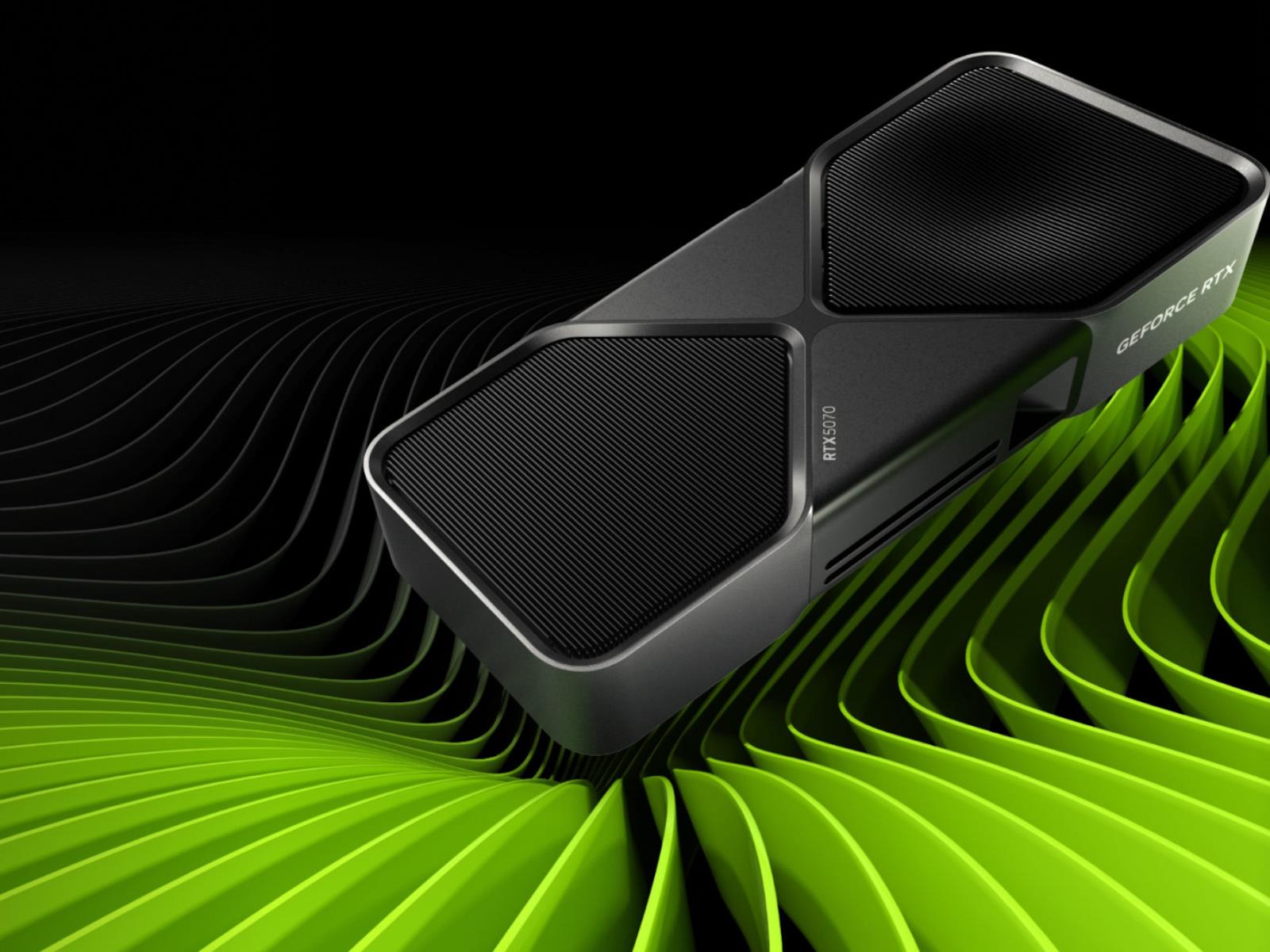
Amazon’s Prime Big Deal Days may be over, but there are still some great deals to be had on GeForce RTX 50 series GPUs. We’ve narrowed down the most compelling options to six choices below, with two SKUs each for the GeForce RTX 5060 Ti, RTX 5070, and RTX 5070 Ti—effectively, all the hottest mid-range NVIDIA GPUs currently available. Many

Windows Copilot Gains AI Smarts To Create Office Documents And Work With Gmail

Windows Copilot Gains AI Smarts To Create Office Documents And Work With Gmail
Just a few weeks after introducing AI agents into Office 365 apps, Microsoft is already testing news ways to bolster the integration of Copilot in Windows 11. Windows insiders will have access to new features that will allow Copilot to connect to personal services and enable the creation and exporting of documents.

With these new features,

‘Death to Spotify’ Event Draws Interest From Some Musicians to Try Alternatives

An anonymous reader shared this report from the Guardian:
This month, indie musicians in San Francisco gathered for a series of talks called Death to Spotify, where attenders explored “what it means to decentralize music discovery, production and listening from capitalist economies”. The events, held at Bathers library, featured speakers from indie station KEXP, labels Cherub Dream Records and Dandy Boy Records, and DJ collectives No Bias and Amor Digital. What began as a small run of talks quickly sold out and drew international interest. People as far away as Barcelona and Bengaluru emailed the organizers asking how to host similar events.

The talks come as the global movement against Spotify edges into the mainstream. In January, music journalist Liz Pelly released Mood Machine, a critical history arguing the streaming company has ruined the industry and turned listeners into “passive, uninspired consumers”. Spotify’s model, she writes, depends on paying artists a pittance — less still if they agree to be “playlisted” on its Discovery mode, which rewards the kind of bland, coffee-shop muzak that fades neatly into the background… The Death to Spotify organizers say their goal is not necessarily to shut the app down. “We just want everyone to think a little bit harder about the ways they listen to music,” says [event co-founder] Manasa Karthikeyan. “It just flattens culture at its core if we only stick to this algorithmically built comfort zone.”
So the goal was “down with algorithmic listening, down with royalty theft, down with AI-generated music,” according to the event’s other co-founder, Stephanie Dukich.

Basically some artists “are questioning whether it’s doing much for them,” says a professor of music at the University of Texas at Austin. The article cites performers who are trying Spotify alternatives, like pop-rock songwriter Caroline Rose, who released her new album only on vinyl and Bandcamp. “I find it pretty lame that we put our heart and soul into something and then just put it online for free,” Rose says.


Read more of this story at Slashdot.

Apple hit with another class action lawsuit for alleged copyright infringement

Just about a month after being accused of using pirated books to train its AI, Apple is facing another similar proposed class action lawsuit. As first reported by Bloomberg Law, two neuroscience professors from SUNY Downstate Health Sciences University in Brooklyn, NY, claimed that Apple used their “registered works without authorization.” The neuroscientists, Susana Martinez-Conde and Stephen Macknik, said Apple trained its AI models using “shadow libraries” and “web-crawling software” that provide access to pirated, copyrighted books, including two of their own.

In the previous class action lawsuit, a separate pair of authors also alleged that Apple committed copyright infringement when using published works to train Apple Intelligence models without consent. Apple isn’t the only tech giant facing copyright lawsuits related to its AI, as OpenAI is in a similar situation after being sued by The New York Times for similar accusations. While these AI models are relatively new, there’s already a case that may have set some precedent. Earlier this year, Anthropic settled a class action lawsuit by agreeing to pay $1.5 billion to 500,000 authors involved in the case, which revolved around copyright claims.

This article originally appeared on Engadget at https://www.engadget.com/ai/apple-hit-with-another-class-action-lawsuit-for-alleged-copyright-infringement-175242922.html?src=rss

Three-Wheeled Solar Car Maker Aptera is About to Go Public

Last November Aptera successfully tested its first production-intent three-wheel solar-powered EV — and said it already had over 50,000 reservations. The vehicles had a solar charge range of 40 miles per day, reported Digital Trends, noting the crowdfunded company’s cars also had an NCAS charging port. (“Solar-powered electric vehicles are also being developed by the likes of Germany’s Sono Motors and the Netherlands’ Lightyear, and by big automakers such as Hyundai and Mercedes-Benz.”)

But this week the EV site Electrek pointed out that “There have been a handful of ‘solar car’ projects and they all have failed so far.”
Aptera is one of the rare survivors, thanks to a couple of relatively successful crowdfunding efforts. The company has been inching closer to bringing its vehicle to production, but it still appears to need some investments to make it happen. Now, Aptera is going public.

Generally, that’s good news. An initial public offering (IPO) means that a company is going to raise capital for its operations and give more people the opportunity to invest in the company. However, Aptera is not doing a traditional IPO. It’s not even doing a SPAC deal. It’s doing a direct listing, which means that if approved by NASDAQ, it will allow shareholders to trade their shares on the public market. This is usually an exit strategy for existing shareholders. Aptera won’t receive any proceeds from going public… The company needs to be infused with capital soon, and this direct listing is not it.
The top-rated comment on the site suggests “Open market trading will establish a fair price for exchanges among the holders. I don’t think this necessarily indicates they are trying to wind down the company.”

And the article does also acknowledge the possibility of “public demand for the stock amid this crazy bubble we are in — resulting in a price increase, which Aptera takes advantage of with a public offering…”

“Aptera has now confirmed that it has received NASDAQ approval and the stock will start trading on October 16.”


Read more of this story at Slashdot.

The first products with Apple’s M5 chip could make their debut this week

We may only be a few days away from the big reveal of Apple’s latest chips. According to Bloomberg‘s Mark Gurman, Apple is getting ready to release its October lineup of new products powered by the M5 chip as soon as this week. In the latest Power On newsletter, Gurman expects announcements for an upgraded iPad Pro, a refreshed Vision Pro with a revamped strap, and the new base model MacBook Pro, all of which will come with the latest Apple silicon.

Previously, the expected launch for the M5 MacBook Pro flip-flopped between early next year and its typical fall release. Gurman previously reported that Apple was targeting an early 2026 release for the upgraded MacBook Pro, but more recently revealed that the company was “nearing mass production” for its laptops.

Gurman referenced another hint that the entry-level M5 MacBook Pro is on the way, since Apple stores are running low on their M4 MacBook Pro stock, but still have enough inventory with the M4 Pro or M4 Max options. Gurman also noted in a previous edition of his newsletter that the M5 Pro and M5 Max chips wouldn’t be “ready in volume” until early next year. As for the October releases, we’re not expecting another event like Apple did with its iPhone 17 reveal. Instead, Apple will likely reveal its remaining fall lineup with online announcements, like it did with the current MacBook Pro in October of last year.

This article originally appeared on Engadget at https://www.engadget.com/big-tech/the-first-products-with-apples-m5-chip-could-make-their-debut-this-week-163149688.html?src=rss

AI Slop? Not This Time. AI Tools Found 50 Real Bugs In cURL

The Register reports:
Over the past two years, the open source curl project has been flooded with bogus bug reports generated by AI models. The deluge prompted project maintainer Daniel Stenberg to publish several blog posts about the issue in an effort to convince bug bounty hunters to show some restraint and not waste contributors’ time with invalid issues. Shoddy AI-generated bug reports have been a problem not just for curl, but also for the Python community, Open Collective, and the Mesa Project.
It turns out the problem is people rather than technology. Last month, the curl project received dozens of potential issues from Joshua Rogers, a security researcher based in Poland. Rogers identified assorted bugs and vulnerabilities with the help of various AI scanning tools. And his reports were not only valid but appreciated. Stenberg in a Mastodon post last month remarked, “Actually truly awesome findings.” In his mailing list update last week, Stenberg said, “most of them were tiny mistakes and nits in ordinary static code analyzer style, but they were still mistakes that we are better off having addressed. Several of the found issues were quite impressive findings….”

Stenberg told The Register that about 50 bugfixes based on Rogers’ reports have been merged. “In my view, this list of issues achieved with the help of AI tooling shows that AI can be used for good,” he said in an email. “Powerful tools in the hand of a clever human is certainly a good combination. It always was…!” Rogers wrote up a summary of the AI vulnerability scanning tools he tested. He concluded that these tools — Almanax, Corgea, ZeroPath, Gecko, and Amplify — are capable of finding real vulnerabilities in complex code.

The Register’s conclusion? AI tools “when applied with human intelligence by someone with meaningful domain experience, can be quite helpful.”

jantangring (Slashdot reader #79,804) has published an article on Stenberg’s new position, including recently published comments from Stenberg that “It really looks like these new tools are finding problems that none of the old, established tools detect.”


Read more of this story at Slashdot.
California ‘Privacy Protection Agency’ Targets Tractor Supply’s Tricky Tracking

California’s Privacy Protection Agency “issued a record fine earlier this month to Tractor Supply,” according to an EFF Deeplinks blog post — for “apparently ducking its responsibilities under the California Consumer Privacy Act.”

Under that law, companies are required to respect California customers’ and job applicants’ rights to know, delete, and correct information that businesses collect about them, and to opt-out of some types of sharing and use. The law also requires companies to give notice of these rights, along with other information, to customers, job applicants, and others. The CPPA said that Tractor Supply failed several of these requirements. This is the first time the agency has enforced this data privacy law to protect job applicants…

Tractor Supply, which has 2,500 stores in 49 states, will pay for their actions to the tune of $1,350,000 — the largest fine the agency has issued to date. Specifically, the agency said, Tractor Supply violated the law by:

– Failing to maintain a privacy policy that notified consumers of their rights;
– Failing to notify California job applicants of their privacy rights and how to exercise them;
– Failing to provide consumers with an effective mechanism to opt-out of the selling and sharing of their personal information, including through opt-out preference signals such as Global Privacy Control; and
– Disclosing personal information to other companies without entering into contracts that contain privacy protections.

In addition to the fine, the company also must take an inventory of its digital properties and tracking technologies and will have to certify its compliance with the California privacy law for the next four years.
The agency’s web site says it “continues to actively enforce California’s cutting-edge privacy laws.” It’s recently issued decisions (and fines) against American Honda Motor Company and clothing retailer Todd Snyder. Other recent actions include:

Securing a settlement agreement requiring data broker Background Alert — which promoted its ability to dig up “scary” amounts of information about people — to shut down or pay a steep fine.
Launching the bipartisan Consortium of Privacy Regulators to collaborate with states across the country to implement and enforce privacy laws nationwide.
Partnering with the data protection authorities in Korea, France, and the United Kingdom to share information and advance privacy protections for Californians.
The agency has secured more than half a dozen successful enforcement actions against unregistered data brokers following an investigative sweep launched late last year to assess compliance with the Delete Act.


Read more of this story at Slashdot.

Cryptologist DJB Alleges NSA is Pushing an End to Backup Algorithms for Post-Quantum Cryptography

Cryptologist/CS professor Daniel J. Bernstein is alleging that America’s National Security Agency is attempting to influence NIST post-quantum cryptography standards.

Bernstein first emphasizes that it’s normal for post-quantum cryptography (or “PQ”) to be part of “hybrid” security that also includes traditional pre-quantum cryptography. (Bernstein says this is important because since 2016, “We’ve seen many breaks of post-quantum proposals…”)

“The problem in a nutshell. Surveillance agency NSA and its [UK counterpart] GCHQ are trying to have standards-development organizations endorse weakening [pre-quantum] ECC+PQ down to just PQ.”
Part of this is that NSA and GCHQ have been endlessly repeating arguments that this weakening is a good thing… I’m instead looking at how easy it is for NSA to simply spend money to corrupt the standardization process…. The massive U.S. military budget now publicly requires cryptographic “components” to have NSA approval… In June 2024, NSA’s William Layton wrote that “we do not anticipate supporting hybrid in national security systems”…

[Later a Cisco employee wrote of selling non-hybrid cryptography to a significant customer, “that’s what they’re willing to buy. Hence, Cisco will implement it”.]

What do you do with your control over the U.S. military budget? That’s another opportunity to “shape the worldwide commercial cryptography marketplace”. You can tell people that you won’t authorize purchasing double encryption. You can even follow through on having the military publicly purchase single encryption. Meanwhile you quietly spend a negligible amount of money on an independent encryption layer to protect the data that you care about, so you’re actually using double encryption.

This seems to be a speculative scenario. But Bernstein is also concerned about how the Internet Engineering Task Force handled two drafts specifying post-quantum encryption mechanisms for TLS (“the security layer inside HTTPS and inside various other protocols”). For a draft suggesting “non-hybrid” encryption, there were 20 statements of support (plus 2 more only conditionally supporting it), but 7 more statements unequivocally opposing adoption, including one from Bernstein. The IETF has at times said they aim for “rough consensus” — or for “broad consensus” — but Bernstein insists 7 opposers in a field of 29 (24.13%) can’t be said to match the legal definition of consensus (which is “general agreement”). “I’ve filed a formal complaint regarding the claim of consensus to adopt.”
He’s also written a second blog post analyzing the IETF’s decision-making process in detail. “It’s already bad that the IETF TLS working group adopted non-hybrid post-quantum encryption without official answers to the objections that were raised. It’s much worse if the objections can’t be raised in the first place.”
Thanks to alanw (Slashdot reader #1,822) for spotting the blog posts.


Read more of this story at Slashdot.

Ferrari Announces Its First Electric Sports Car, Promising Real Engine Noises – Sort Of

Ferrari’s first electric car arrives next summer, reports Carscoops, with a top speed of 193 mph (310 km/h) and accelerating from 0 to 62 mph (0 to 100 km/h) in just 2.5 seconds.

“The Elettrica” will also have a large high-density battery for over 329 miles (530 km) of range, ultra-fast DC charging up to 350 kW, and a 122 kWh capacity and an energy density of 195 Wh/kg that Ferrari “claims is the highest among production EVs.”
But what’s really interesting is its engine noises:

Ferrari’s approach to the Elettrica’s sound moves away from artificial engine simulation. Instead, a sensor mounted on the inverter detects the powertrain’s real mechanical vibrations, which are then amplified to create what the company describes as a natural, evolving tone that reflects how the car is being driven… a reactive soundtrack. Antonio Palermo [Ferrari’s head of sound and vibration] calls it “language and connection,” a way to keep drivers emotionally engaged with the car without resorting to synthetic gimmicks…

Needless to say, how convincing this synthesized feedback will feel in practice remains to be seen, as much of Ferrari’s allure has traditionally rested on the emotional impact of its combustion engines.

“The Torque Shift Engagement system offers five selectable levels of power and torque using the right paddle, while the left paddle adjusts braking intensity,” the article points out.

But if the engine noises are well-executed, argues the EV news site Electrek, “I even think it might convince some petrolheads to give EVs a try,” .

Whether you like them or not, engine sounds are essential, especially in performance vehicles. They are part of the identity of certain cars — a sort of signature. They can be emotional. They can give a sense of power. But beyond that, they are information. The pitch, volume, and texture of the engine sound provide critical, real-time feedback to the driver about RPM, load, and the car’s health.

Some electric automakers are using curated soundscapes (like BMW with Hans Zimmer) or trying to mimic V8s (like Dodge with its “Fratzonic Chambered Exhaust”)… Other automakers are simply letting the natural sounds of the electric motors exist. There’s nothing wrong with that. However, considering that electric motors produce minimal sounds, which are then trapped inside a metal casing, you rarely hear anything significant, especially in modern vehicles with quiet cabins and even active noise cancellation. For most EVs, this is not a problem, but for a performance electric vehicle, it does feel like something is missing…

Ferrari insists the sound will only be used when “functionally useful” to provide feedback to the driver and will be directly tied to torque requests… The entire system was reportedly developed in-house, giving Ferrari complete control over the vehicle’s final acoustic signature… [T]hey are embracing the new technology rather than hiding it. They are making a confident statement that an electric powertrain can be emotionally engaging on its own terms, without having to pretend to be something it’s not…
If you prefer a completely silent drive, you can disable it.
Electrek’s conclusion? “The purists who were worried that Ferrari would lose its soul in the EV transition should be encouraged by this.”


Read more of this story at Slashdot.

In Copilot In Excel Demo, AI Told Teacher a 27% Exam Score Is of No Concern

A demo of educational AI-powered tools by a Microsoft product manager (in March of 2024) showed “how AI has the possibility to transform various job sectors and the education system,” according to one report.
But that demo “includes a segment on Copilot in Excel that is likely to resonate with AI-wary software developers,” writes long-time Slashdot theodp:

The Copilot in Excel segment purports to show how even teachers who were too “afraid of” or “intimidated” to use Excel in the past can now just use natural language prompts to conduct Excel analysis. But Copilot advises the teacher there are no ‘outliers’ in the exam scores for their 17 students, whose test scores range from 27%-100%. (This is apparently due to Copilot’s choice of an inappropriate outlier detection method for this size population and score range). Fittingly, the student whose 27% score is confidently-but-incorrectly deemed to be of no concern by Copilot is named after Michael Scott, the largely incompetent and unprofessional boss of The Office. (Microsoft also named the other exam takers after characters from The Office).

The additional Copilot student score “analysis” touted by Microsoft in the demo is also less than impressive. It includes: 1. A vertical bar chart that fails to convey the test score distribution that a histogram would have (a rookie chart choice mistake), 2. A horizontal bar chart of student scores that only displays every other student’s name and shows no score values (a rookie formatting error)… So, will teachers — like programmers — be spending a significant amount of time in the future reviewing, editing, and refining the outputs of their AI agent helpers?

“Not only does it illustrate how the realities of AI assistants sometimes fall maddeningly short of the promises,” argues the original submission. “The demo also shows how AI vendors and customers alike sometimes forget to review promotional AI content closely in all the AI excitement!”


Read more of this story at Slashdot.

New Large Coral Reef Discovered Off Naples Containing Rare Ancient Corals

Off the southwest cost of Italy, a remotely operated submarine made “a significant and rare discovery,” reports the Independent — a vast white coral reef that was 80 metres tall (262 feet) and 2 metres wide (6.56 feet) “containing important species and fossil traces.”

Often dubbed the “rainforests of the sea”, coral reefs are of immense scientific interest due to their status as some of the planet’s richest marine ecosystems, harbouring millions of species. They play a crucial role in sustaining marine life but are currently under considerable threat…

hese impressive formations are composed of deep-water hard corals, commonly referred to as “white corals” because of their lack of colour, specifically identified as Lophelia pertusa and Madrepora oculata species. The reef also contains black corals, solitary corals, sponges, and other ecologically important species, as well as fossil traces of oysters and ancient corals, the Italian Research Council said. It called them “true geological testimonies of a distant past.”
Mission leader Giorgio Castellan said the finding was “exceptional for Italian seas: bioconstructions of this kind, and of such magnitude, had never been observed in the Dohrn Canyon, and are rarely seen elsewhere in our Mediterranean”. The discovery will help scientists understand the ecological role of deep coral habitats and their distribution, especially in the context of conservation and restoration efforts, he added.

The undersea research was funded by the EU.
Thanks to davidone (Slashdot reader #12,252) for sharing the article.


Read more of this story at Slashdot.