Samsung’s 2025 The Frame Pro QLED Mini LED Smart TV is on sale for a record-low price. The 65-inch model that normally retails for $2,200 is on sale for $1,760, which is the lowest we’ve ever seen it.
The 1-inch-thick “art” TV uses Samsung’s impressive 4K Neo QLED panel, which is a quantum dot LCD panel with a Mini LED backlight array. The Frame Pro can display lifelike art pieces when the TV isn’t in use, while its sleek design means it also looks great when turned off.
The Frame Pro comes with Samsung’s new Wireless One Connect Box, which is supposed to help with cable management by putting the TV’s inputs in a separate box that then wirelessly transmits the feed from your external device to the TV. It does require its own power supply, though, so that’s one more plug needed if you are connecting a console or a streaming device.
The TV also carries the NQ4 AI Gen3 Processor, which imbues the Frame Pro with AI-enhanced picture and sound. This model also comes with Samsung Vision AI, which works to upscale the image on screen, create personalized experiences and more.
This 2025 model was just made available to order earlier this year, and the current sale price is surprisingly lower than it was during last week’s Prime Day event, proving sometimes good things come to those who wait.
This article originally appeared on Engadget at https://www.engadget.com/deals/samsungs-2025-frame-pro-qled-tv-is-on-sale-for-a-record-low-price-155913911.html?src=rss
Our hominid ancestors faced a Pleistocene world full of dangers—and apparently one of those dangers was lead poisoning.
Lead exposure sounds like a modern problem, at least if you define “modern” the way a paleoanthropologist might: a time that started a few thousand years ago with ancient Roman silver smelting and lead pipes. According to a recent study, however, lead is a much more ancient nemesis, one that predates not just the Romans but the existence of our genus Homo. Paleoanthropologist Renaud Joannes-Boyau of Australia’s Southern Cross University and his colleagues found evidence of exposure to dangerous amounts of lead in the teeth of fossil apes and hominins dating back almost 2 million years. And somewhat controversially, they suggest that the toxic element’s pervasiveness may have helped shape our evolutionary history.
Joannes-Boyau and his colleagues took tiny samples of preserved enamel and dentin from the teeth of 51 fossils. In most of those teeth, the paleoanthropologists found evidence that these apes and hominins had been exposed to lead—sometimes in dangerous quantities—fairly often during their early years.
New research from Johns Hopkins University and an international team of scientists suggests that two competing theories for the diffuse glow near the center of the Milky Way—colliding dark matter particles or rapidly spinning neutron stars—are, for the first time, equally viable.
Researchers believe the glow coming from inside our own galaxy
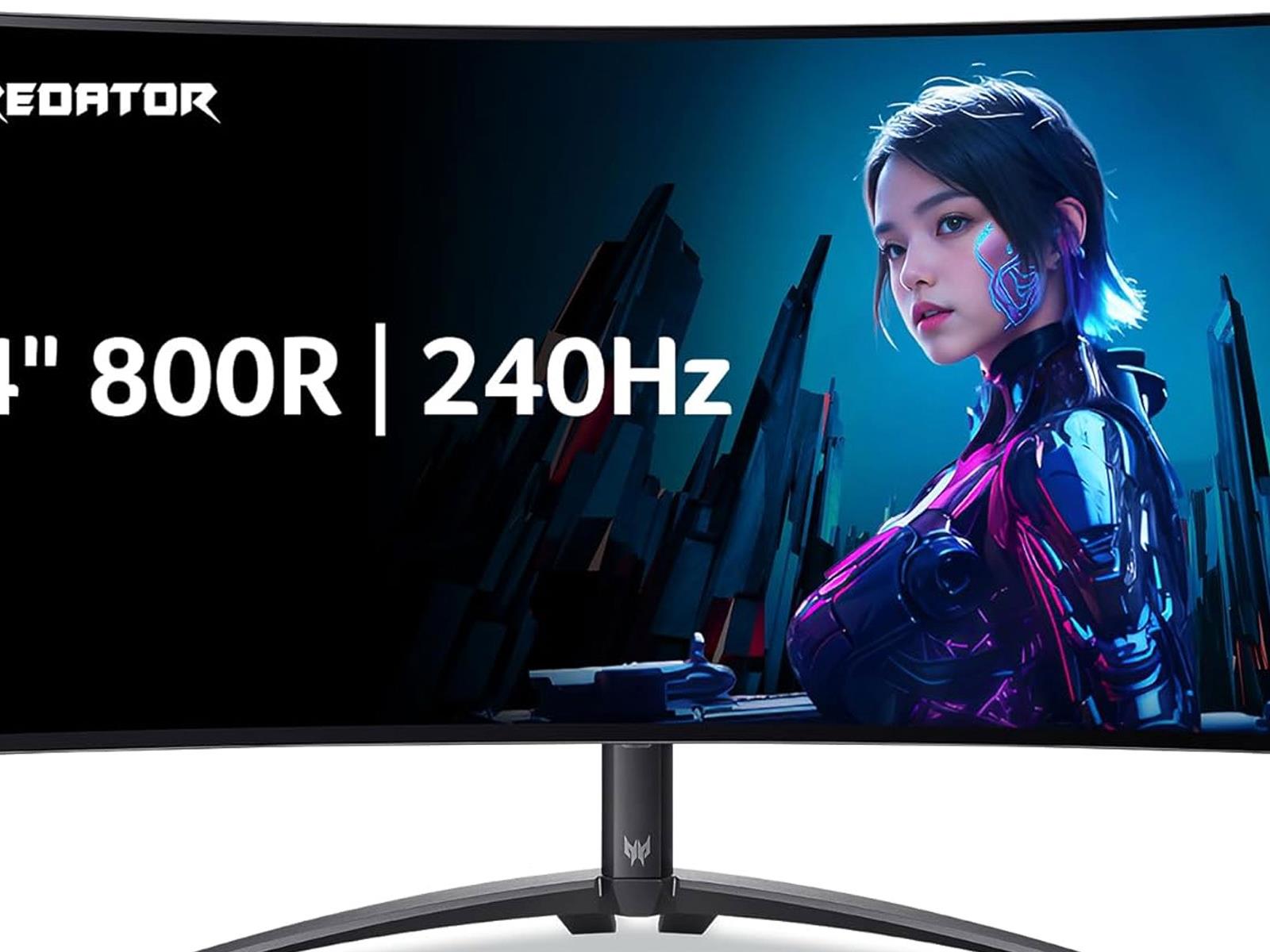
Are you ready to take your gaming to another level of image quality with an OLED display? There are a lot more options now than just a relatively short time ago, and also a steady stream of deals. As such, you can score Acer’s Predator X34 OLED monitor with a fast refresh and AMD FreeSync Premium Pro certification for a great price right now.
Bose took a different approach with its new products in 2025. Instead of entirely redesigning its QuietComfort Ultra lineup, the company unveiled upgraded second-generation models of the flagship-level earbuds and headphones. Like the QuietComfort Ultra Earbuds that debuted earlier this year, the new Quiet Comfort Ultra headphones ($449) don’t offer a comprehensive overhaul. However, the changes provide enough performance improvements to further cement these as the best noise-canceling headphones that you can buy right now. Trust me, we’re much better off with this revamped version than we would be with a year (or longer) wait for something brand new with the 2023 model.
What’s new on the QuietComfort Ultra Headphones?
Bose debuted a few new features on the second-gen QuietComfort Ultra Earbuds in August that it carried over to these new headphones. First, the company improved its already stellar active noise cancelation (ANC) with tweaks to its ActiveSense technology. Specifically, the system can respond to sudden spikes in environmental noise by adapting more precisely. It’s not something you’ll notice all the time, but when you need it, you’ll be glad it’s there. Otherwise, the excellent ANC performance here is just as effective as it was on the previous model. More on that in a bit.
The immersive Cinema Mode that Bose added to the QC Ultra Earbuds is also available on these headphones. It’s a sound profile that enhances dialogue clarity while keeping the rest of the soundstage as wide and enveloping as possible. I like it best for movies and TV, as the name suggests, but per Bose’s suggestion I also tried it with podcasts and audiobooks. Cinema Mode is probably overkill for those types of content, unless you’re listening to shows or titles with lots of background effects.
One of the biggest changes on the second-gen QC Ultra Headphones is how Bose decided to handle power management. Most importantly, the company extended battery life in all use cases. With ANC on (and Immersive Audio off), you’ll get up to 30 hours of listening time. Turn off ANC and that jumps to 45 hours. When you decide to enable both ANC and Bose’s spatial Immersive Audio, you can expect up to 23 hours on a charge. Compared to those on the first-generation model, all of these numbers are up by at least five hours, which is a significant boost.
These headphones rotate flat and fold in for compact transport.
Billy Steele for Engadget
Like the previous QC Ultra Headphones, this model has an automatic disconnection feature after 10 minutes of standby . But the company went a step further on this version by adding a low-power mode that the headphones enter after 30 minutes of idle time. And if you want to disconnect them quickly, you can rotate the earcups and lay them on a flat surface. That’ll make them go into a deeper standby mode that Bose says can run “for months.” All of this means you can effectively turn the new QuietComfort Ultra Headphones on and off by putting them on and taking them off. If you’re using them regularly, you’ll never have to press the power button.
Sound-wise, the big upgrade on these headphones is the addition of lossless audio over USB-C. Like the AirPods Max, this model can be connected with a cable to your phone, tablet, laptop or desktop to stream or play higher-quality tunes from compatible services or your library. Bose says you can expect 16-bit 44.1kHz or 48kHz audio depending on your source. It’s yet another nice-to-have feature that’s becoming standard fare on premium wireless headphones.
What else is good about the QuietComfort Ultra Headphones?
Like most Bose over-ear headphones, the second-gen QuietComfort Ultra Headphones are supremely comfortable. Even for long periods of time, they never become a burden, and that’s thanks in large part to the soft, pillowy ear pads. I could easily wear these for an entire trans-Atlantic flight with minimal discomfort and I’ve been wearing them for entire workdays at home.
As I already mentioned, the ANC performance here is still top-tier. In fact, these QC Ultra Headphones will soon replace the first-gen model on our best noise-canceling headphones list. Both the Immersion (ANC + spatial audio) and Quiet (just ANC) modes provide robust noise blocking that surpasses those by Sony, Sennheiser and others. If you’re making your buying decision based solely on ANC performance, this is the best option. You’ll enjoy relief from constant ambient noise sources like fans and sound machines, plus the QC Ultra Headphones do a respectable job with human voices. Heck, I couldn’t even hear my dog barking at the imminent threat from falling leaves outside.
Lastly, Bose’s take on spatial audio is still quite good. The company calls it Immersive Audio and the feature doesn’t rely on specialized content like other headphones. Music sounds obviously fuller and slightly louder when the sound profile is active thanks to Bose’s method for upscaling stereo content. There’s also enhanced vocal clarity and elements like percussion and synths are less compressed than usual. The headphones lend a particularly airy feel to the tracks of Ruston Kelly’s Pale, Through the Window, an acoustic-driven collection of soulful, country-tinged tunes. His vocals float atop enveloping acoustic guitars and tight, punchy drums.
What’s not so good about the QC Ultra Headphones?
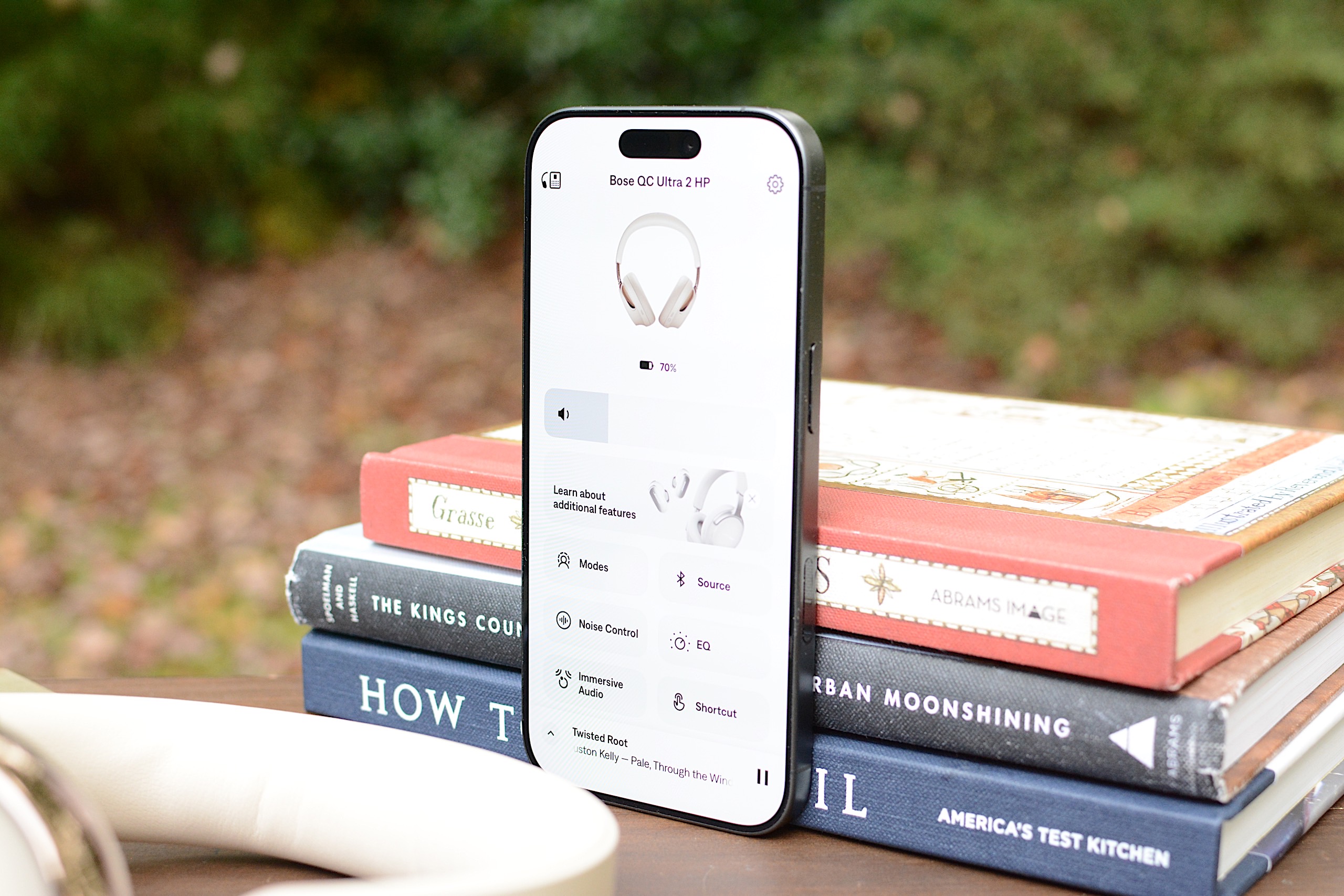
The Bose app gives you access to controls and customization.
Billy Steele for Engadget
The biggest issue with the second-gen QuietComfort Ultra Headphones is the price. To be clear, the likes of Sony, Apple and others charge around the same amount for their top-of-the-line models, but $449 is still a significant investment. If that’s too steep for you, Bose has the highly capable QuietComfort Headphones in its arsenal for a slightly more palatable $359.
My other gripe is that the only real design change Bose made for the updated QC Ultra Headphones is that the metal headband yokes now have a gloss finish. Depending on your personal preference, this might be a dealbreaker for you. It’s least noticeable on the black and violet colorways, since these have a tone-on-tone look. After a few weeks with the bronze and tan Driftwood Sand hue, I’m not a fan of the more stylized aesthetic. It’s flashy, for sure, but it’s a tweak I could’ve done without.
Wrap-up
Similar to the second-gen QC Ultra Earbuds over the summer, Bose didn’t make huge upgrades for the updated version of the QC Ultra Headphones. But what you do get here is a decent improvement over its predecessor. The company devised an intuitive setup for power management and even addressed one of my main gripes with the original by adding support for lossless audio over USB-C. Plus, the extended battery life is significant in all sound modes, and not just by an hour or two here or there. To top it all off, the QuietComfort Ultra Headphones remain the best option for pure noise-blocking ability, and that’s not likely to change any time soon.
This article originally appeared on Engadget at https://www.engadget.com/audio/headphones/bose-quietcomfort-ultra-headphones-2nd-gen-review-impactful-upgrades-to-a-familiar-formula-150000709.html?src=rss
The Wikimedia Foundation, the nonprofit organization that hosts Wikipedia, says that it’s seeing a significant decline in human traffic to the online encyclopedia because more people are getting the information that’s on Wikipedia via generative AI chatbots that were trained on its articles and search engines that summarize them without actually clicking through to the site. 404 Media: The Wikimedia Foundation said that this poses a risk to the long term sustainability of Wikipedia. “We welcome new ways for people to gain knowledge. However, AI chatbots, search engines, and social platforms that use Wikipedia content must encourage more visitors to Wikipedia, so that the free knowledge that so many people and platforms depend on can continue to flow Sustainably,” the Foundation’s Senior Director of Product Marshall Miller said in a blog post. “With fewer visits to Wikipedia, fewer volunteers may grow and enrich the content, and fewer individual donors may support this work.”
The United States Mint has unveiled the designs for the 2026 American Innovation $1 Coin Program, immortalizing key figures and machines that defined our modern digital age. Among the four coins to be released next year (with designs representing California, Wisconsin, Iowa, and Minnesota), two specifically honor pivotal parts in computing
joshuark writes: Not all jobs are created equal, according to the new American Job Quality Study. The nationally representative survey of roughly 18,000 Americans finds that just 40% of U.S. workers hold “quality jobs,” “Quality jobs” are defined as roles with fair compensation, safe environments, growth opportunities, agency and manageable schedules. Quality jobs are linked to higher satisfaction and wellbeing, yet most U.S. workers face gaps in pay, advancement, scheduling and fairness. As former obsolete technology COM guru Don Box stated: COM sucks but pays my bucks. Now it sucks and no bucks.
Wikimedia is sounding the alarm on the impact AI is having on reliable knowledge and information on the internet. In a blog post, Wikimedia’s senior director of product, Marshall Miller, lays out the impact on page views that the foundation attributes to the rise of LLM chatbots and AI-generated summaries in search results.
“We believe that these declines reflect the impact of generative AI and social media on how people seek information, especially with search engines providing answers directly to searchers, often based on Wikipedia content,” said Miller.
The foundation has increasingly faced AI bot crawlers whose sophistication has made it difficult to parse human traffic from bots. After improving bot detection to yield more accurate metrics, Wikipedia’s data shows an 8 percent drop in page views year over year.
Miller paints a picture of an existential risk greater than that of a website’s page views. He posits that if Wikipedia’s traffic continues to decline, it could threaten what he calls “the only site of its scale with standards of verifiability, neutrality and transparency powering information all over the internet.” He warns that fewer visits to Wikipedia would lead to fewer volunteers, less funding and ultimately less reliable content.
The solution he offers is for LLMs and search results to be more intentional in giving users the opportunity to interact directly with the source for the information being presented. “For people to trust information shared on the internet, platforms should make it clear where the information is sourced from and elevate opportunities to visit and participate in those sources,” Miller writes.
Earlier this summer, Wikipedia floated the idea of AI-generated summaries that would appear at the top of articles. The project was ultimately dropped before it began after fierce backlash from the site’s volunteer editors.
This article originally appeared on Engadget at https://www.engadget.com/ai/wikimedia-says-ai-bots-and-summaries-are-hurting-wikipedias-traffic-134331033.html?src=rss
Apple has secured an exclusive deal for the US broadcast rights to Formula 1 racing. Under the terms of a five-year pact with F1 parent company Liberty Media, Apple TV will air every F1 race starting in 2026.
The company says Apple TV subscribers will be able to watch every Grand Prix, along with each practice, qualifying and sprint session. Non-subscribers will be able to watch “select races” for free in the Apple TV app. You won’t have to pony up to watch practice sessions.
Formula 1 has its own dedicated streaming service. F1 TV Premium will still be available in the US, but only with an Apple TV subscription.
It was rumored in July that the tech giant might be looking to add the driving event to its sports programming. Apple allegedly bid between $120 million and $150 million a year for access to F1, which lapped the $90 million a year offered by ESPN, which previously had the US rights. The company may also be looking to capitalize on the success of its F1 the Movie project, which Engadget’s Devindra Hardawar found to be an excellent racing movie, a flashy summer blockbuster, and an ostentatious commercial for Apple in his review.
This article originally appeared on Engadget at https://www.engadget.com/entertainment/streaming/apple-is-the-new-home-for-f1-racing-in-the-us-starting-in-2026-133619412.html?src=rss
No one would blame you if you decided to pick up the newly refreshed 14-inch MacBook Pro with Apple’s fancy M5 silicon inside, though for those who can afford to wait, the next-generation model with an M6 chip may be a substantially bigger upgrade to the MacBook Pro family. Rumor has it the next-gen MacBook Pro will finally adopt a touchscreen
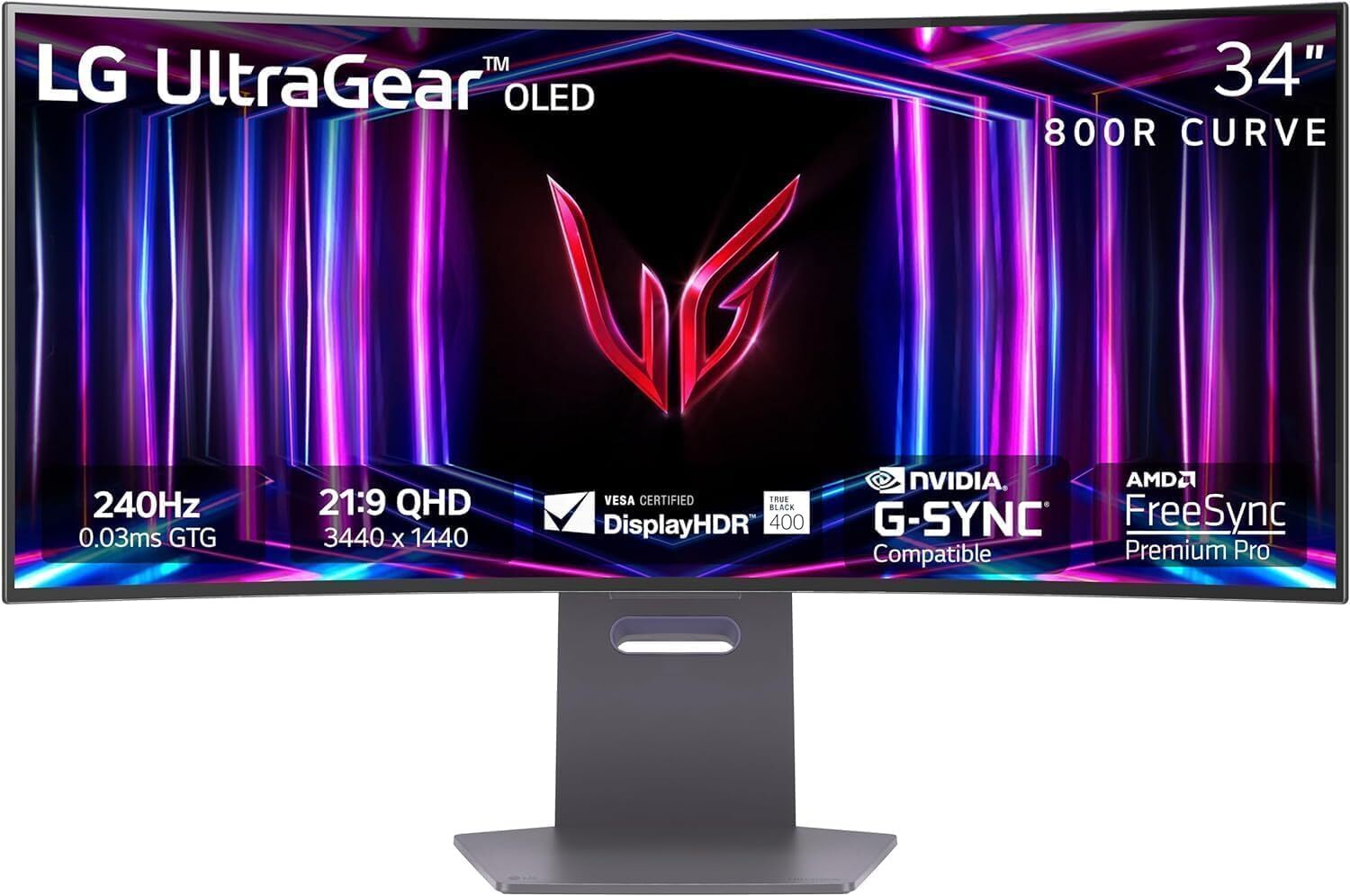
If you’re searching for a curved OLED gaming monitor and want high-end quality from a reliable brand but would prefer not to spend a lot of money, the top-rated LG Ultragear 34GS95QE OLED gaming monitor is $696.99 (originally $1,299.99), 47% off the original price.
If you’re seeking a more immersive gaming experience, this ultra-wide OLED display makes a stylish desktop addition and comes with an adjustable, long-legged base that won’t interfere with your mouse. With an 800R curvature, it’s one of the most curved monitors out there (1,800R is a more common number), and while the aggressive bend might take some time to get used to, reviewers agree that it makes a world of difference. It allows you to focus but also gives you enough screen real estate to multitask while you’re gaming or working. The 34-inch LG 34GS95QE has an anti-glare coating, 3,440 x 1,440 resolution, and supports HDR10, adhering to the DisplayHDR True Black 400 standard and offering deep blacks and striking contrast.
Reviewers note how bright and vivid the colors are, which is accentuated further by the curvature. However, there are minor color inaccuracies, which may be an issue for design professionals (but not most gamers). It has a 240-Hz refresh rate and an ultra-fast 0.03-millisecond response time that results in smooth, lag-free gameplay. The monitor also supports AMD FreeSync Premium Pro and Nvidia G-Sync, which minimizes screen tearing. Two HDMI 2.1 ports are ideal for next-gen devices and consoles.
If you’re looking for a more immersive gaming experience with a curved monitor that has excellent contrast (and 800R doesn’t sound too intense, especially for non-gaming usage), the LG Ultragear 34GS95QE OLED gaming monitor is a great choice. Unless you do design work that requires extreme color accuracy, this premium display for gamers has few flaws, especially at the current discount.
Teamgroup is targeting gamers with its new T-Force Z54E, a solid state drive (SSD) that leverages Phison’s E28 controller to push write and especially read speeds pretty close to the theoretical limit for NVMe storage on the PCI Express 5.0 bus. According to Teamgroup, its latest high-performance SSD can achieve speeds of up to 14,000MB/s
AT&T has been sending out emails to its home internet subscribers, notifying them that their plans will cost $5 more a month starting on December 1. The company has confirmed the price hike to The Verge, who noted that it already raised its prices by $5 a month in November 2024 and that it’s raising prices again despite earning $4.9 billion in profit last quarter. AT&T wrote in its email that it’s charging $5 more for its its home internet plans “[t]o ensure [it continues] providing the quality service and support [customers] deserve.”
“As we work to meet the evolving needs of our business and manage increasing operational costs, we’re adjusting our internet plan rates to help maintain the high-quality service our customers expect,” AT&T spokesperson Jim Kimberly told The Verge. The company is providing customers the chance to offset the additional charges, however, by giving them a $10 monthly discount if they enroll an eligible bank account in Autopay and Paperless Billing if they haven’t yet. If they enroll a debit card, they will get a discount of $5 a month.
It’s not quite clear how long the discounts will last. And for customers who’ve enabled Autopay in the past, well, tough luck. The price hike will not apply to new customers who’ve only signed up over the past year, though, and those under AT&T’s Access program for qualifying low-income households.
This article originally appeared on Engadget at https://www.engadget.com/big-tech/atts-home-internet-is-getting-a-5-price-hike-130010486.html?src=rss
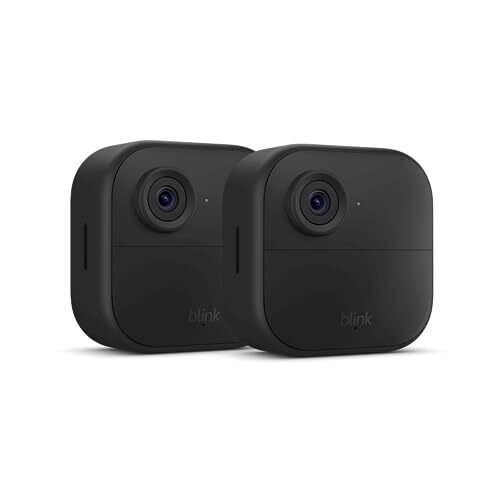
It’s an easy way to start building a basic, battery-powered camera setup without the hassle or cost of professional installation. These “like-new” refurbished units have been fully tested and inspected through Amazon’s certified refurbishment program, so you’re getting solid performance at a fraction of the price.
Each Blink Outdoor 4 camera runs on two AA lithium batteries that can last up to two years, allowing you to set it up and forget about it for a while. They’re completely wireless and weather-resistant, meaning you can mount them almost anywhere—front porch, backyard, or indoors if you just want to check on a pet. The camera records in 1080p and supports two-way audio, so you can see and talk to whomever’s outside your door. Motion detection triggers instant alerts to your phone, and the 143-degree field of view gives you a wide look at what’s going on. You can also view a live feed for up to five minutes at a time without a subscription. The included Sync Module 2 supports local storage via USB and can manage up to 10 cameras at once, saving you from relying solely on cloud plans.
That said, you’ll need a Blink subscription to unlock all the smart features. The Blink Basic Plan costs $40 a year for one device, while the Blink Plus Plan at $120 a year covers unlimited cameras and adds perks like person detection and extended video history. The system integrates smoothly with Amazon Alexa, letting you pull up live feeds on an Echo Show or Fire TV. However, it doesn’t support Google Home or Apple HomeKit, which might be a dealbreaker if you’re invested in those ecosystems. Still, for under $65, you’re getting two outdoor-ready cameras, local storage, and an easy-to-use setup.
An anonymous reader quotes a report from Heise: The European Commission has revised the Ecodesign requirements for external power supplies (EPS). The new rules aim to increase consumer convenience, resource efficiency, and energy efficiency. Manufacturers have three years to prepare for the changes. The new regulations apply to external power supplies that charge or power devices such as laptops, smartphones, Wi-Fi routers, and computer monitors. Starting in 2028, these products must meet higher energy efficiency standards and become more interoperable. Specifically, USB chargers on the EU market must have at least one USB Type-C port and function with detachable cables.
With the regulation, the EU is also establishing minimum requirements for the efficiency of power supplies with an output power of up to 240 watts that charge via USB Power Delivery (USB-PD), among other things, under other things, minimum requirements. Power supplies with an output power exceeding 10 watts will also have to meet minimum energy efficiency values in partial load operation (10 percent of rated power) in the future, which is intended to reduce unnecessary energy losses. The EU Commission says the new requirements are expected to save around 3% of energy consumption over the lifecycle of external chargers by 2035. Additionally, greenhouse gas emissions are expected to decrease by 9% and pollutant emissions by about 13%.
“The EU also calculates that consumer spending could decrease by around 100 million euros per year by 2035,” reports Heise.
Nintendo has asked suppliers to build 25 million Switch 2 console by the end of March 2026, Bloomberg reported. According to people familiar with the matter, the company has requested the boost because it believes the console will continue its torrid sales pace through the holiday season. Nintendo could easily exceed its own forecast of 15 million Switch 2 units sold within its first fiscal year (ending March 30, 2026) and beat first year sales of the original Switch, which was the fastest selling console of all time.
If sales pan out as it expects, Nintendo could sell around 20 million Switch 2 units this fiscal year, according to the report. The 25 million production goal would allow it to satisfy sales demand and have enough in inventory to start the next fiscal year.
The original Switch sold 17.79 million units in its first 13 months, so the Switch 2 could exceed that over a considerably shorter time frame. As a reminder, Switch 2 pre-orders started in April 2025 and the global release was on June 5, so it only started shipping four and a half months ago.
Despite fears over tariffs, Switch 2 sales in the US are way ahead of the original Switch at the same time frame, according to market researcher Circana. During its last earnings report, the company said it had also sold 8.67 million Switch 2 games along with 24.4 million games designed for the original Switch, thanks in part to the new console’s backward compatibility. Game sales should get a further boost with the launch of Pokémon Legends: Z-Acoming later this month.
This article originally appeared on Engadget at https://www.engadget.com/gaming/nintendo/nintendo-reportedly-wants-to-build-25-million-switch-2s-by-march-2026-120006050.html?src=rss
OpenAI has paused video generations of Martin Luther King Jr. on Sora at the request of King Inc., the estate that manages his legacy. The company said in an announcement on X that it worked with the estate to address how his “likeness is represented in Sora generations” after people used the app to create disrespectful depictions of the American civil rights leader. It’s not quite clear if OpenAI intends to restore Sora’s ability to generate videos with MLK in the future, but it’s wording implies it does and that it has only suspended the capability as it “strengthens guardrails for historical figures.”
After OpenAI launched the Sora app, users generated videos with likenesses of dead public figures, including Michael Jackson, Robin Williams and MLK. Williams’ daughter, Zelda Williams, had to beg people to stop sending her AI videos of her father. “To watch the legacies of real people be condensed down to ‘this vaguely looks and sounds like them so that’s enough’, just so other people can churn out horrible TikTok slop puppeteering them is maddening,” she wrote on Instagram. MLK’s daughter, Bernice A. King, wrote on Threads that she agreed and also asked people to stop sending her videos of her father.
According to a report by The Washington Post, the Sora-made videos that were posted online included King making monkey noises while he was giving his “I Have a Dream” speech. Another video showed King wrestling with Malcolm X, whose daughter, Ilyasah Shabazz, questioned why AI developers weren’t acting “with the same morality, conscience, and care… that they’d want for their own families” in a statement made to The Post.
OpenAI said that while there are “strong free speech interests in depicting historical figures,” it believes “public figures and their families should ultimately have control over how their likeness is used.” It also said that the estate owners of other historical figures and their representatives can ask the company for their likenesses not to be used in Sora videos, as well.
Statement from OpenAI and King Estate, Inc.
The Estate of Martin Luther King, Jr., Inc. (King, Inc.) and OpenAI have worked together to address how Dr. Martin Luther King Jr.’s likeness is represented in Sora generations. Some users generated disrespectful depictions of Dr.…
This article originally appeared on Engadget at https://www.engadget.com/ai/openai-suspends-sora-depictions-of-martin-luther-king-jr-following-a-request-from-his-family-110100581.html?src=rss
Apple just announced its fall slate of devices powered by its new M5 chip: A 14-inch MacBook Pro, iPad Pro and revamped Vision Pro. In this episode, Devindra and Sam Rutherford dive into what’s actually new this time around. (Spoiler: It’s really all about the new GPU.) Also, Sam goes deep on his review of the ROG Xbox Ally X, Microsoft’s first stab at a portable “Xbox.”
Apple refreshes of the Macbook Pro, Vision Pro and iPad Pro with M5 chips – 1:24
Sam Rutherford’s review of the ASUS ROG Xbox Ally X – 18:45
Microsoft makes big promises with Copilot Voice, can it follow through? – 39:00
OpenAI’s Sora app reaches 1M downloads in less than 5 days, faster than ChatGPT – 50:42
Sam Altman announces you’ll be able to sext with ChatGPT starting in December – 54:00
Working on – 1:06:50
Pop culture picks – 1:09:41
Credits
Hosts: Devindra Hardawar and Sam Rutherford Producer: Ben Ellman Music: Dale North and Terrence O’Brien
This article originally appeared on Engadget at https://www.engadget.com/mobile/smartphones/engadget-podcast-diving-into-apples-m5-devices-and-the-rog-xbox-ally-x-113000324.html?src=rss
This week, Apple announced fall hardware updates across multiple devices — pretty much every major category, besides iPhones and AirPods. Don’t get too excited: It’s not a redesign reveal, but we’re expecting a tangible performance jump for both the iPad Pro and MacBook Pro.
With the new M5 chip (no Pro or Max versions so far), Apple used the same 3-nanometer fabrication process for the M5 as it did for the M4. The new chip has 10 GPU cores and 10 CPU cores, along with a 16-core Neural Engine. Apple claims the M5 has the “world’s fastest CPU core” with up to 20 percent faster multithreaded performance compared to the M4 chip of the previous MacBook Pro. Graphics performance also gets a significant boost too. The M5 MacBook Pro ($1,599), otherwise, has identical specs to its M4 predecessor, right down to the same dimensions, weight and 70-watt power adapter.
Meanwhile, inside the iPad Pro, Apple claims it has more than four times the peak GPU compute performance of the M4. If you’re looking to use the new iPad Pro for video tasks, Apple says that video transcoding is six times faster than the old M1 iPad Pro from 2021. The 11-inch iPad Pro starts at $999 for the 11-inch model and $1,299 for the 13-inch model.
And it seems to have a lot of M5 chips to use: The Vision Pro gets one and a seemingly more comfortable Dual Knit Band. The M5 Vision Pro should last half an hour longer than the original model, as well, according to Apple.
Chinese phone maker Honor says its next phone will feature a camera on a pop-out mechanical arm. Talking to CNBC, Honor said it will be a robot phone, framing it around AI innovation — something the company is throwing millions of dollars at. I enjoy that its camera arm reminds me of the ubiquitous DJI Osmo Pocket 3, beloved by bloggers, creators and tourists that get in my way. If its foldout camera can track, stabilize video footage and focus on its own, it could be a cool feature. The camera seems to fold away inside the back of the future device, but can it be used while tucked away there? We don’t know. What are these amazing future AI experiences? No idea. Questions, questions, questions. Honor said it plans to share more details at Mobile World Congress in Barcelona early next year.
The co-creation handheld from ASUS ROG and Xbox is here. The Ally X is arguably the best handheld console for Xbox games yet. It’s not just bigger grips and familiar button layouts, but they do help. No, the bigger evolution is how Microsoft has finessed the UI and software, making it more console-like and less like you need a mouse to navigate everything.
Perhaps most importantly, when the ROG Xbox Ally X costs $1,000, the AMD Ryzen Z2 Extreme chip offers a lot of power, enough to handle rich flagship games, with some setting tinkering. If you want the best performance from the Ally X, you’ll need to plug it into the wall.