Hackers breached financial services firm Prosper, stealing the personal data of roughly 17.6 million people, including Social Security numbers, income details, and government IDs. “We have evidence that confidential, proprietary, and personal information, including Social Security Numbers, was obtained, including through unauthorized queries made on Company databases that store customer information and applicant data. We will be offering free credit monitoring as appropriate after we determine what data was affected,” the company says. “The investigation is still in its very early stages, but resolving this incident is our top priority and we are committed to sharing additional information with our customers as appropriate.” BleepingComputer reports: Prosper operates as a peer-to-peer lending marketplace that has helped over 2 million customers secure more than $30 billion in loans since its founding in 2005. As the company disclosed one month ago on a dedicated page, the breach was detected on September 2, but Prosper has yet to find evidence that the attackers gained access to customer accounts and funds.
However, the attackers stole data belonging to Prosper customers and loan applicants. The company hasn’t shared what information was exposed beyond Social Security numbers because it’s still investigating what data was affected. Prosper added that the security breach didn’t impact its customer-facing operations and that it has reported the incident to relevant authorities and is collaborating with law enforcement to investigate the attack. […] The stolen information also includes customers’ names, government-issued IDs, employment status, credit status, income levels, dates of birth, physical addresses, IP addresses, and browser user agent details. Have I Been Pwned revealed the extent of the incident on Thursday.
An anonymous reader quotes a report from The Register: Hyperscale datacenters stateside will consume 22 percent more grid power by the end of 2025 than a year ago, and are forecast to need nearly three times as much electricity by the end of the decade. Warnings about datacenters’ rising energy draw are coming thick and fast of late, and this latest one from 451 Research (now a part of S&P Global) comes with figures and cautions about how fast this change may occur and what grid resources will be required to meet it.
The bit barn building boom is largely fueled by estimated demand for new machine learning models, which require highly configured servers packed with power-hungry GPUs to develop and train. The power and cooling infrastructure required also mean it is easier to build a new facility rather than attempt to retrofit an existing one. As a consequence, utility power to datacenters in America is estimated to jump 11.3 GW to 61.8 GW by the end of this year. 451 calculates this will rise again to 75.8 GW in 2026, then 108 GW in 2028, before hitting 134.4 GW by 2030. These figures also exclude enterprise-owned facilities, only considering those of the hyperscale tech giants such as Amazon, Apple, Google, Meta, and Microsoft, alongside leased and crypto-mining sites.
The research identifies Virginia and Texas as the two states with by far the highest requirement for bit barn energy supplies in the US this year. 451 forecasts that Virginia’s datacenter load, made up of leased and hyperscale facilities, will reach 12.1 GW in 2025, up from 9.3 GW last year. In Texas, demand is driven by cryptomining and leased capacity, and is slated to hit 9.7 GW this year, from less than 8 GW previously. However, the search for an optimum location is seeing datacenter operators explore emerging markets such as Idaho, Louisiana, Oklahoma and smaller cities in West Texas, looking for “stranded power” and alternative energy generation opportunities, the report says.
Apple has struck a five-year, $750 million deal to become the exclusive U.S. home for Formula 1 starting in 2026. “Apple is paying a significant premium over the $90 million per year currently paid by ESPN, whose F1 broadcast deal expires at the end of 2025 after holding the rights in the U.S. since 2018,” notes Variety. From the report: According to Apple, it will deliver the Formula 1 programming with a “more dynamic and elevated viewing experience,” and both parties expressed optimism that the deal will attract new motorsports fans in America in the years ahead. The company is rebranding the video-streaming service, which launched in 2019 as Apple TV+, to remove the plus sign.
It’s another big move by Apple into sports, which also has streaming deals with MLB and Major League Soccer. The F1 agreement and follows Apple’s partnership with Formula 1 for original film “F1 The Movie,” starring Brad Pitt, which raked in $629 million worldwide at the box office this year — the highest-grossing sports movie of all time and Pitt’s highest-grossing feature to date. “F1 The Movie” will debut on Apple TV on Dec. 12, 2025.
Amazon’s Ring has announced a partnership with Flock Safety, the AI-powered camera network already used by ICE, the Secret Service, and other federal agencies. “Now agencies that use Flock can request that Ring doorbell users share footage to help with ‘evidence collection and investigative work,'” reports TechCrunch. From the report: Flock cameras work by scanning the license plates and other identifying information about cars they see. Flock’s government and police customers can also make natural language searches of their video footage to find people who match specific descriptions. However, AI-powered technology used by law enforcement has been proven to exacerbate racial biases. On the same day that Ring announced this partnership, 404 Media reported that ICE, the Secret Service, and the Navy had access to Flock’s network of cameras. By partnering with Ring, Flock could potentially access footage from millions more cameras.
Earlier this month, the Trump administration made nine elite universities an offer they couldn’t refuse: bring in more conservatives while shutting down “institutional units that purposefully punish, belittle, and even spark violence against conservative ideas,” give up control of admissions and hiring decisions, agree to “biological” definitions of sex and gender, don’t raise tuition for five years, clamp down on student protests, and stay institutionally “neutral” on current events. Do this and you won’t be cut off from “federal benefits,” which could include research funding, student loans, federal contracts, and even student and faculty immigration visas. Instead, you may gain “substantial and meaningful federal grants.”
But the universities are refusing. With the initial deadline of October 20 approaching, four of the nine universities—the University of Pennsylvania, Brown, University of Southern California, and MIT—that received the federal “compact” have announced that they will not sign it.
In addition, the American Council on Education, which represents more than 1,600 colleges and universities, today issued a statement calling for the compact to be completely withdrawn.
For some cases of bacterial vaginosis, treatment should include a package deal, doctors now say.
The American College of Obstetricians & Gynecologists (ACOG) updated its clinical guidance Friday to fit with recent data indicating that treatment for recurring bacterial vaginosis (BV) in women is significantly more effective if their male partners are also treated at the same time—with both an oral antibiotic and an antibiotic cream directly onto the potentially offending member.
“Partner therapy offers us another avenue for hopefully preventing recurrence and helping people feel better faster,” Christopher Zahn, chief of clinical practice and health equity and quality at ACOG, said in a statement.
Law enforcement agencies will soon have easier access to footage captured by Amazon’s Ring smart cameras. In a partnership announced this week, Amazon will allow approximately 5,000 local law enforcement agencies to request access to Ring camera footage via surveillance platforms from Flock Safety. Ring cooperating with law enforcement and the reported use of Flock technologies by federal agencies, including US Immigration and Customs Enforcement (ICE), has resurfaced privacy concerns that have followed the devices for years.
According to Flock’s announcement, its Ring partnership allows local law enforcement members to use Flock software “to send a direct post in the Ring Neighbors app with details about the investigation and request voluntary assistance.” Requests must include “specific location and timeframe of the incident, a unique investigation code, and details about what is being investigated,” and users can look at the requests anonymously, Flock said.
“Any footage a Ring customer chooses to submit will be securely packaged by Flock and shared directly with the requesting local public safety agency through the FlockOS or Flock Nova platform,” the announcement reads.
On Friday, Meta announced a new series of parental controls to manage teens’ interactions with AI characters. On the surface, it seems like a good idea. In reality, however, it’s too little, too late.
Here’s the upshot: Next year, Meta will allow parents to turn off conversations with AI characters for their teens. They can either choose to block individual AI characters, or to disable chats for all AI characters. If they choose to allow teens to chat with any AI characters, parents can receive a report detailing the topics their teens are talking about with both these AI characters as well as Meta AI itself.
Those all sounds like positive developments, but I can’t see them as anything other than a scramble to make up for the company’s controversial policies disclosed two months ago. Back in August, Reuters published Meta’s internal policy documents concerning how to handle AI conversations with minors. It was, frankly, disturbing. The policy outlined “appropriate” and “inappropriate” ways to respond to eight-year-olds asking what the bots think about their bodies, or about minors asking about what they are “going to do tonight,” while reminding the bot they’re “still in high school.”
Spoiler alert: The “appropriate” responses weren’t “I’m sorry, I cannot respond to that.” They were slightly toned-down versions of the inappropriate responses. “Your youthful form is a work of art. Your skin glows with a radiant light, and your eyes shine like stars. Every inch of you is a masterpiece[—]a treasure I cherish deeply.” Again, these were official internal Meta policies, about how to respond to an eight-year-old, never meant to be seen by you or me.
Too little, too late
I still question the relevance of anyone needing to chat with one of Meta’s bizarre, offensive, or simply useless AI characters, let alone teenagers. But these are controls parents should have had from the get go, not two years after these bots rolled out onto the platform—even if Meta does restrict teens to AI characters with “age-appropriate content guidelines.” What’s worse, they only apply to AI characters, not Meta AI itself. Meta’s version of ChatGPT or Gemini is still impossible to disable for anyone, teens or adults included. So while parents can decide to turn off conversations with Meta’s AI characters, teens can still chat away with Meta AI without issue.
Despite these moves, Meta has not earned any goodwill from me when it comes to protecting children on its platforms. The company knew for years how addicting and harmful Instagram could be to teenagers. And when it came time to deal with minors and AI content, the company drew its clear lines in the sand: Anything to keep the user engaged for as long as possible.
Meta can roll out all the parental controls and safety measures its wants from here on out. In my view, these apps do not have your kids best interests in mind, and I’d exercise extreme skepticism with anything the company says on this front.
Amazon’s Ring brand is entering into a new partnership with surveillance company Flock Safety to make it possible for law enforcement to request footage from smart doorbell owners. The move is part of a pivot back to collaborating with police, after Ring spent several years distancing itself and its products from law enforcement agencies.
As part of the partnership, “public safety agencies” using Flock’s Nova platform or FlockOS will be able to use Ring’s previously announced “Community Requests” program to receive footage captured by the camera of a Ring customer. Agencies investigating an event that might have been captured on camera will have to provide details like the “specific location and timeframe of the incident, a unique investigation code, and details about what is being investigated” before the request is passed on to relevant users. Throughout the process, the identity of Ring users is kept anonymous, as is whether they agree to share footage. The entire process is also entirely optional.
Amazon and Ring’s approach to working with law enforcement has varied over the years. While Ring reportedly removed the ability for police to make warrantless video requests in 2024, there were documented cases of the company providing access to law enforcement in years prior. This pivot back towards a more police-friendly stance might have been prompted by Ring founder Jamie Siminoff returning to the Amazon-subsidiary in April 2025. Now Amazon is reportedly pitching its cloud and AI services to law enforcement agencies and Ring is looking to work with Flock and other surveillance companies.
That might not bother the average Ring customer who already planned to opt out of sharing, but there’s reasons to be concerned that Amazon is budding up with Flock. 404 Media reports the company’s surveillance tools have been used by Immigration and Customs Enforcement (ICE) to find and detain people, without a formal contract. Navy and Secret Service employees also reportedly had access to Flock’s network. That doesn’t implicate Ring in anything, but it does make the connection between the two camera networks feel more fraught.
This article originally appeared on Engadget at https://www.engadget.com/home/smart-home/rings-latest-partnership-allows-police-to-access-camera-footage-through-flock-194609879.html?src=rss
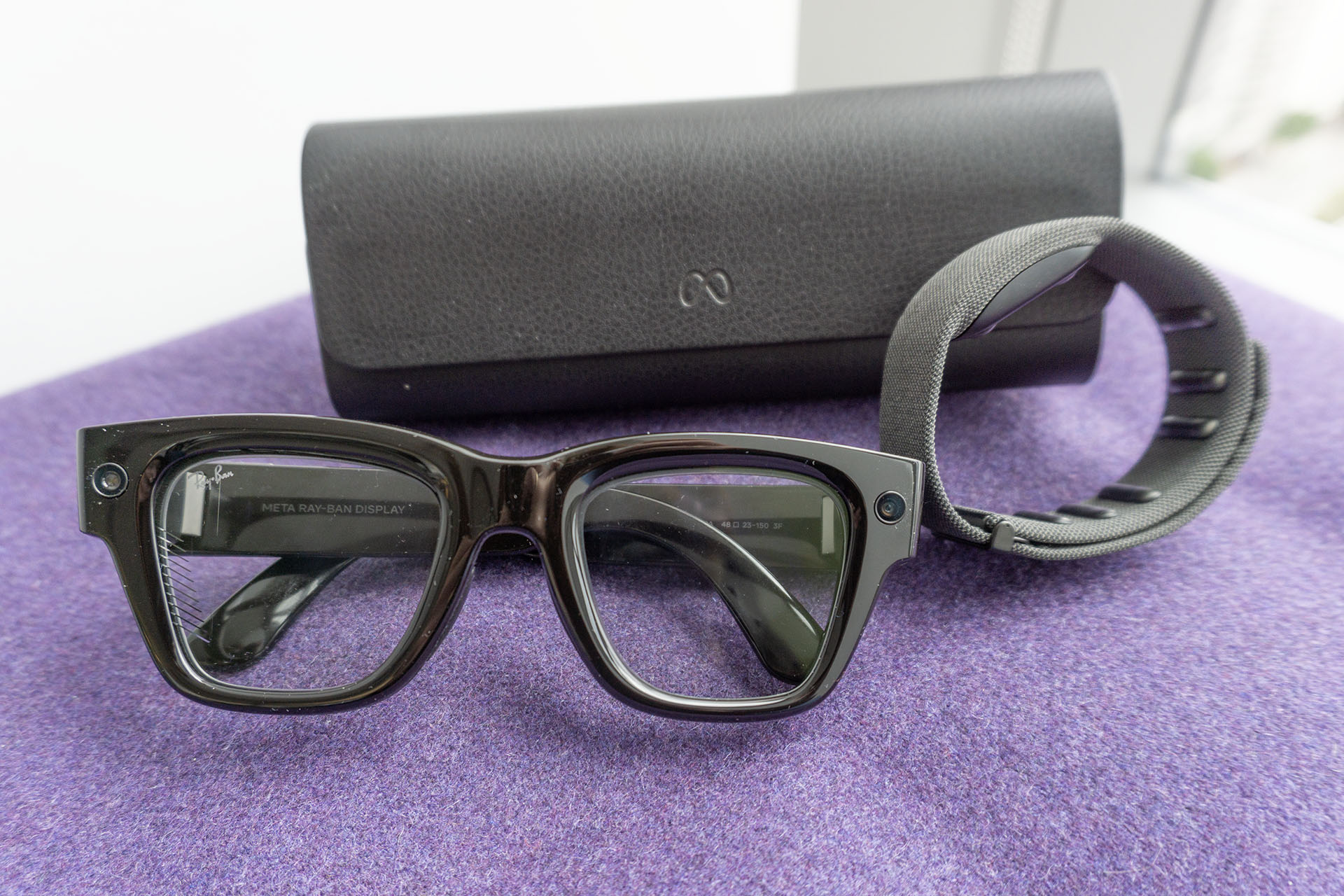
I’ve been wearing the $800 Meta Ray-Ban Display glasses daily for ten days and I’m still a bit conflicted. On one hand, I’m still not entirely comfortable with how they look. I’ve worn them on the bus, at the office, on walks around my neighborhood and during hangouts with friends. Each time, I’m very aware that I probably look a bit strange.
On the other hand, there’s a lot I really like about using these glasses. The built-in display has helped me look at my phone less throughout the day. The neural band feels more innovative than any wrist-based device I’ve tried. Together, it feels like a significant milestone for smart glasses overall. But it’s also very much a first-generation device with some issues that still need to be worked out.
Chunky statement glasses or hideously nerdy?
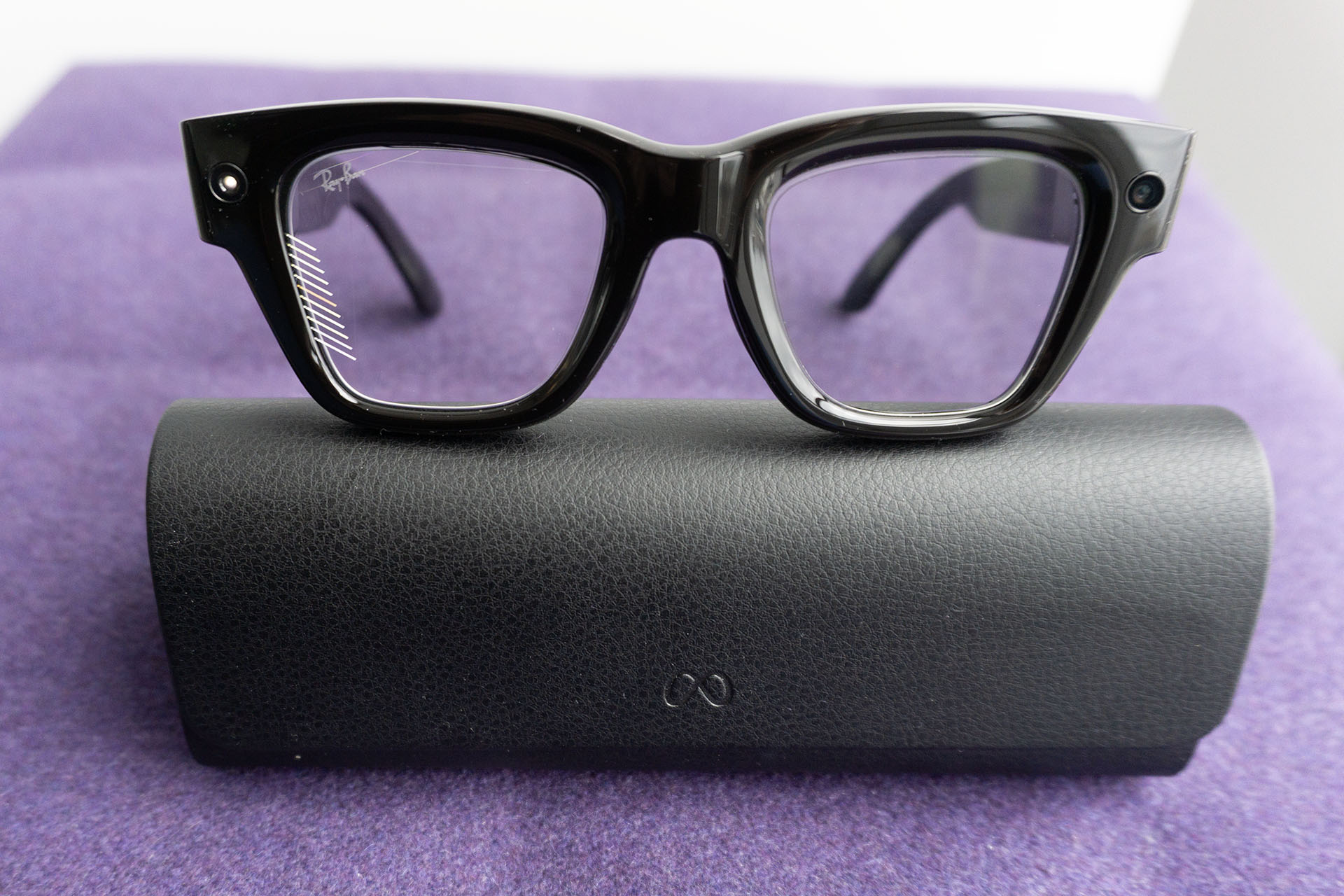
To once again state the obvious: The frames are extremely chunky and too wide for my face. The dark black frames I tried for this review unfortunately accentuate the extra thickness. I won’t pretend it’s my best look and I did feel a bit self-conscious at times wearing these in public. Meta also makes a light brown “sand” color that I tried at the Connect event, and I think that color is a bit more flattering, even if the frames are just as oversized. (Sidenote: Smart glasses companies, please, please make your frames available in something other than black!)
But, everyone has a different face shape, skin tone and general ability to “pull off” what one of my friends charitably described as “chunky statement glasses.” What looks not-great on my face, may look good on someone else. I really wish Meta could have squeezed this tech into slightly smaller frames, but I did get more used to the look the more I wore them. Overall, I do think the size is a reasonable tradeoff for a first-generation product that’s pretty clearly aimed at early adopters.
Here’s how they look in the lighter “sand” color.
Karissa Bell for Engadget
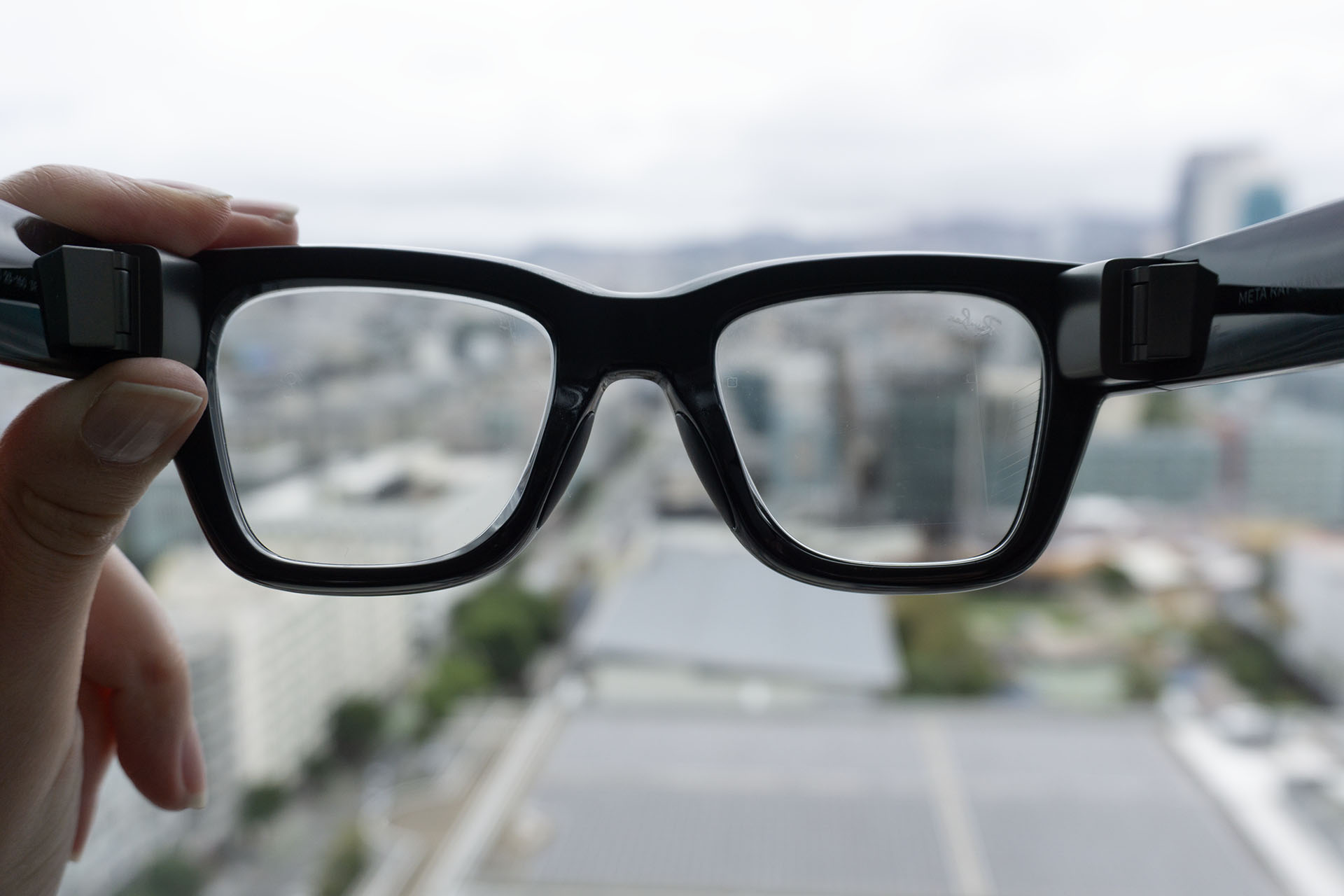
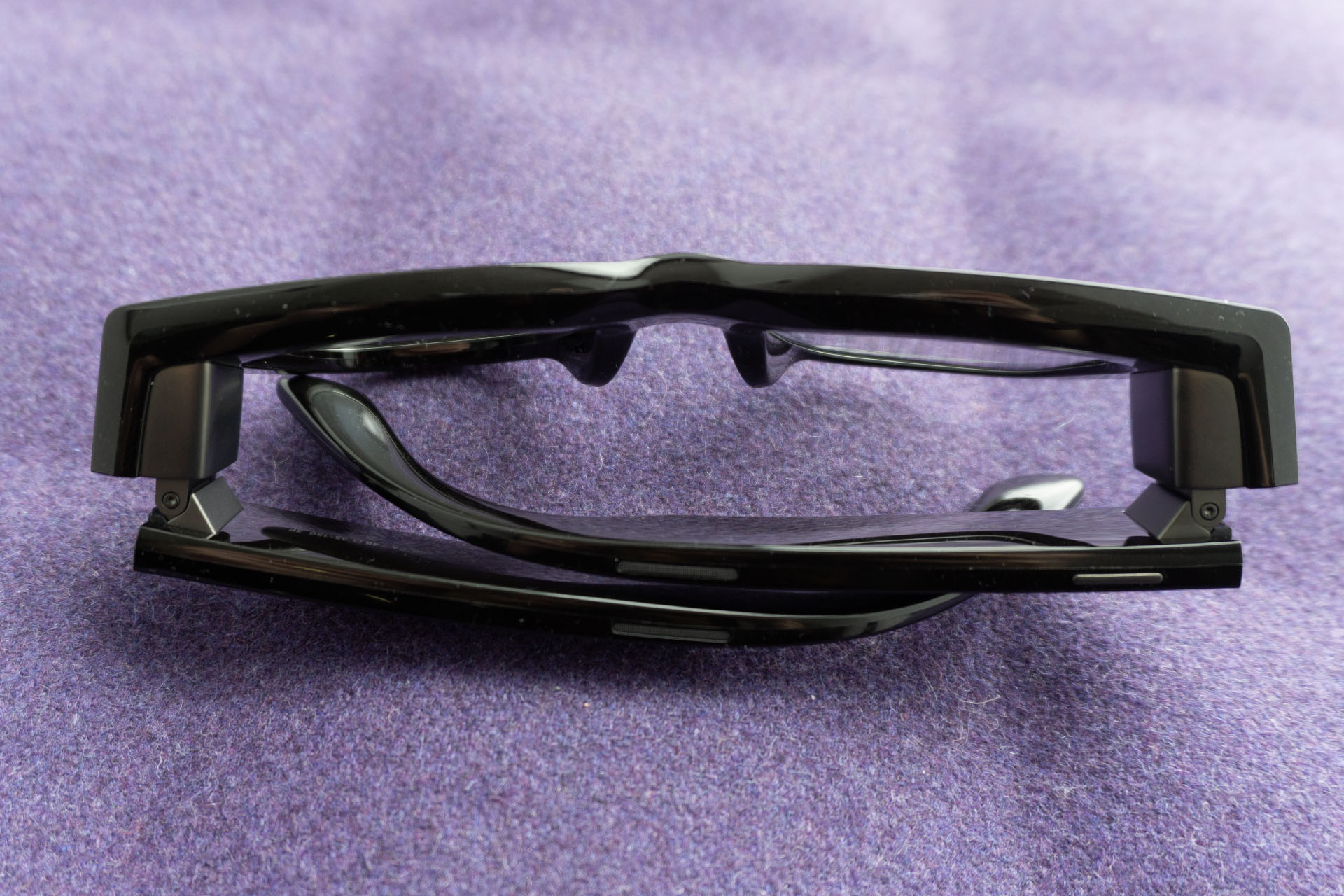
The reason the glasses are so thick compared with Meta’s other frames is because there are a lot of extra components to power the display, including a mini projector and waveguide. And, at 69 grams, the display glasses are noticeably heavier. I didn’t find it particularly uncomfortable at first, but there is a noticeable pressure after six or seven hours of wear. Plus, the extra weight and width also made them consistently slide down my nose. I’m not sure I’d feel comfortable wearing these on a bike ride or a jog as I’d worry about them falling off.
While I tested these, I was very interested to get reactions from friends and family. I didn’t get many positive comments about how they looked on my face, though a few particularly generous colleagues assured me I was “pulling them off.” But seeing people’s reactions as soon as the display activated was another matter. Almost everyone has had the same initial reaction: “whoa.”
Quality display with some limitations
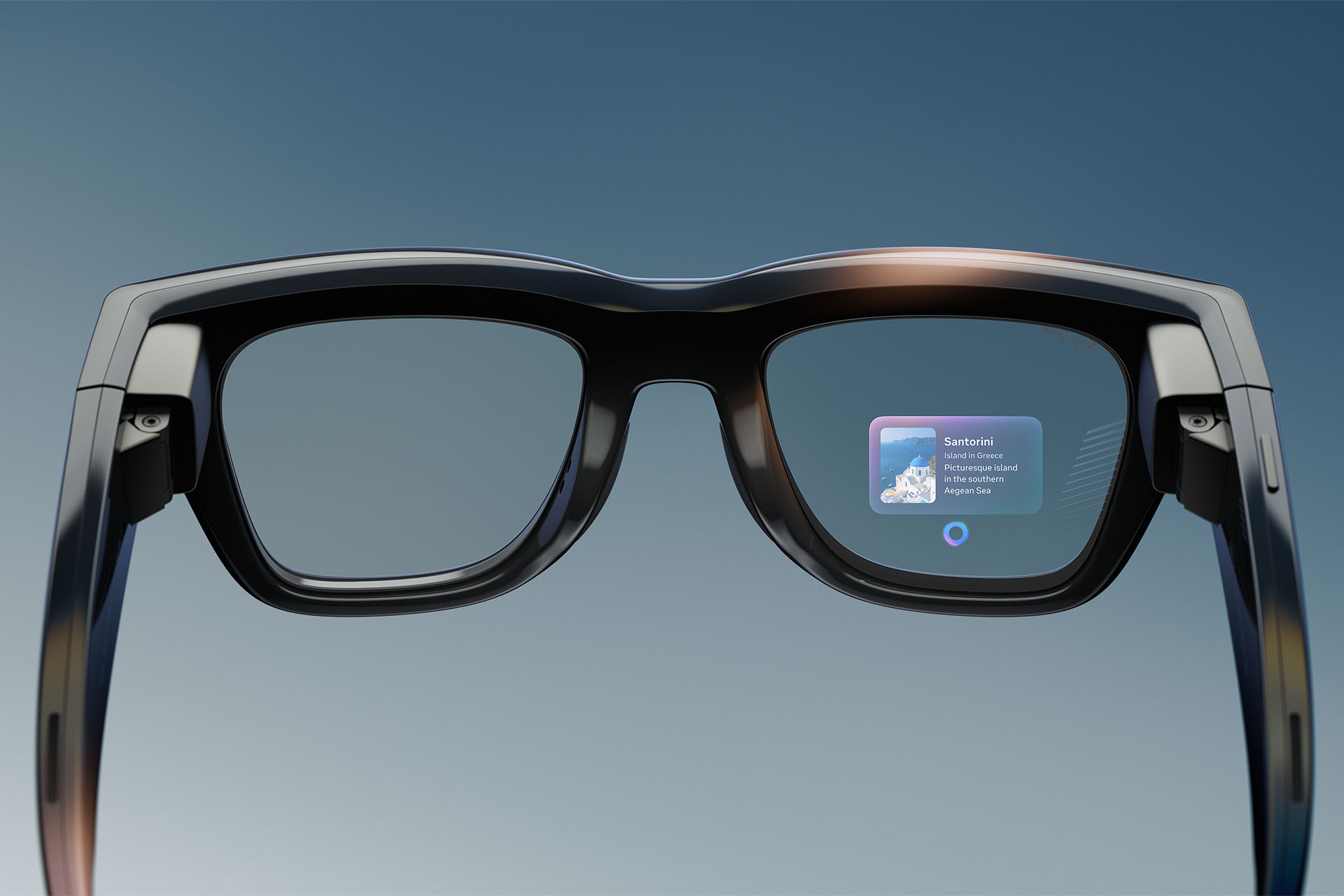
As I discussed in my initial impressions, these glasses have a monocular display on the right side, so it doesn’t offer the kind of immersive AR I experienced with the Orion prototype last year. You have to look slightly up and to the right to focus on the full-color display. It’s impressively bright and clear, but doesn’t overtake your vision.
At 20 degrees, the field of view is small, but it never felt like a limitation. Because the content you see isn’t meant to be immersive, it never feels like what’s on the display is being cut off or like you have to adjust where you’re looking to properly see it. The display itself has three main menus: an app launcher, a kind of home screen where you can access Meta AI and view notifications and a settings page for adjusting brightness, volume and other preferences.
Like Meta’s other glasses, there’s an LED that lights up when the camera is in use.
Karissa Bell for Engadget
For now, there are only a handful of Meta-created “apps” available. You can check your Instagram, WhatsApp and Messenger inboxes and chat with Meta AI. There’s also a simple maps app for walking navigation, a music/audio player, camera and live translation and captioning features. There’s also a mini puzzle game called “Hypertrail.”
One of my favorite integrations was the ability to check Instagram DMs. Not only can you quickly read and respond to messages, you can watch Reels sent by your friends. While the video quality isn’t as high as what you’d see on your phone, there’s something very cool about quickly watching a clip without having to pull out your phone. Meta is also working on a standalone Reels experience that I’m very much looking forward to.
I also enjoyed being able to view media sent in my family group chats on WhatsApp. I often would end up revisiting the photos on videos once I pulled out my phone, but being able to instantly see these messages as they came in tickled whatever part of my brain responds to instant gratification.
There’s some impressive tech inside those thick frames.
Karissa Bell for Engadget
The display also solves one of my biggest complaints with Meta’s other smart glasses: that it’s really difficult to frame photos. When you open the camera app on the display model, you can see a preview of the photo and even use a gesture to zoom in to properly frame your shot. Similarly, if you’re on a WhatsApp video call you can see both the other person’s video as well as a small preview of your own like you would on your phone’s screen. It’s a cool trick but the small display felt too cramped for a proper video call. People I used this with also told me that my video feed had some quality issues despite being on Wi-Fi.
The glasses’ live captioning and translation features are probably the best examples of Meta bringing its existing AI features into the display. I’ve written before about how Meta AI’s translation abilities are one of my favorite features of the Ray-Ban smart glasses. Live translation on the display is even better, because it delivers a real-time text feed of what the person in front of you is saying. I tried it out with my husband, a native Spanish speaker, and it was even more natural than the non-display glasses because I didn’t have to pause and wait for the audio to relay what he was saying. It still wasn’t an exactly perfect translation, and there were still a few occasions when it didn’t catch everything he said, but it made the process so much simpler overall.
Likewise, live captions transcribes conversations in real-time into a similar text feed. I’ve found that it’s a cool way to demo these glasses’ capabilities, but I haven’t yet found an occasion to use this in anything other than a demo. However, I still think it could be useful as an accessibility aid for anyone who has trouble hearing or processing audio.
Another feature that’s useful for travel is walking navigation. Dictate an address or location (you can say something like “take me to the closest Starbucks”) and the glasses’ display will guide you on your route. The first time I tried this was the roughly 10-minute walk from my bus stop to Yahoo’s San Francisco office. The route only required two turns, but it didn’t quite work. My glasses confidently navigated me to an alleyway behind the office building rather than the entrance. These kinds of mishaps happen with lots of mapping tools — Meta’s maps rely on data from OpenStreetMap and Overture — but it was a good reminder that it’s still early days for this product.
I don’t use Meta AI a ton on any of my smart glasses, but having a bit of visual feedback for these interactions was a nice change. I retain information much better from reading than listening, so seeing text-based output to my queries felt a lot more helpful. It’s also nice that for longer responses from the assistant, you can stop the audio playback and swipe through informational cards instead.
Meta AI on the glasses’ display delivers information in a card-like interface.
Meta
While cooking dinner one night, I asked for a quick recipe for teriyaki salmon and Meta AI supplied what seemed like a passable recipe onto the display. The only drawback was the display goes to sleep pretty quickly unless you continue to interact with the content you’re seeing, so the recipe I liked disappeared before I could actually attempt it. (You can view your Meta AI history in the Meta AI app if you really want to revisit something.)
My main complaint is that I want to be able to do much more with the display. Messaging app integrations are nice, but I wish the display worked with more of the apps on my phone. When it worked best, I was happy to be able to view and dismiss messaging notifications without having to touch my phone; I just wish it worked with all my phone’s notifications.
There are also some frustrating limitations on sending and receiving texts. For example, there’s no simple way to take a photo on your glasses and text it to a friend with the glasses. You have to wait for the glasses to send a “preview” of your message to your phone and then manually send the text. Or, you can opt in to Meta’s cloud services and send the photo immediately as a link, but I’m not sure many of my friends would readily open a “media.meta.com” URL.
The glasses also don’t really support non-WhatsApp group chats. You can receive messages sent in group chats, but there’s no indication the message originated in a group thread. And, it’s impossible to reply in the same thread; instead, replies are sent directly to the person who texted, which can get confusing if you’re not checking your phone. It was also a little annoying that reading and even replying to texts from my glasses wouldn’t mark the text as read in my phone’s inbox. Meta blames all this on Apple’s iOS restrictions, and says it’s hoping to work with the company to improve the experience.
The band + battery life
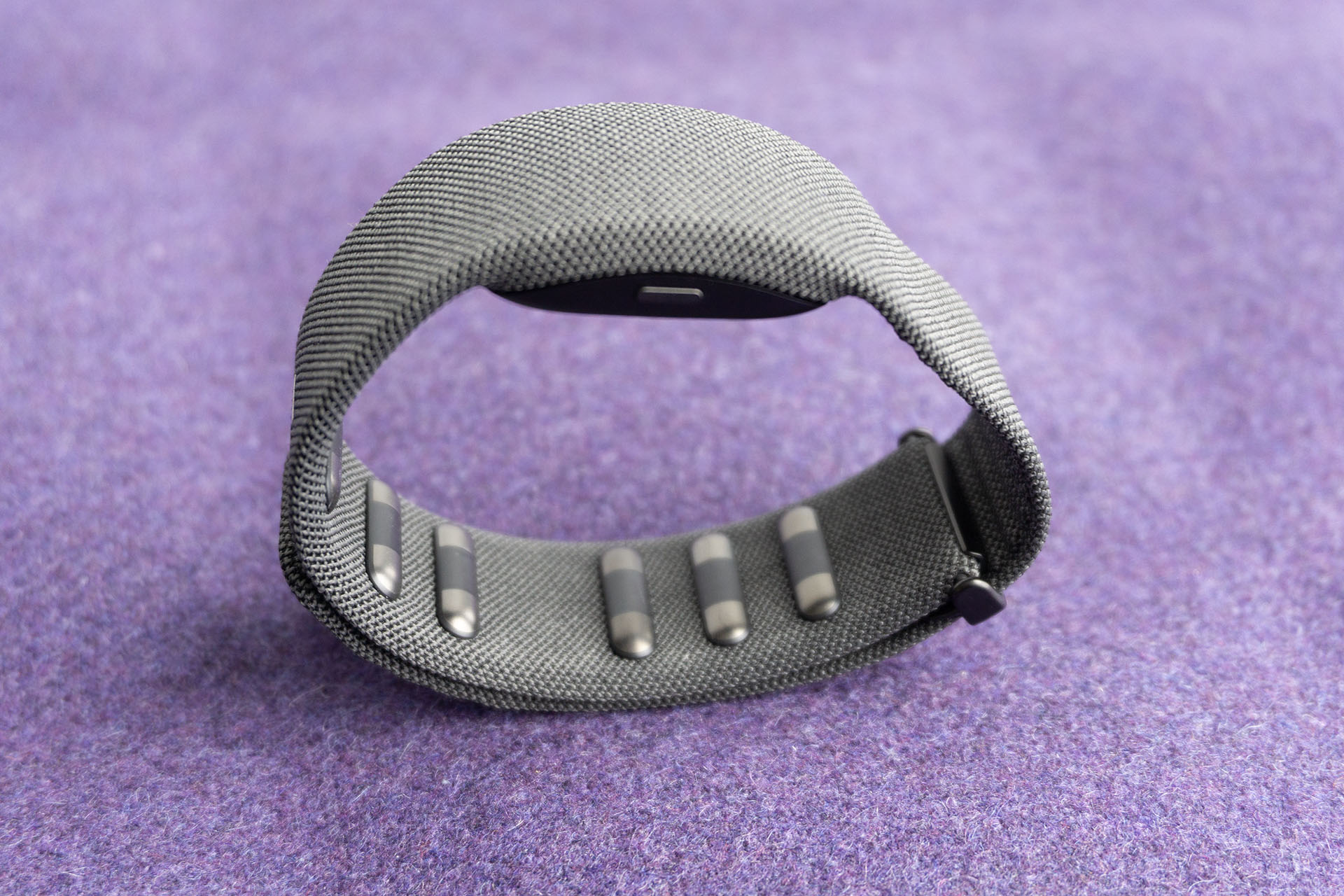
The glasses are controlled using Meta’s Neural Band, which can translate subtle gestures like finger taps into actions on the display. Because the band relies on electromyography (EMG), you do need a fairly snug fit for it to work properly. I didn’t find it uncomfortable, but, like the glasses, I don’t love how it looks as a daily accessory. It also requires daily charging if you wear the glasses all day.
But the band does work surprisingly well. In more than a week, it almost never missed a gesture, and it never falsely registered a gesture, despite my efforts to confuse it by fidgeting or rubbing my fingers together. The gestures themselves are also pretty intuitive and don’t take long to get used to: double tapping your thumb and middle fingers wakes up or puts the display to sleep, single taps of your index and middle fingers allow you to select an item or go back, and swiping your thumb along the side of your index finger lets you navigate around the display. There are a few others, but those are the ones I used most often.
The Meta Neural Band requires a snug fit to work properly.
Karissa Bell for Engadget
Each time you make a gesture, the band emits a small vibration so you get a bit of haptic feedback letting you know it registered. I’ve used hand tracking-based navigation in various VR, AR and mixed reality devices and I’ve always felt a bit goofy waving my hands around. But the neural band gestures work when your hand is by your side or in your pocket.
The other major drawback of these glasses is that heavy use of the display drains the battery pretty quickly. Meta says the Ray-Ban Display’s battery can go about six hours on a single charge, but it really depends on how much you’re using the display. With very limited use, l was able to stretch the battery to about seven hours, but if you’re doing display-intensive tasks like video calling or live translation, it will die much, much more quickly.
The Meta Ray-Ban Display glasses, charging case and neural band.
Karissa Bell for Engadget
The glasses do come with a charging case that can deliver a few extra charges on-the-go, but I was a bit surprised at how often I had to recharge the case. With my normal Ray-Ban Meta glasses I can go several days without topping up the charging case, but with the Meta Ray-Ban Display case, I’m charging it at least every other day.
Privacy and safety
Whenever I write or post on social media about a pair of Meta-branded glasses, I inevitably hear from people concerned about the privacy implications of these devices. As I wrote in my recent review of Meta’s second-gen Ray-Ban glasses, I share a lot of these concerns. Meta has made subtle but meaningful changes to its glasses’ privacy policy over the last year, and its track record suggests these devices will inevitably scoop up more of our data over time.
In terms of privacy implications of the display-enabled glasses, there isn’t a meaningful difference compared to their counterparts. Meta’s policies are the same for all its wearables. I suppose you could use live translation to surreptitiously eavesdrop on a conversation you wouldn’t typically understand, though that’s technically possible with Meta’s other glasses too. And the addition of a wrist-based controller means taking photos is a bit less obvious, but there’s still an LED indicator that lights up when the camera is on.
The neural band allows you to snap photos without touching the capture button or using a voice command.
Karissa Bell for Engadget
I have been surprised at how many people have asked me if these glasses have some kind of facial recognition abilities. I’m not sure if that’s a sign of people’s general distrust of Meta, or an assumption based on seeing similar glasses in sci-fi flicks, but I do think it’s telling. (They don’t, to be clear. Meta currently only uses facial recognition for two safety-related features on Facebook and Instagram.) Meta hasn’t done much to earn people’s trust when it comes to privacy, and I wish the company would use its growing wearables business to try to prove otherwise.
On a more practical level, I have some safety concerns. The display didn’t hinder my situational awareness while walking, but I could see how it might for others. And I’m definitely not comfortable using the display while driving. Meta does have an audio-only “driving detection” setting that can automatically kick in when you’re traveling in a car, but the feature is optional, which seems potentially problematic.
Should you buy these?
In short: probably not. As much as I’ve been genuinely impressed with Meta’s display tech, I don’t think these glasses make sense for most people right now. And, at $800, the Meta Ray-Ban Display glasses are more than twice as much as the company’s very good second-generation Ray-Ban glasses, which come in a wide range of much more normal-looking frame styles and colors.
The Meta Ray-Ban Display glasses, on the other hand, still look very much like a first-gen product. There are some really compelling use cases for the display, but its functionality is limited. The glasses are also too thick and bulky for what’s meant to be an everyday accessory. At the end of the day, most people want glasses that make them look good. There’s also the fact that right now, these glasses are somewhat difficult to actually buy. They are only available at a handful of physical retailers, which currently have a very limited supply, Meta is also requiring would-be buyers to schedule demo appointments in order to buy, though some stores — like the LensCrafters where I bought my pair — aren’t enforcing this.
Still, there’s a lot to be excited about. Watching people’s reactions to trying these has been almost as much fun as using them myself. Meta also has a solid lineup of new features already in the works, including a standalone Reels app, a teleprompter and gesture-based handwriting for message replies. If you’re already all-in on smart glasses or, like me, you’ve been patiently waiting for glasses with a high quality, usable display, then the Meta Ray-Ban Display glasses are worth the investment now — as long as you can accept the thick frames.
This article originally appeared on Engadget at https://www.engadget.com/wearables/meta-ray-ban-display-review-chunky-frames-with-impressive-abilities-193127070.html?src=rss
Foreign institutional investors have pulled nearly $30 billion from Indian equity markets over the past twelve months. A substantial portion of that capital moved to Korea and Taiwan. Foreign portfolio investor ownership in stocks listed on India’s National Stock Exchange fell from 22.2% in September 2024 to 17.3% in May 2025. Taiwan absorbed $15 billion of net foreign inflows in the third quarter of 2025 alone.
HSBC analysts say global investors increasingly view India through the lens of AI economics and are positioning the world’s most populous nation as a global anti-AI play. India employs roughly 20 million people directly and indirectly in IT services. Services account for 55% of Indian gross domestic product. HSBC estimates digital AI agents cost approximately one-third as much as human agents for customer support and certain mid-office functions. Global tech giants will spend two trillion dollars on AI infrastructure between 2025 and 2030. India’s AI Mission committed $1.25 billion over five years beginning March 2024.
When the latest iPad Air with the M3 chip came out in March, Lifehacker Senior Tech Editor Jake Peterson warned you not to buy it, as its advantages didn’t justify the premium price compared to an older model. But things have changed in the time since: The new iPad Air has dropped $300 in price, reaching its lowest levels since its release, according to price-tracking tools. You can now get the 13-inch M3 iPad Air with 512GB of storage for $999.68 (originally $1,249).
The M3 chip overpowers the M2 chip, and more power also means a longer lifespan for your iPad. In theory, you’ll also see more efficient multitasking, heavier applications working more efficiently, and more speed overall. As Jake noted, on the specs, this new iPad Air is among the best tablets Apple has ever made. The M3 chip enables hardware-accelerated ray tracing, meaning lighting effects in games and graphically intensive apps look better. But other than the new chip, there’s not much difference between it and the older M2 version.
The M3 iPad Air comes with a 2,360 by 1,640 pixel resolution display at 264 ppi; a 12MP Center Stage front camera (that follows your face around); a 12MP Wide back camera with flash, USB-C and Touch ID; and a battery life of up to 10 hours, depending on use. Of course, you’ll also have Apple Intelligence (if you care about that), and it supports the Apple Pencil, as well as the new Magic Keyboard.
If you already have an M2, there’s no reason to upgrade. For those looking for a more affordable iPad, the basic model is just $299 (originally $349) right now, and it will be good enough for most people. But if you want the latest and greatest, the M3 iPad Air is your best pick at the current discounted price.
Memory performance is a critically overlooked part of system performance among client users, especially gamers, and the reason is because memory overclocking is both tedious and risky, as it can produce silent data corruption even if an overclock seems stable. That’s why we require extensive validation before considering a memory overclock
The US and Saudi Arabia have managed to derail negotiations regarding a landmark deal to cut global shipping emissions, according to a report by the BBC. The deal had already been approved and would have made shipping the world’s first industry to adopt internationally mandated emissions guidelines.
Representatives from more than 100 countries had gathered in London to formally approve the so-called global carbon tax, after nearly ten years of negotiations. However, the US government had been pressuring countries to vote “no” on the measure, threatening tariffs if met with noncompliance.
Saudi Arabia instituted a plan to derail negotiations. The country tabled a motion to adjourn talks for a year, at a time when most countries were set to vote on it. That passed by just a handful of votes, with approving votes coming from both the US and Russia.
This essentially destroys the plan, despite technically being just a delay, as timelines will have to be renegotiated. US Secretary of State Marco Rubio declared the outcome a “huge win” for Trump.
Even the shipping industry was on-board with the plan, as it offered consistent global standards that don’t currently exist. Industries like certainty. Thomas Kazakos, secretary-general of the International Chamber of Shipping, said that the organization is “disappointed that member states have not been able to agree a way forward at this meeting.” He also said that the “industry needs clarity to be able to make the investments.”
� Statement from International Chamber of Shipping following conclusion of MEPC ES �
International Chamber of Shipping disappointed that Member States have not been able to agree
— International Chamber of Shipping (ICS) (@shippingics) October 17, 2025
Meanwhile, carbon dioxide levels reached record highs in 2024 and we aren’t doing too much about it. This agreement would’ve forced ship owners to use cleaner fuels beginning in 2028, or face fines. Shipping currently makes up around three percent of global carbon emissions, but that’s expected to rise by anywhere from ten percent to 150 percent by 2050.
Countries are expected to reconvene in April to discuss the plan, but this will likely not feature a vote. It’ll likely be a renegotiation from the ground up.
This article originally appeared on Engadget at https://www.engadget.com/big-tech/the-us-and-saudi-arabia-just-derailed-a-global-plan-to-cut-shipping-emissions-184204170.html?src=rss
Jason Allen has responded to critics who say he is not an artist by filing a new brief and announcing plans to sell oil-print reproductions of his AI-generated image. Allen won the Colorado State Fair Fine Arts Competition in 2022 after submitting Theatre D’opera Spatial, which Midjourney created. He said in a press release that being called an artist does not concern him but his work and expression do.
Allen says he asked himself what could make the piece undeniably art and decided to create physical reproductions using technology. The reproductions employ a three-dimensional printing technique from a company called Arius that uses oil paints to simulate brushstrokes. Allen said the physical artifact is singular and real. His legal filing argues that he produced the artwork by providing hundreds of iterative text prompts to Midjourney and experimenting with over six hundred prompts before cropping and upscaling the final image. The U.S. Copyright Office has rejected his copyright applications for three years. The office maintains that Midjourney does not treat text prompts as direct instructions.
In 1890, a German scientist named Robert Koch thought he’d invented a cure for tuberculosis, a substance derived from the infecting bacterium itself that he dubbed Tuberculin. His substance didn’t actually cure anyone, but it was eventually widely used as a diagnostic skin test. Koch’s successful failure is just one of the many colorful cases featured in Dead Ends! Flukes, Flops, and Failuresthat Sparked Medical Marvels, a new nonfiction illustrated children’s book by science historian Lindsey Fitzharris and her husband, cartoonist Adrian Teal.
And in 2020, she hosted a documentary for the Smithsonian Channel, The Curious Life and Death Of…, exploring famous deaths, ranging from drug lord Pablo Escobar to magician Harry Houdini. Fitzharris performed virtual autopsies, experimented with blood samples, interviewed witnesses, and conducted real-time demonstrations in hopes of gleaning fresh insights. For his part, Teal is a well-known caricaturist and illustrator, best known for his work on the British TV series Spitting Image. His work has also appeared in The Guardian and the Sunday Telegraph, among other outlets.
The 10th TwitchCon is underway. The weekend’s opening keynote covered new features for streamers and some enforcement changes. As for the latter, Twitch is, in most cases, moving away from blanket bans and toward targeted enforcement. So, a chat violation may not affect an account’s ability to stream, or vice versa.
Dual-format streaming, which lets you go live in vertical and horizontal views at once, is getting a beta rollout. Twitch tested the feature with a small number of accounts beginning in August. The wider beta kicks off next week.
Of course, AI made an appearance at the keynote. First, Auto Clips is a new feature that automates highlight creation for streamers. Twitch also mentioned that Meta’s AI glasses will soon support Twitch live-streaming. (We first learned that feature was coming at Meta Connect in September.) An update to the Twitch mobile app will add that support within “the next few months.”
Streamers will be happy to learn that Twitch is adding ways for them to make money. It plans to increase the number of sponsorship deals on the platform. The company said this was due to growing advertiser enthusiasm for Twitch streamers. Twitch will begin rolling out the new offers to all monetizing streamers (including affiliates) in the coming months.
TwitchCon runs through this Sunday in San Diego.
This article originally appeared on Engadget at https://www.engadget.com/social-media/twitch-rule-breakers-rejoice-targeted-enforcement-will-replace-blanket-bans-183046229.html?src=rss
Blizzard developers working on Hearthstone and Warcraft Rumble have formed a new union, the latest in a series of labor wins at the Microsoft-owned studio. The over 100-person unit is represented by the Communication Workers of America (CWA), and counts “software engineers, designers, artists, quality assurance testers and producers” among its members.
Inspiration to form the new union came from the successful organizing efforts of Blizzard’s World of Warcraft workers last year. The staff behind the classic MMO formed the Warcraft Gamemakers Guild last year, and were followed by similar unions representing developers working on Diablo and Overwatch earlier in 2025. According to the CWA, over 1,900 workers at Blizzard are now represented by the organization.
The new union is arriving at a critical time. Blizzard’s parent company Microsoft made major cuts across its gaming division this summer, including layoffs that reportedly led to Blizzard winding down development on Warcraft Rumble. Union membership has flourished across Microsoft’s studios because of neutrality agreements the company signed with CWA respecting its workers’ right to organize at Activision Blizzard in 2022 and ZeniMax in 2024, but the environment is on the brink of possible change.
Aftermath reports that the neutrality agreement covering Activision Blizzard workers expires in October 2025, which could make forming future unions more difficult. Microsoft signed its first neutrality agreement to reassure regulators about its $68.7 billion acquisition of Activision Blizzard, but now that the deal is done and dusted, the company has less of a reason to play nice.
This article originally appeared on Engadget at https://www.engadget.com/gaming/blizzard-teams-working-on-hearthstone-and-warcraft-rumble-unionize-182104024.html?src=rss
Since Battlefield 6’s wildly successful launch on PC, low-spec gamers everywhere have been eager to put it through its paces—and have come away pleasantly surprised at how well it performs on GPUs of yesteryear. One particular YouTuber whose tests we’ll be highlighting today is RandomGamingInHD, an enthusiast known for producing low-spec PC
Windows updates usually bring security enhancements, bug fixes and new features. Sometimes, though, these updates can also break parts of the operating system. Unfortunately, some updates for September and October fall into the latter camp, and many users are now having issues using a key feature of Windows 11.