No one would blame you if you decided to pick up the newly refreshed 14-inch MacBook Pro with Apple’s fancy M5 silicon inside, though for those who can afford to wait, the next-generation model with an M6 chip may be a substantially bigger upgrade to the MacBook Pro family. Rumor has it the next-gen MacBook Pro will finally adopt a touchscreen
If you’re searching for a curved OLED gaming monitor and want high-end quality from a reliable brand but would prefer not to spend a lot of money, the top-rated LG Ultragear 34GS95QE OLED gaming monitor is $696.99 (originally $1,299.99), 47% off the original price.
If you’re seeking a more immersive gaming experience, this ultra-wide OLED display makes a stylish desktop addition and comes with an adjustable, long-legged base that won’t interfere with your mouse. With an 800R curvature, it’s one of the most curved monitors out there (1,800R is a more common number), and while the aggressive bend might take some time to get used to, reviewers agree that it makes a world of difference. It allows you to focus but also gives you enough screen real estate to multitask while you’re gaming or working. The 34-inch LG 34GS95QE has an anti-glare coating, 3,440 x 1,440 resolution, and supports HDR10, adhering to the DisplayHDR True Black 400 standard and offering deep blacks and striking contrast.
Reviewers note how bright and vivid the colors are, which is accentuated further by the curvature. However, there are minor color inaccuracies, which may be an issue for design professionals (but not most gamers). It has a 240-Hz refresh rate and an ultra-fast 0.03-millisecond response time that results in smooth, lag-free gameplay. The monitor also supports AMD FreeSync Premium Pro and Nvidia G-Sync, which minimizes screen tearing. Two HDMI 2.1 ports are ideal for next-gen devices and consoles.
If you’re looking for a more immersive gaming experience with a curved monitor that has excellent contrast (and 800R doesn’t sound too intense, especially for non-gaming usage), the LG Ultragear 34GS95QE OLED gaming monitor is a great choice. Unless you do design work that requires extreme color accuracy, this premium display for gamers has few flaws, especially at the current discount.
Teamgroup is targeting gamers with its new T-Force Z54E, a solid state drive (SSD) that leverages Phison’s E28 controller to push write and especially read speeds pretty close to the theoretical limit for NVMe storage on the PCI Express 5.0 bus. According to Teamgroup, its latest high-performance SSD can achieve speeds of up to 14,000MB/s
AT&T has been sending out emails to its home internet subscribers, notifying them that their plans will cost $5 more a month starting on December 1. The company has confirmed the price hike to The Verge, who noted that it already raised its prices by $5 a month in November 2024 and that it’s raising prices again despite earning $4.9 billion in profit last quarter. AT&T wrote in its email that it’s charging $5 more for its its home internet plans “[t]o ensure [it continues] providing the quality service and support [customers] deserve.”
“As we work to meet the evolving needs of our business and manage increasing operational costs, we’re adjusting our internet plan rates to help maintain the high-quality service our customers expect,” AT&T spokesperson Jim Kimberly told The Verge. The company is providing customers the chance to offset the additional charges, however, by giving them a $10 monthly discount if they enroll an eligible bank account in Autopay and Paperless Billing if they haven’t yet. If they enroll a debit card, they will get a discount of $5 a month.
It’s not quite clear how long the discounts will last. And for customers who’ve enabled Autopay in the past, well, tough luck. The price hike will not apply to new customers who’ve only signed up over the past year, though, and those under AT&T’s Access program for qualifying low-income households.
This article originally appeared on Engadget at https://www.engadget.com/big-tech/atts-home-internet-is-getting-a-5-price-hike-130010486.html?src=rss
An anonymous reader quotes a report from Heise: The European Commission has revised the Ecodesign requirements for external power supplies (EPS). The new rules aim to increase consumer convenience, resource efficiency, and energy efficiency. Manufacturers have three years to prepare for the changes. The new regulations apply to external power supplies that charge or power devices such as laptops, smartphones, Wi-Fi routers, and computer monitors. Starting in 2028, these products must meet higher energy efficiency standards and become more interoperable. Specifically, USB chargers on the EU market must have at least one USB Type-C port and function with detachable cables.
With the regulation, the EU is also establishing minimum requirements for the efficiency of power supplies with an output power of up to 240 watts that charge via USB Power Delivery (USB-PD), among other things, under other things, minimum requirements. Power supplies with an output power exceeding 10 watts will also have to meet minimum energy efficiency values in partial load operation (10 percent of rated power) in the future, which is intended to reduce unnecessary energy losses. The EU Commission says the new requirements are expected to save around 3% of energy consumption over the lifecycle of external chargers by 2035. Additionally, greenhouse gas emissions are expected to decrease by 9% and pollutant emissions by about 13%.
“The EU also calculates that consumer spending could decrease by around 100 million euros per year by 2035,” reports Heise.
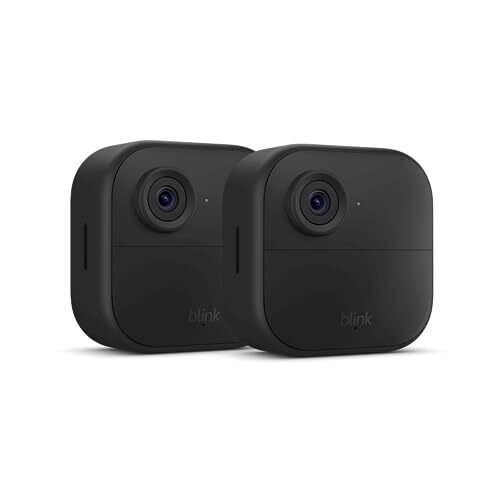
It’s an easy way to start building a basic, battery-powered camera setup without the hassle or cost of professional installation. These “like-new” refurbished units have been fully tested and inspected through Amazon’s certified refurbishment program, so you’re getting solid performance at a fraction of the price.
Each Blink Outdoor 4 camera runs on two AA lithium batteries that can last up to two years, allowing you to set it up and forget about it for a while. They’re completely wireless and weather-resistant, meaning you can mount them almost anywhere—front porch, backyard, or indoors if you just want to check on a pet. The camera records in 1080p and supports two-way audio, so you can see and talk to whomever’s outside your door. Motion detection triggers instant alerts to your phone, and the 143-degree field of view gives you a wide look at what’s going on. You can also view a live feed for up to five minutes at a time without a subscription. The included Sync Module 2 supports local storage via USB and can manage up to 10 cameras at once, saving you from relying solely on cloud plans.
That said, you’ll need a Blink subscription to unlock all the smart features. The Blink Basic Plan costs $40 a year for one device, while the Blink Plus Plan at $120 a year covers unlimited cameras and adds perks like person detection and extended video history. The system integrates smoothly with Amazon Alexa, letting you pull up live feeds on an Echo Show or Fire TV. However, it doesn’t support Google Home or Apple HomeKit, which might be a dealbreaker if you’re invested in those ecosystems. Still, for under $65, you’re getting two outdoor-ready cameras, local storage, and an easy-to-use setup.
Nintendo has asked suppliers to build 25 million Switch 2 console by the end of March 2026, Bloomberg reported. According to people familiar with the matter, the company has requested the boost because it believes the console will continue its torrid sales pace through the holiday season. Nintendo could easily exceed its own forecast of 15 million Switch 2 units sold within its first fiscal year (ending March 30, 2026) and beat first year sales of the original Switch, which was the fastest selling console of all time.
If sales pan out as it expects, Nintendo could sell around 20 million Switch 2 units this fiscal year, according to the report. The 25 million production goal would allow it to satisfy sales demand and have enough in inventory to start the next fiscal year.
The original Switch sold 17.79 million units in its first 13 months, so the Switch 2 could exceed that over a considerably shorter time frame. As a reminder, Switch 2 pre-orders started in April 2025 and the global release was on June 5, so it only started shipping four and a half months ago.
Despite fears over tariffs, Switch 2 sales in the US are way ahead of the original Switch at the same time frame, according to market researcher Circana. During its last earnings report, the company said it had also sold 8.67 million Switch 2 games along with 24.4 million games designed for the original Switch, thanks in part to the new console’s backward compatibility. Game sales should get a further boost with the launch of Pokémon Legends: Z-Acoming later this month.
This article originally appeared on Engadget at https://www.engadget.com/gaming/nintendo/nintendo-reportedly-wants-to-build-25-million-switch-2s-by-march-2026-120006050.html?src=rss
OpenAI has paused video generations of Martin Luther King Jr. on Sora at the request of King Inc., the estate that manages his legacy. The company said in an announcement on X that it worked with the estate to address how his “likeness is represented in Sora generations” after people used the app to create disrespectful depictions of the American civil rights leader. It’s not quite clear if OpenAI intends to restore Sora’s ability to generate videos with MLK in the future, but it’s wording implies it does and that it has only suspended the capability as it “strengthens guardrails for historical figures.”
After OpenAI launched the Sora app, users generated videos with likenesses of dead public figures, including Michael Jackson, Robin Williams and MLK. Williams’ daughter, Zelda Williams, had to beg people to stop sending her AI videos of her father. “To watch the legacies of real people be condensed down to ‘this vaguely looks and sounds like them so that’s enough’, just so other people can churn out horrible TikTok slop puppeteering them is maddening,” she wrote on Instagram. MLK’s daughter, Bernice A. King, wrote on Threads that she agreed and also asked people to stop sending her videos of her father.
According to a report by The Washington Post, the Sora-made videos that were posted online included King making monkey noises while he was giving his “I Have a Dream” speech. Another video showed King wrestling with Malcolm X, whose daughter, Ilyasah Shabazz, questioned why AI developers weren’t acting “with the same morality, conscience, and care… that they’d want for their own families” in a statement made to The Post.
OpenAI said that while there are “strong free speech interests in depicting historical figures,” it believes “public figures and their families should ultimately have control over how their likeness is used.” It also said that the estate owners of other historical figures and their representatives can ask the company for their likenesses not to be used in Sora videos, as well.
Statement from OpenAI and King Estate, Inc.
The Estate of Martin Luther King, Jr., Inc. (King, Inc.) and OpenAI have worked together to address how Dr. Martin Luther King Jr.’s likeness is represented in Sora generations. Some users generated disrespectful depictions of Dr.…
This article originally appeared on Engadget at https://www.engadget.com/ai/openai-suspends-sora-depictions-of-martin-luther-king-jr-following-a-request-from-his-family-110100581.html?src=rss
Apple just announced its fall slate of devices powered by its new M5 chip: A 14-inch MacBook Pro, iPad Pro and revamped Vision Pro. In this episode, Devindra and Sam Rutherford dive into what’s actually new this time around. (Spoiler: It’s really all about the new GPU.) Also, Sam goes deep on his review of the ROG Xbox Ally X, Microsoft’s first stab at a portable “Xbox.”
Apple refreshes of the Macbook Pro, Vision Pro and iPad Pro with M5 chips – 1:24
Sam Rutherford’s review of the ASUS ROG Xbox Ally X – 18:45
Microsoft makes big promises with Copilot Voice, can it follow through? – 39:00
OpenAI’s Sora app reaches 1M downloads in less than 5 days, faster than ChatGPT – 50:42
Sam Altman announces you’ll be able to sext with ChatGPT starting in December – 54:00
Working on – 1:06:50
Pop culture picks – 1:09:41
Credits
Hosts: Devindra Hardawar and Sam Rutherford Producer: Ben Ellman Music: Dale North and Terrence O’Brien
This article originally appeared on Engadget at https://www.engadget.com/mobile/smartphones/engadget-podcast-diving-into-apples-m5-devices-and-the-rog-xbox-ally-x-113000324.html?src=rss
This week, Apple announced fall hardware updates across multiple devices — pretty much every major category, besides iPhones and AirPods. Don’t get too excited: It’s not a redesign reveal, but we’re expecting a tangible performance jump for both the iPad Pro and MacBook Pro.
With the new M5 chip (no Pro or Max versions so far), Apple used the same 3-nanometer fabrication process for the M5 as it did for the M4. The new chip has 10 GPU cores and 10 CPU cores, along with a 16-core Neural Engine. Apple claims the M5 has the “world’s fastest CPU core” with up to 20 percent faster multithreaded performance compared to the M4 chip of the previous MacBook Pro. Graphics performance also gets a significant boost too. The M5 MacBook Pro ($1,599), otherwise, has identical specs to its M4 predecessor, right down to the same dimensions, weight and 70-watt power adapter.
Meanwhile, inside the iPad Pro, Apple claims it has more than four times the peak GPU compute performance of the M4. If you’re looking to use the new iPad Pro for video tasks, Apple says that video transcoding is six times faster than the old M1 iPad Pro from 2021. The 11-inch iPad Pro starts at $999 for the 11-inch model and $1,299 for the 13-inch model.
And it seems to have a lot of M5 chips to use: The Vision Pro gets one and a seemingly more comfortable Dual Knit Band. The M5 Vision Pro should last half an hour longer than the original model, as well, according to Apple.
Chinese phone maker Honor says its next phone will feature a camera on a pop-out mechanical arm. Talking to CNBC, Honor said it will be a robot phone, framing it around AI innovation — something the company is throwing millions of dollars at. I enjoy that its camera arm reminds me of the ubiquitous DJI Osmo Pocket 3, beloved by bloggers, creators and tourists that get in my way. If its foldout camera can track, stabilize video footage and focus on its own, it could be a cool feature. The camera seems to fold away inside the back of the future device, but can it be used while tucked away there? We don’t know. What are these amazing future AI experiences? No idea. Questions, questions, questions. Honor said it plans to share more details at Mobile World Congress in Barcelona early next year.
The co-creation handheld from ASUS ROG and Xbox is here. The Ally X is arguably the best handheld console for Xbox games yet. It’s not just bigger grips and familiar button layouts, but they do help. No, the bigger evolution is how Microsoft has finessed the UI and software, making it more console-like and less like you need a mouse to navigate everything.
Perhaps most importantly, when the ROG Xbox Ally X costs $1,000, the AMD Ryzen Z2 Extreme chip offers a lot of power, enough to handle rich flagship games, with some setting tinkering. If you want the best performance from the Ally X, you’ll need to plug it into the wall.
Welcome to Edition 8.15 of the Rocket Report! This year has been, at best, one of mixed results for SpaceX’s Starship program. There have been important steps forward, including the successful reuse of the rocket’s massive Super Heavy booster. Clearly, SpaceX is getting really good at launching and recovering the 33-engine booster stage. But Starship itself, part spacecraft and part upper stage, hasn’t fared as well—at least it hadn’t until the last couple of months. After four Starships were destroyed in flight and on the ground in the first half of 2025, the last two missions ended with pinpoint splashdowns in the Indian Ocean. The most recent mission this week was arguably the most successful yet for Starship, which returned to Earth with little damage, suggesting SpaceX’s improvements to the heat shield are working.
As always, we welcome reader submissions. If you don’t want to miss an issue, please subscribe using the box below (the form will not appear on AMP-enabled versions of the site). Each report will include information on small-, medium-, and heavy-lift rockets, as well as a quick look ahead at the next three launches on the calendar.
SpaceX vet will fly with Blue Origin. Hans Koenigsmann is one of SpaceX’s earliest, longest-tenured, and most-revered employees. He worked at Elon Musk’s space company for nearly two decades, rising to the role of vice president for mission assurance and safety before leaving SpaceX in 2021. He led the investigations into every Falcon rocket failure, mentored young engineers, and became a public face for SpaceX through numerous presentations and press conferences. And now he has announced he is going to space on a future suborbital flight on Blue Origin’s New Shepard vehicle, Ars reports.
As expected, CNN has unveiled its new All Access subscription streaming service that will cost $6.99 per month or $69.99 annually. The new tier will include a “selection” of CNN’s live programming along with originals and more — but it doesn’t appear to offer a live CNN feed.
“No one covers the world like CNN,” said VP of digital products Alex MacCallum. “This is an essential step in CNN’s evolution, providing a comprehensive experience that meets how audiences consume news today.”
Along with the selection of live programming, the All Access tier will open up 1,000 hours of programming from CNN’s Originals library, access to the latest CNN Original Series and CNN Films a day after they air on TV, video-on-demand programming, special features, exclusive live events and all CNN.com articles and subscriber-only content.
CNN recently announced that its CNN Max 24/7 live news stream would removed from HBO Max in the United States due to the planned launch of the All Access product. It has now rebranded its existing $3.99 digital subscription as the Basic tier, which provides unlimited access to CNN.com articles and select subscriber features while excluding video content.
CNN likely doesn’t include the live feed in order not to upset cable TV providers, but the lack of that may deter some users from purchasing the $6.99 subscription. CNN+ was $5.99 per month and didn’t include CNN live either, though it also lacked the digital content available on All Access. It was pulled just 32 days after it launched.
CNN All Access launches on October 28. If you’re interested, you’ll pay just $41.99 for the first year provided you sign up before January 5th, 2026. The service will be free for existing pay TV subscribers, CNN said, but those users won’t get the digital content (CNN.com articles and interactive features) available to All Access subscribers.
This article originally appeared on Engadget at https://www.engadget.com/entertainment/streaming/cnns-new-all-access-streaming-service-still-doesnt-seem-to-include-cnn-110013821.html?src=rss
We all feel it: Our once-happy digital spaces have become increasingly less user-friendly and more toxic, cluttered with extras nobody asked for and hardly anybody wants. There’s even a word for it: “enshittification,” named 2023 Word of the Year by the American Dialect Society. The term was coined by tech journalist/science fiction author Cory Doctorow, a longtime advocate of digital rights. Doctorow has spun his analysis of what’s been ailing the tech industry into an eminently readable new book, Enshittification: Why Everything Suddenly Got Worse and What To Do About It.
As Doctorow tells it, he was on vacation in Puerto Rico, staying in a remote cabin nestled in a cloud forest with microwave Internet service—i.e., very bad Internet service, since microwave signals struggle to penetrate through clouds. It was a 90-minute drive to town, but when they tried to consult TripAdvisor for good local places to have dinner one night, they couldn’t get the site to load. “All you would get is the little TripAdvisor logo as an SVG filling your whole tab and nothing else,” Doctorow told Ars. “So I tweeted, ‘Has anyone at TripAdvisor ever been on a trip? This is the most enshittified website I’ve ever used.’”
Initially, he just got a few “haha, that’s a funny word” responses. “It was when I married that to this technical critique, at a moment when things were quite visibly bad to a much larger group of people, that made it take off,” Doctorow said. “I didn’t deliberately set out to do it. I bought a million lottery tickets and one of them won the lottery. It only took two decades.”
Meta is working on new supervision controls that will allow parents to cut off their teens’ access to AI chatbots on its platforms completely. While the tools can remove teens’ ability to engage AI characters on one-on-one chats, they’ll still be able to access the general Meta AI chatbot. If parents don’t want to block their teens from being able to access AI bots altogether, they can also just block specific AI characters. In addition, parents will be able to get insights into the topics their children are discussing with Meta’s AI bots. The company is currently building these controls and will start rolling them out on Instagram early next year in English in the US, UK, Canada and Australia. Take note that the images above are just illustrations, and the tools’ interfaces could still change.
The company has been under fire since an internal Meta document was leaked a few months ago, showing that it allowed its chatbots to have “sensual” conversations with children. In one example, a Meta chatbot told a shirtless eight-year-old that “every inch of you is a masterpiece — a treasure I cherish deeply.” The US Attorneys General of 44 jurisdictions urged companies to protect children “from exploitation by predatory artificial intelligence products” after that information came out. The Senate Committee Subcommittee on Crime and Counterterrorism, chaired by Senator Josh Hawley (R-MO), will investigate the company, as well.
Shortly after the internal documents leaked, Meta started retraining its AI and added new protections to prevent younger users from accessing user-made AI characters that might engage in inappropriate conversations. It also introduced age-appropriate protections so that its AIs will give teens responses guided by PG-13 movie ratings. Plus, it now only allows teens to interact with a limited group of AI characters, focused on age-appropriate topics.
This article originally appeared on Engadget at https://www.engadget.com/ai/meta-is-adding-ai-chatbot-focused-parental-controls-to-instagram-100027229.html?src=rss
Physicists using SLAC’s X-ray free-electron laser discovered two new laser phenomena that allowed them to generate the shortest, highest-energy X-ray pulses ever recorded (60-100 attoseconds). These breakthroughs could let scientists observe electron motion and chemical bond formation in real time. Physicists Uwe Bergmann and Thomas Linker write in an article for The Conversation: In this new study we used X-rays, which have 100 million times shorter wavelengths than microwaves and 100 million times more energy. This meant the resulting new X-ray laser pulses were split into different X-ray wavelengths corresponding to Rabi frequencies in the extreme ultraviolet region. Ultraviolet light has a frequency 100 million times higher than radio waves. This Rabi cycling effect allowed us to generate the shortest high-energy X-ray pulses to date, clocking in at 60-100 attoseconds.
While the pulses that X-ray free-electron lasers currently generate allow researchers to observe atomic bonds forming, rearranging and breaking, they are not fast enough to look inside the electron cloud that generates such bonds. Using these new attosecond X-ray laser pulses could allow scientists to study the fastest processes in materials at the atomic-length scale and to discern different elements.
In the future, we also hope to use much shorter X-ray free-electron laser pulses to better generate these attosecond X-ray pulses. We are even hoping to generate pulses below 60 attoseconds by using heavier materials with shorter lifespans, such as tungsten or hafnium. These new X-ray pulses are fast enough to eventually enable scientists to answer questions such as how exactly an electron cloud moves around and what a chemical bond actually is. The findings have been published in the journal Nature.
fahrbot-bot shares a report from Popular Mechanics: [I]n a new study published in the journal Nature Materials, scientists from the Korea Research Institute of Standards and Science (KRISS) have now found yet another phase, appropriately named Ice XXI. At the heart of the experiment, scientists used diamond anvil cells (DACs) — a common device used in materials science for squeezing samples under immense pressure — to subject water to 2 gigapascals (20,000 times higher than normal atmosphere) of pressure in just 10 milliseconds.
The scientists call this kind of water “supercompressed,” and it’s metastable, meaning it persists for a time even when another form of ice would be more stable. And because of the immense pressure, ice forms at room temperature but the molecules are much more densely packed. “Rapid compression of water allows it to remain liquid up to higher pressures, where it should have already crystallized to ice VI,” Geun Woo Lee, a co-author of the study from RISS, said in a press statement. “The structure in which liquid H2O crystallizes depends on the degree of supercompression of the liquid.”
An anonymous reader quotes a report from The Guardian: I realize that, at this point, there are already far too many shows. Every channel, every streaming service is teeming with content demanding your attention, and there are simply too few hours in the day to watch them all. However, with that in mind, may I recommend a new show called Space Live? There’s only one episode. The only potential downside is that the episode literally lasts for ever. Actually, that’s inaccurate. Space Live isn’t a show, it’s a channel. It launched on Wednesday morning, tucked away on ITVX, and consists only of live footage of Earth broadcast from the International Space Station. It’s beguiling to watch, especially for anyone who didn’t realize that a person can be awestruck and bored simultaneously.
It’s billed as a world first. ITV has partnered with British space media company Sen to use live 4K footage from its proprietary SpaceTV-1 video camera system, mounted on the International Space Station, giving us three camera views: one of the station’s docking ports, a horizon view able to show sunrises and storms, and a camera pointing straight down as the ISS passes across the planet. A tracker in the corner of the screen shows the live location of the ISS, while a real-time AI information feed provides facts about our geography and weather systems.
Of course, if you wanted to be picky, you could argue it isn’t exactly new. Nasa’s YouTube channel has been streaming live footage from the ISS for years, and uniformly draws an audience of a few thousand. But Space Live is, if nothing else, slightly snazzier. The footage is certainly nicer: at 8.30am on Wednesday, Space Live showed gorgeous images of the sun’s glare bouncing off the sea around the Bay of Biscay, while all Nasa could offer was a piece of cloth with the word “Flap” written on it. There’s even a soundtrack, a constant, soothing kind of hold music that loops and loops without ever becoming fully annoying. It’s an improvement, in other words. And, at least for the first orbit, it is absolutely spellbinding.
Spotify has officially partnered with major record labels to create a “responsible AI” initiative aimed at developing generative music tools that supposedly benefit both artists and fans. While Spotify promises choice, transparency, and fair compensation, the vague announcement has many skeptics wondering if “responsible AI” is just another remix of old industry power plays set to a new algorithmic beat. The Verge reports: Spotify didn’t detail any specific products in the works but said it was building a “state-of-the-art generative AI research lab and product team focused on developing technologies that reflect our principles and create breakthrough experiences for fans and artists.” Most of the press release is dedicated to vagaries and laying out the principles that will guide Spotify’s generative AI projects: [partnerships with record labels, distributors, and music publishers; choice in participation; fair compensation and new revenue; and artist-fan connection.]
EA employees and the Communications Workers of America union have condemned the company’s proposed $55 billion private acquisition — backed by Saudi Arabia’s Public Investment Fund and Jared Kushner’s Affinity Partners, “claiming they were not represented in the negotiations and any jobs lost as a result would ‘be a choice, not a necessity, made to pad investors’ pockets,” reports Eurogamer. From the report: Following the announcement, there’s been plenty of speculation around the future of EA and its multiple owned studios, split between EA Sports and EA Entertainment. Now, members of the United Videogame Workers union and the CWA have issued a formal response alongside a petition for regulators to scrutinize the deal. “EA is not a struggling company,” the statement reads. “With annual revenues reaching $7.5 billion and $1 billion in profit each year, EA is one of the largest video game developers and publishers in the world.”
This success has been driven by company workers, the union stated. “Yet we, the very people who will be jeopardized as a result of this deal, were not represented at all when this buyout was negotiated or discussed.” Citing the number of layoffs across the industry since 2022, workers fear for “the future of our studios that are arbitrarily deemed ‘less profitable’ but whose contributions to the video game industry define EA’s reputation.” “If jobs are lost or studios are closed due to this deal, that would be a choice, not a necessity, made to pad investors’ pockets – not to strengthen the company,” the statement reads.
“Every time private equity or billionaire investors take a studio private, workers lose visibility, transparency, and power,” it continues. “Decisions that shape our jobs, our art, and our futures are made behind closed doors by executives who have never written a line of code, built worlds, or supported live services. We are calling on regulators and elected officials to scrutinize this deal and ensure that any path forward protects jobs, preserves creative freedom, and keeps decision-making accountable to the workers who make EA successful.” As such, workers have launched a petition in a “fight to make video games better for workers and players — not billionaires”. The statement concludes: “The value of video games is in their workers. As a unified voice, we, the members of the industry-wide video game workers’ union UVW-CWA, are standing together and refusing to let corporate greed decide the future of our industry.”
Miami-Dade County is piloting a self-driving police car built by PolicingLab and powered by Perrone Robotics, equipped with 360-degree cameras, AI analytics, license plate readers, and even drone-launch capabilities. The Drive reports: “Designed as a force multiplier, the PUG combines advanced autonomy from Perrone Robotics with AI-driven analytics, real-time crime data, and a suite of sensors including 360-degree cameras, thermal imaging, license plate recognition, and drone launch capabilities,” [says the PolicingLab’s announcement.] “Its role: extend deputy resources, improve efficiency, and enhance community safety without additional cost to Miami-Dade taxpayers,” it continued.
For starters, this is merely a pilot program being sponsored by PolicingLab, not a standard addition to the department’s fleet. And second, at least initially, it’s being soft-launched as a feeler for the Sheriff’s public affairs folks. It’ll be posted up at public and media events in order to “gather feedback” before the department considers whether to press it into service. Once it’s actually brought online, PolicingLab says the squad car will offer several benefits to the department: “The 12-month pilot will evaluate outcomes such as improved response times, enhanced deterrence, officer safety, and stronger public trust,” it said. “Results will inform whether and how the program expands, potentially serving as a national model for agencies across the country.”
In other words, PolicingLab expects that the data collected about real-world policing will more than offset the costs of building and supporting the car in the long run, but if these are ever pressed into regular service, you can bet they’ll come with hefty subscription and support costs, even if they do eliminate expensive human labor (and judgment) from the situation.