Polymarket announced that it’s taking insider trading more seriously. Seen in its latest press release, the prediction market updated its market integrity rules, specifically those concerning insider trading and market manipulation. While Polymarket is taking the initiative to update its rules, it’s likely a response to the rise in suspicious bets, whether it’s about the US capture of Nicolás Maduro or the release of a new product from OpenAI.
As first reported on by Bloomberg, Polymarket is targeting three specific forms of trading activity. First off, users aren’t allowed to trade on “stolen confidential information,” or any behind-the-scenes knowledge about an outcome that people wouldn’t otherwise have access to. As an extension, Polymarket traders are also prohibited from taking advantage of “illegal tips,” which means that even if someone else has access to confidential information and passes it along, you still can’t trade on it. Lastly, anyone who has a “position of authority or influence sufficient to affect the outcome of the underlying event,” isn’t allowed to trade on said event.
Users can expect more surveillance and enforcement around these new rules, too. Polymarket explained that if it or its users find “unusual or potentially questionable trading activity,” the platform would conduct a review and if necessary, ban the wallet address, refer the issue to law enforcement or impose “monetary penalties.” If you’re curious what the punishment for insider trading on these prediction markets looks like, a recent case saw MrBeast’s video editor suspended for two years from the platform and fined five times the amount of his initial trade size after Kalshi concluded its investigation.
This article originally appeared on Engadget at https://www.engadget.com/big-tech/polymarket-is-cracking-down-on-insider-trading-with-updated-rules-163928655.html?src=rss
Leonid Radvinsky, the billionaire owner of OnlyFans, has died. He passed “peacefully after a long battle with cancer” at age 43, according to a statement from the platform published by Forbes. He was born in Ukraine, but grew up in Chicago.
Radvinsky didn’t create OnlyFans. He purchased it back in 2018, though is largely credited with transforming it from a niche website to a gigantic porn empire. The platform became so huge that reports have indicated that Radvinsky personally made nearly $2 million every day in 2024. His net worth at the time of his death grew to $4.7 billion, which had more than doubled since 2021.
Leonid Radvinsky, the owner of OnlyFans, has died at 43 after a battle with cancer.
“We are deeply saddened to announce the death of Leo Radvinsky,” an OnlyFans spokesperson said in a statement to Variety. “Leo passed away peacefully after a long battle with cancer. His family… pic.twitter.com/xJetAcTZmU
Radvinsky was famously secretive and avoided giving interviews, but his history is not without controversy. He built his fortune with websites that were much shadier than OnlyFans. Radvinsky founded a similar site called MyFreeCams back in 2004 when he was in college, which has beeninvolved in numerous scandals.
He also founded a website called Cybertania, which provided links to various pornograpy sites. Some of these links claimed to direct users to illegal content involving children and animals.
Forbesdid a deep dive into this and found that the site didn’t actually lead to the offending content, but it’s still likely that Radvinsky and the platform made money by getting people to click on the links. Records also indicate that Radvinsky held domain names like “websyoungest.com” and “aretheylegal.com” until 2014. It’s currently unknown what those sites hosted.
He’s also been sued for everything from spamming users to impersonating large companies like Microsoft and Amazon to direct traffic to his pornography sites. These cases were all settled outside of court for undisclosed sums of money.
This article originally appeared on Engadget at https://www.engadget.com/big-tech/billionaire-onlyfans-owner-leonid-radvinsky-has-died-from-cancer-at-43-163211324.html?src=rss
Computershack shares a report from NBC News: Leonid Radvinsky, the owner of adult-content platform OnlyFans, has died of cancer at the age of 43, the company said in a statement on Monday. “We are deeply saddened to announce the death of Leo Radvinsky. Leo passed away peacefully after a long battle with cancer,” an OnlyFans spokesperson said. “His family have requested privacy at this difficult time.”
Radvinsky, a Ukrainian-American entrepreneur, acquired Fenix International Limited, the parent company of OnlyFans, in 2018 and served as its director and majority shareholder. He also runs Leo, a venture capital fund he founded in 2009 that focuses primarily on investments in technology companies. According to Reuters, OnlyFans is valued at around $5.5 billion, including debt.
Generally, when you hear “water use” and “sustainability,” you expect those words to be followed by some bad news. Humanity’s enduring ability to ignore the math of declining water supplies is almost impressive. But there are cases where actions have successfully reversed our loss of water resources. A new paper in Science by Scott Jasechko of the University of California, Santa Barbara, examines documented cases of groundwater recovery around the world to identify which strategies have worked.
Groundwater is invaluable for many reasons. For one, it’s (usually) cleaner than surface water. It’s also right under your feet and often close enough to the surface that it doesn’t take much energy to pump it up. And there’s loads of it down there, no matter the season. Because of this, humans use a lot of it for drinking water, agriculture, and every other use you can think of.
Unfortunately, in many places, the rate of groundwater use has grown to exceed the rate at which precipitation soaks into the ground to replenish it.
Uber is aggressively partnering with multiple robotaxi companies to avoid a future dominated by Waymo or Tesla. The ride-hailing giant has struck deals with at least a dozen autonomous vehicle players in recent years. Just last week, it announced a $1.25 billion partnership with Rivian, with plans to deploy up to 50,000 driverless vehicles over the next decade. Business Insider reports: Uber announced three new robotaxi partnerships in the past few weeks with Zoox, Wayve-Nissan, and Rivian. In less than half a decade, the company has secured at least a dozen deals, including with WeRide, AVride, May Mobility, Momenta, Pony.AI, Wayve, Baidu’s Apollo Go, Motional, and Lucid-Nuro. Still, less than a half-dozen of Uber’s partners have deployed fully driverless, paid robotaxi operations, and only one, Waymo, operates in the US. Uber has a joint deployment with Waymo in Atlanta, Austin, and Phoenix, but in other cities, Waymo is a competitor.
Uber’s partnership spree is less about seeking the singular, dominant player of autonomous driving. Instead, analysts told Business Insider that Uber is ensuring multiple vendors can participate in the expensive business of robotaxis — fending off the real risk of a Waymo or Tesla scaling on its own — and giving itself a stake in the robotaxi economy by being the aggregator of choice. “The more diversified the supplier base, the better for the network in the middle, which is Uber,” Mark Mahaney, an Uber analyst for Evercore ISI, told Business Insider.
The premise seems simple enough. LG promises that you can set its Sound Suite speakers anywhere and Dolby’s home theater tech will make them perform well. The soundbar, subwoofer and speakers don’t have to go in prescribed locations for the best results, which means you can place them where you need to and move them as you see fit. Of course, this all hinges on the reliability of the underlying tech and LG’s ability to make individual speakers that actually sound good.
Like most premium soundbars and complete home theater setups these days, a complete Sound Suite collection is expensive. The centerpiece alone, a soundbar that most people will want in their customizable configuration, is $1,000. However, if you have a recent LG TV, or are planning to buy a 2026 model when those arrive, there’s no better option for boosting your living room entertainment experience.
The components of the LG Sound Suite
There are four different devices that make up the Sound Suite. The centerpiece is the H7 soundbar ($1,000), which is the first one that works with Dolby Atmos FlexConnect (DAFC) technology. Then there’s the 8-inch W7 subwoofer ($600) and the M5 and M7 speakers ($250 and $400). LG allows you to pick and choose between these products to build a home theater set up that suits your needs — up to four speakers and one subwoofer. The only real caveat is that you need the H7 soundbar or a recent LG TV (2025 OLED G5, C5, CS5 and QNED 9M, or an upcoming 2026 model) to serve as the primary device for Sound Suite to work. That’s because the underlying tech requires LG’s alpha 11 Gen 3 AI processor, which is inside the soundbar and the company’s newer TVs.
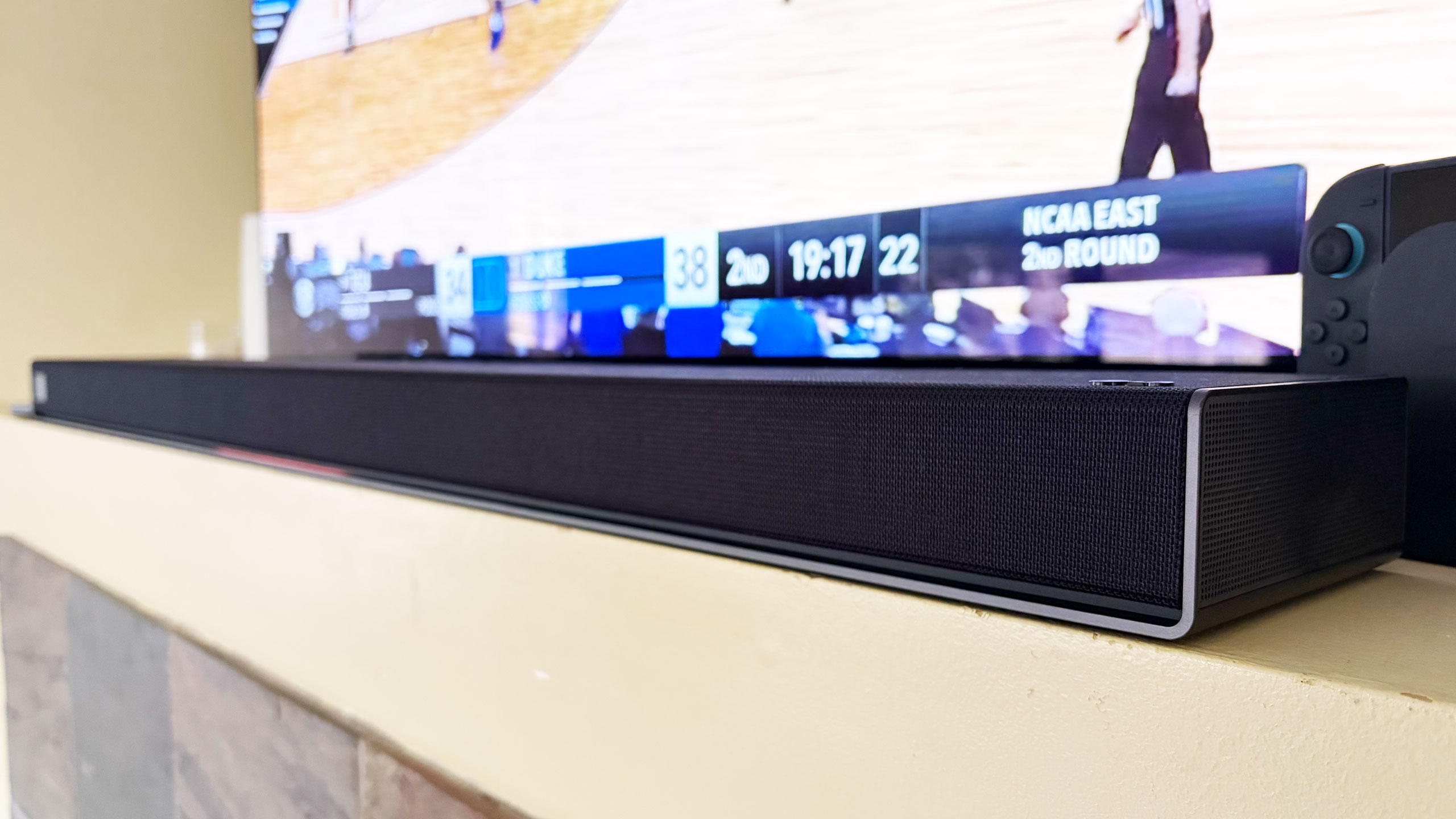
The H7 houses a dozen Peerless drivers comprising front, side and up-firing units. There’s also four woofers and eight passive radiators for bass and low-frequency audio. The soundbar has a pretty basic design, plain enough to sit in front of an LG OLED (or other premium TV) without being a distraction, and short enough not to block it. Both Bluetooth and Wi-Fi are available here, so AirPlay 2, Google Cast, Spotify Connect and Tidal Connect are all supported.
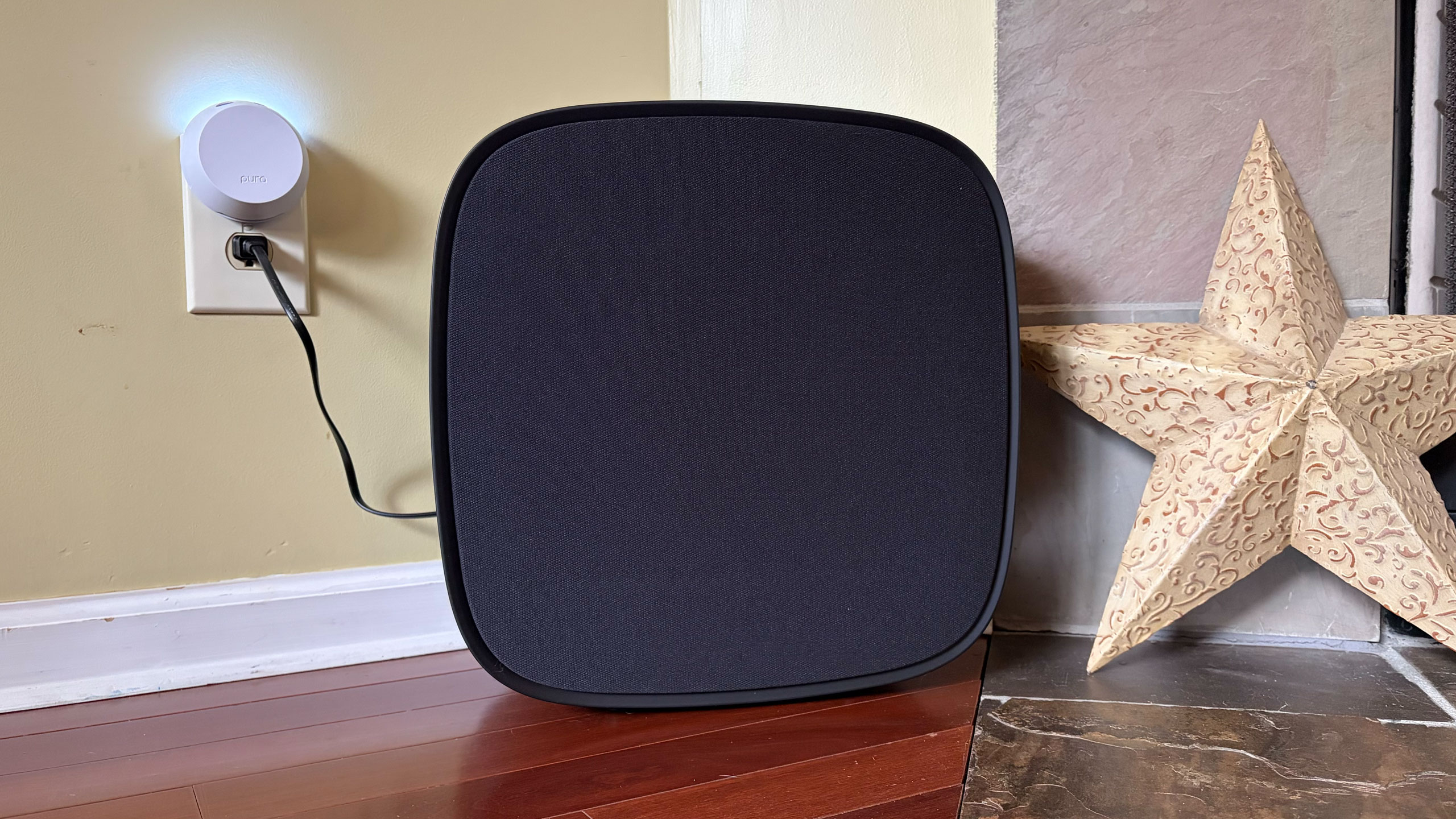
The W7 wireless sub has an 8-inch woofer that gets really boomy at times. It’s quite large at 16.1 x 16.3 x 7.6 inches, but you can use it standing up vertically or laying down horizontally — whichever orientation fits your needs or available space. The M5 and M7 speakers offer basically the same features, including AirPlay and Cast, and can be used either by themselves, as a stereo pair, as a four-speaker array or as rear satellite speakers with the H7 soundbar. The main difference is the M7 has two full-range drivers, one up-firing driver and a woofer while the M5 only has a tweeter, an up-firing driver and a woofer.
What is Dolby Atmos FlexConnect?
FlexConnect is a home theater audio technology that Dolby announced in 2023. It was available on TCL’s Z100 speakers last year, but LG’s Sound Suite marks the first time the feature has been available on a more robust living room product that includes a soundbar. FlexConnect allows you to position speakers anywhere in a room without sacrificing audio performance. The tech uses a TV or soundbar as the lead device to locate speakers so it can tune the sound to match their positioning. The system can also quickly adapt when you move a speaker — maybe for a party or other special occasion.
FlexConnect works as advertised, but there is one caveat that should’ve been obvious, although I didn’t anticipate it. Every time you add or remove speakers from a DAFC group, you’ll need to recalibrate the system, which includes the software playing sounds from the speakers so that the TV or soundbar can locate them and Dolby’s tech adjusts their output. It doesn’t take long, but there is audible noise from each unit in the group, so you’ll want to factor in that time — and potential annoyance for anyone else in the house.
Other Sound Suite features
LG Sound Suite H7 soundbar
Billy Steele for Engadget
Sound Suite offers some of the same features as LG’s other home theater products. Those include Night Mode, Room Calibration Pro, AI Sound Pro+ real-time audio upscaling and Clear Voice Pro+ for enhanced dialogue. For the Sound Suite, LG has also introduced Sound Follow, a feature that allows you to adjust the “sweet spot” for the system based on where you’re sitting.
Once you set your current position with a tap in the ThinQ app, Sound Follow is supposed to change the levels and tuning accordingly. I’m not entirely sure this was working on my system. Unlike my demo at CES, the seating position on the FlexConnect layout in the app was never updated. And while the UI seemed to indicate the change was made when I tapped the buttons, I couldn’t hear any difference in the audio. I asked LG for more information to ensure Sound Follow is functioning properly.
A word about setup
Like most soundbars and speakers these days, you have to use an app to get them all connected and properly set up. And like Samsung, LG makes you do that through the same app that handles all of its connected devices — including appliances. Once you unbox and plug in the Sound Suite speakers, you add them in the ThinQ app as a new home theater arrangement. The software shows you which speakers are available to use and allows you to select which ones you want in the initial Dolby Atmos FlexConnect grouping.
The app will ask you to set the distance between the soundbar and your primary seating area before running the sound optimization (tuning) process. ThinQ will display the speaker layout and you can edit the DAFC group at any time. If you move a speaker though, you’ll need to run the optimization again for the best audio performance. And if you’re using an LG TV as the lead device, all of this is sorted onscreen rather than in the app.
Overall, the process is pretty straightforward, although I encountered some pretty significant connectivity issues that were very frustrating. I review soundbars and speakers regularly, so I’m familiar with the process of using an app to connect devices to my home Wi-Fi in order to get them up and running. With the H7, it took a few days to get it connected, which meant I could only use the soundbar with the audio options available on LG C5’s menu and wasn’t able to set up a larger Sound Suite configuration. After several router and soundbar reboots, I was finally able to get the H7 to connect and become available to finish the install. I’ve never had this problem before, so perhaps LG did something different with the Wi-Fi components here.
LG Sound Suite M7 speakers
Billy Steele for Engadget
When I was adding the M7 speakers to my DAFC setup, I had no issues connecting them to Wi-Fi initially. However, I did have trouble adding them to the FlexConnect group, which required each piece of the Sound Suite playing an audio calibration clip. Repeatedly, the ThinQ app told me there was a connection issue with one of the M7s, although eventually they all somehow got added anyway. I also had trouble removing speakers from the arrangement. Even though the app said sound was only coming from the H7 soundbar, one of the two M7 speakers was still connected and emitting sound when I didn’t want it to. For some reason, this only happened when playing music over AirPlay — TV audio over HDMI eARC always functioned as intended.
If you’re using the TV as the lead device, you do all of the setup on the screen. I found this method to be more straightforward and reliable, although it blasted the calibration sounds at a deafening volume. There is a big issue though: Once connected to the TV as a DAFC setup, the speaker settings weren’t available in either the ThinQ app or on-screen menus. This meant I was stuck in standard mode, with things like AI Sound Pro+ inaccessible. I asked LG for more info on this because it greatly impacts the overall experience.
Which configuration sounds best?
Before I get into describing the various Sound Suite configurations, I need to make an important note about the limitations for the possible setups. LG only allows a maximum of five speakers in any Sound Suite arrangement, but you can mix and match however you want. Just remember if you don’t opt for the H7 soundbar, you’ll need a compatible LG TV as the lead device for FlexConnect to work.
You can also use the M5 and M7 as standalone speakers in another room and swap them in and out of your living room or home theater setup as needed. In the multi-room scenario, Sound Suite speakers function much like a Sonos system would, and the M7 is more than capable of being a standalone music speaker with plenty of detail and decent bass. I wasn’t able to test the M5, so I can’t vouch for that one. Keep in mind that if you opt for the M5 or the M7 for your living room, you’ll need at least two of either one to use FlexConnect with your LG TV.
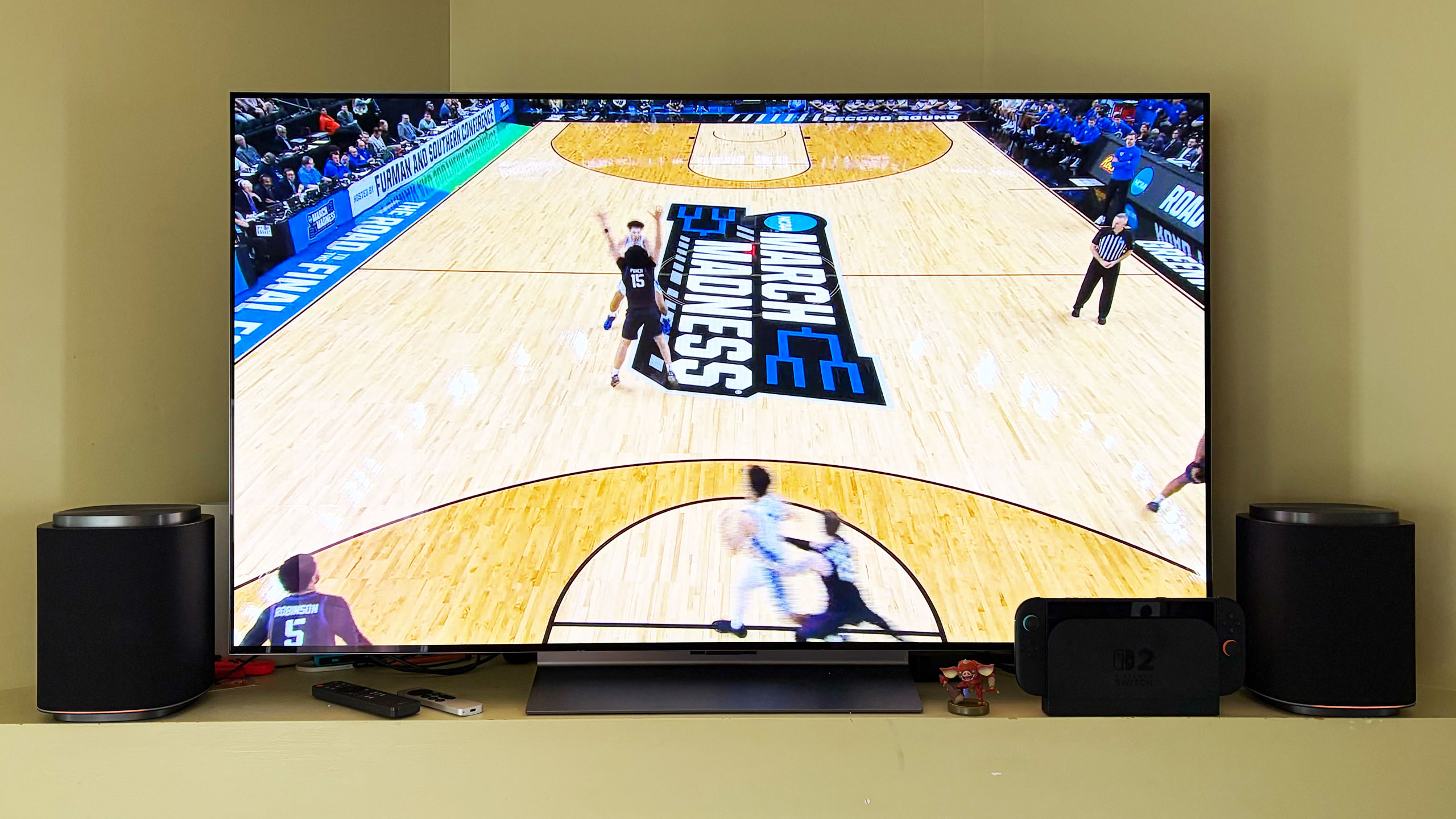
After testing multiple configurations of the Sound Suite, I think the combination of the H7 soundbar, W7 subwoofer and two M7s is the ideal arrangement. I’ll hedge that a bit as I prefer to disable the M7s in the rear of the room when watching live TV — especially sports — as the same audio coming from the soundbar and those speakers didn’t really enhance the experience. Plus, arena noise seemed overly echo-y and off-putting. This setup is well-suited for streaming TV shows and movies, things where Dolby Atmos, or at least LG’s spatial upscaling, is at the height of its powers.
The LG Sound Suite W7 subwoofer is quite large
Billy Steele for Engadget
In this setup with the H7 as the lead, you get Sound Suite in its most immersive form. I always use Netflix’s Drive to Survive as my first test of a new home theater system, and LG’s lineup handled it like a champ. You get excellent directional audio, which makes the cars sound like they’re zooming around your living room. And the in-car shots are so enveloping, it’s like you’re sitting right behind the driver. This configuration also works well for music, though I preferred to use either one of the M7 speakers or the soundbar/sub duo rather than the whole shebang.
My second favorite setup is four M7s. Once again, this configuration requires an LG TV as the lead device, but if you have that, you can definitely save some room in front of your television with separate front speakers. Unfortunately, you can’t use a subwoofer too because if you’re using a TV to power the speakers, you can only add up to four. That’s a real bummer, but the TV speakers will be used as a center channel (dialogue) boost, so it’s not a complete waste. However, this arrangement would benefit from more bass.
The four-speaker setup could be particularly beneficial for people who mount their TVs on the wall and don’t want a soundbar underneath. And, again, FlexConnect allows you to put the speakers anywhere, not necessarily flanking your TV. You also get the option of moving these smaller speakers around when you need to — something you can’t really do with a soundbar. The only sacrifice I noticed audio-wise is that two M7s in the front doesn’t offer the same overhead sensation for Atmos content as the H7’s up-firing drivers.
If you’re just using four M7 speakers for home theater duties, you’ll enjoy the immersive audio these Sound Suite speakers will provide. There’s lots of directional sounds with Atmos content, and there’s plenty of subtle detail that comes through on movies and shows. However, for live sports, this arrangement pulls commentary audio from the TV speakers and puts much of the arena/stadium noise in the rear M7s, which makes it difficult to hear the announcers at times. This is one area where the inability to adjust the audio settings really hampers the experience.
If you’re hoping to invest in something that can pull double duty for music, I prefer one or two M7s for that purpose. And while there’s decent low-end thump, streaming your favorite tunes is where you’ll notice the absence of that W7 subwoofer.
The competition
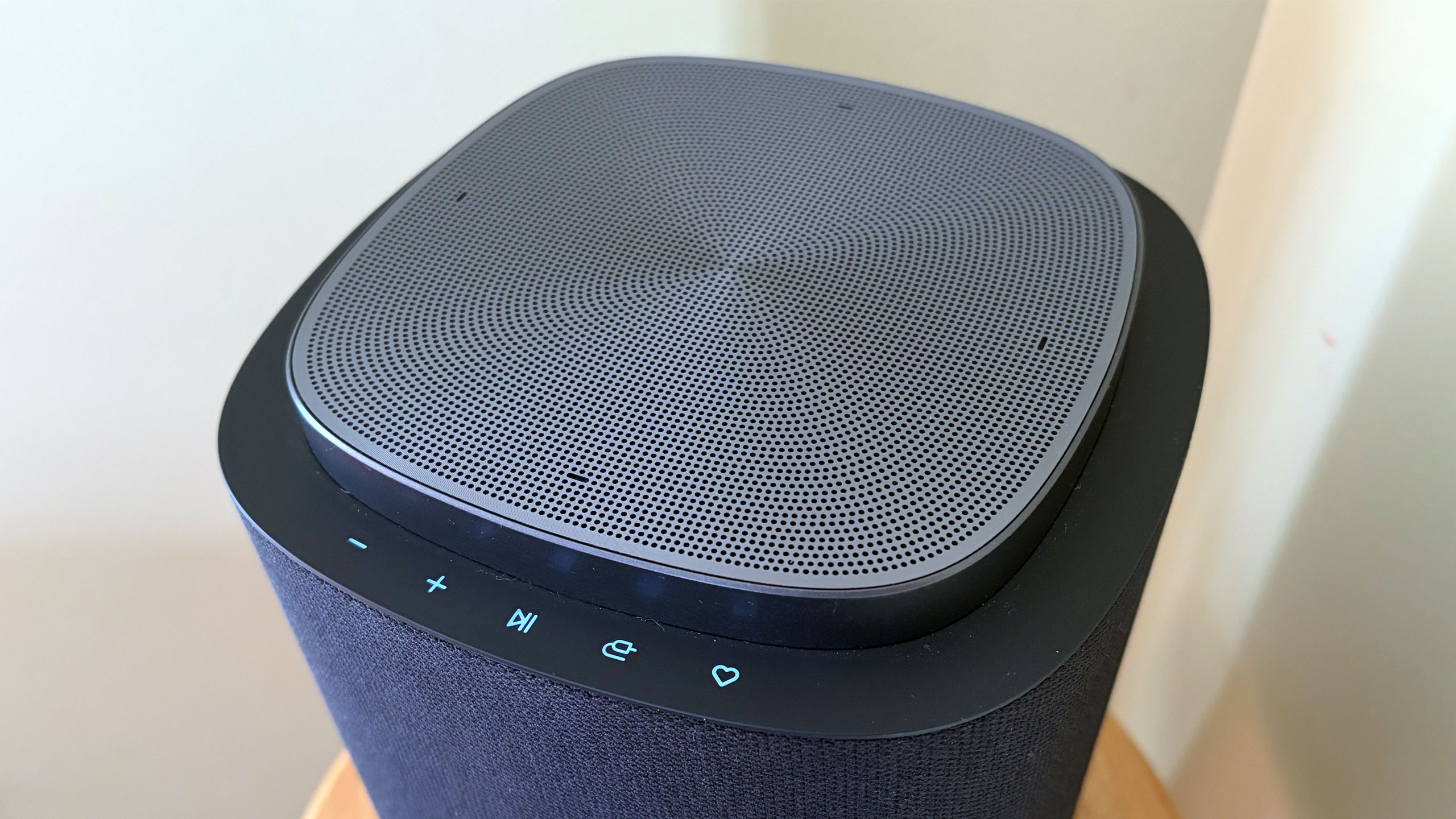
The controls on the LG Sound Suite M7 speaker
Billy Steele for Engadget
If you’re looking for alternatives to LG’s Sound Suite, you have to make some sacrifices. The only other option right now that offers Dolby Atmos FlexConnect is the TCL Z100 speaker. Obviously, you’ll need multiples of this $300 device, and you’ll probably want to add the $350 subwoofer, too. Like the LG M7, you’ll need a compatible TCL TV to serve as the lead device for FlexConnect (a QM6K, QM7K, QM8K, QM9K or X11L model). I haven’t tested these 1.1.1-channel units, so I can’t provide a direct comparison to the Sound Suite’s M5 or M7.
For those who can live without FlexConnect, Samsung’s Q990 series is consistently the best all-in-one setup you can buy. I haven’t reviewed one since 2024 because the company has been keen on shipping new models with minimal updates, which means the hardware and most of the features remain the same. The HW-Q990H will be the latest installment when it arrives later this year, with the biggest differentiator being a new dialogue boost called Sound Elevation.
While the Q990 always comes with rear speakers and a subwoofer alongside a powerful soundbar, some features will only be available if you also have a Samsung TV. One of those is Q-Symphony, which utilizes TV speakers alongside the Q990’s drivers for more detailed and immersive sound. For the entire Q990 package, you’re looking at $2,000 — $100 less than the comparable Sound Suite arrangement of the H7 soundbar, two M5 speakers and a W7 sub.
Wrap-up
There’s no denying that LG has created a powerful and immersive living room experience with its Sound Suite lineup. I also like that the company allows customers to decide what they need without sacrificing the main draw of FlexConnect. While I did experience some setup and software issues, those are things LG can iron out over time — Sound Suite is still brand new, after all. I would like to see the company offer some discounted bundles and continue to add more audio features over time to justify the hefty investment. If you’ve got a couple grand to spend, especially if you have a recent LG TV, Sound Suite will be your best option for building out a home theater setup.
This article originally appeared on Engadget at https://www.engadget.com/audio/speakers/lg-sound-suite-review-dolby-atmos-flexconnect-in-a-powerful-package-160000544.html?src=rss
Almost everything we do digitally leaves a trace of some kind, and while it can be useful to look back on this past activity—when trying to remember where that great coffee shop you stumbled across is, perhaps—this continual logging and tracking doesn’t really align with best privacy and security practices.
Meet Tails (The Amnesic Incognito Live System), a Linux distro based on Debian that maximizes user security and privacy. It can run from a USB drive, which means you’re able to plug it into any laptop or desktop with a free port (Mac or PC) and take it away again when you’re done, with nothing left behind on the computer you borrowed. Tails also comes with anonymous internet browsing built in as standard, through the Tor browser and the Tor network that reroutes your online activity across several private web nodes. No one can tell who you are or where you are, and you can get online without all the tracking and monitoring that’s usually associated with opening up a browser.
It’s perfect for hiding who you are online, and for dialing up your privacy and security protections to the absolute maximum—not to mention getting around state-level censorship, if that applies to you. Here’s what you need to know, and how to get started.
What you get with Tails
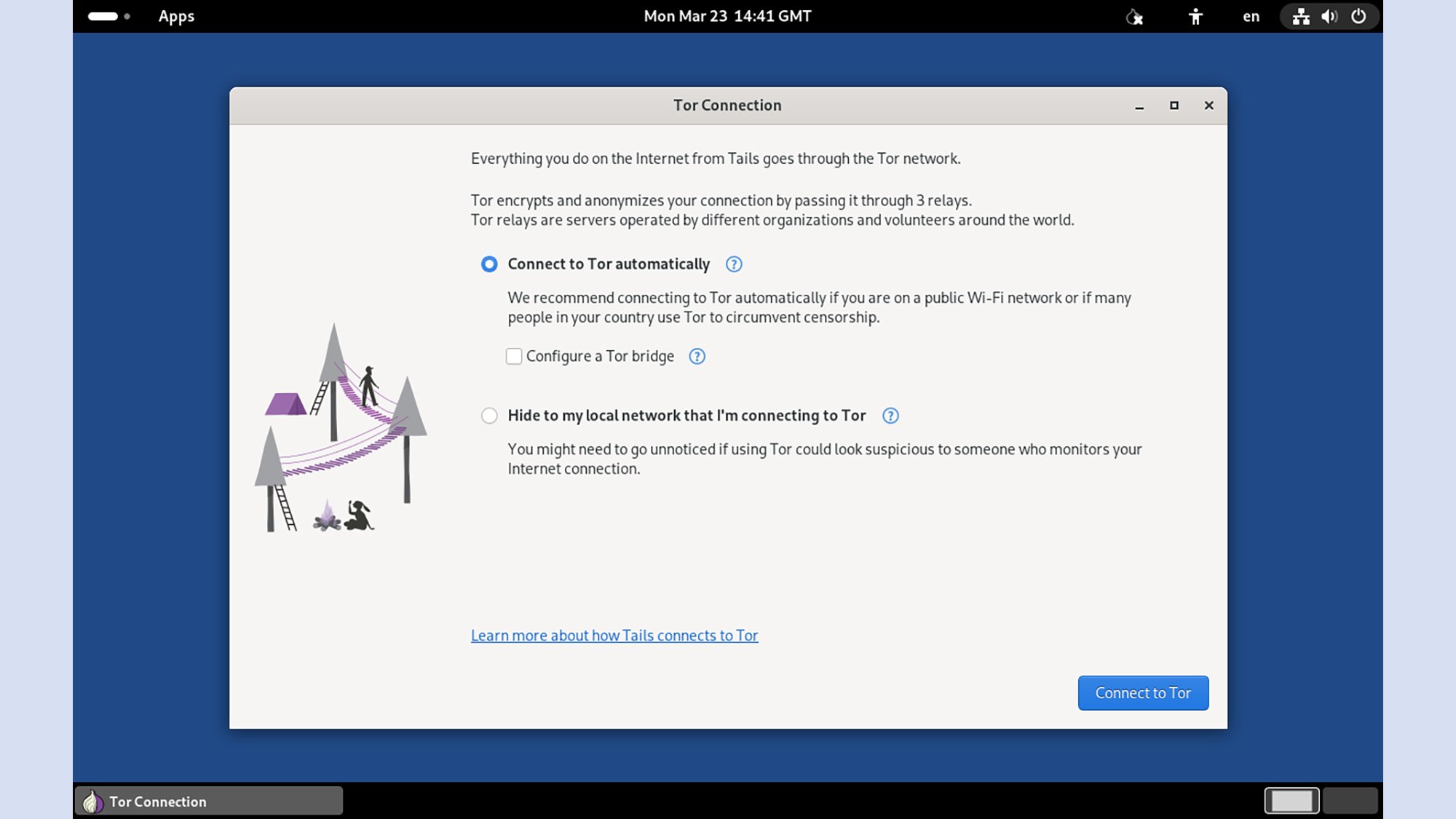
Tails will connect you to the Tor network right away. Credit: Lifehacker
Tails includes everything you need to get your computing done, as is the case with most Linux distros: You’ve got the Tor Browser on there, office applications courtesy of LibreOffice, image editing with GIMP, graphic design with Inkscape, and a variety of audio and video utilities too.
As soon as you start up the operating system from your USB drive for the first time, you’ll be prompted to get online through the Tor network. This reroutes your browsing through several different relay points, so it’s very difficult for websites to tell who you are or where you’re from (unless you start logging into them, of course). It also keeps your browsing hidden from your internet service provider, law enforcement agencies, and anyone else who might be tempted to take a peek. To make sure you’re running Tails and the Tor Browser with as much security protection as possible, check out our tips for browsing the dark web.
One big difference with Tails is that you can’t actually save anything by default—it’s one of the ways the operating system prioritizes privacy and security. If you do want a space on the USB drive to save files permanently, you need to specifically create it: Click Apps > Tails > Persistent Storage and then follow the instructions. When you’re done, you can just click the power button (top right), choose Power Off, unplug the USB drive and be on your way.
How to start using Tails
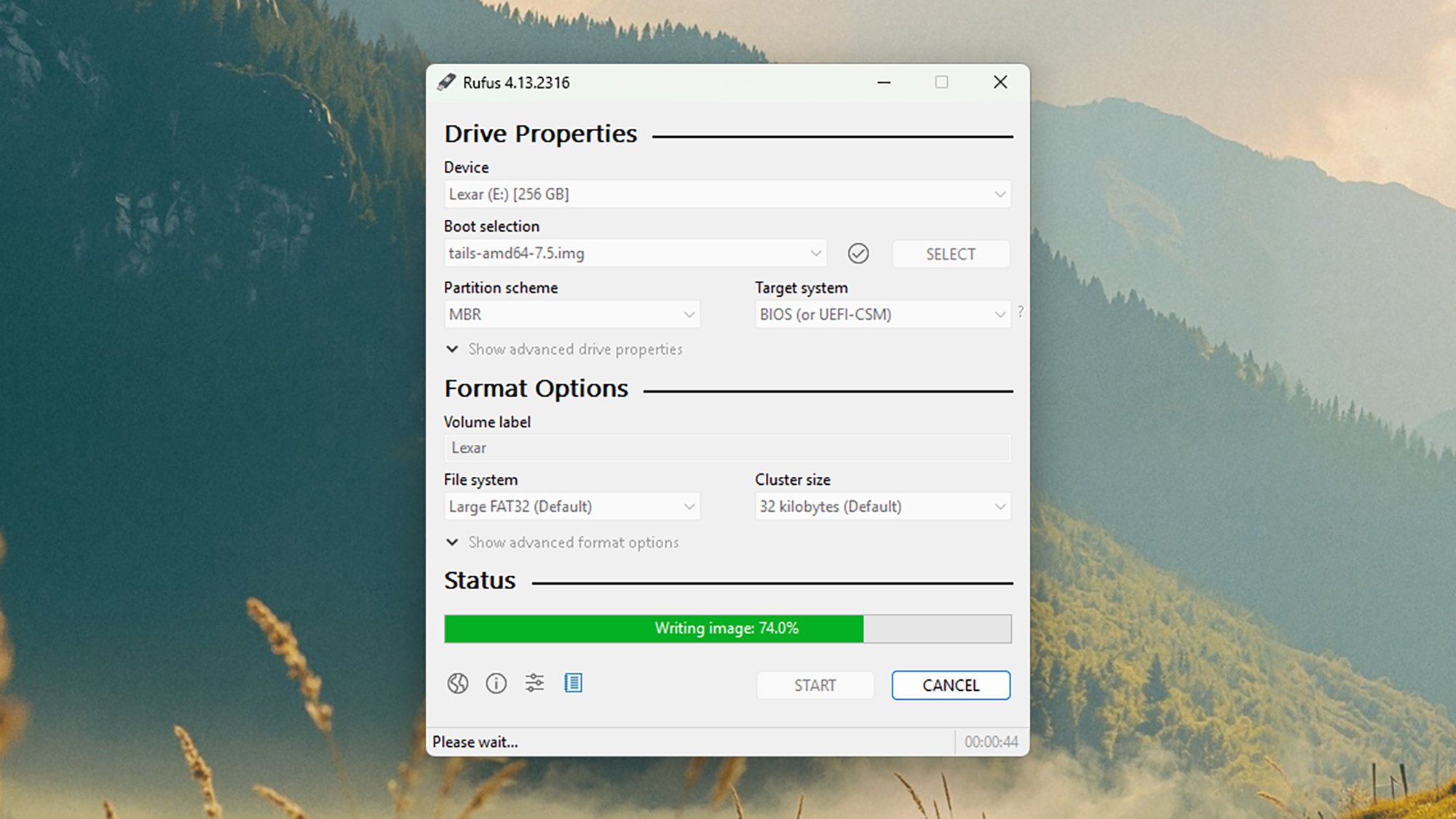
Using Rufus to create a Tails USB stick. Credit: Lifehacker
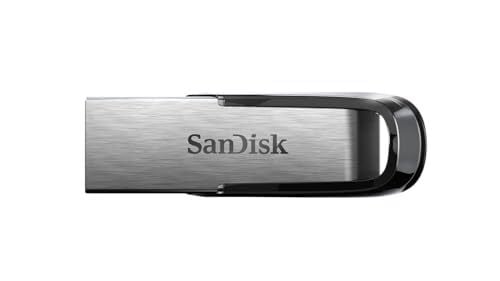
To get started, head over to Tails’ website, follow the Install Tails link, then click Download Tails only (for USB sticks). This gives you a file roughly 2GB in size, which you need to put on a USB drive. This drive must have a capacity of 8GB or higher, and can’t have anything else on it (anything already saved on the USB drive storage will be wiped when you add Tails).
For actually putting the operating system image on your USB drive, Tails recommends Rufus for Windows and Etcher for macOS. Both tools are simple to use and free: All you have to do is point these programs towards your Tails download, and your USB drive, and they’ll do the rest.
In the case of Rufus, the Device drop-down menu is where you pick your USB drive. From here, click Select to point the app towards the Tails file. You can leave the other settings on the program interface as they are, and click Start to create your bootable USB drive, which should only take a minute or two.
You’re then ready to boot from the USB drive, either on your own computer or someone else’s. This should work on most systems, with the exception of Macs that use Apple Silicon. The Tails team is busy trying to add compatibility for newer Macs, but it’s not completed yet, so you’ll mainly be looking for Windows PCs to boot from.
The specifics of how you do this depends on the computer you’re using, but typically you’ll need to hit a key like F8 as the computer boots up to pick the Tails USB drive rather than the main hard drive system—instructions for this may well appear on screen during start up, but if you’re unsure, consult the documentation that came with the laptop or desktop, or check online.
Sony’s lead systems architect, Mark Cerny, has confirmed that AI-powered frame generation is indeed on the roadmap for PlayStation hardware, stressing that the feature isn’t yet ready for prime time in 2026. While the PlayStation 5 Pro recently introduced a PlayStation Spectral Super Resolution (PSSR) 2 upscaler that gave the APU a chance
Elon Musk’s latest industrial gambit, called Terafab, aims to interrupt the semiconductor supply chain by building a massive $25 billion chip fabrication facility in Austin, Texas. As a joint venture between Tesla, SpaceX, and xAI, the ambitious project has ambitions of producing a terawatt of computing power yearly to fuel Musk’s most ambitious
Forget for a moment that PC memory and storage prices are getting out of control. If you’re building a new gaming PC or upgrading and existing one, you could do a lot worse than assembling a system around AMD’s spunky Ryzen 7 9800X3D (see our review). It’s a stout chip for gaming, and even better, it’s on sale for the lowest price it’s ever
Apple and Google have recently been removing barriers and implementing features that make it easier for users to switch between rival platforms, which includes finally opening up compatibility between Quick Share and AirDrop. The latter first became available on the Pixel 10 late last year, with Google promising to bring this feature to the
Rock sample analysis from the asteroids Ryugu and Bennu (collected in 2018) has confirmed that the entire library of the chemical code for DNA and RNA exists in space.
The space-delivery theory for life’s origins has been missing several chapters. While meteorites that crashed into Earth often contained some of these ingredients, scientists
When the Uber Black isn’t premium enough, New Yorkers now have the option to call for a Wheely instead. Whimsical name aside, the London-based company is breaking into the US market by offering its chauffeur-hailing services to residents of New York City first, as first reported by Bloomberg. Think of it like Uber, but for business executives and VIPs who prefer better service and riding in Cadillacs and Mercedes.
“New York has long been requested by our customers, whether that be New Yorkers who have traveled with us in Europe and the Middle East, or our international clients who regularly visit the city,” Anton Chirkunov, founder and CEO of Wheely, said in a press release.
Wheely
Besides its black car Business SUV service, New Yorkers can opt for Wheely First that offers a Mercedes-Benz S-Class W223 filled with amenities like Fiji water and towels. For a more dedicated service, Wheely has its Perfect Airport Pickup where drivers will track flights to line up a pickup, and the Chauffeur for a Day option that lets users reserve a chauffeur that will also pick up friends and family or run errands for you. For interested drivers in New York City, Wheely will port over its in-house “Chauffeur Academy,” which is expected to grow to a network of 5,000 qualified drivers over the next five years.
While Wheely currently operates in London, Paris and Dubai, the company plans to expand to five major US cities within the next three years. According to Bloomberg, Wheely is considering markets in Texas, Miami and Palm Beach, Fla. as well as Washington, D.C. Wheely’s entry into the US market comes about a week after the announcement of the Uber Elite program, which targets a similar demographic. However, Uber Elite is only available in Los Angeles and San Francisco currently, with plans to expand to New York soon. However, Uber may have Wheely beat when it comes to hailing a helicopter, thanks to its upcoming Uber Air option.
This article originally appeared on Engadget at https://www.engadget.com/transportation/wheely-an-on-demand-chauffeur-app-makes-its-us-debut-in-nyc-143233840.html?src=rss
The big news today is that reviews of Intel’s Core Ultra 7 270K Plus and Core Ultra 5 250K Plus processors are live, including our own, and of course these Arrow Lake Refresh parts slot into the same LGA 1851 socket as their regular, non-Plus Arrow Lake counterparts. What about future generation CPUs, though? This is probably the end of the
Gamers in the European Union are getting a revised version of Nintendo’s popular Switch 2 console that will make battery replacements a cinch, according to a Japanese news report. Assuming the report is accurate, the special hardware revision is in response by recent EU regulation that requires portable devices to have user-replaceable batteries.
We may earn a commission from links on this page. Deal pricing and availability subject to change after time of publication.
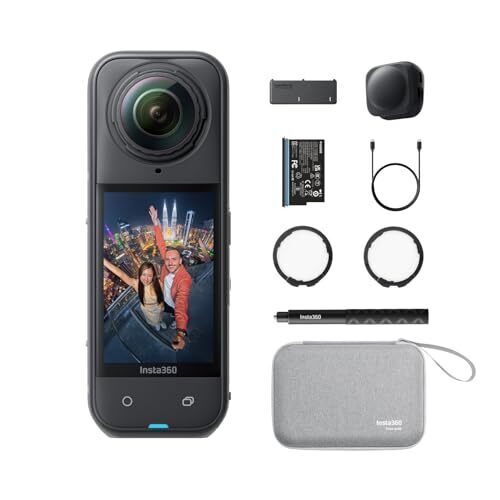
Amazon’s Spring Sale is set to kick off later this week, but some early discounts are already live. One worth paying attention to is the Insta360 X5 Essentials Bundle. Currently listed at $559.99 (originally $659.99), this is the lowest this bundle has ever reached, according to price trackers. It’s also worth noting that PCMag gave the X5 an “outstanding” rating and named it the best action camera of 2025. That context makes the $100 discount feel more meaningful, especially since this bundle already includes most of what you need to get started, including a selfie stick and a carry case. You’ll still need to factor in a microSD card, but this gets you most of the way there without needing to piece things together later.
The X5 is built around the idea that you don’t have to frame your shot perfectly while filming. It captures everything in 360 degrees at up to 8K, so you can decide what the shot should look like later in the app. That approach makes a lot of sense for fast-moving situations like biking, traveling, or navigating crowded places where stopping to adjust angles just isn’t practical. It can also shoot 4K at 120fps for slow-motion clips and take 72MP photos that are detailed enough for social media. You can take it straight into the water too, since it’s waterproof up to 49 feet without needing a case.
One of the more practical upgrades is the user-replaceable lenses. Scratches are common with action cameras, and this lets you fix the problem without replacing the entire unit. Plus, the touchscreen is easy to work with, and the app does a decent job of guiding you through edits with AI tools that can pull together highlights or suggest templates. That said, the learning curve is the main trade-off. You can shoot quickly, but getting polished results takes some effort, especially when reframing clips and applying edits. As for its battery life, it’s rated for up to 185 minutes in endurance mode, though that number drops with higher resolutions and frequent use of features.
Our Best Editor-Vetted Amazon Big Spring Sale Deals Right Now
We may earn a commission from links on this page. Deal pricing and availability subject to change after time of publication.
Amazon’s Spring Sale hasn’t officially started, but some of the better discounts are already live, like the OnePlus Buds 4. These latest earbuds from the brand are down to $79.99 (from $129.99), their lowest price so far, according to price trackers. Amazon is also testing one-hour and three-hour delivery in select locations, as reported by our senior tech editor Jake Peterson, which makes these early deals easier to act on if you need something fast. The Buds 4 are positioned as a step up from the Buds 3, borrowing a few ideas from the more expensive Pro series, particularly in how they handle noise cancellation and overall tuning.
The biggest reason to consider these is the noise cancellation—it cuts down steady background sounds like traffic, fans, or office chatter well enough that you don’t have to keep increasing the volume. They’re also light enough to wear for a few hours without ear fatigue. Sound-wise, these lean toward bass. Songs with heavier beats feel fuller and more engaging, though it can come at the cost of some clarity in vocals or instruments. You also get Bluetooth connectivity that stays stable, along with decent battery life that can stretch through most of a day with the case.
That said, the experience isn’t perfect. The companion app can feel inconsistent, with occasional bugs that make adjusting settings more frustrating than they should be. Plus, the touch controls take some getting used to and can misfire if you’re adjusting the earbuds on the go. There’s also the fact that these cost more than the Buds 3 (at full price), which still hold up well for less money. Still, at $79.99, the Buds 4 makes more sense as a value buy, especially if strong noise cancellation is high on your list.
Our Best Editor-Vetted Amazon Big Spring Sale Deals Right Now
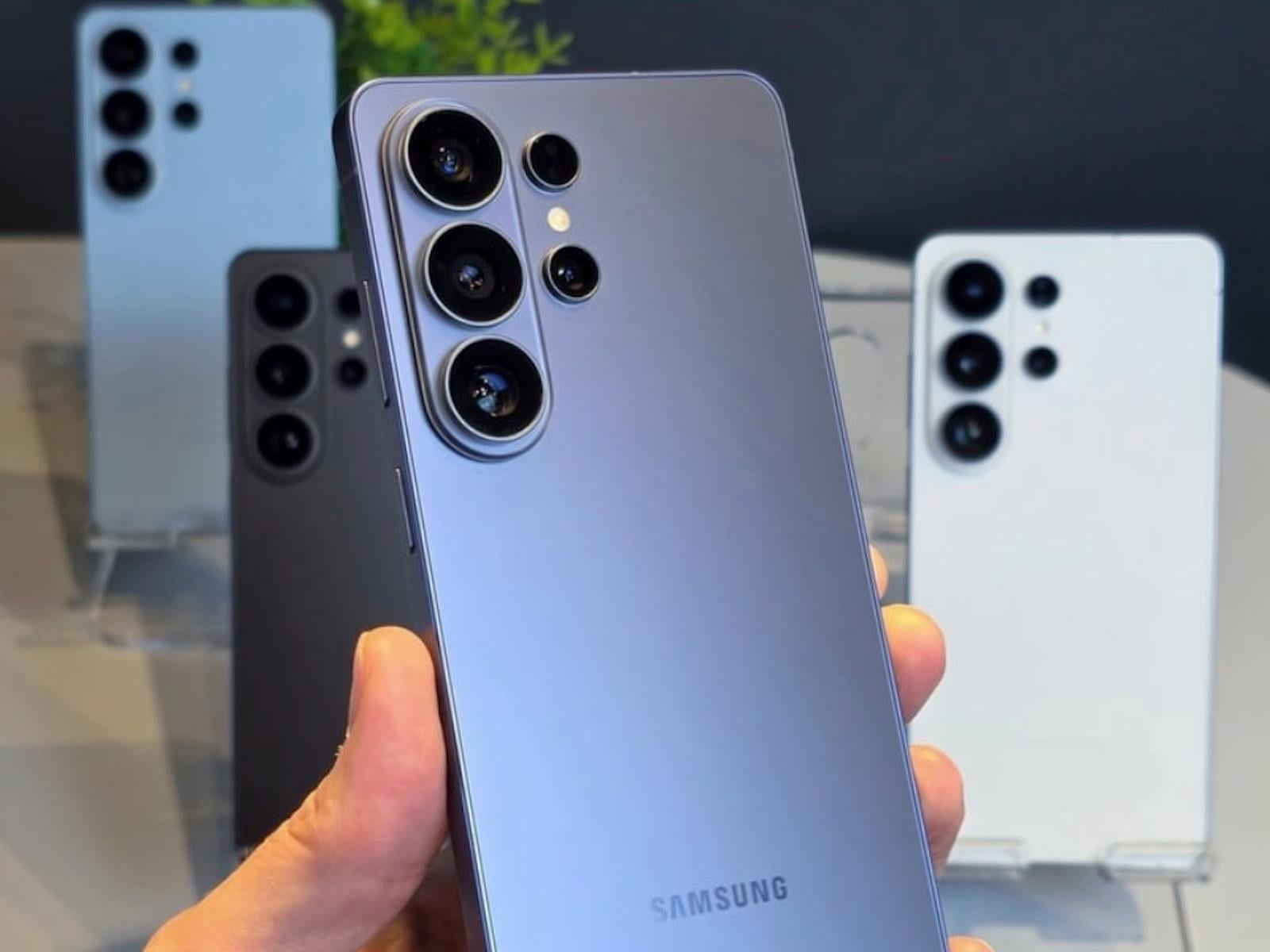
As Google promised, Apple AirDrop sharing is expanding to more Android devices. Samsung announced today that its Galaxy S26 Series is getting AirDrop support through the Quick Share feature.
Google first introduced the Quick Share feature on its Pixel 10 phones last year and, in February, shared plans to increase the number of devices included. The setting allows Android users to send and receive photos and files from an Apple device, much like two Apple users do with AirDrop. To get media from an iPhone, Android users need to turn visibility settings onto “everyone for 10 minutes.”
Starting tomorrow, March 23, Samsung will begin rolling out this AirDrop support in Korea. It should then expand to areas such as North America, Europe, Hong Kong, Japan, and Latin America. Once again, Samsung states that additional devices should be able to get AirDrop compatibility soon.
This article originally appeared on Engadget at https://www.engadget.com/mobile/smartphones/samsungs-galaxy-s26-will-get-apple-airdrop-support-starting-today-110452832.html?src=rss
BROOMFIELD, Colorado—One of NASA’s oldest astronomy missions, the Neil Gehrels Swift Observatory, has been out of action for more than a month as scientists await the arrival of a pioneering robotic rescue mission.
The 21-year-old spacecraft is falling out of orbit, and NASA officials believe it’s worth saving—for the right price. Swift is not a flagship astronomy mission like Hubble or Webb, so there’s no talk of sending astronauts or spending hundreds of millions of dollars on a rescue expedition. Hubble was upgraded by five space shuttle missions, and billionaire and commercial astronaut Jared Isaacman—now NASA’s administrator—proposed a privately funded mission to service Hubble in 2022, but the agency rejected the idea.
Swift may be a more suitable target for a first-of-a-kind commercial rescue mission. It has cost roughly $500 million (adjusted for inflation) to build, launch, and operate, but it is significantly less expensive than Hubble, so the consequences of a botched rescue would be far less severe. Last September, NASA awarded a company named Katalyst Space Technologies a $30 million contract to rapidly build and launch a commercial satellite to stabilize Swift’s orbit and extend its mission.
Will there be an AI-optimized programming language at the expense of human readability? There’s now been experiments with minimizing tokens for “LLM efficiency, without any concern for how it would serve human developers.”
This new article asks if AI will force source code to evolve — or make it extinct, noting that Stephen Cass, the special projects editor at IEEE Spectrum, has even been asking the ultimate question about our future. “Could we get our AIs to go straight from prompt to an intermediate language that could be fed into the interpreter or compiler of our choice? Do we need high-level languages at all in that future?”
Cass acknowledged the obvious downsides. (“True, this would turn programs into inscrutable black boxes, but they could still be divided into modular testable units for sanity and quality checks.”) But “instead of trying to read or maintain source code, programmers would just tweak their prompts and generate software afresh.” This leads to some mind-boggling hypotheticals, like “What’s the role of the programmer in a future without source code?” Cass asked the question and announced “an emergency interactive session” in October to discuss whether AI is signaling the end of distinct programming languages as we know them.
In that webinar, Cass said he believes programmers in this future would still suggest interfaces, select algorithms, and make other architecture design choices. And obviously the resulting code would need to pass tests, Cass said, and “has to be able to explain what it’s doing.” But what kind of abstractions could go away? And then “What happens when we really let AIs off the hook on this?” Cass asked — when we “stop bothering” to have them code in high-level languages. (Since, after all, high-level languages “are a tool for human beings.”) “What if we let the machines go directly into creating intermediate code?” (Cass thinks the machine-language level would be too far down the stack, “because you do want a compile layer too for different architecture….”)
In this future, the question might become ‘What if you make fewer mistakes, but they’re different mistakes?'” Cass said he’s keeping an eye out for research papers on designing languages for AI, although he agreed that it’s not a “tomorrow” thing — since, after all, we’re still digesting “vibe coding” right now. But “I can see this becoming an area of active research.”
The article also quotes Andrea Griffiths, a senior developer advocate at GitHub and a writer for the newsletter Main Branch, who’s seen the attempts at an “AI-first” languages, but nothing yet with meaningful adoption. So maybe AI coding agents will just make it easier to use our existing languages — especially typed languages with built-in safety advantages.
And Scott Hanselman’s podcast recently dubbed Chris Lattner’s Mojo “a programming language for an AI world,” just in the way it’s designed to harness the computing power of today’s multi-core chips.