A Switch 2 edition of Animal Crossing: New Horizons will land on January 15

Many of us would rather forget all about the annus horribilis that was 2020, but there was at least one glaringly bright spot in that year, as Animal Crossing: New Horizons provided solace for many. Almost six years after the game’s debut, Nintendo is hoping you’ll return to your island — or start a new one — as a Switch 2 version with a bunch of upgrades will arrive on January 15. A free update is coming to both the Switch and Switch 2 versions of the game on the same day.

A 12-minute video on Nintendo’s YouTube channel went over a lot of the changes. The Switch 2 version has improved graphics with support for 4K visuals in TV mode. You’ll be able to play with mouse controls via Joy-Con 2. Nintendo suggests that could make it easier for you to redecorate your home, make custom designs and create messages on the bulletin board. With the Switch 2’s microphone, you’ll be able to use your voice to call out to the residents of your island when you pick up the new megaphone item. 

The online features are getting upgrades. Up to 12 players will be able to hang out on the Switch 2 version, up from eight. There’s support for the Switch 2 camera feature as well — you and your friends will be able to see each other’s faces above your characters as you play.

The Switch 2 edition of Animal Crossing: New Horizons will be available as physical and digital versions for $65. There’s an upgrade pack for the original game, which will run you $5 — that’s very reasonable, especially by Nintendo standards. 

As for folks who are sticking with the original Switch for the time being, there are a lot of new features coming via a free update. It brings a new locale to your island in the form of a hotel on the pier. You can decorate the room as you wish based on certain themes, and get souvenirs from the gift shop as a reward. You can pick up new outfits from the hotel too. The update will also add a dream world with up to three more islands for you and your friends to play and create in. There’ll be fresh craftable items and the option to expand your home storage to up to 9,000 items (up from 5,000). 

The update will bring new collaborations to ANCH as well. You can pick up various Nintendo consoles as decorative items, and even play games on them if you have a Switch Online subscription. Lego items are coming to the game, along with a Legend of Zelda and Splatoon crossovers that work with select Amiibo. Of course, all of these additions will hit the Switch 2 version as well. I can imagine that a bunch of people are going to spend many more hours in ANCH in 2026.

This article originally appeared on Engadget at https://www.engadget.com/gaming/nintendo/a-switch-2-edition-of-animal-crossing-new-horizons-will-land-on-january-15-135000347.html?src=rss

Google celebrates Pac-Man’s 45th anniversary with a Halloween Doodle

Google Doodle is featuring something special for gamers today: A tribute to Pac-Man’s 45th anniversary, just in time for Halloween. For today and tomorrow, you’ll be able to play four haunted-house mazes especially designed for the event by Pac-Man’s parent company, Bandai Namco Entertainment. Like other games in the franchise, you’ll have to control Pac-Man and eat all of the dots in a maze without being caught by a ghost. 

Yes, the Ghost Gang, with Blinky, Pinky, Inky and Clyde, is back for this event. The maze’s design reflects the ghost’ personalities, so you can move according to how you think each one will try to get you. Blinky the red ghost, for instance, tends to actively chase Pac-Man, while the others would corner him. If you grab a Power Pallet, you’ll be able to activate a time-limited event wherein you can chase and eat the ghosts, as well. 

To play the game, simply go to the Google homepage on desktop or fire up the Google app on mobile, whether on Android or on iOS. On a PC, you control Pac-Man with your keyboard’s arrow keys, while on mobile, you’ll have to swipe or press and move your finger to change directions. 

This article originally appeared on Engadget at https://www.engadget.com/gaming/google-celebrates-pac-mans-45th-anniversary-with-a-halloween-doodle-133034299.html?src=rss

WhatsApp will let you use passkeys for your backups

WhatsApp is rolling out passkeys for backups, which is great news for anyone who has been on the platform for years. This will add another layer of security to anything that’s been backed up, including chats, photos, voice notes and more.

It’s also convenient because passkeys don’t force users to keep track of yet another password or encryption key. For the uninitiated, passkeys allow users to access personal data via biometric markers like fingerprints and face scans. However, these particular passkeys will also work with screen lock codes on certain devices.

The feature is rolling out today, but it’ll take a few weeks to reach every user. WhatsApp is a gigantic global platform. Once updated, folks can get started by heading to the Settings tab.

This is just another layer of security for WhatsApp users, as these backups are already end-to-end encrypted. The platform has been doing that since 2021. It began offering passkey support just last year.

This article originally appeared on Engadget at https://www.engadget.com/cybersecurity/whatsapp-will-let-you-use-passkeys-for-your-backups-130022640.html?src=rss

Mother Describes the Dark Side of Apple’s Family Sharing

An anonymous reader quotes a report from 9to5Mac: A mother with court-ordered custody of her children has described how Apple’s Family Sharing feature can be weaponized by a former partner. Apple support staff were unable to assist her when she reported her former partner using the service in controlling and coercive ways… […] Namely, Family Sharing gives all the control to one parent, not to both equally. The parent not identified as the organizer is unable to withdraw their children from this control, even when they have a court order granting them custody. As one woman’s story shows, this can allow the feature which allows it to be weaponized by an abusive former partner.

Wired reports: “The lack of dual-organizer roles, leaving other parents effectively as subordinate admins with more limited power, can prove limiting and frustrating in blended and shared households. And in darker scenarios, a single-organizer setup isn’t merely inconvenient — it can be dangerous. Kate (name changed to protect her privacy and safety) knows this firsthand. When her marriage collapsed, she says, her now ex-husband, the designated organizer, essentially weaponized Family Sharing. He tracked their children’s locations, counted their screen minutes and demanded they account for them, and imposed draconian limits during Kate’s custody days while lifting them on his own […] After they separated, Kate’s ex refused to disband the family group. But without his consent, the children couldn’t be transferred to a new one. “I wrongly assumed being the custodial parent with a court order meant I’d be able to have Apple move my children to a new family group, with me as the organizer,” says Kate. But Apple couldn’t help. Support staff sympathized but said their hands were tied because the organizer holds the power.” Although users can “abandon the accounts and start again with new Apple IDs,” the report notes that doing so means losing all purchased apps, along with potentially years’ worth of photos and videos.


Read more of this story at Slashdot.

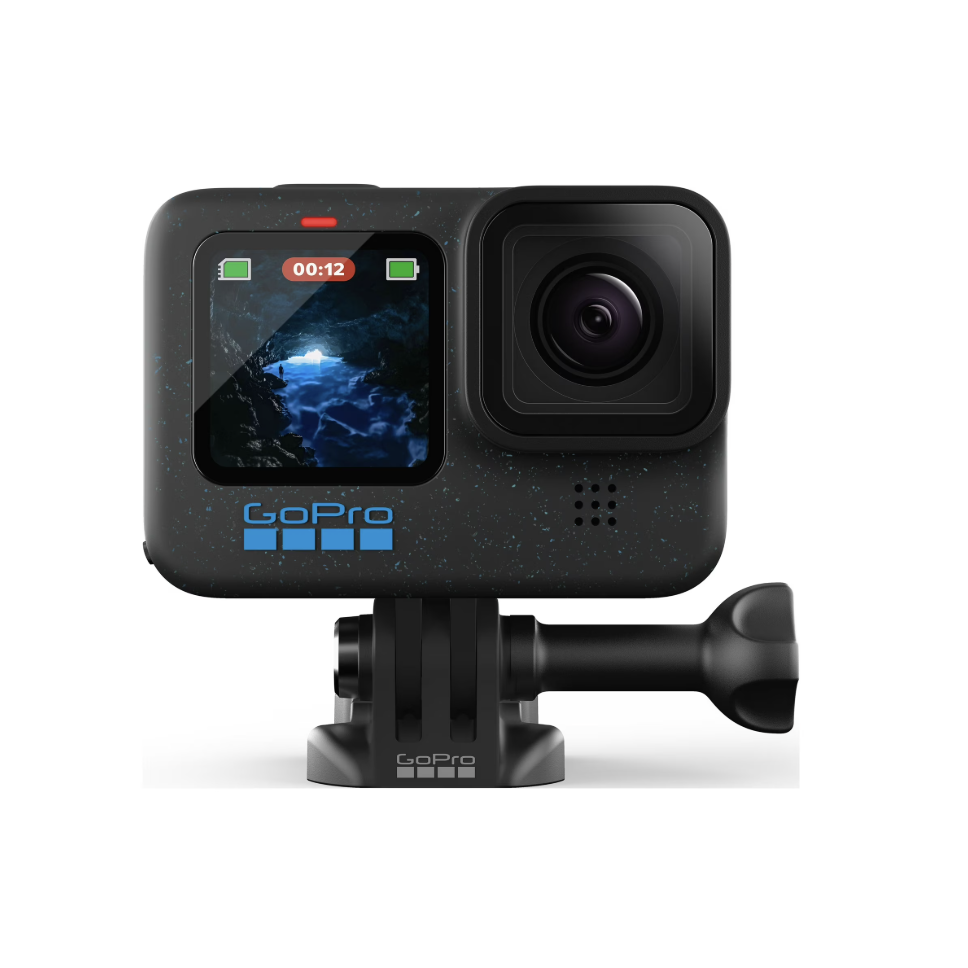
The GoPro Hero12 Is $50 Off Right Now

We may earn a commission from links on this page. Deal pricing and availability subject to change after time of publication.

Even though the newer Hero13 Black is out, the Hero12 Black still nails the fundamentals that made GoPro the go-to name for action cameras. And right now it’s available at a solid discount—$299.95 at Walmart, down from $349.99, and cheaper than Amazon’s current $369 listing.

It’s waterproof, tough enough to survive crashes and splashes, and compact enough to mount just about anywhere. PCMag gave it an “outstanding” rating upon its launch, praising its stability, image quality, and ease of use, while Lifehacker’s own Stephen Johnson called it one of his favorite products ever.

Performance-wise, the Hero12 Black can shoot up to 5.3K at 60 frames per second, offering 91% more resolution than 4K, and the stabilization makes handheld shots look like they came from a gimbal. Plus, you get both front and rear displays, which make framing easy, whether you’re filming yourself or capturing what’s in front of you. The Hero12 also shoots in an 8:7 aspect ratio, making it easy to crop videos for both widescreen and vertical social content. That versatility is a big deal for creators who want to repurpose the same clip for YouTube and Instagram without reshooting. Footage is stored via a microSDXC card, and you get Bluetooth, wifi, and USB-C connectivity for quick transfers.

One of the biggest changes in this generation is what GoPro removed. There’s no built-in GPS, which means you won’t get automatic speed or route overlays, but you also won’t burn through battery as quickly. That said, the battery still won’t last a full day if you’re recording continuously, so a spare is worth having on hand. On the bright side, it’s waterproof down to 33 feet (10 meters) without a case, which makes it great for beach trips, pool footage, or even rainy hikes.


Our Best Editor-Vetted Tech Deals Right Now


Amazon Fire TV Stick 4K Plus


—
$29.99

(List Price $49.99)


Ring Video Doorbell Pro 2 with Ring Chime Pro


—
$149.99

(List Price $259.99)

Deals are selected by our commerce team

OpenAI’s character cameos will let you put pets and original personas in Sora videos

OpenAI has rolled out the capability to create character cameos of your pets, doodles, original personas or even objects in the Sora app, which you can put in your videos. You can start the process by going to your profile page in the Sora app, tapping on the “Create cameo” button and then uploading a video of the character (or pet) you want the model to generate. The company says just a few seconds of footage are enough, and you can even use old Sora-generated videos as reference. 

You can then give your character a display name and describe how you want the model to animate it. In the example OpenAI uploaded, for instance, the description for a wicked green witch character reads: “She glides with a mysterious, whimsical grace, speaks in rhymes when casting spells, and her pointed hat always tilts as if listening to secrets on the wind.” You can choose permissions for each character you create. Under the “Who can use this” permissions section, you can choose between several options: Only me, People I approve, Mutuals, Everyone and Everyone (excluding specific sets of users). Whenever you want to generate a Sora video with a cameo in it, you can just tag a specific character.

Sora 2 launched with a cameo feature that lets you create an avatar of yourself, but this is a new application of the capability. Cameo, the app that allows users to buy videos from celebrities, just sued OpenAI over trademark violation by using the “cameo” name. It said that OpenAI’s use of the word is likely to cause consumer confusion and dilute its brand. OpenAI disagreed “that anyone can claim exclusive ownership over the word ‘cameo.'”

In addition to character cameos, OpenAI has introduced “stitching,” allowing you to stitch several clips together and connect videos. There’s now also a leaderboard that shows the most cameod and most remixed videos.

How to create and use character cameos in the Sora app, as demo’d by lil crabby. pic.twitter.com/bLOH6M4Kt7

— OpenAI (@OpenAI) October 29, 2025

This article originally appeared on Engadget at https://www.engadget.com/ai/openais-character-cameos-will-let-you-put-pets-and-original-personas-in-sora-videos-123043189.html?src=rss

YouTube is offering employees buyouts as part of an AI-focused reorganization

As part of an AI-focused reorganization, YouTube CEO Neal Mohan told employees that it will offer voluntary buyouts, according to an internal company memo. At the same time, he emphasized that there would be no specific role eliminations as part of new structure.

“Looking to the future, the next frontier for YouTube is AI, which has the potential to transform every part of the platform,” Mohan wrote. “We also understand some of you may be ready for a new challenge, so we’ve decided now is the right time to offer a voluntary exit Program.” 

The restructuring is designed to help YouTube focus on fast-growing areas like AI while “driving faster decision making and execution,” the memo states. To that end, the platform is organizing into three separate product organizations: viewer products, creator and community products, and subscription products. 

Viewer products will focus on the viewer experience by making improvements to search & discovery, engagement, the living room experience and “our foundation of responsibility.” Creator and community products, meanwhile, is “driving creation through genAI tools, Shorts, Live and creator support. Subscription products, as you’d expect, will operate around subscription growth across Music, Premium and OTT (YouTube TV) platforms. 

Mohan noted that YouTube has been the number one streamer in the US for the last two years. So far, it has signed up 125 million Premium and Music subscribers, along with 8 million YouTube TV subs. The platform has paid out $100 billion to its ecosystem (presumably, creators and recording artists). 

YouTube isn’t the only tech giant reducing headcount while citing AI as an impetus. Amazon recently announced that it had laid off 14,000 people, while citing the need to be “lean” due to transformative technology like AI. Meanwhile, YouTube parent Alphabet announced its first-ever $100 billion quarter, largely on the strength of cloud services and search.

This article originally appeared on Engadget at https://www.engadget.com/big-tech/youtube-is-offering-employees-buyouts-as-part-of-an-ai-focused-reorganization-120047466.html?src=rss

Meta will add a ‘huge corpus’ of AI content into its recommendation system

It looks like Meta’s Vibes feed is just the start of the company’s pivot toward AI slop. In an earnings call, CEO Mark Zuckerberg said that “we’re going to add yet another huge corpus of content” to Meta’s recommendation system, via AI’s ability to create and remix content — so you’re likely to see even more AI generated posts on Facebook and Instagram. 

“Social media has gone through two eras so far. First was when all content was from friends, family, and accounts that you followed directly. The second was when we added all the creator content,” he said, seemingly suggesting that AI content will be the third era.  

Zuckerberg added that recommendation systems that “deeply” understand AI content are “increasingly valuable” since they can “help you achieve your goals.” 

He then nodded to Vibes, calling it an example of a new type of content enabled by AI. Retention on the feed “is looking good so far, and its usage keeps growing quickly week over week,” he proclaimed. Furthermore, there are more opportunities to build “many more novel types of content aheads, as our new models become ready,” Zuckerberg added. To put some numbers to Vibes takeup, Meta CFO Susan Li said that users have generated over 20 billion images in the feed to date. 

Meta has already introduced a number of AI features across its social media platforms. Those include in-app photo and video editing via text prompts directly in Instagram Stories, AI chatbots across WhatsApp, Messenger, and Instagram, and a standalone Meta AI app that includes an AI assistant and discovery feed. 

This article originally appeared on Engadget at https://www.engadget.com/social-media/meta-will-add-a-huge-corpus-of-ai-content-into-its-recommendation-system-113027353.html?src=rss

What’s next for Vision Pro? Apple should take a cue from Xreal’s smart glasses

Forget Samsung’s $1,800 Galaxy XR, the Android XR device I’m actually intrigued to see is Xreal’s Project Aura, an evolution of the company’s existing smart glasses. Instead of being an expensive and bulky headset like the Galaxy XR and Apple Vision Pro, Xreal’s devices are like over-sized sunglasses that project a virtual display atop transparent lenses. I genuinely loved Xreal’s $649 One Pro for its comfort, screen size and relative affordability. 

Now that I’m testing the M5-equipped Vision Pro (full review to come soon!), it’s clearer than ever that Apple should replicate Xreal’s winning formula. It’ll be a long while before we’ll ever see a smaller Vision Pro-like device under $1,000, but Apple could easily build a similar set of comfortable smart glasses that more people could actually afford. And if they worked like Xreal’s glasses, they’d also be far more useful than something like Meta’s $800 Ray-Ban Display, which only has a small screen for notifications and quick tasks like video chats. 

Xreal One Pro smart glasses
Devindra Hardawar for Engadget

While we don’t have any pricing details for Project Aura yet, given Xreal’s history of delivering devices between $200 and $649, I’d bet they’ll come in cheaper than the Galaxy XR. Xreal’s existing hardware is less complex than the Vision Pro and Galaxy XR, with smaller displays, a more limited field of view and no built-in battery. Project Aura differs a bit with its tethered computing puck, which will be used to power Android XR and presumably hold a battery. That component alone could drive its price up to $1,000 — but hey, that’s better than $1,800.

During my time with the M5 Vision Pro, I couldn’t help but imagine how Apple could bring visionOS to its own Xreal-like hardware, which I’ll call the “Vision Air” for this thought experiment. The basic sunglasses design is easy enough to replicate, and I could see Apple leaning into lighter and more premium materials to make wearing the Vision Air even more comfortable than Xreal’s devices. There’s no doubt it would be lighter than the 1.6-pound Vision Pro, and since you’d still be seeing the real world, it also avoids the sense of being trapped in a dark VR headset. 

To power the Vision Air, Apple could repurpose the Vision Pro’s battery pack and turn it into a computing puck like Project Aura’s. It wouldn’t need the full capabilities of the M5 chip, it would just have to be smart enough to juggle virtual windows, map objects in 3D space and run most visionOS apps. The Vision Air also wouldn’t need the full array of cameras and sensors from the Vision Pro, just enough track your fingers and eyes. 

I could also see Apple matching, or even surpassing, Project Aura’s 70-degree field of view, which is already a huge leap beyond the Xreal One Pro’s 57-degree FOV. Xreal’s earlier devices were severely limited by a small FOV, which meant that you could only see virtual screens through a tiny sliver. (That’s a problem that also plagued early AR headsets like Microsoft’s HoloLens.) While wearing the Xreal One Pro, though, I could see a huge 222-inch virtual display within my view. Pushing the FOV even higher would be even more immersive.

In my review of the original Vision Pro, I wrote, “If Apple just sold a headset that virtualized your Mac’s screen for $1,000 this well, I’d imagine creative professionals and power users would be all over it.” That may be an achievable goal for the Vision Air, especially if it’s not chasing total XR immersion. And even if the Apple tax pushed the price up to $1,500, it would still be more sensible than the Vision Pro’s $3,500 cost. 

While I don’t have high hopes for Android XR, its mere existence should be enough to push Apple to double-down on visionOS and deliver something people can actually afford. If Xreal can design comfortable and functional smart glasses for a fraction of the Vision Pro’s cost, why can’t Apple? 

This article originally appeared on Engadget at https://www.engadget.com/ar-vr/whats-next-for-vision-pro-apple-should-take-a-cue-from-xreals-smart-glasses-113000437.html?src=rss

Proton launches ‘Data Breach Observatory’ to track personal info leaks

Proton, the company behind Proton VPN and other encrypted apps like Proton Mail and Proton Drive, just launched a new web page called the Data Breach Observatory that aims to make accurate cybercrime data more widely accessible. The Observatory is intended to be a continually updated report that records any data leak detected on the dark web, with information sourced from the underground data marketplaces themselves.

The reason for the Observatory, according to Proton, is that too many studies of cyberattacks depend on organizations reporting when they’ve been hacked. A company might not make a data breach public for fear of backlash from customers, regulators or stockholders. Although it’s impossible to tell how many breaches aren’t reported, Proton believes it’s a significant portion.

Compounding the transparency problem, most stolen data is advertised and traded on dark web markets that are hard to trace without specialized knowledge, like how diamond thieves don’t tend to fence their loot at above-board jewelry stores. In other words, while most people know that personal information is frequently stolen and leaked, it’s very difficult to know how much data is getting stolen, how often breaches occur and who’s buying and selling the goods.

Proton’s solution is to monitor the dark web itself, watching locations where data thieves go to advertise stolen information. By keeping an eye on these exchanges, Proton believes the Data Breach Observatory will be able to warn victims as early as possible, including before the targets themselves are aware of the leak. Making breach reports available in one place is also meant to educate the public about the actual size and scope of cybercrime, while making it harder for companies to keep quiet about getting hacked.

Proton plans to update the Observatory in “near real time,” working with a risk detection firm called Constella Intelligence. It remains to be seen whether they’ll be able to keep up the workload — according to Proton’s own research, around 1,571 data breaches have occurred in 2025 so far, compromising well over 100 billion records. A clearing house for reporting on all of those definitely sounds valuable, but at around five breaches a day, it’ll be a busy page.

This article originally appeared on Engadget at https://www.engadget.com/cybersecurity/proton-launches-data-breach-observatory-to-track-personal-info-leaks-110047833.html?src=rss

Halloween film fest: 15 classic ghost stories

It’s spooky season, and what better way to spend Halloween weekend than settling in to watch a classic Hollywood ghost story? To help you figure out what to watch, we’ve compiled a handy list of 15 classic ghost stories, presented in chronological order.

What makes a good ghost story? Everyone’s criteria (and taste) will differ, but for this list, we’ve focused on more traditional elements. There’s usually a spooky old house with a ghostly presence and/or someone who’s attuned to said presence. The living must solve the mystery of what happened to trap the ghost(s) there in hopes of setting said ghost(s) free. In that sense, the best, most satisfying ghost stories are mysteries—and sometimes also love stories. The horror is more psychological, and when it comes to gore, less is usually more.

As always, the list below isn’t meant to be exhaustive. Mostly, we’re going for a certain atmospheric vibe to set a mood. So our list omits overt comedies like Ghostbusters and (arguably) Ghost, as well as supernatural horror involving demonic possession—The Exorcist, The Conjuring, Insidious—or monsters, like The Babadook or Sinister. Feel free to suggest your own recommendations in the comments.

Read full article

Comments

These are the Black Friday deals on tech I’m hoping to see for 2025

Black Friday (which is now basically all of November) is one of the best times of the year to pick up things for yourself and for other people. But to say money is tight is an understatement this year. If Amazon’s Prime Big Deal Days was any indicator, folks are spending more on essentials than anything else during these big sales. That, combined with the rising trend of holding on to big tech purchases for longer means that you may not have gadgets at the top of your to-buy list this year.

Even if that’s the case, I’d recommend not overlooking tech entirely this Black Friday. After all, all of us have essential tech that we use every day, and more often than not, you can avoid paying full price for most of those gadgets (and all of the rest of the best tech of the year) if you’re looking to add to your repertoire or you need a replacement. Personally, I’m not eyeing a new smartphone or laptop this holiday shopping season, but there are a few tech purchases I’d like to make if the prices are right. This is the tech I’m hoping to save on this year during Black Friday.

This article originally appeared on Engadget at https://www.engadget.com/deals/these-are-the-black-friday-deals-on-tech-im-hoping-to-see-for-2025-100014802.html?src=rss

Alphabet Tops $100 Billion Quarterly Revenue For First Time

Alphabet reported its first-ever $100 billion quarter, fueled by a 34% surge in Google Cloud revenue and booming AI demand. The tech giant also announced an increase in expected capital expenditures for the fiscal year of 2025. CNBC reports: “With the growth across our business and demand from Cloud customers, we now expect 2025 capital expenditures to be in a range of $91 billion to $93 billion,” the company said in its earnings report (PDF) Wednesday. “Looking out to 2026, we expect a significant increase in CapEx and will provide more detail on our fourth quarter earnings call,” said finance chief Anat Ashkenazi on the earnings call with investors Wednesday.

Earlier this year, the company increased its capital expenditure expectation from $75 billion to $85 billion. Most of that goes toward technical infrastructure such as data centers. The latest earnings show the company is seeing rising demand for its AI services, which largely sit in its cloud unit. It also shows the company is continuing to spend more to try and build out more infrastructure to accomodate the backlog of customer requests. “We continue to drive strong growth in new businesses. Google Cloud accelerated, ending the quarter with $155 billion in backlog,” CEO Sundar Pichai said in the earnings release.


Read more of this story at Slashdot.

Alien Worlds May Be Able To Make Their Own Water

sciencehabit shares a report from Science.org: From enabling life as we know it to greasing the geological machinery of plate tectonics, water can have a huge influence on a planet’s behavior. But how do planets get their water? An infant world might be bombarded by icy comets and waterlogged asteroids, for instance, or it could form far enough from its host star that water can precipitate as ice. However, certain exoplanets pose a puzzle to astronomers: alien worlds that closely orbit their scorching home stars yet somehow appear to hold significant amounts of water.

A new series of laboratory experiments, published today in Nature, has revealed a deceptively straightforward solution to this enigma: These planets make their own water. Using diamond anvils and pulsed lasers, researchers managed to re-create the intense temperatures and pressures present at the boundary between these planets’ hydrogen atmospheres and molten rocky cores. Water emerged as the minerals cooked within the hydrogen soup. Because this kind of geologic cauldron could theoretically boil and bubble for billions of years, the mechanism could even give hellishly hot planets bodies of water — implying that ocean worlds, and the potentially habitable ones among them, may be more common than scientists already thought. “They can basically be their own water engines,” says Quentin Williams, an experimental geochemist at the University of California Santa Cruz who was not involved with the new work.


Read more of this story at Slashdot.

Ex-Intel CEO’s Mission To Build a Christian AI

An anonymous reader quotes a report from The Guardian: In March, three months after being forced out of his position as the CEO of Intel and sued by shareholders, Patrick Gelsinger took the reins at Gloo, a technology company made for what he calls the “faith ecosystem” — think Salesforce for churches, plus chatbots and AI assistants for automating pastoral work and ministry support. […] Now Gloo’s executive chair and head of technology (who’s largely free of the shareholder suit), Gelsinger has made it a core mission to soft-power advance the company’s Christian principles in Silicon Valley, the halls of Congress and beyond, armed with a fundraised war chest of $110 million. His call to action is also a pitch for AI aligned with Christian values: tech products like those built by Gloo, many of which are built on top of existing large language models, but adjusted to reflect users’ theological beliefs.

“My life mission has been [to] work on a piece of technology that would improve the quality of life of every human on the planet and hasten the coming of Christ’s return,” he said. Gloo says it serves “over 140,000 faith, ministry and non-profit leaders”. Though its intended customers are not the same, Gloo’s user base pales in comparison with those of AI industry titans: about 800 million active users rely on ChatGPT every week, not to mention Claude, Grok and others.

[…] Gelsinger wants faith to suffuse AI. He has also spearheaded Gloo’s Flourishing AI initiative, which evaluates leading large language models’ effects on human welfare across seven variables — in essence gauging whether they are a force for good and for users’ religious lives. It’s a system adapted from a Harvard research initiative, the Human Flourishing Program. Models like Grok 3, DeepSeek-R1 and GPT-4.1 earn high marks, 81 out of 100 on average, when it comes to helping users through financial questions, but underperform, about 35 out of 100, when it comes to “Faith,” or the ability, according to Gloo’s metrics, to successfully support users’ spiritual growth. Gloo’s initiative has yet to visibly attract Silicon Valley’s attention. A Gloo spokesperson said the company is “starting to engage” with prominent AI companies. “I want Zuck to care,” Gelsinger said.


Read more of this story at Slashdot.

Rode’s latest wireless microphones now work with digital cameras

Rode’s range of tiny, portable microphones are a mainstay for creators looking for crisp audio on their phone videos. The company knows that those using digital cameras probably want that same blend of portability and performance for their own footage. That’s why it’s launching the new Wireless Micro Camera Kit, which outputs audio over USB-C or via a 3.5mm line-in.

As with the Wireless Micro, the new set includes a pair of microphones and a transmitter that all sit in a portable charging case. You’ll also find a pair of furry wind screens should you need to film in less than favorable weather. But unlike that model, the receiver comes with both a cold shoe mount and a 1.1-inch AMOLED screen. That will let you configure the audio setup on the fly, plus you’ll get battery data for all three units and an on-screen visualizer.

Image of the Rode Wireless Camera Kit attached to a DSLR
Rode

It would appear that Rode noticed user gripes that its own kit was being shown up by DJI’s Mic Mini, which had a transmitter with its own 3.5mm jack and shoe mount for camera connection. In addition, Rode has added Bluetooth Direct Connect to the microphones so they’ll connect to your iOS phone directly via the Rode Capture App. Which, like the 3.5mm, was a notable omission from the older hardware.

In terms of battery life, Rode says the kit and the charging case will hold up to 21 hours of use before you need to head back to an outlet.

Plus, to sweeten the deal, Rode is also throwing in one of its first-generation USB-C smartphone receivers into the package for free.

Rode’s Wireless Micro Camera Kit is available to purchase today for $149.

This article originally appeared on Engadget at https://www.engadget.com/mobile/rodes-latest-wireless-microphones-now-work-with-digital-cameras-025338766.html?src=rss

New China Law Fines Influencers If They Discuss ‘Serious’ Topics Without a Degree

schwit1 shares a report from IOL: China has enacted a new law regulating social media influencers, requiring them to hold verified professional qualifications before posting content on sensitive topics such as medicine, law, education, and finance, IOL reported. The new law went into effect on Saturday. The regulation was introduced by the Cyberspace Administration of China (CAC) as part of its broader effort to curb misinformation online.

Under the new rules, influencers must prove their expertise through recognized degrees, certifications, or licenses before discussing regulated subjects. Major platforms such as Douyin (China’s TikTok), Bilibili, and Weibo are now responsible for verifying influencer credentials and ensuring that content includes clear citations, disclaimers, and transparency about sources. A separate report notes that if influencers are caught talking about the “serious” topics, they will face a fine of up to 100,000 yuan ($14,000).


Read more of this story at Slashdot.

Xbox console revenue fell 30 percent year-over-year this summer

It hasn’t been a good year for Xbox so far. Microsoft has released its earnings report for the quarter ending on September 30, and it has revealed that its revenue from the Xbox hardware fell by 30 percent year-over-year. Take note that the revenue decline doesn’t reflect any dip in sales caused by the console’s $20-to-$70 price hike, since that took effect on October 3. Similarly, Microsoft only raised the price for its Game Pass Ultimate subscription from $20 to $30 in October. 

Meanwhile, revenue from Xbox content and services remained relatively unchanged from the same period last year. Microsoft says it saw growth from Xbox subscriptions and third-party content, but it was “partially offset” by the decline in first-party gaming content. 

The Xbox division was one of the most affected teams when Microsoft started cutting down its global workforce earlier this year, with the company cancelling games that were being developed for the console. Microsoft scrapped the modern reimagining of Perfect Dark, a first-person shooter from the year 2000, and even closed down the Xbox studio working on it. The company also cancelled Everwild, a project that had long been in development by Xbox studio Rare, also in the midst of its mass layoffs. 

Overall, Microsoft’s $77.7 billion revenue was 17 percent higher compared to the same period last year, and its operating income was up by 22 percent. Microsoft CEO Satya Nadella posted a few highlights about the company’s earnings call on X, mostly focusing on its AI efforts. He said that the company will increase its AI capacity by 80 percent this year and will double its data center footprint over the next two. 

2/ We’re building a planet-scale cloud and AI factory.

We’ll increase our AI capacity by 80% this year, and nearly double our DC footprint over the next two.

That includes Fairwater in Wisconsin, the world’s most powerful AI datacenter, which will scale to two gigawatts alone.…

— Satya Nadella (@satyanadella) October 29, 2025

This article originally appeared on Engadget at https://www.engadget.com/gaming/xbox/xbox-console-revenue-fell-30-percent-year-over-year-this-summer-012245146.html?src=rss

SUSE Linux Enterprise Server 16 Becomes First Enterprise Linux With Built-In Agentic AI

BrianFagioli shares a report from NERDS.xyz: SUSE is making headlines with the release of SUSE Linux Enterprise Server 16, the first enterprise Linux distribution to integrate agentic AI directly into the operating system. It uses the Model Context Protocol (MCP) to securely connect AI models with data sources while maintaining provider freedom. This gives organizations the ability to run AI-driven automation without relying on a single ecosystem. With a 16-year lifecycle, reproducible builds, instant rollback capabilities, and post-2038 readiness, SLES 16 also doubles down on long-term reliability and transparency.

For enterprises, this launch marks a clear step toward embedding intelligence at the infrastructure level. The system can now perform AI-assisted administration via Cockpit or the command line, potentially cutting downtime and operational costs. SUSE’s timing might feel late given the AI boom, but its implementation appears deliberate — balancing innovation with the stability enterprises demand. It’s likely to pressure Red Hat and Canonical to follow suit, redefining what “AI-ready” means for Linux in corporate environments.


Read more of this story at Slashdot.