Check If You Have Access to Google’s New Gemini-Powered ‘Advanced’ Translations

More accurate translations seem to be making their way to Google Translate, as first spotted by 9to5Google. While Lifehacker has not been able to confirm this independently, the publication says some of its iOS devices now show an option to pick an “Advanced” translation model in the Google Translate app.

The new model shows up as an option in a model picker at the top of the page, similar to the Gemini app, and advertises “High accuracy for complex translations.” Engadget was also able to get the model picker to appear, where the Advanced model said it “specializes in accuracy using Gemini.”

Those wishing to use the old translation tools can instead continue to use the “Fast” model.

Alongside the introduction of an AI-learning tool competing with Duolingo back in August, the new model further cements Google Translate as an AI-powered app, with the idea being that incorporating the LLM will allow for translations of longer, more context-sensitive work.

Advanced translations, limited language support

For now, , the Advanced translation model does come with a few limitations. First, it only supports text translation, so no holding your phone out to a native speaker and recording what they say. Second, it only supports “select languages.”

While 9to5Google does not clarify which languages the Advanced Model works with, Engadget’s report says that it currently only works between English and French, or English and Spanish. The publication also tested an excerpt from a French play with the new model, saying that while the Fast model gave a more literal word-for-word translation, the Advanced model was more accurate, taking into account the passage’s nuance and better translating an idiom that the old tools missed.

While the Advanced model is a more explicit AI addition, it is not the first time the Google Translate app has used AI to translate text. In August, Google said it had already started using “Gemini models in Translate,” and the company has been experimenting with its implementation since 2016, saying that AI translation “reduced translation errors by an average of 60%.” Still, it marks more choice for those with access to it, and a greater commitment to bring new AI tools to the app.

The update is still rolling out

Unfortunately, it seems like it’ll take some time to roll out fully, as I currently don’t see it on any of my devices. I’ve contacted Google for an update on when the Advanced model is likely to reach all users.

Studio Ghibli, Bandai Namco, Square Enix Demand OpenAI Stop Using Their Content To Train AI

An anonymous reader shares a report: The Content Overseas Distribution Association (CODA), an anti-piracy organization representing Japanese IP holders like Studio Ghibli and Bandai Namco, released a letter last week asking OpenAI to stop using its members’ content to train Sora 2, as reported by Automaton. The letter states that “CODA considers that the act of replication during the machine learning process may constitute copyright infringement,” since the resulting AI model went on to spit out content with copyrighted characters.

Sora 2 generated an avalanche of content containing Japanese IP after it launched on September 30th, prompting Japan’s government to formally ask OpenAI to stop replicating Japanese artwork. This isn’t the first time one of OpenAI’s apps clearly pulled from Japanese media, either — the highlight of GPT-4o’s launch back in March was a proliferation of “Ghibli-style” images.

Altman announced last month that OpenAI will be changing Sora’s opt-out policy for IP holders, but CODA claims that the use of an opt-out policy to begin with may have violated Japanese copyright law, stating, “under Japan’s copyright system, prior permission is generally required for the use of copyrighted works, and there is no system allowing one to avoid liability for infringement through subsequent objections.”


Read more of this story at Slashdot.

Microsoft Fixes A Frustrating Windows Shutdown Bug That’s Lingered For Years

Microsoft Fixes A Frustrating Windows Shutdown Bug That's Lingered For Years
You almost assuredly know this problem first-hand: Windows performs updates, and your “Restart” and “Shut down” options get replaced by “Update and restart” and “Update and shut down.” Only, in reality, these are actually the same option, because on virtually all systems, “Update and shut down” actually results in the machine rebooting to

Federal Agencies May Move to Ban These Popular Wifi Routers

The security of a popular wifi router brand is under scrutiny from multiple federal agencies, and devices could be pulled from shelves in the United States in the future. According to reporting from the Washington Post, the US Department of Commerce has proposed a ban on routers from TP-Link Systems, a move that has now received support from Departments of Homeland Security, Justice, and Defense.

What is the issue with TP-Link?

The proposal reportedly stems from security concerns with routers sold by TP-Link Systems, which is in California but was spun off from the Chinese-based TP-Link Technologies. Commerce officials have warned that the devices handle sensitive data and may be subject to influence by the Chinese government.

For example, there is concern that TP-Link is required to provide information to Chinese intelligence agencies and central government, which could in turn force software updates that compromise user data. (It is important to note that U.S.-based TP-Link Systems disputes this and says that only U.S. engineers can push patches to devices owned by U.S. customers.)

The interagency review of TP-Link actually began during the Biden administration—and this isn’t the first action the federal government has taken against tech companies that have foreign ties. In June 2024, the Commerce Department banned sales of antivirus software from Russia’s Kaspersky Lab to U.S. consumers.

Is my TP-Link router affected?

Again, the proposal under consideration could ban future sales of TP-Link Systems routers to U.S. users. Existing devices from TP-Link have been targeted by threat actors and been subject to zero-day vulnerabilities, including a flaw that allowed full takeover.

Of course, most internet-connected devices are vulnerable to hackers, and while some security experts express caution when it comes to TP-Link, there isn’t unilateral support for tossing your router ASAP. Instead, you should continue to follow security best practices to protect your home network, such as changing default login credentials, enabling protective features like a firewall and encryption, and keeping your device’s firmware up to date. If you do need to purchase a new router—if you stop renting from your internet service provider, for example—you might consider a different brand.

Some estimates suggest that TP-Link’s home routers make up as much as half of the market in the U.S. (though others put the numbers much lower). Many of those devices are sold or leased through ISPs.

Google removes Gemma models from AI Studio after GOP senator’s complaint

You may be disappointed if you go looking for Google’s open Gemma AI model in AI Studio today. Google announced late on Friday that it was pulling Gemma from the platform, but it was vague about the reasoning. The abrupt change appears to be tied to a letter from Sen. Marsha Blackburn (R-Tenn.), who claims the Gemma model generated false accusations of sexual misconduct against her.

Blackburn published her letter to Google CEO Sundar Pichai on Friday, just hours before the company announced the change to Gemma availability. She demanded Google explain how the model could fail in this way, tying the situation to ongoing hearings that accuse Google and others of creating bots that defame conservatives.

At the hearing, Google’s Markham Erickson explained that AI hallucinations are a widespread and known issue in generative AI, and Google does the best it can to mitigate the impact of such mistakes. Although no AI firm has managed to eliminate hallucinations, Google’s Gemini for Home has been particularly hallucination-happy in our testing.

Read full article

Comments

Windows 7 Squeezed To 69MB in Proof-of-Concept Build

A developer operating under the handle @XenoPanther has stripped Windows 7 down to 69MB. The OS boots but runs almost nothing because critical files like common dialog boxes and common controls are missing. @XenoPanther described the project on X as “more of a fun proof of concept rather than something usable.” The desktop appears and the genuine check remains intact.


Read more of this story at Slashdot.

You May Have a Refund Coming If You Use Amazon Prime

If you’ve signed up for an Amazon Prime subscription in the last few years, you may have some cash coming your way. Amazon recently settled a lawsuit with the Federal Trade Commission (FTC) over deceptive enrollment and cancellation practices, including enrolling customers in Prime without their consent and making it difficult to cancel. The company is now set to pay out $1.5 billion in refunds to affected consumers.

Here’s who qualifies, and how to make sure you get your money.

Am I eligible for an Amazon Prime refund?

Refunds will be paid out to select Amazon Prime subscribers in the U.S. In order to qualify, you must also meet the following criteria:

  • You signed up for your Prime account between June 23, 2019 and June 23, 2025.

  • You signed up through a “challenged enrollment flow” (the universal Prime decision page, shipping selection page, single page checkout, or Prime Video enrollment flow) OR you tried cancel your Prime subscription between the dates listed above and were unsuccessful.

  • You used no more than three Amazon Prime benefits in any 12-month period after enrolling.

If you signed up for Amazon Prime before or after this time frame, or via another enrollment flow, you aren’t covered by the settlement.

How to get your Amazon Prime refund

In most cases, you won’t need to take any action. If you are eligible, Amazon will automatically refund your Amazon Prime subscription fees by December 25, 2025—up to a maximum of $51.

Some Amazon Prime customers who don’t qualify for automatic refunds may still be able to claim some cash from the settlement. If you signed up through a challenged enrollment flow and used up to 10 Prime benefits in any 12-month period, you may receive a claims form from Amazon via email sometime in early 2026. You’ll need to complete your claim within 180 days to get a refund.

As Mashable notes, payouts could trickle down to other Amazon Prime customers if the full settlement isn’t exhausted in the first two phases—though these refunds are likely to come later.

OpenAI signs massive AI compute deal with Amazon

On Monday, OpenAI announced it has signed a seven-year, $38 billion deal to buy cloud services from Amazon Web Services to power products like ChatGPT and Sora. It’s the company’s first big computing deal after a fundamental restructuring last week that gave OpenAI more operational and financial freedom from Microsoft.

The agreement gives OpenAI access to hundreds of thousands of Nvidia graphics processors to train and run its AI models. “Scaling frontier AI requires massive, reliable compute,” OpenAI CEO Sam Altman said in a statement. “Our partnership with AWS strengthens the broad compute ecosystem that will power this next era and bring advanced AI to everyone.”

OpenAI will reportedly use Amazon Web Services immediately, with all planned capacity set to come online by the end of 2026 and room to expand further in 2027 and beyond. Amazon plans to roll out hundreds of thousands of chips, including Nvidia’s GB200 and GB300 AI accelerators, in data clusters built to power ChatGPT’s responses, generate AI videos, and train OpenAI’s next wave of models.

Read full article

Comments

arXiv Changes Rules After Getting Spammed With AI-Generated ‘Research’ Papers

An anonymous reader shares a report: arXiv, a preprint publication for academic research that has become particularly important for AI research, has announced it will no longer accept computer science articles and papers that haven’t been vetted by an academic journal or a conference. Why? A tide of AI slop has flooded the computer science category with low-effort papers that are “little more than annotated bibliographies, with no substantial discussion of open research issues,” according to a press release about the change.

arXiv has become a critical place for preprint and open access scientific research to be published. Many major scientific discoveries are published on arXiv before they finish the peer review process and are published in other, peer-reviewed journals. For that reason, it’s become an important place for new breaking discoveries and has become particularly important for research in fast-moving fields such as AI and machine learning (though there are also sometimes preprint, non-peer-reviewed papers there that get hyped but ultimately don’t pass peer review muster). The site is a repository of knowledge where academics upload PDFs of their latest research for public consumption. It publishes papers on physics, mathematics, biology, economics, statistics, and computer science and the research is vetted by moderators who are subject matter experts.


Read more of this story at Slashdot.

Elon Musk Teases Crazy Flying EV Car Tech Ahead Of Tesla Roadster 2 Demo

Elon Musk Teases Crazy Flying EV Car Tech Ahead Of Tesla Roadster 2 Demo
The perpetually delayed second-generation Tesla Roadster, first unveiled in 2017 with a promise of 0-to-60 mph in (a not-that-special-anymore) 1.9 seconds, is now being teased by the CEO as perhaps possessing capabilities that defy the very definition of a car.

Speaking on a recent episode of Joe Rogan’s podcast, Musk declared that the

Capitol Hill is abuzz with talk of the “Athena” plan for NASA

In recent weeks, copies of an intriguing policy document have started to spread among space lobbyists on Capitol Hill in Washington, DC. The document bears the title “Athena,” and it purports to summarize the actions that private astronaut Jared Isaacman would have taken, were his nomination to become NASA administrator confirmed.

The 62-page plan is notable both for the ideas to remake NASA that it espouses as well as the manner in which it has been leaked to the space community.

After receiving a copy of this plan from an industry official, I spoke with multiple sources over the weekend to understand what is happening. Based upon this reporting there are clearly multiple layers to the story, which I want to unpack.

Read full article

Comments

Palantir Thinks College Might Be a Waste. So It’s Hiring High-School Grads.

Palantir launched a fellowship that recruited high school graduates directly into full-time work, bypassing college entirely. The company received more than 500 applications and selected 22 for the inaugural class. The four-month program began with seminars on Western civilization, U.S. history, and leaders including Abraham Lincoln and Winston Churchill. Fellows then embedded in client teams working on live projects for hospitals, insurance companies, defense contractors, and government agencies.

CEO Alex Karp, who studied at Haverford and Stanford, said in August that hiring university students now means hiring people engaged in “platitudes.” The program wraps up in November. Palantir executives said they had a clear sense by the third or fourth week of which fellows were succeeding in the company environment. Fellows who perform well will receive offers for permanent positions without college degrees.


Read more of this story at Slashdot.

Check to See If You’re Eligible for This $60 YouTube TV Credit

It’s been four days since Disney’s channels disappeared from YouTube TV, and some subscribers are receiving a surprise hidden away in their account settings: Over on Reddit, there are reports that some users are able to claim $10 credits on their next six monthly bills, though it’s not entirely clear if this is intended as a make-good for the streamer’s Disney troubles.

The credit doesn’t seem to be showing up for everyone, but has been redeemed by YouTube TV subscribers at Tom’s Guide. Google has yet to make any announcements about the credit, and that based on a post to the YouTube X account, it appears to be entirely separate from the $20 credit the company previously promised subscribers if Disney channels remain off YouTube TV for an extended period. (That particular credit is apparently still pending, with YouTube telling subscribers to expect “an email with more details in the coming days.”)

It’s possible that the $10 credit is entirely unrelated to the Disney debacle, although the timing is suspect, and this isn’t the first time a mysterious credit has popped up for YouTube TV subscribers after a public controversy—9to5Google writer Ben Schoon wrote about claiming a similar credit back in June, after YouTube TV raised its prices.

Regardless of the reasons behind it, here’s how to check if you’re eligible for the new $10 YouTube TV credit on your own account, and how to claim it on your next six bills (a total savings of $60).

How to claim YouTube TV’s new $10 credit

According to the Reddit users as well as Schoon’s reporting from the last time this happened, you can only claim the credit through a web browser on a desktop or laptop computer, which might explain why some users aren’t seeing it.

Using said desktop browser, log into your YouTube TV account, click on your profile picture in the top-right corner, and click on Settings. Click on Membership, and finally Manage. If you’re eligible for the discount, you’ll see it here. Click Redeem to claim it.

Note, again, that even when you follow these steps, you may not see the discount, at least judging by reports from the Reddit community. Currently, it’s unclear how it’s being distributed. I’ve reached out to Google for more details and will update this post when I hear back.

When will I get my YouTube TV credit?

If you don’t see an offer to claim the new $10 credit on your YouTube TV account, you’re not totally out of luck: Per YouTube’s post to its X account, a $20 credit is currently being planned if Disney’s channels don’t return to the service soon. The company said it will send out emails with more details shortly, so keep an eye on your inbox for info on how to claim it. It’s possible those emails may also have more clarification about this $10 credit, which could help those who aren’t seeing it redeem it as well.

Toyota’s Hydrogen-Powered Tacoma Concept Charges EVs And Filters Water In The Wild

Toyota's Hydrogen-Powered Tacoma Concept Charges EVs And Filters Water In The Wild
Blink and you might mistake Toyota’s Tacoma H2-Overland Concept as a regular butched-up offroad Tacoma. Shown at SEMA in Las Vegas all of this week, the truck quietly hides some cool tech at a show that is typically dominated by V8s, flashing RGBs, and blinding chrome. Developed by Toyota Racing Development (TRD) teams from California and

Microsoft AI Chief Says Only Biological Beings Can Be Conscious

Microsoft AI chief Mustafa Suleyman says only biological beings are capable of consciousness, and that developers and researchers should stop pursuing projects that suggest otherwise. From a report: “I don’t think that is work that people should be doing,” Suleyman told CNBC in an interview this week at the AfroTech Conference in Houston, where he was among the keynote speakers. “If you ask the wrong question, you end up with the wrong answer. I think it’s totally the wrong question.”

Suleyman, Microsoft’s top executive working on artificial intelligence, has been one of the leading voices in the rapidly emerging field to speak out against the prospect of seemingly conscious AI, or AI services that can convince humans they’re capable of suffering.


Read more of this story at Slashdot.

Three Ways This Label Printer Helped Me Improve My Resale Business

We may earn a commission from links on this page.

Back in October, I wrote about how I wanted to get a mini label printer during Amazon Prime Day so I could beef up my resale game. I am a woman of my word, and the printer arrived two short days later, immediately allowing me to print out the shipping labels I need for all the packages I sell on Poshmark.

This isn’t a necessary upgrade for any reseller, especially not someone who is casually just flipping their own clothes and goods online, as most resale platforms—Poshmark included—provide the option for you to simply show the USPS worker a QR code on your phone, which triggers the label to print at the post office. But having access to my own printer has sped up and made my process so much more efficient. Yes, I could continue printing my labels at the post office, but it was slower and more confusing that way, particularly when mailing multiple packages at once. Here are three reasons having my own printer has been better.

My label printer saves me time

When I wrote about the deals in October, I was considering getting a fancy, name-brand printer, but ended up going with the Vretti, a cheaper option at around $70, instead. I reasoned that this way, I could see if it actually benefitted my little side business before investing more money. If it didn’t work, I could resell it and recoup my minimal spend. If it did work, I could resell it, then use the earnings to upgrade to the heavier-hitting one.

Amazingly, the Vretti started proving its worth immediately. The first thing I noticed was how much time I saved. In the past, I would gather up the items that had been sold on a given day, put them all in a bag, take them to the post office, and then pack them—right there in public—into their mailing envelopes, which I had to procure at the post office itself. Then, I’d get into the line with my giant bunch of packages, wait who-knows-how-long, and finally, show the agent the QR code assigned to each package, so they could scan them, print out the label, affix it to the package, scan that, then put it in a bin ready to be shipped out. This took me 30 minutes on a good day.

With my label maker, I do most of that myself, since I also went ahead and bought some mailers. When an order comes in, I pack everything into a mailer, print my own envelope, walk over to the post office, and don’t need to wait in line at all. I just set the labeled package into a special window and walk away. The part that takes the longest is the four-minute walk to the post office, but even that can be avoided if I set up a package pickup by my mailperson the night before. I’m militant about keeping my average shipping time low, so if an order comes through in the daytime, I try to get it out same-day, which means I rarely have the chance to schedule a next-day pickup from my own home. If I cared less about that, I could easily set all my labeled packages for at-home pickup and never walk to the post office at all, meaning each sale would take me nothing more than seconds to fix up.

My label printer keeps me organized

Since I got this thing three weeks ago, I’ve made 26 sales. But because I typically sell bundles—or more than one thing at a time, offering a discount for bulk purchases—I’ve actually sold about 63 things within those 26 packages. Remember how I said that before I got my printer, I’d put everything in a bag and bring it to the post office, then pack it there? On days I had multiple bundles to ship out, that was tricky. I’d get confused about which item belonged in which mailer, have to write the contents on the mailer itself so I could remember which package corresponded with which QR code, and carefully coordinate with the attendant to make sure nothing got mixed up.

Fortunately, I never mailed anyone the wrong order or made a major mistake—but it was time-consuming, annoying, and stressful. My label printer makes that a problem of the past. When an order comes in, I build it out immediately, pulling the right items from the shelf, putting them in a mailer, and labeling them instantly. Then, even if I wait to go to the post office until I have a few more packages to send out, there’s no confusing what is what.

My label printer makes me a more appealing seller

This whole thing is very transactional and straightforward. I list my old clothes that don’t fit anymore. Someone buys them. I get money. They get clothes. That doesn’t mean there’s no customer service involved here, although you can certainly be an impersonal, brusque seller if you want to be. I do prefer to send out cute packages that make the transaction feel a little more personal, though, and the printer helps me there, too.

Because I can pack them in my own home and take my time with them, my packages are looking better and more bespoke than ever. I can write little messages on the label, take care to wrap goods in tissue paper, or otherwise spruce up my colorful mailers, all without someone in line behind me at the post office willing me to hurry up.

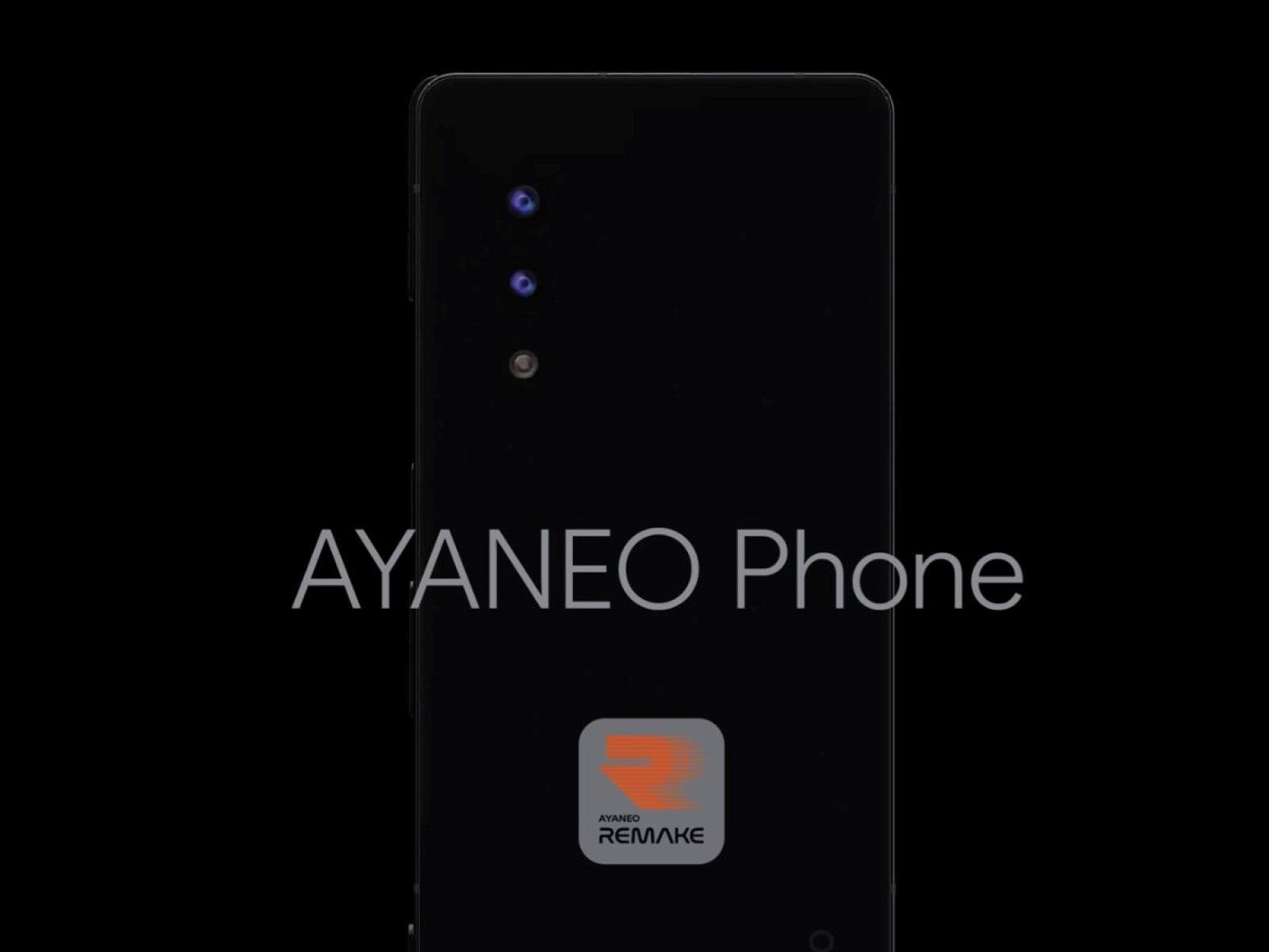
Ayaneo’s Next Handheld Is Actually A Phone Made For Gamers, Here’s A Sneak Peek

Ayaneo's Next Handheld Is Actually A Phone Made For Gamers, Here's A Sneak Peek
Gadgets like ASUS ROG Phones and Nubia Red Magics already blur the line between flagship smartphones and dedicated gaming handhelds (in that order). However, Ayaneo, the company best known for handheld gaming consoles, intends on dropping a device that is basically a gaming handheld in a smartphone shell.

In a teaser video, Ayaneo hints

AMD Radeon RX 9070 XT Is Finally Available For $599 With A Free Bonus

AMD Radeon RX 9070 XT Is Finally Available For $599 With A Free Bonus
It took a lot longer than we would have liked, but AMD’s flagship Radeon RX 9070 XT is up for grabs at its baseline MSRP. Same goes for the Radeon RX 9070 (read: non-XT model). We won’t go so far as to call this a deal in the true sense of the word, but it’s noteworthy, given that add-in board (AIB) partners have routinely sold these cards

Xi Quips About Backdoors During Xiaomi Phone Gift To Korea’s Lee

An anonymous reader shares a report: Chinese President Xi Jinping joked about security backdoors while presenting a pair of Xiaomi smartphones to his South Korean counterpart, a rare moment of spontaneous levity captured during a week of tense trade negotiations with Donald Trump.

Xi, in South Korea to meet Trump on the sidelines of the Asia-Pacific Economic Cooperation summit, presented the pair of devices to Korean President Lee Jae Myung. In a video circulated on social media, Lee asked: “Is the line secure?” Xi chuckled, pointed at the gadgets and replied through an interpreter: “You can check if there’s a backdoor.” The two leaders burst into laughter.

The exchange was striking because the issue of security and alleged espionage is a sensitive one and a major thorn in US-Chinese relations. American lawmakers have raised the possibility that tech companies such as Huawei build backdoors — ways to gain access to sensitive data — into their equipment or services, something the firms have repeatedly denied.


Read more of this story at Slashdot.