Venmo introduces a rewards program for its debit card users

PayPal has introduced a Venmo cash back rewards program that the company is calling Venmo Stash. The program is designed to scale rewards with user engagement, offering more cash back to those who use more of the platform’s suite of products.

The rewards are earned when users spend on their Venmo Debit Mastercard, but only at “curated bundles” of certain brands. Unless users are judicious about only using their Venmo debit cards at these brands, this could mean a net monthly cash back far below what is advertised.

In the company’s announcement, Paypal depicts brands like McDonald’s, TikTok Shop, Uber and Uber Eats bundled together, while another bundle shows Amazon, DoorDash, Domino’s and Walgreens. Users can change their bundle of brands every 30 days.

Cash back tiers start at 1 percent when users spend at their chosen brands, scaling to 2 percent when auto reloads are turned on to keep a balance in Venmo. The highest tier is 5 percent cash back, which requires customers to receive monthly Direct Deposits on Venmo of at least $500. PayPal says it will be introducing more ways to earn rewards next year.

The fine print for Venmo Stash mentions a monthly reward cap, the amount of which is only visible during the enrollment process. Once this cap is reached, no more rewards can be earned until the next calendar month.

PayPal has been making moves lately in hopes of enticing new customers. Earlier this year it offered a free year of Perplexity Pro to its users, along with early access to the AI powered Comet browser.

This article originally appeared on Engadget at https://www.engadget.com/big-tech/venmo-introduces-a-rewards-program-for-its-debit-card-users-170807513.html?src=rss

Watch Out for These Tap-to-Pay Scams

Contactless payment, also known as tap-to-pay, has become a fast, easy, and relatively common way to complete a transaction using your smartphone or credit card. It relies on Near Field Communication (NFC) to transmit data between your device and a payment terminal when the two are in close proximity, up to an inch or two away.

While NFC technology does provide some additional security—transmitting a virtual account number instead of your actual card details, for example—scammers have found a way to capitalize on tap-to-pay to steal money from unsuspecting targets. These “ghost tapping” schemes may exploit both cards and mobile wallets.

How tap-to-pay scams work

According to the Better Business Bureau, ghost tapping takes advantage of a potential victim’s proximity and lack of attention to detail. They suggest it is possible for a scammer to bump into you in a crowded public space, getting close enough to trigger a contactless transaction without your knowledge. (It’s not clear how common a close brush with a tap-to-pay machine actually is.)

But other versions of ghost tapping rely on you to actively engage while missing the warning signs of fraud.

For example, scammers might appear to be selling goods or collecting small donations for charity using tap-to-pay, but they are actually charging your card for a much larger amount to a fraudulent business. They count on you not to look closely at the transaction details before tapping, or they rush you through the process and fail to offer a receipt.

In one instance reported to the BBB’s Scam Tracker, individuals were targeted by a door-to-door salesman who claimed to be selling chocolate for a charitable cause. The transactions were for hundreds of dollars, which the victims didn’t see before tapping.

How to avoid contactless payment scams

As with any scam, vigilance is key. Tap-to-pay is easy enough to feel automatic, and you may be less likely to pause and check the details than you would when swiping or entering your credit card. Always slow down and confirm the merchant name and transaction and tip amount before pulling out your phone or card (again, close proximity is enough to trigger tap-to-pay). Beware of any vendor who tries to rush you, hide the screen, or avoid giving you a receipt.

You may also want to set up transaction alerts with your bank or credit card company so you can catch any suspicious charges immediately. If you get a notification about a “test” charge, that is also a scam red flag.

Finally, while scammers probably aren’t going around secretly scanning tap-to-pay en masse, you could protect your cards using a radio frequency identification (RFID)-blocking wallet or sleeve. You can disable NFC on your Android in Settings (type “NFC” into the search bar). On iPhone, you have to turn on Airplane Mode to block NFC.

AMD Confirms Zen 6 CPUs Will Support AVX512 And These Other Instruction Sets

AMD Confirms Zen 6 CPUs Will Support AVX512 And These Other Instruction Sets
The idea that AMD’s Zen 6 would support AVX-512 in some fashion has never really been in question, to tell the truth. With native 512-bit vector datapaths and a nearly-complete AVX-512 implementation, AMD’s Zen 5 already has the strongest AVX-512 support on client systems, but it does seem like Zen 6 is poised to expand that support considerably.

Data Centers in Nvidia’s Hometown Stand Empty Awaiting Power

Two of the world’s biggest data center developers have projects in Nvidia’s hometown that may sit empty for years because the local utility isn’t ready to supply electricity. From a report: In Santa Clara, California, where the world’s biggest supplier of artificial-intelligence chips is based, Digital Realty Trust applied in 2019 to build a data center. Roughly six years later, the development remains an empty shell awaiting full energization. Stack Infrastructure, which was acquired earlier this year by Blue Owl Capital, has a nearby 48-megawatt project that’s also vacant, while the city-owned utility, Silicon Valley Power, struggles to upgrade its capacity.

The fate of the two facilities highlights a major challenge for the US tech sector and indeed the wider economy. While demand for data centers has never been greater, driven by the boom in cloud computing and AI, access to electricity is emerging as the biggest constraint. That’s largely because of aging power infrastructure, a slow build-out of new transmission lines and a variety of regulatory and permitting hurdles. And the pressure on power systems is only going to increase. Electricity requirements from AI computing will likely more than double in the US alone by 2035, based on BloombergNEF projections. Nvidia’s Jensen Huang and OpenAI’s Sam Altman are among corporate leaders that have predicted trillions of dollars will pour into building new AI infrastructure.


Read more of this story at Slashdot.

Check Your Email for a $20 Credit From YouTube TV

Following posts on social media last week where some YouTube TV subscribers noticed a $60 credit waiting for them in their account settings, Variety is reporting that YouTube is now sending subscribers an additional $20 credit. The company has not yet made an official statement on the matter, although a YouTube spokesperson confirmed the timetable for the credit’s rollout to TechCrunch. The news follows promises from YouTube to give YouTube TV customers a $20 credit if the blackout of Disney content on the Live TV service continued.

According to the report, emails with instructions on how to claim the credit began sending out yesterday, and “all credits will be issued by Wednesday, Nov. 12.” That would mark a little over ten days since Disney content disappeared from YouTube TV at the end of October.

Variety’s report also iterates that the credit is a one-time offer, answering one of the larger lingering questions about the deal. The prior $60 credit, for instance, was actually made up of six $10 credits spread over half a year.

Subscribers could theoretically use the saved money to purchase a month of the Disney+, Hulu, and ESPN bundle (with ads), although there’s no obligation to do so. YouTube had previously promised a similar compensation credit matching the cost for a month of Paramount+ when it seemed like Paramount channels might leave the YouTube TV service, although a deal was struck before it became necessary.

The most important thing to know about this credit is that it will not apply automatically, nor is it just free money. It’s instead a discount on your next billing cycle, which means you’ll need to stay subscribed to at least another month of YouTube TV to benefit from it, and you shouldn’t expect a gift card or payout. Currently, YouTube TV costs $73 a month for the first three months, and $83 a month afterwards. With the credit applied, that’ll take the cost down to either $53 or $63, depending on how long you’ve been subscribed.

To apply the credit to your account, keep an eye out on an email, and if you don’t get one by Wednesday, follow up with YouTube TV support. Alternatively, try checking your account settings page in the meantime, specifically under Settings > Membership > Manage. If the new credit is anything like the old one, you’ll be able to apply it here. Just make sure you’re on a desktop computer—the previous credit wasn’t showing up for users on mobile. (Note that if you don’t see a “Manage” button next to the Base Plan under Membership, you’re likely not logged in under the “Family Manager” account; only that account—not other users in the family—can claim the credit.)

The Running Man’s final trailer amps up the high-octane action

It’s shaping up to be an excellent season for Stephen King adaptations. In September, we got The Long Walk, an excellent (though harrowing) adaptation of King’s 1979 Richard Bachman novel. Last month, HBO debuted its new series IT: Welcome to Derry, which explores the mythology and origins of Pennywise the killer clown. And this Friday is the premiere of The Running Man, director Edgar Wright’s (Shaun of the Dead, Baby Driver, Last Night in Soho) take on King’s novel of the same name. So naturally Paramount has released a final trailer to lure us to the theater.

As previously reported, the 1987 action film starring Schwarzenegger was only loosely based on King’s novel, preserving the basic concept and very little else in favor of more sci-fi gadgetry and high-octane action. It was a noisy, entertaining romp—and very late ’80s—but it lacked King’s subtler satirical tone. Wright expressed interest in adapting his own version of The Running Man in 2017, and Paramount greenlit the project four years later. Wright and co-screenwriter Michael Bacall envisioned their film as less of a remake and more of a faithful adaptation of King’s original novel. (We’ll see if that faithfulness extends to the novel’s bleak ending.)

Per the official premise:

Read full article

Comments

Minisforum Unveils World’s First Arm-Based Mini Workstation With UEFI Boot

Minisforum Unveils World's First Arm-Based Mini Workstation With UEFI Boot
The compact PC world may just have been given a good shake up with Minisforum’s new MS-R1, a mini workstation with server-grade Arm performance in an expandable desktop form factor. But hold up, the machine is also being hailed as the first of its kind in the world to support UEFI boot. With UEFI, the MS-R1 makes it as simple to install and

F1 in Brazil: That’s what generational talent looks like

After a weekend off, perhaps spent trick or treating, Formula 1’s drivers, engineers, and mechanics made their yearly trip to the Interlagos track for the Brazilian Grand Prix. More formally called the Autodromo Jose Carlos Pace, it’s definitely one of the more old-school circuits that F1 visits—and invariably one of the more dramatic.

For one thing, it’s anything but billiard-smooth. Better yet, there’s elevation—lots of it—and cambers, too. Unlike most F1 tracks, it runs counterclockwise, and it combines some very fast sections with several rather technical corners that can catch out even the best drivers in the world. Nestled between a couple of lakes in São Paulo, weather is also a regular factor in races here. And indeed, a severe weather warning was issued in the lead-up to this weekend’s race.

You have to hit the ground running

This was another sprint weekend, which means that instead of two practice sessions on Friday and another on Saturday morning, the teams get one on Friday, then go into qualifying for the Saturday sprint race. The shortened testing time tends to shake things up a bit, and we definitely saw that this weekend.

Read full article

Comments

Nintendo announces its Black Friday and Cyber Monday 2025 sale: Switch 2 bundles, Switch game deals and more

Nintendo gear is always sought after during the holiday shopping season, but this year likely more so than others. The Nintendo Switch 2 is the console launch of 2025 and it will undoubtedly be at the top of many wish lists for both kids and adults alike. If you were hoping to save a bit on the console during the Black Friday shopping season, you may be disappointed. The Nintendo Black Friday sale was just announced, and unsurprisingly, there aren’t a lot of true “deals” to be had. This is typical of Nintendo — legit Nintendo Black Friday deals are hard to come by — but there are ways to at least get the best value for your money if you’re going to pick up a Switch 2 before the year is out.

As has been the case for many years, the marquee Nintendo deals for the holidays come in the form of console bundles. When the Switch 2 launched earlier this year, it was available as just the console only for $449 or bundled with Mario Kart World for $499. Both options are still available now, but there’s a new bundle to consider as well — the console with the new Pokémon Legends: Z-A game, which also costs $499. Considering the games by themselves cost $70 each, you do save a bit by picking up a console bundle. you can pick up the console and its bundles at most retailers including Amazon, Walmart, Best Buy and others.

When it comes to deals on Nintendo Switch 2 games, the Nintendo eShop will have Cyber Deals starting on November 20, running through December 3. The shop will feature “holiday offers on select games,” so it appears we’ll all just have to go to the online store on November 20 to see the games on offer.

Starting on November 23, select retailers will have discounts on some physical Switch games including Princess Peach: Showtime!, The Legend of Zelda: Echoes of Wisdom, Luigi’s Mansion 3 and Kirby’s Return to Dream Land Deluxe. Those will each be $40, while other games like Super Mario Odyssey, Nintendo Switch Sports, Paper Mario: The Thousand-Year Door and Splatoon 3 will be $30.

Even if you can’t get huge discounts on Nintendo consoles or new games this year, that doesn’t mean you can’t find decent deals on other Nintendo gear. There are plenty of great ideas for gifts for the Nintendo fan in your life, and Engadget’s Sam Rutherford got to see a bunch of them in person when he attended Nintendo’s holiday showcase. From collectibles to clothing to plushies and holiday decor, there’s really a ton to choose from — but you may want to pace yourself if you’re also a Nintendo fan finding things that you want to pick up for yourself in the process of looking for good gifts. Here are just some of the best Nintendo gift ideas that you can look out for during Black Friday and Cyber Monday.

This article originally appeared on Engadget at https://www.engadget.com/deals/nintendo-announces-its-black-friday-and-cyber-monday-2025-sale-switch-2-bundles-switch-game-deals-and-more-155223898.html?src=rss

AirPods 4 Hits New Low Price, iPhones Starting At $119 In Early Black Friday Sale

AirPods 4 Hits New Low Price, iPhones Starting At $119 In Early Black Friday Sale
Sleigh bells ring, are you listening? In the lane, snow is glistening. A beautify sight, we’re happy tonight, walking in a Black Friday wonderland. Wait, that’s not how the song goes. However, it IS how the season goes this time of year as retailers hurl deals at pace faster than Elf (Will Ferrell version) can chuck snowballs. And right now,

Lamborghini Temerario Super Trofeo Racer Drops Hybrid For Pure V8 Power

Lamborghini Temerario Super Trofeo Racer Drops Hybrid For Pure V8 Power
At the season-ending Lamborghini World Finals at the Misano World Circuit Marco Simoncelli, Lamborghini’s Squadra Corse division unveiled the design concept for the Temerario Super Trofeo, the new track weapon set to take over the Super Trofeo championships in 2027. This sixth model in the series marks a historic transition, as it replaces

Subsea Cable Investment Set To Double As Tech Giants Accelerate AI Buildout

Investment in subsea cable projects is expected to reach around $13 billion between 2025 and 2027, almost twice the amount invested between 2022 and 2024, according to telecommunications data provider TeleGeography. Tech giants Meta, Google, Amazon and Microsoft now represent about 50% of the overall market, up from a negligible share a decade ago.

The companies are expanding their subsea infrastructure to connect growing networks of data centers needed for AI development. Meta announced Project Waterworth in February, a 50,000-kilometer cable connecting five continents that will be the world’s longest subsea cable project. Amazon announced its first wholly-owned subsea cable called Fastnet, connecting Maryland to Ireland. Google has invested in over 30 subsea cables. Over 95% of international data and voice call traffic travels through nearly a million miles of underwater cables.


Read more of this story at Slashdot.

The latest Death Stranding collab is an actual exoskeleton

It’s arriving too late to be part of a Sam Porter Bridges Halloween costume this year, but Kojima Productions has a new collaboration lined up that could be just the ticket for cosplayers or anyone who may wish to enhance their lower-body strength and stability. The studio has teamed up with exoskeleton maker Dnsys for a limited run of a model based on Death Stranding 2: On The Beach.

Dnsys claimed this was the first collaboration between an exoskeleton maker and a game studio. Kojima Productions art director Yoji Shinkawa worked with the company on the design, which draws from the color palettes of the game and is based on an existing Dnsys model. It has lights similar to the exoskeleton Sam wears in the game, and they indicate the battery level. 

DNSYS ✖️ DEATH STRANDING 2 co-branded exoskeleton is here �

� Dnsys Z1 Exoskeleton Pro – DEATH STRANDING 2 ON THE BEACH Limited Edition
It enhances lower-body strength and stability, allowing humans to keep moving through complex terrain and extreme environments. ��… pic.twitter.com/Yi1E6RnKNC

— KOJIMA PRODUCTIONS (Eng) (@KojiPro2015_EN) November 10, 2025

The Dnsys Z1 Exoskeleton Pro – Death Stranding 2: On The Beach Limited Edition (to give its full name) is said to mimic the game’s load-balancing system by offloading up to 200 percent of the wearer’s body weight from their knees to help protect the joints. Dnsys said it adds 50 percent more power to steps and “intelligent gait control” to improve balance on stairs and uneven terrain. According to the company’s press release, you’ll “instantly feel up to 44 lbs lighter during vertical movements.” The exoskeleton is slated to offer over four hours of continuous support and there’s a quick-swap battery system.

Exoskeletons can be very useful, particularly for those who could do with extra support and/or have mobility issues. Or maybe you want to look the part while you carry some very heavy cargo on your back and listen to Chvrches and Bring Me the Horizon.

This limited-edition exoskeleton will be available on December 2. Pricing will be announced then. The regular price of a dual-leg Dnsys Z1 system is $1,500, so you can probably expect the Death Stranding 2 variant to be in that ballpark. You can also try your luck at scoring the exoskeleton for free through a giveaway.

This article originally appeared on Engadget at https://www.engadget.com/gaming/the-latest-death-stranding-collab-is-an-actual-exoskeleton-151215509.html?src=rss

3 Alternatives To YouTube TV As Standoff With Disney & ESPN Drags On

3 Alternatives To YouTube TV As Standoff With Disney & ESPN Drags On
Google and Disney remain embroiled in a contract dispute that is preventing YouTube TV subscribers from accessing a litany of Disney-owned channels, including ABC, ESPN, FX, National Geographic, and several others. In the wake of the ongoing dispute, YouTube TV has begun sending out emails promising a $20 credit within the next few days. But

Amazon Music’s Fan Groups are a refreshingly old-school way to share and find tunes

Amazon is in the middle of rolling out Alexa+, the long-awaited, AI-infused update for its voice assistant. At the same time, the company has also been giving a fair bit of attention to Amazon Music, adding things like Alexa+ integration and AI-powered playlists. And as of today, Amazon is rolling out a new community-focused feature called Fan Groups. As the name suggests, Fan Groups are a way for users to connect around different musical interests — and what makes this more fun to me is that these aren’t limited to Amazon-curated groups.

Once Fan Groups fully rolls out, anyone will be able to create a public group in Amazon Music based around a genre, region, time period or anything else you want to focus the group on. Right now, Fan Groups are only available in Canada during a a beta period, but they’ll come to other countries (including the US) early next year. Amazon has had testers building out some Fan Groups in the meantime so that testers don’t walk into a ghost town.

When you first open the Groups tab, which will be part of Amazon Music’s bottom navigation, you’ll see a top rail with Groups you’ve joined and a scrolling list of ones you can check out. Some of the examples Amazon showed off include “K-pop Now,” “Red Dirt Americana” and “Indie Insiders,” all of which feel pretty self-explanatory. Each group includes a “featured” playlist at the top and then a scroll of posts by people who’ve joined the group.

Members can share any song, album or playlist on Amazon Music along with a comment; you can then have a discussion on the post. It’ll be familiar to anyone who has used a Facebook Group over the years. Somewhat interestingly, Amazon is also letting you share external links Beyond the “posts” view, there’s also a music-only tab that just shows everything that has been shared to the group. One of the more intriguing features in Fan Groups is the ability to just hit “play” and listen to everything that’s been shared over time — it’s something that should be good for exploration as well as just seeing if the group’s tastes are aligned with your own.

In the quick demo I saw of Fan Groups, it felt like the rare new social tool that could be useful. Music is obviously an extremely social art, one that so many love sharing with other fans. Discovery is also a huge part of being a music fan, and I appreciate the fact that Amazon is building a way to get recommendations from other human beings and not just algorithms and AI. The only issue is that getting traction for a social network built inside of a specific service isn’t the easiest thing to do — you could just as easily share music on Facebook or any number of other apps. But the potential for finding new music and sharing what you’re into with other fellow obsessives make this feature worth a look once it fully launches.

This article originally appeared on Engadget at https://www.engadget.com/amazon-musics-fan-groups-are-a-refreshingly-old-school-way-to-share-and-find-tunes-150000084.html?src=rss

The Out-of-Touch Adults’ Guide to Kid Culture: The All-Slang Edition

I’ve defined a ton of slang since I started posting this column in 1878, but this week, I’m going all in on the funny little words the kids use among themselves. That’s right: It’s all-slang week! From “clock that” to “rawdoggin boredom,” consider this a crash course in what the kids are babbling to each other. As always, remember, you shouldn’t use these slang words because they’re not your words. Stick to calling things da bomb and saying “23-skidoo,” gramps.

(If this isn’t enough slang, somehow, check out my constantly evolving glossary of Gen-Z and Gen A slang.)

What does “clock that” mean?

I’m old enough to remember when “clock” was slang for either punching someone or it meant “watch” or “see,” so “I clocked that guy” would mean either “I punched that guy” or “I saw that guy.” But times have changed—slightly, anyway. My sources tell me that kids now used “clock that” to mean “I understand and agree.”

What does “fujoshing” and “fujoshing TF out” mean?

For a rare treat, here’s a slang word that didn’t derive from African American Vernacular English! “Fujoshing” comes from Japan, and is the verb form of the slang term “fujoshi” that combines the word for “rotten” and the word for “girl.” It’s used to describe women/girls who are fans of media that depicts romantic relationships between men (also called “yaoi.”) It was apparently originally intended as an insult, but was adopted as a badge of honor. So “Fujoshing” or “fujoshing tf out” was Japanese slang for enjoying yaoi, and it has since migrated to English-speaking fandom communities, where it’s often used in memes like this, to jokingly describe overanalyzing or giddily reacting to male characters’ interactions in media that are not explicitly romantic:


This Tweet is currently unavailable. It might be loading or has been removed.

It’s not in wide use outside of fandom communities.

What is a “slopper?”

I’ve previously defined “slopcore,” and “slopper” is related. It describes a person who uses ChatGPT or other AI programs too much. You could apply it to anyone who takes conversations with LLMs seriously, and/or people who have basically offloaded their thinking to an algorithm.

The term was first used online by @intrnetbf, who reports that his friend coined the term. “That’s incredible verbiage. Slopper! That’s such a good slur, bro. Slopper!”

It’s not in wide use, and I know you can’t predict what slang words will actually catch on, but I’m rooting for “slopper.” Like the dude says, it is such a good slur.

What does “cracked” mean?

“Cracked” is a slang term that used to describe someone who was weird or crazy, but it now means two different things: to have sex, as in “I got cracked last night,” and to be really good at something, like “he’s cracked at Fortnite.”

What does “doi doi doi” mean?

“Doi doi doi” is piece of brain-rot slang that’s burning through our nation’s elementary schools. Like a lot of brain-rot slang, it doesn’t mean anything. It’s correctly pronounced by putting your hand up to your mouth and saying “doi doi doi” because it sounds funny. “Doi doi doi” was created by Twitch streamer Kai Cenat, apparently to annoy Howie Mandel. Here’s a video of its moment of origin that demonstrates proper doi doi doi technique:

What is “rawdoggin boredom?”

“Rawdoggin” began as slang word for having sex without a condom, but has come to mean something like “doing something with no safeguards or support.” So “rawdoggin boredom” is consciously doing nothing, and it’s becoming a TikTok trend. Young people are posting 15-minute-long videos of themselves … not doing anything. Here’s one you can look at (which is honestly more boring than rawdoggin boredom.)

Many boredom-rawdoggers say they’re doing it to fix their attention span, but some seem to be more about the challenge than anything else.

Not doing anything consciously is not a new trend, of course. As this X user puts it, “they reinvented meditation from first principles.”


This Tweet is currently unavailable. It might be loading or has been removed.

Viral video of the week: What Happens If You Abuse a Robot?

This week’s viral video comes from longtime Youtuber whistlindiesel, whose channel generally consists of videos of dudes smashing up cars. This week, they’re smashing up a robot with a car—specifically, an $85,000 humanoid robot from Unitree Robotics. The video has been viewed over six million times about in about a week, and for good reason. It’s hilarious to watch a robot fail at things like cooking and walking into a mirror, but for me, the truly inspired bits are where the whistlindiesel crew do unwise things like putting a machete in the barely controllable robot’s hand, or (at least pretend) to give it a loaded gun. Inspired lunacy! Especially the ending where the robot is smashed to bits by a huge pickup truck. I’ll deny I ever laughed at this video to our overlords when the robot takeover happens, but until then, I dig it. Clock that.

Apple iPhones To Get A Massive Satellite Upgrade With 5 New Features

Apple iPhones To Get A Massive Satellite Upgrade With 5 New Features
Apple is reportedly planning to amp up the iPhone’s satellite features from solely as an emergency-only lifeline into a connected device that keeps key features in certain major apps running: think Starlink-like connectivity for Apple Maps or WhatsApp, but with everything built into your next iPhone. If all goes as planned, this future expansion

Microsoft Bets on Influencers To Close the Gap With ChatGPT

An anonymous reader shares a report: Microsoft, eager to boost downloads of its Copilot chatbot, has recruited some of the most popular influencers in America to push a message to young consumers that might be summed up as: Our AI assistant is as cool as ChatGPT. Microsoft could use the help. The company recently said its family of Copilot assistants attracts 150 million active users each month. But OpenAI’s ChatGPT claims 800 million weekly active users, and Google’s Gemini boasts 650 million a month. Microsoft has an edge with corporate customers, thanks to a long history of selling them software and cloud services. But it has struggled to crack the consumer market — especially people under 30.

“We’re a challenger brand in this area, and we’re kind of up and coming,” Consumer Chief Marketing Officer Yusuf Mehdi said in an interview. Mehdi hopes to persuade key influencers to make Copilot their chatbot of choice and then use their popularity to market the assistant to their millions of followers. He says Microsoft is already getting more bang for the buck with influencers than with traditional media, but didn’t provide any metrics.

[…] Using non-techies as spokespeople is meant to reinforce Microsoft’s campaign to sell its chatbot as a life coach for everyone. Or as Consumer AI chief Mustafa Suleyman wrote in a recent essay, an AI companion that “helps you think, plan and dream.”


Read more of this story at Slashdot.

The Four Most Helpful ‘Laws’ of Productivity

Your personal productivity may be dependent on your unique needs, personality, and circumstances, but there are still general “laws” governing time management and potential output that apply to pretty much everyone—like, actual “laws” named after the people who came up with them. Economists, philosophers, and scientists have spent a lot of their own time researching what practices make a person more productive. Here’s an overview of the rules all that research has given us. 

The Yerkes-Dodson Law

The Yerkes-Dodson Law says a person is most productive when they have just the right amount of stress pushing them—not too much and not too little. It models the relationship between stress levels and performance, resulting in an upside-down, U-shaped curve on a quadrant. Across the X axis, you have your low-stress moments on the left, high-stress moments on the right, and a peak of productivity in the middle. The Y axis shows your peak performance at the top, which is aligned with times when you have just a the right amount of stress behind your work. 

This means that you shouldn’t give yourself too much time to do a task, but should definitely not wait until the last minute. The way to do this is to create airtight to-do lists. Try the 1-3-5 method, which has you structure your day around one major task, three medium-sized ones, and five little ones. By breaking your day down and timing it just right, you can make sure everything gets done when it needs to, optimizing your stress in honor of psychologists Robert Yerkes and John Dillingham Dodson.

Parkinson’s Law

Parkinson’s Law is another one that governs how long you should spend on any given task. In fact, it goes hand-in-hand with Yerkes-Dodson, because it says that the longer you give yourself to do something, the longer you’ll naturally take to get it done. C. Northcote Parkinson popularized it in a 1955 essay for The Economist, concluding that you’ll ultimately procrastinate or over-complicate the task, dragging it out by not working on it enough or working on it way too long. 

Here, it helps to prioritize your to-dos and schedule your days and weeks thoroughly. Having a smaller window in which to work on pressing tasks will up the urgency, aligning you more with the peak of Yerkes-Dodson. Pre-plan your weeks using prioritization techniques like the Eisenhower Matrix and task batching, thinking about when you’ll have just the right amount of urgency to motivate you to do each task.

Once you’ve pre-plannned, try shaving the amount of time you give yourself to do things. If a project is due a week from now, don’t give yourself a whole week to get it done. Instead, Give yourself a personal deadline of five or even four days from now. Setting private deadlines ahead of your real ones is a good way to give your work some urgency while leaving a little wiggle room in case you don’t finish up in time for your personal deadline. It stops you from procrastinating or getting too in the weeds on busywork at the end. 

Illich’s Law

The third law here is cautioning against the same thing as the first two: You shouldn’t have too much time to work on any one thing. The reasons behind all three laws are different, though, which means the solutions to overcoming them are unique, too. Illich’s Law, or the Law of Diminishing Returns, says that after working for a while, your productivity decreases. Eventually, it goes negative, meaning your work isn’t even good anymore. At best, you’re churning out something less than ideal. At worst, you’ll waste more time in the future having to redo it.

To defeat it, don’t just cut your deadlines down to combat Parkinson’s Law; cut down how long you have to work on each task on your to-do list. Use time-tracking software or a simple spreadsheet for two weeks to track how long your usual duties typically take you, as well as when you start feeling bored or unproductive. After two weeks, cut the time you give yourself to do each task, ideally down to exactly how long it takes you to get bored or unproductive. In the gaps that appear in your schedule, make sure you take breaks. What Yerkes-Dodson and Parkinson’s Law don’t fully account for is the value of breaks to productivity. Giving yourself set times to work and set times to chill is foundational to all kinds of productivity methods because burnout is an output killer. You can (and should) always get back to work once you’re done with a little personal time. 

Carlson’s Law

Finally, the fourth law, Carlson’s Law, is all about how you work, not how much you work. Swedish economist Sune Carlson’s assertion was that interrupted work is always less effective and more time-consuming than uninterrupted work. If you’re distracted, your work will be of a poorer quality and take longer—and as you can tell, work that takes longer is no good, for all kinds of reasons. 

Like the other laws, the trick to nailing this one is to schedule carefully every day. Not only do you need to schedule your day based on what needs to be done and how long it will take, but on when you can reasonably do it all without distraction. Time boxing, or the practice of scheduling every minute of your day in your calendar, blocking it all out down to the minute, is central to basically every productivity tip.

In line with both Illich’s and Carlson’s Laws, not only should you keep in mind that you should give yourself less time to work than you think you need, but you should reflect that cut-down in your time boxes. When you do that, you’ll see gaps or breaks start to appear in your daily calendar. Embrace those. Breaks are elemental to productivity, so you should be scheduling those as seriously as you do your work.

Finally, when you’re aiming to defeat Carlson’s Law, you should take the extra step of making sure your now-thorough calendar is viewable by others in your organization or anyone who might interrupt you. If you’re likely to be distracted at a given time, don’t try to work on anything important then; wait until you can give it your full attention. In addition, never multitask. You can’t do two things at once. That’s just another form of distraction. Move from chore to chore, one at a time, to make sure you’re being efficient at all of them. 

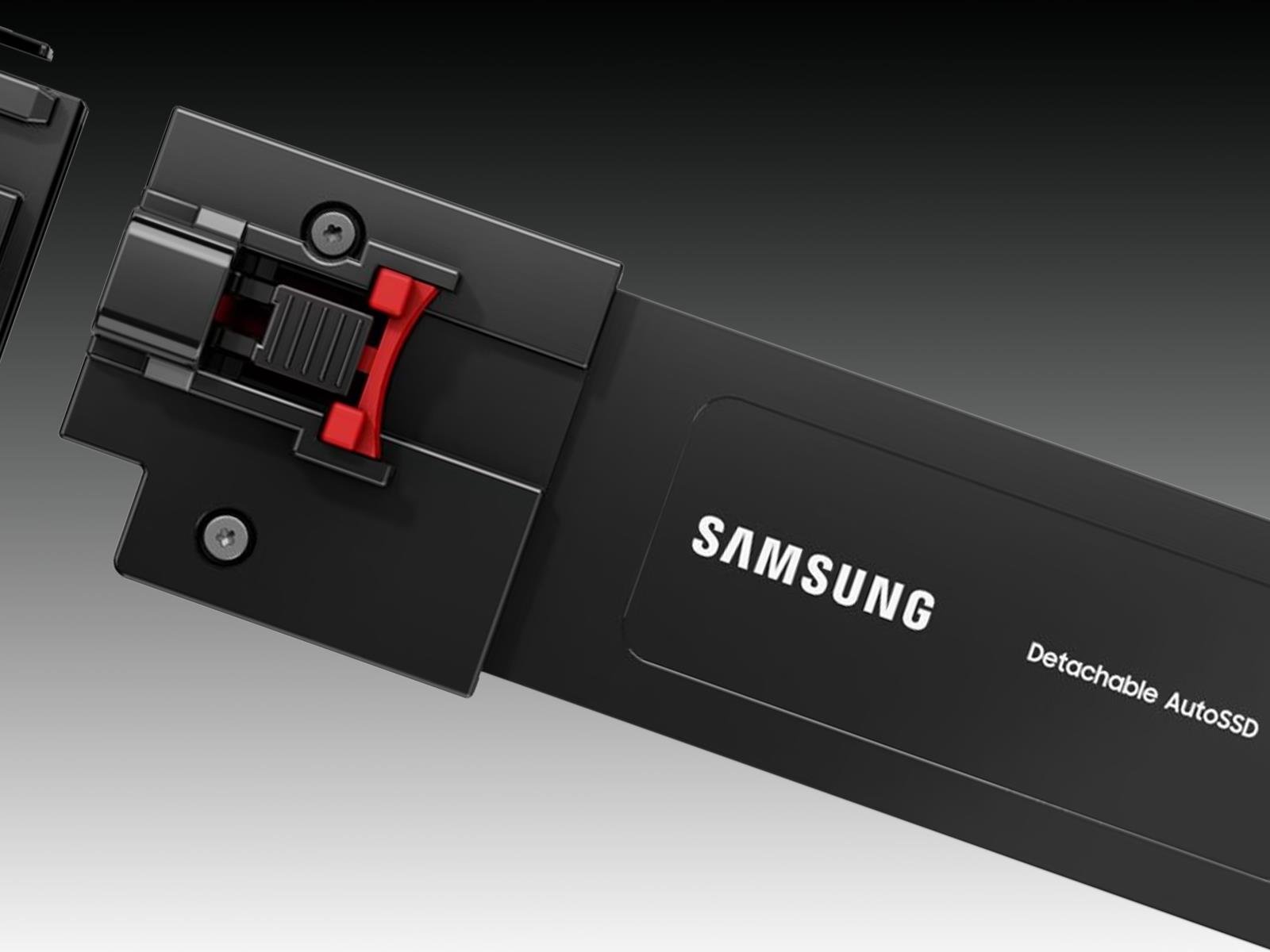
Modular Samsung AutoSSD Has A Detachable Controller & NAND For Easy Upgrades

Modular Samsung AutoSSD Has A Detachable Controller & NAND For Easy Upgrades
Samsung is showing off a couple of new storage products that it plans to showcase at the Consumer Electronics Show (CES) in January 2026, one of which is a cleverly designed solid state drive (SSD) with a modular aspect to it. Called the Detachable AutoSSD, the drive takes aim at automobiles and sports a modular makeup to make upgrades a little