The best record players for 2025

Everyone knows by now that vinyl is back. The classic format has seen a resurgence for years at this point, and new albums these days almost always include a vinyl preorder. If you’ve finally decided to embark on the hobby, or if you’re looking to upgrade your current setup, we’ve compiled a list of the best turntables you can buy for under $600. Obviously, there are some very good, very popular options out there for around $1,000, but we had to start somewhere, and we had to narrow down the options a bit. Plus, there’s no reason for novices or even experienced spinners to spend that much to get a decent deck.

Best record players for 2025

Other record players we tested

Audio-Technica AT-LP60XBT

This is about as basic as it gets, unless you opt for the AT-LP60X which ditches the Bluetooth connectivity. This is a perfectly decent option for someone just getting into vinyl, but if you spend a little more for the AT-LP70X, you won’t be in quite as big of a hurry to upgrade once you surrender to the obsession.

Cambridge Audio Alva ST

The Alva ST has a refined design that made me want to keep it out in my living room longer than many of the models on this list. The controls are limited on the top to power and individual options for 33 and 45 RPM speeds. Everything else is on the back panel, including Bluetooth pairing and preamp buttons. To complete the look, Cambridge Audio opted for a 1mm aluminium top plate, which sits on an MDF plinth with a layer of EVA to absorb vibrations in between.

While the overall audio performance on the Alva ST is warm and inviting, there is a lack of detail across genres. I’ve noticed albums don’t have a particularly wide soundstage, and songs lack their normal punch at times, so some sound compressed compared to when they’re played on other turntables. Additionally, the free swinging tone arm needs more resistance so it’s not so prone to dropping on a record immediately if it slips out of your fingers when you have the cueing lever down. Since this turntable is fully manual operation, I felt a bit of peril every time I went to lower the needle. (The price increased during testing for this guide.)

Denon DP-300F

Denon’s DP-300F is a mixed bag. On one hand, you get the convenience of fully automatic operation, dedicated speed and record size buttons and somewhat refined design. There are also some confounding decisions though, like the permanently affixed cables, the preamp switch being under the platter and the overall midrange build quality for a $500 turntable. The sound from the preamp and Denon’s cartridge has a clear lack of depth and detail that almost any model at this price should offer.

How to shop for a turntable

The first question you’ll need to ask yourself when looking for a turntable is how you plan to use it. Are you into vinyl for the ritual? If you simply like the concept of physical media, having to flip a record to finish it or the need to intentionally swap out an album when it’s done, that’s just fine. You probably can make do with a more affordable turntable since overall sound quality may not be a main concern. If you crave the warmth of analog sound, and you want the collection you’ve invested in to sound its best, you’ll need to consider something with better specs. 

You’ll also need to account for where and how you’re going to listen to vinyl. Are you planning to connect this turntable to headphones or Bluetooth speakers? Do you have shelf or tower speakers you’re going to use? Are you willing to invest in a dedicated preamp or would you rather a new turntable come with one built in? All of these questions will impact your buying decision — even the Bluetooth codecs, if you’re going the wireless route.
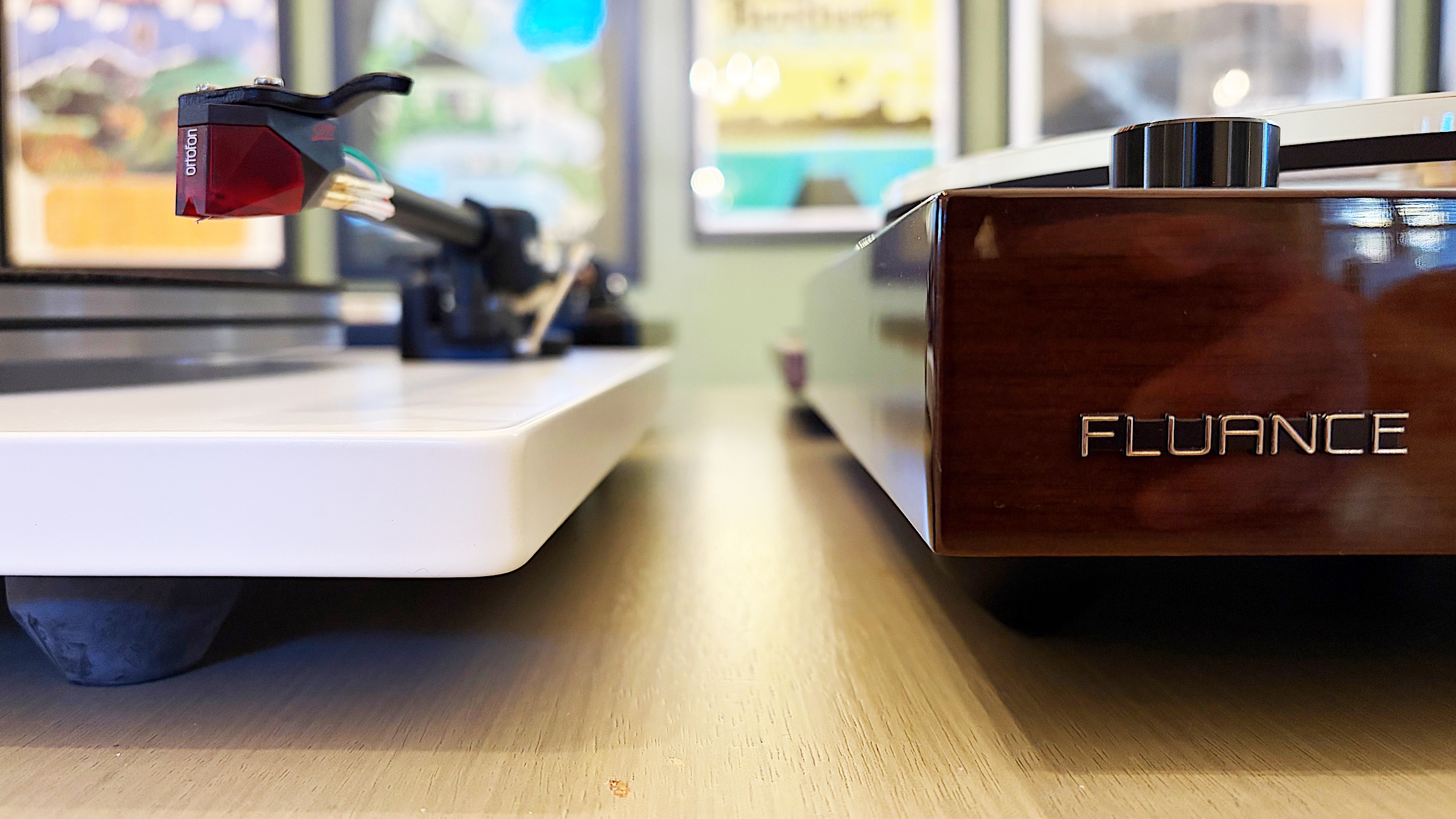
Best record players
Best record players
Billy Steele for Engadget

Automatic, semi-auto and manual operation

If you’re just getting into vinyl, an automatic turntable will save you a lot of stress. These are the models that place the stylus for you — all you have to do is push a button. When you get to the end of the record, the turntable will also return the tonearm to its resting spot automatically. Or, if you need to stop your session mid-side, there’s a button for that too. 

Some turntables have semi-automatic operation. Maybe they can’t place the needle for you, but they do have an automatic stop when a side of a record is complete. This auto stop, which sometimes comes with an on/off switch, can prevent unnecessary wear on your stylus and vinyl. Plus, many turntables with automatic operation allow you to take control if you need to drop the stylus in a certain place (that’s not the beginning of the record) or if you have a die-cut vinyl (like the It’s the Great Pumpkin, Charlie Brown soundtrack). 

Then there’s the fully manual option. Here, you’re solely responsible for placing the tonearm and taking it off when the music stops. A lot of turntables have a cue lever to assist with the process, and a lot of tonearms have a mechanism that lowers them slowly rather than violently dropping them on a record. This adds one more step to the ritual, and it’s one many purists prefer. 

Preamp

The biggest decision you’ll need to make in terms of a preamp is to decide if you want one built into your turntable or if you’d rather use a separate one. It can be very convenient, especially for beginners, to use a built-in component to amplify the signal from the turntable before it hits any speakers or headphones. The downside is that you’re left with what the company provides from the factory, so if you’re looking to upgrade, you’ll have to disable the preamp inside. On most turntables, there’s a switch that allows you to do this, so it’s no trouble. But, opting to skip the preamp on some models could save you money that could be invested elsewhere. 

A dedicated preamp typically uses higher-quality components and reduces noise by keeping internal parts properly separated. More robust models may even provide controls for things like tone or multiple inputs, while the basic options will simply allow you to plug in, play and forget it. If you’re after the best possible clarity and realism from your record collection, we’d recommend a dedicated preamp right from the start. 
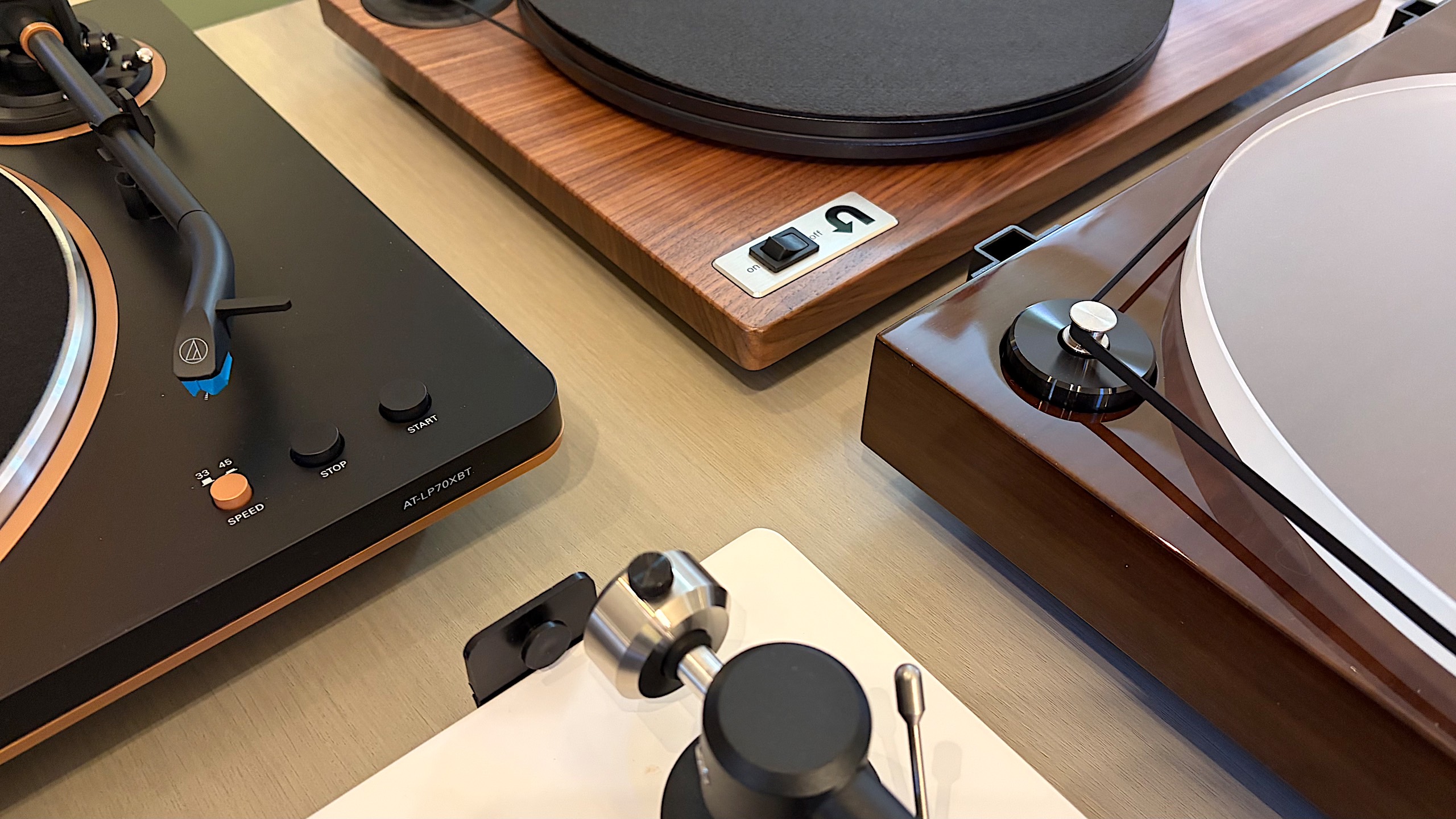
Best record players
Best record players
Billy Steele for Engadget

Removable cartridge/headshell

The next item you’ll want to consider is if the turntable you’re eyeing can be upgraded in the future. The best way to do this is by swapping out the cartridge. Most turntables allow you to do this but there are some that don’t, so you’ll need to pay attention to this detail. Upgrading the cartridge down the road is a great way to improve overall sound quality without having to buy a new turntable, new speakers or a new amp. 

Belt drive vs. direct drive

There are two main types of turntables: belt drive and direct drive. All of the models we tested for this guide are belt drive, which means there’s a thin belt that connects the platter to the motor to make the thing spin. Direct drive turntables are widely used by DJs and Technics was the first to make them. Here, the motor is directly under the platter and connected to it directly so the setup is less prone to wearing out. This is especially key when you’re doing things like scratching. Direct-drive turntables tend to be more expensive than their belt-driven counterparts.

Counterweight and anti-skate control

Most turntables will include a counterweight on the tonearm and some form of anti-skate control. Both of these help keep the stylus in place with the correct amount of pressure, all to ensure proper operation with minimal wear on your records. Sometimes the anti-skate elements are built into the tonearm while other models offer a dedicated dial on the surface of the plinth. The ability to adjust both of these can help you fine-tune the performance of your turntable over time, which may be necessary after upgrading the cartridge or other components. 

Other components to consider

Some final items you’ll want to evaluate on a prospective turntable purchase include the materials used for the base (plinth), platter and even the feet. Cheaper turntables may be mostly plastic affairs while more expensive models can use solid MDF (medium-density fibreboard) for the plinth. A lot of turntables have aluminum platters with a felt pad while others may feature a thick acrylic version. And while entry-level turntables may have small, plastic feet, premium models come with larger, adjustable, rubberized feet for better vibration isolation. While some of these come down to personal preference — a frosted acrylic platter looks really nice — there are some performance boosts to be gained depending on how the company uses the components.

How we test turntables

Since most turntables under $600 meet the criteria for entry-level through midrange, we tested every model with a set of Audio-Technica AT-SP3X powered speakers. These offer balanced sound for turntables with a 1.1-inch tweeter and 3-inch woofer in each unit. And at $269, they won’t break the bank if you need speakers for your new turntable and they’ll provide ample sound performance even if you spend more than our budget on a new deck.

For all of our test units that didn’t have a built-in preamp, we used the Fluance PA-10. At $100, it’s an affordable upgrade if you’re looking to bypass a turntable’s included components or if you’re looking to go more analog with your turntable purchase. There are no buttons or controls, just connect your turntable, speakers and ground wire (if you’re using one) and you’re ready to go. It’s simple, straightforward and inexpensive, so it’s a great option for beginners and more experienced vinyl collectors alike. 

In terms of performance testing, we play a variety of genres on each turntable to evaluate sound quality. We also carefully examine the overall experience of putting a record on, setting the speed, placing the tonearm and more, which allows us to judge how well each turntable will work for users at different experience levels. Lastly, we take notes on design and components, comparing those elements from each turntable with our other test subjects to make our recommendations.

This article originally appeared on Engadget at https://www.engadget.com/audio/best-record-player-120000239.html?src=rss

NVIDIA Connects AI GPUs to Early Quantum Processors

“Quantum computing is still years away, but Nvidia just built the bridge that will bring it closer…” argues investment site The Motley Fool, “by linking today’s fastest AI GPUs with early quantum processors…”

NVIDIA’s new hybrid system strengthens communication at microsecond speeds — orders of magnitude faster than before — “allowing AI to stabilize and train quantum machines in real time, potentially pulling major breakthroughs years forward.”

CUDA-Q, Nvidia’s open-source software layer, lets researchers choreograph that link — running AI models, quantum algorithms, and error-correction routines together as one system. That jump allows artificial intelligence to monitor [in real time]… For researchers, that means hundreds of new iterations where there used to be one — a genuine acceleration of discovery. It’s the quiet kind of progress engineers love — invisible, but indispensable…

Its GPUs (graphics processing units) are already tuned for the dense, parallel calculations these explorations demand, making them the natural partner for any emerging quantum processor…
Other companies chase better quantum hardware — superconducting, photonic, trapped-ion — but all of them need reliable coordination with the computing power we already have. By offering that link, Nvidia turns its GPU ecosystem into the operating environment of hybrid computing, the connective tissue between what exists now and what’s coming next. And because the system is open, every new lab or start-up that connects strengthens Nvidia’s position as the default hub for quantum experimentation…

There’s also a defensive wisdom in this move. If quantum computing ever matures, it could threaten the same data center model that built Nvidia’s empire. CEO Jensen Huang seems intent on making sure that, if the future shifts, Nvidia already sits at its center. By owning the bridge between today’s technology and tomorrow’s, the company ensures it earns relevance — and revenue — no matter which computing model dominates.

So Nvidia’s move “isn’t about building a quantum computer,” the article argues, “it’s about owning the bridge every quantum effort will need.”


Read more of this story at Slashdot.

Rust Foundation Announces ‘Maintainers Fund’ to Ensure Continuity and Support Long-Term Roles

The Rust Foundation has a responsibility to “shed light on the impact of supporting the often unseen work” that keeps the Rust Project running. So this week they announced a new initiative “to provide consistent, transparent, and long term support for the developers who make the Rust programming language possible.”

It’s the Rust Foundation Maintainers Fund, “an initiative we’ll shape in close collaboration with the Rust Project Leadership Council and Project Directors to ensure funding decisions are made openly and with accountability.”

In the months ahead, we’ll define the fund’s structure, secure contributions, and work with the Rust Project and community to bring it to life. This work will build on lessons from earlier iterations of our grants and fellowships to create a lasting framework for supporting Rust’s maintainers… Over the past several months, through ongoing board discussions and input from the Leadership Council, this initiative has taken shape as a way to help maintainers continue their vital development and review work, and plan for the future…

This initiative reflects our commitment to Rust being shaped by its people, guided by open collaboration, and backed by a global network of contributors and partners. The Rust Foundation Maintainers Fund will operate within the governance framework shared between the Rust Project and the Rust Foundation, ensuring alignment and oversight at every level… The Rust Foundation’s approach to this initiative will be guided by our structure: as a 501( C)(6) nonprofit, we operate under a mandate for transparency and accountability to the Rust Project, language community, and our members. That means we must develop this fund in coordination with the Rust Project’s priorities, ensuring shared governance and long-term viability…

Our goal is simple: to help the people building Rust continue their essential work with the support they deserve. That means creating the conditions for long term maintainer roles and ensuring continuity for those whose efforts keep the language stable and evolving. Through the Rust Foundation Maintainers Fund, we aim to address these needs directly.

“The more companies using Rust can contribute to the Rust Foundation Maintainers Fund, the more we can keep the language and tooling evolving for the benefit of everyone,” says Rust Foundation project director Carol Nichols.


Read more of this story at Slashdot.

Nonprofit Releases Thousands of Rare American Music Recordings Online

The nonprofit Dust-to-Digital Foundation is making thousands of historic songs accessible to the public for free through a new partnership with the University of California, Santa Barbara. The songs represent “some of the rarest and most uniquely American music borne from the Jazz Age and the Great Depression,” according to the university, and classic blues recordings or tracks by Fiddlin’ John Carson and his daughter Moonshine Kate “would have likely been lost to landfills and faded from memory.”

Launched in 1999 by Lance and April Ledbetter, Dust-to-Digital focused on preserving hard-to-find music. Originally a commercial label producing high-quality box sets (along with CDs, records, and books), it established a nonprofit foundation in 2010, working closely with collectors to digitize and preserve record collections. And there’s an interesting story about how they became familiar with library curator David Seubert…

Once a relationship is established, Dust-to-Digital sets up special turntables and laptops in a collector’s home, with paid technicians painstakingly digitizing and labeling each record, one song at a time. Depending on the size of the collection, the process can take months, even years… In 2006, they heard about Seubert’s Cylinder Preservation and Digitization Project getting “slashdotted,” a term that describes when a website crashes or receives a sudden and debilitating spike in traffic after being mentioned in an article on Slashdot.

Here in 2025, the university’s library already has over 50,000 songs in a Special Research Collections, which they’ve been uploading it to a Discography of American Historical Recordings (DAHR) database. (“Recordings in the public domain are also available for free download, in keeping with the UCSB Library’s mission for open access.”) Over 5,000 more songs from Dust-to-Digital have already been added, says library curator Seubert, and “Thousands more are in the pipeline.”

One interest detail? The bulk of the new songs come from Joe Bussard, a man whose 75-year obsession with record collecting earned him the name “the king of the record collectors and “the saint of 78s”.


Read more of this story at Slashdot.

What Happens When Humans Start Writing for AI?

The literary magazine of the Phi Beta Kappa society argues “the replacement of human readers by AI has lately become a real possibility.

“In fact, there are good reasons to think that we will soon inhabit a world in which humans still write, but do so mostly for AI.”

“I write about artificial intelligence a lot, and lately I have begun to think of myself as writing for Al as well,” the influential economist Tyler Cowen announced in a column for Bloomberg at the beginning of the year. He does this, he says, because he wants to boost his influence over the world, because he wants to help teach the AIs about things he cares about, and because, whether he wants to or not, he’s already writing for AI, and so is everybody else. Large-language-model (LLM) chatbots such as ChatGPT and Claude are trained, in part, by reading the entire internet, so if you put anything of yourself online, even basic social-media posts that are public, you’re writing for them.

If you don’t recognize this fact and embrace it, your work might get left behind or lost. For 25 years, search engines knit the web together. Anyone who wanted to know something went to Google, asked a question, clicked through some of the pages, weighed the information, and came to an answer. Now, the chatbot genie does that for you, spitting the answer out in a few neat paragraphs, which means that those who want to affect the world needn’t care much about high Google results anymore. What they really want is for the AI to read their work, process it, and weigh it highly in what it says to the millions of humans who ask it questions every minute.

How do you get it to do this? For that, we turn to PR people, always in search of influence, who are developing a form of writing (press releases and influence campaigns are writing) that’s not so much search-engine-optimized as chatbot-optimized. It’s important, they say, to write with clear structure, to announce your intentions, and especially to include as many formatted sections and headings as you can. In other words, to get ChatGPT to pay attention, you must write more like ChatGPT. It’s also possible that, since LLMs understand natural language in a way traditional computer programs don’t, good writing will be more privileged than the clickbait Google has succumbed to: One refreshing discovery PR experts have made is that the bots tend to prioritize information from high-quality outlets.

Tyler Cowen also wrote in his Bloomberg column that “If you wish to achieve some kind of intellectual immortality, writing for the Als is probably your best chance…. Give the Als a sense not just of how you think, but how you feel — what upsets you, what you really treasure. Then future Al versions of you will come to life that much more, attracting more interest.” Has AI changed the reasons we write? The Phi Beta Kappa magazine is left to consider the possibility that “power over a superintelligent beast and resurrection are nothing to sneeze at” — before offering another thought.

“The most depressing reason to write for AI is that unlike most humans, AIs still read. They read a lot. They read everything. Whereas, aided by an AI no more advanced than the TikTok algorithm, humans now hardly read anything at all…”


Read more of this story at Slashdot.

Apple Explores New Satellite Features for Future iPhones

In 2022 the iPhone 14 featured emergency satellite service, and there’s now support for roadside assistance and the ability to send and receive text messages.

But for future iPhones, Apple is now reportedly working on five new satellite features, reports LiveMint:

As per Bloomberg’s Mark Gurman, Apple is building an API that would allow developers to add satellite connections to their own apps. However, the implementation is said to depend on app makers, and not every feature or service may be compatible with this system. The iPhone maker is also reportedly working on bringing satellite connectivity to Apple Maps, which would give users the chance to navigate without having access to a SIM card or Wi-Fi. The company is also said to be working on improved satellite messages that could support sending photos and not be limited to just text messages. Apple currently relies on the satellite network run by Globalstar to power current features on iPhones. However, the company is said to be exploring a potential sale, and Elon Musk’s SpaceX could be a possible purchaser.

The Mac Observer notes Bloomberg also reported Apple “has discussed building its own satellite service instead of depending on partners.” And while some Apple executives pushed back, “the company continues to fund satellite research and infrastructure upgrades with the goal of offering a broader range of features.”

And “Future iPhones will use satellite links to extend 5G coverage in low-signal regions, ensuring that users remain connected even when cell towers are out of range…. Apple’s slow but steady progress shows how the company wants iPhone satellite technology to move from emergency use to everyday convenience.”


Read more of this story at Slashdot.

YouTube TV is giving subscribers a $20 credit as consolation for the Disney blackout

YouTube TV has notified subscribers that a $20 credit is heading their way in light of its ongoing standoff with Disney, which has resulted in numerous channels going dark on the platform, including ESPN, ABC News and Disney Channel. In an email to subscribers, the YouTube TV Team said subscribers should expect to see an email in the coming days about the credit, which will be applied to their next bill after it’s redeemed. 

“We know it’s been disappointing to lose Disney content, and we want you to know we deeply appreciate your patience,” the email said. YouTube TV and Disney had a deadline of October 30 to reach a new agreement about Disney’s content moving forward, but that date passed with no deal. Negotiations are ongoing, according to the company. “We’ve been working in good faith to negotiate a deal with Disney that pays them fairly for their content and returns their programming to YouTube TV,” the team said in the email. If that $20 still isn’t enough to make up for the weeks of lost content, you can always pause your subscription in the meantime. 

This article originally appeared on Engadget at https://www.engadget.com/youtube-tv-is-giving-subscribers-a-20-credit-as-consolation-for-the-disney-blackout-231000002.html?src=rss

Blue Origin scrubs New Glenn’s second flight due to bad weather

Blue Origin has postponed the second flight of its New Glenn rocket, which was slated to send a pair of NASA spacecraft on the first step of their journey to Mars on Sunday afternoon. The heavy-lift launch vehicle was scheduled to take off from Cape Canaveral Space Force Station in Florida at 2:45PM ET., but multiple holds were issued during the under-two-hour launch window due to inclement weather. Blue Origin called off the launch attempt around 4:13PM.

The next launch opportunity is as yet unclear. Blue Origin was previously given a backup opportunity set for Monday afternoon, but the FAA has since issued an emergency order restricting commercial launches for the time being due to the government shutdown. As of November 10, commercial space launches can only take place between 10:00PM and 6:00AM. Blue Origin said on Sunday that it’s reviewing opportunities based on the weather, and did not mention the FAA’s order.

New Glenn’s development has faced significant delays over the last decade since it was first announced, and finally took its maiden flight at the beginning of this year. Its first stage booster is intended to be reusable, and the company plans to recover the booster from the upcoming launch by landing it on an autonomous landing platform vessel dubbed Jacklyn, also known as the barge. Blue Origin attempted the same during its first flight, but failed. 

The spacecraft on board New Glenn are twin satellites built by Rocket Lab and operated by UC Berkeley for NASA’s Escapade mission to study the effects of space weather. They’ll be following a new trajectory to the red planet, lingering in “a lazy, 12-month kidney bean-shaped orbit” around Earth until Mars is in alignment, according to UC Berkeley. Escapade should reach Mars in 2027. 

This article originally appeared on Engadget at https://www.engadget.com/science/space/blue-origin-scrubs-new-glenns-second-flight-due-to-bad-weather-214349212.html?src=rss

Genetically Engineered Babies Are Banned in the US. But Tech Titans Are Trying to Make One Anyway

“For months, a small company in San Francisco has been pursuing a secretive project: the birth of a genetically engineered baby,” reports the Wall Street Journal:

Backed by OpenAI chief executive Sam Altman and his husband, along with Coinbase co-founder and CEO Brian Armstrong, the startup — called Preventive — has been quietly preparing what would amount to a biological first. They are working toward creating a child born from an embryo edited to prevent a hereditary disease…. Editing genes in embryos with the intention of creating babies from them is banned in the U.S. and many countries. Preventive has been searching for places to experiment where embryo editing is allowed, including the United Arab Emirates, according to correspondence reviewed by The Wall Street Journal…

Preventive is in the vanguard of a growing number of startups, funded by some of the most powerful people in Silicon Valley, that are pushing the boundaries of fertility and working to commercialize reproductive genetic technologies. Some are working on embryo editing, while others are already selling genetic screening tools that seek to account for the influence of dozens or hundreds of genes on a trait. They say their ultimate goal is to produce babies who are free of genetic disease and resilient against illnesses. Some say they can also give parents the ability to choose embryos that will have higher IQs and preferred traits such as height and eye color. Armstrong, the cryptocurrency billionaire, is leading the charge to make embryo editing a reality. He has told people that gene-editing technology could produce children who are less prone to heart disease, with lower cholesterol and stronger bones to prevent osteoporosis. According to documents and people briefed on his plans, he is already an investor or in talks with embryo editing ventures…

After the Journal approached people close to the company last month to ask about its work, Preventive announced on its website that it had raised $30 million in investment to explore embryo editing. The statement pledged not to advance to human trials “if safety cannot be established through extensive research…” Other embryo editing startups are Manhattan Genomics, co-founded by Thiel Fellow Cathy Tie, and Bootstrap Bio, which plans to conduct tests in Honduras. Both companies are in early stages.

The article notes the only known instance of children born from edited embryos was in 2018, when Chinese scientist He Jiankui “shocked the world with news that he had produced three children genetically altered as embryos to be immune to HIV. He was sentenced to prison in China for three years for the illegal practice of medicine.

“He hasn’t publicly shared the children’s identities but says they are healthy.


Read more of this story at Slashdot.

Python Foundation Donations Surge After Rejecting Grant – But Sponsorships Still Needed

After the Python Software Foundation rejected a $1.5 million grant because it restricted DEI activity, “a flood of new donations followed,” according to a new report. By Friday they’d raised over $157,000, including 295 new Supporting Members paying an annual $99 membership fee, says PSF executive director Deb Nicholson.

“It doesn’t quite bridge the gap of $1.5 million, but it’s incredibly impactful for us, both financially and in terms of feeling this strong groundswell of support from the community.”

Could that same security project still happen if new funding materializes? The PSF hasn’t entirely given up. “The PSF is always looking for new opportunities to fund work benefiting the Python community,” Nicholson told me in an email last week, adding pointedly that “we have received some helpful suggestions in response to our announcement that we will be pursuing.” And even as things stand, the PSF sees itself as “always developing or implementing the latest technologies for protecting PyPI project maintainers and users from current threats,” and it plans to continue with that commitment.

The Python Software Foundation was “astounded and deeply appreciative at the outpouring of solidarity in both words and actions,” their executive director wrote in a new blog post this week, saying the show of support “reminds us of the community’s strength.”

But that post also acknowledges the reality that the Python Software Foundation’s yearly revenue and assets (including contributions from major donors) “have declined, and costs have increased,…”

Historically, PyCon US has been a source of revenue for the PSF, enabling us to fund programs like our currently paused Grants Program… Unfortunately, PyCon US has run at a loss for three years — and not from a lack of effort from our staff and volunteers! Everyone has been working very hard to find areas where we can trim costs, but even with those efforts, inflation continues to surge, and changing U.S. and economic conditions have reduced our attendance…
Because we have so few expense categories (the vast majority of our spending goes to running PyCon US, the Grants Program, and our small 13-member staff), we have limited “levers to pull” when it comes to budgeting and long-term sustainability…

While Python usage continues to surge, “corporate investment back into the language and the community has declined overall. The PSF has longstanding sponsors and partners that we are ever grateful for, but signing on new corporate sponsors has slowed.” (They’re asking employees at Python-using companies to encourage sponsorships.)

We have been seeking out alternate revenue channels to diversify our income, with some success and some challenges. PyPI Organizations offers paid features to companies (PyPI features are always free to community groups) and has begun bringing in monthly income. We’ve also been seeking out grant opportunities where we find good fits with our mission…. We currently have more than six months of runway (as opposed to our preferred 12 months+ of runway), so the PSF is not at immediate risk of having to make more dramatic changes, but we are on track to face difficult decisions if the situation doesn’t shift in the next year.

Based on all of this, the PSF has been making changes and working on multiple fronts to combat losses and work to ensure financial sustainability, in order to continue protecting and serving the community in the long term. Some of these changes and efforts include:

— Pursuing new sponsors, specifically in the AI industry and the security sector
— Increasing sponsorship package pricing to match inflation
— Making adjustments to reduce PyCon US expenses
— Pursuing funding opportunities in the US and Europe
— Working with other organizations to raise awareness
— Strategic planning, to ensure we are maximizing our impact for the community while cultivating mission-aligned revenue channels

The PSF’s end-of-year fundraiser effort is usually run by staff based on their capacity, but this year we have assembled a fundraising team that includes Board members to put some more “oomph” behind the campaign. We’ll be doing our regular fundraising activities; we’ll also be creating a unique webpage, piloting temporary and VERY visible pop-ups to python.org and PyPI.org, and telling more stories from our Grants Program recipients…

Keep your eyes on the PSF Blog, the PSF category on Discuss, and our social media accounts for updates and information as we kick off the fundraiser this month. Your boosts of our posts and your personal shares of “why I support the PSF” stories will make all the difference in our end-of-year fundraiser. If this post has you all fired up to personally support the future of Python and the PSF right now, we always welcome new PSF Supporting Members and donations.


Read more of this story at Slashdot.

How to adjust the Liquid Glass effect in iOS 26.1

Apple’s latest iterative update for iPhones brings a welcome change for those who aren’t a fan of its Liquid Glass design overhaul. After user complaints that the Liquid Glass’ translucent design was hard to read, Apple introduced a compromise in iOS 26’s fourth beta that allowed for a more frosted look as well as a Reduce Transparency option buried in the Accessibility settings. Now, Apple is making this Liquid Glass toggle available for all iPhone users with iOS 26.1.

What is Liquid Glass?

Apple debuted Liquid Glass at WWDC 2025 as its major visual redesign, which prompted a lot of comparisons to Windows Vista. Everything from switches and sliders to sidebars and panels would imitate glass, so that users can see the underlying colors and content. While some iPhone users liked the fluidity and freshness, others said the transparent look often created legibility issues, caused lag from the animations and led to eye strain over extended periods of time.

How to reduce the Liquid Glass effect

To access the new Liquid Glass toggle, make sure your iPhone is updated to iOS 26.1. You can check which version you’re by navigating to Settings, then General, then Software Update. After you confirmed that you’re on the most recent iOS, you can go back into Settings, then Display & Brightness. From there, you’ll find a new setting for Liquid Glass that lets you choose between “Clear” or “Tinted.” The Clear option is Apple’s original vision for Liquid Glass with see-through controls, while the Tinted option “increases opacity and adds more contrast.”

You can preview the differences between the two choices in the Liquid Glass setting before you commit to one. When in use, the Tinted option switches to the same frosted look first seen by iOS beta testers, which adds a more solid background to panels that have been Liquid Glass-ified. It’s important to note that there are only two options and Apple didn’t instead opt for a slider to adjust opacity. However, Apple is leaning more into customizability with its operating systems, as indicated by its recently introduced Spatial Scenes feature.

This article originally appeared on Engadget at https://www.engadget.com/mobile/smartphones/how-to-adjust-the-liquid-glass-effect-in-ios-261-203634681.html?src=rss

Blue Origin Livestreams Attempt to Launch Unique ”EscaPADE’ Mission to Mars

Blue Origin is livestreaming the launch of its New Glenn rocketreports CNN, “where they will investigate why the barren red planet began to lose its atmosphere billions of years ago.” By observing two Mars locations simultaneously, this mission can measure how Mars responds to space weather in real time — and how the Martian magnetosphere changes…

Called EscaPADE, the mission will aim for an orbital trajectory that has never been attempted before, according to aerospace company Advanced Space, which is supporting the project. If successful, it could be a crucial case study that can allow extraordinary flexibility for planetary science missions down the road. The robotic mission plans to spend a year idling in an orbital backroad before heading to its target destination… [R]ather than turning toward Mars, the two orbiters will instead aim for Lagrange Point 2, or L2 — a cosmic balance point about 1.5 million kilometers (930,000 miles) from Earth. Lagrange points are special because they act as gravitational wells in which the pull of the sun and Earth are in perfect balance. The conditions can allow spacecraft to linger without being dragged away… The spacecraft will then loop endlessly in a kidney bean-shaped orbit around L2 until next year’s Mars transfer window opens.

This “launch and loiter” project is part of NASA’s SIMPLEx [Small, Innovative Missions for Planetary Exploration] program, which seeks
high-value missions for less money, notes CNN. “EscaPADE’s cost was less than $100 million, compared with the roughly $300 million to $600 million price tags of other NASA satellites orbiting Mars.”

“Blue Origin is also attempting to land and recover New Glenn’s first-stage booster,” notes another CNN article.


Read more of this story at Slashdot.

Blue Origin Postpones Attempt to Launch Unique ”EscaPADE’ Orbiters to Mars

UPDATE (1:16 PST) Today’s launch has been scrubbed due to weather, and Blue Origin is now reviewing opportunities for new launch windows.

Sunday Morning Blue Origin livestreamed the planned launch of its New Glenn rocket, which will carry a very unique mission for NASA. “Twin spacecraft are set to take off on an unprecedented, winding journey to Mars,” reports CNN, “where they will investigate why the barren red planet began to lose its atmosphere billions of years ago.” By observing two Mars locations simultaneously, this mission can measure how Mars responds to space weather in real time — and how the Martian magnetosphere changes…

Called EscaPADE, the mission will aim for an orbital trajectory that has never been attempted before, according to aerospace company Advanced Space, which is supporting the project. If successful, it could be a crucial case study that can allow extraordinary flexibility for planetary science missions down the road. The robotic mission plans to spend a year idling in an orbital backroad before heading to its target destination… [R]ather than turning toward Mars, the two orbiters will instead aim for Lagrange Point 2, or L2 — a cosmic balance point about 1.5 million kilometers (930,000 miles) from Earth. Lagrange points are special because they act as gravitational wells in which the pull of the sun and Earth are in perfect balance. The conditions can allow spacecraft to linger without being dragged away… The spacecraft will then loop endlessly in a kidney bean-shaped orbit around L2 until next year’s Mars transfer window opens.

This “launch and loiter” project is part of NASA’s SIMPLEx [Small, Innovative Missions for Planetary Exploration] program, which seeks
high-value missions for less money, notes CNN. “EscaPADE’s cost was less than $100 million, compared with the roughly $300 million to $600 million price tags of other NASA satellites orbiting Mars.”

“Blue Origin is also attempting to land and recover New Glenn’s first-stage booster,” notes another CNN article.


Read more of this story at Slashdot.

‘AI Slop’ in Court Filings: Lawyers Keep Citing Fake AI-Hallucinated Cases

“According to court filings and interviews with lawyers and scholars, the legal profession in recent months has increasingly become a hotbed for AI blunders,” reports the New York Times:

Earlier this year, a lawyer filed a motion in a Texas bankruptcy court that cited a 1985 case called Brasher v. Stewart. Only the case doesn’t exist. Artificial intelligence had concocted that citation, along with 31 others. A judge blasted the lawyer in an opinion, referring him to the state bar’s disciplinary committee and mandating six hours of A.I. training.

That filing was spotted by Robert Freund, a Los Angeles-based lawyer, who fed it to an online database that tracks legal A.I. misuse globally. Mr. Freund is part of a growing network of lawyers who track down A.I. abuses committed by their peers, collecting the most egregious examples and posting them online. The group hopes that by tracking down the A.I. slop, it can help draw attention to the problem and put an end to it… [C]ourts are starting to map out punishments of small fines and other discipline. The problem, though, keeps getting worse. That’s why Damien Charlotin, a lawyer and researcher in France, started an online database in April to track it.

Initially he found three or four examples a month. Now he often receives that many in a day. Many lawyers… have helped him document 509 cases so far. They use legal tools like LexisNexis for notifications on keywords like “artificial intelligence,” “fabricated cases” and “nonexistent cases.” Some of the filings include fake quotes from real cases, or cite real cases that are irrelevant to their arguments. The legal vigilantes uncover them by finding judges’ opinions scolding lawyers…

Court-ordered penalties “are not having a deterrent effect,” said Freund, who has publicly flagged more than four dozen examples this year. “The proof is that it continues to happen.”


Read more of this story at Slashdot.

OneXPlayer’s premium gaming handheld packs an external 85Wh battery

For about the price of a mid-range custom PC build, you could instead opt for a top-of-the-line gaming handheld called the OneXFly Apex. OneXPlayer launched its latest Indiegogo campaign for its upcoming handheld that starts at $1,399 and goes up to $2,299 for a fully kitted-out version. While most portable gamers are better off with the Steam Deck, the OneXFly Apex separates itself from the crowd with high-end specs, an external 85Wh battery, and the option for liquid cooling.

OneXPlayer hasn’t divulged the estimated play time you’ll get with its massive battery, but it’s designed to be quickly swapped out with a spare battery that’s sold separately. If the battery runs low, you can either wait a few hours to recharge or hardwire into a power outlet to keep gaming. You can build the OneXFly Apex with up to an AMD Ryzen AI Max+ 395 chip and 128GB of memory. The Windows handheld has up to 4TB of local storage, but you can expand it by another 4TB thanks to both a mini SSD and a microSD card slot.

OneXPlayer uniquely offers an optional liquid cooling module for the OneXFly Apex, which you have to pay $60 more for. While the starting price may turn people away, OneXPlayer also included non-contact capacitive joysticks that will never get stick drift and Hall triggers that can be toggled for short or long travel modes to justify the handheld’s cost. The OneXFly Apex crowdfunding campaign managed to reach its goal of 100,000 Hong Kong dollars, or roughly $12,850, in less than two minutes. OneXPlayer currently offers four configurations of its gaming handheld, which is expected to start shipping in January 2026.

This article originally appeared on Engadget at https://www.engadget.com/gaming/onexplayers-premium-gaming-handheld-packs-an-external-85wh-battery-185515162.html?src=rss

Half-Life 3 Might Finally Be Real, An Announcement Looks Imminent

Half-Life 3 Might Finally Be Real, An Announcement Looks Imminent
Based on some odd Steam Sale timing and a giant gap between them in November, which seems characteristic for Valve when it wants to showcase a product, the studio’s most dedicated fans believe that Half-Life 3 or Valve’s next-gen Steam Frame / Deckard VR headset, may be announced later this month. A Redditor on the r/ValveDeckard subreddit

Lost Unix v4 Possibly Recovered on a Forgotten Bell Labs Tape From 1973

“A tape-based piece of unique Unix history may have been lying quietly in storage at the University of Utah for 50+ years,” reports The Register. And the software librarian at Silicon Valley’s Computer History Museum, Al Kossow of Bitsavers, believes the tape “has a pretty good chance of being recoverable.”

Long-time Slashdot reader bobdevine says the tape will be analyzed at the Computer History Museum. More from The Register:

The news was posted to Mastodon by Professor Robert Ricci of the University of Utah’s Kahlert School of Computing [along with a picture. “While cleaning a storage room, our staff found this tape containing #UNIX v4 from Bell Labs, circa 1973…” Ricci posted on Mastodon. “We have arranged to deliver it to the Computer History Museum.”] The nine-track tape reel bears a handwritten label reading: UNIX Original From Bell Labs V4 (See Manual for format)…

If it’s what it says on the label, this is a notable discovery because little of UNIX V4 remains. That’s unfortunate as this specific version is especially interesting: it’s the first version of UNIX in which the kernel and some of the core utilities were rewritten in the new C programming language. Until now, the only surviving parts known were the source code to a slightly older version of the kernel and a few man pages — plus the Programmer’s Manual [PDF], from November 1973.
The Unix Heritage Society hosts those surviving parts — and apparently some other items of interest, according to a comment posted on Mastodon. “While going through the tapes from Dennis Ritchie earlier this year, I found some UNIX V4 distribution documents,” posted Mastodon user “Broken Pipe,” linking to tuhs.org/Archive/Applications/Dennis_Tapes/Gao_Analysis/v4_dist/.
There’s a file called license (“The program and information transmitted herewith is and shall remain the property of Bell Lab%oratories…”) and coldboot (“Mount good tape on drive 0…”), plus a six-page “Setup” document that ends with these words…

We expect to have a UNIX seminar early in 1974.
Good luck.
Ken Thompson
Dennis Ritchie
Bell Telephone Labs
Murray Hill, NJ 07974


Read more of this story at Slashdot.

Apple is reportedly working on more satellite features for iPhone

Your iPhone may soon be able to do more than call for emergency help and send messages via satellite, according to the latest Power On newsletter. Bloomberg‘s Mark Gurman reported that Apple is planning to expand on satellite features available on iPhones.

Apple introduced the ability to send and receive texts with the Messages via Satellite feature last year, but is reportedly looking to enhance this with the option to send photos too. Beyond texting, Apple wants to enable 5G NTN support on its iPhones, which allows cell towers to get a coverage boost by tapping into satellites, according to Gurman. For anyone who needs directions in a remote area without a cellular or Wi-Fi connection, Apple reportedly has plans to introduce satellite connectivity to Apple Maps.

Along with these upgrades, Gurman reported that Apple is looking into “natural usage” improvements where users won’t have to point their iPhones towards the sky to connect to a satellite network. Instead, an iPhone could stay connected even when there’s no clear view of the sky, like in indoor environments. On the developer side of things, Gurman said that Apple is also working on an API that allows app makers to add satellite connections.

There’s no timeline for when these rumored satellite features will go live, but Apple previously waited a couple of years between introducing Emergency SOS via Satellite in 2022 and Messages via Satellite with the release of iOS 18.

This article originally appeared on Engadget at https://www.engadget.com/mobile/smartphones/apple-is-reportedly-working-on-more-satellite-features-for-iphone-172151203.html?src=rss

Neurodiverse Professionals 25% More Satisfied With AI Tools and Agents

An anonymous reader shared this report from CNBC:

Neurodiverse professionals may see unique benefits from artificial intelligence tools and agents, research suggests. With AI agent creation booming in 2025, people with conditions like ADHD, autism, dyslexia and more report a more level playing field in the workplace thanks to generative AI.
A recent study from the UK’s Department for Business and Trade found that neurodiverse workers were 25% more satisfied with AI assistants and were more likely to recommend the tool than neurotypical respondents.
[The study involved 1,000 users of Microsoft 365 Copilot from October through December of 2024.]

“Standing up and walking around during a meeting means that I’m not taking notes, but now AI can come in and synthesize the entire meeting into a transcript and pick out the top-level themes,” said Tara DeZao, senior director of product marketing at enterprise low-code platform provider Pega. DeZao, who was diagnosed with ADHD as an adult, has combination-type ADHD, which includes both inattentive symptoms (time management and executive function issues) and hyperactive symptoms (increased movement). “I’ve white-knuckled my way through the business world,” DeZao said. “But these tools help so much….”

Generative AI happens to be particularly adept at skills like communication, time management and executive functioning, creating a built-in benefit for neurodiverse workers who’ve previously had to find ways to fit in among a work culture not built with them in mind. Because of the skills that neurodiverse individuals can bring to the workplace — hyperfocus, creativity, empathy and niche expertise, just to name a few — some research suggests that organizations prioritizing inclusivity in this space generate nearly one-fifth higher revenue. “Investing in ethical guardrails, like those that protect and aid neurodivergent workers, is not just the right thing to do,” said Kristi Boyd, an AI specialist with the SAS data ethics practice. “It’s a smart way to make good on your organization’s AI investments.”


Read more of this story at Slashdot.

Black Friday Apple deals include the AirPods 4 for $90

Apple’s AirPods 4 have dropped back down to a record low price in an early Black Friday deal on Amazon. If you aren’t looking for active noise cancellation, the model without ANC is a steal at 30 percent off, bringing it down to just $90 from its usual price of $130. The ANC version is on sale too, for anyone not on as tight a budget. AirPods 4 with active noise cancellation are going for $150 right now, down from $180.

The Apple AirPods 4 are the best budget AirPods you can get in 2025, with Apple’s H2 audio chip to support some of the more advanced audio features from more expensive models. They offer Voice Isolation, Personalized Spatial Audio with dynamic head tracking and more. If you get the model without active noise cancellation, you won’t have features like Transparency Mode and Conversation Awareness, or Apple’s hearing health tools. But, the entry-level model still offers great sound quality for the price.

This model also features the redesigned shape, which makes for a more comfortable and secure fit so you don’t have to worry about them falling out of your ears. A force sensor on the stem allows for basic touch controls, including play and pause, play next track, previous track and answer a call. You can also summon Siri by pressing and holding the stem. With the ANC version, you also have access to Live Translation, which can be initiated by pressing and holding the stem on both AirPods simultaneously.

You can expect to get up to 5 hours of battery life on a charge with the non-ANC model, and up to 30 hours using the USB-C charging case. On the other model with ANC active, that play time drops by about an hour.

Check out our coverage of the best Apple deals for more discounts, and follow @EngadgetDeals on X for the latest tech deals and buying advice.

This article originally appeared on Engadget at https://www.engadget.com/deals/black-friday-apple-deals-include-the-airpods-4-for-90-162917761.html?src=rss