Are you ready for a $1,000 Steam Machine? Some analysts think you should be.

If you ask random gamers what price they think Valve will charge for its newly announced Steam Machine hardware, you’ll get a wide range of guesses. But if you ask the analysts who follow the game industry for a living the same question… well, you’ll actually get the same wide range of (somewhat better-informed) guesses.

At the high end of those guesses are analysts like F-Squared‘s Michael Futter, who expects a starting price of $799 to $899 for the entry-level 512GB Steam Machine and a whopping $1,000 to $1,100 for the 2TB version. With internal specs that Futter says “will rival a PS5 and maybe even hit PS5 Pro performance,” we can expect a “hefty price tag” from Valve’s new console-like effort. At the same time, since Valve is “positioning this as a dedicated, powerful gaming PC… I suspect that the price will be below a similarly capable traditional desktop,” Futter said.

DFC Intelligence analyst David Cole similarly expects the Steam Machine to start at a price “around $800” and go up to “around $1,000” for the 2TB model. Cole said he expects Valve will seek “very low margins” or even break-even pricing on the hardware itself, which he said would probably lead to pricing “below a gaming PC but slightly above a high-end console.”

Read full article

Comments

Intel Confirms AVX10 For Nova Lake, Adds XeSS Frame Gen For Meteor Lake iGPUs

Intel Confirms AVX10 For Nova Lake, Adds XeSS Frame Gen For Meteor Lake iGPUs
Intel’s been making moves under the radar lately, and they’re good news for Team Blue—not only do the most recent GitHub Intel Xess 2,1 SDK patch notes reveal that Frame Gen is coming to Core Ultra 100-series iGPUs, but the 60th Edition of Intel’s ISA Extensions Reference confirms that AVX10.2 is, in fact, coming to Nova Lake, contrary to

Amazon rebrands its Starlink competitor to Amazon Leo

Amazon is making its satellite communication network a bit more official with a rebrand. The company has announced that Project Kuiper will now be called “Amazon Leo,” a nod to the fact that its network is composed of satellites in low Earth orbit. 

Project Kuiper’s journey to becoming a proper Amazon brand has been a long one. The company introduced the project in 2019 with the goal of offering internet in regions without a reliable connection, through a proposed constellation of over 3,000 satellites that could blanket 95 percent of the global population in high-speed internet. That constellation has yet to fully take shape, however. In the years following the Project Kuiper reveal, Amazon launched prototype satellites, detailed plans for a space laser mesh network and showed off the antennas customers will use to connect to its network, but it didn’t actually launch the first 27 satellites in its constellation until April 2025. 

In comparison, its competitor Starlink has had a much faster expansion. SpaceX launched the Starlink satellite internet service in beta in 2020, and has rapidly expanded it since then. Now SpaceX has a deal with T-Mobile for satellite-enabled texting, and has struck up partnerships with airlines to test or offer internet connection on flights. Rebranding Project Kuiper to Leo suggests Amazon is finally ready to think about its satellite network as a product in its own right, but the company still has some catching up to do.

Amazon hasn’t shared a date for when its satellite internet service will be widely available for personal and commercial use, but you can sign-up on the Amazon Leo website to receive updates as the company works towards launch.

This article originally appeared on Engadget at https://www.engadget.com/science/space/amazon-rebrands-its-starlink-competitor-to-amazon-leo-214453569.html?src=rss

Verizon may cut 15,000 jobs next week

The Wall Street Journal reported that Verizon plans to cut about 15,000 jobs over the next week. Sources told the publication that Verizon is attempting to reduce costs as it faces more competition for wireless service and home internet customers. At the reported scope, this would be the largest reduction in history for the telecom company. 

Verizon leadership indicated that a sea change was coming in its third-quarter financial report last month, although many of the figures for the period were positive. The company’s net income reached $5.1 billion and most other metrics showed year-on-year growth. However, Verizon did a marked drop in postpaid wireless customers, losing 7,000 customers in that segment compared with a gain of 18,000 in Q3 2024. “We are going to take bold and fiscally responsible action to redefine Verizon’s trajectory at this critical inflection point for our company,” CEO Dan Schulman said. “These will not be incremental changes.” 

According to WSJ, most of the coming cuts will take the form of layoffs, but Verizon may also look to reduce employee count by turning about 200 stores into franchise locations.

This article originally appeared on Engadget at https://www.engadget.com/mobile/verizon-may-cut-15000-jobs-next-week-214143406.html?src=rss

Google Can Now Robocall Stores for You to Ask If They Have What You Want

In a strange reversal of the usual seller/customer dynamic, Google is now giving buyers the power to send out their own robocalls. It’s not the first time the company has experimented with giving the average Joe the ability to send AI robocalls, but it is much more robust than previous outings.

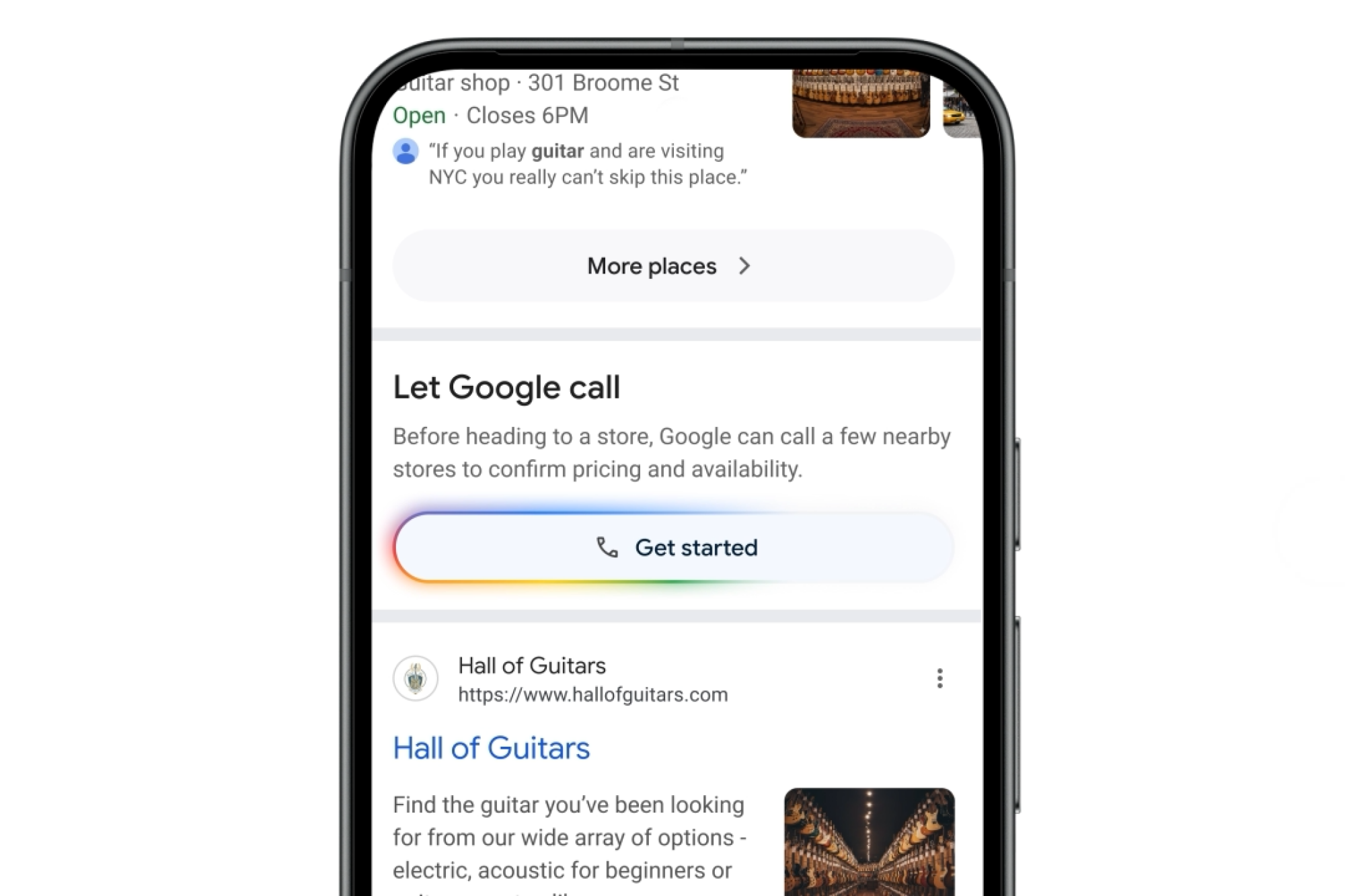
Rolling out today, the feature will show up while you’re browsing for certain products on Search, so long as you add a “near me” to the end of your query. If the product is supported, you’ll see a “Let Google Call” button, which is where the fun begins.

An example of the 'Let Google Call' button.

Credit: Michelle Ehrhardt

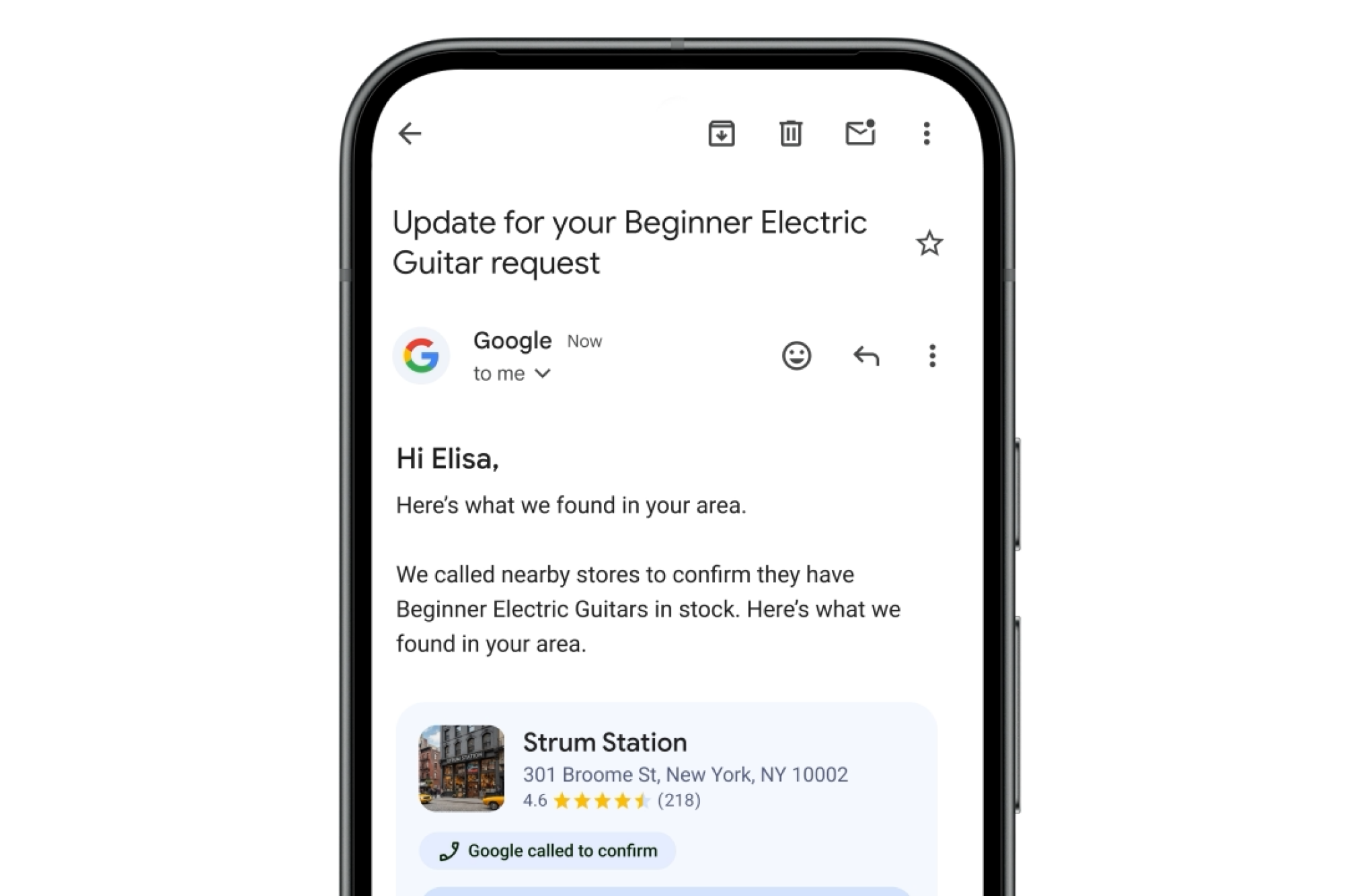
Tap “Get started,” and the AI will ask you a few clarifying questions and have you fill in your email (or phone number) and address information. After that, it’ll call local businesses on your behalf and ask for product availability and pricing before sending you an email or text with information broken down by store.

At a press event, I got to experience a live demo of what these robocalls sound like from the seller’s perspective. If you’re worried about getting blacklisted for pestering your local stores with too many calls, don’t be. The robocall does not link itself to you at all, and instead says it’s an AI calling on behalf of Google and that it won’t use the information on the call for training purposes (phew). It’ll then ask a few questions before hanging up and moving on. In the demo, the Google employee acting the part of store clerk was also able to interrupt the call and refer to previous statements for context without issue, although she also spoke clearly and slowly—this might not pan out as well in the real world.

For what it’s worth, I did think the call sounded a little disconcertingly close to a human voice for me, so I could see some employees getting confused if they miss the first line clarifying it’s coming from an AI. A Google spokesperson at the press event also addressed what might happen if your robocall gets picked up by an automatic answering system, saying “they’ll figure it out” before suggesting that, in a worst case scenario, the answering system would probably forward the call to a human.

An example of 'Let Google Call' results

Credit: Michelle Ehrhardt

Unfortunately, Google didn’t give any indication of how long it might take for you to get your text or email with results from your calls. Examples that Google demonstrated showed that the robot can do more than simply report inventory and price; it can also make notes about special deals or bundles an employee might mention.

This feature is currently limited to “categories like toys, health and beauty, and electronics” for now, so don’t expect to be able to use it for everything yet. It also seems to have a somewhat slow rollout—either I didn’t know what to search, or I don’t have the feature yet, because I couldn’t get it to pop up for me while I was writing this article.

If you’re anything like me, your biggest concern about this feature is that you might annoy the workers at whatever stores you’re calling. Google says it will try to limit multiple calls asking for the same info (such as from multiple customers who want to know the same thing) and that it will avoid calling late at night or early in the morning. Businesses are also able to opt out of getting AI calls by saying something like “please stop calling my business” during the call, or by updating their business profile under More > Business Profile settings > Advanced settings > Google automated calls and text messages.

Google’s AI robocalls also are only available in the U.S. and only in English, so business owners abroad can breathe a sigh of relief. Because of state laws, AI robocalls also can’t be placed in Indiana, Louisiana, Minnesota, Montana, and Nebraska.

I’ll admit that I have opted not to call a business because of social anxiety before, although I’m not sure having a robot bother someone for me would make me feel any better.

Germany To Ban Huawei From Future 6G Network in Sovereignty Push

German Chancellor Friedrich Merz said Chinese suppliers such as Huawei will be excluded from the country’s future telecommunication networks on security grounds as he pushes for more digital sovereignty. From a report: “We have decided within the government that everywhere it’s possible we’ll replace components, for example in the 5G network, with components we have produced ourselves,” Merz told a business conference in Berlin on Thursday. “And we won’t allow any components from China in the 6G network.”

Europe is increasingly concerned about its reliance on foreign technology, ranging from Asian semiconductors to US artificial intelligence and cloud infrastructure, as trade and geopolitical tensions threaten critical supply chains. Germany last year ordered telecom operators to remove Huawei equipment from their core networks, citing risks to national security. Berlin is now considering using public funds to pay Deutsche Telekom AG and others to strip out Chinese gear, Bloomberg News reported last month.


Read more of this story at Slashdot.

Tiny chips hitch a ride on immune cells to sites of inflammation

Standard brain implants use electrodes that penetrate the gray matter to stimulate and record the activity of neurons. These typically need to be put in place via a surgical procedure. To go around that need, a team of researchers led by Deblina Sarkar, an electrical engineer and MIT assistant professor, developed microscopic electronic devices hybridized with living cells. Those cells can be injected into the circulatory system with a standard syringe and will travel the bloodstream before implanting themselves in target brain areas.

“In the first two years of working on this technology at MIT, we’ve got 35 grant proposals rejected in a row,” Sarkar says. “Comments we got from the reviewers were that our idea was very impactful, but it was impossible.” She acknowledges that the proposal sounded like something you can find in science fiction novels. But after more than six years of research, she and her colleagues have pulled it off.

Nanobot problems

In 2022, when Sarkar and her colleagues gathered initial data and got some promising results with their cell-electronics hybrids, the team proposed the project for the National Institutes of Health Director’s New Innovator Award. For the first time, after 35 rejections, it made it through peer review. “We got the highest impact score ever,” Sarkar says.

Read full article

Comments

The Four Best Paint Additives I’ve Used in My Own House (That You Should Try Too)

We may earn a commission from links on this page.

Paint can be a cheap way to transform and improve your house, covering up the wear and tear of daily life or bringing a pop of color into your home. The paint you pick up at your local hardware store is pretty powerful stuff, but if you’ve ever struggled to make a DIY paint job look professional, or tried to solve a specific problem with paint, you should know about paint additives.

Paint additives are just what they sound like: Stuff you add to your paint to increase its usefulness or to make it easier to work with. They’re essentially chemicals that interact with the paint or the surface it coats to achieve a specific effect. Many additives are already included in the paint you buy, but you can purchase some specific additives on your own. I’ve used a few to great success—I’ve become a big believer in paint additives to make my DIY paint projects more effective and easier to clean up.

Additives I’ve used

These additives really work wonders, in my experience:

  • Floetrol. This is a paint conditioner for water-based paints. Paint conditioners essentially lubricate your paint, making it flow more smoothly off the brush and slowing down the drying time slightly, resulting in a smoother finish with fewer brush strokes. It really works! I used to be the King of Brush Strokes, and adding this to my paint has made a difference. There’s also Penetrol for oil-based paints, but I haven’t used an oil-based paint in a long time.

  • Paint hardeners. There’s a reason every garage and basement in the world is filled with old, rusting paint cans filled with swampy, useless muck that used to be paint: It’s a pain to dispose of. A paint hardener is the secret: If you’ve got some old paint to get rid of, add some paint hardener to the can and it turns into a solid that you can safely (and legally) throw into the trash.

  • Anti-mildew. If you’re painting a damp area—a bathroom, basement, or even a laundry room—I’ve found that including some anti-mildew additives, in conjunction with an anti-mildew primer, will stop mold and mildew in its tracks. Instead of having to clean and re-paint my bathroom ceiling every year, for example, I haven’t had a problem since using this additive.

  • Anti-slip. I wrote about my famously slippery stairs in my old house before I discovered anti-slip additives for paint. Adding some to floor and patio paint creates a slightly textured, nonslip finish that has made my stairs safer—I haven’t seen my life flash before my eyes in months!

Other useful additives

There are other additives you can purchase for your paint projects. I haven’t personally used these, but they’re worth knowing about:

  • Scent additives. A scent additive makes your paint smell nice and acts as a room freshener as well. They’re easy to use, and typically last a few months before the smell fades. People use them to mask the harsh smell of fresh paint or just for the temporary scent they bring to a room.

  • Textures and flakes. If you want your walls to have a texture to them that mimics stone, sand, or stucco, you can buy an additive that will give that finish to any paint. You can also buy additives that will add glitter or other elements to your paint, if that’s something you’re into.

  • Insecticides. You can add insecticides to your paint to kill off/repel bugs like ants, silverfish, or mosquitoes. They don’t last very long, so it’s not a permanent solution. But if you’re concerned about an invasion of bugs, this can be one more weapon in your efforts to keep your house or yard bug-free.

China Plans To Limit How Fast Your Car Accelerates To 62 MPH At Startup

bobthesungeek76036 writes: Beijing’s proposed regulation aims to tame rapid launches by forcing cars to boot up in a restricted performance mode after every ignition.

Under a proposed update to the National Standard, every passenger car would need a default mode in which it takes no less than five seconds to reach 100 km/h (62 mph) at startup, unless the driver manually selects a quicker setting.

The draft title “Technical Specifications for Power-Driven Vehicles Operating on Roads” appears to be part of a broader safety and road behavior initiative in China. It is intended to replace the current GB 7258-2017 standard that didn’t impose such restrictions.


Read more of this story at Slashdot.

Apple suffers setback in UK App Store fee lawsuit

Apple will not be granted a preliminary option for appealing a landmark antitrust ruling in the UK. In October, the country’s Competition Appeal Tribunal determined that Apple benefited from “near absolute market power” over app distribution and in-app payments and was “abusing its dominant position by charging excessive and unfair prices” as developer commission. At the time, Apple was reportedly planning to appeal, but today, the Tribunal refused to give the company permission to challenge its decision. 

That means Apple’s next recourse, if it wants to not pony up more than £1 billion in damages, is to take its case directly to the UK Court of Appeal. The company has requested 21 days to file any application with that judicial body. 

It has been a busy year for Apple as it faces more regulatory pressure over its rules for the App Store and fees charged to mobile developers. Earlier today, Apple announced a new partner program that would halve the commissions it charges for mini-app transactions.

This article originally appeared on Engadget at https://www.engadget.com/big-tech/apple-suffers-setback-in-uk-app-store-fee-lawsuit-204627286.html?src=rss

AMD FSR Redstone Ray Regeneration Transforms Call Of Duty Black Ops 7 Graphics

AMD FSR Redstone Ray Regeneration Transforms Call Of Duty Black Ops 7 Graphics
Back when AMD announced its next-generation FSR Redstone technology, the company promised to have the updated upscaling and frame generation techniques out by the end of the year. Many expected that this would mean a late-December source release, and that adoption in real games would follow. Instead, our first taste of Redstone comes in the

13 Shows like ‘Monster: The Ed Gein Story’ You Should Watch Next

We may earn a commission from links on this page.

I’m not sure what it says about us that we can’t get enough of Ed Gein, of all people. While lacking the type of body count that would put him among American’s most prolific serial murderers, his penchant for crafting housewares from human skin has more than earned him a spot in that dark pantheon. Beyond his appeal to true crime enthusiasts, his deeds have generated multiple major media franchises: nine Texas Chainsaw Massacre movies at last count, as well as several films and a TV show based on Robert Bloch’s Psycho series of novels—all of them loosely, but definitely, based on Gein.

All that’s before we get into the documentaries and docudramas, of which the current season of Monster is the latest. It’s another monster (ahem) hit for Netflix, so you might want to dive deeper into the darkness once you’re done. Here are some true (and some less-true) crime dramas that might fill in for Gein before he makes his inevitable return to the screen.


Bates Motel (2013 – 2017)

A bit of tonal whiplash to be had here, perhaps, after watching Monster, but Bates Motel represents a deeper dive into the Ed Gein cinematic universe. Freddie Highmore stars here as Norman Bates, the Robert Bloch character based on Gein, with Vera Farmiga as Norma (aka Mother!) in her pre-dessicated-corpse days. Like a lot of media spun-off from Alfred Hitchcock’s seminal Psycho, it’s better than it has any right to be, with impressively compelling character development and several surprises, even if we already know more-or-less where it’s all heading. Stream Bates Motel on Prime Video.


Mindhunter (2017 – 2019)

Set during the early days of criminal psychology and profiling as FBI disciplines (the series begins in 1977), Mindhunter fictionalizes the work of the FBI’s Behavioral Science Unit, with special agents Holden Ford (Jonathan Groff) and Bill Tench (Holt McCallany), alongside psychology professor Wendy Carr (Anna Torv) traveling to prisons across the United States, hoping to catch killers and anticipate future crimes by studying serial killers the likes of Charles Manson, Edmund Kemper, and Jerry Brudos. Think Silence of the Lambs, but with (mostly) real-life killers. Stream Mindhunter on Netflix.


Hannibal (2013 – 2015)

Here we have the debonair counterpart to Ed Gein’s working-class charm. By 2013, it really felt as though we’d seen more than enough of Hannibal Lecter and co., a series of Silence of the Lambs spin-offs and sequels having become increasingly tiresome. Still, producer Bryan Fuller went back to the source material here, once again adapting Thomas Harris’s first Lecter novel with grand, operatic style and a visual flair unmatched on network television (you’re still unlikely to find more gorgeously constructed scenes of carnage). What’s more, the deeper, sexier relationship between the good Doctor (Mads Mikkelsen) and profiler Will Graham (Hugh Dancy) adds some brilliant subtext as the two work together to hunt serial killers. It ended a bit too early, but the three seasons still make for a satisfying meal. Stream Hannibal on Prime Video.


The Outsider (2020)

Fictional monsters, no matter how vile, never creep me out quite as much as the real thing. This supernatural-tinged Stephen King adaptation is a bit less disturbing than the Gein story—but it’s still very, very disturbing. The set-up is brutal, and impossible: A kid is horrifically (like: horrifically) murdered, and the evidence decisively points to Little League coach Terry Maitland (Jason Bateman). It’s an open-and-shut case—except that he was out of town at a conference while the murder was occurring, and even appeared on the news in another town. It’s engaging enough to get past the initial distaste, but The Outsider does not mess around. There are great performances here from Bateman, as well as from Ben Mendelsohn and Cynthia Erivo as Holly Gibney, one of King’s recurring characters. Stream The Outsider on HBO Max or buy episodes from Prime Video and Apple TV.


Dexter (2006 – 2013)

The show that dares to ask: what if a serial killer were kind of a nice guy who mostly wants to be helpful? Michael C. Hall stars as Dexter Morgan, a Miami-based forensic technician with bloody, murderous impulses. Fortunately (usually), he’s learned to focus those impulses on dismembering baddies rather than the more sympathetic innocents who typically wind up in the crosshairs of this type of killer. So lovable is our Dexter that he lead eight seasons of this show, popping up again in three spin-offs, including the current Dexter: Resurrection. Stream Dexter on Paramount+.


The Assassination of Gianni Versace: American Crime Story (2018)

An earlier Ryan Murphy true crime epic, this one stars Darren Criss as sociopath and serial killer Andrew Cunanan, whose last victim was legendary fashion designer Gianni Versace (Edgar Ramirez). With an emphasis on the sun-soaked sex and party life of Miami Beach in the 1990s, Murphy here pioneered his signature style: polish, heightened drama, and a focus on the killer that borders on the sympathetic. Stream The Assassination of Gianni Versace: American Crime Story (Season Two) on Hulu.


Dahmer – Monster: The Jeffrey Dahmer Story (2022)

Created by Ian Brennan and the ubiquitous Ryan Murphy, the creator’s justifiably controversial docudrama was, immediately following its premiere, Netflix’s second highest-viewed show in English ever. Given Murphy’s track record, it’s not entirely surprising that the show was a success, but I’m not sure that anyone could have predicted that the awkwardly titled serial killer story would be such a towering hit. Though it makes an effort to tease out the social inequalities that Dahmer was able to exploit to continue finding victims even as neighbors and community members voiced suspicions about his behavior, Ryan’s heightened style and fascination with the killer himself raised questions about the line between entertainment and exploitation. Still, can’t argue with the show’s success. Stream Monster: The Jeffrey Dahmer Story on Netflix.


Candy (2022)

The real-life Candy Montgomery has been portrayed by Barbara Hershey, Jessica Biel in this Hulu miniseries and, just a year later, by Elizabeth Olsen over on HBO Max. Jessica Biel is so good here, though, that this one earns extra points. In 1980, Candy was accused of murdering her neighbor, Betty Gore (Melanie Lynskey), following the woman’s affair with Candy’s husband, Allan (Pablo Schreiber). And with an axe, no less. Was it cold-blooded murder, or self-defense? Stream Candy on Hulu.


Mr. Mercedes (2017 – 2019)

This series adapts a trilogy of Stephen King crime novels and kicks off with an appropriately horrifying scene of vehicular manslaughter, during which the driver of a stolen Mercedes kills 16 by plowing through a crowd of people at a job fair. Retired detective Bill Hodges (Brendan Gleeson) becomes obsessed with the case, drawing him into the orbit of a rather brilliant young psychopath (Harry Treadaway). Justine Lupe plays King regular Holly Gibney, who’d later be played by Cynthia Erivo in The Outsider. Stream Mr. Mercedes on Peacock.


The Staircase (2022)

Inspired by a documentary of the same name, The Staircase sidesteps true crime tropes by taking a nearly meta approach. Colin Firth stars as real-life crime novelist Michael Peterson alongside Toni Collette as his wife and, perhaps victim, Kathleen, who died following a fall down a fight of stairs. Peterson was convicted of murder, later reduced to voluntary manslaughter, and there remain a lot of questions about the case, so the drama focuses on many of the tangential players: lawyers, family members, and the French film crew that turns up to document everything, offering a glimpse of life inside the orbit of such a drama. Stream The Staircase on HBO Max or buy episodes from Prime Video and Apple TV.


A Friend of the Family (2022)

Here we have a disturbing true-crime drama that’s entirely devoid of murder, yet still manages to be chilling. Jake Lacy plays Robert Berchtold, who kidnapped and sexually abused Jan Broberg (Mckenna Grace) twice over a period of two years. That nightmare unfolds as Berchtold ingratiates himself within 12-year-old Broberg’s family, winning over both parents (including through sexual encounters) while grooming Jan before abducting her, only to repeat the horrific crimes again after she’d been returned. Lacy (The White Lotus) is all charm here, making it all the more horrifying for us, as viewers, while we know what this family doesn’t. Stream A Friend of the Family on Peacock.


Psycho: The Lost Tapes of Ed Gein (2023)

A four-part documentary series that revisits the crimes and horrors of Ed Gein—buoyed by the addition of Gein himself in audio recordings unearthed in 2019, and conducted by a police detective in the 1950s. There’s probably not much new in the documentary for Ed Gein aficionados, but there’s no question that hearing Gein talk about his own crimes, not long after they’d occurred, is bone chilling. Stream Psycho: The Lost Tapes of Ed Gein on MGM+.


Extremely Wicked, Shockingly Evil and Vile (2019)

A made-for-streaming movie rather than a series, strictly speaking, Joe Berlinger’s Netflix original about the life of serial killer Ted Bundy deserves a mention here, in part because Bundy is right up there with Gein in the extremely grim pantheon of American serial killers—but also because of its casting, which sees a likable and conventionally attractive Zac Efron in the title role. The film follows Bundy from his law student days in Seattle of the late 1960s to (spoiler?) his 1989 execution. Efron is great, as is Lily Collins as Liz Kendall, the girlfriend who maintained Bundy’s innocence until that became impossible. Stream Extremely Wicked, Shockingly Evil and Vile on Netflix.


‘Big Short’ Investor Michael Burry To Close Hedge Fund as He Warns on Valuations

Michael Burry, the investor made famous for his bet against the US housing market ahead of the 2008 financial crisis, is closing his hedge fund [non-paywalled source] as he warned that market valuations had become unhinged from fundamentals. From a report: Scion Asset Management this week terminated its registration with US securities regulators, according to a Securities and Exchange Commission database. Burry told investors that he would “liquidate the funds and return capital — but for a small audit/tax holdback — by year’s end,” according to two people with direct knowledge of a letter he sent to investors.

“My estimation of value in securities is not now, and has not been for some time, in sync with the markets,” said the letter, which was dated October 27. The move to close Scion comes as some investors have become concerned that markets are trading at frothy levels after years of strong returns. Those jitters flared up on Thursday, with the tech-heavy Nasdaq Composite sliding nearly 2%. Still, the big gains for tech stocks this year, driven by hopes that artificial intelligence will transform business and society, have left valuations at lofty heights compared with their average in recent years.


Read more of this story at Slashdot.

Apple will reportedly bring MLS games to its normal TV subscription

Apple is reportedly doing away with its Major League Soccer Season Pass and including next season’s soccer matches as part of its normal Apple TV subscription. That’s according to reports of a new MLS partnership agreement from The Athletic that’s similar to a deal the company made in October to bring F1 races to all subscribers.

First announced in 2022, the MLS Season Pass remains one of Apple’s most significant forays into sports programming to date. As part of its original agreement with MLS, Apple became the exclusive way soccer fans streamed MLS games globally, eliminating any kind of regional blackout, as long as Apple TV was accessible.

The company originally planned to offer some games as a free bonus for Apple TV subscribers, but three years later, a majority of MLS games require an additional $15 a month or $99 a season subscription (with discounts for existing Apple TV subscribers). Now all of that is going away, and anyone who pays $13 a month for Apple TV can keep up with their favorite team.

“We’re thrilled to bring MLS to more fans around the world next season on Apple TV,” Eddy Cue, Apple’s Senior Vice President of Services, told The Hollywood Reporter in a statement. “Every match, all in one place, alongside incredible Apple Originals — it’s a win for fans everywhere.”

Engadget has contacted Apple for more details about its MLS plans. We’ll update this article if we hear back.

While Apple hasn’t succeeded in locking down NBA or NFL games like its competitors Amazon and Google, the company has been slowly growing its sports ambitions. Apple’s Friday Night Baseball streams seem modest now in comparison to what it’s doing with the MLS and now F1. The company’s five-year F1 deal includes every Grand Prix race, along with practice, qualifying and sprint sessions. With the FIFA World Cup on the way in 2026, the company’s new MLS deal also seems impeccably timed.

This article originally appeared on Engadget at https://www.engadget.com/entertainment/streaming/apple-will-reportedly-bring-mls-games-to-its-normal-tv-subscription-200831255.html?src=rss

OpenAI Has a New Model Powering ChatGPT

Although OpenAI is most famous for creating ChatGPT, I’ve been mostly focused on their efforts with AI video generation. Sora, the company’s short-form AI video generator, is already tricking people across social media with hyperrealistic AI slop. I fear we’ve already reached a point where it’s too difficult to trust that what you seen on your feeds is actually real.

But today, we’re taking a break from the AI video doom, and returning our attention back to OpenAI’s flagship product. On Wednesday, the company announced the latest versions of GPT, the model that power ChatGPT: GPT-5.1 Instant, and GPT-5.1 Thinking. OpenAI says Instant is the company’s most-used model, but is “now warmer, more intelligent, and better at following your instructions.” Thinking, on the other hand, is the company’s reasoning model, and is both faster and “easier to understand” with simple tasks, as well as more “persistent” on complex requests.

It seems like mostly minor updates to me, but here’s what’s new, according to OpenAI:

GPT-5.1 Instant

Let’s take a look at Instant first. OpenAI claims the model is “surprisingly” playful. For the prompt “I’m feeling stressed and could use some relaxation tips,” OpenAI shows two sample answers for GPT-5 and GPT-5.1 Instant, respectively:

  • GPT-5: “Here are a few simple, effective ways to help ease stress — you can mix and match depending on how you’re feeling and how much time you have.”

  • GPT-5.1 Instant: “I’ve got you, Ron — that’s totally normal, especially with everything you’ve got going on lately. Here are a few ways to decompress depending on what kind of stress you’re feeling.”

I can see the differences, of course: GPT-5 is a bit more serious in tone, while 5.1 offers that classic AI overly friendly approach, and makes sure to include the user’s name. How human. But scrolling through the rest of the comparison, I’m not so sure I see a huge difference. Both break down their various suggestions into bullet points, though 5.1 occasionally includes more flowery language like “bonus points.”

Another change OpenAI touts is improved instruction following. The presented examples show the user prompting the bot with the request “Always respond with six words.” GPT-5 follow suit for its first response, but when asked where the user should travel to this summer, the bot completely ignores the six-word answer mandate, and offers a full response instead. GPT-5.1, on the other hand, keeps up the bit throughout the exchange, regardless of how complex the questions become. I get that it’s just an example, but why would someone need their bot to follow such an odd request? I suppose it implies that GPT-5.1 will maintain your original instructions throughout an interaction, but if so, why not show an application where that’s actually useful? I’d rather receive a fuller answer to important questions than have all responses be exactly six words.

Finally, OpenAI says that Instant can still tap into reasoning models when appropriate, while still generating quick results. The company doesn’t get into it much, but they must have tweaked something in the algorithm that lets the model “think” over complex suggestions, without going so deep that the response takes too long.

GPT-5.1 Thinking

GPT-5.1 Thinking is a direct upgrade to the existing GPT-5 Thinking model. Like GPT-5.1 Instant, OpenAI says the model can adjust its processing according to the task at hand. In theory, that means 5.1 Thinking can respond to simpler prompts more quickly, while taking more time “thinking” through complicated tasks. OpenAI claims that GPT-5.1 Thinking is about twice as fast when responding to the “fastest tasks” and twice as slow on the “slowest tasks” when compared to GPT-5, when both models are set to Standard.

OpenAI says 5.1 Thinking uses less specialized language, and doesn’t necessarily assume you understand complex terms. The company shows an example of someone asking the bot to explain BABIP and and wRC+ (Batting Average on Balls in Play and Weighted Runs Created Plus, respectively). GPT-5’s explanation includes abbreviations, formulas, and insider concepts that I certainly wouldn’t pick up as someone who knows next to nothing about baseball. The 5.1 Thinking result, on the other hand, spells out those abbreviations, walks the user through the formulas instead of simply displaying them, and goes into more detail about certain complex topics. I can see how that would offer some improvements in clarity, even though you always need to watch out for hallucinations. Sure, it’s great to make responses more clear, but that won’t help if the responses themselves are completely inaccurate.

Adjusting ChatGPT’s tone

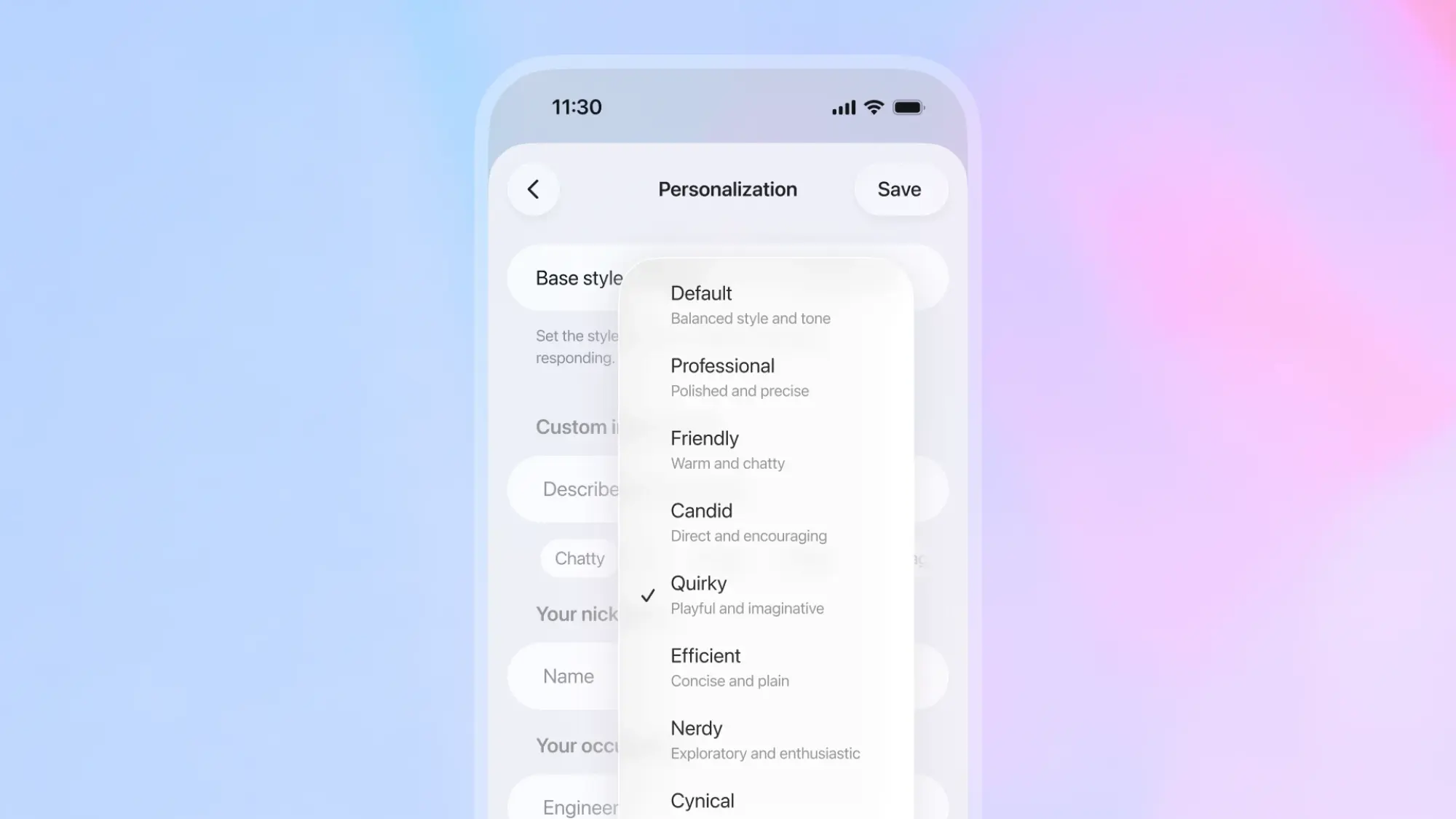
chatgpt tones

Credit: OpenAI

As part of these new models, OpenAI is changing the way you customize ChatGPT’s tone and style. The new Personalization options include the usual “Default” tone, but “Listener” is now called “Friendly,” while “Robot” is now “Efficient.” (Perhaps GPT took offense to the latter.) OpenAI says these options all have updates, but doesn’t specify what those are. In addition, you have new options to choose from as well. These include “Professional” (polished and precise); “Candid” (direct and encouraging); and “Quirky” (playful and imaginative).

Lastly, the company says it is currently testing a new settings option that lets you fine-tune the tone and style of the bot to your liking, but is launching the experiment with a limited pool of users only.

What else is new

OpenAI says that by default, you won’t need to choose between these two models: GPT-5.1 Auto will decide which model makes sense for you based on your query. That’s been the case since the company launched GPT-5, though paid subscribers can still manually choose their model.

Speaking of paid subscribers, GPT-5.1 is rolling out first to Pro, Plus, Go, and Business users. The company started shipping the model on Wednesday, and says it will gradually appear over the next few days. The model will arrive to free and logged-out users soon, though there’s no specific timeline yet.

Paid subscribers will also have access to GPT-5 for three months, as OpenAI takes it time winding down the older model. The company likely doesn’t want to repeat the issues caused when it immediately removed models like GPT-4o and older from ChatGPT, as users who were quite literally attached to the model were upset to lose it. OpenAI is careful to note that GPT-5’s sunsetting period has no impact on existing legacy models like 4o, which are still available for the time being.

For a new update to GPT, this really isn’t all that flashy. Maybe that’s a good thing: OpenAI overhyped GPT-5, which was a let down for many fans of GPT-4o—especially when the company subsequently took that model away. Keeping expectations in check for GPT-5.1 is likely a smart move, but I can’t help but wonder if it’s a sign that AI advancements are starting to slow down. We know AI companies are running out of data to train their models on, we just don’t know how soon the impacts will be felt. GPT-5.1 probably isn’t a harbinger of doom for OpenAI, but it is interesting that it isn’t an exponential improvement, either.

Disclosure: Lifehacker’s parent company, Ziff Davis, filed a lawsuit against OpenAI in April, alleging it infringed Ziff Davis copyrights in training and operating its AI systems.

What if the aliens come and we just can’t communicate?

Science fiction has long speculated about the possibility of first contact with an alien species from a distant world and how we might be able to communicate with them. But what if we simply don’t have enough common ground for that to even be possible? An alien species is bound to be biologically very different, and their language will be shaped by their home environment, broader culture, and even how they perceive the universe. They might not even share the same math and physics. These and other fascinating questions are the focus of an entertaining new book, Do Aliens Speak Physics? And Other Questions About Science and the Nature of Reality.

Co-author Daniel Whiteson is a particle physicist at the University of California, Irvine, who has worked on the ATLAS collaboration at CERN’s Large Hadron Collider. He’s also a gifted science communicator who previously co-authored two books with cartoonist Jorge Cham of PhD Comics fame: 2018’s We Have No Idea and 2021’s Frequently Asked Questions About the Universe. (The pair also co-hosted a podcast from 2018 to 2024, Daniel and Jorge Explain the Universe.) This time around, cartoonist Andy Warner provided the illustrations, and Whiteson and Warner charmingly dedicate their book to “all the alien scientists we have yet to meet.”

Whiteson has long been interested in the philosophy of physics. “I’m not the kind of physicist who’s like, ‘whatever, let’s just measure stuff,’” he told Ars. “The thing that always excited me about physics was this implicit promise that we were doing something universal, that we were learning things that were true on other planets. But the more I learned, the more concerned I became that this might have been oversold. None are fundamental, and we don’t understand why anything emerges. Can we separate the human lens from the thing we’re looking at? We don’t know in the end how much that lens is distorting what we see or defining what we’re looking at. So that was the fundamental question I always wanted to explore.”

Read full article

Comments

A new Nintendo Switch 2 system update just bricked many third-party docks

The most recent Switch 2 software update looks to have bricked many third-party docks and related accessories, according to users across the internet and a report by Kotaku. We don’t know if this was an intentional move by Nintendo or simply an accident. Engadget has reached out to the company for clarification.

The Switch 2 update 21.0.0 brings some much-needed quality-of-life features, like the ability to turn off autoplaying videos in the eShop and new icons that indicate whether a game is digital or physical. However, it also brought along the aforementioned dock hiccup.

Switch 2 owners have reported that these docks either don’t work at all or are now much more finicky, often requiring a restart. This doesn’t seem to have impacted all third-party docks, but complaints are coming in pertaining to many different products. YouTuber AustinJohnPlays tested out two different Switch 2 dock dongles after the update and reported that both were borked.

Why on Earth would Nintendo do this on purpose? The company has been accused of engaging in anti-consumer practices these past several months. Remember, Mario Kart World costs $80, a tutorial minigame collection for the Switch 2 starts at $10 and a fairly minor DLC update for Donkey Kong Bananza costs $20.

An official dock replacement costs around $80, while many third-party offerings can be found for $30. This could be Nintendo’s way of keeping people tied to their hardware ecosystem. However, it could also just be a mistake and soon we’ll get an update to restore access to these docks. We’ll update this post when we know more.

This article originally appeared on Engadget at https://www.engadget.com/gaming/nintendo/a-new-nintendo-switch-2-system-update-just-bricked-many-third-party-docks-194551477.html?src=rss

Chinese Hackers Used Anthropic’s AI To Automate Cyberattacks

China’s state-sponsored hackers used AI technology from Anthropic to automate break-ins of major corporations and foreign governments during a September hacking campaign, the company said Thursday. From a report: The effort focused on dozens of targets and involved a level of automation that Anthropic’s cybersecurity investigators had not previously seen, according to Jacob Klein, the company’s head of threat intelligence.

Hackers have been using AI for years now to conduct individual tasks such as crafting phishing emails or scanning the internet for vulnerable systems, but in this instance 80% to 90% of the attack was automated, with humans only intervening in a handful of decision points, Klein said.

The hackers conducted their attacks “literally with the click of a button, and then with minimal human interaction,” Klein said. Anthropic disrupted the campaigns and blocked the hackers’ accounts, but not before as many as four intrusions were successful. In one case, the hackers directed Anthropic’s Claude AI tools to query internal databases and extract data independently.


Read more of this story at Slashdot.

Google Is Rolling Out ‘Agentic Checkout’ to Make Your Purchases for You

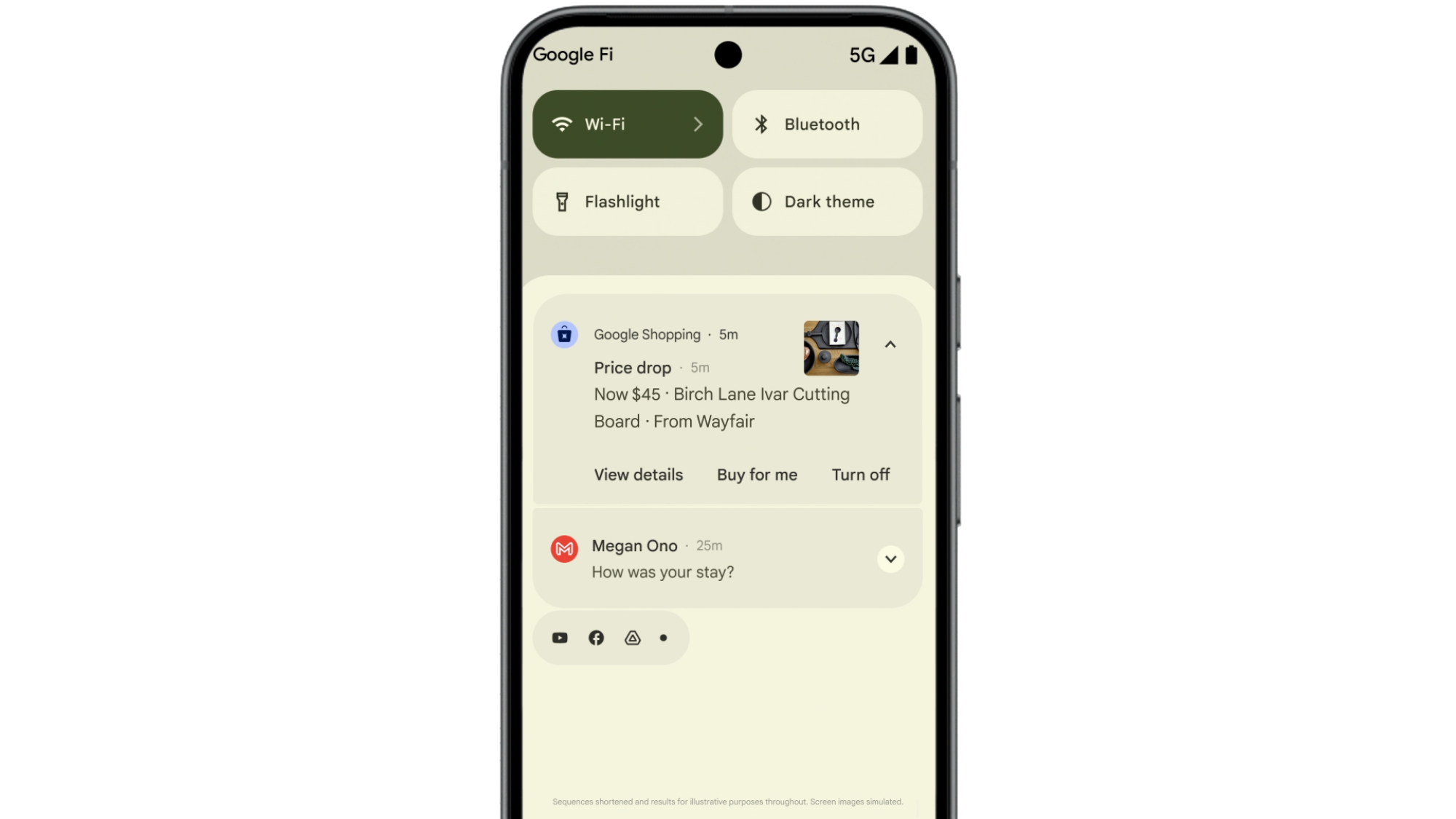
Shopping online? Google wants you to trust AI to click the buy button for you. Rolling out today, Google’s new “agentic checkout” adds onto the company’s existing price-tracking feature, so it’s not something you’ll see all the time. Instead, when you get a price drop notification on an object you’ve been tracking, you might now see a new “buy for me” button that will send all the necessary information to the store’s website and make the final purchase for you.

A demonstration of Google's "Buy for me" button attached to a notification

Credit: Google

Google says the AI will always ask your permission before starting agentic checkout, and will only go through with the purchase after you’ve confirmed all your shipping and payment details (which it will either pull from your Google Pay details, or directly ask you for). The price you’ll see also isn’t informed by AI, but rather by Google’s Shopping Graph, the same information that powers Google Search’s Shopping tab. That means it’ll come directly from the store you’ll be buying from, although while Google does promise it’ll surface the most relevant offers for you, just trusting whatever the notification says will take away your ability to manually comparison shop. Once the AI has made your purchase for you, you should see all the usual confirmation emails hit whatever inbox you told the AI to link with your purchase.

It all makes sense in theory—you’re essentially being given a link to a product, and then telling the AI to go to that link and fill out the checkout form for you. That should cut down on hallucination concerns, assuming you’re happy with the link you’re buying from. The catch is that every website’s checkout form is a little different, so Google’s starting with just a few stores for now, to cut down on the chance for errors. That means you’ll only be able to try agentic checkout when buying from Wayfair, Chewy, Quince, and “select Shopify merchants” for now, but Google says there will be “many more [stores] coming soon.”

While agentic checkout does take what can be a lengthy process down to a single click for buyers, the real use case here might be for sellers. Ensuring people actually click through to your store from a price drop notification can be a pain, and letting customers buy straight from the notification with a single button could make impulse purchases a bit more likely. If you notice yourself about to buy something just because a shiny new button is there, maybe take a beat before tapping it and consider whether you still want it or if you want to check other options yourself first.

Price tracking pages on Google

Credit: Michelle Ehrhardt

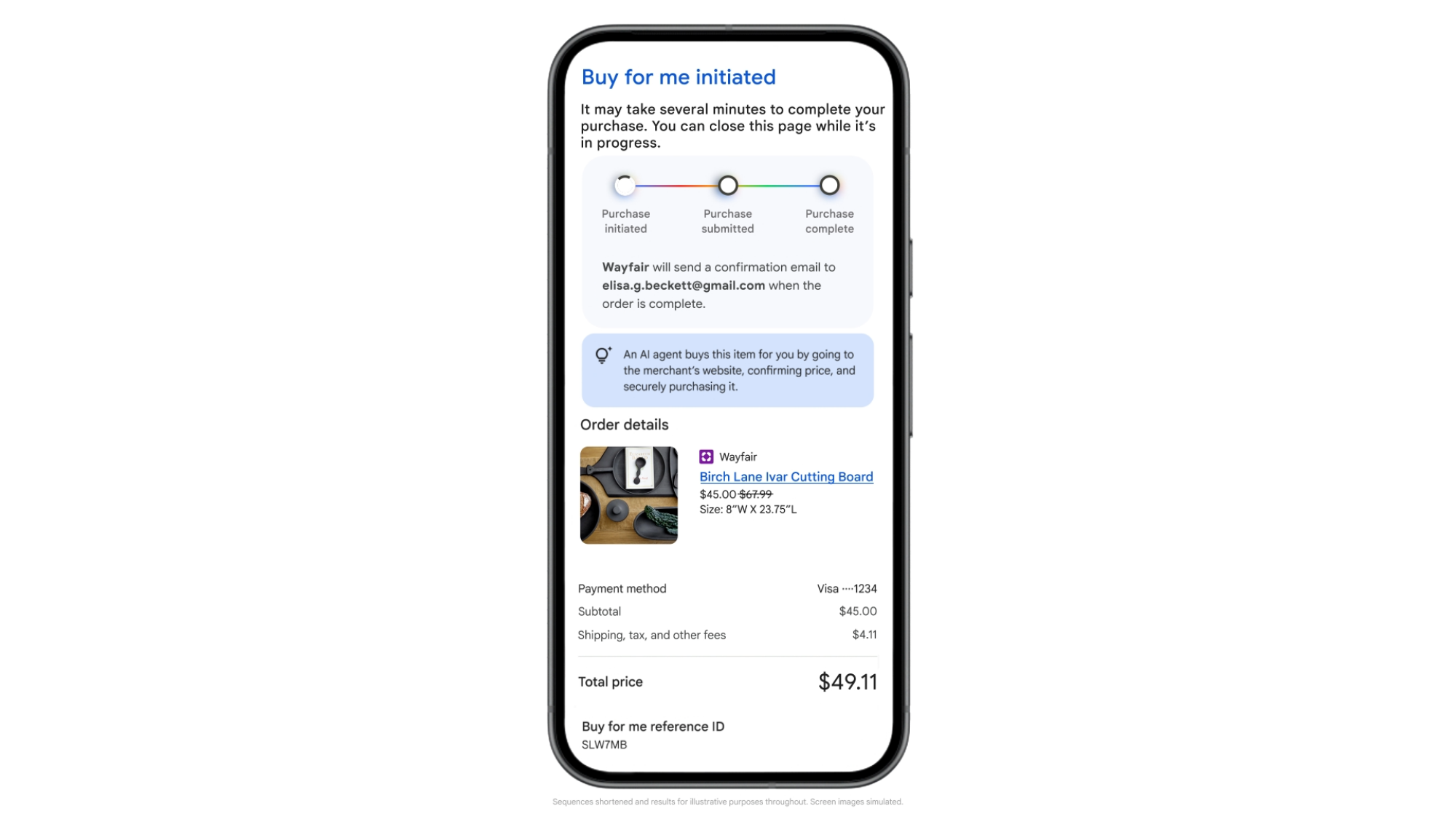
If you want to try out agentic checkout for yourself, you’ll first need to start tracking a product’s price, and ensure it’s something Wayfair, Chewy, or another participating retailer would sell. To do this, head to the Google Shopping tab, search for either a specific product or a broader product category, and scroll until you find a product card you want to track. Click through and hit the “Track price button.” Here, choose a target price as well as options like size or color, and click “Update” in the bottom right corner. You’ll now get a notification when a listing matches the parameters you set, and if the link Google found is from a participating store, you’ll be able to use the “Buy for me” button. Click or tap it to ensure your details are correct, then tap “Buy for me with GPay” at the bottom of the screen. You’ll get a progress bar showing when your purchase has been submitted and confirmed, and the page will tell you where to expect your confirmation email. You’ll also get a Buy for me reference ID you can take to Google support, in case you run into any issues.

Buy for me checkout page

Credit: Google

Unfortunately, it seems like there’s still a few features Google needs to work on here before the AI can do everything a human can. A Google spokesperson told me that agentic checkout currently can’t take factors like loyalty programs into account, so if you want to buy the product from a specific store account to get credit for it, you’ll still need to make your purchase manually.

If you’re buying a lot, it could be a time saver, but as for now, those caveats and the limited selection of stores means you’ll probably still have to complete checkout yourself on most purchases right now.

Tesla is reportedly testing Apple CarPlay in its vehicles

Tesla may finally be capitulating to the calls of iPhone users wanting what practically every other major automaker offers them, Apple CarPlay. Bloomberg is reporting that the EV giant is working to add Apple’s car infotainment integration to its vehicles, according to the outlet’s sources. The feature has reportedly begun internal testing and could be ready for release in the coming months. Of course, development and testing of the feature is not a guarantee that it sees the light of day.

An about-face of this magnitude would be truly surprising given Tesla’s years of steadfast commitment to its own infotainment solution, which doesn’t require connecting a smartphone. In the past, there has been a somewhat frosty relationship between Tesla CEO Elon Musk and the iPhone maker. Musk once said that he offered to sell Tesla to Apple when the Model 3 program almost bankrupted the company, but said Tim Cook refused to take the meeting. Apple had also previously poached key Tesla employees for its failed Apple Car project.

Tesla will reportedly be including CarPlay in a separate window within its existing software interface, ensuring it won’t be fully replacing the existing Tesla system. Bloomberg also reported that Tesla would be using the standard version of CarPlay, as opposed to the newer CarPlay Ultra that integrates with the vehicle’s instrument cluster.

This would be an interesting time to jump on the bandwagon as Apple CarPlay may be just past its peak. GM recently announced it would be phasing out support for both CarPlay and Android Auto in favor of a system built around Gemini, which seems to go directly against the popularity of the platform. Ford’s CEO recently expressed disappointment in Apple’s latest beefed up version of the tool. Tesla did not respond to requests for comment on the report, and at the time of publication Elon Musk has not commented either.

This article originally appeared on Engadget at https://www.engadget.com/transportation/evs/tesla-is-reportedly-testing-apple-carplay-in-its-vehicles-192505635.html?src=rss