Amazon Renames ‘Project Kuiper’ Satellite Internet Venture To ‘Leo’

Amazon announced that its satellite broadband project called Project Kuiper will now be known as Amazon Leo. GeekWire reports: Leo is a nod to “low Earth orbit,” where Amazon has so far launched more than 150 satellites as part of a constellation that will eventually include more than 3,200. In a blog post, Amazon said the 7-year-old Project Kuiper began “with a handful of engineers and a few designs on paper” and like most early Amazon projects “the program needed a code name.” The team was inspired by the Kuiper Belt, a ring of asteroids in the outer solar system.

A new website for Amazon Leo proclaims “a new era of internet is coming,” as Amazon says its satellites can help serve “billions of people on the planet who lack high-speed internet access, and millions of businesses, governments, and other organizations operating in places without reliable connectivity.” Amazon said it will begin rolling out service once it’s added more coverage and capacity to the network. Details about pricing and availability haven’t been announced.


Read more of this story at Slashdot.

OpenAI is piloting group conversations in ChatGPT

OpenAI has started pilot testing group chats within ChatGPT in Japan, New Zealand, South Korea and Taiwan. Like group chats in messaging apps, you can create conversations with friends and family. In this instance, though, ChatGPT is one of the participants, building an itinerary as you plan a vacation, giving you ideas for renovation projects or helping you find a restaurant everyone in the chat would enjoy if you’re planning a night out. You can also use the feature to collaborate with classmates or colleagues. ChatGPT, for example, can outline reports based on the articles and notes you and your collaborator give it.

To start a group chat, you have to tap on the people icon at the top right corner of the screen on any new and existing conversation. ChatGPT will create a new conversation without your chat history if you start from an existing chat. You can then add people or share a link to the group conversation with one to 20 persons, who then have to set up a profile with their name, username and a photo. Take note that anybody who has the link can invite people in, and participants can mute or remove other participants from the chat anytime except for the group creator. And if anybody in the chat is under 18, the chatbot automatically limits sensitive content for everyone.

Group chat responses are powered by GPT‑5.1 Auto, which can choose which model to respond with based on the prompt. OpenAI says it taught the chatbot to follow the flow of group conversations, so it knows when to stay quiet and when to respond, but participants can always summon the chatbot by mentioning “ChatGPT.” The company also says that it will continue tweaking the feature based on feedback from early users before it’s rolled out widely.

This article originally appeared on Engadget at https://www.engadget.com/ai/openai-is-piloting-group-conversations-in-chatgpt-053255102.html?src=rss

World Still On Track For Catastrophic 2.6C Temperature Rise, Report Finds

An anonymous reader quotes a report from the Guardian: The world is still on track for a catastrophic 2.6C increase in temperature as countries have not made sufficiently strong climate pledges, while emissions from fossil fuels have hit a record high, two major reports have found. Despite their promises, governments’ new emission-cutting plans submitted for the Cop30 climate talks taking place in Brazil have done little to avert dangerous global heating for the fourth consecutive year, according to the Climate Action Tracker update (PDF).

The world is now anticipated to heat up by 2.6C above preindustrial times by the end of the century — the same temperature rise forecast last year. This level of heating easily breaches the thresholds set out in the Paris climate pact, which every country agreed to, and would set the world spiraling into a catastrophic new era of extreme weather and severe hardships. A separate report found the fossil fuel emissions driving the climate crisis will rise by about 1% this year to hit a record high, but that the rate of rise has more than halved in recent years. The past decade has seen emissions from coal, oil and gas rise by 0.8% a year compared with 2.0% a year during the decade before. The accelerating rollout of renewable energy is now close to supplying the annual rise in the world’s demand for energy, but has yet to surpass it. […]

The new analyses also show a worrying weakening of the planet’s natural carbon sinks. The scientists said the combined effects of global heating and the felling of trees have turned tropical forests in southeast Asia and large parts of South America from overall CO2 sinks into sources of the climate-heating gas. […] The report projects that the level of CO2 in the atmosphere will reach 425ppm (parts per million) in 2025, compared with 280ppm in the preindustrial era. It would have been 8ppm lower if the carbon sinks had not been weakened. The GCP projection for 2025 is based on monthly data up to September and has proven accurate in the previous 19 annual reports.


Read more of this story at Slashdot.

Netflix’s New Era of TV Games Starts Now

Netflix is launching a new slate of TV-streamed party games that are all playable using your phone as the controller. The Verge reports: To start, Netflix is offering Boggle Party, Party Crasher: Fool Your Friends, Lego Party, Pictionary: Game Night, and Tetris Time Warp. A social deduction game based on the Knives Out series, Dead Man’s Party: A Knives Out Game, is also part of this new slate but will launch at a later time. The streaming platform’s approach to gaming has been unfocused, with the company bouncing between being a boutique development studio while also being a platform for premium and exclusive mobile gaming experiences. Offering party games on your TV seems like a better fit — one that could allow Netflix to finally find its gaming footing.


Read more of this story at Slashdot.

World’s First Flying Car Factory Begins Production In China

Xpeng’s flying-car subsidiary Aridge has begun trial production at the world’s first dedicated flying-car factory in Guangzhou. Euronews reports: The 120,000-square-meter facility has produced its first detachable eVTOL aircraft for the modular “Land Aircraft Carrier.” With an annual capacity of up to 10,000 modules, the factory will eventually assemble one aircraft every 30 minutes. Trial operations focus on process verification, equipment testing, and producing prototypes for airworthiness certification before moving into mass production.


Read more of this story at Slashdot.

Jack Dorsey Funds diVine, a Vine Reboot That Includes Vine’s Video Archive

An anonymous reader quotes a report from TechCrunch: As generative AI content starts to fill our social apps, a project to bring back Vine’s six-second looping videos is launching with Twitter co-founder Jack Dorsey’s backing. On Thursday, a new app called diVine will give access to more than 100,000 archived Vine videos, restored from an older backup that was created before Vine’s shutdown. The app won’t just exist as a walk down memory lane; it will also allow users to create profiles and upload their own new Vine videos. However, unlike on traditional social media, where AI content is often haphazardly labeled, diVine will flag suspected generative AI content and prevent it from being posted. According to TechCrunch, a volunteer preservation group called the Archive Team saved Vine’s content when it shut down in 2016. The only problem was that everything was stored in massive 40-50 GB binary blob files that were basically unusable for casual viewing.

Evan Henshaw-Plath (who goes by the name Rabble), an early Twitter employee and member of Jack Dorsey’s nonprofit “and Other Stuff,” dug into those backup files to try and salvage as much as he could. He spent months writing big-data extraction scripts, reverse-engineering how the archived binaries were structured, and reconstructing the original video files, old user info, view counts, and more. “I wasn’t able to get all of them out, but I was able to get a lot out and basically reconstruct these Vines and these Vine users, and give each person a new user [profile] on this open network,” he said.

Rabble estimates that through this process he was able to successfully recover 150,000-200,000 Vine videos from around 60,000 creators. diVine then rebuilt user profiles on top of the decentralized Nostr protocol so creators can reclaim their accounts, request takedowns, or upload missing videos.

You can check out the app for yourself at diVine.video. It’s available in beta form on both iOS and Android.


Read more of this story at Slashdot.

Apple Tries Selling $230 iPhone Pocket ‘Sock’

Longtime Slashdot reader dskoll shares a press release from Apple: Issey Miyake and Apple today unveiled iPhone Pocket. Inspired by the concept of “a piece of cloth,” its singular 3D-knitted construction is designed to fit any iPhone as well as all pocketable items. When stretched, the open textile subtly reveals its contents and allows users to peek at their iPhone display. iPhone Pocket can be worn in a variety of ways — handheld, tied onto bags, or worn directly on the body. Featuring a playful color palette, the short strap design is available in eight colors, and the long strap design in three colors. The “Long” sock variant comes in at only $229.95 and is available in three elegant colors: sapphire, cinnamon, and black. What do Slashdotters think of this very real product?


Read more of this story at Slashdot.

Apple Cuts App Store Fee In Half For ‘Mini Apps’

Apple is cutting its App Store fee from 30% to 15% for developers who join a new Mini Apps Partner Program, which requires using more of Apple’s built-in technology to power lightweight “mini apps.” “This includes using Apple software to register a user’s purchase history, verify user ages and to process in-app purchases,” reports CNBC. From the report: A “mini app” is a lightweight piece of software inside a third-party app store, like that of Discord’s. These apps uses are built using web technology like HTML or Javascript. […] Apple has argued that both developers and users are better off when using its technology and rules, instead of eschewing them to try to avoid fees. “This program is designed to help developers who host mini apps grow their business and further the availability of mini apps on the App Store — all while providing a great customer experience,” the company said in its announcement. […] Participants in the new program will still have to provide Apple with information for each specific mini-app experience they offer.


Read more of this story at Slashdot.

This flu season looks grim as H3N2 emerges with mutations

Health officials in the United Kingdom are warning that this year’s flu season for the Northern Hemisphere is looking like it will be particularly rough—and the US is not prepared.

The bleak outlook is driven by a new strain of H3N2, which emerged over the summer (at the end of the Southern Hemisphere’s season) sporting several mutations. Those changes are not enough to spark the direst of circumstances—a deadly pandemic—but they could help the virus dodge immune responses, resulting in an outsized number of severe illnesses that could put a significant strain on hospitals and clinics.

In the UK, the virus has taken off. The region’s flu season has started around five weeks earlier than normal and is making a swift ascent.

Read full article

Comments

You Can Get This Dragon G3X Ultra Wired Gaming Headset on Sale for Just $50

We may earn a commission from links on this page. Deal pricing and availability subject to change after time of publication.

You can get the Dragon G3X Ultra Flexible Wired Gaming Headset on sale for $49.99 on StackSocial right now, priced comfortably between budget and mid-range gear. The design is bold, with a red shell and a breathing LED light that cycles through seven colors, adding atmosphere when you’re gaming in a dimly lit room. The headset feels sturdy enough for daily use but flexible where it matters: The bendable headband adjusts easily, and the over-ear pads are soft and skin-friendly, built to reduce heat and pressure during long sessions.

Performance-wise, the Dragon G3X prioritizes consistency over luxury. It connects through a 3.5mm audio jack for sound and a USB port to power the LED lights. The sound profile is tuned for gaming, with clear mids and highs that make dialogue and footsteps easy to pick up, with enough bass to add punch to explosions without drowning everything else out. The retractable microphone picks up voices clearly, which is key if you spend time in team-based games or multiplayer chats. It’s not noise-canceling, but the directional design helps minimize background interference.

The headset is compatible with most platforms, including PC, the older PlayStation 4 series, Nintendo Switch, tablets, and smartphones, with a separate cable provided for desktop setups. That means you can use one pair for gaming, streaming, or even listening to music on your phone. It’s a wired setup, so you’ll have to deal with the cable, but you also avoid the lag and charging hassle that comes with wireless options. Overall, the Dragon G3X doesn’t promise professional-grade audio, but for casual and mid-level gamers looking for a comfortable, durable headset with solid sound and a little visual flair, it’s a good deal.

Our Best Editor-Vetted Tech Deals Right Now


Apple AirPods 4 Wireless Earbuds


—
$84.99

(List Price $129.00)


Apple Watch Series 10


—
$309.99

(List Price $429.00)


Amazon Fire HD 10 (2023)


—
$69.99

(List Price $139.99)


Sony WH-1000XM5


—
$328.00

(List Price $399.99)


Amazon Fire TV Stick 4K Plus


—
$24.99

(List Price $49.99)

Deals are selected by our commerce team

Blue Origin’s New Glenn rocket safely made it to space a second time

Blue Origin’s New Glenn rocket has completed its second flight, The Washington Post reports. The rocket launched from Florida’s Cape Canaveral Space Force Station on Thursday, and successfully separated from its first-stage booster, which later landed on a sea platform Blue Origin calls “Jacklyn.”

The launch marks the first time the space startup has been able to catch a New Glenn booster for later reuse. The maiden flight of the rocket in January was successful in the sense that it got New Glenn into space, but Blue Origin wasn’t able to save the booster from a watery grave. The company hoped to launch its second New Glenn mission on November 9, but cancelled it last minute due to weather.

New Glenn’s second mission is also notable because of its payload: The rocket ferried NASA satellites to space that are destined for Mars as part of the agency’s ESCAPADE mission. Considering SpaceX’s close relationship with NASA, Blue Origin working with the agency could be an important vote of confidence. 

It could also mean New Glenn is in a good position to help another company founded by Jeff Bezos accelerate its satellite plans. The Post writes that Blue Origin has an existing agreement with Amazon to launch its recently rebranded Amazon Leo satellites into space. Leo is positioned as a competitor to Starlink, SpaceX’s satellite internet service.

While SpaceX has completed many more launches with its Starship rocket than Blue Origin has, it’s also had more than a few explosive failures along the way. Blue Origin still needs more missions under its belt, but if it can repeat its success with New Glenn, it could prove to be a threat to SpaceX.

This article originally appeared on Engadget at https://www.engadget.com/science/space/blue-origins-new-glenn-rocket-safely-made-it-to-space-a-second-time-230324439.html?src=rss

Google’s AI Shopping Push Is Better for Business Than It Is for You

Today, Google announced three new AI shopping features, all centered around keeping you engaged with its AI throughout the entire shopping process. On the one hand, these features have the potential to make shopping more convenient—on the other hand, maybe lowering friction isn’t the best idea when it comes to spending money. Beyond selling you on convenience, these features all share something else in common—helping businesses up their clickthrough rates.

It starts with AI Mode and Gemini, which can now access all the same information as Google Search’s shopping tab. That means you’ll start to see product cards alongside your AI answers, which you can click on for a bunch of shopping links, or hit a checkmark to compare the selected products. They won’t show up on every question, but on about half of the prompts I tried, I got the option to spend money right away.

Then, if you’re still not sure you want to buy yet, now you can have Google’s AI robocall local businesses for you to check on product availability and pricing, as well as any deals or bundles you might not know about. There are a few caveats—businesses can opt out, and Google will avoid calling them at odd hours or too frequently—but the idea is that if you’re on the fence, you can have an AI help you know which stores to go to.

Finally, when it comes time to actually purchase whatever you’re shopping for, you can have Google’s AI check out for you. This feature is an extension of the existing price tracking feature, and will add a “Buy for me” button to any price tracking notifications you get from certain participating stores, like Wayfair, Chewy, Quince, or certain Shopify merchants. You’ll get a link to the product you’d be buying from your notification, and the price will be pulled from that, so the company says you won’t have to worry about the AI getting the price wrong. Instead, it’s just supposed to remove any hesitation you might feel from having to enter your shipping or payment details into a checkout form.

I won’t deny that, when holiday shopping, I usually won’t turn down assistance. But a continued refrain I had while hearing about these new features was “Why?”

Personally, I’m mortified at the idea of sending employees at local businesses robocalls to deal with. And if I’m researching products, while it might be helpful to be able to involve an AI so I could ask specific question, I think I’d still prefer full access to all the filters and hundreds of links available in Google Shopping.

The big thing for me, though, is agentic checkout. While I’m actually willing to trust Google that it won’t make mistakes (and you do get a reference ID to hand to support in case it does), I’m also not sure why I’d want to go right from getting a price drop notification to having an AI spend money for me. It doesn’t take long to fill out a checkout form, and while Google Shopping is a useful price tracking tool, it’s not the only one around. I’d probably want to comparison shop a bit more before committing, at which point I might as well fill out the checkout form myself.

But if you think about these features from the perspective of a business, the “why” behind all of this suddenly becomes a lot clearer. Turning people browsing web listings into actual paying customers has been a problem for about as long as the internet has existed, and all of these features introduce new opportunities for impulse purchases at every step of the buying process, while also erasing the opportunity for users to get caught up on a larger selection of options.

It’s not a conspiracy. Google charges companies for sponsored slots and ads, and the more people that buy products using a Google service, the more companies will want to pay for those. And for what it’s worth, Lifehacker makes money on affiliate links. I won’t deny that companies needs money, and that people need to buy gifts.

What this does do, however, is reduce the friction that might pop up in between having an idle thought to buy something, and opening your wallet. While it plays at being a research buddy, it takes control out of your hands, obfuscates sources and other options, and instead encourages you to spend your money as quickly as possible, while discouraging skepticism.

As someone who writes reviews and best-of lists, I like to think that my readers are a bit more savvy than that. Convenience is great, but taking the extra few minutes it takes to find an actual human opinion from someone who’s used the product, or to double check that the price Google is serving you is really your best option, could save you from hours of pain down the line.

Like most AI tools, there’s potential here. But as much as AI will try to convince you that it’s just some neutral buddy, remember that there are business motivations behind everything the companies behind these chatbots do. Keeping your whole shopping search in the same ecosystem as a company that’s main profit still comes from ads and e-commerce probably isn’t the best way to get your information.

Mozilla will add an ‘AI window’ to Firefox

Mozilla is working on a new tool for Firefox called AI Window. This will be an opt-in space for chatting with an AI assistant and getting help from it while browsing. The goal with this project appears to be giving users more control over when and how they choose to interact with AI. AI Window will be another option for users alongside the standard Firefox window and the Private Window, which will continue to offer more privacy protections. The feature is still in development, so interested users can sign up in Mozilla’s blog post to be among the first users and provide feedback. 

AI built into browsers is one of the current hot issues among tech companies. Every browser provider and AI operation appears to be engaged in an arms race to offer the best integrated solution. Mozilla isn’t immune to that push; it also introduced an iOS tool for Firefox earlier this year where you can shake your phone to get an AI-generated summary of a web page.

This article originally appeared on Engadget at https://www.engadget.com/ai/mozilla-will-add-an-ai-window-to-firefox-225032453.html?src=rss

LinkedIn Is Making It Easier To Search For People With AI

LinkedIn is rolling out an AI-powered people search tool that lets users find connections by describing what they need instead of relying on names or titles. For example, you can enter a more descriptive search, such as “Northwestern alumni who work in entertaining marketing,” or even pose a question, like “Who can help me understand the US work visa system.” The Verge reports: LinkedIn senior director of product management Rohan Rajiv tells The Verge that the platform will rank results based on the connections you might have with someone, as well as their relevance to your search. […] LinkedIn is rolling out AI-powered people search to Premium users in the US starting today, but the platform plans on bringing it to all users soon.


Read more of this story at Slashdot.

The Evolution Of Theo Jansen’s Wind-Powered Strandbeests

Because evolution is just an r short of revolution (I don’t know I’m just spitballing here), this is a video featuring a brief evolutionary history of Theo Jansen’s wind-powered Strandbeests, culminating in footage of his most recent species. Do, uh, do these things mate? And do you think they’ll ever evolve past needing wind for power? Because if they dip their toes in the surf long enough next thing you know they’ll be harnessing water power! Then they’re just earth, fire, and heart away from summoning Captain Planet.

Spotify’s New AI-Powered Audiobook Recaps Will Remind You Where You Left Off

If you’re anything like me, you’ll come back to a book or TV show after pausing it for a few days or weeks, only to have to spend hours on a wiki reminding yourself of where you left off, while also trying to dodge spoilers. Spotify is doing its best to fix at least one of those problems, by testing AI recaps for some of its audiobooks.

It’s the first new AI-powered feature in a while that I would actually use. In fact, I’ve played a few video games with similar features (not powered by AI, admittedly), and it’s always such a value-add that it makes me pine for it in pretty much every other piece of media I engage with.

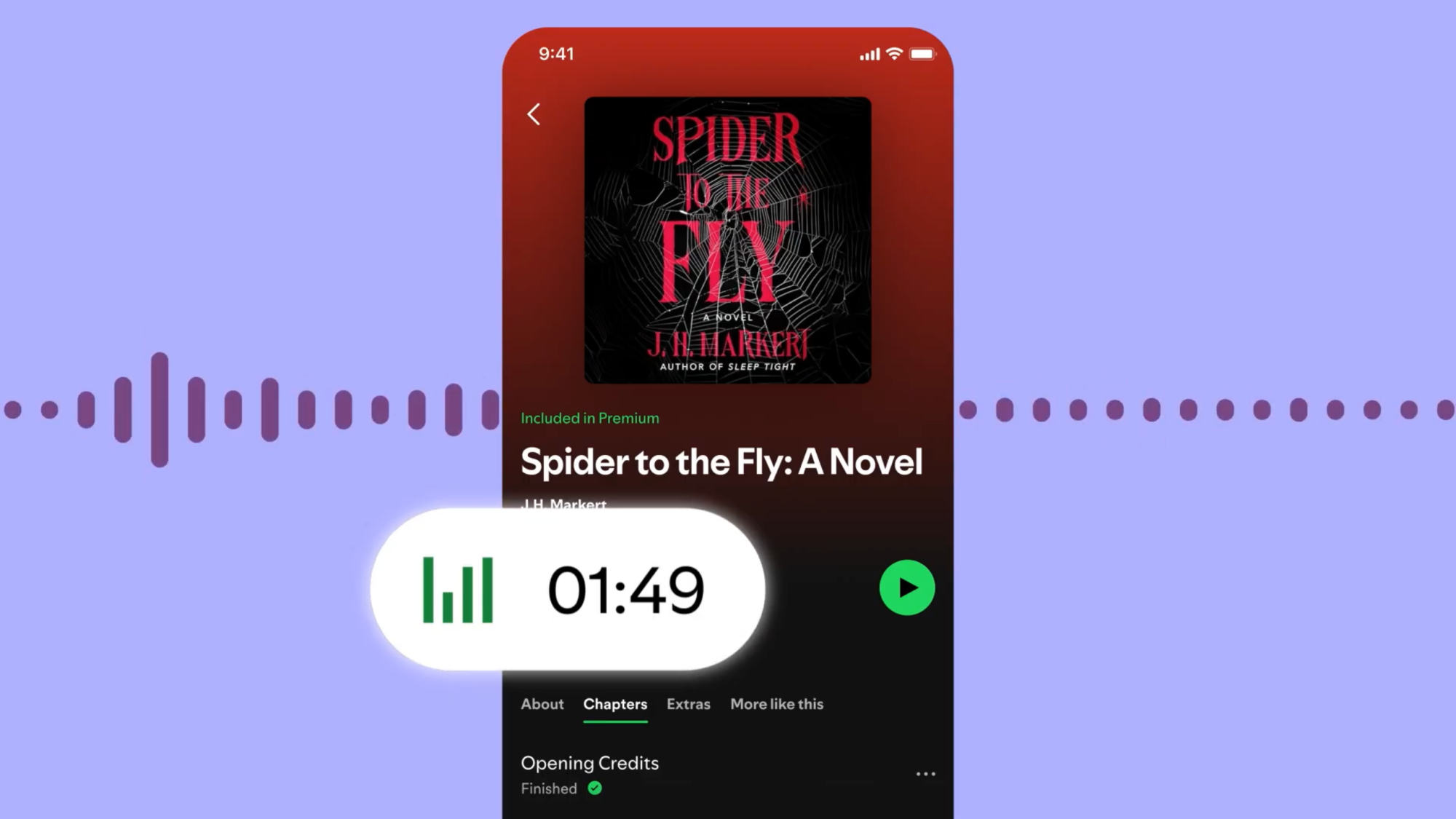
Here’s how Spotify’s new feature works: First, you unfortunately do need to be using the Spotify app for iOS, so Android, web, or desktop listeners are out of luck, at least during this beta test. Then, you’ll need to have listened to a supported English language audiobook for at least 15-20 minutes. After that, you’ll see a Recap button at the top of the page that will quickly generate a one- to two-minute-long summary of what’s happened in the book so far, which Spotify promises will be spoiler-free for future plot events.

Spotify AI recaps demonstation

Credit: Spotify

Previously on [your book]

Spotify’s likening it to a “previously on” segment on a TV show, although it also says that, “Recaps do not replicate narration or replace the original audiobook in any way,” so don’t expect to hear actual clips from the book, nor an AI voice trying to mimic the narrator. However, just as TV’s “previously on” segments will change with new episodes, your AI Recap will be “regularly updated to match your progress.”

As for any potential issues with the feature, the company says it is “not using audiobook content for LLM training purposes or voice generation” and that authors can opt out of having Recaps on their books. Still, there are a few caveats, including the fact that the Recap feature isn’t free.

On the plus side, it is included alongside the free audiobook hours you get with Spotify Premium, as well as any add-on hours you might buy. But otherwise, audiobooks on Spotify need to be bought on a per-book basis, so for users without Spotify Premium and with no audiobooks in their libraries (that’s me), there’s no way to try AI Recaps before you buy, which means it’s maybe not a convincing reason to swap audiobook platforms just yet.

Not all books will get Recaps

Spotify’s also not being upfront about which books have Recaps, so it could be a bit before you see the button pop up for you. So while I like the idea in theory, I’m probably not going to get to test it anytime soon. (I’ve reached out to Spotify to ask for a current list of books with Recaps enabled, and will update this article when I hear back.)

Could Recaps include hallucinations?

Another potential issue with these Recaps: hallucinations. Spotify didn’t address accuracy at all in its announcement, which I’d like to think implies the company is feeling pretty confident it won’t be an issue. But there is still a potential for an AI to misreport specific details of your story, or accidentally slip a spoiler in regardless of what Spotify claims. One would hope your memory would be jogged enough by a general outline to catch inconsistencies, but still, it might be worth keeping a few notes while you read, just in case.

How to get AI summaries for any book (without using Spotify)

If you aren’t a Spotify audiobook listener or just haven’t gotten to try the beta, I’ll give you a cheat: You can already ask other AI chatbots for book summaries for free. So long as you remember where you left off, just head over to your AI of choice and ask for a summary up to that point. Here’s one for the opening chapters of The Lord of the Rings: The Fellowship of the Ring.

AI Summary of the first five chapters of The Fellowship of the Ring

Credit: Michelle Ehrhardt (via ChatGPT)

I won’t deny that there’s real convenience in having a summary feature baked directly into your app, especially one that doesn’t require you to cross reference where you left off lest you, I don’t know, spoil the Red Wedding for yourself or something. But if you’re like me (not a Spotify audiobook customer), at least you’re not out of options.

Blue Origin Sticks First New Glenn Rocket Landing and Launches NASA Spacecraft

An anonymous reader quotes a report from TechCrunch: Jeff Bezos’ Blue Origin has landed the booster of its New Glenn mega-rocket on a drone ship in the Atlantic Ocean on just its second attempt — making it the second company to perform such a feat, following Elon Musk’s SpaceX. It’s an accomplishment that will help the new rocket system become an option to send larger payloads to space, the Moon, and beyond. Thursday’s launch wasn’t just about the landing attempt, though. Roughly 34 minutes after takeoff, the upper stage of New Glenn successfully deployed the rocket’s first commercial payload: twin spacecraft for NASA that will travel to Mars to study the red planet’s atmosphere. The pair of achievements are remarkable for the second-ever launch of such a massive rocket system. And it could put Blue Origin in position to compete with SpaceX, which dominates the world’s launch market with its Falcon 9, Falcon Heavy, and Starship rockets. You can watch a recording of the launch here.


Read more of this story at Slashdot.

Google claims win for everyone as text scammers lost their cloud server

The day after Google filed a lawsuit to end text scams primarily targeting Americans, the criminal network behind the phishing scams was “disrupted,” a Google spokesperson told Ars.

According to messages that the “ringleader” of the so-called “Lighthouse enterprise” posted on his Telegram channel, the phishing gang’s cloud server was “blocked due to malicious complaints.”

“We will restore it as soon as possible!” the leader posted on the channel—which Google’s lawsuit noted helps over 2,500 members coordinate phishing attacks that have resulted in losses of “over a billion dollars.”

Read full article

Comments

The Google Play Store Is Making It Easy to Remotely Uninstall Apps From Your Other Android Devices

If you have multiple Android devices, you might like to keep the experience about the same across them. If you download an app that’s useful on your phone, there’s a good chance you’ll also want that app on your tablet, or even your Chromebook. Likewise, if you no longer find an app useful on one device, you likely won’t want to keep it on your other devices, either.

It can be annoying, however, to uninstall the app from each of your devices individually. Maybe you’re using the app on your smartphone and you decide to delete it, but forget to delete it on your other devices. It might live on your tablet or Chromebook for a while before you realize you want it gone. That’s annoying, but, in extreme cases, it can also be risky: Maybe you’re trying to delete an app that was later discovered to be malicious, but if it still lives on your other devices, it might end up causing you harm. While there has been a way to remotely uninstall apps on other devices, it’s been buried in the “Manage apps and device” section, and isn’t all that easy to execute.

The latest update to the Play Store aims to fix that problem. As spotted by Android Authority, with version 48.8, the Play Store now lets you simply uninstall apps from your other devices using your smartphone. Once you’re running this version of the Play Store (as well as future versions), you can visit an app’s Play Store page and look for a new “Available on more devices” section. Here, you’ll see all of your connected Android devices, with options to either “Uninstall” or “Install” the app on those devices. There’s no longer the need to dig through your settings.

This feature should make it easy to keep your Android ecosystem a bit more ordered and organized, but it’s not the only improvement the Play Store is rolling out. Starting next year, Google will start penalizing apps that use too much battery power. The Play Store will either remove those apps from discoverability pages, or add an alert to the apps’ Play Store pages, warning users these apps take up more battery than necessary.