Mastodon’s founder Eugen Rochko has officially stepped down as CEO. The move comes ten months after the company announced it would transition into a nonprofit entity and that Rochko would leave his post. Rochko will take on an advisory role with the company.
In a blog post about this decision, Rochko pointed to a desire for guardrails to avoid becoming another egotistical founder “sabotaging thriving communities.” He added, “But it would be uncouth for me to pretend that there isn’t some self-interest involved. Being in charge of a social media project is, turns out, quite the stressful endeavour, and I don’t have the right personality for it.”
In his place, Felix Hlatky has taken on the role of executive director. Hlatky has worked at Mastodon since March 2020 and plans to focus on expanding the team, long-term financial stability and making it easier to run servers safely and efficiently.
Currently, Mastodon is operating as a nonprofit in the US, but aims to set up a permanent home base as a nonprofit in Belgium, known as an AISBL. Mastodon previously held nonprofit status in Germany but lost that it last year.
Mastodon has pursued outside funding since its announced transition to a nonprofit. It shared that Stock Exchange co-founder Jeff Atwood and his family gave the organization €2.2 million ($2.5 million). Part of that influx of cash has gone toward hiring new employees in its engineering, marketing, operations and product teams. Rochko also received a one-time €1 million ($1.2 million) compensation after ten years of “taking less than a fair market salary.”
This article originally appeared on Engadget at https://www.engadget.com/social-media/mastodons-founder-is-no-longer-its-ceo-143011438.html?src=rss
Every company would be affected if the AI bubble were to burst, the head of Google’s parent firm Alphabet has told the BBC. From the report: Speaking exclusively to BBC News, Sundar Pichai said while the growth of artificial intelligence investment had been an “extraordinary moment”, there was some “irrationality” in the current AI boom. It comes amid fears in Silicon Valley and beyond of a bubble as the value of AI tech companies has soared in recent months and companies spend big on the burgeoning industry.
Asked whether Google would be immune to the impact of the AI bubble bursting, Mr Pichai said the tech giant could weather that potential storm, but also issued a warning. “I think no company is going to be immune, including us,” he said. In a wide-ranging exclusive interview at Google’s California headquarters, he also addressed energy needs, slowing down climate targets, UK investment, the accuracy of his AI models, and the effect of the AI revolution on jobs.
We may earn a commission from links on this page. Deal pricing and availability subject to change after time of publication.
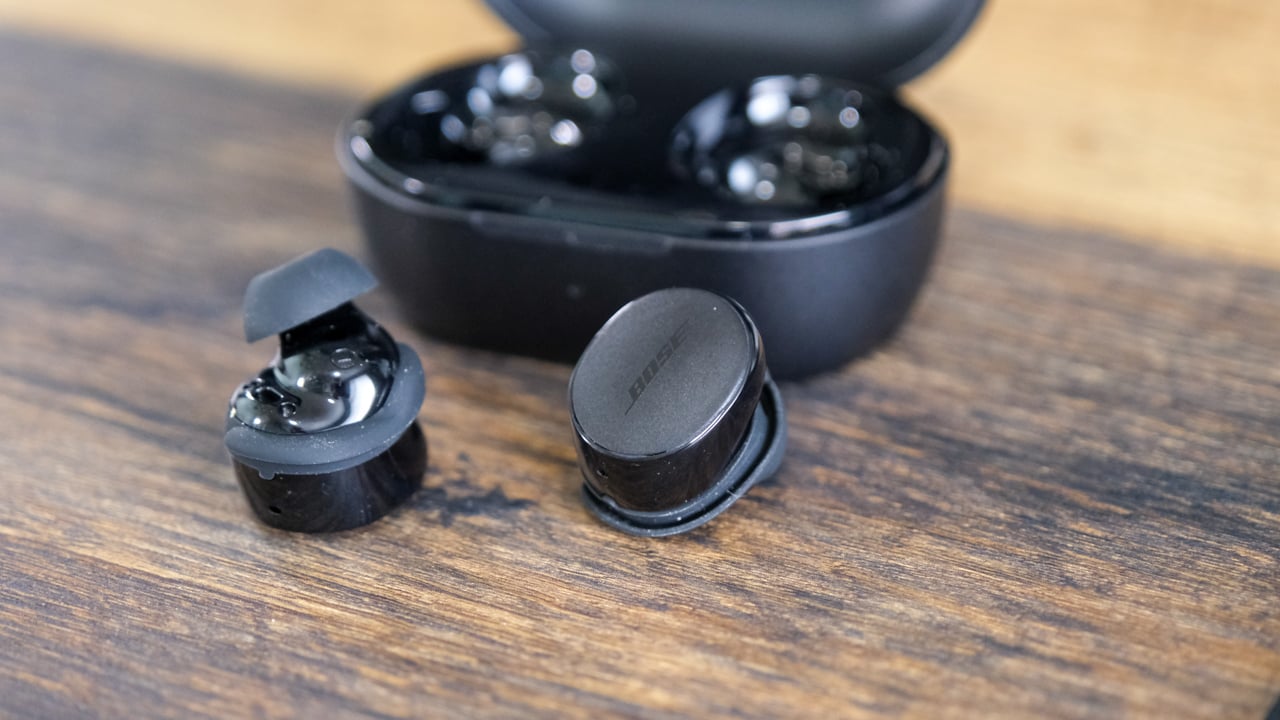
AirPods can fall short if you swap between different devices or want more than a single color option. That is where the currently discounted Bose QuietComfort Earbuds start to feel like a practical alternative. They’re sitting at $129 right now, which price trackers confirm as their lowest price so far and a noticeable drop from their usual $179. You also get more color options than normal, with black and white sitting alongside two limited shades, petal pink and twilight blue. And while Bose sells a higher-end QuietComfort Ultra model for $229 (down from $299), the standard QuietComfort buds don’t feel like a downgrade. PCMag’s 4/5 review backs that up, praising their sound, everyday ANC, and easy two-device pairing.
In everyday use, the sound has a warm depth that works well for long playlists and podcasts without fatigue. If you want to fine-tune it, the companion app offers an adjustable EQ that actually changes how your music sounds, rather than making tiny, barely noticeable tweaks. The noise cancellation isn’t as strong as what you get on the Ultra buds, but it does reduce enough steady background noise to make commutes and office work less distracting. As for connectivity, Bluetooth 5.3 keeps the connection steady, but codec support is limited to AAC and SBC, so Android users who want high-resolution codecs may notice the gap. Battery life feels practical, too. Bose claims 8.5 hours on the buds and 31.5 more hours in the case, which outlasts many earbuds in this price range and even outlasts Bose’s own higher-end Ultras.
The one drawback is the size. The QuietComfort earbuds are bulkier than AirPods, and some reviewers noted that they can shift during workouts, even with the included wings and multiple ear tip options. Everything else about using them stays simple. These earbuds will not be the best choice for someone who wants the strongest possible Bose noise cancellation or a slim, stem-style design. But at $129, they fall into a comfortable middle zone with fuller sound than standard AirPods, more control over your audio, strong battery life, and a price that makes them easy to consider.
If you’re having trouble accessing sites and services on the internet this morning, it isn’t just you: It appears Cloudflare is experiencing a global outage.
When I try to load sites like X or, ironically, Downdetector, I’m met with various errors. X shows me an internal service error, while Downdetector asks me to “Please unblock challenges.cloudflare.com to proceed.” (I definitely do not have that authority.) You may experience similar errors on websites you try to load this morning, even ones you don’t regularly visit. As part of this article, for example, I would google queries and click the top results to websites I had never heard of before, only to encounter similar error messages.
That’s because a large portion of the global internet relies on Cloudflare to operate. Cloudflare offers a host of services to companies, including web infrastructure and cybersecurity products. As such, when Cloudflare goes down, so do many of those websites—a bit of a domino effect.
It’s not clear at this time what brought on the outage, but, as spotted by Techradar, Cloudflare had announced scheduled maintenance for some of its web servers for Nov. 18, ranging from 12 p.m. to 3 p.m. UTC (7am to 10am ET), so it’s possible something happened during this work to break service.
Cloudflare will likely patch this issue sometime Tuesday, so I imagine we’ll all be back to business as usual soon enough. I’ll keep this article updated with developments as they come.
Rebecca Heineman, co-founder of video game company Interplay Entertainment, has died at 62. As Rock Paper Shotgun has reported, her friends and colleagues from the industry broke the news on their social media accounts. According to Heineman’s GoFundMe campaign, she was diagnosed with adenocarcinoma a few months ago. In her last update, she revealed that “all further treatments [were] pointless” and that all donations will go towards her funeral being arranged by her children. Heineman’s last post on Instagram was a tribute to her wife Jennell Jaquays who died in 2024 due complications brought by Guillain–Barré syndrome.
Heineman won the Atari 2600 Space Invaders championship in 1980 before she was offered a job as a programmer at 16 years old by Avalon Hill Games. She then co-founded Interplay as Interplay Productions back in 1983 with Brian Fargo, Jay Patel and Troy Worrell. Under Interplay, she designed The Bard’s Tale III: Thief of Fate among other games. In 1999, she founded Contraband Entertainment, which worked on the Mac OS ports for Aliens vs. Predator and Baldur’s Gate II. Heineman also worked as a senior software engineer at Electronic Arts, senior engine programmer at Ubisoft Toronto and senior software architect at Sony Computer Entertainment America.
This article originally appeared on Engadget at https://www.engadget.com/gaming/interplay-co-founder-rebecca-heineman-dies-133000414.html?src=rss
No matter what kind of productivity goals you have and which techniques you plan to use to get it all done, you still probably start with a to-do list. Learning to formulate a solid to-do list is the key first step to being productive, since you need it to move on to other planning stages, like using the Eisenhower matrix to prioritize tasks or Kanban to organize them. And to make a good to-do list, try using the 1-3-5 rule, which is designed to keep your daily schedule more manageable—and thus more achievable.
What is the 1-3-5 rule of productivity?
The 1-3-5 rule acknowledges that in a typical day, you just don’t have time to do it all. What you do reasonably have time for is one major task, three medium-sized tasks, and five little ones. If you try to cram more than that into an average day, the quality of your work will suffer and you’ll end up wasting your precious, finite time. There will, of course, be days when you have no choice but to do too much, but 1-3-5 is designed for your regular routine. (Besides, a little stress pushing you to complete your tasks every once in a while can be a good thing.)
These nine tasks can be related or they can be separate, depending on your own needs. For instance, a big task might be going to meet with your financial advisor, which is unrelated to your three mid-sized tasks: grocery shopping, preparing for a meeting at work, and picking up a gift for a friend’s birthday. Small tasks can be anything from answering emails to laying out your outfits for the week, depending on what you consider large, medium, and small, but they’re usually things that require less thought, resources, and time.
Used another way, the rule can also apply to major tasks and involve batching them into smaller groups. Say you’re planning a vacation. The 1-3-5 rule can help you break up everything you need to do. The big task can be booking flights and hotel accommodations. Three medium tasks might be getting tickets to whatever you’ll be doing while you’re at the destination, shopping for what you’ll need, and securing a pet sitter. Little tasks can be anything from setting an OOO to emailing your travel partners the itinerary.
You can combine 1-3-5 with other productivity techniques, especially when you’re focusing all nine tasks toward a bigger goal or project. For instance, one producivity hack involves “theming” every day so it’s devoted solely to one type of work. Using 1-3-5 alongside it can help you stay on top of the most pressing needs related to that day’s work.
How to use the 1-3-5 rule to be more productive
Start each day with a brain dump, writing down every single thing you have to do for the day in no order other than how fast you remember them. You’ll prioritize them later. Once everything is down on the paper, make note of anything especially timely. Here’s where a knowledge of that Eisenhower matrix, which helps you prioritize responsibilities by urgency and importance, is going to be useful. From that group, identify one big task, three medium ones, and five little ones. That’s your to-do list for the day. If you struggle with what might be “big” or “small,” think about what it would take to get each done.
Emails that take just a few seconds don’t require a lot of time, so they can be small, even if the results they produce are something you’d consider “big.”
Cleaning the kitchen could be “medium” or “big” depending on how much needs to be cleaned, how many products and resources you need, and how much time it’ll take—it might also be “small” on an average Tuesday but “big” two days before hosting Thanksgiving.
A project that is due in two weeks could be “medium,” but if that same project is due tomorrow, the urgency makes it “big.” These are subjective classifications based on your own resource allocation, so avoid the temptation to quickly label things small, medium, or big, no matter how many times you’ve done them before.
These are subjective classifications based on your own resource allocation, so avoid the temptation to quickly label things small, medium, or big, no matter how many times you’ve done them before. Acknowledging upfront that you can’t and won’t get it all done in a single day helps you stay focused on what you can and will do, rather than stressing about the remainder that you’re saving for tomorrow.
Next, block out time in your calendar for each task, whether you do it in that planner or on a digital calendar. Use time blocking, or the technique of giving every single thing you need to do in a day a designated time on your calendar, and consider giving yourself just a smidge less time than you think you need for everything, to defeat Parkinson’s law, which is the idea that you’ll waste time if you give yourself too long to do anything.
Once you’ve laid out your day, start with that big task. Known as “eating the frog,” the big-task-first approach will give you a sense of accomplishment on completion, propelling you forward into those mid- and smaller-sized tasks. Plus, it stands to reason that the major responsibility will take the most time and resources, so knocking it out first ensures you have the time and resources it needs. (The exception to this rule happens on those themed days. If, for some reason, you need to complete your smaller tasks—like sending emails or confirming deliveries—because they enable you to do the bigger ones, obviously, do them in the order that makes most sense.)
Finally, be flexible. Unexpected assignments or duties crop up all the time and may not be easily categorized into the 1-3-5 boxes. You may also not finish one of your tasks for the day, in which case, add it to the next day’s list—but bear in mind it may have increased in urgency and gone up a ranking in the 1-3-5 system as a result. The goal here isn’t to beat yourself up or be super strict. Rather, it’s to help you feel less overwhelmed by the sheer volume of things you need to do, prioritize them, and get a good amount done every day.
Holiday travel is getting closer and that means a lot of babies, crowds and nosey seat neighbors to contend with through it. Fortunately, Black Friday comes first and, with it, sales on a bunch of tech products that can make your journey a lot more enjoyable.
Take the second-generation Bose QuietComfort Ultra Earbuds, which are 17 percent off in an early Black Friday sale. Our choice of best noise-canceling earbuds for 2025 are currently available for $249, down from $299. The deal brings these new Bose Earbuds to a record-low price in all colors.
We gave the second-gen Bose QuietComfort Ultra Earbuds an 88 in our review when they launched in early fall. We called them the best option for “blocking distractions” and that “Bose’s tweaks make its best earbuds even better.” The earbuds have enhanced call quality and further improved ANC filters than their predecessors. They also offer improved comfort and a new guard designed to prevent wax build up — something that all earbud users know is very important.
However, the newer model offers the same six hours of battery life per charge — four when using Immersive Audio — as the originals. Plus, despite the improved comfort, they still have the bulkier design that’s not going to be everyone’s cup of tea.
With that said, the original Bose QuietComfort Ultra Bluetooth Earbuds are also down to an all-time low price. You can grab them for $199, down from $299 — a 33 percent discount. Notably, this deal is only available in the White Smoke model. We also gave these earbuds an 88 when they debuted in 2023, so they’re still a great option for $50 less than the second-gen model.
This article originally appeared on Engadget at https://www.engadget.com/deals/boses-second-generation-quietcomfort-ultra-earbuds-are-50-off-for-black-friday-130007879.html?src=rss
An anonymous reader quotes a report from Wired: Startup Valar Atomics said on Monday that it achieved criticality — an essential nuclear milestone — with the help of one of the country’s top nuclear laboratories. The El Segundo, California-based startup, which last week announced it had secured a $130 million funding round with backing from Palmer Luckey and Palantir CTO Shyam Sankar, claims that it is the first nuclear startup to create a critical fission reaction. It’s also, more specifically, the first company in a special Department of Energy pilot program aiming to get at least three startups to criticality by July 4 of next year to announce it had achieved this reaction. The pilot program, which was formed following an executive order President Donald Trump signed in May, has upended US regulation of nuclear startups, allowing companies to reach new milestones like criticality at a rapid pace.
There’s a difference between the type of criticality Valar reached this week — what’s known as cold criticality or zero-power criticality — and what’s needed to actually create nuclear power. Nuclear reactors use heat to create power, but in cold criticality, which is used to test a reactor’s design and physics, the reaction isn’t strong enough to create enough heat to make power. The reactor that reached criticality this week is not actually Valar’s own model, but rather a blend of the startup’s fuel and technology with key structural components provided by the Los Alamos National Laboratory, one of the DOE’s research and development laboratories. The combination reactor builds off a separate fuel test performed last year at the laboratory, using fuel similar to what Valar’s reactor will use. “Zero power criticality is a reactor’s first heartbeat, proof the physics holds,” Valar founder Isaiah Taylor said in a statement. “This moment marks the dawn of a new era in American nuclear engineering, one defined by speed, scale, and private-sector execution with closer federal partnership.”
If you’re experiencing internet issues this morning, you’re far from alone. Infrastructure company Cloudflare has been hit with what it calls “widespread 500 errors, [with] Dashboard and API also failing.” The company said that services are starting recover, but customers may continue to see “higher-than-normal errors rates” is it continues to work on the problem.
Cloudflare is a key internet hub providing network and security products for internet service providers, fortune 500 businesses and others. The issue has affected numerous sites including X, Letterboxd and, ironically, Downdetector — a site that can normally tell you which other sites are down.
Developing…
This article originally appeared on Engadget at https://www.engadget.com/big-tech/cloudflare-hit-by-outage-causing-widespread-errors-124208302.html?src=rss
While unofficial videos from filming The Legend of Zelda hit the internet first, Nintendo also unveiled the first images of its live-action project. One photo shows Link and Zelda amid the hills of New Zealand — if you’ve got characters with Elven ears, you have to film in NZ.
Nintendo
As Engadget’s Nathan Ingraham notes, Zelda appears with a bow and quiver, so hopefully it’s a more modern spin than the damsel-in-distress original. I mean, the game is named for her. Filming has just started, so this is all we have until a proper trailer arrives.
DJI’s latest drone — and it’s hard to keep track — is the Neo 2. It’s a relatively inexpensive, lightweight model for creators and hobbyists, and it’s loaded with new features, like LiDAR obstacle detection, improved video quality, and longer battery life. Gesture control is a major new Neo 2 feature that isn’t on other DJI drones. Wave a hand up, down or sideways to climb and bank, move two hands apart or together to make it approach or move away, clench a fist to stop it and hold out your palm to land. Like a bird! Manual flight controls on your smartphone is another new feature not on other DJI drones. It’s also only slightly more expensive than its predecessor.
There have never been more remote workers in my life, so finding a sweet present to improve their nine-to-five has often been my approach. We’ve rounded up a few techy ideas that should make their days a little more delightful — and we didn’t even suggest noise-cancelling headphones. Because they probably already have them.
Meta and Google are facing delays with long-promised undersea cable projects, according to a report by Bloomberg. A Meta spokesperson blames the delays on a “range of operational factors, regulatory concerns and geopolitical risk.” Meta’s 2Africa subsea cable system is designed to give fiber internet to the African continent. It’s also intended to connect Europe with Asia and Africa. The Google-backed Blue-Raman intercontinental cable system in the region has also been delayed, following its initial announcement in 2021. The company has not provided an updated timeline.
DJI has released its third action cam in less than four months, the Osmo Action 6. The new GoPro rival offers something we’ve never seen in this type of camera: a variable aperture for more control over exposure. It also has a new, square sensor (like the one we saw on the Osmo 360) that makes it easier to crop video for social media-friendly aspect ratios. I’ve had the Osmo Action 6 for a few days and it looks impressive so far.
Rather than a fixed f/2.8 setting as before, the Osmo Action 6 offers a variable f/2.0-4.0 aperture, which offers several benefits. When at f/2.0, it allows twice as much light as before. That in turn allows for higher shutter speeds in dim conditions, which reduces the motion blur that can hurt image quality and stabilization. It also delivers shallower depth of field to help separate the subject from the background. On sunny days, meanwhile, changing the aperture to f/4.0 lets you lower the shutter speed so video looks less staccato and more natural.
Steve Dent for Engadget
Oddly, DJI doesn’t let you fully control the f-stop, however. You can either choose a fixed aperture at f/2.8, or Auto aperture with a range of ISOs, varying from f/2.0 – 4.0 up to f/2.8 – 4.0. That’s unfortunate, as it would be nice to be able to select a fixed f/2.0 aperture, for example, to have a shallow depth of field for portraits. (Note that you can pick an f/4.0 fixed aperture as well to get a “starburst” pattern on bright parts of the image.)
The Action 6 has a new, 1/1.1-inch square sensor (9.8 x 9.8mm), as well. It doesn’t boost resolution as some people had hoped, but does allow for more aspect ratio choices. As with the Action 5, video can be shot at up to 4K 120 fps, or 4K at 60 fps in SuperNight Mode. However, it now offers a 4K Custom mode that lets you capture 3,840 x 3,840 square video at up to 60 fps, for cropping at full 4K resolution in both horizontal and vertical formats. It also supports 4:3 4K (3,840 x 2,880) at up to 120 fps for more cropping options when shooting slo-mo.
Steve Dent for Engadget
The new sensor is also considerably larger than the 1/1.3-inch sensor on the Osmo Action 5 and the 1/1.9-inch sensor on the GoPro 13. That allows for improved low-light performance, according to DJI, and the larger pixels also boost dynamic range to a claimed 13.5 stops. That, combined with DJI’s D-LogM and 10-bit capability, should make footage from the Osmo Action 6 easy to adjust, even on high contrast sunny days.
DJI has also taken a page from Fujifilm by introducing a Film Tone function to get six distinct looks straight out of the camera, including “cool tones,” “classic negative film” and “pleasing skin tones.” The Osmo Action 6 also offers a 2x lossless zoom (a digital zoom, effectively), portrait mode and subject centering and tracking. Finally, the new “Natural Wide” mode gives you a wider field of view without the usual ugly distortion at the corners.
For closeup photography, the Action 6 is available with an optional macro lens, as well as an FOV Boost lens that increases the field of view from 155 to 182 degrees.
Sample 34MP photo from DJI’s Osmo Action 6
Steve Dent for Engadget
From my tests so far, low-light video quality looks considerably cleaner and more color-accurate than the Action 5. In addition, the SuperNight Mode is more useful as shutter speeds are higher and thus stabilization in low light is improved over the Action 5. I’ll have more information in my full review, coming soon.
There are a number of other improvements as well. DJI has boosted the internal storage to 50GB from 47GB before, so you can largely shoot without a memory card, though a microSD slot is also available. As before, it’s waterproof to 20 meters (66 feet) by itself, or nearly 200 feet with DJI’s waterproof case. And on top of voice control, the Action 6 now supports gestures as well. With the same 1,950mAh Extreme Battery Plus as before, shooting time between charges is 4 hours at 1080p and 2 hours at 4K, both with Rocksteady 3.0 stabilization enabled and the screen off.
DJI
The Osmo Action 6 is compatible with DJI’s increasingly generous accessory lineup, like selfie sticks, bike, helmet and body attachments, suction mounts and more. However, the company upgraded its Quick-Release Adapter Mount to a dual-latch system (first introduced on the Osmo Nano) that “can be attached in either direction without mechanical limitations,” the company said. That’s a big quality-of-life improvement over the old mounts, which could only be attached one way. That said, the old mounts are still compatible with the new camera and vice-versa.
So what about US availability? It looks like, as with the Osmo 360 and Osmo Nano, that DJI’s Action 6 won’t be available on the company’s US store, but it will be sold at Amazon, B&H Photo Video and other third-party resellers, with pricing tba. In Europe, the Osmo Action 6 is now available at DJI’s store and Amazon at €379 for the standard combo with one battery, or €479 in the Adventure Combo that includes three batteries and the Battery Case 3 charger.
This article originally appeared on Engadget at https://www.engadget.com/cameras/djis-osmo-action-6-is-the-first-action-cam-with-a-variable-aperture-120058873.html?src=rss
Roblox is starting to roll out the mandatory age checks that will require all of its users to submit an ID or scan their face in order to access the platform’s chat features. The updated policy, which the company announced earlier this year, will be enforced first in Australia, New Zealand and the Netherlands and will expand to all other markets by early next year.
The company also detailed a new “age-based chat” system, which will limit users’ ability to interact with people outside of their age group. After verifying or estimating a user’s age, Roblox will assign them to an age group ranging from 9 years and younger to 21 years and older (there are six total age groups). Teens and children will then be limited from connecting with people that aren’t in or close to their estimated age group in in-game chats.
Unlike most social media apps which have a minimum age of 13, Roblox permits much younger children to use its platform. Since most children and many teens don’t have IDs, the company uses “age estimation” tech provided by identity company Persona. The checks, which use video selfies, are conducted within Roblox’s app and the company says that images of users’ faces are immediately deleted after completing the process.
Roblox didn’t provide details on how accurate its age estimation features are, but the company’s Chief Safety Officer, Matt Kaufman, said that it was “pretty accurate” at guessing the approximate age of most of its users. “What we find is that the algorithms between that 5 and 25 years old [range] are typically pretty accurate within one or two years of their age,” he said during a briefing with reporters.
All Roblox users can now voluntarily submit to a face scan or provide an ID to the company to ensure their access to its chat features isn’t interrupted. The company says it will be enforcing age checks for all users by January and that people in the Netherlands, Australia and New Zealand will need to comply beginning in early December. Next year, the company also plans to put age restrictions around users’ ability to access links to outside social media sites and to participate in Roblox Studio.
Roblox has repeatedly come under fire for alleged safety lapses even as it’s released a flurry of child safety updates in recent years. The company is facing lawsuits from Texas, Louisiana and Kentucky amid accusations that it hasn’t done enough to prevent adults from targeting teens and children on its service.
This article originally appeared on Engadget at https://www.engadget.com/gaming/roblox-begins-asking-tens-of-millions-of-children-to-verify-their-age-with-a-selfie-120000311.html?src=rss
An outage at Cloudflare that began moments ago has knocked many popular websites, including ChatGPT and X, according to user reports. Cloudflare says on its website: “Cloudflare is aware of, and investigating an issue which potentially impacts multiple customers. Further detail will be provided as more information becomes available.”
schwit1 shares a report from the New York Times: Pete Kayll, a musclebound veteran of Britain’s Royal Marines, had an unusual instruction for the Bitcoin investors gathered in Switzerland in late October. “Just bite your way out,” he told them. It was the final day of a weekend-long cryptocurrency convention on the shore of Lake Lugano, near the Italian border. A small group of investors had lined up in a conference room to have their hands bound with plastic zipties. Now they were learning how to get them off. “Your teeth will get through anything,” Mr. Kayll advised. “But it will bloody well hurt.”
Most people don’t go to an international crypto conference expecting to learn how to gnaw through plastic. But after hours of panels devoted to topics like Bitcoin-collateralized loans, these investors were looking for something more practical. They wanted to know what to do if they were grabbed on the street and thrown into the back of a van. Already paranoid about scams, hacks and market turmoil, wealthy crypto investors have lately become terrified about a much graver threat: torture and kidnapping. These threats are known as “wrench attacks,” which is a reference to a popular XKCD cartoon where a thief skips the hacking and just uses a wrench to force out the password.
According to the NYT, the best way to stay protected is staying low-profile, minimizing visible signs of wealth, using basic physical security tools, and preparing for self-defense. The report specifically recommends avoiding flashy displays of wealth like luxury watches and cars, watching for honey-traps, using hotel door stoppers, practicing escape techniques such as breaking zip-ties, hiring discreet bodyguards, and relying on panic-button apps like Glok to summon help quickly.
UC Berkeley researchers working with Project CETI discovered that sperm whales produce vowel-like sounds embedded in their click codas, suggesting a far more complex communication system than previously understood. “It was striking just how structured the system was. I’ve never seen anything like that before with other animals,” Begus, a UC Berkeley linguistics professor and the linguistics lead at Project CETI, told SFGATE. “We’re showing the world that there’s more than meets the eye in sperm whales and that, if one cares to look closely, they’re not as alien. We’re much more similar to each other than we used to think.” SFGATE reports: With the help of a machine-learning model to identify patterns, Begus and his team combed through recordings collected from social units of sperm whales off the coast of the island of Dominica between 2005 and 2018. When they sped up the audio, removing the silences between clicks, they heard new patterns. They found acoustic properties that share similarities with two vowels — a and i — and several vowel combinations.
“Before, people were looking just at the timing and the number of clicks exchanged between sperm whales, but now we have to look at the frequencies, too. A whole new set of patterns have appeared,” Begus said. “Now, it’s one of the most complex non-human communication systems we have observed.” […] Begus said the research only shows how much more we have to learn about whales’ style of communicating. He is particularly interested in exploring how the system may differ for whales between regions and how whale babies learn to communicate in this way. Most importantly, he wants to understand the meaning behind the sounds, as a “window into whale thoughts and lives.” The research was published in the journal Open Mind.
An anonymous reader quotes a report from the New York Times: For the first time, scientists are tracking the migration of monarch butterflies across much of North America, actively monitoring individual insects on journeys from as far away as Ontario all the way to their overwintering colonies in central Mexico. This long-sought achievement could provide crucial insights into the poorly understood life cycles of hundreds of species of butterflies, bees and other flying insects at a time when many are in steep decline.
The breakthrough is the result of a tiny solar-powered radio tag that weighs just 60 milligrams and sells for $200. Researchers have tagged more than 400 monarchs this year and are now following their journeys on a cellphone app created by the New Jersey-based company that makes the tags, Cellular Tracking Technologies. Most monarchs weigh 500 to 600 milligrams, so each tag-bearing migrator making the transcontinental journey is, by weight, equivalent to a half-raisin carrying three uncooked grains of rice.
Researchers are tracking more than 400 tagged monarch butterflies as they fly toward winter colonies in central Mexico. The maps [in the article] follow six butterflies. […] Tracking the world’s most famous insect migration may also have a big social impact, with monarch lovers able to follow the progress of individual butterflies on the free app, called Project Monarch Science. Many of the butterflies are flying over cities and suburbs where pollinator gardens are increasingly popular. Some tracks could even lead to the discovery of new winter hideaways. “There’s nothing that’s not amazing about this,” said Cheryl Schultz, a butterfly scientist at Washington State University and the senior author of a recent study documenting a 22 percent drop in butterfly abundance in North America over a recent 20-year period. “Now we will have answers that could help us turn the tide for these bugs.”
alternative_right shares a report from ScienceAlert: A new study from researchers in Australia reveals that the people who never forget faces look “smarter, not harder.” In other words, they naturally focus on a person’s most distinguishing facial features. “Their skill isn’t something you can learn like a trick,” explains lead author James Dunn, a psychology researcher at the University of New South Wales (UNSW) Sydney. “It’s an automatic, dynamic way of picking up what makes each face unique.”
To see what super-recognizers see, Dunn and his colleagues used eye-tracking technology to reconstruct how people surveyed new faces. They did this with 37 super-recognizers and 68 people with ordinary facial recognition skills, noting where and for how long participants looked at pictures of faces displayed on a computer screen. The researchers then fed the data into machine learning algorithms trained to recognize faces. The algorithms, a type known as deep neural networks, were tasked with deciding if two faces belonged to the same person. “These findings suggest that the perceptual foundations of individual differences in face recognition ability may originate at the earliest stages of visual processing — at the level of retinal encoding,” Dunn and colleagues write in their paper.
The findings have been published in the journal Proceedings of the Royal Society B: Biological Sciences.
Chinese automakers are rapidly expanding across South America, boosted by the new Chinese-built Port of Chancay, aggressive pricing, local partnerships, and growing regional demand. Reuters reports: China has been ramping up sales since the opening last year of the Port of Chancay, north of Lima. The Chinese-built megaport has halved trans-Pacific shipping times just as Chinese manufacturers face rising barriers to entry in the United States and greater trade restrictions in Europe.
BYD, which makes EVs, plug-in hybrids and combustion engine cars, plans to open a fourth dealership in Lima by the end of this year, while Chery and Geely have more than a dozen in total in Peru. Chinese carmakers face a profit-destroying price war at home and a growing surplus of new cars rolling out of Chinese factory lines. Much of this excess is being shipped overseas to the Middle East, Central Asia and Latin America, according to global automotive analyst Felipe Munoz at JATO Dynamics.
The Chinese have “carved out space,” across both electric and petrol-powered cars, said Martin Bresciani, president of Chile’s automotive business chamber, CAVEM. “The Chinese have already demonstrated that they match global standards in quality.” Chinese brands reached 29.6% of all new passenger car sales in Chile in the first quarter of this year. […] Part of China’s success has been partnering with trusted local importers to offer more affordable models tailored to regional tastes, according to seven dealerships Reuters spoke to in Peru, Chile, Uruguay and Argentina.
Because ‘Black Mirror’ was actually just a regular mirror all along, AI app 2wai (pronounced 2-way) creates digital avatars that you can interact with, promising to connect the currently living with the currently dead for a monthly fee. Because that’s something we’ve been needing. Allegedly all that’s needed is a 3-minute video of the source human to create an AI clone. But what can it do if I only have a 10-second video, some doodles, and me throwing my voice? Since this video’s release, the app has been met with some hostility, presumably, at last from what I’ve been able to gather, because it deserves to be.
Even after disabling remote control and officially ending support for early Nest Learning Thermostats, Google is still receiving detailed sensor and activity data from these devices, including temperature changes, motion, and ambient light. The Verge reports: After digging into the backend, security researcher Cody Kociemba found that the first- and second-generation Nest Learning Thermostats are still sending Google information about manual temperature changes, whether a person is present in the room, if sunlight is hitting the device, and more. Kociemba made the discovery while participating in a bounty program created by FULU, a right-to-repair advocacy organization cofounded by electronics repair technician and YouTuber Louis Rossmann.
FULU challenged developers to come up with a solution to restore smart functionality to Nest devices no longer supported by Google, and that’s exactly what Kociemba did with his open-source No Longer Evil project. But after cloning Google’s API to create this custom software, he started receiving a trove of logs from customer devices, which he turned off. “On these devices, while they [Google] turned off access to remotely control them, they did leave in the ability for the devices to upload logs. And the logs are pretty extensive,” Kociemba tells The Verge. […] “I was under the impression that the Google connection would be severed along with the remote functionality, however that connection is not severed, and instead is a one-way street,” Kociemba says.