TikTok now has an in-app ‘affirmation journal’ and sound machine

TikTok is replacing its screen time management page with a Time and Well-being space, which also comes with new wellness features. You can now find an affirmation journal, where you can set your intentions for the day using the 120-plus cards the app provides. You can, say, choose the “grace” card that reminds you to be free of the expectation of others. The card is downloadable on your device, and you can share it with others.

You’ll also find an in-app soothing sound generator that you can use to listen to relaxing audio, such as those featuring the sound of rain, waves and white noise. The sounds stop after a few minutes when the timer ends, so you can play them to induce sleep when you go to bed. TikTok says its users are 14 percent more likely to listen to music to help them relax or go to sleep than non-users. You’ll also find different types of breathing exercises you can do in the new space.

In addition, TikTok is rolling out new well-being missions, expanding the original set it launched in July. These missions, which are particularly designed for teens, will reward you with badges for completing challenges related to balanced digital habits. The new Sleep Hours Mission will award you with a badge if you stay off TikTok at night, while the daily screen time mission will earn you another if you set a screen time limit and manage to stick to it. There’s also a new weekly screen time mission that will prompt you to check your screen time report every week, as well as a well-being ambassador mission that will earn you badges if you invite others to do the missions.

This article originally appeared on Engadget at https://www.engadget.com/social-media/tiktok-now-has-an-in-app-affirmation-journal-and-sound-machine-050100713.html?src=rss

US Backs Three Mile Island Nuclear Restart With $1 Billion Loan To Constellation

An anonymous reader quotes a report from CNBC: The Trump administration will provide Constellation Energy with a $1 billion loan to restart the Crane Clean Energy Center nuclear plant in Pennsylvania, Department of Energy officials said Tuesday. Previously known as Three Mile Island Unit 1, the plant is expected to start generating power again in 2027. Constellation unveiled plans to rename and restart the reactor in Sept. 2024 through a power purchase agreement with Microsoft to support the tech company’s data center demand in the region.

Three Mile Island Unit 1 ceased operations in 2019, one of a dozen reactors that closed in recent years as nuclear struggled to compete against cheap natural gas. It sits on the same site as Three Mile Island Unit 2, the reactor that partially melted down in 1979 in the worst nuclear accident in U.S. history. The loan would cover the majority to the project’s estimated cost of $1.6 billion. The first advance to Constellation is expected in the first quarter of 2026, said Greg Beard, senior advisor to the Energy Department’s Loan Programs Office, in a call with reporters. The loan comes with a guarantee from Constellation that it will protect taxpayer money, Beard said.


Read more of this story at Slashdot.

Chinese Spies Are Trying To Reach UK Lawmakers Via LinkedIn, MI5 Warns

MI5 has warned U.K. lawmakers that Chinese intelligence operatives are using LinkedIn and recruitment fronts to target them for information gathering and long-term cultivation. PBS reports: Writing to lawmakers, House of Commons Speaker Lindsay Hoyle said a new MI5 “espionage alert” warned that Chinese nationals were “using LinkedIn profiles to conduct outreach at scale” on behalf of the Chinese Ministry of State Security. “Their aim is to collect information and lay the groundwork for long-term relationships, using professional networking sites, recruitment agents and consultants acting on their behalf,” he said. MI5 issued the alert because the activity was “targeted and widespread,” he added.

The MI5 alert cited LinkedIn profiles of two women, Amanda Qiu and Shirly Shen, and said other similar recruiters’ profiles were acting as fronts for espionage. Home Office Minister Dan Jarvis said that apart from parliamentary staff, others including economists, think tank consultants and government officials have been similarly targeted. Jarvis said the government is rolling out a series of measures to tackle the risk, including investing 170 million pounds ($224 million) to renew encrypted technology used by civil servants to safeguard sensitive work. Opposition parties say authorities are not doing enough and are too wary of jeopardizing trade ties with China.


Read more of this story at Slashdot.

Mexico Partially Lifts Longstanding Website Ban On Tor Network

Mexico has finally lifted its long-running Tor ban for the main government portal, allowing privacy-focused users, journalists, and activists to access gob.mx again after more than a decade of blocking. That said, the open data portal and the former Tor-compatible whistleblower system remain inaccessible. CyberInsider reports: The development follows a long period of digital censorship that spanned two full six-year presidential terms, those of Enrique Pena Nieto and Andres Manuel Lopez Obrador, and continued into the early months of Claudia Sheinbaum Pardo’s current administration. Research conducted by Jacobo Najera and Miguel Trujillo, published in October 2023, documented that 21 federal government agencies were blocking traffic from the Tor network, effectively excluding privacy-conscious users from vital public resources and services.


Read more of this story at Slashdot.

Gen Z Officially Worse At Passwords Than 80-Year-Olds

A NordPass analysis found that Gen Z is actually worse at password security than older generations, with “12345” topping their list while “123456” dominates among everyone else. The Register reports: And while there were a few more “skibidis” among the Zoomer dataset compared to those who came before them, the trends were largely similar. Variants on the “123456” were among the most common for all age groups, with that exact string proving to be the most common among all users — the sixth time in seven years it holds the undesirable crown.

Some of the more adventurous would stretch to “1234567,” while budding cryptologists shored up their accounts by adding an 8 or even a 9 to the mix. However, according to Security.org’s password security checker, a computer could crack any of these instantly. Most attackers would not even need to expend the resources required to reveal the password, given how commonly used they are. They could just spray a list of known passwords at an authentication API and secure a quick win.


Read more of this story at Slashdot.

Cloud-Native Computing Is Poised To Explode

An anonymous reader quotes a report from ZDNet: At KubeCon North America 2025 in Atlanta, the Cloud Native Computing Foundation (CNCF)’s leaders predicted an enormous surge in cloud-native computing, driven by the explosive growth of AI inference workloads. How much growth? They’re predicting hundreds of billions of dollars in spending over the next 18 months. […] Where cloud-native computing and AI inference come together is when AI is no longer a separate track from cloud-native computing. Instead, AI workloads, particularly inference tasks, are fueling a new era where intelligent applications require scalable and reliable infrastructure. That era is unfolding because, said [CNCF Executive Director Jonathan Bryce], “AI is moving from a few ‘Training supercomputers’ to widespread ‘Enterprise Inference.’ This is fundamentally a cloud-native problem. You, the platform engineers, are the ones who will build the open-source platforms that unlock enterprise AI.”

“Cloud native and AI-native development are merging, and it’s really an incredible place we’re in right now,” said CNCF CTO Chris Aniszczyk. The data backs up this opinion. For example, Google has reported that its internal inference jobs have processed 1.33 quadrillion tokens per month recently, up from 980 trillion just months before. […] Aniszczyk added that cloud-native projects, especially Kubernetes, are adapting to serve inference workloads at scale: “Kubernetes is obviously one of the leading examples as of the last release the dynamic resource allocation feature enables GPU and TPU hardware abstraction in a Kubernetes context.” To better meet the demand, the CNCF announced the Certified Kubernetes AI Conformance Program, which aims to make AI workloads as portable and reliable as traditional cloud-native applications.

“As AI moves into production, teams need a consistent infrastructure they can rely on,” Aniszczyk stated during his keynote. “This initiative will create shared guardrails to ensure AI workloads behave predictably across environments. It builds on the same community-driven standards process we’ve used with Kubernetes to help bring consistency as AI adoption scales.” What all this effort means for business is that AI inference spending on cloud-native infrastructure and services will reach into the hundreds of billions within the next 18 months. That investment is because CNCF leaders predict that enterprises will race to stand up reliable, cost-effective AI services.


Read more of this story at Slashdot.

The all-electric Jeep Recon gets official specs and launch price

Jeep says that the all-electric 2026 Jeep Recon will finally begin production “early next year.” This comes three years after the model’s original announcement amid multiple delayed starts.

Built on a dedicated EV architecture, the Recon will deliver 650 horsepower and 620 ft-lb of torque. Its 100kWh battery pack will have an estimated 250 miles of range on a full charge and accelerate from 0-60 mph in as little as 3.6 seconds.

The Recon is billed as the first and only fully electric Trail Rated SUV in the industry. This means it meets Jeep’s internal standards for the traction, water fording, maneuverability, articulation and ground clearance necessary to earn the Trail Rated badge. Bolstered by its 4X4 capability and 33-inch tires, the Recon can tackle a wide range of terrains.

The Jeep Recon was originally supposed to be available in 2024, though the closest we got to seeing it in action was spy photos of a possible prototype at the tail end of that year. Last month Jeep CEO Bob Broderdorf told MotorTrend that the Recon was coming to showrooms “next spring.” The Jeep website, which may need some updates, still says “coming late 2025.”

Jeep had previously introduced multiple hybrid models including a hybrid version of the Grand Cherokee and Wrangler. Both models were subject to substantial recalls this year due to fire risks in their batteries, encompassing over 375,000 vehicles. This came after a similar recall for Jeep hybrids the year before 194,000 vehicles, also due to fire risks.

The EV will have a starting MSRP of $65,000 and Jeep says production will take place at the Toluca Assembly Plant in Mexico.

This article originally appeared on Engadget at https://www.engadget.com/transportation/evs/the-all-electric-jeep-recon-gets-official-specs-and-launch-price-000032015.html?src=rss

Red Hat Losing Another Prominent Linux Kernel Engineer

Another highly influential Linux kernel engineer, David Hildenbrand, is leaving Red Hat after a decade of major contributions to memory management, virtualization, and VirtIO. His recent kernel patch updates his maintainer info to a kernel.org address, signaling his departure. He hasn’t yet said where he’s headed next. Phoronix reports: David Hildenbrand serves as a reviewer for the HugeTLB code, s390 KVM code, and memory management reclaim code. He also serves as an upstream maintainer for the Linux kernel’s core memory management code, Get User Pages (GUP) memory management code, kernel samepage merging (KSM), reverse mapping (RMAP), transparent hugepage (THP), memory advice (MADVISE), VirtIO memory driver, and VirtIO balloon driver.

Hildenbrand had been employed by Red Hat the past decade in Munich working on QEMU/KVM virtualization, Linux kernel memory management, VirtIO, and related low-level areas. Just this year alone so far in 2025 he’s authored or been mentioned on more than one thousand mainline Linux kernel patches.


Read more of this story at Slashdot.

Blender 5.0 Released

Blender 5.0 has been released with major upgrades including HDR and wide-gamut color support on Linux via Wayland/Vulkan, significant theme and UI improvements, new color-space tools, revamped curve and geometry features, and expanded hardware requirements. 9to5Linux reports: Blender 5.0 also introduces a working color space for Blend files, a new AgX HDR view, a new Convert to Display compositor node, new Rec.2100-PQ and Rec.2100-HLG displays that can be used for color grading for HDR video export, and new ACES 1.3 and 2.0 views as an alternative to AgX and Filmic.

A new “Jump Time by Delta” operator for jumping forward/backward in time by a user-specified delta has been introduced as well, along with a revamped Curve drawing, which better supports the new Curves object type and all of their features, and a new Geometry Attribute constraint.

Also new is a “Cylinder” option for curve display type that allows rendering thicker curves without the flat ribbon appearance, support for the Zstd (Zstandard) fast lossless compression algorithm for point caches, as well as a new “Curve Data” panel in edit mode that allows tweaking built-in curve attribute values. A full list of changes can be found here. You can download from the official website.


Read more of this story at Slashdot.

The New World Record For Bike Hopping Up The Stairs Of The Eiffel Tower

Because everybody dreams of setting a different record (I dream of setting the human hibernation record), this is a video of French cyclist Aurelien Fontenoy hopping his bike up all 686 stairs to the second floor of the Eiffel Tower. I can’t even imagine if it took 686 stairs to get the second floor of my house, but rest assured I would have only seen it once if it did. Aurelien beat the previous record of 19 minutes 4 seconds with a significantly faster 12 minutes 30 seconds. Thankfully, this video is only 43 seconds of that.

GOP overhaul of broadband permit laws: Cities hate it, cable companies love it

Congressional Republicans angered local government leaders with a plan for what local groups call an “unprecedented federal intrusion” into how municipalities issue permits for construction of broadband networks. The Republican plan drew rave reviews from cable lobby groups, however.

A House subcommittee moved ahead with the plan today despite the opposition from local leaders and criticism from Congressional Democrats. Under the bills, some kinds of local telecom projects would be approved automatically if a city or town doesn’t rule within a deadline set by Congress.

“These bills represent an unprecedented federal intrusion into established local decision-making processes, favoring large broadband, telecommunications, wireless, and cable companies at the expense of residents and taxpayers,” four groups representing local leaders wrote in a letter to US lawmakers. “These bills strip local governments of the ability to effectively manage the infrastructure built on local streets and in neighborhoods, while imposing no reciprocal obligations on providers.”

Read full article

Comments

Faced with naked man, DoorDasher demands police action; they arrest her for illegal surveillance

Last month, a DoorDash driver in upstate New York delivered an item to a local house in Oswego—only to find the front door open and a man apparently unconscious or asleep on a couch in the front room. The man was also quite naked, with pants and underwear around his ankles, and he was fully visible from the porch.

The DoorDasher was a 23-year-old woman named Olivia Henderson, and she felt like the whole situation was some kind of creepy exploitation play. Was this guy purposely exposing himself to her? Was he even asleep? Should she have to endure the sight of random male genitalia just to make a few bucks?

She did not think so, and she decided to do something about it. Henderson filmed the man from outside the home, and she later posted the video on TikTok to shame him. Naturally, it went viral.

Read full article

Comments

The Google Sans Flex typeface is now available to download

Typography nerds and Android fans, rejoice: You can now download an official version of “the next generation of Google’s brand typeface.” The company has released the Google Sans Flex font to the public for free.

The variable sans-serif font is part of Google’s Material 3 design language, which arrived in 2023. 9to5Google notes that it’s since been integrated into many of the company’s products, including in some corners of Pixel software.

A 2024 Google Design blog post about variable typography highlights the font’s flexibility, as seen in the image above. Casey Henry, a designer with the company, wrote that Google Sans Flex “allows the font’s letterforms to shape-shift at different scales.” OpenType Font Variations is the standard Google uses for variable fonts.

Meanwhile, a Reddit thread about the download dove deeper into typography nerdery. “Interesting behaviour when you condense the width,” u/hbpencil102 wrote. “Instead of circles becoming ovals, they become more rectangular with rounded tops and bottoms, reminding me of DIN 1451.” Amen to that.

You can download Google Sans Flex from Google Fonts.

This article originally appeared on Engadget at https://www.engadget.com/big-tech/the-google-sans-flex-typeface-is-now-available-to-download-214535934.html?src=rss

Megabonk has withdrawn from The Game Awards

Nominees for The Game Awards were released yesterday, and there’s a whole lot of indie excellence on display. However, one notable contender among them has decided to withdraw from contention. 

The fabulously titled Megabonk received a nod for the Best Debut Indie Game category. However, the project creator, who currently goes by vedinad, announced on X today that they were withdrawing. “I’ve made games in the past under different studio names, so Megabonk is not my debut game,” the solo dev said. 

I’m withdrawing from The Game Awards.

It’s an honor and a dream for Megabonk to be nominated for TGA, but unfortunately i don’t think it qualifies for the category “Debut Indie Game”

I’ve made games in the past under different studio names, so Megabonk is not my debut game �

— Megabonk (@MegabonkGame) November 18, 2025

The category is kind of a weird one, since indie creators may have worked at other big or small studios. Even fully self-taught devs will have made and maybe even released several projects before having any kind of breakthrough success or popularity. But if vedinad feels the game doesn’t fit the category, then it’s still a gracious move to bow out. 

Megabonk follows in the recent lineage of Vampire Survivors, a popular bullet-hell roguelike that just arrived in virtual reality. The Megabonk riff takes the 2D concept into a low-poly 3D and adds some pretty wacky characters into the mix. Venidad said the title sold 1 million copies in just two weeks, making it one of the latest Steam indie sensations to have a big moment.

This article originally appeared on Engadget at https://www.engadget.com/gaming/megabonk-has-withdrawn-from-the-game-awards-212822746.html?src=rss

ACLU and EFF Sue a City Blanketed With Flock Surveillance Cameras

An anonymous reader shares a report: Lawyers from the American Civil Liberties Union (ACLU) and Electronic Frontier Foundation (EFF) sued the city of San Jose, California over its deployment of Flock’s license plate-reading surveillance cameras, claiming that the city’s nearly 500 cameras create a pervasive database of residents movements in a surveillance network that is essentially impossible to avoid.

The lawsuit was filed on behalf of the Services, Immigrant Rights & Education Network and Council on American-Islamic Relations, California, and claims that the surveillance is a violation of California’s constitution and its privacy laws. The lawsuit seeks to require police to get a warrant in order to search Flock’s license plate system. The lawsuit is one of the highest profile cases challenging Flock; a similar lawsuit in Norfolk, Virginia seeks to get Flock’s network shut down in that city altogether.

“San Jose’s ALPR [automatic license plate reader] program stands apart in its invasiveness,” ACLU of Northern California and EFF lawyers wrote in the lawsuit. “While many California agencies run ALPR systems, few retain the locations of drivers for an entire year like San Jose. Further, it is difficult for most residents of San Jose to get to work, pick up their kids, or obtain medical care without driving, and the City has blanketed its roads with nearly 500 ALPRs.”


Read more of this story at Slashdot.

Your Fitness Tracker Has No Idea How Many Calories You’re Burning

This post is part of Find Your Fit Tech, Lifehacker’s fitness wearables buying guide. I’m asking the tough questions about whether wearables can really improve your health, how to find the right one for you, and how to make the most of the data wearables can offer.

When I test smartwatches and fitness trackers, I always pay attention to accuracy. Is my running pace correct? Does the device capture the ups and downs of my heart rate? I even got a VO2max lab test to check a bunch of watches’ fitness scores. But you’ll notice that one thing I don’t test for accuracy is calorie burn. None of my devices come close to agreeing on the number of calories they think I’m burning, and I don’t expect them to. Even scientists who study the accuracy of wearables can’t answer the question in a way that’s useful when you’re shopping for this year’s devices—but we’ll get into why that is below.

There was a time, before Fitbits, when nobody knew quite how many calories they were burning on a daily basis. Sure, you could calculate a rough estimate based on your body size, sex, and age. You could choose whether or not to believe the calorie readout on the cardio machines at the gym. (Spoiler: don’t.) But the idea that a gadget on your wrist could tell you how many calories you personally burned during one particular day was revolutionary. It was also wrong.

How fitness trackers calculate calorie burn

Before I discuss how accurate fitness trackers are, let’s look at where they get their numbers. For calorie calculations, the main sources are motion and heart rate data. For motion, trackers use accelerometers to figure out when your body is moving, and by how much. If you have a watch on your wrist, and the watch swings back and forth rhythmically while sort of bouncing up and down, your gadget guesses that you must be walking. If there is quicker bouncing and your wrist makes a smaller movement, you’re probably running.

This is the basic idea behind how trackers detect how many steps you’re taking. If you’ve paid attention to your step count, you already know some of the ways this can be inaccurate. If you’re shopping, for example, keeping your hand on the shopping cart handle may result in you not getting credit for the steps you’re taking. That depends on the device, though. (For a perfect illustration of this issue, see these tests I did comparing a Garmin to an Apple Watch on a treadmill. When I rested my hands on the treadmill handle, the Apple Watch recorded 318 steps while the Garmin recorded none.)

Then there’s the heart rate sensor: Since your hands don’t always move predictably during exercise, it can be easier to just tell your watch that you’ll be cycling or doing yoga or whatever. The gadget then uses your heart rate to make an educated guess about how much work your body is doing.

Whatever the source of the data—heart rate, movements, or a combination—the gadget processes it through a formula to calculate how many calories it thinks you’re burning. Your age, weight, and sex may figure into this equation. Generally, though, the fitness tracker doesn’t actually know how many calories you’re burning; instead, it’s calculating a probable number based on incomplete information.

Why there’s no simple test for accuracy

If humans were robots, all built the same, all moving in predictable patterns, this formulaic approach might work. But humans are complicated, and technology often gets confused.

For example, you may get different step counts if you put a device on your right versus left wrist. And the optical heart rate sensors that a lot of trackers use may be less accurate on dark skin compared to lighter skin. These problems relate to the data that the trackers gather, but calorie burn isn’t a direct measurement. It’s a calculation, and different algorithms can come up with different calorie burn numbers depending on how the algorithm is designed.

The companies that make fitness trackers aren’t required to publish their algorithms or verify that their calorie counts are accurate. They can just put a device on the market, and there you are, comparing wearables on shopping sites without any information about how accurate they are, outside of the companies’ claims.

Researchers are interested in fitness trackers’ accuracy, which would seem like a good thing. They want to be able to use wearables in research or recommend them for individuals and healthcare providers, and so they’ll run studies comparing consumer devices to lab equipment. This sounds like a great way to answer our questions! But there’s a huge delay in actually getting that information, and it’s often published too late to be useful. By the time a researcher buys a batch of the latest model, runs a study, writes it up, submits it to a journal, and finally gets it published, several years may have gone by, and the company has moved on to the next model.

That delay is why I (usually) can’t use scientific studies to weigh in on the devices I write about. Here’s a great example of how frustrating it can be: this review was published in 2025, and found the Series 1 was the Apple Watch that turned up the most often in the studies the authors were able to gather. The Series 9 and 10 watches were completely missing from the available data, and as a reminder, we’re now up to a Series 11. With that caveat about delays, I still think it’s useful to look at the research on fitness trackers to see what themes emerge. Are any of them good at estimating your calorie burn?

What studies say about fitness trackers’ accuracy

Time for the bad news. A study from 2020 that looked at a variety of gadgets from Apple, Garmin, Polar, and Fitbit found that all the devices are inaccurate more often than they are accurate. The authors considered a device to be accurate if its reading was plus or minus 3% when compared to a more reliable measure of energy expenditure (that is, calorie burn) in a lab setting. Here’s how some of the top brands fared:

  • Garmins underestimated calorie burn 69% of the time.

  • Apple watches overestimated calorie burn 58% of the time.

  • Polar devices overestimated calorie burn 69% of the time.

  • Fitbits underestimated calorie burn 48% of the time and overestimated 39% of the time.

The fact that Fitbits were roughly correct on average doesn’t mean they were useful. If sometimes your device overestimates and sometimes it underestimates, it’s not very helpful unless you know which is which.

A 2018 review specifically of Fitbits found that accuracy varied greatly depending on factors like where they were worn (torso was more accurate than wrist), whether you were walking uphill, and whether you walked at a constant speed or stopped and started. The accuracy also varied by device, with the Fitbit Classic underestimating calorie burn and the Fitbit Charge usually overestimating. The devices just aren’t accurate enough to know how many calories you’re really burning

A 2022 study compared the Apple Watch 6, the Fitbit Sense, and the Polar Vantage V. The researchers had volunteers wear all three gadgets while sitting quietly, walking, running, cycling, and strength training. Every gadget, for every activity, was awarded a judgment of “poor accuracy,” with coefficients of variation ranging from 15% to 30%.

And this 2025 review of Apple Watch studies—the same one I mentioned above—found that calorie burn was, on average, off by about 18%. The authors mention a proposed standard from the International Electrotechnical Commission that recommends fitness trackers not be off by more than 10%. That’s clearly not being met, although the researchers noted that newer models may be more accurate than earlier ones.

To get a sense of these percentages, let’s say your true calorie burn is 2,000 calories per day. A device that’s off by 15% might report that you burned 1,700 calories, or that you burned 2,300. If you’re using your device to figure out how much to eat, you could be way off in meeting your calorie goals.

If these devices are all inaccurate, how can you know how many calories you’re burning?

It’s probably most useful if you think of your calorie burn as a number you cannot measure directly. Treat it as a black box: I burn some unknowable number of calories, now what?

The only common reason you would need an accurate estimate of calorie burn is if you are trying to figure out how much food you need to eat. If you want to lose weight, you want to eat less than you burn; if you want to gain weight, you want the reverse; and if you’re trying to maintain your weight, you want to eat roughly the same as what you burn. But think about it this way: you don’t actually need to know your calorie burn if you have the other two terms in the equation—your calorie intake, and your weight.

It’s considered more accurate to adjust how much to eat based directly on your weight, rather than using calorie burn estimates as a middleman. Let’s say you’re training for a marathon and you want to make sure you fuel yourself appropriately. Well, if you’re under-eating, you’ll start to lose weight. When you start to see the scale trending downward, that’s your signal to add a few hundred calories to your diet. If, after that adjustment, your weight stays steady, then you know you’re eating the right amount. As you increase your training (or if you take time off to rest a sprained ankle), you can make more adjustments as you go.

I have a post here detailing how to make these adjustments with the help of either a paid app, a group of free apps, or a DIY spreadsheet. If you’ve been using a fitness tracker instead, and it’s working for you, feel free to keep using it. But if the tracker ever stops giving you the results you want, you can safely leave it out of the equation.

Klarna Says AI Drive Has Helped Halve Staff Numbers and Boost Pay

Klarna has claimed that AI-related savings have allowed the buy now, pay later company to increase staff salaries by nearly 60%, but hinted it could slash more jobs after nearly halving its workforce over the past three years. From a report: Chief executive Sebastian Siemiatkowski said headcount had dropped from 5,527 to 2,907 since 2022, mostly as a result of natural attrition, with departing staff replaced by technology rather than by new staff members.

The figures add to the impact of an internal artificial intelligence programme, which had steadily reduced its use of outsourced workers including those in customer service, with technology now carrying out the work of 853 full-time staff, up from 700 earlier this year. It meant the company, which was founded in Sweden in 2005, had managed to increase revenues by 108% while keeping operating costs flat. Siemiatkowski told analysts on an earnings call on Tuesday that it was “pretty remarkable, and unheard of as a number, among businesses.”


Read more of this story at Slashdot.

Tech giants pour billions into Anthropic as circular AI investments roll on

On Tuesday, Microsoft and Nvidia announced plans to invest in Anthropic under a new partnership that includes a $30 billion commitment by the Claude maker to use Microsoft’s cloud services. Nvidia will commit up to $10 billion to Anthropic and Microsoft up to $5 billion, with both companies investing in Anthropic’s next funding round.

The deal brings together two companies that have backed OpenAI and connects them more closely to one of the ChatGPT maker’s main competitors. Microsoft CEO Satya Nadella said in a video that OpenAI “remains a critical partner,” while adding that the companies will increasingly be customers of each other.

“We will use Anthropic models, they will use our infrastructure, and we’ll go to market together,” Nadella said.

Read full article

Comments

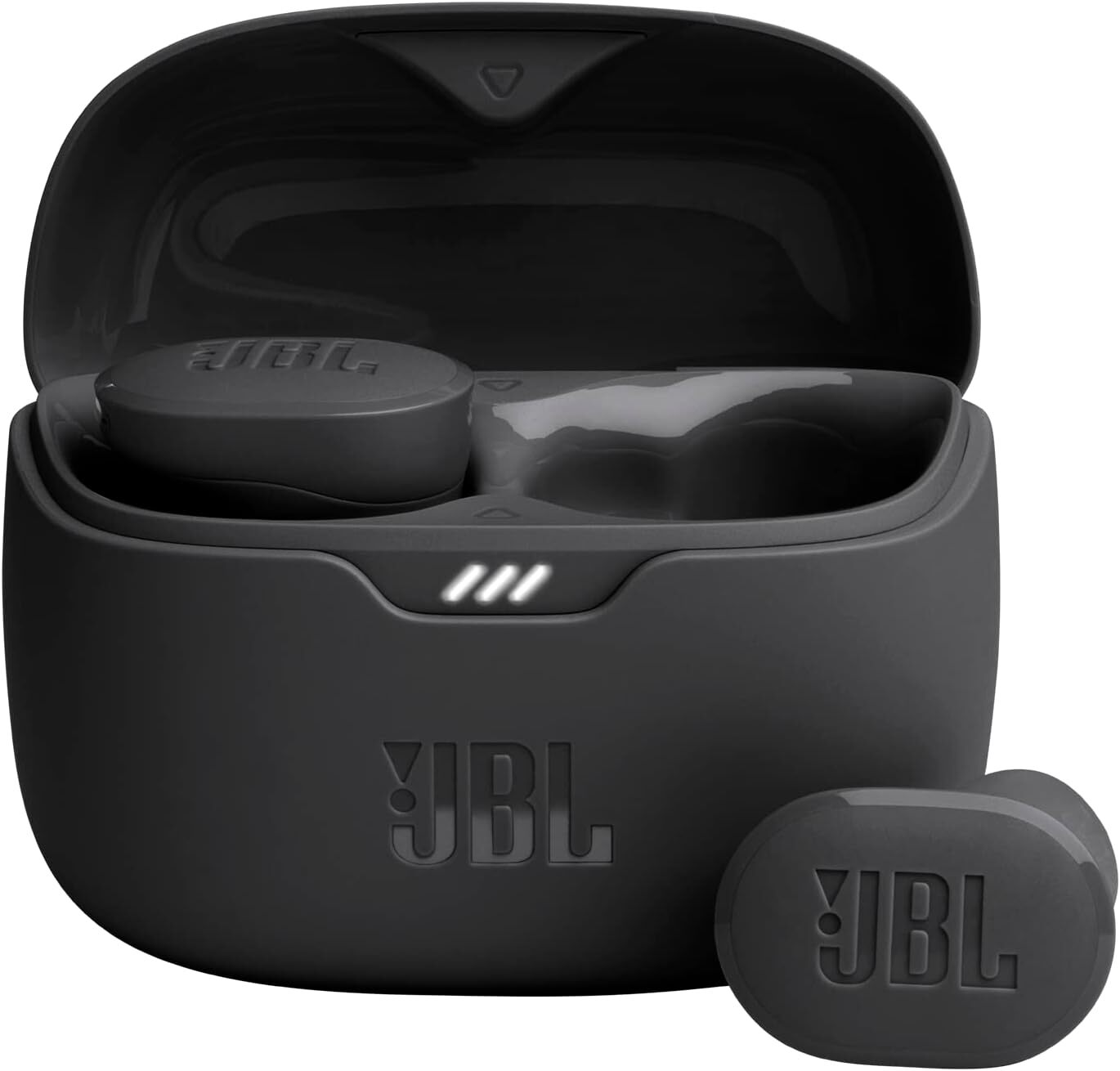
These Noise-Cancelling JBL Earbuds Are $40 Right Now

We may earn a commission from links on this page. Deal pricing and availability subject to change after time of publication.

It can be tricky to find reliable Bluetooth earbuds that hit the right balance of affordability and quality (especially ones with ANC), but the JBL Tune Buds deliver. They’re currently the lowest price they’ve ever been, according to price-trackers, at $39.95 (originally $99.95), bringing the original price down 60%.

They’ve earned an “Excellent” rating from PCMag, which commends their decent noise cancellation, customizable EQ, and built-in Alexa, which are all the more impressive at a sub-$50 price point. The earbuds feature JBL’s classic bass-heavy sound, and with the customizable EQ in the companion app, you can further tweak the audio to your liking. The three pairs of silicone eartips the buds ship with also allow users to adjust fit and comfort.

While they can’t compare to top-tier noise cancellation from brands like Bose and Beats, they block outside noise fairly well and last up to 10 hours per charge (12 hours with ANC off). This gets boosted to up to 36 hours with the charging case, which makes up for its somewhat bulky silhouette. They support Bluetooth 5.3 and have 10mm dynamic drivers that deliver a powerful sound with plenty of bass. They’re slightly more durable than similar noise-cancelling buds thanks to an IP54 rating, which can withstand light rain and sweat.

If you’re looking for a pair of earbuds with modest noise cancellation, customizable and punchy sound, and long-lasting battery life for the price, the JBL Tune Buds are solid everyday earbuds that perform well and won’t break the bank—especially at the current 60% discount. 

Our Best Editor-Vetted Tech Deals Right Now


Apple AirPods 4 Wireless Earbuds


—
$117.00

(List Price $129.00)


Amazon Fire HD 10 (2023)


—
$69.99

(List Price $139.99)


Sony WH-1000XM5


—
$248.00

(List Price $399.99)


Amazon Fire TV Stick 4K Plus


—
$24.99

(List Price $49.99)

Deals are selected by our commerce team