We got an audience with the “Lunar Viceroy” to talk how NASA will build a Moon base

At the end of a long day on Tuesday, NASA Administrator Jared Isaacman looked down at a table littered with microphones and jokingly referred to the space agency’s new Moon base manager, Carlos Garcia-Galan, as the “Lunar Viceroy.” It was a bit of humor, but it also seemed to represent affection from Isaacman for a long-time NASA employee so willingly taking on a major new challenge.

Garcia-Galan was, in many ways, the emerging star at the daylong Ignition event in Washington, DC. Heretofore he has largely been an anonymous engineer at NASA who has now been thrust into a very public role of leading the agency’s ambitious Moon base initiative. (His official title, by the way, is program executive.)

Ars had a chance to speak with Garcia-Galan about NASA’s plans and, more importantly, how they might be implemented. Here is a lightly edited (for clarity) transcript of that conversation.

Read full article

Comments

What Happens Now That Meta and YouTube Were Found Legally Negligent

On Wednesday, a Los Angeles jury found both Meta and YouTube negligent for their failure to warn their users about potential dangers associated with their apps and services. Specifically, the jury found that Meta and YouTube “harmed” a young user, a now 20-year-old identified as K.G.M., via addictive features that led to the user’s “mental health distress.”

Meta and YouTube are now on the hook for $3 million in damages. Meta will pay the majority of the sum (70%, or $2.1 million), while YouTube will pay the remaining 30% ($900,000). It’s a landmark case that could have wide-ranging repercussions for all social media platforms.

What was the Meta/YouTube social media case about?

K.G.M.’s case accused Meta and YouTube of acting like tobacco companies or digital casinos in creating products that are addicting and lead to anxiety and depression in their users. Rather than peddle in cigarettes or gambling, Meta and YouTube offer content via infinite scrolling, with recommendations served up by intelligent algorithms that know what users will be interested in. Snap (makers of Snapchat) and TikTok were also named, but settled for an undisclosed sum ahead of the trial.

The case kicked off in January, while the jury began deliberating on Friday, March 13. It’s not over, either: While the jury determined this initial compensation sum, they must now decide on punitive damages for malice or fraud, which could be much higher.

Tech companies are facing many more lawsuits over social media

K.G.M.’s case is far from the only one social media companies are facing. According to The New York Times, there are currently thousands of lawsuits targeting companies like Meta, YouTube, TikTok, and Snap, brought forward by teenagers, schools districts, and state attorneys general. Meta was previously found liable in New Mexico for failing to protect users from child predators; the jury in that case ordered Meta to pay $375 million in damages. It’s an encouraging trend for the plaintiffs, as social media companies were once seen as legally protected in these cases—the idea was, the companies themselves weren’t liable for how people made use of the platform.

A Meta spokesperson told the Times: “We respectfully disagree with the verdict and are evaluating our legal options,” while YouTube did not return a request for comment.

Where do social media companies go from here?

There are still many cases to go, and the verdicts that have been delivered are still fresh. These things also take time: K.G.M. originally filed suit back in 2023, so we might be following many of these other lawsuits for years. But these initial results could be a bellwether for future cases, suggesting that social media companies may need to radically change their platform designs—or risk facing legal repercussions.

In K.G.M.’s case, lawyers presented evidence that executives of both Meta and YouTube knew the harm their platforms caused minors. This is hardly a secret: Social media companies, including Meta, have been documented as being well aware of the effects their platforms have on children—they just chose profits and growth over limiting those potential harms. They might face more of a public reckoning now that these cases are coming back in favor of the plaintiffs.

The key question is whether the impact of such lawsuits will be enough for Meta and the like to change course, or if they will determine their current models are more lucrative, even given the financial risk involved. I have a hard time believing that Meta will change its platform in fundamental ways unless the judgements go a lot higher. The fines involved need to be so great as to overshadow the money the company makes by maintaining the status quo. Otherwise, why would Meta or YouTube change their ways?

To be fair, in recent years companies have started to roll out more controls for parents and more restrictions for underage users. But it’s tough to efforts to protect children seriously when, for example, we know that internally, Meta was perfectly fine with its AI getting flirty with minors.

Meta, YouTube must pay $3M to woman who got hooked on apps as a child

On Wednesday, a Los Angeles jury ordered Meta and YouTube to pay $3 million in damages to a young woman who successfully argued that the companies’ social media apps were designed to addict children.

Meta will pay the majority of the fine, 70 percent, while YouTube-owner Google is on the hook for 30 percent, the jury decided.

During the six-week trial, the jury heard that Meta and Google designed apps with features like auto-play, infinite scroll, and algorithmic recommendations to keep kids online. Feeling trapped in a cycle of constantly using these apps caused the plaintiff, known as K.G.M., “crippling mental distress,” CNBC reported. She developed “severe body dysmorphia, depression, and suicidal thoughts,” and every notification that came through made it harder to stop logging in.

Read full article

Comments

Stephen Colbert To Write Next ‘Lord of the Rings’ Movie

An anonymous reader quotes a report from CNN: Stephen Colbert already has a new job lined up for when he ends his 11-year run as host of “The Late Show” in May — the comedian and well-known J.R.R. Tolkien superfan announced he will co-write and develop a new film in the blockbuster “Lord of the Rings” franchise. Colbert joined “LOTR” director Peter Jackson to reveal the news in a video announcement.

“I’m pretty happy about it. You know what the books mean to me and what your films mean to me,” the late-night host told Jackson, who led the Oscar-winning team behind the nearly $6 billion original “Lord of the Rings” and “The Hobbit” trilogies. […] Colbert said the next installment will be based on parts of Tolkien’s “The Fellowship of the Ring” book that didn’t make it into the original movies. “The thing I found myself reading over and over again were the six chapters early on in (The Fellowship of the Ring) that y’all never developed into the first movie back in the day … and I thought, ‘Oh, wait, maybe that could be its own story that could fit into the larger story.'” he said.

Colbert said he discussed the idea with his son, screenwriter Peter McGee, to work out the framing of the story. “It took me a few years to scrape my courage into a pile and give you a call, but about two years ago, I did. You liked it enough to talk to me about it,” Colbert told Jackson. Colbert said he, McGee and Jackson have been working alongside screenwriter Philippa Boyens on the development of the story. “I could not be happier to say that they loved it, and so that’s what we’re going to be working on,” Colbert said. Colbert’s LOTR movie, tentatively titled “Shadow of the Past,” will be the second of two new upcoming films in the franchise from Warner Bros. Discovery. The first of which is called “The Hunt for Gollum” due to be released in 2027.


Read more of this story at Slashdot.

Razer’s new Blade 16 has Intel’s latest chips and ultra-fast RAM

After leaning into some questionable AI antics at CES 2026, Razer is making some altogether more practical updates to its 16-inch laptop by giving it newer chips and faster RAM. The new Razer Blade 16 features Intel’s new Core Ultra chips and speedy LPDDR5X-9600 MHz RAM, and is available to order today for $3,500.

The Razer Blade 16 is designed to split the difference between the portable Razer Blade 14 and the monstrous Razer Blade 18, mostly by being thin but offering improved performance. Razer says the 2026 Blade 16 is 0.59 inches (14.9mm) at its thinnest point, which matches the thinness of the 2025 Blade 16. The laptop also has a similar 16-inch QHD+, 240Hz OLED screen to last year’s model, though the company says it’s 100 nits brighter than before. Port selection also remains respectable: the laptop includes three USB 3.2 Gen 2 Type-A ports, a Thunderbolt 4 port, a Thunderbolt 5 port, a full-sized HDMI 2.1 port and a UHS-II SD card reader.

A Razer Blade 16 laptop viewed from the front next to a monitor.
Razer

The real notable upgrade is Razer’s switch from AMD Ryzen chips to new Intel Core Ultra 9 386H chips on the 2026 Razer Blade 16. The new Core Ultra chips are some of Intel’s first processors made with its new 18A process and pitched as the company’s comeback. Razer says the new chip es 16 cores and an integrated NPU that “provides up to 50 TOPS” for things like image generation and live translation, which the Razer Blade 16 supports natively as a Copilot+PC. The efficiency of the new chip also contributes to the laptop’s up to 15 hours of battery life. Of course, if you want power, the Razer Blade 16 has it: the laptop includes NVIDIA’s GeForce RTX 50 Series Laptop GPUs and up to 64Gb of LPDDR5X-9600MHz RAM, which should give the Razer Blade 16 plenty of pep for games.

Hardware upgrades don’t come cheap, and the higher $3,500 starting price of the Razer Blade 16 — which includes 32GB of RAM, 1TB of storage and a GeForce RTX 5080 GPU at a minimum — is likely reflective of the growing cost of memory and storage that’s already negatively impacting the PC industry.

The Razer Blade 16 is available to purchase now through Razer’s website.

This article originally appeared on Engadget at https://www.engadget.com/computing/laptops/razers-new-blade-16-has-intels-latest-chips-and-ultra-fast-ram-185858799.html?src=rss

Nintendo is raising prices of Switch 2 game cartridges starting in May

The downloadable versions of Nintendo’s first-party Switch games have always cost the same amount to buy, despite the costs of manufacturing and shipping physical releases. This was still true when the Switch 2 launched last year, despite persistent rumors and misinformation to the contrary.

But that’s finally, definitively changing later this year. Nintendo announced today that beginning in May and for new game releases going forward, the physical releases of new Switch 2-exclusive first-party games will cost more than the digital versions of the same game. That will start with the May 21 release of Yoshi and the Mysterious Book, which will cost $60 in Nintendo’s online store but $70 for a physical copy.

“Nintendo games offer the same experiences whether in packaged or digital format, and this change simply reflects the different costs associated with producing and distributing each format and offers players more choice in how they can buy and play Nintendo games,” reads the company’s brief announcement about the change. Nintendo notes that retailers are free to charge what they want for physical and digital games, but aside from sales or other promotions most tend to follow Nintendo’s guidance on pricing.

Read full article

Comments

Nintendo to start charging different prices for first-party digital and physical games

Nintendo just announced it will soon start charging different prices for first-party Switch 2 games based on whether the content is digital or physical. This could actually be a good thing for those who like to download their games instead of heading to a brick-and-mortar store to pick up a copy, as digital titles are getting a nice discount.

It starts with the release of Yoshi and the Mysterious Book on May 21, which will be $60 on the eShop but $70 at retail locations. Prior to this, most first-party games were $70 no matter how you bought them. I prefer downloading games, for convenience, and paid that much for both Donkey Kong Bananza and Pokémon Pokopia.

The price of Yoshi.
Nintendo

It’s yet another blow, however, for consumers who prefer physical media. They aren’t getting any kind of a discount, and many Switch 2 cartridges don’t even contain the game nowadays. The boxes include game key cards, which allow the user to download the title to the console but are basically paperweights after that.

This isn’t the first time Nintendo has participated in this kind of dual pricing structure. The digital version of Donkey Kong Bananza was cheaper than the physical version in some parts of the world, including the UK.

Is this another sign that making and shipping actual things is getting to be prohibitively expensive? There are storage and memory shortages due to AI and oil shortages due to war, not to mention an ever-shifting tariff policy here in the US. It’s tough out there. 

This article originally appeared on Engadget at https://www.engadget.com/gaming/nintendo/nintendo-to-start-charging-different-prices-for-first-party-digital-and-physical-games-184249374.html?src=rss

Amazon’s Prices on the Fire TV 4-Series Are Ridiculously Low During the Big Spring Sale

We may earn a commission from links on this page.

Amazon is selling its 4-series Fire TVs for almost comically low prices during its ongoing Big Spring Sale. The 50″ model is $239.97, and the 43″ is $199; that’s 40% off the list price and the lowest price Amazon has ever offered on these 4K smart TVs. And it might be a few years until we see TVs this cheap again.

I bought a 55″ Fire TV a few months ago, and even though I paid $400 for it, I have no complaints. It’s a solid TV that gets good reviews from pros and customers alike—Amazon’s reviewers give it a 4.3 our of 5. I do wish I had waited until today to buy it though, and you definitely shouldn’t wait if you’re in the market for a TV, because not only is this a very low price, it could be the lowest price you’ll pay for a TV for years.

March and April are traditionally when retailers clear space of last year’s TV models to make room for the new ones coming for the holidays, so the prices are low anyway. But this year, larger forces will likely drive the price of TVs higher than they have been in a while: Big tech companies are buying up the world’s supply of memory for AI, so it will likely be harder to get for TV makers, raising the price of all televisions. The price hike probably isn’t “baked in” to the TVs on sale now; those prices were likely set before the chip shortage. So If you need a new TV, get on it; it might be a while before we see current models of TVs for less than $200.

Our Best Editor-Vetted Amazon Big Spring Sale Deals Right Now

Deals are selected by our commerce team

YouTube is bringing affiliate shopping features to more creators

YouTube creators can start making money earlier in their careers. On Wednesday, the company said it’s reducing the Shopping affiliate program subscriber threshold from 1,000 to 500.

The affiliate program launched in 2022, allowing creators to earn kickbacks when viewers buy products tagged in their videos. It applies to YouTube Shorts, VOD and Live content. Creators will still need to meet the YouTube Partner Program’s other requirements to reap the benefits.

Perhaps not a coincidence, the move comes only a day after Meta added shopping links to Reels. Creators on Facebook and Instagram can now link to up to 30 distinct products from marketplace partners in a single video.

This article originally appeared on Engadget at https://www.engadget.com/social-media/youtube-is-bringing-affiliate-shopping-features-to-more-creators-183927027.html?src=rss

Epic Games Lays Off Over 1,000 Employees As Fortnite Struggles To Maintain Momentum

 Epic Games Lays Off Over 1,000 Employees As Fortnite Struggles To Maintain Momentum
Fortnite has been declining in popularity, to the point that not only are several game modes going offline this year, but over 1000 employees are being laid off from Epic Games. Fortnite’s past success, constant tie-in promotions with a multitude of products and services, and a healthy player base despite the “downturn in Fortnite engagement”,

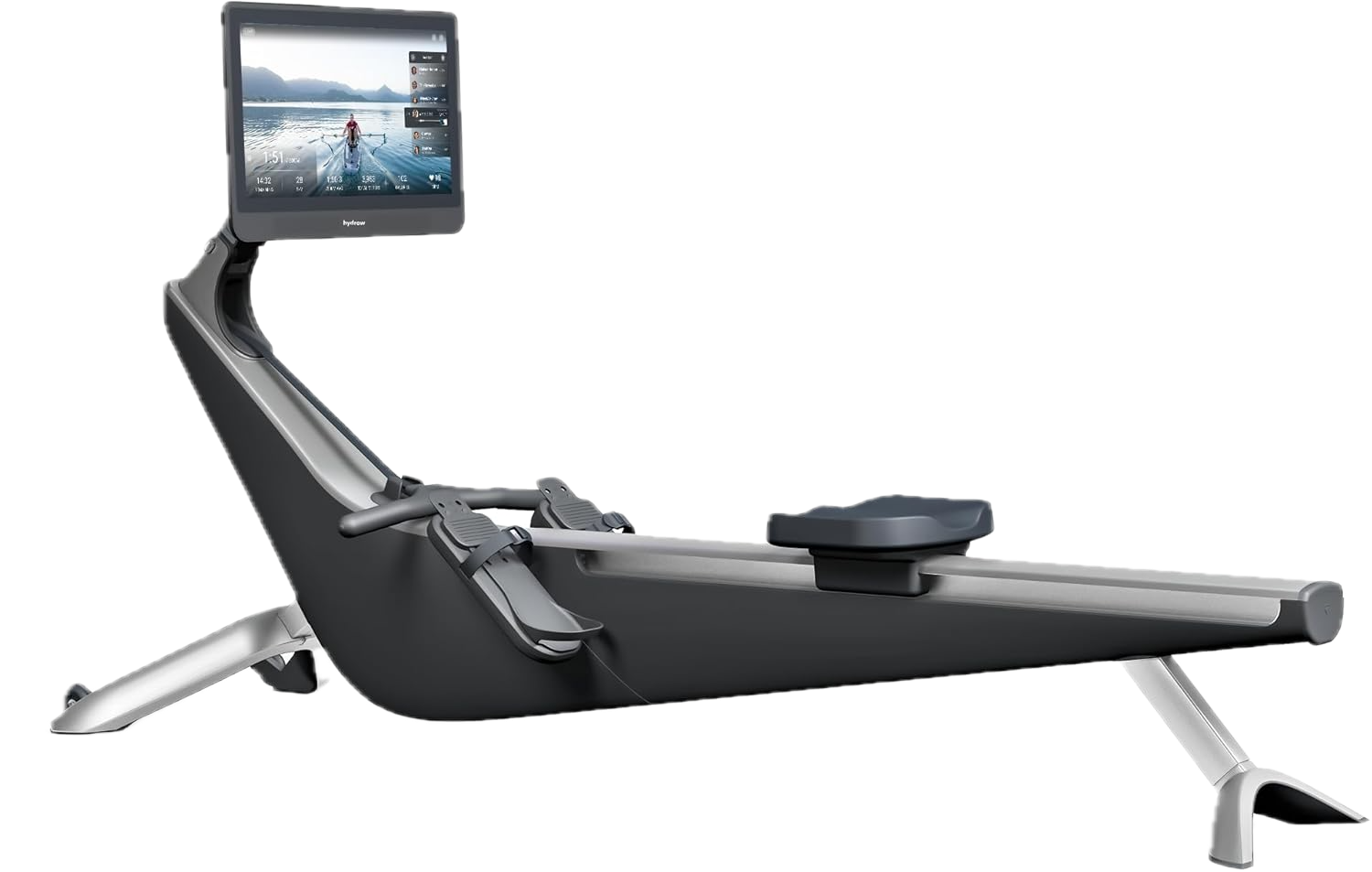
This Hydrow Rowing Machine Delivers a Full-Body Workout, and It’s $300 Off for Amazon’s Big Spring Sale

We may earn a commission from links on this page. Deal pricing and availability subject to change after time of publication.

Rowing is my latest fitness obsession. A good workout on a rowing machine can engage up to 86% of your muscles, combining cardio and strength training while being gentle on your joints. After a few months of testing the new Hydrow Arc Rowing Machine—which I reviewed in depth—I trust Hydrow as a brand name. And right now, the Hydrow Origin Rowing Machine is available for $1,895 as a part of Amazon’s Big Spring Sale, a 14% discount off its list price of $2,195.

As you can probably guess from the name, the Hydrow Origin is the company’s original model. However, “original” doesn’t mean “basic.” This machine still has a 22-inch screen and plenty of streaming content. I’ve found these how-to videos and wide-ranging workouts are what make Hydrow so valuable (much like how Peloton is so much more than just its bikes). If you’d like to compare the different Hydrow models, check out the side-by-side breakdown here.

Our Best Editor-Vetted Amazon Big Spring Sale Deals Right Now

Deals are selected by our commerce team

Supreme Court rejects Sony’s attempt to kick music pirates off the Internet

The Supreme Court today decided that Internet service providers cannot be held liable for their customers’ copyright infringement unless they take specific steps that cause users to violate copyrights. The court ruled unanimously in favor of Internet provider Cox Communications, though two justices did not agree with the majority’s reasoning.

The ruling effectively means that ISPs do not have to conduct mass terminations of Internet users accused of illegally downloading or uploading pirated files. If the court had ruled otherwise, ISPs could have been compelled to strictly police their networks for piracy in order to avoid billion-dollar court verdicts under the Digital Millennium Copyright Act (DMCA).

The long-running case is Cox Communications v. Sony Music Entertainment. Cox was hit with a $1 billion verdict for music piracy in 2019. Although the damages award was overturned in 2024, a federal appeals court still found that Cox was liable for willful contributory infringement.

Read full article

Comments

Jury rules against Meta and YouTube in social media addiction case

A jury in Los Angeles has found that Meta and YouTube were negligent in a closely-watched trial over social media addiction. The companies were ordered to pay $3 million in damages to the woman who said she was harmed by their addictive features as a child.

The case was brought by a 20-year-old woman, named in court documents as “K.G.M,” who sued Meta, YouTube, TikTok and Snap, saying that she had been harmed by the platforms as a child due to addictive features. TikTok and Snap reached a settlement ahead of the trial. 

According to NBC News, Meta was ordered to pay 70 percent of the $3 million in compensatory damages with YouTube taking on the remaining portion. Punitive damages have not yet been decided. “We respectfully disagree with the verdict and are evaluating our legal options,” a Meta spokesperson said in a statement. “We disagree with the verdict and plan to appeal.,” Google spokesperson José Castañeda said in a statement. “This case misunderstands YouTube, which is a responsibly built streaming platform, not a social media site.”

The weeks-long trial has been closely watched because it’s the first of many court cases in which plaintiffs have argued that social media platforms harmed minors due to how they were designed. Meta’s lawyers and executives have disputed the idea that social media should be considered an “addiction.” CEO Mark Zuckerberg testified that the company wants Instagram to be “useful,” and repeatedly accused the plaintiff’s lawyer of “mischaracterizing” his past statements. 

“This is the first time in history a jury has heard testimony by executives and seen internal documents that we believe prove these companies chose profits over children,” Joseph VanZandt, one of K.G.M.’s lawyers, said in a statement to The New York Times,

For Meta, it’s the second legal setback in as many days. The verdict comes one day after a jury in New Mexico ruled against Meta in a trial over child safety issues. The company was ordered to pay $375 million in penalties; the company said it would appeal.

Update, March 25, 2026, 11:22AM PT: Added a statement from Google.

This article originally appeared on Engadget at https://www.engadget.com/social-media/jury-rules-against-meta-and-youtube-in-social-media-addiction-case-181344860.html?src=rss

Meta and YouTube Found Negligent in Landmark Social Media Addiction Case

A jury found Meta and YouTube negligent in a landmark social media addiction case, ruling that addictive design features such as infinite scroll and algorithmic recommendations harmed a young user and contributed to her mental health distress. The verdict awards $3 million in compensatory damages so far and could pave the way for more lawsuits seeking financial penalties and product changes across the social media industry. “Meta is responsible for 70 percent of that cost and YouTube for the remainder,” notes The New York Times. “TikTok and Snap both settled with the plaintiff for undisclosed terms before the trial started.” From the report: The bellwether case, which was brought by a now 20-year-old woman identified as K.G.M., had accused social media companies of creating products as addictive as cigarettes or digital casinos. K.G.M. sued Meta, which owns Instagram and Facebook, and Google’s YouTube over features like infinite scroll and algorithmic recommendations that she claimed led to anxiety and depression.

The jury of seven women and five men will deliberate further to decide what further punitive damages the companies should pay for malice or fraud. The verdict in K.G.M.’s case — one of thousands of lawsuits filed by teenagers, school districts and state attorneys general against Meta, YouTube, TikTok and Snap, which owns Snapchat — was a major win for the plaintiffs. The finding validates a novel legal theory that social media sites or apps can cause personal injury. It is likely to factor into similar cases expected to go to trial this year, which could expose the internet giants to further financial damages and force changes to their products. The verdict also comes on the heels of a New Mexico jury ruling that found Meta liable for violating state law by failing to protect users of its apps from child predators.


Read more of this story at Slashdot.

The Garmin Forerunner 265 Is a Pretty Good Buy During Amazon’s Big Spring Sale

We may earn a commission from links on this page. Deal pricing and availability subject to change after time of publication.

The best sale you’ll find on a Garmin watch during the ongoing Amazon Big Spring Sale is probably this Forerunner 265, which will run you $344.95. It’s an excellent watch—I said as much when I reviewed it. If this watch appeals to you, go ahead and buy it—but there are some caveats you should consider before buying one.

It’s a low price—but only a little cheaper than usual

The first to know is that older-model watches are not always as good a deal as they appear. This watch is $344.95 today, down from an original price of $449.99, and it’s got a “Big Spring Sale” tag; that makes it look like an excellent deal. But the price history tells a different story: Earlier this month, it was going for $349.99 (only $5 more) and the highest price in the last few days was $368.99 ($24 more). Looking over the last year or so of price data, the 265 and 265S have spent a month or more at $349.99 (or lower) on at least two occasions—the first big one when the 570 launched in early summer, and the second for the holiday shopping season.

Older watches reveice fewer updates from Garmin

And since the 265 has been replaced by the 570, I need to talk about what that means for people who buy the 265. The 265 is an older watch, having launched in 2023. Now, that’s not a problem in itself—Garmins tend to age well. Whatever you would have liked about the watch in 2023, it’s got all the same features now. It’s still a good watch. 

But ever since the launch of the 570 and 970, Garmin’s regular updates have been bringing new features to the ’70 series, but not the ’65. (Similarly, the Fenix 8 has been getting upgrades that the Fenix 7 does not.) In the past, Garmin hasn’t walked away from older models this quickly, but it seems like the new models are different enough from their predecessors that most new features only make sense to roll out on the newer hardware. 

The 265 is still getting updates for stability and bug fixes (here’s the latest, from just two months ago) so it’s still supported, it’s just not getting the best new features. For example, the new glances for battery health, sports scores, and lifestyle logging are only for the newer watches. 

The Garmin Forerunner 265 is still a strong buy

With all that in mind, is the 265 still a good watch? Honestly, yes, but it no longer occupies a “sweet spot” at the center of features and value. In 2026, if you want a watch with all the best Garmin features, it’s better to upgrade to the Forerunner 570 or 970, or for more of a lifestyle watch, the Venu 4. On the budget side, the Vivoactive 6 is a good pick from the newer generation. But none of those are currently seeing significant discounts, so if price is a major factor in your buying decision, I’d consider looking at Coros or Suunto too. 

Our Best Editor-Vetted Amazon Big Spring Sale Deals Right Now

Deals are selected by our commerce team

Google’s TurboQuant AI-compression algorithm can reduce LLM memory usage by 6x

Even if you don’t know much about the inner workings of generative AI models, you probably know they need a lot of memory. Hence, it is currently almost impossible to buy a measly stick of RAM without getting fleeced. Google Research recently revealed TurboQuant, a compression algorithm that reduces the memory footprint of large language models (LLMs) while also boosting speed and maintaining accuracy.

TurboQuant is aimed at reducing the size of the key-value cache, which Google likens to a “digital cheat sheet” that stores important information so it doesn’t have to be recomputed. This cheat sheet is necessary because, as we say all the time, LLMs don’t actually know anything; they can do a good impression of knowing things through the use of vectors, which map the semantic meaning of tokenized text. When two vectors are similar, that means they have conceptual similarity.

High-dimensional vectors, which can have hundreds or thousands of embeddings, may describe complex information like the pixels in an image or a large data set. They also occupy a lot of memory and inflate the size of the key-value cache, bottlenecking performance. To make models smaller and more efficient, developers employ quantization techniques to run them at lower precision. The drawback is that the outputs get worse—the quality of token estimation goes down. With TurboQuant, Google’s early results show an 8x performance increase and 6x reduction in memory usage in some tests without a loss of quality.

Read full article

Comments

Antibiotic resistance among germs swells during droughts, study suggests

For as long as we’ve known that soil bacteria manufacture molecular weapons to fight each other, we’ve been swiping their battle plans. In clinics and hospitals, those turf-war weapons have become miraculous drugs of modern medicine—antibiotics—that blow away otherwise deadly infections.

But, of course, there’s a dark side of mimicking microbial munitions—bacteria have defenses, too, namely antibiotic resistance. You’re probably aware that we’re facing a rising threat of drug resistance among disease-causing bacteria, one that is rendering much of our stolen weaponry obsolete and making infections harder to defeat.

Often, this growing crisis is framed as a clinical failure: We’re overusing and misusing antibiotics, hastening our bacterial foes’ natural ability to develop and spread resistance. While this is certainly true, a new study in Nature Microbiology this week identifies a potentially new driver of rising antibiotic resistance—and we’re at least partly to blame for this one, too.

Read full article

Comments

Here’s your first look at For All Mankind spinoff Star City

Apple’s excellent For All Mankind might be wrapping up after its recently confirmed sixth season, but as one big-budget alt-history sci-fi show departs, another is born. Apple TV has just dropped the first teaser for Star City, which focuses on the reimagined space race of the 1960s from the Soviet perspective.

ICYMI, For All Mankind has been running for nearly five seasons now (the fifth arrives later this week), with its debut season in 2019 asking, “what if Russia had beaten America to the moon?” For All Mankind has jumped a number of decades ahead since then, but Star City returns us to that initial premise, taking us behind the Iron Curtain to see how the Soviet Union orchestrated its fictional historical triumph.

The brief teaser doesn’t show us much in the way of plot, but you straight away get what vibe the streamer is going for with a show it describes as a “propulsive paranoid thriller.” We also get a look at some of the cast, which includes House of the Dragon’s Rhys Ifans, Anna Maxwell Martin and Agnes O’Casey.

Interestingly, Star City’s two-episode premiere lands on Apple TV on May 29, right after the finale of For All Mankind season 5, which takes place in the 2010s. That could make for a pretty jarring backwards time jump if you watch both seasons back to back, but nobody can say that Apple isn’t serving its sci-fi audience.

This article originally appeared on Engadget at https://www.engadget.com/entertainment/streaming/heres-your-first-look-at-for-all-mankind-spinoff-star-city-174359587.html?src=rss

Google’s Lyria 3 Pro can now generate AI music (slop) up to 3 minutes in length

Google just introduced Lyria 3 Pro, an updated version of its AI model that generates songs based on prompts. The biggest improvement here is the ability to make full three-minute songs, up from 30 seconds when the product launched last month.

The tool also brings a lot more customization into the mix. Users can now prompt the model to create specific elements within a song, like intros, verses, choruses and bridges. Google says “Lyria 3 Pro better understands musical composition” when compared to the previous model and that it’s “great for experimenting with different styles or generating songs with complex transitions.”

It’s already available for paid Gemini users and for enterprise customers on Vertex AI. Additionally, developers have access to the tool via the Gemini API and Google AI Studio. The company is also integrating it into Google Vids, an AI-based video-generation platform.

Google says that “responsibility was foundational” when designing and training this model, so it only uses materials that the company has actual rights to. Additionally, all Lyria 3 Pro outputs are embedded with SynthID, which is a watermark for identifying AI-generated content.

That’s all well and good, but do we need yet another AI music-making tool? Current estimates suggest that around 50,000 AI-generated tracks get uploaded daily to Spotify alone. The platform had to delete, and this is not a typo, 75 million of these tracks last year.

This article originally appeared on Engadget at https://www.engadget.com/ai/googles-lyria-3-pro-can-now-generate-ai-music-slop-up-to-3-minutes-in-length-172738752.html?src=rss

The Best Budget Treadmill Is Even Cheaper During Amazon’s Big Spring Sale

We may earn a commission from links on this page. Deal pricing and availability subject to change after time of publication.

Running is one of the simplest workouts a person can do—and unless you have plans on opening up a professional-grade gym, there’s probably no need for you to blow thousands of dollars on a fancy treadmill. Today, one of the best budget treadmills, the NordicTrack T Series 5, is on sale for $479. That’s a 20% markdown from its typical price of $599, all thanks to Amazon’s Big Spring Sale.

If you are looking for something more high-tech (think a 16-inch touchscreen and a foldable frame), the T Series 16 is on sale for $1,349, down from its typical price of $1,499. Otherwise, the T Series 5 is the perfect starter treadmill for anyone who just wants to lace up their shoes and pound that belt.

Perhaps the coolest part of joining the NordicTrack ecosystem is the access to over 10,000 workouts through iFIT. For $39/month (or $396/year), you can follow expert trainers through global runs, hikes, strength training, yoga sessions, and more, all while the system automatically adjusts your treadmill’s speed and incline to match the workout. And for those of us who like to track their progress across multiple platforms, iFIT syncs with your Strava, Garmin, and Apple Health.

Our Best Editor-Vetted Amazon Big Spring Sale Deals Right Now

Deals are selected by our commerce team