Google’s Desktop Search App Is Back (Kind Of)

Back in the Windows XP days, when the only search functionality was a cartoon dog in the sidebar of Windows Explorer (not a joke), Google released Google Desktop. If you installed the application, you could search the files on your computer the same way you could search the web. The application made finding your own documents quick—as a small town reporter in northern Alberta, I constantly used this service to dig through my old notes and previous articles.

The service was shut down in 2011, announced via a blog post, which stated that the feature was no longer necessary in the cloud storage era. And that was the end of Google offering to search files on your computer—until now. Back in September, Google announced an experimental Windows-only application named “Google App for Windows” that, among other things, searches the files on your computer.

Nostalgic person that I am, I couldn’t help but wonder: was this going to be similar to the retro offering? So I gave it a shot. The installation requires opting in to an “experiment” using your Google account, then downloading and installing an application. After that, you can bring up a search by using the keyboard shortcut Alt+Space, which brings up a search bar. You can use this to search for files on your computer, your Google Drive, and information on the web.

The actual file search doesn’t seem particularly sophisticated. While the retro Google Desktop could search the contents of files, the Google App for Windows seems to mostly only be aware of file names. That’s disappointing—I liked being able to figure out which files I mentioned particular names, or try to find the source of a sentence I remember writing. This local search functionality honestly isn’t much better than the search that comes with Windows.

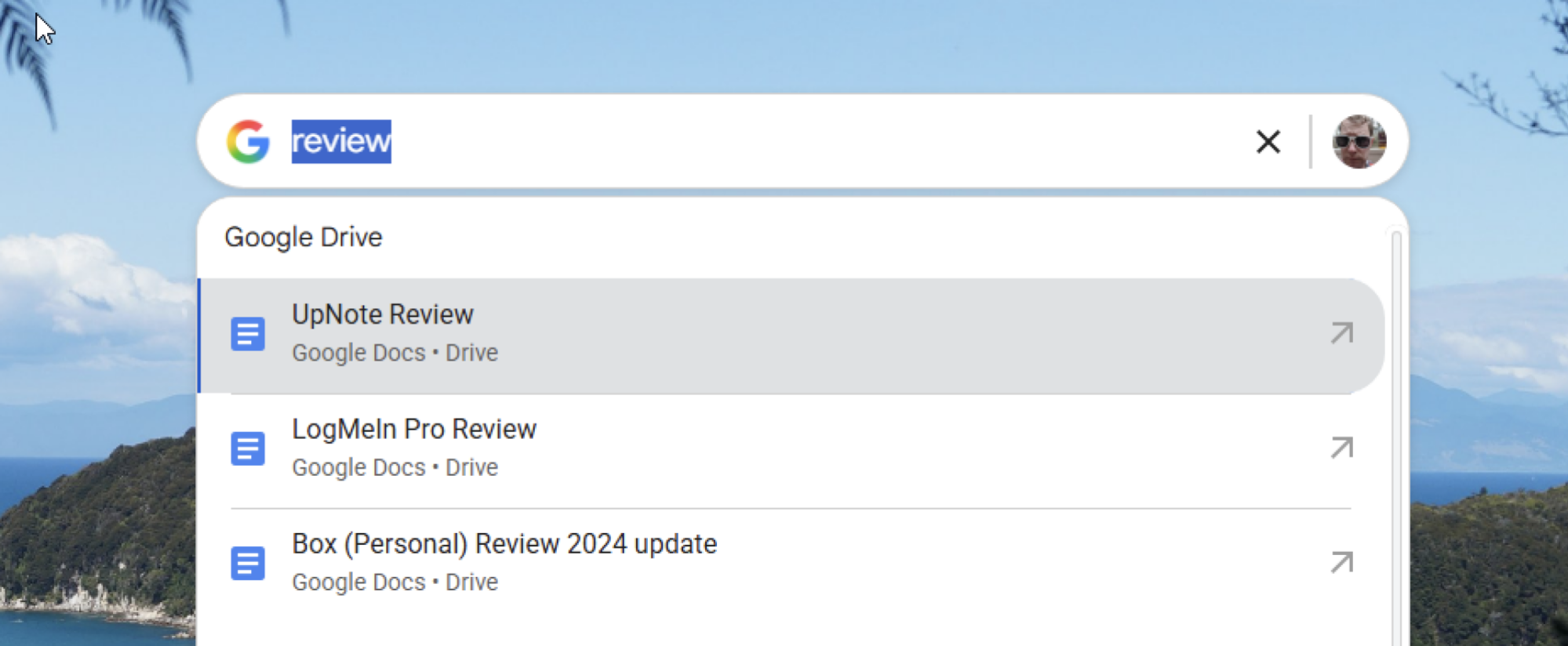
What this new app can do, though, is search your Google Drive. I was able to quickly find and open files I’d created in Google Docs, then open them in one click. The ability to search these cloud docs alongside my local ones in one place is a decent reason to give this application a chance.

Google App for Windows showing results from Google Drive

Credit: Justin Pot

And there are also a few web-based features. If there are no files that match your search, you’ll see Google search results—select any of those and you’ll see an AI-generated blurb answering your question. If you’d prefer traditional Google search results, you can get those instead—just turn off “AI mode” by clicking your profile picture and turning off the AI Mode toggle.

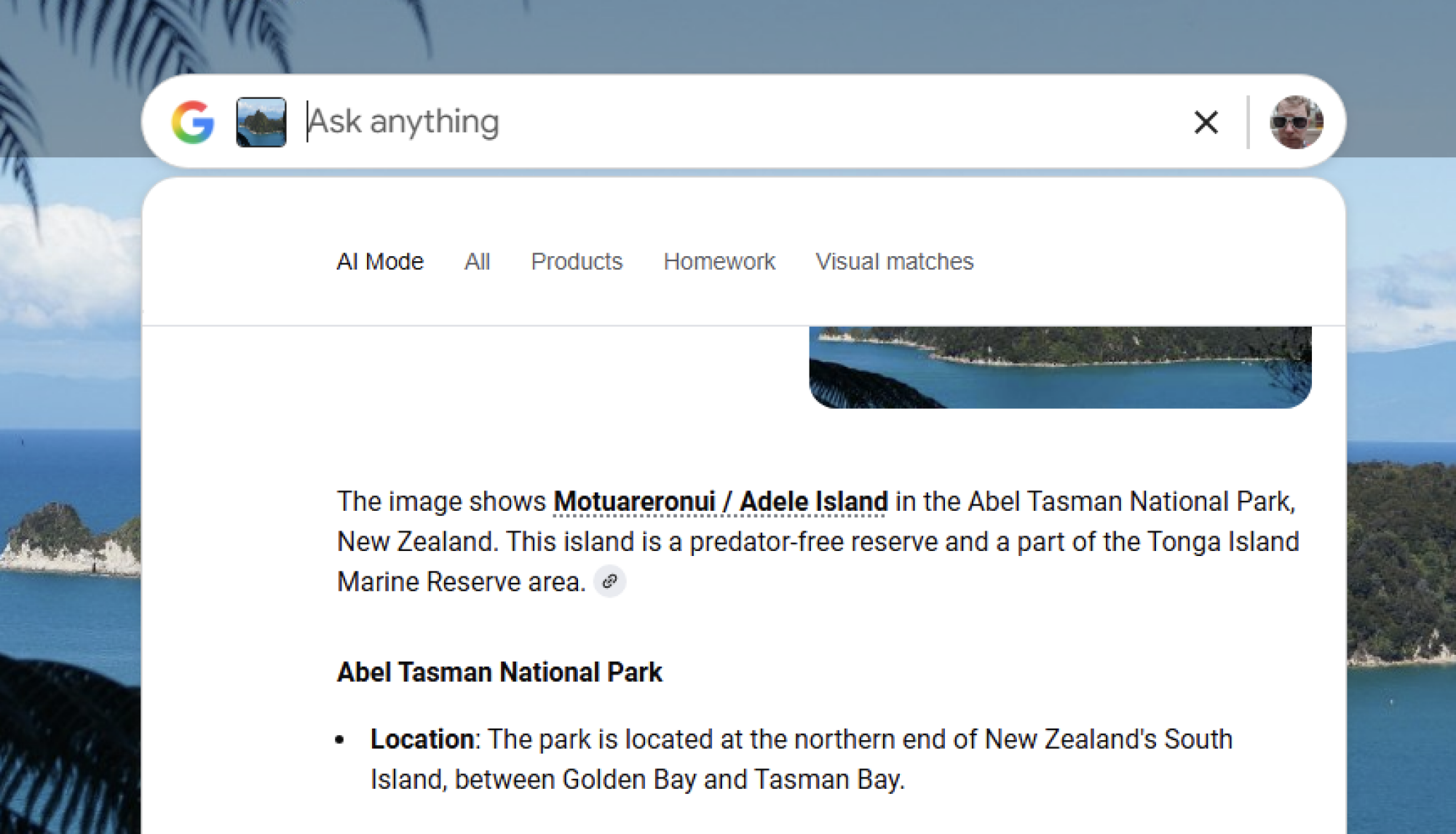
Finally, this application can be used to take a screenshot of your computer and answer questions related to it. For example, I took a snap of my desktop wallpaper—a photo my wife took in New Zealand—and got an accurate description of the location.

Google App for Windows correctly identifying a photo from New Zealand.

Credit: Justin Pot

The feature is similar to those offered by the desktop application of ChatGPT and Claude, just powered by Google’s AI instead of those tools. I’m not sure I’d find myself using this regularly, but it’s an interesting idea.

The Google App for Windows, sadly, isn’t a resurrection of the long-dead Google Desktop, but it is an interesting tool that combines a simple local file search with results from your Google Drive and the web. It’s worth playing around with if you’re a dedicated Google user who still stores a lot of files on their computer.

Silverstone’s Retro FLP02 Case With Turbo Button Brings 1990 Vibes To Modern Builds

Silverstone's Retro FLP02 Case With Turbo Button Brings 1990 Vibes To Modern Builds
Silverstone just launched the FLP02, a new retro-inspired PC case design that harkens back to the 80s and 90s. The FLP02 has a standard tower configuration in contrast to the older lay-flat Silverstone FLP01. The FLP02 has more era-appropriate features too, like a functional lock for the power/reset buttons and a Turbo button. While classic

ASUS ROG Ally & Xbox Ally Handheld Updates To Deliver Hybrid CPU Tweaks And Much More

ASUS ROG Ally & Xbox Ally Handheld Updates To Deliver Hybrid CPU Tweaks And Much More
When the original ASUS ROG Ally handhelds came out, they were followed by a long series of patches that radically improved both the software and hardware, adding new features, fixing bugs, and even directly improving the performance and efficiency of the devices thanks to power management tweaks and driver updates. The ROG Xbox Ally family

Microsoft Responds To Security Concerns Over Windows 11’s Agentic AI Shift

Microsoft Responds To Security Concerns Over Windows 11's Agentic AI Shift
Microsoft continues to work towards an AI driven experience in its software and operating systems, even though some users have been vocal about letting the company know that they’re not fully bought in with that direction. To attempt to ease the concerns of some of these users, Microsoft is laying out how it plans on keeping its Windows OS

Forget Nintendo’s 3DS, A Glasses-Free 3D PC Gaming Handheld Is Coming

Forget Nintendo's 3DS, A Glasses-Free 3D PC Gaming Handheld Is Coming
The Abxylute 3D One is a new Intel Lunar Lake-powered PC gaming handheld with a glasses-free 3D display akin to the legendary Nintendo 3DS. The device also features a detachable keyboard (included) like the Microsoft Surface, and detachable controllers similar to the Lenovo Legion Go and Nintendo Switch handhelds.

The Abxylute 3D One is

Bluesky revamps its moderation and reporting tools with transparency in mind

Bluesky is looking to make its moderation and reporting systems more transparent as part of its efforts to forge a healthier social media ecosystem than some of the alternatives out there. The platform’s userbase has doubled in size to 40 million over the past year, and with more users come more instances of toxicity and other types of harmful content. Bluesky is also subject to more regulatory requirements in certain jurisdictions. The team has been working to address those factors, and changes to the moderation system should help.

The platform is revamping how it enforces and tracks violations of its policies. In the latest version of the Bluesky app, the system for reporting posts now includes more granular options with specific options to flag content related to things like false information about elections, human trafficking and bullying. “This granularity helps our moderation systems and teams act faster and with greater precision,” the Bluesky team wrote in a blog post. “It also allows for more accurate tracking of trends and harms across the network.”

Rather than tracking community guidelines violations across individual policies as it did in the past, Bluesky will automatically track everything in a single system. As part of that, the platform will provide users clearer information about enforcement actions. Starting in the coming weeks, users whose accounts are actioned will learn which policy they violated, the severity level of their violation and how many times they’ve broken the rules. They’ll also be notified as to the length and end date of any suspension, as well as how close they are to more severe penalties being applied to their account for repeated violations. There are appeals processes for both post takedowns and account suspensions.

Looking ahead, Bluesky plans to add a moderation inbox to the app rather than dealing with moderation decisions by email. The team says this will improve transparency and enable it to send a higher volume of notifications to users.

“These updates are part of our broader work on community health,” the team wrote. “Our goal is to ensure consistent, fair enforcement that holds repeat violators accountable while serving our growing community as we continue to scale.”

There are some other changes in the latest version of the app. The team says that a redesign makes the “who can reply” settings easier to use, including the option to save your selection as the default for future posts. There’s also a dark mode app icon available. 

This article originally appeared on Engadget at https://www.engadget.com/social-media/bluesky-revamps-its-moderation-and-reporting-tools-with-transparency-in-mind-193629692.html?src=rss

Testing shows Apple N1 Wi-Fi chip improves on older Broadcom chips in every way

This year’s newest iPhones included one momentous change that marked a new phase in the evolution of Apple Silicon: the Apple N1, Apple’s first in-house chip made to handle local wireless connections. The N1 supports Wi-Fi 7, Bluetooth 6, and the Thread smart home communication protocol, and it replaces the third-party wireless chips (mostly made by Broadcom) that Apple used in older iPhones.

Apple claimed that the N1 would enable more reliable connectivity for local communication features like AirPlay and AirDrop but didn’t say anything about how users could expect it to perform. But Ookla, the folks behind the SpeedTest app and website, have analyzed about five weeks’ worth of users’ testing data to get an idea of how the iPhone 17 lineup stacks up to the iPhone 16, as well as Android phones with Wi-Fi chips from Qualcomm, MediaTek, and others.

While the N1 isn’t at the top of the charts, Ookla says Apple’s Wi-Fi chip “delivered higher download and upload speeds on Wi-Fi compared to the iPhone 16 across every studied percentile and virtually every region.” The median download speed for the iPhone 17 series was 329.56Mbps, compared to 236.46Mbps for the iPhone 16; the upload speed also jumped from 73.68Mbps to 103.26Mbps.

Read full article

Comments

This Fire Kids Pro Tablet Is 45% Off Leading Up to Black Friday

We may earn a commission from links on this page. Deal pricing and availability subject to change after time of publication.

Gifting season is coming up, and this affordable 2023 edition of the Fire HD 10 Kids Pro tablet makes an easy, practical gift. A convenient way for kids aged 6-12 to consume Amazon content safely, it’s 45% off at $104.99 (originally $189.99) in three different colors, marking its lowest price ever.

The tablet, which has won awards for its strong parental controls and earned an “Excellent” rating from PCMag, features built-in safeguards that enhance online security. It comes in a durable slim case with a kickstand handle and a 10.1-inch Full HD display (1920×1200) that kids can use for reading, playing games, or streaming their favorite shows. Camera quality is mediocre at 5 MP, but adequate for video calls.

An updated processor with two Arm Cortex-A76 cores at 2.05GHz and six Arm Cortex-A55 cores at 2.0GHz makes it significantly faster than its predecessor, according to PCMag. The tablet can stream video for just under 10.5 hours on maximum brightness and takes around four hours to fully charge on a 9W power adaptor (closer to three hours with a 15W charger)

It comes with 3 GB RAM and 32 GB storage (enough for everyday multitasking), as well as a free year of ad-free, Amazon Kids Plus content (otherwise $5 a month, or $8 for non-Prime members). It comes with a two-year warranty, which, along with the rugged case, can give you peace of mind for kids’ use. 

If you don’t want a tablet focused on Amazon-only content and services (or want one that they can grow into with more productivity apps and high-performance games), more versatile options like the iPad might be better (though they’ll come with a higher price tag). This tablet also doesn’t come with Wi-Fi 6 or 6E. That said, if your priorities are good hardware, a large, attractive screen, and enough processing power for multitasking, the Fire HD 10 Kids Pro tablet is a budget-friendly option for monitored screen time or keeping kids entertained during car rides and flights. At around $100 right now, it’s one of the best kids’ tablets on the market.

Our Best Editor-Vetted Tech Deals Right Now


Apple AirPods 4 Wireless Earbuds


—
$117.00

(List Price $129.00)


Amazon Fire HD 10 (2023)


—
$69.99

(List Price $139.99)


Sony WH-1000XM5


—
$248.00

(List Price $399.99)


Amazon Fire TV Stick 4K Plus


—
$24.99

(List Price $49.99)

Deals are selected by our commerce team

Tesla receives ride-hailing approval in Arizona

Tesla has received a permit to operate its ride-hailing service in Arizona. But don’t get too excited, as this is far from the level 4 autonomy that CEO Elon Musk envisions for the company’s robotaxis. The certification requires a human to sit in the front seat to supervise the ride. Tesla’s operations in Austin and California have the same requirement.

Reuters reported that Tesla applied for the permit on November 13 and received approval on Monday. In September, the automaker received certification to begin testing autonomous vehicles (also with a safety monitor) in Arizona. The new permit allows those vehicles to start carrying paying passengers.

In Tesla’s quarterly earnings call last month, Elon Musk said the company’s “robotaxis” would operate in eight to 10 metro areas by the end of 2025. However, that term is used loosely. For now, the service is far from the kind of “robot chauffeur” you’d get in a Waymo. Think a plain old Uber, except the driver or safety operator is using a version of Tesla’s full self-driving software, which has been the subject of numerous safety complaints.

This article originally appeared on Engadget at https://www.engadget.com/transportation/tesla-receives-ride-hailing-approval-in-arizona-192756065.html?src=rss

Europe’s Cookie Nightmare is Crumbling

The EU’s cookie consent policies have been an annoying and unavoidable part of browsing the web in Europe since their introduction in 2018. But the cookie nightmare is about to crumble thanks to some big proposed changes announced by the European Commission today. From a report: Instead of having to click accept or reject on a cookie pop-up for every website you visit in Europe, the EU is preparing to enforce rules that will allow users to set their preferences for cookies at the browser level. “People can set their privacy preferences centrally — for example via the browser — and websites must respect them,” says the EU. “This will drastically simplify users’ online experience.”

This key change is part of a new Digital Package of proposals to simplify the EU’s digital rules, and will initially see cookie prompts change to be a simplified yes or no single-click prompt ahead of the “technological solutions” eventually coming to browsers. Websites will be required to respect cookie choices for at least six months, and the EU also wants website owners to not use cookie banners for “harmless uses” like counting website visits, to lessen the amount of pop-ups.


Read more of this story at Slashdot.

Google Maps will use AI to predict if EV chargers will be available on arrival

Google is rolling out an update to Maps that brings some new tools to the table, including the ability to check on EV charger availability. The app already showed the location of EV chargers, but not if they were available or not. In other words, it was entirely possible to roll up to a charging station only to find a line of EVs waiting for juice.

The tool in action.
Google

The updated tool will soon show “how many chargers will likely be available upon your arrival.” This uses a combination of AI wizardry and real-time charger availability to predict how many chargers are likely to be open and ready for use at a particular point in time. Google says this will help users “avoid lines and save time.” The charger tracker drops next week, but only via Android Auto and cars with Google built-in.

The Explore tab has gotten a revamp, making it easier to find curated lists from local influencers and companies like OpenTable. All you have to do is swipe up to see “trending and popular restaurants, activities and sights near you.” The updated Explore tab rolls out this month globally on both Android and iOS.

The company is also stuffing more Gemini into Maps because it’s 2025 and that’s the way things are done now. The AI chatbot will be able to whip up “know before you go” tips before visiting restaurants, hotels, concert venues and other locations of interest. Google says Gemini will be like “having a knowledgeable guide show you the way.” We’ll have to see how that works out in real life. This AI-powered tips feature is already available for many users in the US on Android and iOS.

Finally, reviewers can now change their display names when providing feedback to local businesses. Google says this can be used to review nearby shops with names like “Eager Elf” or “Julia Loves Sweets.” Despite the user name change, it’ll still be your Google account making the remark, so keep things polite.

This is just the latest update for Google Maps. The app is adding live lane guidance for Polestar 4 owners and is also coming to Garmin smartwatches.

This article originally appeared on Engadget at https://www.engadget.com/apps/google-maps-will-use-ai-to-predict-if-ev-chargers-will-be-available-on-arrival-191808879.html?src=rss

Amazon adds AI-generated video recaps for select Prime Video shows

If the idea of a custom-made “previously on” video for every show you watch is attractive to you, Amazon is taking steps to make it happen. The company has announced that it’ll now include AI-generated “Video Recaps” for select series on Prime Video so it’s easier to hop back into a show after taking a break. The feature expands on text-based X-Ray Recaps the company started experimenting with in 2024, and the Kindle Recaps it already offers for some series sold through the Kindle Store.

Amazon’s Video Recaps combine clips, synchronized narration, select dialogue, music and sound effects into a short video that refreshes you on the characters and plot of a show. You can access the recaps through a new Recaps button on a show’s page. Clicking it will either pull up a text-based X-Ray Recap or a Video Recap, depending on what Amazon’s generated. At least for now, if you’re interested in seeing a Video Recap for yourself, Amazon says the feature is available in beta for Fallout, Tom Clancy’s Jack Ryan, Upload, Bosch and The Rig.

Recaps are essentially a repackaged version of the summarizing skill that companies have decided AI excels at. Amazon’s Video Recaps are decidedly more complex than an email summary, but the basic premise is the same. Adding the feature to media apps and devices, as Amazon and Spotify have done, seems like low-hanging fruit that other companies will pursue. 

AI-generated recaps aren’t without their detractors, though. Many indie authors were against Kindle Recaps because of their potential to misrepresent the plots and characters of books. The same possibility could theoretically exist for Video Recaps, as well.

This article originally appeared on Engadget at https://www.engadget.com/entertainment/streaming/amazon-adds-ai-generated-video-recaps-for-select-prime-video-shows-190758346.html?src=rss

What People Are Getting Wrong This Week: The Prevalence of Low Testosterone

A lot of people are wrong about low testosterone. The “low testosterone” hashtag on TikTok features over 20,000 videos from real doctors, fake doctors, real doctors who seem like fake doctors, bodybuilders, wellness weirdoes, straight-up scammers, and, seemingly, everyone else. Some of the content is accurate, some is wildly inaccurate, some is in the middle, but the overall impression is a confusing miasma where solid medical information is given equal space with people recommending boosting your testosterone by exposing your privates to direct sunlight for 10 minutes a day. So let’s clear this up a little.

What low testosterone actually is

Testosterone is a hormone produced mainly in the testicles (and in smaller amounts in ovaries and adrenal glands) that helps regulate muscle growth, energy, sex drive, mood, and overall reproductive health. So it’s important.

Low testosterone, also known as clinical hypogonadism, is a medical syndrome defined by persistently low testosterone levels in the blood, coupled with the presence of specific, debilitating symptoms like reduced libido, erectile dysfunction, or unexplained loss of muscle mass. It’s a real medical condition, most common in older men, men with obesity, and is associated with poorly managed type 2 diabetes.

It’s difficult to determine how common low testosterone is because different studies are counting different things in different populations and the definition of “low” varies. Be warned: It’s going to get a little technical, but there’s a difference between biochemical hypogonadism and clinical hypogonadism. If you’re looking at people with both low levels of testosterone in their blood and specific symptoms, estimates range from 2% of men aged 40–79, according to a European cross-sectional study published in the New England Journal of Medicine to 5.6% according to the Massachusetts Male Aging Study (MMAS). If you’re strictly looking at testosterone levels in blood in men over 45, with no regard to symptoms, the same MMAS study says that 38.7% have “low testosterone,” using MMAS-specific lab cutoffs. These are the kinds of blurry lines that let people claim “nearly 40% of men suffer from low T!” and be telling something like the truth, but not really.

Why your doctor doesn’t routinely screen your testosterone levels

When you get a physical, doctors generally don’t check your testosterone level. This has led to an online conspiracy theory around testosterone that doctors are deliberately keeping patients from being diagnosed. The conspiracy theory goes like this: “The medical establishment, influenced by Big Pharma and insurance companies, is keeping a miracle cure from people because: A) It’s more profitable to treat other diseases. B) Society is inherently biased against men acting manly. C) Reverse vampires told them to.”

As with all conspiracy theories, the truth is much more mundane: You’re not routinely screened for low testosterone because the prevalence of hypogonadism in the general population, without clear symptoms, is very low; test results are highly unreliable and prone to false positives unless done under strict conditions; and having low testosterone levels isn’t even a medical problem unless you have specific, debilitating symptoms. If you do have symptoms like fatigue, low libido, erectile dysfunction, or loss of muscle mass, and you have low testosterone, it could still be because of other health issues like stress, poor sleep, diabetes, obesity, or sleep apnea.

What low testosterone is not

Hypogonadism is not the same thing as “toxic masculinity.” It doesn’t cause people to “follow random girls on social media.” It cannot be diagnosed with “one clue.” It doesn’t make you more likely to seek validation from others. Low testosterone doesn’t make you a “whiny bitch.” High testosterone doesn’t make you more jealous of your wife, either. Most importantly, low testosterone is not the reason you feel run down, stressed out, or depressed—probably.

That “probably” is really the issue, the wedge that makes “low testosterone” the perfect breeding ground for health misinformation. Having less energy and a lower libido are solidly on the “normal human experience” spectrum, but because they could be caused by low testosterone, some people are drawn to that explanation, and the idea of a quick fix for aging and/or general malaise. Others see an opportunity to make some cash.

Historical precedent: snake oil and goat balls

The discourse may be happening on TikTok and instagram, but scammy “low testosterone” sales pitches originate with 19th-century medicine shows and the patent medicine salesmen that followed. If you read between the lines of much online testosterone talk, the promise is to treat lack of strength, lack of energy, lack of virility, or overall lack of “manliness”— concerns that have been monetized for a long time. Back in the 1800s, it was literal snake oil. In 1920s, lack of virility was sometimes treated by surgical introduction of goat glands in the testicles. In the 2020s, we’re taking Tongkat Ali, ginger, Jamaican Chaney Root, and literally hundreds of other “supplements” marketed as testosterone boosters instead.

Despite testimony from satisfied customers back in the Jazz Age, goat tissue doesn’t actually engraft or function when injected into the testicles, so it doesn’t make men more goat-like. Herbs probably don’t work either, no matter what that bodybuilder on Instagram says. A review of 32 studies of 13 different herbs meant to raise testosterone concluded that only two (Fenugreek and Ashwagandha) showed any promise, but like many studies on herbal supplements, the research is shaky: The sample sizes are too small, and test subjects didn’t have a diagnosed clinical condition so the results may not apply to men who are genuinely deficient. So we have extremely scant evidence that herbs could raise your testosterone, and basically no evidence that raising your testosterone would provide a benefit anyway.

When should you ask your doctor about your testosterone levels?

If you actually suspect you have clinical hypogonadism, do not take herbs or listen to influencers. Talk to your doctor if you have these symptoms:

  • Significant, unexplained decrease in libido

  • Erectile dysfunction

  • Depression

  • Gynecomastia (unexplained swelling or tenderness of the breast tissue)

  • Unexplained loss of body or facial hair

  • Loss of muscle mass and strength (not explained by changes in your exercise routine)

  • Infertility

Other symptoms, like not enjoying bitter food, or not “not getting a boner when you’re holding hands,” likely have other causes. If you want to dig deeper into symptoms of hypogonadism, check out the Mayo Clinic’s page.

How can you raise testosterone levels?

If you’re basically healthy, but you still think there’s something to the whole “I need more testosterone, now!” there’s good news and bad news. The good news is that it’s possible to raise testosterone levels without hormone replacement or taking supplements. The bad news: There is solid scientific research to support the idea that you can raise testosterone levels by losing weight, exercise, and getting enough sleep.

Linus Torvalds Says Vibe Coding is Fine For Getting Started, ‘Horrible Idea’ For Maintenance

Linus Torvalds is “fairly positive” about vibe coding as a way for people to get computers to do things they otherwise could not. The Linux kernel maintainer made the comments during an interview at the Linux Foundation Open Source Summit in Seoul earlier this month. But he cautioned that vibe coding would be a “horrible, horrible idea from a maintenance standpoint” for production code.

Torvalds told Dirk Hohndel, head of open source at Verizon, that computers have become more complicated than when he learned to code by typing in programs from computer magazines. He said vibe coding offers a path into computing for newcomers. The kernel maintainer is not using AI-assisted coding himself. He said his role has shifted from rejecting new ideas to sometimes pushing for them against opposition from longstanding maintainers who “kind of get stuck in a rut.”

Rust is “actually becoming a real part of the kernel instead of being this experimental thing,” he said. Torvalds said AI crawlers have been “very disruptive to a lot of our infrastructure” because they gather data from kernel.org source code. Kernel maintainers receive bugs and security notices that are “made up by people who misuse AI,” though the problem is smaller than for other projects such as curl.


Read more of this story at Slashdot.

These Are the Best Cordless Tool Gifts for DIYers

We may earn a commission from links on this page.

Giving the gift of tools can be tricky, because the person you’re buying for might have specific preferences and needs. Knowing the type of thing that a handy person likes to do—such as woodworking or car maintenance—can get you started, but you can also take a peep at the tools they already have. Accounting for what cordless battery system they already own and what brand of hand tools they use can help guide your choice when picking out a tool to gift—the key to choosing the right cordless tool for a DIY enthusiast is figuring out what battery system they already have. Once you know that, you can look for tools and batteries that will work with their existing tools and any new ones they add. Here are a few of the best cordless power tools to gift from the most popular battery systems.

Best drill and driver combo to gift

A drill and driver are the cornerstone of any cordless power tool set. DeWalt makes some of the most reliable tools on the market, and their drivers and drills are well known for being reliable and durable. The DeWalt drill and driver set I use every day in my professional shop is a great gift for a DIYer who wants to replace their drill and driver or to start a cordless tool kit, and you can get it for $149. The DeWalt 20-volt drill and driver set on Amazon comes with a drill, impact driver, two 2-amp-hour batteries, a charger, and a tool bag.

Best finishing tool to gift

For woodworking and DIY home projects, finishing your work is one of the most satisfying parts of the process. A good sander is key to everything from drywall repair to building furniture. The 18-volt Milwaukee orbital sander that I use in my personal tool kit for furniture making is a hard working tool that I use almost every day. Milwaukee tools have had a reputation for being durable since they made the first portable drills for the Ford assembly lines in 1924, so it’s considered a quality brand for DIY maintenance and woodworking, and you can gift it for $99 at Home Depot.

Best tool set for the money to gift

If you’re looking for a cordless tool set for a DIYer building their first kit, Ryobi is a good quality option for the money. In addition to being a more affordable option for cordless battery systems, Ryobi 18-volt batteries work with over 300 tools, allowing you to expand your tool set without needing new batteries. The Milwaukee 18-volt 6-tool combo kit includes a drill, impact driver, circular saw, reciprocating saw, a work light, an oscillating multitool, a 2-amp-hour battery, a 4-amp-hour battery, a charger, and a tool bag, and you can get the whole kit for $200.

Best cordless automotive tool to gift

If you’ve ever been stranded with a flat tire, or even gotten a puncture from driving over a nail in your own garage after a DIY project, you know that having a portable tire inflator can be a life saver. For a new driver, or for someone who needs a little extra safety built into their life, the 20-volt DeWalt portable tire inflator is a great gift for $169 at Ace Hardware. This tool works with a 20-volt DeWalt battery, so it’s a good addition to an existing kit, or along with a set of DeWalt batteries.

Best cordless landscaping tool to gift

If you have someone on your list who loves to trim and snip out in the yard, the Ryobi 18-volt oil-free pole saw is a good idea for a gift. This is a good tool for tree and shrub trimming, and it goes with the Ryobi 18-volt battery system, which includes lots of other cordless landscaping tools. Since this is a tool-only package, you’ll need an 18-volt Ryobi battery and charger to use it, so it’s a good gift for someone who already has Ryobi tools—and it’s a good deal at Home Depot for $99.

Best woodworking tool to gift

The best cordless router around is the Milwaukee 18-volt router. For a portable option that doesn’t require dragging a cord around behind you that can get snagged on things, this router is the best. This set comes with a router, two 6-amp-hour batteries, and a charger for $299 at Home Depot, but you’ll need bits for the router to use it. This is a great gift for someone who likes to do woodworking projects, as it allows you to trim and shape edges as well as cutting your own trim profiles.

Best metalworking tool to gift

The Milwaukee 18-volt portable band saw is a good gift for someone with a home shop metalworking set because it’s compact and powerful. The saw can accept material up to five inches thick and five inches deep, allowing metal cutting for a wide range of projects from fence poles to decorative cuts for shelving. This is a tool-only package for $399, but you can add a free six-amp-hour battery right now with the free with purchase deal from Home Depot.

Our Best Editor-Vetted Early Black Friday Deals Right Now


Apple AirPods 4 Wireless Earbuds


—
$117.00

(List Price $129.00)


Amazon Fire HD 10 (2023)


—
$69.99

(List Price $139.99)


Sony WH-1000XM5


—
$248.00

(List Price $399.99)


Amazon Fire TV Stick 4K Plus


—
$24.99

(List Price $49.99)

Deals are selected by our commerce team

UK To Ban the Resale of Tickets For Profit To Protect Fans

Britain said on Wednesday it would ban the resale of tickets to concerts, sport and other live events for profit, disrupting ticket touts and the platforms that benefit from their activities. From a report: Culture Secretary Lisa Nandy said touts were ripping off fans by using bots to snap up batches of tickets for coveted shows and reselling them at sky-high prices. “Our new proposals will shut down the touts’ racket and make world-class music, comedy, theatre and sport affordable for everyone,” she said, after the government had promised action.


Read more of this story at Slashdot.

Use This New TikTok Tool to Control How Much AI Is in Your Feed

TikTok’s algorithm is infamously addicting. The app picks up on your interests quickly, and before you know it, you’re falling down an hours-deep rabbit hole every time you launch it. But the algorithm doesn’t always get it right: Sometimes, you end up seeing too much of one type of content, no matter how many times you hit “Not Interested.”

With the rise of AI-generated content, this problem only gets more frustrating. AI video generators like Sora are empowering people to produce more hyperrealistic AI slop than ever, which means you’ve likely encountered it on your feeds—whether you know it or not.

I’ve certainly laughed at some AI clips here and there, but for the most part, I can’t stand coming across them in the wild. And they aren’t just a nuisance, they can be legitimately dangerous—some have even tricked users into installing malware on their smartphones. As this content become more normalized, I worry for our collective ability to spot misinformation across our social media platforms, so whenever you can take a step to reducing or removing this content from your feeds, I encourage you to do so.

And as it happens, TikTok is now experimenting with a tool to help you control the AI slop on your For You Page. Per a Wednesday press release, the company says it will roll out the new option in the existing “Manage topics” menu of the app’s settings page. Manage topics already lets you finely tune parts of your individual TikTok algorithm to show you more of one subject or less of another—you can manage things like creative arts, current affairs, dance, fashion and beauty, food and drinks, health and fitness, humor, lifestyle, nature, pets, sports, travel. Soon, the section will add a slider for AI-generated content as well, if the option isn’t live for you already.

How to limit AI slop in TikTok

TikTok says this new option is rolling out “in the coming weeks,” which is unfortunately vague. I don’t have the option, even after installing the latest version of TikTok. However, that also means it could hit your app at any time. When it does, here’s how to use it:

  1. Open TikTok, then tap “Profile” in the bottom right.

  2. Tap the hamburger menu icon in the top right, then choose “Settings and privacy.”

  3. Under “Content & Display,” choose “Content preferences,” then choose “Manage topics.”

  4. When the option is available on your app, adjust the “AI-generated content” slider. Move it left to see less AI-generated content, or move it right to see more of this content.

Unfortunately, there isn’t a way to completely remove AI content from your TikTok feed. Hopefully with this slider in place, however, you’ll greatly reduce the amount of AI content you see, to the point where it’s effectively gone entirely.

The best Black Friday deals on SSDs and other storage devices we can find

As with most tech products, Black Friday sales are usually a good time to pick up any storage gear you’ve been eyeing. If you have a PC, PS5, gaming handheld or any other gadget that could use some extra space, we’re weeding out the junk and rounding up the best Black Friday SSD deals and other storage discounts we could already find. So far we’re seeing a handful of discounts on well-reviewed internal drives, portable SSDs and microSD cards, but we expect many more deals to pop up over the next few days, so we’ll update this post as we find more offers that are worth your time.

Best Black Friday microSD card deals

PNY microSD Express Card (256GB) for $50 at Amazon ($10 off): The only reason to buy a superfast microSD Express card right now is to expand the storage of a Nintendo Switch 2, which requires the newer format. In our guide to the best Switch 2 microSD cards, we found each model we tested to perform similarly in actual games, so your best bet is to buy whichever one you can find in stock at the lowest price. Nintendo has already announced that Samsung’s 256GB Express card will be available for “$20 off MSRP” on November 30, which should bring it down to $40. If you can wait to pounce on that offer, you should. But if you can’t for some reason, or if that deal quickly sells out, this is the lowest price we’ve tracked for PNY’s equivalent model.

SanDisk microSD Express Card (256GB) for $60 at Amazon ($8 off): Likewise, this discount matches the best price we’ve seen for SanDisk’s 256GB microSD Express card. Again, there isn’t much point in grabbing it as long as cheaper options are in stock, though this is technically the fastest all-around model we’ve tested when it comes to transferring games to and from the Switch 2’s built-in storage. (Within games, however, the difference is still minimal.) We’ll note it here just in case the other Express models completely sell out.

Best Black Friday internal SSD deals

SK Hynix Platinum P51 (1TB) PCIe 5.0 SSD for $110 at Newegg ($60 off): Most people don’t have to pay extra for the top-tier performance of a PCIe 5.0 SSD like the Platinum P51, but if you need something for more intense workloads or just want comfort of owning a more futureproof SSD, reviews around the web suggest this is one of the better options available. Just make sure you have a compatible motherboard first. This offer isn’t technically a Black Friday deal, as it expires on Thursday, but it ties the lowest price we’ve seen for the 1TB model. Use the code BNE4643 to get the full discount at checkout.

Crucial T710 (2TB) PCIe 5.0 SSD for $180 at Amazon ($120 off): The T710 is Crucial’s successor to the T705. Most reviews suggest it isn’t a massive leap over the older version in real-world performance, but it’s generally faster, and it’s a more noticeable improvement in terms of power efficiency. If you’re willing to spend a little bit extra, this discount is still within $10 of the best price we’ve seen for the 2TB variant. It’s usually retailed for $230 over the last couple of months. Also at Best Buy and B&H.

Crucial P310 (2TB) M.2 2230 SSD for $130 at Amazon ($110 off): The P310 is a small-size SSD you can slot in certain thin and light notebooks or gaming handhelds like the Steam Deck. It uses cheaper QLC memory, not the faster and more durable TLC, but most reviews say it performs well for what it is. This discount is a few bucks above the largest drop we’ve seen for the 2TB model, but it’s still about $20 off the drive’s usual street price. Also at B&H.

Best Black Friday portable SSD deals

Crucial X10 (1TB) portable SSD for $85 at Amazon ($13 off): The X10 is a newer iteration of the Crucial X10 Pro, which itself is a variant of the Crucial X9 Pro, the top pick in our guide to the best portable SSDs. It uses the USB 3.2 Gen 2×2 interface, which few PCs and no Macs support, so most people won’t see a difference between it and more traditional USB 3.2 Gen 2 drives like the X9 Pro. (Pricier USB4 and Thunderbolt models, meanwhile, are much faster and generally easier to utilize.)

If the X10 is on sale for much less than the X9 Pro, however, there’s little reason to not buy it instead. That’s the case as of this writing. Plus, like our top pick, the X10 is rugged, impressively compact and fast enough for most people’s needs, though it doesn’t support hardware-based encryption. This deal is $3 more than the 1TB model’s all-time low but still $15 off its typical going rate. Other capacities are also on sale, including the extra spacious 8TB model for a new low of $385.

This article originally appeared on Engadget at https://www.engadget.com/deals/the-best-black-friday-deals-on-ssds-and-other-storage-devices-we-can-find-175429637.html?src=rss

Disney fails in initial bid to halt Sling TV’s short-term streaming passes

Sling TV has won the first stage of a legal battle with Disney over the short-term passes that the streaming service introduced in August. The Dish Network-owned platform started offering daily ($5), weekend ($10) and weekly ($15) passes for its Sling Orange plan, which costs $46 on a monthly basis. 

Disney owns several channels that are offered through Sling TV platforms, including multiple ESPN channels and the Disney Channel. It did not take too kindly to the new offerings — Disney promptly filed a lawsuit over the short-term live TV passes, as well as an emergency request to halt them. As reported by Cord Cutters, US District Judge Arun Subramanian dismissed the latter motion after determining Disney failed to demonstrate “it would suffer irreparable harm” without the court’s immediate intervention.

“Disney hasn’t shown it has lost customers due to the passes,” Judge Subramanian wrote in an 11-page ruling, per The Verge. “The networks are being distributed in the same platform, in the same manner, that they always have, but to a broader array of Sling customers.”

A viewer might not want to sign up to a streaming service for an entire month if they only want to watch a single game (say, a winner-take-all soccer match in which a team scores three utterly sensational goals to take their country to the men’s World Cup for the first time in 28 years). However, Disney asserted that, under its agreement with Sling TV, the platform can only offer access to its channels to traditional subscribers. Under Disney’s interpretation, those are consumers who have recurring monthly subscriptions.

Judge Subramanian disagreed, pointing out that the contract defines a subscriber as “a person intentionally authorized by Dish to receive any level of video programming service or package of programming networks via the Sling Platform.” The judge added that, as far as a “subscriber” goes, “there’s no minimum subscription length or other terms specified” and the term refers to anyone who is entitled to receive “any level of video programming service or package of programming networks.” Judge Subramanian argued that this “broad definition clearly covers users of the passes at issue in this case.” 

Disney also claimed that the short-term passes would pull consumers away from its own standalone ESPN streaming service. The company offered up evidence to that end, but Judge Subramanian wrote that the documentation “doesn’t show that the passes siphon customers from ESPN Unlimited.” The judge added that, “if the passes do siphon customers from ESPN Unlimited, Disney hasn’t shown that those losses would not be quantifiable.”

While the short-term passes remain in place for now (with Sling TV offering $1 per day passes until November 30 to celebrate this initial victory), the breach-of-contract lawsuit Disney has filed will move forward. Judge Subramanian also pointed out that the current agreement between the two sides runs out within the next 12 months and they’re set to start renegotiating terms soon. So, if Disney wants to prohibit the short-term passes or have its networks excluded from them, it can try to hash that out in contract talks.

This article originally appeared on Engadget at https://www.engadget.com/entertainment/streaming/disney-fails-in-initial-bid-to-halt-sling-tvs-short-term-streaming-passes-175000436.html?src=rss

AMD will preview its Redstone upscaling tech on December 10

The AI upscaling upgrade for AMD graphics cards is nearly here. On Tuesday, AMD said it will reveal FSR “Redstone,” its answer to NVIDIA’s DLSS, on December 10.

Upscaling tech has been a big sticking point in comparisons between NVIDIA and AMD GPUs. Despite big improvements in FSR 5, NVIDIA’s DLSS still outperforms AMD’s tech in most metrics. AMD hopes Redstone will close the gap.

The company hasn’t yet gone into great detail about the tech. But we know Redstone offers more than just better ML-powered upscaling. It also has improved AI frame generation, ray regeneration and radiance caching. (PC Gamer notes that Call of Duty: Black Ops 7 already has Redstone’s ray regeneration portion built in.)

Naturally, AMD is marketing it as a selling point of its RDNA 4-series GPUs. The company’s latest cards, like the Radeon RX 9070 series, are already the strongest the company has made in years. If AMD can master this tech, then its budget cards, like the already potent 9060 XT, could grow much more appealing.

This article originally appeared on Engadget at https://www.engadget.com/gaming/pc/amd-will-preview-its-redstone-upscaling-tech-on-december-10-174507324.html?src=rss