Canada’s Immigration Rejected Applicant Based On AI-Invented Job Duties

New submitter haroldbasset writes: Canada’s Immigration Department rejected an applicant because the duties of her current job did not match the Canadian work experience she had claimed, but the Department’s AI assistant had invented that work experience. She has been working in Canada as a health scientist — she has a Ph.D. in the immunology of aging — but the AI genius instead described her as “wiring and assembling control circuits, building control and robot panels, programming and troubleshooting.” “It’s believed to be the first time that the department explicitly referred to the use of generative AI to support application processing in immigration refusals,” reports the Toronto Star. “The disclaimer also noted that all generated content was verified by an officer and that generative AI was not used to make or recommend a decision.”

The applicant’s lawyer was shocked “how any human being could make this decision.” “Somehow, it hallucinated my client’s job description,” he said. “I would love to see what the officer saw. Something seriously went wrong here.”

The applicant’s refusal came just as Canada’s Immigration Department released its first AI strategy, which frames artificial intelligence as a way to improve efficiency, service delivery, and program integrity. The department says it has long used digital tools like analytics and automation to flag fraud risks and triage applications, and is now also experimenting with generative AI for tasks such as research, summarizing, and analysis. In this case, however, the department insisted the decision was made by a human officer and that generative AI was not involved in the final decision.


Read more of this story at Slashdot.

Roblox Gift Cards Are Majorly Discounted During Amazon’s Big Spring Sale

We may earn a commission from links on this page. Deal pricing and availability subject to change after time of publication.

If money was on sale 20% off, you’d buy a ton of it, right? Well, this Roblox gift card is “worth” $100 in Robux, the online currency used on the gaming platform Roblox, but it’s on sale for $80 during Amazon’s Big Spring Sale. If you’re reading this, chances are good that at some point in the next day/week/month, your child is going to hassle you for Robux anyway, so you might as well pay 20% less. (Your purchase also comes with a free “virtual item,” but your child doesn’t care about that.)

Speaking of children, parents, listen up: If you keep a bunch of these cards around, you’ll never have to scramble for a last minute present again, whether for your kid’s Easter basket or the birthday party you forgot about until the invite reminder showed up on your phone. The chances are very good that any kid who gets a Roblox gift card is going to like it better than all the stupid educational toys they were given, making your kid the hero of the day.

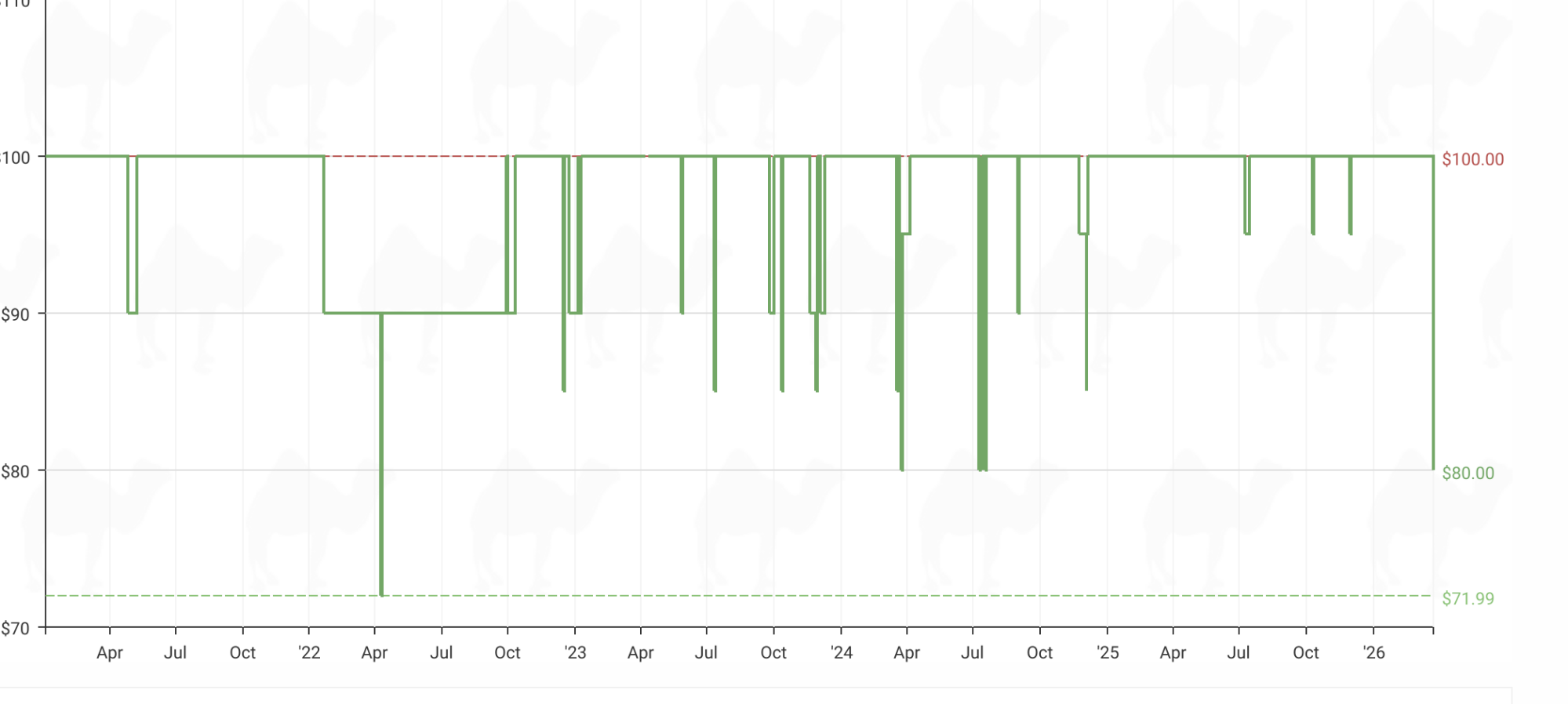
Amazon doesn’t put these cards on sale often, and not usually at such a deep discount. Here’s a chart to show you how relatively rare an occurrence it is:

Roblox price chart

Credit: Amazon

The point is, don’t wait. It will hurt 20% less next time your kid asks you to give them real money to spend on virtual items in a game they will probably tire of within a week. I love Roblox.

PSA: T-Mobile customers have a week to sign up for a free year of MLB.TV

Today marks the start of the 2026 baseball season and in what has sort of become an annual tradition, T-Mobile is once again offering a free subscription to MLB.TV.

In order to take advantage of the deal, T-Mobile customers simply need to log into the T Life app, navigate to the Benefits tab and then hit Redeem after clicking the banner for a free season of MLB.TV. From there, you just need to download the latest version of the MLB app to your mobile device and sign in or create an account. That said, this is a time-limited offer, so if you want the ability to stream regular season baseball for free, you’ll need claim the deal prior to March 31 at 4:59 AM ET. For anyone on a different carrier, this may be enough time to switch providers and still get in on the savings.

Unfortunately, MLB.TV is subject to blackouts and market restrictions, so depending on where you live and where your favorite team is playing that day, you may not be able to catch every game. Sadly, this includes tonight’s 8:05 PM ET matchup between the New York Yankees and the San Francisco Giants, which is streaming exclusively on Netflix. Even so, with a one-year subscription to MLB.TV currently going for $150, this is one of the best perks available from any of the big cellular carriers.

In addition to full season of games, an MLB.TV subscription also includes access to a collection of baseball documentaries, game streams from previous years, World Series films, highlights, news and more. And with over 1.25 million customers having redeemed last year’s offer, this is potentially one of T-Mobile’s biggest offers of the year, with the company claiming to have delivered more than $1 billion in savings since it first started running the promotion 10 years ago in 2016.

This article originally appeared on Engadget at https://www.engadget.com/entertainment/streaming/psa-t-mobile-customers-have-a-week-to-sign-up-for-a-free-year-of-mlbtv-211306444.html?src=rss

The Titanium Apple Watch Series 10 Is Just $449 During the Amazon Big Spring Sale

We may earn a commission from links on this page. Deal pricing and availability subject to change after time of publication.

Flagship Apple Watches tend to start at $399, but the price only goes up from there. If you want a larger size, that’s a slight bump in cost; if you want cellular connectivity, that’s an even larger hit. But the titanium Apple Watch—the “premium” material, if you will—is the most expensive upgrade outside of the Ultra line. These models typically start at $699, but cost $749 for the larger size, and a whopping $799 if you want the stainless steel band. Right now, you can get a titanium Apple Watch for as low as $449 during Amazon’s Big Spring Sale—so long as you’re okay with using last generation’s watch.

Here’s the deal: Amazon currently has the titanium versions of the Apple Watch Series 10 on discount for the Big Spring Sale. You can get the Natural or Slate models with rubber sport bands for $449, or if you want the stainless steel band, you can get the watch in gold for $499. That’s a pretty great price, considering the watch once retailed for $799.

Now, this is the Series 10. The Series 11 is Apple’s newest flagship watch. If you ask me, however, that isn’t a big deal. The Series 10 is still the best Apple Watch for most people, since it has most of the Series 11’s features, while often being available at a discount. They both have large displays that can reach 2,000 nits of brightness; they both have heart rate and sleep tracking with alerts for each; they both support Emergency SOS, and are water resistant up to 50m; they both have the same S10 chip, and support the same gestures; and both have Precision Finding, so you can use your iPhone if you misplace it.

Really, the key advantages of the Series 11 are few, but noteworthy: The battery life is better, up to 24 hours instead of 18 hours; you get 38 hours in Low Power Mode versus 36 hours; and while both watches support fast charging (0-80% in 30 minutes), the Series 11 can get eight hours of battery life in 15 minutes of charge time. The Series 11 also supports 5G, if you opt for the cellular plan. That’s largely it, however. Other than that, the Series 10 is virtually the same watch. Amazon does have the Series 11 discounted at this time, starting at $649. You just need to ask yourself whether those extra features are worth $200.

Our Best Editor-Vetted Amazon Big Spring Sale Deals Right Now

Deals are selected by our commerce team

BRINC’s new police drone uses Starlink, carries Narcan, chases vehicles at 60mph

Drone startup BRINC announced Tuesday a significant upgrade for its law enforcement drones. BRINC’s newest model, Guardian, will have Starlink connectivity on every unit—a first for commercially available drones.

This new model, which will enter production later this year, has a flight time of over an hour and can reach a top speed of over 60 miles per hour. BRINC calls it the “first drone that can pursue vehicles.”

Additionally, Guardian can carry numerous payloads from its charging “nest,” including a floatation device, a defibrillator, epipens, the overdose-reversal drug Narcan, and more. The nest can also robotically swap batteries in about a minute, the company claims.

Read full article

Comments

Apple Can Create Smaller On-Device AI Models From Google’s Gemini

Apple reportedly has full access to customize Google’s Gemini model, allowing it to distill smaller on-device AI models for Siri and other features that can run locally without an internet connection. MacRumors reports: The Information explains that Apple can ask the main Gemini model to perform a series of tasks that provide high-quality results, with a rundown of the reasoning process. Apple can feed the answers and reasoning information that it gets from Gemini to train smaller, cheaper models. With this process, the smaller models are able to learn the internal computations used by Gemini, producing efficient models that have Gemini-like performance but require less computing power.

Apple is also able to edit Gemini as needed to make sure that it responds to queries in a way that Apple wants, but Apple has been running into some issues because Gemini has been tuned for chatbot and coding applications, which doesn’t always meet Apple’s needs.


Read more of this story at Slashdot.

Google’s Pixel Buds Pro 2 Are $60 Off for the Amazon Big Spring Sale

We may earn a commission from links on this page. Deal pricing and availability subject to change after time of publication.

There are all kinds of earbuds to choose from out there—especially if you aren’t dedicated to one specific ecosystem. If you’re an Android user, however, and especially if you’re a Pixel user, you might find that Google’s Pixel Buds Pro are among your best options. Right now, the latest model, the Pixel Buds Pro 2, have a solid 26% discount for Amazon’s Big Spring Sale—bringing the price from $229 down to $169.

The Pixel Buds Pro 2 have a number of features you’d expect from earbuds sporting the “Pro” moniker. There’s Adaptive Audio, which adjusts the volume based on your environment (if your surroundings get too loud, the volume turns up so you can hear); Loud Noise Protection, which dampens loud noises to protect your hearing; and Active Noise Cancellation. These Pixel Buds Pro are also the first to include a Tensor chip built in, Google’s in-house chip. The earbuds use the Tensor A1 chip to power Active Noise Cancellation, which Google says cancels “twice the noise” as the first generation Pixel Buds Pro.

As this is a Google product, and it’s 2026, Pixel Buds Pro 2 also have AI features you can use—powered by Gemini, of course. You can use the buds to talk to Gemini Live without picking up your smartphone, answer calls by nodding your head, or have Gemini field your incoming messages, including summarizing long texts (though we know how AI summaries can be).

Google says that Pixel Buds Pro 2 have 12 hours of listening time when Active Noise Cancellation is disabled, and up to 48 hours with the charging case. With Active Noise Cancellation turned on, you get eight hours of listening time, and 30 hours with the charging case. You can pop the earbuds in the case for five minutes to get 1.5 hours of listening time (with noise cancellation off).

In their review, PCMag found the Pixel Buds Pro 2 “excellent,” with “strong sound quality and solid noise cancellation in a comfortable design.” In their view, the Pixel Buds Pro 2 were definitely best for Pixel users, though all Android users can access the Pixel Buds app for additional customizations. (Sorry, iPhone users.) If you have an Android phone, especially a Pixel, these earbuds are definitely worth a consideration—particularly with the price cut. It’s not the lowest Amazon has had the buds for, but it is the lowest price since January.

This Surprisingly Powerful Compressed Air Duster Is 27% Off Today

We may earn a commission from links on this page.

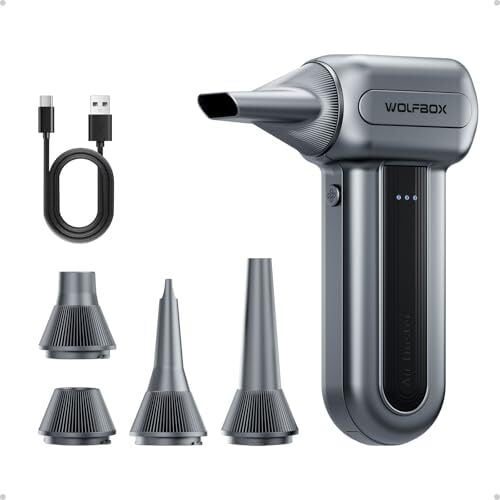
Are you still dusting off your electronics with disposable cans of compressed air? Get with the times, man. All the cool people are using rechargeable air dusters like this one. I love mine so much, and I think you will too—and it’s on sale for 27% off during Amazon’s Big Spring Sale.

Seriously, you really need this thing, even if you don’t think you do. For a one-time purchase, you can have endless compressed air, and blow the dust off anything you want to for the foreseeable future. It’s so much better than compressed air cans: It doesn’t get cold in your hand, it’s makes a satisfying high-pitched whining noise, and it never runs out of propellant. You just recharge it and you’re good to go blow. It doesn’t create the waste of spent compressed air cans either.

I got mine for Christmas, and I was skeptical at first. It’s small enough to fit in your hand, so how could it have the blowing power of a can of compressed air? A couple pulls on the trigger prove it’s better than compressed air. The motor’s top speed is 110,000 rpm, more than enough power to blast the gunk out of electronics, all the little crevices in your car, air filters, and anything else that needs dusting.

I use mine so often that I have started giving them out as gifts. It’s the perfect for any practical person—the kind of tool you wouldn’t think of buying for yourself, but that you’ll use all the time.

Our Best Editor-Vetted Amazon Big Spring Sale Deals Right Now

Deals are selected by our commerce team

HBO Max’s Harry Potter series premieres this Christmas

HBO released a teaser trailer and premiere date for its take on Harry Potter and the Philosopher’s Stone. The show will premiere on the HBO Max streaming network this December 25. It’s a rare case where a big-ticket project is coming out earlier than anticipated instead of later; the series wasn’t expected to arrive until 2027. 

HBO has already proved its bona fides with lush adaptations of fantastical stories several times over, and this trailer looks like more of the same. The team behind the camera includes notable names who have worked on series such as Succession, Game of Thrones, The Last of Us and Killing Eve. Harry Potter creator J.K. Rowling, who alienated many fans after outing herself as transphobic, is also one of the show’s executive producers.

Engadget’s Jess Conditt has already written eloquently on the struggle of when and how to engage with the Harry Potter franchise while rejecting Rowling’s worldview, although the author’s involvement at the top level may make this adaptation a harder sell to the disillusioned community than, say, the Hogwarts Legacy video game where Rowling was barely involved and the studios took a more proactive approach toward presenting many types of diversity, including gender expression. If you’re hyped for this particular show, seems you’ll have a shorter time to wait for it.

This article originally appeared on Engadget at https://www.engadget.com/entertainment/tv-movies/hbo-maxs-harry-potter-series-premieres-this-christmas-202818238.html?src=rss

Webb and Hubble telescopes combine forces for a new view of Saturn

The ESA, NASA and CSA have released new images of Saturn captured by the James Webb and Hubble space telescopes that offer an unprecedented view of the gas giant’s atmosphere. Particularly, comparing shots captured with Hubble against an infrared view from Webb highlights details in the composition and movement of Saturn’s outer layers.

The Hubble images were captured as part of the Outer Planet Atmosphere Legacy program in August 2024, while the Webb images were shot a few months later. “Both sense sunlight reflected from Saturn’s banded clouds and hazes,” NASA says, “but where Hubble reveals subtle color variations across the planet, Webb’s infrared view senses clouds and chemicals at many different depths in the atmosphere, from the deep clouds to the tenuous upper atmosphere.”

Hubble has historically been used to track storms on Saturn, and you can see bands of atmospheric clouds in the telescope’s new photo. The infrared sensors on the Webb telescope are able to highlight even more detail, like the highly-reflective ice of Saturn’s ring, which is practically white in the photo, and grey-green shading on the planet’s poles. The different coloring in the Webb photo could be caused by a “a layer of high-altitude aerosols” scattering light across latitudes, or “charged molecules interacting with the planet’s magnetic field” and causing “auroral activity.”

The visual information from both telescopes is valuable to scientists and should prove to be more valuable over time. “These 2024 observations, taken 14 weeks apart, show the planet moving from northern summer toward the 2025 equinox,” NASA says. “As Saturn transitions into southern spring, and later southern summer in the 2030’s, Hubble and Webb will have progressively better views of that hemisphere.”

This article originally appeared on Engadget at https://www.engadget.com/science/space/webb-and-hubble-telescopes-combine-forces-for-a-new-view-of-saturn-202526270.html?src=rss

Here is NASA’s plan for nuking Gateway and sending it to Mars

NASA’s announcement Tuesday that it will “pause” work on a lunar space station and focus on building a surface base on the Moon was no big surprise to anyone paying attention to the Trump administration’s space policy.

But what should NASA do with hardware already built for the Gateway outpost? NASA spent close to $4.5 billion on developing a human-tended complex in orbit around the Moon since the Gateway program’s official start in 2019. There are pieces of the station undergoing construction and testing in factories scattered around the world.

The centerpiece of Gateway, called the Power and Propulsion Element, is closest to being ready for launch. NASA’s rejigged exploration roadmap, revealed Tuesday in an all-day event at NASA headquarters in Washington, calls for repurposing the core module for a nuclear-electric propulsion demonstration in deep space.

Read full article

Comments

Cloudflare’s New Dynamic Workers Promise A 100x Faster Sandbox For AI Workflows

Cloudflare's New Dynamic Workers Promise A 100x Faster Sandbox For AI Workflows
As AI has become more engrained as part of the software development pipeline, there’s a need for tooling that enables developers to get the most out of deployed AI agents. Cloudflare is doing its part to meet this need with the release of a Dynamic Worker Loader that creates a lean sandbox environment for AI agents, which is latest feature

Ayaneo Next 2 Becomes First PC Handheld Casualty Of Soaring RAM And SSD Prices

Ayaneo Next 2 Becomes First PC Handheld Casualty Of Soaring RAM And SSD Prices
Ayaneo’s Next 2 (also stylized Next II) was teased as far back as January 2023, but was formally reintroduced late last year. There was much enthusiasm for the device, which sports a 9-inch OLED and an AMD Strix Halo APU. But the harsh reality of the current PC hardware market in 2026 has finally caught up to Ayaneo, which just announced that

Reddit will require “fishy” accounts to verify they are run by a human

Reddit will require accounts that exhibit “automated or otherwise fishy behavior” to verify that a human runs them, Reddit CEO Steve Huffman said in a Reddit post today. The verification process aims to combat unwanted bots from flooding Reddit at a time when AI bots are poised to take over the Internet.

“As AI becomes a bigger part of the Internet, we want to make sure that when you’re on Reddit, you know when you’re talking to a person and when you’re not,” Huffman said.

Human verification will only occur if Reddit suspects that an account is a bot. This is “rare” and won’t apply to “most users,” Huffman emphasized. If the account cannot prove that it’s human, it “may be restricted,” he said.

Read full article

Comments

Supreme Court Sides With Internet Provider In Copyright Fight Over Pirated Music

Longtime Slashdot reader JackSpratts writes: The Supreme Court unanimously said on Wednesday that a major internet provider could not be held liable for the piracy of thousands of songs online in a closely watched copyright clash. Music labels and publishers sued Cox Communications in 2018, saying the company had failed to cut off the internet connections of subscribers who had been repeatedly flagged for illegally downloading and distributing copyrighted music. At issue for the justices was whether providers like Cox could be held legally responsible and required to pay steep damages — a billion dollars or more in Cox’s case — if they knew that customers were pirating music but did not take sufficient steps to terminate their internet access.

In its opinion released (PDF) on Wednesday, the court said a company was not liable for “merely providing a service to the general public with knowledge that it will be used by some to infringe copyrights.” Writing for the court, Justice Clarence Thomas said a provider like Cox was liable “only if it intended that the provided service be used for infringement” and if it, for instance, “actively encourages infringement.” Justice Sonia Sotomayor, joined by Justice Ketanji Brown Jackson, wrote separately to say that she agreed with the outcome but for different reasons. […] Cox called the court’s unanimous decision a “decisive victory” for the industry and for Americans who “depend on reliable internet service.”

“This opinion affirms that internet service providers are not copyright police and should not be held liable for the actions of their customers,” the company said.


Read more of this story at Slashdot.

This Budget Fitbit Is Only $70 During Amazon’s Big Spring Sale

We may earn a commission from links on this page. Deal pricing and availability subject to change after time of publication.

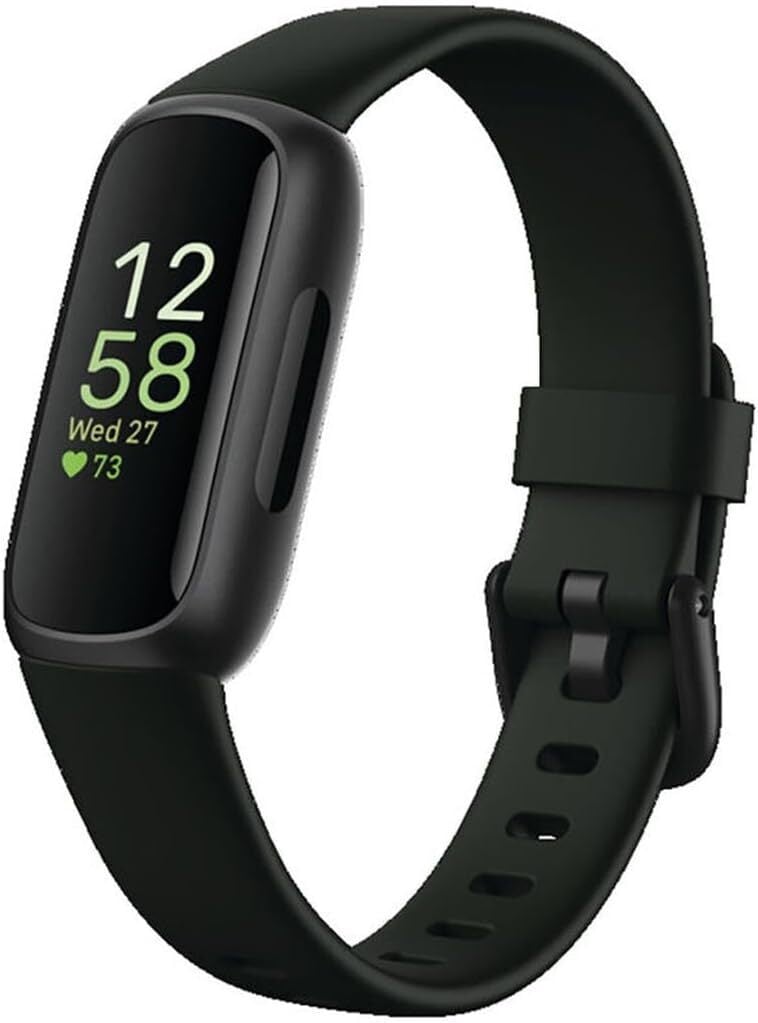
Fitbit devices are among today’s fitness tech deals during Amazon’s Big Spring Sale. The Charge 6 is down to $119.95 (from $159.95) and the Versa 4 is $149.95 (down from $199.95), but I think the best deal of the bunch is the Inspire 3 at $69.95 (down from $99.95). If you want a simple, minimalist fitness tracker, this is a great way to grab one on the cheap. 

The Inspire 3 is, in many ways, a pared-down Charge 6. You can read my review of the Charge 6 here. It’s a basic fitness tracker that will count your steps and track heart rate during workouts, which may be all you want. 

To understand what you’re missing if you go for the Inspire 3: 

  • The Inspire 3 doesn’t have its own GPS, and thus needs your phone to be with you if you want to track your distance and pace when you jog or walk. (The Charge 6 has its own GPS, but doesn’t always work as well as you’d hope—more on that in my review.)

  • The Inspire 3 doesn’t have Google Wallet, Google Maps, or YouTube Music. The Charge 6 has all three, but all require your phone to be nearby and music requires a subscription. 

  • The Inspire 3 has a smaller screen: 0.7×0.5 inches, instead of the Charge 6’s 0.86×0.58 inches.

  • The Inspire 3 has 6 workout types, while the Charge 6 has 40+.

If you’re OK without those extra features, I’d recommend the Inspire 3 for a minimalist fitness tracker. It’s got a 10-day battery life and a slim, bracelet-like shape. And if you want something more full-featured, consider Garmin’s Vivoactive 5, which is on sale for just $179.95 today.

Our Best Editor-Vetted Amazon Big Spring Sale Deals Right Now

Deals are selected by our commerce team

If I Had a Home Gym, This Is the Storage Rack I’d Buy During Amazon’s Spring Sale

We may earn a commission from links on this page. Deal pricing and availability subject to change after time of publication.

If you’re dedicated enough to have a home gym, there’s no reason you should waste precious workout time by digging through a heap of equipment or making multiple trips across your garage to grab different dumbbells between sets.

Normally $129.99, this home gym storage rack is currently on sale for $79.98 as part of Amazon’s Big Spring Sale. If you’ve been tripping over scattered dumbbells or wasting time hunting for the right weights mid-workout, this deal solves both problems for under $80.

At 41.5″W x 37″H, this weight rack is specifically designed for a home gym. There are clear spaces for dumbbells, kettlebells, yoga blocks, resistance bands, medicine balls, and so on—and the whole set-up is on wheels.

When all your smaller equipment piles up in corners or gets kicked under furniture, you end up dealing with completely avoidable obstacles to your workout routine. Having everything organized in one storage rack means you can actually find what you need when you need it.

If you have an even bigger (and messier) home gym set-up, you could spring for the larger 50.4″W x 43.7″H version, currently on sale for $151.98 (down from $189.99). Take stock of just how much equipment you have, so that you can find the right storage solution and get back to training.

Our Best Editor-Vetted Amazon Big Spring Sale Deals Right Now

Deals are selected by our commerce team

We got an audience with the “Lunar Viceroy” to talk how NASA will build a Moon base

At the end of a long day on Tuesday, NASA Administrator Jared Isaacman looked down at a table littered with microphones and jokingly referred to the space agency’s new Moon base manager, Carlos Garcia-Galan, as the “Lunar Viceroy.” It was a bit of humor, but it also seemed to represent affection from Isaacman for a long-time NASA employee so willingly taking on a major new challenge.

Garcia-Galan was, in many ways, the emerging star at the daylong Ignition event in Washington, DC. Heretofore he has largely been an anonymous engineer at NASA who has now been thrust into a very public role of leading the agency’s ambitious Moon base initiative. (His official title, by the way, is program executive.)

Ars had a chance to speak with Garcia-Galan about NASA’s plans and, more importantly, how they might be implemented. Here is a lightly edited (for clarity) transcript of that conversation.

Read full article

Comments

What Happens Now That Meta and YouTube Were Found Legally Negligent

On Wednesday, a Los Angeles jury found both Meta and YouTube negligent for their failure to warn their users about potential dangers associated with their apps and services. Specifically, the jury found that Meta and YouTube “harmed” a young user, a now 20-year-old identified as K.G.M., via addictive features that led to the user’s “mental health distress.”

Meta and YouTube are now on the hook for $3 million in damages. Meta will pay the majority of the sum (70%, or $2.1 million), while YouTube will pay the remaining 30% ($900,000). It’s a landmark case that could have wide-ranging repercussions for all social media platforms.

What was the Meta/YouTube social media case about?

K.G.M.’s case accused Meta and YouTube of acting like tobacco companies or digital casinos in creating products that are addicting and lead to anxiety and depression in their users. Rather than peddle in cigarettes or gambling, Meta and YouTube offer content via infinite scrolling, with recommendations served up by intelligent algorithms that know what users will be interested in. Snap (makers of Snapchat) and TikTok were also named, but settled for an undisclosed sum ahead of the trial.

The case kicked off in January, while the jury began deliberating on Friday, March 13. It’s not over, either: While the jury determined this initial compensation sum, they must now decide on punitive damages for malice or fraud, which could be much higher.

Tech companies are facing many more lawsuits over social media

K.G.M.’s case is far from the only one social media companies are facing. According to The New York Times, there are currently thousands of lawsuits targeting companies like Meta, YouTube, TikTok, and Snap, brought forward by teenagers, schools districts, and state attorneys general. Meta was previously found liable in New Mexico for failing to protect users from child predators; the jury in that case ordered Meta to pay $375 million in damages. It’s an encouraging trend for the plaintiffs, as social media companies were once seen as legally protected in these cases—the idea was, the companies themselves weren’t liable for how people made use of the platform.

A Meta spokesperson told the Times: “We respectfully disagree with the verdict and are evaluating our legal options,” while YouTube did not return a request for comment.

Where do social media companies go from here?

There are still many cases to go, and the verdicts that have been delivered are still fresh. These things also take time: K.G.M. originally filed suit back in 2023, so we might be following many of these other lawsuits for years. But these initial results could be a bellwether for future cases, suggesting that social media companies may need to radically change their platform designs—or risk facing legal repercussions.

In K.G.M.’s case, lawyers presented evidence that executives of both Meta and YouTube knew the harm their platforms caused minors. This is hardly a secret: Social media companies, including Meta, have been documented as being well aware of the effects their platforms have on children—they just chose profits and growth over limiting those potential harms. They might face more of a public reckoning now that these cases are coming back in favor of the plaintiffs.

The key question is whether the impact of such lawsuits will be enough for Meta and the like to change course, or if they will determine their current models are more lucrative, even given the financial risk involved. I have a hard time believing that Meta will change its platform in fundamental ways unless the judgements go a lot higher. The fines involved need to be so great as to overshadow the money the company makes by maintaining the status quo. Otherwise, why would Meta or YouTube change their ways?

To be fair, in recent years companies have started to roll out more controls for parents and more restrictions for underage users. But it’s tough to efforts to protect children seriously when, for example, we know that internally, Meta was perfectly fine with its AI getting flirty with minors.

Meta, YouTube must pay $3M to woman who got hooked on apps as a child

On Wednesday, a Los Angeles jury ordered Meta and YouTube to pay $3 million in damages to a young woman who successfully argued that the companies’ social media apps were designed to addict children.

Meta will pay the majority of the fine, 70 percent, while YouTube-owner Google is on the hook for 30 percent, the jury decided.

During the six-week trial, the jury heard that Meta and Google designed apps with features like auto-play, infinite scroll, and algorithmic recommendations to keep kids online. Feeling trapped in a cycle of constantly using these apps caused the plaintiff, known as K.G.M., “crippling mental distress,” CNBC reported. She developed “severe body dysmorphia, depression, and suicidal thoughts,” and every notification that came through made it harder to stop logging in.

Read full article

Comments