Intel Panther Lake-H Benchmarks And Engineering Sample Sneak Peek

Intel Panther Lake-H Benchmarks And Engineering Sample Sneak Peek
Benchmarks of an Intel Panther Lake-H engineering sample have leaked on X/Twitter, and the results have spurred some interesting debate. Before proceeding, though, it’s important to clarify the nature of engineering sample hardware and how it usually does not reflect the performance of final hardware. This is especially apparent with the ES

Britain Sets New Record, Generating Enough Wind Power for 22 Million Homes

An anonymous reader shared this report from Sky News:

A new wind record has been set for Britain, with enough electricity generated from turbines to power 22 million homes, the system operator has said.

The mark of 22,711 megawatts (MW) was set at 7.30pm on 11 November… enough to keep around three-quarters of British homes powered, the National Energy System Operator (Neso) said. The country had experienced windy conditions, particularly in the north of England and Scotland…

Neso has predicted that Britain could hit another milestone in the months ahead by running the electricity grid for a period entirely with zero carbon power, renewables and nuclear… Neso said wind power is now the largest source of electricity generation for the UK, and the government wants to generate almost all of the UK’s electricity from low-carbon sources by 2030.

“Wind accounted for 55.7 per cent of Britain’s electricity mix at the time…” reports The Times:

Gas provided only 12.5 per cent of the mix, with 11.3 per cent coming from imports over subsea power cables, 8 per cent from nuclear reactors, 8 per cent from biomass plants, 1.4 per cent from hydroelectric plants and 1.1 per cent from storage.

Britain has about 32 gigawatts of wind farms installed, approximately half of that onshore and half offshore, according to the Wind Energy Database from the wind industry body Renewable UK. That includes five of the world’s biggest offshore wind farms. The government is seeking to double onshore wind and quadruple offshore wind power by 2030 as part of its plan for clean energy….

Jane Cooper, deputy chief executive of Renewable UK, said: “On a cold, dark November evening, wind was generating enough electricity to power 80 per cent of British homes when we needed it most.


Read more of this story at Slashdot.

8 Smart Devices That Are Revolutionizing Home Entertainment In 2025

8 Smart Devices That Are Revolutionizing Home Entertainment In 2025
As Amazon kicks off its extended Black Friday Week, a wave of smart entertainment gear is showing off just how far home technology has come in 2025. Screens are bigger, audio is sharper, connectivity is faster, and even the lighting behind your TV can react dynamically to whatever you’re watching. Whether you’re trying to streamline your daily

A decision about breaking up Google’s adtech monopoly is on the horizon

Google made its final arguments in a longstanding case against the US Department of Justice on whether it has to split up its ad tech practices. However, the judge presiding over the case may be looking to wrap up the case before Google has a chance to appeal, according to a report from Reuters. 

On Friday, both sides made their closing statements in the lawsuit where the Justice Department accused the tech giant of illegally monopolizing the ad tech market. While the US District Court Judge Leonie Brinkema ruled in April that Google held a monopoly in the online adtech space, the judge recently asked the Justice Department how quickly an anticompetitive measure could go into effect, adding that “time is of the essence.”

Google’s attorney, Karen Dunn, argued that forcing Google to sell its advertising tech subsidiary would be extreme and hurt customers in the process, according to the report. Google is also reportedly planning to appeal the latest decision. According to Reuters, Brinkema noted that any sort of remedy “most likely would not be as easily enforceable while an appeal is pending,” meaning that Google could delay the forced sale until the appeal is concluded. At the same time, Google is facing a $3.5 billion fine for violating the European Union’s antitrust laws within the adtech industry.

This article originally appeared on Engadget at https://www.engadget.com/big-tech/a-decision-about-breaking-up-googles-adtech-monopoly-is-on-the-horizon-184409011.html?src=rss

Analyzing 47,000 ChatGPT Conversations Shows Echo Chambers, Sensitive Data – and Unpredictable Medical Advice

For nearly three years OpenAI has touted ChatGPT as a “revolutionary” (and work-transforming) productivity tool, reports the Washington Post.

But after analyzing 47,000 ChatGPT conversations, the Post found that users “are overwhelmingly turning to the chatbot for advice and companionship, not productivity tasks.”

The Post analyzed a collection of thousands of publicly shared ChatGPT conversations from June 2024 to August 2025. While ChatGPT conversations are private by default, the conversations analyzed were made public by users who created shareable links to their chats that were later preserved in the Internet Archive and downloaded by The Post. It is possible that some people didn’t know their conversations would become publicly preserved online. This unique data gives us a glimpse into an otherwise black box…

Overall, about 10 percent of the chats appeared to show people talking about their emotions, role-playing, or seeking social interactions with the chatbot. Some users shared highly private and sensitive information with the chatbot, such as information about their family in the course of seeking legal advice. People also sent ChatGPT hundreds of unique email addresses and dozens of phone numbers in the conversations… Lee Rainie, director of the Imagining the Digital Future Center at Elon University, said that it appears ChatGPT “is trained to further or deepen the relationship.” In some of the conversations analyzed, the chatbot matched users’ viewpoints and created a personalized echo chamber, sometimes endorsing falsehoods and conspiracy theories.

Four of ChatGPT’s answers about health problems got a failing score from a chair of medicine at the University of California San, Francisco, the Post points out. But four other answers earned a perfect score.


Read more of this story at Slashdot.

Microsoft isn’t releasing a diversity report for 2025

Microsoft will not release a diversity and inclusion report for 2025 like it has been doing every year since 2019, Stephen Totilo from Game File has reported. Totilo asked the company if it was skipping this year after it failed to publish a report from October to early November like it had done so the previous years. “We are not doing a traditional report this year as we’ve evolved beyond that to formats that are more dynamic and accessible — stories, videos, and insights that show inclusion in action,” said Microsoft’s chief communications officer, Frank Shaw, in a statement. “Our mission and commitment to our culture and values remain unchanged: empowering every person and organization to achieve more.”

As Totilo notes, the Trump administration made it very clear early on that it was against government and corporate diversity, equality and inclusion programs. Trump signed executive orders directing government agencies to roll back DEI initiatives and encouraged the private sector to do the same. Meta reportedly ended its DEI programs earlier this year, while Google reportedly announced that it will “no longer set hiring targets to improve representation in its workforce.”

Totilo previously reported that Microsoft didn’t mention anything about its diversity programs in two shareholder reports for 2025, signifying that the company wasn’t highlighting its DEI initiatives anymore like it did the previous years. Based on its statement, Microsoft isn’t completely dropping its DEI efforts. Without a report, however, we can’t keep an eye on its progress when it comes to things like pay equality and workforce diversity.

This article originally appeared on Engadget at https://www.engadget.com/big-tech/microsoft-isnt-releasing-a-diversity-report-for-2025-180000401.html?src=rss

780,000 Windows Users Downloaded Linux Distro Zorin OS in the Last 5 Weeks

In October Zorin OS claimed it had 100,000 downloads in a little over two days in the days following Microsoft’s end of support for Windows 10.

And one month later, Zorin OS developers now claim that 780,000 people downloaded it from a Windows computer in the space of a month, according to the tech news site XDA Developers.

In a post on the Zorin blog, the developers of the operating system Zorin OS 18 announced that they’ve managed to accrue one million downloads of the operating system in a single month [since its launch on October 14]. While this is plenty impressive by itself, the developers go on to reveal that, out of that million, 78% of the downloads came from a Windows machine. That means that at least 780,000 people on Windows gave Zorin OS 18 a download…

[I]t’s easy to see why: the developers put a heavy emphasis on making their system the perfect home for ex-Windows users.


Read more of this story at Slashdot.

Waymo gets California DMV’s approval to test robotaxis in more areas

The California DMV has approved Waymo’s request to conduct driverless testing and to deploy its robotaxis in more locations in the state. As CBS News reports, Waymo now has the permission to operate across the whole Bay Area, Sacramento and most of Southern California up to the border of Mexico. It’s a huge expansion, based on the maps the state DMV has provided. In the images below, you’ll see Waymo’s old areas shaded in a darker color, while the locations with a lighter shade indicate areas added in the expansion.

Waymo's new operation map in California.
Waymo’s new operation map in California.
California DMV

“We’re officially authorized to drive fully autonomously across more of the Golden State,” Waymo said in an announcement on X. It didn’t say when it’ll start testing and offering rides to the public in the new areas, but it said the company’s “next stop” in California after this is San Diego. Waymo will start offering rides in the city sometime in mid-2026. It will also deploy robotaxis in Las Vegas, including the Strip with plans to expand to the airport, and Detroit next year. In addition, it recently announced that it’s coming to Miami, Dallas, Houston, San Antonio and Orlando in 2026.

On the Waymo and San Francisco subreddits, people pointed out that Waymo robotaxis could become a hit in Wine Country. People could call them for transportation, for instance, if they’re doing wine tasting.

This article originally appeared on Engadget at https://www.engadget.com/transportation/waymo-gets-california-dmvs-approval-to-test-robotaxis-in-more-areas-170000104.html?src=rss

Physicists Reveal a New Quantum State Where Electrons Run Wild

ScienceDaily reports:

Electrons can freeze into strange geometric crystals and then melt back into liquid-like motion under the right quantum conditions. Researchers identified how to tune these transitions and even discovered a bizarre “pinball” state where some electrons stay locked in place while others dart around freely. Their simulations help explain how these phases form and how they might be harnessed for advanced quantum technologies…

When electrons settle into these rigid arrangements, the material undergoes a shift in its state of matter and stops conducting electricity. Instead of acting like a metal, it behaves as an insulator. This unusual behavior provides scientists with valuable insight into how electrons interact and has opened the door to advances in quantum computing, high-performance superconductors used in energy and medical imaging, innovative lighting systems, and extremely precise atomic clocks… [Florida State University assistant professor Cyprian Lewandowski said] “Here, it turns out there are other quantum knobs we can play with to manipulate states of matter, which can lead to impressive advances in experimental research.”


Read more of this story at Slashdot.

X rolls out ‘About this account’ feature that displays a profile’s country of origin and more

You’ll soon be able to see more information about X accounts, including where they’re based and how many times they’ve changed their usernames. X is rolling out a new feature called “About this account” that displays more information about user accounts. Not only will it display the country a user is located in and username changes, the feature will also make public which country the account was created in and whether it’s connected via the web or a specific app store.

X began testing this feature out last month, but more recently, users have been posting screenshots of the new feature being rolled out. X is following in the footsteps of other social media platforms, as already seen with Facebook’s Page transparency and Instagram’s own About this account. As detailed by Nikita Bier, X’s head of product, the upcoming “About this account” feature is meant to verify the authenticity of content posted on X.

You can currently see your own info by clicking on the “Joined” button underneath your X bio, but you may not be able to see others’ info yet since the feature is still being rolled out. In your own profile, you can choose to display either your country or region/continent, with the exact country being the default option. Bier previously said that there will be “privacy toggles,” which will be highlighted on your profile if you opt in. On top of that, users accessing X through a VPN may have a disclaimer on their profile that says, “Country or region may not be accurate,” as spotted by some internet sleuths.

This article originally appeared on Engadget at https://www.engadget.com/social-media/x-rolls-out-about-this-account-feature-that-displays-a-profiles-country-of-origin-and-more-160617187.html?src=rss

Apple’s Latest M5 iPad Pro Is Now $100 Off For Black Friday Blowouts

Apple’s Latest M5 iPad Pro Is Now $100 Off For Black Friday Blowouts
One of these days, Apple will finally get around to releasing a MacBook with a touchscreen display. Today is not that day, and barring a surprise late release, 2025 is not the year it will happen (rumor has it, a MacBook with a touchscreen OLED won’t come out until 2027). So if you need touch support in Apple’s ecosystem, the iPad Pro is still

Tiny ‘Micro-Robots’ in your Bloodstream Could Deliver Drugs with Greater Precision

The Washington Post reports:

Scientists in Switzerland have created a robot the size of a grain of sand that is controlled by magnets and can deliver drugs to a precise location in the human body, a breakthrough aimed at reducing the severe side effects that stop many medicines from advancing in clinical trials… “I think surgeons are going to look at this,” [said Bradley J. Nelson, an author of the paper in Science describing the discovery and a professor of robotics and intelligent systems at ETH Zurich]. I’m sure they’re going to have a lot of ideas on how to use” the microrobot. The capsule, which is steered by magnets, might also be useful in treating aneurysms, very aggressive brain cancers, and abnormal connections between arteries and veins known as arteriovenous malformations, Nelson said. The capsules have been tested successfully in pigs, which have similar vasculature to humans, and in silicone models of the blood vessels in humans and animals… Nelson said drug-ferrying microrobots of this kind may be three to five years from being tested in clinical trials.

The problem faced by many drugs under development is that they spread throughout the body instead of going only to the area in need… A major cause of side effects in patients is medications traveling to parts of the body that don’t need them. The capsules developed in Switzerland, however, can be maneuvered into precise locations by a surgeon using a tool not that different from a PlayStation controller. The navigation system involves six electromagnetic coils positioned around the patient, each about 8 to 10 inches in diameter… The capsules are made of materials that have been found safe for people in other medical tools…

When the capsule reaches its destination in the body, “we can trigger the capsule to dissolve,” Nelson said.


Read more of this story at Slashdot.

Black Friday TV Deals Bring Big Discounts On Mini LED, OLED & QLED Beauties

Black Friday TV Deals Bring Big Discounts On Mini LED, OLED & QLED Beauties
Do you find yourself squinting to see your TV, either because it’s too small or because the image quality stinks? Well, good news—Black Friday deals are live for big screen TVs, and we’re seeing discounts across a wide variety models, including premium OLED and mini LED models. So if you want to treat yourself to a high-end model, you can

PlayStation Portal & PS5 Console Deals Are Lit For Black Friday

PlayStation Portal & PS5 Console Deals Are Lit For Black Friday
This is one of the best times of the year to buy console gaming hardware because manufacturers and retailers tend to be more aggressive with their discounts during the holiday shopping season. And to that end, we’re heading into Black Friday week. If you’re a PlayStation gamer, there are some enticing discounts right now, including savings

Black Friday Deals Up To 50% Off Ring Doorbells To Thwart Porch Pirates

Black Friday Deals Up To 50% Off Ring Doorbells To Thwart Porch Pirates
The holiday shopping season is upon us, especially at retailers ramp up their Black Friday bargains. This also means you’ll need to be extra vigilant about porch pirates. A great way to do that is by investing in a Ring Doorbell. It’s not a cure all against thieves, but it is a possible deterrent, and a few of Amazon’s models are deeply discounted

How to wirelessly charge your phone with max power

Wireless charging has become one of those small but satisfying conveniences of modern smartphones. You drop your device on a pad and watch the battery percentage climb without fiddling with cables or ports. Yet for many users, that effortless charge doesn’t always come at the speed they expect. Sometimes the phone warms up, the percentage barely rises or charging takes far longer than it would if you plugged it in.

Getting the fastest possible wireless charge requires more than just setting your phone on a pad. It depends on using the right equipment, like one of the best wireless chargers or the best multi-device wireless charging pads, plus the latest standards and a setup that makes the most of your phone’s capabilities. Here’s everything you need to know about getting the maximum wireless charging speeds for your smartphone.

How wireless charging actually works

Wireless charging relies on electromagnetic induction. When you place your phone on a compatible pad, electricity flows through a coil inside the charger, creating an electromagnetic field. Another coil inside your phone captures that energy and converts it back into electricity to refill the battery. It sounds simple, but efficiency depends on how precisely those two coils align, how much power the charger can deliver and how well the phone can handle the heat that builds up during the process.

For years, the Qi standard from the Wireless Power Consortium defined how most wireless chargers worked. Nearly every major smartphone brand supports Qi, and you can mix and match chargers and phones from different manufacturers with little trouble.

But the new Qi2 standard, which began rolling out in 2024 and has expanded in 2025, changes how well that power is transferred. Qi2 uses magnetic alignment to snap the phone and charger into the ideal position automatically, reducing wasted energy and heat. It also allows for higher charging speeds, with Qi2 chargers now supporting 15 to 25 watts of output depending on the device.

Understanding what “max power” really means

Each smartphone has a built-in limit to how much power it can receive wirelessly. The iPhone 12 models and later, for instance, support up to 15 watts with MagSafe, and Samsung’s S25 Galaxy series can handle similar speeds through Qi2. If you use a charger that delivers less power than your phone’s maximum, it’ll charge slower. For example, if you use a 10W wireless charger on an iPhone 17, the max speeds will top out at 10W. But even if you buy the most powerful pad on the market, you won’t get results beyond what your phone’s receiver can manage.

The phone’s software also plays a role. Some Android models include a “Fast Wireless Charging” setting that must be enabled to reach full speed. Others may automatically adjust charging rates to prevent overheating, especially if the phone gets too warm. Checking your device’s specifications and settings is an easy way to make sure it’s configured to draw the most power possible.

Picking the right charger and adapter

Wireless chargers vary widely in quality and performance. Qi2 certification is the best way to ensure that a product meets the latest safety and efficiency standards. Certified chargers have been tested to deliver power consistently and to protect against overheating and overcharging. While uncertified or budget pads may still work, they often fall short of their advertised wattage.

The wall adapter that powers the charger is just as important. Many people plug their charging pad into an old 5-watt or 10-watt power brick, which limits the output before the phone ever sees it. To achieve maximum speed, use a high-output USB-C adapter rated at 20 watts or higher, ideally one designed for fast charging like any of those included in our guide to the best fast chargers.

The cable connecting the adapter to the charger matters too. Short, high-quality cables help minimize resistance and power loss, while longer or cheaper cables can slow things down noticeably. Most of the newest USB cables will also list a max wattage they support in their specs; generally, the higher the better when you’re picking up a new one, so it can support charging as many of your devices as possible.

Belkin 3-in-1 wireless charger
Will Lipman Photography for Engadget

Setting up for maximum efficiency

Even with the right hardware, proper placement and environment make a big difference. Wireless charging works best when the phone’s coil is perfectly aligned with the coil in the charging pad. If the two are slightly off-center, energy transfer drops and more heat builds up which slows charging further.

Qi2’s magnetic alignment largely fixes this issue by snapping the phone into the right position, but older Qi chargers still rely on manual placement. Taking a second to make sure the phone is centered can shave minutes off of the total charge time.

Cases and accessories can also interfere with charging. Thick protective cases, wallet covers or anything with metal components can block or weaken the electromagnetic field. Even magnets not designed for Qi2 alignment can throw off the connection. A slim, wireless-compatible case or no case at all will help maintain the strongest link between the coils. It’s also worth keeping the charging area clean and free from dust or small metal objects, which can disrupt the signal or cause heat spots on the pad.

Heat management plays another critical role. Wireless charging generates more heat than wired charging, and if the phone gets too warm, the charging system automatically slows down to protect the battery. Placing the charger on a flat, hard surface in a well-ventilated area helps prevent overheating. Avoid charging on soft fabrics or in enclosed desks that trap heat. Some of the best Qi2 chargers now include small fans or heat-dissipating materials to maintain stable temperatures during fast charging sessions.

Troubleshooting slow speeds

If your phone still charges slower than expected, it’s worth double-checking each part of your setup. Confirm that your charger and phone both support the same standard — Qi2 chargers work best with Qi2 phones, though older Qi devices can still connect at lower speeds. Make sure the power adapter provides enough wattage to match your phone’s maximum wireless rate. If the charger uses a replaceable cable, try swapping it for a certified USB-C cable rated for high power output.

Software updates can also influence performance. Manufacturers often fine-tune charging algorithms through firmware updates, improving heat control or overall efficiency. Keeping both your phone and charger up to date ensures you benefit from those refinements. And if your phone still feels unusually hot or the charging indicator blinks on and off, removing the case or cleaning the pad can often resolve the issue.

The future of faster wireless charging

The arrival of Qi2 has narrowed the performance gap between wireless and wired charging. While a cable will still be faster in most cases, a properly configured Qi2 setup can now come surprisingly close to a wired one. The technology has matured from a slow, convenient novelty into a reliable daily solution for many users. As more devices adopt the new magnetic alignment, and as charger manufacturers refine their designs, wireless charging at maximum power is becoming easier to achieve without any extra effort.

Wireless charging has always promised convenience, but it now delivers real speed too. With the right combination of a Qi2-certified charger, a capable power adapter, good alignment and smart heat management, it’s possible to get close to your phone’s peak charging speeds every time you place it on the pad.

This article originally appeared on Engadget at https://www.engadget.com/mobile/smartphones/how-to-wirelessly-charge-your-phone-with-max-power-130013170.html?src=rss

Dragon Quest 7 Reimagined is all about enhancing the game’s greatest strengths

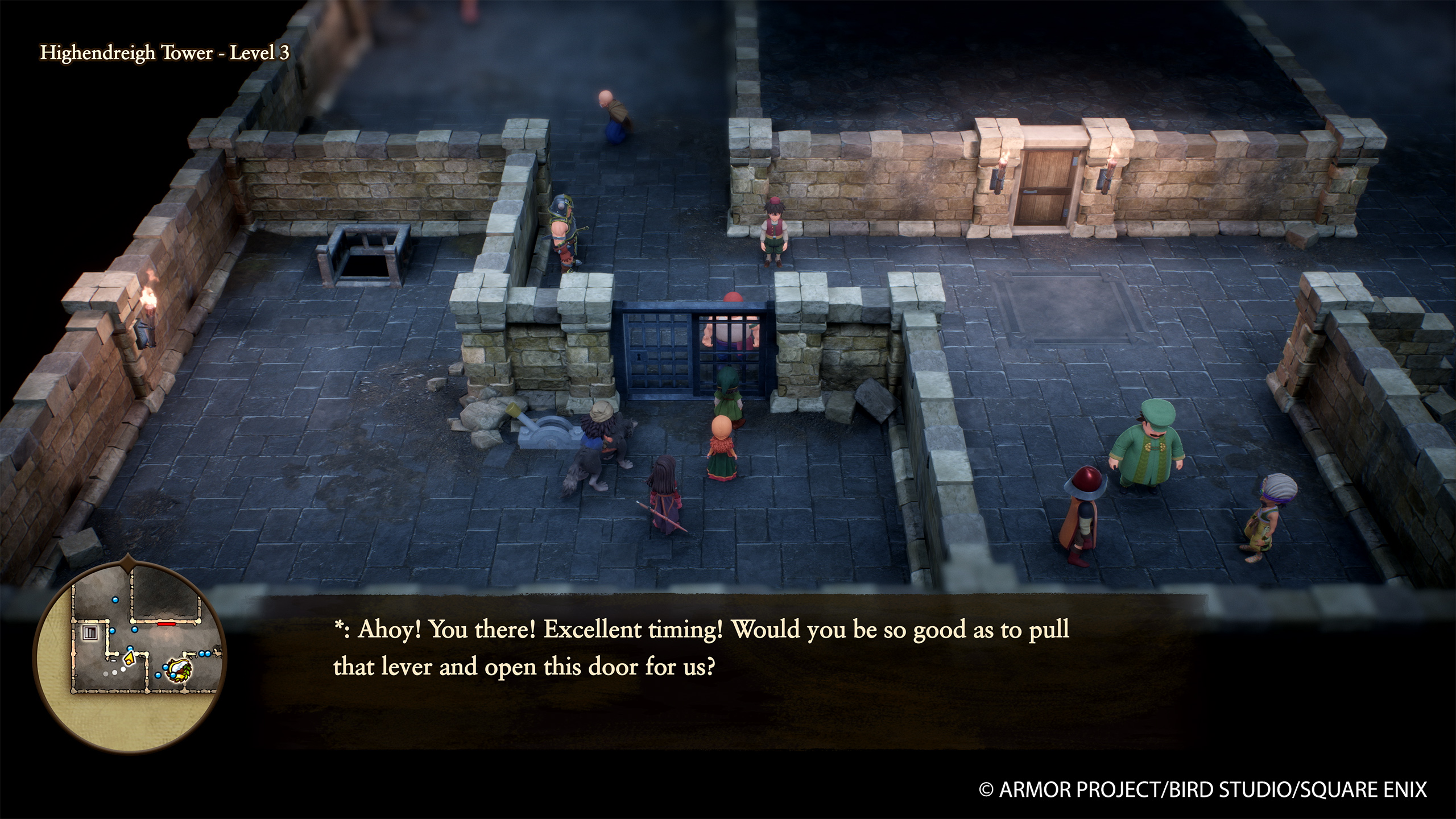
Square Enix has been on a tear in recent years remastering and outright remaking many of its landmark role-playing games. Along with Final Fantasy, the developer has given the Dragon Quest series such attention as well, and the next game on deck is a remake of the PlayStation 1’s Dragon Quest VII. Commonly regarded by fans as one of the most challenging and lengthy games of the series, the developers building Dragon Quest VII: Reimagined — the second remake of the game following the 3DS release in 2013 — are aiming to reshape DQVII with a striking new visual style and a refocused adventure.

I recently got to spend a couple of hours with Dragon Quest VII: Reimagined, seeing its new interpretation of the 2000 classic JRPG and some of the more noteworthy updates to its combat. So far, the remake is making some intriguing choices that not only aim to give the sprawling time-travel plot a better sense of direction but also streamline some of the original’s more exhaustive and challenging beats.

The original Dragon Quest VII carried the familiar conceit of earlier entries, focusing on a party of high-fantasy adventurers embarking on an epic adventure filled with dungeons to explore and powerful monsters to fight. But DQVII deviated from the traditional Dragon Quest storyline by focusing on the party’s adventures through time. As the Hero and his friends uncover the lost history of their world, they’ll step back into previous eras to explore bygone kingdoms and continents that will reveal a larger conspiracy in the present. Along the way, they’ll build their bonds of friendship that will stretch across time.

Reimagined does well to capture that sense of adventure that the series does so well. Even as the series has evolved with new entries, it still strikes a balance between old-school, turn-based JRPG gameplay and modern storytelling flair. What’s especially novel about the remake of Dragon Quest VII is its sharper, visually expressive 3D art style. Using diorama models and real doll versions of the party as reference material for the look of the game, the new 3D visuals really capture the whimsical and emotive style of the late Akira Toriyama’s distinctive art, which has given the series its unique look. But with the move to a new 3D style, Reimagined sets itself apart from the previous games by feeling more like an animated adventure film.

Dragon Quest 7 Reimagined
Armor Project/Bird Studio/Square Enix

Along with the visual style, the developers also focused on reshaping sections and the overall storytelling of DQVII to offer a more satisfying experience. According to game producer Takeshi Ichikawa, one of the larger goals of remaking Dragon Quest VII was to improve the flow of the game, which ultimately made for a more satisfying sense of adventure.

“The ‘reimagined’ elements of the narrative allude to improvements in the game’s overall framework, which offers a much deeper and more compelling experience,” Ichikawa said. “In our effort to streamline the overall story progression and provide a more engaging narrative, we decided to cut subplots that have little or no direct relevance to the main scenario. While some content has been removed, entirely new scenarios have also been introduced. Our goal was to build upon the strengths of the original game while striving to deliver a deeper, more immersive story experience for modern players.”

During my hands-on time, I got to explore two separate sections of the game. These focused on the early-game Emberdale dungeon, where townsfolk committed themselves to a volcano ritual to pacify a fire demon within. The other section focused on the Wetlock scenario, which had the party confront a mysterious magic user who whisked away townsfolk to a mysterious tower in a flooded land. 

My memories of the original and 3DS remake came back while playing Reimagined, which made it easy to slide back into that dungeon-crawling flow. Much like the original, Reimagined still sticks with traditional turn-based combat, and the new visual style really helps emphasize the sense of impact and tactics at work in battle — more so than in other games in the series. I especially liked how unique each character felt, particularly the wolf-riding bandit Ruff, who is  fun to use in battle. 

Dragon Quest 7 Reimagined
Armor Project/Bird Studio/Square Enix

During the Wetlock section, I generally found the challenge to be fair, and I even discovered a good leveling spot fighting golems and Metal Slimes that popped up on occasions. But things can easily kick into high gear when taking on the elite enemies and the end boss of the questline. I had to carefully assess the available skills and employ a range of offensive and defensive abilities to survive. The remake is not so much about removing the sense of challenge from the original, but rather about maintaining it while offering more options to help with battles.

One of the larger innovations to Reimagined combat is the Moonlighting system, which allows each party member to equip two vocations at once. The original game allowed each character to only have one vocation at a time, and switching classes reset your level. This created a lot of busywork in the original game, so with this new two-class approach, it cuts down on grinding significantly and keeps you feeling empowered. But on a more strategic level, it also adds a lot more utility and variety to each character’s loadout. It also does well to make a party with more diverse skills, which adds a lot more charm to the group.

Dragon Quest 7 Reimagined
Armor Project/Bird Studio/Square Enix

There’s so much thought put into the top-down rework of the original game for Dragon Quest VII: Reimagined, and I found the changes to be a very charming and personable  approach to remaking it. Even back in 2000, the original game was a very ambitious take on the series. Not just being the first 3D entry, but also in how it actually utilized many of the different locations and characters from across the sprawling story in a more meaningful way. The original is still a great entry in the series, but it’s one that feels a bit tough to revisit. That makes the developer’s intent on streamlining and refocusing to feel quite appropriate, and I quite dug the changes I saw during my hands-on time.

So far, Dragon Quest VII: Reimagined looks to maintain the ambition and scope of the original, but hone it into a more focused and satisfying JRPG. It adds a seriously impressive visual style that brings it to life. According to the remake’s producer, Reimagined and its new approach to remaking Dragon Quest is about adding a new sense of energy to the series, and it’s so far doing just that.

“We believe that existing fans will find the game satisfying. At the same time, since this title has been reimagined from the ground up as a modern release, we’re also excited for many new players to enjoy it as their first Dragon Quest experience,” Ichikawa said. 

Dragon Quest VII: Reimagined will be released on February 5, 2026 for PC, PS5, Xbox Series X|S and Nintendo Switch 1 & 2.

This article originally appeared on Engadget at https://www.engadget.com/gaming/dragon-quest-7-reimagined-is-all-about-enhancing-the-games-greatest-strengths-130000125.html?src=rss

Court Ends Dragnet Electricity Surveillance Program in Sacramento

A California judge has shut down a decade-long surveillance program in which Sacramento’s utility provider shared granular smart-meter data on 650,000 residents with police to hunt for cannabis grows. The EFF reports: The Sacramento County Superior Court ruled that the surveillance program run by the Sacramento Municipal Utility District (SMUD) and police violated a state privacy statute, which bars the disclosure of residents’ electrical usage data with narrow exceptions. For more than a decade, SMUD coordinated with the Sacramento Police Department and other law enforcement agencies to sift through the granular smart meter data of residents without suspicion to find evidence of cannabis growing. EFF and its co-counsel represent three petitioners in the case: the Asian American Liberation Network, Khurshid Khoja, and Alfonso Nguyen. They argued that the program created a host of privacy harms — including criminalizing innocent people, creating menacing encounters with law enforcement, and disproportionately harming the Asian community.

The court ruled that the challenged surveillance program was not part of any traditional law enforcement investigation. Investigations happen when police try to solve particular crimes and identify particular suspects. The dragnet that turned all 650,000 SMUD customers into suspects was not an investigation. “[T]he process of making regular requests for all customer information in numerous city zip codes, in the hopes of identifying evidence that could possibly be evidence of illegal activity, without any report or other evidence to suggest that such a crime may have occurred, is not an ongoing investigation,” the court ruled, finding that SMUD violated its “obligations of confidentiality” under a data privacy statute. […]

In creating and running the dragnet surveillance program, according to the court, SMUD and police “developed a relationship beyond that of utility provider and law enforcement.” Multiple times a year, the police asked SMUD to search its entire database of 650,000 customers to identify people who used a large amount of monthly electricity and to analyze granular 1-hour electrical usage data to identify residents with certain electricity “consumption patterns.” SMUD passed on more than 33,000 tips about supposedly “high” usage households to police. […] Going forward, public utilities throughout California should understand that they cannot disclose customers’ electricity data to law enforcement without any “evidence to support a suspicion” that a particular crime occurred.


Read more of this story at Slashdot.

This hacker conference installed a literal antivirus monitoring system

Hacker conferences—like all conventions—are notorious for giving attendees a parting gift of mystery illness. To combat “con crud,” New Zealand’s premier hacker conference, Kawaiicon, quietly launched a real-time, room-by-room carbon dioxide monitoring system for attendees.

To get the system up and running, event organizers installed DIY CO2 monitors throughout the Michael Fowler Centre venue before conference doors opened on November 6. Attendees were able to check a public online dashboard for clean air readings for session rooms, kids’ areas, the front desk, and more, all before even showing up. “It’s ALMOST like we are all nerds in a risk-based industry,” the organizers wrote on the convention’s website.

“What they did is fantastic,” Jeff Moss, founder of the Defcon and Black Hat security conferences, told WIRED. “CO2 is being used as an approximation for so many things, but there are no easy, inexpensive network monitoring solutions available. Kawaiicon building something to do this is the true spirit of hacking.”

Read full article

Comments

Running an 1930s newspaper, foreseeing martial arts fights and other new indie games worth checking out

Welcome to our latest roundup of what’s going on in the indie game space. A whole bunch of intriguing games have arrived over the last week or so, and we got some tasty details on some upcoming projects, including one called Drywall Eating Simulator (trust me on this one).

But first, an update on a game that’s been around since 2004 and had completely flown below my radar until now. That’s despite it reaching more than 80,000 daily unique players and having more than 4 million players overall. You can seemingly do pretty much whatever you want in Torn, including studying to become a doctor, opening a hair salon or buying a home (it’s truly a fantasy world). However, this is a place where crime is rife. The team behind the text-based online RPG this week revealed some fascinating stats to mark the 21st anniversary. 

For instance, 1,204 people who joined the fray in 2004 are still active, including at least one who has been there since the first day. Since Torn City was established 21 years ago, more than 3.6 billion criminal offenses have been committed and yet its justice system has only doled out just under 52 million prison sentences. Since August alone, more than 4.4 million buildings have been burned. Players have committed more than 410 million assaults against each other, 12 percent of which targeted the groin. 

Torn sounds super fascinating! I love that it’s been running for so long and still thriving. More than 31,000 players have subscribed to support the game and keep it running, though it’s free to play. The developers have updates planned for next year and beyond. I’m looking forward to checking it out at some point and maybe roleplaying as a goody-two-shoes flower shop owner. 

New releases

From publisher Twin Sails Interactive and the four-strong team at Sparrow Night comes News Tower, which arrived fully formed this week after nearly two years in early access. This is a management sim that tasks you with running your own newspaper in 1930s New York. 

Starting in the wake of the 1929 stock market crash and mobsters smashing up the newsroom, you’ll try to turn around a struggling publication that you inherit from your family. You’ll construct offices and set up printing presses; hire and manage reporters and other staff; assemble your weekly newspaper; and deal with various groups that are jostling for power and trying to influence your coverage. 

I thought last year’s Times and Galaxy, which casts you in the role of a robot journalist, was mostly lovely, but it missed the mark on the actual newsgathering side of the equation. I’ve found no such issues with News Tower so far. I love that a story can change when you assign different reporters to each step (say, one focused on crime vs. one focused on politics). They’ll find distinct angles, which could help you sell more copies of the paper or draw readers away from rivals when you land an exclusive.

I’m only a little ways into News Tower, but as someone who started out their career at a newspaper, this is like catnip to me. I expect to spend quite a bit of time with this game. News Tower 1.0 is out now on Steam. It usually costs $25, though there’s a 20 percent discount until December 2.

Forestrike is a 2D martial arts roguelite from Skeleton Crew. You can practice combat encounters as many times as you like, but you only have one proper shot to take out multiple opponents in each battle. It sounds a little like Katana Zero in that regard. Succeed, and you’ll move forward. Lose, and it’s the end of your run. If you manage to win without relying on this foresight feature, you’ll achieve an “ultimate victory.”

On each run, you’ll choose your path and learn new techniques. Forestrike, which is published by Devolver Digital, seems interesting since it’s a blend of puzzle game and action roguelite — you’ll need to figure out a way to succeed in each battle and then pull that off successfully on your actual attempt. The game is out now on Steam for $10. It’s coming to Nintendo Switch soon.

Here’s a puzzle game of a different flavor. In Umami, from Mimmox and co-publisher Nexting, the aim is to create dioramas of cakes and food towers using virtual wooden blocks. You have a reference guide to work from if you choose, or you can just try to figure out for yourself how all the pieces fit together. 

It’s a lovely, relaxing experience with some laid-back beats. Umami is out now on Steam. It’s usually priced at $14, though there’s a 15 percent discount until December 1.

A Pinball Game That Makes You Mad is a game from Azimuth Studios in the vein of rage-inducing precision platformers like Getting Over It with Bennett Foddy and Only Up. The aim is to guide a person who is trapped in a pinball to the goal using a single button that controls the flippers.

Make a mistake, and you can erase a great deal of progress. A press release indicated that a playthrough will take between 10 and 30 hours, which is a huge range.

I’ll never find out myself how accurate that estimated playtime is, because the demo did, in fact, make me mad and not want to play the full game, though I appreciate what the devs are going for. A Pinball Game That Makes You Mad is out now on Steam for $10, but a 15 percent discount until November 25 brings the price down to $8.50.

I really like that I’ve been able to keep up with this little tradition of including a dog game in this roundup every week. Samurai Academy: Paws of Fury is a followup to Paws of Fury: The Legend of Hank, a 2022 animated movie I haven’t seen that’s apparently a “loose remake of Blazing Saddles.” Color me intrigued!

This is an action-adventure game with platforming and tower defense aspects. It casts you in the role of Hank, a “dog samurai in a world full of cats.” It looks quite charming, though it does remind me that I really do need to go back and get the platinum trophy in Ghost of Yōtei. Samurai Academy: Paws of Fury — from developers Fishing Cactus and ZEROlife Games, and publisher Maximum Entertainment — is out now on Steam, Nintendo Switch, PS5, and Xbox Series X/S. There’s a two-player co-op mode available on all platforms, except for Switch.

Upcoming 

Erosion is a neat-looking twin-stick action roguelike from Plot Twist (The Last Case of Benedict Fox) and publisher Lyrical Games. Every time you die, time advances by a decade and the post-apocalyptic Wild West setting shifts accordingly, with the decisions you make influencing the future. 

In this open-world shooter, you’ll delve into dungeons filled with enemies and bosses as you try to rescue your kidnapped daughter. Avoid death often enough, and you might just find your offspring before she reaches old age. There are more than 100 skills and modifiers to unlock and dozens of weapons available to help you assemble an effective build. The environments are destructible too.

I really like the voxel art here, including the way the characters bob up and down. Erosion is set to arrive in spring 2026 in early access on Steam, Xbox Series X/S, Xbox Cloud and the Xbox PC app. It’ll be available on Game Pass.

Speaking of Xbox, one of my favorite games of last year is coming to Microsoft’s consoles. The comedy adventure Thank Goodness You’re Here! is slated to hit Xbox Series X/S on December 9. The delightfully rude and funny game from Coal Supper and Panic is already out on PC, PS4, PS5 and Nintendo Switch. 

We’re far from done with the silliness this week. If you haven’t quite had your fill of obstacle-laden walking sims for this year after Baby Steps, might I direct your attention toward Ultimate Grandma Simulator? 

You’ll help Granny navigate a dozen levels as she searches for her missing grandson. You’ll need to evade everything from wrecking balls to zombies, and parry projectiles like frisbees and bombs. A serious game this is not. If you collect hidden golden coins, you’ll unlock some of Granny’s memories too. Circo, PlumPointTwo and publisher We Don’t Have A Studio are set to bring Ultimate Grandma Simulator to Steam on December 2.

I must admit, the title of Drywall Eating Simulator caught my attention and not in a good way. But after reading more about it and watching the trailer, I’m intrigued by this game from Peripheral Playbox.

According to the Steam page, it’s a “physics-based 3D adventure carefully constructed to simulate the delights of late capitalist life.” After engaging in mindnumbing small talk and dealing with the infuriating stressors of everyday life, what better way to unwind than by munching on some drywall? Just don’t tell anyone about your cravings. 

This game has a very odd and yet somehow deeply relatable concept. Definitely something to chew on. It’s coming to Steam on December 10.

This article originally appeared on Engadget at https://www.engadget.com/gaming/running-an-1930s-newspaper-foreseeing-martial-arts-fights-and-other-new-indie-games-worth-checking-out-120000559.html?src=rss