Walmart Black Friday deals include the AirPods Pro 2 for their lowest price yet

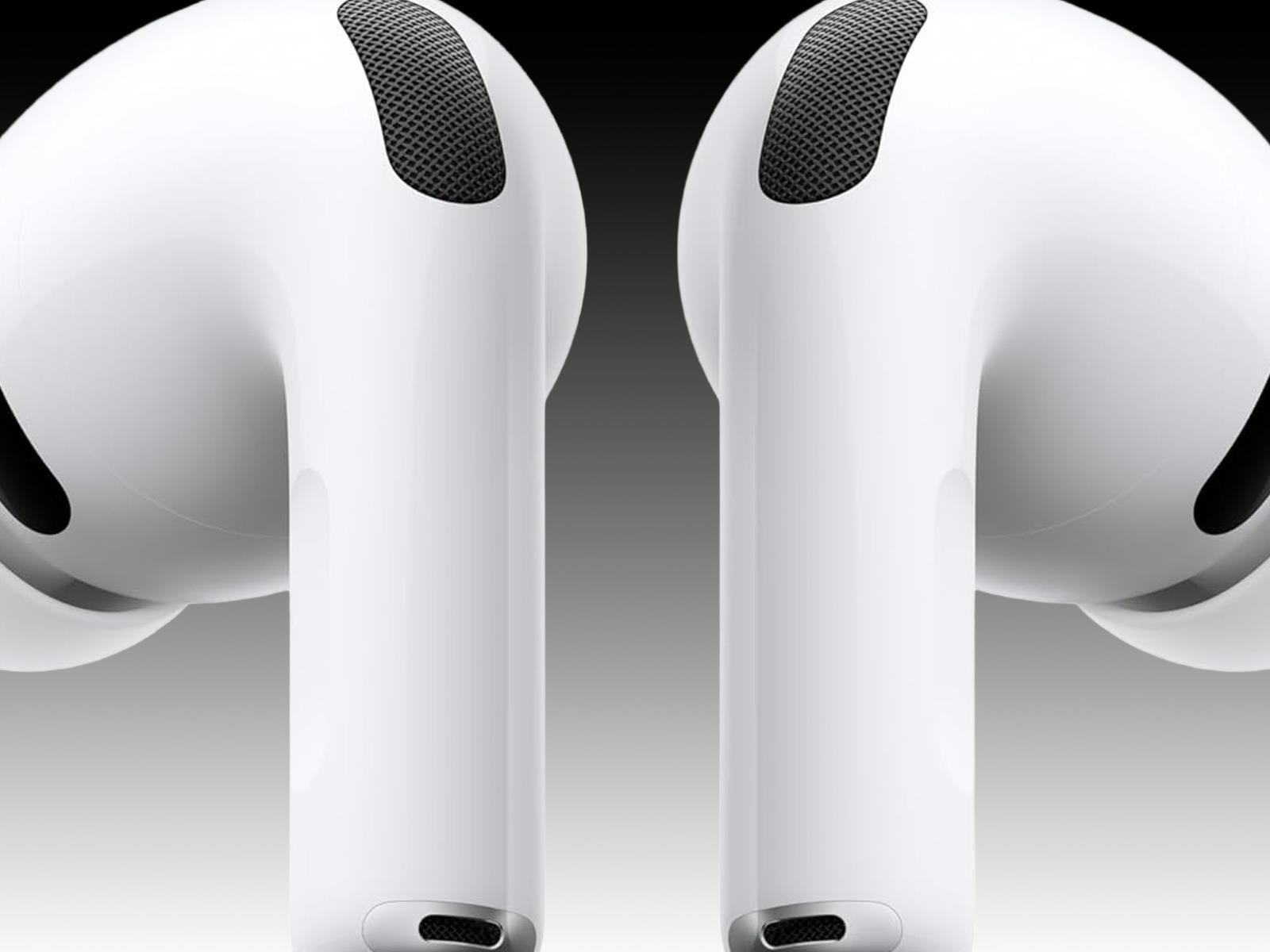
Apple updated its flagship earbuds this year with the new AirPods Pro 3, but the AirPods Pro 2 were our top picks for the best wireless earbuds for Apple users for many years before that. They’re a bit hard to find at this point, but Walmart Black Friday deals have come for them (in addition to a bunch of other Apple products). Walmart has the AirPods Pro 2 for $139, which is the lowest price we’ve ever seen them and more than $100 off their standard $249 price tag. During Black Friday last year, they dropped to around $155.

At this price, the AirPods Pro 2 are a good option for anyone who wants most of the conveniences and features of the Pro 3s without spending nearly $100 more. They have excellent active noise cancellation and great sound quality, and thanks to a firmware update, they do support Apple’s new Live Translation feature. Using the buds in tandem with the Translate app on iPhones running iOS 26 or later, you can translate foreign languages in conversation in real time, hearing other languages being spoken to you in your preferred language.

Sound quality remains great on the Pro 2 and battery life hits at around six hours of use on a single charge with ANC enabled. The wireless charging case that comes with the Pro 2 actually offers more total hours of listening time than the Pro 3 — 30 hours in total, in comparison to the Pro 3’s 24 hours. You also get most of Apple’s health tracking capabilities along with all the conveniences of the H2 chipset, which includes quick pairing and switching, plus hands-free Siri. What you won’t get here is built-in heart rate tracking and improved sound quality and ANC, all of which are stand-out features of the new Pro 3.

In addition to the AirPods Pro 2, other AirPods are on sale for Black Friday. AirPods 4, both with and without ANC, are down to record-low or near-record low prices. Plus, the new AirPods Pro 3 are on sale for their best price since their launch in September. We’ll update this post as more Walmart Black Friday tech deals come in.

This article originally appeared on Engadget at https://www.engadget.com/deals/walmart-black-friday-deals-include-the-airpods-pro-2-for-their-lowest-price-yet-170032969.html?src=rss

Meta Faces Scrutiny As Senators Link Facebook & Instagram To Billions In Scam Ad Revenue

Meta Faces Scrutiny As Senators Link Facebook & Instagram To Billions In Scam Ad Revenue
Josh Hawley and Richard Blumenthal, two U.S. senators, have asked the FTC and SEC to probe Meta over an estimated $16 billion in scam ad revenue in 2024. A letter from the two to the agencies stated, “The FTC and SEC should immediately open investigations and, if the reporting is accurate, pursue vigorous enforcement action where appropriate,”

Google Says It Isn’t Using Your Emails to Train Its AI

Last week, tech headlines were abuzz with a concerning claim: According to some on social media platforms, and even some news outlets, Google had secretly opted Gmail users into sharing their emails with Gemini. The goal? To train Google’s AI. While this controversy set off quite a lot of noise, it appears much of the conversation kicked off with this inflammatory post on X, complete with select words in all caps:


This Tweet is currently unavailable. It might be loading or has been removed.

According to the poster, the only remedy for the situation is to disable a setting you’ve probably never heard of: “smart features.” The claims suggest “smart features” was switched on in two locations on your account: One that controls Gmail, Chat, and Meet, and another that enables it in the larger Google Workspace suite—assuming you have a Workspace account. The “smoking gun” is a small part of Google’s privacy policy which says that the company does not use your Workspace data to train its AI models, without permission. Taken at face value, the assertion is that Google opted you into these settings, thus taking your “permission” to start using your data for this AI training.

As of this morning, the post has nearly 150,000 likes on X, but the claims spread far and wide across the internet. Even Malwarebytes ran a story explaining the situation, and urging users to disable these settings to keep their messages out of Google’s AI training. As it turns out, however, Google doesn’t actually appear to be doing this.

What are “smart features?”

I reached out to Google on Friday to see if the company had any comment concerning these claims. In response, I received the following from a Google spokesperson:

“These reports are misleading—we have not changed anyone’s settings, Gmail Smart Features have existed for many years, and we do not use your Gmail content for training our Gemini AI model. Lastly, we are always transparent and clear if we make changes to our terms of service and policies.”

Indeed, “smart features” has existed for years. In fact, Lifehacker first covered the setting back in 2020, nearly three years before Google first launched Bard (now Gemini). To the claimants’ credit, smart features does use your data to improve Google features, but not to train AI models en masse. Instead, smart features uses your data to customize your specific Google experience. In Gmail, that might mean learning how you write, to generate more relevant smart replies; in Search, that might mean suggesting keywords based on previous searches; in Maps, that might mean showing restaurant reservations; in Wallet, that might mean recommending tickets for shows based on your interests. Smart features also powers core Google features, like spam filters and categorization.

That’s not to say that you should necessarily be down for smart features: If you personally don’t care for Google collecting your data to customize your personal experience, you can absolutely turn these features off. But it’s important to understand what you’re choosing to turn on or off: Just because someone claims that these features are doing something doesn’t make it true. Turn off smart features if you want, but just know that it has no impact on how Google handles your private messages, or how it trains its AI models for everyone. Plus, it may impact how apps like Gmail function: You may not be able to sort your emails into categories, or stop certain spam from getting into your inbox.

How to disable “smart features”

If you do want to turn off smart features, it’s easy to do. You’ll find the settings in the Gmail web app: Click the settings gear, then choose “See all settings.” Here, scroll down, and disable the toggle next to “Smart features.” You’ll need to agree to “Turn off and reload” Gmail in order to see the changes take effect.

If you have a Workspace account, you have another settings page to manage. Click “Manage Workspace smart features settings,” then disable the toggles next to “Smart features in Google Workspace” and “Smart features in other Google products.” Finally, choose “Save.”

Just remember: These settings control a number of smart features across your Google products. As such, you might notice certain features missing going forward. To revert your changes, return to these settings pages at any time and flip the toggles back on.

Google isn’t in the clear

The dust has settled since controversy’s peak last week. Malwarebytes issued a correct to its original article, sharing the same spokesperson statement I received. The site says that Google’s vague rewrite of the smart features setting contributed to this confusion, but that it does appear the setting doesn’t scrape users’ private messages to train Gemini.

However, that’s not to say Google is entirely in the clear here. While this specific claim might not be true, a lawsuit claims the company improperly gave Gemini private user data from Gmail, Chat, and Meet without the permission of those users. Google as a whole doesn’t have the best reputation when it comes to respecting users’ privacy too, so it’s not surprising that these claims took off the way they did.

Malwarebytes also makes the point that while Google says these settings are all opt-in, many users don’t actually remember opting in themselves, further fueling confusion around smart features. To be candid, I definitely don’t remember enabling smart features on either my personal or work Gmail accounts, though it’s entirely possible I did. All I know is these settings are on now, and while I’m considering disabling them, I also don’t know if I’d be willing to get rid of all smart features.


The Slow Transformation of Notepad Into Something Else Entirely Continues

Microsoft is rolling out yet another update to Notepad for Windows 11 Insiders that adds table support and faster AI-generated responses, continuing a transformation of the once-minimal text editor that has drawn sustained criticism from users who preferred its original simplicity. The update, version 11.2510.6.0, lets users insert tables via a formatting toolbar or Markdown syntax and enables streaming responses for the app’s Write, Rewrite, and Summarize AI features.


Read more of this story at Slashdot.

Black Friday streaming deals include one year of HBO Max for $36

HBO Max has launched its latest offer, giving new subscribers one year of streaming for $36 through December 1. This Black Friday streaming deal is on the ad-supported option, which normally goes for $11 per month. With this discount, you’re getting it for $3 per month for one year. It’s a rare opportunity to explore HBO Max’s mix of originals, Warner Bros. films and live sports while paying less than usual. You can sign up via HBO Max’s website or, if you’re a Prime Video subscriber already, via that service as an add-on.

HBO Max has one of the best libraries of content in the streaming market, combining HBO’s acclaimed originals with Warner Bros. theatrical releases, Discovery content and live sports. The service now runs across three main plans. The Basic With Ads plan, the one included in this deal, allows streaming on two devices in full HD and costs $11 a month at full price. The Standard plan adds offline downloads, more live sports coverage and better device flexibility for $18.49 per month. The Premium plan increases quality to 4K with Dolby Atmos sound (where available), four simultaneous streams and up to 100 downloadable titles for $23 monthly.

While the feature differences matter, the real appeal of HBO Max is its library. Subscribers get access to the full catalog of HBO originals, including House of the Dragon, The White Lotus, The Last of Us and Euphoria, alongside recent Warner Bros. theatrical hits like Dune: Part Two and Barbie. The addition of Discovery content brings in reality favorites such as Fixer Upper: The Hotel and 90 Day Fiancé, while sports coverage through TNT and TBS channels includes NHL, NASCAR, college football and more.

It’s worth noting that live sports are still limited to certain tiers and regions and 4K availability varies by title. But compared with other premium services that have recently raised prices or limited simultaneous streams, HBO Max’s current setup offers strong flexibility across its plans.

If you’re considering which streaming platform gives the best range of new shows, live events and cinema releases, our guide to the best streaming services compares HBO Max with other major options. For now, this one-year subscription offer provides a straightforward way to explore HBO’s latest hits and a wide catalog of content at a lower upfront cost.

This article originally appeared on Engadget at https://www.engadget.com/deals/black-friday-streaming-deals-include-one-year-of-hbo-max-for-36-163017424.html?src=rss

The OnePlus 15R smartphone is budget-friendly, durable and coming next month

OnePlus just revealed a trio of products, including the long-anticipated 15R smartphone. This is a redesign of the OnePlus 15, which is a device we rather enjoyed. The 15R will presumably be a budget-friendly version of the flagship 15, based on past releases, but we don’t have a price just yet. It is, however, being referred to as “the ultimate value high quality flagship device.”

The company hasn’t dropped any real specs just yet, but we do know that this handset prioritizes durability. As a matter of fact, OnePlus says the 15R has “the industry’s most complete durability ratings of IP66, IP68, IP69 and IP69K.” This phone should take a licking and keep on ticking.

A durable phone.
OnePlus

It’ll be available in two colors. There’s a black one and a mint green design. The phone launches on December 17, which doesn’t leave OnePlus a lot of time to provide specs and pricing information. Only customers in Europe, India and North America will be able to buy the handset at first.

Three tablets.
OnePlus

OnePlus also just revealed the Pad Go 2, which looks like a decent enough mid-range tablet. It boasts an anti-glare finish and is available in both black and purple. This will be the first tablet from the company to offer 5G connectivity. It comes with an integrated stylus, which has been “designed to enhance productivity and precision for note-taking and creative work.” It also drops on December 17 in Europe, India and North America.

A watch.
OnePlus

The OnePlus Watch Lite is a budget-friendly version of its flagship smartwatch, offering top-tier “health and fitness features to an even more accessible price point.” We don’t have that price point just yet. This will only be available in a silver finish and also drops on December 17, but just in Europe. 

This article originally appeared on Engadget at https://www.engadget.com/mobile/smartphones/the-oneplus-15r-smartphone-is-budget-friendly-durable-and-coming-next-month-163000244.html?src=rss

AMD Zyphra GPU Cluster Gives Birth To ZAYA 1 MoE AI Model, Smokes Llama3.1

AMD Zyphra GPU Cluster Gives Birth To ZAYA 1 MoE AI Model, Smokes Llama3.1
AMD is in a celebratory mood after AI research firm Zyphra successfully trained its cutting-edge, large-scale Mixture-of-Experts (MoE) model, ZAYA1, entirely on AMD’s accelerated computing platform, which consists of Instinct MI300X GPUs, Pensando Pollara 400 networking hardware, and the ROCm software stack.

What are MoEs, exactly? You

You Can Get This Google Nest Thermostat E on Sale for Over 50% Off for Black Friday

We may earn a commission from links on this page. Deal pricing and availability subject to change after time of publication.

Black Friday sales officially start Friday, November 28, and run through Cyber Monday, December 1, and Lifehacker is sharing the best sales based on product reviews, comparisons, and price-tracking tools before it’s over. 

  • Follow our live blog to stay up-to-date on the best sales we find.

  • Browse our editors’ picks for a curated list of our favorite sales on laptops, fitness tech, appliances, and more.

  • Subscribe to our shopping newsletter, Add to Cart, for the best sales sent to your inbox.

  • Sales are accurate at the time of publication, but prices and inventory are always subject to change. 


The Google Nest Thermostat E has been around for a few years, but this “Grade A” refurbished model—on sale for $71.99 on StackSocial, over 50% off—is offering it a second life. Grade A here means it has undergone full testing to confirm that the sensors, wifi radios, and battery behave as they should, and it arrives in near-mint condition, with little to no visible wear. It’s the kind of refurb deal where you don’t feel like you downgraded anything, especially since its frosted 320×320 LCD has always leaned towards a more modern aesthetic. The tradeoff is readability: You reportedly need to stand closer than you would with the sharper display on the pricier Nest Learning Thermostat.

The Thermostat E learns your patterns after a few days and automatically adjusts temperatures, while Home/Away Assist does its job without fuss. You leave the house, and it slips into Eco Temperatures; you come back, comfort returns before you notice. The Nest app keeps everything clear and simple. You can tweak temperatures from your phone, check Energy History to see when your AC spiked last week, or read HVAC alerts when the system starts behaving oddly. Voice control with Alexa or Google Assistant slots right into that routine. And the power draw stays low (under 1 kWh per month), which helps the energy-saving features feel honest, not performative.

Still, there are limits. Compatibility covers roughly 85% of 24-volt HVAC systems; however, anyone with older wiring or more complicated setups might need a C-wire or a call to a technician. The E model also supports fewer components than the flagship Learning Thermostat, and it doesn’t include remote sensors, so room-to-room temperature swings won’t be fully solved without buying extras. Still, the core package remains steady, offering reliable temperature and humidity sensing, an ENERGY STAR certification, and a simple installation. Factor in the refurb discount and this “excellent” PCMag review, and it becomes a great option to consider.


How long do Black Friday deals really last?

Black Friday sales officially begin Friday, November 28, 2025, and run throughout “Cyber Week,” the five-day period that runs from Thanksgiving through Cyber Monday, December 1, 2025. But Black Friday and Cyber Monday dates have expanded as retailers compete for customers. You can get the same Black Friday sales early, and we expect sales to wind down by December 3, 2025. 

What stores have the best sales on Black Friday?

Nowadays, both large retailers and small businesses compete for Black Friday shoppers, so you can expect practically every store to run sales through Monday, December 1, 2025. The “best” sales depend on your needs, but in general, the biggest discounts tend to come from larger retailers who can afford lower prices: think places like Amazon, Walmart, Target, Best Buy, and Home Depot. You can find all the best sales from major retailers on our live blog. 

Are Black Friday deals worth it?

In short, yes, Black Friday still offers discounts that can be rare throughout the rest of the year. If there’s something you want to buy, or you’re shopping for gifts, it’s a good time to look for discounts on what you need, especially tech sales, home improvement supplies, and fitness tech. Of course, if you need to save money, the best way to save is to not buy anything. 

Are Cyber Monday deals better than Black Friday?

Black Friday used to be bigger for major retailers and more expensive tech and appliances, while Cyber Monday was for cheaper tech and gave smaller businesses a chance to compete online. Nowadays, though, distinction is almost meaningless. Every major retailer will offer sales on both days, and the smart move is to know what you want, use price trackers or refer to guides like our live blog that use price trackers for you, and don’t stress over finding the perfect timing.

Our Best Editor-Vetted Early Black Friday Deals Right Now


Amazon Fire HD 10 (2023)


—
$69.99

(List Price $139.99)


Sony WH-1000XM5


—
$248.00

(List Price $399.99)


Amazon Fire TV Stick 4K Plus


—
$24.99

(List Price $49.99)

Deals are selected by our commerce team

Lenovo Stockpiling PC Memory Due To ‘Unprecedented’ AI Squeeze

Lenovo is stockpiling memory and other critical components to navigate a supply crunch brought on by the boom in AI. From a report: The world’s biggest PC maker is holding on to component inventories that are roughly 50% higher than usual, [non-paywalled source] Chief Financial Officer Winston Cheng told Bloomberg TV on Monday. The frenzy to build and fill AI data centers with advanced hardware is raising prices for producers of consumer electronics, but Lenovo also sees opportunity in this to capitalize on its stockpile.


Read more of this story at Slashdot.

Netflix drops one more Stranger Things trailer before season five begins

It’s almost time to return to Hawkins for one last ride, and ahead of Netflix releasing the first four episodes of Stranger Things season five this week, the company dropped one more trailer. The clip sets the stage for a final showdown with Vecna, as Demogorgons aplenty break through from the Upside Down to wreak havoc on a militarized zone and Hawkins at large.

The gang seems to have a plan to take down the series’ big bad, with Dustin saying that “I wanna see Vecna’s heart on a platter.” (Dustin is also shown with a bloody face in a few shots and I will never forgive the person or thing that harmed him or ripped his Hellfire Club shirt.) As with previous trailers, there’s lots of action and explosions here. This preview ends with Steve getting a Back to the Future moment as he — with Dustin, Nancy and Jonathan in the passenger seats — guns his car into an Upside Down portal.

Anyone who’s been watching the show over the last (gosh) nine years will be hoping that Netflix and the Duffer brothers — the Stranger Things creators and showrunners — can bring the show home with a satisfying conclusion. We’ll get a better sense of how well they’ll pull that off very soon. The first four episodes of the final season debut on Netflix at 8PM ET on Wednesday, November 26, just in time for a Thanksgiving weekend watch with loved ones. Three more episodes will land on December 25 and the finale will hit Netflix (and some theaters) on December 31.

This article originally appeared on Engadget at https://www.engadget.com/entertainment/tv-movies/netflix-drops-one-more-stranger-things-trailer-before-season-five-begins-152951886.html?src=rss

Meta allegedly buried research showing its products are harming users

Meta allegedly suspended internal research into the mental health effects of its products after it showed that people who stopped using Facebook experienced less depression, anxiety and loneliness. This comes from unredacted court filings in a lawsuit filed by multiple US school districts against major social media companies, as reported by Reuters. The suit alleges that these companies had knowledge of the health risks posed by these platforms but intentionally hid this from users.

Meta started the research project, dubbed “Project Mercury,” in 2020. The company’s scientists worked with survey firm Nielsen to investigate what effect, if any, “deactivating” Facebook had on its users. The suit alleges that when this research showed mental health benefits to quitting Facebook, Meta shut down the project, chose not to publish the results and decreed the findings tainted by “existing media narrative” surrounding the company.

According to Reuters, the filings also showed internal research staffers clearly expressing that the findings had merit, writing “the Nielsen study does show causal impact on social comparison.” Another compared the findings to the tobacco industry “doing research and knowing cigs were bad and then keeping that info to themselves.” The allegations call to mind the now well-known decisions by Shell and Exxon to bury internal research connecting fossil fuels with catastrophic climate change as far back as the 1980s.

In a statement obtained by Reuters, a Meta spokesperson said, “the full record will show that for over a decade, we have listened to parents, researched issues that matter most, and made real changes to protect teens.” The statement touted the company’s Instagram Teen Accounts and said, “We strongly disagree with these allegations, which rely on cherry-picked quotes and misinformed opinions.”

Meta is arguing to strike the documents underlying these allegations, which are not yet public, claiming the nature of what plaintiffs want to unseal is overly broad. These lawsuits, filed by hundreds of school districts, are being consolidated and handled in the Northern District of California, with a hearing regarding this particular filing set for January 26.  

This isn’t even the first time the company has been accused of burying research that yielded inconvenient results. In 2023 Meta also faced a massive lawsuit from 41 states as well as the District of Columbia over allegations that its platforms harm and addict young users. A judge in that case ruled that Meta’s lawyers tried blocking internal research showing its social media platforms were harmful to teen mental health.

There is growing concern surrounding the effects of social media on mental health, particularly for children. Today Malaysia joined a growing list of countries including Denmark and Australia in a plan to ban social media for underage users.

This article originally appeared on Engadget at https://www.engadget.com/social-media/meta-allegedly-buried-research-showing-its-products-are-harming-users-152236073.html?src=rss

Apple iOS 27 to Be No-Frills ‘Snow Leopard’ Update, Other Than New AI

Apple’s next major iPhone software update will prioritize stability and performance over flashy new features, according to Bloomberg’s Mark Gurman, who reports that iOS 27 is being developed as a “Snow Leopard-style” release [non-paywalled source] focused on fixing bugs, removing bloat and improving underlying code after this year’s sweeping Liquid Glass design overhaul in iOS 26.

Engineering teams are currently combing through Apple’s operating systems to eliminate unnecessary code and address quality issues that users have reported since iOS 26’s September release. Those complaints include device overheating, unexplained battery drain, user interface glitches, keyboard failures, cellular connectivity problems, app crashes, and sluggish animations.

iOS 27 won’t be feature-free. Apple plans several AI additions: a health-focused AI agent tied to a Health+ subscription, expanded AI-powered web search meant to compete with ChatGPT and Perplexity, and deeper AI integration across apps. The company has also been internally testing a chatbot app called Veritas as a proving ground for its re-architected Siri, though a standalone chatbot product isn’t currently planned.


Read more of this story at Slashdot.

You Can Get These Premium Sony Headphones for Over 25% Off Right Now

We may earn a commission from links on this page. Deal pricing and availability subject to change after time of publication.

Black Friday sales officially start Friday, November 28, and run through Cyber Monday, December 1, and Lifehacker is sharing the best sales based on product reviews, comparisons, and price-tracking tools before it’s over. 

  • Follow our live blog to stay up-to-date on the best sales we find.

  • Browse our editors’ picks for a curated list of our favorite sales on laptops, fitness tech, appliances, and more.

  • Subscribe to our shopping newsletter, Add to Cart, for the best sales sent to your inbox.

  • Sales are accurate at the time of publication, but prices and inventory are always subject to change. 


Sony’s WH-1000XM6 headphones are now available in New Open Box condition on sale for $349.99 at StackSocial, which is a tempting offer if you’ve been eyeing the best premium headphones of 2025 (according to our writer, Daniel Oropeza). “Open Box” here means these units come from excess store inventory or returns that were inspected, verified to be new, and repackaged. You might see some wear on the box, but the headphones themselves are unused and come backed by a one-year warranty. For a product that normally goes for $449, that $100 cut is worth a look, especially if you’re upgrading from an older model or switching from Bose or Apple.

The WH-1000XM6 improves on Sony’s already-dominant line in small but meaningful ways. The return of the foldable design makes them easier to stash in a bag, and the new QN3 processor, which is seven times faster than the last generation, powers 12 microphones that listen, filter, and fine-tune sound in real time. That translates to adaptive noise cancellation that silences traffic, chatter, and plane engines with near-surgical precision. You can still hear high-pitched clinks or sudden noises, but most distractions disappear once music starts. It’s also the first Sony model that lets you charge while listening, a fix users have wanted for years. Battery life stays strong at around 30 hours with ANC on, and a three-minute charge nets three hours of playback, ideal for last-minute commutes or flights.

Sound quality holds Sony’s usual polish: crisp vocals, steady bass, and a clean balance that only improves once you tweak EQ settings in the app. Spatial Audio and Adaptive Sound Control add immersion, though they still rely on compatible apps and can be finicky to set up. The AI-powered call clarity works well, and the return of a 3.5 mm jack will please audiophiles who still prefer wired listening. At its core, this is Sony refining, not reinventing, a flagship. The XM6 doesn’t drastically outpace the XM5, but it’s a clear step up from the XM4, faster, smarter, and more portable. For those new to Sony’s ANC line, this Open Box deal offers top-tier performance at a gentler price, minus the factory-sealed box.


How long do Black Friday deals really last?

Black Friday sales officially begin Friday, November 28, 2025, and run throughout “Cyber Week,” the five-day period that runs from Thanksgiving through Cyber Monday, December 1, 2025. But Black Friday and Cyber Monday dates have expanded as retailers compete for customers. You can get the same Black Friday sales early, and we expect sales to wind down by December 3, 2025. 

What stores have the best sales on Black Friday?

Nowadays, both large retailers and small businesses compete for Black Friday shoppers, so you can expect practically every store to run sales through Monday, December 1, 2025. The “best” sales depend on your needs, but in general, the biggest discounts tend to come from larger retailers who can afford lower prices: think places like Amazon, Walmart, Target, Best Buy, and Home Depot. You can find all the best sales from major retailers on our live blog. 

Are Black Friday deals worth it?

In short, yes, Black Friday still offers discounts that can be rare throughout the rest of the year. If there’s something you want to buy, or you’re shopping for gifts, it’s a good time to look for discounts on what you need, especially tech sales, home improvement supplies, and fitness tech. Of course, if you need to save money, the best way to save is to not buy anything. 

Are Cyber Monday deals better than Black Friday?

Black Friday used to be bigger for major retailers and more expensive tech and appliances, while Cyber Monday was for cheaper tech and gave smaller businesses a chance to compete online. Nowadays, though, distinction is almost meaningless. Every major retailer will offer sales on both days, and the smart move is to know what you want, use price trackers or refer to guides like our live blog that use price trackers for you, and don’t stress over finding the perfect timing.

Our Best Editor-Vetted Early Black Friday Deals Right Now


Amazon Fire HD 10 (2023)


—
$69.99

(List Price $139.99)


Sony WH-1000XM5


—
$248.00

(List Price $399.99)


Amazon Fire TV Stick 4K Plus


—
$24.99

(List Price $49.99)

Deals are selected by our commerce team

Black Friday Gaming Laptop Deal With AMD Ryzen & RTX GPU Drops To $549

Black Friday Gaming Laptop Deal With AMD Ryzen & RTX GPU Drops To $549
There’s a lot of chatter and speculation about how much Valve’s upcoming Steam Machine will cost, and there’s the recent price hikes on game consoles. If you’re a gamer, it can be tough sledding. However, Black Friday is the great equalizer. We’ve already seen plenty of PlayStation 5 deals, including both console hardware and things like games

F1 in Las Vegas: This sport is a 200 mph soap opera

LAS VEGAS—Formula 1 held the third annual Las Vegas Grand Prix this past weekend in the Nevada city. The race is an outlier in so many ways, and a divisive one at that. Some love the bright lights that make it appear to be set in Mega-City One or F-Zero. Others resent the rampant commercialism of F1 at its most excessive. And this time, Ars was on the ground, making one of our periodic visits to the series. The race we saw was something of a damp squib, seemingly leaving McLaren’s Lando Norris in control of the championship.

At least that’s how it looked when I left the track on Saturday night. Within a few hours, Norris and his teammate (and one of his two title rivals) Oscar Piastri were both disqualified for having worn away too much of the “legality plank” underneath the car—more on that in a while.


Read full article

Comments

UK government will buy tech to boost AI sector in $130M growth push

The UK government will promise to buy emerging chip technology from British companies in a 100 million pound ($130 million) bid to boost growth by supporting the artificial intelligence sector.

Liz Kendall, the science secretary, said the government would offer guaranteed payments to British startups producing AI hardware that can help sectors such as life sciences and financial services.

Under a “first customer” promise modeled on the way the government bought COVID vaccines, Kendall’s department will commit in advance to buying AI inference chips that meet set performance standards.

Read full article

Comments

AMD Reportedly Tells ASUS, Gigabyte & Other GPU Partners To Brace For A Price Hike 

AMD Reportedly Tells ASUS, Gigabyte & Other GPU Partners To Brace For A Price Hike 
It took a long while for pricing on modern generation graphics cards to finally stabilize, but unfortunately it may not last for long. Yet another warning of impending price hikes on AMD’s Radeon GPUs is making the rounds and the reason is exactly what you think it is—rising memory costs as demand from the AI sector ravages chip supplies.

AirPods 3 Pro & AirPods 4 Hit Lowest Price Ever On These Black Friday Deals

AirPods 3 Pro & AirPods 4 Hit Lowest Price Ever On These Black Friday Deals
In case you missed it last week, Apple’s AirPods Pro 3 saw a surprise discount ahead of Black Friday, bringing the latest-generation earbuds down to an all-time low price. It wasn’t the discount in and of itself that was surprising, but how quickly it came about, given that the AirPods Pro 3 came out in September, supplanting the AirPods Pro

The New Galaxy Watch 8 Classic Is $100 Off for Black Friday

We may earn a commission from links on this page. Deal pricing and availability subject to change after time of publication.

The Galaxy Watch 8 Classic is now available at a $100 discount for Black Friday, bringing the Bluetooth model down to $399.99 from its original $499.99, and the LTE version to $449.99 from $549.99. That extra $50 for LTE only really matters if you plan to use the watch without your phone nearby. For most people who keep their phone close, the Bluetooth version is more than enough.

The physical rotating bezel makes a return with the Classic and remains one of the easiest ways to navigate the interface, particularly when your hands are sweaty or occupied. The display is brighter and more readable in direct sunlight, the case has been trimmed slightly for a sleeker fit, and the battery comfortably lasts through a full day and a night of sleep tracking. The watch also gets Google’s Gemini assistant and an updated sleep dashboard, so even if you don’t dive deep into data, the summaries are easier to understand. 

Samsung has added a few smart touches this year. The updated health sensors feel more accurate in everyday use, the dual-band GPS locks onto routes faster, and the gesture controls make one-handed navigation easier when you’re on the move. The AI running coach also feels more grounded, offering small adjustments to your stride or pace instead of vague motivational fluff. None of these are headline-grabbing changes, but they’re the kind that make a difference in daily use.

Reviews (including this “excellent” PCMag review and our own hands-on review) agree that the Classic version feels more like a traditional watch while still packing in full smartwatch features. That said, the 46mm size may not suit everyone, particularly those who prefer a smaller or lighter option. And serious workout folks may want a longer battery life than the 30-ish hours you get here. But for an everyday smartwatch with a fitness angle, it strikes a strong balance.

If you’re weighing your options, we’ve also compared the Google Pixel Watch 4 with the Galaxy Watch 8 Classic in detail so you can see how they match up.


Our Best Editor-Vetted Early Black Friday Deals Right Now


Amazon Fire HD 10 (2023)


—
$69.99

(List Price $139.99)


Sony WH-1000XM5


—
$248.00

(List Price $399.99)


Amazon Fire TV Stick 4K Plus


—
$24.99

(List Price $49.99)

Deals are selected by our commerce team

Dell 16 Premium review: Stylish to a fault

We’ve had less than a year to mourn the loss of Dell’s iconic XPS laptop brand, and frankly, I’m still not over it. But time moves on. Engadget has already reviewed the Dell 14 Premium, formerly the XPS 14, and now I’ve finally had a chance to put the larger Dell 16 Premium through its paces. My conclusion? It’s still as beautiful as the last XPS 16, but I also think Dell seriously needs to rethink its ultramodern design strategy. 

With its minimalist design (look Ma, no visible trackpad!), smooth metal case and clean lines, the Dell 16 Premium looks like a work of art. It’s the sort of thing I’d imagine someone creating as a prop for a sci-fi movie in the ’90s, when we could barely imagine real notebooks moving beyond chunky grey bricks. But those good looks come at a cost — both in terms of price (it starts at $2,000) and basic functionality.

If you’ve read my reviews of the XPS 16 and XPS 13 Plus, Dell’s first models to use this aesthetic, you might think I’m just beating a dead horse. But it’s worth pointing out again, more than three years after I first chastised Dell for chasing style over function, that the company seemingly hasn’t learned anything. Sure, it’s a bit faster than before, thanks to Intel’s Core Ultra chips and NVIDIA’s RTX 50-series GPUs, but that’s not saying much. 

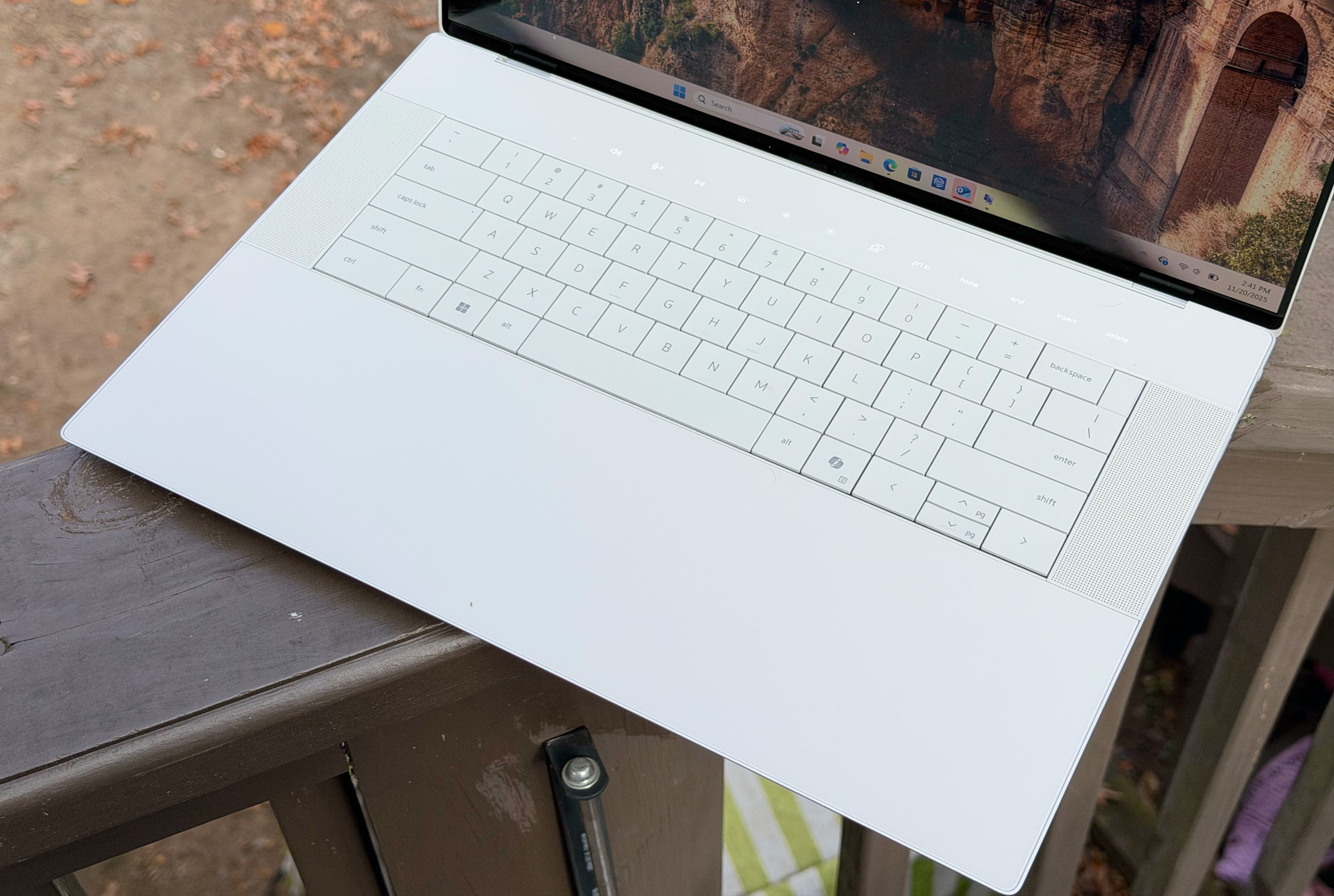
I still have trouble using the 16 Premium’s borderless trackpad because it’s tough to tell where the clickable zones are. I still hate the capacitive function row, both because it becomes miraculously invisible in bright light and it’s tough to build muscle memory for specific keys (like changing the brightness or volume). And honestly, I still don’t know how Dell can justify offering only USB-C ports and a microSD card slot on a laptop meant for serious work. Even Apple realized that it had to include a wider variety of ports for professionals, and that’s also something other PC makers like ASUS and Acer offer.  Did Dell miss the memo?

Worst of all, the 16 Premium’s 4K OLED screen seriously hampers its battery life. It only lasted six hours and five minutes during a basic video rundown, whereas the previous XPS 16 lasted eight and a half hours in the much more demanding PCMark 10 battery test. (For some reason, that benchmark didn’t run properly on my review 16 Premium review unit.) Larger laptops often stuff in bigger batteries than smaller models, but the 16 Premium can’t even manage that. 

At least it’s faster than before. The Dell 16 Premium I reviewed was equipped with Intel’s Core Ultra 7 255H chip and a low-wattage version of NVIDIA’s RTX 5070 GPU. It scored around 10 percent higher than last year’s XPS 16 in PCMark 10, and it was notably faster in the Geekbench AI benchmark thanks to Intel’s revamped NPU. I was even able to play Cyberpunk 2077 in 4K at 84 fps thanks to the 5070, though I had to enable DLSS 4 frame generation to do so. For some reason though, the system would slow to an absolute crawl whenever I enabled ray tracing features. At best, I only saw around 60 fps in 1080p while using the low ray tracing settings. 

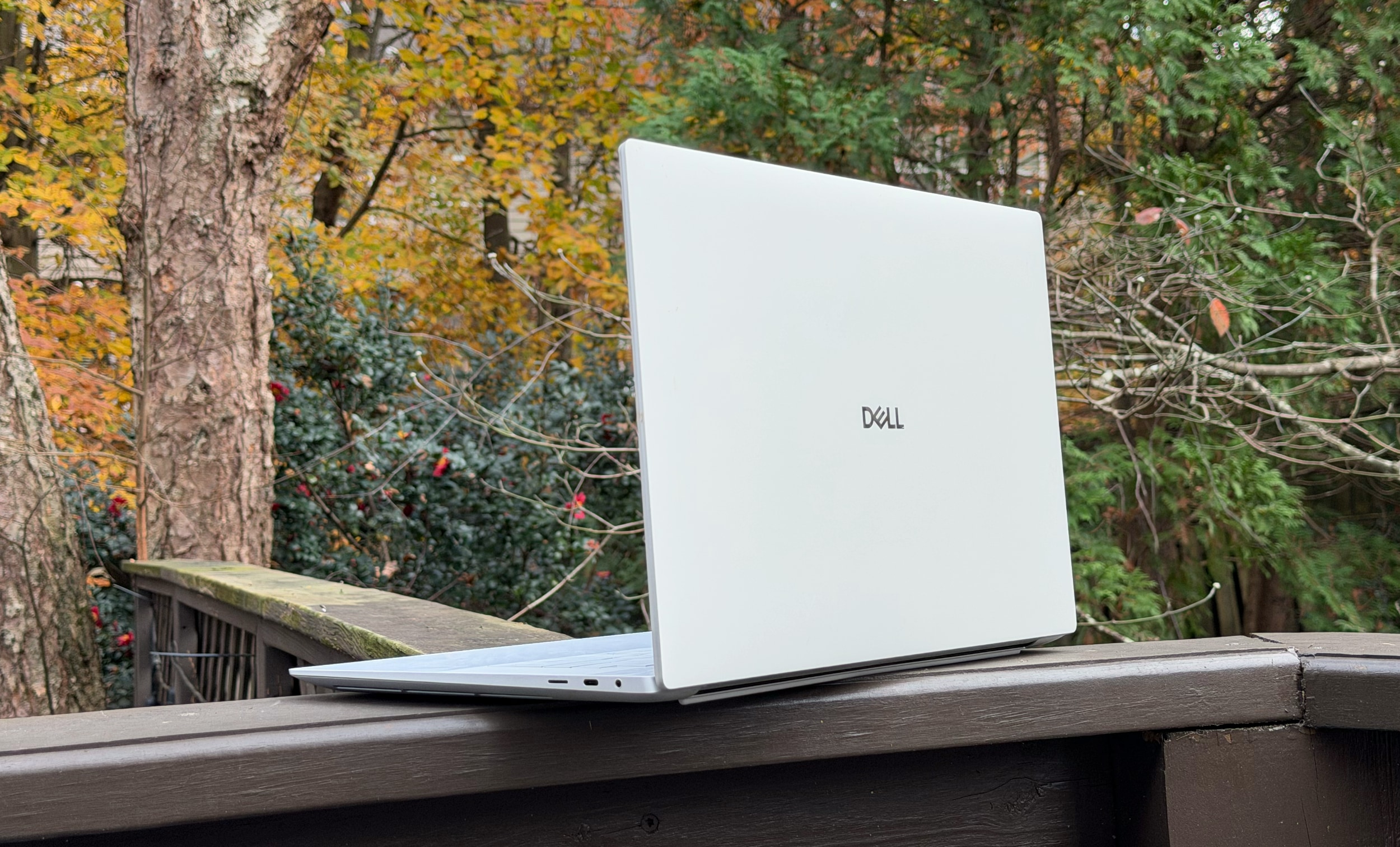
The Dell 16 Premium from the rear.
Devindra Hardawar for Engadget

Sure, it’s not a gaming laptop, so I can’t directly compare it to something like the Razer Blade 16. But it’s strange to see one of NVIDIA’s latest GPUs handle ray tracing so poorly. As you’d expect, the Dell 16 Premium also got pretty loud whenever its fans spun up. At least they managed to keep the system relatively cool though: Its CPU and GPU sat at 68C and 70C, respectively, under load.

The more I looked at the Dell 16 Premium’s beautiful facade, the more I wanted something… more. It needs more usable ports, like HDMI and a full-sized SD card reader. It needs more useful function keys that are visible in bright light — and also stay in one place — so I can touch type more easily. And for the love of god, just give up on the invisible trackpad. It’s a parlor trick that just makes it harder to tell left and right mouse clicks apart, despite the impressively large trackpad area.

The 16 Premium's "invisible" trackpad blends seamlessly into its wrist rest, while the keyboard lays perfectly flat and a row of capacitive function keys sits above.
The 16 Premium’s “invisible” trackpad blends seamlessly into its wrist rest, while the keyboard lays perfectly flat and a row of capacitive function keys sits above.
Devindra Hardawar for Engadget

Given its premium positioning, I also expected more from the laptop’s speakers. They sound fine compared to most Windows laptops, but they can’t hold a candle to the audio sorcery Apple accomplishes with the 16-inch MacBook Pro. When playing music, the 16 Premium doesn’t have much dynamic range or low-end tone, whereas Apple’s speakers often surprise me with their depth and enveloping sound. During late night writing sessions, I often find myself playing music straight through the 16-inch MacBook Pro, rather than casting it off to my Sonos speakers like the 16 Premium forces me to do.

To avoid being entirely negative, I’ll reiterate that I genuinely enjoy looking at the Dell 16 Premium. I love the way its keyboard and large key caps lay perfectly flat along the notebook’s lower half. And I’ll admit, the 16-inch OLED screen looks lusciously colorful when it needs to. I’m just asking for Dell’s designers to consider a better balance of style and functionality for their next stab at a premium 16-inch laptop.

This article originally appeared on Engadget at https://www.engadget.com/computing/laptops/dell-16-premium-review-stylish-to-a-fault-130000463.html?src=rss