Researchers at MIT and Oak Ridge National Laboratory have built a simulation that models all 151 million American workers and their skills, then maps those skills against the capabilities of over 13,000 AI tools currently in production to see where the two overlap. The answer, according to their analysis: 11.7% of the US labor market’s total wage value, or about $1.2 trillion, sits in tasks that AI systems can technically perform [PDF].
The researchers call this the Iceberg Index, and the name is deliberate. The visible AI disruption happening in tech jobs right now accounts for only 2.2% of labor market wage value. The remaining exposure lurks in cognitive and administrative work across finance, healthcare administration, and professional services, and unlike tech-sector disruption, it’s spread across all fifty states rather than concentrated on the coasts.
Delaware and South Dakota show higher Iceberg Index values than California because their economies lean heavily on administrative and financial work. Ohio and Tennessee register modest tech-sector exposure but substantial hidden risk in the white-collar functions that support their manufacturing bases.
To validate the framework, the researchers compared their predictions against Anthropic’s Economic Index tracking real-world AI usage from millions of Claude users. The two measures agreed on state categorizations 69% of the time, with particularly strong alignment at the extremes.
The Iceberg Index doesn’t predict job losses or adoption timelines. It measures technical capability, the overlap between what AI can do and what occupations require. Traditional economic indicators like GDP and unemployment explain less than five percent of the variation in this skill-based exposure, which is partly why the researchers argue workforce planners need new metrics.
It’s fair to say that Maingear is one of the most respected boutique builders in the business, as is its boss, Wallace Santos. We’ve long been impressed with Maingear’s build quality and attention to detail in the various systems we’ve reviewed, like the Zero gaming PC pictured above and, a little more recently, the Apex Force. If you’re thinking
An anonymous reader quotes a report from the BBC: Call-handling agents powered by AI are to be trialled by Staffordshire Police in a bid to cut waiting times for the non-emergency 101 service. The force is set to become the third in the country to take part in the scheme testing the use of artificial “agents” to deal with calls. Under the system, the AI agent would deal with simple queries like requests for information without the need for human involvement, freeing up call handlers and reducing answering times.
Acting Chief Constable Becky Riggs confirmed the force would be looking to launch the AI pilot early in the new year. “It’s a piece of technology called Agentforce. It will help with our response to the public, which historically we know we haven’t done well.” The senior officer said that sometimes people are not calling to report a crime, but want more information, which the technology could help with. However, if the system detects keywords suggesting vulnerability or risk or emergency, then it will be able to divert the call to a human being.
If you were looking for signs that the tech hardware slump is truly over, look no further than Palo Alto. In a market where competitors are still blaming macroeconomic headwinds and post-pandemic hangovers, HP Inc. just delivered a masterclass in execution. With the release of its Fiscal 2025 Q4 results showing a net revenue of $55.3 billion—up 3.2% year-over-year (YOY)—HP hasn’t just survived the turbulence; it has engineered a smoother flight path entirely.
The headline numbers are solid: $14.6 billion in Q4 revenue alone and a healthy $1.9 billion returned to shareholders in 2025. But reading the balance sheet is only half the story. To understand why HP is posting its sixth consecutive quarter of revenue growth while others struggle to find footing, you have to look at the three pillars supporting this resurgence: a leadership culture that treats employees like family, a supply chain strategy that borders on clairvoyant and an aggressive, practical integration of Artificial Intelligence (AI).
It is becoming increasingly rare in the Fortune 100 to find a company where the phrase “our team” feels like more than a press release platitude. Yet, listening to CEO Enrique Lores and CFO Karen Parkhill discuss these results, the focus on the human element is palpable. Lores attributed the FY25 success directly to the “strength of our team in a dynamic environment,” a sentiment that echoes through the company’s halls.
In an era where tech layoffs have become a quarterly ritual for many giants, HP’s approach to its workforce has centered on stability and empowerment. By doubling down on its “Future of Work” strategy, HP hasn’t just built tools for flexible work; it has lived it. The company’s internal culture seems to have pivoted back to the roots of the original “HP Way”—where employees are treated less like cogs in a P&L statement and more like extended family members.
This isn’t just warm fuzzies; it’s a competitive moat. When employees feel secure and valued, retention rates rise and institutional knowledge is preserved. The “disciplined execution” that Lores cites for the upcoming FY26 isn’t coming from a terrified workforce crunching overtime; it’s coming from a motivated staff that buys into the vision. You can see this in the consistency of their execution—meeting or beating outlooks in both GAAP and non-GAAP EPS ($0.84 and $0.93 respectively for Q4). That kind of precision requires a workforce that is locked in, communicated with and cared for.
The Crystal Ball: Anticipatory Inventory Management
If culture is the heart of HP’s 2025 success, the supply chain is its central nervous system. Two years ago, as global logistics snarled and chip shortages halted production lines worldwide, HP began quietly retooling its approach to inventory. The results of that shift are now aggressively visible in the Q4 numbers.
While competitors are currently bleeding cash due to warehousing costs or fire-selling obsolete stock, HP’s inventory management has been nothing short of surgical. Accounts receivable ended the quarter at $5.7 billion, but the real star is the inventory metric: ending the quarter at $8.5 billion, with days of inventory (DOI) dropping to 66 days—down 2 days quarter-over-quarter.
This doesn’t happen by accident. It happens through “anticipatory management.” HP isn’t just reacting to orders; it is predicting them. By leveraging advanced data analytics to forecast demand spikes (specifically in the commercial sector that saw a 7% rise in Personal Systems revenue), HP ensured it had exactly what it needed—no more, no less.
This “Goldilocks” inventory level—not too hot, not too cold—allowed HP to navigate the pricing wars that decimated margins elsewhere. It avoided the panic-ordering that leads to bloat, and the hesitation that leads to stockouts. The result? A robust $1.5 billion in free cash flow in Q4 alone. That creates a war chest that allows HP to return cash to shareholders and invest in R&D while rivals are paying rent on warehouses full of unsold goods.
The AI Engine: Enhancing Productivity and Loyalty
The third leg of this stool is, inevitably, Artificial Intelligence (AI). But unlike the vaporware promises floating around Silicon Valley, HP’s AI strategy is grounded in hardware and tangible metrics. The company has aggressively pivoted its Personal Systems portfolio toward the “AI PC”—devices with dedicated NPUs (Neural Processing Units) capable of running local AI models.
CEO Enrique Lores noted the acceleration of innovation across “AI-powered devices,” and the financial impact is clear. Personal Systems net revenue jumped 8% to $10.4 billion. This isn’t just a hardware refresh cycle; it’s a productivity revolution. By integrating AI both internally to streamline operations and externally into the products it sells, HP has tapped into a new vein of customer loyalty.
For the customer, an AI-enabled HP device means faster workflows, better security and on-device processing that protects privacy. For HP, it means higher Average Selling Prices (ASPs) and a stickier ecosystem. But the internal use of AI is just as critical. Parkhill mentioned investing in “AI-enabled initiatives to accelerate product innovation.” This implies that HP is using the very tools it sells to design the next generation of tools, creating a virtuous cycle of productivity.
This focus on AI has also shielded HP from the worst of the printing decline. While Printing net revenue was down 4%, the operating margin in that segment remains a massive 18.9%. How? Likely through AI-driven optimization of subscription models and supply routing, squeezing maximum value out of a mature market while the Personal Systems division drives top-line growth.
Wrapping Up
As we look toward Fiscal 2026, HP stands as a case study in resilience. It has managed to grow revenue to $55.3 billion in a volatile economy not by chasing every passing trend, but by focusing on fundamentals: people, product flow and practical innovation.
HP has returned $1.9 billion to its shareholders not by gutting the company, but by running it better. It has navigated supply chain hell by predicting the future rather than reacting to the present. And it has embraced AI not as a magic wand, but as a power tool.
For investors and industry watchers, the message from HP’s Q4 is clear: The “Future of Work” isn’t a destination HP is waiting for. It’s a reality HP is already manufacturing, shipping and cashing in on.
The online trading world is no stranger to disruption. Established players have long held sway, but there’s a new kid on the block: Norovex.com. With Bitcoin recently dipping below $100,000, and the crypto market continuing its rollercoaster ride, the demand for platforms that are fast, reliable, and secure has never been higher. Traders, especially those in the crypto and forex space, need something that doesn’t just promise a smooth ride—they need a platform that can keep up with the lightning pace of today’s markets.
Having traded my fair share of crypto and forex, I’ve come to expect certain things from any platform I use: speed, low fees, access to global markets, and most importantly, security. After spending some time testing Norovex.com, I can say that this platform is bringing something fresh to the table—and it’s definitely worth a closer look.
So, how does Norovex.com stack up against the big players? Is it the real deal, or just another flashy website? Let’s dive in.
A Trading Platform Built for Real Traders, Not Robots
When I first logged into Norovex.com, the thing that hit me immediately was how user-friendly it felt. As someone who’s been through more trading platforms than I care to admit, I know how overwhelming it can be to deal with interfaces that look like they were designed by people who’ve never traded a day in their lives.
Not the case here. Norovex is sleek, intuitive, and straight to the point. Navigating between different markets—whether it’s forex, stocks, cryptos, or commodities—was seamless. Charts are clean, real-time data flows effortlessly, and the trading tools are exactly what you need to make quick decisions.
For someone who’s used to high-pressure markets, the speed matters. No lag, no frustrating delays—just the kind of trading experience you want when the market’s moving fast and your trades could flip within seconds (hello, Bitcoin dips).
Bitcoin, Crypto, and More: A Real Multi-Asset Platform
One of the standout features of Norovex.com is its multi-asset capability. Bitcoin is down to just over $100,000, but Ethereum and other altcoins are still giving traders plenty of reasons to keep a close eye on the crypto market. Meanwhile, the forex market never sleeps, with volatility at an all-time high.
Norovex provides access to all these markets—forex, cryptos, stocks, and even commodities. This means that as a trader, you aren’t limited to a single asset class. Whether you’re buying Bitcoin when it dips or trading a GBP/USD pair, the platform lets you easily move between markets, depending on where the opportunities are.
For traders looking to diversify, this is a game-changer. Not many platforms allow you to trade Bitcoin, gold, and US stocks all under one roof. Norovex brings it all together in one platform with a smooth, easy-to-navigate design.
Execution Speed: Where Norovex Truly Shines
Here’s where the rubber meets the road—execution speed. As a trader, especially one who’s made money in cryptos and forex, the ability to execute orders without delay is crucial.
With Norovex, orders go through fast—like, lightning fast. There’s no more worrying about your GBP/USD trade slipping a pip or two during peak volatility (trust me, if you trade forex, you know that feeling). This is thanks to their use of ECN technology, which means trades go straight through to the market with no middleman. Essentially, Norovex is giving you access to institutional-quality speed, and that’s huge in the fast-moving markets of today.
When it comes to crypto trading, the difference is even more pronounced. I’ve tried executing trades on platforms where the price moved before I could click “buy.” That’s not the case here. Whether it’s Bitcoin, Ethereum, or an altcoin, Norovex gets you into the action quickly, which is exactly what you need when Bitcoin jumps up a few thousand dollars in a matter of minutes.
Security: You Don’t Need to Worry Here
Let’s be real: security is non-negotiable. When I started trading back in the day, it was all about getting the best trade setup. These days, it’s just as much about ensuring your funds and data are protected.
With Norovex, I felt secure from the moment I signed up. The platform offers two-factor authentication (2FA), bank-grade encryption, and cold storage for cryptocurrencies—everything you expect from a platform that takes your security seriously. Given the state of the crypto world, where hacks and breaches are still a very real concern, this is exactly the kind of setup I’m comfortable with.
Customer Support: Always There When You Need It
Another thing I appreciate about Norovex is their 24/5 customer support. As much as I love trading, things don’t always go smoothly—whether it’s an issue with execution or a simple question about a trade. Norovex has live chat, email support, and even a phone line for those moments when you just need to get in touch quickly. They’re responsive, and that counts for a lot.
Trading Costs: Affordable and Transparent
Here’s where Norovex continues to impress. If you’re anything like me, fees are always a concern, especially when you’re trading frequently. I was surprised to find that Norovex keeps things pretty affordable.
They offer tight spreads, especially for higher-tier accounts, and no deposit or withdrawal fees—something I’ve found lacking in many other platforms. This means more of your money stays in your pocket, and less goes to hidden costs. Commissions on the Pro and VIP accounts are also minimal, making it a great option for active traders who need to execute a high volume of trades without worrying about losing a chunk of profit to fees.
Is Norovex Worth It?
After spending some real time trading on Norovex.com, it’s clear this platform is built with the needs of modern traders in mind. Whether you’re diving into the wild world of cryptocurrencies or capitalizing on forex trends, Norovex provides the speed, security, and multi-asset access you need to trade effectively in today’s fast-moving markets.
Is it a perfect fit for every trader? Maybe not—especially for those who need full-fledged advanced tools or institutional-level features. But if you’re a retail trader, new investor, or someone looking to diversify your trading across multiple asset classes, Norovex gives you everything you need without overcomplicating things.
For me, it’s a solid platform, especially for the price-conscious trader who doesn’t want to pay hidden fees or deal with slow execution during critical market moments.Final Verdict:Norovex is definitely a platform worth considering if you’re looking for speed, security, and a smooth trading experience—whether you’re navigating the world of forex or crypto. It’s got the core features, a user-friendly design, and a clear pricing structure that makes it competitive in 2025’s crowded trading space.
Peruse a list of films released in 1985 and you’ll notice a surprisingly high number of movies that have become classics in the ensuing 40 years. Sure, there were blockbusters like Back to the Future, The Goonies, Pale Rider, The Breakfast Club and Mad Max: Beyond Thunderdome, but there were also critical arthouse favorites like Kiss of the Spider Woman and Akira Kurosawa’s masterpiece, Ran. Since we’re going into a long Thanksgiving weekend, I’ve made a list, in alphabetical order, of some of the quirkier gems from 1985 that have stood the test of time. (Some of the films first premiered at film festivals or in smaller international markets in 1984, but they were released in the US in 1985.)
If you need some motivation to keep from eating too much this Thanksgiving, here it is: Doctors in Romania pulled an 11 cm (4.3 inch) living, writhing round worm from a woman’s left eyelid.
According to a report in the New England Journal of Medicine, the worm likely hatched from a hard lump in her right temple, which the woman recalled first spotting a month beforehand. She also noticed that the nodule had vanished just a day before the worm apparently made a squiggly run for her eye.
When she went to an ophthalmologist the next day, doctors immediately noted the “mobile lesion” on her eyelid, which was in the suspicious shape of a bunched-up worm just under her skin with a little redness and swelling.
Apple is challenging a new Indian antitrust law that would let regulators calculate penalties based on global revenue — a change that could expose the company to a fine of roughly $38 billion in its dispute with Tinder owner Match. The 2022 antitrust case centers on accusations that Apple abused its power by forcing developers to use its in-app purchase system. MacRumors reports: Last year, India passed a law that allows the Competition Commission of India (CCI) to use global turnover when calculating penalties imposed on companies for abusing market dominance. Apple can be fined up to 10 percent, which would result in a penalty of around $38 billion. Apple said that using global turnover would result in a fine that’s “manifestly arbitrary, unconstitutional, grossly disproportionate, and unjust.”
Apple is asking India’s Delhi High Court to declare the law illegal, suggesting that penalties should be based on the Indian revenue of the specific unit that violates antitrust law. […] Apple said in today’s filing that the CCI used the new penalty law on November 10 in an unrelated case, fining a company for a violation that happened 10 years ago. Apple said it had “no choice but to bring this constitutional challenge now” to avoid having retrospective penalties applied against it, too. Match has argued that a high fine based on global turnover would discourage companies from repeating antitrust violations. Apple’s plea will be heard on December 3.
The turkey has been demolished, the mashed potatoes are nearly gone and the only thing keeping you going right now is a blessed cup of coffee after a delicious meal. Maybe you’re also staying awake because you’re hoping to snag some good Thanksgiving deals ahead of Black Friday tomorrow. If that’s the case, you’re in luck. There are plenty of Thanksgiving Black Friday deals to consider this year, from discounts on headphones and tablets to gaming consoles and smart home gear. Check out our curated list of the best Thanksgiving deals you can get right now below.
Best Thanksgiving Black Friday deals
Apple AirPods Pro 3 for $220 ($29 off): Apple’s latest flagship wireless earbuds are the ones to get if you have an iPhone and any other Apple gear. They have improved sound quality, impressive ANC improvements, extra features like Live Translation and even better battery life. Most other AirPods are also on sale, including the AirPods 4 and AirPods Max.
iPad A16 for $274 (21 percent off): The entry level iPad doesn’t support Apple Intelligence, but that didn’t bother us when we reviewed the new slate. We found the speed to be plenty for what most people need an iPad for: casual gaming, streaming, browsing, answering some emails. We wish the display was laminated and had some anti-glare coating. But this is the lowest-priced way to get your hands on a current-model iPad. Also at Walmart, Target and Best Buy.
Disney+ Hulu bundle — $60 for one year: The Disney+ and Hulu (with ads) bundle is on sale for $5 per month for one year (for a total of $60) through December 1. New and eligible returning subscribers can take advantage of this deal, and considering the bundle typically costs $13 per month, this deal represents more than a 50 percent discount on the standard monthly price.
Apple TV+ — 6 months for $36: Apple TV+ is offering six months of access for only $36 for Black Friday, which comes out to a discounted price of $6 per month for the six-month period. The deal is live now for new and eligible returning subscribers and runs through December 1, giving you a chance to stream shows like Silo, The Morning Show and For All Mankind for less. The biggest caveat to the deal is that you must subscribe directly through Apple and not through a third-party service.
Nintendo Switch 2 + Mario Kart World bundle for $499: Black Friday Nintendo sales were announced and, unsurprisingly, there aren’t many true deals out there this year. There are no straight discounts on the Switch 2 console, so your best bet is to pick up a bundle that saves you some cash on a Switch 2 game. One of the best is the Mario Kart Wold bundle, but Pokémon fans should consider the Pokémon Legends: Z-A bundle, too. Also available at Walmart.
Amazon Smart Plug for $13 (48 percent off): Those who use Alexa often will get the most out of this smart plug. We like that it’s super simple to set up and can turn almost anything with an on-off switch “smart,” allowing you to control it via your phone or with Alexa voice commands.
Philips fabric shaver for $13 (32 percent off): Consider this the Black Friday tech deal you didn’t know you needed. If you have shirts, sweaters, pants, even blankets that have pilled over time, this handy little fabric shaver can get them looking more like new again. I bought this on a whim after wishing I could refresh some of my most-loved wardrobe staples without spending hours pulling pills off myself. Philips’ fabric shaver has delivered and then some, and my clothes look much fresher than before.
Meta Quest 3S VR headset for $250 ($50 off): We consider this to be the best VR headset for newbies or those on a budget. It’s comfortable to wear for long sessions, has solid performance, comes with excellent controllers and you’ll have access to a large app library with it.
Sony WH-1000XM5 headphones for $248 ($158 off): While the new XM6 headphones have replaced these as Sony’s flagship cans, that doesn’t mean the XM5 aren’t worth buying. They were our top pick for the best wireless headphones for years before the XM6 came around, and they still have excellent ANC, great sound quality, long battery life, a comfortable fit and handy extra features like multipoint connectivity.
Anker Laptop Power Bank (25K, 100W) for $88 (35 percent off): A top pick in our guide to the best power banks, this Anker brick is kind of a one-and-done device. It has enough capacity to charge all sorts of devices from smartphones to laptops to handheld gaming consoles, and it has two built-in USB-C cables so you don’t even have to remember to bring your own to use it. Also available at Anker.
This article originally appeared on Engadget at https://www.engadget.com/deals/the-best-thanksgiving-black-friday-deals-for-2025-save-on-airpods-ps5-consoles-disney-and-more-090905438.html?src=rss
China’s new JUNO neutrino observatory has delivered world-leading measurements after just 59 days, offering the most precise readings yet of two key neutrino oscillation parameters. “The physics result is already world-leading in the areas that it touches,” says particle physicist Juan Pedro Ochoa-Ricoux of the University of California, Irvine, who co-leads a team on JUNO. “In particular, we measured two neutrino oscillation parameters, and that measurement is already for both parameters the best in the world.” The results were published in two separate preprints on arXiv.org. Scientific American reports: JUNO’s spherical detector, which is akin to a 13-story-tall fishbowl, primarily measures so-called electron antineutrinos spewing from the nearby Yangjian and Taishan nuclear plants. When the particles strike a proton inside the detector, a reaction triggers two light flashes that ping photomultiplier tubes and get converted into electrical signals. The new measurements from these neutrino-proton collisions are now considered the most precise for two oscillation parameters, which act as proxies for differences in their mass, according to Ochoa-Ricoux.
“It is the first time we’ve turned on a scientific instrument like JUNO that we’ve been working on for over a decade. It’s just tremendously exciting,” Ochoa-Ricoux says. “And then to see that we’re able to already do world-leading measurements with it, even with such a small amount of data, that’s also really exciting.” Still, the physicists will need years’ worth of neutrino detections to answer the mass-ordering conundrum.
Netflix has crashed for thousands of viewers after the first four episodes of Stranger Things season 5 went live for streaming. Downdetector started getting an unusual number of outage reports at around 10 minutes before 8PM Eastern time, when the episodes were scheduled to hit the service. The numbers climbed up to almost 14,000 before they went down over the next few minutes.
According to Entertainment Weekly, affected viewers were getting an NSEZ-403 error, which means their accounts couldn’t connect to Netflix. They were seeing “Something went wrong” and “Sorry, we’re having trouble with your request” messages on their screens. For the NSEZ-403 error, in particular, Netflix advises switching to a different device. It’s worth nothing that the show’s creator previously said that Netflix increased its bandwidth by 30 percent to avoid a crash for the season premier. The company has told Engadget that some members briefly experienced an issue streaming on TVs, but that service has been restored for all accounts within 5 minutes.
In season 5 of Stranger Things, the Hawkins gang is set to face Vecna one last time. After these first four episodes, Netflix is dropping three more on December 25 and then the finale itself on December 31.
Update, Nov. 26, 2025, 10:35PM ET: This story has been updated to add the information Netflix shared with Engadget.
This article originally appeared on Engadget at https://www.engadget.com/entertainment/streaming/netflix-went-down-for-a-lot-of-people-after-stranger-things-premiered-025540667.html?src=rss
An anonymous reader quotes a report from the Associated Press: Mexico unveiled plans Wednesday to build what it claims will be Latin America’s most powerful supercomputer — a project the government says will help the country capitalize on the rapidly evolving uses of artificial intelligence and exponentially expand the country’s computing capacity. Dubbed “Coatlicue” for the Mexica goddess considered the earth mother, the supercomputer would be seven times more powerful than the region’s current leader in Brazil, Jose Merino, head of the Telecommunications and Digital Transformation Agency.
President Claudia Sheinbaum said during her morning news briefing that the location for the project had not been decided yet, but construction will begin next year. “We’re very excited,” said Sheinbaum, an academic and climate scientist. “It is going to allow Mexico to fully get in on the use of artificial intelligence and the processing of data that today we don’t have the capacity to do.” Merino said that Mexico’s most powerful supercomputer operates at 2.3 petaflops — a unit to measure computing speed, meaning it can perform one quadrillion operations per second. Coatlicue would have a capacity of 314 petaflops.
Amazon’s drone-delivery program is under federal scrutiny after an MK30 aircraft clipped an internet cable in Texas. CNBC reports: The incident occurred on Nov. 18 around 12:45 p.m. Central in Waco, Texas. After dropping off a package, one of Amazon’s MK30 drones was ascending out of a customer’s yard when one of its six propellers got tangled in a nearby internet cable, according to a video of the incident viewed and verified by CNBC. The video shows the Amazon drone shearing the wire line. The drone’s motor then appeared to shut off and the aircraft landed itself, with its propellers windmilling slightly on the way down, the video shows. The drone appeared to remain in tact beyond some damage to one of its propellers.
The Federal Aviation Administration is investigating the incident, a spokesperson confirmed. The National Transportation Safety Board said the agency is aware of the incident but has not opened a probe into the matter. Amazon confirmed the incident to CNBC, saying that after clipping the internet cable, the drone performed a “safe contingent landing,” referring to the process that allows its drones to land safely in unexpected conditions. “There were no injuries or widespread internet service outages. We’ve paid for the cable line’s repair for the customer and have apologized for the inconvenience this caused them,” an Amazon spokesperson told CNBC, noting that the drone had completed its package delivery.
Greek authorities shut down an IPTV piracy operation on Santorini, arresting a reseller and referring 68 end users for prosecution. TorrentFreak reports: A new legal framework to tackle online infringement in Greece went live just a couple of months ago, and reports of prosecutions are already coming in. Early September, it was reported that a man from Sparta faces prosecution and a fine of up to 6,000 euros for two IPTV piracy offenses. The suspect, reportedly a cafe owner, was targeted at his workplace on a Saturday, allegedly in front of customers. One told local media that they believed that complaints of the cafe engaging in “unfair competition” preceded the untimely visit.
The Cybercrime Prosecution Directorate launched their operation in the early hours of November 19. The Athens-based unit targeted a network that sold illicit access to premium pay-TV via IPTV subscriptions. The raid, conducted on Santorini, one of the Cyclades islands, resulted in the arrest of a 48-year-old, who, from police reports, appears to be a reseller for a larger network. Customers were reportedly charged 50 euros for 3 months subscription or 100 euros for 6 months. Sales and management were handled by the 48-year-old via an online platform known as a ‘panel,’ while remote and in-person support were available as part of the service.
The impact of the raid was visible on the islands, locals said. According to a local report, hundreds of users in hotels, cafes, and residences on Santorini and beyond, found themselves suddenly without access to cheap TV. Apparently few areas were untouched by the disruption, such was local reliance on illegal streams.
Last week, Google surprised the tech world when it announced AirDrop support on Pixel 10 devices — all without Apple’s involvement. “While it initially seemed like this was a rogue move made by Google to coerce Apple into another boundary-breaking decision, it might actually be part of the repercussions that also led to USB-C on iPhone and the adoption of RCS,” reports 9to5Google. From a report: As reported by Ars Technica, the answer to this week’s mysterious Quick Share upgrade lies in the EU’s interoperability requirements designed for the DMA. The ruling out of the European Commission pushed Apple to begin supporting interoperable wireless standards beginning with this year’s set of OS upgrades, replacing the previous proprietary standard the company used to power its various Continuity features. That forced Apple to add support for the Wi-Fi Alliance’s Wi-Fi Aware standard of multi-directional file sharing, at the cost of completely phasing out its previous walled-in protocol.
BrianFagioli writes: Newegg’s new partnership with PayPal is another sign that mainstream e-commerce is shifting control from users to AI-driven intermediaries. Instead of shoppers visiting Newegg directly, PayPal’s agentic commerce system pushes product discovery through AI platforms like Perplexity where recommendations, checkout, and fraud checks all happen inside someone else’s controlled environment. Newegg stays the merchant of record, but the real influence shifts to the platforms that decide which products their AI agents mention. That may sound convenient, but it also means discovery becomes guided by training data and commercial integrations rather than user intent.
Slashdot readers will likely notice the other issue. This setup puts PayPal deeper into the shopping pipeline at a time when many users already avoid the company over account freezes and dispute policies. An AI-mediated shopping experience where PayPal becomes the silent gatekeeper by default is not going to sit well with everyone. And with AI agents shaping purchasing decisions based on behavior and context, the concept of intent-driven shopping starts to look a lot like quiet nudging rather than empowerment. Newegg may see this as the future, but the community will probably ask whether users truly want AI systems and PayPal deciding how they shop.
Around this time last year, officials at United Launch Alliance projected 2025 would be their busiest year ever. Tory Bruno, ULA’s chief executive, told reporters the company would launch as many as 20 missions this year, with roughly an even split between the legacy Atlas V launcher and its replacement—the Vulcan rocket.
Now, it’s likely that ULA will close out 2025 with six flights—five with the Atlas V and just one with the Vulcan rocket the company is so eager accelerate into service. Six flights would make 2025 the busiest launch year for ULA since 2022, but it falls well short of the company’s forecast.
Last week, ULA announced its next launch is scheduled for December 15. An Atlas V will loft another batch of broadband satellites for the Amazon Leo network, formerly known as Project Kuiper, from Cape Canaveral Space Force Station, Florida. This will be ULA’s last launch of the year.
We may earn a commission from links on this page. Deal pricing and availability subject to change after time of publication.
The key to any successful DIY job is having the right tools—which can be a problem when you’re away from your toolbox. While the handy folks on your holiday shopping list probably already have all the tools they need, they probably only have the full-sized or powered-up versions. Instead, go small and gift them one (or more) of these awesome, pocket-sized tools designed to be carried around everywhere.
Snowflake multitool
$11.89 at Amazon
$15.99 Save $4.10
$11.89 at Amazon
$15.99 Save $4.10
Pocket Leatherman
$49.95 at Amazon
$54.95 Save $5.00
$49.95 at Amazon
$54.95 Save $5.00
Hoto Snapbloq Pocket Drill and Electric Screwdriver
$191.99 at Amazon
$299.97 Save $107.98
$191.99 at Amazon
$299.97 Save $107.98
Palmer Clear Utility Knife
$39.00 at Amazon
$39.00 at Amazon
Acebeam Keychain Flashlight
$29.74 at Amazon
$34.99 Save $5.25
$29.74 at Amazon
$34.99 Save $5.25
RAK Multitool Pen
$17.99 at Amazon
$25.99 Save $8.00
$17.99 at Amazon
$25.99 Save $8.00
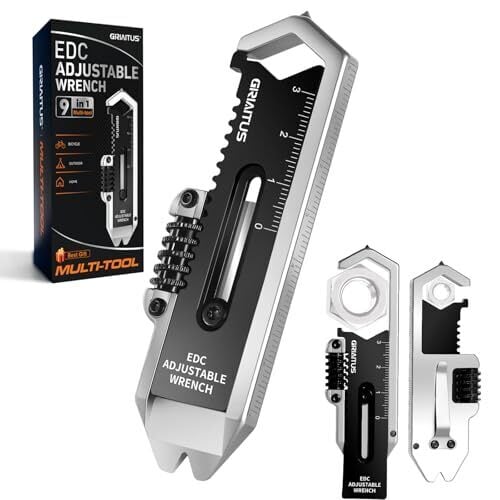
9-in-1 Pocket Adjustable Wrench
$23.75 at Amazon
$32.99 Save $9.24
$23.75 at Amazon
$32.99 Save $9.24
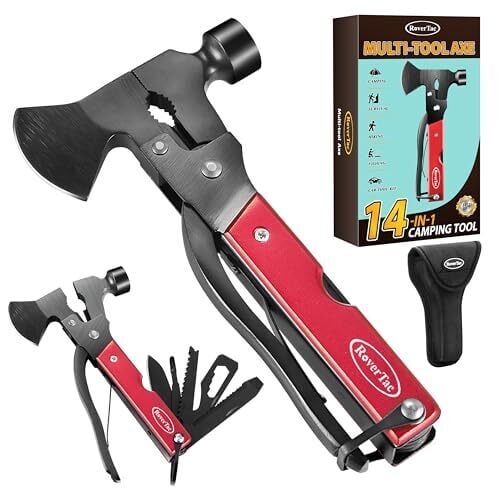
RoverTac Camping Multitool
$19.99 at Amazon
$23.99 Save $4.00
$19.99 at Amazon
$23.99 Save $4.00
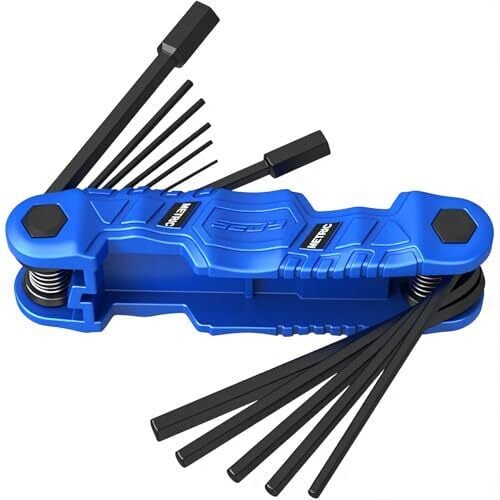
Folding Hex Key Set
$7.99 at Amazon
$24.99 Save $17.00
$7.99 at Amazon
$24.99 Save $17.00
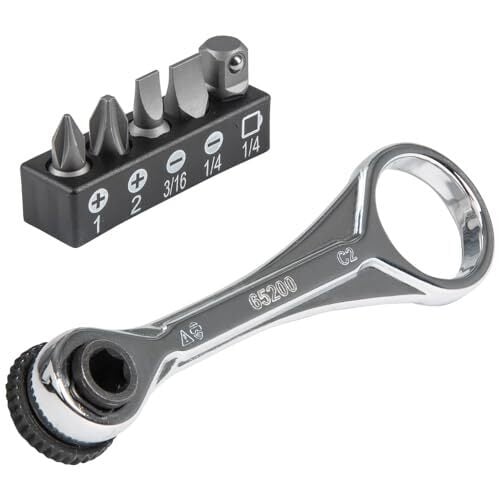
Mini Ratchet Set
$16.98 at Amazon
$16.98 at Amazon
The Snowflake multitool does it all
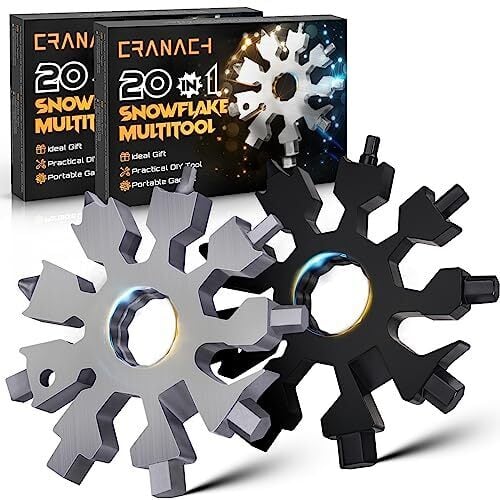
Most pocket multi-tools are a little bulky, making the snowflake multitool an awesome little gift for anyone who can’t resist a little light DIYing wherever they go. It’s a wrench, an Allen wrench, a Phillips and flathead screwdriver, a box opener, and bottle opener all in one, and it will slip into your pocket easily. Bonus: It can hang on the tree like an ornament, and it’s currently 26% off for Black Friday.
A keychain version of the famous Leatherman
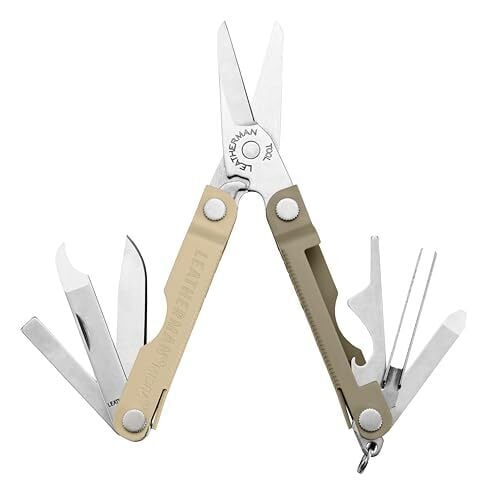
You can’t discuss pocket tools without mentioning the Leatherman, one of the most reliable and useful multitool brands out there. The Micra is a keychain-friendly version of this classic, offering a knife, tweezers, screwdrivers, scissors, bottle opener, file, and a ruler in a tiny, compact build that feels hefty and reliable. It’s also almost 10% off right now.
The Hoto Snapbloq is a miniature power screwdriver
At more than a third off, this is a steal that will change your entire approach to DIY on the run. Imagine having a drill, rotary tool, and power screwdriver in your pocket at all times—that’s the Hoto Snapbloq. Sure, you’re not going to be hanging drywall with this, but you can make repairs to electronics and effect quick repairs to just about anything without having to run home for your toolbox. It’s also ideal for hobbyists, as the rotary tool can be a polisher, engraver, etcher, or spot sander.
The Palmer is a super useful pocket razor
A utility knife is one of the most useful things you can have in your pocket. From opening boxes to cutting straps, having the Palmer in your pocket means you’ll never be reduced to trying to break something with your teeth, or cut something with a steak knife lifted from the kitchen.
The Acebeam Rider is a great keychain flashlight
So many DIY jobs require a flashlight, you absolutely need to have one in your pocket or on your keychain. The Acebeam Rider is light, compact, and powerful, offering five brightness levels and running off of a rechargeable AA battery. Next time you’re bent over a tiny project in a dim room, you’ll have all the light you need—and it’s 15% for Black Friday.
The RAK multitool pen hides five mini-tools
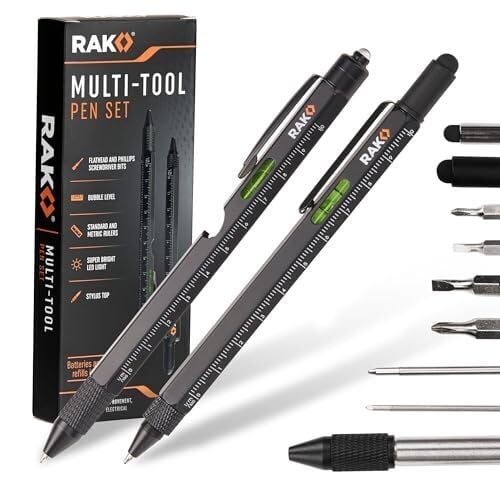
Almost every DIY project requires a writing implement, and this nifty pen is also a multitool. It includes a ruler, a bubble level, a bottle opener, a screwdriver, and an LED light—and it’s the size of a standard pen, so you can slip it into a shirt or jacket pocket and not even notice it’s there until you suddenly need a quick tool to get something done. And it’s a tick over 30% off right now.
This multitool wrench is as tiny as it is useful
Nothing stymies an impromptu DIY repair like a bolt—unless you’re abnormally strong, the chances of getting a bolt loose without a tool are grim, so this tiny multitool wrench will likely be one of the most useful things you have in your pockets at any given time. Not only is it an adjustable wrench, it’s also a ruler, a caliper, a bottle opener, a nail remover, and even a tiny prybar for getting in-between and under small, tight spaces. At nearly 30% off for Black Friday, it’s a must-have stocking stuffer.
The RoverTac is a camping tool you’ll want to carry everywhere
This is more of a survival or camping tool than an everyday DIY carry, but the idea of having a small hammer that slips into a jacket pocket or glove compartment is compelling. But this thing is also a hatchet, a pair of pliers, and a multitool with a knife, bottle opener, saw, screwdriver, and file. At almost 20% off, it’s a great little gift for the DIYer in your life.
A metric hex tool will to replace all those IKEA wrenches
Carrying 15 random Allen wrenches in your pockets isn’t practical, so this tiny pocket-sized hex key set will make any spot tightening an easy job. Whether it’s a loose bit of furniture or a bike repair, you’ll never be caught out when an Allen screw presents itself. Plus, at 20% off, this little tool will actually replace all those loose Allen wrenches you’ve been collecting since you bought your first IKEA product.
A mini ratchet set to give you torque on the go
Any DIYer will be absolutely delighted to have an entire ratchet set in their pockets. Not only is it small enough to carry around with you while being strong enough to tackle any job, it’s also going to be useful in any situation where you need torque in a tight spot where a standard-sized ratchet won’t be able to fit.
China’s pharmaceutical industry has quietly evolved from a hub for generics and clinical trials into something more ambitious — a genuine competitor in drug discovery that Western giants are now courting to fill gaps left by looming patent expirations worth over $300 billion by 2030. In the first half of 2025, nearly a third of global licensing agreements signed by big pharma involved Chinese firms, Economist reports, four times the share from 2021. Pfizer agreed in May to pay $1.25 billion to 3SBio for an experimental cancer drug, and GlaxoSmithKline followed in June with a deal valued at up to $12 billion with Hengrui. Chinese companies now run about a third of the world’s clinical trials, up from 5% a decade ago.
Sony appears to be ready to announce another addition to its Alpha camera lineup. The company shared an image on the Sony Alpha Instagram account with the text “Chase your dream” and the date December 2 at 9AM EST, which could be a teaser for its next mirrorless camera.
It’s possible the company has something else in mind, but the giant “V” or Roman numeral five in the background of the image seems like a clear reference to an unannounced Sony A7 V, a follow-up to the Sony Alpha 7 IV. Considering there was around a four year gap between the release of the A7 III and A7 IV, releasing the new camera in 2026 would make the timing lineup, too.
Rumors suggest the A7 V could feature a new 33MP “partially stacked sensor” designed by Sony, along with the ability to capture 4K / 60 fps video. The company is also rumored to be announcing at least two new lenses to go with the new camera. Since the Alpha 7 IV started at $2,500, it seems safe to expect that these upgrades could cost even more when the camera is officially announced in December.
This article originally appeared on Engadget at https://www.engadget.com/cameras/sony-teases-the-a7-v-its-next-flagship-midrange-camera-224000370.html?src=rss