Geekom Unveils All-Metal GeekBook X14 Pro OLED Laptop To Challenge MacBook Air

Geekom Unveils All-Metal GeekBook X14 Pro OLED Laptop To Challenge MacBook Air
Geekom may be best known for its lineup of mini PCs, but it’s looking to make a splash in the laptop market with what it claims is the world’s first all-metal ultralight model, the GeekBook X14 Pro. From our vantage point, it’s basically a Windows version of Apple’s newest MacBook Air, though there are key differences, not the least of which

Apple will reportedly refuse to pre-install India’s state-mandated security app

India has issued a mandate to all smartphone manufacturers and importers requiring them to install a state-owned cyber security app. But Apple is reportedly not going to comply, citing privacy and security concerns, according to Reuters. 

The app, called Sanchar Saathi (meaning Communication Companion), is supposed to expedite the process of finding lost or stolen devices and stopping their misuse, according to a government press release on Monday. It further states that companies, including the likes of Samsung and Xiaomi, should “endeavor” to use software updates to download the app on previously purchased smartphones. 

The Sanchar Saathi app comes alongside an entire website designed for reporting fraudulent communication and tracking missing phones. However, critics worry that the app is a means for Prime Minister Narendra Modi’s government to gain access to every smartphone in India. 

The messages coming out of the Indian government have been mixed so far. In Monday’s public announcement, it said companies must comply within 90 days and submit a report within 120 days. It also states that the app should be “readily visible and accessible to the end users at the time of first use or device setup and that its functionalities are not disabled or restricted.” 

Yet, today, India’s Union Communications Minister Shri Jyotiraditya Scindia stated that the app is “completely democratic and fully voluntary.” He added that users can deactivate or delete it “at any time.”

At the same time, industry sources told Reuters that Apple will not comply with preinstalling the app. Whether that pushback lasts remains to be seen — Apple has bowed to government mandates in the past. Recently, it removed two of China’s biggest LGBTQ+ dating apps, following orders from the country’s internet regulator and censor. 

This article originally appeared on Engadget at https://www.engadget.com/big-tech/apple-will-reportedly-refuse-to-pre-install-indias-state-mandated-security-app-143050110.html?src=rss

The Out-of-Touch Adults’ Guide to Kid Culture: The Horror of Rizzmas Carols

We may earn a commission from links on this page.

Generations A and Z contain multitudes. While some kids are gleefully crapping out AI-generated Rizzmas carols—holiday brain-rot so potent it should probably be classified as a controlled substance—other kids are dissecting the work of esoteric 19th-century novelist Robert W. Chambers like they’re in a graduate seminar. And they’re the same kids. So we’re whipsawing between rizz and cosmic horror, with side quests to discover Diddy tag and this year’s hottest Christmas toy. 

What is “67 Rizzmas”?

In what’s becoming a regrettable holiday tradition, the internet has begun releasing rizzmas carols—brainrot versions of beloved seasonal songs. (“Rizz” is slang for charisma, but here it’s just a stand-in for meaningless meme-speak.) In the past, redoing a classic required at least singing over a recording, but the rise of AI has made it nearly effortless to churn out as many brain-rot rizzmas carols as you want—I made Skibiddi Christmas Rizz in 45 seconds. It’s a terrible song; all these songs are terrible, but that doesn’t stop TikTok accounts from churning them out. Perhaps inevitably, one of these AI abominations has become a “hit.” @html.brainrot’s “67 on a Merry Rizzmas” has been viewed over 3.7 million times. Set to the tune of “We Wish You a Merry Christmas” and consisting only of meme lyrics, “67” has grown popular enough that 146,000 other videos have used the song. There are meme-heavy dance videos like this:

understandable critiques like this:

and plenty of AI slop like this:

Merry Christmas, I guess. 

Dumb videos are only one symptom of rizzmas fever. There’s also a rizzmas meme coin that one could invest in, if one were stupid, and so many other unfunny, annoying rizzmas carols to listen to. In the unlikely event that you want to hear more rizzmas carols or want to watch videos of people telling you that investing in rizzmas coin will make you rich, go to the hashtag—there are over 12,000 videos to choose from. 

American Girls Wicked dolls sell out

Remember that Christmas when Tickle Me Elmo dolls were so coveted that re-sellers were charging thousands of dollars for them? This year’s Elmo is American Girl’s limited-edition Wicked dolls. Launched in September for $295 each, the Elphaba and Glinda American Girls dolls quickly sold out. Now they’re only available from re-sellers, where they’re commanding prices of up to $1,000, and it’s only the beginning of December. Whether American Girl is going to sell more of the coveted dolls isn’t known, so if a kid in your life has to have one, you’re going to have to go to eBay or fork over half your bank account to a shady guy in a parking lot on Christmas Eve.

Kids are playing “Diddy tag”

According to TikToker @nestaog’s son, the hottest game in elementary school this year is Diddy tag. “Diddy tag is when you tag someone and that person’s Diddy,” the kid said. “He got baby oil,” he added.

TikTok commenters say that kids in their lives are also playing Diddy-based schoolyard games like “Escape from Diddy’s House” and insulting each other by saying, “you’re going to Diddy’s house.”  

Kids were making and playing games based on the convicted sex offender on Roblox too, until the company banned user-created games with names like “Five Nights At Diddy’s,” “Nice Try Diddy,” and “Diddy Survival” from the platform. Roblox reportedly nuked over 600 fan-created experiences about Diddy and Jeffery Epstein from the service. 

So Diddy is clearly on kids’ minds. While it’s concerning that children know enough about him to cast Diddy as the boogeyman in their schoolyard games, if you think back to your own school days, you were probably playing “Ebola Tag,” “Nuclear War,” or “Vietnam.” It’s how kids deal with their fears. And is it really the worst thing for kids to be warning each other to stay away from Diddy? 

Who is Boy Throb and are they a joke?

Boy Throb is an online boy band who wear matching pink track suits and make videos featuring self-consciously cheesy pop songs. Despite online debate and the group’s insistence that they are not a joke, Boy Throb is obviously a joke. But it’s a funny joke. 

The group initially went viral on TikTok about a month ago with this video:

According to the band, an immigration lawyer told them they need a million followers so Darshawn, the Indian Boy Throbber, can get a visa so he can “sing and dance in America.” I’m no attorney, but I’m pretty sure that’s not how immigration law works. A couple of days ago, Boy Throb hit their follower goal on TikTok, but their lawyer had another request:

Now they say that, in order for Darshawn to make it here, they need journalists to write a “couple articles of press” about them. Now, I don’t work for Rolling Stone or Readers Digest, but I’d still like to confirm that Darshawn has extraordinary abilities and he should be allowed to sing and dance in America. 

Viral video of the week: Searching for a World That Doesn’t Exist

It would be easy to look at the brainrot memes and general numbskullery of generations A and Z and despair, but there’s a countervailing force of ad-hoc intellectualism that I find fascinating, as evidenced by the fact that Robert W. Chambers is having a viral moment.

Don’t worry if you’re not familiar with the name. Chambers was a popular author in the late 1800s, known for romances and historical novels, but most of his work didn’t stand the test of time like Dickens or Poe—except for half of one collection of short stories. The King in Yellow was published in 1895, and its cosmic horror is different from everything else Chambers wrote. These short stories revolve around a play called The King in Yellow that will drive you mad if you read it. The book has been a cult favorite of horror weirdos since it was published—it’s my personal choice for best piece of horror literature ever written, but it’s esoteric and dense, so it’s strange that The King in Yellow is having a pop culture moment among the young people.

There’s been no shortage of popular culture riffs on The King in Yellow—John Carpenter’s 1994 feature In the Mouth of Madness and the first season of HBO’s True Detective especially—but Chambers’ Yellow King is catching on with the YouTube and Minecraft generation in a bigger way.

This three-and-a-half hour long close reading of the King in Yellow from YouTuber Wendigoon has been viewed over four million times:

In it, Wendigoon illustrates how the titular figure in Chambers’ novel is a malevolent mimetic entity, a supernatural thought-contagion that spreads through information. Chambers was definitely ahead of his time.

Like its namesake, the King spread to even more young people in the form of a Minecraft alternative reality game, courtesy of YouTuber Wifies, whose “Searching for a World That Doesn’t Exist” is this week’s viral video. 

Wifies’ video details the unfortunate adventures of a young gamer who finds a laptop in a storage container and plays Minecraft on it, only to discover a haunted virtual world with plenty of similarities to Chambers’ work. “Searching for a World That Doesn’t Exist” draws its understated dread from a combination of Chambers’ themes and the uncanny alienation of Minecraft itself. It’s subtle and thoughtful—the opposite of brain-rot—and the kids are into it.

“Searching” has been viewed over a million times, Google searches for “The King in Yellow” are through the roof, and fans are responding with tribute videos and memes, and the phrase “Don’t go left” is growing as a catch-all warning. Some kids are probably even reading the book and connecting the constant temptation of forbidden knowledge to their own lives lived entirely online.


Supreme Court Hears Copyright Battle Over Online Music Piracy

The Supreme Court appears inclined to side with Cox Communications in a major copyright case, suggesting that ISPs shouldn’t be held liable for users’ music piracy based solely on “mere knowledge,” given the risk of forcing outages for universities, hospitals, and other large customers. The New York Times reports: Leading music labels and publishers who represent artists ranging from Bob Dylan to Beyonce sued Cox Communications in 2018, saying it had failed to terminate the internet connections of subscribers who had been repeatedly flagged for illegally downloading and distributing copyrighted music. At issue is whether providers like Cox can be held legally responsible and be required to pay steep damages — a billion dollars or more — if they know that customers are pirating the music but do not take sufficient steps to terminate their internet access.

Justices from across the ideological spectrum on Monday raised concerns about whether finding for the music industry could result in internet providers being forced to cut off access to large account holders such as hospitals and universities because of the illegal acts of individual users. “What is the university supposed to do in your view?” asked Justice Samuel A. Alito Jr., a conservative, suggesting it would be difficult to track down bad actors without the risk of losing service campuswide. “I just don’t see how it’s workable at all.”

“The internet is so amorphous,” added Justice Sonia Sotomayor, a liberal, saying that a single “customer” could represent tens of thousands of users, particularly in rural areas where an entire region might be considered a “customer.” After nearly two hours of argument, a majority of justices seemed likely to side with Cox and to send the case back to the U.S. Court of Appeals for the Fourth Circuit for review under a stricter standard. Several justices suggested the company’s “mere knowledge” of the illegal downloads was not sufficient to hold Cox liable.


Read more of this story at Slashdot.

Sony’s much-anticipated A7 V is here with a faster 33MP sensor and 4K 120p video

Sony has launched its mid-range flagship mirrorless camera, the A7 V, with a strong emphasis on speed but a bit less on video than some may have hoped. The new model sports a 33MP partially stacked full-frame Exmor RS sensor and an all-new Bionz XR2 processor with built-in AI, powering what the company calls its fastest, most accurate subject-detect autofocus ever. At the same time, it can shoot 14-bit photos at up to 30 fps with 16 stops of dynamic range, the highest ever on a Sony (or nearly any other) camera. 

On the video side, the A7 V now supports 4K 10-bit S-Log3 video at 60 fps using the full sensor width with supersampling from 7K. Note that to get full-width video in 4K 60 fps mode, you must turn on a feature called Angle of View Priority that turns off in-camera noise reduction but doesn’t affect quality, according to Sony. 4K at 120 fps is also possible with an APS-C crop. The graphite heatsink disperses heat well, so you can record 90 minutes continuously at 4K 60 fps. 

However, the A7 V doesn’t offer any resolutions beyond that, unlike its primary rivals in this price range: the Canon R6 III (7K 60 fps), Nikon Z6 III (6K at 60 fps) and Panasonic S1 II (6K at 60 fps). Also surprisingly, there’s no internal or external RAW capture, unlike all three rival cameras, with recording limited to Sony’s XAVC (H.265 and H.264) formats.

Sony's much-anticipated A7 V is here with a faster 33MP sensor and 4K 120p video
Sony

Sony told Engadget that rather than RAW or 7K, it preferred to focus on features that it believes creators really want, namely sharp, high-quality 4K 60 fps that won’t fill up your hard drive (along with fast and precise autofocus, of course). It also prioritized speed with the partially stacked shutter in order to reduce rolling shutter for full-frame video. 

The company has a point that while RAW video provides extra quality, a single minute can take up gigabytes of space and requires a powerful PC for processing. That said, I’d personally like to have a 6K or 7K capture option in case I need to reframe a shot or output high-resolution vertical video. However, the A7 V can kind of do that itself with its Auto Framing mode that keeps a human in the scene and crops in on them automatically, like robotic cameraperson. 

With all the extra speed, the A7 V can shoot 30 fps blackout-free RAW bursts with accurate AF and auto exposure in electronic shutter mode (with 14-bit RAW quality rather than 12-bit as before), or 10 fps with the mechanical shutter. There’s no fully uncompressed RAW option, but it does support lossless compressed RAW and a new lightweight RAW format. It also supports extended RAW processing on PC with high-resolution output, along with 12 creative look presets with custom parameters. 

With the new sensor and image processor, Sony is promising precise AF down to EV-4.0 in low light conditions, with 759 phase-detection points that cover about 94 percent of the image area. It also supports pre-capture and speed boost so you won’t miss important moments in wildlife or sports photography. In terms of AI recognition, it now supports Human, Animal, Bird, Insect, Car/Train and Airplane detection, along with Auto Recognition of the target. 

Sony's much-anticipated A7 V is here with a faster 33MP sensor and 4K 120p video
Sony

The A7 V’s five-axis in-body stabilization delivers up to 7.5 stops of shake reduction, compared to 8.5 for Canon and Panasonic’s latest models. It offers both Active and Dynamic Active modes depending on how energetically you’re handling the camera, with the latter introducing some cropping. 

The 2.1-million-dot rear display flips out for vloggers as before, but also tilts up and down for easier hip-level photography. The OLED electronic viewfinder has the same 3.69-million dot resolution as the A7 IV. Battery life via Sony’s NP-FZ100 battery stretches out to 750 shots (CIPA), the best of any camera in this category. Rather than the dual-dual card slot configuration of the A1 II, the A7 V offers a hybrid CFexpress Type A (that only Sony uses) and SD UHS II slot, along with single SD UHS II slot. Other features include 3.5mm mic and headphone ports, a full-sized HDMI port, Wi-Fi 6 and two USB-C ports.

With the extra speed, high resolution compared to rivals and gain in picture quality, Sony’s A7 V should appeal to hybrid shooters who focus on photography and so some video. It’s now on pre-order starting at $2,899 ($3,099 with a kit lens) or $3,699/$3,899 CAD. It’s due to start shipping on December 18, 2025, but only in limited numbers to start with. 

This article originally appeared on Engadget at https://www.engadget.com/cameras/sonys-much-anticipated-a7-v-is-here-with-a-faster-33mp-sensor-and-4k-120p-video-140403371.html?src=rss

YouTube just introduced a yearly recap of your watched videos

YouTube has introduced a yearly recap to the main app for the first time ever, bringing the focus to video. This recap highlights a user’s favorite channels, topics and other fun little nuggets sourced from viewing habits throughout the year. It’s available for perusal right now for both free and premium users.

Just look for the “You” tab at the bottom of the app to get started. Alternatively, web users can head to youtube.com/recap to access the same information. This recap can be shared across social media, just like all of the other ones from platforms like Spotify and Apple Music.

A shot of the recap.
YouTube

Speaking of music, the yearly YouTube Music recap is still going, but there’s a slight twist. Users will get shuttled to the Music app for a dedicated recap after working through the 2025 video highlight reel. This feature only triggers for users who have enjoyed the YouTube Music app for at least ten hours. 

These recaps are only available for adults, which should please parents who don’t want to see an itemized list of all of the annoying loudmouths their kids watch on YouTube all day. This was the platform’s 20th year, so we recently compiled our own list of our favorite videos going all the way back to 2005.

This article originally appeared on Engadget at https://www.engadget.com/apps/youtube-just-introduced-a-yearly-recap-of-your-watched-videos-140016460.html?src=rss

This Fitbit Smartwatch for Kids Is Nearly 50% Off Right Now

We may earn a commission from links on this page. Deal pricing and availability subject to change after time of publication.

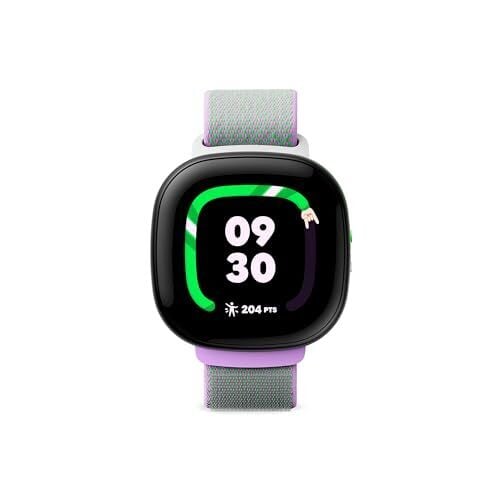
A children’s smartwatch usually walks a fine line between being helpful for parents and entertaining enough for kids to actually keep on their wrist. The Fitbit Google Ace LTE leans fully into that balance, and this price drop to $99.95 from $179.95—its lowest ever, according to price trackers—makes it easier to consider.

Fitbit has been in the “make healthy habits fun” business for years, and Google’s influence shows in how polished the Ace LTE feels. The watch uses animated creatures and simple games to nudge kids between seven and 11 toward movement. The catch—which is the whole point—is that you can’t sit and play uninterrupted. Every few minutes, the watch asks for a bit of movement, like hitting a step goal, before the game continues. For a lot of parents, that structure helps turn the watch into a tool that encourages activity rather than another screen to fight over.

Where the device becomes more than just a toy is in the built-in LTE GPS tracking. The watch can send and receive calls and texts, and you can see your child’s location through the companion Fitbit Ace app, which you install on your phone. It works with both iOS and Android, and the parental controls cover the basics, including contact management. There are limits, though. The Ace LTE doesn’t support music apps or sleep tracking, and this PCMag review notes that there’s occasional sluggishness when swapping between features. Still, the hardware itself feels sturdy, and the screen is easy for kids to navigate.

That said, the software is clearly built around the subscription model. And that subscription is the real consideration here. The watch requires a $9.99 monthly Ace Pass for GPS location tracking, LTE features, and access to the games—an ongoing cost you have to factor into the decision. Without the subscription, the watch becomes a basic step counter, and if it’s only doing that, you might as well get the older Fitbit Ace 3. Still, for families who want reliable location tracking and a structured way to encourage daily movement, the Ace LTE offers both in a kid-friendly package.

Our Best Editor-Vetted Tech Deals Right Now


Amazon Fire HD 10 (2023)


—
$69.99

(List Price $139.99)


Sony WH-1000XM5


—
$248.00

(List Price $399.99)


Amazon Fire TV Stick 4K Plus


—
$24.99

(List Price $49.99)

Deals are selected by our commerce team

Intel Arc Captures Discrete GPU Market Share Amid Panic Buying Spree

Intel Arc Captures Discrete GPU Market Share Amid Panic Buying Spree
It took a minute or three (or four or five) but we can finally call Intel’s modern foray into discrete GPUs a comeback! Well, sort of—NVIDIA and AMD (in that order) still dominate the discrete graphics card landscape, but according to the latest audit by Jon Peddie Research, Intel has carved itself out a whopping 1% share of the overall add-in

Amazon’s ‘God of War’ adaptation gets a two-season order

After a few years — and a few shakeups — it looks like Amazon’s God of War series is finally full speed ahead. The video game adaptation is now in pre-production in Vancouver and has been bumped up to a two-season order, Deadline reports. 

The latest update includes news that Frederick E.O. Toye will direct the first two episodes of God of War. Toye has led episodes of shows such as Fallout, The Boys and Westworld. In 2024, his work on Shogun won him the Emmy for outstanding directing for a drama series. 

Amazon first announced God of War‘s TV adaptation in 2022. Last year, the show lost its original showrunner, with Ronald D. Moore coming aboard soon after. 

The show is based on 2018’s God of War video game, which finds inspiration in Norse mythology. As Amazon puts it, the show “follows father and son Kratos and Atreus as they embark on a journey to spread the ashes of their wife and mother, Faye. Through their adventures, Kratos tries to teach his son to be a better god, while Atreus tries to teach his father how to be a better human.”

Casting is currently underway for the roles of Kratos and Atreus. 

This article originally appeared on Engadget at https://www.engadget.com/entertainment/tv-movies/amazons-god-of-war-adaptation-gets-a-two-season-order-133059803.html?src=rss

This Eufy No-Subscription-Required Floodlight Camera Is Now $80 Off

We may earn a commission from links on this page. Deal pricing and availability subject to change after time of publication.

A wired floodlight camera isn’t something most people buy on impulse, but the Eufy E340 makes a good case for acting while the price is right. It’s now down to $139.99 from $219.99, which is its lowest price ever, according to price trackers.

The draw here is the extensive coverage the dual-camera setup provides. One lens gives you a wide 130-degree 3K view of your yard, while the other zooms in far enough to pick up small details you’d usually miss, like a package label or a license plate. Both sit on a motorized mount that pans 360 degrees and tilts 120 degrees, so you can follow activity across your property without repositioning the fixture. As PCMag noted in its “outstanding” review, the E340 functions more like a compact surveillance system than a standard floodlight cam.

The LEDs emit 2,000 lumens at a neutral 4,000K tone, providing sufficient lighting to light up a yard but not harsh enough to wash out details. The IP65 housing sits comfortably outdoors, and the setup holds its connection well with dual-band wifi. Night vision is clean, and the color feed looks better when the lights kick on. Storage is flexible, though not plug-and-play. You get a microSD slot that supports cards up to 128GB, but you’ll need to bring your own microSD card since none is included. That size covers days of continuous recording or far longer if you stick to motion-triggered clips. If you want more space, Eufy’s HomeBase S380 expands recording to 16TB, or you can skip hardware entirely and add a cloud service for as little as $3.99 per month.

The app makes day-to-day use manageable with controls for panning, tilting, zooming, saved presets, and simple toggles for lights, two-way audio, or the 100dB siren. That said, while the E340 works with Alexa and Google Assistant, it does not support Apple HomeKit or IFTTT, so anyone tied into those platforms may feel boxed out. The wired installation also means you either need to be comfortable with electrical work or pay someone who is. But once installed, the performance holds steady. Our reviewer says the E340 is worth the money. At this price, anyone interested in combining bright outdoor lighting with reliable surveillance will likely feel the same.


Our Best Editor-Vetted Tech Deals Right Now


Amazon Fire HD 10 (2023)


—
$69.99

(List Price $139.99)


Sony WH-1000XM5


—
$248.00

(List Price $399.99)


Amazon Fire TV Stick 4K Plus


—
$24.99

(List Price $49.99)

Deals are selected by our commerce team

An Independent Effort Says AI Is the Secret To Topple 2-Party Power In Congress

Tony Isaac quotes a report from NPR: The rise of AI assistants is rewriting the rhythms of everyday life: People are feeding their blood test results into chatbots, turning to ChatGPT for advice on their love lives and leaning on AI for everything from planning trips to finishing homework assignments. Now, one organization suggests artificial intelligence can go beyond making daily life more convenient. It says it’s the key to reshaping American politics. “Without AI, what we’re trying to do would be impossible,” explained Adam Brandon, a senior adviser at the Independent Center, a nonprofit that studies and engages with independent voters. The goal is to elect a handful of independent candidates to the House of Representatives in 2026, using AI to identify districts where independents could succeed and uncover diamond in the rough candidates. […]

… “This isn’t going to work everywhere. It’s going to work in very specific areas,” [said Brett Loyd, who runs The Bullfinch Group, the nonpartisan polling and data firm overseeing the polling and research at the Independent Center]. “If you live in a hyper-Republican or hyper-Democratic district, you should have a Democrat or Republican representing you.” But with the help of AI, he identified 40 seats that don’t fit that mold, where he said independents can make inroads with voters fed up with both parties. The Independent Center plans to have about 10 candidates in place by spring with the goal of winning at least half of the races. Brandon predicts those wins could prompt moderate partisans in the House to switch affiliations.

Their proprietary AI tool created by an outside partner has been years in the making. While focus groups and polling have long driven understanding of American sentiments, AI can monitor what people are talking about in real time. … They’re using AI to understand core issues and concerns of voters and to hunt for districts ripe for an independent candidate to swoop in. From there, the next step is taking the data and finding what the dream candidate looks like. The Independent Center is recruiting candidates both from people who reach out to the organization directly and with the help of AI. They can even run their data through LinkedIn to identify potential candidates with certain interests and career and volunteer history. … The AI also informs where a candidate is best placed to win.


Read more of this story at Slashdot.

Amazon Music’s year-end recap arrives today

One of the newer traditions of the holiday season is reading itemized lists of what we watched, played and listened to on our favorite streaming platforms throughout the year. Spotify Wrapped is perhaps the most famous of the bunch, but Amazon Music has its own year-end recap called Delivered and this year’s edition is available right now.

Favorite songs from the year.
Amazon

Amazon Music Delivered started last year and provides subscribers with a list of their favorite songs, artists and podcasts. It also shows off “the top request you’ve made with Alexa.” I use Alexa primarily as an alarm, so that particular statistic won’t be setting my world on fire.

This year, there’s a “Best of 2025” section that highlights the biggest songs, albums and podcasts from every user across the app. This list includes songs by Taylor Swift, Geese, Bad Bunny and others. Finally, the app will generate a fake music fest based on a particular user’s favorite artists.

A poster for a fest.
Amazon

Amazon Music Unlimited costs $11 per month for Prime members and $12 per month for everyone else. As previously mentioned, Prime members do get a streamlined version of the service as a perk.

This article originally appeared on Engadget at https://www.engadget.com/apps/amazon-musics-year-end-recap-arrives-today-130029446.html?src=rss

How Tor Can Help You Be More Anonymous on the Internet

The internet is many things, but for many of us, it is far from private. By choosing to engage with the digital world, you often must give up your anonymity: trackers watch your every move as your surf the web and scroll on social media sites, and they use that information to build profiles of who (and where) you are and deliver you more “relevant” ads.

It doesn’t have to be this way. There are a number of tactics that can help keep your browsing private. You can use a VPN to make it look like your internet activity is coming from somewhere else; if you use Safari, you can take advantage of Private Relay to hide your IP address from websites you visit; or, you can connect the internet across a different network altogether: Tor.

What is Tor?

The whole idea behind Tor (which is short for The Onion Router) is to anonymize your internet browsing so that no one can tell that it is you visiting any particular website. Tor started out as a project of the U.S. Naval Research Lab in the 1990s, but developed into a nonprofit organization in 2006. Ever since, the network has been popular with users who want to privatize their web activity, whether they’re citizens of countries with strict censorship laws, journalists working on sensitive stories, or simply privacy-focused individuals.

Tor is a network, but it’s commonly conflated with the project’s official browser, also known as Tor. The Tor Browser is a modified version of Firefox that connects to the Tor network. The browser removes many of the technical barriers to entry for the Tor network: You can still visit your desired URLs as you would in Chrome or Edge, but the browser will connect you to them automatically via the Tor network automatically. But what does that mean?

How does Tor work?

Traditionally, when you visit a website, your data is sent directly to that site, complete with your identifying information (i.e. your device’s IP address). That website, your internet service provider, and any other entities that might be privy to your internet traffic can all see that it is your device making the request, and can collect that information accordingly. This can be as innocent as the website in question storing your details for your next visit, or as scummy as the site following you around the internet.

Tor flips the script on this internet browsing model. Rather than connect your device directly to the website you’re visiting, Tor runs your connection through a number of different servers, known as “nodes.” These nodes are hosted by volunteers all over the world, so there’s no telling which nodes your request will go through when you initiate a connection.

But Tor would not be known for its privacy if it only relied on multiple nodes to bounce your traffic around. In addition to the nodes, Tor adds layers of encryption your request. When the request passes from one node to another, each node is only able to decrypt one layer of the encryption, just enough to learn where to send the next request to. This method ensures that no one node in the system knows too much: Each only knows where the request came from one step before, and where it is sending the request to in the following step. It’s like peeling back layers of an onion, hence the platform’s name.

Here’s a simplified example of how it works: Let’s say you want to visit Lifehacker.com through Tor. You initiate the request as you normally would, by typing the URL into Tor’s address bar and hitting enter. When you do, Tor adds layered encryption to your request. The first node it sends it to, perhaps based in, say, the U.S., can unlock one layer of that encryption, which tells the node which node to send it to next. The next node, based perhaps in Japan, decrypts another layer of that encryption, which tells it to send it to a third node in Germany. That third node (known as the exit node) decrypts the final layer of encryption, which tells the node to connect to Lifehacker.com. Once Lifehacker receives the request, the reverse happens: Lifehacker sends the request to the node in Germany, which adds back its layer of encryption. It then sends it back to the node in Japan, which adds a second layer of encryption. It sends it back to the node in the U.S., which adds the final layer of encryption, before sending the fully encrypted request back to your browser, which can decrypt the entire request on your behalf. Congratulations: You have just visited Lifehacker.com, without revealing your identity.

Tor isn’t perfect for privacy

While Tor goes a long way to anonymizing your internet activity, it won’t protect you entirely. One of the network’s biggest weaknesses is in the exit node: Since the final node in the chain carries the decrypted request, it can see where you’re going, and, potentially, what you’re doing when you get there. It won’t be able to know where the request originated, but it can see that you’re trying to access Lifehacker. Depending on what sites you’re accessing, you might give enough information away to reveal yourself.

This was especially an issue when websites were largely using the unencrypted HTTP protocol. If you connected to an unencrypted website, that final node might be able to see your activity on the site itself, including login information, messages, or financial data. But now that most sites have switched to the encrypted HTTPS protocol, there’s less concern with third-parties being able to access the contents of your traffic. Still, even if trackers can’t see exactly what you’re doing or saying on these sites, they can see you visited the site itself, which is why Tor is still useful in today’s encrypted internet.

Who should use Tor?

If you’ve heard anything about Tor, you might know it as the go-to service for accessing the dark web. That is true, but that doesn’t make Tor bad. The dark web is not inherently bad, either: It’s simply a network of sites that cannot be accessed by standard web browsers. That includes a number of very bad sites filled with very bad stuff, to be sure. But it also encompasses a number of perfectly legal activities as well. Chrome or Firefox cannot see dark web sites, but Tor browser can.

But you don’t need to visit the dark web in order for Tor to be useful. Anyone who wants to keep their internet traffic private from the world can benefit. You might have a serious need for this, such as if you live in a country that won’t let you access certain websites, or if you’re a reporter working on a story that could have ramifications should the information leak. But you don’t need to have a specialized case to benefit. Tor can help reduce anyone’s digital footprint, and keep trackers from following you around the internet.

One big drawback

If you do decide to use Tor, understand that it won’t be as fast as other modern browsers. Running your traffic through multiple international nodes takes a toll on performance, so you may be waiting a bit longer for your websites to load than you’re used to. However, it won’t cost you anything to try it, as the browser is completely free to download and use on Mac, Windows, Linux, and Android. (Sorry, iOS fans.) If you’re worried about what you’ve heard about the dark web, don’t be: The only way to access that material it is to seek it out directly. Otherwise, using Tor will feel just like using any other browser—albeit just a tad slower.

Syntax hacking: Researchers discover sentence structure can bypass AI safety rules

Researchers from MIT, Northeastern University, and Meta recently released a paper suggesting that large language models (LLMs) similar to those that power ChatGPT may sometimes prioritize sentence structure over meaning when answering questions. The findings reveal a weakness in how these models process instructions that may shed light on why some prompt injection or jailbreaking approaches work, though the researchers caution their analysis of some production models remains speculative since training data details of prominent commercial AI models are not publicly available.

The team, led by Chantal Shaib and Vinith M. Suriyakumar, tested this by asking models questions with preserved grammatical patterns but nonsensical words. For example, when prompted with “Quickly sit Paris clouded?” (mimicking the structure of “Where is Paris located?”), models still answered “France.”

This suggests models absorb both meaning and syntactic patterns, but can overrely on structural shortcuts when they strongly correlate with specific domains in training data, which sometimes allows patterns to override semantic understanding in edge cases. The team plans to present these findings at NeurIPS later this month.

Read full article

Comments

The Morning After: Samsung’s Galaxy Z TriFold phone is real

As promised, we’re back to normal. Don’t even think about buying Kindles or subscribing to a new streaming service until Black Friday 2026.

Instead, let’s talk about a new Samsung foldable with even more folds. The Galaxy Z TriFold is breaking cover and will launch in Korea and other select countries (read: not the US) on December 12.

Unlike the early trifold from Huawei, the smartphone has an inward-folding display meant to protect the wider main display, 10 inches wide. The cover screen is 6.5 inches when folded, while the entire TriFold is 12.9mm when collapsed and 3.9mm at its thinnest when unfolded.

TMA
Engadget

That might seem a bit chunky in the face of super-thin smartphones, but it’s much thinner than Samsung’s first Z Fold (17.1mm), back in 2019. Arguably, it’s a 10-inch tablet (with the right screen ratio) crammed into a smartphone form factor.

The phone runs on a custom Snapdragon 8 chip, with a 5,600 mAh three-cell battery and support for 45W super-fast charging. Like the Z Fold 7, the rear camera lineup includes a 12-megapixel ultra-wide lens, a 200MP wide-angle lens and a 10MP telephoto lens.

Intrigued? Samsung says the TriFold will be available in the US and elsewhere in the first quarter of 2026. The company hasn’t stipulated pricing yet, but it could be spicy.

— Mat Smith

The other big stories (and deals) this morning


Netflix ends casting from mobile devices for users of newer TVs

You should still be able to cast to older Chromecast or Google Cast devices.

Struggled to cast Stranger Things over the long weekend? It wasn’t you — and it probably wasn’t your TV’s fault either. Netflix is ending support for casting from mobile devices to many TVs. According to a help page spotted by Android Authority, “Netflix no longer supports casting shows from a mobile device to most TVs and TV-streaming devices. You’ll need to use the remote that came with your TV or TV-streaming device to navigate Netflix.” The company previously removed AirPlay support in 2019 due to “technical limitations.”

Continue reading.


Apple’s new vice president of AI is a Google veteran

Embattled exec John Giannandrea is leaving the company.

Apple has hired AI researcher Amar Subramanya, a longtime Google exec, pulling him away from Microsoft to push its AI efforts forward. Subramanya, who Apple describes as a “renowned AI researcher,” spent 16 years at Google, where he was head of engineering for Gemini. The company also announced that current AI exec, John Giannandrea, will retire in 2026.

Giannandrea has shouldered much of the blame for the delays in delivering the next-generation version of Siri. He joined Apple in 2018 after a stint at Google that included VP of search. While his hiring was seen as a major coup for Apple at the time, the company has failed to deliver its more personalized AI-centric version of Siri, previewed earlier last year. Not earlier this year: last year.

Continue reading.


Google limits its free Nano Banana Pro image generator because it’s so popular

Free users can generate two images per day.

TMA
Engadget

Google has announced that free users can currently generate two images per day, down from three previously, on its Nano Bana Pro image generator. “Image generation and editing is in high demand,” the company writes. “Limits may change frequently and will reset daily.”

This is due to the new model being a big improvement on what came before. The text rendering portion is significantly improved and can even render legible text on top of an existing image. It can also blend multiple elements into a single composition, supporting up to 14 images at once. Google is also limiting free Gemini 3 Pro use.

Continue reading.

This article originally appeared on Engadget at https://www.engadget.com/general/the-morning-after-engadget-newsletter-121513576.html?src=rss

Russia Still Using Black Market Starlink Terminals On Its Drones

schwit1 shares a report from Behind The Black: In its war with the Ukraine, it appears Russia is still managing to obtain black market Starlink mini-terminals for use on its drones, despite an effort since 2024 to block access. [Imagery from eastern Ukraine shows a Russian Molniya-type drone outfitted with a mini-Starlink terminal, reinforcing reports that Russia is improvising satellite-linked UAVs to extend their communication and operational range.] SpaceX has made no comment on this issue.

According to the article, Ukraine is “exploring alternative European satellite providers in response, seeking more secure and controllable communications infrastructure for military operations.” While switching to another satellite provider might allow Ukraine to shut Starlink down and prevent the Russians from using it within its territory, doing so would likely do more harm to Ukraine’s military effort than Russia’s. There isn’t really any other service comparable at this time. And when Amazon’s Leo system comes on line it will face the same black market issues. I doubt it will have any more success than SpaceX in preventing Russia from obtaining its terminals.

Overall this issue is probably not a serious one militarily, however. Russia is not likely capable of obtaining enough black market terminals to make any significant difference on the battlefield. This story however highlights a positive aspect of these new constellations. Just as Russia can’t be prevented from obtaining black market terminals, neither can the oppressed citizens in totalitarian nations like Russia and China be blocked as well. These constellations as designed act to defeat the censorship and information control of such nations, a very good thing.


Read more of this story at Slashdot.

Russian Launch Site Mishap Shows Perilous State of Storied Space Program

A Soyuz launch at Baikonur damaged Russia’s only launchpad capable of sending astronauts and crucial propellant to the ISS. “The rocket itself headed to space without incident, taking three astronauts — Sergey Kud-Sverchkov and Sergei Mikaev of Russia and Chris Williams of NASA — to the space station,” reports the New York Times. “But the force of the rocket’s exhaust shoved a service platform used for prelaunch preparations out of its protective shelter. The platform fell into the flame trench below.” From the report: Photos and videos of the launch site the next day showed the platform out of place and mangled. “It’s heavily damaged,” said Anatoly Zak, who publishes RussianSpaceWeb.com, a close tracker of Russia’s space activities, “and so probably it will have to be rebuilt. Maybe some of the hardware can be reused. But it fell down, and it’s destroyed.”

This is the latest embarrassment for the once-proud Russian space program, which the United States relied on from 2011 to 2020 to get NASA astronauts to orbit. The incident also raises questions about the future of the International Space Station if the launchpad cannot be quickly repaired. In a statement issued on Friday, Roscosmos, the state corporation in charge of the Russian space program, confirmed unspecified “damage” at the launchpad. “All necessary parts needed for repairs are at our disposal, and the damage will be dealt with in the near future,” it said.


Read more of this story at Slashdot.

Samsung Debuts Its First Trifold Phone

At an event in Seoul on Tuesday, Samsung unveiled the Galaxy Z TriFold, a dual-hinged smartphone that unfolds into a 10-inch tablet (source paywalled; alternative source). It launches on Dec. 12 in Korea for about $2,450. The company plans to sell the phone in the U.S., but hasn’t shared pricing. Bloomberg reports: Samsung’s device has a different hinge design, folding inward from two sides whereas the Mate models take on a Z shape when being folded. When closed, the TriFold’s outer screen offers similar dimensions to a regular smartphone. But when unfurled, it provides a tablet-style experience with a 10-inch display, larger than the panel on the Galaxy Z Fold 7. In the tablet-like mode, each of the device’s screens can independently run a different app. This provides the equivalent of three separate 6.5-inch bar-style handsets side by side.

Using Samsung’s DeX software, which has been tweaked for this particular hardware type, you can also run a desktop-like experience directly on the large inner display. (Other Samsung phones must be plugged into an external monitor to activate DeX mode.) In DeX, the TriFold can operate as many as four distinct workspaces that can each run five apps simultaneously. To preempt concerns about potential breakage, Samsung said it has refined the phone’s hinges, aluminum frame and display technology to improve long-term durability. The company will also offer a one-time 50% discount on display repair costs should one eventually be needed.

At its thinnest point, the TriFold measures 3.9 millimeters (0.15 inch). Inside, it contains a 5,600 milliamp-hour battery, marking the largest capacity that Samsung has used in a folding phone so far. The battery provides as much as 17 hours of consecutive video playback with the TriFold display fully open. However, in specifications shared with Bloomberg, the company didn’t say how long it expects the battery to last with typical usage.


Read more of this story at Slashdot.

‘We Built a Database of 290,000 English Medieval Soldiers’

An anonymous reader quotes a report from the Conversation, written by authors Adrian R. Bell, Anne Curry, and Jason Sadler: When you picture medieval warfare, you might think of epic battles and famous monarchs. But what about the everyday soldiers who actually filled the ranks? Until recently, their stories were scattered across handwritten manuscripts in Latin or French and difficult to decipher. Now, our online database makes it possible for anyone to discover who they were and how they lived, fought and travelled. To shed light on the foundations of our armed services — one of England’s oldest professions — we launched the Medieval Soldier Database in 2009. Today, it’s the largest searchable online database of medieval nominal data in the world. It contains military service records giving names of soldiers paid by the English Crown. It covers the period from 1369 to 1453 and many different war zones.

We created the database to challenge assumptions about the lack of professionalism of soldiers during the hundred years war and to show what their careers were really like. In response to the high interest from historians and the public (the database has 75,000 visitors per month), the resource has recently been updated. It is now sustainably hosted by GeoData, a University of Southampton research institute. We have recently added new records, taking the dataset back to the late 1350s, meaning it now contains almost 290,000 entries. […] We hope the database will continue to grow and go on providing answers to questions about our shared military heritage. We are sure that it will unlock many previously untold stories of soldier ancestors.


Read more of this story at Slashdot.

Swiss Illegal Cryptocurrency Mixing Service Shut Down

Longtime Slashdot reader krouic shares a report from Europol: From November 24-28, 2025, Europol supported an action week conducted by law enforcement authorities from Switzerland and Germany in Zurich, Switzerland. The operation focused on taking down the illegal cryptocurrency mixing service Cryptomixer, which is suspected of facilitating cybercrime and money laundering. Three servers were seized in Switzerland, along with the cryptomixer.io domain. The operation resulted in the confiscation of over 12 terabytes of data and more than EUR 25 million worth of Bitcoin. After the illegal service was taken over and shut down, law enforcement placed a seizure banner on the website. Authorities allege that the mixing service laundered over 1.3 billion euros in bitcoin since 2016.


Read more of this story at Slashdot.