We’ve known there was a film adaptation of Helldiverscoming for a while, but we now have a director and writer. Justin Lin will helm the movie and Gary Dauberman is writing the script, according to The Hollywood Reporter.
Justin Lin is a great choice here. He directed many of the more beloved Fast & Furious entries and helmed the criminally underrated Star Trek Beyond. Helldivers is kind of a mix of both. It has outer space stuff, but also stylish action that occasionally borders on satire. Lin hasn’t made that many movies in recent years, but did sign on to adapt the Keanu Reeves comic BRZRKR for Netflix.
However, he’s been all over TV screens. Lin has become a prolific TV producer, with credits on shows like S.W.A.T., Scorpion, Magnum P.I. and Warrior.
As for the script, Dauberman penned both It and It Chapter Two. He also wrote Annabelle and both of its follow-ups, along with The Nun and a recent adaptation of Salem’s Lot. He’s mostly a horror guy, so we’ll have to see how he does with over-the-top action.
For the uninitiated, Helldiversis a co-op shooter franchise that’s heavily inspired by the movie Starship Troopers. The games are set in a hyper-patriotic dystopia called Super Earth. Helldivers 2 dropped in 2024, but just came out for Xbox earlier this year. Sony has yet to announce a release date for the film adaptation, so it might be a while.
As an aside, Helldivers 2 developer Arrowhead Game Studios just dropped a nifty update for the PC build. It brings the file size down to 23GB from 154GB. That’s a massive reduction of 131GB. We aren’t sure what kind of compression wizardry went into that.
This article originally appeared on Engadget at https://www.engadget.com/entertainment/tv-movies/fast–furious-director-justin-lin-is-making-the-helldivers-movie-173429140.html?src=rss
Zillow has removed climate risk scores from over a million home listings after real estate agents argued the data was scaring off buyers. TechCrunch reports: Zillow first added the data to the site in September 2024, saying that more than 80% of buyers consider climate risks when purchasing a new home. But last month, following objections from the California Regional Multiple Listing Service (CRMLS), Zillow removed the listings’ climate scores. In their place is a subtle link to their records at First Street, the climate risk analytic startup that provides the data.
“When buyers lack access to clear climate-risk information, they make the biggest financial decision of their lives while flying blind,” First Street spokesperson Matthew Eby told TechCrunch via email. “The risk doesn’t go away; it just moves from a pre-purchase decision into a post-purchase liability.” First Street’s climate risk scores first appeared on Realtor.com in 2020, where they remain. They also still appear on Redfin and and Homes.com. The New York-based startup has raised more than $50 million from investors including General Catalyst, Congruent Ventures, and Galvanize Climate Solutions, according to PitchBook.
Art Carter, the CRMLS CEO, told The New York Times that “displaying the probability of a specific home flooding this year or within the next five years can have a significant impact on the perceived desirability of that property.” He also questioned the accuracy of First Street’s data, saying he didn’t think that areas which haven’t flooded in the last 40 to 50 years were likely to flood in the next five.
Taking a cue from YouTube Music and YouTube Gaming, YouTube as a whole is now finally introducing a Spotify Wrapped-style annual recap. Simply called YouTube Recap, this feature will break down your watching habits across all categories in 2025.
According to YouTube, YouTube Recap will show “a set of up to 12 different cards,” with spotlights on “your top channels, interests, and even the evolution of your viewing habits.” It’ll draw its data from both long-form and short-form videos as well as downloaded videos, but it’ll only track videos you watched while signed in to your account.
The company is also dividing its viewers into “personality types” based on what they watch, such as “the Trailblazer” or “the Skill Builder.” There’s a whole breakdown of what these mean over on a support page, but as an example, if you’re a “Sunshiner,” that means “You’re drawn to content that spreads positivity and good vibes.” Google says that the most common personality types this year were “the Sunshiner,” “the Wonder Seeker,” and “the Connector,” and that personalities like “the Philosopher” and “the Dreamer” were more rare. So I guess you can brag about that if you get one of those.
If you listen to a lot of music on YouTube, meanwhile, YouTube Recap will also pull some data from YouTube Music, and can show you your top artists and songs of the year. For more detail, you’ll need to visit the YouTube Music app and look at your YouTube Music recap proper.
YouTube Recap should be available in North America starting today, although it might take some time until you see it—I can’t seem to access mine yet. For global viewers, YouTube says it will “roll out to the rest of the world this week.” You’ll be able to view it in 17 languages, with a full list available here.
I’ll keep checking for mine throughout the day, but for now, here’s how to find your YouTube Recap once it goes live.
How to view your YouTube Recap
According to YouTube’s instructions, YouTube Recap is available on both desktop and in the mobile app, and will show up as a banner either on your homepage or in your “You” tab.
On mobile, you can get to your “You” tab by tapping the button in the bottom-right corner with your profile picture on it, while on desktop, you’ll need to click the “You” subheading in the pane on the left-hand side of your screen. Or, you can just navigate to youtube.com/recap and let your browser do the work for you (if on mobile, it’ll direct you to the appropriate section of the app).
Note that you’ll need to be signed in for any of this to work. You might also need to update your YouTube app if you’re still having trouble. Google says you need version 18.43 or newer to see your Recap.
Once you’ve viewed your recap, you’ll also be able to share it, by tapping or clicking the Share button in any of your recap cards. Or, you can save it by tapping the download button to the left of the Share button.
YouTube’s most popular topics and creators in 2025
Credit: YouTube
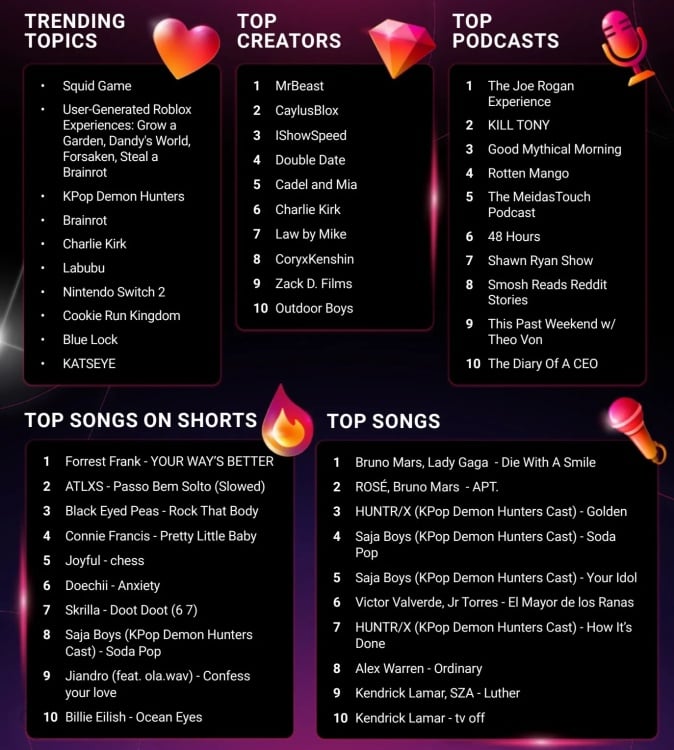
Alongside YouTube Recap, YouTube has also released a more general look at trending topics, creators, and songs in 2025. The most popular topic in 2025 was apparently Squid Game, while MrBeast was the top creator (I have a feeling those might be connected).
The Joe Rogan Experience is at the top of the podcast list, and interestingly, there are separate trending lists for shorts and full-length videos, with Forrest Frank’s YOUR WAY’S BETTER topping Shorts and Bruno Mars and Lady Gaga’s Die With a Smile taking the crown for full-length videos. KPop Demon Hunters is the only topic where you’ll see overlap between the Shorts and full-length lists, with Soda Pop appearing on both.
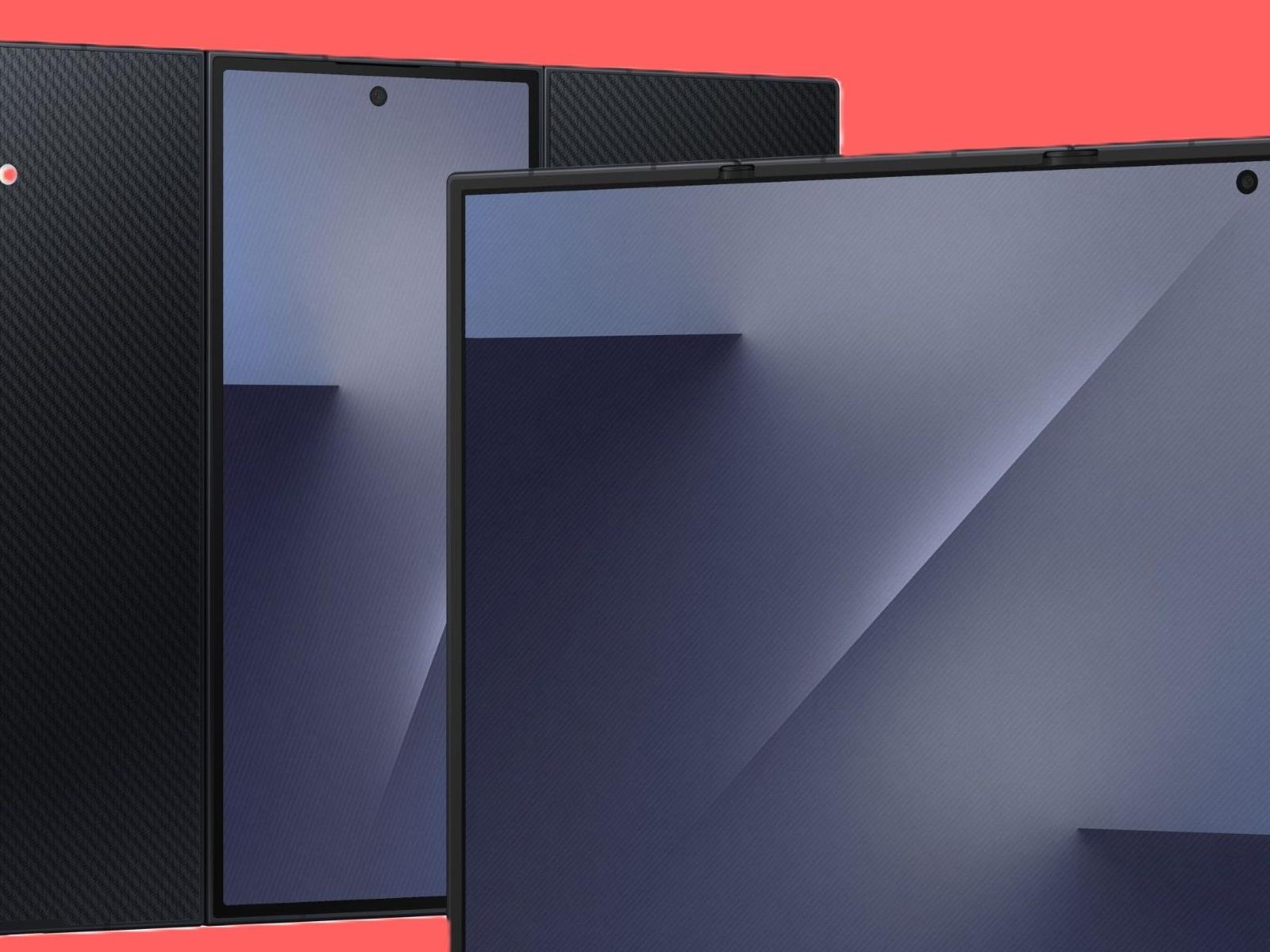
Samsung has a new foldable smartphone, and it’s not just another Z Flip or Z Fold. The Galaxy Z TriFold has three articulating sections that house a massive 10-inch tablet-style screen, along with a traditional smartphone screen on the outside. The lavish new smartphone is launching this month in South Korea with a hefty price tag, and it will eventually make its way to the US in early 2026.
Samsung says it refined its Armor FlexHinge design for the TriFold. The device’s two hinges are slightly different sizes because the phone’s three panels have distinct shapes. The center panel is the thickest at 4.2 mm, and the other two are fractions of a millimeter thinner. The phone has apparently been designed to account for the varying sizes and weights, allowing the frame to fold up tight in a pocketable form factor.
Huawei’s impressive Mate XT tri-fold phones have been making the rounds online, but they’re not available in Western markets. Samsung’s new foldable looks similar at a glance, but the way the three panels fit together is different. The Mate XT folds in a Z-shaped configuration, using part of the main screen as the cover display. On Samsung’s phone, the left and right segments fold inward behind the separate cover screen. Samsung claims it has tested the design extensively to verify that the hinges will hold up to daily use for years.
The Sonic the Hedgehog movies have been a success for Paramount and Sega, and the pair are looking to build on that with a spin-off movie. An expansion of the Sonic cinematic universe, if you will. The companies haven’t revealed more details about this “Sonic universe feature,” as Deadline described it, but the flick is set to hit theaters on December 22, 2028.
There have been rumors for a while that a film focused on Shadow the Hedgehog is in development, so that might be the direction Paramount and Sega take here. Keanu Reeves voices Shadow in the film series. There have also been suggestions that a movie starring Amy Rose is in the pipeline. I’m hoping there’s one centered on my fave, Tails, in the works too, even though it took me decades to realize that his full name, Miles Prower, is a pun on “miles per hour”.
This Sonic universe film will arrive after Sonic the Hedgehog 4, which is scheduled to arrive in theaters on March 19, 2027. A Knuckles spin-off series arrived on Paramount+ last year. Meanwhile, just before the Sonic spin-off movie, Paramount will bring a hybrid live-action Teenage Mutant Ninja Turtles film to theaters on November 17, 2028.
This article originally appeared on Engadget at https://www.engadget.com/entertainment/tv-movies/a-sonic-universe-movie-will-hit-theaters-in-2028-163424265.html?src=rss
2025 was another big year for music. We had new albums from Taylor Swift, Sabrina Carpenter, Tyler the Creator, and, of course, Huntrix (of KPop Demon Hunters fame), just to name a few. You may have listened to any number of new albums that came out this year, mixed in with music that released any time over the last century. You might not even remember what you were listening to back in January. But Apple Music remembers, and will serve in up to you in your 2025 Apple Music Replay.
Like last year, your Replay is available in your Apple Music app. If you’re relatively new to the streaming service, that might sound obvious—especially if you’ve previously used a service like Spotify that offers a similar annual wrap-up. But this wasn’t always the case: For much of Apple Music Replay’s brief history, you had to visit a separate website, music.apple.com/us/replay, and log into your Apple Music account in order to access your recap. It seemed silly, considering Spotify Wrapped is very much an in-app experience, but it took Apple until 2024 to get with the program.
That said, it seems Apple has made additional improvements this year. In 2024, the experience was essentially contained in an in-app browser, where it loaded your Apple Music Replay with the same UI as the website. This year, Replay is a native function of the Apple Music app, at least on iOS.
How to access your 2025 Apple Music Replay
Credit: Lifehacker
You can still access your Replay from the official website, but the easiest way to review it is from the app on your iPhone or iPad. Open the app on your device of choice. Make your way to the Home tab if the app doesn’t open there automatically, then tap or click on the large Replay option, which should appear at the top left. (This option also shows up in the Music app for Mac, but it will automatically direct you to the website in your browser.) Whichever way you access it, you’ll be able to see all of your Replay months here (excluding December, of course, since the month just started), but let’s focus on 2025 as a whole.
Unpacking your Apple Music Replay
At the top, you’ll find a Replay your year in music tile. Tap Play Your Highlight Reel and Apple Music will walk you through your year. Here’s what you can expect, at least based on my results:
First, you’ll see your total listening minutes, complete with both a collage of the albums you listened to most, and one of your top-played songs playing in the background.
Next, you’ll see your top artist of the year, with a collage of their images and a relevant song playing in the background.
The following slide is a breakdown of your top artist by month
The next will show if any artist was your number one for multiple months.
Next, you’ll see the number of songs you listened to, complete with your top song of the year.
Then you’ll see the number of albums you listened to, and which one was your top choice.
Second to last, Apple Music tells you your top genres of the year, including the one you listened to most
One final slide summarizes the whole year.
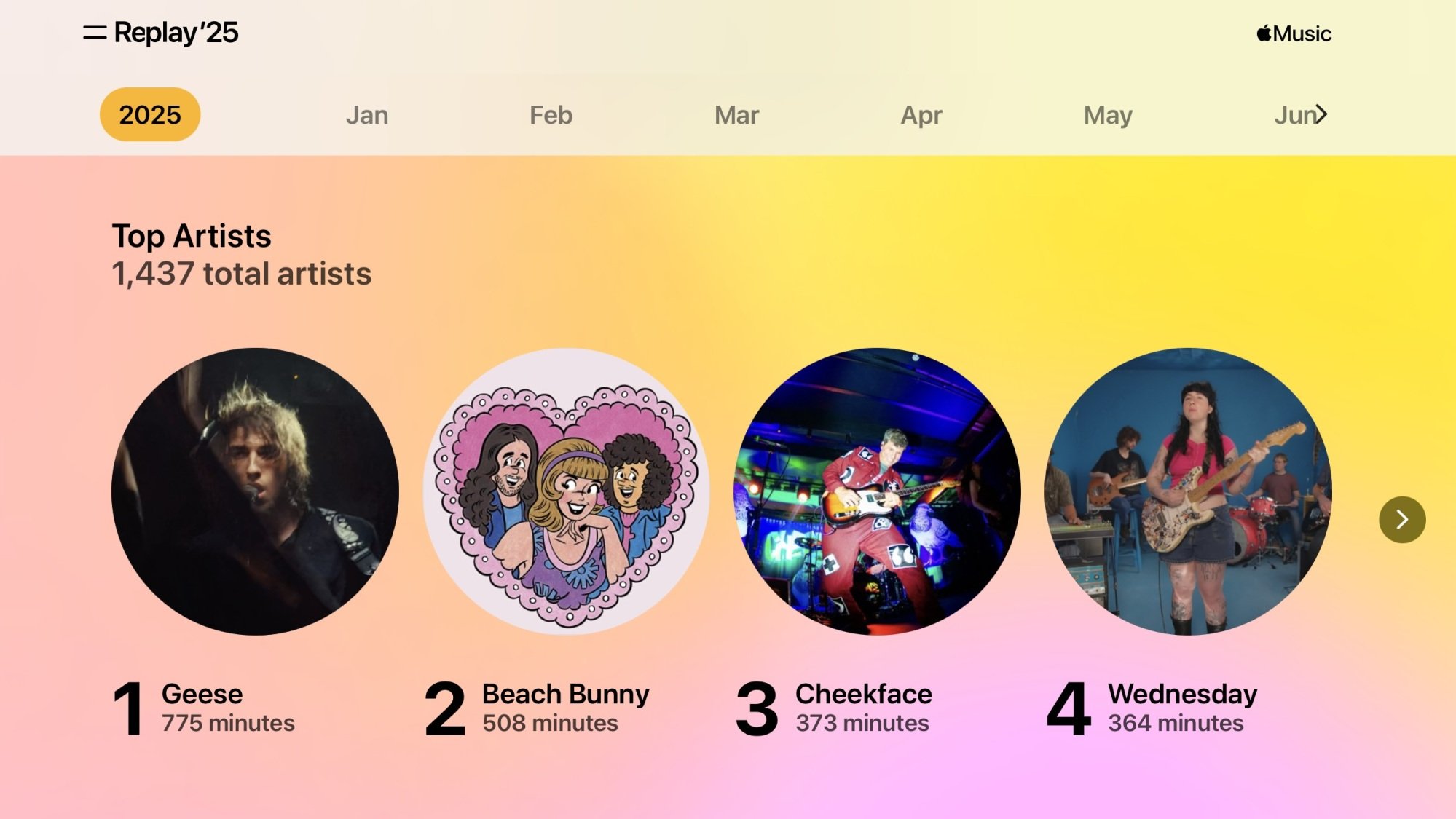
You don’t have to watch the highlight reel to see these stats: Once out of the reel, you can scroll through the Replay page to see everything covered in the slides, plus additional stats. Mine shows top artists, songs, and albums by month—so I can see which artist defined March (Will Stratton), which song I listened to most in August (“The Subway” by Chappel Roan), and which album I played on repeat in May (“Tunnel Vision” by Beach Bunny). I also see top playlists of the year; different listening milestones, like Minutes Listened, Artists Played, and Songs Played; stats from last year’s Replay; and a playlist of my top songs of the year.
Many of these stats, both in and out of the highlight reel, are easily sharable. You’ll see a share icon next to any stat you can export, which makes it simple to share fun graphics with friends or on social media. I’ve already blown up the group chat with some of my stats here, and I expect many of you to do the same.
Easter Island is famous for its giant monumental statues, called moai, built some 800 years ago. The volcanic rock used for the moai came from a quarry site called Rano Raraku. Archaeologists have created a high-resolution interactive 3D model of the quarry site to learn more about the processes used to create the moai. (You can explore the full interactive model here.) According to a paper published in the journal PLoS ONE, the model shows that there were numerous independent groups, probably family clans, that created the moai, rather than a centralized management system.
“You can see things that you couldn’t actually see on the ground. You can see tops and sides and all kinds of areas that just would never be able to walk to,” said co-author Carl Lipo of Binghamton University. “We can say, ‘Here, go look at it.’ If you want to see the different kinds of carving, fly around and see stuff there. We’re documenting something that really has needed to be documented, but in a way that’s really comprehensive and shareable.”
Lipo is one of the foremost experts on the Easter Island moai. In October, we reported on Lipo’s experimental confirmation—based on 3D modeling of the physics and new field tests to re-create that motion—that Easter Island’s people transported the statues in a vertical position, with workers using ropes to essentially “walk” the moai onto their platforms. To explain the presence of so many moai, the assumption has been that the island was once home to tens of thousands of people.
An anonymous reader quotes a report from the Wall Street Journal: The Trump administration has agreed to inject up to $150 million into a startup (source paywalled; alternative source) trying to develop more advanced semiconductor manufacturing techniques in the U.S., its latest bid to support strategically important domestic industries with government incentives. Under the arrangement, the Commerce Department would give the incentives to xLight, a startup trying to improve the critical chip-making process known as extreme ultraviolet lithography, the agency said in a Monday release. In return, the government would get an equity stake that would likely make it xLight’s largest shareholder.
The Dutch firm ASML is currently the only global producer of EUV machines, which can cost hundreds of millions of dollars each. XLight is seeking to improve on just one component of the EUV process: the crucially important lasers that etch complex microscopic patterns onto chemical-treated silicon wafers. The startup is hoping to integrate its light sources into ASML’s machines. XLight represents a second act for Pat Gelsinger, the former chief executive of Intel who was fired by the board late last year after the chip maker suffered from weak financial performance and a stalled manufacturing expansion. Gelsinger serves as executive chairman of xLight’s board.
[…] The xLight deal uses funding from the 2022 Chips and Science Act allocated for earlier stage companies with promising technologies. It is the first Chips Act award in President Trump’s second term and is a preliminary agreement, meaning it isn’t finalized and could change. “This partnership would back a technology that can fundamentally rewrite the limits of chipmaking,” Commerce Secretary Howard Lutnick said in the release.
It’s that time of the month again. Xbox just announced some new games that are heading to Game Pass in December. Let’s take a look.
The most renowned of the bunch is absolutely Mortal Kombat 1, which drops on December 10 for Ultimate and Premium subscribers. This is the latest game in the long-running fighting franchise that cut its teeth in darkened arcades throughout the 1990s.
Mortal Kombat 1 boasts an updated fighting system and plenty of new game modes. However, it’s still basically the same gorefest we grew up with. Players can still access bloodsoaked fatalities and turn their opponents into cute little babies.
The long-gestating sci-fi horror game Routineis finally coming out on December 4, and it’s a Game Pass day one release for Ultimate subscribers. This was first announced all the way back in 2012. It looks pretty fun, with a distinctly retro vibe.
Dome Keeper drops on December 9 for Premium and Ultimate Subscribers. This is a fun little roguelike that I’ve spent an unhealthy amount of time on. It’s a fast-paced mining simulator with some light tower defense mechanics. You’ll be saying “just one more run” long into the night with this one.
Lost Records: Bloom & Rage is available right now for Premium and Ultimate subscribers. This is the latest narrative adventure from the folks behind Life is Strange. It’s set in the 1990s, so throw on some plaid or whatever.
A bunch of cool games are also spreading their wings and becoming available for Premium subscribers after being Ultimate exclusives. There are some real blockbusters here, like Indiana Jones and the Great Circle, Monster Train 2, 33 Immortals and Spray Paint Simulator.
This article originally appeared on Engadget at https://www.engadget.com/gaming/xbox/december-game-pass-additions-include-mortal-kombat-1-and-dome-keeper-161232292.html?src=rss
The humble Netflix cast button has just become an unfortunate victim of what long-time subscribers are calling a tone-deaf decision. Netflix has quietly stripped the ability to send content from a mobile device to most modern televisions and streaming players, forcing millions of subscribers back to the remote control and their TV’s native
The Trump administration has renamed the National Renewable Energy Laboratory, now calling it the National Laboratory of the Rockies, marking an identity shift for the Colorado institution that has been a global leader in wind, solar and other renewable energy research.
“The new name reflects the Trump administration’s broader vision for the lab’s applied energy research, which historically emphasized alternative and renewable sources of generation, and honors the natural splendor of the lab’s surroundings in Golden, Colorado,” said Jud Virden, laboratory director, in a statement.
He did not specify what this “broader vision” would mean for the lab’s programs or its staff of about 4,000.
We may earn a commission from links on this page. Deal pricing and availability subject to change after time of publication.
I’ve been a fan of Ultimate Ears since I first got the Ultimate Ears Megaboom 3 back in 2018, and I’m still using it as my personal go-to portable speaker. The Wonderboom is their smaller, more portable version. The Wonderboom 4 released last summer, and dropped in price 40% during Cyber Monday, but you can still get it for $59.99 (originally $99.99) right now. This is the lowest price it has reached according to price-tracking tools, and it’s cheaper than the Ultimate Ears Wonderboom 3.
The Wonderboom 4 is a slight improvement on an already good portable rugged speaker, the Wonderboom 3. It is small enough to fit in most people’s hands, and it is rated IP67 for water- and dust-proofing. The 14-hour battery life completes the trifecta of what you expect on a decent portable speaker. This new version comes with USB-C for faster charging, and a Podcast mode, which tweaks the EQ to suit spoken vocals. Unfortunately, there is no full EQ customization or support with the Ultimate Ears app.
The sound is where most Ultimate Ears speakers shine, using their 360-degree sound, great for group listening. Like the Podcast mode, there is also an Outdoor mode which makes the EQ sound better at higher volumes so you can listen to it outdoors in noisy environments.
As an outdoor speaker or for someone who likes to listen to podcasts or audiobooks at home without headphones, the Wonderboom 4 is great, especially at its current $59.99 price. There aren’t many outdoor speakers at this price tag that can compete with it, other than the JBL Clip 5, which is currently at the same price.
The Sun fired a staggering X1.9-class solar flare at the turn of the month, triggering a sudden, widespread radio blackout across Australia and large parts of southeast Asia and it seems like another more active one is coming next.
Recorded by NASA’s Solar Dynamics Observatory (SDO) and peaking late on November 30 at 9:49 p.m. ET, the violent
By the time the second group of NASA astronauts reach the Moon later this decade, the space agency would like to have a lunar rover waiting for them. But as the space agency nears a key selection, some government officials are seeking an insurance policy of sorts to increase the program’s chance of success.
At issue is the agency’s “Lunar Terrain Vehicle” (LTV) contract. In April 2024, the space agency awarded a few tens of millions of dollars to three companies—Intuitive Machines, Lunar Outpost, and Astrolab—to complete preliminary design work on vehicle concepts. NASA then planned to down-select to one company to construct one or more rovers, land on the Moon, and provide rover services for a decade beginning in 2029. Over the lifetime of the fixed-price services contract, there was a combined maximum potential value of $4.6 billion.
The companies have since completed their design work, including the construction of prototypes, and submitted their final bids for the much larger services contract in August. According to two sources, NASA has since been weighing those bids and is prepared to announce a final selection before the end of this month.
Psst, hey you there, the one with the Switch 2 console in your shopping cart who’s getting ready to hit the checkout button. STOP WHAT YOU’RE DOING! Sorry, we didn’t mean to yell, but you’re about to make a $50 mistake. How so? If you know where to look, you can score the Switch 2 + Mario Kart World bundle for the same price, and who doesn’t
Steam’s November 2025 survey shows Linux gaming climbed to its highest share in a decade “thanks to the success of the Steam Deck, the underlying Steam Play (Proton) software, and now further excitement thanks to the upcoming Steam Machine and Steam Frame,” writes Phoronix’s Michael Larabel. From the report: A decade ago in the early Steam days the initial use was around 3% and back then the Steam user-base in absolute terms was much smaller than it is today. Back in October Steam on Linux finally re-crossed that 3% threshold after for years being stuck in a 1~2% rut. Now the Steam Survey results were published minutes ago for November and they continue an upward trend for Linux.
Steam on Linux is up to 3.2%, an increase of 0.15% for the month. One year ago Steam on Linux was at 2.03% last November, 1.91% for November 2023, and a decade ago for November 2015 was at just 0.98%. […] Due to AMD APUs powering the Steam Deck, AMD CPUs continue to power nearly 70% of Linux gaming systems. Meanwhile under Windows, AMD has around a 42% CPU marketshare.
Music streaming services are starting to unleash their year-in-review features for 2025, and Apple Music’s version is out now. Apple Music Replay is here to lay bare your listening stats for the year — at least so far, because these tools go live with a whole month of the year left to go. You can check out the 2025 edition from the Home tab in the app.
As ever, Replay shows your total listening time, the number of artists you checked out, your most-listened-to song and album and more. New this year is a discovery stat, which highlights new artists you started listening to in 2025. The loyalty factor will tell you which artists you listen to year after year, and the comebacks tab shows which artists have slotted back into your rotation.
The most popular song on Apple Music overall this year was the ultra-catchy “Apt.” by Rosé and Bruno Mars. “Luther” by Kendrick Lamar and SZA; “Die with a Smile” by Lady Gaga and Mars; “Not Like Us” by Lamar; and “Birds of a Feather” by Billie Eilish rounded out the top five. “Apt.” is also the most Shazamed song of the year.
I really didn’t need Replay to tell me that party metal vanguards Electric Callboy and kawaii metal pioneers Babymetal were my top artists for 2025, since I’ve had both on extremely heavy rotation since the spring — their stupendously fun collab, “Ratatata,” was my top song this year. I was a little surprised that the wonderful Japanese math rock band Toe were in third place and that post-punk revival crew Editors made the top five, though I did listen to the latter’s The Back Room a bunch at the start of the year.
Early last year, Apple Music rolled out a monthly version of Replay, which shows the top songs, albums and artists and personal listening milestones for each month. You can also go back and listen to previous versions of your personalized Replay playlists, and check out a Replay All Time one, which highlights the songs you’ve listened to most on Apple Music overall.
This article originally appeared on Engadget at https://www.engadget.com/entertainment/music/apple-music-replay-2025-is-here-to-highlight-your-unimpeachable-music-taste-151224318.html?src=rss
People often ask creatives—especially those in careers some dream of entering—”how did you get started?” Video game designers are no exception, and Avellone says that one of the most important keys to his success was one he learned early in his origin story.
“Players are selfish,” Avellone said, reflecting on his time designing the seminal computer roleplaying game Planescape: Torment. “The more you can make the experience all about them, the better. So Torment became that. Almost every single thing in the game is about you, the player.”
It’s been 18 years since the last Metroid Prime game, but I felt right at home in Metroid Prime 4: Beyond. Almost too at home. Whether fighting my way through a volcano, exploring a research base in a frozen tundra or getting lost in a vast desert, I couldn’t shake the feeling I’d done this before. As the fourth game in a series, that’s not a huge surprise, but it was my main disappointment in Metroid Prime 4: Beyond. Think about the leap Nintendo took going from 2011’s The Legend of Zelda: Skyward Sword and 2017’s Breath of the Wild. They were both recognizably Zelda games, but Nintendo redefined what that means between those two games.
No such reinvention has happened with Metroid Prime 4: Beyond. But that doesn’t mean it isn’t a great time — it executes the template for a Metroid Prime game extremely well. It’s thrilling to see the series finally make the jump to HD, iconic bounty hunter Samus Aran has some intriguing new powers, there’s a badass motorcycle to shuttle her around the game’s open world hub and the game’s design and art direction show Nintendo at its best. It’s everything you’d expect from a Metroid Prime game — no more, no less. Whether that’s a good thing is up to you to decide.
If you haven’t played the previous Metroid Prime games before, fear not. There isn’t anything story-wise that you need to know before you jump into this adventure. As with all Metroid games, you take control of acclaimed bounty hunter Samus Aran, an ultra-powerful warrior with a mechanized suit full of fun tricks. The vast majority of the game takes place in first-person view where you can lock on to the many creatures trying to kill you and blast away with an ever-expanding arsenal. The other main interface is your scan visor, where you can learn about your surroundings and enemies to find weaknesses and figure out what you need to do to advance.
Metroid Prime 4: Beyond
Nintendo
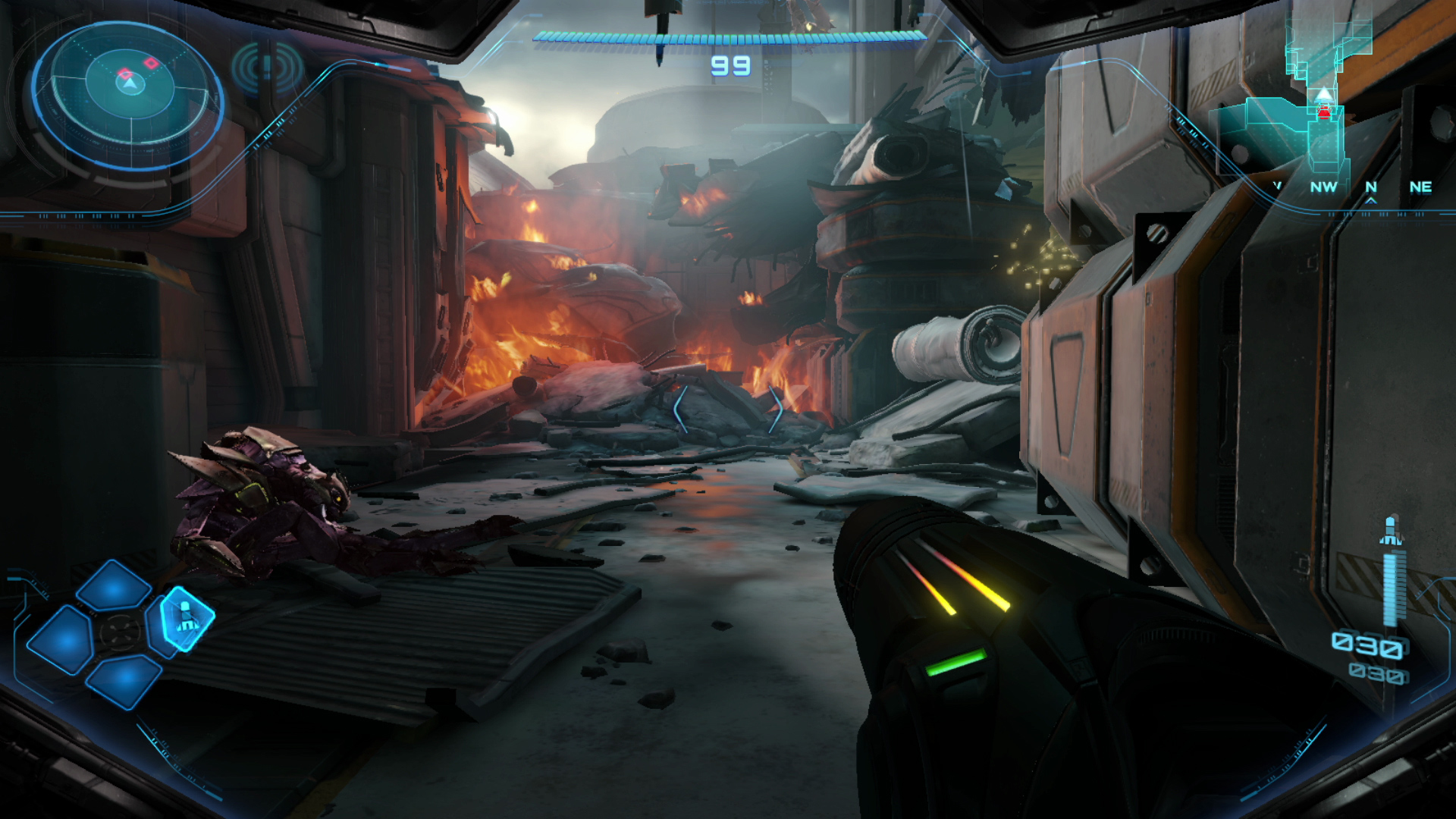
Beyond throws you right into a firefight that serves as a solid tutorial for the game’s varied control schemes. A Galactic Federation outpost is under attack, and Samus flies in to help defend the troops and keep a secret artifact safe. This somewhat bombastic intro is a great way to show off the Switch 2’s power. Sure, we’re not talking about a PS5 Pro here, but this is perhaps the most visually-advanced game Nintendo has released. With a Switch 2 docked to a TV, you can play it at either 4K / 60fps or 1080p / 120fps (in handheld mode, that drops to 1080p or 720p with the same frame rates). I don’t have a huge TV, so I mostly went with “performance mode,” but in either case the game felt extremely fluid with no frame rate drops and looked outstanding.
The game starts as Samus Aran flies in to help the Galactic Federation fight off an invasion, and that opening cut scene shows off with some HDR-enhanced explosions and a detailed environment of a space base in chaos. There are little fires and explosions everywhere; it’s visually busy but in a good way that serves the setting, and it all looks vibrant and life-like. As with basically all Nintendo games, Metroid Prime 4: Beyond isn’t aiming for realism, but it’s closer to a game like Horizon Forbidden West or Cyberpunk 2077 than any other Nintendo titles I can think of. Things like the textures of metal installations, the leaves on alien trees or Samus’ gloves all have a level of textural detail you don’t usually see in Nintendo’s games. Often, that’s due to a conscious art direction choice to go in a more cartoonish direction, but the Switch 2’s hardware is helping make the game as lifelike as possible.
Metroid Prime 4: Beyond
Nintendo
(Note that Metroid Prime 4: Beyond is also available on the original Switch. I didn’t play it there so I can’t comment on how things like frame rates and textures hold up on that much older console. If you’re thinking about trying this game on the first Switch, it’s probably a good idea to see how other reviewers find that experience before shelling out $60.)
The aforementioned intro sets up the big conflict in Beyond. As Samus comes in to try and help the troops defend a mysterious artifact, the game’s big bad Sylux shows up and everything hits the fan. Samus and some other Galactic Federation forces are mysteriously transported to the planet Viewros, where Samus comes into contact with a near-excinct society called the Lamorn. A Lamorn elder telepathically pleads with Samus to try and save the society from being totally forgotten — indeed, she may be able to bring them back from the brink of extinction if all goes well. They’ve been waiting for a “chosen one,” you see, and Samus is naturally it.
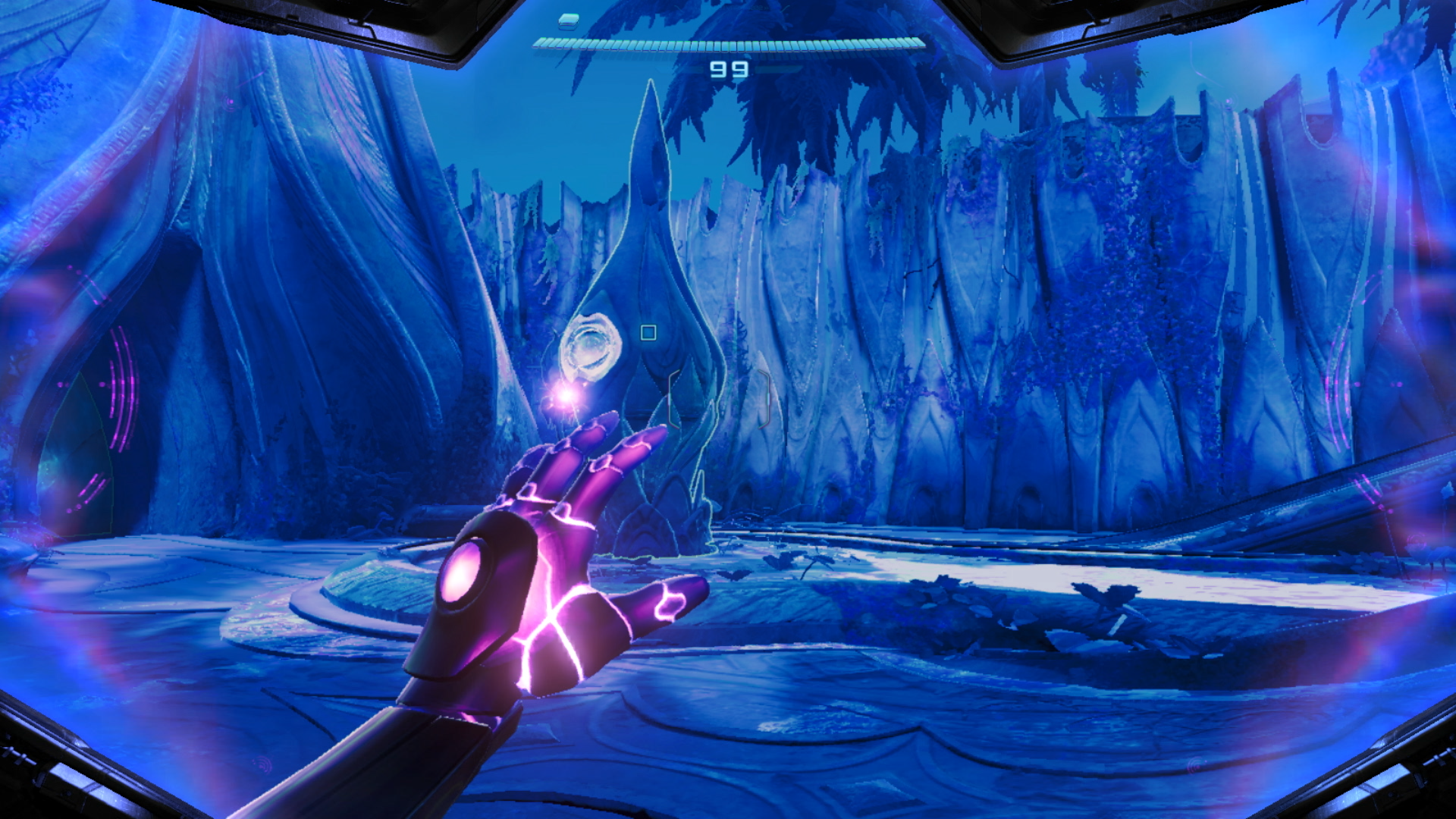
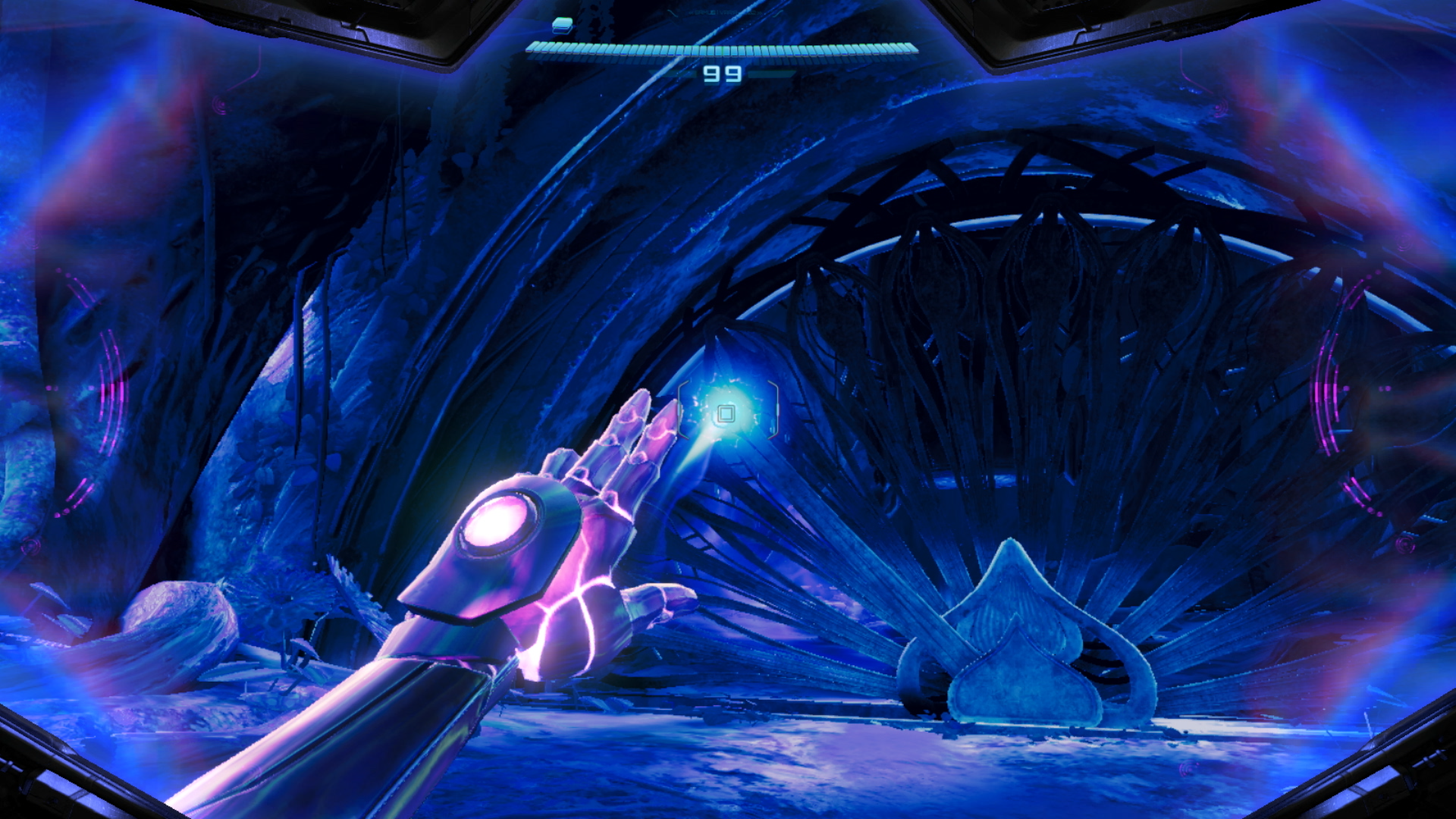
As part of this intro, Samus gains her signature new physic powers in Beyond. These allow her to interact with otherwise-hidden parts of the environment to solve puzzles. The most significant is the Control Beam. When you charge your arm cannon while in the psychic scan visor mode (a slight tweak on the environmental scanning feature that has been a major part of all Metroid Prime games), you can fire a beam that slows time down and can be controlled with the right joystick. That means you can pass the Control Beam through multiple targets, something you’ll need to do periodically to weaken enemies or unlock the way forward.
Metroid Prime 4: Beyond
Nintendo
For the most part, though, the psychic powers besides the beam are just repackaging of already-familiar tools. Metroid veterans will be familiar with the Spider Ball, an upgrade to the Morph Ball that lets Samus magnetically attach to tracks that help her get to out-of-reach areas. In Beyond, you instead get the “Psychic” Spider Ball — that does essentially the same thing. Occasionally, you’ll find Psychic Ball Tracks that you have to scan to reveal; they’ll then blast Samus into a secret area that usually has a weapon upgrade or energy tank. Even Samus’ main weapon gets a fancy “Psychic Beam” name — but the description of it in the inventory admits that it’s the same weapon. “The Psychic Beam’s strength and performance are equal to the standard Power Beam.” While the Control Beam adds a fun wrinkle to the gameplay, the psychic abilities don’t otherwise change the Metroid Prime formula in any significant way.
The main task Samus faces is collecting five Teleporter Keys that can get her off the planet. Those keys are hidden in various environments around Viewros that are all connected by Sol Valley, a large desert that holds lots of upgrades and side quests that you’ll need to clear to advance in the game. The desert is more of a hub than an open world — there are small areas to explore dotted around it, but the main action happens in places like Ice Belt, Volt Forge, Flare Pool and several others you’ll find your way to as you collect those teleporter keys.
Metroid Prime 4: Beyond
Nintendo
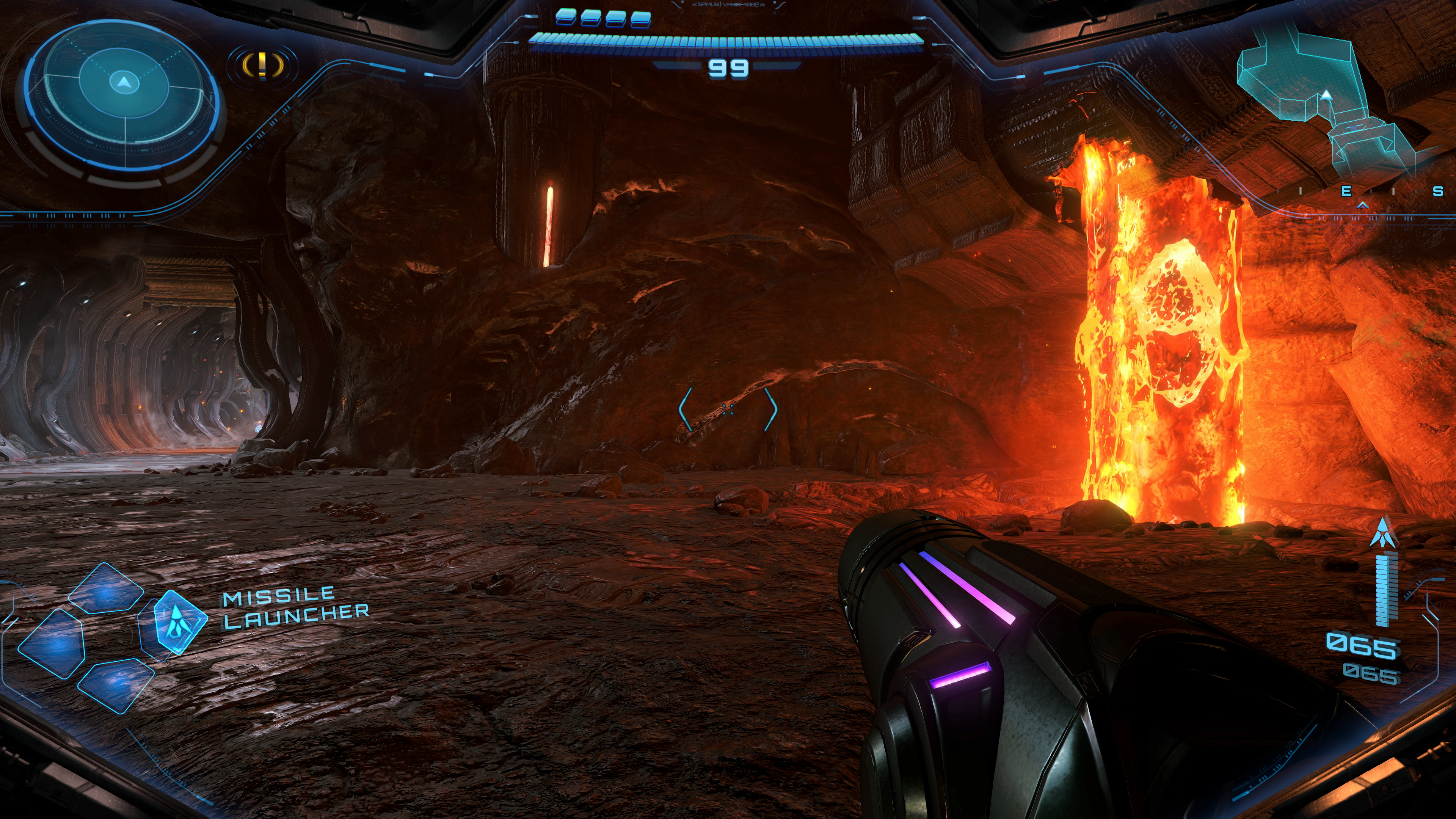
As those names suggest, Ice Belt is a frozen area where you explore an abandoned research facility, while Flare Pool is inside of a volcano. And, as you might expect, you’ll need certain weapons to advance in those areas. In addition to her standard beam and missile weapons, Samus collects the obligatory freeze ray and fire blaster sort of weapons. This is where the game really started to remind me of the original Metroid Prime — the three elemental weapons she collects are essentially the same as those in the first game, and environments like a frozen wasteland or a fiery volcano are nearly identical to ones you’ll find in that game. The Lamorn, meanwhile, reminded me a lot of the departed Chozo tribe you’ll find on Tallon IV in the first Metroid Prime. Of course, that game came out all the way back in 2002, and Metroid Prime 4: Beyond will likely be the first game of the series many play. A little recycling of classic elements is forgivable.
That said, I was a bit disappointed that the game has a tightly-scripted flow. After the intro and the first mission on Viewros, you hit the desert with multiple locations where Teleporter Keys are believed to be hidden. But you can’t tackle them in any order you choose. This is a Metroid game, after all, and that means exploring to find powers that let you explore a new area that was previously closed off. Part of me was hoping for the freedom of a game like Breath of the Wild where you could tackle areas in any order you choose. But after playing through nearly the entire game, I appreciate the excellent execution of the familiar formula.
Metroid Prime 4: Beyond
Nintendo
Another thing that’ll be familiar to those who’ve played the older Metroid Prime games is the control scheme. For the most part, you can pick up the controller and get right to it, as the main control layout employs a two-joystick first-person view that should be pretty easy to get the hang of. But there are definitely times where I found myself wishing for more precision. You can lock onto enemies and targets with the ZL button and start blasting away with your chosen weapon, but many of the boss battles require you to lock on to a large creature and then use the right stick to adjust your aim to hit very specific targets. This took some getting used to, because I was used to the lock-on target vulnerable areas. Doing it with a Switch Pro Controller made things much easier, but using the standard Joy-Cons could get frustrating in a hurry. If I was playing in handheld mode, I would often pause before a big battle and wait until I could hook up to my TV and use a proper controller. I’d recommend you do the same — it’ll make for a much more enjoyable experience.
Beyond also offers the option of using one Joy-Con in “mouse” mode for aiming while using the other for moving around. For me, this isn’t a viable option. I tried it a few times and immediately felt completely disoriented and far worse at aiming than I was with the right stick. I can appreciate the idea behind offering mouse-like controls for a first-person FPS game, but it just did not feel well executed. That said, this might be on me. I haven’t played a game with a keyboard and mouse in years; nearly all of my gaming is on a twin-stick controller, so I’m just more comfortable with that setup. I’m thinking about starting from the beginning and seeing how I adapt to mouse mode and will update this review if my opinion changes.
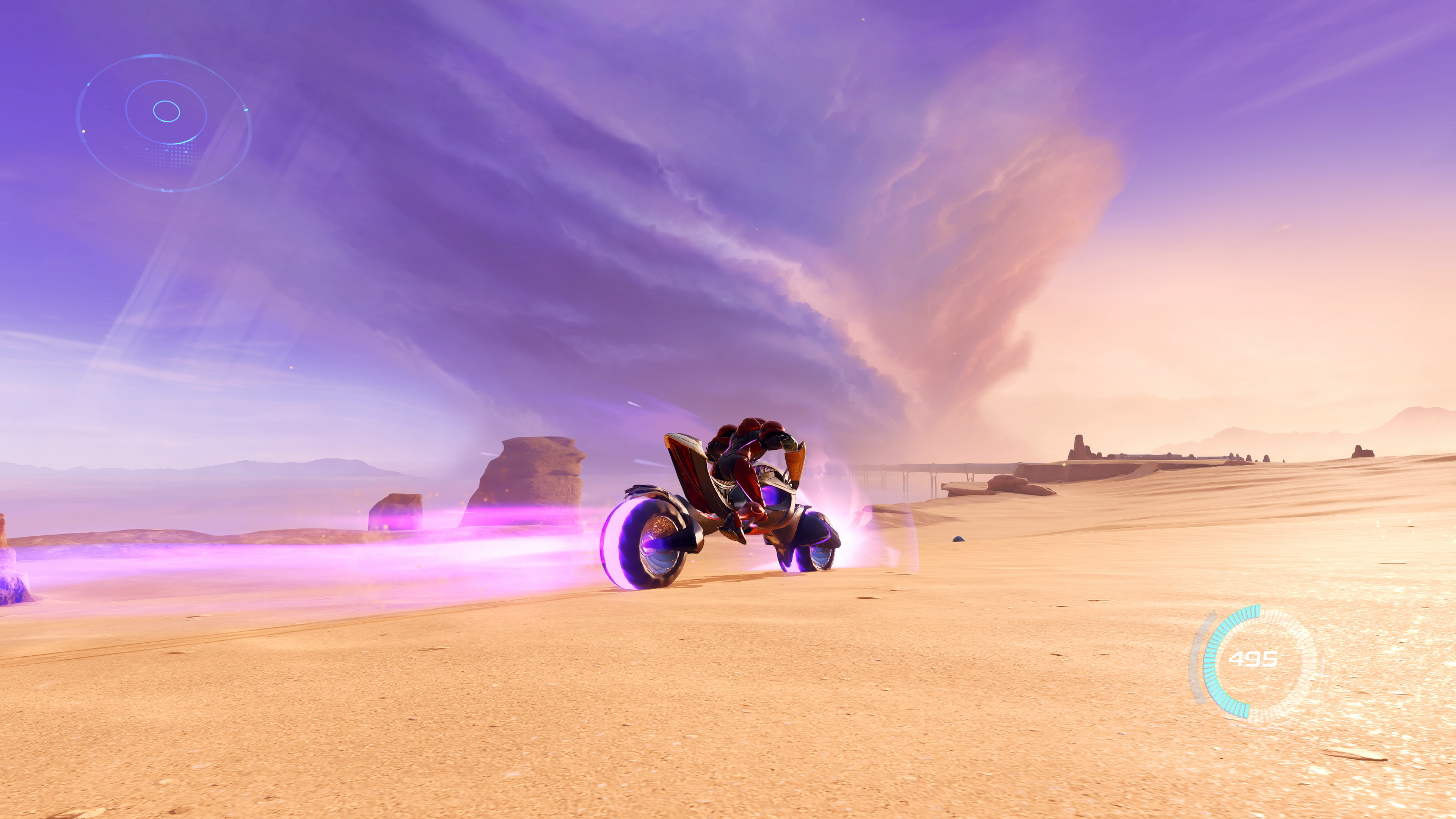
There are a few things that Beyond does that are completely new to the series. The most obvious one is Vi-O-La, the wild robotic motorcycle that Samus rides. You’ll unlock that early in the game, and its primary utility is to get around Sol Valley. For anyone worried that the game is overly focused on an element that admittedly feels a bit anachronistic to the usual Metroid vibe, fear not. You’ll use it a bunch, but it’s more about fast transportation and exploration than something that has detailed mechanics you need to master. There are a few segments where it’s a major part of the mission, but for the most part it’s just another tool in your arsenal rather than something that steals the focus of the game.
Metroid Prime 4: Beyond
Nintendo
The same can be said for the motley crew of adventures you assemble. One of the loudest bits of feedback that came out of the preview Nintendo offered the press a few weeks ago was “what’s the deal with Myles MacKenzie?” You see, in the first hours of the game you come across MacKenzie, a bumbling engineer type who you rescue in the jungles of Viewros shortly after landing on the planet. You then have to escort him around a bit, during which he makes some pretty bad and occasionally obnoxious jokes. This led many who played the preview to worry about MacKenzie shattering the quiet and lonely solitude the Metroid series is known for.
Don’t worry — Samus is on her own for the vast majority of the game. You’ll encounter a few more stranded Galactic Federation soldiers throughout the game, but they usually only stick around for short segments before returning to the home base you establish with Myles. And as for Myles himself, he’ll help upgrade your weapons and is available on the radio to give you hints on where you need to go, something that I honestly didn’t mind. I’d rather have hints at hand than spend all my time wandering lost throughout the vast world of Beyond. But I can also see that the hint system is occasionally too aggressive in dropping details on where to go next.
As a seasoned player, Beyond mostly felt challenging but fair. Games in the Metroid Prime series are notorious for moments of serious difficulty, but this one feels a little more forgiving. When battling bosses, there were plenty of ammo and energy drops that helped me even the score. I usually died a handful of times while figuring out my strategy or getting a feel for their attacks, but it wasn’t overly frustrating or tedious. That said, there were two bosses near the end (including the final boss) where the difficult curve spiked in a way that felt completely unreasonable.
Metroid Prime 4: Beyond
Nintendo
There were also a few times when I felt wildly lost, with no useful information about my next step to be found anywhere on the map. Myles told me to find a member of the crew “out in the desert.” And while Sol Valley isn’t the same open-world scale of some bigger games, it’s still a pretty big space to explore without any other indication of where to go. I wasted far too much time riding my motorcycle across dunes aimlessly figuring out where to go. It wouldn’t be a Metroid game if you didn’t get hopelessly stuck at some point, though.
For the most part, I enjoyed the addition of some people helping Samus along her way. It helps flesh out the world of the game in small ways, giving some perspectives on everything going on from people who aren’t ultra-powerful, silent bounty hunters. It did make Samus’ never-ending silence feel a bit awkward, but it also fits with her otherworldly, not-quite-human presence.
Metroid Prime 4: Beyond
Nintendo
In some ways, it’s easy to sum up Metroid Prime 4: Beyond. It’s the Metroid Prime experience, modernized. The graphics are better, the world is bigger, experiences like Vi-O-La and Samus’ psychic abilities offer a greater variety of gameplay experiences. But it’s also very much a Metroid Prime game at its core, with the familiar but effective mix of biomes to exploration, giant enemies to dispatch and weapon upgrades to find. And, of course, there were moments of immense frustration when things just got too difficult, another hallmark of the series. Seriously, the final battle is wildly frustrating. Maybe I just need to get good, but it felt so far out of sync with the entire rest of the game that it almost ruined the fun that came before.
That intense moment of frustration aside, anyone who played earlier games in the series will find a lot to love here. But, they also might be disappointed that Nintendo didn’t push the series further. However, there are also a lot of people who’ve never played a Metroid Prime game in the last two decades or so — those people will find that the formula Nintendo engineered in the 2000s still holds up here. Metroid Prime 4: Beyond is far more unique than your average first-person shooter, it was worth the long wait, and it’s a must-play for anyone who is up for the challenge.
This article originally appeared on Engadget at https://www.engadget.com/gaming/nintendo/metroid-prime-4-beyond-review-an-excellent-modernization-but-not-a-total-reinvention-150000082.html?src=rss
Samsung’s Galaxy Z TriFold is finally official. Built upon Samsung’s decade-long investment in foldables, the TriFold is being hailed by the company as the “shape of what’s next in mobile innovation,” but will shoppers care?
Whether it becomes a market success or not, you can’t deny the engineering behind this premium inward-folding design.