Maximum-severity vulnerability threatens 6% of all websites

Security defenders are girding themselves in response to the disclosure of a maximum-severity vulnerability disclosed Wednesday in React Server, an open source package that’s widely used by websites and in cloud environments. The vulnerability is easy to exploit and allows hackers to execute malicious code on servers that run it.

React is embedded in web apps running on servers so that remote devices render JavaScript and content more quickly and with fewer resources. React is used by an estimated 6 percent of all websites and 39 percent of cloud environments. When end users reload a page, React allows servers to re-render only parts that have changed, a feature that drastically speeds up performance and lowers the computing resources required by the server.

A perfect 10

Security firm Wiz said exploitation requires only a single HTTP request and had a “near-100% reliability” in its testing. Multiple software frameworks and libraries embed React implementations by default. As a result, even when apps don’t explicitly make use of React functionality, they can still be vulnerable, since the integration layer invokes the buggy code.

Read full article

Comments

Great handling, advanced EV tech: We drive the 2027 BMW iX3

The new BMW iX3 is an important car for the automaker. It’s the first of a new series of vehicles that BMW is calling the Neue Klasse, calling back to a range of cars that helped define the brand in the 1960s. Then, as now, propulsion is provided by the best powertrain BMW’s engineers could design and build, wrapped in styling that heralds the company’s new look. Except now, that powertrain is fully electric, and the cabin features technology that would have been scarcely believable to the driver of a new 1962 BMW 1500.

In fact, the iX3 is only half the story when it comes to BMW’s neue look for the Neue Klasse—there’s an all-electric 3 series sedan on the way, too. The sedan will surely appeal to enthusiasts, particularly the version that the M tuning arm has worked its magic upon, but you’ll have to wait until early 2026 to read about that stuff. Which makes sense: crossovers and SUVs—or “sports activity vehicles” in BMW-speak—are what the market wants these days, so that’s what comes first.

The technical stuff

As we learned earlier this summer, BMW leaned heavily into sustainability when it designed the iX3. There’s extensive use of recycled battery minerals, interior plastics, and aluminum, and the automaker has gone for a monomaterial approach where possible to make recycling the car a lot easier. There’s also an all-new EV powertrain, BMW’s sixth-generation. When it goes on sale here next summer, the launch model will be the iX3 50 xDrive, which pairs an asynchronous motor at the front axle and an electrically excited synchronous motor at the rear for a combined output of 463 hp (345 kW) and 475 lb-ft (645 Nm).

Read full article

Comments

Artist Bungie plagiarized for Marathon alpha says the issue has been resolved

Bungie and Sony Interactive Entertainment appear to have settled the plagiarism scandal that rocked Marathon before the game was indefinitely delayed in June 2025. Fern Hook, an artist who goes by the name “Antireal” online, posted on X that her issues with Bungie using her work without credit in Marathon have been resolved to her “satisfaction.”

Marathon‘s distinct art style is one of its charms, but as Hook claimed on X and Bungie later confirmed, a portion of the assets and textures featured in the game’s alpha were lifted from Hook’s work. At the time, Bungie announced that it was conducting an investigation and hoped to discuss the issue with Hook. It’s not clear what kind of agreement Bungie, Sony and Hook came to, but it appears to have solved any outstanding issues.

The Marathon art issue has been resolved with Bungie and Sony Interactive Entertainment to my satisfaction.

— N² (@4nt1r34l) December 2, 2025

Bungie delayed Marathon from its original September 2025 launch date in June, and more recently ran closed playtests of an updated version of the game in October. As of Sony’s November earnings report, the company now says Marathon will launch by March 2026. Marathon is a reimagining of an older Bungie franchise, but more importantly, it’s also the developer’s first new game since Destiny 2 was released in 2017. Considering Sony’s increased scrutiny of Bungie’s performance, settling this issue and hopefully setting up Marathon for a smoother launch is definitely a good thing.

This article originally appeared on Engadget at https://www.engadget.com/gaming/artist-bungie-plagiarized-for-marathon-alpha-says-the-issue-has-been-resolved-223901094.html?src=rss

After AI Push, Trump Administration Is Now Looking To Robots

An anonymous reader quotes a report from Politico: Five months after releasing a plan to accelerate the development of artificial intelligence, the Trump administration is turning to robots. Commerce Secretary Howard Lutnick has been meeting with robotics industry CEOs and is “all in” on accelerating the industry’s development, according to three people familiar with the discussions who were granted anonymity to share details. The administration is considering issuing an executive order on robotics next year, according to two of the people. A Department of Commerce spokesperson said: “We are committed to robotics and advanced manufacturing because they are central to bringing critical production back to the United States.”

The Department of Transportation is also preparing to announce a robotics working group, possibly before the end of the year, according to one person familiar with the planning. A spokesperson for the department did not respond to a request for comment. There’s growing interest on Capitol Hill as well. A Republican amendment to the National Defense Authorization Act would have created a national robotics commission. The amendment was not included in the bill. Other legislative efforts are underway. The flurry of activity suggests robotics is emerging as the next major front in America’s race against China. “There is now recognition that advanced robotics is crucial to the U.S. in terms of manufacturing, technology, national security, defense applications, public safety,” said Brendan Schulman, VP of policy and government relations for Boston Dynamics. “The investment that we’re seeing in the sector and the efforts in China to dominate the future of robotics are being noticed.”


Read more of this story at Slashdot.

Your ‘dear algo’ Threads posts might actually do something soon

In a lot of social media use, the algorithm is an intangible entity, silent and all-powerful in controlling what we see in our feeds. And like supplicants to a deity, sometimes we may find ourselves calling into the void, hoping to receive aid from that mighty being. Seems that for Threads users, at least, those prayers have been heard. 

Many people on the Threads platform have taken to writing posts with the phrase “dear algo,” politely asking the network algorithm to show them more of what they want or less of what they don’t. According to a post today from Meta CEO Mark Zuckerberg, Threads will try out a feature where that’s exactly what happens. Connor Hayes, head of Threads, also posted about this limited test, adding that it will be an AI-powered feature. “When people add “Dear Algo” to a post, it will tell your feed what you want to see more or less of for up to three days,” he wrote. “If your profile is public, people can see your request, connect with you about it, or repost it.”

There is something satisfying about having users’ feedback taken seriously, even if it started as a bit of a joke. Threads has seen rapid growth since its debut in 2023. It had 400 million monthly active users as of August 2025 and in October it reached 150 million daily active users.

Update, December 3, 2025, 5:15PM ET: Added more detail from Connor Hayes about the tests.

This article originally appeared on Engadget at https://www.engadget.com/social-media/your-dear-algo-threads-posts-might-actually-do-something-soon-215448062.html?src=rss

Apple design lead Alan Dye is heading to Meta

Alan Dye, Apple’s Vice President of Human Interface Design, has been poached by Meta, Bloomberg reports. The designer played a pivotal role in the look and feel of Apple’s products since Jony Ive left the company in 2019, and now he’ll be taking his talents to Meta.

Dye will reportedly work under Chief Technology Officer Andrew Bosworth as the head of a new studio that will oversee the design of hardware, software and AI products. Apple is replacing Dye with Stephen Lemay, Bloomberg reports, a senior designer at the company who’s worked on all of the company’s interfaces since 1999. Considering the secrecy of Apple as a company, it’s hard to credit individual breakthroughs to individual designers, but Dye at least worked on several of Apple’s major new platforms and design changes, including things like the interface of visionOS and its new Liquid Glass design language.

Meta has had success with its Quest virtual reality headsets and more recently, its Ray-Ban Meta smart glasses, but the company clearly hopes to release many more consumer hardware products with Dye’s help. Those will likely include future versions of the Meta Ray-Ban Display and its Neural Band accessory.

Dye isn’t the first designer Apple has lost to a competitor. Evans Hankey, the company’s former head of industrial design, left Apple in 2022 to work with Ive. Hankey is now one of several former Apple employees building OpenAI’s upcoming hardware device. Dye joining Meta is particularly interesting in this case because Apple is rumored to be working on products that will bring the company in even closer competition to the social media giant. The Vision Pro could be considered to be a high-end competitor in VR, but Apple is reportedly working on its own pair of smart glasses, too.

This article originally appeared on Engadget at https://www.engadget.com/big-tech/apple-design-lead-alan-dye-is-heading-to-meta-214449944.html?src=rss

Google’s New ‘Call Reason’ Feature Lets You Mark Outgoing Calls As Urgent

It’s tough to get people to answer the phone—though I’m not really blaming those who don’t pick up. We are so inundated with spam calls these days that refusing to answer incoming calls en masse isn’t actually a bad strategy. When that call could be someone trying to break into your bank account, or alerting you to fraudulent credit card charges that never happened, perhaps it’s best to just wait for friends and family to text instead.

But let’s say the call is from you to someone you know and trust, and let’s assume they see it’s you who’s calling. Even though they know the call isn’t spam, there are still plenty of reasons someone won’t pick up the phone—including, of course, because they don’t actually want to talk right now. But if you really need to get a hold of someone and don’t want meetings, commutes, or the lack of desire for a phone call to get in the way, Google is currently working on a solution you can try right now.

Call Reason lets you mark calls as urgent

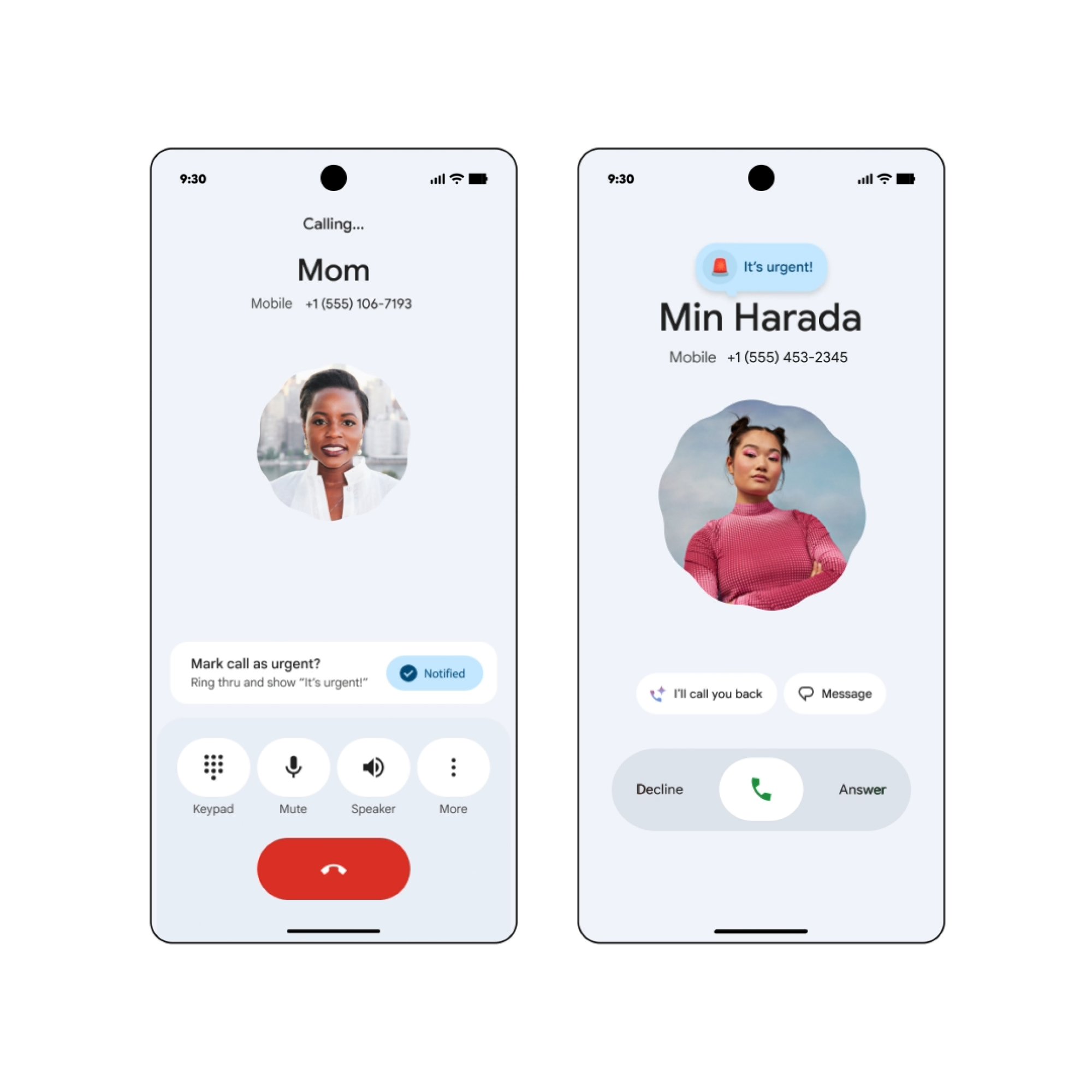
The new feature, named “Call Reason,” is designed to separate important phone calls from the rest. When you start dialing a number, Google will give you the option to mark the call as urgent. If you choose to do so, the person you’re calling will see a pop-up reading “It’s urgent!” on the call screen. Hopefully, that pop-up will encourage them to answer; however, I imagine they’ll stop picking up if you start using it too often.

That said, not everyone ignores calls on purpose. If you aren’t by your phone when it goes off, or if it’s on silent in your pocket or bag, you obviously won’t catch the urgent tag on the call screen. In that case, Android adds the urgent tag to the missed call in their recipient’s call history. As long as the person you’re trying to reach checks out their missed calls, they should see that this one was marked urgent—though if it’s a real emergency, they might’ve received extra calls and messages from you in the interim anyway.

It seems Google has been working on this feature for some time. Android Authority previously spotted something called Expressive Calling in the Phone app’s APK, which would let the caller add animations and emojis to calls. In addition to that functionality, however, was the ability to flag the reason for a call when dialing.

How to try Call Reason

Google is still testing the Call Reason feature, but anyone using the current version of the Google Phone app will be able to try it out. (It’s still rolling out, though, so you may not see it yet.) The feature also only works with saved contacts, and when calling Android users who have Google’s Phone app set as the primary calling app.

When Call Reason does show up on your phone, you’ll see it appear after placing your call. The UI says “Mark call as urgent?,” with a prompt letting you know that the call will ring through and show the call is urgent. Tap “Notify,” and you’re set. Once the recipient sees the call, they’ll see the “Incoming call” banner replaced by an animated “It’s urgent!” pop-up. It’s a fun design, but perhaps a bit too fun, when you’re likely using this in important situations.

call reason in action

Credit: Google

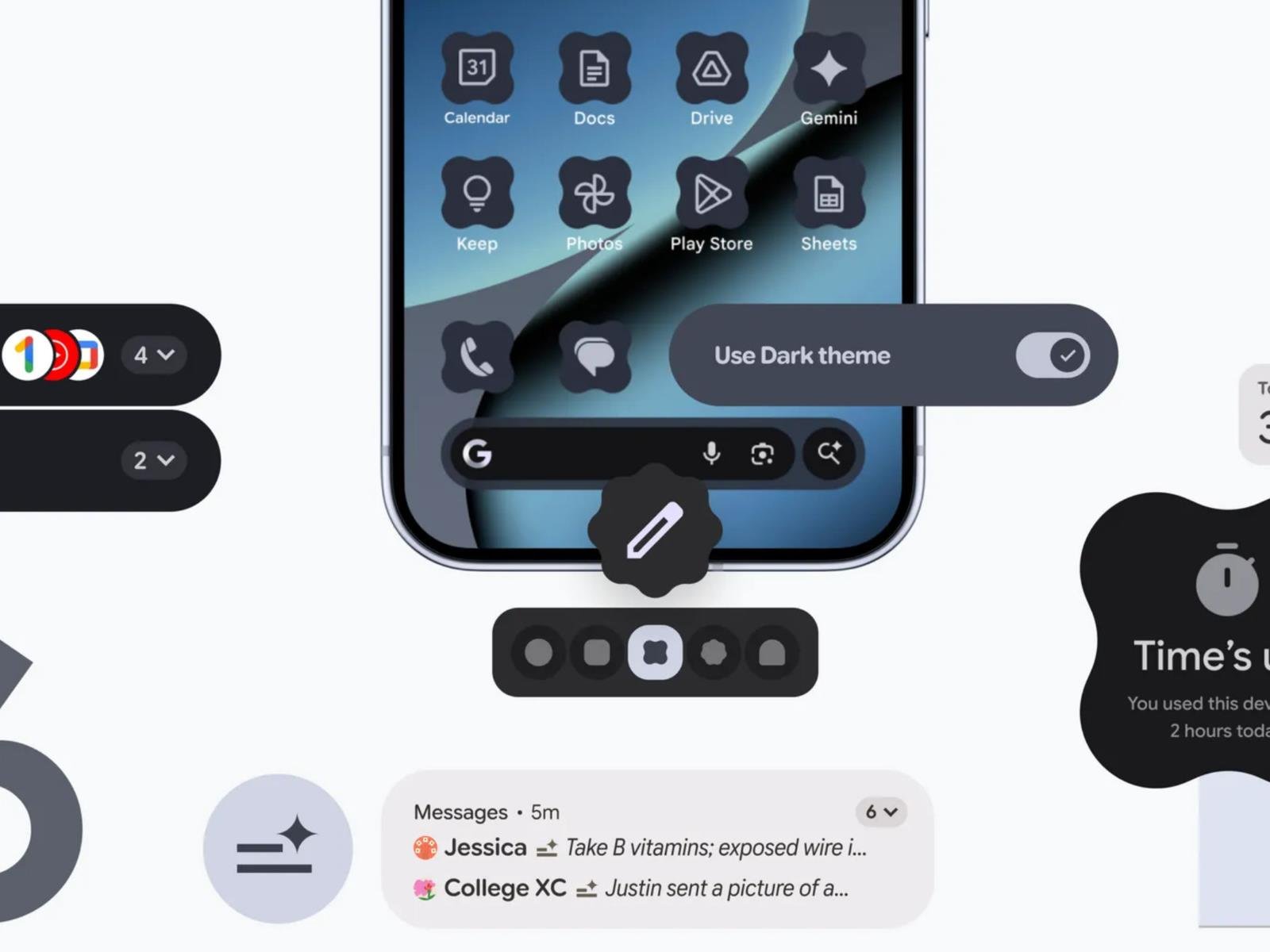
Alongside Call Reason, Google announced a number of new features for Android 16. There are now improved parental controls locked behind a PIN of the parents’ choosing; new UI customization options, like expanded dark mode support and new custom shapes for home screen icons; and the continued roll out of Google’s AI notification summaries, which Lifehacker writer David Nield hasn’t found all that useful yet.

How to use Accessibility Reader on Apple devices

Earlier this year, Apple launched a new tool that makes it easier to read anything on your device’s screen. Designed for people with visual disabilities, Accessibility Reader provides a full-screen view of any on-screen text. (It’s a bit like Safari’s Reader Mode, only for any app.) The feature also lets you listen to your text read aloud.

Accessibility Reader is available for iPhone, iPad, Mac and Vision Pro. Your device will need to be on iOS 26, iPadOS 26, macOS 26 Tahoe or visionOS 26.

It’s a fairly straightforward experience. But since it offers several launch and customization options, here’s a quick breakdown on getting started and tweaking it to your liking.

How to turn on and open Accessibility Reader

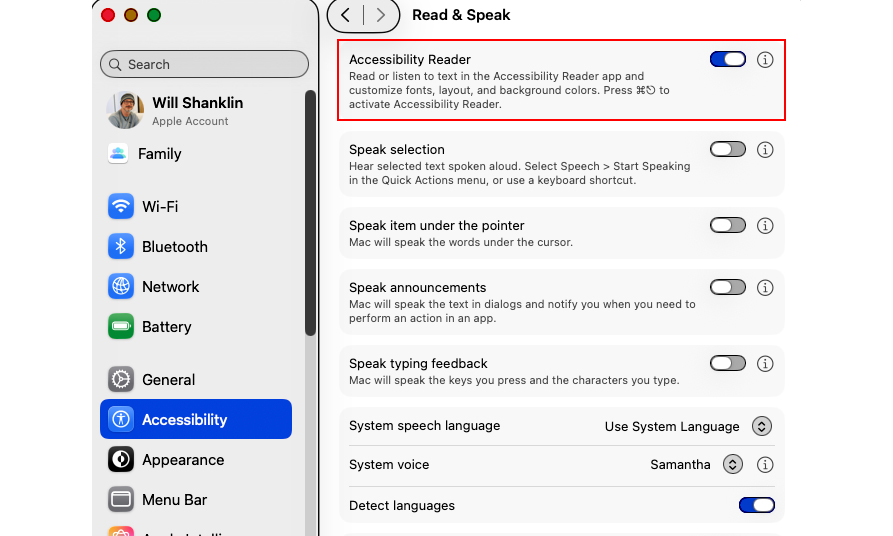
The Accessibility Reader settings toggle on macOS.

Activating the feature is the same on any Apple device. Go to Settings > Accessibility > Read & Speak, and turn on Accessibility Reader. (It’s at the very top.) Once you’ve done that, there are several ways to launch the tool.

Accessibility Shortcut (iOS / iPadOS / visionOS)

Triple-click the lock button. That’s the side button on iPhone and the top button on iPad and Vision Pro. (On older iPads, triple-click the Home Button.) This brings up the Accessibility Shortcut, which includes a quick-launch item for Accessibility Reader.

If you don’t need the other items in this menu, you can remove them at Settings > Accessibility > Accessibility Shortcut. Then, using the shortcut will immediately launch Accessibility Reader.

Control Center (iOS / iPadOS)

You can add a Control Center shortcut for the tool. Swipe down from the top-right to launch Control Center. Then, hold your finger on an empty part of the screen. Choose “Add a control” (bottom), and find the Accessibility Reader shortcut. You can now tap that Control Center icon whenever you want to launch it.

Keyboard Shortcut (macOS)

The default Accessibility Reader shortcut on Mac is Cmd-Esc. Or, customize it in Settings > Accessibility > Accessibility Reader by clicking the “i” next to the menu item.

Accessibility Shortcut (macOS)

The tool is also available as part of the Mac’s Accessibility Shortcut. You can launch this menu using a keyboard shortcut (Opt-Cmd-F5), by quickly pressing Touch ID three times or with a Control Center shortcut. (However, the above Cmd-Esc shortcut should be the simplest for most people.)

How to listen to text in Accessibility Reader

The tool also includes a text-to-speech (TTS) option. Once you’ve launched Accessibility Reader, listening is as simple as pressing the play button (▶). You can then use the pause (⏸) shortcut to take a break.

Other options include skipping backward or forward using the rewind or fast-forward symbols. There’s also a speed adjustment, which you can change by choosing the 1x button.

If you want the Reader to speak text automatically when it opens, you can do that, too. That option is found under Settings > Accessibility > Accessibility Reader. (On Mac, select the “i” symbol next to the menu entry to find this option.)

How to customize Accessibility Reader

It’s easy to adjust the font size, color, theme and more. Once you’ve launched Accessibility Reader, tap the customization (AA) button. There, you can change the theme, colors, font, line spacing and much more.

This article originally appeared on Engadget at https://www.engadget.com/mobile/smartphones/how-to-use-accessibility-reader-on-apple-devices-212231319.html?src=rss

Republicans drop Trump-ordered block on state AI laws from defense bill

A Donald Trump-backed push has failed to wedge a federal measure that would block states from passing AI laws for a decade into the National Defense Authorization Act (NDAA).

House Majority Leader Steve Scalise (R-La.) told reporters Tuesday that a sect of Republicans is now “looking at other places” to potentially pass the measure. Other Republicans opposed including the AI preemption in the defense bill, The Hill reported, joining critics who see value in allowing states to quickly regulate AI risks as they arise.

For months, Trump has pressured the Republican-led Congress to block state AI laws that the president claims could bog down innovation as AI firms waste time and resources complying with a patchwork of state laws. But Republicans have continually failed to unite behind Trump’s command, first voting against including a similar measure in the “Big Beautiful” budget bill and then this week failing to negotiate a solution to pass the NDAA measure.

Read full article

Comments

I Bought a Smart Toilet for Black Friday, and It Has Been Revolutionary

We may earn a commission from links on this page. Deal pricing and availability subject to change after time of publication.

Ever since I visited Japan in 2019, I’ve been converted into a loyal bidet user. I started with a basic bidet added onto a standard toilet, but I always knew the time would come when I would make a big upgrade. That time was this Black Friday when I pulled the trigger on the Loniko Smart Toilet, and I’m so glad I did. It’s $444.99 (originally $549.99) after using the additional $30 on-page coupon, and it’s worth every penny.

My first experience with the Loniko Smart Toilet was over Thanksgiving, which I spent at my parents house; they were very excited for my brothers and me to try their new splurge in their guest bathroom: the toilet. The lid opened when I walked into the bathroom, welcoming me to sit on its heated seat. As I said, I’ve been using bidets in my home for years, but never one like the Loniko. The toilet comes with a remote you can prop on your wall for easy access. You can control the bidet’s stream and direction, turn on the dryer, which was surprisingly effective and gentle, and do all the things the toilet does automatically, like opening and closing the lid, flushing, etc. After realizing that most decent bidets cost upwards of $300, I decided to snatch this toilet when it went on sale during Black Friday.

Being able to control the temperature of the water in the stream is a huge deal for me, especially in the winter when the water in my home is extremely cold. Cleaning the toilet is also pretty easy. It has a skirted design, so there are no nooks and crannies near the base where dirt can get trapped. The toilet also automatically cleans itself after each flush.

Keep in mind you’ll need an outlet close by to enable all its fancy features. You can also choose to get a tankless model, which results in quieter flushes, saves water and energy, and looks more modern, but it’s harder to install (I went with the regular tank toilet and it flushes quietly enough for me).

Humans in southern Africa were an isolated population until recently

The fossil and genetic evidence agree that modern humans originated in Africa. The most genetically diverse human populations—the groups that have had the longest time to pick up novel mutations—live there today. But the history of what went on within Africa between our origins and the present day is a bit murky.

That’s partly because DNA doesn’t survive long in the conditions typical of most of the continent, which has largely limited us to trying to reconstruct the past using data from present-day populations. The other part is that many of those present-day populations have been impacted by the vast genetic churn caused by the Bantu expansion, which left its traces across most of the populations south of the Sahara.

But a new study has managed to extract genomes from ancient samples in southern Africa. While all of these are relatively recent, dating from after the end of the most recent glacial period, they reveal a distinct southern African population that was relatively large, outside of the range of previously described human variation, and it remained isolated until only about 1,000 years ago.

Read full article

Comments

Netflix is getting rid of another of its game studios by selling it back to its founders

The developer of Cozy Grove and Alphabear is leaving Netflix. Spry Fox is being sold back to its original founders, Game File reports, and will continue to work on its upcoming “cooperative village life sim” Spirit Crossing as an independent company. Unlike other shuttered Netflix games studios Team Blue and Boss Fight Entertainment, Netflix will remain involved with the studio as Spirit Crossing‘s publisher on mobile.

As part of the arrangement, Spry Fox founders David Edery and Daniel Cook will be able to shop Spirit Crossing to other publishers for console and PC releases of the game. While reverting to being an independent studio is definitely a happier version of the typical studio closure story, it might not be without issues. Game File reports that layoffs at Spry Fox are still possible and the developer will need to find additional funding to continue long-term. Spirit Crossing may also need to be altered so that Spry Fox can continue to make money from the game after players purchase it.

Netflix acquired Spry Fox in 2022, a little over a year after it acquired Oxenfree developer Night School. Spry Fox released its first game for Netflix subscribers, a sequel to Cozy Grove, in 2024. The studio formally announced Spirit Crossing in March of this year, as an ambitious attempt to fuse the cozy life simulation elements of something like Animal Crossing: New Horizons with the online social experiences of MMOs like World of Warcraft or Final Fantasy XIV. 

That pitch apparently no longer jives with Netflix’s current game strategy, which changed when Epic Games’ Alain Tascan took over from ex-EA executive Mike Verdu. Whereas Netflix Games under Verdu acquired studios, funded projects and licensed an eclectic collection of mobile games for Netflix subscribers, Tascan has refocused the company’s games business around titles based on Netflix IP, social party games and known quantities, Game File writes. Spirit Crossing doesn’t fit neatly into any of those categories, which might be one reason Netflix is parting ways with Spry Fox.

This article originally appeared on Engadget at https://www.engadget.com/gaming/netflix-is-getting-rid-of-another-of-its-game-studios-by-selling-it-back-to-its-founders-203645232.html?src=rss

HBO Max Botches Mad Men’s 4K Debut After Streaming Wrong File Showing Visible Crewmembers

HBO Max’s 4K debut of Mad Men was botched after Lionsgate reportedly supplied the wrong file, leading to visible crew members where someone is seen pumping a vomit hose. Ars Technica reports: Mad Men ran on the AMC channel for seven seasons from 2007 to 2015. The show had a vintage aesthetic, depicting the 1960s advertising industry in New York City. Last month, HBO Max announced it would modernize the show by debuting a 4K version. The show originally aired in SD and HD resolutions and had not been previously made available in 4K through other means, such as Blu-ray.

However, viewers were quick to spot problems with HBO Max’s 4K Mad Men stream, the most egregious being visible crew members in the background of a scene. The episode was “Red in the Face” (Season 1, Episode 7), which was reportedly mislabeled. In it, Roger Sterling (John Slattery) throws up oysters. In the 4K version that was streaming on HBO Max, viewers could see someone pumping a vomit hose to make the fake puke flow.

The Hollywood Reporter, citing an anonymous source, said that the error happened because Mad Men production company Lionsgate gave HBO Max the wrong file. The publication reported that Lionsgate “was working on getting HBO Max the correct file(s)” and was readying to provide them at approximately 10 a.m. PT today. The blunder is likely to be fixed for all viewers soon. There were no problems with the HD versions of HBO Max’s Mad Men stream.


Read more of this story at Slashdot.

Intel Core Ultra 7 366H Panther Lake iGPU Crushes Radeon 840M On Geekbench

Intel Core Ultra 7 366H Panther Lake iGPU Crushes Radeon 840M On Geekbench
If you’re chomping at the bit for Panther Lake performance leaks, well, put that filthy thing away for a moment and come take a look. A result for a Core Ultra 7 366H has popped up in the Geekbench database, and we’ve taken the time to compare it against contemporary and past integrated GPUs to see how it rates.
The test run for the Panther

Android 16 December Update Adds More Customizations & A New AI Trick

Android 16 December Update Adds More Customizations & A New AI Trick
The latest update coming to Android 16 marks a shift in how Google plans to roll out releases. Moving forward, users will receive smaller updates more frequently instead of waiting for a large yearly update. The new features in this upcoming update include easier management of notifications, further customization options to change the look

After nearly 30 years, Crucial will stop selling RAM to consumers

On Wednesday, Micron Technology announced it will exit the consumer RAM business in 2026, ending 29 years of selling RAM and SSDs to PC builders and enthusiasts under the Crucial brand. The company cited heavy demand from AI data centers as the reason for abandoning its consumer brand, a move that will remove one of the most recognizable names in the do-it-yourself PC upgrade market.

“The AI-driven growth in the data center has led to a surge in demand for memory and storage,” Sumit Sadana, EVP and chief business officer at Micron Technology, said in a statement. “Micron has made the difficult decision to exit the Crucial consumer business in order to improve supply and support for our larger, strategic customers in faster-growing segments.”

Micron said it will continue shipping Crucial consumer products through the end of its fiscal second quarter in February 2026 and will honor warranties on existing products. The company will continue selling Micron-branded enterprise products to commercial customers and plans to redeploy affected employees to other positions within the company.

Read full article

Comments

Raspberry Pi Spoiled By Price Hikes But There’s A New 1GB Model For $45

Raspberry Pi Spoiled By Price Hikes But There's A New 1GB Model For $45
The data center boom driven by the demand for AI is leading to price hikes for consumers. It has been felt in rising electric bills and is also affecting the price of hardware, like storage and memory. This economic environment is forcing Raspberry Pi to increase the prices on its product line-up, but it’s hoping to soften the blow by also

NASA nominee appears before Congress, defends plans to revamp space agency

Private astronaut Jared Isaacman returned to Congress on Wednesday for a second confirmation hearing to become NASA administrator before the US Senate Committee on Commerce, Science, and Transportation in Washington, DC.

There appeared to be no showstoppers during the hearing, in which Isaacman reiterated his commitment to the space agency’s Artemis Program and defended his draft plan for NASA, “Project Athena,” which calls for an assessment of how NASA should adapt to meet the modern space age.

During his testimony, Isaacman expressed urgency as NASA faces a growing threat from China to its supremacy in spaceflight.

Read full article

Comments

Tencent agrees to stop promoting its Horizon ripoff during Sony lawsuit

Tencent has agreed to stop promoting and publicly testing Light of Motiram as a lawsuit with Sony works its way through the courts, according to a report by TheGamePost. This is Tencent’s game that looks suspiciously similar to Sony’s Horizon franchise, so much so that Sony sued the publisher.

Sony wants the court to block the game from sale entirely, but as the case continues Tencent has agreed to keep Light of Motiram out of the spotlight. The company submitted a court filing that says there will be “no new promotion of public testing” of the game as Sony’s injunction request is argued. In return, Sony will give Tencent more time to respond to the injunction.

Tencent has also issued a request to dismiss the lawsuit entirely. Both companies have jointly requested that the injunction request and the motion to dismiss be moved to the same day, which could be as early as January.

For the uninitiated, Light of Motiram is an open-world hunting game that has some obvious similarities to Horizon Zero Dawn and its sequel. The basic setup is similar, as is the visual appearance of the characters and marketing materials. This all caused Sony to refer to it as a “slavish clone” in the lawsuit.

Image from suit.
Sony

To be fair, there are differences. The Horizon games are third-person adventures in the mold of Zelda, but Light of Motiram looks to be primarily a cooperative survival game.

Tencent is a giant multi-tentacled company that actually owns Riot Games, Supercell and Funcom. It also has investment stakes in Epic, Ubisoft, Activision and Blizzard and Larian Studios, among many others. 

This article originally appeared on Engadget at https://www.engadget.com/gaming/tencent-agrees-to-stop-promoting-its-horizon-ripoff-during-sony-lawsuit-193043644.html?src=rss

Here’s When ‘Booty Bands’ Are Actually Useful (and When They’re Not)

We may earn a commission from links on this page.

Resistance bands are portable, convenient, and definitely have their uses. It’s no wonder they’re popular—but why are “booty bands” the focus of so many butt-centered workouts? Let me explain what’s going on here, and where these bands can actually help your workout routine.

What exactly are booty bands?

A “booty band” is a nickname for a type of resistance band that is a short loop, usually a few inches wide, and either made of rubber or a thick elasticized fabric. (The fabric ones are more comfortable to use.) The length makes them perfect for exercises that call for a band around your legs. This includes a lot of hip exercises that, yes, can build up your butt muscles.

I have a fabric set similar to this one. I don’t really do “booty” workouts, but I find this type of band useful for the hip warmups that I sometimes do before squats or Olympic lifts. When I was rehabbing a knee injury I remember a lot of this type of exercise at my physical therapy appointments. So they’re definitely useful for more than just booty-building.

By the way, there is a company called Booty Bands, but the term “booty bands” has also been applied to the general category of resistance bands that can go around your knees or thighs. There is no shortage of workouts that incorporate the use of these bands into squats and kickbacks and glute bridges, all while promising you major booty gains. As with many popular workouts, though, the promises are overblown.

Resistance bands come with general pros and cons

Before we delve into booty-focused bands in particular, it’s worth taking a look at the pros and cons of all resistance bands. I compared them with dumbbells here, and as you may recall, the takeaways included:

  • Resistance bands can provide more total “weight” than small dumbbells.

  • Resistance bands wear out over time.

  • Resistance bands change in how challenging they are depending on how much you stretch them.

If your home gym items need to be small and cheap, you can get a lot further with resistance bands than with dumbbells. That’s because it’s easy to find upper-body exercises you can do with smaller dumbbells, but you have to go a good bit heavier to find challenging lower-body workouts. Your main options are resistance band exercises, and single-leg bodyweight exercises (without a resistance band) like lunges and split squats.

Easy exercises don’t do you any favors

If you are trying to build a butt, you’re trying to build muscle. And the most efficient way to build muscle is to lift heavy—not a million reps of light work (although that can work, if you are very patient).

So how do you know if you’re working hard or “heavy” enough? As I’ve mentioned before, you want to be doing smallish numbers of reps (12 or less, most of the time) that are hard enough that the last few reps feel truly challenging. If you’ve been using the same band or weight for a while, try a more challenging one from time to time to find out if you’re stronger than you think. If you are, it’s time to move up.

I mention this here because the banded portion of a “booty” workout is usually fairly easy and light. If you’re doing banded exercises and they fit my definition of heavy and they feel genuinely challenging to you, then they may well be doing what they promise. Stick with the bands for now.

But bands may not be enough for your whole workout. For many of us, actual heavy weights will be necessary to give your butt (or any body part) an appropriate workout. Champion deadlifters need a lot of strength in their butt, but you won’t see powerlifters eschewing the barbell to focus on banded YouTube workouts, you know? They will often use bands in addition to the barbell, though.

Bands are great for warmups and accessories

Put all of this together, and it’s clear that bands make the most sense as a side dish to your workout—or an appetizer, or a dessert. To build muscle, the main course should still probably be a heavier workout with weights, if you can swing that. If not, you need to make sure your banded exercises are heavy enough.

If you bring your bands to the gym, you can do banded kickbacks as part of your warmup, or as a high-rep finisher after leg day. You can use them for “activation” exercises, which is more or less a newfangled word for warmup. And then you can move on to your squats, deadlifts, weighted lunges, or hip thrusts. Which brings me to another point about using booty bands at the gym: if you’re doing squats with a band around your knees, the squats are doing the real work, with the band offering—to continue our food metaphor—perhaps a small garnish.