Woman Hailed As a Hero For Smashing Man’s Meta Smart Glasses On Subway

“Woman Hailed as Hero for Smashing Man’s Meta Smart Glasses on Subway,” reads the headline at Futurism:

As Daily Dot reports, a New York subway rider has accused a woman of breaking his Meta smart glasses. “She just broke my Meta glasses,” said the TikTok user, who goes by eth8n, in a video that has since garnered millions of views.

“You’re going to be famous on the internet!” he shouted at her through the window after getting off the train. The accused woman, however, peered back at him completely unfazed, as if to say that he had it coming.

“I was making a funny noise people were honestly crying laughing at,” he claimed in the caption of a followup video. “She was the only person annoyed…” But instead of coming to his support, the internet wholeheartedly rallied behind the alleged perpetrator, celebrating the woman as a folk hero — and perfectly highlighting how the public feels about gadgets like Meta’s smart glasses.

“Good, people are tired of being filmed by strangers,” one user commented.
“The fact that no one else on the train is defending him is telling,” another wrote…
Others accused the man of fabricating details of the incident. “‘People were crying laughing’ — I’ve never heard a less plausible NYC subway story,” one user wrote.

In a comment on TikTok, the man acknowledges he’d filmed her on the subway — it looks like he even zoomed in. The man says then her other options were “asking nicely to not post it or blur my face”.

He also warns that she could get arrested for breaking his glasses if he “felt like it”. (And if he sees her again.) “I filed a claim with the police and it’s a misdemeanor charge.” A subsequent video’s captions describe him unboxing new Meta smartglasses “and I’m about to do my thing again… no crazy lady can stop me now.”

I’m imagining being mugged — and then telling the mugger “You’re going to be internet famous!”
But maybe that just shows how easy it is to weaponize smartglasses and their potential for vast public exposure.


Read more of this story at Slashdot.

Judge puts a one-year limit on Google’s contracts for default search placement

A federal judge has expanded on the remedies decided for the Department of Justice’s antitrust case against Google, ruling in favor of putting a one-year limit on the contracts that make Google’s search and AI services the default on devices, Bloomberg reports. Judge Amit Mehta’s ruling on Friday means Google will have to renegotiate these contacts every year, which would create a fairer playing field for its competitors. The new details come after Mehta ruled in September that Google would not have to sell off Chrome, as the DOJ proposed at the end of 2024. 

This all follows the ruling last fall that Google illegally maintained an internet search monopoly through actions including paying companies such as Apple to make its search engine the default on their devices and making exclusive deals around the distribution of services such as Search, Chrome and Gemini. Mehta’s September ruling put an end to these exclusive agreements and stipulates that Google will have to share some of its search data with rivals to “narrow the scale gap” its actions have created. 

This article originally appeared on Engadget at https://www.engadget.com/big-tech/judge-puts-a-one-year-limit-on-googles-contracts-for-default-search-placement-215549614.html?src=rss

A 1950s Material Just Set a Modern Record For Lightning-fast Chips

“Researchers engineered a strained germanium layer on silicon that allows charge to move faster than in any silicon-compatible material to date,” reports Science Daily. “This record mobility could lead to chips that run cooler, faster, and with dramatically lower energy consumption.

“The discovery also enhances the prospects for silicon-based quantum devices…”

Scientists from the University of Warwick and the National Research Council of Canada have reported the highest “hole mobility” ever measured in a material that works within today’s silicon-based semiconductor manufacturing…. The researchers created a nanometer-thin germanium epilayer on silicon that is placed under compressive strain. This engineered structure enables electric charge to move faster than in any previously known silicon-compatible material…

The findings establish a promising new route for ultra-fast, low-power semiconductor components. Potential uses include quantum information systems, spin qubits, cryogenic controllers for quantum processors, AI accelerators, and energy-efficient servers designed to reduce cooling demands in data centers. This achievement also represents a significant accomplishment for Warwick’s Semiconductors Research Group and highlights the UK’s growing influence in advanced semiconductor materials research.


Read more of this story at Slashdot.

Apple’s Johny Srouji could continue the company’s executive exodus, according to report

Apple’s Johny Srouji may be the latest company executive to seek greener pastures, according to a report from Bloomberg. The report said that Srouji, Apple’s senior vice president of hardware technologies, told Tim Cook that he is “seriously considering leaving in the near future.”

While the report didn’t mention if Srouji has another job lined up, Bloomberg‘s sources claimed that he wants to join another company if he leaves Apple. Srouji joined the company in 2008 to develop Apple’s first in-house system-on-a-chip and eventually led the transition to Apple silicon.

If Srouji leaves Apple, he would be the latest in a string of departures of longtime execs. At the start of the month, Apple announced that John Giannandrea, the company’s senior vice president for machine learning and AI strategy, would be retiring from his role in spring 2026. A couple of days later, Bloomberg reported that the company’s head of interface design, Alan Dye, would be leaving for a role at Meta. Adding to those exits, Apple also revealed that Kate Adams, who has been Apple’s general counsel since 2017, and Lisa Jackson, vice president for Environment, Policy, and Social Initiatives, will both be leaving in early 2026.

The shakeup at the executive level comes after Bloomberg‘s Mark Gurman previously reported that Cook may not be preparing for his own departure as CEO next year. Gurman’s prediction counters a report from the Financial Times that claimed that Apple was accelerating succession plans for Cook with an expected stepping down sometime next year.

This article originally appeared on Engadget at https://www.engadget.com/big-tech/apples-johny-srouji-could-continue-the-companys-executive-exodus-according-to-report-200750252.html?src=rss

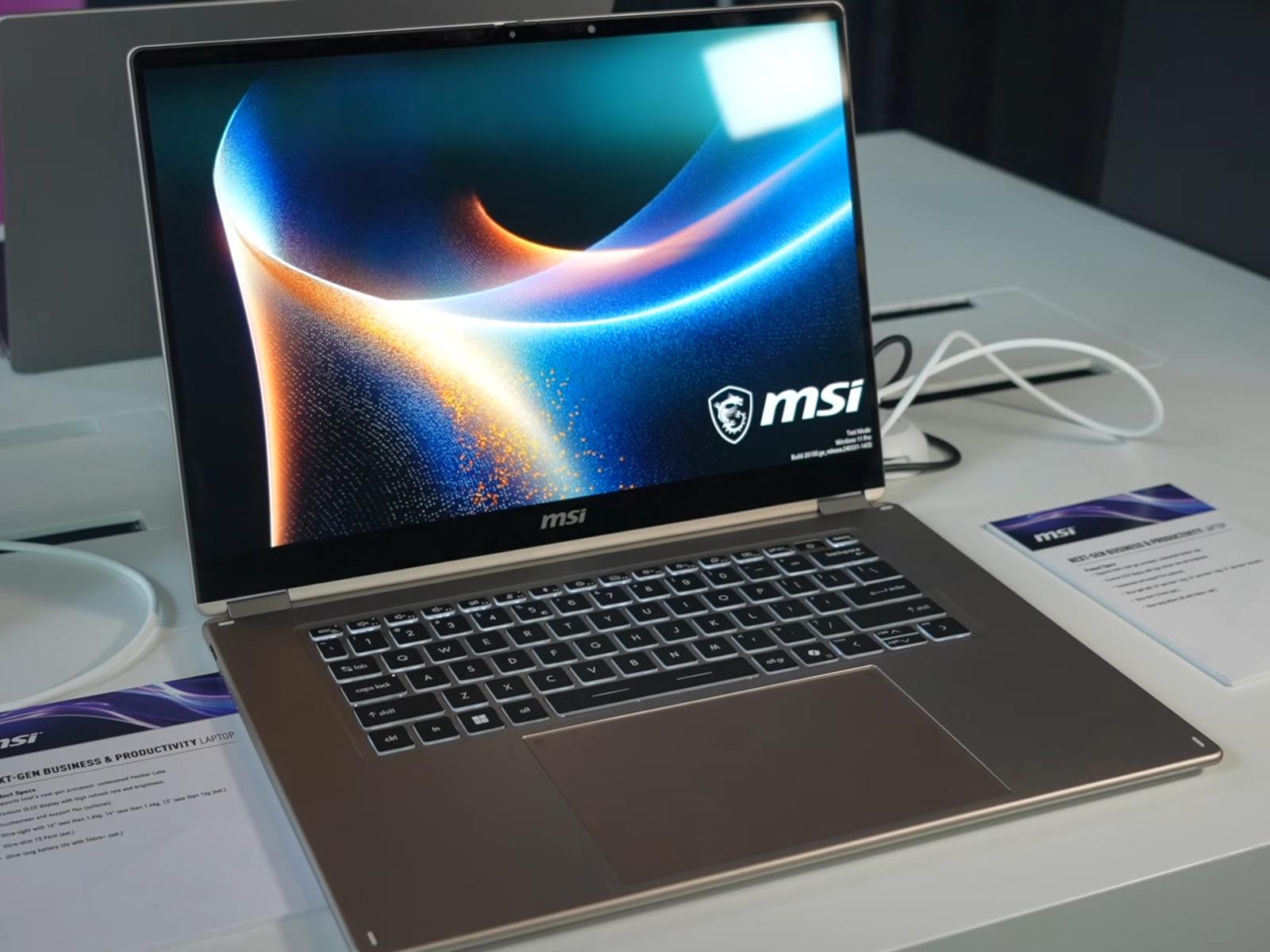
MSI Wraps Intel Panther Lake In Thin & Sleek Prestige OLED Laptops

MSI Wraps Intel Panther Lake In Thin & Sleek Prestige OLED Laptops
Intel’s Panther Lake processors are due to arrive soon in new notebooks from a wide array of partners. MSI has a refreshed line-up of Prestige machines coming, for example, powered by Intel’s latest and greatest mobile chips, flaunting OLED screens up to 16 inches and long battery life. Based on initial disclosures from Intel and some leaked

Chernobyl’s Protective Shield Can No Longer Confine Radiation, UN Nuclear Watchdog Says

“A structure designed to prevent radioactive leakage at the defunct Chernobyl nuclear plant in Ukraine is no longer operational,” reports Politico, “after Russian drones targeted it earlier this year, the U.N.’s nuclear watchdog has found.”

[T]he large steel structure “lost its primary safety functions, including the confinement capability” when its outer cladding was set ablaze after being struck by Russian drones, according to a new report by the International Atomic Energy Agency. Beyond that, there was “no permanent damage to its load-bearing structures or monitoring systems,” it said. “Limited temporary repairs have been carried out on the roof, but timely and comprehensive restoration remains essential to prevent further degradation and ensure long-term nuclear safety,” IAEA Director General Rafael Mariano Grossi said in astatement.

The Guardian has pictures of the protective shield — incuding the damage from the drone strike. The shield is the world’s largest movable land structure, reports CNN:

The IAEA, which has a permanent presence at the site, will “continue to do everything it can to support efforts to fully restore nuclear safety and security,” Grossi said…. Built in 2010 and completed in 2019, it was designed to last 100 years and has played a crucial role in securing the site.
The project cost €2.1 billion and was funded by contributions from more than 45 donor countries and organizations through the Chernobyl Shelter Fund, according to the European Bank for Reconstruction and Development, which in 2019 hailed the venture as “the largest international collaboration ever in the field of nuclear safety.”


Read more of this story at Slashdot.

Waymo’s robotaxi fleet is being recalled again, this time for failing to stop for school buses

To prevent its robotaxi fleet from passing stopped school buses, Waymo is issuing another software recall in 2025. While it’s not a traditional recall that pulls vehicles from the road, Waymo is voluntarily updating software for its autonomous fleet in response to an investigation from the National Highway Traffic Safety Administration. According to Waymo, the recall will be filed with the federal agency early next week.

Mauricio Peña, Waymo’s chief safety officer, said in a statement that Waymo sees far fewer crashes involving pedestrians than human drivers, but that the company knows when “our behavior should be better.”

“As a result, we have made the decision to file a voluntary software recall with NHTSA related to appropriately slowing and stopping in these scenarios,” Peña said in a statement to multiple news outlets. “We will continue analyzing our vehicles’ performance and making necessary fixes as part of our commitment to continuous improvement.”

According to the NHTSA investigation, some Waymo autonomous vehicles were seen failing to stop for school buses that had their stop signs and flashing lights deployed. The federal agency said in the report that there were instances of Waymo cars driving past stopped school buses in Atlanta and Austin, Texas.

Earlier this year, Waymo issued another software recall after some of its robotaxi fleet were seen hitting gates, chains, and similar objects. Last year, Waymo also filed two other software recalls, one of which addressed a fleet vehicle crashing into a telephone pole and another correcting how two separate robotaxis hit the same exact pickup truck that was being towed.

This article originally appeared on Engadget at https://www.engadget.com/transportation/waymos-robotaxi-fleet-is-being-recalled-again-this-time-for-failing-to-stop-for-school-buses-190222243.html?src=rss

Aptera’s Solar-Powered EVs Take Another Step Toward Production

To build three-wheeled, solar electric vehicles, Aptera has now launched its “validation” vehicle assembly line, reports the San Diego Business Journal.

“The validation line will set a technical foundation for the company’s eventual low-volume assembly line, ensuring that manufacturing processes are optimized and refined, particularly for the company’s composite body structure.”

To date, Aptera has produced three validation vehicles, two of which are in use driving around the San Diego region, with plans to build another 10 in the coming weeks as progress continues on the validation manufacturing line. “You learn things when you start to put miles on vehicles, putting 10s of thousands of miles on these validation vehicles and learning a lot from the durometer of the suspension, ride quality, spring rates and braking pressure,” Aptera co-founder and co-CEO Chris Anthony said. “We’ve been able to incorporate a lot of the usability stuff back, but also, just as we’ve gone through the process of building these, a lot of order-of-operation stuff that’s educated us on what’s going to make for the best initial assembly lines,” he added….

Aptera made its public debut on October 16, with the company’s executive team participating in the Nasdaq closing bell ceremony that evening. Shares of SEV have hovered between $6.50 and $8.50 for much of the company’s first month on the exchange. The company’s equity line of credit also took effect in mid-November… expected to aid in Aptera generating at least a portion of the $65 million the company has said it will need to complete validation manufacturing and begin low-volume production for customers. Aptera previously raised some $135 million from more than 17,000 investors in what the company touts as the most successful crowdfunding effort of all time, but Anthony argued Aptera will soon need to invest larger sums of capital to scale its production needs.

“Publicly listing the company gives us a lot more funding mechanisms to get into production,” he said. “So just having access to the public markets, public liquidity and the kind of instruments and tools that banks offer to public companies, it just seemed like now is the right time.” Alongside the IPO, Aptera made its formal transition to a Public Benefit Corporation, giving the company a legal obligation to consider its effect on employees, communities and customers in addition to the profit motives of its shareholders.
California’s state government also awarded Aptera $21 million “to support its push toward scaled manufacturing,” the article points out.

It also notes that Aptera’s vehicles “are technically classified as motorcycles rather than standard passenger cars, presenting a potentially cheaper alternative for consumers on the hunt for an electric vehicle.”


Read more of this story at Slashdot.

Why These Parents Want Schools to Stop Issuing iPads to Their Children

What happened when a school in Los Angeles gave a sixth grader an iPad for use throughout the school day? “He used the iPad during school to watch YouTube and participate in Fortnite video game battles,” reports NBC News.

His mother has now launched a coalition of parents called Schools Beyond Screens “organizing in WhatsApp groups, petition drives and actions at school board meetings and demanding meetings with district administrators, pressuring them to pull back on the school-mandated screen time.”

Los Angeles Unified is the first district of its size
to face an organized — and growing — campaign by parents
demanding that schools pull back on mandatory screen time. The
discontent in Los Angeles Unified, the second-largest school district
in the country, reflects a growing unease nationally about the amount of time children spend
learning through screens in classrooms. While a majority
of states prohibit children from using cellphones in class, 88%
of schools provide students with personal devices, according to the
National
Center for Education Statistics, often Chromebook laptops or iPads. The parents hope getting a district
that has over 409,000 students across nearly 800 schools to change
how it approaches screen time would send a signal across public
school districts to pull back from a yearslong effort to digitize
classrooms….

[In the Los Angeles school district] Students in grade levels as low as
kindergarten are provided iPads, and some schools require them to
take the tablets home. Some teachers have allowed students to opt
out of the iPad-based assignments, but other parents say they’ve
been told that they can’t. Parents can also opt their children out
of having
access to YouTube and several
other Google products… The billion-dollar 2014 initiative to
give tablet computers to everyone became
a scandal after the bidding process appeared to heavily favor
Apple, and it faced criticism once it became clear that students
could bypass security protocols and that few
teachers used the tablets. Currently, the district leaves it up
to individual schools to decide whether they want students to take
home iPads or Chromebooks every day and how much time they spend on
them in class…

Around 300 parents attended listening sessions the district held
last month about technology in the classroom. Nearly all who spoke
criticized how much screen time schools gave their children in class,
pointing to ways their behavior and grades suffered as students
watched YouTube and played Minecraft… Several also asked district
officials to explain why children as young as kindergartners were
asked to sign
a form to use devices in which they promised they would honor
intellectual property law and refrain from meeting people in person
whom they met online. “Is it possible for children to meet people
over the internet on school-issued devices?” one father asked. The
district officials declined to answer, saying it was meant to be a
listening session.

In 2022, Los Angeles Unified started requiring students to complete benchmark assessments on educaitonal software i-Ready, the article points out, which generates unique questions for each students. “But parents and teachers are unable to see what children are asked, in part because the company that makes the program considers them proprietary information…”

One teacher says his school’s administartors are requiring him to use i-Ready even though it doesn’t have any material for the science class he’s actually teaching. He’s also noticed some students will use answers from AI chatbots, bypassing the school’s monitoring software by creating alternate user profiles. But the monitoring software company suggests the school misconfigured their software’s settings, adding “More commonly, when students attempt to bypass filtering or monitoring, they do so by using proxies.”

Thanks to long-time Slashdot reader schwit1 for sharing the article.


Read more of this story at Slashdot.

Why These Parents Want Schools to Stop Issuing iPads to the Their Children

What happened when a school in Los Angeles gave a sixth grader an iPad for use throughout the school day? “He used the iPad during school to watch YouTube and participate in Fortnite video game battles,” reports NBC News.

His mother has now launched a coalition of parents called Schools Beyond Screens “organizing in WhatsApp groups, petition drives and actions at school board meetings and demanding meetings with district administrators, pressuring them to pull back on the school-mandated screen time.”

Los Angeles Unified is the first district of its size
to face an organized — and growing — campaign by parents
demanding that schools pull back on mandatory screen time. The
discontent in Los Angeles Unified, the second-largest school district
in the country, reflects a growing unease nationally about the amount of time children spend
learning through screens in classrooms. While a majority
of states prohibit children from using cellphones in class, 88%
of schools provide students with personal devices, according to the
National
Center for Education Statistics, often Chromebook laptops or iPads. The parents hope getting a district
that has over 409,000 students across nearly 800 schools to change
how it approaches screen time would send a signal across public
school districts to pull back from a yearslong effort to digitize
classrooms….

[In the Los Angeles school district] Students in grade levels as low as
kindergarten are provided iPads, and some schools require them to
take the tablets home. Some teachers have allowed students to opt
out of the iPad-based assignments, but other parents say they’ve
been told that they can’t. Parents can also opt their children out
of having
access to YouTube and several
other Google products… The billion-dollar 2014 initiative to
give tablet computers to everyone became
a scandal after the bidding process appeared to heavily favor
Apple, and it faced criticism once it became clear that students
could bypass security protocols and that few
teachers used the tablets. Currently, the district leaves it up
to individual schools to decide whether they want students to take
home iPads or Chromebooks every day and how much time they spend on
them in class…

Around 300 parents attended listening sessions the district held
last month about technology in the classroom. Nearly all who spoke
criticized how much screen time schools gave their children in class,
pointing to ways their behavior and grades suffered as students
watched YouTube and played Minecraft… Several also asked district
officials to explain why children as young as kindergartners were
asked to sign
a form to use devices in which they promised they would honor
intellectual property law and refrain from meeting people in person
whom they met online. “Is it possible for children to meet people
over the internet on school-issued devices?” one father asked. The
district officials declined to answer, saying it was meant to be a
listening session.

In 2022, Los Angeles Unified started requiring students to complete benchmark assessments on educaitonal software i-Ready, the article points out, which generates unique questions for each students. “But parents and teachers are unable to see what children are asked, in part because the company that makes the program considers them proprietary information…”

One teacher says his school’s administartors are requiring him to use i-Ready even though it doesn’t have any material for the science class he’s actually teaching. He’s also noticed some students will use answers from AI chatbots, bypassing the school’s monitoring software by creating alternate user profiles. But the monitoring software company suggests the school misconfigured their software’s settings, adding “More commonly, when students attempt to bypass filtering or monitoring, they do so by using proxies.”

Thanks to long-time Slashdot reader schwit1 for sharing the article.


Read more of this story at Slashdot.

Meta plans to push back the debut of its next mixed reality glasses to 2027

The big reveal for Meta’s next mixed reality glasses is being postponed until the first half of 2027, according to a report from Business Insider. Based on an internal memo from Maher Saba, the vice president of Meta’s Reality Labs Foundation, the report said that the company’s project, which is codenamed “Phoenix,” will no longer be scheduled for a 2026 debut.

In a separate memo, Meta execs explained that the delay would help deliver a more “polished and reliable experience.” According to BI, a memo from Meta’s Gabriel Aul and Ryan Cairns said this new release window is “going to give us a lot more breathing room to get this right.” Meta hasn’t publicly revealed many details about its Phoenix project, but The Information previously reported that it would feature a goggle-like form factor with an external power source, similar to how the Apple Vision Pro is attached to a battery pack.

In the memo from Saba, BI reported that Meta is also working on a “limited edition” wearable with the codename “Malibu 2.” Yesterday, Meta announced its acquisition of Limitless, a startup that recently developed an AI wearable called Pendant. Even though Meta’s current product portfolio is dominated by smart glasses and VR headsets, the Limitless acquisition and Malibu 2 project could hint at the company’s plans to expand its offerings.

This article originally appeared on Engadget at https://www.engadget.com/ar-vr/meta-plans-to-push-back-the-debut-of-its-next-mixed-reality-glasses-to-2027-172437374.html?src=rss

Intel Battlemage Arc BMG-G31 GPU Support Surfaces, Hinting At Launch

Intel Battlemage Arc BMG-G31 GPU Support Surfaces, Hinting At Launch
This might just be the most will-they-or-won’t-they GPU release story of all time. Intel’s Arc Battlemage was rumored to come in two different versions as soon as we ever heard about it, but the larger “BMG-G31” chip never materialized and was rumored to be canceled. Then it appeared in leaks, and then it was rumored to have been canceled

Could Netflix’s Deal for Warner Bros. Fall Apart?

While Netflix hopes to buy Warner Bros. Discovery for $72 billion, CNBC reports a senior official in America’s federal government said the administration was viewing the deal with “heavy skepticism. And that’s not the only hurdle:

On Thursday, The Wall Street Journal reported that Paramount, in a letter to lawyers for Warner Bros. Discovery [WBD], had warned that a sale to Netflix likely would “never close” because of regulatory challenges in the United States and overseas. “Acquiring Warner’s streaming and studio assets ‘will entrench and extend Netflix’s global dominance in a matter not allowed by domestic or foreign competition laws,’ Paramount’s lawyers wrote,” the Journal reported.

Paramount “is now weighing its options about whether to go straight to shareholders with one more improved bid,” CNBC reported Friday, “perhaps even higher than the $30-per-share, all-cash offer it submitted to Warner Bros. Discovery this week.”

And CNBC reported Friday that the review by America’s Department of Justice “can take anywhere from months to more than a year.”
Netflix said Friday it expects the transaction to close in 12 to 18 months, after Warner Bros. Discovery spins out its portfolio of cable networks into Discovery Global… As part of the deal, Netflix has agreed to pay a $5.8 billion breakup fee to Warner Bros. Discovery if the deal were to get blocked by the government.

Netflix’s planned move is already drawing high-powered criticism, reports CNN:

“The world’s largest streaming company swallowing one of its biggest competitors is what antitrust laws were designed to prevent. The outcome would eliminate jobs, push down wages, worsen conditions for all entertainment workers, raise prices for consumers, and reduce the volume and diversity of content for all viewers….” the Writers Guild of America union representing Hollywood writers.
“Producers are rightfully concerned… Our legacy studios are more than content libraries — within their vaults are the character and culture of our nation.” — The Producers Guild of AmericaThe deal raises “many serious questions” about the entertainment industry’s future, “especially the human creative talent whose livelihoods and careers depend on it.” — SAG-AFTRA, Hollywood’s biggest actors union
“This is not a win for consumers. Netflix has already aggressively raised prices, increased ad load, and stopped people from sharing passwords. Absorbing a competitor with strong content will only lead to its service becoming more expensive and give consumers less choice.” — Ross Benes, a senior analyst at eMarketer, told CNN. [Benes also thinks this could mean fewer companies spending heavily on movies and TV shows. “This contracts the industry.”


Read more of this story at Slashdot.

The AI Boom Could Increase Prices for Phones and Tablets Next Year

CNN’s prediction for 2026? “Any device that uses memory, from phones to tablets and smartwatches, could get pricier.” But will it be a little or a lot?

The article cites an analysis from multinational strategy/management consulting firm McKinsey & Company which found America’s data center demand could continue growing by 20 to 25 percent per year” through 2030. “That’s prompted memory manufacturers like Micron and Samsung to shift their focus to data centers, which use a different type of memory, meaning fewer resources for consumer products. (Jaejune Kim, executive VP for memory at Samsung, said in October that their third quarter saw strong demand for memory for AI and data centers, and that they expected the supply shortage for mobile and PC memory to “intensify further.”)

Memory prices are rising for consumer products because major manufacturers are instead ramping up production for AI data centers as artificial intelligence companies boom. “It’s pretty much brutal and crunched across the board,” said Yang Wang, a senior analyst at Counterpoint Research.

The International Data Corporation, a global market research firm, reported earlier this week that the smartphone market is expected to decline by 0.9% in 2026 in part because of memory shortages. Memory prices are expected to surge by 30% in the fourth quarter of 2025 and may climb an additional 20% early next year, Counterpoint Research said last month… TrendForce, a research firm that follows the semiconductor industry, estimates memory price hikes have made smartphones 8% to 10% more expensive to produce in 2025 (higher production costs don’t always translate into higher consumer prices for a variety of reasons).

Some smartphones could cost more as soon as early next year, said Nabila Popal, a senior research director for the International Data Corporation. Cheap Android phones may see the biggest impact, since less expensive products usually have thinner margins. “It’s going to be almost impossible for them to not raise prices” of cheaper Android phones, said Popal. Companies may also postpone phone launches to focus on expensive models that may be more profitable. The average selling price for smartphones is expected to climb to $465 in 2026, compared to $457 in 2025, according to Popal, putting the smartphone market at a record high value of $578.9 billion.

But the pendulum is expected to swing back in the other direction late next year as the supply chain adjusts, according to Popal and Wang, potentially bringing prices back down or at least capping increases.


Read more of this story at Slashdot.

AirPods 4 ANC Just Hit An All-Time Low For Holiday Deal Shoppers

AirPods 4 ANC Just Hit An All-Time Low For Holiday Deal Shoppers
If you haven’t done so already, check out our roundup of excellent deals on several generations of iPhone and Apple Watch devices, with Woot (owned by Amazon) offering massive savings on its Grade-A refurbs backed by a 1-year warranty. Then once you’ve done that, check out the big discounts from Amazon on more Apple products, all in new condition,

Apple iPhone & Watch Deals Save You Hundreds In Flash Sale

Apple iPhone & Watch Deals Save You Hundreds In Flash Sale
Blink and you’ll miss Woot’s flash sale on a whole bunch of ‘Grade-A’ Apple Watch and iPhone devices with hundreds of dollars of savings on tap, and delivery in time for Christmas. And before you dismiss the sale because these are refurbished items, consider that Woot (which is owned by Amazon) is promising “like-new functionality” and battery

Linus Torvalds Defends Windows’ Blue Screen of Death

Linus Torvalds recently defended Windows’ infamous Blue Screen of Death during a video with Linus Sebastian of Linus Tech Tips, where the two built a PC together. It’s FOSS reports: In that video, Sebastian discussed Torvalds’ fondness for ECC (Error Correction Code). I am using their last name because Linus will be confused with Linus. This is where Torvalds says this: “I am convinced that all the jokes about how unstable Windows is and blue screening, I guess it’s not a blue screen anymore, a big percentage of those were not actually software bugs. A big percentage of those are hardware being not reliable.”

Torvalds further mentioned that gamers who overclock get extra unreliability. Essentially, Torvalds believes that having ECC on the machine makes them more reliable, makes you trust your machine. Without ECC, the memory will go bad, sooner or later. He thinks that more than software bugs, often it is hardware behind Microsoft’s blue screen of death. You can watch the video on YouTube (the BSOD comments occur at ~9:37).


Read more of this story at Slashdot.

Engadget review recap: Dell 16 Premium, Nikon ZR, Ooni Volt 2 and more

We’ve slept off our collective turkey coma and returned to the review lab here at Engadget. Our team may also be in full CES prep mode, but we’ve got a few more devices to get off or our desks before 2025 is over. Catch up on all of the reviews you might have missed over the last few weeks — a perfect activity for a lazy December weekend.

Dell 16 Premium

There’s no denying the design of the Dell 16 Premium makes the laptop live up to its name. Unfortunately, all of that polish leads to some issues: a high price and hampered usability. “The more I looked at the Dell 16 Premium’s beautiful facade, the more I wanted something… more,” senior reporter Devindra Hardawar wrote. “It needs more usable ports, like HDMI and a full-sized SD card reader. It needs more useful function keys that are visible in bright light — and also stay in one place — so I can touch type more easily. And for the love of god, just give up on the invisible trackpad.”

DJI Osmo Action 6

DJI’s drone business in the US faces an uncertain future, and the company’s action cams could be swept up in the ordeal as well. Thankfully, our contributing reporter Steve Dent resides in the EU where he observed first hand the Osmo Action 6’s superior low light performance and battery life. “With a bigger sensor and larger aperture than the competition, DJI’s Action 6 is now the best action cam on the market for night shooting, delivering clean, sharp video with better stabilization than rivals,” he said. “It’s also ideal for users who output to both YouTube and TikTok.”

Nikon ZR

In keeping with the video theme, Steve also spent time testing the Nikon ZR. While this is primarily a model for shooting video, it benefits from the addition of RED RAW, excellent autofocus and more. “With the ZR, Nikon has shown that it’s finally catching up to and even surpassing its rivals for content creation,” he explained. “Whether you’re doing social media, YouTube, documentaries or even film production, this camera is versatile and powerful with few compromises.”

Ooni Volt 2

The Ooni Volt brought the company’s popular brand of pizza making indoors for the first time, but that model wasn’t without it faults. Now Ooni is back with the Volt 2, and the completely overhauled design is a big upgrade over the original. “It’s easier to use for all skill levels thanks to its clearer controls and large display,” I explained. “Presets work well, but they can also serve as a starting point for further recipe refinement for experienced users. And the pizza — my goodness, the pizza is consistently restaurant quality (or better) across a range of styles.”

Antigravity A1

Insta360’s spin-off Antigravity is now shipping its first drone and our UK bureau chief Mat Smith has already flown it. The A1 comes with a controller and FPV headset to assist with the piloting, but the mix of unique features and crisp video (in good conditions) is also laudable. “The intuitive controls and ability to look all around you make it unlike anything else currently available,” he said. “It’s a delightful introduction to drones, FPV or otherwise, but a shame that software issues marred my tests.”

Other recent reviews

On the gaming front, Mat spent some time with Final Fantasy Tactics: The Ivalice Chronicles while deputy editor Nathan Ingraham put Metroid Prime 4 through its paces. Contributor Tim Stevens stepped back in time with the Analogue 3D to revisit some Nintendo 64 classics after getting behind the wheel of the 2025 Porsche Macan Electric.

This article originally appeared on Engadget at https://www.engadget.com/engadget-review-recap-dell-16-premium-nikon-zr-ooni-volt-2-and-more-130000527.html?src=rss

A massive, Chinese-backed port could push the Amazon Rainforest over the edge

CHANCAY, Peru—The elevator doors leading to the fifth-floor control center open like stage curtains onto a theater-sized screen.

This “Operations Productivity Dashboard” instantaneously displays a battery of data: vehicle locations, shipping times, entry times, loading data, unloading data, efficiency statistics.

Most striking, though, are the bold lines arcing over the dashboard’s deep-blue Pacific—digital streaks illustrating the routes that lead thousands of miles across the ocean, from this unassuming city, to Asia’s biggest ports.

Read full article

Comments

A Marvel beat-’em-up, long-awaited survival horror and other new indie games worth checking out

Welcome to our latest roundup of what’s going on in the indie game space. A bunch of titles that are arriving very late to make it into game of the year conversations debuted this week, and we learned some new details about upcoming projects, such as a release date for a rad-looking arena shooter called Don’t Stop, Girlypop.

Marvel Cosmic Invasion is one of the higher-profile indies to hit consoles and PC this week. It’s from Tribute Games and publisher Dotemu, the same pair that brought us Teenage Mutant Ninja Turtles: Shredder’s Revenge. Cosmic Invasion largely draws from the same playbook: it’s also a retro-style side-scrolling beat-’em-up with a look that apes the Marvel animated shows from the ’90s. 

It’s an enjoyable enough game, largely thanks to the variety of characters and how differently they play. Captain America is one of my favorites. Each character has a secondary move (often a ranged attack) to go with their basic melee strikes, and Cap’s one has no ammo or cooldown. I never grew tired of spamming his shield projectile attack and knocking enemies off the screen.

I really enjoyed playing as She-Hulk too. Her secondary move involves grabbing an enemy and throwing them around. She-Hulk can also toss them into the air then leap with McTominay-esque athleticism to deliver a kick and send the baddie crashing into its cohorts. The character swap system (each player chooses two and can switch between them any time) evokes tag fighting games and the co-op features work well too.

There isn’t a ton of depth to Marvel Cosmic Invasion, unfortunately, but the presentation is spot on. It’s out now on Steam, Nintendo Switch, Nintendo Switch 2, PlayStation 5 and Xbox Series X/S for $30. It’s also on Game Pass Ultimate and PC Game Pass.

New releases

It only took 13 years from announcement to release but survival horror title Routine (from Lunar Software and publisher Raw Fury) has emerged on Steam, the Xbox PC app, Xbox One, Xbox Series X/S and Xbox Cloud. It’s available on Game Pass Ultimate and PC Game Pass.

Routine offers up a slice of liminal space terror with a dash of retro-futurism. Lunar Software based the aesthetic on “how people from the 1980s might envision a believable moon base” with analogue technology.

Your mission is to explore the base and try to determine how it got to this state. Lunar wanted Routine to feel as immersive as possible, so there are no waypoint markers and you won’t see a heads-up display. Instead, you have a personal data assistant that connects to wireless access points throughout the base and provides you with information about your current goals.

Here’s another horror title we’ve been looking forward to for several years. Sleep Awake deals with things that go bump in the night. It’s a first-person psychedelic horror game in which a force called The HUSH makes anyone who falls asleep vanish. So, our hero Katja and other residents of the last-known city on Earth try various ways to stay awake, but they’ll inevitably have to deal with the effects of sleep derivation. 

Sleep Awake is from Eyes Out — a studio formed by Spec Ops: The Line director Cory Davis and Nine Inch Nails guitarist Robin Finck — and publisher Blumhouse Games. It’s out now on Steam, PlayStation 5 and Xbox Series X/S for $30.

How about another horror game? It’s the last one we have this week, I promise. Tingus Goose has been on my radar for a while because it just looks so deeply strange. This is billed as “a cozy body horror idle game” in which you “plant seeds in patients, bounce babies for profit and ascend through surreal worlds toward riches.” 

I’m glad for that description from the game’s PR team, because I don’t fully know what to make of the trailer. A goose emerges from a human being’s torso and grows a giant neck and human fingers stick out of it and… it’s all just so strange. But I kinda dig it? 

Tingus Goose is from SweatyChair and co-publishers Playsaurus and UltraPlayers. It’s on Steam for $5.94 until December 8, and it will cost $7 after that.

I haven’t seen anything that looks quite like Effulgence RPG before. It’s a party-based RPG with a 3D ASCII art style. Here, you’ll need to take out enemies to acquire better gear.

Andrei Fomin released Effulgence RPG in early access on Steam this week for $10. The solo developer is aiming to release the full version of the game in June and to add more content and quality-of-life updates in the meantime. It’s not usually the kind of game that I’d normally be drawn toward, but that art style alone is cool enough to make me want to try it.

Looking for something a little more relaxing? Log Away is a cozy cabin builder from The-Mark Entertainment. There are several environments to choose from and a variety of decorations at your disposal depending on your interests. You can have a pet too, so that qualifies Log Away as this week’s dog game.

I’ve played it a bit and found it to be quite relaxing, a soothing counter punch to the non-stop action of Cosmic Invasion. It’s out now on Steam for $10, but if you buy it by December 11 you’ll save a dollar and get a Christmas-themed DLC at no extra cost.

I adore Sayonara Wild Hearts with every fiber of my being and I appreciated what Simogo did with Lorelai and the Laser Eyes, even if I never stuck with it for long. I haven’t played any of the studio’s earlier games, though. That’s something I’m planning to fix very soon now that the Simogo Legacy Collection is here.

The studio reworked all of its first seven mobile games — including Year Walk and Device 6 — and combined them into a collection that’s available on Steam, Nintendo Switch and Switch 2. It costs $15 though there’s a 15 percent discount until December 12. I’m very much looking forward to digging into this over the holidays.

Upcoming 

I’ve been very much looking forward to Don’t Stop, Girlypop! for a while. It’s a movement-focused arena shooter with a Y2K aesthetic. Think of it as an anti-capitalist, hyperpop riff on games like Doom Eternal.

The demo is a lot of fun and I’m glad there’s finally a release date for this game from  Funny Fintan Softworks and publisher Kwalee. It’s coming to Steam on January 29.

Limbot seems like it could be a fun party game. You can play it by yourself, but having three friends join you seems like the optimal way to go. In that case, each of you will take control of one of a cardboard robot’s limbs. So you’ll have to coordinate to move around this papercraft world effectively and complete precision-based objectives. It sounds like a recipe for an Overcooked-style tiff between friends.

This physics-based game from Ionized Studios is coming to Steam, Xbox One and Xbox Series X/S. It’s slated to arrive between April and June next year.

Polyperfect’s Zlin City: Arch Moderna is a diorama city builder inspired by historical events of the 1930s and ’40s and the architecture of Zlin, a town in Czechia (Czech Republic). The developers used 3D printing, photogrammetry and 3D scanning to capture the objects that are used in the game. The result is something that — at least at first glance — looks beautifully textured. 

There’s no confirmed release window for Zlin City: Arch Moderna as yet. It’ll be available on Steam.

This article originally appeared on Engadget at https://www.engadget.com/gaming/a-marvel-beat-em-up-long-awaited-survival-horror-and-other-new-indie-games-worth-checking-out-120000228.html?src=rss