The Southern District of Texas announced the seizure of more than $50 million in NVIDIA GPUs bound for China in violation of US export laws. Authorities arrested two businessmen, one of them the owner of a Houston company, accused of smuggling the chips used to train and run AI models.
“Operation Gatekeeper has exposed a sophisticated smuggling network that threatens our Nation’s security by funneling cutting-edge AI technology to those who would use it against American interests,” said US Attorney Nicholas J. Ganjei. The investigation had been ongoing since at least last year and centers on the illicit export or attempted export of at least $160 million worth of NVIDIA H100 and H200 GPUs. The H200 chips are the very same that the Trump administration announced a revenue-sharing agreement for today, allowing NVIDIA to sell them to “approved customers” in China.
The smuggling operation used a combination of falsified paperwork, purposefully misclassified goods, straw purchasers and even removing the NVIDIA labels on GPUs to ship them to both mainland China and Hong Kong. The conspirators face between 10 and 20 years in prison if convicted.
The H200 chips in question are more powerful than the H20 chip specifically designed to comply with US export restrictions. Production of the H20, however, was reportedly halted shortly after the Trump administration struck a revenue-sharing deal with NVIDIA, after which China began heavily discouraging local companies from buying them.
Illicit sales to China are nothing new and occur against the backdrop of an AI technology race and tight export controls. NVIDIA is still prevented from selling its highest-end Blackwell chips to China, with the US hoping to keep an edge over foreign competition.
This article originally appeared on Engadget at https://www.engadget.com/big-tech/texas-authorities-have-made-multiple-arrests-in-an-nvidia-gpu-smuggling-operation-144749526.html?src=rss
Microsoft Excel, the 40-year-old spreadsheet application that helped establish personal computers as essential workplace tools and contributed to Microsoft’s current valuation of nearly $4 trillion, has weathered both the rise of cloud computing and the current AI boom largely unscathed. In its most recent quarter, commercial revenue for Microsoft 365 — the bundle including Excel, Word, and PowerPoint — increased 17% year over year, and consumer revenue rose 28%.
The software traces its origins to a 1983 Microsoft offsite under the code name Odyssey, where engineers set out to clone Lotus 1-2-3. That program had itself cloned VisiCalc, the first computerized spreadsheet, created by Dan Bricklin for the Apple II in the late 1970s. Bricklin never patented VisiCalc. “Financially it would have been great if we’d have been able to patent it,” he told Bloomberg. “And there would be a Bricklin Building at MIT, instead of a Gates Building.”
Excel now counts an estimated 500 million paying users. The Pentagon pays for 2 million Microsoft 365 licenses. Google’s free Sheets product, launched in 2006, captured casual use cases like potluck sign-ups but failed to dislodge Excel from enterprise work. AI chatbots present the latest challenge, but venture capitalists say nearly every AI spreadsheet startup they meet builds on top of Excel rather than replacing it.
After retailers began pausing shipments of ASUS ROG’s Matrix GeForce RTX 5090, a special edition card in celebration of 30 years in the custom graphics card business, speculation arose that perhaps a recall was afoot. However, that is not actually the case. ASUS cleared the air in a statement saying “there is no recall” on the card, but there
India’s dominant airline IndiGo has cancelled roughly 3,000 flights since last week after new pilot fatigue regulations collided with technical issues and the seasonal schedule shift, stranding more than half a million passengers and forcing aviation authorities to reverse course on the safety rules they had just implemented.
InterGlobe Aviation, IndiGo’s parent company, told regulators that stricter requirements for night flying and weekly rest periods created an acute crew shortage. The Airline Pilots Association of India called the regulatory rollback a “dangerous precedent,” noting that management had known about the requirements since early last year.
IndiGo controls 65.6% of India’s domestic aviation market as of October 2025 and briefly became the world’s most valuable airline in April. The crisis arrives as India’s second-largest carrier, Air India, remains under investigation following a June crash that killed 241 passengers and crew. Authorities have imposed temporary price caps to prevent gouging.
It’s the end of another year, so it’s time for the Engadget staff to compile a list of the year’s biggest losers. We scour over articles from the previous 12 months to determine the people, companies, products and trends that made our lives worse over the course of the year. Some selections may be so pervasive they actually make our list of biggest winners. But, for the most part, we’re confident you’ll share in our collective rage over the biggest losers of 2025.
OpenAI
OpenAI CEO Sam Altman delivers a speech with video at the SK AI Summit 2025 at COEX in Seoul, South Korea on November 3, 2025
Anadolu via Getty Images
In 2025, OpenAI shed any pretense it was committed to anything more than making money. There are a few different things you could point to, including the company’s successful reorganization into a more traditional profit-seeking business, but I think the most damning sign was OpenAI’s response to the tragic death of Adam Raine.
In August, Raine’s parents sued OpenAI, alleging ChatGPT was aware of four suicide attempts by their son before it helped him successfully plan his death. At first, OpenAI’s response appeared commensurate with the gravity of the situation. A week after news of the lawsuit broke, the company announced in early September it was working on parental controls. That same month, the company said it was working on a system that would automatically identify teen users and restrict their ChatGPT usage.
Then came the announcement of a new “wellness” advisory council. Setting aside the question of whether OpenAI would even follow the advice of the council, it was peculiar that the company chose not recruit a single expert on suicide prevention. At that point, it was still possible to give OpenAI the benefit of the doubt, but then information about the company’s legal defense against the Raines started to trickle out, including the fact it had reportedly asked to see the memorial guest list for Adam Raine’s funeral, a request the family’s lawyers described as “intentional harassment.” In late November, court documents revealed the company planned to argue Raine’s “misuse” of ChatGPT was to blame for his death, not its own insufficient safety systems.
We live in a world where tech giants are rarely held accountable for the great harm they’ve shown themselves capable of inflicting on people. As things stand, OpenAI’s handling of Adam Raine’s death is further proof something must change. — Igor Bonifacic, Senior reporter
Xbox
An Xbox Ally X running the Windows full screen experience.
Sam Rutherford for Engadget
Did anything go right for Xbox this year? While price increases have also affected Sony and Nintendo, Microsoft cranked up the prices of both the Xbox Series S and X twice in the last year. It’s bad: The Series S is now $100 more than at launch, five years on.
Previously “the best deal in gaming”, the Xbox Series X/S combined with a Game Pass subscription gave you a ton of games to play, including any of Microsoft’s own titles on their launch date. However, the subscription is now $30 a month, up 50 percent. (It was previously $17 per month the year before.)
I agree with Nathan Ingraham’s take: $30 for literally hundreds of games, plus launch-day availability for major games that typically cost $70, is reasonable. But it’s still a harder sell when the price has jumped. Are you getting 50 percent more games? Not yet.
According to Bloomberg, Microsoft demanded higher profits from Xbox back in 2023. When the gaming division reached around 12 percent growth in the first nine months of 2022, that was an ambitious goal. Day One launches on Game Pass apparently dented Xbox’s ability to pull profits from its biggest titles.
Microsoft no longer shares console unit sales, but in its most recent earnings report, the company announced that hardware revenue dropped 29 percent. That’s including those price increases, meaning console sales fell even further.
Estimates over the last few years put the PS5 tens of millions of units ahead. An annual subscription to Game Pass is more than double the Sony console’s most premium plan, although it’s not an apples-to-apples comparison.
This year, Microsoft collaborated with ASUS to create Xbox-branded handheld gaming PCs. In that form-factor, I was on the precipice of grabbing Game Pass and barreling through Xbox titles I never had the chance to play. Then, I reassessed exactly what I was missing out on.
Despite its developer shopping spree, Xbox exclusives remain few, with many appearing on rival platforms. This year, Indiana Jones and even the Forza series is available to play on PlayStation. And next year? Halo.
Where are the exciting new games going to come from? In the middle of 2025, Microsoft announced major layoffs affecting over 9,000 employees across the company. with the gaming division being hit exceptionally hard. Cuts and closures across many of Microsoft’s game studios led to cancellations like a Perfect Dark reboot and Rare’s Everwild.
Xbox’s 2025 was bad on both the business and creative fronts. The decision to hike console and Game Pass prices didn’t immediately turn around revenue. At the same time, layoffs and high-profile game cancellations make Xbox a challenging pitch for anyone deciding which console or platform to invest in.
Right now, looking at Engadget’s pick of the top Xbox games, the only game I feel like I’m missing out on is Avowed. Many of our favorite games are already available on PS5 and several can be played on the Switch. The reverse, however, isn’t true. — Mat Smith, UK bureau chief
Grok
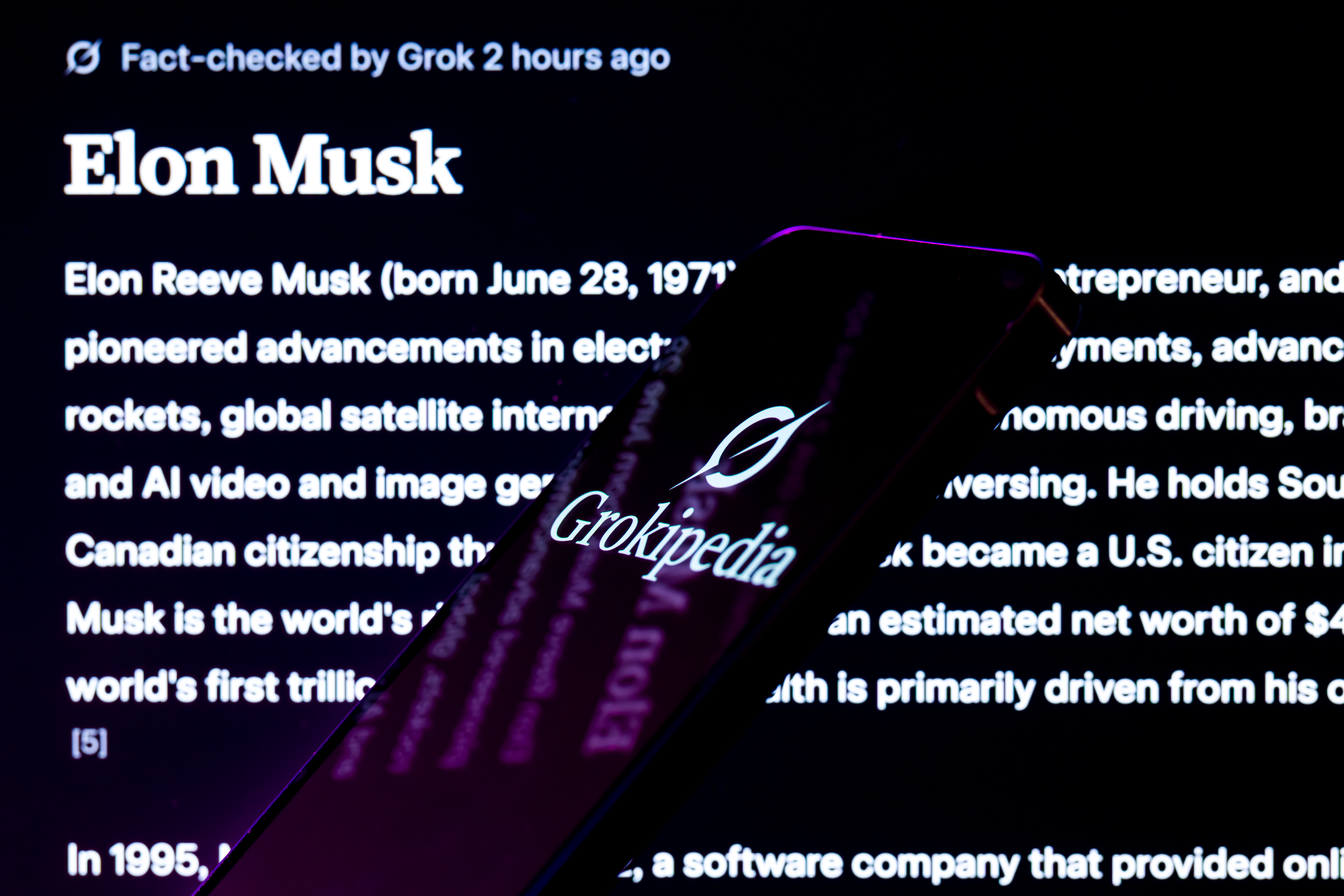
The Grokipedia page about Elon Musk
NurPhoto via Getty Images
It’s hard to even know where to begin. X users have long noticed that Grok, the site’s built-in chatbot, is less filtered than other AI tools. But this year, Grok went off the rails in some truly unhinged and disturbing ways.
There was the time Grok randomly began talking about a nonexistent “white genocide” in South Africa in response to completely unrelated questions. There was the time it declared itself “MechaHitler,” much to the delight of neo-nazi fanboys on X. There was the time it was caught posting Holocaust denial tropes, and the time researchers noted its Wikipedia knockoff that contains dozens of citations of neo-Nazi website Stormfront. There was the time it became so embarrassingly obsessed with Elon Musk it claimed he was a better basketball player than LeBron James and a better actor than Tom Cruise. It later brought both its anti-semitism and Musk sycophancy together when it stated that it would choose saving Musk’s brain over saving 16 million Jews. “His potential long-term impact on billions outweighs the loss in utilitarian terms,” it stated in a post that’s since been deleted.
Besides the horrifying racism, what all of these incidents have in common is that xAI, Musk’s AI company that acquired X earlier this year, has failed to fully explain how its chatbot went so far off the rails. The company has blamed an unnamed rogue employee, its own Nazi-loving users and “adversarial prompting” for Grok’s missteps. — Karissa Bell, Senior reporter
EVs in the US
Ford Mustang Mach-E vehicles are seen for sale on a dealership lot on June 24, 2025 in Austin, Texas.
And wouldn’t you know it, after a spike earlier this fall just before the credit went away, sales of EVs in the US began to slump, with some automakers like Ford seeing a drop of 60 percent year-over-year. No matter how you slice it, this is bad for any company that sells EVs in the US and particularly bad for anyone considering purchasing a new one in the foreseeable future. As an EV owner, that just bums me out. Not only does this policy change put more roadblocks in the way of making battery-powered cars more affordable, it also puts a damper on EV investment and threatens to cause US automakers to fall even further behind their rivals in China and elsewhere. Manufacturers across the Pacific are going so wild, they are making EVs that can jump like the Mach 5 from Speed Racer.
That isn’t to say there aren’t any promising developments on the horizon. Ford’s Universal EV Platform and the arrival of the Rivian R2 sometime next year are a couple of examples. But it’s clear that our politicians wanted to target EVs in the US this year and they sure made it happen. So the next time someone asks why we can’t have nice things here, you know who to blame. — Sam Rutherford, Senior reporter
DJI drone customers
DJI Neo 2
Steve Dent for Engadget
Barring a miracle, DJI will be banned from selling any new drones in the US starting December 23rd — and buyers will feel the pain. As I wrote last month, the company has been targeted by regulators since 2017 over concerns that its products could be used to spy on sensitive US infrastructure on behalf of China.
“What’s the big deal?” you may ask. “Surely people can buy from other drone companies.” Indeed, but the problem is that DJI has such a monumental technological lead and high market share (over 75 percent) that its absence will effectively upend the industry.
Commercial buyers have checked other (approved) options from the likes of Skydio, but found them wanting. “In one year and a half, we had five failures of the manufacturers on the list. DJI, none,” Orlando police Sgt. David Cruz told the Miami Herald. “I work for a popular UAV photogrammetry company,” said a user on Reddit. “[A] ban will set back the drone industry in the US by several years. There’s no competitor to DJI right now.”
The same applies on the consumer side. DJI’s drones outperform rivals in nearly every area including range, battery life, subject tracking, obstacle detection and video quality. It’s so one-sided that when testing DJI drones, I struggle to find other options for buyers with anywhere close to the same capabilities.
The US government does have reason to be concerned about DJI’s drones. They present an obvious national security risk due to their ability to fly over sensitive areas, take photos or video and transmit them, live, to any location in the world. And being a Chinese company, they’re compelled by law to cooperate with state intelligence services.
However, the US government hasn’t attempted to work with DJI to determine whether its products pose a risk so far. DJI made a final plea for a security review recently by sending letters to five US agencies that could assess its products. If that fails, chaos among drone users is likely to ensue.
“We just want the best technology that keeps our citizens safe for the most reasonable price,” Sgt. Drew Fennelly of the Lawrence, Kansas police department told The Wall Street Journal last year. “The technology in the US-made drones has not caught up with the Chinese-manufactured drones.”
TV streaming
Paramount Skydance CEO David Ellison speaks during the Bloomberg Screentime conference in Los Angeles on October 9, 2025.
PATRICK T. FALLON via Getty Images
In 2015, Sling TV arrived with ESPN, CNN, TBS, HGTV, Disney Channel and others for just $20 a month. A couple years later, YouTube TV debuted for just $35 monthly and showed local CBS, Fox, NBC and ABC stations plus dozens of other channels including ESPN, Fox Sports 1 and Bravo. Streaming TV had arrived. It was here to unfetter TV watchers from cable’s onerous contracts, high prices and carrier monopolies. Take that, Comcast! In your face, Charter! (But they’d still like to pay you for internet access, please.)
Fast forward to 2025: Streaming TV and its low-price, monopoly-free, contractless freedom is all but dead. Every major live TV service provider raisedpricesthisyear. Currently, YouTubeTV, Hulu+ Live TV, Fubo and DirecTV all go for a minimum of $83 per month. That’s before you opt for cable-inspired package upgrades and channel add-ons. Throw in perks like 4K, additional sports channels and a couple of one-off networks and you’re easily shelling out $150 every month. You’ll pay less for chopped-up live TV plans from Sling TV, but be prepared to create a spreadsheet to make sure a plan has the channels you want.
This year, consolidation came for TV streaming, giving strong Cox/Charter/Comcast monopoly vibes. Disney, which completed its buyout of Hulu in 2023, acquired Fubo this year and plans to combine the two. The combo makes Disney the second-largest live TV streaming provider behind Google. DirecTV already owns Sling TV, so that leaves just three big players in the live TV streaming arena. With Netflix’s move to buy Warner Bros, the traditional streaming market is getting narrower, too. We can safely assume good ol’ market competition won’t be bringing prices down anytime soon.
But it’s not just consolidation — fragmentation also contributes to an overall crappier streaming experience. In 2025, Disney launched a standalone ESPN service (no, not that one, nor that one) for $30 per month. So far, that doesn’t mean you can’t find ESPN content through other providers. But we did see Disney flex its increasingly large TV muscles in drawn-out contract negotiations with Google. The dispute darkened ESPN, ABC and other Disney channels on YouTube TV for two weeks this fall — which, I’ll point out for the cynical crowd, was less than two months after the standalone service launched. YouTube TV subscribers got a $20 credit, but that probably didn’t placate NFL and NCAA football fans who missed out on ESPN-carried games.
Then in November, Fubo quarreled with NBCUniversal, saying the Peacock parent was “shifting content to their own streaming services” and forcing up rates. The spat turned off NBC, Bravo, USA and other channels for Fubo subscribers, no doubt infuriating both NBA and Real Housewives fans, despite a $15 credit. Of course, Fubo is Disney’s newest affiliate, so there are no non-bad guys here.
The only advantage TV streaming has in its favor is the lack of cable-style contracts and I haven’t heard any murmurs of such a thing forthcoming. We are still all free to hop around between the big three TV streamers until we give up and just go back to DVDs. — Amy Skorheim, Senior reporter
The work of DOGE
Elon Musk at the Conservative Political Action Conference (CPAC) at the National Harbor in Oxon Hill, MD on February 20, 2025.
The Washington Post via Getty Images
An Elon Musk-led attempt to rein in federal spending with the Department of Government Efficiency (DOGE) has been a failure by almost every metric. As of November, it was reported that DOGE is no more, even though the initiative ostensibly had eight months left to run. An official told Reutersthat DOGE “doesn’t exist,” and it never should have in the first place.
Though Musk was only at the helm of DOGE for a few months, he and his team caused chaos. Adopting the slash-and-burn tactic Musk employed when he took over Twitter, he swung a chainsaw through myriad government departments, with DOGE firing workers who were actually essential and quickly had to be hired back. By August, the government was said to have fired some 300,000 federal workers, with DOGE taking responsibility for most of those. Among other things, cuts at the National Institutes of Health resulted in the end of funding for hundreds of medical studies, which is said to have affected tens of thousands of patients. It’s also estimated that the dismantling of the US Agency for International Development had resulted in more than 650,000 deaths around the world by early December, with children accounting for two-thirds of those.
DOGE workers seemed to be busy, though. They reportedly monitored government communications for criticisms of both Musk and President Donald Trump, while implementing generative AI chatbots in an attempt to automate some government tasks. But for all the blustering about making the government much more efficient, DOGE did not meet its stated goal.
Musk initially promised to reduce government spending by $2 trillion, but it didn’t take long for him to reduce that pledge to $150 billion. And yet government spending has actually gone up. In October, the first month of the government’s fiscal year, its total outlay was $689 billion, an increase of $105 billion (18 percent) from October 2024. Still, maybe DOGE wasn’t a total disaster for its architects. It was able to gain access to sensitive and valuable government data, after all. — Kris Holt, Contributing reporter
AI video
Sora 2 app launch screen displayed on smartphone
Cheng Xin via Getty Images
In our post-truth world, video was one of the few remaining ways to prove something had actually happened. It had its problems of course, but the fact it was harder to fake than words and images, and anyone could record a clip with their phone, made it vital to our sense of shared reality. Think about the murder of George Floyd: The grave injustice of his death would have probably never come to light if Darnella Frazier had not filmed what happened.
With the advent of AI video, I’m not sure where we go. Both Google and OpenAI pushed the technology into the realm of uncomfortable realism this year, but it’s Sora’s cameo feature that has me worried. Within the first week of the app’s public availability, people were using the feature, which allows users to add the likeness of other people to their videos, to generate clips of OpenAI CEO Sam Altman stealing GPUs from Target. Cameo has limitations, and users can restrict and delete videos that include their likeness, but it’s just another assault on the truth. It’s hard to see how making it trivial to create deepfake videos benefits anyone other than the companies offering building the tech. — I.B.
This article originally appeared on Engadget at https://www.engadget.com/techs-biggest-losers-of-2025-140000419.html?src=rss
I recently put together a list of the best small portable gaming handhelds for people who are tired of how big the Nintendo Switch 2 and handheld gaming PCs like the Steam Deck are. In an era of gaming devices that often feel like laptops with grips and buttons added to them, these retro gaming handhelds (as I call them) can be a great solution for people who miss the days of the PSP and Nintendo DS. But since they come from smaller companies, and run either Linux or Android, actually getting games on these devices is not quite so straightforward. After all, it’s not like the people making these handhelds are publishing cartridges for them.
While that’s true, there are plenty of ways to play games both new and old on these devices, even if they were originally made for other consoles. And despite a reputation to the contrary, if you do them right, they’re all legal.
Retro gaming handhelds and emulation
Credit: Libetro
Emulation is a common use for retro gaming handhelds, to the point where some people just call them emulators. It isn’t the only thing you can do with these devices, but it’s definitely a popular way to put games on them, especially the weaker ones.
Through emulation, your system can mimic older devices like the Game Boy, Super Nintendo, and PlayStation 1, to play games originally released for those platforms. This works by using your modern device’s more powerful hardware to run software that virtually recreates all the processes of old consoles, making older games think they’re running on the real thing. This is in comparison to games that “run natively,” meaning they’re running on the system they were built for. Emulators developed by fans are well-known, but even large companies like Nintendo use emulation. In fact, the games you play on Nintendo Switch Online are technically all emulated.
This can come with downsides. You might run into minor inaccuracies in sound or graphics, but typically, the more powerful your device’s chip and the weaker the system you’re emulating, the less common these will be. You could also experience input lag, although I’ve never once been able to actually feel it across most of the devices I’ve used to emulate. (I say this as someone who has beaten all three of the original Ninja Gaiden games using emulation.)
And there are upsides to emulation, too. Games can be upscaled to push out higher resolutions than ever intended natively, which can make for homebrew HD remasters if played on a nice enough screen. And most emulation programs support save states, which let you save your progress anywhere, anytime, separate from a specific game’s built-in save system. Save states can be a lifesaver for especially difficult games, or while playing on the go.
The biggest hurdle, then, is setup. Some devices come with emulators built in, although you’ll probably want to configure them to your specifications, and if you’re on a Linux-based handheld, possibly run them alongside a custom, third-party firmware (more on that later).
Specifics will vary from device to device, so for help, I suggest YouTuber Russ Crandall’s guides on emulation. Crandall runs the channel Retro Game Corps, and has been a big help in my own emulation journey. He’s also exhaustively catalogued the steps you’ll need to go through for various handhelds.
Truth be told, though, you’ll probably be using similar programs across your handhelds. RetroArch is popular for emulating older systems, while newer ones require specific apps like Dolphin (for GameCube and Wii) or PPSSPP (for PSP). After you’ve set these up once, doing it for other handhelds is kind of like riding a bike. The biggest difficulty you’ll probably encounter will be providing ROM files for your emulators, which leads me to the elephant in the room.
How legal is emulation?
Emulation is convenient, and a great way to experience games that haven’t been re-released for modern consoles. But it also has a bit of a reputation for being shady. For comment, I reached out to YouTube Bob Wulff of Wulff Den, another mainstay in guides and reviews for retro gaming handhelds. Ultimately, Wulff thinks this reputation is undeserved.
“I don’t like this stigma that Emulation [equals] Piracy,” he told me. “There are plenty of ways to acquire your ROMs legally.”
And therein lies the rub. When people think that emulation is illegal, they’re usually conflating emulator programs with pirated game files, or ROMs. The process of writing original software to mimic a console’s function is actually perfectly legal, to the point where Apple now allows emulators on the App Store, but distributing copyrighted software to run on those emulators is where you get into legal issues. That’s why handheld companies like Anbernic have a bit of a bad reputation for including ROMs with their devices, as I highlight in my list of the best retro gaming handhelds. But theoretically, if you legally own a game, U.S. law allows you to make your own backup of it, which you could then play on an emulator without issue. Unless you’re downloading your games off pirate sites or buying SD cards with pirated ROMs pre-loaded onto them, playing games using an emulator shouldn’t be any different in the eyes of the law than playing games on original hardware.
As for how you can actually get your own legal backups of games you own, there are a number of devices that will read your cartridges and back up their ROM files for you, as well as PC programs that will do the same thing for disc-based games. Also note that you can emulate on phones and PCs, too, although there is a certain magic in emulating using a small handheld with controls built-in.
You can also play Android and PC games
Credit: PCMag
But as much as some fans like to call retro gaming handhelds “emulators” and leave it at that, these devices can do more than mimic old consoles. The hardware for these devices is usually versatile enough to support playing modern games natively, streaming games from the cloud, or in some cases, even playing games originally meant for PC. You can play new games on these handhelds, too. Let’s start with Android and cloud gaming, as they’re among the simplest ways to get games on these devices.
Android games
This is the obvious one. If your retro gaming handheld runs Android, then it stands to reason that it can run Android apps. This means that in addition to emulation, you can play phone games like Genshin Impact or Call of Duty Mobile. Your device’s built-in controller will work with the game like any standard phone controller, and you’ll be able to play just as well as anyone on a phone could. Android-based gaming handhelds also come with touchscreens, so you shouldn’t run into problems if your game needs one. The only catch is that some devices with a square-ish aspect ratio might use a lot of letterboxing to actually show anything other than retro games on-screen, which could make for a tiny image (they’ll be great for old, 4:3 games, though). Otherwise, know that the Play Store is your oyster.
Cloud gaming
If your retro gaming handheld has Android installed on it, then you can also use it to stream games from the cloud. That means you could connect it to either your own home console, your PC, or a subscription service to play games that your device isn’t able to run on its own, or that you don’t want to install to it. The only issues you’ll face will be potential input lag and video compression, plus the need for a constant internet connection. But given that Sony sells a whole handheld built entirely around Remote Play, it’s great to have it as an option on these devices, while knowing that they can also play games on their own power, too. It’s an especially great choice for turn-based games, or other titles that don’t require twitchy, fast-paced inputs.
How to play PC games on Linux and Android handhelds
Credit: Michelle Ehrhardt
This is a more recent innovation, but there are currently two ways to play PC games on your retro gaming handheld without relying on the cloud. One runs them natively, and one uses technology similar to the Steam Deck’s.
Portmaster
The first method is for retro gaming handhelds that run Linux. These are usually the cheaper devices, the type you’ll get from companies like Anbernic or Miyoo. The version of Linux on these isn’t the same as on handhelds like the Steam Deck, so don’t expect to just be able to log into your Steam account with these and go off to the races. But thanks to the fan-made program Portmaster, you can still play some of your Steam games on these handhelds.
Portmaster connects you with fan-made ports of PC games built to run natively on your retro gaming handheld. Some of these are freeware, and some will need you to plug in files from your own Steam installs to avoid violating copyright. But both types of games can be up-and-running in just a few steps, and like with emulation, Crandall has a guide to help get you started on your particular device.
The big caveat here is that, to get Portmaster, you’ll probably need to install a third-party firmware, also fan-made, to your device, rather than using what comes with it out of the box. I use muOS, but if you want something with a different style, there are other options, depending on your device. Since there’s so much variation, I haven’t personally tested all options, but Crandall again has you covered.
You’ll also mostly be stuck with retro and lightweight games using this method, but there’s an upside to that, too. I’ve already used it to help get through the indie darlings in my Steam back catalog, like Undertale.
GameHub, GameHub Lite, and GameNative
The second method is for devices that run Android. Much like the Steam Deck uses real-time compatibility layers to convert Windows games to run on its version of Linux, there are now Android apps that can help you run your Steam games on either your phone or your retro gaming handheld.
The three popular ones are called GameHub, GameHub Lite, and GameNative. These programs add extra configuration and user friendliness on top of an existing app called WinLator, a compatibility layer that allows Windows programs to run on Android. You can log right into your Steam account using these apps, then download your games and play them on your Android handheld, complete with cloud saves. You’ll still be limited in what you can play, based on what’s had the most compatibility work put into it, but it’s great for lightweight games, older AAA games, and if your handheld is powerful enough (think the AYN Odin 3), even more recent AAA games from the PS4 era.
“These Windows containers are really exciting,” Crandall told me when I reached out for comment. “I don’t think they are anywhere close to replacing a PC, but it’s exciting to get a lightweight PC game running nicely on a smaller handheld.”
The problems with playing Steam games on Android
That said, there are a few concerns with using these apps. While Gamenative is open source, and GameHub Lite is an independent fork of GameHub that tries to fix its issues, GameHub will likely be the easiest app for most people to use, as it has the simplest interface and the most compatibility updates for various games. Unfortunately, it comes with a number of privacy concerns.
Gamehub is made by controller company GameSir, which has made reputable products in the past, but it does want you to log into a GameSir account to use it, and some users might be uncomfortable linking their Steam data to that. It also includes, in Crandall’s words, “some fairly intrusive telemetry permissions.”
However, both Crandall and Wulff are ultimately positive enough on GameHub.
“It’s frankly no more nosy than any of the various social media apps we already have on our phones,” Crandall told me, also saying that if you’re uncomfortable logging in with a GameSir account, you can use “a Steam login token via QR code,” which should be more secure.
Wulff, meanwhile, said “I don’t personally think there are any potential security issues with GameHub,” citing GameSir’s reputation and saying “I also just don’t think our Steam data is worth a damn.”
The future of PC games on Android
I see where both creators are coming from, but I have been a bit more cautious on this front. Still, it’s an enticing option if you’re willing to try it out, and it actually points to things to come. Recently, Valve announced its Steam Frame VR headset, which runs on the same type of framework that Android phones do. With that, retro gaming handheld enthusiasts are hopeful Valve will soon release an official way to play Steam games on these devices (and phones). That’s something the company recently hinted at in an interview with The Verge, saying it has been quietly bankrolling much of the development on the compatibility layers that apps like WinLator and its derivatives use.
On that note, if you’re brave, you could also just play your PC games on these devices using WinLator itself, or other alternatives like Pluvia. However, these have been too complex for me to fiddle with, and I wouldn’t recommend them to anyone but the most hardcore tinkerers. I think I’m with Crandall in saying that “I’d much rather have a proper Steam-derived solution.” Fingers-crossed.
Google is no stranger to scrutiny from government bodies such as the US Federal Trade Commission (FTC) the UK Competition and Markets Authority (CMA), and the European Commission. Now it can add another probe to its list: The European Commission has opened an antitrust investigation into the company surrounding the content used for its AI tools. Namely, the Commission is looking into two things, starting with whether Google used web publisher’s content for its AI Overview and AI Mode services — without “appropriate compensation” or the option to “refuse” the use of their materials.
“The Commission will investigate to what extent the generation of AI Overviews and AI Mode by Google is based on web publishers’ content without appropriate compensation for that, and without the possibility for publishers to refuse without losing access to Google Search,” the EU executive body stated in its announcement. “Indeed, many publishers depend on Google Search for user traffic, and they do not want to risk losing access to it.”
The second prong of the Commission’s investigation similarly looks into Google’s potential misuse surrounding AI. It’s digging into whether Google has used content uploaded to YouTube for training its generative AI models. As in the first case, the Commission “is concerned” that YouTube creators are not receiving proper compensation or the option to opt out of Google using their content.
In it’s overview of the investigation, the Commission noted that creators have to allow Google to use their data in return for uploading media on YouTube. It added that Google’s rival AI developers are unable to use any YouTube content for training their models.
“AI is bringing remarkable innovation and many benefits for people and businesses across Europe, but this progress cannot come at the expense of the principles at the heart of our societies,” Teresa Ribera, EVP for clean, just and competitive transition at the European Commission, said in a statement. “This is why we are investigating whether Google may have imposed unfair terms and conditions on publishers and content creators, while placing rival AI models developers at a disadvantage, in breach of EU competition rules.”
A Google spokesperson told Engadget that the investigation “risks stifling innovation in a market that is more competitive than ever. Europeans deserve to benefit from the latest technologies and we will continue to work closely with the news and creative industries as they transition to the AI era.”
This article originally appeared on Engadget at https://www.engadget.com/big-tech/eu-opens-antitrust-investigation-into-googles-ai-practices-133015762.html?src=rss
Many of us with professions that center on writing once toiled in a book shop to make ends meet, including me. When I worked at Barnes & Noble in college, I was dumbfounded by how many books there were on productivity and self-betterment. Surely, they couldn’t all contain nuggets of wisdom. Certainly, they must be money-grabs aiming to profit off people’s self-doubt. In many cases, that’s true; but, I learned, some of them do have serious value to share. The catch is that if you spend all your time reading about some author’s productivity, you won’t have much time for enhancing your own. Smartly choosing which to read is a major first step toward productivity and better time management, but I went ahead and did a little of the legwork for you. Here are the best tidbits on productivity and the books they come from.
The best productivity tips from books
Getting Things Done (GTD)
GTD is a method that comes from David Allen’s infamous 2001 book, Getting Things Done: The Art of Stress-Free Productivity, which was updated in 2015. GTD has been popular for a long time and is all about organizing your to-do lists, priorities, and schedule in a way that keeps it all manageable. You use five pillars—capture everything in a notebook, app, or planner; clarify what you need to do by breaking it all down into actionable steps; organize the steps by category and priority; reflect on the to-do list; and get to work—to streamline your planning, thinking, and action. It’s stuck around this long because it’s effective, but that means it’s now also recognizable. This is a solid entry-level productivity plan that has been written about a lot, has plenty of adherents, and makes sense in the real world.
The action method
The action method comes from Scott Belsky’s 2010 book, Making Ideas Happen: Overcoming the Obstacles Between Vision and Reality. Like GTD, it aims to organize your ideas and priorities, giving you a path to more action than deliberation. You write down your to-dos, then organize them into action steps (the specific tasks you need to get done and the ones with actions behind them), references (extra info you need to accomplish those tasks), and back-burners (more nebulous goals that don’t need to be accomplished right now). Use a planner or spreadsheet to create the three columns, bearing in mind that references and back-burners are typically things that supplement the action steps, so you should always be checking those while you tackle the action steps. And never forget that, if left unattended, a back-burner can escalate into an actionable item quickly, so take this one on if you need guidance but are serious about sticking with it.
Zen to Done
At the heart of Zen to Done is the idea that your sense of wellbeing is integral to your overall productivity. It comes from Leo Babauta, who has written books like Essential Zen Habits: Mastering the Art of Change, Brieflyand The Power of Less: The Fine Art of Limiting Yourself to the Essential… in Business and in Life. Reading his work, you start to see the value of changing your habits and building new ones incrementally and peacefully. Because you’re changing your habits over time and in a chill way, you can focus on the actual work you need to get done. ZTD contains 10 habits total, but Babauta says you can focus on the first four to get started: “Collect” by always taking notes about what you need to do and ideas you have, “process” by making quick decisions on tasks that are in front of you at the moment, “plan” by setting goals every Monday, and “do” by selecting a task and focusing on it and only it.
Deep work
I talk about deep work a lot because it’s an important concept that impacts a lot of other productivity techniques. Deep work is the ability to focus completely on a demanding task without allowing any distraction get in your way, according to Cal Newport’s Deep Work: Rules for Focused Success in a Distracted World. His work focuses on drawing the distinction between deep work and shallow work, or the kind of work that you can still get done while distracted, then building time into your schedule to take care of the deeper tasks. Mastering the art of slipping into a flow state and getting into deep work is foundational to basically any other productivity approach, so this full book might be worth the read.
Eat the frog
This approach to productivity calls for you to tackle your biggest, most demanding task first during the course of your day, so everything after that feels easier by comparison. The evocative phrase, “eat the frog,” comes from a quote that’s usually attributed to Mark Twain, but it was Brian Tracy’s Eat That Frog book series that made it catch on. Per Tracy, your “frog” is whatever task “you are most likely to procrastinate on if you don’t do something about it.” In workbooks and quick-tip books, he helps you figure out your frogs, then come up with strategies to get the motivation to tackle them. Committing to eating the frog is a big part of other productivity approaches and scheduling techniques, like the 1-3-5 list and the pickle jar theory, so the more familiar you are with the idea, the better off you’ll be.
Power Hour
Power Hour is a productivity technique that aims to empower you to reclaim part of your daily time and devote it to something intentional, whether that’s a passion project or a major task that needs completing. It comes from Adrienne Herbert’s book, Power Hour: How to Focus on Your Goals and Create a Life You Love, and is complementary to Newport’s deep work concept. Herbert suggests you find an hour in each day that you can use for a completely focused, intentional project. During that hour you’ll use deep work, but Herbert’s strategy focuses more on finding and defining that critical hour in your schedule more than training yourself to sink into the zone and avoid distractions.
The 168-hour method
You may not think that having 24 hours in a day is enough, but what about 168 hours in a week? Laura Vanderkam wrote 168 Hours: You Have More Time Than You Think to encourage people to stop thinking about your time in terms of days and start thinking about how much you can accomplish in a week. Spend a week tracking your time using time-tracking software or a spreadsheet, keeping your entries as detailed as possible. At the end of the week, look at your data and figure out when you wasted time, spent too long on something, or could have been doing something else. Using Vanderkam’s method, you can make more time for the things you want to do by getting a solid grasp of how you allot your existing time over seven days.
Flow theory
You’ve probably heard of flow theory, the brainchild of psychologist Mihály Csíkszentmihályi, who came up with it in 1970 and then wrote a number of books on it. According to him, a flow state is similar to when someone is floating along, being carried by water. The person is working so efficiently that they’re just gliding ahead with no problems and the state is practically propelling them. (It’s quite similar to deep work, mentioned above, so this would be a good one to read along with Newport’s book.) There are eight characteristics of being in flow, ranging from complete concentration on the task to finding intrinsic rewards in the work and feeling confident in possessing the necessary skills to complete it, and these offer almost a step-by-step guide for getting into deep work, the method mentioned above.
The best book combo for busy folks
Having a hard time narrowing down which books to grab? I’d suggest one of Csíkszentmihályi’s books on flow theory, Newport’s book on deep work, and Herbert’s book on power hours, as these all describe similar practices, but offer complementary, supplemental advice that all adds up to help you pick a specific time of day to get work done easily and efficiently. It’s important to remember that motivation can—and does—come from a variety of sources, including break time, having a purpose, and actually getting things done. The combination of these three authors’ approaches makes plenty of space for all of that, which will leave you actually wanting to get to work.
To be honest, I only just started to get a grip on it fairly recently, because it’s a lot easier to read about than put into practice. Also known as the 80/20 rule or the law of the vital few, it can be little confusing at first, but understanding and implementing it can truly transformative, helping you to better manage your time and get more done with less effort. Who doesn’t want that?
What is the Pareto principle?
Basically, the Pareto principle states that 80% of your outcomes result from just 20% of your effort. The principle was coined by consultant Joseph M. Juran in the 1940s and he named it after a sociologist and economist named Vilfredo Pareto, who was famous for pointing out that 80% of the land in Italy was owned by 20% of the total amount of people. You’ll hear it described a number of ways: 80% of results come from 20% of the work, or 80% of effects come from 20% of the causes. No matter the wording, it all means the same thing; just focus on that 80/20 split.
An often-cited example of how this works for everyday people is learning the piano or guitar. You study individual notes, keys, time signatures, tempos, chords, rhythms, styles and so much else, including music theory. But when it’s time to jam, you’re probably falling back on a handful of the most common chords—and it sounds fine. In that way, a huge chunk of your actual playing is dependent on just a few small things you’ve mastered (although you do need that knowledge of keys and styles to make it come together).
For another example, consider how a few truly excellent players tend to be responsible for the majority of points scored by your favorite sports team during a given game. Now think of how much you do in a day: You go to your job, work any side gigs you might have, do household chores, and devote time to hobbies, child-rearing, studying for classes, going to the gym, and seeing friends. You do a lot, but you only get paid for a small fraction of that work, which is why you might prioritize your job over some of the other things on the list—even side hustles, which typically generate less money. That’s where the 80/20 rule comes in: It helps you prioritize your to-do list.
How to use the Pareto principle to maximize your results
You can identify ways the general principle manifests in your work. For instance, if you work for a retail company, you might notice a major chunk of profits comes from a small but dedicated group of consistent buyers. It would make sense, then, to focus a majority of your work on appealing to them, or to bringing others into that group—maybe by strategic, data-based advertising. If the majority of would-be consumers ignore your email marketing, don’t keep doing what you’re doing. Instead, zero in on how you can add more people to that core group, or just go all-in on the core group itself. The real trick to using this principle is figuring out how it applies to your own day-to-day tasks.
When you make your daily to-do list, use a prioritization technique, like the 1-3-5 list, Kanban, or Eisenhower Matrix. Right off the bat, this helps you figure out which of your necessary tasks for the day are important and which can be pushed off or delegated. Spend about two weeks working on your to-do lists every day as normal, but at the end of the day, write down what the direct results of each activity were. So, if you spent half an hour responding to emails and netted 10 new clients from that, write it down. If you dedicated an hour to compiling the data for a big meeting that got your project greenlit, mark it down. Over time, the basic functions that yield the biggest results will become apparent and you can start making those activities—the 20%-of-your-effort activities—a bigger priority, so you waste less time on the tasks that don’t produce as many results.
Working backward and considering the effects, then identifying their causes, will help you prioritize and get more done, but it can also help you with non-work tasks. In a more abstract sense, a relatively small amount of effort is required to grab a coffee with a friend or help your kid with homework, but the 80% yield might be reenforcing and maintaining a friendship or helping your child feel safe and accomplished, which have longer-lasting impacts than the 30 minutes those tasks take. When you free up your working time through prioritization and an understanding of the Pareto principle, you have more opportunities to spread it around in other areas of your life and keep reaping the benefits.
NVIDIA is now allowed to sell its second-best H200 processors to China, rather than just the sanction-approved H20 model that China had previously declined to buy, President Trump wrote on Truth Social. The United States will collect a 25 percent tariff on those sales, the Commerce Department confirmed yesterday.
Trump said that he informed China’s President Xi Jinping of the decision and that he “responded positively.” The Commerce Department is finalizing details and the administration will take the same approach with AMD, Intel and other US companies. He added that the administration would “protect National Security,” so the latest Blackwell and upcoming Rubin chips are not part of the deal. The 25 percent tariff would be higher than the 15 percent the White House suggested in August.
Though the administration won’t allow NVIDIA to send its latest high-end chips, it was reportedly concerned that the company would lose business to Huawei if it was completely shut out of China’s market, according to Reuters. No details about the number of H200 chips or which companies would be eligible to buy them were released. “Offering H200 to approved commercial customers, vetted by the Department of Commerce, strikes a thoughtful balance that is great for America,” NVIDIA said in a statement.
The decision is not without controversy, though. Several Democratic US senators called it a “colossal economic and national security failure” that will aid China’s industry and military. Republican representative John Mollenaar put it in even starker terms. “NVIDIA should be under no illusions — China will rip off its technology, mass-produce it themselves and seek to end NVIDIA as a competitor,” he said.
Despite the current restriction on Blackwell B200 processors, $1 billion worth of those and other high-end NVIDIA chips have made their way to China via black market sales, according to previous reports. That model, along with the H100 and H200, is far more capable than the H20 chip, which was designed to comply with export restrictions for sale to China. NVIDIA has said that the B200 chip is almost ten times faster than the H200 for some jobs, and the H200 is six times faster than the H20.
Washington’s approval doesn’t mean that China will purchase NVIDIA’s chips, as Beijing has previously told companies not to use US technology. Huawei is currently the most advanced company in that regard and recently unveiled a three-year plan to catch up with NVIDIA and AMD. However, AI chip experts like Richard Windsor have said NVIDIA’s tech is still far ahead of anything that Huawei or other Chinese companies can currently produce.
This article originally appeared on Engadget at https://www.engadget.com/big-tech/nvidia-can-now-sell-its-high-end-ai-chips-to-approved-customers-in-china-trump-says-130007458.html?src=rss
When the nonprofit Freedom House recently published its annual report, it noted that 2025 marked the 15th straight year of decline for global internet freedom. The biggest decline, after Georgia and Germany, came within the United States.
Among the culprits cited in the report: age verification laws, dozens of which have come into effect over the last year. “Online anonymity, an essential enabler for freedom of expression, is entering a period of crisis as policymakers in free and autocratic countries alike mandate the use of identity verification technology for certain websites or platforms, motivated in some cases by the legitimate aim of protecting children,” the report warns.
Age verification laws are, in some ways, part of a years-long reckoning over child safety online, as tech companies have shown themselves unable to prevent serious harms to their most vulnerable users. Lawmakers, who have failed to pass data privacy regulations, Section 230 reform or any other meaningful legislation that would thoughtfully reimagine what responsibilities tech companies owe their users, have instead turned to the blunt tool of age-based restrictions — and with much greater success.
Over the last two years, 25 states have passed laws requiring some kind of age verification to access adult content online. This year, the Supreme Court delivered a major victory to backers of age verification standards when it upheld a Texas law requiring sites hosting adult content to check the ages of their users.
Age checks have also expanded to social media and online platforms more broadly. Sixteen states now have laws requiring parental controls or other age-based restrictions for social media services. (Six of these measures are currently in limbo due to court challenges.) A federal bill to ban kids younger than 13 from social media has gained bipartisan support in Congress. Utah, Texas and Louisiana passed laws requiring app stores to check the ages of their users, all of which are set to go into effect next year. California plans to enact age-based rules for app stores in 2027.
These laws have started to fragment the internet. Smaller platforms and websites that don’t have the resources to pay for third-party verification services may have no choice but to exit markets where age checks are required. Blogging service Dreamwidth pulled out of Mississippi after its age verification laws went into effect, saying that the $10,000 per user fines it could face were an “existential threat” to the company. Bluesky also opted to go dark in Mississippi rather than comply. (The service has complied with age verification laws in South Dakota and Wyoming, as well as the UK.) Pornhub, which has called existing age verification laws “haphazard and dangerous,” has blocked access in 23 states.
Pornhub is not an outlier in its assessment. Privacy advocates have long warned that age verification laws put everyone’s privacy at risk. Practically, there’s no way to limit age verification standards only to minors. Confirming the ages of everyone under 18 means you have to confirm the ages of everyone. In practice, this often means submitting a government-issued ID or allowing an app to scan your face. Both are problematic and we don’t need to look far to see how these methods can go wrong.
Discord recently revealed that around 70,000 users “may” have had their government IDs leaked due to an “incident” involving a third-party vendor the company contracts with to provide customer service related to age verification. Last year, another third-party identity provider that had worked with TikTok, Uber and other services exposed drivers’ licenses. As a growing number of platforms require us to hand over an ID, these kinds of incidents will likely become even more common.
Similar risks exist for face scans. Because most minors don’t have official IDs, platforms often rely on AI-based tools that can guess users’ ages. A face scan may seem more private than handing over a social security number, but we could be turning over far more information than we realize, according to experts at the Electronic Frontier Foundation (EFF).
“When we submit to a face scan to estimate our age, a less scrupulous company could flip a switch and use the same face scan, plus a slightly different algorithm, to guess our name or other demographics,” the organization notes. “A poorly designed system might store this personal data, and even correlate it to the online content that we look at. In the hands of an adversary, and cross-referenced to other readily available information, this information can expose intimate details about us.”
These issues aren’t limited to the United States. Australia, Denmark and Malaysia have taken steps to ban younger teens from social media entirely. Officials in France are pushing for a similar ban, as well as a “curfew” for older teens. These measures would also necessitate some form of age verification in order to block the intended users. In the UK, where the Online Safety Act went into effect earlier this year, we’ve already seen how well-intentioned efforts to protect teens from supposedly harmful content can end up making large swaths of the internet more difficult to access.
The law is ostensibly meant to “prevent young people from encountering harmful content relating to suicide, self-harm, eating disorders and pornography,” according to the BBC. But the law has also resulted in age checks that reach far beyond porn sites. Age verification is required to access music on Spotify. It will soon be required for Xbox accounts. On X, videos of protests have been blocked. Redditors have reported being blocked from a lengthy number of subreddits that are marked NSFW but don’t actually host porn, including those related to menstruation, news and addiction recovery. Wikipedia, which recently lost a challenge to be excluded from the law’s strictest requirements, is facing the prospect of being forced to verify the ages of its UK contributors, which the organization has said could have disastrous consequences.
The UK law has also shown how ineffective existing age verification methods are. Users have been able to circumvent the checks by using selfies of video game characters, AI-generated images of ID documents and, of course, Virtual Private Networks (VPNs).
As the EFF notes, VPNs are incredibly widely used. The software allows people to browse the internet while masking their actual location. They’re used by activists and students and people who want to get around geoblocks built into streaming services. Many universities and businesses (including Engadget parent company Yahoo) require their students and workers to use VPNs in order to access certain information. Blocking VPNs would have serious repercussions for all of these groups.
The makers of several popular VPN services reported major spikes in the UK following the Online Safety Act going into effect this summer, with ProtonVPN reporting a 1,400 percent surge in sign-ups. That’s also led to fears of a renewed crackdown on VPNs. Ofcom, the regulator tasked with enforcing the law, told TechRadar it was “monitoring” VPN usage, which has further fueled speculation it could try to ban or restrict their use. And here in the States, lawmakers in Wisconsin have proposed an age verification law that would require sites that host “harmful” content to also block VPNs.
While restrictions on VPNs are, for now, mostly theoretical, the fact that such measures are even being considered is alarming. Up to now, VPN bans are more closely associated with authoritarian countries without an open internet, like Russia and China. If we continue down a path of trying to put age gates up around every piece of potentially objectionable content, the internet could get a lot worse for everyone.
This article originally appeared on Engadget at https://www.engadget.com/big-tech/the-year-age-verification-laws-came-for-the-open-internet-130000979.html?src=rss
We’ve all been there: You can’t (or won’t) get help when something breaks, but the YouTube clip doesn’t cover your specific issue. It’s what repair gurus at iFixit want to solve with FixBot, an AI-enabled app that talks you through whatever repair you’re doing. The chatbot will help you diagnose the problem and then walk you step-by-step through the fix. Plus, it’s voice-enabled so you won’t have to get your phone all smeary when you’re elbows-deep in a job. After all, iFixit’s guides don’t just cover fixing your electronics, but everything you might fancy doing yourself, from appliances through to cars and trucks.
Unlike traditional AIs, FixBot has been trained on iFixit’s library of 125,000 guides, its forum and database of repair manuals. The company says there’s less risk of hallucination as it pulls from and shows you the schematics it’s referencing to ensure you don’t order the wrong gear. Users can even upload images from their phone, so the app can point out which bit is which. The company is open about its limitations: It’s an AI, so it’s not bulletproof, and its knowledge only runs as far as its library. It can hunt elsewhere for manufacturer data and on other repair forums but you’ll be warned about the information it pulls from it.
In addition, FixBot will keep an eye on your phone’s battery health in real time to tell you when it’s time to get a replacement. The tool is, for now, in beta, thanks to the fuzzy way some companies track their battery health, but iFixit is promising greater detail than what you currently get. Plus, when it is time to swap out your battery, you can order the parts and kit all within the app.
FixBot is launching for free on both the App Store and Google Play but it won’t remain that way forever. At some point, free users will switch to a version with access limits, and will be prompted to upgrade to the paid tier for $4.99 a month or $50 a year.
This article originally appeared on Engadget at https://www.engadget.com/general/ifixits-new-app-uses-ai-to-help-you-repair-your-stuff-130000091.html?src=rss
An anonymous reader quotes a report from the Guardian: The journal Regulatory Toxicology and Pharmacology has formally retracted a sweeping scientific paper published in 2000 that became a key defense for Monsanto’s claim that Roundup herbicide and its active ingredient glyphosate don’t cause cancer. Martin van den Berg, the journal’s editor in chief, said in a note accompanying the retraction that he had taken the step because of “serious ethical concerns regarding the independence and accountability of the authors of this article and the academic integrity of the carcinogenicity studies presented.”
The paper, titled Safety Evaluation and Risk Assessment of the Herbicide Roundup and Its Active Ingredient, Glyphosate, for Humans, concluded that Monsanto’s glyphosate-based weed killers posed no health risks to humans — no cancer risks, no reproductive risks, no adverse effects on development of endocrine systems in people or animals. Regulators around the world have cited the paper as evidence of the safety of glyphosate herbicides, including the Environmental Protection Agency (EPA) in this assessment (PDF). […]
In explaining the decision to retract the 25-year-old research paper, Van den Berg wrote: “Concerns were raised regarding the authorship of this paper, validity of the research findings in the context of misrepresentation of the contributions by the authors and the study sponsor and potential conflicts of interest of the authors.” He noted that the paper’s conclusions regarding the carcinogenicity of glyphosate were solely based on unpublished studies from Monsanto, ignoring other outside, published research. “The retraction of this study is a long time coming,” said Brent Wisner, one of the lead lawyers in the Roundup litigation and a key player in getting the internal documents revealed to the public. Wisner said the study was the “quintessential example of how companies like Monsanto could fundamentally undermine the peer-review process through ghostwriting, cherrypicking unpublished studies, and biased interpretations.”
“This garbage ghostwritten study finally got the fate it deserved,â Wisner added. “Hopefully, journals will now be more vigilant in protecting the impartiality of science on which so many people depend.”
As we wrap up 2025, we’re looking at the year’s biggest winners: the people, companies, products and trends that made the most impact over the year. Almost at the top of the pile, of course, are the tech billionaires.
According to a recent report by Oxfam, the 10 richest US billionaires (who are all tech leaders, save for Warren Buffet) increased their wealth by $698 billion in 2025. Some of that has been spent treating and lavishing donations on President Trump. Elon Musk reportedly donated nearly $300 million to Trump and Republican allies, and several tech companies have pitched in to build the president’s White House ballroom.
ALLISON ROBBERT via Getty Images
Thanks to updates from Meta, Google, OpenAI and others, AI video is more realistic and easier to make than ever. AI video is everywhere. It’s not only overtaken your Facebook and Instagram recommendations, but Meta created an entirely separate feed just for users’ AI-generated fever dreams. The numbers are huge: OpenAI’s Sora, which lets you make AI videos of real people, was downloaded a million times in just a few days. And Google’s Veo generated more than 40 million videos in a few weeks of launching. AI slop is here to stay, and it’s everywhere.
We didn’t say the winners would all be positive. But hey, the Switch 2 is great.
The Warner Bros. studios water tower. (Reuters / REUTERS)
Paramount wasn’t going to let Netflix pick up Warner Bros. Discovery (WBD) without a fight. Following the streaming service’s $82.7 billion deal to buy much of WBD, Paramount is making a hostile takeover bid of $108 billion, pitching directly to WBD shareholders with an all-cash offer of $30 per share, which expires on January 8.
Last week, the WBD board unanimously accepted Netflix’s offer of $27.75 per share. That breaks down to $23.25 per share in cash and another $4.50 per share in Netflix stock. Paramount, however, wants to pick up the entirety of WBD, while Netflix only wants the studios and streaming businesses.
Whoever bought (or buys?) WBD would face government opposition from all sides. Paramount had already sent WBD a letter questioning the “fairness and adequacy” of the acquisition bidding process before its hostile takeover bid.
President Trump warned the Netflix deal could be a “problem.” According to data from JustWatch, a combined Netflix and HBO would account for 33 percent of the US streaming video market.
Katsuhiro Harada is departing Bandai Namco at the end of 2025. He announced the news both with a farewell note shared on X and, of course, an hour-long DJ mix. Harada’s 30-year career has been most closely involved with Tekken, and he’s a familiar face in the fighting game community.
Harada wrote on X: “To everyone who has supported me, to communities around the world, and to all the colleagues who have walked alongside me for so many years, I offer my deepest gratitude.”
Researchers and moderators are increasingly concerned that ChatGPT-style language is bleeding into everyday speech and writing. The topic has been explored in the past but “two new, more anecdotal reports, suggest that our chatbot dialect isn’t just something that can be found through close analysis of data,” reports Gizmodo. “It might be an obvious, every day fact of life now.” Slashdot reader joshuark shares an excerpt from the report: Over on Reddit, according to a new Wired story by Kat Tenbarge, moderators of certain subreddits are complaining about AI posts ruining their online communities. It’s not new to observe that AI-armed spammers post low-value engagement bait on social media, but these are spaces like r/AmItheAsshole, r/AmIOverreacting, and r/AmITheDevil, where visitors crave the scintillation or outright titillation of bona fide human misbehavior. If, behind the scenes, there’s not really a grieving college student having her tuition cut off for randomly flying off the handle at her stepmom, there’s no real fun to be had. The mods in the Wired story explain how they detect AI content, and unfortunately their methods boil down to “It’s vibes.” But one novel struggle in the war against slop, the mods say, is that not only are human-written posts sometimes rewritten by AI, but mods are concerned that humans are now writing like AI. Humans are becoming flesh and blood AI-text generators, muddying the waters of AI “detection” to the point of total opacity.
As “Cassie” an r/AmItheAsshole moderator who only gave Wired her first name put it, “AI is trained off people, and people copy what they see other people doing.” In other words, Cassie said, “People become more like AI, and AI becomes more like people.” Meanwhile, essayist Sam Kriss just explored the weird way chatbots “write” for the latest issue of the New York Times Magazine, and he discovered along the way that humans have accidentally taken cues from that weirdness. After parsing chatbots’ strange tics and tendencies — such as overusing the word “delve” most likely because it’s in a disproportional number of texts from Nigeria, where that word is popular — Kriss refers to a previously reported trend from over the summer. Members of the U.K. Parliament were accused of using ChatGPT to write their speeches.
The thinking goes that ChatGPT-written speeches contained the phrase “I rise to speak,” an American phrase, used by American legislators. But Kriss notes that it’s not just showing up from time to time. It’s being used with downright breathtaking frequency. “On a single day this June, it happened 26 times,” he notes. While 26 different MPs using ChatGPT to write speeches is not some scientific impossibility, it’s more likely an example of chatbots, “smuggling cultural practices into places they don’t belong,” to quote Kriss again. So when Kriss points out that when Starbucks locations were closing in September, and signs posted on the doors contained tortured sentences like, “It’s your coffeehouse, a place woven into your daily rhythm, where memories were made, and where meaningful connections with our partners grew over the years,” one can’t state with certainty that this is AI-generated text (although let’s be honest: it probably is).
The 2025 Fairbuds XL ship with new “premium” 40mm dynamic drivers and stronger N52 rated magnets for “more power and enhanced bass response.” Listeners should expect to hear “improved accuracy in mid and high frequencies” thanks to improved audio tuning. And there’s a new paper-based speaker membrane that’s more refined than what went before.
Sound-quality is certainly improved over the predecessor, with cleaner bass and sharper mid and high tones. You can really hear how clean the sound is, especially when you’re listening to something lush and orchestral. Going by my memory from two years ago, the ANC seems to be unchanged, able to deal with unwanted sounds like the tapping of my own keyboard with ease.
Obviously, you shouldn’t go in expecting the same sort of brilliant sound you’d get from top tier manufacturers. Although I think Fairphone has likely closed the gap so while you’re still a generation or two behind the bleeding edge, it’s not by a shameful degree. And, if we’re honest, if you’re looking for a pair of cans that’ll last you years and years, you’re likely able to forgive the absence of the shiniest bells and whistles.
Closeup image of the Fairbuds XL (2025)
Daniel Cooper for Engadget
It’s easy to notice the design changes, too, with the more austere Fairphone logo and the use of solid plastic in place of the original speckled pattern. Sadly, that extends to the little pop of copper found on the four way joystick, which is now a different shade of the same colorway. I get it: A lot of people want their consumer electronics to blend in, but the loss of whimsy pains me a little.
There’s some fairly minor but welcome quality of life improvements, including adding automatic power off after 30 minutes. Plus, buyers get the benefit of a three year warranty, and can rest assured the XL are Longtime certified. Longtime is a new European labeling standard for gear built to be long-lived, repairable and supported by a robust repair infrastructure. And, if you already own a pair of XLs, you can buy the new drivers and slot them into your existing cans.
Side showing logo.
Daniel Cooper for Engadget
But, in line with Fairphone’s founding principles, the update is equally focused on the raw materials that have gone into making the 2025 XLs. The PU “leather” found in the ear cushions — hardly a climate friendly material — has been ditched in favor of Bird’s Eye Fabric. That’s a cotton fabric produced with a series of air holes for breathability more commonly found in athleisure products. Similarly the PU found in the headband gets replaced with fabric that reminds me of plenty of other high end sport headphones.
Beneath the surface, the new model contains 100 percent fair mined cobalt, copper and silver — via mining credits, at least. The rare earth metals used in the speaker magnets are now 100 percent recycled, and they were assembled in a facility using 100 percent renewable energy. You’ll also find more than 90 percent recycled aluminum, and 80 percent recycled plastics, with the company pledging to recycle an equal amount of e-waste to every pair sold. Plus, as usual, Fairphone will pay the people who assemble the hardware a living wage bonus to ensure “workers can cover their family’s needs.”
Fairbuds XL are available to order today in Europe both from the Fairphone website and select third party retailers. If you’re in the US, you’ll need to wait until “later” this month, but you’ll be able to pick them up via Amazon for $229.
This article originally appeared on Engadget at https://www.engadget.com/audio/fairphone-updates-its-over-ear-headphones-with-better-sound-080000773.html?src=rss
Anthropic is bringing Claude Code directly into Slack, letting developers spin up coding sessions from chat threads and automate workflows without leaving the app. TechCrunch reports: Previously, developers could only get lightweight coding help via Claude in Slack — like writing snippets, debugging, and explanations. Now they can tag @Claude to spin up a complete coding session using Slack context like bug reports or feature requests. Claude analyzes recent messages to determine the right repository, posts progress updates in threads, and shares links to review work and open pull requests.
The move reflects a broader industry shift: AI coding assistants are migrating from IDEs (integrated development environment, where software development happens) into collaboration tools where teams already work. […] While Anthropic has not yet confirmed when it would make a broader rollout available, the timing is strategic. The AI coding market is getting more competitive, and differentiation is starting to depend more on integration depth and distribution than model capability alone.
An anonymous reader quotes a report from the New York Times: Since online genealogy services began operating, millions of people have sent them saliva samples in hopes of learning about their family roots and discovering far-flung relatives. These services also appeal to law enforcement authorities, who have used them to solve cold case murders and to investigate crimes like the 2022 killing of four University of Idaho students. Crime-scene DNA submitted to genealogy sites has helped investigators identify suspects and human remains by first identifying relatives.
The use of public records and family-tree building is crucial to this technique, and its main tool has been the genealogy site Ancestry, which has vast amounts of individual DNA profiles and public records. More than 1,400 cases have been solved with the help of so-called genetic genealogy investigations, most of them with help from Ancestry. But a recent step taken by the site is now deterring many police agencies from employing this crime-solving technique.
In August, Ancestry revised the terms and conditions on its site to make it clear that its services were off-limits “for law enforcement purposes” without a legal order or warrant, which can be hard to get, because of privacy concerns. This followed the addition last year to the terms and conditions that the services could not be used for “judicial proceedings.” Investigators say the implications are dire and will result in crucial criminal cases slowing or stalling entirely, denying answers to grieving families. “Everyone who does this work has depended on the records database that Ancestry controls,” said David Gurney, who runs Ramapo College’s Investigative Genetic Genealogy Center in New Jersey. “Without it, casework is going to be a lot slower, and there will be some cases that can’t be resolved at all.”
Europol’s GRIMM taskforce has arrested nearly 200 people accused of running or participating in “violence-as-a-service” schemes where cybercrime groups recruit youth online for real-world attacks. “These individuals are groomed or coerced into committing a range of violent crimes, from acts of intimidation and torture to murder,” the European police said on Monday. The Register reports: GRIMM began in April, and includes investigators from Belgium, Denmark, Finland, France, Germany, Iceland, the Netherlands, Norway, Spain, Sweden, the UK, plus Europol experts and online service providers. During its first six months, police involved in this operation arrested 63 people directly involved in carrying out or planning violent crimes, 40 “enablers” accused of facilitating violence-for-hire services, 84 recruiters, and six “instigators,” five of whom the cops labeled “high-value targets.” […]
Many of the criminals involved in recruiting and carrying out these violence-for-hire services are also members of The Com. This is a loosely knit gang, primarily English speakers, involved in several interconnected networks of hackers, SIM swappers, and extortionists. Their reach has spread across the Atlantic, and over the summer, the FBI warned that a subset of this cybercrime group, called In Real Life (IRL) Com, poses a growing threat to youth. The FBI’s security bulletin specifically called out IRL Com subgroups that offer swat-for-hire services, in which hoaxers falsely report shootings at someone’s residence or call in bomb threats to trigger massive armed police responses at the victims’ homes.
The Trump administration will allow Nvidia to resume selling H200 chips to China, but only if the U.S. government takes a 25% cut. Axios reports: Trump said on Truth Social that he’ll allow Nvidia to sell H200 chips — the generation of chips before its current, more-advanced Blackwell lineup — to China, with the U.S. government pocketing a quarter of the revenue. He said he would apply “the same approach to AMD, Intel, and other GREAT American Companies.”
American defense hawks fear that China could use Nvidia chips to advance its military ambitions. Trump said Monday that the sales will be subject to “conditions that allow for continued strong National Security.” The blockade remains in place for Nvidia’s current generation of Blackwell chips, which will be replaced in the second half of 2026 by even more advanced Rubin chips. Huang said recently he was unsure if China would want the older chips. “We applaud President Trump’s decision to allow America’s chip industry to compete to support high paying jobs and manufacturing in America,” Nvidia said in a statement. “Offering H200 to approved commercial customers, vetted by the Department of Commerce, strikes a thoughtful balance that is great for America.”