Instagram May Be Quietly Adding AI-Generated Headlines to Your Posts

Few of us are under the illusion that we own the content that we post on Instagram, but we do get a say in how that content is presented—w can choose which photos and videos we share, what captions appear (or don’t appear) on each post, as well as whether or not we include where the image was taken or shared from. We might not control the platform, but we do control the content of our posts—unless those posts are found on search engines like Google.

As reported by 404 Media, it appears that Instagram is experimenting with AI-generated SEO titles for users’ posts—without those users’ input or permission. Take this post for example: Author Jeff VanderMeer uploaded a short video of rabbits eating a banana to his Instagram. The video was posted as-is: There was no caption, location tag, or any other public-facing information. It’s just a couple of rabbits having a bite.

View this post on Instagram

A post shared by Jeff VanderMeer (@jeff_vandermeer123)

Instagram, however, took it upon itself to add a headline to the post—at least when you stumble upon it on via Google. Rather than display a link featuring Jeff’s Instagram handle and some metadata about the video, the Google entry comes back with the following headline: “Meet the Bunny Who Loves Eating Bananas, A Nutritious Snack for…” (the rest of the headline cuts off here).

VanderMeer was less than pleased with the discovery. He posted a screenshot of the headline to Bluesky, writing, “now [Instagram] appears to generate titles [and] headlines via AI for stuff I post…to create [clickbait] for [Google] wtf do not like.”

This was not the only AI-generated headline VanderMeer was roped into. This post from the Groton Public Library in Massachusetts, which advertises VanderMeer’s novel Annihilation as the library’s December book group pick, was also given the “clickbait” treatment on Google. Just as with VanderMeer’s post, the Groton Public Library didn’t include any text in its Instagram post—just an image showing off the book. But if you see the post within a Google search, you’ll see the following partial headline: “Join Jeff VanderMeer on a Thrilling Beachside Adventure with Mesta…”

404 Media’s Emanuel Maiberg says that they’ve confirmed that Instagram is also generating headlines for other users on the platform, all without permission or knowledge. Meta did not return 404 Media’s request for comment. (I have also reached out for comment.) Google, on the other hand, did return 404 Media’s messages, and confirmed the headlines are not coming from its AI generators—though it has been using deceptive AI-generated headlines of its own on Google Discover. In fact, the company says its search engine is simply pulling the text from Instagram itself. Maiberg found that these headlines do appear under title tags for Instagram posts when using Google’s Rich Result Test tool. When digging through the code, Maiberg also discovered AI-generated descriptions for each post, which could be what Instagram is ultimately using to generate the headlines.

Why would Instagram generate AI headlines for posts?

I’ll update this post if I hear back from Instagram regarding these AI-generated headlines. Until then, I can only speculate on their intended purpose (assuming Instagram is the one generating these headlines in the first place). And the likeliest reason is to boost engagement: Instagram probably wants to increase the visibility of its users’ posts in search, which means giving Google more information to work with. If the user doesn’t provide their own details about the image, Instagram’s AI appears to be filling in the blanks, first generating a description, and from there, sticking a “clicky” headline onto it.

The results aren’t actually all that appealing, though. Just because Meta AI may be capable of generating headlines, doesn’t mean it is good at it, or even that it should—especially when users never consented to this practice in the first place. It’d be one thing if Instagram had an option before you post—something like “Generate a headline for me using Meta AI that will appear in search engines for my post.” Most of us would opt out of that, but it’d at least be a choice. However, it appears that Instagram decided that users like VanderMeer weren’t capable of writing a headline as clever as “Meet the Bunny Who Loves Eating Bananas.”

The worst part is, the AI doesn’t even accurately describe the posts. That Groton Public Library post was only about a book club meeting featuring VanderMeer’s novel, but the headline says “Join Jeff VanderMeer,” as if he’d be making an appearance. Not only did Instagram add a headline without VanderMeer’s consent, it spread misinformation about his whereabouts. And for what? Some extra engagement on Google?

If Instagram wants its posts to appear as headlines on search engines, it should include the actual posters in the conversation. As VanderMeer told 404 Media: “If I post content, I want to be the one contextualizing it, not some third party.”

Instagram is generating SEO-bait headlines for its users’ posts

It looks like Meta has decided to turn Instagram users into unwitting SEO spam pawns. On Tuesday, 404 Media reported that the platform is generating sensational, likely AI-generated headlines for user posts without their knowledge or explicit consent. An Engadget editor has also noticed this on their posts. The headlines are found in the pages’ code and are only visible in search results.

The scheme appears to be an effort to boost the Google search ranking of Instagram content. For example, author Jeff VanderMeer’s untitled video about a bunny eating a banana received a generic, SEO-style title. “Meet the Bunny Who Loves Eating Bananas, A Nutritious Snack For Your Pet,” it reads. That indeed reads like the work of an LLM.

In another example, a Massachusetts library’s post promoting a reading of a VanderMeer book got the same treatment. “Join Jeff VanderMeer on a Thrilling Beachside Adventure with Mesta …”, the headline reads.

Multiple cosplayers also found their posts gaining strange titles. “I would not write mediocre text like that, and it sounds as if it was auto-generated at scale with an LLM,” cosplayer Brian Dang told 404 Media. “This becomes problematic when the headline or description advertises someone in a way that is not how they would personally describe themselves.”

The headlines appear in the posts’ code, as confirmed by Google’s Rich Result Test tool. (They’re found in the <title></title> tags for the post.) The spammy headlines differ from the page’s alt text, which Instagram generates for people with low vision.

You might want to search for your recent content to see if you’re affected. Engadget reached out to Meta for confirmation. We’ll update this story if we hear back.

This article originally appeared on Engadget at https://www.engadget.com/social-media/instagram-is-generating-seo-bait-headlines-for-its-users-posts-213702800.html?src=rss

Pebble Is Releasing a $75 Ring, but It’s Not an Oura Competitor

We may earn a commission from links on this page.

When I hear that a smartwatch company is launching a ring, I assume it’s going to be a smart ring. But Pebble went a different direction, instead creating what’s basically a remote microphone that can work with your phone and other devices. It’s available for pre-order for $75, and will sell for $99 after launch.

Pebble’s new ring is called the Index 01. It’s got a button you can click and hold, and a microphone that will listen to what you’re saying as you hold the button. The recording is then sent to your phone, where it’s processed on-device. That’s it—no heart rate sensor, and no charging dock.

The Index 01’s specs and functionality

Eric Migicovsky, Pebble’s founder, describes using the Index to capture short messages and send instructions to his Pebble watch via his phone. The idea is that you wear the Index on your index finger (get it?) and press the button with your thumb. The ring comes in three colors: matte black with a black button, polished gold with a blue button, and silver with a white button. 

There is no battery to charge, just a built-in battery that lasts a total of 12 to 15 hours. Migicovsky writes: “On average, I use it 10-20 times per day to record 3-6 second thoughts. That’s up to 2 years of usage.” 

The ring doesn’t have a speaker and can’t vibrate for notifications; it’s just for input. Communication between the ring and your phone is encrypted, and the voice recordings are processed into text on your phone, without requiring an internet connection. The ring doesn’t talk directly to a Pebble watch, but it can talk to your phone and your phone can then display any output to the watch—for example, displaying the text of a reminder that you set. 

Who should buy an Index 01 ring?

So far, Pebble users don’t seem to be nearly as excited about this product as Migicovsky is. A Reddit thread discussing the announcement has comments like “Cool idea, weird product,” and “Why would I want this if I already have a Pebble that has all the capability to take voice notes?” 

Migicovsky explains in the company’s blog post that his goal was for the button to be operated with one hand, and gestures on the Pebble weren’t reliable enough. He also emphasizes the fact you don’t need to charge it, while some of the users seem to be more concerned that a device that can’t be charged is basically disposable—”manufactured e-waste.”

After about two years of use (or less, if you make longer recordings), the app will ask if you’d like to order another ring. The ring will cost $75 to pre-order, and $99 at its regular price. There hasn’t been any mention of a discounted rate for a replacement; it sounds like you’re supposed to buy a new $99 ring every two years. 

The ring’s functionality could be extended in the future. A double click-and-hold could signal the Pebble app to process the data in a different way (perhaps sending it to ChatGPT, Migicovsky suggests) and developers could connect the voice processing in the app to other services like calendar and weather apps. 

Finally, A Decent Butt-Mounted Cat Carrier

Because…okay I have absolutely no idea why (but hopefully just a college design project), this is a video of a cat carrier that unzips from the rear of a pair of pants, allowing a cat to be carried directly behind the owner’s ass. “But what did you have for lunch?” I imagine every cat worrying while it’s being reluctantly stuffed inside. Is it a good idea? Not unless you want to absentmindedly sit on your pet. I accidentally stepped on my dog’s paw the other week and she got so upset about it she puked shortly after. I still feel awful about it. Ten years from now I’ll still feel awful about it. I’ll probably think about it on my deathbed and speed my way into the tunnel. And, if life was a perfect fairy tale, she’d be right there on the other side waiting for me.

2025 Will Be World’s Second or Third-Hottest Year on Record, EU Scientists Say

This year is set to be the world’s second or third-warmest on record, potentially surpassed only by 2024’S record-breaking heat, the European Union’s Copernicus Climate Change Service (C3S) said on Tuesday. From a report: The data is the latest from C3S following last month’s COP30 climate summit, where governments failed to agree to substantial new measures to reduce greenhouse gas emissions, reflecting strained geopolitics as the U.S. rolls back its efforts, and some countries seek to weaken CO2-cutting measures.

This year will also likely round out the first three-year period in which the average global temperature exceeded 1.5 degrees Celsius (2.7 degrees Fahrenheit) above the 1850-1900 pre-industrial period, when humans began burning fossil fuels on an industrial scale, C3S said in a monthly bulletin. “These milestones are not abstract — they reflect the accelerating pace of climate change,” said Samantha Burgess, strategic lead for climate at C3S.


Read more of this story at Slashdot.

Big Tech joins forces with Linux Foundation to standardize AI agents

Big Tech has spent the past year telling us we’re living in the era of AI agents, but most of what we’ve been promised is still theoretical. As companies race to turn fantasy into reality, they’ve developed a collection of tools to guide the development of generative AI. A cadre of major players in the AI race, including Anthropic, Block, and OpenAI, has come together to promote interoperability with the newly formed Agentic AI Foundation (AAIF). This move elevates a handful of popular technologies and could make them a de facto standard for AI development going forward.

The development path for agentic AI models is cloudy to say the least, but companies have invested so heavily in creating these systems that some tools have percolated to the surface. The AAIF, which is part of the nonprofit Linux Foundation, has been launched to govern the development of three key AI technologies: Model Context Protocol (MCP), goose, and AGENTS.md.

MCP is probably the most well-known of the trio, having been open-sourced by Anthropic a year ago. The goal of MCP is to link AI agents to data sources in a standardized way—Anthropic (and now the AAIF) is fond of calling MCP a “USB-C port for AI.” Rather than creating custom integrations for every different database or cloud storage platform, MCP allows developers to quickly and easily connect to any MCP-compliant server.

Read full article

Comments

The Out-of-Touch Adults’ Guide to Kid Culture: ‘Millennial Optimism’

This week, young people are longing for a past they were barely alive for, roasting people who dare to read books in public, and sharing videos of the last moments their lives made sense. So, not exactly an uplifting collection of cultural observations, but I threw in some truly banger Christmas carol mashups to lighten the mood. Everything is nostalgic, melancholic, or festive—sometimes all at once.

What is “millennial optimism”?

Nostalgia for Y2K is dying out, replaced by romanticization of the years around 2010, which some younger people are imagining as a more innocent, hopeful time that they missed out on. At the same time, many millennials who were setting those trends then are feeling nostalgic for their lost youth, so both groups are posting TikTok videos about “millennial optimism.” You see, supposedly post-2010 was an era marked by whimsical possibility and confidence in a bright future, which is decidedly not how kids feel today. Thus: Nostalgia.

Here are some examples of videos about the time, one made by a young person:

and one by an older person:

So is “millennial optimism” really a thing? Yes and no. While it’s hard for an older person to see a decade that included both the fallout from the 2008 recession and the election of 2016 as the best of times, a youth living through our current nightmare might see it that way. And I’m sure many millennial hipsters were having a lovely time back in the late-aughts and teens, growing funny mustaches, going to farmer’s markets, and listening to Stomp Clap Hey music.

But whatever fun and whimsy was on order back then wasn’t because of some overall cultural optimism; it was because that’s when millennials were young, and it’s fun to be young. Also, the urban hipsters at the center of these memes were only a tiny percentage of the population; everyone else was just living their lives—which were, more or less, the same lives people have always led. Anyway, if young people you know start talking about the golden age of optimism that was 2010-2020, this is the context behind their understanding of the recent past. It’s flawed, but nostalgia for times we didn’t live always is.

What is “performative reading”?

The rise of the term “performative reading” could be seen as an indicator that the recent past was actually more optimistic. Performative reading was coined around 2020 and originally referred to people who read books in public as a social status indicator. You might know it better as “acting pretentious” or “being a pseudo intellectual.” As an insult toward people who use books as fashion accessories, “performative reading” wasn’t widely employed back then, but lately, the term is being connected to the insult “performative male,” and is often used to refer to young men who read books written by women authors in public in an attempt to get women to notice/like them. I don’t think this actually a widespread trend—it feels like one of those things that is commented upon more often than actually happens. Regardless, the result is the worst type of people posting photos (that I won’t link to) of “performative readers” they spot on subways and coffeeshops, so other horrible people can comment like, “look at this jerk, readin’ a book! Written by a woman!”

This is troubling on many levels—it’s anti-intellectual, it’s sexist, it’s bullying, and it’s also part of a larger trend among generations Z and A, who seem reluctant to do anything out-of-the-ordinary for fear of being publicly judged and/or ridiculed for it online. Before everything was online, you could sit at a coffeeshop reading bell hooks and the worst you might have to deal with would have been a smirk from a stranger. Now, a picture of you in a beret could end up online with a hundreds of thousands of faceless strangers dunking on your pretentious ass. The result is a drop in the number of annoying urban attention seekers, but also a drop in the number of people who do anything interesting at all. So maybe nostalgia for the aughts antwenty-d teens is warranted.

What is the white rabbit trend?

In Alice’s Adventures in Wonderland, the main character chases after a white rabbit and is led into a surreal, troubling world. That’s the basis of the White Rabbit trend on TikTok. The idea is to post a video of yourself experiencing a moment of happiness right before the “white rabbit” appeared to change the trajectory of your life. It’s the calm before the storm, the tragic equivalent of the “photo taken moments before disaster” meme, but with the confessional intimacy of TikTok. The melancholic mood is driven home by a soundtrack of a metronome counting down, accompanied by a baleful lo-fi piano riff.

Here’s an example, in which a TikToker posted a graduation walk, taken two days before her white rabbit showed up in the form of a serious car accident.

Many white rabbit videos don’t offer any context, leaving you to fill in the blanks:

It’s not exactly an uplifting trend, but if you like the camaraderie of knowing you’re not the only person whose life has been suddenly uprooted by forces beyond your control, you can check out over 200,000 videos that use the “white rabbit” audio.

What does “hemmy” mean?

Back in my day, “hemmy” was a word gearheads used to describe the engines in Ram trucks, but among a growing number of young people, “hemmy” now means “homie,” but as said by a white person. The originator of the word is Milk, a fan-favorite character in Legends of Chamberlain Heights, an “edgy,” crudely animated cartoon that premiered on Comedy Central in 2016 and ran for two seasons.

Viral video of the week: Noteliwood’s Christmas Mash-ups

It’s Christmas, so let’s check out some Christmas carols that are going viral. TikTok DJ Noteliwood is blowing up (as they used to say) for his holiday-themed mash-ups, like this collision of “Linus and Lucy” from the Vince Guaraldi Trio and and GloRilla’s “Yeah Glo!” that I cannot stop listening to (along with 3.3 million other people):

If that’s not enough to get you in the Christmas spirit, how about “Money in the Sleigh,” a mashup of Wham!’s “Last Christmas” and Drake’s “Money in the Grave” that’s closing in on four million streams:

How to watch The Game Awards 2025 on December 11

The Game Awards are this week, with the grand showcase for 2025 coming up on Thursday, December 11 at 8PM ET. There’s also a pre-show (in case the multi-hour affair just isn’t enough TGA for you) and that kicks off at 7:30PM ET. The ceremony will be a mix of honoring games from the past year and debuting trailers for future releases, so expect a couple interesting announcements to emerge from Thursday night. Engadget will be reporting on any big stories as they happen at The Game Awards, but if you want to watch along with us, the whole shebang is available to watch for free on just about every streaming platform you could want. 

The primo spot to watch is probably YouTube, since it will be broadcasting the show in 4K and you’ll want to see all those trailers in their full glory. The video is embedded above. The other official co-streaming partners are Twitch and TikTok Live, but you can also watch everything on Steam and Amazon Prime Video. The Game Awards will also be on social media via Facebook Live, Instagram and X. 

It’s been a good year for gaming and lots of top-notch projects are up for nominations at the show this year. The Game Awards will also shine a light on important subjects such as Innovation in Accessibility and Games For Impact as well as recognizing recent releases for excellence in artistry and design. And don’t sleep on the Day of the Devs showcase happening tomorrow, Wednesday, December 10; that will almost certainly have some hype stuff emerging from the indie scene.

In terms of reveals, host Geoff Keighley has shared a few looks at what’s to come. There will definitely be an appearance by Lara Croft and whatever is happening at Wildflower Interactive, the new studio helmed by The Last of Us co-director Bruce Straley, is due to be announced. PlayStation will also have more to say about Saros, which is Housemarque’s follow-up to Returnal. And of course, hope springs eternal (as do the memes) for Half-Life 3.

This article originally appeared on Engadget at https://www.engadget.com/gaming/how-to-watch-the-game-awards-2025-on-december-11-205500124.html?src=rss

Traeger debuts Woodridge Pro Plus grill with Wi-Fi features and built-in storage cabinet

Traeger debuted its Woodridge line of Wi-Fi-enabled pellet grills back in January. The overall theme across the Woodridge, Woodridge Pro and Woodridge Elite is the company’s reliable performance and features are available for less than the cost of its most premium models. Just before Christmas, the company is adding to the the Woodridge lineup with the Woodridge Pro Plus.

For $400 more than the Woodridge Pro, this Plus model adds the enclosed storage cabinet from the Woodridge Elite. Instead of an open shelf, the cabinet offers a better option for keep pellet bins and other accessories close to the grill. This Plus version also has four casters on the bottom of the cart, so it’s easier to maneuver on solid surfaces than the Woodridge Pro. The main difference between the Pro Plus and Elite models is that the latter includes an induction burner on the side shelf.

This new Woodridge Pro Plus still carries all of the handy features from the Woodridge Pro, including Wi-Fi-powered WiFIRE connectivity with the Traeger app, Super Smoke mode, 970 square inches of cooking space and an integrated pellet level sensor. You can also use wireless food probes from the Traeger-owned Meater lineup and the P.A.L. Rail system allows you to customize the grill to your needs with extra organization.

This article originally appeared on Engadget at https://www.engadget.com/home/kitchen-tech/traeger-debuts-woodridge-pro-plus-grill-with-wi-fi-features-and-built-in-storage-cabinet-205320548.html?src=rss

Microsoft 365 Prices Rising For Businesses and Governments in July 2026

Microsoft has announced that it will raise prices on its Microsoft 365 productivity suites for businesses and government clients starting in July 2026, marking the first commercial price increase since 2022. Small business and frontline worker plans face the steepest hikes: Business Basic jumps 16.7% to $7 per user per month, while frontline worker subscriptions surge up to 33%. Enterprise plans see more modest bumps, ranging from 5.3% for E5 to 8.3% for E3. Microsoft attributed the increases to more than 1,100 new features added to the suite, including AI-driven tools and security enhancements. Copilot remains a separate $30-per-month add-on.


Read more of this story at Slashdot.

NotebookLM Has a New Feature for Visual Learners

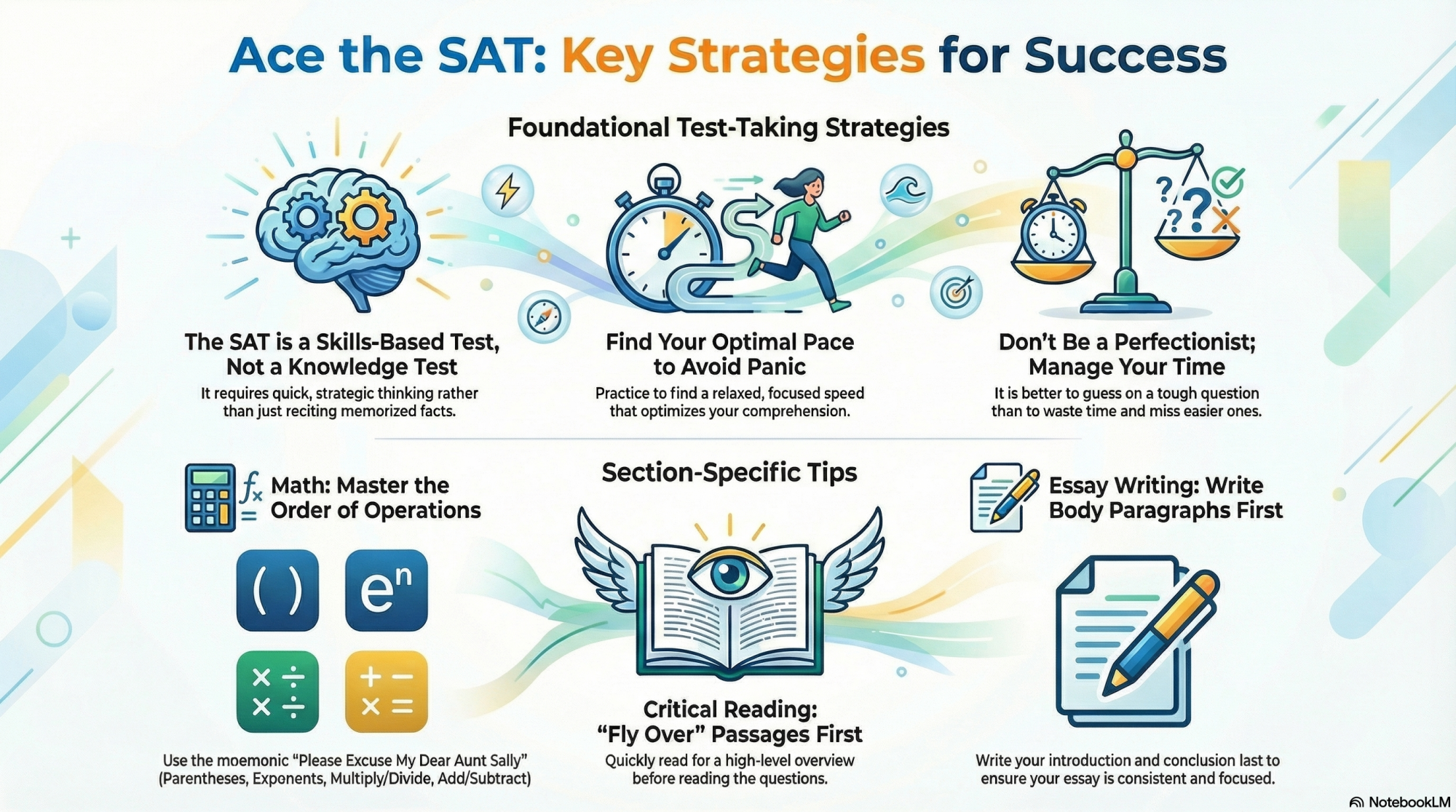
Another day, another update to Google’s NotebookLM, the versatile AI tool that functions like a personal assistant focused only on you and your needs. The latest update is for visual learners: You can turn your source materials into helpful infographics that give you a clear picture—literally—of what the PDFs, websites, videos, or other materials you’re studying or organizing are about.

How to use the new NotebookLM infographics feature

To use the new feature, open any of your NotebookLM Notebooks (the name given to folders full of specific materials you’ve uploaded) and navigate to the panel on the right side. It’s the same panel where you find the other offerings like the video creator and flashcard maker.

As with those tools, you just tap the associated button to generate the corresponding product, making sure the sources from your left panel that you want to include are all checked off. I tried it out this morning, first using the NotebookLM account associated with my personal Chrome profile and what I’m studying in my private life, then using the one I have set up for work, which has a tester notebook full of materials about how to study for the SAT. (I am strict about using different Chrome profiles for various parts of my life and am now up to seven.)

In my personal account, the button was labeled BETA—and it acted like it. After two failed attempts, NotebookLM could not produce an infographic based on my materials. In my work account, though, the beta label was missing and it performed the function just fine, spitting this out:

NotebookLM infographic

Credit: Google

This is rolling out in full functionality to accounts at different times, obviously, but I was glad to see one of mine had easy access because I thought the infographic was solid.

Who the infographics feature is helpful for

I don’t consider myself a visual learner and primarily use NotebookLM to refine ideas or generate educational audio clips I can listen to while I clean the house, so I wasn’t expecting to like this. I don’t like the mind map creator within NotebookLM at all, for instance; flowcharts just aren’t how I learn best, and that’s fine.

But the infographic was concise, engaging, and just detailed enough to keep me interested and looking at it. It’s unlikely I’ll use this to study or refine my work often, but I can absolutely see how it would be useful to someone who learns more visually, especially if all the lines and boxes of a mind map can get too convoluted to be useful.

Security Experts Issue Urgent Warning To Block All AI Browsers ASAP

Security Experts Issue Urgent Warning To Block All AI Browsers ASAP
If you have used any of the AI browsers available today, you would likely have been impressed with their ability to automate tasks and act as an intelligent assistant. While these browsers continue to gain popularity, Gartner, a leading global research company, has warned that they pose security risks and advised companies to block them.

One

The Inevitable Shape of Cheap Online Retail

Pinduoduo in China, Shopee in Southeast Asia, and Meesho in India operate in markets that could hardly be more different — an upper-middle-income industrial state, a stitched-together archipelago of under-banked economies, and a country where three-quarters of retail is unorganized and e-commerce penetration sits at about 7% — yet all three have landed on the same business model.

These platforms run asset-light marketplaces specializing in cheap goods and slow delivery, monetizing through logistics mark-ups, advertising, and installment credit rather than retail margins. Temu and Shein are further variations now expanding in the U.S. and Europe.

The economics are thin for all. Pinduoduo’s EBITDA margins on GMV (gross merchandise value) sit in a 0-4% band; Meesho’s group-wide EBITDA hovers around break-even. Neither charges commissions on most sales; both earn through logistics mark-ups and advertising. Sponsored listings account for 1-3% of GMV at Indian marketplaces and 4-5% at Alibaba and Pinduoduo.

Credit is the more consequential side business. In India, cash on delivery functions as unofficial credit. Meesho CEO Vidit Aatrey said the customers prefer CoD for its “built-in delay,” which effectively makes it “a five-day loan.” Geography, income, and regulation were supposed to produce different answers. They produced one: a 3% endgame where e-commerce clips a few points of GMV and relies on attention and credit for profits.


Read more of this story at Slashdot.

10 Hacks Every Homeowner Should Know

We may earn a commission from links on this page.

When you buy a house, you buy a long list of projects that stretch into the distant future. Planning your time and budget for everything that will need to be done can be a challenge, but it’s worth it for the comfort, security, and financial cushion that home ownership offers. That doesn’t mean it can’t get a little stressful from time to time, though, which is why we could all use a few small tricks that can make a big difference as a homeowner. Here are 10 essential hacks that every homeowner should know.

Enlarge rooms with paint

One of the most common reasons for a home-buyer’s remorse is size. It can be difficult to gauge how you’ll use a space until you’re actually in it, and our lives don’t always go according to plan. As a result, it’s not uncommon for folks to feel like their house seems a bit too small for their liking.

Adding onto a house is expensive—a much more budget-friendly approach is to use visual tricks to make your house feel larger. Paint is a powerful tool for this. By leveraging color theory, you can make a room feel larger by using lighter colors on the walls and glossy white on the ceiling, and using a single color on all the walls to erase the edges that define the space, thus making it appear larger. If you don’t have a handy fortune to throw at a major home renovation, a low-cost paint project can give you the feeling of a larger room, at least.

No-dig fences

If you’ve ever been house-hunting, you’re familiar with one surprising fact: A lot of houses, especially new builds, don’t have fencing. You walk into the backyard and it’s just an open field, with invisible property lines somewhere in the near distance.

Fencing can be expensive if you hire someone to install it, with a price tag potentially in the thousands of dollars. Installing a fence on your own, DIY-style, is labor-intensive, especially if your yard is rocky. If all you need is a perimeter fence, however, a no-dig fence like this one is an easy solution that will mark off your property and pen in small pets without the effort or expense of a traditional fence project.

Dowel pin screw hole repair

Whether your house is new, lightly used, or historical in nature, eventually you’re going to deal with loose screws, especially in your door and cabinet hinges. Hinges carry so much weight and get so much use, the screws inevitably work themselves loose. You can fix this a few times just by tightening everything up again, but over time, this pattern will result in stripped screw holes and permanently sagging doors. At that point, you can either try to reposition the hinge so you can bite into fresh wood, or replace the door frame or cabinets at great expense.

That is, unless you know the dowel hack. All you need are some wooden dowel pins and some wood glue. Fill the stripped screw hole with glue, insert a dowel, trim as needed, and let the glue set. Then you can drill a fresh hole, and your screws will bite like new again, all for less than $10.

Rain-X on shower doors

One of the mysteries of the universe is the fact that bathrooms in general aren’t self-cleaning. How can a space doused with soap and water on a regular basis be so filthy?

One reason is the mineral content of your water, and the tendency for soap to transmogrify into soap scum. These two elements combine to turn glass shower doors into opaque, cloudy barriers that never look clean. Cleaning those hard water and scum stains off the glass requires a lot of elbow grease, and it’s the sort of chore we put off for months (or longer) simply because of the effort involved.

The trick is, once you do clean those glass doors, you should spray them with Rain-X. This is a product made for car windshields, but it will work a charm in your bathroom, too. It’s a water repellent, so your shower water will bead up on the glass, making it super easy to squeegee it off before it can evaporate and leave behind all those mineral deposits and soap residue. Using it on a regular basis when you clean your shower will keep those glass doors clear and free of build-up.

Deodorize with vodka

Vodka doesn’t have much of a taste, it has almost no odor, and it’s typically about 40% alcohol. All this means that vodka—even the cheap stuff—is actually a very good disinfectant and deodorizer. Many theater companies and theme parks use a mixture of vodka and water to spray down costumes between performances when there’s no time to send them out for cleaning. The alcohol kills off germs and odor-creating bacteria, and once it dries, there’s no smell or residue.

You can use this in your house, too. If your bedding, shoes, or towels have gotten a bit musty, a good spray with a 50/50 mix of vodka and water will deodorize and sanitize them effectively. You can add a drop of an essential oil too, if you want a light scent left behind.

Paint your roof

People typically don’t think about the roof of their house until it leaks—which is a mistake, because roofs are expensive to fix, even more expensive to replace, and a failing roof can allow water damage to destroy other parts of your home.

Becoming a roofing expert isn’t in the cards for most of us, but one thing any homeowner can do (usually as a DIY project) is coat the roof. Specialty coatings for flat roofs and shingles protect your roof from sun damage, fill in microscopic cracks before they can develop into leaks, and can extend the life of your roof by years, saving you a lot of money over time.

Run appliances at night

The modern house is an energy-sucking monster. We run lights, heat and cooling systems, televisions, computers, washers, dryers—the list is almost endless. And all of these devices and appliances require electricity, which, as you may have noticed, is expensive stuff.

If you can commit to running a lot of appliances at night, you can generally save money, however. That’s because electricity rates have “peak” and “off-peak” hours, so running your washing machine at night instead of the afternoon can cost a lot less. Some utility companies offer formal Time of Use plans, where you are charged a higher rate during peak hours, but a much lower rate during off-peak hours. If you can be disciplined about your power use, you can save a lot of money this way.

Get a ladder Levler

Doing DIY work around the house can be dangerous, and ladders are often involved. People often don’t know the proper way to position and secure a ladder, try to carry stuff while climbing, or forget that gravity is a thing and try to reach stuff they really shouldn’t while standing twelve feet in the air on an improperly balanced ladder. And then there’s the fun experience of having tools and fasteners in your pockets while you’re clinging to a ladder for dear life.

That can all be solved with this gizmo: The Ladder Levler. This gadget makes it safer to use your ladder on uneven surfaces (like stairs or sloped yards), and it’s also a storage bin that clips right onto your ladder, leaving your hands free to, you know, hold on like your life depends on it.

Leak detectors

Water will destroy your house if you’re not careful. Roof, pipe, and appliance leaks can persist for a long time before they become apparent, and every day a leak remains active means potential mold, dry rot, and structural damage to your home. And if you’re not home when a pipe or water heater bursts, sending gallons of water to gleefully rampage throughout your home, the cost of cleanup and repair can be astronomical.

That’s why leak detectors and alarms are an essential hack. Having these seeded throughout the house means you’ll never be caught by surprise—the moment moisture is detected, the alarms will sound, and you can deal with the problem before it ruins everything. You can get detectors that will ing you on your phone or other devices so you’ll be warned even if you’re not home, and you can often pair them with automatic shutoff valves on your water supply, stopping the flow of water the instant it becomes a threat to your home.

Thorny home security

Keeping your house secure usually involves technology like alarm systems and doorbell cameras, often backed up by a security service that can contact the police on your behalf. That’s always a sound idea, but it can be expensive and occasionally intrusive (especially if you find yourself having to reset systems and call off false alarms regularly).

But there’s also a passive way to enhance your home’s security: landscaping. A few thorny bushes near windows and thoughtful management of tree branches and ground covers can go a long way toward making your home less likely to be robbed. While this isn’t a set-it-and-forget-it kind of security plan, you’re going to have to manage some amount of landscaping anyway, so why not make choices in your outdoor spaces that actually make your home more secure while you’re at it.

Nearly one-third of teens use AI chatbots daily

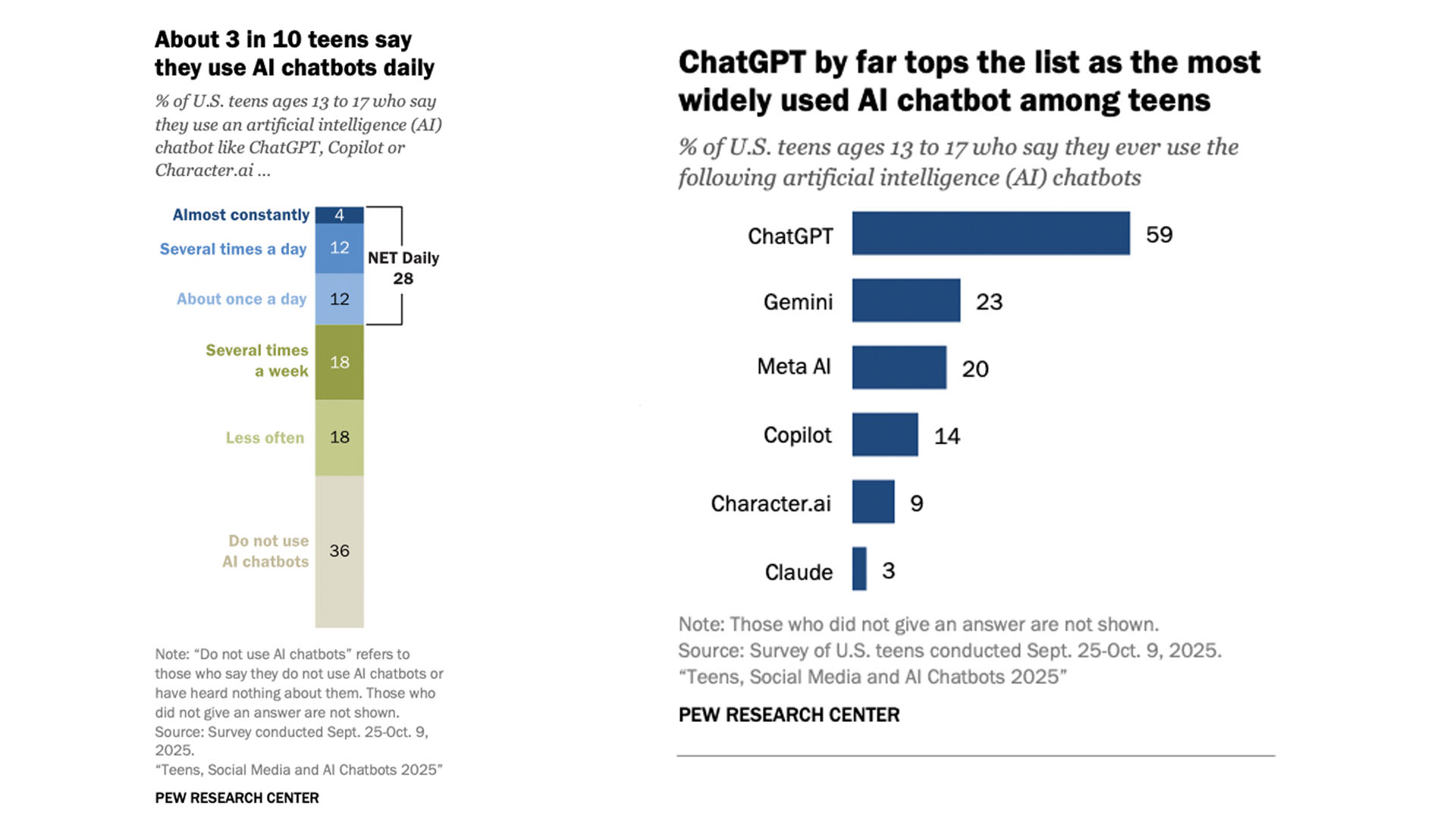
AI chatbots haven’t come close to replacing teens’ social media habits, but they are playing a significant role in their online habits. Nearly one-third of US teens report using AI chatbots daily or more, according to a new report from Pew Research. 

The report is the first from Pew to specifically examine how often teens are using AI overall, and was published alongside its latest research on teens’ social media use. It’s based on an online survey of 1,458 US teens who were polled between September 25 to October 9, 2025. According to Pew, the survey was “weighted to be representative of U.S. teens ages 13 to 17 who live with their parents by age, gender, race and ethnicity, household income, and other categories.”

According to Pew, 48 percent of teens use AI chatbots “several times a week” or more often, with 12 percent reporting their use at “several times a day” and 4 percent saying they use the tools “almost constantly.” That’s far fewer than the 21 percent of teens who report almost constant use of TikTok and the 17 percent who say the same about YouTube. But those numbers are still significant considering how much newer these services are compared with mainstream social media apps. 

The report also offers some insight into which AI companies’ chatbots are most used among teens. OpenAI’s ChatGPT came out ahead by far, with 59 percent of teens saying they had used the service, followed by Google’s Gemini at 23 percent and Meta AI at 20 percent. Just 14 percent of teens said they had ever used Microsoft Copilot, and 9 percent and 3 percent reported using Character AI and Anthropic’s Claude, respectively.

The survey is Pew's first to study Ai chatbot use among teens broadly.
The survey is Pew’s first to study Ai chatbot use among teens broadly.
Pew Research

Pew’s research comes as there’s been growing scrutiny over AI companies’ handling of younger users. Both OpenAI and Character AI are currently facing wrongful deaths lawsuits from the parents of teens who died by suicide. In both cases, the parents allege that their child’s interactions with a chatbot played a role in their death. (Character AI briefly banned teens from its service before introducing a more limited format for younger users.) Other companies, including Alphabet and Meta, are being probed by the FTC over their safety policies for younger users.

Interestingly, the report also indicates there has been little change in US teens’ social media use.  Pew, which has regularly polled teens about how they use social media, notes that teens’ daily use of these platforms “remains relatively stable” compared with recent years. YouTube is still the most widely-used platform, reaching 92 percent of teens, followed by TikTok at 69 percent, Instagram at 63 percent and Snapchat at 55 percent. Of the major apps the report surveyed, WhatsApp is the only service to see significant change in recent years, with 24 percent of teens now reporting they use the messaging app, compared with 17 percent in 2022.

This article originally appeared on Engadget at https://www.engadget.com/ai/nearly-one-third-of-teens-use-ai-chatbots-daily-200000888.html?src=rss

The Webb telescope spots a supernova from 13 billion years ago

The James Webb Space Telescope and other international observatories have spotted a 13-billion-year-old supernova. On Tuesday, the European Space Agency (ESA) announced the sighting of a gamma-ray burst from a star that exploded when the Universe was only 730 million years old. The Webb telescope even detected the supernova’s host galaxy.

Before this observation, the oldest recorded supernova was from when the Universe was 1.8 billion years old. That’s a difference of more than a billion years.

You can see the gamma-ray burst in the image below. It’s the tiny red smudge at the center of the zoomed-in box on the right.

Webb image shows hundreds of galaxies of all shapes and sizes against the black background of space. Toward the center-left is a large white spiral galaxy that is almost face-on. To the right of this is a large box, which zooms in on an area at top right. Within the box is a faint red dot at the center, with the label GRB 250314A.
The tiny red splotch in the center of the crop box is the oldest thing you’ve seen.
NASA, ESA, CSA, STScI, A. Levan (IMAPP)

“This observation also demonstrates that we can use Webb to find individual stars when the Universe was only 5 percent of its current age,” co-author Andrew Levan wrote in the ESA’s press release. “There are only a handful of gamma-ray bursts in the last 50 years that have been detected in the first billion years of the Universe. This particular event is very rare and very exciting.”

Researchers learned that the 13-billion-year-old explosion shared many traits with modern, nearby supernovae. While that may not sound shocking, scientists expected a more profound difference. That’s because early stars likely had fewer heavy elements, were more massive and didn’t live as long. “We went in with open minds,” co-author Nial Tanvir said. “And lo and behold, Webb showed that this supernova looks exactly like modern supernovae.”

Detection was an international relay race. First, NASA’s Neil Gehrels Swift Observatory noted the X-ray source’s location. (That helped Webb to make subsequent observations that determined its distance). Then, the Nordic Optical Telescope on the Canary Islands in Spain made observations indicating that the gamma ray might be very distant. Hours later, the European Southern Observatory’s Very Large Telescope in Chile estimated its age: 730 million years after the Big Bang. All of this happened in under 17 hours, according to the ESA.

The team behind the observation has been approved to spend more time with Webb studying gamma-ray bursts from the early Universe — and the galaxies behind them. “That glow will help Webb see more and give us a ‘fingerprint’ of the galaxy,” Levan predicted.

This article originally appeared on Engadget at https://www.engadget.com/science/space/the-webb-telescope-spots-a-supernova-from-13-billion-years-ago-194327489.html?src=rss

12 Shows Like ‘Percy Jackson and the Olympians’ You Should Watch Next

We may earn a commission from links on this page.

Though the film series petered out after only a couple of movies, Rick Riordan’s middle-grade Camp Half-Blood have been revived as a mega-popular Disney+ streaming series. The breathing room offered by a series format seems to have been the key to unlocking their potential as an adaptation, allowing for a more fully realized exploration of this atypical (at least on our side of Mount Olympus) coming-of-age story.

In its first season, the show found a good balance between fantasy action and teen drama while also having a ton of fun poking at the conventions of ancient myth. Season two is just out, and more is on the way, but it’s likely to be a bit of a wait. In the meantime, here are 12 more shows that offer a similar mix of coming-of-age angst, action, and myths and legends.


Once Upon a Time (2011 – 2018)

Doing for fairy tales what Percy Jackson does for Greek mythology, this long-running prime time drama stars Jennifer Morrison as Emma Swan, a struggling bail bond agent who travels to the Maine town of Storybrooke (subtle!) to reconnect with the son who she gave up for adoption. In the process, she discovers that she’s the daughter of Snow White and Prince Charming, given up to protect her from the machinations of Regina (Lana Parrilla), the evil queen who is also responsible for the curse that dropped an endless number of fairy tale characters into this small town to live dreary normal lives without any memories of their past adventures (at least at first). Stream Once Upon a Time on Disney+ and Hulu.


His Dark Materials (2019 – 2022)

The tone is very different, but there are thematic and plot similarities aplenty in this appropriately dark fantasy, adapted from the beloved YA series by Philip Pullman and set in an alternate world in which human souls exist outside the body in the form of animal companions called daemons. Lyra Belacqua (Dafne Keen) is an orphaned girl living at Jordan College, Oxford who finds herself involved in a murder plot that brings her into the orbit of the powerful Magisterium, the world’s overarching and oppressive religious authority—caught between her mother (Ruth Wilson), a powerful figure in the Magisterium, and her extremist heretic father (James McAvoy). From her steampunk-ish world, Lyra and her daemon Pan travel across a multiverse that includes our very own Earth. Stream His Dark Materials on HBO Max.


Fate: The Winx Saga (2021 – 2022)

An update to the Winx Club Nickelodeon animated series from back in the day, this show follows five fairies attending a prestigious boarding school for magical types. Not entirely unlike Percy Jackson, our lead fire fairy Bloom soon discovers that her parentage is more alien (literally) than she’d ever known. After a slow start, the show builds into an impressive coming-of-age story, and a rare fantasy series genuinely geared to its teenage target audience. It was cancelled after two seasons, but if you find yourself hooked, a series of graphic novels continues the story. Stream Fate: The Winx Saga on Netflix.


Blood of Zeus (2020 – 2025)

If “unacknowledged love children of gods” is your thing, well, Greek mythology has you covered. Set in an ancient Greek of myth, this adult-oriented animated series introduces Heron, an original character who nevertheless fits firmly in the tradition; here, he’s a young miner, illegitimate and thus scorned by his fellow villagers. When demons attack, Heron discovers he’s the secret son of Zeus, and that he’ll need to help lead humanity defeat flesh-eating creatures born from the blood of fallen titans. Intimately plotted and with an increasingly epic scope, the show blends Greek myth with anime style to tell an addictive original story. Stream Blood of Zeus on Netflix.


Moving (2023 – )

The South Korean import became Disney/Hulu’s most-watched K-drama, and did solid business globally (even if the English-language title doesn’t suggest major thrills). As the series opens, we meet Kim Bong-seok (Lee Jung-ha), literally weighted down by his mom (as in: she gives him weights to fill his pockets) as he’s heading off to school; we soon learn that it’s because he can’t quite control his ability to fly, and is prone to floating off unexpectedly. Athlete Jang Hui-soo (Go Youn-jung) heals instantly from injuries, while class president Lee Gang-hoon (Kim Do-hoon) is fast and incredibly strong. As it turns out, all of these kids’ parents were bred and trained as part of a black ops program from which they’ve escaped, passing along their abilities to their kids—who have to stifle their powers, lest they draw the attention of spies hunting them down. Stream Moving on Disney+ and Hulu.


Chilling Adventures of Sabrina (2018 – 2020)

No Greek mythology here (well, we do get a gorgon or two), but Sabrina is also the story of a young woman coming to terms with her destiny at a special school for people with unique powers while having (dark) adventures. Rather than the daughter of a god, Sabrina is a literal child of Lucifer. Sabrina Spellman (Kiernan Shipka) is an old-school witch in a household that’s not at all unlike the Addams family: two witchy aunts (played by Miranda Otto and Lucy Davis) alongside her warlock cousin (Chance Perdomo) and her loyal familiar, Salem the cat, all of them living their witchy lives just out of view of the local normies. At the outset, Sabrina’s forced to choose between signing her name in Satan’s book and becoming a full-fledged witch, or staying in high school with her human friends. Instead, she refuses to choose. Cannibalism, human sacrifice, and blood rituals result, as Sabrina is called upon to save her family, and the world, from dark forces. Stream Chilling Adventures of Sabrina on Netflix.


The Owl House (2020 – 2023)

In this animated series, teenager Luz Noceda (Sarah-Nicole Robles) finds herself trapped in the Demon Realm and there befriends a nonconformist witch Eda Clawthorne (Wendie Malick), who undertakes to teach the non-magical Luz everything she can about magic. Luz is determined to become a full-fledged witch despite her complete lack of prior experience, which is entirely refreshing given the volume of narratives about kids who just kinda discover that they’re super-powered nepo babies. Busting open the doors for LGBTQ+ representation on the Disney Channel, this show is chock full of queer characters, and it remained both creatively offbeat and adorable throughout its now completed run. Stream The Own House on Disney+.


Legacies (2018 – 2022)

A (sorta) standalone spin-off from the rather extensive Vampire Diaries universe, Legacies follows Hope Mikaelson (Danielle Rose Russell), an orphan descended from bloodlines that include vampires, witches, and werewolves—meaning the Salvatore School for the Young and Gifted suits her perfectly. Supernatural beings of all sorts attend, and it serves as a secret haven and training ground for those with powers. It’s a place where they can learn to control and/or conceal their abilities—sort of a cross between Wednesday‘s Nevermore Academy and Camp Half-Blood. The drama is a little more YA to Percy‘s middle-grade, and naturally, teen angst and romance abound. Stream Legacies on Netflix.


Spellbound (2023 – 2024)

Fifteen-year-old American Cece Parker Jones travels to Paris to join the prestigious dance school, only to discover that she’s an actual witch from a family with a history of magic. She struggles to balance dance, magic, and her desire to be a normal teenager while dealing with the Mystics, natural enemies to Cece’s type of witch. It’s a solidly entertaining blend of teen drama, magical duels, and uniquely, ballet. (it’s a standalone successor to the time travel-focused Find Me in Paris, which is also on Hulu). Stream Spellbound on Hulu.


American Born Chinese (2023)

Based on the seminal, semi-autobiographical 2006 graphic novel from Gene Luen Yang, this adaptation introduces Jin Wang (Ben Wang), a nerdy and rather ordinary son of Taiwanese immigrants. He befriends confident, generally loud and proud exchange student Wei-Chen (Jimmy Liu), who’s embarrassing and inspiring in equal measure. It’s soon revealed that Wei-Chen is no ordinary kid, but rather the son of legendary Chinese figure the Monkey King, and he’s on Earth looking for the ordinary teenager he believes can help him stop an uprising against Heaven. Ke Huy Quan co-stars as the former child star of a deeply stereotypical ’80s sitcom, and Michelle Yeoh appears as goddess of compassion Guanyin. It’s disappointing that this only lasted one season, but it tells a fairly complete story nonetheless. Stream American Born Chinese on Disney+.


Lockwood & Co. (2023)

In an alternate modern Britain, ghosts are an everyday sight, which is not to say they aren’t a nuisance—their touch is deadly. Technological progress has largely ground to a halt, while ghost-hunting agencies are common and, since adults lose the ability to sense ghosts directly, kids and teens are the ones on the front lines. Ruby Stokes (Bridgerton) plays Lucy Carlyle, an extremely sensitive listener who was cast aside when she was unfairly blamed for several deaths at her first job. With nowhere else to go, she joins up with the shady, unregulated Lockwood & Co., a two-orphan operation working outside the law. It’s a solidly spooky teen drama with a fair bit of action and a beating heart, in and among all of the dead people. Stream Lockwood & Co. on Netflix.


Troy: Fall of a City (2018)

This one’s definitely not for the young ones, but if you’re a grown-up-type person looking for a bit more on Greek mythology, you could do worse than this BBC take on The Iliad (and other Trojan War narratives). Adapting events in and around Homer’s work, we begin with the judgment of Paris (Louis Hunter), who’s asked by Hera, Athena, and Aphrodite to award an apple to the one he favors most; the goddesses here appear as human-esque characters, marking a change from older takes that saw giants watching from Olympus, and more recent adaptations that do away with gods altogether. We then meet Helen (Bella Dayne), a Spartan citizen in a loveless marriage, before following the action to Troy. The show has a lush, bronze-age aesthetic and displays an impressive fidelity to its varied source material. Stream Troy: Fall of a City on Prime Video and Netflix.

Samsung Wallet to gain support for digital Porsche keys

Owners of the Porsche Macan and upcoming Porsche Cayenne Electric will be able to unlock and start their cars with their Galaxy phones, Samsung has announced. The cars, alongside other Porsche models, are gaining support for Samsung Wallet’s Digital Key feature, which lets users wirelessly control their car over a secure UWB or NFC connection.

Digital Key support will be available in Europe in December, before rolling out globally, “aligned with the launch timeline of Porsche vehicles,” Samsung says. Samsung Wallet is available on Samsung devices as old as the Galaxy S20, Note 20, Galaxy Z Fold 2 and Galaxy Flip 5G, and is included on the majority of the company’s new phones. Like similar features on Google’s Pixels and Apple’s iPhones, Digital Key allows Porsche owners with a supported Galaxy phone to unlock, lock and start their car directly from their phone. If your phone is ever taken, you can also remotely lock or delete a Digital Key to keep your car safe.

Samsung added Digital Key support to select Volvo and Polestar EVs in February 2025. The feature first became available in 2021, and is one of several ways the phone maker imagines people will use Samsung Wallet. Beyond digital car keys, the app can also store credit and debit cards and be used to transfer money with a tap.

This article originally appeared on Engadget at https://www.engadget.com/mobile/smartphones/samsung-wallet-to-gain-support-for-digital-porsche-keys-193000085.html?src=rss