Why Switzerland Is Weighing a 10 Million Population Limit

An anonymous reader shares a report: Growing support for far-right parties is pressuring European governments to introduce stricter controls on immigration. Switzerland is set to vote on a proposal that would take the idea to the next level — imposing a cap on its population [non-paywalled link]. The initiative could lead eventually to a blanket ban on new arrivals if the number of residents rises from around 9 million currently to above 10 million, with little distinction made between refugees, skilled workers and top managers on six-figure salaries.

Citizens will likely vote on the proposal next year under the country’s unique system of plebiscites on constitutional amendments and policy, and polls suggest there’s a chance they’ll approve it. The risk is it could lead to shortages of critical skills that end up harming Switzerland’s competitiveness. The outcome will show how far citizens are willing to go to preserve some of the traits that made their country such an appealing destination. […] The right-wing Swiss People’s Party, or SVP, won 28% of the vote in the last election with a campaign that presented Swiss citizenship as a privilege, not a right. It came up with the idea of a population limit in 2023, presenting it as a way to preserve the Swiss lifestyle and protect its environment from excessive human activity.


Read more of this story at Slashdot.

Disney has accused Google of copyright infringement on a ‘massive scale’

Disney has accused Google of copyright infringement on a “massive scale,” alleging that the tech giant is training its AI tools on protected materials as well as allowing those tools to generate infringing images and videos. Variety reports that Disney attorneys sent a cease-and-desist letter to Google on Wednesday.

“Google is infringing Disney’s copyrights on a massive scale, by copying a large corpus of Disney’s copyrighted works without authorization to train and develop generative artificial intelligence (‘AI’) models and services, and by using AI models and services to commercially exploit and distribute copies of its protected works to consumers in violation of Disney’s copyrights,” reads the letter, which Variety reviewed.

The letter includes examples of images from several Disney properties including Deadpool, Moana, Star Wars and others, reproduced by Google’s AI tools. Disney is demanding that Google implement guardrails within all its AI products to prevent further infringement. The media giant sent a similar letter to Character.AI in September, and is currently suing Hailuo and Midjourney over alleged copyright infringement.

Copyright enforcement has become more challenging in the face of AI-created imagery, and companies are increasingly taking an “if you can’t beat them, join them” approach. Today Disney announced a deal with OpenAI to license its characters for use in Sora, OpenAI’s video generator. The deal will see Disney invest $1 billion in OpenAI (a paltry sum by some standards), with the option to purchase additional equity at a later date.

This article originally appeared on Engadget at https://www.engadget.com/ai/disney-has-accused-google-of-copyright-infringement-on-a-massive-scale-163737642.html?src=rss

This 65″ Fire TV For $265 Is A Steal Plus More Big Screen Holiday Deals

This 65
We’re old enough to remember when big screen TVs came with big time prices. They were also a lot more bulky than they are now. Fortunately, this is one area in tech where pricing now favors the consumer (unlike DRAM, don’t even get us started), and if you’re not ultra-picky, you can score a 65-inch model for less than $300, or even less than

AI Hackers Are Coming Dangerously Close to Beating Humans

Stanford researchers spent much of the past year building an AI bot called Artemis that scans networks for software vulnerabilities, and when they pitted it against ten professional penetration testers on the university’s own engineering network, the bot outperformed nine of them. The experiment offers a window into how rapidly AI hacking tools have improved after years of underwhelming performance.

“We thought it would probably be below average,” said Justin Lin, a Stanford cybersecurity researcher. Artemis found bugs at a fraction of human cost — just under $60 per hour compared to the $2,000 to $2,500 per day that professional pen testers typically charge. But its performance wasn’t flawless. About 18% of its bug reports were false positives, and it completely missed an obvious vulnerability on a webpage that most human testers caught. In one case, Artemis found a bug on an outdated page that didn’t render in standard browsers; it used a command-line tool called Curl instead of Chrome or Firefox.

Dan Boneh, a Stanford computer science professor who advised the researchers, noted that vast amounts of software shipped without being vetted by LLMs could now be at risk. “We’re in this moment of time where many actors can increase their productivity to find bugs at an extreme scale,” said Jacob Klein, head of threat intelligence at Anthropic.


Read more of this story at Slashdot.

16 Shows Like ‘Slow Horses’ You Should Watch Next

We may earn a commission from links on this page.

It’s begin to feel like successful streaming shows are increasingly the exception, rather than the rule, and Slow Horses is something else again: a successful show with a more-than-consistent schedule. With five seasons since 2022, rather than the increasingly common “every few years or when we get to it” scheduling of other streaming shows, it’s rather lovely to actually be able to remember the events of the previous series when the new one starts.

If this all sounds like damning with faint praise, it’s also a smart, brilliantly entertaining show, with Gary Oldman as the slovenly, flatulent, once-brilliant spy Jackson Lamb now in charge of Slough House, the MI5 office for agents who aren’t good enough to trust with important tasks, but who haven’t really done anything worth getting fired for. Their very expendability puts them in the line of fire early and often, with ambitious spymaster Diana Taverner (Kristin Scott Thomas) finding the team alternately useful and a liability. The show’s been renewed for at least two further seasons—the novel series by Mick Herron on which it’s based runs to nine books so far, and so there’s potential for even more.

Down Cemetery Road (2025 – )

This is perhaps the most obvious streamalike here, if only because the shows are both Apple TV productions and are both based on Mick Herron novels. This one is more spy-adjacent, however, starring Emma Thompson as hard-living, hard-drinking private investigator Zoë Boehm. She’s hired by Ruth Wilson’s Sarah Trafford, a married art restorer who nobody takes very seriously (including and especially her husband), even when she becomes invested in the fate of a young girl whose family is killed in a gas explosion (allegedly) down the street. The girl, whose parents were killed, disappears into the system and no one really seems to care until Sarah hires Zoë and her husband to look into it. Turns out both women are in way over their heads, as the missing girl points to a much broader conspiracy. The shows villains are a bit cartoonishly distracting, but Thompson and Wilson are brilliantly paired, and their performances are more than worth the price of admission. Stream Down Cemetery Road on Apple TV+.


The Agency (2024 – )

Michael Fassbender as stars here as “Martian,” codename of Brandon Colby, a former undercover CIA agent just returned to London after six years in Sudan. He left behind a lover, Dr. Samia Zahir (Jodie Turner-Smith)—a relationship he wasn’t terribly forthcoming about with his handlers. When Sami turns up in London as part of a diplomatic delegation, Martian is forced to choose between his job and his personal life, which becomes more complicated when it appears that she’s involved in a broader scheme involving the Sudanese government, MI6, and an undercover agent in Belarus. It’s all very twisty-turny in the best tradition of spy shows. Jeffrey Wright plays Martian’s boss and mentor, Richard Gere is the CIA London Station Chief, and Downton Abbey’s Hugh Bonneville is a shifty senior MI6 operative. Stream The Agency on Paramount+.


The Bureau (2015 – 2020)

In addition to, or instead of, The Agency, you can also catch Le Bureau des Légends, the French original on which it’s based (they’re similarly addictive, though many will prefer the original on principle). Same general premise: Mathieu Kassovitz stars as Guillaume Debailly, a spy just recently returned from a six year undercover mission in Damascus, Syria. Trying to re-adjust to his life, everything is thrown into turmoil when Nadia (Zineb Triki), the woman with whom he’d had a relationship, turns up in Paris. Stream The Bureau on Paramount+.


The Day of the Jackal (2024 – )

Cinematic in scope, this new adaptation of the Frederick Forsyth novel is buoyed by rather brilliant casting: Eddie Redmayne plays the Jackal, a cold and steely international assassin pursued by MI6 operative Bianca Pullman—she’s played by Lashana Lynch, putting her experience as the new 007 in No Time to Die to good use. I’m not sure there’s anything here we haven’t seen in countless other spy thrillers (including, of course, the 1973 and 1997 film adaptations), but the performances and production values are top-notch, with each episode playing out like a tense mini-movie. Stream The Day of the Jackal on Peacock.


Monsieur Spade (2024)

An original drama from Scott Frank (The Queen’s Gambit) and Tom Fontana (Homicide, Oz), Monsieur Spade finds Dashiell Hammett’s Sam Spade, of The Maltese Falcon fame, living a quiet life in retirement in the South of France. It’s all going very well of the rumpled former detective—until six nuns are brutally murdered at a nearby convent, the same convent that’s been home to Sam’s ward for some time. Naturally, he finds his past has caught up with him, and is forced to surrender his idyllic life in order to help uncover the complex mystery that endangers his (very few) loved ones. Clive Owen is great as the rumpled, emphysemic detective, and the story feels like a fitting sequel to Hammett’s novel. Stream Monsieur Spade on Prime Video and AMC+.


Killing Eve (2018 – 2022)

Sandra Oh and Jodie Comer star as the two halves that form one of television’s great cat-and-mouse narratives, with Oh as Eve Polastri, a bored MI5 analyst who becomes obsessed with hunting down the brutal and notorious assassin known only as Villanelle. It starts as a professional compulsion before it becomes personal: Eve and Villanelle begin toying with each other, and it soon becomes clear that the fascination goes both ways. Stream Killing Eve on Prime Video, Paramount+, Britbox, Tubi, and Netflix.


The Night Manager (2016 – )

Coming, as it does, from John le Carré, the wellspring of many modern spy sagas, it’s probably no surprise that The Night Manager (from a 1993 novel) was successful—though it certainly doesn’t hurt to have a cast lead by Tom Hiddleston, Hugh Laurie, and Olivia Colman. Hiddleston is Jonathan Pine, working the night shift at a luxury hotel in Switzerland when he encounters an unexpected guest: arms dealer Richard Roper (Laurie). Former Army veteran Pine had previous dealings with Roper in Cairo, and the reluctant night manager is persuaded by Foreign Office head Angela Burr (Colman) to infiltrate the criminal’s organization. A long-gestating second season is coming in 2026, to be followed by a third. Stream The Night Manager on Prime Video.


Deadloch (2023 – )

Slow Horses isn’t a send-up of the spy genre, precisely, but it does enjoy taking the piss. The more overtly funny Deadloch is both an excellent crime procedural and an effective satire of the genre; the Australian import does about as well as setting up its central mystery as Broadchurch and its many (many) imitators. Kate Box stars as Dulcie Collins, fastidious senior sergeant of the police force in the fictional town of the title. When a body turns up dead on the beach, Dulcie is joined by Madeleine Sami’s Eddie Redcliffe, a crude and generally obnoxious detective brought in to help solve the case. Unraveling the web of secrets and mysteries in the tiny Tasmanian town is appropriately addictive, with the added bonus of cop thriller tropes getting mercilessly mocked all the way. Stream Deadloch on Prime Video.


The Capture (2019 – )

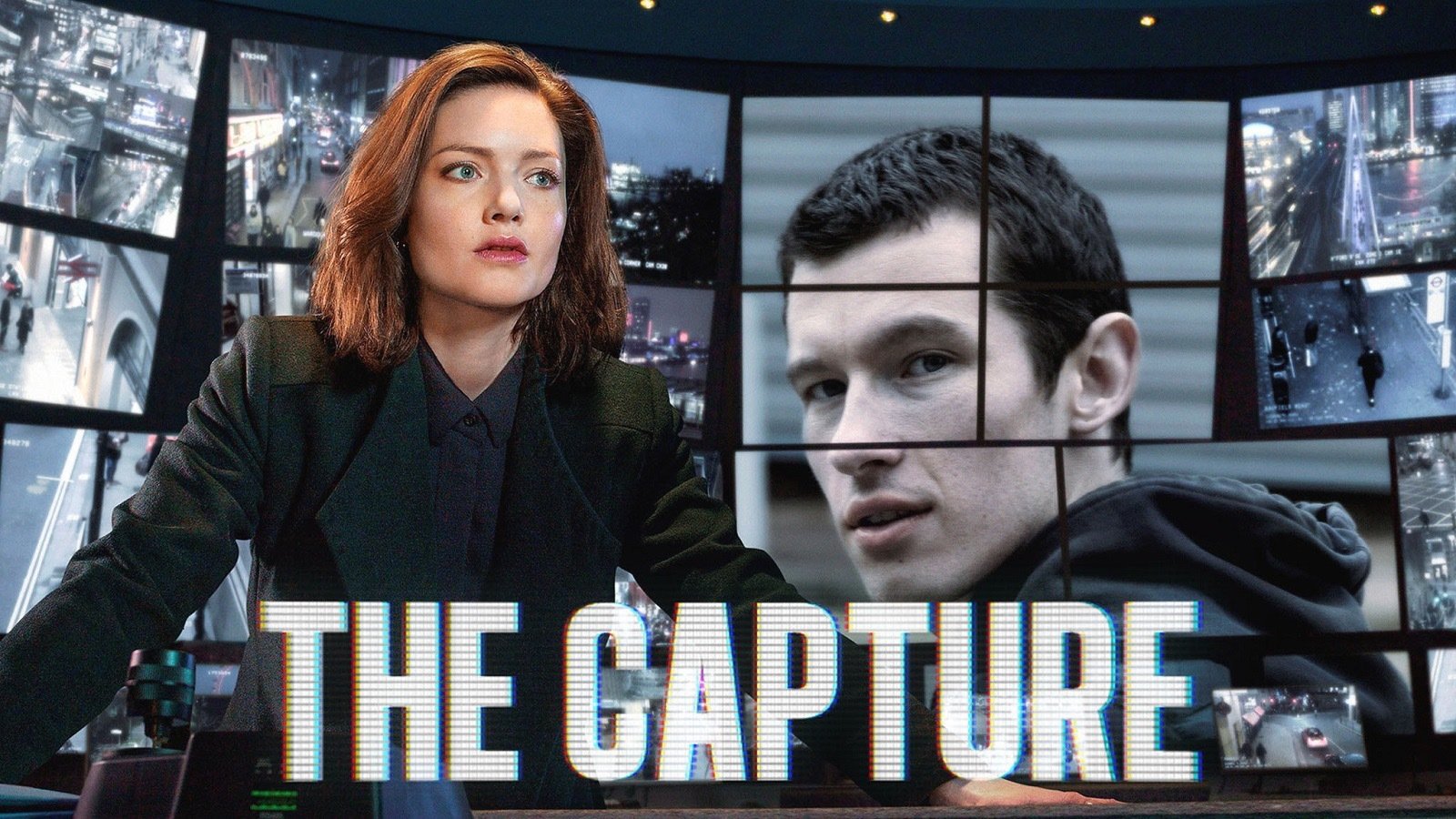
There are several imports on this list; Peacock is just too new to have a large stable of homegrown shows, but they’ve managed a handful of impressive acquisitions. In this British series, a young, ambitious detective with the London police department is tasked with the investigation of a soldier who’d only recently been exonerated for a war crime, but who seems to have turned around and assaulted and then kidnapped his lawyer (sorry, his barrister). There’s plenty of police procedural drama and international intrigue, but the show has a slightly different target: it’s looking at the dangers of our reliance on CCTV surveillance, and on the dangers of a widespread assumption that cameras don’t lie. London is one of the most heavily surveilled cities in the world, so there’s a particularly British point of view here, but the issues will be recognizable to anyone who’s spent time in any major city. A third season is on the way. Stream The Capture on Peacock.


Mr. & Mrs. Smith (2024 – )

One-upping the Brad Pitt/Angelina Jolie movie on which it’s based, Mr. & Mrs. Smith stars Donald Glover and Maya Erskine as a couple of spies tasked to pose as a married couple while coordinating (and sometimes competing against one another) on missions. Smartly, each episode takes on a standalone mission in a different location, while complicating the relationship between the two and gradually upping the stakes until the season finale, which sees them pitted against each other. The show has been renewed for season two, but it’s been delayed, and it’s unclear if Glover and Erskine will be returning, or if we’ll be getting a new Mr. & Mrs. Stream Mr. & Mrs. Smith on Prime Video.


Archer (2009 – 2023)

H. Jon Benjamin, lovable schlub of Bob’s Burgers, leads this show as Bob Belcher’s polar opposite: a handsome spy who’s also a deeply narcissistic womanizer with an endless capacity for alcohol. This is a full-on comedy, dealing with the exploits of a New York–based freelance intelligence agency led by Jessica Walter’s hard-drinking Malory Archer—but it’s such a smart send-up of James Bond-style shenanigans that it works as a spy series, as well, and sometimes the team’s missions aren’t all that much more silly than the plots of more overtly serious spy movies and shows. Addictive and irreverent, the show includes one of TV animation’s best-ever voice casts, including Aisha Tyler, Amber Nash, and Judy Greer as the sociopathic heiress Cheryl Tunt. Stream Archer on Hulu and Tubi.


The Equalizer (2021 – 2025)

The Queen Latifah-led Equalizer reboots the 1980s series (and sidesteps the Denzel Washington movies) by spinning the premise in a slightly different direction: Latifah plays single mom Robyn McCall, an impossibly skilled former CIA operative who puts her talents to work for those in need. It splits the difference between crime and spy drama, with episodes involving close-to-home crime and others dealing with international espionage. While the original’s vibe was more about the cops being handcuffed by things like “rules” and “giving perps their basic human dignity,” this one is more about those who’ve been failed by systems that don’t care about them—and who might benefit from the help of a woman who can beat just about anyone’s ass. It’s very satisfying watching Robyn and company spy and/or punch their way out of sticky situations to help the oppressed. Stream The Equalizer on Paramount+ and Tubi.


The Little Drummer Girl (2018)

Park Chan-wook (Sympathy for Mr. Vengeance, Oldboy) directs this series, based on the John le Carré novel, and brings an undeniably sexy period style. Florence Pugh is Charlie, a young actress recruited by Mossad spymaster Martin Kurtz (Michael Shannon) to infiltrate a group of Palestinian terrorists, even as she’s being manipulated by an Israeli intelligence officer played by Alexander Skarsgård. Crucially, and as in the book that preceded it, the show offers nuanced characters on multiple sides of the conflict, raising serious questions about who the real villains are. Stream The Little Drummer Girl on AMC+ or buy it from Prime Video.


The Americans (2013 – 2018)

Set during the Cold War 1980s, and created by former CIA officer Joe Weisberg, Americans follows Soviet KGB intelligence agents Elizabeth (Keri Russell) and Philip Jennings (Matthew Rhys), living lives as an American couple in the DC metro area—and raising their American-born children. The critically acclaimed (also popular!) show makes much of its period setting and a central conflict that places two spies in the heart of suburban America, even as they’re tasked with undermining the Reagan-era government under which their children will grow up. Stream The Americans on Disney+ and Hulu.


Homeland (2011 – 2020)

The focus shifts a bit after Homeland‘s first few seasons, the series begins with CIA case officer Carrie Mathison (Claire Danes) coming to suspect that that decorated Marine Corps scout sniper Nicholas Brody (Damian Lewis), recently rescued from an al-Qaeda compound, has been turned and is planning a terrorist attack on the United States. Having been diagnosed with bipolar disorder, her superiors don’t give Mathison’s suspicions much credence, kicking off a cat-and-mouse/is-he-or-isn’t he? game between the two. Both leads won Emmys for their performances, and the series took the Outstanding Drama prize in its first year. Stream Homeland on Hulu and Netflix.


Man on the Inside (2024 – )

Not a spy drama (at all), but a funny, and often very moving, comedy from the creator of The Good Place. Still: Undercover antics abound, so I’m going to say it counts as a bit of spy-adjacent counter-programming. Based very, very loosely on a true story, the show stars Ted Danson as Charles Nieuwendyk, a recent widower and retired professor who’s started settling into a life of…not much, when, on a whim, he takes a temp job with a detective agency. They’re investigating some missing jewelry at a local retirement home, and the dorky, awkward Charles makes for the perfect undercover resident, even as the job evokes memories of his late wife’s Alzheimer’s diagnosis. Ted Danson is in great form here, as is a supporting cast that, in the second season, includes real-life wife Mary Steenburgen. Stream Man on the Inside on Netflix.

One of our favorite budgeting apps is 50 percent off for new users

With a new year just around the corner, now is the perfect time to take stock of your finances. A budgeting app can help with that, and right now you can get 50 percent off your first year of a Monarch Money plan. All you need to do is enter the code MONARCHVIP at checkout and you’ll pay $50 for the initial 12 months instead of the regular price of $100. Note that the offer only applies to new users.

Monarch Money was the runner-up in our guide to the best budgeting apps in 2025, and it was definitely a grower. Initially we found the experience of using the app to be needlessly complicated compared to some of its rivals, but get over that hurdle and it’s impressively fully-featured. There are plenty of customization options, a helpful “goals” feature and a thorough month-in-review recap that beats out similar features from some of its competitors. We also like how you can grant account access to others.

Besides the steep learning curve, we also noted that the mobile app is less intuitive to use than the web version, which might pose a problem if you were hoping to do most of your accounting on the go. We also had some issues with the app failing to distinguish between bills and other recurring expenses, as well as a few bugs along the way.

All things considered, Monarch is definitely one of our favorite budgeting apps, only being beaten out by Quicken Simplifi. As you might expect, the biggest strength of Simplifi is its simplicity, and how it eases you into using its various features. If you value that kind of user experience, it might be a better choice for you, but there’s unfortunately no free trial to take advantage of.

Follow @EngadgetDeals on X for the latest tech deals and buying advice.

This article originally appeared on Engadget at https://www.engadget.com/deals/one-of-our-favorite-budgeting-apps-is-50-percent-off-for-new-users-154056449.html?src=rss

Disney Puts $1 Billion Into OpenAI, Licenses 200+ Characters for AI-Generated Videos and Images

Disney is investing $1 billion in OpenAI and has entered into a three-year licensing deal that will let users generate AI-powered short videos and images featuring more than 200 characters from its Disney, Marvel, Star Wars and Pixar franchises.

The new features are expected to launch in 2026 through Sora, OpenAI’s short-form video platform, and ChatGPT. A selection of user-generated short videos will also be available to stream on Disney+. The licensing agreement excludes any talent likenesses or voices. Disney will receive warrants to purchase additional OpenAI equity as part of the arrangement, and its employees will gain access to OpenAI tools including ChatGPT for building new products.


Read more of this story at Slashdot.

Android’s New Emergency Live Video Feature Could Transform 911 Response

Android's New Emergency Live Video  Feature Could Transform 911 Response
In an emergency, Android users can now share real-time visual details with 911 dispatchers, bridging a critical information gap that can hinder quick, effective emergency responses. Today Google rolls out Emergency Live Video across Android devices in three countries (running Android 8+), turning a smartphone on-site into a crucial pair of

Opera Wants You To Pay $20 a Month For Its AI Browser

Opera has opened its AI-powered browser Neon to the public after a couple of months of testing, and anyone interested in trying it will need to pay $19.90 per month. The Norway-based company first unveiled Neon in May and launched it in early access to select users in October. Like Perplexity’s Comet, OpenAI’s Atlas, and The Browser Company’s Dia, Neon bakes an AI chatbot into its interface that can answer questions about pages, create mini apps and videos, and perform tasks. The browser uses your browsing history as context, so you can ask it to fetch details from a YouTube video you watched last week. The subscription also grants access to AI models including Gemini 3 Pro and GPT-5.1.


Read more of this story at Slashdot.

OpenAI signs deal to bring Disney characters to Sora and ChatGPT

It looks like Disney wasted no time delivering on CEO Bob Iger’s promise to bring AI-generated content to Disney+. On Thursday, the company announced the start of a three-year licensing agreement with OpenAI to bring more than 200 of its beloved characters, including those from Star Wars and Pixar, to the Sora app and ChatGPT. With the deal in place, OpenAI users will be able to prompt ChatGPT to generate images that tap into Disney’s intellectual property, with costumes, props, vehicles and environments covered.

The agreement does not cover voices or “talent likenesses.” On paper, that should mean Sora users won’t be able prompt the app to make a video with Black Widow and get something with Scarlett Johansson likeness in it.

Developing…

This article originally appeared on Engadget at https://www.engadget.com/ai/openai-signs-deal-to-bring-disney-characters-to-sora-and-chatgpt-144344820.html?src=rss

Oracle shares slide on $15B increase in data center spending

Oracle stock dropped after it reported disappointing revenues on Wednesday alongside a $15 billion increase in its planned spending on data centers this year to serve artificial intelligence groups.

Shares in Larry Ellison’s database company fell 11 percent in pre-market trading on Thursday after it reported revenues of $16.1 billion in the last quarter, up 14 percent from the previous year, but below analysts’ estimates.

Oracle raised its forecast for capital expenditure this financial year by more than 40 percent to $50 billion. The outlay, largely directed to building data centers, climbed to $12 billion in the quarter, above expectations of $8.4 billion.

Read full article

Comments

I Tried Photoshop in ChatGPT, and It Went Better Than I Expected

Generative AI tools continue to improve in terms of their photo editing capabilities, and OpenAI’s latest upgrade brings Adobe Photoshop right inside your ChatGPT app window (alongside Adobe Acrobat for handling PDFs, and Adobe Express for graphic design). It’s available to everyone, for free—you just need a ChatGPT account and an Adobe account.

As per Adobe, the idea is to make “creativity accessible for everyone” by plugging Photoshop tools directly into ChatGPT. The desktop version of Photoshop already comes with plenty of generative AI features of its own, so this is AI layered on top of more AI—but is it actually useful?

How to get started with Photoshop inside ChatGPT

Adobe Photoshop, Adobe Express and Adobe Acrobat are available now inside ChatGPT on the desktop, on the web, and on iOS. At the time of writing, you can also get Adobe Express inside ChatGPT for Android, with Photoshop and Acrobat “coming soon.” To weigh the capabilities of the new integration, I tested it in a desktop web browser.

To get started, all you need to do is type “Photoshop” at the start of your prompt: ChatGPT should recognize what you’re trying to do, and select Adobe Photoshop as the tool to use for the next prompt. You’ll also need to click through a couple of confirmation dialog boxes, and connect an Adobe account (if you don’t have one, you can make one for free).

Photoshop in ChatGPT
You’ll need to connect ChatGPT to your Adobe account.
Credit: Lifehacker

With all the connections and logins completed, Photoshop is then added to the overflow menu in the prompt box, so just click on the + (plus) to select it. You can start describing what you want to happen using the same natural, conversational language you’d use for any other ChatGPT prompt. You do need to also upload an image or provide a public link to one—if you don’t do this before you submit your prompt, you’ll be asked to do it after.

You don’t need to know the names of all the Photoshop tools: Just describe what you want to happen and the relevant tools will be selected for you. One example Adobe gives is using the prompt “make my image pop,” which brings up the Bloom, Grain, and Lens Distortion effects—and each one can be adjusted via sliders on screen. It’s actually quite simple to use.

Photoshop in ChatGPT
Simple adjustments can be made with on-screen sliders.
Credit: Lifehacker

If you do know the name of the tools you want, you can call them up by name, and the classic brightness and contrast sliders are a good place to start. You can either say something like “make the picture brighter” or “adjust the image brightness”—both will bring up an overlay you can use to make brightness adjustments, but if you use the former prompt, the image will already have been made a little brighter.

ChatGPT and Photoshop let you add edit upon edit as needed, and you can save the image at any stage. There’s also the option to open your processed file in the Photoshop web app whenever you like: This web app uses a freemium model, with advanced features requiring a subscription, and seems to be what the ChatGPT integration is largely based on.

What you can do with Adobe in ChatGPT

Adobe offers a handy ChatGPT prompts cheat sheet you can browse through, which gives you a good idea of what’s possible, and what you’re still going to need Photoshop proper for. Note that you can specify certain parts of the image to focus on (like “the face” or “the car”) but this depends on Photoshop-in-ChatGPT being able to correctly figure out where you want your selection to be. It needs to be pretty obvious and well delineated.

When I tried cutting out objects and removing backgrounds, this worked well—but then I had to turn to Photoshop on the web to actually drop in a different background. There’s no way to work with layers or masks here, and you can’t remove people or objects from photos, either. Sometimes, however, you do get a spool of “thinking” from ChatGPT about how it can’t do what the user is asking for.

Photoshop in ChatGPT
Cut-outs are one of the tricks you can do.
Credit: Lifehacker

I was able to apply some nice colorizations here, via prompts like “turn all the hues in this image to blue,” and I like the way ChatGPT will give you further instructions on how to get the effect you want. You can even say “show some examples” and it gives you a few presets to choose from—all of which can be adjusted via the sliders again.

The ability to run prompts like “turn this into an oil painting” or “turn this into a cartoon” are useful too, though the plug-in is limited by the effects available in Photoshop for the web: You’ll be directed to the closest effect and advised how to tweak it to get the look you want.

Actually, some of these effects work better in ChatGPT’s native image editor, which maybe explains why Adobe wanted to get involved here.

Photoshop in ChatGPT
ChatGPT removed someone from this picture, no Photoshop required.
Credit: Lifehacker

If ChatGPT’s image manipulation gets good enough, then Photoshop is no longer going to be needed by a substantial number of users: ChatGPT can already remove people and objects from photos, for example, quite effectively. What it’s not quite as good at is some of the basic adjustments (like colors and contrast) that Adobe software has been managing for years.

For quick, basic edits you want to type out in natural language—especially where you want to adjust the edits manually and need advice on what to do next—Photoshop inside ChatGPT is a handy tool to be able to turn to, especially as it’s free. For serious edits, though, you’re still going to want to fire up the main Photoshop app, or maybe even shun Adobe altogether and make use of ChatGPT’s steadily improving editing tools.

ASUS ROG Strix 5K Fast IPS Gaming Monitor Has A Trick To Hit 330Hz

ASUS ROG Strix 5K Fast IPS Gaming Monitor Has A Trick To Hit 330Hz
ASUS is rolling out a new gaming monitor that will make your buddy’s 4K panel feel like old tech, especially if theirs is not a dual-mode display. The monitor in question is the ROG Strix 5K XG27JCG, and as the model designation implies, it sports a native 5K resolution (5120×2880). At that tier, even the fastest GPUs like the GeForce RTX

US Could Ask Foreign Tourists For Five-Year Social Media History Before Entry

Tourists from dozens of countries including the UK could be asked to provide a five-year social media history as a condition of entry to the United States, under a new proposal unveiled by American officials. From a report: The new condition would affect people from dozens of countries who are eligible to visit the US for 90 days without a visa, as long as they have filled out an Electronic System for Travel Authorization (ESTA) form. Since returning to the White House in January, President Donald Trump has moved to toughen US borders more generally – citing national security as a reason.

Analysts say the new plan could pose an obstacle to potential visitors, or harm their digital rights. Asked whether the proposal could lead to a steep drop-off in tourism to the US, Trump said he was not concerned. “No. We’re doing so well,” the president said on Wednesday. “We just want people to come over here, and safe. We want safety. We want security. We want to make sure we’re not letting the wrong people come enter our country.”


Read more of this story at Slashdot.

This Samsung Galaxy Smartwatch Is Nearly 50% Off Right Now

We may earn a commission from links on this page. Deal pricing and availability subject to change after time of publication.

The Samsung Galaxy Watch 7 just hit its lowest price yet at $129.99 (according to price trackers), down from its usual $249.99. If you already use a Samsung phone, this might be a good time to take a closer look.

This 40mm Bluetooth model keeps things simple but refined, with an aluminum body and a 1.3-inch OLED display that’s crisp and easy to read. It weighs only 1 ounce, and while not super slim, it doesn’t feel bulky on the wrist. It’s built to handle real-world use with an IP68 rating, 5ATM waterproofing, and MIL-STD-810H certification. That means it can survive dust, splashes, and some rough handling. Just don’t expect it to hold up during extreme activities, since Samsung reserves those upgrades for the Galaxy Watch Ultra.

Performance-wise, the Watch 7 gets a noticeable bump over the previous model. It runs Wear OS 5 with Samsung’s One UI 6 layered on top, which adds new tools like customizable widgets, photo editing, and built-in translation. The dual-frequency GPS tracks location more accurately than before, although this PCMag review notes that the watch can still be slightly off when logging runs or sleep. The screen is responsive, and gesture controls work well. The biggest limitation is battery life: With average use, you’ll get about 22 to 27 hours before needing a recharge. If you want all-day notifications and overnight sleep tracking, charging it daily will become part of the routine.

Where the Galaxy Watch 7 stands out is in its health and fitness tracking. You get the basics like heart rate, blood oxygen, ECG, and automatic workout detection. But it also adds body composition analysis, FDA-approved sleep apnea detection, and a new AI Energy Score that summarizes your fitness and sleep data into a single number. Some of the smarter features, like snore detection, only work if you have a Samsung phone nearby, which limits the experience for non-Samsung users. Still, at this new lower price, the Watch 7 offers strong value for Android users who want solid fitness tools in a durable, polished design. And if you’re considering the new Galaxy Watch 8, it’s worth checking out this side-by-side comparison by PCMag to see how much of an upgrade it really is.


Wario’s one and only 3D platformer is now playable on Switch 2

Nintendo has been slowly drip-feeding us GameCube games since the console joined its Nintendo Classics offering when the Switch 2 launched in June, and we just got another one. Switch Online + Expansion Pack subscribers can now play Wario’s one and only 3D platformer on the service.

Wario World launched in 2003 and was developed by Treasure (Gunstar Heroes, Ikaruga). You play as Wario, the flatulent antithesis of Nintendo’s primary mascot, in what is a combat-heavy platformer. Wario’s castle has been overthrown by an evil piece of sentient jewellery called Black Jewel, and it’s up to the garlic-loving antihero to punch and piledrive everything in sight in order to reclaim it.

Wario World was a relative commercial hit for Nintendo, but while many reviewers praised its chaotic gameplay, the game’s short length pulled the scores down. Interestingly, the same criticism was leveled at the similarly brief Luigi’s Mansion, which joined the Nintendo Classics app just ahead of Halloween.

Wario World becomes the seventh GameCube game that can be played on the Switch 2 via NSO. The service launched with The Legend of Zelda: The Wind Waker, F-Zero GX and Soulcalibur II. Since then Nintendo has added Super Mario Strikers, Chibi-Robo!, Luigi’s Mansion and now Wario World. The likes of Super Mario Sunshine and Fire Emblem: Path of Radiance will arrive at some point.

It’s been a good week for NSO subscribers who enjoy retro 3D platformers. Yesterday Nintendo announced that Rayman 2: The Great Escape and Tonic Trouble are coming to its N64 emulator on December 17.

This article originally appeared on Engadget at https://www.engadget.com/gaming/nintendo/warios-one-and-only-3d-platformer-is-now-playable-on-switch-2-133011950.html?src=rss

Use the ‘Five Whys’ to Get to the Root of Your Productivity Problems

Planning is a key part of staying productive, but it has to be done right. To succeed, you need to understand why previous attempts at planning didn’t pan out. Conducting a personal after-action review is one way to assess your work and determine how to be more efficient, but to truly understand what went wrong and prepare for the future, you need to dig deep. Try the “Five Whys” technique to get to the bottom of things. 

What is the “Five Whys” technique?

You should know, first of all, that this is yet another productivity protocol that springs from Japan’s famed factory system, like the 5S and 3M techniques. With this one, once you identify a problem, you’re going to ask, “Why?” five times, which will ultimately reveal the true root cause of the issue—and what you need to focus on fixing. 

How to use “Five Whys” for problem solving

Some variations of the technique call on you to assemble a team for brainstorming before doing this, but if you’re assessing a personal issue, that part isn’t necessary. Your “team” can be the people posting on forums about the problem, for instance, or a group chat with your friends. If the issue is a household one, chat with your family. This doesn’t have to be super formal, but if the problem is one related to work and you do have coworkers involved, bring them into the discussion. In some cases, there may be no team at all—but that doesn’t mean you can’t use the Five Whys.

Whether you’re consulting a team or not, the real work begins when you define the problem. State it clearly and concisely. Ideally, write it down. Let’s say the problem is you didn’t get the dining room clean in time for dinner, so everyone had to eat at the counter. Simplify that to, “I didn’t clean the dining room on time.”

Next, ask, “Why?” Write down the answer—maybe it’s “I had to take a phone call from work.” 

Ask, “Why?” Write down the answer and ask again. Then again, again, and again, until you’ve asked five times. So, your paper might look like this: I didn’t get the dining room clean > I had to take a phone call from work > I didn’t finish the reports my boss wanted > I didn’t have the data I needed from the sales department > The sales department was not aware of my deadline. 

When you’re finished digging into the problem, you can see how the answer to the last “Why?” caused a domino effect that led to the original issue. Fixing these more granular problems will ultimately help prevent bigger ones. So, in this case, write down, “I will communicate deadlines and needs with other departments at work early on when working on a project.” The next time you have a project to do, when you’re planning out your to-dos around it, be sure to include, “Communicate with the sales department about the deadline for the data.” 

There are plenty of productivity and scheduling apps that call on you to break your larger tasks down into smaller ones, like ABCDE or turning your responsibilities into “bites,” and it’s likely that the solution to your fifth Why will be something small enough to easily slot into one of those. Make sure you prioritize whatever that small step is, however. Use an approach like the MIT technique to prioritize your to-dos around their impact on your life. In this case, letting the sales team know about your deadline is a small task with a big impact, as it could have cleared the way for you to clean the dining room and enjoy a nice meal with your family.

Bear in mind that root causes aren’t always evident after five rounds of “Why?” For instance, maybe it’s not your job to communicate your deadline to the sales department. Maybe the person who was supposed to do that messed up or the people on that team didn’t check their emails. In that case, overhauling your protocols at work might be the answer. The “Five Whys” aren’t concrete; they’re a way to change your thinking around problems so you can easily identify their root causes and address those. Once you get in the habit of asking why and working backward, you’ll be able to do this quickly and alter your future plans more efficiently. 

Google’s Gemini AI comes to Chrome on iPhone and iPad

After rolling it out on desktop and Android earlier in 2025, Google is finally bringing its built-in Gemini AI experience to iPhone and iPad. It offers new features like summarizing pages and helping you test your knowledge about a subject you’re learning. As with any AI tool, though, it shouldn’t be trusted for anything important given the possibility of hallucinations and other errors. 

When it arrives on your iOS device, tapping the spark icon at the left of the address bar (in place of the Google Lens camera) brings up a “Pages tool” that offers Lens and the new feature, “Ask Gemini.” You can then chat with Gemini about the current web page (by default) or any other topic. It may then offer suggestions that appear in the chat box like: 

  • Summarize page: Tap to get key takeaways and insights that help you understand any topic.

  • Create FAQ about this topic: Tap to get FAQs based on info from this page and similar sites.

If you elect to just type in the chat window, here are some examples of what you can do:

  • Summarize key takeaways from an article

  • Explain a complex topic in a different way

  • Help you test your knowledge of a new subject you’re learning

  • Modify a recipe to meet dietary needs

  • Compare information or make recommendations based on your preferences

The response to your chat questions will float over the web page that then shifts to the background. A new chat can be started from the top right corner, and you’ll see a Liquid Glass overflow menu. 

For now, Gemini in Chrome on iPhone and iPad is only supported in the US with the browser language set to English. You need to be signed into Chrome and the feature doesn’t work in incognito mode. Google also noted that the feature is only available to users 18 and older and may not roll out to your device immediately. 

This article originally appeared on Engadget at https://www.engadget.com/ai/googles-gemini-ai-comes-to-chrome-on-iphone-and-ipad-130003432.html?src=rss

New OpenAI Models Likely Pose ‘High’ Cybersecurity Risk, Company Says

An anonymous reader quotes a report from Axios: OpenAI says the cyber capabilities of its frontier AI models are accelerating and warns Wednesday that upcoming models are likely to pose a “high” risk, according to a report shared first with Axios. The models’ growing capabilities could significantly expand the number of people able to carry out cyberattacks. OpenAI said it has already seen a significant increase in capabilities in recent releases, particularly as models are able to operate longer autonomously, paving the way for brute force attacks.

The company notes that GPT-5 scored a 27% on a capture-the-flag exercise in August, GPT-5.1-Codex-Max was able to score 76% last month. “We expect that upcoming AI models will continue on this trajectory,” the company says in the report. “In preparation, we are planning and evaluating as though each new model could reach ‘high’ levels of cybersecurity capability as measured by our Preparedness Framework.” “High” is the second-highest level, below the “critical” level at which models are unsafe to be released publicly. “What I would explicitly call out as the forcing function for this is the model’s ability to work for extended periods of time,” said OpenAI’s Fouad Matin.


Read more of this story at Slashdot.