OpenAI releases GPT-5.2 after “code red” Google threat alert

On Thursday, OpenAI released GPT-5.2, its newest family of AI models for ChatGPT, in three versions called Instant, Thinking, and Pro. The release follows CEO Sam Altman’s internal “code red” memo earlier this month, which directed company resources toward improving ChatGPT in response to competitive pressure from Google’s Gemini 3 AI model.

“We designed 5.2 to unlock even more economic value for people,” Fidji Simo, OpenAI’s chief product officer, said during a press briefing with journalists on Thursday. “It’s better at creating spreadsheets, building presentations, writing code, perceiving images, understanding long context, using tools and then linking complex, multi-step projects.”

As with previous versions of GPT-5, the three model tiers serve different purposes: Instant handles faster tasks like writing and translation; Thinking spits out simulated reasoning “thinking” text in an attempt to tackle more complex work like coding and math; and Pro spits out even more simulated reasoning text with the goal of delivering the highest-accuracy performance for difficult problems.

Read full article

Comments

Google is Building an Experimental New Browser and a New Kind of Web App

Google’s Chrome team has built an experimental browser called Disco that takes a query or prompt, opens a cluster of related tabs, and then generates a custom application tailored to whatever task the user is trying to accomplish. The browser launched Thursday as an experiment in Google’s Search Labs.

GenTabs, the core feature powering Disco, are information-rich pages created by Google’s Gemini AI models — ask for travel tips and the system builds a planner app; ask for study help and it creates a flashcard system. Disco — named partly for fun and partly as shorthand for “discovery” — started as a hackathon project inside Google before catching the team’s imagination.

Parisa Tabriz, who leads the Chrome team, said that Disco is not intended as a general-purpose browser and is not an attempt to cannibalize Chrome. The experiment aims to test what happens when users move from simply having tabs to generating personalized, curated applications on demand. The capability relies on features in the recently launched Gemini 3, which can create one-off interactive interfaces and build miniature apps on the fly rather than just returning text or images.


Read more of this story at Slashdot.

The AirPods Pro 3 Are Now Under $200 for the First Time

We may earn a commission from links on this page. Deal pricing and availability subject to change after time of publication.

The latest AirPods Pro are a big step up from the first generation buds. The third (and newest) generation comes with OTA updates that the AirPods Pro 2 also got to enjoy—but considering the second and third generations are the same price right now, why not go with the newer version? If you want the latest Apple has to offer, this is a great time to do so. The AirPods Pro 3 are down to $199 (originally $249.99) for the first time since their September release—the lowest price yet, according to price tracking tools.

The AirPods Pro 3 improve on already great premium earbuds with new features (like a heart rate sensor) without increasing the list price. You’ll get Personalized Spatial Audio (so you can hear sounds seemingly coming from different directions as you move your head) and the ability to use head gestures to tell Siri “yes” or “no” (this also works for answering or denying calls). Apple added a live translation feature to both the second- and third-generation AirPods Pro when iOS 26 rolled out earlier this year. You’ll also get features like Conversation Awareness, which lowers your music volume when your AirPods detect that you’re talking to someone; Transparency Mode, which lets you better hear your surroundings while your earbuds are in; and Adaptive Audio, which combines ANC and Transparency mode to adjust ANC levels based on the noise around you.

Since these are in-ear earbuds (as supposed to regular earbuds like the AirPods 4) the ANC is much better since it naturally blocks out the noise with a tight seal, but the ANC technology itself has also improved—as has the sound quality, thanks to the new H3 chip, as PCMag detailed in its “exemplary” review. You can expect about eight hours of juice, depending on your usage, and another 24 hours from the charging case.

’47 Ronin’ director found guilty of defrauding Netflix out of $11 million

A director who was charged with defrauding Netflix out of millions of dollars has been found guilty, Business Insider reports. Carl Rinsch, director of the 2013 Keanu Reeves movie 47 Ronin, now faces up to 90 years in prison.

Rinsch began filming the project, White Horse (later renamed Conquest), around 2017. (Its premise: A scientist creates an organic humanoid species that turns on its creators.) The director completed six short-form episodes with his own money and investor funds. He then used those episodes to pitch studios for the money to complete the first season. Netflix ended up buying the rights for over $61 million.

In 2020, after spending $44 million of Netflix’s money on the series, Rinsch petitioned for another $11 million to complete the season. The company agreed.

Then things got weird. Instead of using Netflix’s investment to finish the series, Rinsch transferred the funds to personal accounts. Within two months, he lost over half of it on seven-figure stock trades. He spent the rest on cryptocurrency.

Then, lo and behold, Rinsch got a second chance: The crypto trades turned a profit. Did the director seize the opportunity to right his ship and finish the series? No, he didn’t. Instead, he used the crypto profits to go on a $10 million shopping spree. According to prosecutors, he spent nearly $4 million on furniture and antiques, $2.4 million on five Rolls-Royces and a Ferrari, almost $1 million on mattresses and linens and $650,000 on luxury watches and clothes.

The series was never completed. By 2021, Netflix had canceled the project and written off over $55 million in costs.

Rinsch’s charges included one count of wire fraud, one count of money laundering and five counts of engaging in monetary transactions in property derived from specified unlawful activity. During the trial, he took the stand in his own defense, claiming that Netflix’s millions were intended as reimbursement for the personal funds he invested in the series.

After less than five hours of jury deliberation, Rinsch was found guilty on all seven counts. Although he could face up to 90 years, he’s expected to receive a much shorter sentence.

This article originally appeared on Engadget at https://www.engadget.com/entertainment/streaming/47-ronin-director-found-guilty-of-defrauding-netflix-out-of-11-million-205519293.html?src=rss

Cisco Stock Hits New All-Time High, 25 Years After the Dotcom Bubble Burst

Cisco’s stock price touched $80.25 on Wednesday, finally eclipsing its dotcom-era peak of $80.06 set on March 27, 2000 — when the networking giant briefly surpassed Microsoft to become the world’s most valuable company. The journey back took 25 years, eight months and 13 days. The company’s fundamentals improved dramatically over that period, of course. Revenues have nearly quintupled since 1999, profits have quadrupled, earnings per share have grown eightfold, and margins have remained healthy throughout. Investors who bought at the peak still lost money to inflation for a generation.

Cisco’s trajectory draws obvious comparisons to Nvidia, today’s dominant “picks and shovels” supplier for the AI boom. Nvidia trades at a price-to-earnings ratio above 45 and an enterprise value-to-sales ratio near 24. At its 2000 peak, Cisco traded at a P/E above 200 and EV/sales of 31.


Read more of this story at Slashdot.

How OpenAI’s Latest Model Will Impact ChatGPT

OpenAI is having a hell of a day. First, the company announced a $1 billion equity investment from Disney, alongside a licensing deal that will let Sora users generate videos with characters like Mickey Mouse, Luke Skywalker, and Simba. Shortly after, OpenAI revealed its latest large language model: GPT-5.2.

OpenAI says that this new GPT model is particularly useful for “professional knowledge work.” The company advertises how GPT-5.2 is better than previous models at making spreadsheets, putting together presentations, writing code, analyzing pictures, and working through multi-step projects. For this model, the company also gathered insights from tech companies: Supposedly, Notion, Box Shopify, Harvey, and Zoom all find GPT-5.2 to have “state-of-the-art long-horizon reasoning,” while Databricks, Hex, and Triple Whale believe GPT-5.2 to be “exceptional” with both agentic data science and document analysis tasks.

But most of OpenAI’s user base aren’t professionals. Most of the users who will interact with GPT-5.2 are using ChatGPT, and many of those for free, at that. What can those users expect when OpenAI upgrades the free version of ChatGPT with these new models?

How GPT-5.2 performs in ChatGPT

OpenAI says that GPT-5.2 will improve ChatGPT’s “day to day” functionality. The new model supposedly makes the chatbot more structured, reliable, and “enjoyable to talk to,” though I’ve never found the last part to be necessarily true.

GPT-5.2 will impact the ChatGPT experience differently depending on which of the three models you happen to be using. According to OpenAI, GPT-5.2 Instant is for “everyday work and learning.” It’s apparently better for questions seeking information about certain subjects, how-to questions and walkthroughs, technical writing, and translations—maybe ChatGPT will get you to give up your Duolingo obsession.

GPT-5.2 Thinking, however, is supposedly made for “deeper work.” OpenAI wants you using this model for coding, summarizing lengthy documents, answering queries about files you send to ChatGPT, solving math and logic problems, and decision making. Finally, there’s GPT-5.2 Pro, OpenAI’s “smartest and most trustworthy option” for the most complicated questions. The company says 5.2 Pro produces fewer errors and stronger performance compared to previous models.

GPT-5.2’s safety policy

OpenAI says that this latest update improves how the models responds to distressing prompts, such as those showing signs of suicide, self-harm, or emotional dependence on the AI. As such, the company says this model has “fewer undesirable responses” in GPT-5.2 Instant and Thinking compared to GPT-5.1 Instant and Thinking. In addition, the company is working on an “age prediction model,” which will automatically place content restrictions on users who the model think are under 18.

These safety improvements are important—critical, even—as we start to understand the correlations between chatbots and mental health. The company has admitted its failure in “recognizing signs of delusion,” as users turned to the tool for emotional support. In some cases, ChatGPT fed into delusional thinking, encouraging people’s dangerous beliefs. Some families have even sued companies like OpenAI over claims that their chatbots helped or encouraged victims commit suicide.

Actively acknowledging improvements to user safety is undoubtedly a good thing, but I think companies like OpenAI still have a lot to reckon with—and a long way to go.

OpenAI says GPT-5.2 Instant, Thinking, and Pro will all roll out today, Thursday, Dec. 11, to paid plans. Developers can access the new models in the API today, as well.

Disclosure: Lifehacker’s parent company, Ziff Davis, filed a lawsuit against OpenAI in April, alleging it infringed Ziff Davis copyrights in training and operating its AI systems.

New York passes law requiring ads to disclose the use of AI performers

New York is taking steps to regulate the use of AI in the state’s entertainment industry. NY State Governor Kathy Hochul passed two pieces of legislation on Thursday that forces certain productions to disclose the use of AI-generated performers, and defines rules around how someone’s likeness can be used after their death.

Assembly Bill A8887B, now known as S.8420-A, specifically covers the use of AI performers in advertisements. Per Hochul’s announcement, the law “requires persons who produce or create an advertisement to identify if it includes AI generated synthetic performers.” S.8391, meanwhile, “requires consent from heirs or executors if a person wishes to use the name, image, or likeness of an individual for commercial purposes after their death.”

“By signing these bills today, we are enacting common sense laws that will ensure we are fully transparent when using images generated by artificial intelligence and also prevent the unauthorized commercial use of a deceased individual’s name or likeness,” Governor Hochul said in the announcement. “In New York State, we are setting a clear standard that keeps pace with technology, while protecting artists and consumers long after the credits roll.”

The use of AI performers and deepfakes made using the likenesses of actors were major focuses of the contract SAG-AFTRA won during its strike in 2023. The union ultimately agreed to allow for the use of things like digital replicas and AI-generated performers, with some key carveouts. For example, actors have to give their explicit consent for a digital replica to be made in their image. They also have to give their consent each time the replica is used and are supposed to receive a pre-negotiated rate every time the replica appears in a production.

New York’s new regulations put further safeguards around both practices, and join a growing collection of state AI laws that have passed or are currently being considered this year. Because of the close relationship between tech companies and the Trump administration, though, multiple attempts have been made to prevent such laws from existing at all. A decade-long ban on state AI regulation was included in early drafts of the Big Beautiful Bill, and David Sacks, venture capitalist and White House Special Advisor, has reportedly gone to great lengths to try and get President Donald Trump to sign an executive order banning state AI regulation. The effort may have been worth it: The president posted on Tuesday that he would sign a new executive order focused on AI this week.

This article originally appeared on Engadget at https://www.engadget.com/ai/new-york-passes-law-requiring-ads-to-disclose-the-use-of-ai-performers-202619826.html?src=rss

Supergirl teaser gives us a likably imperfect Kara Zor-El

Warner Bros. has been hinting all week that it was coming and finally dropped the long-awaited first extended teaser trailer for Supergirl, directed by Craig Gillespie and starring Milly Alcock in the title role.

Plans for a Supergirl movie date all the way back to 2018, but the merger that produced Warner Bros. Discovery scuttled the original concept. James Gunn and Peter Safran came in as co-CEOs of the new DC Studios and announced plans for a “soft reboot” of the DC universe, starting with this summer’s Superman. Sasha Calle played Supergirl for a brief appearance in 2023’s The Flash, but despite having signed a multi-year contract, Gunn and Safran decided to go in a different direction for their standalone film and cast Alcock (House of the Dragon) instead.

Gunn particularly wanted to distance this new version of Supergirl from earlier incarnations, especially how the character was portrayed by Melissa Benoist in the Arrowverse series that ran from 2015–2021. He wanted someone less earnest, more of a contrast to David Corenswet’s wholesome Superman. “This is a story-based medium; we want stories to be in theaters that are cool and different from each other,” Gunn said at a media briefing. “And this movie is not exactly just a female clone of Superman. It’s its own thing entirely. And with a character who’s equally worthy of this treatment.”

Read full article

Comments

New York Becomes First State To Require Disclosure of AI Performers in Ads

New York Governor Kathy Hochul on Thursday signed two bills aimed at regulating the use of AI in entertainment, requiring disclosure when ads feature AI-generated performers and mandating consent from heirs before a deceased person’s likeness can be used commercially. Hochul described both measures as “first in the nation” policies during a signing ceremony at SAG-AFTRA’s New York City offices.

The first bill compels ad producers to disclose the use of synthetic performers, and the second requires companies to obtain consent from heirs or executors before using a person’s name, image, or likeness for commercial purposes after their death. “We will have responsible AI policies in the state of New York,” Hochul said. “It’s a time where we do want to embrace innovation. But not to the detriment of people.”

The signing came the same day Disney announced a partnership allowing users of OpenAI’s Sora to create clips featuring Marvel, Pixar, and Star Wars characters.


Read more of this story at Slashdot.

Fortnite is back on the Google Play Store

Epic Games has spent a lot of time in court over the past several years, but it seems the company’s litigious era may be winding down. The company announced today that its game Fortnite is back on the Google Play mobile store in the US. Fortnite‘s return to Android devices means Epic’s popular hit is now available on just about every gaming platform following five years of arguing antitrust lawsuits. 

Epic took both Google and Apple to court over their policies for mobile payment systems back in 2020. The gaming company has been successful on the whole in its challenges, most recently reaching a settlement with Google in November. The companies agreed to a modified version of the order US District Judge James Donato originally placed on Google regarding fees charged to developers and handling of in-app payments and third-party billing systems. 

The same saga unfolded earlier this year with Apple. US Judge Yvonne Gonzalez Rogers also sided with Epic Games in May, ordering Apple to stop collecting commissions on purchases made outside its own App Store. After a bit of back and forth, Fortnite finally returned to iOS in the US a few weeks later.

This article originally appeared on Engadget at https://www.engadget.com/gaming/fortnite-is-back-on-the-google-play-store-195507458.html?src=rss

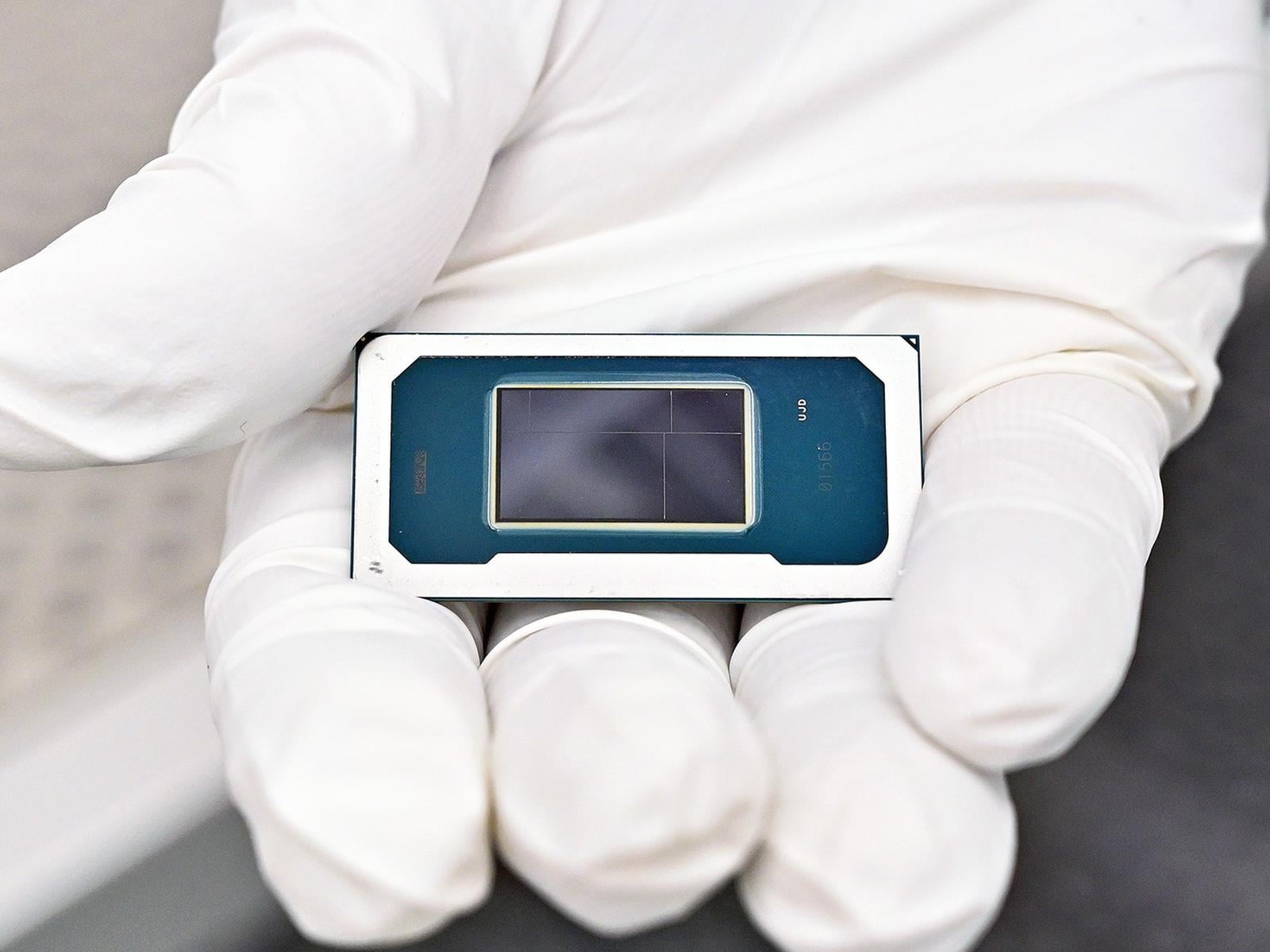
Intel Core Ultra X9 Panther Lake Outguns AMD’s Strix Halo In New Leak

Intel Core Ultra X9 Panther Lake Outguns AMD’s Strix Halo In New Leak
It’s really important to keep things in context when you’re looking at hardware benchmarks. Desktop CPUs often operate with essentially unlimited power and thermal budgets, so it’s simply not fair to compare them against laptop chips that must constantly keep power draw in check to deal with thermal constraints and to avoid draining batteries

Your Stolen WinRAR Copy Is Being Actively Exploited In The Wild, Patch ASAP

Your Stolen WinRAR Copy Is Being Actively Exploited In The Wild, Patch ASAP
Those of you using WinRAR, Windows 10, or both should be on high alert. Two new vulnerabilities have been documented in the wild and are being actively exploited. As of this week, The National Coordinator for Critical Infrastructure Security and Resilience (CISA) has documented CVE-2025-6218 and CVE-2025-6222, two currently-active attack vectors.

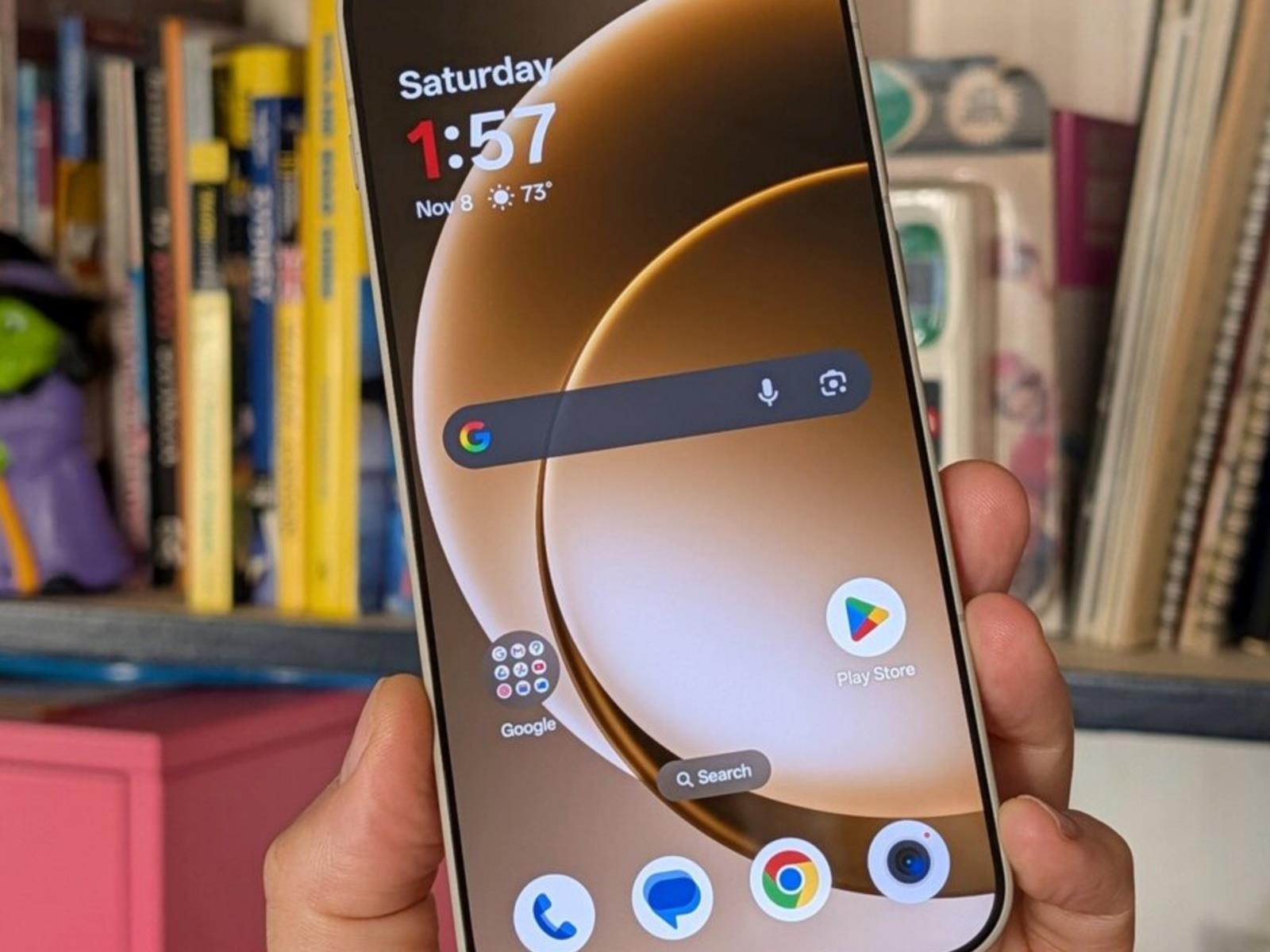
Beware Of DroidLock Malware That Hijacks Android Devices To Extort Ransom Money

Beware Of DroidLock Malware That Hijacks Android Devices To Extort Ransom Money
The holidays may be upon us, but that isn’t slowing down threat actors. Zimperium’s zlabs research team has discovered a new piece of malware targeting Android users, dubbed DroidLock, that aims to completely hijack a device and enable the theft of login credentials or destruction of a victim’s data.

As seen with other recent malware it

Disney says Google AI infringes copyright “on a massive scale”

The Wild West of copyrighted characters in AI may be coming to an end. There has been legal wrangling over the role of copyright in the AI era, but the mother of all legal teams may now be gearing up for a fight. Disney has sent a cease and desist to Google, alleging the company’s AI tools are infringing Disney’s copyrights “on a massive scale.”

According to the letter, Google is violating the entertainment conglomerate’s intellectual property in multiple ways. The legal notice says Google has copied a “large corpus” of Disney’s works to train its gen AI models, which is believable, as Google’s image and video models will happily produce popular Disney characters—they couldn’t do that without feeding the models lots of Disney data.

The C&D also takes issue with Google for distributing “copies of its protected works” to consumers. So all those memes you’ve been making with Disney characters? Yeah, Disney doesn’t like that, either. The letter calls out a huge number of Disney-owned properties that can be prompted into existence in Google AI, including The Lion King, Deadpool, and Star Wars.

Read full article

Comments

Uber Pulls Back From Electric Cars, Slashing Incentives for Drivers

Uber has discontinued its monthly electric vehicle bonuses for drivers in the United States and Canada, marking the latest in a series of rollbacks from a company that once pledged to pour $800 million into helping its drivers transition away from gasoline-powered cars. The ride-hailing giant had previously eliminated its $1-per-ride EV perk last year, replacing it with monthly bonuses that required drivers to complete 200 rides. Those monthly payments are now gone too.

The company is far behind its self-imposed climate targets. Uber had pledged to reach 100% EVs in London by 2025 and across North America and Europe by 2030. Current figures paint a different picture: roughly 40% of miles in London come from EVs, while Europe sits at about 15% and North America at just 9%. The company’s emissions have nearly doubled over the past three years and now exceed Denmark’s total carbon footprint. Uber executives acknowledged to Bloomberg that they will likely miss their green targets. The company has doled out $539 million of its $800 million pledge through the end of 2024. Meanwhile, Uber’s operating profits are set to double this year, and the company recently committed $20 billion to stock buybacks.


Read more of this story at Slashdot.

OpenAI releases GPT-5.2 to take on Google and Anthropic

OpenAI’s “code red” response to Google’s Gemini 3 Pro has arrived. On the same day the company announced a Sora licensing pact with Disney, it took the wraps off GPT-5.2. OpenAI is touting the new model as its best yet for real-world, professional use. “It’s better at creating spreadsheets, building presentations, writing code, perceiving images, understanding long contexts, using tools, and handling complex, multi-step projects,” said OpenAI.

In a series of 10 benchmarks highlighted by OpenAI, GPT-5.2 Thinking, the most advanced version of the model, outperformed its GPT-5.1 counterpart, sometimes by a significant margin. For example, in AIME 2025, a test that involves 30 challenging mathematics problems, the model earned a perfect 100 percent score, beating out GPT-5.1’s already state-of-the-art score of 94 perfect. It also achieved that feat without turning to tools like web search. Meanwhile, in ARC-AGI-1, a benchmark that tests an AI system’s ability to reason abstractly like a human being would, the new system beat GPT-5.1’s score by more than 10 percentage points.

OpenAI says GPT-5.2 Thinking is better at answering questions factually, with the company finding it produces errors 30 percent less frequently. “For professionals, this means fewer mistakes when using the model for research, writing, analysis, and decision support — making the model more dependable for everyday knowledge work,” the company said.

The new model should be better in conversation too. Of the version of the system most users are likely to encounter, OpenAI says “GPT‑5.2 Instant is a fast, capable workhorse for everyday work and learning, with clear improvements in info-seeking questions, how-tos and walk-throughs, technical writing, and translation, building on the warmer conversational tone introduced in GPT‑5.1 Instant.“

While it’s probably overstating things to suggest this is a make or break release for OpenAI, it is fair to say the company does have a lot riding on GPT 5.2. Its big release of 2025, GPT-5, didn’t meet expectations. Users complained of a system that generated surprisingly dumb answers and had a boring personality. The disappointment with GPT-5 was such that people began demanding OpenAI bring back GPT-4o.      

Then came Gemini 3 Pro — which jumped to the top of LMArena, a website where humans rate outputs from AI systems to vote on the best one. Following Google’s announcement, Sam Altman reportedly called for a “code red” effort to improve ChatGPT. Before today, the company’s previous model, GPT-5.1, was ranked sixth on LMArena, with systems from Anthropic and Elon Musk’s xAI occupying the spots between OpenAI between Google. 

For a company that recently signed more than $1.4 trillion worth of infrastructure deals in a bid to outscale the competition, that was not a good position for OpenAI to be in. In his memo to staff, Altman said GPT-5.2 would be the equal of Gemini 3 Pro. With the new system rolling out now, we’ll see whether that’s true, and what it might mean for the company if it can’t at least match Google’s best.     

OpenAI is offering three different versions of GPT-5.2: Instant, Thinking and Pro. All three models will be first available to users on the company’s paid plans. Notably, the company plans to keep GPT-5.1 around, at least for a little while. Paid users can continue to use the older model for the next three months by selecting it from the legacy models section.

This article originally appeared on Engadget at https://www.engadget.com/ai/openai-releases-gpt-52-to-take-on-google-and-anthropic-185029007.html?src=rss

GPT-5.2 Arrives as OpenAI Scrambles To Respond To Gemini 3’s Gains

OpenAI on Thursday released GPT-5.2, its latest and what the company calls its “best model yet for everyday professional use,” just days after CEO Sam Altman declared a “code red” internally to marshal resources toward improving ChatGPT amid intensifying competition from Google’s well-received Gemini 3 model. The GPT-5.2 series ships in three tiers: Instant, designed for faster responses and information retrieval; Thinking, optimized for coding, math, and planning; and Pro, the most powerful tier targeting difficult questions requiring high accuracy.

OpenAI says the Thinking model hallucinated 38% less than GPT-5.1 on benchmarks measuring factual accuracy. Fidji Simo, OpenAI’s CEO of applications, denied that the launch was moved up in response to the code red, saying the company has been working on GPT-5.2 for “many, many months.” She described the internal directive as a way to “really signal to the company that we want to marshal resources in this one particular area.”

The competitive pressure is real. Google’s Gemini app now has more than 650 million monthly active users, compared to OpenAI’s 800 million weekly active users. In October, OpenAI’s head of ChatGPT Nick Turley sent an internal memo declaring the company was facing “the greatest competitive pressure we’ve ever seen,” setting a goal to increase daily active users by 5 percent before 2026. GPT-5.2 is rolling out to paid ChatGPT users starting Thursday, and GPT-5.1 will remain available under “legacy models” for three months before being sunset.


Read more of this story at Slashdot.

Ars Live: 3 former CDC leaders detail impacts of RFK Jr.’s anti-science agenda

The Centers for Disease Control and Prevention is in critical condition. This year, the premier public health agency had its funding brutally cut and staff gutted, its mission sabotaged, and its headquarters riddled with literal bullets. The over 500 rounds fired were meant for its scientists and public health experts, who endured only to be sidelined, ignored, and overruled by Health Secretary Robert F. Kennedy Jr., an anti-vaccine activist hellbent on warping the agency to fit his anti-science agenda.

Then, on August 27, Kennedy fired CDC Director Susan Monarez just weeks after she was confirmed by the Senate. She had refused to blindly approve vaccine recommendations from a panel of vaccine skeptics and contrarians that he had hand-selected. The agency descended into chaos, and Monarez wasn’t the only one to leave the agency that day.

Three top leaders had reached their breaking point and coordinated their resignations upon the dramatic ouster: Drs. Demetre Daskalakis, Debra Houry, and Daniel Jernigan walked out of the agency as their colleagues rallied around them.

Read full article

Comments

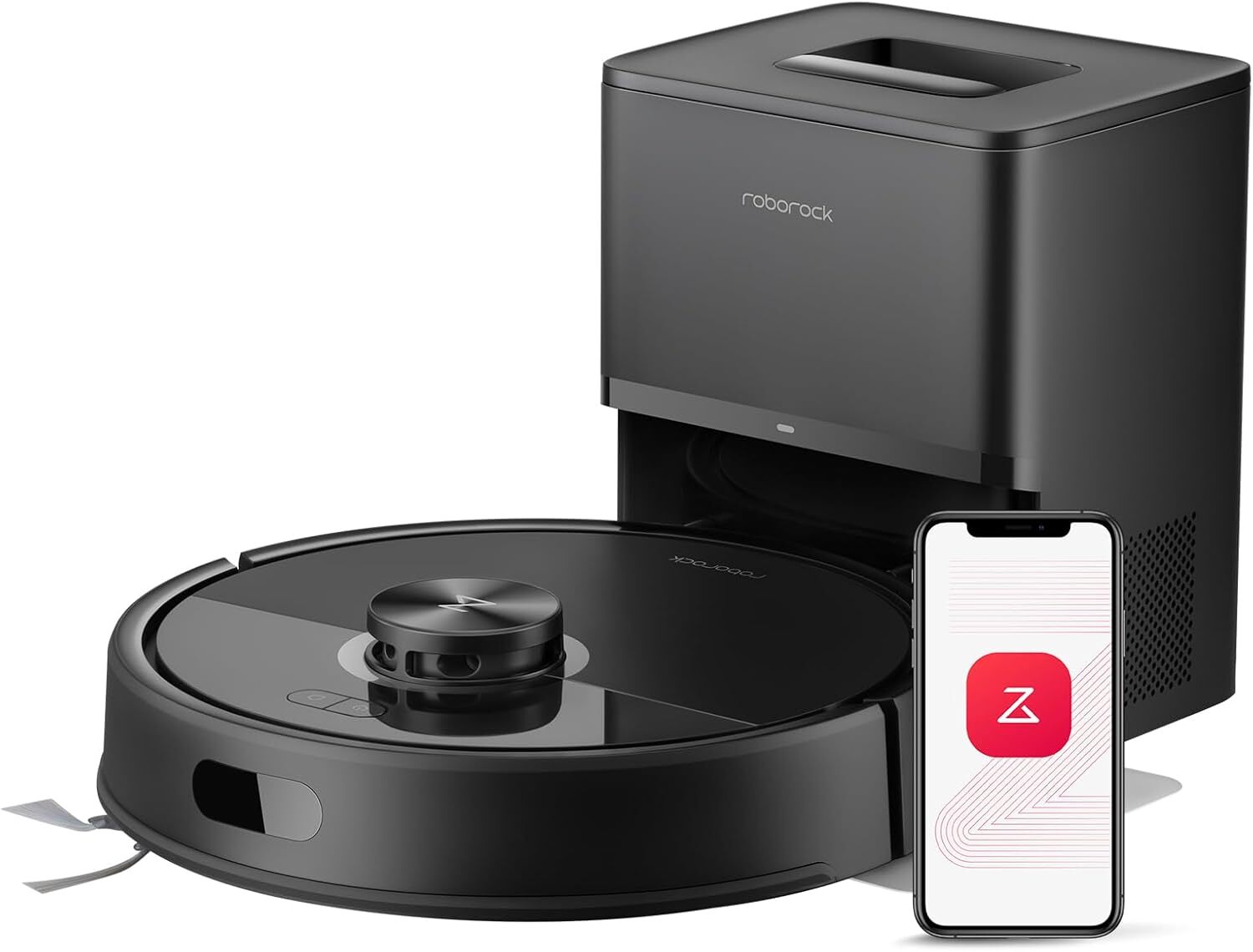
This Roborock Vacuum/Mop Combo Is Just $220 Right Now

We may earn a commission from links on this page. Deal pricing and availability subject to change after time of publication.

The holidays are hectic enough without adding “deep clean floors” to your already packed to-do and errands list, which is why buying a robot mop and vacuum is more appealing than ever. Right now, the Roborock Q7 M5+ Robot Vacuum/Mop is $219.99 (originally $359.99) on Amazon—a 39% discount that marks its lowest price to date, according to price-tracking tools. 

An anti-tangle brush makes this a solid choice for pet owners who have furry friends that shed, and the self-emptying dock holds nearly two months’ worth of debris, so you don’t have to empty the bin each time you run it. Another major perk is the 10,000 Pa HyperForce suction, which is surprisingly strong for a sub-$250 price point, as is the fact that it can vacuum and mop in one run.

This member of the Q-series lineup features smart navigation and LiDAR mapping, making it easy to plan routes, create multi-floor maps, and customize no-go zones. Compared to Roborock predecessors in this mid-tier price range, this model has been upgraded with more automation and power and has a 150-minute max runtime, which is enough battery life to manage most homes in a single run.

That said, the mopping system is still basic compared to pricier S-series models like the Roborock S8 MaxV Ultra, which uses hot water, automatic detergent dispensing, and heated air drying. The Q7 M5+ also lacks obstacle avoidance, only connects to 2.4GHz wifi, and the self-emptying dock uses disposable bags that you’ll need to replace, adding an additional ongoing cost.

Ultimately, if you’re looking for a mid-range self-emptying robot vacuum and mop hybrid, the Roborock Q7 M5+ Robot Vacuum/Mop is a strong choice given its low maintenance nature, strong suction, and smart navigation for under $250—especially if you’re a pet owner. If you want the best-in-class cleaning power or premium features like obstacle avoidance, you’ll need to upgrade to the higher-end S-series, but expect to pay significantly more.