No, AMD Probably Isn’t Targeting Intel PowerVia Engineering Talent

No, AMD Probably Isn't Targeting Intel PowerVia Engineering Talent
AMD’s business is growing rapidly, and that means it needs more employees. The company is hiring for many positions on its website, and this is a frequent area of interest for leaksmen trying to find interesting info about the company’s future plans. Unfortunately, one such fellow spotted something of mild interest and tried to make it into

Half-Life 3 is rumored to be a Steam Machine launch title and could arrive in spring 2026

Half-Life fans are nothing if not patient. For the diehard fans out there, the latest test of patience comes from Insider Gaming Weekly‘s podcast, which claimed that the third installment in the Half-Life franchise is set to release with the launch of the Steam Machine sometime in spring 2026.

“The window I was specifically told was spring 2026 for the Steam Machine, for the Frame, for the Controller, for Half-Life 3,” Mike Straw, one of the hosts of the Insider Gaming Weekly podcast and senior editor at Insider Gaming, said. “At the end of the day, the game is real.”

Straw added that all the previous dates for an announcement of the next Half-Life game have passed, but that his sources “are still adamant this is a game that will be a launch title with the Steam Machine.” However, being tied to Valve’s latest hardware release could be an issue since Straw noted that the explosive jump in RAM pricing is causing considerable concern for the Steam Machine’s pricing announcement.

“There is a concern, however, they haven’t made a decision on price, which is kind of holding back the announcement of anything else,” Straw said. “There’s no doubt in my mind Valve is still trying to make decisions because of what’s going on on the component side.”

While optimistic devotees were hoping for some teasers during The Game Awards, Valve hasn’t officially said anything. However, there’s still a lot of hope, especially considering Valve updated Half-Life 2 for its 20th anniversary, and previous rumors hinted at a game that’s still in development but is playable from beginning to end. 

This article originally appeared on Engadget at https://www.engadget.com/gaming/half-life-3-is-rumored-to-be-a-steam-machine-launch-title-and-could-arrive-in-spring-2026-193029413.html?src=rss

Google Translate Turns Your Earbuds Into A Real-Time Interpreter

Google Translate Turns Your Earbuds Into A Real-Time Interpreter
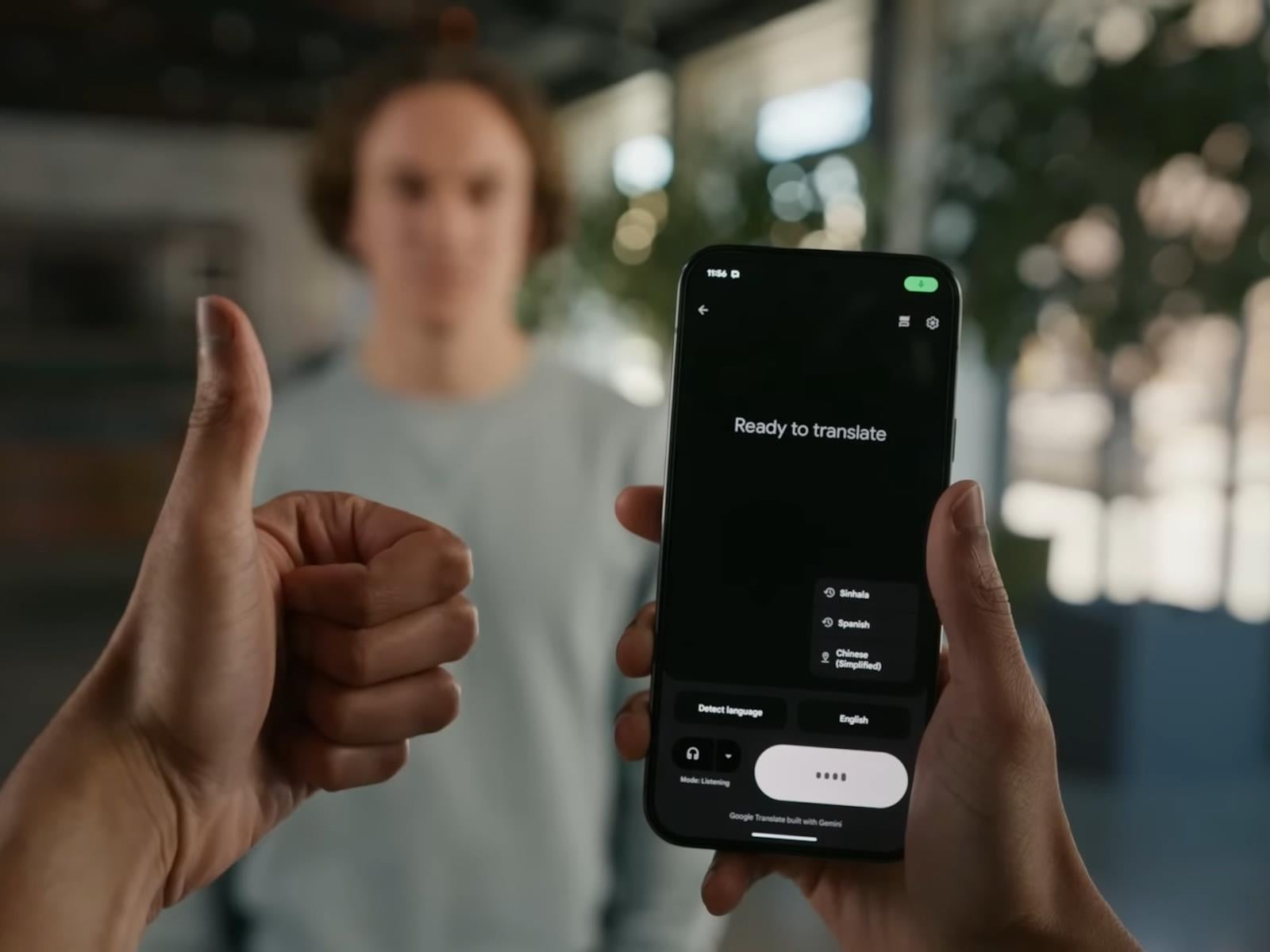
In Star Trek, it took until the year 2151 for a functional universal translator to come into existence, but Google is leveraging Gemini to accelerate that timeline. The company is offering real-time speech-to-speech translation via Google Translate, using your existing phone’s audio hardware. It’s hard not to be critical of generative AI and

Disney Hits Google With Cease & Desist Claiming AI Copyright On A Massive Scale

Disney Hits Google With Cease & Desist Claiming AI Copyright On A Massive Scale
This past week Disney inked a $1 billion deal with OpenAI to become a content licensing partner for the Sora AI video generation platform, then immediately went on the legal offensive against Google. As with prior cease and desists sent to Meta, Character.AI, NBC, Warner Bros., and others, Disney’s cease and desist relates to AI tools being

The World’s Electric Car Sales Have Spiked 21% So Far in 2025

Electrek reports:

EV and battery supply chain research specialists Benchmark Mineral Intelligence reports that 2.0 million electric vehicles were sold globally in November 2025, bringing global EV sales to 18.5 million units year-to-date. That’s a 21% increase compared to the same period in 2024.

Europe was the clear growth leader in November, while North America continued to lag following the expiration of US EV tax credits. China, meanwhile, remains the world’s largest EV market by a wide margin. Europe’s EV market jumped 36% year-over-year in November 2025, with BEV sales up 35% and plug-in hybrid (PHEV) sales rising 39%. That brings Europe’s total EV sales to 3.8 million units for the year so far, up 33% compared to January-November 2024… In North America, EV sales in the US did tick up month-over-month in November, following a sharp October drop after federal tax credits expired on September 30, 2025. Brands including Kia (up 30%), Hyundai (up 20%), Honda (up 11%), and Subaru (232 Solterra sales versus just 13 the month before) all saw gains, but overall volumes remain below levels when the federal tax credit was still available… [North America shows a -1% drop in EV sales from January to November 2025 vs. January to November 2024]

Year-to-date, EV sales in China are up 19%, with 11.6 million units sold. One of the biggest headlines out of China is exports. BYD reported a record 131,935 EV exports in November, blowing past its previous high of around 90,000 units set in June. BYD sales in Europe have jumped more than fourfold this year to around 200,000 vehicles, doubled in Southeast Asia, and climbed by more than 50% in South America…

“Overall, EV demand remains resilient, supported by expanding model ranges and sustained policy incentives worldwide,” said Rho Motion data manager Charles Lester.
Beyond China, Europe, and North America, the rest of the world saw a 48% spike in EV sales in 2025 vs the same 11 months in 2024, representing 1.5 million EVs sold.

“The takeaway: EV demand continues to grow worldwide,” the article adds, “but policy support — or the lack thereof — is increasingly shaping where this growth shows up.”


Read more of this story at Slashdot.

iOS 26.2 is here with another Liquid Glass tweak, new Podcasts features and more

Apple has released iOS 26.2, bringing a number of new convenience features and security updates. The update includes auto-generated chapters for episodes in the Podcasts app, the option to make AirDrop more secure using verification codes, alarms for Reminders and more. It also introduces new controls for how Liquid Glass appears on the Lock Screen, adding a slider to adjust the transparency level. The drop also includes updates for iPadOS, macOS, watchOS, visionOS and tvOS.

What’s new in iOS 26.2 and iPadOS 26.2

It’s not exactly a major update feature-wise, but iOS and iPadOS 26.2 bring a bunch of quality of life improvements to apps including Apple Music, Podcasts and Games. In Apple Music, you’ll now see your Favorite Songs playlist in the Top Picks section, and lyrics will be available offline for songs you’ve downloaded. In addition to automatically generated chapters, Podcasts will display links to any other podcasts mentioned in the episode you’re listening to. And, Games is getting in-game score banners, along with filters for the library to make it easier to find titles based on category and other descriptors. Apple says it also improved support for Backbone and Razer controllers.

With iOS 26.2, Apple made Safety Alerts for natural disasters and other emergencies more detailed, and they’ll now come with maps of affected areas and other useful information. For iPad users, Apple has added drag-and-drop gestures for its new windowing system to make multitasking smoother. The update for iPhones and iPads also addresses several potential security issues, including vulnerabilities in WebKit that Apple says “may have been exploited in an extremely sophisticated attack against specific targeted individuals on versions of iOS before iOS 26.” So, if you’re not yet running the latest OS on your iPhone and iPad, it’s a good time to update. 

OS updates for the rest of the family

Beyond the iPhone and iPad, macOS Tahoe 26.2 introduces Edge Light for Mac, which turns your display into a ring light for video calls. For the Apple Watch, 26.2 fixes an issue with stuck songs in the Music app, and adds some new controls for the Sleep app. The tvOS update brings the option to add profiles even for people who don’t have an Apple Account, and new restriction options for kid profiles. With visionOS 26.2, Travel Mode now has settings for cars and buses, and you’ll now be able to use spatial accessories including “Logitech Muse in Notes, Freeform, and any PencilKit-enabled app” to create hand-drawn content with the Apple Vision Pro.

This article originally appeared on Engadget at https://www.engadget.com/mobile/ios-262-is-here-with-another-liquid-glass-tweak-new-podcasts-features-and-more-181020133.html?src=rss

CRKD’s Nitro Deck 2 works for both the Nintendo Switch and Switch 2

Even though Nintendo made some serious upgrades with the Joy-Con 2, you still might end up ditching them for CRKD’s Nitro Deck 2. After winning over Nintendo Switch owners with its first Nitro Deck, CRKD followed it up with an improved design that works for both the original Switch and the Switch 2.

To refine the original design, CRKD added several upgrades to the Nitro Deck 2 based on community feedback. The new-and-improved accessory features the company’s CaptiStick Technology, which prevents stick drift and isn’t affected by magnetic interference like other Hall effect joysticks. CRKD also offset the right thumbstick and contoured the outer shell for a more ergonomic feel. The Nitro Deck 2 is keeping the swappable stick top feature, but CRKD added the ability to swap out the D-Pad for even more customizability. At the back of the Nitro Deck 2, CRKD managed to squeeze in extra L2 and R2 shoulder buttons alongside the programmable back buttons, which were first seen with the predecessor.

The Nitro Deck 2 comes with upgraded thumbsticks that won't ever fall victim to stick drift.
CRKD

Even if you don’t own a Switch 2 yet, the Nitro Deck 2 features a new retractable locking mechanism that can be adjusted to fit both the original Switch and Switch OLED. The Nitro Deck 2 supports a low-latency wired mode thanks to an included adapter, but you can also connect the devices through Bluetooth. Thanks to its wireless connection, the Nitro Deck 2 even works as a controller with PC, mobile or smart TVs.

The Nitro Deck 2 will release in white and smoke black, starting at $99.99. That’s a $30 increase from the original Nitro Deck’s price tag when it debuted in 2023. CRKD will also offer a carrying case for $39.99 and additional D-Pad and Stick Top packs for $19.99. Nitro Deck 2 is currently available for preorders on CRKD’s website and is expected to start shipping in spring 2026.

This article originally appeared on Engadget at https://www.engadget.com/gaming/nintendo/crkds-nitro-deck-2-works-for-both-the-nintendo-switch-and-switch-2-173920127.html?src=rss

How a 23-Year-Old in 1975 Built the World’s First Handheld Digital Camera

In 1975, 23-year-old electrical engineer Steve Sasson joined Kodak. And in a new interview with the BBC, he remembers that he’d found the whole photographic process “really annoying…. I wanted to build a camera with no moving parts. Now that was just to annoy the mechanical engineers…”

“You take your picture, you have to wait a long time, you have to fiddle with these chemicals. Well, you know, I was raised on Star Trek, and all the good ideas come from Star Trek. So I said what if we could just do it all electronically…?”

Researchers at Bell Labs in the US had, in 1969, created a type of integrated circuit called a charge-coupled device (CCD). An electric charge could be stored on a metal-oxide semiconductor (MOS), and could be passed from one MOS to another. Its creators believed one of its applications might one day be used as part of an imaging device — though they hadn’t worked out how that might happen. The CCD, nevertheless, was quickly developed. By 1974, the US microchip company Fairchild Semiconductors had built the first commercial CCD, measuring just 100 x 100 pixels — the tiny electronic samples taken of an original image. The new device’s ability to capture an image was only theoretical — no-one had, as yet, tried to take an image and display it. (NASA, it turned out, was also looking at this technology, but not for consumer cameras….)

The CCD circuit responded to light but could only form an image if Sasson was somehow able to attach a lens to it. He could then convert the light into digital information — a blizzard of 1s and 0s — but there was just one problem: money. “I had no money to build this thing. Nobody told me to build it, and I certainly couldn’t demand any money for it,” he says. “I basically stole all the parts, I was in Kodak and the apparatus division, which had a lot of parts. I stole the optical assembly from an XL movie camera downstairs in a used parts bin. I was just walking by, you see it, and you take it, you know.” He was also able to source an analogue to digital converter from a $12 (about £5 in 1974) digital voltmeter, rather than spending hundreds on the part. I could manage to get all these parts without anybody really noticing,” he says….

The bulky device needed a way to store the information the CCD was capturing, so Sasson used an audio cassette deck. But he also needed a way to view the image once it was saved on the magnetic tape. “We had to build a playback unit,” Sasson says. “And, again, nobody asked me to do that either. So all I got to do is the reverse of what I did with the camera, and then I have to turn that digital pattern into an NTSC television signal.” NTSC (National Television System Committee) was the conversion standard used by American TV sets. Sasson had to turn only 100 lines of digital code captured by the camera into the 400 lines that would form a television signal.

The solution was a Motorola microprocessor, and by December 1975, the camera and its playback unit was complete, the article points out. With his colleague Jim Schueckler, Sasson had spent more than a year putting together the “increasingly bulky” device, that “looked like an oversized toaster.”

The camera had a shutter that would take an image at about 1/20th of a second, and — if everything worked as it should — the cassette tape would start to move as the camera transferred the stored information from its CCD [which took 23 seconds]. “It took about 23 seconds to play it back, and then about eight seconds to reconfigure it to make it look like a television signal, and send it to the TV set that I stole from another lab….” In 1978, Kodak was granted the first patent for a digital camera. It was Sasson’s first invention. The patent is thought to have earned Eastman Kodak billions in licensing and infringement payments by the time they sold the rights to it, fearing bankruptcy, in 2012…

As for Sasson, he never worked on anything other than the digital technology he had helped to create until he retired from Eastman Kodak in 2009.

Thanks to long-time Slashdot reader sinij for sharing the article.


Read more of this story at Slashdot.

More of America’s Coal-Fired Power Plants Cease Operations

New England’s last coal-fired power plant “has ceased operations three years ahead of its planned retirement date,” reports the New Hampshire Bulletin.

“The closure of the New Hampshire facility paves the way for its owner to press ahead with an initiative to transform the site into a clean energy complex including solar panels and battery storage systems.”

“The end of coal is real, and it is here,” said Catherine Corkery, chapter director for Sierra Club New Hampshire. “We’re really excited about the next chapter….” The closure in New Hampshire — so far undisputed by the federal government — demonstrates that prolonging operations at some facilities just doesn’t make economic sense for their owners. “Coal has been incredibly challenged in the New England market for over adecade,” said Dan Dolan, president of the New England Power Generators Association.

Merrimack Station, a 438-megawatt power plant, came online in the1960s and provided baseload power to the New England region for decades. Gradually, though, natural gas — which is cheaper and more efficient — took over the regional market… Additionally, solar power production accelerated from 2010 on, lowering demand on the grid during the day and creating more evening peaks. Coal plants take longer to ramp up production than other sources, and are therefore less economical for these shorter bursts of demand, Dolan said. In recent years, Merrimack operated only a few weeks annually. In 2024, the plant generated just0.22% of the region’s electricity. It wasn’t making enough money to justify continued operations, observers said.
The closure “is emblematic of the transition that has been occurring in the generation fleet in New England for many years,” Dolan said. “The combination of all those factors has meant that coal facilities are no longer economic in this market.”

Meanwhile Los Angeles — America’s second-largest city — confirmed that the last coal-fired power plant supplying its electricity stopped operations just before Thanksgiving,
reports the Utah News Dispatch:

Advocates from the Sierra Club highlighted in a news release that shutting down the units had no impact on customers, and questioned who should “shoulder the cost of keeping an obsolete coal facility on standby….” Before ceasing operations, the coal units had been working at low capacities for several years because the agency’s users hadn’t been calling on the power [said John Ward, spokesperson for Intermountain Power Agency].

The coal-powered units “had a combined capacity of around 1,800 megawatts when fully operational,” notes Electrek, “and as recently as 2024, they still supplied around 11% of LA’s electricity. The plant sits in Utah’s Great Basin region and powered Southern California for decades.” Now, for the first time, none of California’s power comes from coal.

There’s a political hiccup with IPP, though: the Republican-controlled Utah Legislature blocked the Intermountain Power Agency from fully retiring the coal units this year, ordering that they can’t be disconnected or decommissioned. But despite that mandate, no buyers have stepped forward to keep the outdated coal units online. The Los Angeles Department of Water and Power (LADWP) is transitioning to newly built, hydrogen-capable generating units at the same IPP location, part of a modernization effort called IPP Renewed. These new units currently run on natural gas, but they’re designed to burn a blend of natural gas and up to 30% green hydrogen, and eventually100% green hydrogen. LADWP plans to start adding green hydrogen to the fuel mix in 2026.

“With the plant now idled but legally required to remain connected, serious questions remain about who will shoulder the cost of keeping an obsolete coal facility on standby,” says the Sierra Club.

One of the natural gas units started commerical operations last Octoboer, with the second starting later this month, IPP spokesperson John Ward told Agency].
the Utah News Dispatch.


Read more of this story at Slashdot.
8 Top Tech Gift Deals That Will Score You Big Points This Holiday Season

8 Top Tech Gift Deals That Will Score You Big Points This Holiday Season
More power to you if you’re willing to brave the holiday drivers that are making made scrambles to the local stores for the gift giving season. There’s a better way, though. Whether you’re struggling to find a gift for your tech-loving significant other or just want to treat yourself without putting up with holiday traffic, we have you covered.

Apple Sends Urgent Warning To All iPhone Users: Get This iOS Update ASAP

Apple Sends Urgent Warning To All iPhone Users: Get This iOS Update ASAP
Anyone who owns a modern or even semi-modern iPhone or iPad should stop what they’re doing and urgently apply Apple’s newly released iOS 26.2 update, as it’s packed with over two dozen security patches, including multiple ones that are known to be actively exploited in the wild. The incremental but important update arrives just weeks after

Rust in Linux’s Kernel ‘is No Longer Experimental’

Steven J. Vaughan-Nichols files this report from Tokyo:

At the invitation-only Linux
Kernel Maintainers Summit here, the top Linux maintainers decided, as Jonathan Corbet, Linux kernel developer, put it, “The consensus among the assembled developers is that Rust
in the kernel is no longer experimental — it is now a core part
of the kernel and is here to stay. So the ‘experimental’ tag
will be coming off.” As Linux kernel maintainer Steven Rosted told
me, “There was zero pushback.”

This has been a long time coming. This shift caps five years of
sometimes-fierce debate over whether the memory-safe language belonged alongside C at the heart of the world’s most widely deployed open source operating system… It all began when Alex
Gaynor and Geoffrey
Thomas at the 2019 Linux Security Summit said that about
two-thirds of Linux kernel vulnerabilities come from memory safety
issues. Rust, in theory, could avoid these by using Rust’s
inherently safer application programming interfaces (API)… In those early days, the plan was not to rewrite Linux in Rust; it still isn’t, but to adopt it selectively where it can provide the
most security benefit without destabilizing mature C code. In short,
new drivers, subsystems, and helper libraries would be the first
targets…

Despite the fuss, more and more programs were ported to Rust. By
April 2025, the Linux kernel contained about 34 million lines of C
code, with only 25 thousand lines written in Rust. At the same time,
more and more drivers and higher-level utilities were being written
in Rust. For instance, the Debian Linux distro developers announced
that going forward, Rust
would be a required dependency in its foundational
Advanced Package Tool (APT).

This change doesn’t mean everyone will need to use Rust. C is
not going anywhere. Still, as several maintainers told me, they
expect to see many more drivers being written in Rust. In particular,
Rust looks especially attractive for “leaf” drivers (network,
storage, NVMe, etc.), where the Rust-for-Linux
bindings expose safe wrappers over kernel C APIs. Nevertheless, for would-be kernel and systems programmers, Rust’s
new status in Linux hints at a career path that blends deep
understanding of C with fluency in Rust’s safety guarantees. This
combination may define the next generation of low-level development
work.


Read more of this story at Slashdot.
Sharks and rays gain landmark protections as nations move to curb international trade

For the first time, global governments have agreed to widespread international trade bans and restrictions for sharks and rays being driven to extinction.

Last week, more than 70 shark and ray species, including oceanic whitetip sharks, whale sharks, and manta rays, received new safeguards under the Convention on International Trade in Endangered Species of Wild Fauna and Flora. The convention, known as CITES, is a United Nations treaty that requires countries to regulate or prohibit international trade in species whose survival is threatened.

Sharks and rays are closely related species that play similar roles as apex predators in the ocean, helping to maintain healthy marine ecosystems. They have been caught and traded for decades, contributing to a global market worth nearly $1 billion annually, according to Luke Warwick, director of shark and ray conservation at Wildlife Conservation Society (WCS), an international nonprofit dedicated to preserving animals and their habitats.

Read full article

Comments

Germany Covers Nearly 56 Percent of 2025 Electricity Use With Renewables

Longtime Slashdot reader AmiMoJo shares a report from Clean Energy Wire: Renewable energy sources covered nearly 56 percent of Germany’s gross electricity consumption in 2025, according to preliminary figures by energy industry group BDEW and research institute ZSW. Despite a ‘historically weak’ first quarter of the year for wind power production and a significant drop in hydropower output, the share of renewables grew by 0.7 percentage points compared to the previous year thanks to an increase in installed solar power capacity.

Solar power output increased by 18.7 percent over the whole year, while the strong growth in installed capacity from previous years could be sustained, with more than 17 gigawatts (GW) added to the system. With March being the least windy month in Germany since records began in 1950, wind power output, on the other hand, faced a drop of 5.2 percent compared to 2024. However, stronger winds in the second and third quarter compensated for much of the early-year decrease.

Onshore turbines with a capacity of 5.2 GW were added to the grid, a marked increase from the 3.3 GW in the previous year. Due to significantly less precipitation this year compared to 2024, hydropower output dropped by nearly one quarter (24.1%), while remaining only a fraction (3.2%) of total renewable power output.


Read more of this story at Slashdot.

Chinese Whistleblower Living In US Is Being Hunted By Beijing With US Tech

A former Chinese official who fled to the U.S. says Beijing has used advanced surveillance technology from U.S. companies to track, intimidate, and punish him and his family across borders. ABC News reports: Retired Chinese official Li Chuanliang was recuperating from cancer on a Korean resort island when he got an urgent call: Don’t return to China, a friend warned. You’re now a fugitive. Days later, a stranger snapped a photo of Li in a cafe. Terrified South Korea would send him back, Li fled, flew to the U.S. on a tourist visa and applied for asylum. But even there — in New York, in California, deep in the Texas desert — the Chinese government continued to hunt him down with the help of surveillance technology.

Li’s communications were monitored, his assets seized and his movements followed in police databases. More than 40 friends and relatives — including his pregnant daughter — were identified and detained, even by tracking down their cab drivers through facial recognition software. Three former associates died in detention, and for months shadowy men Li believed to be Chinese operatives stalked him across continents, interviews and documents seen by The Associated Press show.

The Chinese government is using an increasingly powerful tool to cement its power at home and vastly amplify it abroad: Surveillance technology, much of it originating in the U.S., an AP investigation has found. Within China, this technology helped identify and punish almost 900,000 officials last year alone, nearly five times more than in 2012, according to state numbers. Beijing says it is cracking down on corruption, but critics charge that such technology is used in China and elsewhere to stifle dissent and exact retribution on perceived enemies.

Outside China, the same technology is being used to threaten wayward officials, along with dissidents and alleged criminals, under what authorities call Operations “Fox Hunt” and “Sky Net.” The U.S. has criticized these overseas operations as a “threat” and an “affront to national sovereignty.” More than 14,000 people, including some 3,000 officials, have been brought back to China from more than 120 countries through coercion, arrests and pressure on relatives, according to state information.


Read more of this story at Slashdot.

Arizona City Rejects Data Center After Lobbying Push

Chandler, Arizona unanimously rejected a proposed AI data center despite heavy lobbying from Big Tech interests and former Sen. Kyrsten Sinema. Politico reports: The Chandler City Council last night voted down a request by a New York developer to rezone land to build a data center and business complex. The local battle escalated in October after Sinema showed up at a planning commission meeting to offer public comment warning officials in her home state that federal authority may soon stomp on local regulations. “Chandler right now has the opportunity to determine how and when these new, innovative AI data centers will be built,” she told local officials. “When federal preemption comes, we’ll no longer have that privilege.”

Explaining her no vote, Chandler Vice Mayor Christine Ellis said that she had long framed her decision about the local benefits rather than the national push to build AI. She recalled a meeting with Sinema where she asked point-blank, “what’s in it for Chandler?” “If you can’t show me what’s in it for Chandler, then we are not having a conversation,” Ellis said before voting against the project. […]

The project, along with Sinema’s involvement, attracted significant community opposition, with speakers raising concerns about whether the project would use too much water or raise power prices. Residents packed the council chambers, with many holding up signs reading “No More Data Centers.” According to the city’s planning office, more than 200 comments were filed against the proposal compared to just eight in favor.


Read more of this story at Slashdot.

Russian Hackers Debut Simple Ransomware Service, But Store Keys In Plain Text

The pro-Russian CyberVolk group resurfaced with a Telegram-based ransomware-as-a-service platform, but fatally undermined its own operation by hardcoding master encryption keys in plaintext. The Register reports: First, the bad news: the CyberVolk 2.x (aka VolkLocker) ransomware-as-a-service operation that launched in late summer. It’s run entirely through Telegram, which makes it very easy for affiliates that aren’t that tech savvy to lock files and demand a ransom payment. CyberVolk’s soldiers can use the platform’s built-in automation to generate payloads, coordinate ransomware attacks, and manage their illicit business operations, conducting everything through Telegram.

But here’s the good news: the ransomware slingers got sloppy when it came time to debug their code and hardcoded the master keys — this same key encrypts all files on a victim’s system — into the executable files. This could allow victims to recover encrypted data without paying the extortion fee, according to SentinelOne senior threat researcher Jim Walter, who detailed the gang’s resurgence and flawed code in a Thursday report.


Read more of this story at Slashdot.

WWE Saturday Night’s Main Event: How to watch John Cena’s final match for free

John Cena began his WWE retirement tour back in January, and it’s coming to an end this weekend when the wrestling legend headlines WWE Saturday Night’s Main Event. For the last fight of his career, Cena has been matched up with “The Ring General” Gunther on the night’s fight card, which also features matches between Cody Rhodes and Oba Femi, a tag team match featuring AJ Styles & Dragon Lee vs. Je’Von Evans & Leon Slater, and a women’s matchup between Bayley and Sol Ruca. This show starts at 8 p.m. ET on Saturday and will stream with a subscription to Peacock, or grab a 7-day trial of Peacock through Prime Video and tune in for free.

Here’s a look at how to watch John Cena’s final fight at WWE Saturday Night’s Main Event this weekend, including how to stream the entire thing for free.  

How to watch WWE Saturday Night’s Main Event:

Date: Dec. 13, 2025

Time: 8 p.m. ET/5 p.m. PT

Streaming: Peacock

Where to watch WWE Saturday Night’s Main Event:

The WWE Saturday Night’s Main Event will air live on Saturday, Dec. 13, 2025 on Peacock, with fights starting at 8 p.m. ET. You can also tune in to the Saturday Night’s Main Event Countdown pre-show starting at 6 p.m. ET, and the post-show, which immediately follows the event on Peacock.

Who will be at WWE Saturday Night’s Main Event? 

This weekend’s Saturday Night’s Main Event will be headlined by John Cena and Gunther. Also on the bill, you can catch matches between Cody Rhodes and Oba Femi, a tag team bout between AJ Styles & Dragon Lee vs. Je’Von Evans & Leon Slater, and a women’s matchup between Bayley and Sol Ruca.

How to watch the WWE Saturday Night’s Main Event:

WWE Saturday Night’s Main Event Fight Card:

  • John Cena vs. Gunther (John Cena’s final match)

  • Undisputed WWE Champion Cody Rhodes vs. NXT Champion Oba Femi 

  • World Tag Team Champions AJ Styles & Dragon Lee vs. Je’Von Evans & TNA X Division Champion Leon Slater

  • Bayley vs. Sol Ruca

This article originally appeared on Engadget at https://www.engadget.com/entertainment/streaming/wwe-saturday-nights-main-event-how-to-watch-john-cenas-final-match-for-free-235537779.html?src=rss

Bill Gates’ Daughter Secures $30 Million For AI App Built In Stanford Dorm

Phoebe Gates, Bill Gates’ youngest daughter, has raised $30 million for the AI shopping app she built in her Stanford dorm room with classmate Sophia Kianni. The app is called Phia and is pitched as a way to simplify price comparison and secondhand shopping. “Its AI-powered search engine — available as an app and as a browser extension for Chrome and Safari — pulls listings from more than 40,000 retail and resale sites so users can compare prices, surface real-time deals, and determine whether an item’s cost is typical, high or fair,” reports the San Francisco Chronicle. The app has reached 750,000 downloads in eight months and is valued at $180 million. From the report: Gates told Elle that when she first floated the idea to her parents, they urged her to keep it as a side project — advice she followed by enrolling in Stanford’s night program after moving to New York and finishing her degree in 2024. “They were like, ‘Okay, you can do this as a side thing, but you need to stay in school.’ I don’t think people would expect that from my family, to be honest,” she said.

Her father dropped out of Harvard University in 1975 to launch Microsoft. Kianni even paused her degree temporarily “to learn, as quickly as possible, as much as we could about the industry that we would be operating in,” she told Vogue. Bill Gates has not invested in the company, though he has publicly supported its mission.


Read more of this story at Slashdot.

I Tried the New Sunscreen Ingredient the FDA Is Finally Approving After Over 20 Years

Some unexpected good news from the FDA: bemotrizinol, a sunscreen ingredient that has been used in Europe and Asia for decades, is finally being added to the allowable ingredients list for products sold in the U.S. Bemotrizinol is the active ingredient in sunscreens like Bioré Watery Essence, which has a cult following for being unlike anything we can get in the U.S.

I’ve tried Bioré UV Aqua Rich Watery Essence (that’s the full name of the product) in its original Japanese formulation. This sunscreen is a cult favorite on skincare and Asian beauty forums because of its non-greasy feel, and because it protects against both UVA and UVB rays without leaving a white cast. I got mine from a friend who had either picked it up while traveling or possibly ordered from overseas; you can’t buy it in U.S.-based stores. 

I’ll explain why this is below, but first: it truly is nothing like anything we have locally. Even our most “non-greasy” sunscreens tend to feel a little goopy or sticky. This one really feels like nothing after you rub it in. I instantly understood why it’s so sought-after. Remembering that experience, I’m looking forward to what we might see in American sunscreens once manufacturers are allowed to include this ingredient. 

What’s so special about bemotrizinol?

Bemotrizinol has a lot of things going for it. One is that it “plays well with other sunscreen ingredients,” as one dermatologist told Women’s Health. You can make lighter, nicer-feeling sunscreens with it, hence the popularity of the Bioré formulation I tried. To see what I mean, check out this video where a dermatologist shows off the differences between Bioré’s Japanese formulation and the version it sells in the U.S. The ingredients are different, and the texture just isn’t the same.

It’s also more effective at broad-spectrum protection. With our current sunscreen formulations, all active ingredients protect against UVB rays (the rays that cause sunburn) but only a few can also provide protection against UVA rays (which contribute to wrinkling and aging of skin). UVB is considered to be the bigger risk for skin cancer, but both probably contribute to cancer risk. Right now, most broad-spectrum U.S. sunscreens use mineral components like zinc oxide. Mineral sunscreens work pretty well, but can leave a white cast on your skin when applied as thickly as you’re supposed to. 

Bemotrizinol is a chemical UV filter, so it doesn’t leave that white cast. But it protects well against UVA rays in addition to UVB, and it’s more photostable than a lot of our existing chemical sunscreen ingredients so it can last longer on the skin. In other words, it’s a chemical sunscreen, but combines some of the best features of both chemical and mineral sunscreens. 

It’s also considered to be one of the safest sunscreens. All sunscreens on the market are much safer than going without sunscreen, but all of our chemical sunscreen ingredients are currently undergoing a safety evaluation because regulators determined they are probably fine but need more research to know for sure. Currently only our two mineral sunscreen ingredients (zinc oxide and titanium dioxide) are considered GRAS, or generally recognized as safe and effective. Bemotrizinol will be the third.

If you’re looking at ingredient lists on Asian or European sunscreens, be aware that it goes by several names. Tinosorb S is bemotrizinol; so is bis-ethylhexyloxyphenol methoxyphenyl triazine.

Why it’s taken so long

Ask anyone in the skincare world what they think about U.S. sunscreens, and for decades now you’d get complaints that we’re missing out on the best sunscreens that the rest of the world uses. (Our last new sunscreen ingredient was approved in 1996.) In most countries, sunscreens are regulated as cosmetics, but in the U.S. they are regulated as drugs. That means the U.S. requires more rigorous testing and approval. 

The CARES act, passed in 2020 for pandemic relief, provided a way for over-the-counter drugs to be sold without going through the complete approval process, so long as the FDA was satisfied they were safe and effective. Bemotrizinol met the criteria, thanks in large part to the fact that it’s been used safely since 2000 in Europe, Asia, and Australia. The FDA’s rule on bemotrizinol still needs to be finalized, but it seems likely we’ll see new sunscreens on shelves before the end of 2026.