Mozilla has named Anthony Enzor-DeMeo as its new chief executive, promoting the executive who has spent the past year leading the Firefox browser team and who now plans to make AI central to the company’s future.
Enzor-DeMeo announced on Tuesday that an “AI Mode” is coming to Firefox next year. The feature will let users choose from multiple AI models rather than being locked into a single provider. Some options will be open-source models, others will be private “Mozilla-hosted cloud options,” and the company also plans to integrate models from major AI companies. Mozilla itself will not train its own large language model.
“We’re not incentivized to push one model or the other,” Enzor-DeMeo told The Verge. Firefox currently has about 200 million monthly users, a fraction of Chrome’s roughly 4 billion, though Enzor-DeMeo insists mobile usage is growing at a decent clip.
He takes over from interim CEO Laura Chambers, who led the company through a major antitrust case and what Mozilla describes as “double-digit mobile growth” in Firefox. Chambers is returning to the Mozilla board of directors. The new CEO has outlined three priorities: ensuring all products give users control over AI features including the ability to turn them off, building a business model around transparent monetization, and expanding Firefox into a broader ecosystem of trusted software. Mozilla VPN integration is planned for the browser next year.
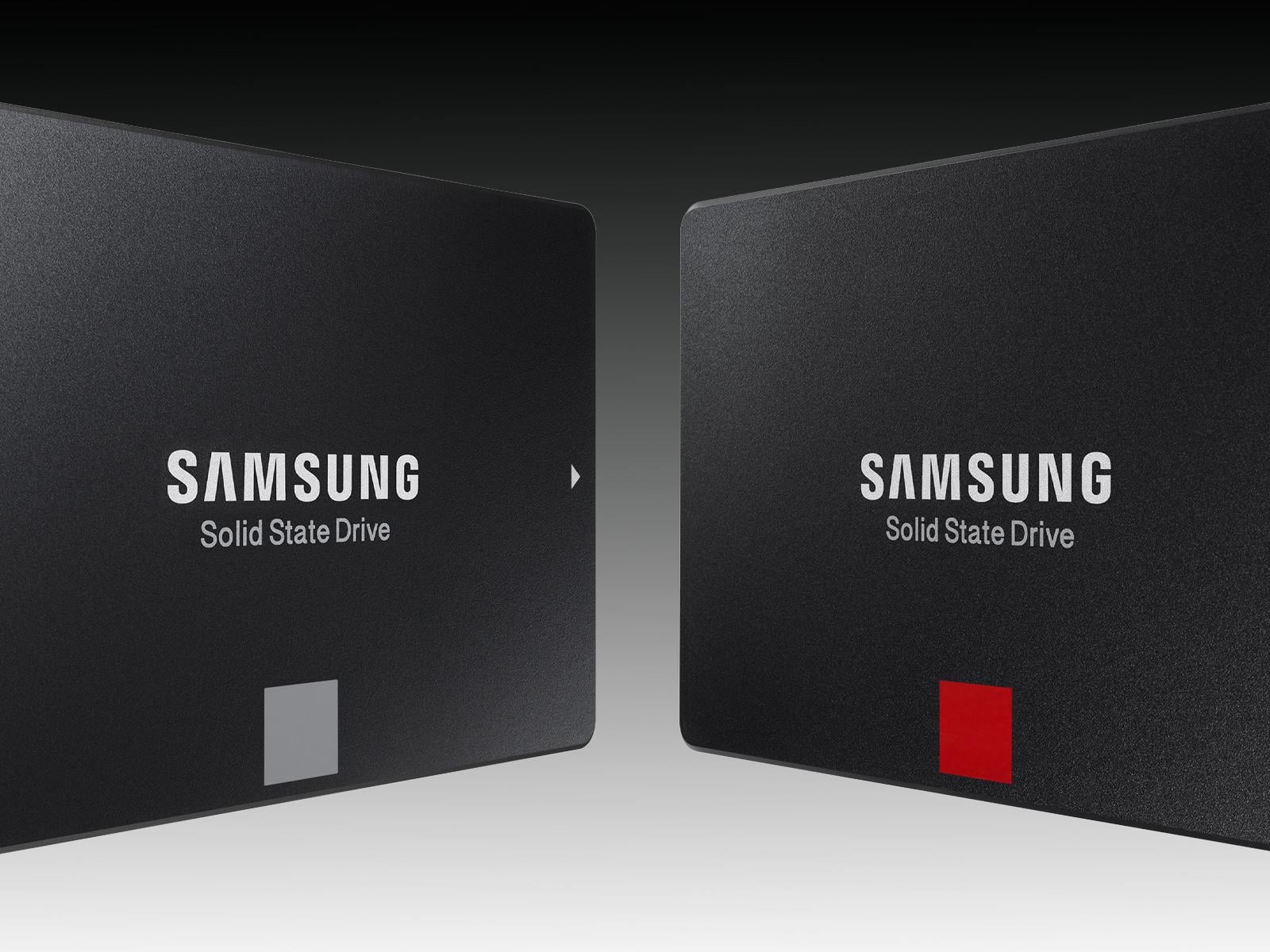
Are we about to lose another NAND flash brand in the consumer storage space? Following Micron’s decision to pull its 29-year-old Crucial brand from the consumer market to focus on higher margin data center clients, rumors began to swirl that Samsung was getting ready to stop selling SATA-based solid state drive (SSDs) to consumers. According
PayPal is the latest company looking to become a bank in the US. On Monday, the company announced it had submitted applications for PayPal Bank to the Federal Deposit Insurance Corporation (FDIC) and the Utah Department of Financial Institutions (UDFI). PayPal is already a bank in Europe, based in Luxembourg.
According to PayPal, it has provided “over $30 billion in loans and working capital” for more than 420,000 business accounts globally. PayPal puts its focus on small businesses in pitching the need for a US bank. “Securing capital remains a significant hurdle for small businesses striving to grow and scale,” Alex Chriss, president and CEO of PayPal, said in a release. “Establishing PayPal Bank will strengthen our business and improve our efficiency, enabling us to better support small business growth and economic opportunities across the US.”
PayPal also plans to provide “interest-bearing saving accounts” as a bank. If approved, it would be chartered in Utah.
Applications to become a bank have popped up left and right this year, with approval odds increasing under the Trump administration. On Friday, the Office of the Comptroller of the Currency (OCC) announced that five cryptocurrency companies, including BitGo, Circle and Ripple, received conditional approval to become federally charted trust banks.
“New entrants into the federal banking sector are good for consumers, the banking industry and the economy,” the OCC’s comptroller Jonathan V. Gould stated in the announcement. “They provide access to new products, services and sources of credit to consumers, and ensure a dynamic, competitive and diverse banking system.”
Other companies such as Nissan and Sony have also submitted applications to form a bank.
This article originally appeared on Engadget at https://www.engadget.com/big-tech/paypal-applies-to-become-a-bank-under-trumps-looser-financial-rules-143025772.html?src=rss
Chromecasts were one of the most useful little gadgets that Google ever made, so of course it decided to ditch the product line. The Google Cast functionality lives on in the Google TV Streamer and Google TV devices and televisions, but sadly we won’t see another Chromecast go on sale.
If you’ve got an older Chromecast hanging around, it’ll still work fine for now. However, you might soon be moving on to a newer streaming device—or perhaps you already have—and that’s left you wondering what to do with your older hardware. In fact, these small dongles are more versatile than you might have realized.
While streaming content from the likes of Netflix and Apple TV is going to be the primary use for these devices for most people, you can do plenty more with them—thanks to the casting support that Google and other developers have built into their apps.
Keep an eye on your property
If you’ve got a Chromecast-compatible security camera (including Google’s Nest Cams), you can see a live feed on your Chromecast, making it easy to set up a mini security monitoring center if you have a smaller monitor or television somewhere to spare.
Getting the feed up on screen is as easy as saying “hey Google, show my…” followed by the camera name (as listed in the Google Home app). On the Chromecast with Google TV, you can also open the Google Home widget that appears on the main Settings pane.
Set up a second screen wirelessly
You can cast anything from a Chrome tab. Credit: Lifehacker
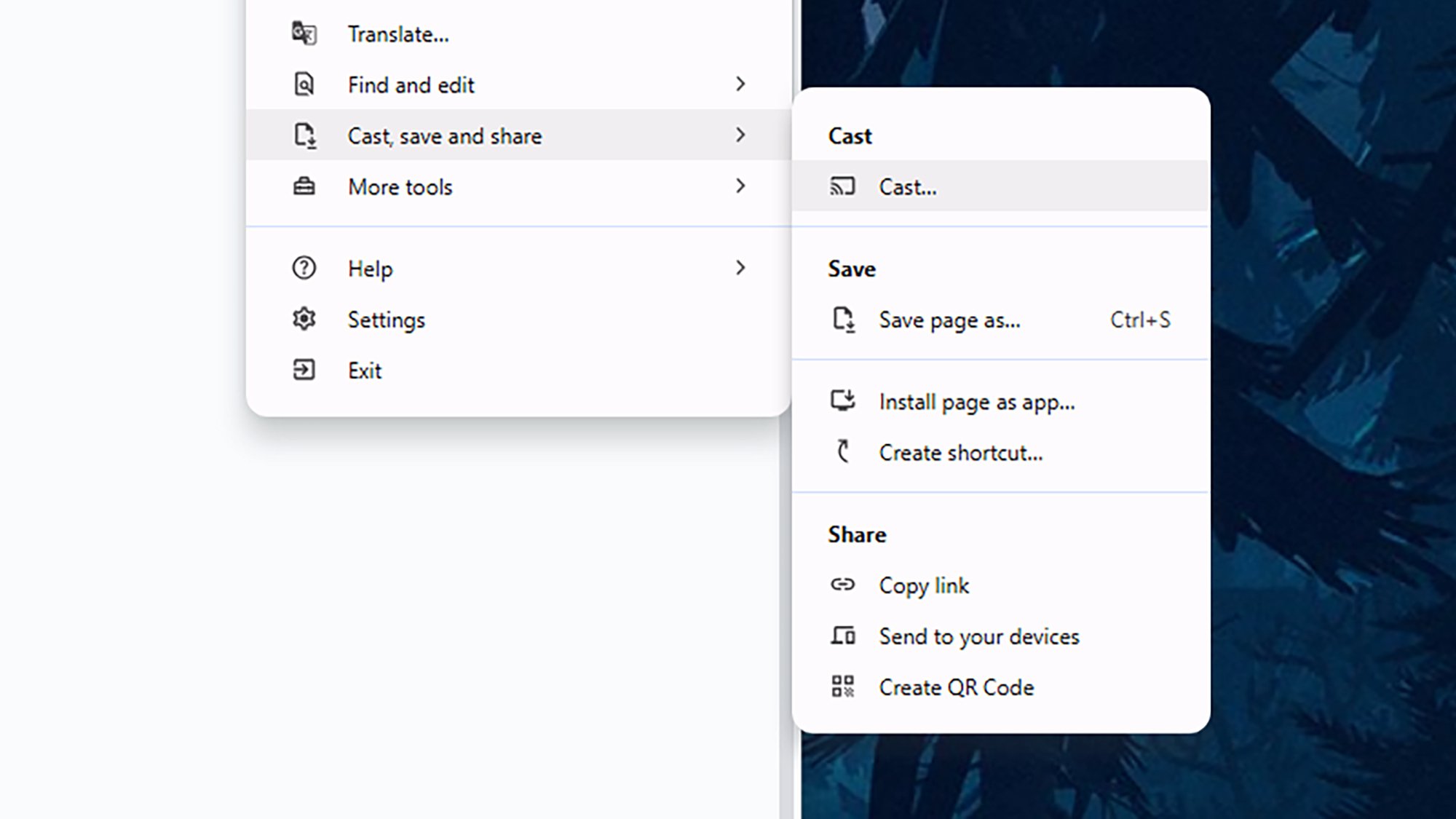
Something else you can throw to a Chromecast in seconds: any tab you happen to have open in Google Chrome on your laptop or desktop. Just click the three dots in the top right corner of the tab, then choose Cast, Save and Share > Cast.
This means you can use the monitor or TV that your Chromecast is hooked up to as a second screen, with no cables required—just a wifi network.
Stream music, podcasts, and audiobooks
When it comes to slinging content to your TV screen, you’re going to think about movies and shows first and foremost, but the Google Cast standard works with audio apps as well—including the likes of Spotify, Pocket Casts, and Audible.
This is especially worth looking into if you’ve got a soundbar or a high-end speaker system connected to your television, because it means you can enjoy your audio streams at a much higher volume and a much higher level of quality, compared to your phone.
Play some simple games
This one needs a Chromecast with local storage installed, so I’m primarily talking about the Chromecast with Google TV. That device supports local apps, which means it also lets you set up games to play with the remote or a connected Bluetooth controller.
See what you can find by browsing the Google Play Store, but Super Macro 64 showcases 25 different titles you can play easily, while the folks at XDA Developers have put together a full guide to creating a retro game emulator with the help of RetroArch.
Display photos and wallpapers
Your Chromecast can display photos and even artwork. Credit: Lifehacker
Chromecasts work great as a way to add some ambience to a room when you’re not actually watching something on a TV or monitor. You can show your own personal pictures, or a selection of nature shots, or pretty much anything you want.
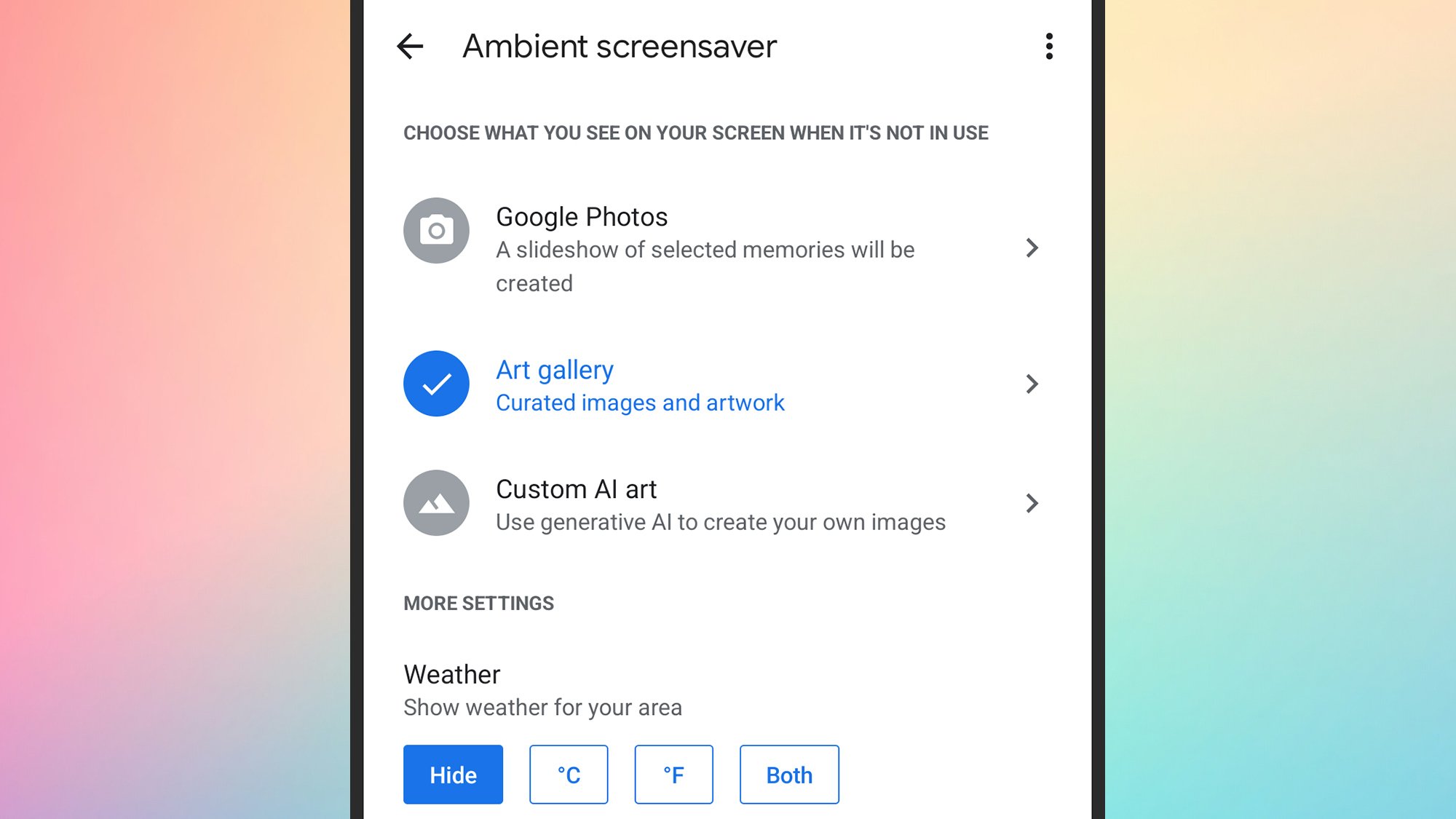
Either cast via Google Photos (open an album, tap the three dots in the top right corner, then Cast), or set up a screensaver through the Google Home app. Select your Chromecast, tap the gear icon (top right), then choose Ambient mode.
Keep in touch
Trying to hold video calls—whether with family over the holidays or colleagues during a meeting—isn’t always easy on a phone screen or even a laptop screen, so why not take advantage of a larger monitor or TV with a Chromecast plugged into it?
For this to work you need to be using Google Meet in a web browser on a computer. You can either choose the “cast this meeting” option before it starts, or click the three dots during the meeting (Google has full instructions online).
No matter what you think of James Cameron’s Avatar movies, their technical ambitions are undeniable. Cameron developed his own camera system to shoot the first Avatar in 3D, but since most of the actors were digitally captured, he also had the freedom to construct scenes with a virtual camera after they were physically shot. For Avatar: The Way of Water, which arrived a whopping 13 years after the first film, Cameron also leaned into high frame rate footage and new ways of modeling natural fluid dynamics.
Even though the third entry, Avatar: Fire and Ash, is coming just a few years after the last sequel, I still expected Cameron to deliver some sort of new feat to wow audiences. He could have found a smoother way to employ high frame rate footage, so the film wasn’t jarringly shifting between traditional 24 fps scenes and smoother 48 fps action shots. Maybe we’d see more natural interactions between live actors and virtual characters and environments (it sure is hard to beat Edie Falco suited up in a wicked exoskeleton in the last film, though).
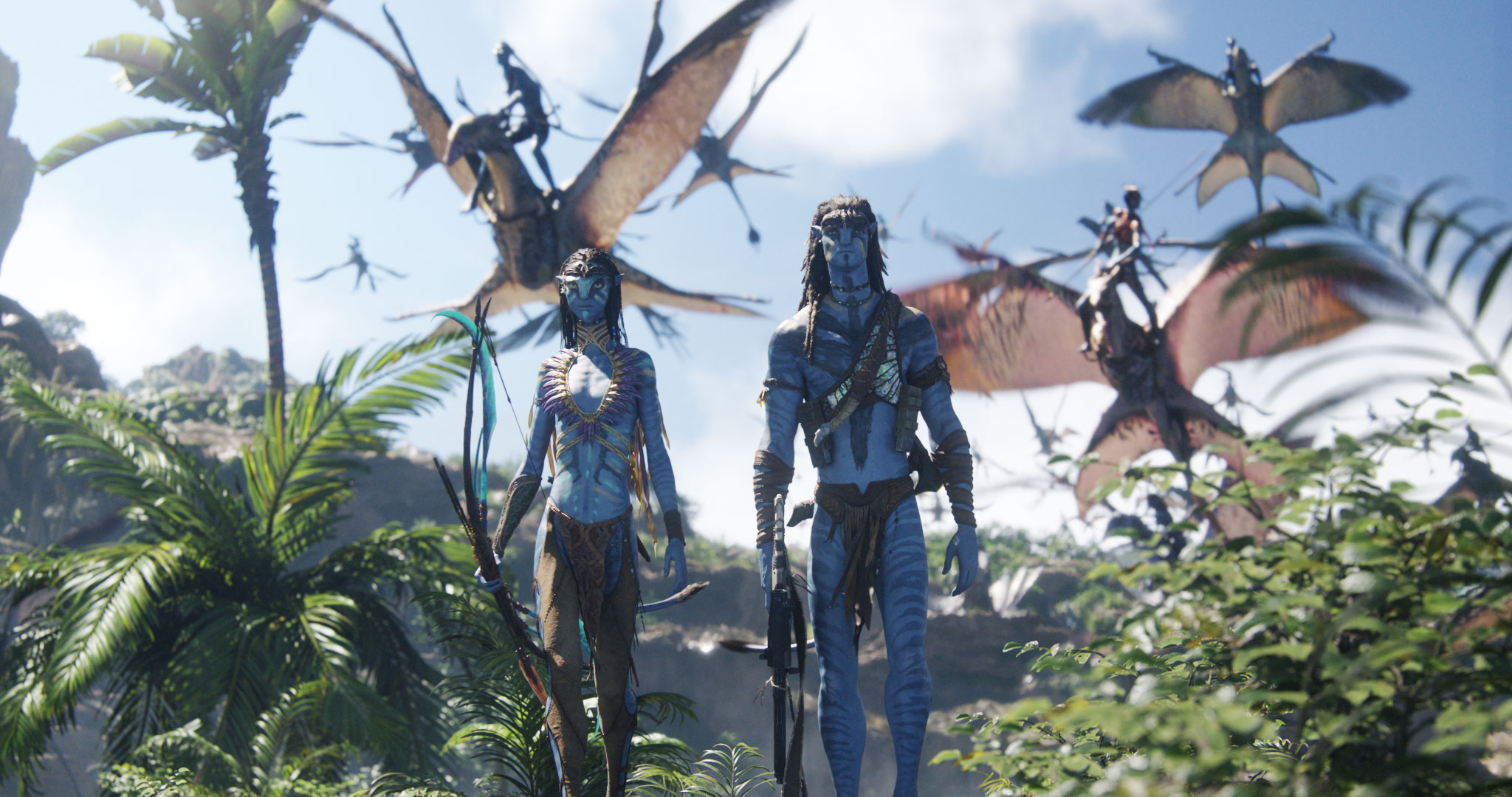
Instead, Avatar: Fire and Ash is just another Avatar film — it doesn’t push any boundaries, narratively or technically. And without any technical achievements to lean on, the narrative issues inherent with Avatar become all the more glaring.
It’s still basically a story that places a clueless white dude in the middle of a fight between indigenous and colonialist powers. (Improbably, he’s crowned one of the Na’vi’s best warriors!). The script from Cameron and his co-writers (Rick Jaffa and Amanda Silver, continuing their work from The Way of Water) often hits identical beats to a low-rent CW show. And perhaps worst of all, the stakes of the story haven’t really changed much. Jake Sully (Sam Worthington) and his family are still fighting off the militarized Resource Development Association (RDA), Col. Quaritch still holds a grudge from being killed (twice now!) and from the Sullies raising his Tarzan-like son, Spider (Jack Champion).
There’s an attempt to cast the Na’vi in a new light with the villainous Ash People, who spend their days attacking and stealing from other tribes. While most Na’vi people work cooperatively with other clans and share their reverence for Eywa, the collective consciousness of Pandora, the Ash People resent it for not saving their villages from natural disasters. Despite a deliciously evil performance by Oona Chaplin (Charlie Chaplin’s grandaughter!) as Varang, the Ash People don’t amount to much more than “evil Na’vi.” When they inevitably work together with humans to attack other Na’vi, it doesn’t feel surprising in the least. Honestly, it’s a tad insulting.
Avatar: Fire and Ash
20th. Century Studios
Perhaps we’ve been spoiled by Cameron’s last few films, but Avatar: Fire and Ash ultimately feels like more of the same. Even its massive final battle feels like a retread, since it’s set in the same ocean environment as The Way of Water and is once again focused on protecting psychic alien whales from humans. Cameron does let his action chops shine throughout the film, but after a certain point, trying to enjoy those sequences is like trying to eat a family-sized carton of ice cream by yourself. You’ll enjoy it for a little while, but eventually you’re left with a massive headache and sugar hangover.
It’s clear that James Cameron has built the Avatar franchise to explore everything he loves: Stories about protecting the environment, fighting against capitalist excess and kicking tons of ass. Parts of Avatar 4 have already been shot, and that film is expected to arrive in 2029. But I’m hoping the 71-year-old filmmaker eventually finds his way out of Pandora. He’s co-directing the Billie Eilish concert film, Hit Me Hard and Soft: The Tour, so that’s a start. But I’m eager to see what other new worlds he can dream up.
This article originally appeared on Engadget at https://www.engadget.com/entertainment/tv-movies/avatar-fire-and-ash-review-maybe-its-time-to-sunset-pandora-140000997.html?src=rss
Google’s data partner HouseCanary has begun displaying home listings directly in search results in select markets, sending Zillow’s shares tumbling more than 8% yesterday as investors weighed whether the search giant might eventually cut into the portal business that Zillow dominates.
The experiment places property details, prices, images and a “Request a tour” button at the top of mobile search results. HouseCanary, a full-service brokerage licensed in all 50 states and Washington D.C., said it contacted every MLS in the test regions before launching.
Analysts are largely downplaying immediate concerns. Goldman Sachs noted that most of Zillow’s traffic comes directly through its apps and websites rather than Google searches, though the firm views the development as a long-term risk. Piper Sandler called the fears “overblown,” and Wells Fargo suggested portals like Zillow would likely end up bidding for ad units on Google rather than losing traffic outright.
We may earn a commission from links on this page. Deal pricing and availability subject to change after time of publication.
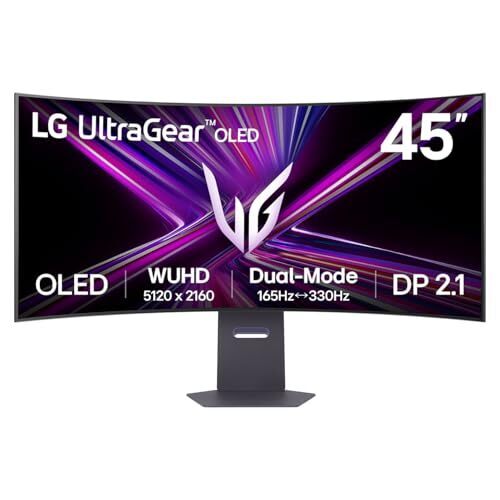
At just under $1,460 on Amazon right now (down from $1,999.99), the LG 45GX950A-B Ultragear OLED is still a major investment, but a serious one for anyone who cares about pixel density, immersion, and future-proof display tech.
You’re looking at a 45-inch ultrawide curved OLED screen with a resolution of 5120 x 2160, which puts it in rare territory. It doesn’t just look good; it’s one of the only displays of this size and shape that offers this much clarity, according to PCMag’s “excellent” review. Compared to more extreme 32:9 panels, its 21:9 aspect ratio feels a little more natural for everyday use and offers more usable vertical space. Whether you’re gaming or multitasking, that extra resolution pays off in clean text, sharper details, and more visible screen real estate.
The curved 800R OLED panel of the 45GX950A-B is paired with a 165Hz refresh rate at full resolution and can go up to 330Hz if you drop the resolution down to 1080p. Add in DisplayPort 2.1, two HDMI 2.1 ports, AMD FreeSync Premium Pro and G-Sync compatibility, and this thing is clearly built for performance. Input lag numbers back it up, with sub-10ms results in most tested modes. The monitor also supports multiple display modes depending on your use case, like a 4K 16:9 mode at 37 inches if you’re watching movies or need tighter framing. The stand is solid, adjustable, and surprisingly desk-friendly for a monitor this large, and the USB-C port with 90W power delivery is a nice touch for anyone using it with a laptop setup.
Still, it’s not a monitor for everyone. The rated brightness is only 275 nits, which means it won’t pop in sunlit rooms the way some Mini LED or IPS panels do. And while it does have internal speakers with a bit of bass, they’re not loud enough to carry a room—headphones are still the way to go. But if you’ve got the desk space, GPU power, and budget, the 45GX950A-B might be the best way to go big without going full TV.
The follow-up to a successful debut is often harder to make than the first, and that goes double when the inspiration for a show comes from the most beloved installment of the underlying franchise. That’s precisely the challenge Fallout season 2 is facing as the TV series shifts its stage to the irradiated lights of New Vegas when the series returns on December 16 at 9PM ET/6PM PT on Prime Video. However, while other video game adaptations like The Last of Us suffered from a bit of a sophomore slump, Fallout continues to get more crass, vulgar and abrasive in the most entertaining ways.
Editor’s note: We were provided the first six of eight episodes of Fallout season 2 for this review, so if the ending of this season misses its landing, blame The Enclave.
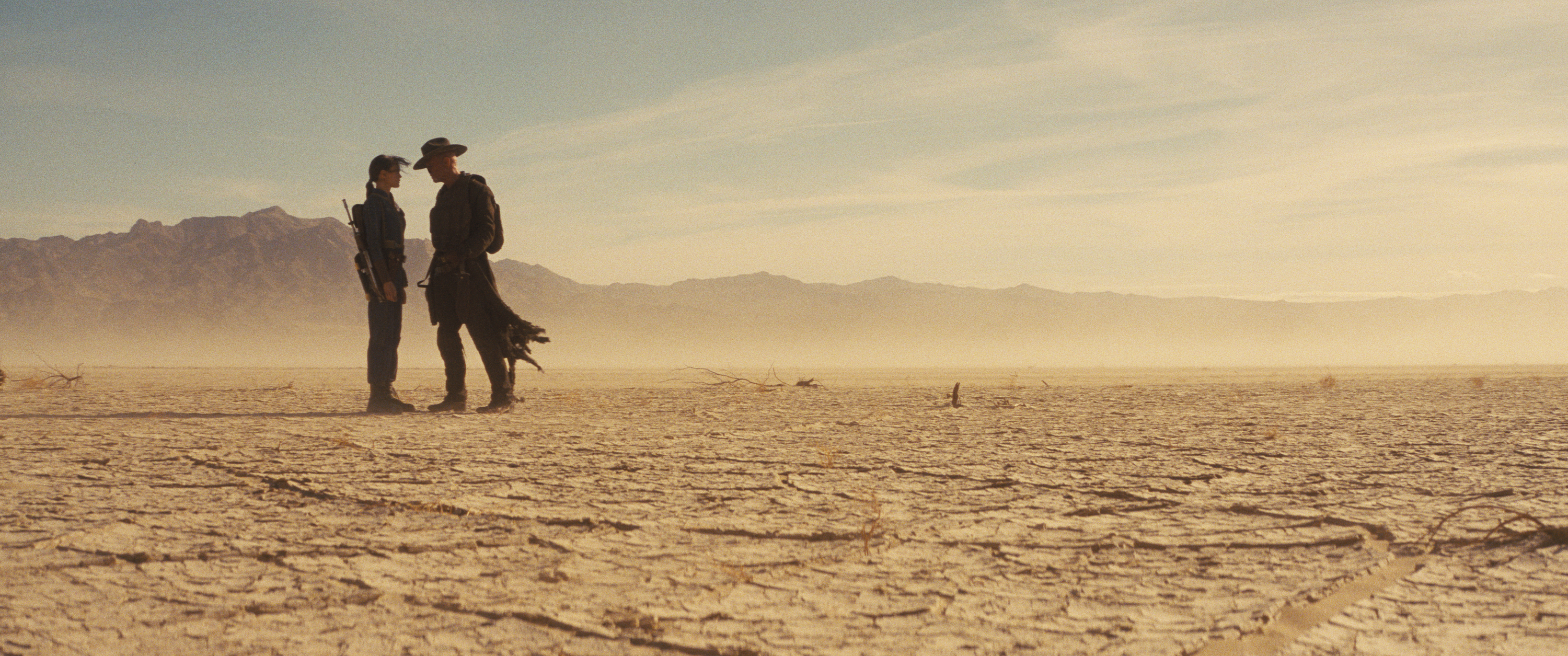
Season two picks up directly after the first as Lucy (played by Ella Purnelle) and The Ghoul (Walton Goggins) make their way across the wasteland in pursuit of Lucy’s father. And right away, we’re instantly reminded of the magnetic chemistry between our leading lady vault dweller and her endearing naivete and our post-apocalyptic cowboy afflicted with dark pragmatism from having simply lived through too much. This simple combo not only often provides the setup for Lucy’s signature catchphrase — which is both quaint and refreshing — it also sets the stage for some interesting plot points. Just hearing The Ghoul say things like “Do more drugs” with Goggin’s classic drawl and without a hint of irony is a real treat.
There’s never a dull moment when Lucy and The Ghoul are traveling together.
Prime Video
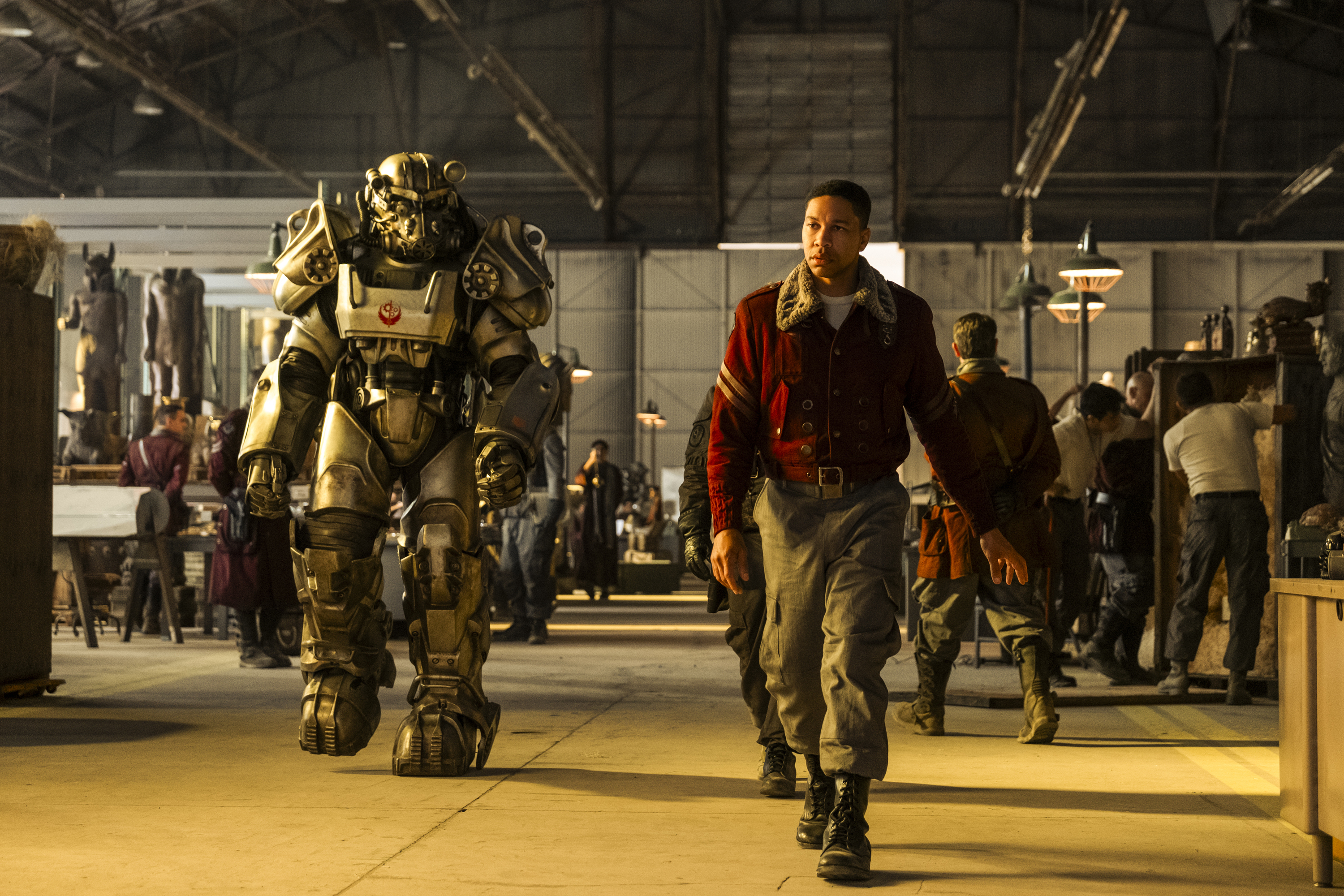
One of the potential pitfalls of a second season though, is an expanded storyline. That’s because unlike the Fallout games where you get to steer the action, we’re just here for the ride as we flip between Lucy’s search for her father, the existential crises facing multiple vaults and an expanded role for Maximus (Aaron Moten) as he suddenly finds himself near the top of the Brotherhood of Steel’s org chart.
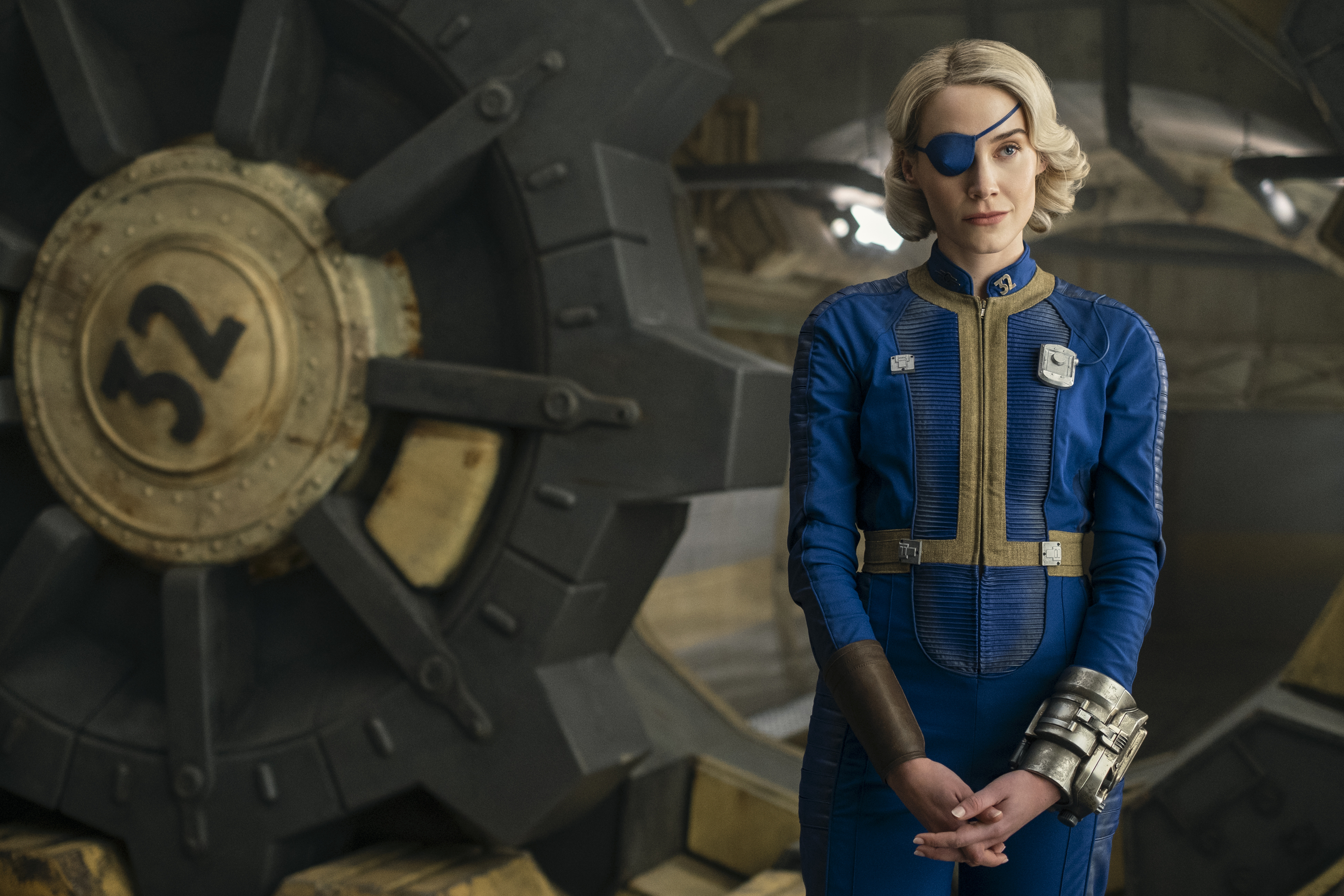
But somehow, the showrunners have managed to make each branching path just as engaging as the others. There were hints of his range in the first season, but Moises Arias shines as Lucy’s brother Norm as the leader of a new crew (I’m trying to keep this review as spoiler-free as possible) while Annabel O’Hagan as Overseer Harper does a fantastic job of switching between being out of her depth and completely unhinged at a moment’s notice.
In season two, it feels like Aaron Moten’s Maximus is so close to figuring out what kind of soldier he wants to be.
Prime Video
The one path that still feels like it hasn’t fully hit its stride is Maximus’, due in large part to the fact that the character’s actions often feel like they are influenced more by circumstance than personal agency. In some ways, it’s the continuation of someone defining their own morality, which rarely feels as convincing or driven as someone with a plan. But there’s still intrigue there too.
Meanwhile, for fans of the games, the number of easter eggs and callbacks is downright delightful. The set design and cinematography make the wasteland a character in its own right, even if the last thing I want to see is someone eat flea soup. We’re also treated to an ever-growing zoography of nuclear critters such as rad scorpions, all sorts of mutants and more, along with appearances from iconic characters like everyone’s favorite cowboy-coded security robot. And I appreciate how the show spends a little extra time to go over the myriad of factions (like The Legion and the NCR), which pays homage to the core series while functioning as an interesting side quest at the same time.
With Overseer Harper at the helm, there’s no telling what will happen to Vault 32.
Prime Video
With this much going on, it would be easy for a series to become overburdened. But the pacing isn’t labored, because while the show doesn’t actually get to New Vegas until episode four, the journey there was so entertaining that I didn’t mind. Perhaps most importantly, even though it would be impossible to completely recreate New Vegas on TV (since you can’t choose your own adventure here like you can in the game), it really feels like Fallout’s showrunners have nailed the balance between respecting the source material and tweaking the story to fit a different medium.
That’s a big credit to the franchise, especially coming from a genre that often gets maligned for a lack of depth or nuance. But it’s also a tribute to this series, which continues to be a prime example of how to make the jump from pixels to TV screens look gook. And after seeing The Last of Us stumble a bit during its second cour, I might even go so far as to say that Fallout is the best live-action video game crossover to date.
This article originally appeared on Engadget at https://www.engadget.com/entertainment/tv-movies/fallout-season-2-review-viva-new-vegas-140000678.html?src=rss
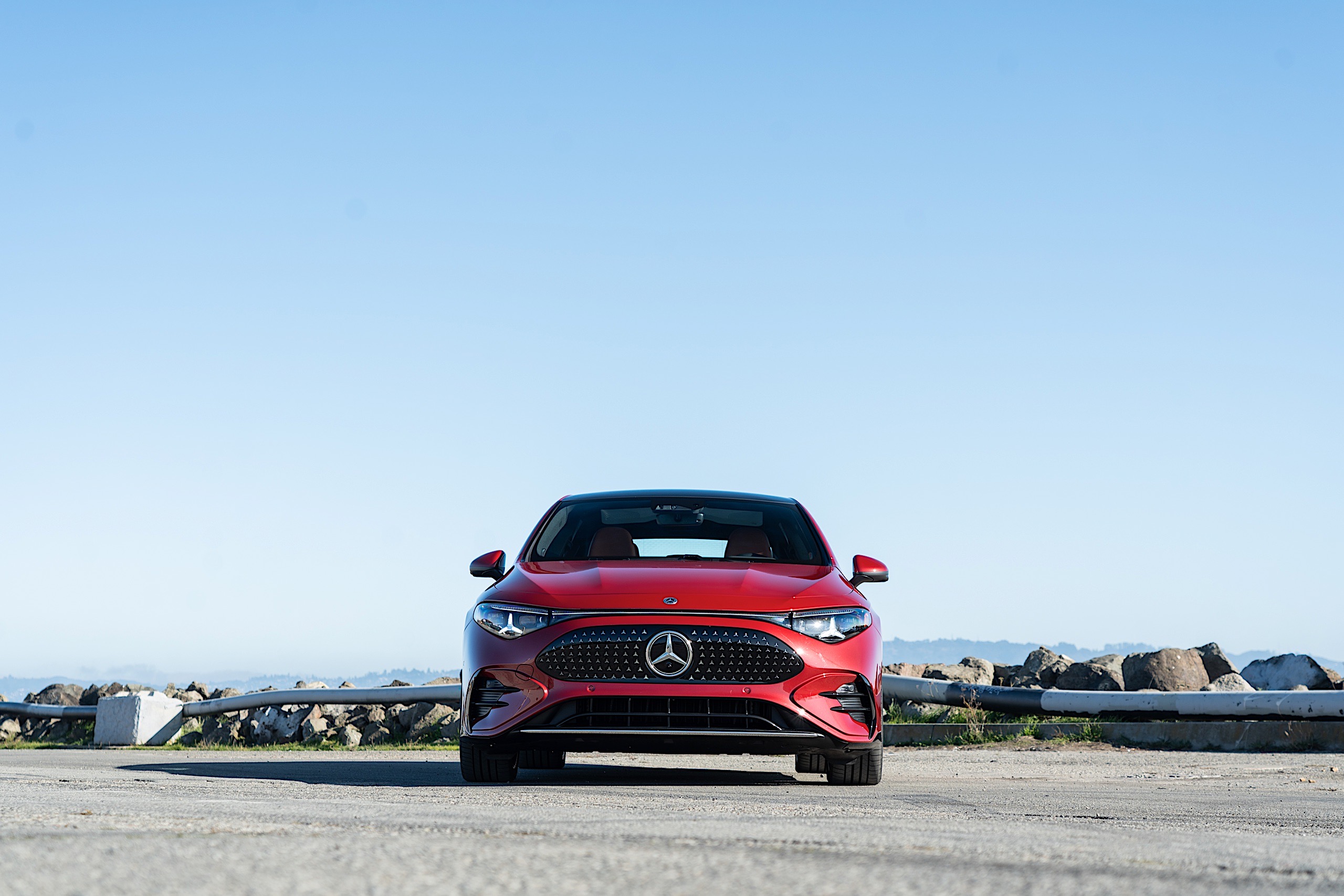
This one’s been a long time coming. Mercedes-Benz has been researching, refining and even reshaping the car that would ultimately be the CLA for years now, teasing us with technical briefings and even showing off a sultry crimson concept car a full two years ago.
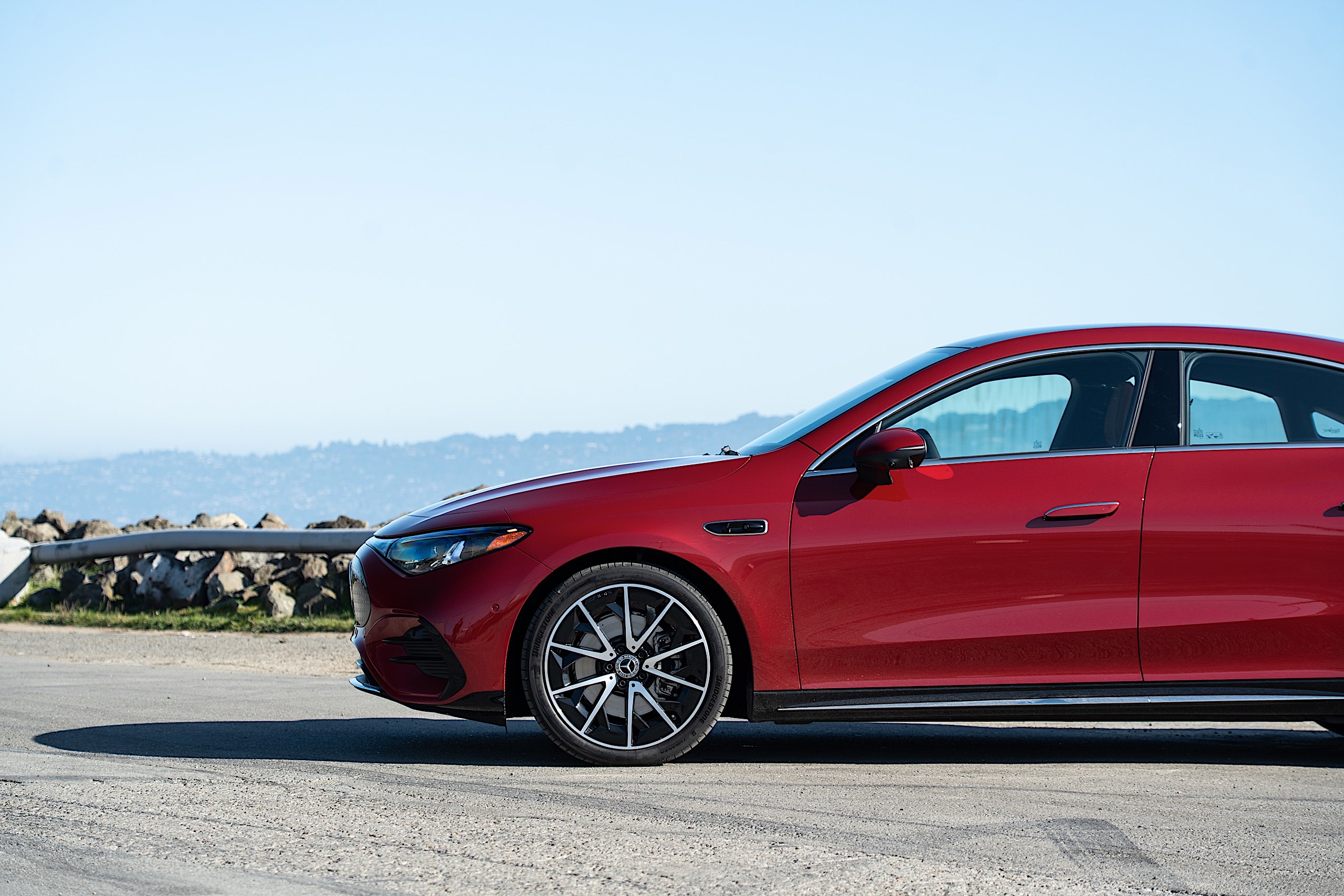
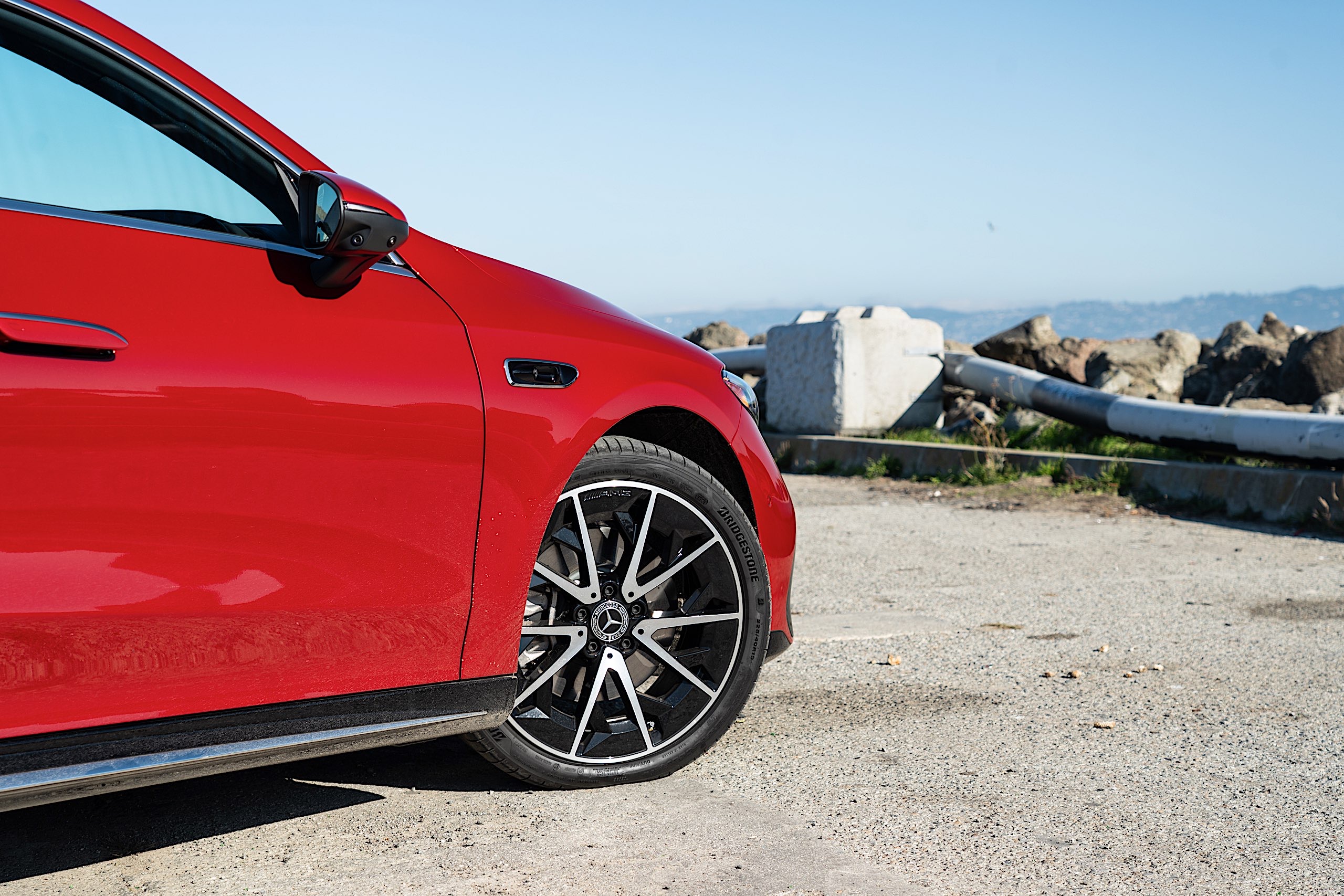
That was the Concept CLA, and while the production CLA you see here doesn’t look quite that good, it is a fine-looking little electric sedan. More importantly, it goes as far as you’d think its slippery, 0.21-coefficient-of-drag body would carry it: up to 374 miles on a charge.
With a $47,250 starting price, is this electric CLA the complete package? After spending a day behind the wheel of one, I think it might just be.
Higher density
2026 Mercedes-Benz CLA 250+ EQ
Tim Stevens for Engadget
The CLA has long been Mercedes-Benz’s most attainable sedan, a machine for those wanting something fun and stylish that offers a taste of the M-B lifestyle without breaking the bank.Attainability is still a big focus of this newly rebooted CLA, which serves as the debut venue for the company’s latest generation of electrification. While most luxury auto makers would have you swing for their top-tier models to get the newest tech, Mercedes is actually bringing it to the lower end first.
The new CLA is built around a new battery pack that offers 20 percent more energy density than the company’s previous EVs. There’s a big boost in efficiency, too. Where the EQS, the company’s current range meister, does up to 390 miles on a charge from roughly 110 kilowatt-hours, the CLA manages 374 miles from just 85. It’s a much smaller car, sure, and lighter too at about 4,500 pounds versus 5,500 and up for the EQS, but there are bigger efficiencies at play here thanks to advanced motors and the aforementioned aerodynamics.
The CLA’s 0.21 coefficient of drag slots it right in between the 0.20 rating for the EQS sedan and 0.22 for the EQE. Crucially, though, despite being just as slippery as those cars, Mercedes-Benz’s designers also managed to make the CLS stylish, a big step up from the efficient but amorphous profiles of its previous EVs.
That aerodynamic efficiency is a big part of what delivers the 374-mile range for the single-motor CLA 250+ with EQ Technology model, the formal and long-winded designation for what I drove. It delivers 268 horsepower through the rear wheels. Those wanting a bit more oomph can step up to the 349-hp, dual-motor, all-wheel-drive 350 4MATIC model. That extra power and low-grip surety costs an extra $2,550, but the bigger penalty is range: the dual-motor model maxes out at 312 miles on a charge. (There is a hybrid version of the new CLA coming as well, but we’ll cover that on its own later.)
When it comes to charging, the new CLA impresses there, too. Charging at up to 320 kilowatts via the company’s first NACS plug, the CLA adds a whopping 200 miles of range in 10 minutes. Weirdly, the car also has a separate, older-style J1772 plug for slower, level-two charging.
Accessible, not basic
The interior displays of the 2026 Mercedes-Benz CLA 250+ EQ
Tim Stevens for Engadget
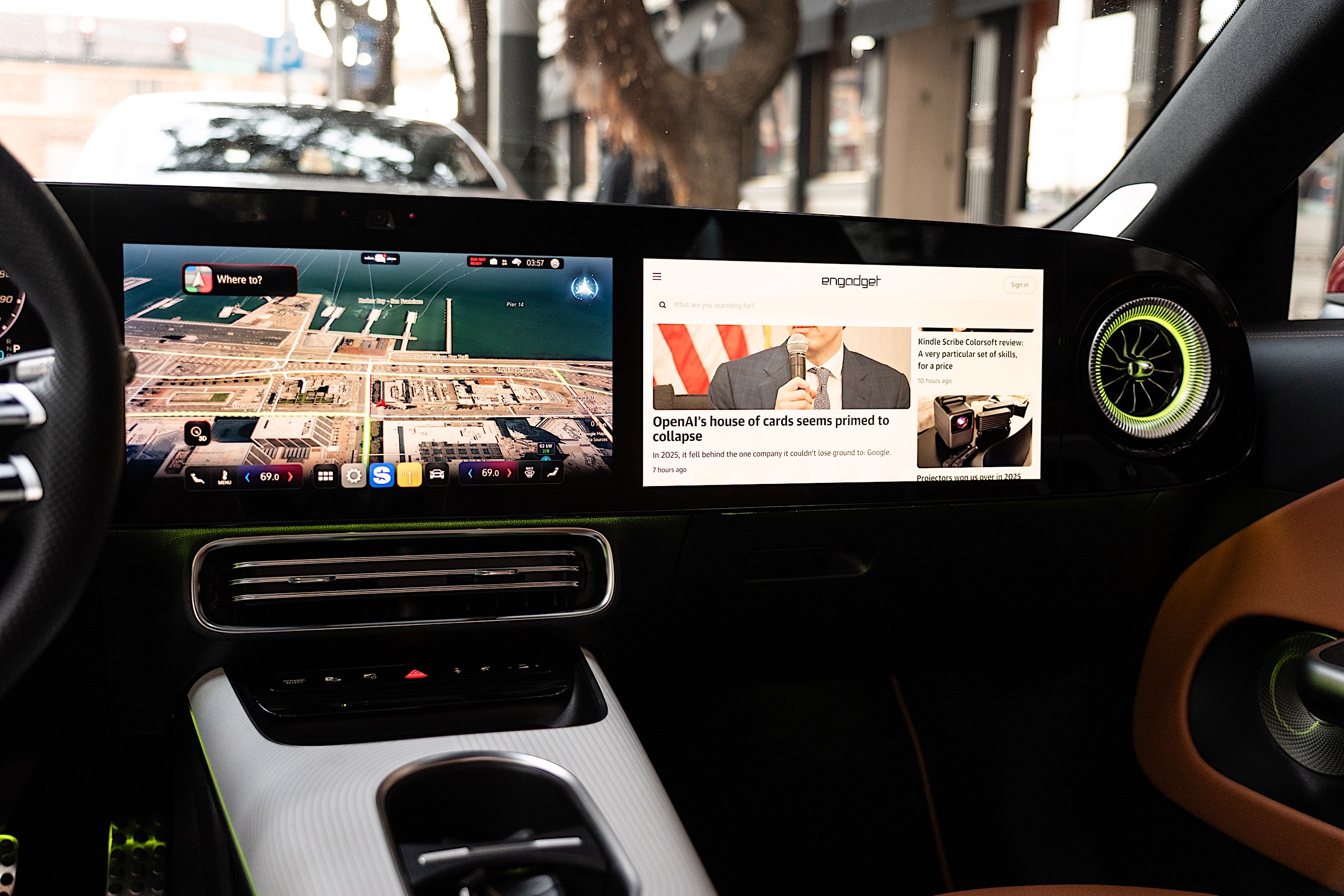
As a more attainable machine, you wouldn’t necessarily expect the CLA to be completely loaded with features. Still, tick enough boxes and you can definitely get it there. While it doesn’t have the luscious, curving Hyperscreen display as the EQS, it does offer a similar experience called Superscreen. You can get up to three displays spread across the dashboard: a 10.25-inch gauge cluster on the left, a 14-inch touchscreen in the center and an optional third display (also 14 inches) on the right for the passenger to play Angry Birds or stream videos. If, for some reason, they wouldn’t rather just look at their phone.
All those displays run the latest version of the MBUX user interface, similar to what we’ve seen in the company’s other EVs, but it’s a bit simpler and easier to use here. That’s backed by a wholly new system-level operating system called MB.OS running on NVIDIA silicon, also making its debut on the CLA. Mercedes says this not only has far more capability but can also be more comprehensively updated via the car’s 5G connection.
One of the features in the latest Mercedes software is baked-in AI. Say “Hey, Mercedes,” and you can not only change just about any setting in the car, but also engage in any number of inane conversations. I asked for a weather update for my next trip to Chicago, the latest releases from a few of my forgotten bands and even got an explanation of why the lyrics in the song “Water’s Edge” by Seven Mary Three are so very creepy. (Don’t go down there, friends.)
It’s all reasonably snappy and quite useful, but not perfect. When I said “I’m hungry,” I got a quick listing of restaurants and offers for quick routing. When I said, “I need a hospital,” the system, flummoxed, just stopped talking to me. Thankfully, I did not need a hospital. I was actually feeling pretty okay.
That extensive software upgradability is also opening the door to a new era of car upgrades. Yes, the automotive DLC era is here, and you can pay extra to unlock additional active features like automated parking, navigation, a dashcam function and whatever else Mercedes-Benz’s product planners can dream up in the future. Hopefully, there’s no horse armor involved.
We’ll see how that shakes out, but my only real complaint about the interior was that it felt a bit cramped. It’s a sedan on the small side, sure, but the layout feels a bit claustrophobic. That dashboard with all the displays is situated nearly vertically, as are the sides of the center console. Sitting in the passenger seat felt like being tucked in a box.
Mind you, it was a very comfortable box, well-upholstered and featuring a lovely interior trim made of recycled paper, grooved to give the effect of a Zen garden. Headroom up front is generous and actually isn’t too bad in the rear, but ducking under that sweeping roofline to get into the back seats requires a bit of flexibility.
Drive time
2026 Mercedes-Benz CLA 250+ EQ
Tim Stevens for Engadget
Despite being the slowest electric CLA, this little sedan gets off the line quickly. A 6.6-second 0-to-60 time under-sells the feeling of instant acceleration and throttle response that make EVs so very compelling. You only start to feel the CLA’s relative lack of horsepower at higher speeds, but even there, it’s hardly lacking.
That made it a blast to scoot from light to light as I was escaping from San Francisco, but it was much more fun in the foothills of Mt. Tamalpais. The CLA’s steering is light yet has good feedback. I could really feel the road beneath the front tires, making for a more engaging machine than I was expecting.
That battery pack in the floor keeps body roll in check, but a positively pliant suspension makes for a relaxed affair. The CLA did a great job of soaking up the countless imperfections in and around San Francisco, making for an extremely comfortable commuter, if one that felt a bit floaty at times.
It’ll be a safe commuter, too. The car is festooned with sensors, including 10 cameras of various resolutions and focal lengths, five radar sensors firing in every direction and 12 ultrasonic sensors. You’ll need to pay extra for the digital keys to unlock their full functionality, though, like advanced lane-keeping and automated lane changes. There’s even an advanced, point-to-point driver assistance system coming called MB.DRIVE Assist Pro that’ll let the car handle most of the steering — even on secondary roads. More details on that to come.
For now, the car did great at managing itself on the highway, changing lanes with enough initiative to get through commuter traffic without issue, and not only bringing itself to a complete stop in traffic, but resuming again as soon as the cars ahead moved.
It even delivered good efficiency. I saw 3.9 miles per kWh, which would equate to a theoretical 331 miles from the 85 kWh battery pack. That’s despite my driving with a good amount of enthusiasm and a heavy right foot. Edmunds, driving more conservatively, got 434 miles from a single charge,
Wrap-up
2026 Mercedes-Benz CLA 250+ EQ
Tim Stevens for Engadget
So the CLA looks great, drives well, has plenty of range and again, starting at $47,250, feels well-priced. Yes, you’ll need to pay extra if you want to get all the toys, like the epic Dolby Atmos-capable Burmester sound system or the lovely Natural Fiber Zen interior trim. But when I ticked all the boxes I wanted, I still came out under $60,000. That put me about $5,000 below the base price of the company’s next-bigger EV, the EQE.
The CLA really is a big step forward on the EV front, and it’s a car that’s hard to fault. The new CLA is hitting dealerships presently, and I have a feeling you’ll be seeing plenty of them on the road soon.
This article originally appeared on Engadget at https://www.engadget.com/transportation/evs/mercedes-benz-cla-first-drive-head-of-the-ev-class-140000562.html?src=rss
China has taken another step forward in the self-driving car market. The country’s Ministry of Industry and Information Technology (MIIT) has made its first approval for cars with level-3 autonomous driving capabilities. The two electric sedans come from state-owned automakers Changan Auto and BAIC Motor.
The US National Highway Transportation Safety Administration (NHTSA) defines level-3 driving as “the system handles all aspects of the driving task while you, as the driver, are available to take over driving if requested. If the system can no longer operate and prompts the driver, the driver must be available to resume all aspects of the driving task.”
According to a translation of MIIT’s announcement, the Changan vehicle can drive autonomously in single lanes of both highways and urban expressways in traffic congestion. It is allowed solely in certain areas of Chongqing at a maximum speed of 50 km/h (31 mph). The BAIC electric sedan can also function autonomously on the same roads, but only in areas of Beijing at a maximum speed of 80 km/h (50 mph).
“The team strictly followed the standards and procedures to conduct preliminary review, selection, testing, and safety assessments,” MIIT stated. “Both automotive companies have completed and passed the product testing and safety assessments as required.” They didn’t present a timeline for when the models would become available.
This article originally appeared on Engadget at https://www.engadget.com/transportation/china-approves-two-level-3-autonomous-evs-134548316.html?src=rss
You hear people talk about working in a “flow state,” but what does that even mean? before you start thinking of it as one of those corporate jargon phrases that gets tossed around so much it loses any meaning it ever had, it’s worth knowing that it’s a “real” thing, backed up by a whole lot of psychological research. In essence, being in a flow state enables you to work more efficiently and effectively at whatever you’re focused on.
What is flow theory?
Psychologist Mihály Csíkszentmihályi came up with this theory in 1970, suggesting a flow state is similar to when someone is floating along, being carried by water: Their brains are working so efficiently they’re moving straight ahead on a task with no issues, almost as if they are being propelled forward.
He spent his time interviewing artists and athletes at the top of their game to understand when and how they performed optimally—and how everyday people can tap into a “flow” state, too. He wrote several books on the topic, but for our purposes here, you don’t need to ingest all of them. What’s most important is to understand the eight main traits of flow theory.
The basics of flow theory
Csíkszentmihályi’s work ultimately describes eight clear characteristics of being in flow:
You’re completely concentrated on your task.
You have clarity around goals in your mind and can get immediate feedback.
Time feels like it’s transforming, either speeding up or slowing down.
The work is intrinsically rewarding.
There is a sense of effortlessness or ease.
The work is challenging, but you have the skills for it.
You are not self-conscious; actions and awareness are working together.
You feel you have control over the task.
This may remind you of the concept of “deep work,” which is author/professor Cal Newport’s definition of doing demanding tasks when you’re fully engrossed in them and not distracted. The two concepts are similar, but to achieve either, there are a few things you need to do. It’s clear from the list of flow characteristics above that mastery and resources play a big role in whether you’ll feel you’re in a flow state when you’re working. Obviously you’ll likely only hit this state if you’re doing something you’re completely prepared for, so don’t aim for it if you’re going to be doing something that requires contributions from other people, resources you don’t have, or skills you don’t possess. You can be ripped from it quickly if, say, you’re waiting around for a colleague to email you something you need for the project, which can destabilize your whole day. (For a better understanding of that, it’s worth familiarizing yourself with the difference between downtime and idle time.)
When you are trying to hit a flow state, plan around when you need to do a major, demanding task. For instance, when planning your 1-3-5 to-do list for the day, your one big task should be one you’re fully prepared and have all the resources for. Keep Carlson’s Law—the idea that any work you attempt to do while distracted will be suboptimal—in mind, too; you can’t work, let alone flow, if you’re being pulled in multiple directions, so schedule the time you’re going to take on your big task to coincide with a time when you have nothing else going on and can give it your full attention. Use timeboxing to allocate this time in your schedule, minute by minute, and, if you can, make your calendar publicly visible so people in your organization know you’re not available.
When I explored adopting this mindset in my own life, I found that my biggest blocker was dealing with distractions, especially from my phone (no surprise there). Almost counterintuitively, I found two apps to be helpful: Steppin, which blocks my access to distracting apps unless I trade time I’ve banked by walking around in the real world; and Focus Pomo, which blocks all other apps whenever I’m in a “focus session.”
So, if you’re working hard on something but don’t feel like you’re achieving any kind of flow state, refer back to the list of characteristics to see what’s missing. Are you distracted? Do you not have the option to get immediate feedback? Are you lacking a necessary resource? Is the work too challenging for your skills or maybe even not challenging enough to keep your attention? Identifying which characteristic you’re lacking most will help you fix the problem and get you closer to flowing your way to major productivity.
The definitive version of Divinity: Original Sin 2, the sequel to Original Sin first released back in 2017, is now available for the PS5, Nintendo Switch 2 and Xbox X|S. The role-playing game was developed by Larian Studios, the same company that developed Baldur’s Gate 3. To be clear, the game’s new release isn’t a remake or even a remaster — it’s just a port for new consoles so that old and new fans alike can enjoy the game without having to bust out their previous-gen devices. Fans who already own a copy of the game can even get it for free.
Original Sin 2 is the fifth main entry in the Divinity game series. In it, gamers play a sorcerer who can wield forbidden magic and who gets captured by the Magisters of the Divine Order so they can be “cured” of their powers. Players can make their character from scratch, creating their own class and giving their character the abilities, skills and stats they want. But they can also use any of the pre-set characters the game provides.
Players who already have the 2017 version installed will get a free upgrade applicable to their console. If they don’t have it installed anymore, they can go to game’s store page on their new device and download the upgrade for free — aside from fans in Japan who’ll have to pay ¥100 for the Switch 2 and PS4 upgrade. Larian is also working on the latest entry to the franchise, simply called Divinity, which is its biggest and most abitious game to date.
This article originally appeared on Engadget at https://www.engadget.com/gaming/divinity-original-sin-2-for-modern-consoles-is-free-for-old-fans-130000192.html?src=rss
An anonymous reader quotes a report from BleepingComputer: Audio streaming platform SoundCloud has confirmed that outages and VPN connection issues over the past few days were caused by a security breach in which threat actors stole a database containing user information. The disclosure follows widespread reports over the past four days from users who were unable to access SoundCloud when connecting via VPN, with attempts resulting in the site displaying 403 “forbidden” errors.
In a statement shared with BleepingComputer, SoundCloud said it recently detected unauthorized activity involving an ancillary service dashboard and activated its incident response procedures. SoundCloud acknowledged that a threat actor accessed some of its data but said the exposure was limited in scope. […] BleepingComputer has learned that the breach affects 20% of SoundCloud’s users, which, based on publicly reported user figures, could impact roughly 28 million accounts. The company said it is confident that all unauthorized access to SoundCloud systems has been blocked and that there is no ongoing risk to the platform. “We understand that a purported threat actor group accessed certain limited data that we hold,” SoundCloud told BleepingComputer. “We have completed an investigation into the data that was impacted, and no sensitive data (such as financial or password data) has been accessed. The data involved consisted only of email addresses and information already visible on public SoundCloud profiles.”
One of 2025’s splashiest games, Hollow Knight: Silksong, is getting its first major DLC expansion, developer Team Cherry announced in a blog post. The nautically-themed Sea of Sorrow update will come to the moody Metroidvania some time in 2026, and better still, it will be free for all players.
The DLC will include “new areas, bosses, tools and more,” the developer wrote. There aren’t a lot of clues to the gameplay in the short trailer below, but the four shots definitely relay the vibe. The first shows what looks like fishing tackle, then we see something (or someone) on a tomb-like wooden platform tied under a canvas sheet. Next an orb-like structure crackling with electricity looms and finally the game’s protagonist, Hornet, appears.
In related news, Team Cherry gave updates on its Nintendo Switch 2 version of the original Hollow Knight that will bring it up to visual parity with the the Hollow Knight: Silksong Switch 2 edition. As part of that, the studio also released a beta update to the Steam and GOG PC versions of the original Hollow Knight.
This article originally appeared on Engadget at https://www.engadget.com/gaming/hollow-knight-silksongs-upcoming-dlc-pack-will-be-free-for-all-players-123055729.html?src=rss
For the longest time, I refused to upgrade my work-issued MacBook. I was leery of the hassle, and would much rather hang on to an aging Intel-powered laptop than have to transfer files, set up apps and sign in to accounts all over again. What did it matter if my notebook barely lasted long enough to cover an iPhone launch? My petty brain blamed it all on external factors (like being forced to use a MacBook instead of a PC), and left me dripping in stress as I watched the power levels dip down to zero at many of the live events I attend every year. So when I saw the Anker Laptop Power Bank was one of the items in our Labor Day deals roundup this year, I decided to get one to alleviate my battery anxiety (instead of, you know, doing the sane thing and agreeing to a new laptop).
When I unboxed my new Laptop Power Bank the night before the iPhone 17 Pro launch, I wasn’t expecting to be so taken by its features. All I knew before then was that this was a solid, beefy laptop battery pack, squeezing 25,000mAh in a compact package that would save me from having to worry too much about finding an outlet. But when I saw the screen light up with details on the amount of energy left (to two decimal places!) and the real-time charge data when I plugged it in, I was impressed. How modern!
Then I noticed the built-in cables — one retractable and neatly tucked inside the charger and the other artfully curved into a groove and doubling as a handle. Both wires were braided and felt like they’d be resistant to fraying and destroying themselves over time. Altogether, the general build quality and functionality of all the components made it clear this was a thoughtfully designed product worthy of all the praise and money we’ve hurled at it since my colleagues first tested it.
But what truly made me smile (and giggle, honestly) was a naughty little Easter egg. I saw posts on Threads indicating that if you tugged on that retractable cable and let it go in and out a few times, the screen would show a smiley face. I didn’t believe this was true until I saw it for myself. Sure, it felt a little bit odd, but I told myself I was revving a chainsaw, and doing legitimate testing for professional reasons, not jerking off a device. And when I saw the funny face appear, I felt the effect was humorous rather than pervy. The good news for the more staid readers is that if you don’t want to ever see that face, you never have to. And if you like cheeky little touches in your tech products, the Anker Laptop Battery Charger will delight.
Regardless of how I felt about having pleasured a laptop battery charger, it doesn’t take away from the fact that this is a well-made, well-rounded product. It managed to get my MacBook a few extra hours, so I made it all the way to the end of a multi-hour keynote, though it did run completely empty so I couldn’t recharge my phone after. Blast Apple Park and its utter lack of available power outlets!
Anker’s Laptop Battery Pack effectively allayed my battery anxiety, brought me some mirth and won me over with its thoughtful design. And because I got it on sale, it was $90 well spent.
This article originally appeared on Engadget at https://www.engadget.com/mobile/the-anker-laptop-power-bank-soothed-my-self-inflicted-battery-anxiety-123000024.html?src=rss
iRobot, the company that brought robotic vacuum cleaners to homes and popular culture, has filed for bankruptcy. It plans to sell all assets to its primary supplier, the Chinese company Picea Robotics. Investors “will experience a total loss and not receive recovery on their investment” if the deal is approved, iRobot said. The company didn’t discuss how the move might affect its employees in the US or elsewhere.
Amazon dropped its $1.7 billion acquisition of the company last year after a veto threat from European regulators, leaving the Roomba maker with no other option. Political scrutiny came on two fronts: The company was also reportedly hit hard by Trump’s tariffs in Vietnam, where it manufactures products for the US market.
iRobot launched its first Roomba in 2002, arguably inventing the world of robot vacuums — and the first robots to enter many of our homes. Competition from rivals has chipped away at its dominance, with other companies coming in at both lower and higher prices, like Roborock, Dyson and Anker’s Eufy.
IKEA’s revamp of its smart home products doesn’t end with Matter support. It also has some new Qi wireless chargers. First up, the $10 VÄSTMÄRKE combines a PopSockets-style phone grip with cable storage in a donut-shaped package.
It can magnetically attach to iPhones with MagSafe or Pixel phones with Google’s Pixelsnap magnets. Then there’s the $25 VÄSTMÄRKE wireless charger with lighting, a bowl-shaped charging pad in the center for your smartphone or wireless earbuds.
More color and better dimming than a standard LCD.
LG says it will unveil its LG Micro RGB evo TV at CES 2026, but ahead of that, it shared some preliminary information about the screen. Instead of just white lights, Micro RGB means the backlight can be any hue, thanks to individually controlled red, green and blue Micro LEDs, offering a wider color array. This approach is midway between OLED’s individual-pixel lighting and TVs that use typical mini-LEDs.
2025 saw AI slop sludge into every nook and cranny of online life.
OpenAI
Merriam-Webster has selected “slop” for its 2025 word of the year. It’s defined as “digital content of low quality that is produced usually in quantity by means of artificial intelligence.” We’ve seen an absolute deluge of AI slop this year, from fake movie trailers on YouTube to AI-generated bands on Spotify. It was (unfortunately) one of our winners of 2025.
PayPal has applied to become a US bank by forming a Utah-chartered industrial loan company, signaling a push to deepen its financial services “as companies rush to capitalize on a friendly regulatory environment under the Trump administration,” reports Reuters. From the report: If approved, the move will help PayPal to strengthen its lending offerings to small businesses in the U.S. as well as reduce its reliance on third parties. “Securing capital remains a significant hurdle for small businesses striving to grow and scale,” said PayPal CEO Alex Chriss. “Establishing PayPal Bank will strengthen our business and improve our efficiency, enabling us to better support small business growth and economic opportunities across the U.S.”
PayPal also plans to offer interest-bearing savings accounts to customers. The company has provided over $30 billion in loans and capital since 2013, it said. […] PayPal has selected Mara McNeill to serve as PayPal Bank’s president. She comes with over two decades of experience in banking and commercial lending, and has previously served as the CEO of Toyota Financial Savings Bank.
A new study warns that glaciers in the European Alps will hit their peak extinction rate within eight years, with global glacier loss accelerating toward thousands per year unless emissions are rapidly cut. “Glaciers in the western US and Canada are forecast to reach their peak year of loss less than a decade later, with more than 800 disappearing each year by then,” adds the Guardian. From the report: About 200,000 glaciers remain worldwide, with about 750 disappearing each year. However, the research indicates this pace will accelerate rapidly as emissions from burning fossil fuels continue to be released into the atmosphere. Current climate action plans from governments are forecast to push global temperatures to about 2.7C above preindustrial levels, supercharging extreme weather. Under this scenario, glacier losses would peak at about 3,000 a year in 2040 and plateau at that rate until 2060. By the end of the century, 80% of today’s glaciers will have gone. By contrast, rapid cuts to carbon emissions to keep global temperature rise to 1.5C would cap annual losses at about 2,000 a year in 2040, after which the rate would decline. […]
The new study, published in Nature Climate Change, analyzed more than 200,000 glaciers from a database of outlines derived from satellite images. The researchers used three global glacier models to assess their fate under different heating scenarios. Regions with the smallest and fastest-melting glaciers were found to be the most vulnerable. The study estimates the 3,200 glaciers in central Europe would shrink by 87% by 2100 — even if global temperature rise is limited to 1.5C, rising to 97% under 2.7C of heating.
In the western US and Canada, including Alaska, about 70% of today’s 45,000 glaciers are projected to vanish under 1.5C of heating, and more than 90% under 2.7C. The Caucasus and southern Andes are also expected to face devastating losses. Larger glaciers take longer to melt, with those in Greenland reaching their peak extinction rate in about 2063 — losing 40% by 2100 under 1.5C of heating and 59% under 2.7C. However, the melting is forecast to continue beyond 2100. The researchers said the peak loss dates represent more than a numerical milestone. “They mark turning points with profound implications for ecosystems, water resources and cultural heritage,” they wrote. “[It is] a human story of vanishing landscapes, fading traditions and disrupted daily routines.”
An anonymous reader quotes a report from Ars Technica: Microsoft is killing off an obsolete and vulnerable encryption cipher that Windows has supported by default for 26 years following more than a decade of devastating hacks that exploited it and recently faced blistering criticism from a prominent US senator. When the software maker rolled out Active Directory in 2000, it made RC4 a sole means of securing the Windows component, which administrators use to configure and provision fellow administrator and user accounts inside large organizations. RC4, short for Rivist Cipher 4, is a nod to mathematician and cryptographer Ron Rivest of RSA Security, who developed the stream cipher in 1987. Within days of the trade-secret-protected algorithm being leaked in 1994, a researcher demonstrated a cryptographic attack that significantly weakened the security it had been believed to provide. Despite the known susceptibility, RC4 remained a staple in encryption protocols, including SSL and its successor TLS, until about a decade ago. […]
Last week, Microsoft said it was finally deprecating RC4 and cited its susceptibility to Kerberoasting, the form of attack, known since 2014, that was the root cause of the initial intrusion into Ascension’s network. “By mid-2026, we will be updating domain controller defaults for the Kerberos Key Distribution Center (KDC) on Windows Server 2008 and later to only allow AES-SHA1 encryption,” Matthew Palko, a Microsoft principal program manager, wrote. “RC4 will be disabled by default and only used if a domain administrator explicitly configures an account or the KDC to use it.” […] Following next year’s change, RC4 authentication will no longer function unless administrators perform the extra work to allow it. In the meantime, Palko said, it’s crucial that admins identify any systems inside their networks that rely on the cipher. Despite the known vulnerabilities, RC4 remains the sole means of some third-party legacy systems for authenticating to Windows networks. These systems can often go overlooked in networks even though they are required for crucial functions.
To streamline the identification of such systems, Microsoft is making several tools available. One is an update to KDC logs that will track both requests and responses that systems make using RC4 when performing requests through Kerberos. Kerberos is an industry-wide authentication protocol for verifying the identities of users and services over a non-secure network. It’s the sole means for mutual authentication to Active Directory, which hackers attacking Windows networks widely consider a Holy Grail because of the control they gain once it has been compromised. Microsoft is also introducing new PowerShell scripts to sift through security event logs to more easily pinpoint problematic RC4 usage. Microsoft said it has steadily worked over the past decade to deprecate RC4, but that the task wasn’t easy. “The problem though is that it’s hard to kill off a cryptographic algorithm that is present in every OS that’s shipped for the last 25 years and was the default algorithm for so long, Steve Syfuhs, who runs Microsoft’s Windows Authentication team, wrote on Bluesky. “See,” he continued, “the problem is not that the algorithm exists. The problem is how the algorithm is chosen, and the rules governing that spanned 20 years of code changes.”
Google will stop sending out dark web reports starting early next year, as it shuts down the free tool that can tell you if your personal information has appeared on the seedy underbelly of the internet. The tool used to be exclusively available to Google One subscribers until the company opened it up to everyone in mid-2024. If you switch it on, you’ll receive a notification whenever your name, email address and phone number leak on the internet, typically due to data breaches.
In Google’s email announcement, however, it said it was discontinuing dark web reports because “feedback showed that it did not provide helpful next steps.” A report just lets you know that your information has appeared on the dark web. You can also see a list of all the hits you get on your Google account, along with what data breach leaked that particular detail. However, it doesn’t give you guidance on what to do afterwards.
The company explained that it will focus on tools that can give you clear, actionable step to take instead. Google will stop monitoring for new dark web results on January 15, 2026 and will remove access to the report from your account on February 16. You can also remove your monitoring profile right now by going to the “results with your info” section on the tool’s official page.
This article originally appeared on Engadget at https://www.engadget.com/cybersecurity/google-is-retiring-its-free-dark-web-monitoring-tool-next-year-023103252.html?src=rss