OpenAI is in discussions with Amazon about a potential investment and an agreement to use its AI chips, CNBC confirmed on Tuesday. From the report: The details are fluid and still subject to change but the investment could exceed $10 billion, according to a person familiar with the matter who asked not to be named because the talks are confidential. The discussions come after OpenAI completed a restructuring in October and formally outlined the details of its partnership with Microsoft, giving it more freedom to raise capital and partner with companies across the broader AI ecosystem.
Microsoft has invested more than $13 billion in OpenAI and backed the company since 2019, but it no longer has a right of first refusal to be OpenAI’s compute provider, according to an October release. OpenAI can now also develop some products with third parties. Amazon has invested at least $8 billion into OpenAI rival Anthropic, but the e-commerce giant could be looking to expand its exposure to the booming generative AI market. Microsoft has taken a similar step and announced last month that it will invest up to $5 billion into Anthropic, while Nvidia will invest up to $10 billion in the startup.
AMD has quietly expanded its graphics card lineup with the Radeon RX 9060 XT LP, essentially a lower power version of the regular Radeon RX 9060 XT for mid-range gaming PCs. From what we can tell, the specifications between and regular and LP models are virtual identical, save for a lower TBP (typical board rating) on the new LP variant.
Sure, we’ve seen millions poured into lobbying and other means of influence during every presidency, but the last two years set a whole new bar. Business leaders, including those from almost every Big Tech company, stepped over themselves to prove fealty to Donald Trump’s second administration. It’s easy to see why: Their kowtowing was meant to secure regulatory favors, gain tax and tariff advantages and avoid Trump’s ire. Ultimately, it was all in the service of appeasing their shareholders. Why else would Apple CEO Tim Cook, someone who typically cultivates a progressive image, hand deliver a gold plaque to the President of the United States?
Before we leave 2025 behind, it’s worth documenting the many ways tech companies and leaders debased themselves for political favor with the Trump administration.
Additionally, Alphabet agreed to pay $24.5 million to settle Donald Trump’s lawsuit against YouTube, following the suspension of his YouTube accounts after the January 6th riot. Trump will receive $22 million, while another $2.5 million of the settlement will be paid out to additional plaintiffs who were part of the class action — which is to say, other rioters involved in the storming of the Capitol.
Amazon founder Jeff Bezos also did his fair share to support Trump: He donated $1 million to Trump’s inauguration, and since purchasing the Washington Post in 2013 he pushed the paper to the right. This year, Bezos declared that the Post’s opinion pages would be devoted to the support and defense of “personal liberties” and “free markets.” He added, “We’ll cover other topics too of course, but viewpoints opposing those pillars will be left to be published by others.” To that end, the Post also hired three new conservative columnists. Bezos reportedly also blocked his paper from endorsing Kamala Harris in the 2024 election.
I shared this note with the Washington Post team this morning:
I’m writing to let you know about a change coming to our opinion pages.
We are going to be writing every day in support and defense of two pillars: personal liberties and free markets. We’ll cover other topics too…
“We do allow allegations of mental illness or abnormality when based on gender or sexual orientation, given political and religious discourse about transgenderism and homosexuality and common non-serious usage of words such as ‘weird,'” reads the company’s updated policy.
Even Zuckerberg’s charity, which he runs alongside his wife, bowed to Trump. The Chan Zuckerberg Initiative ended its diversity programs and stopped providing “social advocacy funding,” which supported immigration and racial equity efforts. According to The Guardian, the charity’s website removed every reference to diversity or promoting scientific research from underrepresented groups.
Microsoft contributed $1 million to Trump’s inauguration fund. Previously, it donated $500,000 to Biden’s fund and the same amount for Trump’s first term. It’s also contributing to Trump’s $300 million White House ballroom.
Similar to Amazon, Microsoft also offered up to $3.1 billion worth of services to the Trump administration as part of the American-centric “OneGov” strategy. That includes discounts for Microsoft 365, Azure cloud services and cybersecurity tools. Copilot AI will also be discounted to government agencies, and it’ll be completely free for a year for agencies subscribing to Microsoft G5 service.
Elon Musk (X, SpaceX, Tesla)
Elon Musk was by far the biggest booster for Trump in the business world. He spent a whopping total of $277 million to back Trump and other candidates in 2024, including $239 million to America PAC, his super PAC focused on securing votes for Trump and other Republicans.
Musk went so far as to offer $1 million to people who said they would vote for Trump, a move that the Justice Department warned might be illegal. Wisconsin’s Attorney General challenged Musk’s ploy but the state’s Supreme Court declined to hear a case on the matter, thereby giving Musk leeway to award two $1 million checks to voters. Musk’s team edited a video of one of the recipients to remove her admission that she was paid “to vote.”
Elon Musk spearheaded DOGE (Department of Government Efficiency), an unelected position from which he was given nearly unprecedented federal oversight. Once installed he hired his techie acolytes to chip away at government budgets and staffs. For the first few weeks of the second Trump administration, it appeared as if Musk had unfettered power to manipulate the government.
And let’s not forget, while leading DOGE, the world’s richest man also destroyed USAID, the world’s largest food aid provider, for no apparent reason other than cruelty.
This is by no means an exhaustive documenting of every single tech tycoon that has bent the knee. NVIDIA CEO Jensen Huang, for instance, told Joe Rogan in an interview that “everything that [Trump] thinks through is very practical and very common sense, and, you know, it’s very logical.” According to Axios, Huang added that Trump “wants to make sure that that the important, critical technology of our nation is built in United States, and that we re-industrialize and get good at manufacturing again, because it’s important for jobs.”
It’s also worth remembering that OpenAI CEO Sam Altman and Oracle chairman Larry Ellison joined President Trump onstage in announcing Stargate — “the largest AI infrastructure project by far in history.” The two were joined by Softbank CEO Masayoshi Son, who called the moment the “beginning of a golden age.” The next day, Altman posted on X that he believed Trump “will be incredible for the country in many ways!”
Ellison’s son David is the CEO of Skydance, and has infamously been rebuilding Paramount with Bari Weiss since the merger of Paramount Global and Skydance Media was approved this year. The list of major tech players bowing to Trump only grows from here, and putting the bulk of the transactions in one place should serve to remind us how closely tied Big Tech is with American (and global) politics.
This article originally appeared on Engadget at https://www.engadget.com/general/big-tech-bent-the-knee-for-trump-in-2025-140000365.html?src=rss
We may earn a commission from links on this page. Deal pricing and availability subject to change after time of publication.
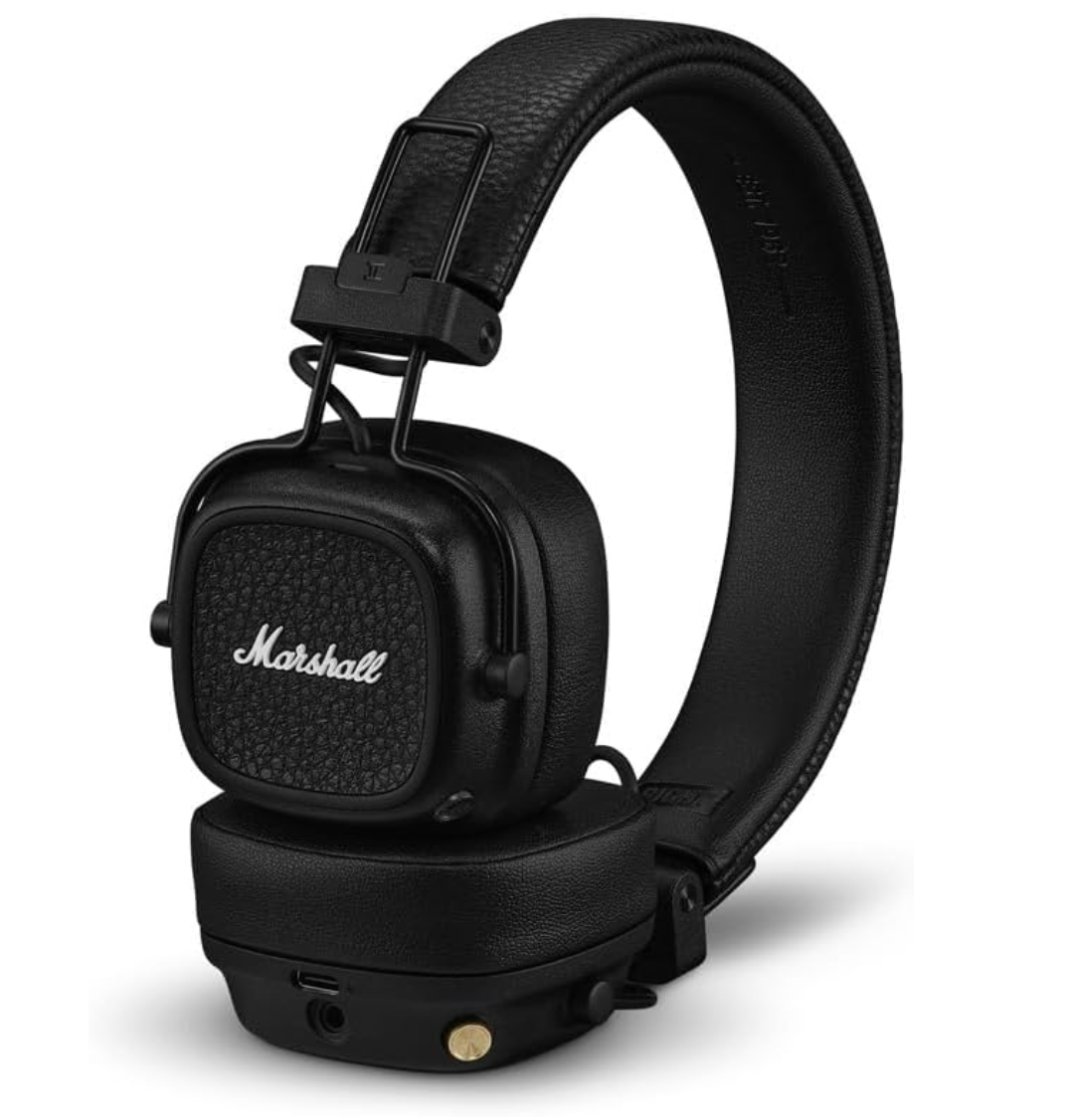
For anyone who’s ever been tempted by Marshall’s signature guitar-amp look in headphone form but couldn’t justify the premium price, the Major V wireless on-ears just hit their lowest price ever, according to price trackers. Originally $169.99, they’re now available on Amazon for $89.99. That’s a 47% drop for a pair of headphones that stand out mostly for their sound signature, battery life, and retro design.
You don’t get active noise cancellation or high-end audio codecs like LDAC, but you do get over 100 hours of battery life (real-life usage may vary), punchy bass, and a retro-inspired design that folds up easily. The headphones run on 40mm dynamic drivers, and the tuning leans toward deep bass and crisp highs. They produce clean, rumbling sub-bass that doesn’t distort even at higher volumes, notes this PCMag review. Vocals stay clear thanks to subtle sculpting in the upper range. It’s not studio-flat audio, but it’s definitely fun. You can further tweak the sound in the Marshall app, which also lets you remap the M button for Spotify Tap or voice assistant access. The joystick on the right earcup handles volume and playback and feels intuitive, something many pricier headphones still haven’t nailed.
That said, there are trade-offs. You don’t get ANC, which means outside noise will creep in, especially with the on-ear design. There’s no Fast Pair, and no pouch to protect them when tossed into a bag. But you do get Bluetooth 5.3, support for wired playback, and surprisingly decent internal mics for calls. Battery life, again, is the standout—well over 100 hours per charge with USB-C or wireless charging via the right earcup. That alone makes the discounted price easier to swallow. If you want headphones that look good, sound bold, and don’t need to block out a plane engine, the Major V makes a strong case, especially while they’re under $90.
Warner Bros. Discovery’s board has formally rejected the $108 billion takeover bid from Paramount Skydance, the company announced. WBD said it remains committed to its $82.7 billion deal with Netflix, which would close some time next year, pending regulatory approval.
“[The board] has unanimously determined that the tender offer launched by Paramount Skydance on December 8, 2025 is not in the best interests of WBD and its shareholders and does not meet the criteria of a “Superior Proposal” under the terms of WBD’s merger agreement with Netflix announced on December 5, 2025,” the studio said in the press release.
Paramount’s offer was funded in part by sovereign wealth funds from Saudi Arabia, Qatar and Abu Dhabi, so it could have triggered a national security review by the US government. However, Paramount said that even if those entities dropped out, the company’s owners (the Ellisons) would “backstop the full amount of the bid.”
However, the board said that Paramount “has consistently misled WBD shareholders that its proposed transaction has a ‘full backstop’ from the Ellison family. It does not, and never has,” adding that “the terms of the Netflix merger are superior.” WBD explained that Paramount is relying on an “opaque revocable trust” for said backstop which is “no replacement for a secured commitment by a controlling shareholder.” WBD’s board also noted that Paramount expects to achieve $9 billion in cost synergies from the merger, and that “would make Hollywood weaker, not stronger.”
In a statement, Netflix co-CEO Ted Sarandos said that “the Warner Bros. Discovery board reinforced that Netflix’s merger agreement is superior and that our acquisition is in the best interest of stockholders. This was a competitive process that delivered the best outcome for consumers, creators, stockholders and the broader entertainment industry.”
Paramount has yet to comment, but the company has previously said that its $30 per share offer is a better deal, due to the all-cash nature (compared to 84 percent cash for Netflix) and fact that it would have a clearer path to regulatory approval due to the Ellison’s supposedly tight relationship with President Trump.
This article originally appeared on Engadget at https://www.engadget.com/entertainment/warner-bros-discovery-rejects-paramounts-hostile-bid-131055882.html?src=rss
When Amazon’s latest Echo speakers arrived in October, a feature the company spent time hyping during its fall devices event was missing. Alexa Home Theater arrived in late November, allowing owners of a recent Fire TV device and either of the new Echo speakers the ability to use up to five units and an Echo Sub as a surround sound setup. The main selling point is that the underlying tech allows you to put the speakers wherever you want and Alexa Home Theater will handle the rest. A robust array of speakers is a considerable investment, though, and there are limitations to Amazon’s latest play for your living room.
What is Alexa Home Theater?
At the most basic level, Alexa Home Theater is an automatic room calibration tool that’s akin to Trueplay from Sonos, SpaceFit Sound from Samsung or Sound Field Optimization from Sony. The feature, no matter which company builds it, is designed to automatically tune the acoustics of a soundbar or other speakers to the acoustics of the room. These tools allow companies to account for things like high ceilings and weird angles, adjusting audio performance so things sound their best no matter how your home is designed.
Like similar technologies from other companies, Alexa Home Theater and the latest Echo speakers also support spatial awareness. This allows you to position the speakers however they best fit in your living room and the underlying tech will balance the sound based on their proximity to each other. Gone are the days when you have to put rear speakers in a specific spot in order for them to work.
For the latest Echo speakers, Amazon overhauled Alexa Home Theater to accommodate more devices in a single setup. Now you can use up to five Echo Dot Max or second-generation Echo Studio units and a subwoofer at the same time. Of course, this means you can put the compact speakers around the perimeter of your home theater space, providing more immersive surround sound than a single speaker or two can muster. Alexa Home Theater recognizes each Echo speaker and adjusts the system accordingly.
What hardware do I need to use it?
My test setup was four Echo Studio speakers and a Fire TV Stick 4K Max.
Billy Steele for Engadget
If you want to use more than two Echo speakers and a subwoofer in your Alexa Home Theater setup, you’ll need the latest Amazon devices to make that happen. That list includes the Echo Dot Max and second-gen Echo Studio, along with the Echo Sub if you crave more bass. You’ll also need a Fire TV streaming gadget for the multi-speaker option, but it has to be one of the following:
Fire TV Cube (3rd gen)
Fire TV Stick 4K Max (2nd gen)
Fire TV Stick 4K (2nd gen)
Fire TV Stick 4K Plus
You might be wondering why Alexa Home Theater isn’t supported on other (older) Amazon streaming and audio models. Well, it is… but you’ll only be allowed to pair just two Echo speakers of the same model with an optional subwoofer for a total of three devices. That list of supported models is quite long, but it accounts for the two most recent generations of both the Echo and Echo Dot in addition to the Echo Pop, Echo Plus (2nd gen) and the original Echo Studio. This two-speaker method is also supported on more Fire TV devices, including some standalone TVs with Amazon’s streaming platform built in.
In that scenario, it means you could pair two Echo speakers with a subwoofer, for example, and have them play the same audio content with Alexa Home Theater.
Currently, Amazon says these are Fire TV devices that don’t support Alexa Home Theater:
Fire TV Stick 4K Select
Amazon Fire TV 2-Series
Fire TV 4-Series (2025 Release, newest model)
Fire TV Omni QLED Series (2025 Release, newest model)
Fire TV Omni Mini-LED Series (2024 Release, newest model)
How to set up Alexa Home Theater
Like nearly all home theater speakers and soundbars these days, setting up Alexa Home Theater is easy once you have the required hardware in place. Unlike a lot of the competition, this initial configuration isn’t done in a mobile app — it’s handled by the Settings menu on a compatible Fire TV device. Before you initiate the setup process, you’ll want to make sure your Echo speakers and Fire TV device are up to date. You can ask Alexa to check for updates to the speakers, while you’ll need to check the Device & Software section of the Fire TV Settings menu for those gadgets. Once everything is current, here are the steps to follow to get started with Alexa Home Theater:
Go to Settings on your Fire TV.
Select Display & Sounds.
Select Alexa Home Theater.
Select Create Alexa Home Theater.
Select the compatible Echo speakers. You can also add an Echo Sub during this step.
Follow the on-screen instructions to configure the system. After you select either the second-gen Echo Studio or the Echo Dot Max, hit Next and the system will calibrate automatically. If you select other Echo speakers, hit Next and then confirm the placement of the speakers before calibration.
When the setup is complete, the Alexa Home Theater system is ready to use. To do so, select either Home or Watch Preview.
Using Alexa Home Theater with four Echo Studio speakers
The two Echo Studio speakers that flanked my TV primarily handled dialogue.
Billy Steele for Engadget
Like most home theater gear, the Fire TV will play short audio clips through each Echo speaker and your TV speakers to determine their location and to calibrate the group to the room. From start to finish, the setup process takes about five minutes — so long as your Fire TV and all speakers are running up-to-date firmware. It’s a quick and straightforward process, which meant I was watching Fallout soon after putting all of the speakers in place.
While streaming that video game-inspired original series, the Echo Studios provided an immersive audio experience with directional sound and crisp, clear dialogue. The front two speakers handle speech, but there’s some nuance in what direction it’s coming from on screen. Rear speakers are tasked with the bulk of the environmental noise, whether that’s nearby water, passing cars, rain or gunfire — just to name a few. I was also pleasantly surprised by how much bassy rumble these speakers produced during movies and shows. I didn’t think a single unit was particularly adept at low-end tone during my review, but I think it would be just fine to use a collection of Echo Studios without having to add the Echo Sub.
The overall audio performance here is certainly a boost over any TV’s built-in speakers, but the sense of immersion isn’t as complete as what a soundbar and a pair of rear satellite speakers can provide. Specifically, I felt like the foursome of Echo Studio speakers in my test setup stumbled with the height channels. Despite the angled design of the devices and their multi-driver configurations, the effect of overhead and aerial sounds was quite subdued.
And the worst part about this is that there’s no way to try to fix it with settings. That’s because there are minimal settings to adjust once Alexa Home Theater is set up. There are two features — dialogue boost and volume leveler — but those are both Fire TV settings rather than items meant for any connected speakers. In the Alexa Home Theater menu, there’s a lip sync tool to address any audio lag, which is a standard item for any soundbar. I would’ve loved to see some kind of channel adjustment at the very least, so that I could dial in the mix a bit rather than relying on Amazon’s preferences.
If you turn to Alexa for help, the assistant can only change bass, treble and midrange, and it can only do so when prompted by voice commands. When I asked for it to turn up the dialogue, it seemed to just increase the volume. If I asked it to adjust the height channels, Alexa responded affirmatively, but it didn’t sound like any tweaks were applied. Amazon later confirmed that those basic EQ changes are Alexa and actually do here.
Another gripe I have with Alexa Home Theater is the inability to connect my phone or another device to the entire group for music. You can still sync with individual Echo Studio speakers for music via Bluetooth, but if you want to use the whole shebang, you’ll have to play your tunes from the Fire TV or ask Alexa to help.
The Fire TV platform has plenty of audio streaming apps, but Apple Music isn’t there and that’s where my monthly subscription resides. You have to add the Apple Music skill to the Alexa app on your phone first, then you can stream content from the service by asking Amazon’s assistant. For other services with Fire TV apps, you’re using your TV to play music, and most of the time I want the TV off and to just pick up my phone to blast some Spiritbox. I also like to control the queue from my phone, but alas that’s not an option here.
Wrap-up
Amazon’s new Echo Studio is a complete redesign from the 2019 model.
Billy Steele for Engadget
The main issue with using four Echo Studios and a Fire TV is the cost. For the speakers alone, you’re looking at nearly $900 for the setup I tested. When the new Echo speakers were announced in September, Amazon said it would offer Alexa Home Theater bundles with multiple speakers, but I couldn’t find those on the company’s website.
For comparison, Sonos currently offers multiple configurations of the Beam soundbar and either Era 100 speakers or a sub for less than $800. For the same price as four Echo Studio speakers, you can get Sony’s Bravia Theater System 6, which comes with a soundbar, rear speakers and a subwoofer. There are other options from other companies as well in the $800 range, and most people will likely be happier with a dedicated soundbar-based setup than four Echo units and a subwoofer. Hello, AirPlay and Google Cast.
From an aesthetic perspective, I can see why someone might opt for multiple Echo speakers instead of a mid-sized (or larger) soundbar. Two Echo Studios on either side of my TV with the two rear units tucked away on a shelf certainly creates a clean look. And in terms of sound, using two Echo Studio speakers, let alone four like I tested, will provide a noticeable boost over a TV’s built-in speakers. However, the lack of customization and the inability to control music from my phone for an Alexa Home Theater group makes it hard to recommend Amazon’s latest for shoppers looking for more immersive audio in the living room. Hopefully the company will continue to refine this feature so that it’s more capable in the future.
This article originally appeared on Engadget at https://www.engadget.com/audio/speakers/alexa-home-theater-everything-you-need-to-know-about-amazons-newest-echo-feature-130000328.html?src=rss
An anonymous reader quotes a report from the New York Times: Two of the largest food-delivery app companies have made a last-ditch effort to overturn tipping laws in New York City that go into effect in January just as its next mayor, who has been highly critical of the companies and the app industry, takes office. Tips to delivery workers have plummeted since some food-delivery apps switched to showing the tipping option only after a purchase had been completed; that change came after New York City established the country’s first minimum pay-rate for the workers in 2023. The new laws will require the apps to suggest a minimum tip of 10 percent at checkout, though customers can contribute more or less, or nothing at all.
Two of the app companies, DoorDash and Uber, filed a joint federal lawsuit in the Southern District of New York late last week targeting the City Council legislation, arguing that the new rules violated the First Amendment by requiring them to “speak a government-mandated message” and exceeded the Council’s authority. Although tipping will be optional under the law, the companies wrote in the suit that a “mandated pre-delivery 10 percent tip suggestion” would cause customers to use the app less because they were suffering from “tipping fatigue.” “Lessened engagement would result in fewer orders,” the suit said.
So many great productivity hacks come from the Japanese manufacturing industry. The 5S technique helps you keep your workspace clean so you can get more done, kaizen helps you improve the processes and workflow of your job, and kanban helps you schedule your tasks in the most efficient way. These are helpful even if you’re not working within the famed Toyota Production System; they’re adaptable to fit all kinds of work scenarios, which is similarly true for the 3 Ms that originated there, too. The 3 Ms are kinds of waste you should identify and eliminate to keep your work running smoothly. Once you learn how to identify and get rid of them, you can be even more productive, whether you’re using kanban, kaizen, or anything else.
What are the 3 Ms?
Lean process thinking, or lean manufacturing, is a production method that seeks to save time within the production process. The 5S technique is en elemental part of lean thinking, as are the 3 Ms. They are “muda,” “mura,” and “muri,” and they all refer to kinds of wasteful practices that slow you down and keep you from being productive.
By identifying and eliminating them, you can streamline everything you need to do. To get them to work in your daily life, you need to adapt them a little, but once you get in the habit of recognizing where things are getting held up and making the appropriate changes, you’ll be breezing through your work.
Identifying and eliminating the 3 Ms
Here’s what each of the three Ms is all about:
Muda translates from Japanese to mean “futility” or “uselessness.” It’s anything that doesn’t add value to the work you’re doing and it comes in two forms: Type 1 is non-value-added activities in your process that are still necessary for your end result, like safety checks, which don’t give the producers of physical goods any kind of financial reward, but do have a benefit for customers and eliminate financial risk for producers. You can’t really avoid Type 1, but you should focus on identifying and eliminating Type 2: Activities that add no value to the process or the end result.
Mura is any kind of unevenness in your operation. Anything that isn’t uniform, regular, or scheduled is mura. Too much mura will result in muda. For instance, if you’re working on a bunch of tasks for a project at your job and your coworker is only working on one or two, it’s actually wasteful because you’ll be waiting around on them to keep moving forward with yours.
Muri is any overburden on a tool or person. It can result from mura, as in the example above, but can also spring from overutilization. For your purposes, think of it referring to you. When you’re overwhelmed and overworked or lack resources, you’re not as productive. That’s muri.
To eliminate muda, identify which unnecessary steps you’re taking in your work. Familiarize yourself with kaizen here, as it’s a process designed to get you to work efficiently. If you find that you’re often doing unnecessary tasks that don’t have much value in the end, like changing the colors and fonts on a presentation deck that’s already completed or constantly tweaking your emails before sending, consider that you might be giving yourself too much time to do them. Parkinson’s Law says that the more time you have to do something, the longer you’ll draw it out and complicate it. Reduce the amount of time you give yourself to complete certain tasks so the pressure of getting it done helps you focus only on the elements that are absolutely necessary.
To eliminate mura, start tracking the process of your work and identify what’s holding you up. Is it waiting on client emails? Is it waiting for a coworker to finish their section of a project? Is it spending too much time in meetings and not enough time actually working? Is it a bad scheduling technique on your end? It might take a few weeks of diligent time tracking, but eventually, the pattern will emerge. If you’re spending too much time waiting on client emails, develop a system whereby you send emails with questions for the next day’s work during the afternoon, giving them time to respond by the time you need to do it, for instance. If it’s your own poor scheduling, start making better to-do lists using kanban or the 1-3-5 method, which reduces your daily tasks to just nine and has you focus on the most essential ones in order of importance.
Finally, to eliminate muri, assess your own burden at work. If you’re missing deadlines, feeling overwhelmed, not being given the right amount of resources, or having too much piled on you, you need to streamline what you’re working on so you don’t completely burn out. Try using the ABCDE method to give a ranking to all of your responsibilities. The A tasks are the most important, followed by the B tasks, but you’ll feel less overwhelmed once you realize the C tasks are optional, D stands for delegate, and E stands for eliminate. Delegate tasks to someone else if you’re overburdened—and don’t do unnecessary ones at all. Some burdens, like meetings, are unavoidable, but when possible, schedule yourself at least one day a week where you have no meetings. Remember to take regular breaks to stay productive, utilizing a method like the time-tested Pomodoro technique. If that method isn’t working for you, try the MIT—or most important thing—technique, which helps you reframe your perception of your to-dos around the impact they’ll have, not the amount of resources they’ll take. Playing around with different approaches is a little time-consuming and might seem like its own kind of waste, but it’s necessary to find a system that works for you.
Training yourself to recognize and eliminate these different kinds of waste will streamline your work, reduce your burden, and keep things running more smoothly so you can actually be productive, whether you’re building a Camry or a new investor spreadsheet.
As the Trump administration makes announcementafterannouncement about its efforts to promote the US fossil fuel industry, the industry isn’t exactly jumping at new opportunities.
Some high-profile oil and gas industry leaders and organizations have objected to changes to long-standing government policy positions that give companies firm ground on which to make their plans.
And the financial picture around oil and gas drilling is moving against the Trump administration’s hopes. Though politicians may tout new opportunities to drill offshore or in Arctic Alaska, the commercial payoff is not clear and even unlikely.
By executive order last month, Donald Trump launched his so-called “Genesis Mission.”
Described as a “historic national effort” to “invest in AI-enabled science to accelerate scientific advancement,” Trump claimed his mission would address key challenges to American energy dominance, innovation, and national security.
This mission, Trump boasted, would be a game-changer to science akin to putting a man on the moon or firing the first nuclear weapons. By building “an integrated AI platform” trained on “the world’s largest collection” of federal scientific data sets, he promised, the government could set off cascades of scientific breakthroughs.
Amazon is in discussions with OpenAI to invest $10 billion in the company while supplying more of its AI chips and cloud computing services, according to The Financial Times. The deal would push OpenAI’s valuation over $500 billion but is likely to raise more questions about the company’s circular investment agreements involving chips and data centers.
The two companies are also in talks about the possibility of OpenAI helping Amazon with its online marketplace, similar to deals it has made with Etsy, Shopify and Instacart. However, any agreement still wouldn’t allow Amazon to market OpenAI’s most advanced models on its developer cloud platform, as Microsoft holds the exclusive rights to those until the 2030s.
OpenAI recently restructured its agreement with Microsoft to allow it to use data center capacity from other suppliers. Around the same time, it made a string of deals with NVIDIA, Oracle, AMD and others to build out data center capacity and acquire or rent AI chips.
The new deal would require OpenAI to use Amazon’s Trainium AI chips and rent more data center capacity from Amazon Web Services (AWS). That’s on top of the $38 billion that OpenAI has already committed to renting servers from AWS over the next seven years.
These deals have sounded alarms among investors considering their circular nature. In many of those, including this latest Amazon deal, OpenAI is taking investment money and then sending that cash back to the same company for infrastructure or chips. And the amounts are staggering, with just two companies, Softbank and Oracle, spending a combined $400 billion on new data centers for OpenAI’s compute needs. And so far, OpenAI has lost more money than it makes.
This article originally appeared on Engadget at https://www.engadget.com/ai/amazon-in-talks-to-invest-10-billion-in-openai-and-supply-its-trainium-chips-103653151.html?src=rss
A new Arctic Report Card recap shows how the Arctic has transformed in just 20 years, warming about twice as fast as the global average and losing most of its oldest sea ice. It’s also triggering cascading impacts from “Atlantification” to permafrost-driven “rusting rivers” and more destructive storms. Scientific American reports: The first Arctic Report Card was released by the National Oceanic and Atmospheric Administration in 2006. Since then the region has warmed twice as fast as the global average. About 95 percent of the oldest, thickest sea ice is gone — “the sliver that remains is collected in an area north of Greenland. Even the central Arctic Ocean is becoming warmer and saltier, causing more ice melt and changing how much heat is released into the atmosphere in a way that affects weather patterns around the world. Those are just some of the stark changes 20 years have wrought. The findings were highlighted in the 2025 Arctic Report Card, released on Tuesday.
The Arctic Ocean is undergoing what scientists are calling “Atlantification” — a process where warm, salty water from the Atlantic flows north, changing how waters of different temperatures and densities are layered in the Arctic, disrupting ecosystems and altering how heat moves from the water to the air. […] The Arctic is simply becoming wetter, with more precipitation falling as rain instead of snow. June snow cover over the entire Arctic is half of what it was 60 years ago, the report found. Permafrost also continues to thaw, releasing once trapped carbon into the atmosphere and disgorging iron and other elements that have turned rivers and streams orange. These “rusting rivers,” found in more than 200 watersheds, are more acidic than normal and have elevated levels of toxic metals that endanger local ecosystems. And as the permafrost thaws, the tundra of the Arctic biome is shrinking, and the boreal forest biome is creeping northward, disrupting ecosystems.
Tesla’s sales in California should be suspended for 30 days because its marketing around Autopilot and Full Self-Driving misled consumers, a California administrative law judge has ruled. Back in 2022, the California DMV accused the automaker of using deceptive language to advertise those products and making it seem like its vehicles are capable of level 5 autonomous driving. Tesla has since added the word “Supervised” to the name of its Full Self-Driving assistance technology.
As Bloomberg notes, the DMV asked the administrative law judge if a suspension is warranted based on the evidence it presented. Even though the judge has agreed that it is, the agency will give Tesla 90 days to explain its side and remove any untrue or misleading language in the marketing materials for the products. Tesla’s sales and manufacturing in California will only be suspended if it doesn’t comply within that timeframe.
“We’re really asking Tesla to do their job, as they’ve done in other markets, to properly brand these vehicles,” said California DMV director, Steve Gordon, in a statement.
A suspension in California could be devastating for the automaker. While new Tesla registrations in the state plummeted earlier this year, Reuters says California accounts for nearly a third of the company’s sales in the country. In addition, Tesla only manufactures its Model S and X vehicles in its Fremont plant, where it also produces Model 3 and Model Y units.
This article originally appeared on Engadget at https://www.engadget.com/transportation/evs/tesla-used-deceptive-language-to-market-autopilot-california-judge-rules-035826786.html?src=rss
An anonymous reader quotes a report from the Wall Street Journal: The alleged perpetrator had improper access to virtually every South Korean adult’s personal information: names, phone numbers and even the keycode to enter residential buildings. It was one of the biggest data breaches of recent years and it has sent the company it targeted — Coupang, South Korea’s equivalent of Amazon — reeling, generating lawsuits, government investigation and calls to toughen penalties against such leaks. The leak went undetected for nearly five months, hitting Coupang’s radar on Nov. 18 only after a customer flagged suspicious activity.
At first, Coupang, which was founded by a Korean-American entrepreneur, said it had experienced a data “exposure” affecting roughly 4,500 customer accounts. But within days, the e-commerce firm revised the figure: The leak exposed up to roughly 34 million user accounts in South Korea — a sum representing more than 90% of the country’s working-age population. Coupang started calling the incident a “leak” after Korean regulators took issue with the company’s prior word choice. “The Whole Nation Is a Victim,” read one local news headline.
An investigation has found that the alleged perpetrator had once worked in South Korea as a software developer for authentication systems at Coupang, which is known for its blockbuster U.S. initial public offering a few years ago. The suspected leaker is believed to be a Chinese national who has moved back to China and is now on the lam, South Korean officials say. They haven’t named the person. Even after leaving the firm roughly a year ago, the suspect secretly held on to an internal authentication key that granted him unfettered access to the personal information of Coupang users, South Korean authorities and lawmakers say. The infiltration, using overseas servers, started on June 24. By using the login credentials, the suspect was able to appear as if he were still a Coupang employee when accessing the company’s systems.
The EU is moving to soften its planned 2035 ban on internal combustion cars by allowing a small share of low-emission engines. “The less stringent limit would leave room for automakers to continue selling some plug-in hybrids, which have both electric and internal combustion engines and can use the combustion engine to recharge the battery without the need to find a charging station,” reports the Associated Press. From the report: The proposal from the EU’s executive commission would change provisions of 2023 legislation requiring average emissions in new cars to equal zero, or a 100% reduction from 2021 levels. The new proposal would require a 90% emissions reduction. That means in practical terms that most cars would be battery-only but would leave room for some cars with internal combustion engines.
Automakers would have to compensate for the added emissions by using European steel produced by methods that emit less carbon, and through use of climate neutral e-fuels made from renewable electricity and captured carbon dioxide and biofuels made from plants. EU officials say changing the limit will not affect progress toward making the 27-country bloc’s economy climate neutral by 2050. That means producing only as much carbon dioxide as can be absorbed by forests and oceans or by abatement methods such as storing it underground. CO2 is the primary greenhouse gas blamed by scientists for climate change.
A Reuters investigation found that Meta knowingly tolerated large volumes of scam and illegal ads from China worth billions in revenue. Reuters reports: Though China’s authoritarian government bans use of Meta social media by its citizens, Beijing lets Chinese companies advertise to foreign consumers on the globe-spanning platforms. As a result, Meta’s advertising business was thriving in China, ultimately reaching over $18 billion in annual sales in 2024, more than a tenth of the company’s global revenue. But Meta calculated that about 19% of that money — more than $3 billion — was coming from ads for scams, illegal gambling, pornography and other banned content, according to internal Meta documents reviewed by Reuters.
The documents are part of a cache of previously unreported material generated over the past four years by teams including Meta’s finance, lobbying, engineering and safety divisions. The cache reveals Meta’s efforts over that period to understand the scale of abuse on its platforms and the company’s reluctance to introduce fixes that could undermine its business and revenues. The documents show that Meta believed China was the country of origin of roughly a quarter of all ads for scams and banned products on Meta’s platforms worldwide. Victims ranged from shoppers in Taiwan who purchased bogus health supplements to investors in the United States and Canada who were swindled out of their savings. “We need to make significant investment to reduce growing harm,” Meta staffers warned in an internal April 2024 presentation to leaders of its safety operations.
To that end, Meta created an anti-fraud team that went beyond previous efforts to monitor scams and other banned activity from China. Using a variety of stepped-up enforcement tools, it slashed the problematic ads by about half during the second half of 2024 — from 19% to 9% of the total advertising revenue coming from China. Then Meta Chief Executive Mark Zuckerberg weighed in. “As a result of Integrity Strategy pivot and follow-up from Zuck,” a late 2024 document notes, the China ads-enforcement team was “asked to pause” its work. Reuters was unable to learn the specifics of the CEO’s involvement or what the so-called “Integrity Strategy pivot” entailed. But after Zuckerberg’s input, the documents show, Meta disbanded its China-focused anti-scam team. It also lifted a freeze it had introduced on granting new Chinese ad agencies access to its platforms. One document shows that Meta shelved yet other anti-scam measures that internal tests had indicated would be effective. The document didn’t detail the specifics of those measures.
Meta took these steps even as an outside consultant it hired produced research that warned “Meta’s own behavior and policies” were fostering systemic corruption in the Chinese market for ads targeting users in other countries, additional documents show. The upshot: Within a few months of Meta’s brief crackdown, a new crop of Chinese advertising agencies was flooding Facebook and Instagram with prohibited ads. By mid-2025, banned ads climbed back to about 16% of Meta’s China revenue. Rob Leathern, who was a senior director of product management at Facebook until 2020 and is no longer at the company, said the scale of predatory advertising revealed in the documents represents a major breakdown in consumer protections at the social media giant. “The levels that you’re talking about are not defensible,” he said of the percentage of abusive ads. “I don’t know how anyone could think this is okay.”
Quilter says its AI designed a complex Linux single-board computer in just one week, booting Debian on first power-up. “Holy crap, it’s working,” exclaimed one of the engineers. Tom’s Hardware reports: LA-based startup Quilter has outlined Project Speedrun, which marks a milestone in computer design by AI. The headlining claims are that Quilter’s AI facilitated the design of a new Linux SBC, using 843 parts and dual-PCBs, taking just one week to finish, then successfully booting Debian the first time it was powered up. The Quilter team reckon that the AI-enhanced process it demonstrated could unlock a new generation of computer hardware makers.
An anonymous reader quotes a report from the Guardian: Mark Carney says that amid a fundamental shift to the nature of globalization, his government will catalyze the growth in both the public and private sector. But Canadian linguists say that’s a problem. Language experts have called out the Canadian prime minister’s growing “utilization” of British spellings in key documents — including the recent federal budget and a press release issued following a meeting with Donald Trump.
Carney, who served as the governor of the bank of England for seven years, appears to have run afoul of Canadian linguistic norms, returning to his home country with a penchant for using ‘s’ instead of ‘z’- a hallmark of British spellings. In an open letter (PDF) chastising the prime minister, six linguists have asked his office, the Canadian government and parliament to stick to Canadian English spelling, “which is the spelling they consistently used from the 1970s to 2025.” They warned that if governments start to use other systems for spelling, “this could lead to confusion about which spelling is Canadian.”
Canadian English is a source of immense pride for the nation’s pedants. But the country’s distinct and somewhat arbitrary spelling reflects the legacy of how Canada was colonized. “Canadian English evolved through Loyalist settlement after the American Revolutionary War, subsequent waves of English, Scottish, Welsh and Irish immigration, and from European and global contexts,” the letter says, with the current accepted spellings of words reflecting “global influences and cultures from around the world represented in our population, as well as containing words and phrases from Indigenous languages.” The linguists pointed out that Canada’s distinct style of spelling was widespread in media and government documents, with this deliberate decision reflecting a desire to preserve a vital element of the country’s “national history, identity and pride.”
Despite changing its name and using decidedly bird-free branding, X is trying to hold on to its original Twitter trademarks, TechCrunch reports. The xAI-owned social media platform has updated its terms of service to include references to Twitter after previously only mentioning X, and seemingly attempted to counter a startup’s petition to cancel the company’s Twitter trademarks with a petition of its own.
The startup X appears to be responding to is Operation Bluebird, a company cofounded by former Twitter general counsel Stephen Coates that went public last week with plans to capture what remains of Twitter for its own use. The first step in that process was filing a petition with the US Patents and Trademark Office to cancel X’s control of Twitter’s trademarks.
“The TWITTER and TWEET brands have been eradicated from X Corp.’s products, services and marketing, effectively abandoning the storied brand, with no intention to resume use of the mark,” Operation Bluebird explained in the petition. “Petitioner seeks to use and register the TWITTER and TWEET brands for new products and services, including a social media platform that will be located at the website twitter.new.”
In fairness to Operation Bluebird, Elon Musk was very open about his plan to abandon the Twitter name and bird logo after he acquired the company in 2022. “And soon we shall bid adieu to the twitter brand and, gradually, all the birds,” Musk posted in July 2022, not long before Twitter was rebranded to X. Even after the platform rebranded, though, at least one remnant of the original Twitter brand has stuck around: Twitter.com still redirects to X.com.
And soon we shall bid adieu to the twitter brand and, gradually, all the birds
The updated terms of serviceTechCrunch spotted now say that as of January 16, 2025, “nothing in the Terms gives you a right to use the X name or Twitter name or any of the X or Twitter trademarks, logos, domain names, other distinctive brand features, and other proprietary rights, and you may not do so without our express written consent.” The company’s counterpetition also reiterates that the Twitter trademarks are X’s “exclusive property.”
Engadget has contacted Operation Bluebird for a response to X’s petition. We’ll update this article if we hear back.
At the time of writing, Operation Bluebird has convinced over 145,200 people to claim a handle on the company’s new social platform. Maybe X sees that early interest as a threat, but it’s just as possible Operation Bluebird’s public comments were enough to tip the company off so it could try to hold on to trademarks it clearly believes still hold some value.
This article originally appeared on Engadget at https://www.engadget.com/social-media/x-was-spooked-enough-by-new-twitter-to-change-its-terms-of-service-231138305.html?src=rss
This is the video of the Slow Mo Guys banging a drum covered in a rainbow of paint powder to capture the movement of the pigment in ultra slow motion as the shockwaves blast it all over the place. I can’t imagine this being a rainbow anybody would want to taste, but I’m not anybody. I’m already coughing up Skittles just watching.