For most of photography’s roughly 200-year history, altering a photo convincingly required either a darkroom, some Photoshop expertise, or, at minimum, a steady hand with scissors and glue. On Tuesday, OpenAI released a tool that reduces the process to typing a sentence.
It’s not the first company to do so. While OpenAI had a conversational image-editing model in the works since GPT-4o in 2024, Google beat OpenAI to market in March with a public prototype, then refined it to a popular model called Nano Banana image model (and Nano Banana Pro). The enthusiastic response to Google’s image-editing model in the AI community got OpenAI’s attention.
OpenAI’s new GPT Image 1.5 is an AI image synthesis model that reportedly generates images up to four times faster than its predecessor and costs about 20 percent less through the API. The model rolled out to all ChatGPT users on Tuesday and represents another step toward making photorealistic image manipulation a casual process that requires no particular visual skills.
GitHub will begin charging $0.002 per minute for self-hosted Actions runners used on private repositories starting in March. “At the same time, GitHub noted in a Tuesday blog post that it’s lowering the prices of GitHub-hosted runners beginning January 1, under a scheme it calls ‘simpler pricing and a better experience for GitHub Actions,'” reports The Register. “Self-hosted runner usage on public repositories will remain free.” From the report: Regardless of the public repo distinction, enterprise-scale developers who rely on self-hosted runners were predictably not pleased about the announcement. “Github have just sent out an email announcing a $0.002/minute fee for self-hosted runners,” Reddit user markmcw posted on the DevOps subreddit. “Just ran the numbers, and for us, that’s close to $3.5k a month extra on our GitHub bill.” […]
“Historically, self-hosted runner customers were able to leverage much of GitHub Actions’ infrastructure and services at no cost,” the repo host said in its blog FAQ. “This meant that the cost of maintaining and evolving these essential services was largely being subsidized by the prices set for GitHub-hosted runners.” The move, GitHub said, will align costs more closely with usage. Like many similar changes to pricing models pushed by tech firms, GitHub says “the vast majority of users … will see no price increase.”
GitHub claims that 96 percent of its customers will see no change to their bill, and that 85 percent of the 4 percent affected by the pricing update will actually see their Actions costs decrease. The company says the remaining 15 percent of impacted users will face a median increase of about $13 a month. For those using self-hosted runners and worried about increased costs, GitHub has updated its pricing calculator to include the cost of self-hosted runners.
NASA has a leader again. On Wednesday, the US Senate confirmed Jared Isaacman as the agency’s administrator, with a 67-30 vote. The billionaire entrepreneur (and Elon Musk ally) will have his hands full navigating political waters while managing a severely downsized workforce.
You might recall that this wasn’t Isaacman’s first shot at the job. He was nominated to the post earlier this year. But days before he was scheduled for a confirmation vote, President Donald Trump withdrew his nomination.
The reversal reportedly came after the president was told that Isaacman had donated to prominent Democrats. (Trump’s description of his decision, as based on a “thorough review of prior associations,” seemed to lend weight to that.) However, that was also around the time the Trump-Musk feud was about to boil over. Regardless, Isaacman was nominated again in November.
The new NASA head reportedly has broad support from the space community. (That makes him something of an aberration among Trump appointees in scientific fields.) “I am optimistic that Mr. Isaacman will bring a steady hand and clear vision to NASA,” Sen. Marie Cantwell (D-WA) told The New York Times.
The new administrator has traveled to space twice on private missions. In a document published in May, Isaacman shared his three objectives for NASA. These included human missions to the Moon, Mars and deep space; helping the organization do more with a constrained budget; and cost-cutting through industry and academic partnerships.
This article originally appeared on Engadget at https://www.engadget.com/science/space/jared-isaacman-is-nasas-new-leader-220833691.html?src=rss
YouTube announced that it will no longer share data with Billboard for the creation of the Billboard Hot 100 and other charts because the video platform doesn’t believe they’re calculated fairly. The issue lies, per YouTube, with how Billboard weighs on-demand streams in its rankings: The publication weighs streams from paid music streaming services over ad-supported streams, and YouTube just so happens to run an ad-supported streaming service.
Much like getting a book on The New York Times Bestseller list, landing a spot on the Billboard charts doesn’t carry quite the same importance that it once did. When the majority of the media people consume is digital and on-demand, sales numbers aren’t a guaranteed indicator of success or popularity. That’s part of the reason why Billboard started including digital streams in its calculations way back in 2007, and why it announced plans to adjust how it weighs on-demand streaming just yesterday.
On Tuesday, Billboard announced that it would add more weight to streaming to “better reflect an increase in streaming revenue and changing consumer behaviors.” Billboard currently counts an “album consumption unit” as an album sale, which either breaks down to “3,750 ad-supported or 1,250 paid/subscription on-demand official audio and video streams.” In the new ranking scheme that will go into effect in January 2026, “each album consumption unit will now equal 2,500 ad-supported or 1,000 paid/subscription on-demand official audio and video streams.”
“The change means that it will take 33.3 percent fewer ad-supported on-demand streams of songs from an album, and 20 percent fewer paid/subscription on-demand streams of songs from an album, to equal an album unit,” Billboard says. Put another way, things are moving in YouTube’s favor, just apparently not as quickly as the company wants.
YouTube characterizes pulling its data from Billboard as fighting for fairness and equality, but it’s equally connected to the platform’s demonstration of its own power. It already funnels billions of dollars to artists and labels from the money it makes on ads and subscriptions, but it clearly also wants the power to mint new chart-topping stars. “We are committed to achieving equitable representation across the charts and hopefully can work with Billboard to return to theirs,” YouTube says in its announcement. “Until then, if you’re curious about what music is making waves on YouTube, you can visit our charts here.”
This article originally appeared on Engadget at https://www.engadget.com/entertainment/music/billboards-charts-are-increasingly-weighted-towards-on-demand-streaming-but-not-enough-for-youtube-220238291.html?src=rss
The AI wars continue to heat up. Just weeks after OpenAI declared a “code red” in its race against Google, the latter released its latest lightweight model: Gemini 3 Flash. This particular Flash is the latest in Google’s Gemini 3 family, which started with Gemini 3 Pro, and Gemini 3 Deep Think. But while this latest model is meant to be a lighter, less expensive variant of the existing Gemini 3 models, Gemini 3 Flash is actually quite powerful in its own right. In fact, it beats out both Gemini 3 Pro and OpenAI’s GPT-5.2 models in some benchmarks.
Lightweight models are typically meant for more basic queries, for lower-budget requests, or to be run on lower-powered hardware. That means they’re often faster than more powerful models that take longer to process, but can do more. According to Google, Gemini 3 Flash combines the best of both those worlds, producing a model with Gemini 3’s “Pro-grade reasoning,” with “Flash-level latency, efficiency, and cost.” While that likely matters most to developers, general users should also notice the improvements, as Gemini 3 Flash is now the default for both Gemini (the chatbot) and AI Mode, Google’s AI-powered search.
Gemini 3 Flash performance
You can see these improvements in Google’s reported benchmarking stats for Gemini 3 Flash. In Humanity’s Last Exam, an academic reasoning benchmark that tests LLMs on 2,500 questions across over 100 subjects, Gemini 3 Flash scored 33.7% with no tools, and 43.5% with search and code execution. Compare that to Gemini 3 Pro’s 37.5% and 45.8% scores, respectively, or OpenAI’s GPT-5.2’s scores of 34.5% and 45.5%. In MMMU-Pro, a benchmark that test a model’s multimodal understanding and reasoning, Gemini 3 Flash got the top score (81.2%), compared to Gemini 3 Pro (81%) and GPT-5.2 (79.5). In fact, across the 21 benchmarking tests Google highlights in its announcement, Gemini 3 Flash has the top score in three: MMMU-Pro (tied with Gemini 3 Pro), Toolathlon, and MMMLU. Gemini 3 Pro still takes the number one spot on the most tests here (14), and GPT-5.2 topped eight tests, but Gemini 3 Flash is holding its own.
Google notes that Gemini 3 Flash also outperforms both Gemini 3 Pro and the entire 2.5 series in the SWE-bench Verified benchmark, which tests the model’s coding agent capabilities. Gemini 3 Flash scored a 78%, while Gemini 3 Pro scored 76.2%, Gemini 2.5 Flash scored 60.4%, and Gemini 2.5 Pro scored 59.6%. (Note that GPT-5.2 scored the best of the models Google mentions in this announcement.) It’s a close race, especially when you consider this is a lightweight model scoring alongside these company’s flagship models.
Gemini 3 Flash cost
That might present an interesting dilemma for developers who pay to use AI models in their programs. Gemini 3 Flash costs $0.50 per every million input tokens (what you ask the model to do), and $3.00 per every million output tokens (the result the models returns from your prompt). Compare that to Gemini 3 Pro, which costs $2.00 per every million input tokens, and $12.00 per every million output tokens, or GPT-5.2’s $3.00 and $15.00 costs, respectively. For what it’s worth, it’s not as cheap as Gemini 2.5 Flash ($0.30 and $2.50), or Grok 4.1 Fast for that matter ($0.20 and $0.50), but it does outperform these models in Google’s reported benchmarks. Google notes that Gemini 3 Flash uses 30% fewer tokens on average than 2.5 Pro, which will save on cost, while also being three times faster.
If you’re someone who needs LLMs like Gemini 3 Flash to power your products, but you don’t want to pay the higher costs associated with more powerful models, I could image this latest lightweight model looking appealing from a financial perspective.
How the average user will experience Gemini 3 Flash
Most of us using AI aren’t doing so as developers who need to worry about API pricing. The majority of Gemini users are likely experiencing the model through Google’s consumer products, like Search, Workspace, and the Gemini app.
Starting today, Gemini 3 Flash is the default model in the Gemini app. Google says it can handle many tasks “in just a few seconds.” That might include asking Gemini for tips on improving your golf swing based on a video of yourself, or uploading a speech on a given historical topic and requesting any facts you might have missed. You could also ask the bot to code you a functioning app from a series of thoughts.
You’ll also experience Gemini 3 Flash in Google Search’s AI Mode. Google says the new model is better at “parsing the nuances of your question,” and thinks through each part of your request. AI Mode tries to return a more complete search result by scanning hundreds of sites at once, and putting together a summary with sources for your answer. We’ll have to see if Gemini 3 Flash improves on previous iterations of AI Mode.
I’m someone who still doesn’t find much use for generative AI products in their day-to-day lives, and I’m not entirely sure Gemini 3 Flash is going to change that for me. However, the balance of performance gains with the cost to process that power is interesting, and I’m particularly intrigued to see how OpenAI responds.
Gemini 3 Flash is available to all users starting today. In addition to general users in Gemini and AI Mode, developers will find it in the Gemini API in Google AI Studio, Gemini CLI, and Google Antigravity, the company’s new agentic development platform. Enterprise users can use it in Vertex AI and Gemini Enterprise.
Larry Bushart, a man who was jailed for 37 days for reposting a Trump meme, has now sued the cops who allegedly schemed to keep him imprisoned for as long as possible simply because they disagreed with his point of view.
Bushart is a former cop who lost his post-retirement job after a seemingly vengeful sheriff jailed him for trolling a Charlie Kirk vigil post in a Facebook group. Upset that Kirk’s death commanded more attention than other victims of gun violence, Bushart posted a string of memes, among which was an image of Trump with an actual quote saying “We have to get over it” about a 2024 school shooting.
Perry County sheriff Nick Weems has since acknowledged that he “knew” that the meme referenced a prior school shooting. However, the entire time that Bushart was detained, Weems maintained that Bushart’s post incited “mass hysteria” from parents concerned that he was threatening violence at a local high school. Painting Bushart as indifferent to the supposed hysteria, Weems justified his arrest, as well as the $2 million bond ensuring Bushart couldn’t afford bail and remained behind bars.
Federal Communications Commission Chairman Brendan Carr today faced blistering criticism in a Senate hearing for his September threats to revoke ABC station licenses over comments made by Jimmy Kimmel. While Democrats provided nearly all the criticism, Sen. Ted Cruz (R-Texas) said that Congress should act to restrict the FCC’s power to intimidate news broadcasters.
As an immediate result of today’s hearing, the FCC removed a statement from its website that said it is an independent agency. Carr, who has embraced President Trump’s declaration that independent agencies may no longer operate independently from the White House, apparently didn’t realize that the website still called the FCC an independent agency.
“Yes or no, Is the FCC an independent agency?” Sen. Ben Ray Luján (D-N.M.) asked. Carr answered that the FCC is not independent, prompting Luján to point to a statement on the FCC website calling the FCC “an independent US government agency overseen by Congress.”
The security research team at iVerify Threat Intelligence have discovered a new Remote Access Trojan (RAT) that has been dubbed Cellik, and which is targeting Android users. It includes features typically seen on advanced spyware and delivers functionality that allows threat actors to spread their wares in a more stealthy fashion.
Intel’s foundry arm says it has crossed a major lithography milestone: it has announced successful acceptance testing of ASML’s TWINSCAN EXE:5200B High Numerical Aperture (High-NA) EUV scanner, one of the most advanced chipmaking tools currently in existence anywhere. It’s the first time the higher-throughput version of ASML’s High-NA platform
Bethesda is hard at work on The Elder Scrolls VI, per a recent interview with Game Informer. The hotly-anticipated game, already in playtesting, is currently “progressing really well” according to Todd Howard, with “The majority of the studio” working on it. Game Informer didn’t just speak to Todd Howard, though—they also collected statements
One of the big stories of last year’s Consumer Electronics Show in Las Vegas was the debut of Donut Lab’s diminutive but powerful electric motors. When I spoke with Donut earlier this year, the company told me that it was looking at applications ranging from drones to large automotive motors, but also things like wind turbines and even washing machines. Now, almost a year later, we have our first look at an electric vehicle that uses the technology, thanks to a new collaboration between Donut Lab and WATT Electric Vehicle Company.
WATT had previously developed the Passenger and Commercial EV Skateboard (PACES), a lightweight aluminum platform for low-volume EVs. Now, it’s integrating Donut’s motors, first with one for each rear wheel, although there will eventually be an all-wheel-drive variant, too.
The small EV chassis is rather intriguing—with the motors in the rear wheel hubs, the layout is even more space-efficient than a more conventional EV, which still needs to find a few cubic feet to package its drive unit(s). The two companies see plenty of potential for the platform, which they say could give rise to “multiple vehicle configurations from beach buggies to high-performance sports cars to commercial delivery vehicles.”
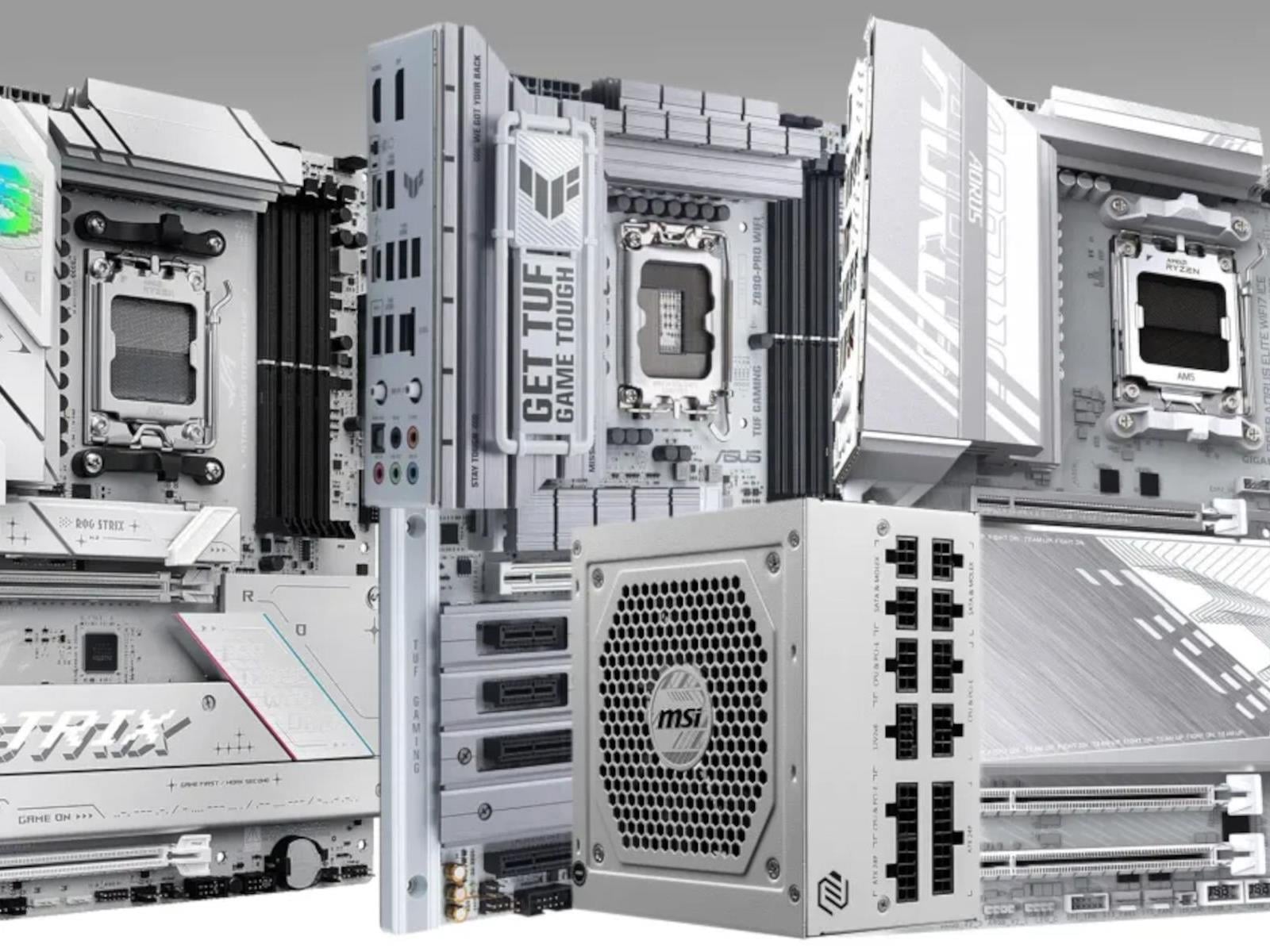
It’s the 2025 Holiday Season, and you know what that means—snowy-white motherboards, meant for PCs with cool temperatures and high performance. To encourage this, a number of reputable motherboard manufacturers have put their white motherboards on sale on Amazon, and we’ll be highlighting the 7 most compelling options below, sorted by price.
The entertainment industry’s most well-known awards show is heading to streaming. The Academy of Motion Picture Arts and Sciences (AMPAS) has announced that the Academy Awards, popularly known as the Oscars, will exclusively air on YouTube starting in 2029. The new deal means the awards show is abandoning its long-time partnership with ABC (owned by frequent Oscars heavyweight, The Walt Disney Company), though the Oscars will continue to air on the network through its 100th anniversary in 2028.
The Academy Awards will be joined by other Academy events and programming on the Oscars YouTube channel, including “the Governors Awards, the Oscars Nominations Announcement, the Oscars Nominees Luncheon, the Student Academy Awards, the Scientific and Technical Awards, Academy member and filmmaker interviews, film education programs, podcasts, and more,” AMPAS says. The Google Arts & Culture initiative will also digitize artifacts in the Academy collection and help provide digital access online as part of the new partnership.
“We are thrilled to enter into a multifaceted global partnership with YouTube to be the future home of the Oscars and our year-round Academy programming,” Academy CEO Bill Kramer and Academy President Lynette Howell Taylor said in the announcement of the new YouTube deal. “The Academy is an international organization, and this partnership will allow us to expand access to the work of the Academy to the largest worldwide audience possible — which will be beneficial for our Academy members and the film community.”
Awards shows have struggled to find their footing in the streaming era, particularly because they already served a niche audience even when broadcast TV was the norm. Prior to the Oscars heading to YouTube, Netflix snagged the rights to stream the SAG Awards in 2023, an acting-focused award show that’s often seen as a precursor to the Oscars.
This article originally appeared on Engadget at https://www.engadget.com/entertainment/tv-movies/the-oscars-will-exclusively-air-on-youtube-starting-in-2029-181545531.html?src=rss
The US threatened to restrict some of the largest service providers in the European Union as retaliation for EU tech regulations and investigations are increasingly drawing Donald Trump’s ire.
On Tuesday, the Office of the US Trade Representative (USTR) issued a warning on X, naming Spotify, Accenture, Amadeus, Mistral, Publicis, and DHL among nine firms suddenly yanked into the middle of the US-EU tech fight.
“The European Union and certain EU Member States have persisted in a continuing course of discriminatory and harassing lawsuits, taxes, fines, and directives against US service providers,” USTR’s post said.
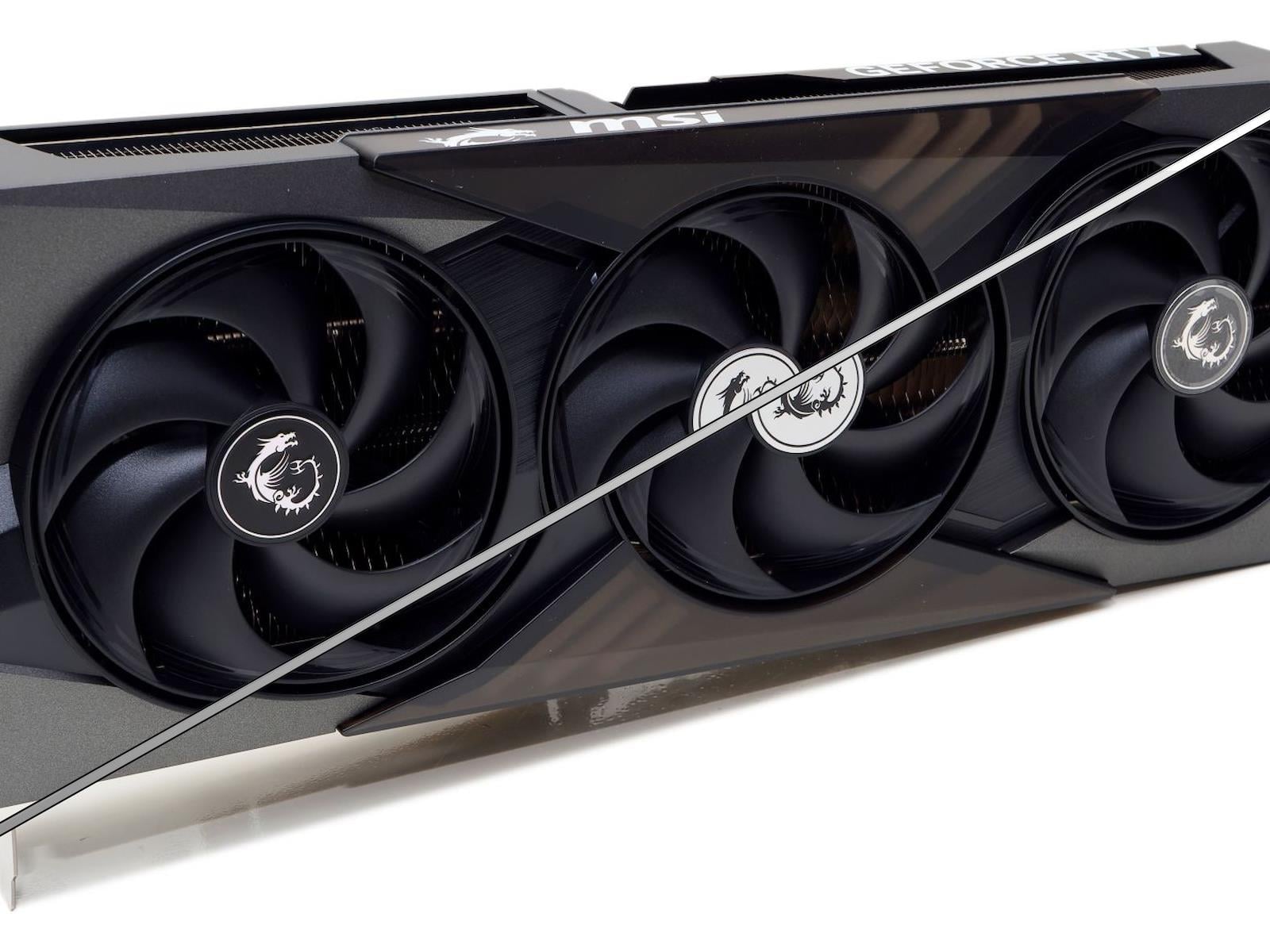
The problem with a memory shortage is that virtually every single part of a computer uses memory in some way. That, obviously, includes graphics cards, and despite the author’s earlier optimism that GDDR might be one of the less-affected memory types, it turns out that NVIDIA may be cutting GPU production next year because it’s concerned about
FCC Chairman Brendan Carr said in his Wednesday Senate testimony that the agency he governs “is not an independent agency, formally speaking.” Axios: During his testimony, the word “independent” was removed from the FCC’s mission statement on its website. The extraordinary statement speaks to a broader trend of regulatory agencies losing power to the executive branch during the Trump era. Last week, the Supreme Court appeared poised to allow President Trump to fire members of the Federal Trade Commission during oral arguments over the issue.
Sen. Ben Ray LujÃn (D-N.M.) began the line of questioning, citing the FCC’s website, which said the agency was independent as of Wednesday morning. By Wednesday afternoon, the FCC’s mission statement no longer said it was independent. Chairman Carr would not respond directly to questions about whether he believed the president was his boss. He would not answer whether it’s appropriate if the president were to pressure him to go after media companies. He suggested the president has the power to fire him and other FCC commissioners.
The creators of the Hitman series have honed their style of- open-ended and spectacle-driven sandboxes across several games, and now they’re taking their signature immersive gameplay to the world of James Bond. With 007 First Light, developer IO Interactive is crafting an origin story for the globetrotting British spy, showing how he undertook daring missions at the start of his career to eventually become the world’s most infamous agent.
Before the reveal at The Game Awards of 007 First Light‘s newest villain, played by Lenny Kravitz, we had an early look at the latest bits of plot for James Bond’s origin story as a superspy. We also spoke with cinematic and narrative director Martin Emborg about the main inspirations for the game, how Bond’s origin taps into decades of lore, and why a good spy story is timeless.
“What I think is kind of baked into doing an origin story for a character like James Bond, is that everyone knows the character and who he’s going to become,” Emborg said. “But how does he become this character? I think that’s an exciting challenge from a storytelling perspective.”
IO Interactive’s James Bond is young and inexperienced.
IO Interactive
While some Bond films and novels have touched upon the early years of the iconic character, 007 First Light will be the first attempt at an actual, modernized origin story. As a twenty-something new MI6 recruit, this James Bond, portrayed by Patrick Gibson, is inexperienced and brash, which can result in some operations going off the rails. He still possesses a certain cunning, and near-supernatural levels of charisma and resourcefulness. This presents a solid archetype for the game’s open-ended missions where players will explore tightly designed worlds with a multitude of tasks and objectives to handle – however the players see fit.
While IO Interactive’s Hitman series taps into the spy experience, what really separates James Bond from Agent 47 is that he’s a far more social character. The social element will play a big part in how players can find ways to distract, or even outright bluff through charisma to sneak into areas.. Emborg explained that James Bond’s resourcefulness also makes him a compelling character for a video game, especially one that is all about player agency.
007 First Light will take players to several locations, including Slovakia and what appears to be Vietnam.
IO Interactive
“Bond is a competent character,” Emborg said. “We want to give the player the opportunities to have that agency to say, ‘Oh, I’m gonna talk to that guy,’ or, ‘I’m gonna go and punch that guy,’ or, ‘I can probably crawl up into a tight space to sneak in.’ Having that sense of agency is pivotal if you want to deliver a full Bond experience. Obviously, the social aspect of that is important; to embed yourself and infiltrate socially is a big part of that Bond experience.”
Emborg said the rhythm of a James Bond game is different from a Hitman title, even though espionage, infiltration and subterfuge are at the core of both.
“We have a lot of experience with that from obviously making Hitman, but there are just many more gears to Bond,” he said. “Of course, the shape of this game is different. We have sandbox locations where you make the open-ended decisions, but we also have other levels where it is a chase or a set-piece encounter, and then it opens up again. So we kind of coined the term, having a game that breathes. It’s a very different way of playing this type of game that we usually do, so we’ve definitely bolstered our toolbox for this game.”
In many ways, 007 First Light is a story that can only be told in an interactive format. The new game will pull from numerous novels and films for its plot, and it also features a large cast of familiar characters seen throughout the franchise – such as MI6 assistant Moneypenny (performed by Kiera Lester), gadget guru and quartermaster Q (played by Alastair Mackenzie), and team leader M (Priyanga Burford).
But like any singular Bond story, First Light features its own set of original characters. In addition to James Bond’s MI6 mentor John Greenway (portrayed by Lennie James), a new core villain, black-market smuggler and warlord Bawma, will be played by Lenny Kravitz. It’s a familiar setup for a Bond experience for sure, but within the context of a video game – one made by IO Interactive – it really taps looks to tap into the Bond fantasy more than other games have.
From the gameplay demos and trailers we’ve seen, IO Interactive looks to be channeling the style and lore from decades of Bond with its modernized reboot of the character. From deep cuts to On Her Majesty’s Secret Service – one of the great and underrated Bond movies – and You Only Live Twice, 007 First Light is keeping a keen eye on paying tribute to what came before.
“At the very beginning, it was very much like a maelstrom of [ideas], then suddenly something emerges, and you build up a story around it,” Emborg said. He continued, “I love doing this stuff and with great reverence for the material. It’s a privilege to work in this universe. James Bond is one of the few IPs that still hasn’t been overdone, in my view. We have a space to come in with a fresh take, and he’s a character who’s seen a lot of versions over the years.”
Confirmed MI6 gadgets include the “Q-Watch.”
IO Interactive
So far, 007 First Light has the makings of not only the biggest Bond game but also the most true-to-life simulation of being a superspy. While previous Bond games like Goldeneye and Everything or Nothing are well-loved classics, they embody traditional video game shooting spectacle. 007 First Light is looking to lean into the immersive element of the Hitman games in its adaptation of James Bond, finally giving players the opportunities to explore the social aspects of spy work on a grand scale.
007 First Light will arrive on March 27, 2026, for PC, PS5 and Xbox Series X/S.
This article originally appeared on Engadget at https://www.engadget.com/gaming/io-interactives-007-first-light-reimagines-james-bond-as-a-young-and-reckless-spy-180000758.html?src=rss
A comprehensive database built by scientists in Switzerland and Norway has catalogued 16,000 chemicals linked to plastic materials, and the findings paint a troubling picture of what Americans are actually eating when they prepare food in their kitchens. Of those 16,000 chemicals, more than 5,400 are considered hazardous to human health by government and industry standards, while just 161 are classified as not hazardous. The remaining 10,700-plus chemicals simply don’t have enough data to determine their safety.
The chemicals enter food through multiple pathways. Black plastic utensils and trays often contain brominated flame retardants because they’re made from recycled electronic waste. Nonstick pans and compostable plates frequently contain PFAS. One California study found phthalates in three-quarters of tested foods, and a Consumer Reports analysis last year detected BPA or similar chemicals in 79% of foods tested. According to CDC data, more than 90% of Americans have measurable levels of these chemicals in their bodies. A 10-fold increase in maternal levels of brominated flame retardants is associated with a 3.7-point IQ drop in children.
There are fewer and fewer hardware differences between iPhones and Androids as the years go on, but back in the day, that was far from the case. At one point, many major Android devices came with dedicated LEDs that would shine whenever you received a notification. It was a passive way to know whether you had something on your phone to attend to, without having to actually wake up the display and risk getting unnecessarily sucked into your device.
iPhones have never had this specific feature, but Apple included a workaround for anyone interested in a similar experience. For years, you’ve been able to dive into Accessibility settings to turn your iPhone’s LED flash into a notification light. Any time you received a text, app notification, or call, your camera flash would go off, ensuring you didn’t miss an important update. This can be helpful both those who are hard of hearing, and who wouldn’t be able to rely on audible alerts, or anyone who keeps their phone on silent, but would like a visual cue that they have a new notification.
For the first time in years, Apple is updating its flash alerts feature. With iOS 26.2, which the company released on Friday, you now have the option to have your iPhone’s display itself flash for new alerts. You can choose to make the display the only light that flashes, or to use the feature in tandem with the LED flash, which I think makes the most sense for people who like this option. That way, it won’t matter whether your iPhone is face up or face down: You’ll always see a light flash for new alerts one way or another.
Display flash doesn’t work like you might expect, especially if you’ve used LED flashes before. I thought my iPhone would flash a bright light on and off again a few times, mimicking how LED flash alerts works. Instead, when you get a new notification, the screen instantly increases the brightness for a few seconds, before lowering it again. It works—you’re bound to notice your display jump in brightness if it isn’t already maxed out—but it doesn’t quite grab your attention as well as the LED flash.
How to set up Flash for Alerts on iPhone
To start, open the Settings app on your iPhone, then head to Accessibility. Scroll down to Hearing, then choose Audio & Visual. Scroll to the bottom of this page, then tap Flash for Alerts.
If you’re running an older version of iOS, you’ll only have the option to enable “LED Flash.” However, those running iOS 26.2 and newer will also see an option for “Screen.” Choose that option if you want the display to flash for new alerts, or “Both” to have both lights enabled.
You’ll also find two choices that affect when these flash alerts go off, no matter which of the above options you pick. First, you can choose whether your iPhone will use flash alerts while locked. If you disable this option, you’ll only see these light alerts when your iPhone is unlocked. Second, you can choose whether to use flash alerts in Silent Mode. I’d keep that setting enabled, since it seems most useful when your iPhone has no other way to alert you to new notifications.
It’s also important to note that using an Apple Watch can complicate this feature a bit, at least in my experience. While giving this option a test, I had trouble getting alerts to come through on my locked phone without first going to my watch. If you have an Apple Watch, and its notifications mirror your iPhone’s, you’ll get the most out of this feature when your iPhone is unlocked.
Coursera announced on Wednesday that it will acquire rival online learning platform Udemy in an all-stock deal that values the combined company at $2.5 billion, a move that brings together two of the largest U.S.-based players in an industry that has struggled since pandemic-era enrollment highs faded. Under the terms of the agreement, Udemy shareholders will receive 0.8 shares of Coursera for each share they hold, valuing Udemy at roughly $930 million. Based on Coursera’s last closing price, the offer works out to $6.35 per Udemy share, an 18.3% premium. The deal is expected to close in the second half of next year, pending regulatory and shareholder approvals.
The two companies are betting that a combined platform will be better positioned to pursue corporate customers seeking to retrain workers in artificial intelligence, data science and software development. Coursera has built its business on partnerships with universities and institutions to offer degree programs and professional certificates, while Udemy operates a marketplace where independent instructors sell courses directly to consumers and businesses. Both stocks have significantly underperformed this year. Udemy shares have fallen about 35% and Coursera is down roughly 7%, leaving both trading well below their post-IPO highs as investors remain cautious about competition and pricing pressure in the sector.