The FTC is reportedly investigating Instacart over its AI pricing tool

The Federal Trade Commission has sent Instacart a civil investigative demand, seeking information about its AI-powered pricing tool, according to Reuters. This comes after a recently published pricing experiment study showed that the online grocery delivery app gave different users different prices for the same items from the same store location at the exact same time. Some of the testers saw prices up to 23 percent higher than what the other testers saw, though the average difference for the same list of items was around 7 percent. Those higher prices could cost customers over $1,000 more in expenses for the year.

“The Federal Trade Commission has a longstanding policy of not commenting on any potential or ongoing investigations,” the FTC told Reuters in a statement. “But, like so many Americans, we are disturbed by what we have read in the press about Instacart’s alleged pricing practices.”

When the study came out, Instacart told Engadget that the pricing variances were caused by some of its retail partners doing “limited, short-term and randomized tests” to better understand consumers. Those randomized pricing tests were enabled by Instacart’s AI pricing tool called Eversight developed by a company it purchased in 2022. Instacart told CNBC that “much of what’s been reported has mischaracterized how pricing works” on its platform. The spokesperson repeated that retailers conduct pricing tests on its app and said that “prices on Instacart do not change in real time,” aren’t based on supply or demand and that it never uses “personal, demographic, or user-level behavioral data to set item prices.”

This article originally appeared on Engadget at https://www.engadget.com/apps/the-ftc-is-reportedly-investigating-instacart-over-its-ai-pricing-tool-130000472.html?src=rss

Doublespeed Hack Reveals What Its AI-Generated Accounts Are Promoting

An anonymous reader quotes a report from 404 Media: Doublespeed, a startup backed by Andreessen Horowitz (a16z) that uses a phone farm to manage at least hundreds of AI-generated social media accounts and promote products has been hacked. The hack reveals what products the AI-generated accounts are promoting, often without the required disclosure that these are advertisements, and allowed the hacker to take control of more than 1,000 smartphones that power the company. The hacker, who asked for anonymity because he feared retaliation from the company, said he reported the vulnerability to Doublespeed on October 31. At the time of writing, the hacker said he still has access to the company’s backend, including the phone farm itself.

“I could see the phones in use, which manager (the PCs controlling the phones) they had, which TikTok accounts they were assigned, proxies in use (and their passwords), and pending tasks. As well as the link to control devices for each manager,” the hacker told me. “I could have used their phones for compute resources, or maybe spam. Even if they’re just phones, there are around 1100 of them, with proxy access, for free. I think I could have used the linked accounts by puppeting the phones or adding tasks, but haven’t tried.”

As I reported in October, Doublespeed raised $1 million from a16z as part of its “Speedrun” accelerator program, “a fastpaced, 12-week startup program that guides founders through every critical stage of their growth.” Doublespeed uses generative AI to flood social media with accounts and posts to promote certain products on behalf of its clients. Social media companies attempt to detect and remove this type of astroturfing for violating their inauthentic behavior policies, which is why Doublespeed uses a bank of phones to emulate the behavior of real users. So-called “click farms” or “phone farms” often use hundreds of mobile phones to fake online engagement of reviews for the same reason. […] I’ve seen TikTok accounts operated by Doublespeed promote language learning apps, dating apps, a Bible app, supplements, and a massager.


Read more of this story at Slashdot.

The Best Apps to Gamify Your Productivity

We may earn a commission from links on this page.

Call me immature, but I’m about a thousand times more likely to participate in activities that are good for me when they can be gamified. Even the simple pleasures of watching a number go up or earning a digital milestone badge can motivate me to get to the gym, track my meals, or form a new habit. Gamification can be used for focusing and studying, too, and a wide variety of apps exist to serve this purpose. Here are some of the best. 

Gamification apps for focusing

Focusing is notoriously difficult, especially in this hyper-connected era in which many of us can’t go five minutes without getting a text or eat a meal without watching TikTok videos. Use your device to your advantage instead with these apps that turn focusing into a game.

Finch

Finch in iOS

Credit: Finch

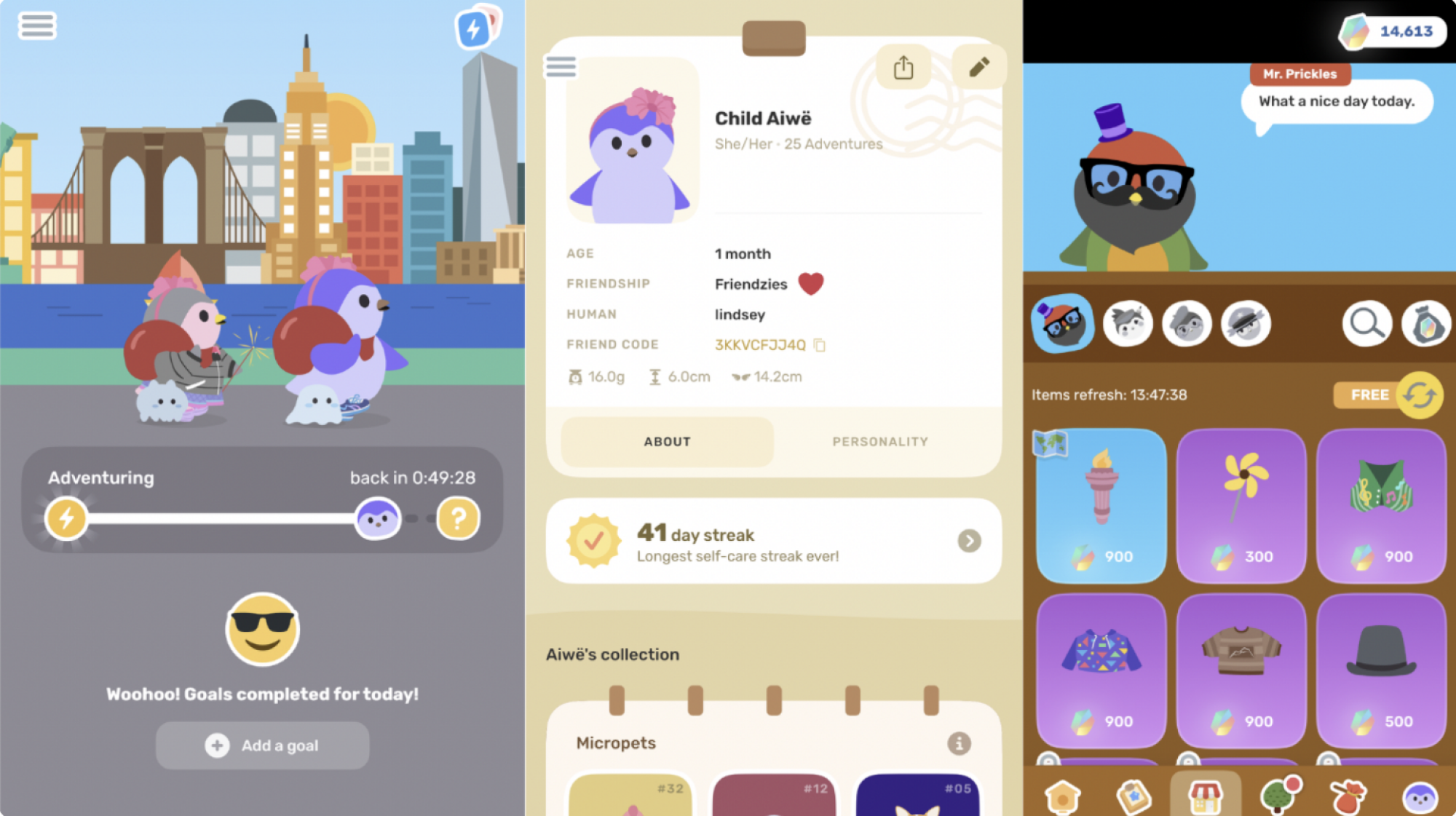
Finch is my favorite habit tracking app and I use it every day (streak as of today: 311!). You are responsible for the well-being of a happy little bird character and you take care of them by marking off your to-dos. I will be upfront and say it’s a little infantilizing and mushy; it comes pre-loaded with to-dos like “get out of bed” and “take a stretch break.” I left those in alongside the actual daily activities I programmed in myself for some easy wins, but the app is clearly designed for people struggling a little with executive function.

To me, though, Finch is great because it’s so positive. Other apps might penalize you for missing a day, but this one is encouraging. It’s useful to have a little positive reinforcement every day, even if it’s a little cloying. By completing your tasks, you send your bird on “adventures,” earn in-game currency to dress them up in outfits, and level up your friendship score with them. Interestingly, you are also periodically prompted to enter in how you’re feeling and what’s making you feel that way, which the app tracks. Over time, you can see a data breakdown of your moods and the things that affect them, which is useful if you’re trying to maximize your productivity and make a few lifestyle changes to enhance it.

Read my full review of the Finch app here.

Habitica

Habitica in iOS

Credit: Habitica

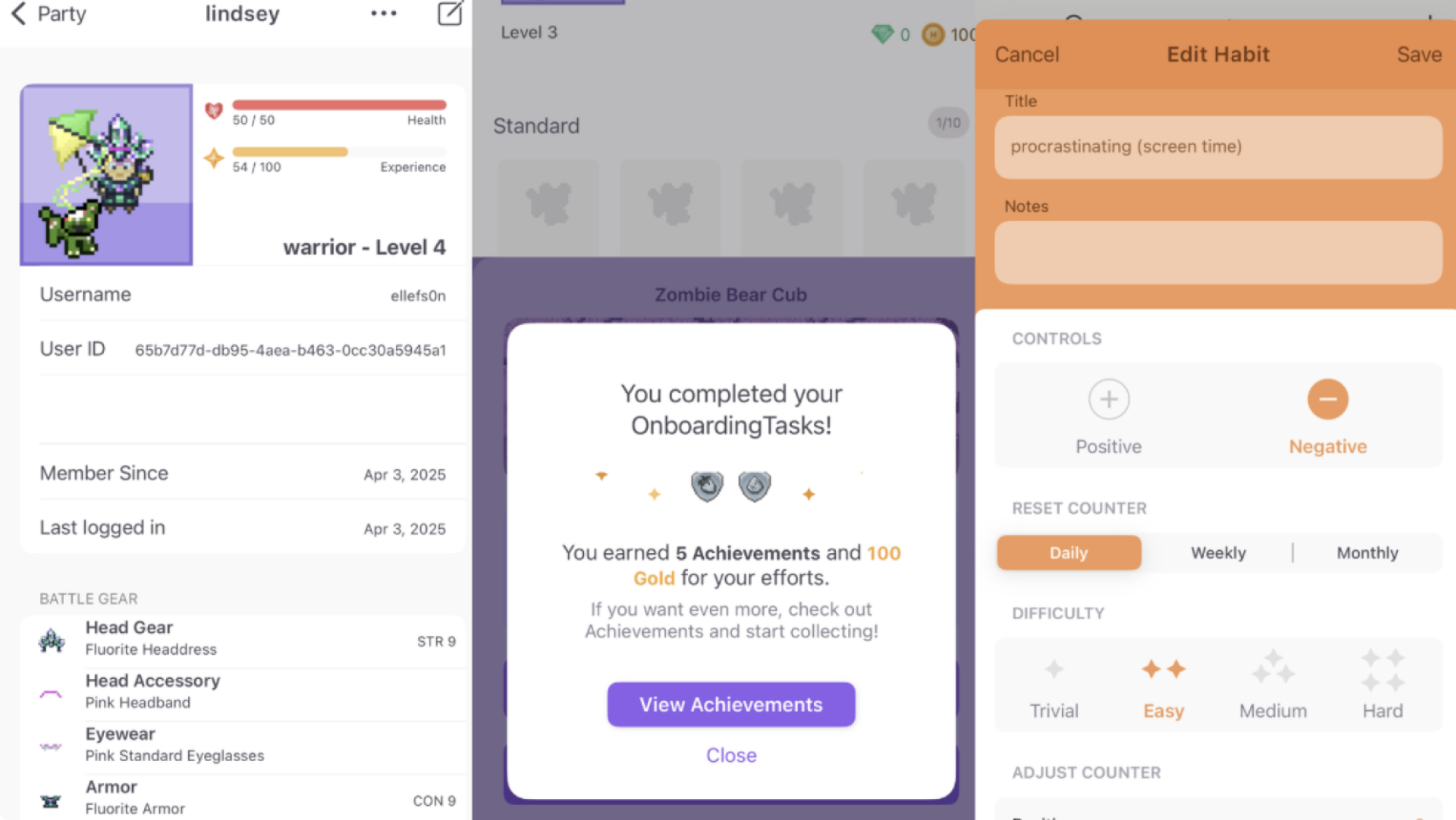
One of the gold-standard apps in gamification and productivity is Habitica, which is almost like a roleplaying game. You designate the goal you want to achieve, track when you do it, and watch as your in-game avatar gains (or loses) health. Your avatar can even link up with other players for games and challenges, so you all level up together. You earn gold coins that can be spent in-game or “redeemed” when you do something you want to do in real life, like watch a movie. It’s free, but you can make in-app purchases or subscribe to group plans that help coordinate team goals for $9 per month, plus $3 per person. 

Read my full review of the app here.

Toggl

Toggl in Chrome

Credit: Toggl

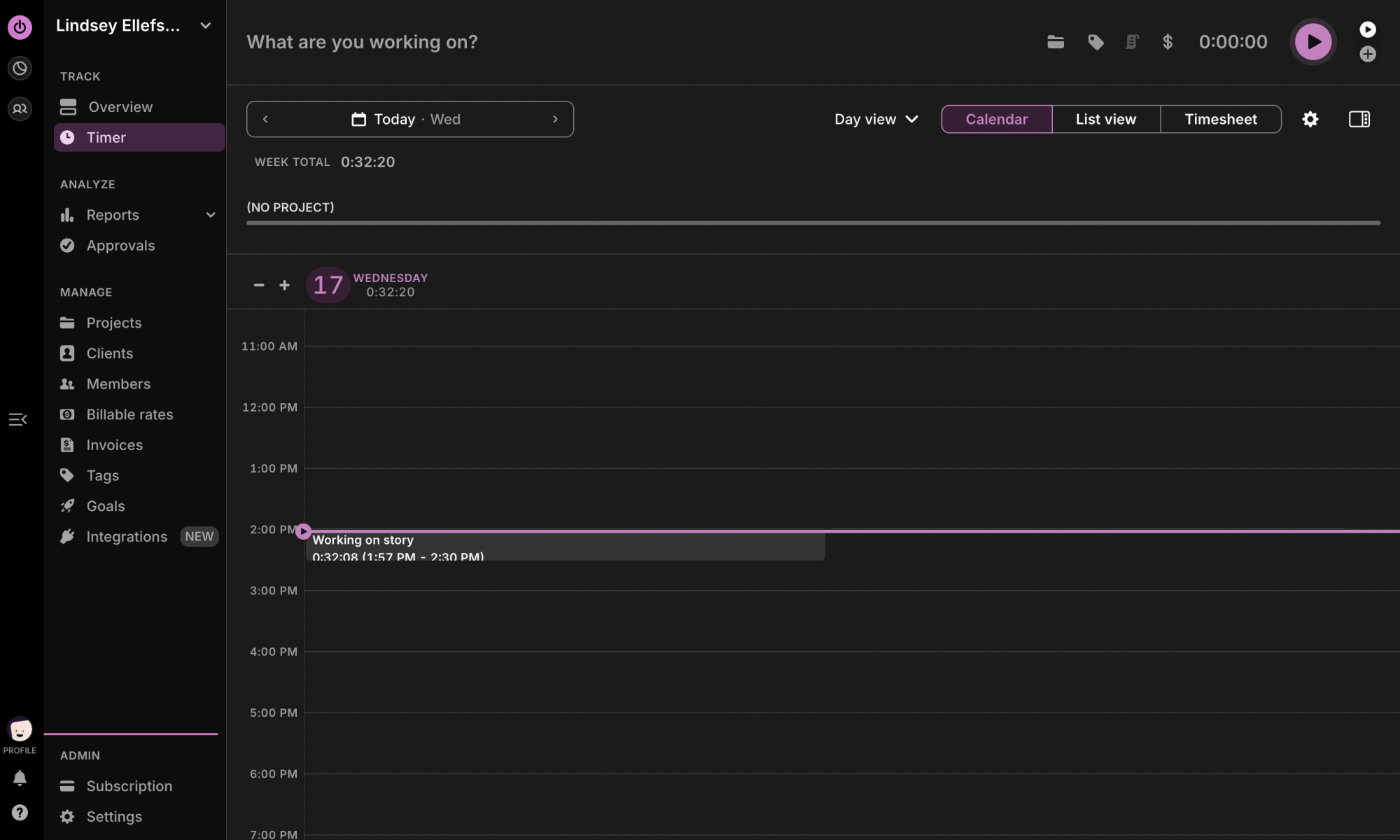
Another app that’s great for teams but also works well for personal productivity, Toggl is a time-tracker that gives you leaderboards in addition to achievements when you stay focused and get things done. If digital badges don’t get you going, imagine the rush of seeing your name at the top of a leaderboard. If you’re using it on your own, it’s free, but after a 14-day trial, teams will pay $9 per user per month.

It looks like any digital calendar tool (and you can import calendars, like Google Calendar, right into it so you can see all your daily commitments), but there’s a Play button in the top right corner that you tap when you’re ready to track time. You can label the time blocks (and should get familiar with the concepts of time blocking and time boxing to make this most effective) so you can see precisely how many minutes you’re devoting to a given task every day.

Beeminder

Beeminder in Chrome

Credit: Beeminder

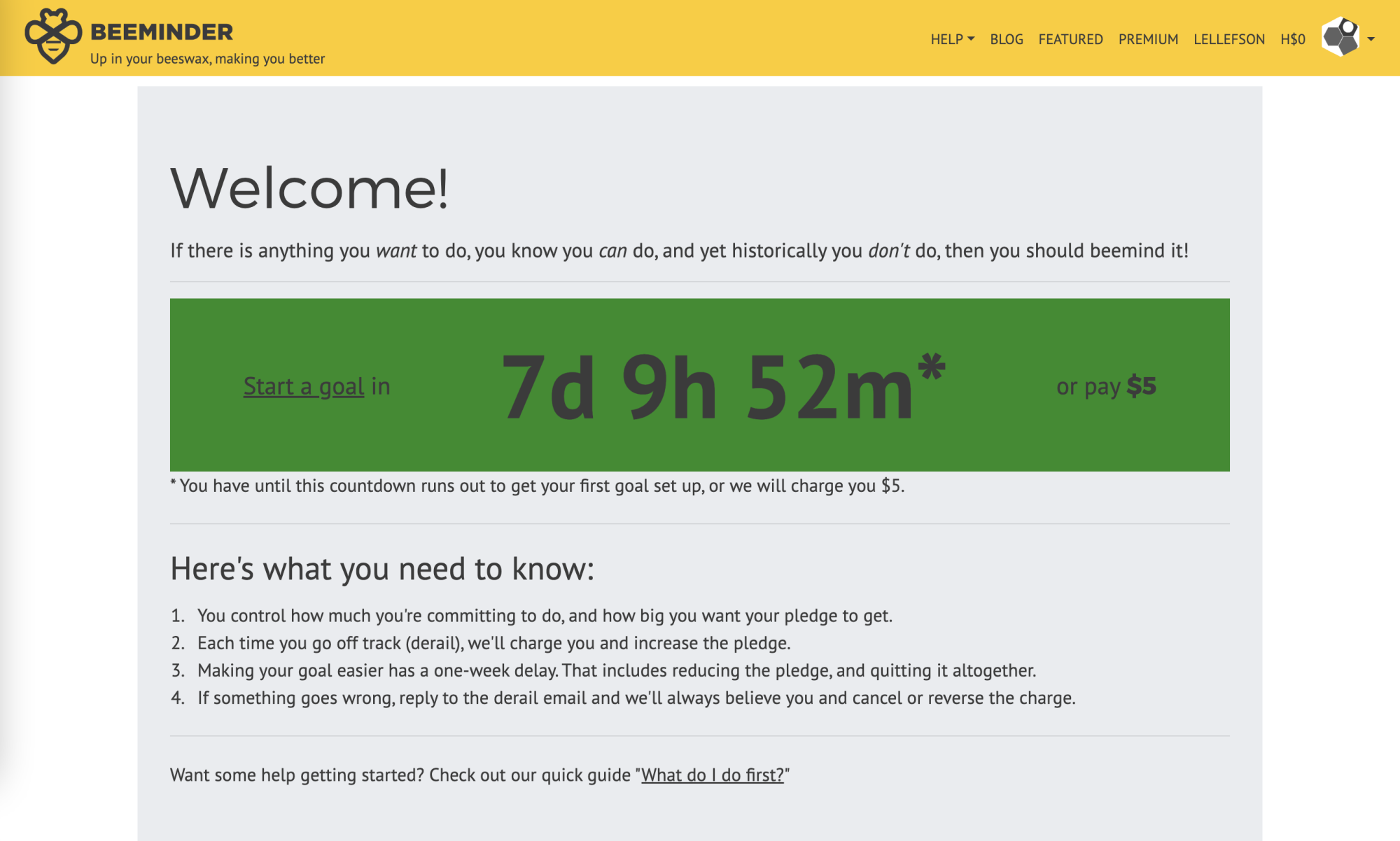
Beeminder is a great app because it links up to a variety of other apps—Habitca, Toggl, Duolingo, Gmail, Fitbit, Strava, and more—pulling in your data to make sure you’re staying on track with your goals. If you have a goal to stay focused on Slack or emails, Beeminder can actually make sure you’re doing it instead of relying on you to be honest in self-reporting. Continue to do what you’re trying to do and a red line will appear, inching toward your goal. The catch? If you don’t stick to what you’re trying to focus on, it charges $5 to the card you have on file. Otherwise, it’s free for up to three goals, but you can unlock unlimited goals (and the ability to put off payments and set charge caps) with premium plans that move from $8 per month, $16 per month, or even $50 per month, depending on how many features you want.

If you’re worried about the money-losing aspect, don’t be: This isn’t a tyrannical, scammy app. The developers are clear that if something comes up and prevents you from completing a goal on time, you can respond to the email you received about that goal’s timeline starting, ask for a refund, and they’ll “always believe you” and reverse the charge.

Gamification apps for studying

If you need to gamify your studies, there are special apps that work well for that, too. The software above also works for studying, so if you’re more of a Habitica person, feel free to stick with those. The ones below have unique features that might be helpful for students. 

FocusPomo

FocusPomo in iOs

Credit: FocusPomo

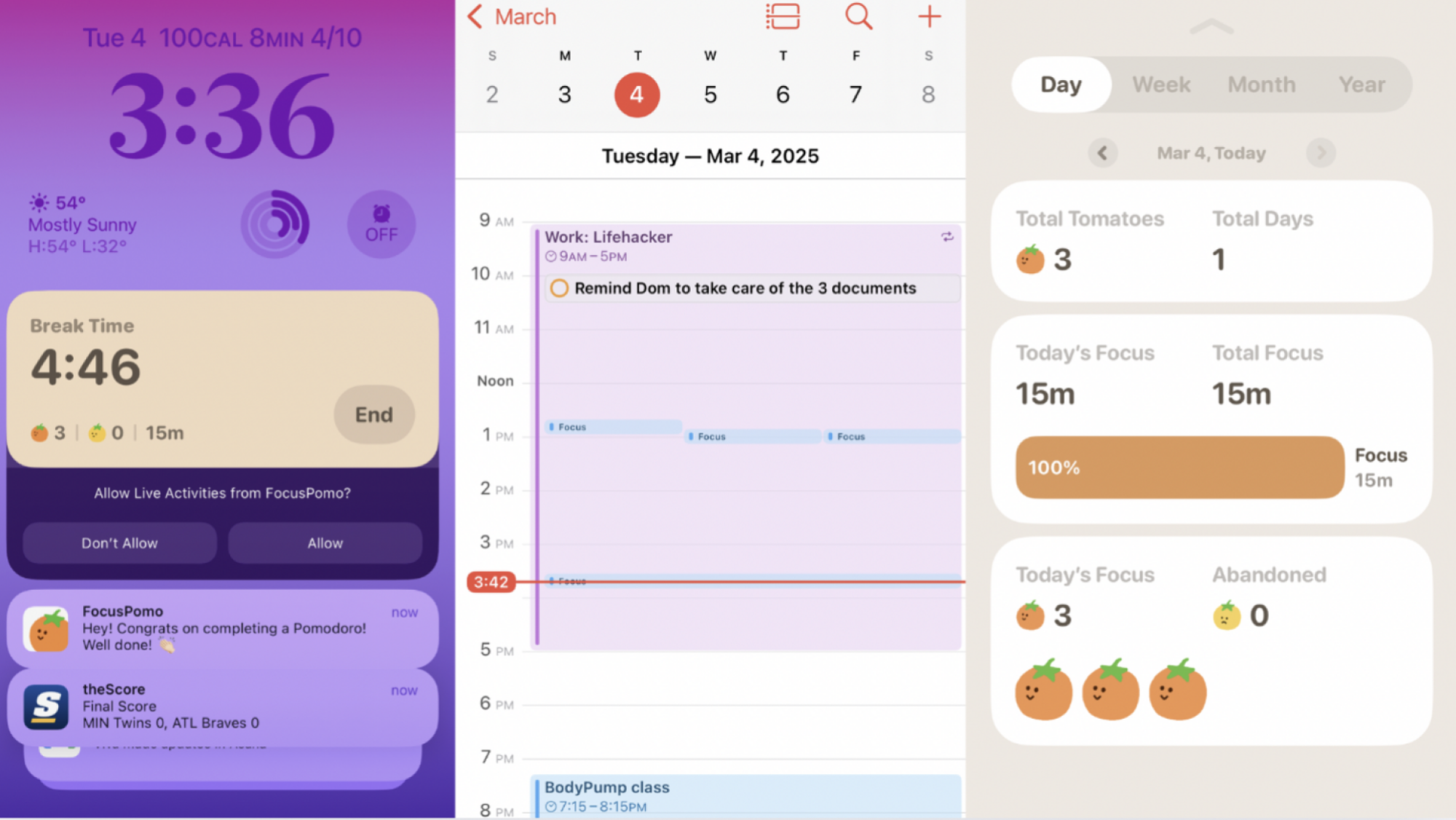
This is my favorite Pomodoro technique app. FocusPomo is simple to use and allows you to quickly access “focus sessions,” which are periods of time that are blocked out for studying or working. The app blocks your other, more distracting apps and rewards you with a little tomato graphic whenever you finish a session. It might not seem like much, but just collecting tiny, pixelated tomatoes becomes a little addicting. The app syncs with your calendars and communication platforms to make it easier for you to launch focus sessions whenever you have something to do, too, so earning those little tomatoes is surprisingly easy.

Read my full review of FocusPomo here.

Flora

Flora in iOS

Credit: Flora

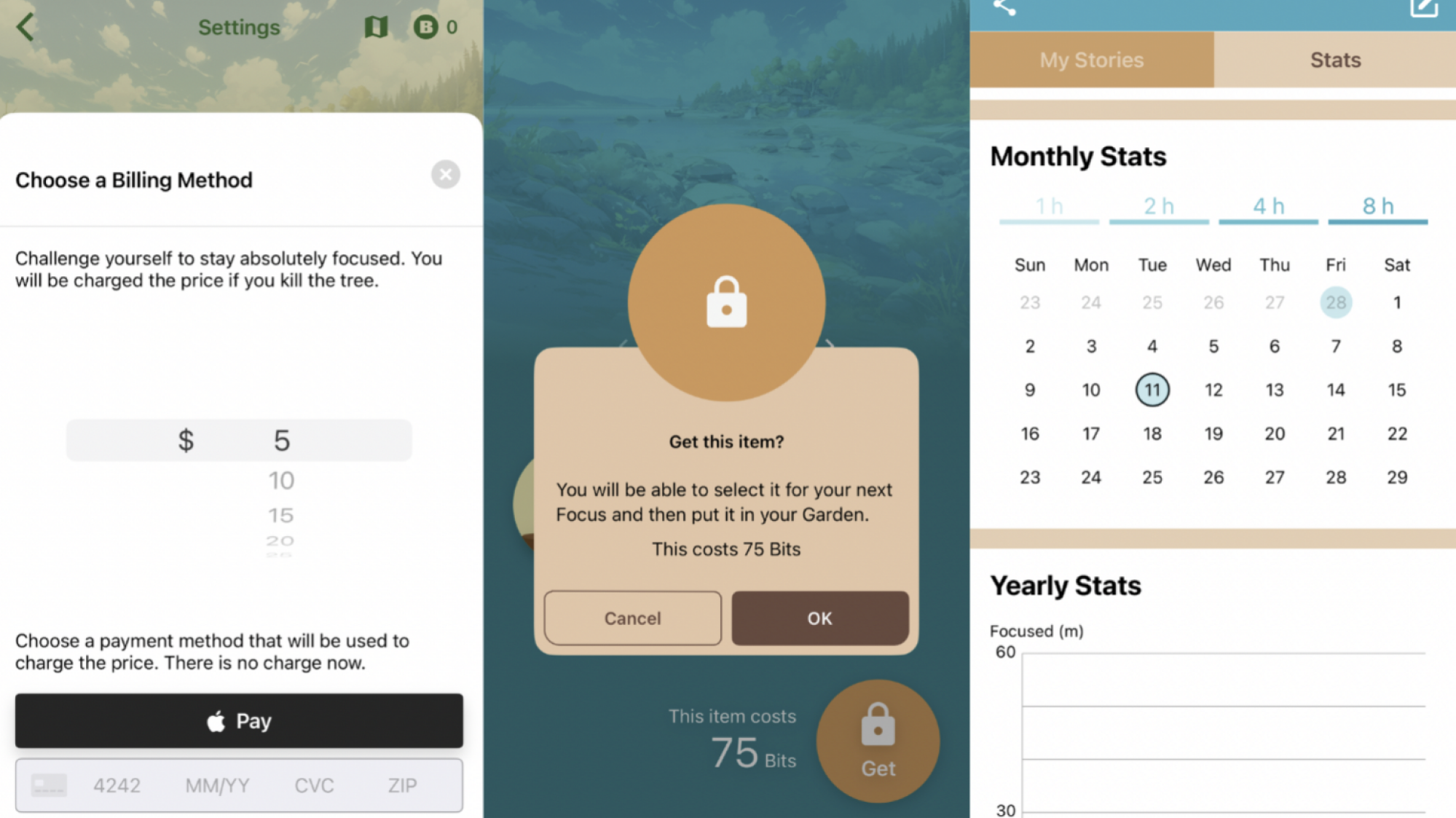
If you want something a little zen that still motivates you, try Flora, which is an app that just wants to help you plant trees (and stay focused on your work). It gamifies your productivity by rewarding you with cool animations, similar to the others on this list. Here, you get to you grow “trees” in a virtual forest, but only so long as you don’t interrupt their growth by using your phone when you’re supposed to be working. Moreover, you can bet money on your ability to carry out focus sessions or buy a subscription, both of which directly fund the planting of trees in the real world. That’s not a gamification so much as a real-world contribution that can make you feel good about your studying.

Read my full review of Flora here.

Study Bunny

Study Bunny in iOS

Credit: Study Bunny

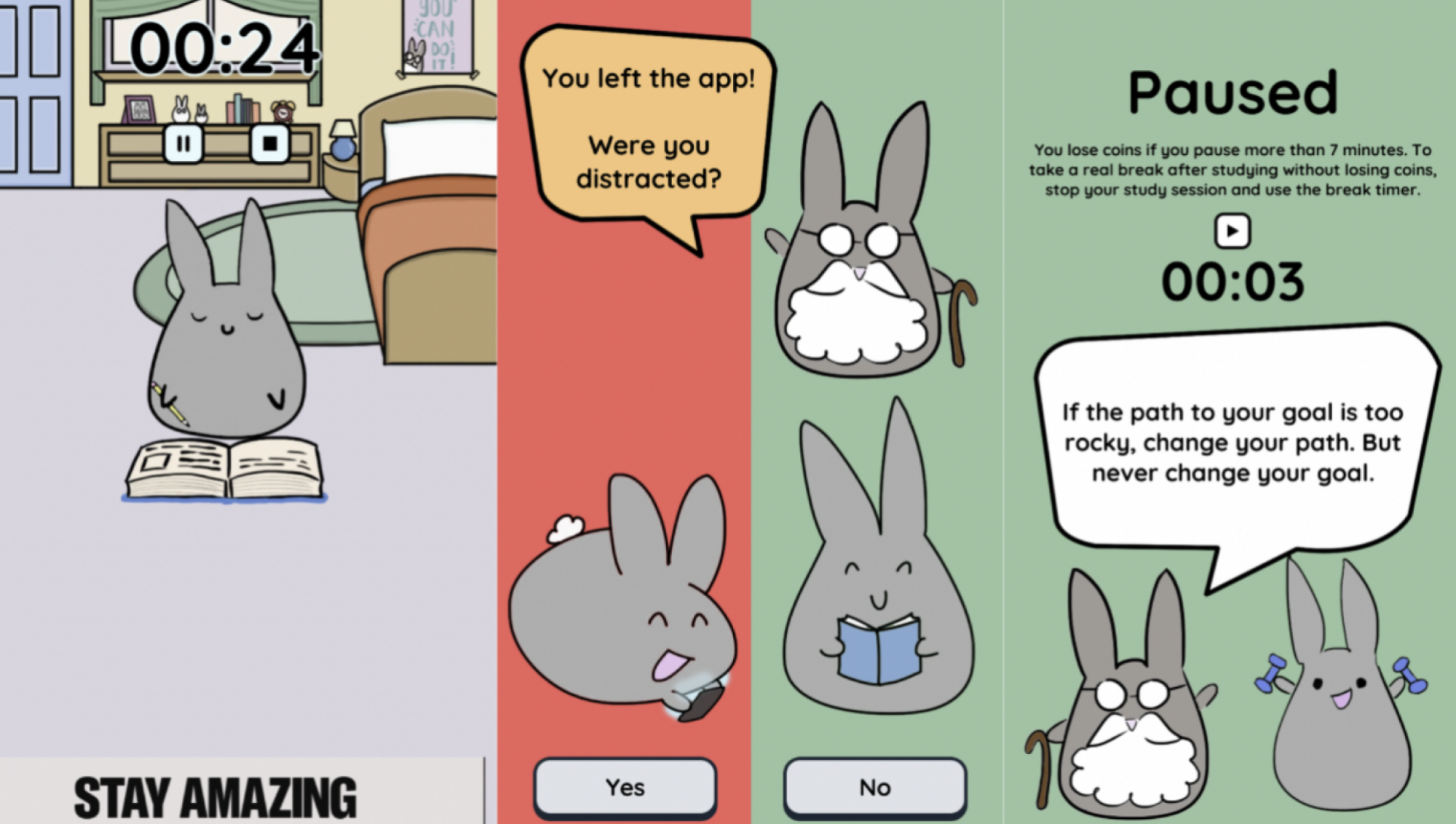
Study Bunny is a game designed for students. It has an in-app timer and a scored flashcard system, slots for to-do lists, and room for 15 subjects. You are assigned a virtual bunny rabbit that gets happier when you track work and progress, but sadder when you pause a work session or don’t open the app. The longer you work, the more coins you earn to buy items for your bunny. The app is pretty janky and I won’t lie about that, but it’s cute and stress-free, which makes it ideal if you’re looking for a fun way to stay motivated about your studies.

Read my full review of Study Bunny here.

The Rise of the Thinking Agent and the New Era of Global AI Competition

The global artificial intelligence landscape just witnessed a significant tectonic shift. Beijing-based Moonshot AI has made waves with the reported capabilities of its advanced models, including a “thinking agent” designed to perform complex, multi-step reasoning. This development, often associated with their powerful Kimi chatbot, is not just another iterative update; it represents a fundamental change in how AI operates, moving from simple question-answering to autonomous problem-solving. The emergence of such powerful models from China signals a new phase in the AI race, one where reasoning and agency are the new frontiers.

The “Thinking Agent” Revolution

At the heart of this advancement is the concept of a “thinking agent.” Unlike traditional large language models (LLMs) that predict the next word in a sequence, a thinking agent is designed to formulate a plan, execute it using various tools, observe the results and refine its plan accordingly. Reports suggest that Moonshot’s advanced systems are capable of executing an astounding 200–300 sequential tool calls to achieve a single goal. This is a massive leap from current standards, where models typically struggle with more than a handful of sequential actions.

This capability transforms the user experience. Instead of asking, “What is the stock price of Company X?”, a user could task the agent with: “Analyze the last five years of financial reports for Company X, compare its performance with its top three competitors, taking into account recent market trends, and generate a comprehensive investment report.” The AI would then autonomously break this down into hundreds of smaller steps: searching for competitors, retrieving financial documents, performing calculations, reading market news and synthesizing the information into a final document. This shift from a passive information retrieval system to an active, problem-solving partner is the promise of the “thinking agent.”

A visualization of a thinking agent's complex decision-making process, involving hundreds of sequential steps and tool calls.
Above: A visualization of a thinking agent’s complex decision-making process, involving hundreds of sequential steps and tool calls.

Closing the Gap: China’s AI Ambitions

The significance of Moonshot’s achievement cannot be overstated. For years, the prevailing narrative was that the U.S. held an insurmountable lead in generative AI. However, the rapid rise of Chinese labs like Moonshot, which was founded in 2023, challenges this view. By developing models with such deep reasoning capabilities, Moonshot is demonstrating that Chinese AI is not just about scale but also about sophisticated architectural innovation.

The release of models with “thinking” capabilities, similar to OpenAI’s recent o1 model (codenamed “Strawberry”), shows that Chinese labs are keeping pace with, and in some aspects potentially surpassing, their Western counterparts in the race for artificial general intelligence (AGI). This is a clear indicator of a vibrant and fiercely competitive AI ecosystem in China that is quickly closing the technological gap. For more on the global AI race, see this analysis of the U.S./China AI competition.

Stacking Up Against U.S. Titans

The competition is no longer just about who has the largest model or the most GPUs. It’s about who can build the smartest, most autonomous agent. Moonshot’s focus on long-horizon reasoning and massive sequential tool use places it in direct competition with the most advanced projects from OpenAI, Google DeepMind and Anthropic.

While U.S. companies have excelled at building foundational models, Moonshot’s approach highlights a different strategic focus: building systems that can reason and act in the real world over extended periods. This capability is crucial for automating complex workflows in industries like finance, law and software development. The fact that a relatively new startup is pushing the boundaries in this specific area is a testament to the agility and ambition of China’s AI sector.

Real-World Applications: What Can it Do?

The ability to execute hundreds of sequential tool calls opens up a world of possibilities. In software engineering, an agent could be given a high-level feature request and autonomously write code spanning multiple files, debug its own errors and write test cases. In scientific research, it could formulate hypotheses, search through vast databases of papers, design experiments and analyze results.

For everyday users, this could mean a personal assistant that can plan a complex multi-city vacation, booking flights and hotels based on a set of preferences and budget constraints, all without human intervention. The move is from a conversational partner to a capable executive assistant.

The Broader Chinese AI Landscape

Moonshot AI is not an outlier but part of a larger, dynamic ecosystem. Other Chinese tech giants and startups are also making significant strides. Alibaba’s Qwen series of models, for instance, has consistently ranked at the top of open-source leaderboards, demonstrating world-class performance in coding and mathematics. DeepSeek and Zhipu AI are other key players pushing the frontiers of open-source and commercial AI models.

This collective effort, driven by intense domestic competition and strong government support, has created a formidable AI industry that is now a primary rival to the U.S. The landscape is no longer dominated by a single country but is a bipolar competition that is accelerating the pace of innovation globally.

A conceptual illustration of the balanced AI competition between major tech companies in the U.S. and China.
Above: A conceptual illustration of the balanced AI competition between major tech companies in the U.S. and China.

Wrapping Up

The emergence of Moonshot AI’s advanced “thinking” models is a watershed moment. It signals that the era of simple chatbots is ending, replaced by a new generation of AI agents capable of complex, multi-step reasoning and autonomous action. This development not only showcases the rapid advancements of China’s AI ecosystem but also intensifies the global competition for AI supremacy. As Chinese and U.S. labs push each other to new heights, we can expect to see an even faster rate of innovation, leading to AI systems with capabilities we are only just beginning to imagine. The future of AI is not being written in one country, but in a dynamic, high-stakes rivalry that is reshaping the technological world.

Sony settles with Tencent over ‘slavish’ Horizon clone

Earlier this year Sony sued Tencent for copyright infringement over its Light of Motiram game, calling it a “slavish clone” of Horizon Zero Dawn. Then, earlier this month, Tencent agreed to stop promoting and publicly testing the game. Now, the two companies have reached a “confidential settlement” and the case has been dismissed, according to court documents seen by The Verge. Light of Motiram has also disappeared from Steam and Epic’s game stores. 

“SIE and Tencent are pleased to have reached a confidential resolution and will have no further public comment on this matter,” Tencent’s spokesperson told The Verge. 

When Sony first filed its lawsuit in July 2025, it said that Tencent’s game appeared to copy aspects of not just Horizon Zero Dawn, but other franchise games including Horizon Forbidden West and Lego Horizon Adventures. That included the post-apocalyptic setting with humans and machines coexisting, the visual appearance of characters and even the marketing materials — something Engadget certainly noticed when Tencent first announced the game.

This article originally appeared on Engadget at https://www.engadget.com/gaming/sony-settles-with-tencent-over-slavish-horizon-clone-120042886.html?src=rss

The inside story of SpaceX’s historic rocket landing that changed launch forever

On Dec. 21, 2015, SpaceX launched the Orbcomm-2 mission on an upgraded version of its Falcon 9 rocket. That night, just days before Christmas, the company successfully landed the first stage for the first time. The story behind this remarkable achievement is nowhere more fully told than in the book Reentry, authored by Ars Technica Senior Space Editor Eric Berger and published in 2024. To mark the tenth anniversary, Ars is reprinting a slightly condensed chapter from the book that tells the inside story of this landing. The chapter begins in June 2015 with a tragedy, the disintegration of a Falcon 9 rocket carrying the CRS-7 cargo supply mission for NASA. It was the first time a Falcon 9 had been lost in flight.

Seconds after the Dragon-bearing Falcon 9 rocket broke apart over the Atlantic Ocean, David Giger shouted into his headset, “Dragon is alive!”

In the decade since he joined the company straight out of graduate school, Giger had taken on management of the entire Dragon program, reporting directly to Elon Musk. He watched the CRS-7 launch from mission control in Hawthorne not with a particular role, but rather providing a leadership presence. Giger could sense the Dragon mission team, mostly younger engineers, freeze up as video showed debris from the rocket showering back to Earth. A lot of the people involved in the hairy early flights of Dragon, including the C2 mission in 2012, had moved on to other positions at SpaceX or departed.

Read full article

Comments

Video Game Hardware Sales Had a Historically Bad November In the US

U.S. video game hardware spending fell 27% year over year in November to $695 million, according to market analyst company Circana. “This is the lowest video game hardware spending total for a November month since the $455 million reached during the November 2005 tracking period,” Circana says. Furthermore, only 1.6 million units of hardware were sold in the U.S. in November, which is “the lowest total for a November month since 1995 (1.4 million).” The Verge reports: The rising costs of consoles probably didn’t help. The PlayStation 5 and Xbox Series of consoles both turned five in November, but customers looking to pick up one of the consoles brand new are having to grapple with higher prices following price hikes this year. Those hikes have led to an “all-time November high” for the average price paid for a new unit of video game hardware of $439, Circana says — a number that’s up 11 percent from 2024. (In November 2019, the average price was $235, according to Circana analyst Mat Piscatella.)


Read more of this story at Slashdot.

Another Starship Clone Pops Up In China

Longtime Slashdot reader schwit1 shares a report from Ars Technica: Every other week, it seems, a new Chinese launch company pops up with a rocket design and a plan to reach orbit within a few years. For a long time, the majority of these companies revealed designs that looked a lot like SpaceX’s Falcon 9 rocket. The first of these copy cats, the medium-lift Zhuque-3 rocket built by LandSpace, launched earlier this month. Its primary mission was nominal, but the Zhuque-3 rocket failed its landing attempt, which is understandable for a first flight. Doubtless there will be more Chinese Falcon 9-like rockets making their debut in the near future. However, over the last year, there has been a distinct change in announcements from China when it comes to new launch technology. Just as SpaceX is seeking to transition from its workhorse Falcon 9 rocket — which has now been flying for a decade and a half — to the fully reusable Starship design, so too are Chinese companies modifying their visions.

The trend began with the Chinese government. In November 2024 the government announced a significant shift in the design of its super-heavy lift rocket, the Long March 9. Instead of the previous design, a fully expendable rocket with three stages and solid rocket boosters strapped to the sides, the country’s state-owned rocket maker revealed a vehicle that mimicked SpaceX’s fully reusable Starship. Around the same time, a Chinese launch firm named Cosmoleap announced plans to develop a fully reusable “Leap” rocket within the next few years. An animated video that accompanied the funding announcement indicated that the company seeks to emulate the tower catch-with-chopsticks methodology that SpaceX has successfully employed.

But wait, there’s more. In June a company called Astronstone said it too was developing a stainless steel, methane-fueled rocket that would also use a chopstick-style system for first stage recovery. Astronstone didn’t even pretend to not copy SpaceX, saying it was “fully aligning its technical approach with Elon Musk’s SpaceX.” And then, on Friday, the state-aligned China.com reported that a company called “Beijing Leading Rocket Technology” took things a step further. It has named its vehicle “Starship-1,” adding that the new rocket will have enhancements from AI and is billed as a “fully reusable AI rocket.”


Read more of this story at Slashdot.

MIT Grieves Shooting Death of Renowned Director of Plasma Science Center

An anonymous reader quotes a report from the Guardian: The Massachusetts Institute of Technology (MIT) community is grieving after the “shocking” shooting death of the director of its plasma science and fusion center, according to officials. Nuno FG Loureiro, 47, had been shot multiple times at his home in the affluent Boston suburb of Brookline on Monday night when police said they received a call to investigate. Emergency responders brought Loureiro to a hospital, and the award-winning scientist was pronounced dead there Tuesday morning, the Norfolk county district attorney’s office said in a statement.

The Boston Globe reported speaking with a neighbor of Loureiro who heard gunshots, found the academic lying on his back in the foyer of their building and then called for help alongside the victim’s wife. The statement from the Norfolk district attorney’s office said an investigation into Loureiro’s slaying remained ongoing later Tuesday. But the agency did not immediately release any details about a possible suspect or motive in the killing, which gained widespread attention across academic circles, the US and in Loureiro’s native Portugal.

Portugal’s minster of foreign affairs announced Loureiro’s death in a public hearing Tuesday, as CNN reported. Separately, MIT president Sally Kornbluth issued a university-wide letter expressing “great sadness” over the death of Loureiro, whose survivors include his wife. “This shocking loss for our community comes in a period of disturbing violence in many other places,” said Kornbluth’s letter, released after a weekend marred by deadly mass shootings at Brown University in Rhode Island — about 50 miles away from MIT — as well as on Australia’s Bondi Beach. The letter concluded by providing a list of mental health resources, saying: “It’s entirely natural to feel the need for comfort and support.”


Read more of this story at Slashdot.

Dolby and LG introduce a modular home audio system for CES 2026

LG is teaming up with Dolby for a new collection of speakers that the companies are unveiling ahead of CES 2026. The LG Sound Suite features a modular lineup the H7 soundbar, M7 and M5 wireless surround speakers and the W7 subwoofer. The speakers can be combined in more than two dozen different configurations, from a pair to a full 13.1.7 channel surround sound home theater setup.

The main pitch of the LG Sound Suite is its application of Dolby Atmos FlexConnect. This is the audio brand’s tech for optimizing sound from wherever wireless speakers are placed. It’s meant to deliver optimal sound even from unusual locations, even when you’re limited by outlet locations, furniture placement or other quirks of a room’s layout. The collaboration with LG brings FlexConnect to a soundbar for the first time. When the H7 soundbar is used as the lead device, the suite will bring Dolby Atmos FlexConnect audio to any television. In a future software update, LG will also bring support for Dolby Atmos FlexConnect directly to some of its premium TVs, including select 2025 models.

This article originally appeared on Engadget at https://www.engadget.com/audio/speakers/dolby-and-lg-introduce-a-modular-home-audio-system-for-ces-2026-010000126.html?src=rss

Senate Confirms Billionaire Entrepreneur Jared Isaacman As New NASA Chief

Longtime Slashdot reader schwit1 shares a report from Politico: The Senate on Wednesday approved Jared Isaacman for the top job at NASA — an unprecedented comeback after President Donald Trump yanked his nomination this spring. Senators confirmed the billionaire private astronaut in a 67-30 vote. Trump renominated Isaacman for NASA administrator in November, after pulling his original nomination in May. He cited Isaacman’s relationship with SpaceX CEO Elon Musk, with whom Trump had just had a falling out, as the rationale for his decision. Isaacman’s surprise rebound followed months of political jockeying and help from high-profile figures in Trump’s orbit. […] Isaacman garnered backing from lawmakers during his hearing by confirming his support for NASA’s Artemis moon-landing mission, a key prerogative for Capitol Hill. He also committed to instilling urgency at the space agency, citing China’s space ambitions.


Read more of this story at Slashdot.

Mountain Biker Jumps Through Two Open Semi Trucks Traveling In Opposite Directions

This is a video of Red Bull mountain biker Matt Jones jumping his ride through the open rears of two autonomous Scania semi trucks traveling in opposite directions. It’s a tight window (less than a second), but after lots of planning and practice, he successfully makes the jump. That’s cool, but you give me four Red Bulls and I’ll try it with absolutely zero preparation and a flat front tire. “Because Red Bull gives you wings?” What? No, Red Bull makes my girlfriend pee the bed if she drinks one after 4PM.

NASA finally—and we really do mean it this time—has a full-time leader

Jared Isaacman, a pilot and financial tech billionaire, has commanded two groundbreaking spaceflights, including leading the first private spacewalk.

But his most remarkable flying has occurred over the last year. And on Wednesday, he stuck the landing by earning formal Senate approval to become NASA’s 15th administrator.

With a final tally of 67 to 30, Wednesday’s Senate confirmation came 377 days after President Trump first nominated Isaacman to serve as NASA administrator. Since that time, Isaacman had to navigate the following issues:

Read full article

Comments

The Oscars Will Abandon Broadcast TV For YouTube In 2029

The Academy has struck a multi-year deal to move the Oscars to YouTube starting in 2029, ending decades on ABC and making the ceremony free to stream worldwide with YouTube holding exclusive global rights. Variety reports: The Oscars, including red carpet coverage, behind-the-scenes content and Governors Ball, will be available live and for free on YouTube to viewers around the world, as well as to YouTube TV subscribers in the United States. Architects of the agreement said they hope the move to YouTube will help make the Oscars more accessible to “the Academy’s growing global audience through features such as closed captioning and audio tracks available in multiple languages.” […]

The Academy had been seeking a new broadcast licensing agreement for the better part of 2025. Over the summer, several expected and unconventional buyers, including NBCUniversal and Netflix, had come into the mix as potential suitors. Insiders believe that YouTube shelled out over nine figures for the Oscars, besting the high eight-figure offers from Disney/ABC and NBCUniversal. Under the most recent contract, Disney was paying around $100 million annually for the Oscars — but given the ratings declines for the kudocast, Disney/ABC were reportedly looking to spend less on license fees.

[…] It’s not a secret that the Academy and Disney/ABC would occasionally have disagreements over the best path for the Oscars, including the show’s length, which awards to present and who should host. Now, on a streamer with no time limits, the Oscars can be any length, and the Academy likely has carte blanche to do whatever it wants with the telecast. “They can do whatever they want,” says one insider. “You can have a six-hour Oscars hosted by MrBeast.”


Read more of this story at Slashdot.

China reportedly has a prototype EUV machine built by ex-ASML employees

A report from Reuters claims that scientists in China have created a prototype of a machine that could eventually be used to produce semiconductor chips capable of powering artificial intelligence. Sources told the publication that a team in Shenzhen completed the prototype of an extreme ultraviolet lithography machine earlier this year and it is allegedly now undergoing testing. The EUV machine was reportedly made by former engineers from Dutch semiconductor supplier ASML. Reuters states that China is targeting production of its own EUV chips beginning in 2028, although other experts have projected 2030 as a more likely date. 

EUV is a supremely complicated bit of technology; we have an explainer below that gets into some of the details. It is at the heart of the chips made by companies such as Intel and TSMC, so any company trying to compete would also need access to EUV. Although the Chinese prototype is not yet making chips, it is reportedly able to generate the extreme ultraviolet light needed for chip manufacturing.

If confirmed, this development would put China in control of tech much sooner than analysts had previously expected. To date, EUV has largely been kept out of reach by Western companies and used as a bargaining chip by the US government. Chinese President Xi Jinping has placed a high priority on the country being able to produce its own semiconductors. “The aim is for China to eventually be able to make advanced chips on machines that are entirely China-made,” a source told Reuters. “China wants the United States 100 percent kicked out of its supply chains.”

This article originally appeared on Engadget at https://www.engadget.com/big-tech/china-reportedly-has-a-prototype-euv-machine-built-by-ex-asml-employees-235833756.html?src=rss

Meta ‘Pauses’ Third-Party Headset Program

Meta has paused its third-party Horizon OS headset program, effectively canceling planned VR headsets from Asus and Lenovo as it refocuses on “building the world-class first-party hardware and software needed to advance the VR market.” Road to VR reports: A little over a year and a half ago, Meta made an “industry-altering announcement,” as I called the move in my reporting: the company was rebranding the Quest operating system to ‘Horizon OS’ and announced it was working with select partners to launch third-party VR headsets powered by the operating system. Meta specifically named Asus and Lenovo as the first partners it was working with to build new Horizon OS headsets. Asus was said to be building an “all-new performance gaming headset,” while Lenovo was purportedly working on “mixed reality devices for productivity, learning, and entertainment.”

But as we’ve now learned, neither headset is likely to see the light of day. Meta say it has frozen the third-party Horizon OS headset program. “We have paused the program to focus on building the world-class first-party hardware and software needed to advance the VR market,” a Meta spokesperson told Road to VR. “We’re committed to this for the long term and will revisit opportunities for 3rd-party device partnerships as the category evolves.”


Read more of this story at Slashdot.

Netflix To Add Soccer Video Game Based On FIFA World Cup Next Year

An anonymous reader quotes a report from Reuters: Netflix on Wednesday said it will add a soccer simulation title to its gaming portfolio, as the streaming giant looks to leverage the FIFA World Cup 2026 tournament to deepen its video game push. The soccer title will be developed and published by Delphi Interactive, which is also helping create a premium James Bond game called “007 First Light,” and in association with the sport’s governing body, FIFA. Netflix said the game will launch in time for the world’s most-watched sporting event, scheduled to start June next year in the U.S.


Read more of this story at Slashdot.

A Facebook test makes link-sharing a paid feature for creators

Creators and publishers have long worried about Meta’s ability to throttle links to outside content. Now, the company is testing out a new scheme that effectively puts link-sharing behind a paywall for creators on Facebook.

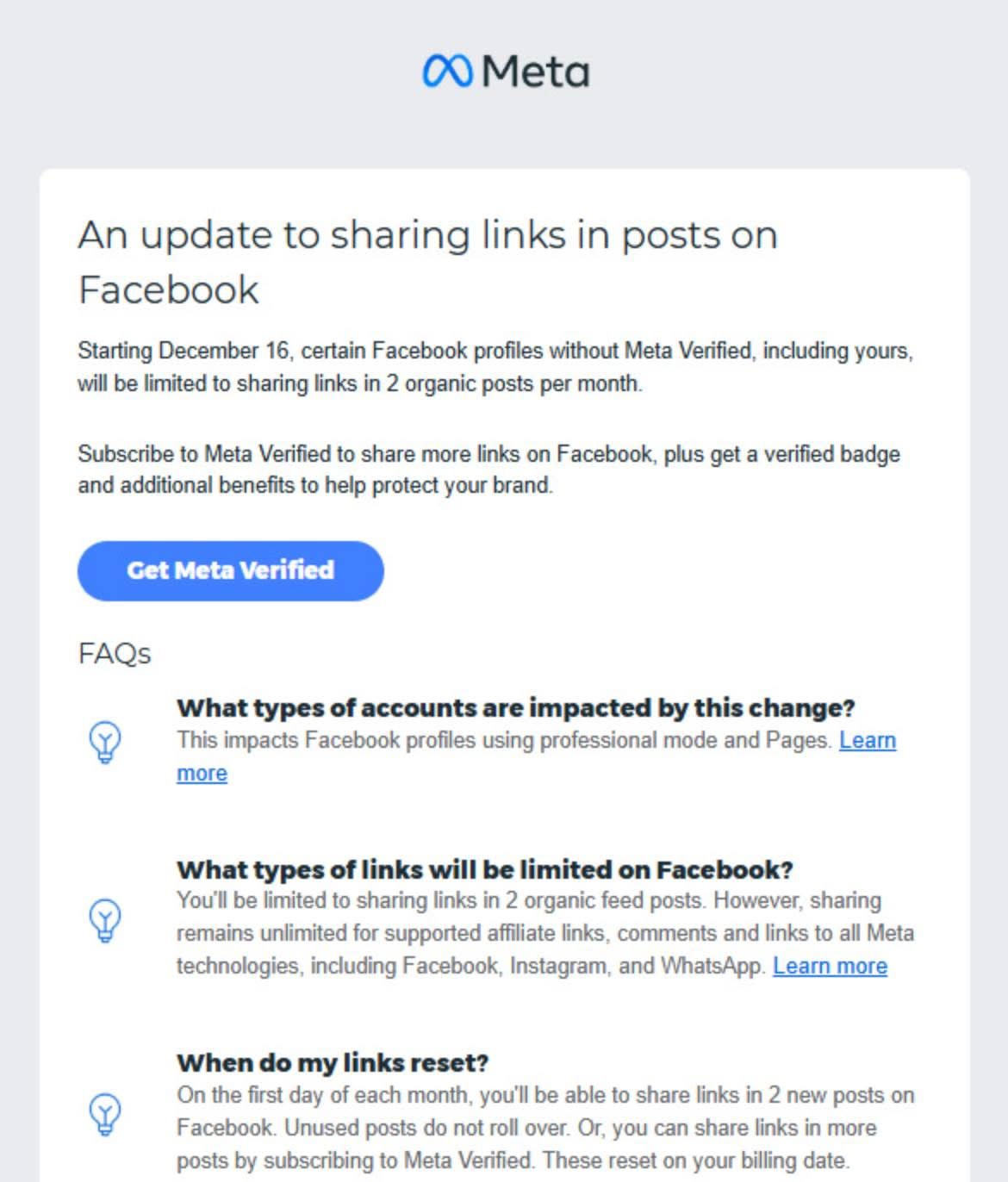
Under the test, a Meta Verified subscription will determine how many links a creator can share another profile per month. According to a screenshot shared by social meda consultant Matt Navarra, creators in the test recently received a notification from Meta informing them that “certain Facebook profiles without Meta Verified, including yours, will be limited to sharing links in 2 organic posts per month.”  

Meta is making link sharing pay to play with a new test.

A spokesperson for Meta confirmed the test to Engadget. The test is currently affecting an unspecified number of creators and pages using “professional mode” on Facebook. Publishers aren’t affected for now. “This is a limited test to understand whether the ability to publish an increased volume of posts with links adds additional value for Meta Verified subscribers,” the spokesperson said.

While Meta seems to be trying to downplay the significance of the test, it’s a notable shift for the company. Many creators and businesses rely on Facebook and reducing their ability to send traffic to outside websites could be a significant hit. Many creators are already frustrated that the company puts its better customer service features behind the Meta Verified subscription, which starts at $14.99/month. Making link-sharing a premium feature as well would be even more unpopular.

Have a tip for Karissa? You can reach her by email, on X, Bluesky, Threads, or send a message to @karissabe.51 to chat confidentially on Signal.

This article originally appeared on Engadget at https://www.engadget.com/social-media/a-facebook-test-makes-link-sharing-a-paid-feature-for-creators-224632957.html?src=rss

Physicists 3D-printed a Christmas tree of ice

Physicists at the University of Amsterdam came up with a really cool bit of Christmas decor: a miniature 3D-printed Christmas tree, a mere 8 centimeters tall, made of ice, without any refrigeration equipment or other freezing technology, and at minimal cost. The secret is evaporative cooling, according to a preprint posted to the physics arXiv.

Evaporative cooling is a well-known phenomenon; mammals use it to regulate body temperature. You can see it in your morning cup of hot coffee: the hotter atoms rise to the top of the magnetic trap and “jump out” as steam. It also plays a role (along with shock wave dynamics and various other factors) in the formation of “wine tears.” It’s a key step in creating Bose-Einstein condensates.

And evaporative cooling is also the main culprit behind the infamous “stall” that so frequently plagues aspiring BBQ pit masters eager to make a successful pork butt. The meat sweats as it cooks, releasing the moisture within, and that moisture evaporates and cools the meat, effectively canceling out the heat from the BBQ. That’s why a growing number of competitive pit masters wrap their meat in tinfoil after the first few hours (usually when the internal temperature hits 170° F).

Read full article

Comments

Astronomers find mysterious lemon-shaped exoplanet with NASA’s Webb telescope

Space is full of unsolved mysteries, and a team using NASA’s James Webb Space Telescope have recently turned up a doozy. “I remember after we got the data down, our collective reaction was ‘What the heck is this?’ It’s extremely different from what we expected,” said Peter Gao of the Carnegie Earth and Planets Laboratory in Washington, a co-author on the study.

The researchers found an exoplanet dubbed PSR J2322-2650b that orbits a small, dense star emitting electromagnetic radiation known as a pulsar. They are an example of a black widow system, where a rapidly spinning pulsar is paired with a smaller astronomical body. A black widow duo isn’t unusual, but this pair has sparked questions about how the exoplanet originally formed.

The exoplanet’s proximity to the pulsar and its intense gravitational pull have distorted it into an oblong lemon shape. More unusually, PSR J2322-2650b also has a unique atmosphere comprised mostly of helium and carbon. “Instead of finding the normal molecules we expect to see on an exoplanet — like water, methane, and carbon dioxide — we saw molecular carbon,” principal investigator Michael Zhang of University of Chicago said. Given its strange atmosphere, the team isn’t certain how the exoplanet formed. “It’s very hard to imagine how you get this extremely carbon-enriched composition. It seems to rule out every known formation mechanism,” Zhang said. For now, we’ll chalk this up as another mystery of the universe.

This article originally appeared on Engadget at https://www.engadget.com/science/space/astronomers-find-mysterious-lemon-shaped-exoplanet-with-nasas-webb-telescope-223722244.html?src=rss