Bricking My iPhone Is My Tech ‘Upgrade of the Year’

My concentration is shot. I know this because I’ve checked my phone four times while writing this opening paragraph. I’m addicted to my phone in a way that feels both embarrassing and completely normal, which is perhaps the most damning part. My phone feels essential for everything: my job requires Slack and email responsiveness, my hobbies live in apps and group chats, and even my downtime involves scrolling through feeds I don’t actually enjoy.

These days, we tend to think of upgrades (in life, in tech, wherever) as adding features, but sometimes the real upgrade is eliminating. So I did something a little radical this year: I bricked my iPhone. Well, sort of. And it’s been the best tech decision I’ve made in years.

What I actually did to fix my concentration

We talk about phone addiction like it’s a personal failing, but cut yourself some slack. Every app, every notification, every infinite scroll is designed by engineers whose job is to keep us locked in. As such, we’ve eliminated almost all empty space from our lives, filling every waiting moment with content consumption. Waiting for the train? Scroll. In line at the store? Scroll. Between tasks at work? Scroll.

I can’t afford to go full “dumb-phone”, so I took a middle path: “demoting” my smartphone, so it functions like a dumb phone while retaining genuinely useful features like navigation, ride shares, and FaceTime. Here’s what I did:

I turned on grayscale mode. It’s amazing how boring your phone becomes when it looks like an old newspaper. That dopamine-triggering red notification badge? Just gray. Instagram’s carefully curated visual feast? Gray. Suddenly my phone looked as exciting as a filing cabinet.

I deleted the time-consuming apps. I got rid of the primary social media apps, any news apps that were really just anxiety delivery systems, and more social media apps. If I wanted to check something, I’d have to do it on my computer, which added just enough friction to make me reconsider whether I actually cared.

I turned off non-essential notifications. Actually, I turned off almost all notifications. No badges, no banners, no sounds. My phone became silent unless someone was actually calling me or texting me directly.

I started physically separating myself from my phone during focused work. It went in another room, face down in a drawer, anywhere but within arm’s reach. Out of sight, out of the dopamine loop.

How bricking my iPhone was the ultimate life hack

This might sound embarrassing, but it’s honest: at first, it felt like phantom limb syndrome. My thumb kept reaching for apps that weren’t there. I’d pull out my phone in line at the coffee shop only to stare at a blank screen and think, “Now what?” The answer, it turned out, was nothing. And that nothing was exactly what I needed.

The first week was genuinely uncomfortable. My brain kept expecting hits that weren’t coming. I felt anxious, ashamed, humbled, understimulated, almost itchy—which pretty much told me everything I needed to know about how deep the addiction ran.

Luckily, the benefits rolled in faster than I expected. Within two weeks, I noticed I could read for longer stretches. I also think my work as a creative improved. Deep work—the kind where you’re tackling genuinely hard problems—requires getting into a flow state. I need at least 20 minutes of uninterrupted focus to even enter that zone, and for me, an Instagram notification shatters it instantly. By removing the interruption infrastructure from my phone, I suddenly had whole mornings where I could think clearly.

Along with dumbing down my phone, I set an intention to become more observational again. I’d be waiting somewhere and instead of reaching for my phone, I’d just…look around. Watch people. Notice architectural details. Eavesdrop on conversations. Observe the weather shifting. It sounds small, but it completely changed my relationship with being in public spaces.

I believe boredom is where creativity lives. When your mind isn’t being constantly fed, it starts generating its own entertainment. I had ideas in the shower again. Real ideas, not just fragments borrowed from something I read online; I had original thoughts that surprised me, connections my brain made when it wasn’t being force-fed content. This sounds mundane, but I promise, it’s the opposite. This is how thinking actually works when you let it.

Especially with social media, I’d settled into this constant need to perform my life. While I still find this performance necessary to “make it” as a creative these days, I learned that most of my FOMO was an algorithm problem. You’re not actually missing out on anything important; you’re being shown a curated highlight reel designed to make you feel inadequate. Once you step out of that stream, you realize how much of it was manufactured anxiety. The things I thought I needed to keep up with turned out to be completely forgettable.

The bottom line

My bricked iPhone is a downgrade in features and an upgrade in life quality. That’s the whole story, really.

We frame phone usage as a personal responsibility issue, but that’s like blaming people for getting hooked on substances that were engineered to be addictive. Companies build their algorithms around persuasive technologies. They run A/B tests on features to maximize engagement. They know exactly what they’re doing, and what they’re doing is turning your attention into profit.

Look, I’d love to go more radical with it, but I have limits. For work, I need to be responsive—Slack messages can’t wait three hours. And I genuinely adore getting laughs in a group chat, which is a timely thing. Those moments of connection matter, and I’m not interested in becoming a total digital hermit.

But going forward, I’m desperate to keep getting my brain back. My ability to think deeply, pay attention, create meaningfully, and connect authentically—these aren’t optional luxuries. They’re the whole point.

If your phone feels like it owns you more than you own it, maybe your next upgrade isn’t a new model. Maybe it’s just making your current one a little more boring, a little less exciting, and a lot more brick-like. Your brain will thank you for it.

The Last Ninja Collection From The C64 Era Hits Steam With Bonus Games

The Last Ninja Collection From The C64 Era Hits Steam With Bonus Games
Game preservation is a tricky thing, especially without resorting to emulation or dubiously-obtained ROM files. System 3 Software, however, put in the effort for fans of ZX Spectrum and Commodore 64-era games by bringing its Last Ninja trilogy and a number of its other games to Steam. The games have full support for modern controllers, and

Switch 2 pub backs off Game Key Cards after leaking lower-cost cartridge options

The Switch 2’s data-free, download-enabling Game Key Cards have proved controversial with players who worry about long-term ownership and access issues to their purchases. But they’ve remained popular with publishers that want to save production costs on a boxed Switch 2 game release, since Game Key Cards don’t include any of the expensive flash memory found on a standard Switch 2 cartridge.

Now, though, at least one publisher has publicly suggested that Nintendo is offering cheaper Switch 2 cartridge options with smaller storage capacities, lowering production costs in a way that could make full cartridge releases more viable for many games on the console.

Earlier this week, R-Type Dimensions III publisher Inin Games explained to customers that it couldn’t switch from Game Key Cards to a “full physical cartridge” for the retail version of the Switch 2 game without “significantly rais[ing] manufacturing costs.” Those additional costs would “force us to increase the retail price by at least €15 [about $20],” Inin Games wrote at the time.

Read full article

Comments

LG TVs’ unremovable Copilot shortcut is the least of smart TVs’ AI problems

Online fury erupted this week after an LG TV owner claimed that a firmware update installed unremovable generative AI software on their smart TV.

The controversy began on Saturday, when a Reddit user posted about the sudden appearance of a Microsoft Copilot icon on their device (something Windows users are all too familiar with). The Reddit user claimed that a “new software update installed Copilot” onto their LG TV and that it couldn’t be deleted.

“Pre-installed crap is universally dogshit. If I wanted it, I’d have installed it myself eventually. The whole reason it’s bundled is because no one would choose it… Burn your television,” another Reddit user responded in the thread, which has 36,000 upvotes as of this writing.

Read full article

Comments

Netflix is acquiring game avatar maker Ready Player Me

Netflix is acquiring Estonian startup Ready Player Me, a company creating “cross-game avatar tech” that allows players to bring their digital personas with them to different games, the company’s CEO Timmu Tõke shared in a LinkedIn post. The acquisition is part of Netflix’s new games strategy, which puts an emphasis on approachable multiplayer titles and adaptations of the streaming service’s IP.

Ready Player Me’s team of around 20 employees will be incorporated into Netflix’s staff, TechCrunch writes, though Tõke is the only one of the startup’s four founders who will continue on after the acquisition. Neither company has shared when the avatar tech will be incorporated into Netflix’s games or what games will support the feature when they do. 

Besides designing its avatar system to be easy for developers to implement in their games, Ready Player Me’s big pitch for their system is using AI to automatically redesign avatars for different games’ art styles and “automatically fit assets to any avatar rig or topology without manual work.”

Netflix has taken multiple different approaches  to games in the last few years, but lately, the company has actively retreated from AAA development and its more ambitious projects. Other than the premiere of its take on HQ Trivia, Netflix’s last few game announcements of 2025 were focused on a collection of streamable party games, and a partnership with FIFA to release a new soccer sim in 2026. All of those projects could support avatars in one form or another, now Netflix just needs to decide how.

This article originally appeared on Engadget at https://www.engadget.com/gaming/netflix-is-acquiring-game-avatar-maker-ready-player-me-204443001.html?src=rss

Microsoft Made Another Copilot Ad Where Nothing Actually Works

Microsoft’s latest holiday ad for its Copilot AI assistant features a 30-second montage of users seamlessly syncing smart home lights to music, scaling recipes for large gatherings, and parsing HOA guidelines — none of which the software can actually perform reliably when put to the test. The Verge methodically tested each prompt shown in the ad and found that Copilot repeatedly hallucinated interface elements that didn’t exist, claimed to highlight on-screen buttons when it hadn’t, and abandoned calculations midway through.

The smart home interface shown in the ad belongs to “Relecloud,” a fictional company Microsoft uses in internal case studies. A Microsoft spokesperson confirmed that both the HOA document and the inflatable reindeer photo were fabricated for the advertisement. The ad closes with Santa Claus asking Copilot why toy production is behind schedule.

Further reading: Talking To Windows’ Copilot AI Makes a Computer Feel Incompetent.


Read more of this story at Slashdot.

How a Simple URL Typo Can Make You a Target for Malware

Clicking through search results to a website comes with the risk of landing on a spoofed page that is actually a phishing scam, but so does navigating directly by typing a URL into your browser. As reported by Krebs on Security, researchers at security firm Infoblox have identified a swath of scams on lookalike and parked (or placeholder) domains. If you end up on one of these websites, you’ll be directed not to the trusted page you’re expecting but scam content, including scareware and other malware.

Lookalike domains contain malicious content

This scam capitalizes on you navigating directly to a website by typing the URL into your browser’s address bar. If you accidentally mistype either the top-level domain (TLD)—.gov or .com, for example—or the second-level domain (SLD), which is the company name (Google or Amazon), you could land on a page that has been commandeered by threat actors for malicious purposes.

In some cases, these may be typosquats, meaning cybercriminals have registered domain names that look nearly identical to trusted ones. In others, they may be real domains that have expired and are simply advertising placeholders that spread malware.

Infoblox researchers found that visiting one of these sites often initiates a chain of redirects, through which threat actors profile data like your IP geolocation, device fingerprint, and cookies. That means you don’t necessarily need to click any links on the parked page to be served malicious content. They note, though, that parked websites were only malicious if visited from a residential IP address and benign if accessed using a VPN or a non-residential IP.

How to avoid parked domain scams

One common piece of advice for avoiding phishing websites is to type trusted URLs directly into the address bar rather than clicking through search, as threat actors will try to exploit results, including placing paid ads, to redirect you to malicious domains. This can still be a safe way to get to your destination, but you should check your spelling of both TLDs and SLDs carefully, as small errors could land you on a scam site.

I’ve covered similar website trickery like homograph attacks, which use lookalike characters in URLs to direct you to phishing sites that, on the surface, appear to be legitimate domains. Unless you inspect the address very carefully, you may not catch the scam.

Riot Games is making an anti-cheat change that could be rough on older PCs

At this point, most competitive online multiplayer games on the PC come with some kind of kernel-level anti-cheat software. As we’ve written before, this is software that runs with more elevated privileges than most other apps and games you run on your PC, allowing it to load in earlier and detect advanced methods of cheating. More recently, anti-cheat software has started to require more Windows security features like Secure Boot, a TPM 2.0 module, and virtualization-based memory integrity protection.

Riot Games, best known for titles like Valorant and League of Legends and the Vanguard anti-cheat software, has often been one of the earliest to implement new anti-cheat requirements. There’s already a long list of checks that systems need to clear before they’ll be allowed to play Riot’s games online, and now the studio is announcing a new one: a BIOS update requirement that will be imposed on “certain players” following Riot’s discovery of a UEFI bug that could allow especially dedicated and motivated cheaters to circumvent certain memory protections.

In short, the bug affects the input-output memory management unit (IOMMU) “on some UEFI-based motherboards from multiple vendors.” One feature of the IOMMU is to protect system memory from direct access during boot by external hardware devices, which otherwise might manipulate the contents of your PC’s memory in ways that could enable cheating.

Read full article

Comments

Not too big, not too expensive: The Chevrolet Equinox EV

There’s a lot of goodwill out there for the Chevrolet Bolt. As maybe the first properly affordable longer-range electric car on the market, the Bolt wasn’t perfect. It didn’t charge very fast, and people found the seats quite uncomfortable. But it could get more than 230 miles on a single charge—a lot in 2017—and you didn’t have to be flush to afford one. Oh, and it was also pretty good to drive. I know I was a fan from the first time I tried a prototype at CES in 2016.

Understandably, Bolt fans were upset when Chevy decided to kill off the car. Yes, it lacked features compared to more modern EVs, but it is also the brand‘s bestselling EV by quite a country mile. “Not to worry,” said the executives, who told us they had something better coming built on the platform they used to call Ultium but don’t anymore. Starting at around the same $35,000 price tag the Bolt launched with, this would be the new Equinox EV.

That $34,995 price tag was perhaps a bit more appealing when the car was eligible for the now-dead $7,500 IRS clean vehicle tax credit. Truth be told, the LT1 spec is a little bare-boned, and you’ll need to step up to the LT2 we tested—which starts at $40,295—if you want things like heated seats or wireless charging for your devices. (The good news here is that people looking for a bargain should know that used Equinox EVs with decent specs are already much cheaper, just a year after the car’s launch.) And let’s not forget, when the Bolt was young, the more expensive trim was almost $42,000.

Read full article

Comments

All That Cheap Chinese Stuff Is Now Europe’s Problem

President Trump’s closure of the de minimis customs loophole in May — which previously allowed Chinese packages valued under $800 to enter the U.S. duty-free — has redirected a flood of cheap goods toward Europe, where similar exemptions for packages under $175.8 in the EU and $180 in the UK remain intact.

The shift has been swift: exports of low-value Chinese packages to the U.S. have dropped more than 40% since May, according to Chinese customs data, and the EU has this year overtaken the U.S. as the largest market for China’s roughly $100 billion cheap package trade.

Shipments to Hungary and Denmark have quadrupled, and those to Germany, France, and the UK have risen 50% or more. Temu has recorded seven straight months of double-digit U.S. sales declines, per Consumer Edge data tracking credit and debit card transactions. Its European sales, on the other hand: up 56% in the EU and 46% in the UK since May compared to a year ago. The EU agreed last week to impose a $3.5 fee on imported small packages starting in July and to close the de minimis exemption entirely by 2028. The UK plans to follow in 2029.


Read more of this story at Slashdot.

This Thermal Sticker Printer Is My Tech ‘Upgrade of the Year’

We may earn a commission from links on this page.

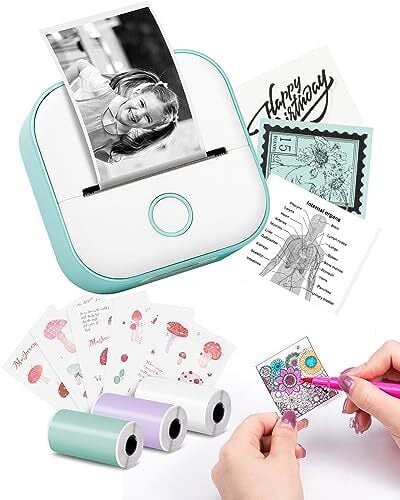
You don’t know how many times in the past few years I saw that mini thermal printers existed, considered getting one, and then decided, no, it’s too silly and I’ll never use it. Friends, I finally caved, and my only regret is not getting one earlier. I’ve only had this tiny gadget for about a month, but it’s gotten daily use in my house. With Christmas coming up, I use it to print gift tags and labels. I use custom stickers to make charts in my workout journal, and it’s even become the centerpiece of the Elf on the Shelf’s interaction with my daughter. (Yes, she still claims to believe, probably just for the entertainment value of seeing what I come up with next—desperation is the mother of creativity.)

I’m the kind of person who enjoys physical items, especially paper and notebooks, but somehow I always end up glued to my phone. Being able to print things out keeps me in the real world, especially if I can do something on paper (or a sticker) that I would normally do with an app.  

What exactly is a thermal sticker printer? 

You’ve seen these before, even if you don’t realize it. The receipts you get at most grocery stores and other big stores are thermally printed; so are lots of barcode and ingredient labels that might be slapped on, say, a rotisserie chicken or a box of bakery cookies.  

These are “thermally” printed because there is no ink. Instead the receipts or labels are made of a coated paper that turns dark when exposed to heat. The printer just heats up the appropriate areas of the paper as it exits the machine. 

Stores love these printers because the technology is old and cheap, the paper is cheap, there’s no ink to refill, and the receipts or stickers print quickly. It doesn’t really matter that the output is black-and-white and low resolution; we’re not using these for fine art.

Those features are also what I like about my mini version. The printer itself was only $25 on a Black Friday deal, and the paper rolls last forever and only cost about a dollar each. In contrast, I also own a full-color mini photo printer that uses Zink paper, and it’s the opposite: expensive paper, slow printing, and terrible battery life. The prints look pretty good, but because of these drawbacks, I almost never use it. Meanwhile, I use the thermal printer all the dang time.

How it’s useful

My training journal with hand drawn grids and a printed one

Credit: Beth Skwarecki

For one, I’m finally putting proper labels on the candy that I give as gifts every Christmas, with ingredients and everything. In past years I wanted to, but then I’d have to figure out how to design a label, and what to print it on, and then I’d have to assign a kid to cut them out and tape or tie them on—none of this is hard, but it’s just one more thing. This year, I’ll type up the label in the app and just print it out.

The printer’s app, called Phomemo, is simple to use even though you have to dodge a bunch of “premium” features. You can quickly print any text you want, any photo from your photo roll, or choose from a library of clip art and templates. Once I know what I want to print, I can have a label designed and printing within seconds. 

So I use the printer all the time for anything that’s a little more complicated than writing a word or two with a Sharpie, but doesn’t need to be a whole production where you buy or make a proper label or info sheet. 

For example, I printed out a chart of knitting needle sizes and stuck that to the case where I keep my knitting needles. I printed a 2-by-10 grid of boxes to keep track of a workout that has 10 sets of 2 exercises. (I stick it into my training journal and then check off the sets as I complete them. I used to draw the boxes by hand, but one time I ended a workout early because I had miscounted. The sticker keeps me from screwing up.) 

Sure, I could search up a needle size chart or keep my workout data in an app. But having this information in a physical paper format keeps me off my phone during exactly the times I’m trying to unplug. 

How it’s fun

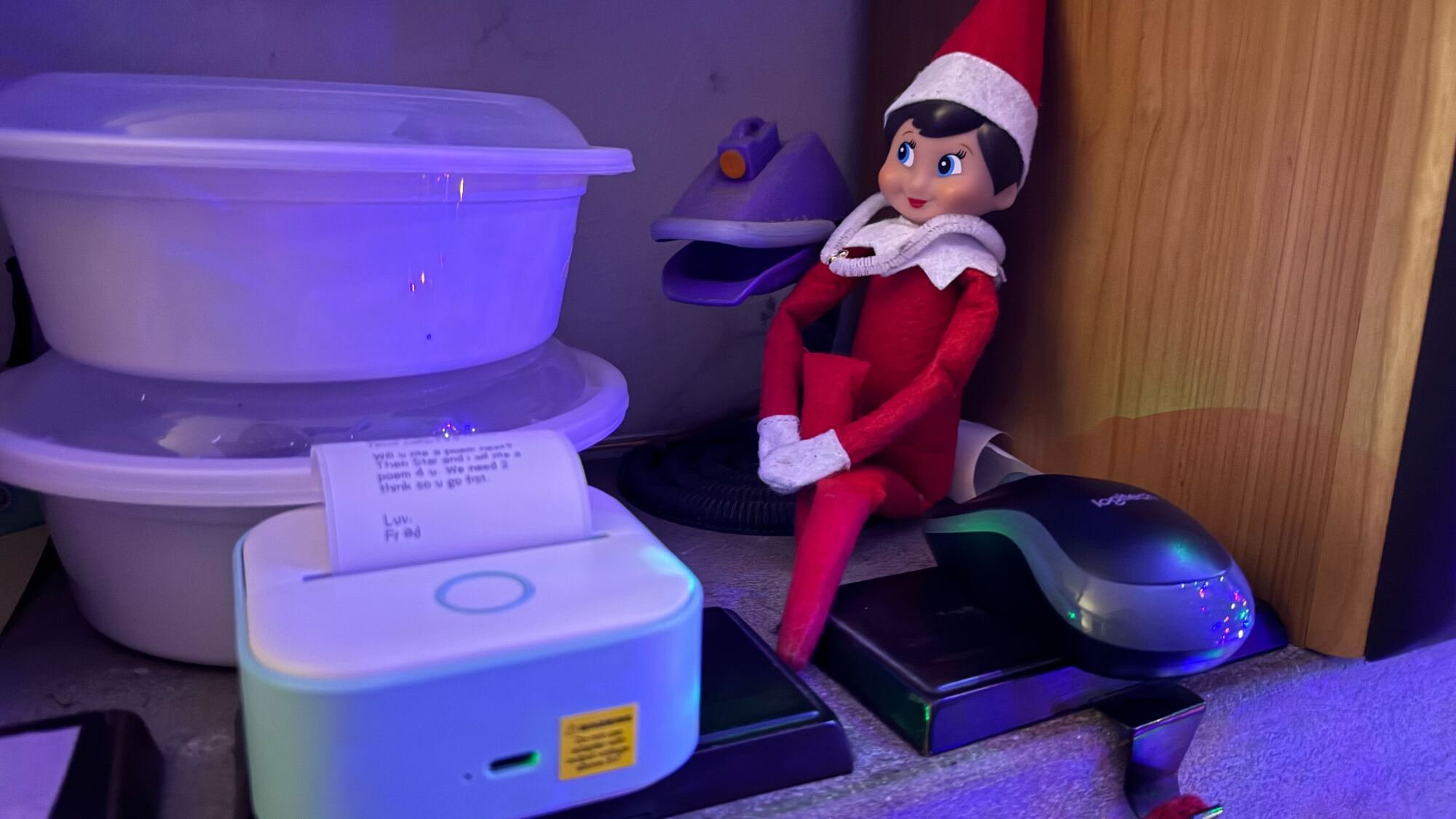
Elf on the Shelf with a printer

Credit: Beth Skwarecki

This is where the kids come in. Specifically my youngest, who immediately printed out stickers for herself and her friends. (Because the paper is so cheap, I don’t mind giving her Bluetooth access from her own device—she can go to town.) 

This is the same kid who insists on believing in Elf on the Shelf every year, even though she knows I’m Santa. You may recall that I refuse to have the elf “get into trouble” and “make messes” and instead look for cleaner, lower effort antics. It’s always been a hit when the elf writes notes to my kid, which is why I spent last December writing tiny notes with a tiny pen and then hiding my supplies. This year, she thought of using the printer to write her note to the elf, and then I just had to make up a story about how the elf has a secret phone she can use to connect and print responses. 

Each night’s elf antics are, thus, a thing I can do in minutes. I turn on the printer, print the note, and (if needed) move the elf to a different shelf or whatever. My kid and the elf have done scavenger hunts, drawn each other pictures, and tonight will be writing each other poems. I love the creativity, and she’s been saving all the notes. There’s just something about having a physical reminder of something ephemeral. 

Get up to 78 percent off ExpressVPN two-year plans for the holidays

It looks like the holidays aren’t a bad time to shop for a VPN subscription. ExpressVPN, Engadget’s pick for the best premium provider, currently has a less premium price. This deal gives you two years of the Advanced plan (with a bonus of four free months) for only $101. When it isn’t on sale, the same subscription would cost $392.

Engadget’s VPN guru, Sam Chapman, praised ExpressVPN’s service. He described it as “high-performing” and having “very few flaws.” The service received high marks for its speeds, easy-to-use interface and global network availability. The only significant mark against it was its relatively high standard pricing. But with this holiday sale, that criticism is (temporarily) null and void.

ExpressVPN recently switched to a multi-tier pricing structure. (That previously mentioned Advanced plan is the mid-range one.) There’s a cheaper Basic plan that allows 10 simultaneous devices (compared to the Advanced plan’s 12) and doesn’t include perks like a password manager. You can also choose the highest-priced Pro plan. It allows for 14 simultaneous devices and adds several extras. You can compare plans on ExpressVPN’s website.

When buying a two-year plan, the Basic tier is available for $2.79 per month (78 percent off). The Advanced plan is $3.59 per month (74 percent off). And the Pro plan is $5.99 per month (70 percent off). All three include the bonus of four additional months, giving you 28 total.

Follow @EngadgetDeals on X for the latest tech deals and buying advice.

This article originally appeared on Engadget at https://www.engadget.com/deals/get-up-to-78-percent-off-expressvpn-two-year-plans-for-the-holidays-194912043.html?src=rss

Major UEFI Flaw Enables Game Cheats On ASUS, ASRock, Gigabyte & MSI Motherboards

Major UEFI Flaw Enables Game Cheats On ASUS, ASRock, Gigabyte & MSI Motherboards
Players of Riot Games on the PC are familiar with the Vanguard kernel-level anti-cheat by now. However, even with it installed and updated, gamers may have received a notice that their system is restricted from launching Valorant. This isn’t an accident—per a blog post from Riot Games, a key vulnerability in modern UEFI firmware still left

FTC: Instacart To Refund $60M Over Deceptive Subscription Tactics

alternative_right writes: Grocery delivery service Instacart will refund $60 million to settle FTC claims that it misled customers with false advertising and unlawfully enrolled them in paid subscriptions. Instacart partners with over 1,800 retailers to provide online shopping, delivery, and pickup services from nearly 100,000 stores across North America. Its platform serves millions of customers and is also used by roughly 600,000 independent shoppers across thousands of cities in Canada and the United States.

In a complaint filed on Thursday, the FTC claimed Instacart engaged in multiple deceptive tactics that raised costs for customers, including failing to provide advertised refunds and falsely advertising “free delivery” while still charging mandatory service fees that added up to 15% to order costs. The FTC said Instacart also advertised a “100% satisfaction guarantee,” but typically offered only small credits toward future orders rather than full refunds to customers experiencing problems with deliveries or service. The company allegedly hid refund options from “self-service” menus, leading customers to believe credits were their only option.


Read more of this story at Slashdot.

LG Responds To Backlash Over Unremovable Copilot Icon On Smart TVs

LG Responds To Backlash Over Unremovable Copilot Icon On Smart TVs
Earlier this week there was an uproar among LG TV owners over the inclusion of what most thought was a Microsoft Copilot app that couldn’t be removed, which was bundled with the latest WebOS platform update. WebOS is the operating system that runs on LG’s current range of televisions. The company has responded to the backlash to clarify the

The Ninja Creami Is My Tech ‘Upgrade of the Year’

We may earn a commission from links on this page.

While I’m a frequent reviewer of laptops and other computer-y type things, the gadgets that I care about the most are the ones I actually use on a regular basis in my day-to-day life. This year, I got big into showing off important memories with a digital picture frame, and into nostalgic handheld gaming with my first Anbernic device. But out of all the upgrades I’ve made to my life this year, the Ninja Creami was my easy favorite.

What is the Ninja Creami?

The Ninja Creami is different from a more traditional ice cream maker, which sits on your counter and constantly churns and freezes your liquid ice cream mixture until it’s ready. Instead, you prep and freeze your liquid ice cream mix overnight, and then process it (in just a few minutes) when you want it. That does mean you’ll need to get your ice cream going at least 24-hours in advance, but if you keep a few pints ready in your freezer at any given moment, I actually think it’s more convenient than the alternative, and makes for great spontaneous snacking.

Plus, you can get a bit more creative with your ingredients than with a traditional ice cream maker, since your mixture doesn’t need to thicken while being churned. In short, it’s a great machine for making custom desserts whenever you get the urge. Read on here for more on how exactly this all works, but for now, let’s get into just how much of a difference it’s made in my life this year. I got it as a gift, but it’s quickly become indispensable in my kitchen.

Ninja Creami ice cream pint
Pint of processed Ninja Creami ice cream.
Credit: Michelle Ehrhardt

Why the Ninja Creami is my tech upgrade of the year

With the explanation out of the way, there are a few specific use cases that really made the Ninja Creami shine for me this year. In no particular order, here’s why it’s my favorite gadget I got in 2025.

It’s easy to use

I’ve already talked about how using the Ninja Creami generally takes less time than making ice cream with a more traditional ice cream maker, assuming you remember to keep your freezer stocked with Creami pints that you’ve frozen for at least 24 hours ahead of time. But let’s walk through the actual process of making ice cream with the Creami, just to really drive it home.

  • Get urge for ice cream

  • Pull pre-frozen Ninja Creami pint out of freezer

  • Place pint into slots on Ninja Creami pitcher, install blade into pitcher lid, and place lid on top of pitcher

  • Press button for your preferred ice cream program and wait two to five minutes.

And that’s it. It’s a good sight faster than going out for ice cream, not to mention cheaper. And the Creami can even do mix-ins like your own live-in Coldstone—just dig a hole in the center of your ice cream after processing, add your mix-ins, and snack on the ice cream you dug out while waiting for the mix-in program to incorporate your goodies into your ice cream. 

As for cleanup, the pints, lid, and blade are dishwasher safe, so fuggedaboutit.

It’s customizable

Maybe the biggest reason to get any home ice cream maker is the ability to make your own ice cream flavors, and the Ninja Creami is no different. While I’ve made the standard vanilla and chocolate, I’ve also experimented with more offbeat flavors in my Ninja Creami. Good examples are Milk Tea flavored ice cream and Chocolate Dulce de Leche ice cream (stay tuned). You can’t find those at Baskin-Robbins!

It’s healthy(er)

The thing that actually made me get a Ninja Creami is protein ice cream, or ice cream where protein powder is the chief contributor to your flavor. This is harder to make in a more traditional ice cream maker, but because of how the Ninja Creami mixes its ice cream together, it’s dead simple to make with it. It’s actually 90% of what I use the Creami for. This allows me to satisfy my sweet tooth while generally keeping calorie counts lower than a full fat ice cream would. You can still make that in the Ninja Creami, but I’ve had satisfying results with just 2% milk, protein power, and my secret ingredient—sugar free Jell-O.

The Jell-O comes with xantham gum that acts as a binder, and when mixed with the milk and protein powder, gives you a nearly indistinguishable texture from full fat ice cream after processing. You can actually buy xantham gum on its own, but Jell-O is a bit easier to find, and can add some additional flavor. Granted, I’ll usually add in some mix-ins and whipped cream, which does counteract the healthiness a little bit, but it’s still not uncommon to get a pint that’s under 400 calories. And a full pint usually serves both me and my husband, and makes a great compliment to a smaller dinner, which means it can help with portion control, too.

It saves milk

I’m not always great at using up milk ahead of its expiration date, but I hate the idea of dumping it down the drain. The Ninja Creami makes for easy recipes to freeze milk that’s about to go bad, as each recipe calls for about 2 cups of the stuff. Granted, I like to use 1 cup of cow milk and 1 cup of almond milk, since almond milk provides some flavor and an extra smooth texture, but you can totally get away with just one or the other. Overall, the Ninja Creami has made me much less wasteful with my milk, even as I’m using it more often.

Boozy milkshakes!

Finally, the Ninja Creami can make easy milkshakes. Yes, I know it’s not that hard to make milkshakes in a blender, but I hate washing my whole blender just for that. With the Ninja Creami, you just dump your ice cream into your pint, or process some custom ice cream and mix it around a bit, then dig a hole in the center of it and add some milk and alcohol. Run it through the milkshake program, and the resulting texture will be perfect pretty much every time, with none of the guesswork of using a blender. My husband and I like to do this before watching a movie, and it’s an easy way to save money on the $15+ boozy milkshakes at our local Alamo Drafthouse.

Plus, there are also programs for making other desserts like sorbets, so while I mostly like to use the Creami for ice cream, there are a lot of other ways to get creative with this thing.

My favorite Ninja Creami recipe

Dulce Chocolate Ninja Creami ingredients

Credit: Michelle Ehrhardt

I’ve got my iPhone Notes app filled with dozens of recipes at this point, but to give you a brief idea of just want I do with my Ninja Creami, let’s walk through my favorite. You’re not going to find this at Baskin-Robbins, but once you’ve tried Dulce Chocolate, you won’t be able to go back.

Dulce Chocolate

My husband’s a big fan of Häagen-Dazs’ Dulce de Leche ice cream, and using a special kind of Dulce de Leche protein powder that only one company seems to make, we’ve been able to make a pretty convincing but much healthier dupe of it (for that, use vanilla Jell-O instead of what I’m about to suggest). However, we’ve discovered that Dulce de Leche also goes very well with chocolate, and that’s a mixture you’re unlikely to find unless you make it yourself. This is the recipe that really sold me on the Ninja Creami, and once you try it, I think you’ll understand.

Use the Lite Ice Cream setting to process. After processing, optionally add mix-ins of your choice. My favorite for Dulce Chocolate ice cream are Kit-Kats and Reese’s Thins. Both are best slightly pre-crushed before being added to your ice cream.

Which Ninja Creami should you get?

Ninja Creami Dulce de Leche milkshake with caramel sauce
Ninja Creami Dulce de Leche milkshake with caramel sauce.
Credit: Michelle Ehrhardt

If I’ve convinced you to get one of your own, you’ve got a few options.

The one I own is the standard Ninja Creami, and it normally costs $200 and does everything I need. Pints are two cups and there are fewer program presets than on other models, but it’s what I’d recommend to most people.

But if you want a few more programs and larger pints, you could also go for the Ninja Creami Deluxe, which normally costs $250. Here, you’ll be able to make three-cup pints, and you can also process just part of your pint at a time, making for easier leftovers.

Finally, if you like soft serve ice cream, there’s the Ninja Creami Swirl. This normally costs $350, and is a lot like the standard Ninja Creami, but also comes with a dispenser for swirling out your ice cream into a cone or bowl like you’re at an ice cream shop. It’s also got a few extra programs that make it easier to make ice cream with a soft serve consistency, but with the right knowhow, you can also do that with every Creami model.

Microsoft AI Chief: Staying in the Frontier AI Race Will Cost Hundreds of Billions

Microsoft AI CEO Mustafa Suleyman estimates that staying competitive in frontier AI development will require “hundreds of billions of dollars” over the next five to ten years, a sum that doesn’t even account for the high salaries companies are paying individual researchers and technical staff. Speaking on a podcast, Suleyman compared Microsoft to a “modern construction company” where hundreds of thousands of workers are building gigawatts of CPUs and AI accelerators. There’s “a structural advantage by being inside a big company,” he said.

When asked whether startups could compete with Big Tech, Suleyman said “it’s hard to say,” adding that “the ambiguity is what’s driving the frothiness of the valuations.” Meta CEO Mark Zuckerberg said in September he’d rather risk “misspending a couple of hundred billion” than fall behind in superintelligence.


Read more of this story at Slashdot.

Mark Zuckerberg’s nonprofit cuts ties with the immigration advocacy group he co-founded

Behold Mark Zuckerberg: man of principle. Witness the Meta CEO’s dedication to the most high-minded of causes: “currying favor with whoever’s in charge.” In 2013, when Barack Obama was president, Zuckerberg co-founded FWD.us, a pro-immigration advocacy group. For years, he vocally supported providing paths to citizenship for “the most talented and hardest-working people, no matter where they were born.” Now, in 2025, with Donald Trump back in power and pushing draconian immigration policies, Zuckerberg’s philanthropy organization has officially cut ties with the group. Who says Big Tech executives don’t stand for anything?

On Friday, Bloomberg reported on the Chan Zuckerberg Initiative (CZI) severing its ties with FWD.us. Zuckerberg’s group provided no funding to the advocacy group for the first time this year. Up to that point, over half of the roughly $400 million donated to the nonprofit since 2013 had come from CZI.

In addition, CZI’s chief of staff, Jordan Fox, resigned from the FWD.us board. No one else at CZI will fill the vacant slot, another first for the pro-immigration and justice reform advocacy group.

In late 2024, Zuckerberg met with Trump adviser Stephen Miller, who reacts to brown-skinned humans being sent to foreign gulags the way my dog responds to a juicy steak. Among other topics during the exchange, Miller reportedly questioned Zuckerberg’s ties to FWD.us.

White House Deputy Chief of Staff for Policy Stephen Miller (3rd R) speaks with CEO of Meta and Facebook Mark Zuckerberg (R) during a luncheon in honor of newly sworn in US President Donald Trump, in Statuary Hall at the US Capitol in Washington, DC, on January 20, 2025. (Photo by Brendan SMIALOWSKI / AFP) (Photo by BRENDAN SMIALOWSKI/AFP via Getty Images)
Mark Zuckerberg listens attentively to Stephen Miller at Trump’s January inauguration
BRENDAN SMIALOWSKI via Getty Images

Apparently, his words resonated with Zuckerberg’s principles. In January, before Trump was sworn in for his second term, Meta unleashed an overhaul that reads like a Miller wishlist. The company ended its diversity, equity and inclusion (DEI) programs. That same month, it ditched third-party fact-checkers, calling them “too politically biased.” It also changed its policies to allow for “insulting language” on topics of immigration and LGBTQ+ issues. The company even added Trump backer Dana White to its board.

It fits a broader pattern of Big Tech bending the knee to Trump.

“We’re in the middle of a pretty rapidly changing policy and regulatory landscape that views any policy that might advantage any one group of people over another as something that is unlawful,” Zuckerberg told the New York Times in January. “Because of that, we and every other institution out there are going to need to adjust.”

“We now have a US administration that is proud of our leading companies, prioritizes American technology winning and that will defend our values and interests abroad,” Zuckerberg said in a January investor call. “I am optimistic about the progress and innovation that this can unlock, so this is going to be a big year.”

What a big year indeed.

NEW ORLEANS, LOUISIANA - DECEMBER 5: U.S. Chief Border Patrol Agent, Gregory Bovino and other agents conduct an immigration enforcement operation in a neighborhood on December 5, 2025 in New Orleans, Louisiana This comes on the third day of the operation in Louisiana, 'Catahoula Crunch,' launched by the Department of Homeland Security as a part of an immigration crackdown on undocumented immigrants in the United States. (Photo by Ryan Murphy/Getty Images)
US Chief Border Patrol Agent, Gregory Bovino and masked ICE agents in New Orleans
Ryan Murphy via Getty Images

Now witness the contrasting words of one of Zuckerberg’s chief rivals in Silicon Valley. “When you meet these [immigrant] children who are really talented, and they’ve grown up in America, and they really don’t know any other country besides that, but they don’t have the opportunities that we all enjoy, it’s really heartbreaking, right?” the tech executive said. “That seems like it’s one of the biggest civil rights issues of our time.”

That “rival,” of course, was Obama-era Mark Zuckerberg in 2013.

Despite the funding setback, thanks to our principled hero, FWD.us will press forward. “We’re thankful to our donors, past and present, and so grateful to the many new donors who have stepped up in the past few years — and particularly the influx of new supporters we have seen this year,” FWD.us President Todd Schulte said in a statement. “This allows us to fight for immigrants under attack today and to build a better approach to immigration and criminal justice reform for many, many years to come.”

This article originally appeared on Engadget at https://www.engadget.com/big-tech/mark-zuckerbergs-nonprofit-cuts-ties-with-the-immigration-advocacy-group-he-co-founded-183447900.html?src=rss

Trump’s energy secretary orders a Washington state coal plant to remain open

SEATTLE—The last coal-fired power plant in Washington state was set to go cold at the end of the year. It would then switch to natural gas, cutting carbon emissions in half.

The shutdown had been in the works for 15 years and was mandated by state law. It required the Canadian energy company that owns the power plant, TransAlta, to retrain workers and ease the local community’s economic transition.

But the farewell to coal was canceled this week by the Trump administration. In furtherance of the president’s crusade to keep America’s coal plants burning, the Department of Energy announced Tuesday that an “emergency exists” in the Pacific Northwest “due to a shortage of electricity.” To keep the lights on, Energy Secretary Chris Wright said that the Centralia electric generating facility in southwest Washington must continue to burn coal for at least 90 more days.

Read full article

Comments