China Bans E-commerce Platforms From Forcing Lowest Prices or Abusing Algorithms

China has unveiled new rules to rein in aggressive pricing tactics by online platforms, prohibiting e-commerce operators from forcing merchants to offer discounts or setting different prices based on user demographics without consent. The 29-article regulation — jointly issued over the weekend by the National Development and Reform Commission, State Administration for Market Regulation (SAMR), and Cyberspace Administration of China — lays out detailed compliance requirements that target several long-standing pain points as competition among internet giants has often eroded the rights of both consumers and merchants.

To restore merchant autonomy on pricing, the rules ban platform operators from leveraging their dominant scale to impose “lowest price” agreements. Platforms are prohibited from using traffic throttling, search ranking demotions, or algorithm penalties to pressure merchants into predatory price-cutting or exclusive pricing arrangements.


Read more of this story at Slashdot.

This Sony Wireless Portable Speaker Is Nearly 50% Off Right Now

We may earn a commission from links on this page. Deal pricing and availability subject to change after time of publication.

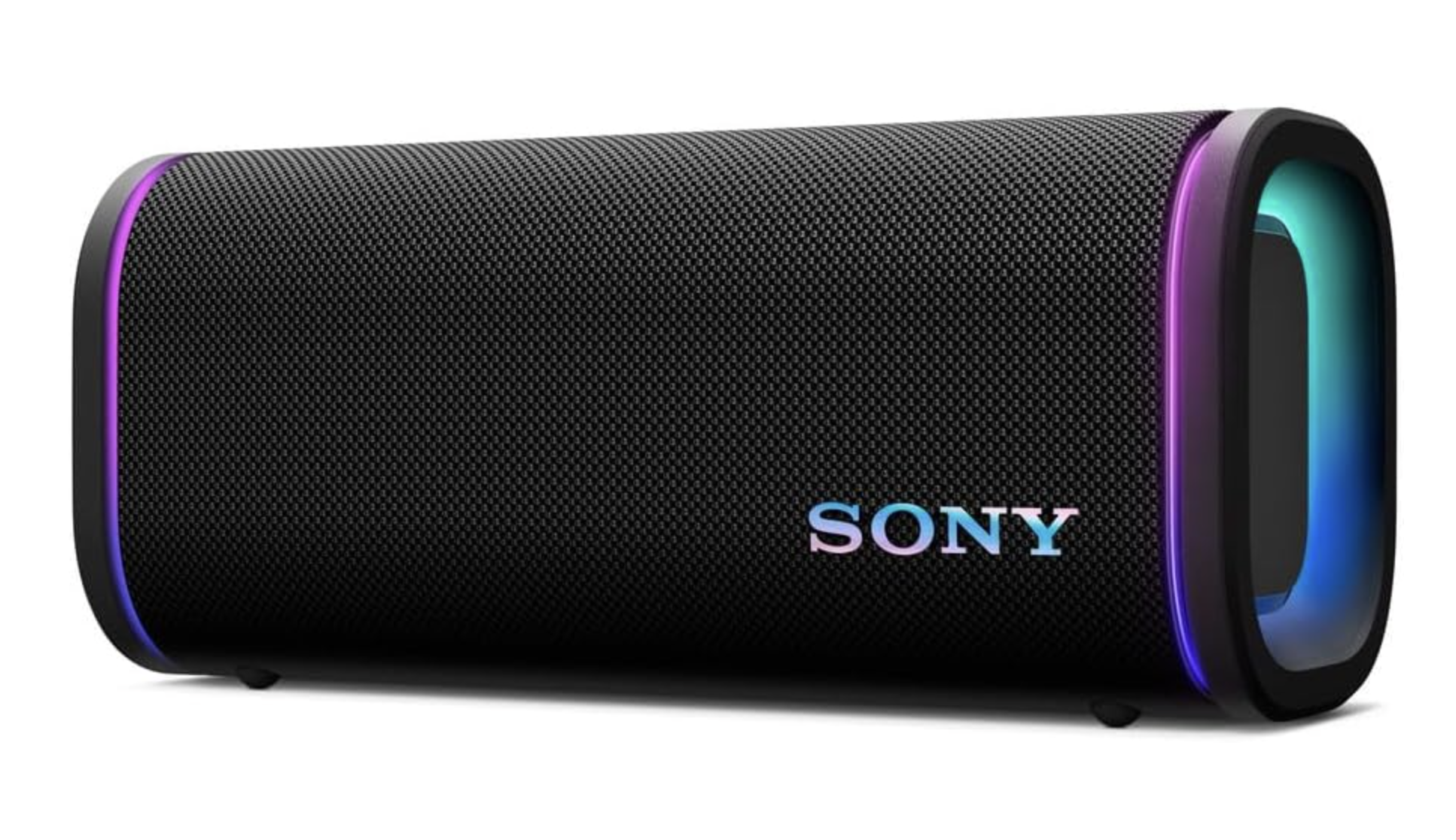
The Sony ULT Field 5 is currently $191.95 on Amazon, down from $349.99, and that price drop is what finally makes this speaker feel properly positioned.

At full price, it was competing with larger, louder options that offered more raw power for the money. With this discount, it makes more sense as a mid-size outdoor speaker that prioritizes bass, durability, and flexibility. PCMag gave it an “excellent” rating, largely because it delivers deeper low-end sound than most speakers in its size class without becoming unwieldy. This is neither a pocket speaker nor a party cannon. It is designed to strike a balance between portability and sound impact, where both are important.

Physically, the Field 5 feels built for abuse. The rectangular body is wrapped in a tough fabric mesh, with passive radiators on each end and subtle LED lighting around them. Those lights can be customized or turned off entirely. The speaker is rated IP67, so dust is a non-issue, and brief drops into water should not cause panic. On top, the controls are simple and tactile, including a large ULT button that changes how the bass behaves. ULT 1 leans into deeper rumble, while ULT 2 pulls things tighter for a more punchy sound. Bass is the clear strength here. It hits harder than you would expect from a speaker this size. The trade-off is in the highs, which can sound a little thin unless you tweak the EQ.

Connectivity is where the Field 5 shows its versatility. Bluetooth 5.3 supports multipoint connections, and Sony’s Party Connect lets you link multiple compatible speakers, though they all need to be from Sony, since this speaker does not support Auracast. There is also a 3.5mm AUX input, which is becoming rare on portable speakers and is useful for wired sources. Codec support includes SBC, AAC, and LDAC, which is a plus for Android users who care about audio quality. Battery life is rated at up to 25 hours, and fast charging delivers about two hours of playback from a 10-minute charge. The USB-C port can also charge your phone in a pinch.

This speaker is still pricey compared to simpler Bluetooth options, and it favors bass over balanced clarity. Still, if you want a rugged speaker with strong low-end and flexible inputs, this deal makes it far easier to justify.


Apple’s iOS 26.3 will introduce proximity pairing to third-party devices in the EU

Apple is making it a little easier to use third-party devices with iPhones in order to comply with Europe’s Digital Market Act (DMA), MacRumors reported. For iOS 26.3, Apple’s devices will support third-party proximity pairing and notifications in Europe only, according to the latest beta notes. That will make it a bit easier to connect devices like Sony headphones or receive notifications from an iPhone on Wear OS smartwatches — provided manufacturers support the new feature. 

“The DMA creates new opportunities for developers to bring to market innovative products and services in Europe,” an EU spokesperson told The Wall Street Journal. “This is another step towards a more inter-connected digital ecosystem to the benefit of all EU citizens.” The EU Commission added that the functionality will be “fully available” in the bloc in 2026.

The new capabilities are as follows:

  • Proximity pairing – Devices like earbuds will be able to pair with an iOS device in an AirPods-like way by bringing the accessory close to an iPhone or iPad to initiate a simple, one-tap pairing process. Pairing third-party devices will no longer require multiple steps.

  • Notifications – Third-party accessories like smart watches will be able to receive notifications from the ‌iPhone‌. Users will be able to view and react to incoming notifications, which is functionality normally limited to the Apple Watch. Notifications can only be forwarded to one connected device at a time, and turning on notifications for a third-party device disables notifications to an Apple Watch.

Proximity pairing is a relatively minor quality-of-life upgrade, allowing you to connect with a tap via NFC rather than diving into the Bluetooth settings. However, there’s no indication that it will allow seamless switching between devices as you can do with Apple’s iPods, for instance. Notifications, however, will finally make third-party watches feasible with iOS devices. 

Apple’s DMA compliance efforts are interesting to watch, as it appears to be doing the bare minimum required, often for what it calls privacy reasons. In some cases, the company is removing features in Europe that are available elsewhere, like iPhone mirroring on Mac — meaning it doesn’t have to implement the same feature on Android devices or PCs. 

This article originally appeared on Engadget at https://www.engadget.com/mobile/apples-ios-263-will-introduce-proximity-pairing-to-third-party-devices-in-the-eu-133037696.html?src=rss

The best gifts cards to give this holiday season: Amazon, Apple, Best Buy and others

This late in the game, it’s not possible to ship gifts to friends and family and have them arrive before the holidays. But that’s ok because it’s never been easier to give a digital gift that will arrive basically whenever you want it to. If you’re looking for more creative digital gift ideas, we’ve got you covered. But right now, you may just be looking for the best gift card ideas that you can buy online and digitally send to the people you love. We’ve got you covered: these are the best gift cards to send as last-minute gifts this year.

Best gift cards to give for the holidays

Check out the rest of our gift ideas here.

This article originally appeared on Engadget at https://www.engadget.com/the-best-gifts-cards-to-give-this-holiday-season-amazon-apple-best-buy-and-others-110032592.html?src=rss

2025 was the year Xbox died

Want to see a dead body? I present to you the Xbox. After a subdued launch at the height of the COVID pandemic in 2020, the Xbox Series X quickly lost the fight against the PlayStation 5. Microsoft simply couldn’t deliver enough compelling games, despite some huge acquisitions, while Sony leaned on its goodwill from the PS4 era and a handful of desirable exclusives. As prices rose due to supply chain issues and the Trump administration’s volatile tariff scheme, there was even less of a reason to get an Xbox (even the cheaper Series S). When I re-reviewed the Series X last year, it was clear that it never lived up to its potential. Anyone in their right mind would be better off buying a PlayStation 5.

Xbox didn’t enter 2025 in a great state, and it’s leaving the year grasping for help, like an Arc Raider player desperate for a revival after being knocked out. Microsoft cancelled the Perfect Dark reboot and Everwild, two of the most interesting games in its weak upcoming slate. The company brought titles like Forza Horizon 5 over to the PlayStation 5, which prompted Engadget Deputy Editor Nathan Ingraham to declare he no longer needed an Xbox. 

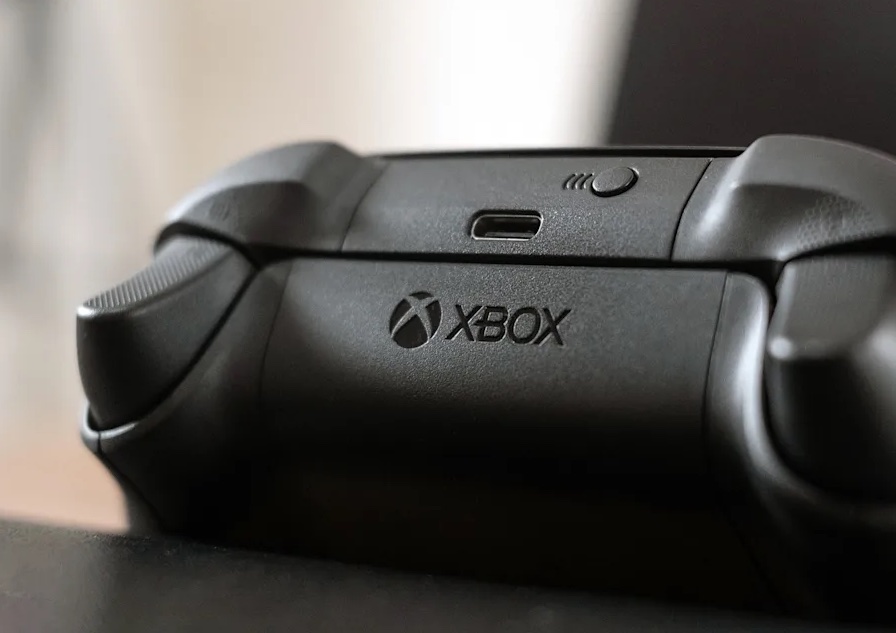
Xbox Series X controller
Engadget

Making things worse this year, Microsoft raised prices across the board, with the Xbox Series S starting at $400 and the cheapest Series X going for a whopping $600. And slow sales prompted Costco to stop selling Xbox consoles entirely. Microsoft didn’t even try to push systems during Black Friday — why go through the trouble of having sales if nobody is buying the hardware in the first place? 

Even Game Pass, which was once renowned as one of the best deals in gaming, almost doubled in price over the last year, reaching up to $30 a month (or $360 a year) for the Ultimate tier. Sure, Microsoft tried to add more value to its cheaper Game Pass tiers, and finally upgraded its cloud streaming platform, but the lack of consistent must-play exclusive titles has devalued the service (and Xbox as a whole). Avowed and South of Midnight were among the few exclusive highlights, but the latter will hit PS5 and Switch 2 next year. There’s no word on Avowed reaching other consoles yet, but given Microsoft’s current trajectory (and the fact that it’s a genuinely great game), I wouldn’t be surprised if it becomes available elsewhere.

There was a chance for Microsoft to reinvigorate the Xbox brand with the ASUS ROG Xbox Ally and Ally X gaming handhelds, but the $600 and $1,000 launch prices placed them out of reach for most gamers. It also doesn’t help that Windows still isn’t well-optimized for portable devices with touchscreens, and those systems also aren’t compatible with older Xbox titles like the consoles. At the very least, Microsoft now has a handheld foothold. But a future portable Xbox console would need to be significantly cheaper to compete with the likes of the Steam Deck, which starts at $400 (and is often on sale for much less).

And speaking of Valve, the company’s recently announced Steam Machine has also stolen a lot of potential thunder from Xbox. The Steam Machine is basically a tiny gaming desktop for your TV, running the Steam Deck’s SteamOS. That platform is a Linux distribution optimized for emulating Windows titles. But unlike an Xbox console, it’s not closed off in any way. You’re free to install whatever you’d like on a Steam Machine — even Windows!

While we still haven’t seen the Steam Machine in action, the Steam Deck’s excellent performance and game compatibility makes me think its desktop sibling could be genuinely compelling to console players looking for something new. And it will likely directly compete with the next Xbox, which is rumored to arrive in 2027 as a PC in a TV-friendly case (according to Windows Central’s Jez Corden). Microsoft’s recent partnership deal with AMD also hints at a more PC-like experience — Xbox President Sarah Bond noted that the Xbox team is “working closely with the Windows team to ensure that Windows is the number one platform for gaming.”

It’s worth remembering that only a single generation of the Xbox — the Xbox 360 — was successful enough to truly compete with Sony’s PlayStation. The original Xbox reportedly cost Microsoft $4 billion over the course of four years, leading the company to quickly jump ship and move to its successor. The Xbox 360 was genuinely innovative, thanks to Xbox Live and smarter online integration, and it had a healthy amount of third-party support. In comparison, Sony’s PlayStation 3 was $100 to $200 more expensive than the Xbox 360 at launch, it had far worse online support and developers found it hard to program for.

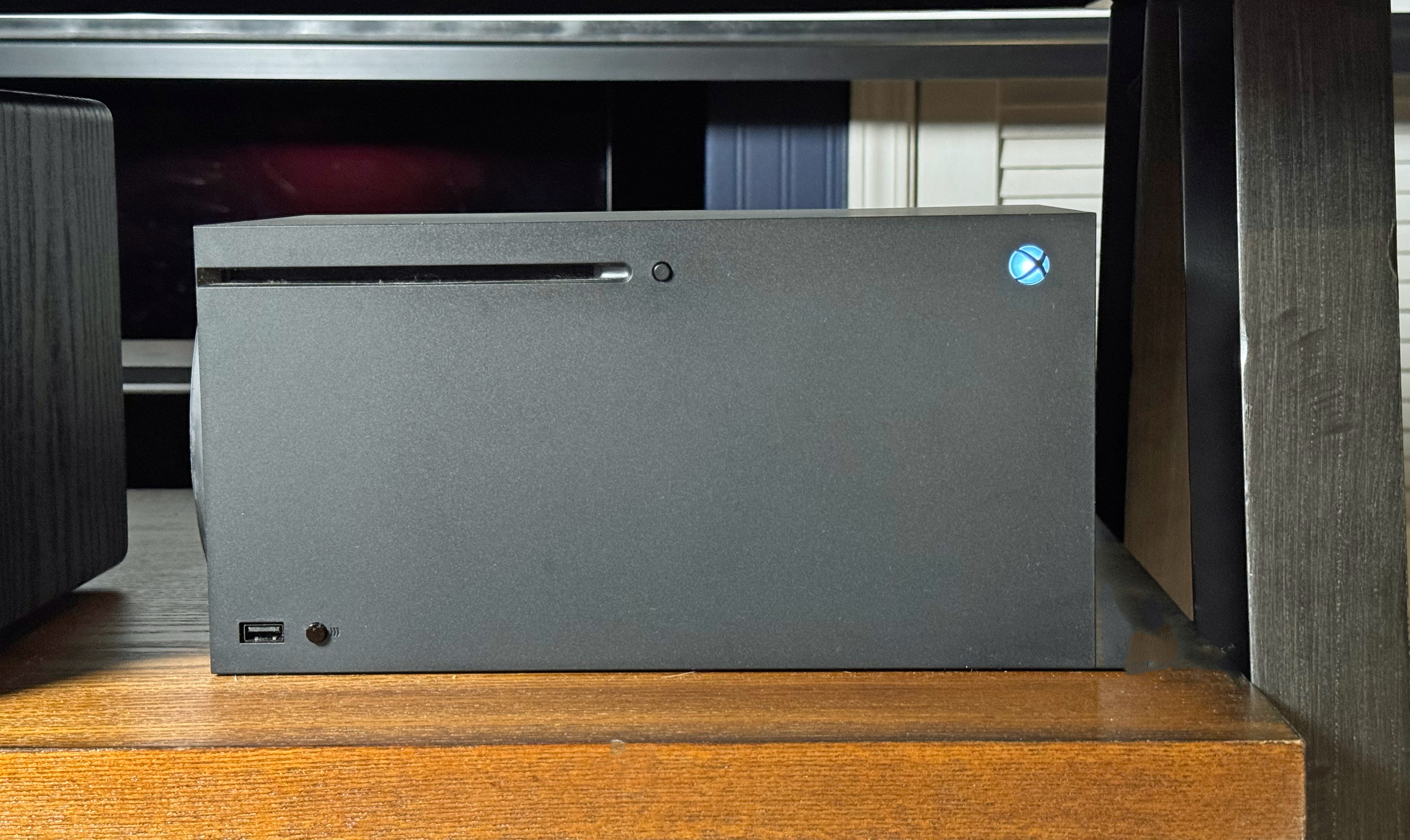
Xbox Series X
Xbox Series X
Devindra Hardawar for Engadget

Unfortunately, Microsoft squandered most of its good will with the Xbox One. That console was first announced as an “always online” device with restrictive DRM features that limited how you could share and sell games; it was bundled with a Kinect camera that could potentially surveil you; and at $499, it was $100 more than the PlayStation 4. Microsoft quickly reversed many of its DRM-heavy plans for the Xbox One, but by that point the damage was done. Sony ultimately sold more than twice as many PS4 units as the entirety of the Xbox One family (which included the cheaper One S and more powerful One X), according to data from Ampere Research. 

Things are looking worse this generation: The Xbox Series S and X reportedly only sold around 33 million units as of July, according to Statista estimates, while Sony confirmed it sold 84.2 million PS5s as of November. If this trend continues (and it doesn’t appear as if Xbox sales will be increasing any time soon), Sony could end up selling three times as many consoles this generation, compared to Microsoft. Xbox sales have been so slow that the family-focused Nex Playground managed to outsell it in November, according to data from Circana.  

Given Xbox’s inability to compete with the PlayStation 5, it’s no wonder Microsoft could be changing things up entirely for its next system. Its partnership with AMD could easily lead to new handhelds, and it also gives Microsoft a leg up in producing a compact and powerful Xbox PC. After all, why should the company keep trying to go toe-to-toe with Sony’s closed PlayStation platform? Why shouldn’t Microsoft embrace its PC roots to give us a gaming desktop under our TVs? The company has already committed to bringing new Xbox games to PCs immediately, so the line between the two is already blurring. 

It may be a risk, but evolving into a PC proves there’s still life in the Xbox brand. And crucially, it’s also something Sony can’t easily replicate.

This article originally appeared on Engadget at https://www.engadget.com/gaming/xbox/2025-was-the-year-xbox-died-130000467.html?src=rss

Uber, Lyft Set To Trial Robotaxis In the UK In Partnership With China’s Baidu

Uber and Lyft plan to trial robotaxis in London starting in 2026 using autonomous vehicles from Baidu, as the UK fast-tracks approvals for self-driving cars on public roads. CNBC reports: Lyft’s testing of Baidu’s initial fleet of dozens of vehicles will begin in 2026, pending regulatory approval, “with plans to scale to hundreds from there,” Lyft CEO David Risher said in a post on social media platform X on Monday. Meanwhile, Uber said that its first pilot is expected to start in the first half of 2026. “We’re excited to accelerate Britain’s leadership in the future of mobility, bringing another safe and reliable travel option to Londoners next year,” the company added.

The moves add to Baidu’s growing global footprint, which it says includes 22 cities and more than 250,000 weekly trips, as it races against other Chinese players like WeRide and Western giants like Alphabet’s Waymo. The UK, in particular, has seen a wave of interest from driverless taxi companies, following the government’s announcement in June that it would accelerate its plans to allow autonomous vehicle tech on public roads. The government now aims to begin permitting robotaxis to operate in small-scale pilots starting in spring 2026, with Baidu likely aiming to be among the first. The city of London has also established a “Vision Zero” goal to eliminate all serious injuries and deaths in its transportation systems by 2041, with autonomous driving technology expected to play a large role.


Read more of this story at Slashdot.

The Splay is a subpar monitor but an exciting portable projector 

Since I’m fascinated by new display technologies and by improving image quality, I’ve never been a fan of home projectors. Projectors lack the image quality compared to good TVs and monitors, and they’re pretty needy. Without getting into the specific requirements of different models, you generally want a darker room with a large, blank wall for a projector to look its best. That can be a lot to ask for, especially in small, densely decorated homes like mine.

That said, a projector can be a space-efficient alternative to a big-screen TV or help you watch TV or movies outside. A projector can be versatile when paired with the right space, especially if that projector makes sure the “right space” is included in the device.

The Splay was crowdfunded in 2021, and its maker, Arovia, describes it as the “first fully collapsible monitor and projector.” In short, it’s a portable projector with an integrated fabric shroud that can serve as a big-screen (24.5 or 34.5 inches diagonally, depending on the model) portable monitor. Or, you can take off the fabric shroud and use the Splay as an ultra-short-throw projector and cast a display that measures up to 80 inches diagonally onto a wall.

Read full article

Comments

The Morning After: The best games of 2025

As many of us hunker down for the holidays, you might want to tackle some of the best games we’ve seen this year: the long-time-coming Silksong, the critically acclaimed (and sumptuous) Expedition 33 and the bizarre world of Baby Steps.

TMA
Engadget

Not to mention the Switch 2, which is slowly building out its own exclusive library with Metroid Prime 4 and Donkey Kong Bananza. Rare for me, this year, I’ve played many of the new games we’ve picked. Brag. I’d recommend both Dispatch and Blue Prince — I still haven’t completed the latter, but, yes, I’ve unlocked the secret elevator.

And if you don’t have access to your usual PC or console setup, there are some smartphone games worth your time, including Spooky Express, Is This Seat Taken and, well, Umamusume: Pretty Derby, a reimagined world of horse racing where the horses are anime girls with horse ears. Try explaining that to your uncle over dinner.

— Mat Smith

The other big stories (and deals) this morning


US bans new foreign-made drones and components

Previously sold drones will not be affected.

TMA
Engadget

The Federal Communications Commission has assigned foreign-made drones and their critical components as prohibited to import into the US. The FCC said several national security agencies have determined that unmanned aircraft systems (UAS) and their critical components produced in foreign countries pose an unacceptable risk to the United States’ national security.

FCC Chair Brendan Carr clarified on X the ban does not affect old drones. People can continue using the devices they’ve already purchased, and retailers can keep selling models already approved by the agency. One of the most well-known brands affected by the ban is Chinese company DJI, which told Engadget it was disappointed by the agency’s decision. “While DJI was not singled out, no information has been released regarding what information was used by the Executive Branch in reaching its determination,” a spokesperson said.

Continue reading.


Pirate group Anna’s Archive says it has scraped Spotify in its entirety

The group says it has over 86 million tracks.

Anna’s Archive, the open-source search engine for shadow libraries, claims to have scraped Spotify’s entire music library. The group acquired metadata for approximately 256 million tracks, including 86 million songs, and the total size is just under 300 TB.

“A while ago, we discovered a way to scrape Spotify at scale. We saw a role for us here to build a music archive primarily aimed at preservation,” the group said in a blog post. In response, the streamer said: “Spotify has identified and disabled the nefarious user accounts that engaged in unlawful scraping. We’ve implemented new safeguards for these types of anti-copyright attacks and are actively monitoring for suspicious behavior.”

Continue reading.


Foldable phone makers have solved every issue except one

The only issue is price.

TMA
Engadget

Google and Samsung have iterated their big foldables year on year for, well, years. But in 2025, they both delivered big phones that addressed prior flaws and issues. With the Galaxy Z Fold 7, Samsung achieved what may be an even bigger accomplishment by creating a foldable phone of essentially the same size and weight as its own S25 Ultra.

The one thing the makers of big foldables haven’t figured out is how to make them affordable. OnePlus came close in 2023 with the Open, which cost $1,500 after rebates. But things are actually going backwards. The launch price of the Z Fold 7 ($2,000) is $200 higher than the Z Fold 5’s debut price.

Continue reading.


Everything you need to know about Amazon’s newest Echo feature: Alexa Home Theater

Spatial surround is here.

Amazon’s Alexa Home Theater feature has gradually become a legitimate surround sound option. You can link up to five Echo speakers and a subwoofer for a wireless cinematic experience. While the automatic room calibration and easy setup are great, the high price tag of a full Echo Studio array and limited EQ controls mean it’s best for people already juggling multiple Amazon speakers.

Continue reading.

This article originally appeared on Engadget at https://www.engadget.com/general/the-morning-after-engadget-newsletter-121545111.html?src=rss

How to set up an Apple Watch for a child

Giving a child an Apple Watch can offer extra peace of mind and tools that promote independence in a controlled way. Apple’s Family Setup feature makes it possible for a kid to use an Apple Watch without owning an iPhone, and the feature set has expanded thanks to recent watchOS updates. It supports communication controls, location tools, Schooltime limits and privacy protections that allow a parent or guardian to manage how the device is used throughout the day.

The setup process begins with creating or signing in with a child’s Apple ID. It continues with adding them to your Family Sharing group on an iPhone and pairing a compatible Apple Watch through the Apple Watch app. Once the watch is linked, you can adjust a range of parental controls that shape how the watch works at home, at school and when the child is out and about.

Confirm device compatibility

Family Setup requires a cellular-capable Apple Watch such as the Apple Watch SE or Series 6 or later. A cellular connection allows the watch to operate independently without an iPhone nearby. The watch must be running a recent version of watchOS and the iPhone used for setup must be running the latest iOS version.

If the watch is not new, it needs to be erased before it can pair with a new user. This can be done directly on the watch through the Settings menu by choosing the general reset option. Once the device is reset it can be paired again from the Apple Watch app.

Create or prepare your child’s Apple ID

Family Setup relies on each child having their own Apple ID. This allows their data, messages, activity goals and device settings to remain separate from other people in the household. If your kid already has an Apple ID, it can be used during setup. If they do not have one, the Apple Watch app will prompt you to create one as you go through the pairing process.

A child’s Apple ID is linked to Family Sharing, which lets the organizer manage permissions from a single iPhone. A parent or guardian can approve contacts, handle screen time requests and view location updates without needing to touch the watch itself. Setting this up first ensures that the watch can be paired smoothly later.

Add the child to Family Sharing

Family Sharing is the foundation for managing the watch, and it’s all controlled through the Settings app on your iPhone. Once Family Sharing is open you can tap the option to add a family member then follow the prompts to link the child’s Apple ID to the group. This also makes you the family organizer, which gives you control of purchase approvals, communication limits and other shared features.

Once the child is added to Family Sharing their information becomes available when you begin pairing the Apple Watch. This makes the process faster since the watch can immediately associate itself with the correct Apple ID.

Pair the watch using Family Setup

Turn on the Apple Watch and place it near your iPhone. A prompt should appear directing you to use your iPhone for setup. If the prompt does not appear, you can open the Apple Watch app, go to All Watches and choose Add Watch. The app will then ask if the device is being set up for you or for a family member. Choose the family member option and continue.

The camera on your iPhone is used to pair the devices. Align the Apple Watch face inside the frame on your screen until the pairing animation is recognized. Once the connection is made the app will ask which family member the watch is for. Select the child’s profile to continue through the remaining steps.

The app will guide you through choosing which wrist the watch will be worn on, setting a passcode, signing in with the child’s Apple ID and enabling services such as Siri and location tracking. You can also set up activity goals tailored to the child’s age and fitness level.

Manage the watch from your iPhone

Once the Apple Watch is paired, the Watch app becomes the main place to manage how it works. The Family Setup interface is designed to give parents and guardians control without needing to handle the watch directly. Most adjustments can be made at any time from the iPhone used for setup.

Screen Time controls allow you to set limits for communication and app use. You can restrict access to certain features during specific times of day, create downtime schedules and manage content restrictions for websites and apps. These settings mirror the Screen Time system used on other Apple devices which makes it easier to keep rules consistent across the household.

Approved contacts can be managed through the communication limits menu. This ensures that the child can send messages and make calls only with approved people. If you add or remove contacts, they are updated instantly on the watch.

Location sharing is handled through the Find My app. You can view the child’s location and set notifications that alert you when they arrive at or leave a particular place. This is useful for school pickups or after-school activities. The watch uses on-device processing for location and messages which helps maintain privacy.

Configure Schooltime and Focus modes

School time is one of the most important parental controls for younger users. It limits interaction with the watch during school hours by locking access to most apps and features. Only the time and a simple yellow icon appear on the screen while Schooltime is active. You can schedule Schooltime from the Apple Watch app so that it automatically turns on and off at the right times each day.

Focus modes offer another layer of control. These modes can reduce distractions during homework, bedtime or other family routines. Each Focus mode can limit notifications and activity alerts so the child is not interrupted when they need to concentrate.

Set up safety features

Emergency SOS is enabled during setup and can be managed afterward in the Apple Watch app. It allows the child to contact emergency services by holding the side button. You can also assign an emergency contact who will receive a notification if SOS is triggered.

The Medical ID should include relevant details such as allergies or medical conditions. This information can be accessed by emergency responders if needed.

Adjust privacy and communication settings

The watch uses on-device processing for messages, location and Siri requests which helps protect your child’s data. Location sharing can be turned on or off at any time and you can manage which apps are allowed to use location services. Communication permissions can also be updated as the child’s needs change.

Apps installed on the watch can be controlled from the Apple Watch app. You can remove apps, restrict access or hide notifications at any time to maintain a balanced experience.

This article originally appeared on Engadget at https://www.engadget.com/wearables/how-to-set-up-an-apple-watch-for-a-child-120051230.html?src=rss

How a Power Outage In Colorado Caused US Official Time To Be 4.8 Microseconds

Tony Isaac shares a report from NPR: The U.S. government calculates the country’s official time using more than a dozen atomic clocks at a federal facility northwest of Denver. But when a destructive windstorm knocked out power to the National Institute of Standards and Technology (NIST) laboratory in Boulder on Wednesday and a backup generator subsequently failed, time ever so slightly slowed down. The lapse “resulted in NIST UTC [universal coordinated time] being 4.8 microseconds slower than it should have been,” NIST spokesperson Rebecca Jacobson said in an email. […]

Since 2007, the official time of the U.S. has been determined by the commerce secretary, who oversees NIST, along with the U.S. Navy. The national time standard is known as NIST UTC. (Somewhat confusingly, UTC itself is a separate, global time standard to which the U.S. and other countries contribute measurements.) NIST currently calculates the standard using a weighted average of the readings of 16 atomic clocks situated across the Boulder campus. Atomic clocks, including hydrogen masers and cesium beam clocks, rely on the natural resonant frequencies of atoms to tell time with extremely high accuracy.

All of the atomic clocks continued ticking through the power outage last week thanks to their battery backup systems, according to NIST supervisory research physicist Jeff Sherman. What failed was the connection between some of the clocks and NIST’s measurement and distribution systems, he said. Some critical operations staff who were still on site following the severe weather were able to restore backup power by activating a diesel generator the team had kept in reserve, Sherman said.


Read more of this story at Slashdot.

US bans new foreign-made drones and components

The Federal Communications Commission has added foreign-made drones and their critical components to the agency’s “Covered List,” making them prohibited to import into the US. In a public notice published by the FCC, it said several national security agencies have determined that umanned aircraft systems (UAS) and their critical components produced in foreign countries pose an unacceptable risk to the national security of the United States. 

“UAS and UAS critical components must be produced in the United States,” the agency said. “UAS are inherently dual-use: they are both commercial platforms and potentially military or paramilitary sensors and weapons. UAS and UAS critical components, including data transmission devices, communications systems, flight controllers, ground control stations, controllers, navigation systems, batteries, smart batteries, and motors produced in a foreign country could enable persistent surveillance, data exfiltration, and destructive operations over U.S. territory, including over World Cup and Olympic venues and other mass gathering events.”

FCC Chair Brendan Carr clarified on X that the ban does not affect old drones. People can continue using the devices they’ve already purchased, and retailers can keep selling models that have already been approved by the agency. The new rule only applies to upcoming models. He also said that the Department of War or the Department of Homeland Security can allow specific new models, a certain class of drones or particular components to be sold in the US. 

Today, based on an Executive Branch national security determination, the FCC has added foreign-produced UAS (drones) and foreign-produced UAS critical component parts to the FCC’s Covered List on a going forward basis.
 
President Trump has been clear that his Administration will… pic.twitter.com/tVLlsBeOfw

— Brendan Carr (@BrendanCarrFCC) December 22, 2025

The FCC didn’t name any manufacturers in particular, but one of the most well-known brands that will be affected by the ban is Chinese company DJI, which told Engadget that it was disappointed by the agency’s decision. “While DJI was not singled out, no information has been released regarding what information was used by the Executive Branch in reaching its determination,” a spokesperson said. DJI has long been in the US government’s crosshairs and has been trying to prove that its products aren’t a national security threat.

“DJI products are among the safest and most secure on the market, supported by years of reviews conducted by US government agencies and independent third parties,” they added. “Concerns about DJI’s data security have not been grounded in evidence and instead reflect protectionism, contrary to the principles of an open market.”

This article originally appeared on Engadget at https://www.engadget.com/big-tech/us-bans-new-foreign-made-drones-and-components-053201854.html?src=rss

Call of Duty co-creator and Battlefield lead Vince Zampella dies in car crash

Vince Zampella, a video game developer who has co-created or helmed some of the most popular franchises in the world, died in a car crash on a Los Angeles highway at 12:45 pm Pacific time on Sunday, December 21. He was 55 years old.

According to the California Highway Patrol, Zampella was in a car on Angeles Crest Highway when the vehicle veered off the road and crashed into a concrete barrier. No other vehicles were reported to be part of the crash.

A passenger was ejected from the vehicle, while the driver was trapped inside after the vehicle caught fire. The driver died at the scene, and the passenger died after being taken to the hospital. The report did not indicate whether Zampella was the passenger or the driver.

Read full article

Comments

Safety panel says NASA should have taken Starliner incident more seriously

For the better part of two months last year, most of us had no idea how serious the problems were with Boeing’s Starliner spacecraft docked at the International Space Station. A safety advisory panel found this uncertainty also filtered through NASA’s workforce.

On its first Crew Test Flight, Boeing’s Starliner delivered NASA astronauts Butch Wilmore and Suni Williams to the space station in June 2024. They were the first people to fly to space on a Starliner spacecraft after more than a decade of development and setbacks. The astronauts expected to stay at the ISS for one or two weeks, but ended up remaining in orbit for nine months after NASA officials determined it was too risky to return them to Earth in the Boeing-built crew capsule. Wilmore and Williams flew back to Earth last March on a SpaceX Dragon spacecraft.

The Starliner capsule was beset by problems with its maneuvering thrusters and pernicious helium leaks on its 27-hour trip from the launch pad to the ISS. For a short time, Starliner commander Wilmore lost his ability to control the movements of his spacecraft as it moved in for docking at the station in June 2024. Engineers determined that some of the thrusters were overheating and eventually recovered most of their function, allowing Starliner to dock with the ISS.

Read full article

Comments

World’s largest shadow library made a 300TB copy of Spotify’s most streamed songs

The world’s largest shadow library—which is increasingly funded by AI developers—shocked the Internet this weekend by announcing it had “backed up Spotify” and started distributing 300 terabytes of metadata and music files in bulk torrents.

According to Anna’s Archive, the data grab represents more than 99 percent of listens on Spotify, making it “the largest publicly available music metadata database with 256 million tracks.” It’s also “the world’s first ‘preservation archive’ for music which is fully open,” with 86 million music files, the archive boasted.

The music files supposedly represent about 37 percent of songs available on Spotify as of July 2025. The scraped files were prioritized by popularity, with Anna’s Archive weeding out many songs that are never streamed or are of poor quality, such as AI-generated songs.

Read full article

Comments

FCC Bans Foreign-Made Drones Over National Security, Spying Concerns

The FCC has banned approval of new foreign-made drones and components, citing “an unacceptable risk” to national security. The move will most heavily impact DJI but it “does not affect drones or drone components that are currently sold in the United States.” Reuters reports: The tech was placed on the commission’s “Covered List,” barring DJI and other foreign drone manufacturers from receiving the FCC’s approval to sell new drone models for import or sale in the U.S. In Monday’s announcement, the agency said that the move “will reduce the risk of direct [drone] attacks and disruptions, unauthorized surveillance, sensitive data exfiltration and other [drone] threats to the homeland.”

FCC Chair Brendan Carr said in a statement that while drones offer the potential to boost public safety and the U.S.’ posture on global innovation, “criminals, terrorists and hostile foreign actors have intensified their weaponization of these technologies, creating new and serious threats to our homeland.”

The ruling comes as China hawks in Congress amplify warnings about the security risks of drones made by DJI, which accounts for more than 90% of the global market share. But efforts to crack down on Capitol Hill have been met with some pushback due to the potential impacts of curbing the drone usage on U.S. businesses and law enforcement. A wide variety of sectors, including construction, energy, agriculture and mining companies, as well as local police and fire departments across the country, deploy DJI-made drones.


Read more of this story at Slashdot.

Microsoft To Replace All C/C++ Code With Rust By 2030

Microsoft plans to eliminate all C and C++ code across its major codebases by 2030, replacing it with Rust using AI-assisted, large-scale refactoring. “My goal is to eliminate every line of C and C++ from Microsoft by 2030,” Microsoft Distinguished Engineer Galen Hunt writes in a post on LinkedIn. “Our strategy is to combine AI and Algorithms to rewrite Microsoft’s largest codebases. Our North Star is ‘1 engineer, 1 month, 1 million lines of code.’ To accomplish this previously unimaginable task, we’ve built a powerful code processing infrastructure. Our algorithmic infrastructure creates a scalable graph over source code at scale. Our AI processing infrastructure then enables us to apply AI agents, guided by algorithms, to make code modifications at scale. The core of this infrastructure is already operating at scale on problems such as code understanding.”

Hunt says he’s looking to hire a Principal Software Engineer to help with this effort. “The purpose of this Principal Software Engineer role is to help us evolve and augment our infrastructure to enable translating Microsoft’s largest C and C++ systems to Rust,” writes Hunt. “A critical requirement for this role is experience building production quality systems-level code in Rust — preferably at least 3 years of experience writing systems-level code in Rust. Compiler, database, or OS implementation experience is highly desired. While compiler implementation experience is not required to apply, the willingness to acquire that experience in our team is required.”


Read more of this story at Slashdot.

Quadruple Barrel Toilet Paper Launcher

This is a video of mad inventor Colin Furze (previously) building a quadruple barrel toilet paper launcher. He also experiments with a single barrel launcher that sets the paper on fire as it’s launched, but that one still needs some tweaking (like my nips). I can’t even imagine what would have happened if I’d had a toilet paper launcher when I was a kid, but maybe I could’ve TP’d that bully’s house fast enough to not get my ass kicked so hard you can still see the Puma logo on my buttcheeks.

Alphabet Acquires Data Center and Energy Infrastructure Company Intersect For $4.75 Billion

Alphabet is acquiring Intersect for $4.75 billion to accelerate data center and power-generation capacity as AI infrastructure demand surges. CNBC reports: Alphabet said Intersect’s operations will remain independent, but that the acquisition will help bring more data center and generation capacity online faster. “Intersect will help us expand capacity, operate more nimbly in building new power generation in lockstep with new data center load, and reimagine energy solutions to drive U.S. innovation and leadership,” Sundar Pichai, CEO of Google and Alphabet, said in a statement.

Google already had a minority stake in Intersect from a funding round that was announced last December. In a release at the time, Intersect said its strategic partnership with Google and TPG Rise Climate aimed to develop gigawatts of data center capacity across the U.S., including a $20 billion investment in renewable power infrastructure by the end of the decade.

Alphabet said Monday that Intersect will work closely with Google’s technical infrastructure team, including on the companies’ co-located power site and data center in Haskell County, Texas. Google previously announced a $40 billion investment in Texas through 2027, which includes new data center campuses in the state’s Haskell and Armstrong counties.


Read more of this story at Slashdot.

In a surprise announcement, Tory Bruno is out as CEO of United Launch Alliance

Tory Bruno, a veteran engineer and aerospace industry executive, has resigned from the top job at United Launch Alliance after more than a decade competing against the growing dominance of SpaceX, the company announced Monday.

The news of Bruno’s sudden resignation was unexpected. His tenure was marked by a decline in ULA’s market share as rival SpaceX competed for and won ever-larger US government launch contracts. More recently, Bruno oversaw the successful debut of ULA’s Vulcan rocket, followed by struggles to ramp up the new rocket’s launch cadence.

Bruno had a 30-year career as an engineer and general manager for Lockheed Martin’s ballistic missile programs before taking over as president and CEO of United Launch Alliance in August 2014. He arrived as SpaceX started making inroads with its partially reusable Falcon 9 rocket, and ULA’s leading position in the US launch market looked to be in doubt.

Read full article

Comments

Cyberattack Disrupts France’s Postal Service, Banking During Christmas Rush

An anonymous reader quotes a report from the Associated Press: With just three days to go before Christmas, a cyberattack knocked France’s national postal service offline Monday, blocking and delaying package deliveries and online payments. The timing was miserable for millions of people at the height of the Christmas season, as frazzled postal workers fended off frustrated customers. No one immediately claimed responsibility, but suspicions abounded.

What the postal service La Poste called a ”major network incident” remained unresolved by Monday evening, more than eight hours after it was first reported. For a company that delivered 2.6 billion packages last year and employs more than 200,000 people, that’s a big hit. La Poste said in a statement that a distributed denial of service incident, or DDoS, “rendered its online services inaccessible.” It said the incident had no impact on customer data, but disrupted package delivery. Letters, including holiday greeting cards, could still be mailed and delivered. But transactions requiring tracking or access to the postal service internal computer systems were impossible.

The cyberattack also hurt online banking. Customers of the company’s banking arm, La Banque Postale, were blocked from using the application to approve payments or conduct other banking services. The bank redirected approvals to text messages instead. “Our teams are mobilized to resolve the situation quickly,” the bank said in messages posted on social networks. The disruption came a week after France’s government was targeted by a cyberattack that targeted the Interior Ministry, in charge of national security.


Read more of this story at Slashdot.