Is the Dictionary Done For?

In the late 1980s, Merriam-Webster’s Collegiate Dictionary sat on the New York Times best-seller list for 155 consecutive weeks and eventually sold 57 million copies, a figure believed to be second only to the Bible in the United States — but those days are thoroughly gone. Stefan Fatsis’s new book “Unabridged: The Thrill of (and Threat to) the Modern Dictionary” chronicles what Louis Menand describes in The New Yorker as “a losing struggle” for legacy dictionaries to survive in the internet age.

The profession has been decimated: an estimated 200 full-time lexicographers worked in the US 25 years ago, and Fatsis believes that number is “probably closer to thirty” today. “By the time I finished this book,” Fatsis writes, “it wasn’t clear how long flesh-bone-and-blood lexicographers would be needed to chronicle the march of the English language.”

Merriam-Webster is now owned by Encycloaedia Britannica, another print-era giant that stopped publishing physical volumes in 2012. The company’s free website draws about a billion page views annually, but the content has shifted dramatically — word games, trending slang and ads dominate rather than lexicographic depth. The scale of the challenge facing dictionaries is staggering. One study of digitized library books found the English lexicon grew from about 600,000 words in 1950 to over a million by 2000, and concluded that 52% of English words in printed books are “lexical dark matter” that appears in no standard reference work.


Read more of this story at Slashdot.

Europe’s Public Institutions Are Quietly Ditching US Cloud Providers

European public institutions are quietly migrating away from American cloud providers and office software, driven less by policy ambitions in Brussels than by the mundane legal reality that GDPR-mandated risk assessments keep flagging the US CLOUD Act as an unacceptable threat to citizen data.

Austria’s Federal Ministry for Economy, Energy and Tourism moved 1,200 employees to the open-source platform Nextcloud in four months. Germany’s Schleswig-Holstein has already transitioned 24,000 of its 30,000 civil servants to LibreOffice, Nextcloud and Thunderbird. The International Criminal Court in The Hague announced in November 2025 that it would replace Microsoft office software after chief prosecutor Karim Khan was temporarily locked out of his Outlook account.

Competition economist Cristina Caffarra estimates that 90% of Europe’s digital infrastructure is now controlled by non-European companies. Forrester predicts no European enterprise will fully abandon US hyperscalers in 2026, but these targeted migrations for sensitive government applications are already underway.


Read more of this story at Slashdot.

The Shokz OpenFit 2+ Are Great Open-Ear Style Earbuds, and They’re $60 Off

We may earn a commission from links on this page. Deal pricing and availability subject to change after time of publication.

I’ve been experiencing some active noise cancelling (ANC) fatigue lately, and I’m sure I’m not the only one. ANC has a time and a place, but being able to be aware of my surroundings and have conversations with my wife while working from home has made 2025 more enjoyable. I owe that to the Shokz Open Run Pro 2, which are bone conduction headphones that leave your ears uncovered. But if you prefer true wireless earbuds that have the same benefit, the Shokz OpenFit 2+ are a great alternative, and right now, they’re on sale for $139.95 (originally $199.95).

Unlike the Shokz Open Run Pro 2, the Shokz OpenFit 2+ are not bone conduction headphones; instead, the sound is projected toward your ears (think of it like small speakers next to your ears). This means, like bone conduction headphones, your ears are not plugged by any earbuds. They simply rest on them, allowing you to use your ears to their full potential.

The OpenFit 2+ comes with some cool features. They have Dolby cinematic sound, which is an immersive sound feature that frees sound channels, making directional sound clearer (almost like surround sound). If you like to watch movies or shows with your earbuds, this is a huge plus. The design fits snug on your ears, so you don’t have to worry about them falling off, regardless of how intense your workouts get. The Shokz companion app is excellent, and gives you a lot of freedom with the EQ, so you can tweak the settings to optimize podcasts or a bass-heavy format when you need that extra motivation in the gym. You can expect about 11 hours of battery life with another 48 hours from the charging case. You can also charge them wirelessly through the case.

If you’re looking to disconnect from ANC headphones in 2026, the Shokz OpenFit 2+ are a great option with this 30% discount.

GTA 6 Gets Another Delay, Half-Life 3 Launches And More 2026 Gaming Predictions

GTA 6 Gets Another Delay, Half-Life 3 Launches And More 2026 Gaming Predictions
GamesIndustry.biz does a yearly analyst roundtable, gathering predictions for what the next year will bring to the industry. This year’s post paints a picture of an industry stuck in cautious recovery mode, with growth returning slowly, platform boundaries continuing to blur, and a handful of massive releases and technologies threatening to

IO Interactive’s 007 First Light has been delayed until May 27

IO Interactive’s James Bond simulator 007 First Light has been delayed until May 27, 2026. It was supposed to come out in March. The company says two-month delay is for polish and refinement, which is fine by me. I’d always rather wait a bit longer for a better end product.

IO says the game is already “fully playable from beginning to end” but still needs a bit of attention to ensure “the strongest possible version at launch.” The developer promises to share more updates at the beginning of next year.

For the uninitiated, 007 First Light is the first James Bond game in over a decade. The developer is the same organization behind the renowned Hitman franchise, so this could potentially be the best Bond game since Goldeneye.

The gameplay looks fast-paced, frenetic and filled with spycraft. It features an original story that pulls from all over the decades-long franchise. We got a chance to speak to narrative director Martin Emborg and he noted that the game stars a young and inexperienced Bond, which seems to be the direction Amazon is taking with its upcoming film.

The game also boasts a pretty stacked cast. Patrick Gibson, from The OA and Dexter: Original Sin, plays the famous lothario spy and Lenny Kravitz has been cast as the primary villain. Other cast members include Lennie James, Kiera Lester, Alastair Mackenzie and Priyanga Burford.

Who knows when the next Bond film will actually come out, so this should be a nice little stopgap for fans.

This article originally appeared on Engadget at https://www.engadget.com/gaming/io-interactives-007-first-light-has-been-delayed-until-may-27-194809718.html?src=rss

Steve Rogers returns in Avengers: Doomsday teaser

You’ve no doubt heard some version of the Robert Burns adage about the best-laid plans. Marvel Studios had an elaborate marketing plan in place to introduce four teaser trailers for Avengers: Doomsday as previews prior to screenings of Avatar: Fire and Ash, with one teaser rolling out each successive week. But the first one leaked online a few days early, revealing that (as rumored) Steve Rogers/Captain America (Chris Evans) will appear and will have a newborn baby, presumably with Hayley Atwell’s Peggy Carter.

So maybe you’ve seen a bootleg version floating around the Internet, but Marvel has now released the HD version to the public. Merry Christmas! And we can look forward to three more: one focused on Thor, one on Doctor Doom, and the final one is purportedly a more traditional teaser trailer.

As previously reported, Marvel Studios originally planned to build its Phase Six Avengers arc (The Kang Dynasty) around Jonathan Majors’ Kang the Conqueror (and associated variants), introduced in Loki and Ant-Man and the Wasp: Quantumania. But then Majors was convicted of domestic violence, and Marvel fired the actor soon after. That meant the studio needed to retool its Phase Six plans, culminating in the announced return of the Russo brothers, who directed four of the Marvel Cinematic Universe’s most successful films, which brought in more than $6 billion at the global box office.

Read full article

Comments

Samsung’s 2026 Gaming Monitors Promise 6K, 3D, and Up To 1,040Hz

An anonymous reader shares a report: Samsung is breaking new ground with its 2026 lineup of gaming monitors, with the Odyssey 3D G90XH becoming the first to feature a 6K display with “glasses-free 3D.” The new monitor comes with a 32-inch IPS panel, offering real-time eye-tracking that “adjusts depth and perspective” based on your position, along with a speedy 165Hz refresh rate that you can boost to 330Hz with a Dual Mode feature that switches to 3K.

[…] A 6K 3D display isn’t the only notable upgrade coming to Samsung’s lineup; the company is launching the Odyssey G6 G60H, which it says is the “world’s first” 1,040Hz gaming monitor. The 27-inch monitor only supports this ultra-fast refresh rate in HD, while its native 1440p resolution still offers speeds up to a very fast 600Hz. It’s also compatible with AMD FreeSync Premium and NVIDIA G-Sync.


Read more of this story at Slashdot.

Legendary Game Developer Behind Call Of Duty And Apex Legends Killed In Ferrari Crash

Legendary Game Developer Behind Call Of Duty And Apex Legends Killed In Ferrari Crash
One of the most influential names in the FPS genre, Vince Zampella, passed away at the age of 55 on Sunday, December 21st, in a tragic car accident with one other unidentified person. Vince Zampella worked on the Medal of Honor series, which spawned Call of Duty, which spawned Battlefield and eventually Respawn’s own Titanfall. Between corporate

Bevel, the App That Turns Your Apple Watch Into a ‘Whoop,’ Is Now Free

We may earn a commission from links on this page.

The makers of Bevel, a health app for the Apple Watch that turns the device into a Whoop-style fitness tracker, have announced on social media that nearly all of the app’s functions will soon be available for free. Until now, Bevel required a $5.99/month (or $49.99/year) subscription. That said, the paid tier isn’t going away completely.

What does Bevel do?

You can read my review of Bevel here, but in brief, it’s a tracking app that uses data from your Apple Watch (and other devices) to give you a Whoop-style dashboard that collects your health data in one place and analyzes it. Bevel can give you advice about how recovered it thinks you are, and how your habits affect your health metrics. While the Apple Watch can collect a lot of data, Apple has never built an app that integrates everything in a friendly, easily readable way. 

That integrated dashboard is where Apple Watch competitors like Whoop and Oura shine, and using Bevel (or one of its competitors, like Athlytic) gives a similar experience. 

What’s free in Bevel (and what’s the catch?) 

According to announcements Bevel made on Instagram and Reddit, an update rolling out this week makes all features of Bevel free except Bevel Intelligence, their AI feature. The company says this is because AI is more expensive for it to provide. Free features include everything else: “all historical data, Nutrition, Strength Builder, Sleep Alarm, and much more.” 

The company also hinted that two things are likely coming in 2026: more features (specifics not yet announced) and a price hike. Customers who currently subscribe to an annual plan will be grandfathered in to the 2026 plans at the same price they currently pay. 

There’s not enough information to know whether next year’s plans, which the company is calling “Bevel 3.0,” will be worth the subscription fee, whatever it happens to be. But I can say that the features of regular Bevel are definitely worth a try, especially at no cost. Bevel collects data from almost any health app that links to Apple Health, and can track a multitude of metrics, including strength training by muscle group, cardio load, recovery scores, and habit tracking. Most other wearables collect this information in their own apps, but if you wear an Apple Watch, Bevel is one of the best ways to consolidate it all.

Remote Work is Officially Dead, Says the World’s Largest Recruiter

The great return-to-office battle has effectively concluded and a clear pecking order has emerged, according to Sander van ‘t Noordende, the CEO of Randstad, a staffing giant that places around half a million workers in jobs every week. Remote work is becoming a status symbol reserved for star performers and those possessing rare skills. “You have to be very special to be able to demand a 100% remote job,” van ‘t Noordende told Fortune. “That’s increasingly the story. You have to have very special technology skills or some expertise.”

The equilibrium appears to be settling at a hybrid model of three to four days in office for most workers. Van ‘t Noordende noted that apart from some banks in major cities, the five-day office week isn’t returning as the norm despite hardline mandates from companies like Amazon and JPMorgan. Korn Ferry predicted this “hybrid hierarchy” at the start of 2025, forecasting that flexibility would become a perk reserved for top talent. At some companies, high performers are already being offered flexible schedules as a bonus while mid-range employees don’t get the privilege, the Wall Street Journal reported.


Read more of this story at Slashdot.

Australia Poised for Desalination Boom as Water Shortages Loom

Australia is on track for a significant expansion of desalination capacity — converting seawater to freshwater — to meet the needs of a swelling population at a time of declining average rainfall. From a report: The world’s driest inhabited continent is projected to build or expand 11 desalination plants worth more than A$23 billion ($15 billion) over the next 10 years, according to a research report by Dominic McNally at Oxford Economics.

“Our population growth forecasts imply an additional 190GL/year in household water demand across major cities by 2035, while the booming data center industry also threatens to rapidly expand urban water use,” he said. “This growing demand coincides with falling average rainfall in major population centers, increasing the vulnerability of existing infrastructure.” Water construction activity slowed after 2010 as a severe drought receded. However, recent dry periods have reignited interest in water security and coincide with a new boom in water infrastructure investment, including desalination, McNally said.


Read more of this story at Slashdot.

Engadget Podcast: Why is the Nex Playground ‘AI console’ such a hit?

Over the past two years, the Nex Playground has carved out a niche for itself with kids and parents alike. It’s a small box that sits in front of your TV and uses a camera, along with computer vision AI processing, to track your movement for interactive games. Think of it like a simplified version of Microsoft’s Kinect (RIP), with a bit of the local multiplayer we see from the original Wii. In this bonus episode, we chat with David Lee, Nex’s CEO and co-founder, about how he went from building a basketball tracking app to one of the most intriguing gaming console alternatives on the market. (The Nex Playground even managed to outsell Xbox in November!)

Subscribe!

Topics

  • What led to the development of the Nex Playground? — 2:04

  • Who helped design and build the console? — 8:36

  • Questions about the Nex PlayPass subscription and other ways to get new games — 13:23

  • How did Nex convince major brands to build for Nex Playground? — 19:10

Credits

Host: Devindra Hardawar
Guest: David Lee, CEO and co-founder of Nex
Producer: Devindra Hardawar
Music: Dale North

This article originally appeared on Engadget at https://www.engadget.com/social-media/engadget-podcast-why-is-the-nex-playground-ai-console-such-a-hit-181151201.html?src=rss

The Yamaha Seqtrak Is My Tech ‘Upgrade of the Year’

We may earn a commission from links on this page.

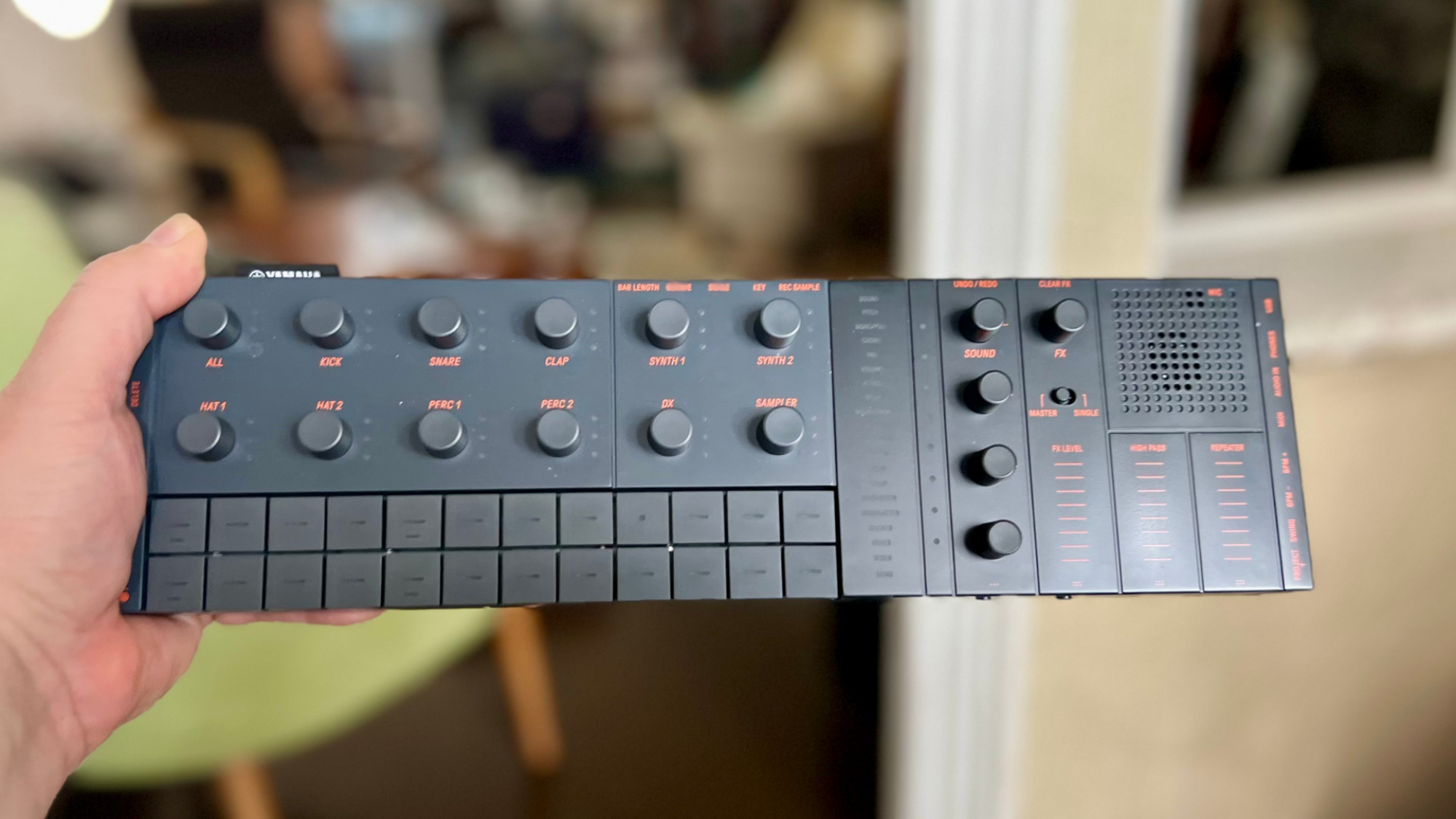
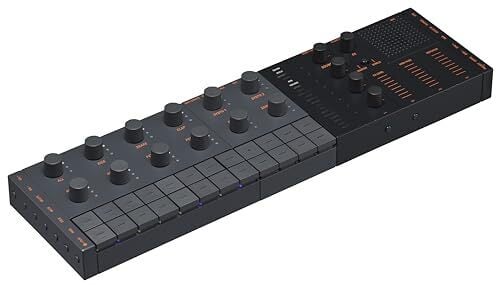
In 2025, I tested a ton of exotic smart glasses, e-bikes, and other gear for Lifehacker, but the tech that upgraded and improved my day-to-day life the most is a more niche product. I’m a (very) amateur musician, and Yamaha’s Seqtrak is my favorite thing this year. It’s an “ideastation,” a music production studio small enough to slip into a backpack. Look at how tiny this thing is:

Yamaha Seqtrak

Credit: Stephen Johnson

What the Seqtrak can do

There is so much music junk crammed in here, it’s ridiculous: It’s a full-on drum machine with eight drum tracks, step-sequencer, synthesizer with three separate tracks and hundreds of pre-set sounds, and a sampler—in other words, everything you need to create any kind of music from scratch, in seconds. It’s even battery-powered with an onboard speaker, so it’s fully portable.

Even with all those functions, it’s crazy easy to use for basic music-making, even if you literally have no musical knowledge. Here’s what it takes to create a basic beat from nothing in about 90 seconds:

That’s just the surface. Everything can be customized completely. You can tweak any aspect of the presets and effects, add sequencer steps, mess with the arpeggiator, record or import your own samples, and warp sounds with countless synth parameters.

Going deeper with the companion app

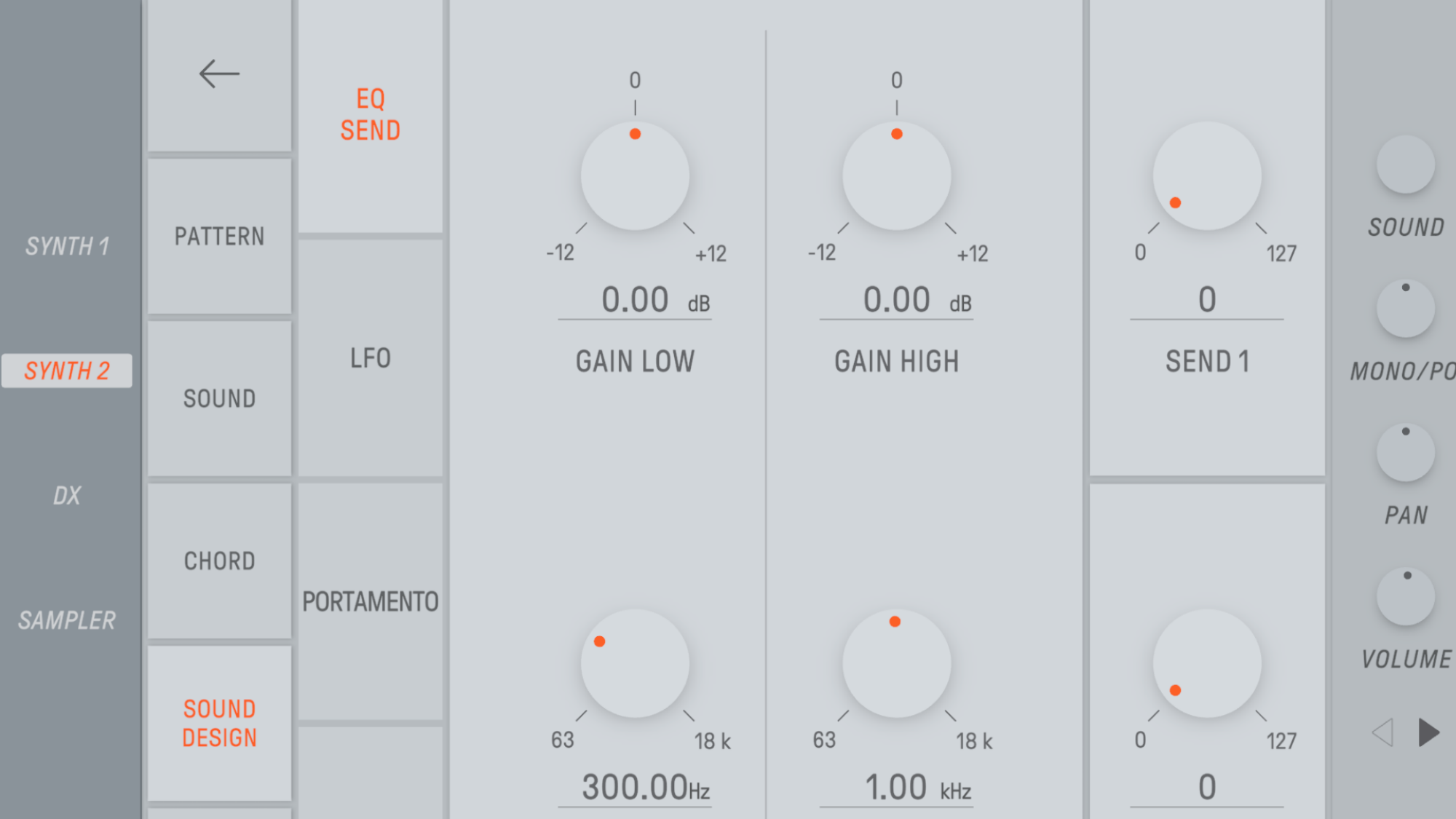
If you want to dig in further, there’s a companion app for tablets, phones, and PCs that syncs with the Seqtrak and gives you access to all the on-board controls so you can change whatever. The app is a must for beginners: The Seqtrak has 32 input buttons, 17 dials, and three sliders, but it doesn’t have a display screen, so being able to see what you’re doing is a must until you’re well-versed in the controls.

The screenshot below is only one of dozens of pages of elements you can mess around with to customize sounds and effects:

Seqtrak App

Credit: Stephen Johnson

It can’t do everything, but you can import your project from Seqtrak into another digital workstation for more advanced mastering or effects, and you can control the Seqtrak through an external MIDI device if you want more options than it offers from the box.

The Seqtrak is my new desktop companion

You could use this gear to build detailed beats and even full songs, bring it out to accompany yourself live (although, it’s not the most rugged piece of equipment), or integrate it into your larger music set-up with MIDI, but I mostly just keep my Seqtrak next to my desk and play it with a MIDI keyboard—the seven little plastic keys aren’t optimal—because it lowers the friction between having an idea and making it happen. It’s way simpler and more immediate to fire up this groove box than start a new project in FL Studio or something. Plus, it’s so tangible—physical dials and buttons are just better for creativity than sliders on a computer, even if they’re controlling digital output.

I don’t use my Seqtrak to finish albums or chase perfect mixes. I use it because it makes messing around with music easy and fun again. It’s a gadget that gives you endless options, but also gets out of your way.

Gigabyte Strips Leaking Thermal Gel From GeForce RTX 5070 Ti Windforce GPUs

Gigabyte Strips Leaking Thermal Gel From GeForce RTX 5070 Ti Windforce GPUs
There was some significant controversy this summer when some customers complained of Gigabyte’s GeForce RTX 50 series GPUs leaking the “server-grade thermal gel” that the board vendor touts on its product pages. Gigabyte acknowledged that some early-run cards used too much goop and that the quantity was adjusted on later models, but now it

I Never Leave Home in Winter Without These (Cheap) Heated Gadgets

We may earn a commission from links on this page.

It never fails to annoy me when I tell my friends here in New York City that I am cold and they reply, “But you’re from North Dakota! This is nothing compared to what you grew up with.” I know. Why do you think I left the coldest state in the continental U.S. as soon as I turned 18? I hate the cold in North Dakota, but that doesn’t mean I hate the cold in New York any less.

Indeed, wherever I am in winter, I’m at war with the cold—midwestern cold, northeastern cold, it’s all cold. This is why I’ve devised a number of plans to mitigate it, and the most useful of my anti-cold measures is the collection of heated accessories I cart around with me every day. These gadgets are inexpensive, effective, and small enough to stash in my bag once I’m back in the warm embrace of the indoors after a shivering commute.

How to choose good cold-weather devices

My friends do have a point: Us North Dakotans have come up with all kinds of ways to stay warm. Buildings in more populated areas are connected by skyways or underground tunnels, for instance, and people spend a small fortune each winter heating their garages so no one ever has to step into the cold for a second, even to get into the car. Growing up somewhere the cold can literally kill you if you’re not prepared means growing up in a culture built around hacks to keep you out of it.

When I moved to New York, I found it less cold, but I also discovered I was not ready for the reality of being outside and walking around in the winter. So I called on the spirit of my resourceful ancestors, replicating their anti-freezing measures on a smaller, personalized, more urban scale.

I learned a lot along the way. For example, those crushable hand and foot warmers are useless because they’re ineffective and will ultimately disintegrate into a grainy mess in your pockets or boots. Wearing a bunch of layers doesn’t work for me either, because I’m still vain enough that I want to look cute and stylish when I get wherever I’m going, and that’s not happening with multiple thermal base layers puffing up my outfit.

After much trial and error, I’ve come to rely on “heat tech” that meets the following criteria::

  • It’s small (so I can store it away post-commute)

  • It’s cheap (because so am I)

  • It’s effective at keeping me warm (or at least making me less cold)

My favorite self-warming gadgets

All of that preamble aside, here are three gadgets I consider an essential part of my winter warming kit.

A wearable heating pad

My winter time bag always includes a wearable heating pad (about $20). They are advertised for treating menstrual cramps, but the moment I saw one in my “suggested products” on Amazon, I knew it would be just right for my cold commutes, and I wasn’t wrong. I’ve tried a variety of them over the years, and they all function about the same—which isn’t necessarily a good thing, as no matter the brand, they tend to be a bit flimsy, so you’ll probably end up buying a new one next year. I’d previously tried a heated vest, which I did like, but it was bulky and hard to store when I got where I was going. Belt-shaped devices work similarly but are far less obtrusive. They radiate heat around your core, are easily hidden under your coat, and can be easily stashed in a pocket or bag. (Two words of warning: Never let it rest directly on your skin, as you can suffer a minor burn and make sure to charge it whenever it’s not in use, as they tend to run down quickly and recharge slowly.)

A heated scarf

My heated scarf is a new addition to my arsenal this year, but I already consider it indispensable—it heats my upper body, complementing the work of my heated belt nicely. It’s also around $20. I opted for a smaller one to make it easier to stash in my bag, but there are bigger, more fashion-forward options at the same price point. (Not all of them come complete with the removable battery, so make sure to check the listing carefully before you buy.)

Heated gloves

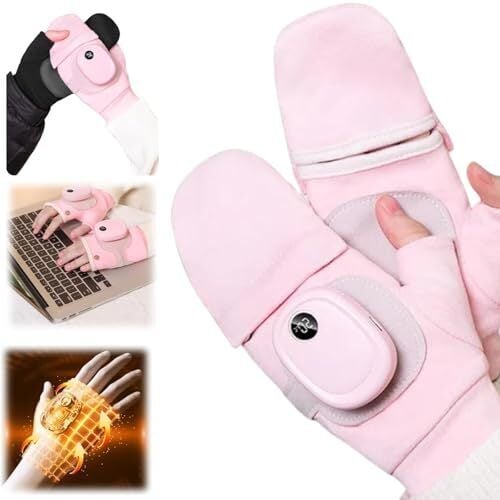
Finally, there are my beloved heated gloves. I ordered them in a fit of rage a few weeks ago after a pre-dawn walk to teach my 6 a.m. spin class. My hands were so cold I had to order a hot Dunkin’ instead of an iced one—disgusting!—and I ordered heated gloves the instant they thawed. You have options here too: You can get the kind where the mitten top fronts fold back to leave your fingers exposed, as well as full-fingered gloves. Either way, I think you’ll find them essential and easy to use, once you get used to having a battery pack hanging on the back of your hand (they don’t have a removable battery, but can be recharged with a standard USB-C cable).

FCC’s import ban on the best new drones starts today

Americans will be unable to buy the latest and greatest drones because the Federal Communications Commission (FCC) has banned foreign-made drones as of today.

On Monday, the FCC added drones to its Covered List, which it says are communications equipment and services “that are deemed to pose an unacceptable risk to the national security of the United States or the security and safety of United States persons.” The list was already populated by Kaspersky, ZTE, Huawei, and others.

An FCC fact sheet [PDF] about the ban released on Monday says:

Read full article

Comments

5K Gaming Is Too Hard, Even for an RTX 5090D

Asus has been showcasing its new 5K 27-inch ROG Strix 27 Pro gaming monitor running at 5,120 x 2,880 resolution and up to 180Hz, but even Nvidia’s flagship RTX 5090 struggles to deliver smooth frame rates at this demanding pixel count. In testing conducted by Asus, the RTX 5090D — a Chinese-exclusive variant with weaker AI performance — achieved just 51 frames per second in a Cyberpunk 2077 benchmark at ultra ray traced settings. The test system ran an AMD Ryzen 9950X3D processor, had DLSS set to balanced, and kept frame generation disabled. The same configuration running at 4K managed 77 fps, around 50% higher.

The underlying math is simple: 5K resolution requires rendering 78% more pixels than 4K. That 218 PPI pixel density delivers impressive sharpness up close, but Asus chose an IPS panel over OLED technology to reach it, trading away deeper black levels and faster response times. Asus appears to be positioning the monitor as a dual-mode display — 5K for productivity and video, 1440p at up to 330Hz for gaming. Early Chinese listings have it priced at the equivalent of $800, roughly what you’d pay for a larger 4K OLED panel.


Read more of this story at Slashdot.

OpenAI’s child exploitation reports increased sharply this year

OpenAI sent 80 times as many child exploitation incident reports to the National Center for Missing & Exploited Children during the first half of 2025 as it did during a similar time period in 2024, according to a recent update from the company. The NCMEC’s CyberTipline is a Congressionally authorized clearinghouse for reporting child sexual abuse material (CSAM) and other forms of child exploitation.

Companies are required by law to report apparent child exploitation to the CyberTipline. When a company sends a report, NCMEC reviews it and then forwards it to the appropriate law enforcement agency for investigation.

Statistics related to NCMEC reports can be nuanced. Increased reports can sometimes indicate changes in a platform’s automated moderation, or the criteria it uses to decide whether a report is necessary, rather than necessarily indicating an increase in nefarious activity.

Read full article

Comments

Do This Quick (and Quiet) Circuit Workout When You Need a Break From Holiday Family Gatherings

The holidays are for rest, relaxation, and eating your weight in cookies shaped like reindeer. Your fitness goals can absolutely wait until the new year. But if you find yourself trapped in a house where someone just said, “well, actually” for the third time in ten minutes, and you need to escape to your old bedroom before you say something you’ll regret—here’s a quick (and quiet) bodyweight circuit you can do surrounded by your high school participation trophies.

The circuit workout

These are my favorite beginner-friendly exercises to efficiently blow off some steam. Hopefully you have some floor space next to your twin bed.

Tactical door-closed push-ups (10-15 reps)

These are classic push-ups, but you’re listening intently for footsteps. Is someone coming to ask why you fled the living room? This adds an element of anxious anticipation that really engages your core. Modify on your knees if needed.

Spite squats (20 reps)

Do some deep squats while internally composing the perfect rebuttal you’ll never actually say. Feel the burn in your quads and your self-restraint. Make sure you’re pushing your hips back until your thighs are parallel with the floor, looking to keep your knees bent at 90 degrees and in line with your toes. Bonus points if you can do these silently enough that no one downstairs hears the floorboards creaking.

Frustration lunges (10 per leg)

Lunge from your bed to your old dresser (the one still covered in stickers, right?). Consider each lunge as representing a point in the argument you’re nobly choosing not to make. You’re not avoiding conflict; you’re being the bigger person. And getting stronger glutes!

Remember, when you lunge, keep your front knee over your ankle, not your toes. Keep your torso upright and your core engaged.

Diplomatic plank hold (30-60 seconds)

Hold a plank while contemplating how you’ve become the most emotionally mature person in your family. This is harder than it sounds, both physically and existentially. If you need to drop to your knees after 20 seconds, that’s fine—you’re still doing better than the conversation downstairs. My top tip for keeping your body in a straight line is to engage your glutes more than you might think.

Passive-aggressive mountain climbers (30 seconds)

Quick, quiet mountain climbers that let you burn off steam without making enough noise to alert anyone that you’ve rage-quit the family gathering. Imagine you’re running away from the discussion, but in place, silently, on your childhood floor.

Peacekeeper glute bridges (15-20 reps)

Lie on your back (hey, you’re already thinking about taking a nap anyway), feet flat, and lift those hips. Each bridge is you rising above the drama. You’re literally elevating yourself. Metaphorically and gluteally.

Zen bicycle crunches (20 total)

Finish with bicycle crunches while pretending you’re pedaling away from this entire situation. Alternate elbow to opposite knee and find your center.

Cool down

Sit on the edge of your too-small bed, breathing deeply, feeling virtuously exercised and only slightly guilty for abandoning your family. Check your phone. Consider going back downstairs. Hear a raised voice mention “fake news” or “snowflake” or whatever the discourse is today. Do another round.

Ryanair Fined $301M Over ‘Abusive Strategy’ To Limit Ticket Sales By Online Travel Agencies

Speaking of Italy’s competition authority , it has fined Ryanair $301 million for abusing its dominant market position to limit sales of tickets by online travel agents. The Guardian: The authority said Europe’s largest airline had “implemented an abusive strategy to hinder travel agencies” via an “elaborate strategy” of technical obstacles for agents and passengers to make it difficult for online travel agents to sell Ryanair tickets and instead force sales through its own website.

The fine related to Ryanair’s conduct between April 2023 and at least until April 2025, the authority said on Tuesday. It said Ryanair had prevented online travel agents from selling tickets on its flights in combination with other airlines and services, weakening competition. Ryanair said it would immediately appeal against the “legally flawed” ruling.


Read more of this story at Slashdot.