10 Hacks Every Windows Power User Should Know

For many students and workers, Windows is just the default way to use a computer. It’s where all your apps work as intended, where all your Microsoft Office documents sync easily, and where you play all your games. But if you peel back its layers, Windows can be a lot more than that. Power users can take advantage of hidden features, and utilities from Microsoft and third-parties to not only speed up their workflow, but to improve productivity and fix some of the most annoying quality-of-life issues that plague Windows PCs.

Control everything using the Command Palette
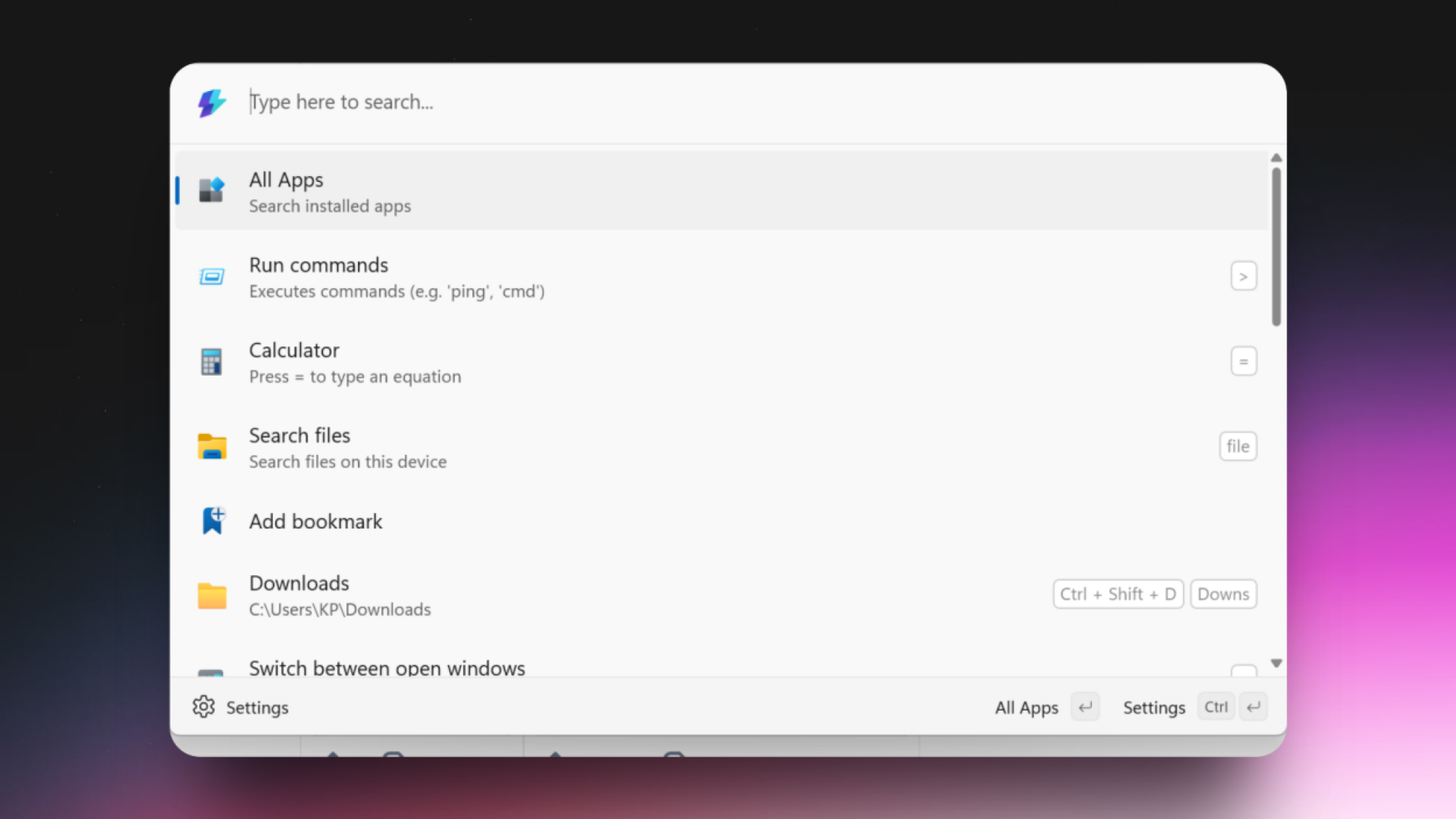
Command Palette in Windows 11.

Credit: Khamosh Pathak

For decades, Mac users have boasted about Spotlight Search, while Windows never really offered a true alternative. Windows Search is fast, but it’s never really come close to replicating all the things Spotlight can do, especially now with the latest macOS Tahoe update. Finally, after years of waiting, Microsoft has introduced its own keyboard launcher, called Command Palette.

It’s not available by default, though. To find it, you’ll have to install PowerToys, which is Microsoft’s own set of handy utilities. Once PowerToys is running, find the Command Palette app from the sidebar, and enable it. Then, you can access it using the default keyboard shortcut, which is Windows + Alt + Space (you can customize this be whatever you like).

Once it’s set up, you can use the Command Palette to launch apps, search for files, open folders, switch between apps, open bookmarked websites or folders, and search the web. In fact, you can even run Terminal commands from here, and you can use extensions to add features. Here’s a detailed guide on the Command Palette to get you started.

Replace the File Explorer with something much better
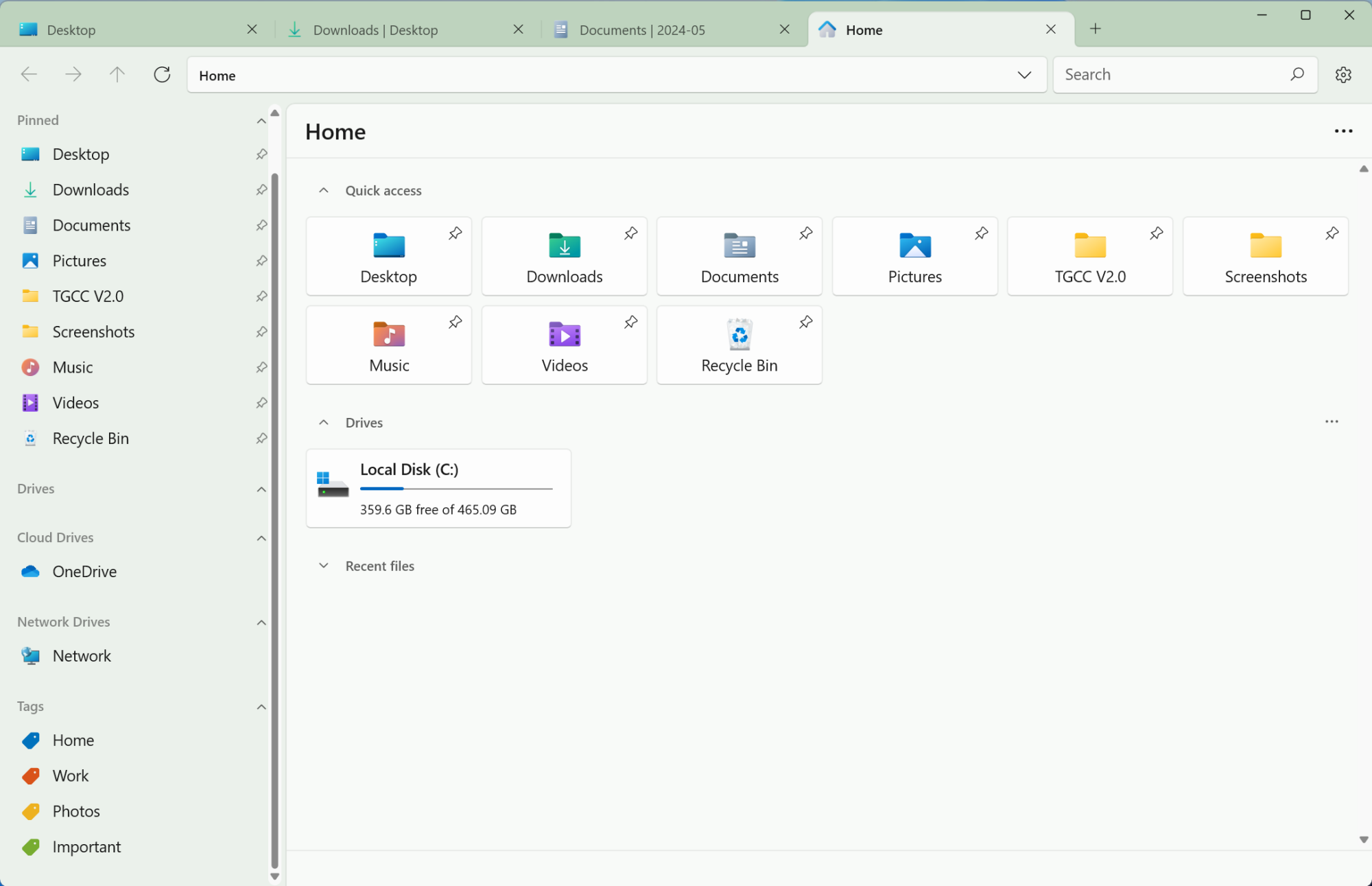
Files app for Windows

Credit: Khamosh Pathak

The File Explorer in Windows 11 is a certified mess. It’s slower than the Windows 10 version, and it’s harder to find your way around it. If you’re as frustrated by this as I am, try installing the Files app instead. It’s an $8 app on the Microsoft Store, but can be downloaded for free from the developer’s website.

The Files app is beautifully designed, with support for theme colors. The app has a simple interface with an easy to access sidebar, tabs, dual-pane mode, and a dark mode that actually looks good. There’s also a column view from macOS and an ability to preview files without opening them.

Replace the Windows 11 taskbar and start menu
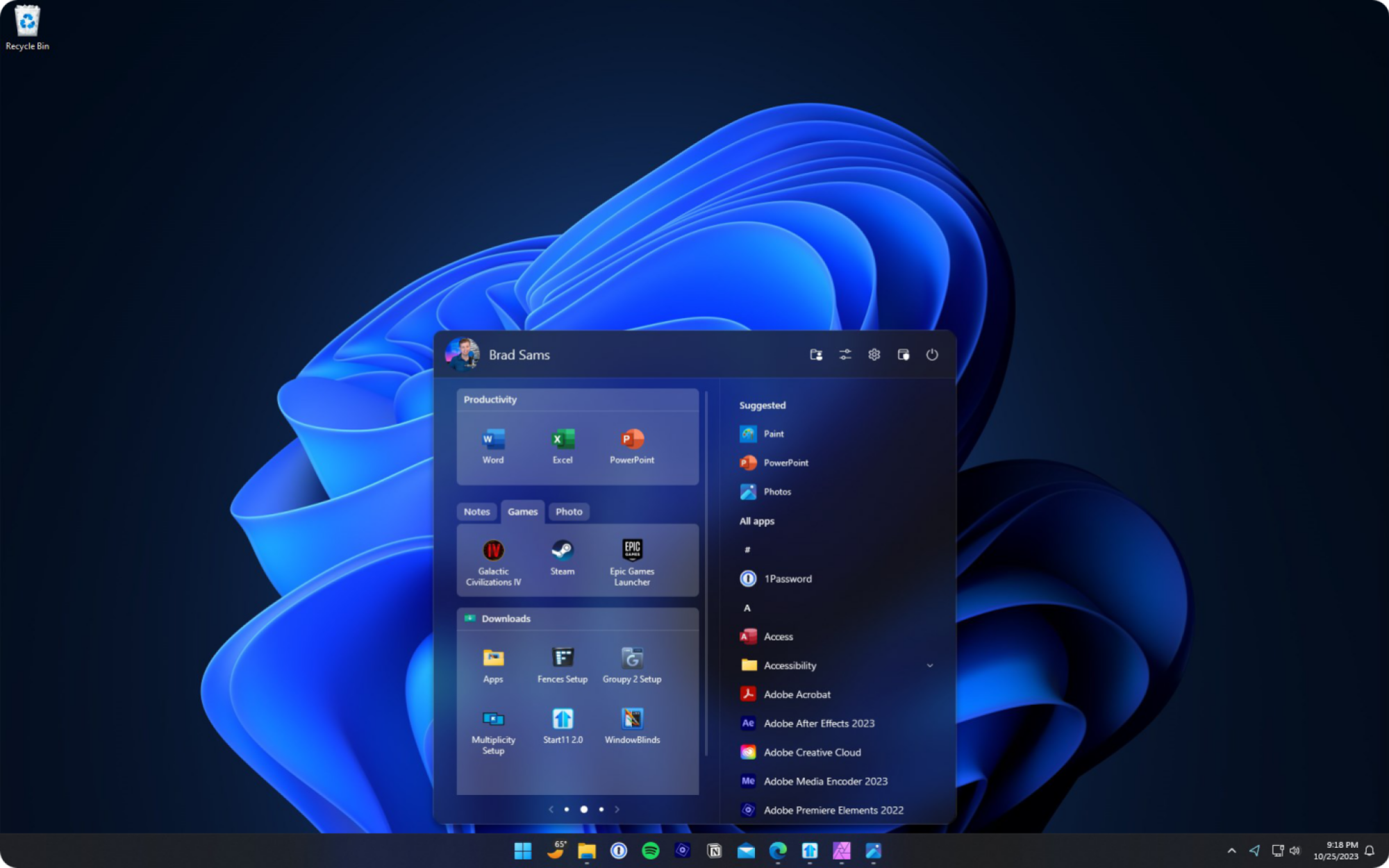
Start11 Taskbar in Windows 11.

Credit: Start11

The Windows 11 update radically redesigned the taskbar and the Start menu. If you don’t like the new updates, there is a way to go back. You can install the free ExplorerPatcher app to revert back to the Windows 10 Taskbar, with full-length app names, along with the older Start menu. If you only want to change the existing Start menu (I don’t blame you), try the Start 11 app, which costs $9.99 for a single license and a year’s worth of upgrades. Start11 is an incredibly customizable Start menu replacement where you can customize everything from the layout, spacing, icon color, size, and more. You can even go back to the Windows 10 style layout, but with the look of the Windows 11 icons.

Transform how Windows 11 looks with Seelen UI
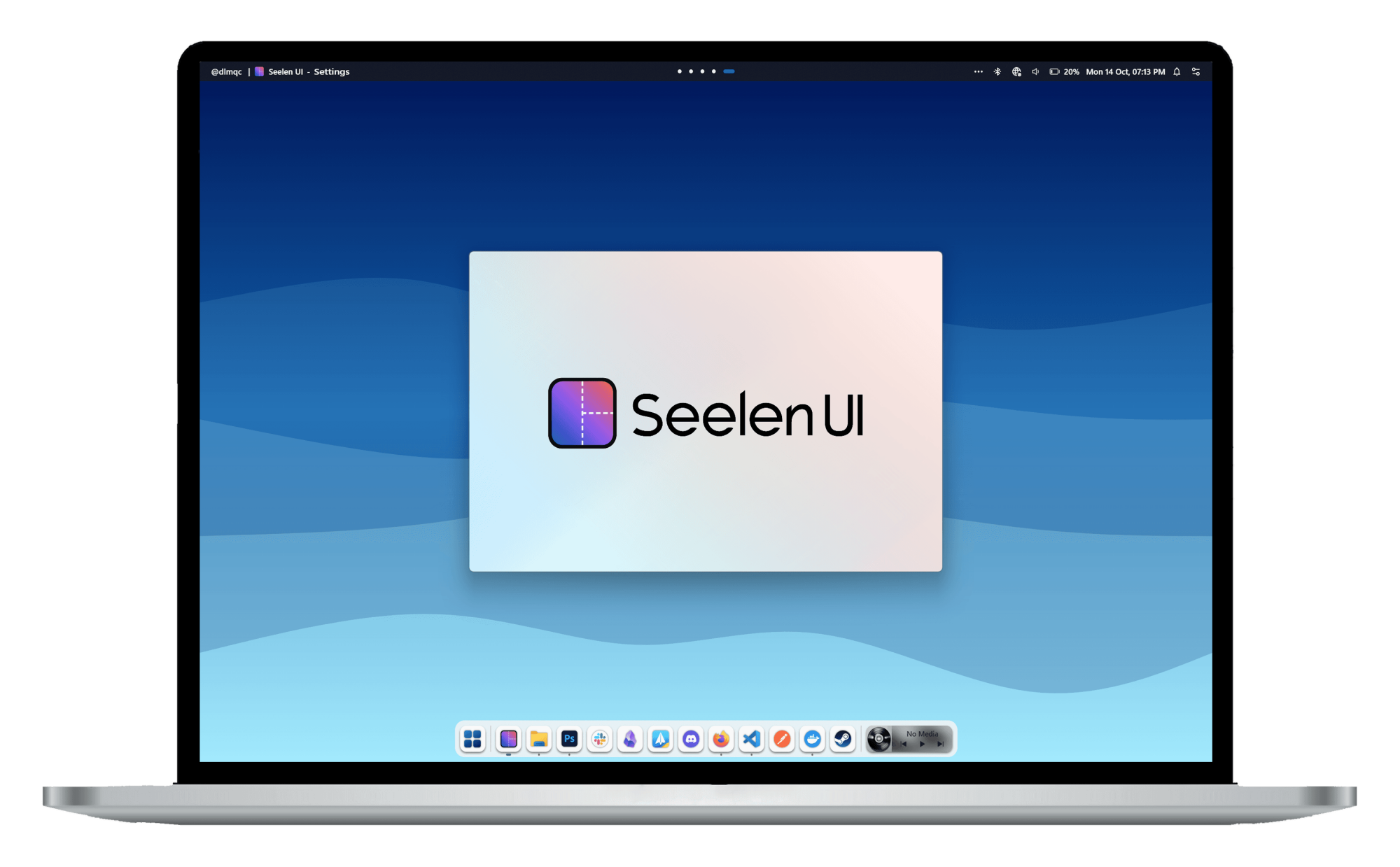
Seelen UI for Windows 11

Credit: Seelen

If you’ve swapped from Mac to Windows, and you miss the Mac’s Dock and menu bar, you can get them on Windows using the free and open source Seelen UI app. It’s an app that uses web technologies to add a menu bar and a floating Dock to your screen. It also hides the Windows Taskbar by default.

Seelen is completely customizable with community themes and plugins. You can choose where to keep the taskbar, and you can make it transparent if you want (something Windows 11 doesn’t allow for). You can add community themes to completely transform how it looks and works. You can also add more features using plugins.

Make the dark mode functional again
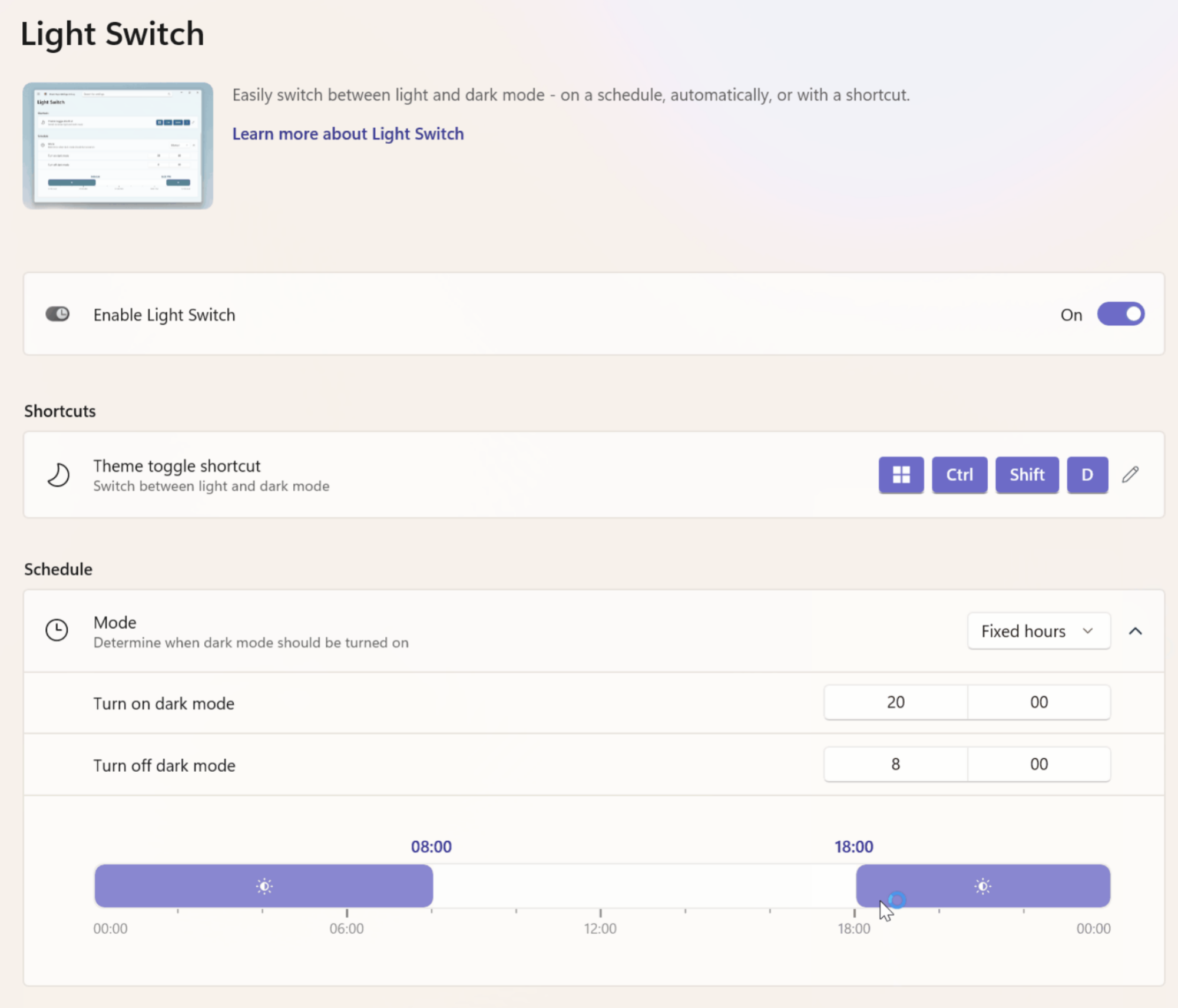
Light Switch for Windows PowerToys

Credit: Microsoft

The dark mode in Windows is woefully lacking, especially compared to macOS. As a power user, you might prefer to spend most of your time in dark mode, or you might want to automatically switch to dark mode as evening kicks in. By default, Windows doesn’t offer any such features. You have to go deep into Settings to enable or disable the dark theme, and that’s it.

Microsoft has a PowerToys utility called Light Switch that can solve some of those issues. With the Light Switch utility enabled, you can automatically trigger the dark theme at the time of sunset, or or a schedule that you like. Plus, it gives you a global shortcut to trigger the dark theme on the fly.

Embrace the new Snap layouts
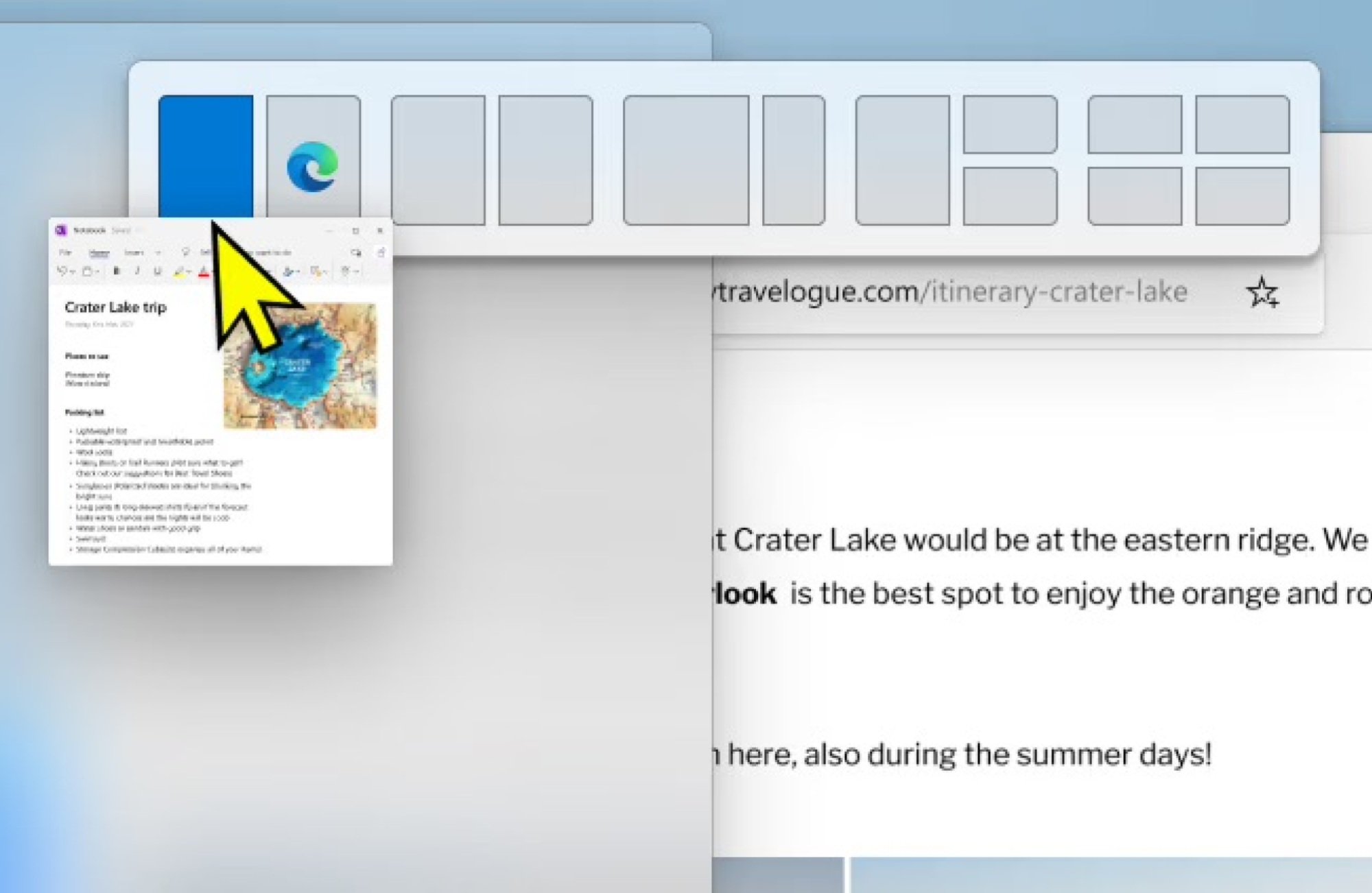
Windows 11 Snap Layouts

Credit: Microsoft

Snap Layouts is a powerful hidden feature in Windows 11 that not many people use. You might be used to dragging the left edge on a window to dock it to the left half of the screen. Well, that’s just part of the Snap Layouts feature. Next time you want to arrange the windows on your screen, drag the window to the top edge, and you’ll see a new preview of all possible layout options. You can easily split your large monitor screen into three or four windows, without doing any heavy lifting. You can also access this feature by hovering over the Maximize button, or you can use the Windows + Z keyboard shortcut to bring up the Snap Layout menu.

Install and manage apps without a thousand clicks
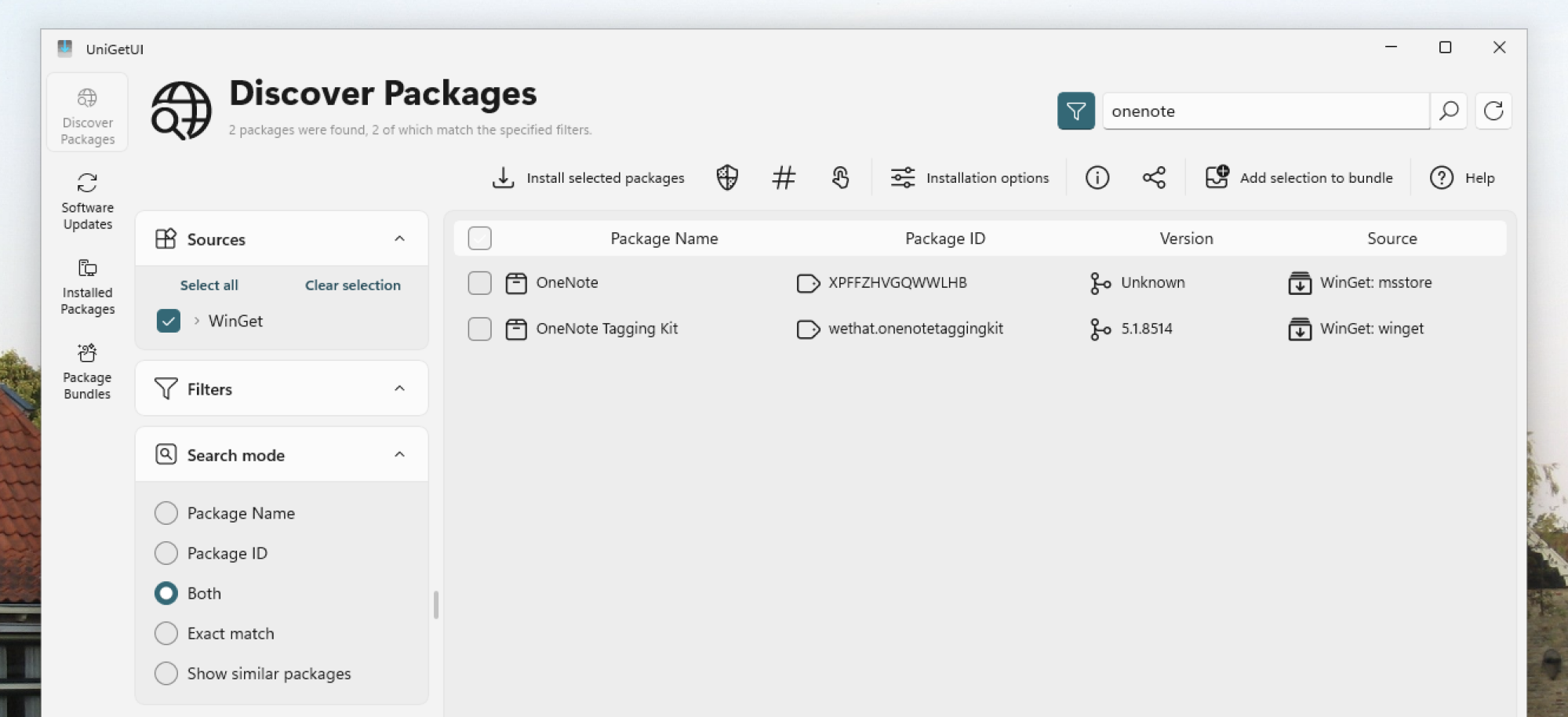
UniGetUI for Windows

Credit: Justin Pot

Installing apps on Windows can sometimes be its own special nightmare. You have to deal with installation wizards with dozens of steps, some of which haven’t been updated since Windows XP days. Like Linux and macOS, Windows too has a hidden package manager called Winget, a repository of apps that can be downloaded with just a single command. Yes, you need to open the Terminal to do it, but it’s really not that hard. Say you want to install Chrome: You’ll enter this in the Terminal and in a couple of seconds, the Chrome browser will be installed and ready to go, without a single extra click.

winget install Google.Chrome

Don’t like using the command line? Well there’s a GUI app for you. With the UniGetUI app, you can search for all apps or packages in the Windows Package Manager list, and download them in one click. There’s also a one-click option for updating all WinGet apps at once.

See your clipboard history
Ditto Clipboard History

Credit: Khamosh Pathak

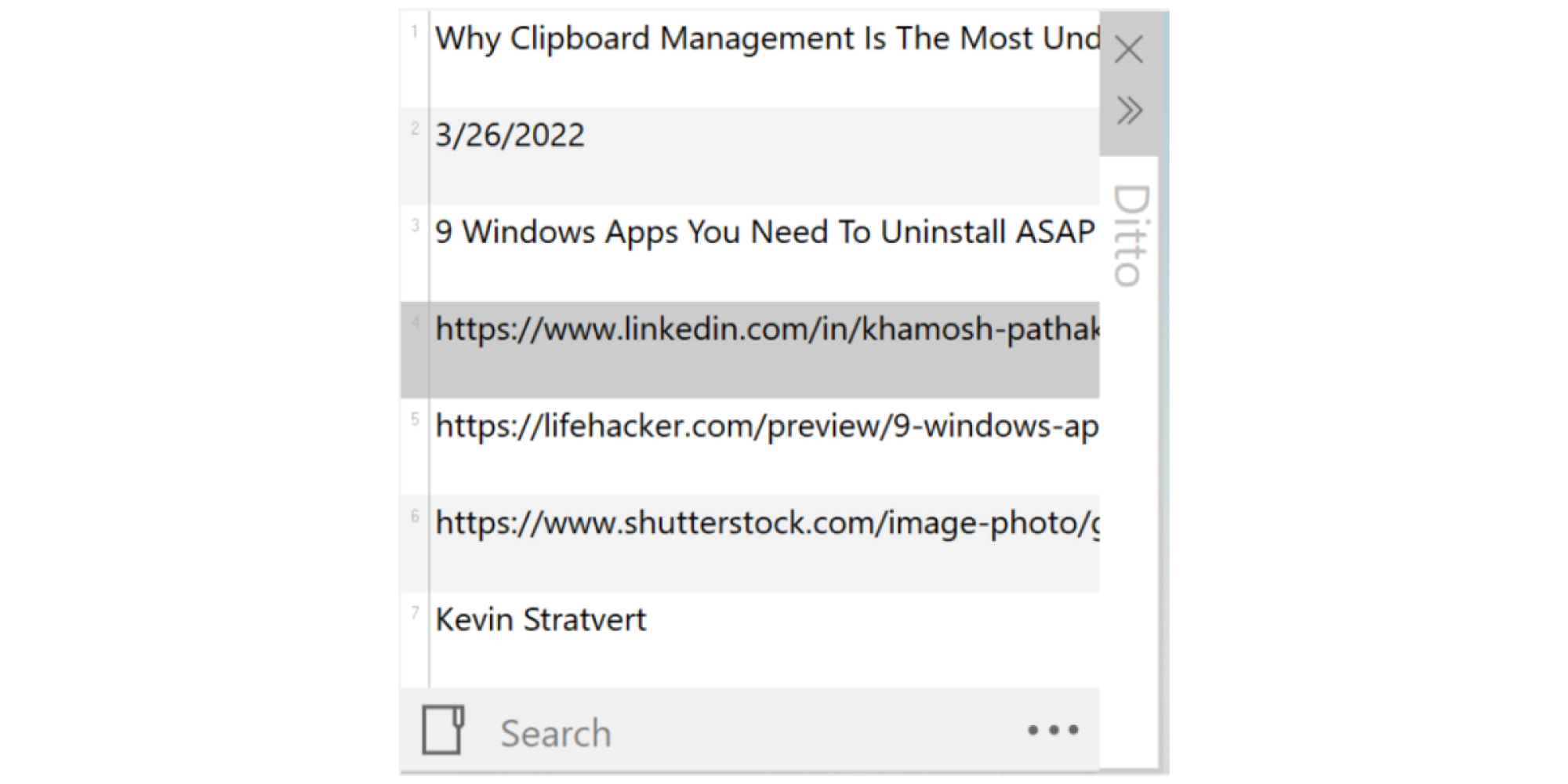
Windows has a built-in clipboard manager that you really should be using. Press Windows + V to bring up the Clipboard History (the first time you do this, you’ll have to enable this feature). Now, every time you copy anything on Windows, it will be stored in this list. You can go back to the Clipboard Manager at any time to copy one or multiple items from this list. You can even pin something to the top of the list, or quickly clear all history. If you’re looking for a bit more, try the Ditto app. It lets you customize how many snippets you store in your clipboard at a given time, and has a capable fast Search feature built-in.

Use Focus Sessions to better focus on your tasks
Focus Session in Windows 11

Credit: Khamosh Pathak

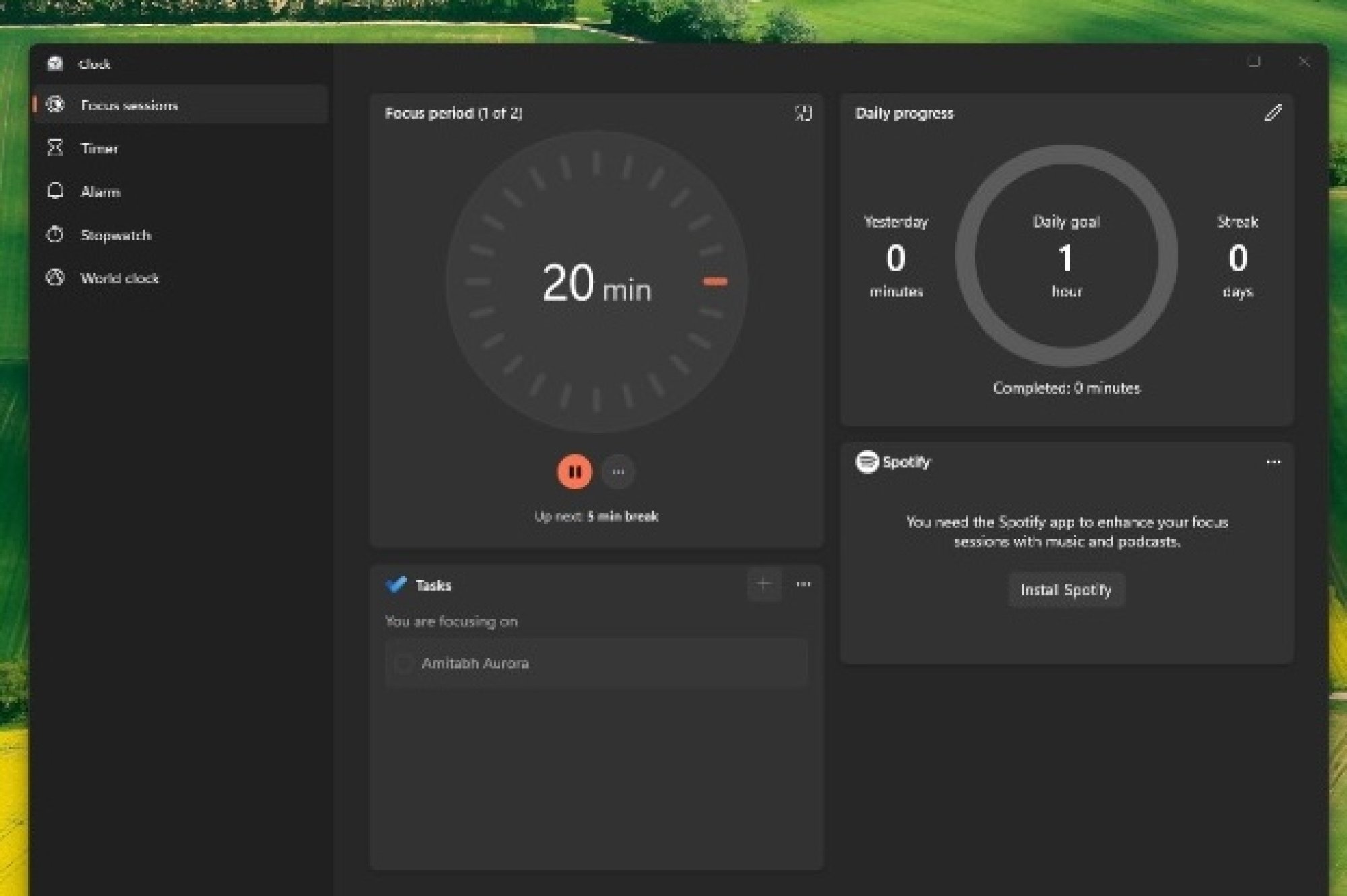
There’s a Focus Session feature inside the Clock app that’s basically a built-in Pomodoro timer, with distraction-free features. You can start a Focus timer for, let’s say, 30 minutes, and during that time Windows will stop all unnecessary notifications and app alerts so you can focus on your task. After a longer session, you’ll also be prompted to take a break.

Create your own custom shortcuts, for anything
Remap keys in Windows 11.

Credit: Microsoft

Power users rely on keyboard shortcuts to not only speed things up but also to reduce mental overload. Once you have the muscle memory, using a keyboard shortcut to perform frequent tasks reduces a lot of friction (especially compared to hunting for buttons using a mouse). When you start using an app, spend some time trying to learn keyboard shortcuts for the most frequently used actions. For example, archiving mail, exporting documents, and so on.

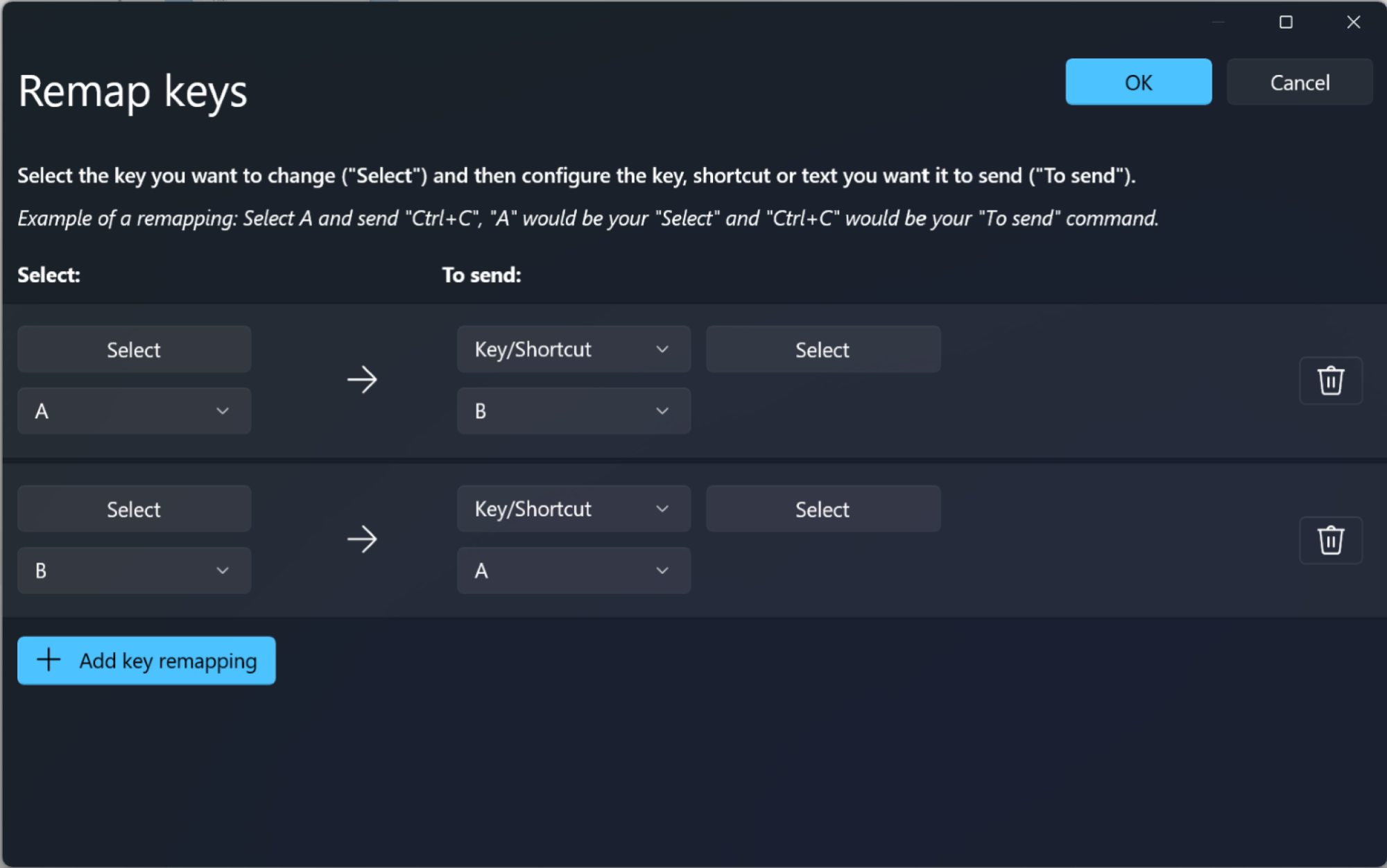
But this gets more interesting once you start to remap your keys and keyboard shortcuts using the Keyboard Manager utility inside PowerToys. Here, click the Remap a Key button to get started. Now, you can map any unused key, like your Caps Lock key, or the Copilot key, to anything else (like a shortcut to bring up Command Palette, for example). Or you can remap the shortcut for Copy from Control + C, to Windows + C. Time to get creative!


What People Are Getting Wrong This Week: The Origin of Christmas Elves

Because it’s Christmas time, I’ve been digging into myths and misconceptions we have about the holiday: Yuletide misinformation is rampant, and I’m setting the record straight. Last week I dug into who Santa Claus really is, with side quests about St. Nicholas bringing children back from the dead and the religious war between Santa and Kris Kringle. One thing I didn’t talk about? His elves.

Christmas elves feel like they’ve been around forever, and people have strangely consistent ideas of what they’re all about—they’re small, they wear green, they make toys out of some innate magical compulsion, they love shelves— but that variety of elf is a recent invention; “real” elves were often anything but jolly little pieceworkers. The elves’ thousand-year transition from supernatural nightmare creatures to friendly factory workers is a cultural Rorschach test revealing Western culture’s changing attitudes about work, wealth, and what it means to be a “useful” member of society.

The dark elves of the past

To understand how we arrived at our current vision of elves, you have to rewind past Will Ferrell vehicles, Christmas specials, and Victorian holiday frippery to the colder heart of Western culture—the old, weird world that was haunted by supernatural forces, and elves weren’t creatures you’d ever want spying on your children.

The early origin of elves can’t be pinned down exactly because the idea of elves predates the written word. Magical, man-like races were mentioned in mythology and oral traditions in cultures all over the world; but elves, specifically, were common in Norse and Germanic folklore. This variety of elf was (usually) more like Legolas than Hermey from Rudolph the Red Nosed Reindeer—human-sized and magical, although sometimes mischievous. 

Elves in Anglo-Saxon England, though, were jerks. Old English medical texts attributed various diseases to elves. If you felt a sharp, unexplained pain, it was probably the result of an “elfshot”—an elf firing an invisible arrow at you. Elves were also associated with witchcraft, nightmares, and mental disorders.

Various elven misdeeds

Elves did all kinds of bad things. Kind of, anyway: The names and deeds of elves, fairies, hobs and other creatures were basically interchangeable and regional, so it’s hard to ascribe anything specifically to elves (it could have been a nixie or brownie, after all).

In the Middle Ages, elves/fairies/other small magic folk were known to steal people’s babies, replacing them with changelings—sickly imposters left in the human’s place. They could curse your livestock, spoil your milk, or lead travelers astray in the woods. Elves were blamed when infants died suddenly or when children developed unexplained illnesses. The “elf-lock” was a particularly nasty bit of mischief where elves would tangle your hair into impossible knots while you slept—the bastards! In other words, these were not the kind of people who would help make toys. They were fundamentally alien—beings that operated by rules humans couldn’t understand and definitely couldn’t trust—and they weren’t for fun or for kids. They were deadly serious and considered very real.

The rise of transitional helper-elves

So how did we get from disease-causing, child-stealing nightmare creatures to Santa’s personal toy-making proletariat? By the medieval and early modern period in Britain, there is widespread belief in what I call “transitional elves.” These were household spirits that came out at night to perform chores while families slept. Useful, for sure, but these elves were mercurial and easily offended. They would leave forever if they felt insulted or taken advantage of. You couldn’t even do something nice for them—if you made them clothes, they might decide to quit forever, shouting, “Gie Brownie a coat, gie Brownie a sark, Ye’se get nae mair o’ Brownie’s wark.”

These “household helper” folk beliefs often cast elves as craftsmen, one step closer to toy-makers. These stories inspired the text that laid the foundation for Christmas Elves: the Brothers Grimm fairytale “The Elves and the Shoemaker.” In that story, a shoemaker is down to his last piece of leather, but he wakes up to find a pair of elf-crafted shoes. He sells them, and continues to get free shoemaking labor until he grows wealthy. Then he makes the fateful mistake of rewarding his unpaid laborers with clothing and shoes of their own. They elves are so impressed with their classy new fits, they leave forever, seemingly because they now regard themselves as too good for a working class life. The moral: Don’t treat your employees very well, lest they think they’re your equal. 

How Elves became associated with Christmas

Along with establishing much of Santa’s mythology, Clement Clarke Moore’s 1823 poem “A Visit from St. Nicholas” (better known as “The Night Before Christmas”) described Santa Claus himself as “a right jolly old elf,” This line laid the foundation for the association of elves with Christmas. An 1857 poem called “The Wonders of Santa Claus” spelled it out clearly. Santa, the poem says, “keeps a great many elves at work,” making “a million of pretty things” like “cakes, sugar-plums, and toys.” 

In a reflection of the industrial revolution that was happening far from the North Pole, elves weren’t household spirits helping one family, they were a workforce, mass-producing toys in a factory. And in what can be seen as an expression of sentimental Victorian ideas about class, the elves loved working in a sweatshop; it’s what they were born to do!

Here’s the first picture of Santa’s Workshop, from Godey’s Lady’s Book in 1873. At the time, Godey’s had a huge circulation in the United States, and this image cemented the modern idea of Santa’s Workshop.

Santa's Workshop

Credit: Public Domain

Modern Christmas elves

The 1964 Rankin/Bass TV special Rudolph the Red-Nosed Reindeer put the finishing touches on Christmas elf lore by presenting a deeper look at how the North Pole workshop operates. Perhaps fueled by growing cultural misgivings about modernization and capitalism, Santa’s workshop in Rudolph is rife with vicious interoffice politics, forced conformity, workers whose dreams and ambitions are crushed (He just wanted to be a dentist, Santa!), and a boss man who is woefully out-of-touch with his employees. The only major innovation in Elf-lore since Rudolph is the “Elf on the Shelf,” but he’s a damn snitch, so we won’t talk about him.

The next time you see a green-suited helper in a Christmas movie, remember, that the jolly little toymaker was cobbled together from medieval folklore, German fairy tales, and 19th-century magazine illustrations, and shaped by the rise of industrialization. The modern elf is the domesticated, sanitized, capitalist-approved descendant of supernatural creatures that stole babies, drove people mad, and shot invisible arrows at your ancestors. Merry Christmas! 

AMD Zen 6 X3D CPUs May Rock Up To 288MB Of Cache To Battle Nova Lake

AMD Zen 6 X3D CPUs May Rock Up To 288MB Of Cache To Battle Nova Lake
AMD’s next-generation Zen 6 processor with 3D V-Cache may kick things up in a big way to compete with Intel’s upcoming Nova Lake chips. How so? According to a popular leaker on X, AMD will offer single CCD (core complex die) variants with up to 144MB of L3 cache, and dual CCD models with up to a whopping 288MB of L3 cache. To put those capacities

Pro-Russian hacker group claims responsibility for DDoS attack on French postal service

A pro-Russian hacker group has come forward as the perpetrator of a DDoS attack on the French national postal service La Poste that took place on December 22, according to Reuters. The distributed denial-of-service attack took central computer systems at La Poste entirely offline and caused major disruptions in package deliveries just days before Christmas.

Reuters reported that the cyberattack on La Poste was still not fully resolved as of Wednesday morning. While regular letters were not affected, postal workers were unable to track packages and online payments through La Banque Postale, the service’s banking division, were also disrupted.

The group, known as Noname057, has taken responsibility for or been accused of cyberattacks across the globe. Though attacks have occurred in over a dozen nations, the group has mostly targeted Ukraine as well as Ukraine-friendly nations.

Europol, the EU’s law enforcement agency, launched an extensive operation against the group this summer. The US Justice Department has also been involved in actions against the hacker group.

This article originally appeared on Engadget at https://www.engadget.com/cybersecurity/pro-russian-hacker-group-claims-responsibility-for-ddos-attack-on-french-postal-service-140015323.html?src=rss

Why Are There No Large Market Cap Companies Globally in Edtech?

Goldman Sachs, in a note this week, via India Dispatch: There are various reasons that explains this: (i) A large part of the global education spend goes towards formal education (schools, colleges and universities), which are typically either run by governments or are not-for-profit institutions;

(ii) It is difficult to replicate education quality at scale in our view, since most teachers would have a different pedagogy, and thus standardization is harder to achieve vs that in other internet categories;

(iii) Education is fragmented – it includes various fields (schools, undergrad courses, medicine, engg, management, etc.), each with their own curriculum, and the same being vastly different across countries globally; this makes scalability difficult beyond a few certain specializations and regions.

Additionally, we believe the ability for online education to capture a sizable value share of supplemental education is limited since the perceived value of offline, including that from community, in-person engagement and doubt solving, rigour, etc., is typically higher.

However, we note that before China’s double reduction policy in 2021, TAL and EDU had market caps of up to US$50 bn; these companies were mostly domestic focused and on the K-12 tutoring segment, which has large volumes. Similarly in India, Byju’s reached a peak valuation of US$20 bn+ (link; again, focused on K-12), before issues around governance etc. impacted the business.


Read more of this story at Slashdot.

The Google Pixel 10 Pro Is $350 Off Right Now

We may earn a commission from links on this page. Deal pricing and availability subject to change after time of publication.

At $749, the unlocked 128GB Google Pixel 10 Pro has slipped into its most affordable price yet on Amazon, down from its original $999 launch price, according to online price trackers. Stack the promo code PIXEL10, and you shave off another $100, which reframes the phone entirely. At full price, it felt like a confident but pricey Android flagship. At this discount, it becomes a far easier recommendation for people who value polish over raw benchmark wins.

This is still very much a Pixel. The design is clean and familiar, with a flat display, matte glass back, and a solid in-hand feel that avoids the slippery problem of earlier generations. It runs Android as Google intends it to run, with fast updates and a long support window that continues to be one of Pixel’s quiet advantages.

Most of what the Pixel 10 Pro does well will feel familiar to longtime Pixel fans. The triple-camera system is reliably consistent, with low-light photos that stay natural instead of heavily processed, portraits that rarely miss, and everyday shots that come out right without needing a second attempt. The display gets a modest but useful bump in brightness, which helps outdoors, and Qi2 wireless charging brings faster, more reliable cable-free top-ups. Google’s new Pixelsnap magnetic system fits cleanly into daily routines, snapping chargers and accessories into place much like Apple’s MagSafe, without feeling forced. Lifehacker’s Associate Tech Editor Michelle Ehrhardt notes in her review that this kind of convenience adds up, especially for car mounts or desk charging. One real trade-off is the move to eSIM-only support. That is fine if your carrier supports it, but it can be limiting if you switch networks often or rely on physical SIMs while traveling.

Where the Pixel 10 Pro feels less settled is in performance expectations. The Tensor G5 chip is smooth for everyday use, but it does not match Snapdragon rivals in demanding third-party apps, as noted in this PCMag review. Google’s latest AI features sound impressive, but many feel optional rather than essential, not exactly reasons to upgrade. Battery life is solid but unremarkable. It lasts a full day with moderate use, though heavier users may need a top-up before night. All told, this discounted Pixel 10 Pro is not aimed at spec chasers. It is a balanced, camera-first Android phone with thoughtful refinements, now priced in a way that finally makes sense.


SPEED Act passes in House despite changes that threaten clean power projects

The House of Representatives cleared the way for a massive overhaul of the federal environmental review process last Thursday, despite last-minute changes that led clean energy groups and moderate Democrats to pull their support.

The Standardizing Permitting and Expediting Economic Development Act, or SPEED Act, overcame opposition from environmentalists and many Democrats who oppose the bill’s sweeping changes to a bedrock environmental law.

The bill, introduced by Rep. Bruce Westerman (R-Ark.) and backed by Rep. Jared Golden (D-Maine), passed the House Thursday in a 221-196 vote, in which 11 Democrats joined Republican lawmakers to back the reform effort. It now heads to the Senate, where it has critics and proponents on both sides of the aisle, making its prospects uncertain.

Read full article

Comments

Toyota’s Prius Prime saved me gas money but probably not the environment

I’ve always wondered what it would be like to own a plug-in hybrid, and recently, fate handed me that opportunity. On a recent trip to Vancouver, I rented a 2024 Toyota Prius Prime for nearly two months — the ideal scenario to try out North America’s most popular PHEV.

My experience with the Prius Prime

Previously, the words “Prius” and “sexy” were rarely used in the same sentence. However, I think the wedge-shaped Prius Prime introduced for 2023 is much sexier than its frumpy predecessors. The sleek shape also pierces the wind better to improve efficiency. It’s lower to the ground than before, though, which can make entry tough for taller or older people.

I was comfortable in the Prius Prime once seated, even though the materials and options aren’t quite as luxurious as other PHEVs sold in the US. On two 10-hour highway drives up to northern Canada I never felt sore (or cold) in the well-bolstered, heated seats. However, visibility wasn’t the greatest due to the low seating position and thick front pillars that occasionally blocked my view of traffic.

Driving Toyota’s Prius Prime showed me the perks (and problems) with plug-in hybrids
Steve Dent for Engadget

With its wraparound dash and 8-inch touchscreen, the interior is reasonably high-tech but not to the standard of some EVs I’ve tried recently. It came with wireless CarPlay and Android Auto support that gave me seamless streaming entertainment on long highway stretches. The driver safety features (lanekeeping, adaptive cruise, automatic braking and more) also boosted my confidence in Vancouver’s gnarly traffic. The Prius Prime doesn’t offer true one-pedal implementation, but it has a mode that’s close to that.

With a two-liter 150 HP gas motor and 161 HP electric motor (net 220 HP combined), the 2024 (fifth generation) Prius Prime has a whopping 100 more horsepower than the previous model. The electric drivetrain is supplied by a 13.6kWh battery (10.9kWH usable) that takes four hours to charge at 240 volts, or double that with 120-volt household electricity. That means you can juice it fully overnight, but it doesn’t have DC fast-charging for speedy power-ups on longer trips. The EPA electric range is 44 miles, 19 more than the fourth-gen Prius.

It accelerated surprisingly well (from 0 to 60mph in 6.7 seconds) and was agile, but had a fair amount of body roll since it’s not designed for the race track. Still, considering the Prius’s reputation as a staid hippie econobox, the new model was downright sporty. I enjoyed driving in the all-electric mode much more than the hybrid mode, though — it was quieter and smoother, with lower noise levels and vibration.

So, how far was I able to drive on that electric motor alone? On the highway at about 65 MPH, I eked out 30 miles and just over 40 miles in the city. On one trip, I drove from the city center to a suburb 30 miles away and made it there and partially back on a full charge. On another voyage, I was able to drive back and forth between the east- and west-most points of Vancouver (13 miles) — a typical commute for many city-dwellers — with about a quarter charge to spare.

Driving Toyota’s Prius Prime showed me the perks (and problems) with plug-in hybrids
Steve Dent for Engadget

With consistent charging, my fuel consumption over a two week period (averaging 25 miles per day) was about a quarter of a tank or around $7.50. In terms of electricity, I used nearly 70.5kWh during that time at $.085/kWh, for a total of $6. All told, I spent $13.50 for gas and electricity over 350 miles of mixed driving, so the Prius Prime was clearly cheap to operate.

For longer trips, it’s still as inexpensive as it gets for a gasoline-powered vehicle, thanks to the efficient ICE motor and hybrid system that’s among the best in the industry. With a full battery charge and tank, I set out on a 547-mile drive and travelled 470 miles before stopping for gas, with a quarter tank to spare. That fill-up cost around $25.

The true savings and the problem with plug-in hybrids

The timing for my test of this car was ideal. In October, I spotted a European study concluding that PHEVs aren’t as economical as expected over a large sample size. Engadget’s article about that stirred up some passion among owners and potential buyers, so I wanted to compare my experience with points in the study.

First, let’s see if a PHEV is worth the extra money compared to a regular hybrid. My calculations are for the average US buyer and don’t take state or federal clean air rebates into account.

When I chose to rent a “compact” car, Avis assigned me a mid-range Prius Prime XSE — a model that lists at $37,320 but typically sells for $34,590, according to Edmunds. That suited me well as it only lacked a few features of the high-end XSE Premium, notably the larger 13.2-inch infotainment display and solar roof option. A fully equipped 2026 XSE Premium model with those features costs $41,665.

Driving Toyota’s Prius Prime showed me the perks (and problems) with plug-in hybrids
Steve Dent for Engadget

Since Toyota also makes a regular hybrid Prius, that vehicle offers an ideal comparison. The equivalent Prius XTE model has a list price of $31,995 in a similar configuration, making it $5,325 cheaper than the Prius Prime XSE.

The average US driver covers 13,662 miles per year and gasoline currently has a median $3 per gallon price. Over that distance, a non-PHEV Prius driver could expect to burn 273 gallons at 50 MPG (EPA combined) in a year, spending $819 on fuel.

A Prius Prime driver, on the other hand, would use 70 to 85 percent less fuel by current EPA or WLPT estimates. If we generously take the high end of those numbers at 85 percent, that cuts fuel costs to $160. That would require using about 2,500 kWh of electricity, though, so at an average US price of $0.18/kWh, that amounts to $450, for a total of $610 (gas plus electricity). That means you’d save just $209 in a year, or $2,090.00 over 10 years — not enough to justify the extra price. (Fuel and electricity prices, usage and other factors vary by region and can have a big impact on those figures.)

It could be even worse than that, according to a European automotive thinktank called Transport & Environment (T&E). After gathering real-world OBFCM data from 800,000 vehicles, they determined that PHEVs only run in all-electric mode 27 percent of the time, rather than 84 percent as estimated by Europe’s WLPT standard. As a result, plug-in hybrids in Europe emit five times more emissions and cost users €500 ($586) more per year than previously thought. Those figures are likely similar in the US.

Driving Toyota’s Prius Prime showed me the perks (and problems) with plug-in hybrids
Steve Dent for Engadget

How could regulators be so wrong about this key data? The first, obvious reason is that they underestimated how often people charge their vehicles. With their relatively short range, plug-in hybrids often need a full charge to get through the day in electric-only mode — but many people aren’t doing that.

Why? One reason may be a lack of easy charger access away from home. I found them to be difficult to find and use, often requiring a sign-up or app rather than just letting me tap a credit card (I’m looking at you, ChargePoint, Flo and Switch Energy). It can also be more expensive than just buying gasoline, since many companies charge triple or more the market rate for electricity. Another factor is that drivers of company or fleet PHEVs charge their vehicles less often than private owners.

There’s one additional and especially pernicious reason: The ICE engine often kicks in when PHEVs are supposedly running in all-electric mode, particularly with heavier sedans or SUVs. That’s because the electric motors alone aren’t powerful enough for maneuvers like passing.

Larger batteries can boost all-electric usage, but only to a point. Beyond 45 miles of range, emissions actually increase. The reason is simple: “Long-range PHEVs are the heaviest in the dataset, averaging 28 percent more mass and 33 percent more engine power than the group just below,” T&E wrote.

Driving Toyota’s Prius Prime showed me the perks (and problems) with plug-in hybrids
Steve Dent for Engadget

Overall, I enjoyed my time with the Prius Prime and found it to be fun, practical and cheap to drive. It’s the most economical PHEV because it has excellent electric range and enough power that the ICE engine rarely needs to kick in. At the same time, it offers the highest EPA mileage rating of any non-EV sold in North America. If I were in the market for a new vehicle, the Prius Prime would be high on my list.

However, I also learned that PHEVs aren’t reducing emissions or saving buyers as much as regulators and manufacturers have promised. Governments are to blame for much of that, as they overestimated all-electric use in PHEVs and failed to support the charging infrastructure needed to make them practical.

Responsibility also falls to automakers and buyers. Consumers want SUVs, but manufacturers aren’t making the electric motors in PHEVs powerful enough to run all the time in EV mode or offering fast DC charging. At the same time, drivers are failing to charge their vehicles consistently. Until those issues are solved, in my experience plug-in hybrids are a poor substitute for EVs in terms of emissions and a less economical choice than regular hybrids.

This article originally appeared on Engadget at https://www.engadget.com/transportation/toyotas-prius-prime-saved-me-gas-money-but-probably-not-the-environment-133027378.html?src=rss

How to redeem game codes on the Nintendo Switch 2

Digital game codes remain one of the simplest ways to add new titles to a Nintendo library. The Nintendo Switch 2 handles code redemption in a familiar way, building on the same process used on the original Switch. You can redeem a download code directly from the eShop on the console, or through a browser on a phone or desktop. Both routes link the purchase to the same Nintendo Account so the redeemed title appears on any compatible device tied to that account. The process is quick once you know where to look. Here is how to redeem game codes on Switch 2 through the console and online.

Things to know before you start

A Nintendo Account is required and the Switch 2 must be connected to the internet for on-device redemption. Most codes contain sixteen characters made up of letters and numbers. The characters are displayed on a physical card, on a receipt or in a confirmation email from a retailer. The characters should be entered exactly as supplied. Each code can only be redeemed once and becomes linked to the Nintendo Account used during the process.

How to redeem a game code on the Switch 2 via the eShop

Redeeming a code through the Switch 2 itself is the most direct approach because the download begins as soon as the code is accepted.

Start on the Switch 2 home screen and open the Nintendo eShop icon. The console will prompt you to choose the user profile that should receive the content. Each user profile has a separate eShop purchase history, so pick the correct one before moving on.

Once the eShop loads, look for the Redeem Code option in the main menu. On the Switch 2, this appears in the left navigation panel alongside the store’s standard browsing categories. Select Redeem Code to open a screen with an input field and the on-screen keyboard.

Enter the sixteen-character code carefully. Codes may contain similar-looking characters particularly when numbers and letters appear in the same sequence. After entering the full set of characters select OK to move forward. The system checks the code and shows a confirmation page with the game or content tied to it.

If the code is valid, select Redeem to finish the process. The game will appear on the home screen as soon as the redemption is complete. A progress bar shows the download status until the installation finishes. If the game includes a Switch and Switch 2 version, the system will prompt you to choose which version to download.

If the game does not begin downloading head to the All Software view or the Download Management screen to confirm the status. The redeemed title should be visible with either a queued or active download.

How to redeem a Switch 2 code online

Nintendo also supports online redemption through its digital store, which is useful if you are away from the console or prefer to type the code on a full keyboard. The redeemed title will still appear in your account’s purchase history and can be downloaded later from the Switch 2.

Open a browser on a phone, tablet or computer and go to the Nintendo Account login page. Sign in using the account linked to your Switch 2. Once logged in navigate to the code redemption page for the Nintendo eShop. This page contains a text box where you can paste or type the code.

Enter the code exactly as provided and select Next. A confirmation screen appears with the game details. Select Redeem to finalize the action. The content is now tied to your account and ready to download on your console.

If the console is in sleep mode and has auto downloads enabled, the game may start downloading immediately. Otherwise open the eShop on the Switch 2 later and check the Download Management section for your queued title.

What to expect after redeeming a code

Every redeemed game becomes part of your Nintendo Account’s digital library. This applies across devices tied to the same account, which means that games purchased on a Switch or a browser will still appear when you sign in on a Switch 2. If the game supports cloud backup through Nintendo Switch Online, save data will sync once the game is installed.

Some games offer separate versions for the original Switch and Switch 2. When this applies, you’ll be asked to pick which version you want to download. The choice does not usually affect your ownership but it determines which software build is installed on the device.

If a code fails, Nintendo advises checking that the characters are entered correctly and confirming that you are using a download code rather than a control number, which often appears on the same card. Codes for DLC downloads require the base game on the destination console. Region restrictions also apply so the code must match the region of your Nintendo Account’s eShop.

Why Switch 2 uses the same redemption system as the original Switch

The Switch 2 keeps the familiar eShop structure that users have relied on since the original console. Keeping this process consistent simplifies the transition for families with multiple consoles and reduces the friction of carrying existing purchases forward. Nintendo Accounts continue to serve as the backbone for digital ownership which makes it easy to claim a code on one device and access the game on another.

The updated interface on the Switch 2 adds clarity to navigation but code redemption still works the same way on both platforms. This continuity ensures that retailers can distribute standard sixteen-character download codes and users can rely on simple steps to activate them.

This article originally appeared on Engadget at https://www.engadget.com/gaming/nintendo/how-to-redeem-game-codes-on-the-nintendo-switch-2-130059847.html?src=rss

TV Technica: Our favorite shows of 2025

Editor’s note: Warning: Although we’ve done our best to avoid spoiling anything major, please note this list does include a few specific references to several of the listed shows that some might consider spoiler-y.

This was a pretty good year for television, with established favorites sharing space on our list with some intriguing new shows. Streaming platforms reigned supreme, with Netflix and Apple TV dominating our list with seven and five selections each. Genre-wise, we’ve got a bit of everything: period dramas (The Gilded Age, Outrageous), superheroes (Daredevil: Born Again), mysteries (Ludwig, Poker Face, Dept. Q), political thrillers (The Diplomats, Slow Horses), science fiction (Andor, Severance, Alien: Earth), broody fantasy (The Sandman), and even an unconventional nature documentary (Underdogs).

As always, we’re opting for an unranked list, with the exception of our “year’s best” selection at the very end, so you might look over the variety of genres and options and possibly add surprises to your eventual watchlist. We invite you to head to the comments and add your own favorite TV shows released in 2025.

Read full article

Comments

Samsung’s latest Odyssey gaming monitor has a 32-inch 6K screen with glasses-free 3D

Ahead of CES 2026, Samsung has unveiled a number of impressive gaming monitors that flaunt 3D and very high refresh rates. The headliner is the 32-inch Odyssey 3D, “the world’s first 6K display with glasses free 3D,” according to Samsung. Along with the high resolution, it offers a 165Hz refresh rate (boosted to 330Hz through Dual Mode), along with a 1ms GtG response time. Optimized 3D effects that enhance terrain, distance and object separation “beyond 2D” will work with featured games like Stellar Blade and The First Berserker: Khazan,” according to Samsung.

Another model, the 27-inch Odyssey G6, brings refresh rates to a new level. It’s the world’s first 1,040 Hz monitor through Dual Mode and offers native QHD support up to 600Hz “to help players track targets and see fine details during high-speed movement,” Samsung claims. It can provide instant performance boosts and is AMD FreeSync and NVIDIA G-Sync compatible. 

Samsung's latest gaming monitor is a 32-inch 6K model with glasses-free 3D
Samsung

If it’s OLED you want, Samsung has that covered as well with the 32-inch Odyssey OLED G8. It pairs a 4K QD-OLED panel with a 240Hz refresh rate, while offering glare-free viewing and VESA DisplayHDR True Black 500 certification, though brightness is limited to 300 nits. It’s DisplayPort 2.1 and HDMI 2.1 compatible with up to 80Gbps bandwidth, while supporting both AMD FreeSync Premium Pro and NVIDIA G-Sync. 

Finally, Samsung introduced two other new high-resolution Odyssey G8 models as well. The first is the 32-inch G80HS model with 6K resolution at up to 165Hz and the other is the 5K, 27-inch Odyssey G8 with native support up to 180Hz and Dual Mode boosting that to 360Hz in QHD. There’s no word on pricing yet for any of these models, but we’ll likely learn that early next year. 

This article originally appeared on Engadget at https://www.engadget.com/computing/accessories/samsungs-latest-odyssey-gaming-monitor-has-a-32-inch-6k-screen-with-glasses-free-3d-130051748.html?src=rss

US Bars Five Europeans It Says Pressured Tech Firms To Censor American Viewpoints Online

An anonymous reader quotes a report from the Associated Press: The State Department announced Tuesday it was barring five Europeans it accused of leading efforts to pressure U.S. tech firms to censor or suppress American viewpoints. The Europeans, characterized by Secretary of State Marco Rubio as “radical” activists and “weaponized” nongovernmental organizations, fell afoul of a new visa policy announced in May to restrict the entry of foreigners deemed responsible for censorship of protected speech in the United States. “For far too long, ideologues in Europe have led organized efforts to coerce American platforms to punish American viewpoints they oppose,” Rubio posted on X. “The Trump Administration will no longer tolerate these egregious acts of extraterritorial censorship.”

The five Europeans were identified by Sarah Rogers, the under secretary of state for public diplomacy, in a series of posts on social media. […] The five Europeans named by Rogers are: Imran Ahmed, chief executive of the Centre for Countering Digital Hate; Josephine Ballon and Anna-Lena von Hodenberg, leaders of HateAid, a German organization; Clare Melford, who runs the Global Disinformation Index; and former EU Commissioner Thierry Breton, who was responsible for digital affairs. Rogers in her post on X called Breton, a French business executive and former finance minister, the “mastermind” behind the EU’s Digital Services Act, which imposes a set of strict requirements designed to keep internet users safe online. This includes flagging harmful or illegal content like hate speech. She referred to Breton warning Musk of a possible “amplification of harmful content” by broadcasting his livestream interview with Trump in August 2024 when he was running for president.


Read more of this story at Slashdot.

Arthur Technologies and the Unfulfilled Promise of Presence

For decades, the technology industry has chased a specific dream: the ability to beam ourselves into a room anywhere in the world, not just as a disembodied voice or a flat image, but as a presence that feels real. We are currently at a fascinating, albeit messy, crossroads in that journey. The pandemic forced the world into a massive beta test for remote collaboration, and while we survived, we didn’t exactly thrive. The push to return to the office (RTO) is, in many ways, an indictment of our current tools. We have video, but we don’t have connection.

This brings us to the emerging world of Metaverse conferencing, with platforms like Arthur One Space leading the charge. They are pushing the boundaries of what is possible, yet they highlight exactly how far we still have to go. The picture above showcases this, it shows my meeting on Arthur compared to the resolution needed to make people feel like they are truly in another world (excuse the use of the Lost in Space Robot, I just thought that’d be fun).  

From the World’s Fair to the Webcam: A History of Disconnect

The concept of video calling isn’t new; it’s older than the internet itself. The dream was formally introduced to the public at the 1964 New York World’s Fair where AT&T unveiled the Picturephone. It was a marvel of mid-century engineering, promising a Jetson-like future where distance would no longer matter.

However, the Picturephone was a commercial disaster. When it launched in the early 1970s, the service cost a staggering $160 a month (roughly $1,200 in today’s dollars) for a mere 30 minutes of call time. The equipment was bulky, the picture was grainy, and—crucially—nobody else had one. It was a network without a network effect.

For the next forty years, video conferencing remained the domain of high-end corporate boardrooms. Systems from Polycom and Cisco offered “Telepresence,” but they cost tens of thousands of dollars and required dedicated rooms. It wasn’t until the rise of Skype, and later FaceTime, that video calling became democratic. Yet, even as the technology became free and ubiquitous, it remained a secondary mode of communication—useful for grandmothers seeing grandchildren, but rarely the primary engine of business.

The Pandemic Stress Test and the Engagement Void

Then came 2020. Virtually overnight, the entire white-collar workforce was sent home. Platforms like Zoom, Microsoft Teams and Webex became our virtual offices. The technology worked—the bandwidth held up and business continued—but the psychological cracks appeared almost immediately.

“Zoom fatigue” became a recognized phenomenon. We learned that staring at a grid of faces, including our own, for eight hours a day is cognitively exhausting. More importantly, we discovered that video conferencing is excellent for transactions (sharing information) but terrible for interaction (building culture).

This failure is directly linked to the current tension over RTO mandates. CEOs are demanding workers return not necessarily because they hate remote work, but because they sense a degradation in company culture, loyalty and spontaneous innovation. Video calls eliminate the “water cooler” moments; they have no spatial reality. You are either “on” in a meeting or “off” alone in your house. There is no sense of sitting with your team.

Arthur Technologies: Walking the Line of Reality

This is the gap that Metaverse platforms like Arthur One are trying to bridge. Unlike the cartoonish, floating torsos of early Horizon Workrooms, Arthur is aiming for a professional, enterprise-grade realism. They have been one of the most aggressive innovators in trying to make Virtual Reality (VR) feel like a valid workspace rather than a video game.

Arthur Technologies was one of the first to tackle the “floating ghost” problem by introducing legs to avatars, grounding users in the virtual space. They realized early on that to be taken seriously in a boardroom, you cannot look like a Mii character. Arthur’s implementation allows for custom faces generated from a standard 2D photo. You upload a selfie, and the system wraps that texture onto a 3D head.

The platform also includes “Audio Zones,” a brilliant feature that mimics real life. In a standard Zoom call, only one person can speak at a time. In Arthur One, you can turn to the person next to you and have a private side conversation without interrupting the speaker, thanks to spatial audio. The tool also integrates Mixed Reality (MR) features, allowing you to bring your physical keyboard and desk into the VR environment, solving the “blindness” issue of wearing a headset.

The Uncanny Valley and Current Limitations

However, Arthur’s ambition also highlights the current limits of the technology. By pushing for photorealism, Arthur runs headfirst into the Uncanny Valley—that eerie dip in emotional response when a robot or avatar looks almost human but not quite.

While Arthur’s avatars are a massive step up from cartoons, they can still feel stiff. The eyes may not track perfectly, or the micro-expressions we rely on to judge intent (a slight furrow of the brow, a smirk) are missing or delayed. When you look at a cartoon avatar, your brain accepts it as an abstraction. When you look at a photorealistic avatar of your boss that doesn’t blink quite right, your primitive brain flags it as a “corpse” or “imposter.” It is unsettling.

Furthermore, the hardware remains a barrier. Even with lighter headsets like the Meta Quest 3 or the Apple Vision Pro, strapping a computer to your face for an hour-long meeting is physically taxing. The resolution, while improving, still makes reading fine text in a virtual spreadsheet more difficult than on a 4K monitor. Arthur has improved “pass-through” technology to help with this, but we are still limited by the physics of current optics and battery life.

The Road to 2030: What the Future Holds

For platforms like Arthur to truly replace the office, they must evolve past the “good enough” stage. By the end of this decade, we should expect a convergence of technologies that will finally fulfill the promise AT&T made in 1964.

  1. AI-Driven Micro-Expressions: Future avatars won’t just map your face; they will use AI to infer and render micro-expressions in real-time, perhaps using internal headset cameras (eye and face tracking) that are standard in all devices. This will kill the “dead eye” stare and bridge the uncanny valley.
  2. Holographic Form Factors: The headsets will likely slim down to the size of thick glasses, or we may move toward “Light Field” displays that project 3D images without the need for isolation from the real world.
  3. Haptics: We need to feel the handshake. While distant, simple haptic gloves or wristbands could provide the tactile feedback necessary to make a virtual agreement feel binding.

Wrapping Up

We are in the “brick phone” era of the Metaverse. Just as the Gordon Gekko-sized cell phones of the 1980s were laughable but necessary precursors to the iPhone, platforms like Arthur One are the necessary pioneers of immersive work. They are clunky and occasionally creepy, but they offer a glimpse of a future where geography truly doesn’t matter.

Until the technology creates an experience that is better and more comfortable than a physical meeting—rather than just a digital approximation of one—the pressure to return to the office will remain. But if companies like Arthur Technologies continue to iterate, the commute of 2030 might just be putting on a pair of glasses.

US bans former EU Commissioner and others over social media rules

The Trump administration has issued travel bans that prohibit five European tech researchers, including one former EU Commissioner, from entering the United States. “For far too long, ideologues in Europe have led organized efforts to coerce American platforms to punish American viewpoints they oppose. The Trump Administration will no longer tolerate these egregious acts of extraterritorial censorship,” said US Secretary of State Marco Rubio.

That official is Thierry Breton, the former European Commissioner for Internal Markets and Digital Services, who Sarah Rogers called the “mastermind” of the Digital Services Act. Rogers, the Under Secretary of State, said Breton threatened Elon Musk about ongoing formal proceedings for X’s noncompliance with “illegal content” and “disinformation” under the DSA just before his meeting with President Trump. The administration has also banned Imran Ahmed from the Center for Countering Digital Hate (CCDH), who apparently called for American anti-vaxxers to be deplatformed. One of those people is Robert F. Kennedy, Jr., who’s now the US Secretary of Health.

Clare Melford from the UK-based Global Disinformation Index has also been banned. Her group monitors online platforms for hate speech. Anna-Lena von Hodenberg and Josephine Ballon from German organization HateAid, have been banned, as well. HateAid flags hate speech online for the EU under DSA rules.

As The New York Times notes, these travel bans emphasize the administration’s close relationship with internet and tech companies, which would benefit from having DSA rules loosened or abolished. The Global Disinformation Index called the travel bans “an authoritarian attack on free speech and an egregious act of government censorship.” Meanwhile, von Hodenberg and Ballon said the bans mark a new escalation. “The US government is clearly questioning European sovereignty,” they said. 

This article originally appeared on Engadget at https://www.engadget.com/big-tech/us-bans-former-eu-commissioner-and-others-over-social-media-rules-121804097.html?src=rss

How AI coding agents work—and what to remember if you use them

AI coding agents from OpenAI, Anthropic, and Google can now work on software projects for hours at a time, writing complete apps, running tests, and fixing bugs with human supervision. But these tools are not magic and can complicate rather than simplify a software project. Understanding how they work under the hood can help developers know when (and if) to use them, while avoiding common pitfalls.

We’ll start with the basics: At the core of every AI coding agent is a technology called a large language model (LLM), which is a type of neural network trained on vast amounts of text data, including lots of programming code. It’s a pattern-matching machine that uses a prompt to “extract” compressed statistical representations of data it saw during training and provide a plausible continuation of that pattern as an output. In this extraction, an LLM can interpolate across domains and concepts, resulting in some useful logical inferences when done well and confabulation errors when done poorly.

These base models are then further refined through techniques like fine-tuning on curated examples and reinforcement learning from human feedback (RLHF), which shape the model to follow instructions, use tools, and produce more useful outputs.

Read full article

Comments

2015 Radio Interview Frames AI As ‘High-Level Algebra’

Longtime Slashdot reader MrFreak shares a public radio interview from 2015 discussing artificial intelligence as inference over abstract inputs, along with scaling limits, automation, and governance models, where for-profit engines are constrained by nonprofit oversight: Recorded months before OpenAI was founded, the conversation treats intelligence as math plus incentives rather than something mystical, touching on architectural bottlenecks, why “reasoning” may not simply emerge from brute force, labor displacement, and institutional design for advanced AI systems. Many of the themes align closely with current debates around large language models and AI governance.

The recording was revisited following recent remarks by Sergey Brin at Stanford, where he acknowledged that despite Google’s early work on Transformers, institutional hesitation and incentive structures limited how aggressively the technology was pursued. The interview provides an earlier, first-principles perspective on how abstraction, scaling, and organizational design might interact once AI systems begin to compound.


Read more of this story at Slashdot.

What Might Adding Emojis and Pictures To Text Programming Languages Look Like?

theodp writes: We all mix pictures, emojis, and text freely in our communications. So why not in our code? That’s the premise of “Fun With Python and Emoji: What Might Adding Pictures to Text Programming Languages Look Like?” (two-image Bluesky explainer; full slides), which takes a look at what mixing emoji with Python and SQL might look like. A GitHub repo includes a Google Colab-ready Python notebook proof of concept that does rudimentary emoji-to-text translation via an IPython input transformer.

So, in the Golden Age of AI — some 60+ years after Kenneth Iverson introduced the chock-full-of-symbols APL — are valid technical reasons still keeping symbols and pictures out of code, or is their absence more of a programming dogma thing?


Read more of this story at Slashdot.

Inside Uzbekistan’s Nationwide License Plate Surveillance System

An anonymous reader quotes a report from TechCrunch: Across Uzbekistan, a network of about a hundred banks of high-resolution roadside cameras continuously scan vehicles’ license plates and their occupants, sometimes thousands a day, looking for potential traffic violations. Cars running red lights, drivers not wearing their seatbelts, and unlicensed vehicles driving at night, to name a few. The driver of one of the most surveilled vehicles in the system was tracked over six months as he traveled between the eastern city of Chirchiq, through the capital Tashkent, and in the nearby settlement of Eshonguzar, often multiple times a week. We know this because the country’s sprawling license plate-tracking surveillance system has been left exposed to the internet.

Security researcher Anurag Sen, who discovered the security lapse, found the license plate surveillance system exposed online without a password, allowing anyone access to the data within. It’s not clear how long the surveillance system has been public, but artifacts from the system show that its database was set up in September 2024, and traffic monitoring began in mid-2025. The exposure offers a rare glimpse into how such national license plate surveillance systems work, the data they collect, and how they can be used to track the whereabouts of any one of the millions of people across an entire country. The lapse also reveals the security and privacy risks associated with the mass monitoring of vehicles and their owners, at a time when the United States is building up its nationwide array of license plate readers, many of which are provided by surveillance giant Flock.


Read more of this story at Slashdot.

iOS 26.3 Brings AirPods-Like Pairing To Third-Party Devices In EU Under DMA

Under pressure from the Digital Markets Act, Apple’s iOS 26.3 adds AirPods-style proximity pairing and notification support for third-party accessories in the EU. The changes will roll out to European users in 2026. MacRumors reports: The Digital Markets Act requires Apple to provide third-party accessories with the same capabilities and access to device features that Apple’s own products get. In iOS 26.3, EU wearable device makers can now test proximity pairing and improved notifications.

Here are the new capabilities that Apple is adding:
– Proximity pairing – Devices like earbuds will be able to pair with an iOS device in an AirPods-like way by bringing the accessory close to an iPhone or iPad to initiate a simple, one-tap pairing process. Pairing third-party devices will no longer require multiple steps.
– Notifications – Third-party accessories like smart watches will be able to receive notifications from the iPhone. Users will be able to view and react to incoming notifications, which is functionality normally limited to the Apple Watch. Notifications can only be forwarded to one connected device at a time, and turning on notifications for a third-party device disables notifications to an Apple Watch.


Read more of this story at Slashdot.

John Carreyou and Other Authors Bring New Lawsuit Against Six Major AI Companies

A group of authors led by John Carreyrou has filed a new lawsuit against Anthropic, Google, OpenAI, Meta, xAI, and Perplexity, accusing the AI firms of training models on pirated copies of their books. TechCrunch reports: If this sounds familiar, it’s because another set of authors already filed a class action suit against Anthropic for these same acts of copyright infringement. In that case, the judge ruled that it was legal for Anthropic and similar AI companies to train on pirated copies of books, but that it was not legal to pirate the books in the first place.

While eligible writers can receive about $3,000 from the $1.5 billion Anthropic settlement, some authors were dissatisfied with that resolution — it doesn’t hold AI companies accountable for the actual act of using stolen books to train their models, which generate billions of dollars in revenue. The plaintiffs in the new lawsuit say the proposed Anthropic settlement “seems to serve [the AI companies], not creators.”

“LLM companies should not be able to so easily extinguish thousands upon thousands of high-value claims at bargain-basement rates, eliding what should be the true cost of their massive willful infringement.”


Read more of this story at Slashdot.